“Aotearoa Under Austerity: A Scathing Critique of Christopher Luxon’s State of the Nation Delusions” - 19 January 2026
The Performance of Power and the Erasure of Truth
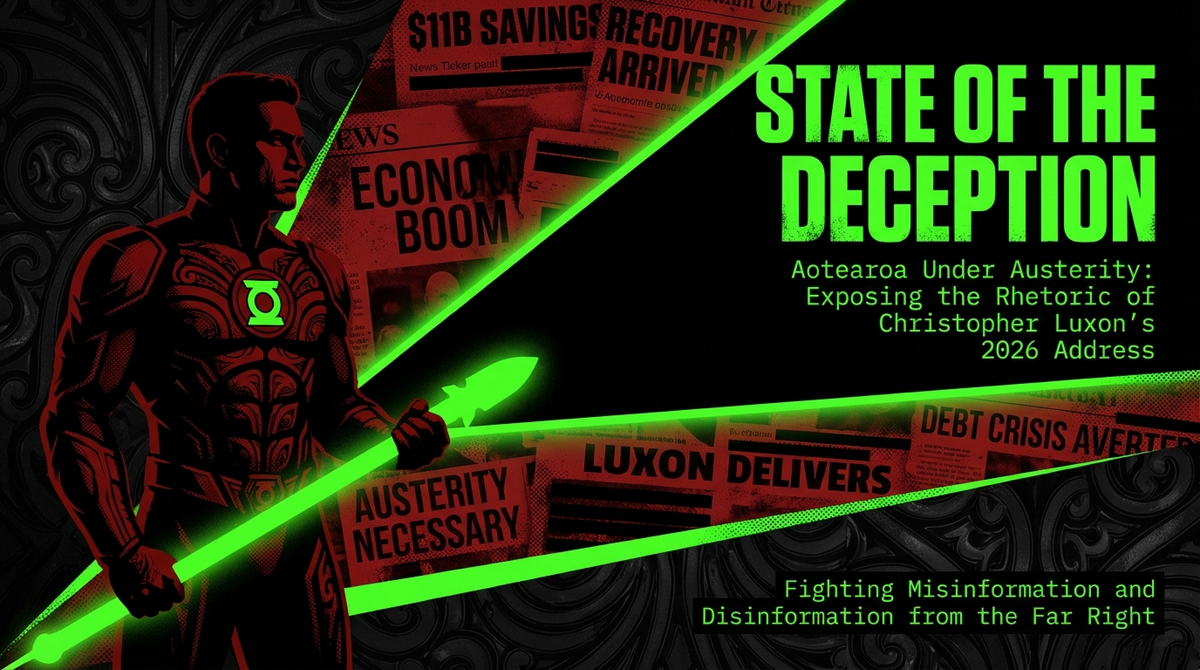
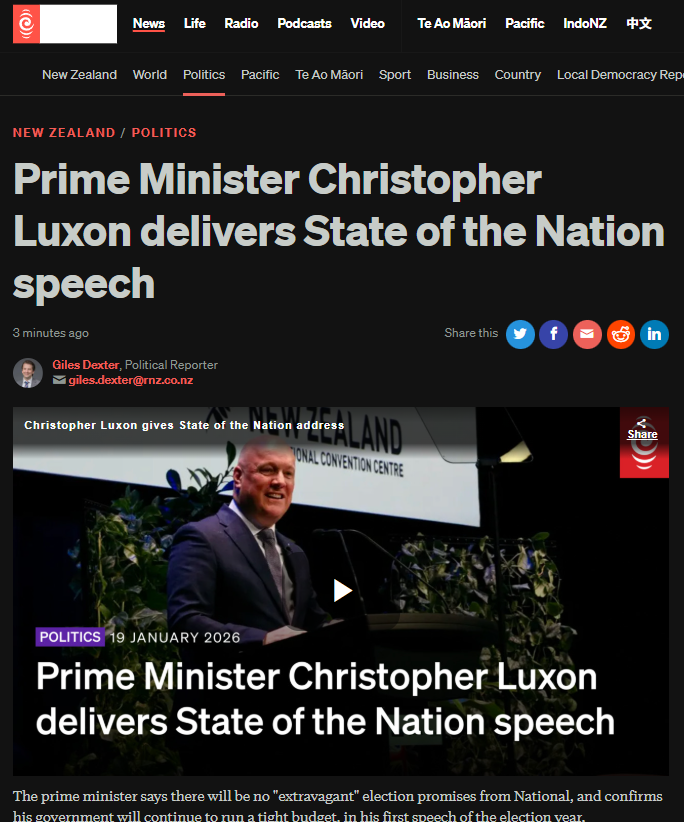
With unemployment at near nine-year highs, deficits ballooning beyond all forecast, and international bodies scrutinizing his government’s systematic breaches of Te Tiriti o Waitangi, the Prime Minister proclaimed
—with the confidence of a man insulated from consequence—that “the recovery has now arrived.”
He celebrated $11 billion in “savings” that are, in reality, wage theft from predominantly female workers.
He lauded crime reductions based on methodologically questionable quarterly data that contradicts the full-year statistics his own ministers try to bury.
He promised fiscal discipline while pushing the return to budget surplus beyond the election cycle, beyond any electoral accountability, into the abstract future of 2030.
This is not governance; this is performance art designed to obscure a government in ideological freefall, grasping at narratives when policy fails to deliver.
But perhaps most revealing is what Luxon’s speech omitted entirely:
any acknowledgment of Māori, any reference to Te Tiriti o Waitangi, any engagement with Crown-Māori relations now at their “highest level of concern” according to Te Tari Whakatau.
The Prime Minister erased tangata whenua from his vision for the nation’s future
—a strategic silence that allows his government to systematically dismantle indigenous rights through the Treaty Principles Bill, to criminalize Māori identity through the gang patch ban, to warehouse Māori disproportionately in prisons, and to do all of this while claiming to pursue universal principles of equality and fiscal responsibility.
What follows is a systematic deconstruction of Luxon’s claims and an examination of how this government has weaponized the apparatus of state power to advance an agenda that would not survive scrutiny if subjected to honest accounting. The recovery is not arriving; democracy is departing. And tangata whenua are being erased from the story while their rights are liquidated for coalition management and electoral advantage.
The Gap Between Rhetoric and Reality
On January 19, 2026, Prime Minister Christopher Luxon delivered his State of the Nation speech at Auckland’s International Convention Centre, presenting what can only be described as an exercise in political gaslighting. Addressing an audience of business elites while unemployment climbs to near nine-year highs and the deficit balloons beyond forecast, Luxon proclaimed with astonishing confidence:
“I feel more confident than ever that the recovery has now arrived and Kiwis can look forward to a year which is brighter than the last few,” as reported by RNZ.
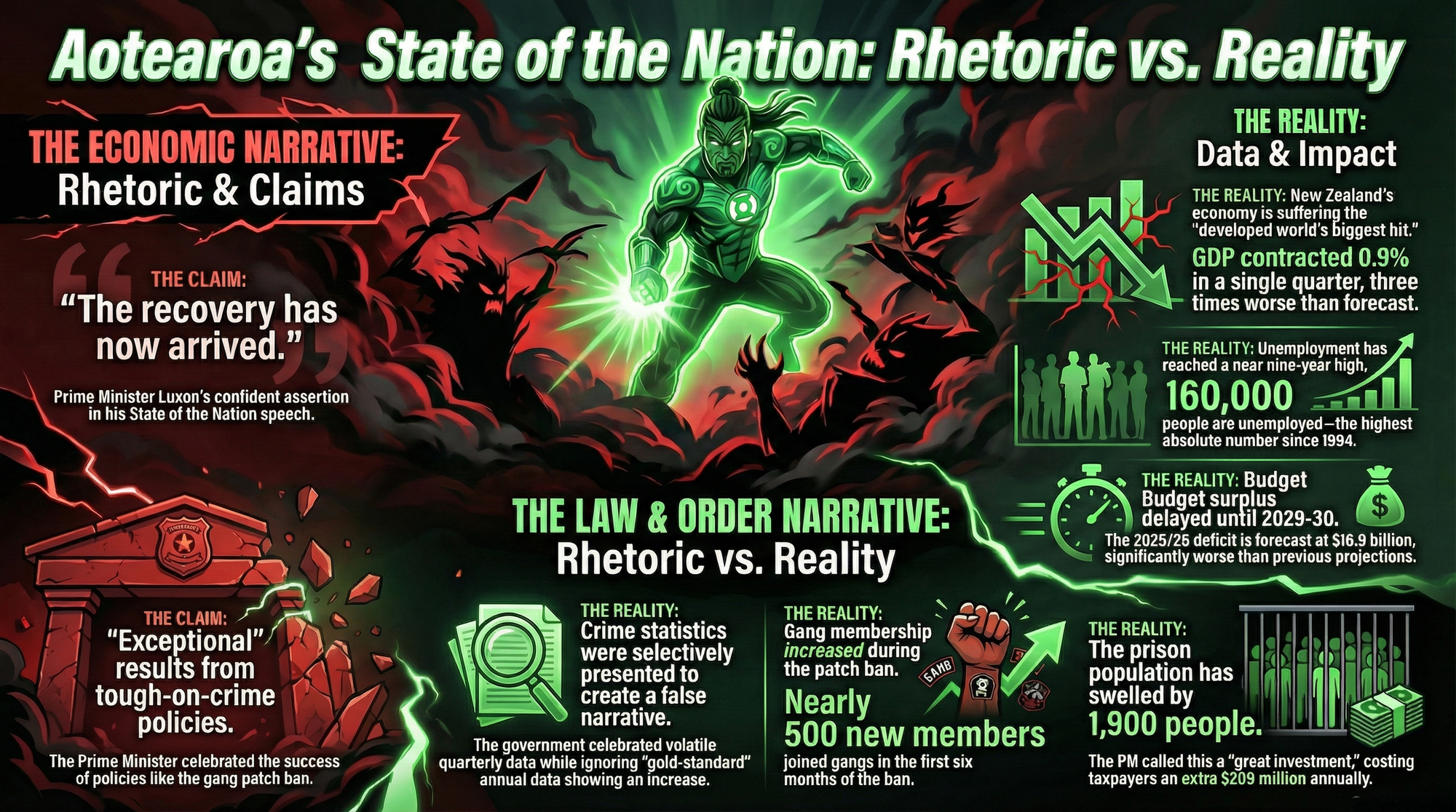
This statement, delivered as 160,000 New Zealanders languish in unemployment and the return to budget surplus recedes to 2029-30, exemplifies the profound disconnect between this government’s narrative and the lived reality of ordinary citizens.
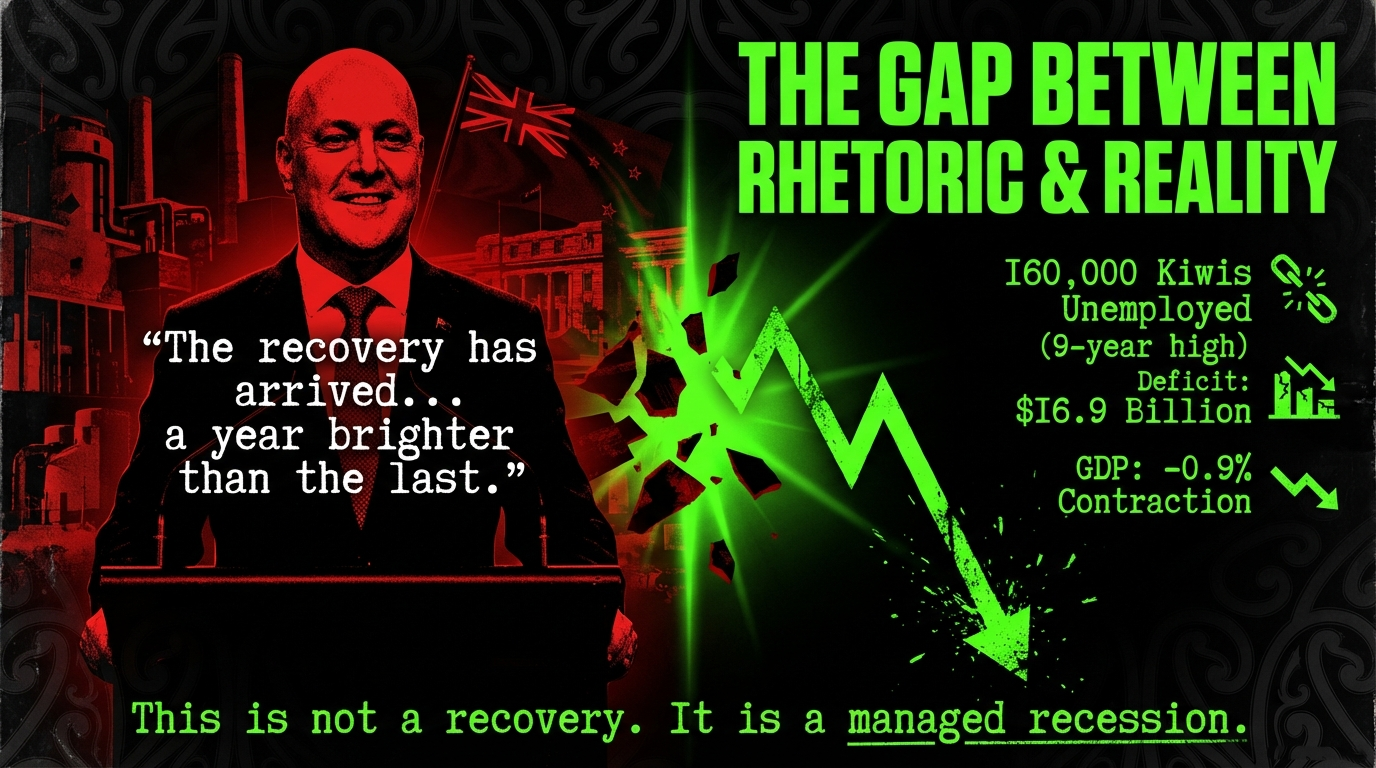
This analysis connects Luxon’s State of the Nation address with broader critiques of his government’s economic mismanagement, systematic assault on Māori rights, and fundamental betrayal of democratic principles. Drawing on economic data, policy analysis, and the constitutional implications of the government’s actions, this report demonstrates how Luxon’s administration has constructed a façade of fiscal responsibility while implementing an ideologically driven agenda that disproportionately harms vulnerable communities—particularly tangata whenua.
The Fiscal Fiction: Deconstructing Luxon’s Economic Claims
The “$11 Billion Savings” Myth
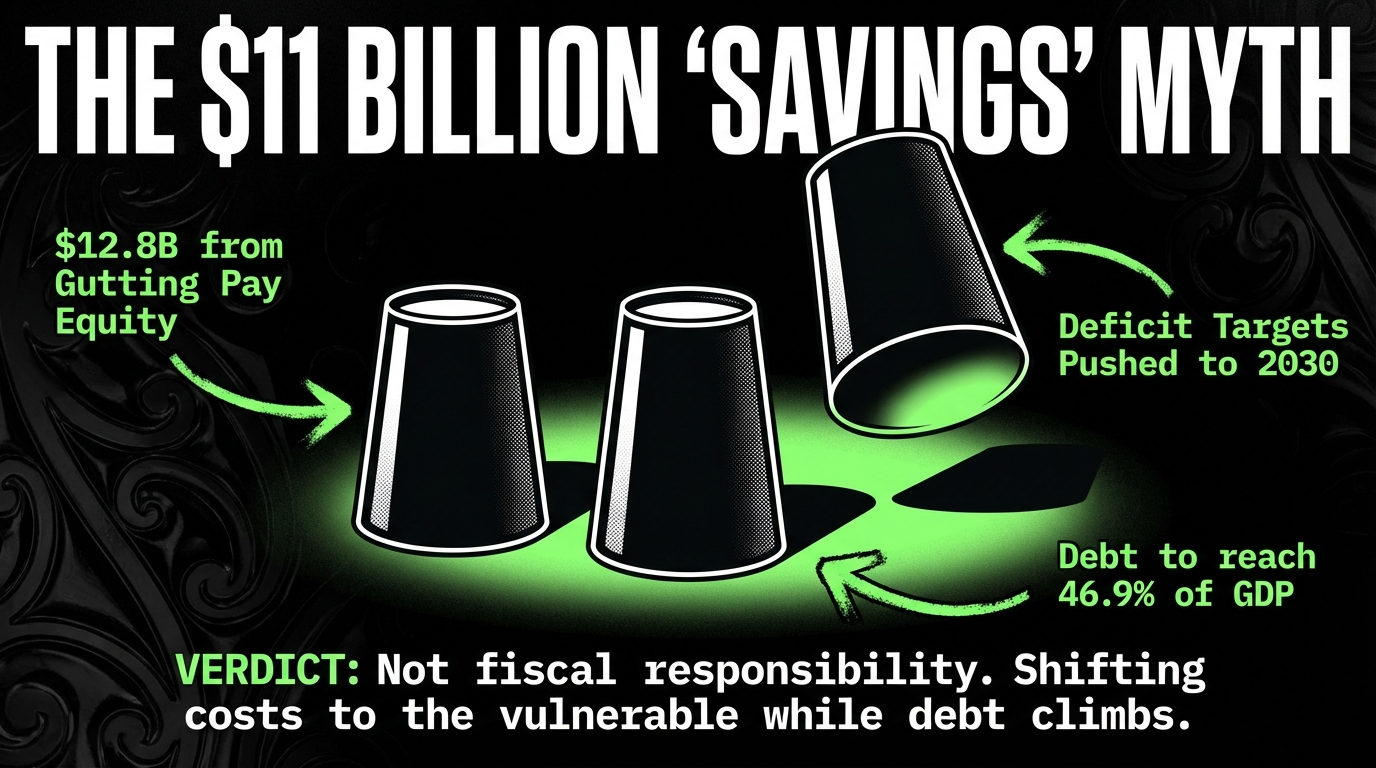
Luxon’s speech prominently featured the claim that Finance Minister Nicola Willis “delivered savings of around $11 billion a year,” as RNZ documented. This figure has become a rhetorical centerpiece of the government’s economic narrative, repeated with the frequency of liturgy but lacking the scrutiny it deserves. The reality behind this claim reveals not prudent fiscal management but rather accounting sleight-of-hand that shifts costs rather than eliminates them.
The largest single component of these “savings”—$12.8 billion over the forecast period—derives from gutting the pay equity framework, as 1News analysis revealed. This is not savings in any meaningful economic sense; it represents the government choosing to underpay predominantly female workers in care, education, and health sectors. As Labour’s finance spokesperson Barbara Edmonds noted, Willis refused to disclose how much remains in contingency for future claims under the new system, citing “commercial sensitivity”—a convenient opacity that prevents scrutiny of whether these are genuine savings or merely deferred costs with added legal complexity.
Furthermore, Treasury’s own documents reveal the government’s fiscal position continues to deteriorate. The deficit for 2025/26 is now forecast at $16.9 billion, significantly worse than the $12.1 billion projected in May’s budget. Net core Crown debt is projected to reach 46.9% of GDP by 2027/28, up from earlier forecasts. These figures expose Luxon’s “$11 billion savings” claim as fundamentally misleading—the government is not saving money; it is reallocating expenditure in ways that harm workers while debt continues its inexorable climb.
The Recovery That Isn’t: Reading the Economic Indicators
Luxon’s assertion that “the recovery has now arrived” flies in the face of virtually every measurable economic indicator affecting ordinary New Zealanders. The unemployment rate reached 5.3% in the September 2025 quarter—the highest level since December 2016. In absolute terms, this represents 160,000 unemployed individuals, the highest number since 1994—a population roughly equivalent to the entire city of Tauranga suddenly without work.
The underutilisation rate climbed to 12.9%, well above the 11.7% level from a year earlier. Youth unemployment stands at 15.2%, with 13.8% not in education or training—a generation whose futures are being sacrificed on the altar of austerity. The regions suffering most acutely are precisely those with significant Māori populations: Northland, Auckland, and Waikato all experience unemployment rates exceeding 6%.
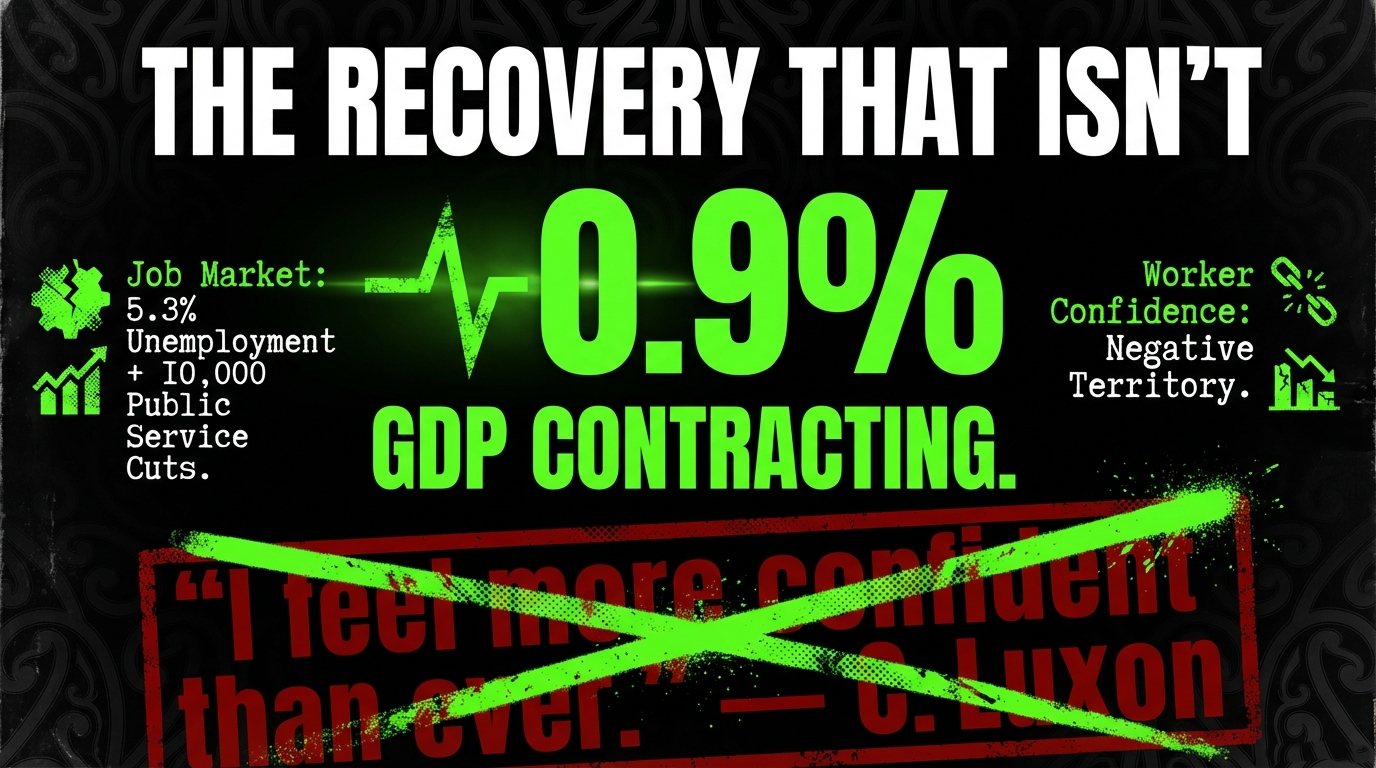
Treasury itself acknowledges the recovery is “delayed and weaker” than forecast, with GDP growth for the year ending June 2026 now expected at just 1.7%—down from the previously forecast 2.9%. Westpac economists note that employee confidence remains in negative territory, with workers seeing jobs as “in short supply” and expressing caution about the year ahead. This is not economic recovery; this is a managed recession with the burden falling disproportionately on working people while business confidence—the metric Luxon repeatedly cites—reflects capital’s optimism about suppressed wages and reduced worker bargaining power.
The Deficit Delusion: Pushing Surplus Beyond the Horizon
Perhaps the most damning indicator of fiscal failure is the government’s repeated inability to meet its own deficit reduction targets. National campaigned in 2023 on returning to surplus by 2026/27. That target has been systematically pushed back as economic reality refuses to conform to ideological fantasy.
Treasury’s December 2025 Half-Year Economic and Fiscal Update revealed that using the government’s preferred OBEGALx measure (which excludes ACC), the deficit will reach $13.9 billion in 2025/26—representing 3.0% of GDP and the largest deficit as a share of the economy in years. A return to surplus is now not expected until 2030, when a meager $2.3 billion surplus is forecast—and even that projection depends on economic conditions improving as forecast, a dubious assumption given the government’s track record.
Including ACC liabilities under the traditional OBEGAL measure, the picture darkens further: deficits persist throughout the entire five-year forecast period, with a $60 million deficit still projected for June 2030. This represents a staggering failure of fiscal management by a government that came to power promising economic competence. Yet Luxon stands before business audiences proclaiming success, confident that repetition can substitute for reality.
Democracy in Decay: The Erasure of Māori from National Discourse
The Conspicuous Absence: What Luxon Didn’t Say
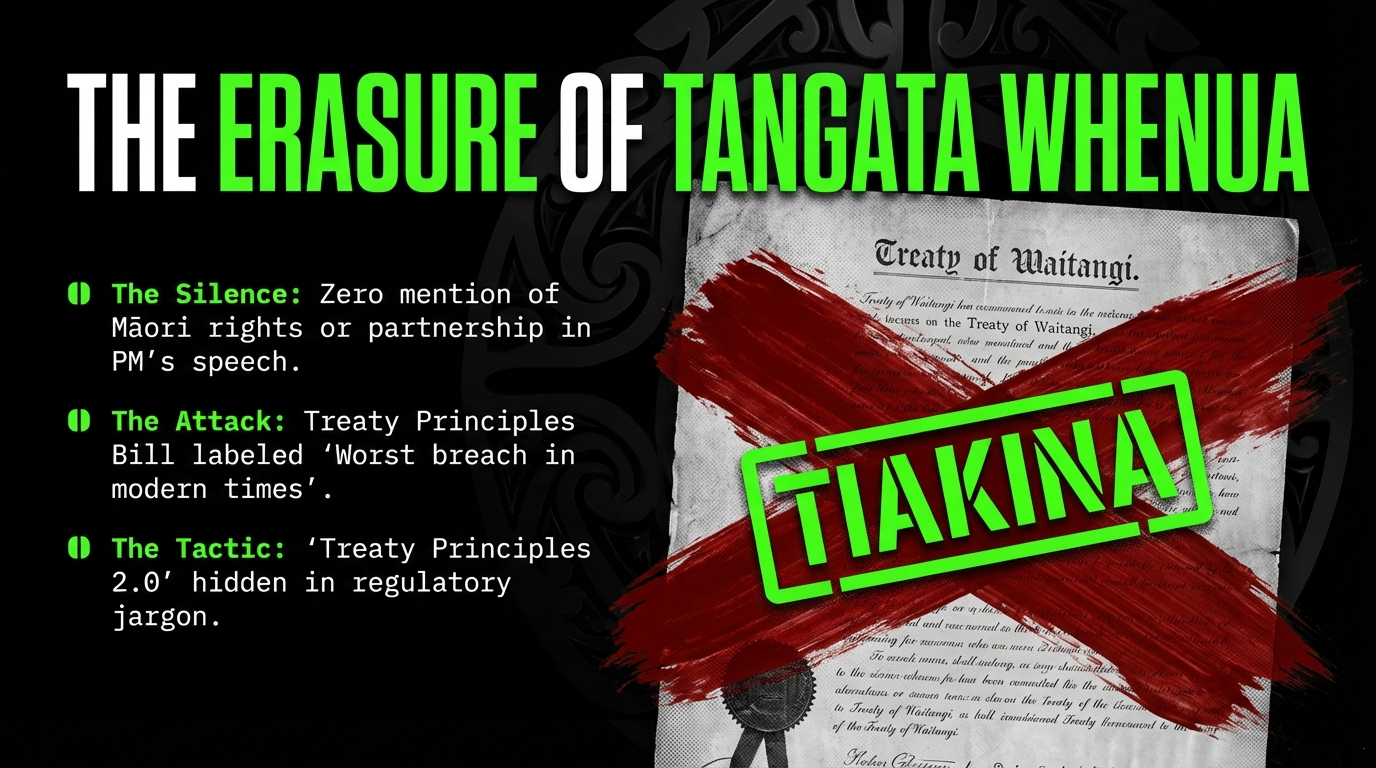
One of the most telling aspects of Luxon’s State of the Nation address is what it systematically excluded. Despite delivering a speech outlining the government’s vision for Aotearoa’s future, there was no direct reference to Māori rights, Te Tiriti o Waitangi obligations, iwi-Crown relationships, or kaupapa Māori policy, nor any acknowledgement of Māori-specific impacts in education, justice, economic development, or health. The only implicit references to Māori came within broad national statistics on education achievement and crime, with no mention of Māori-medium education, Māori land and resource interests, or Treaty-based considerations in proposed reforms.
This erasure is not accidental; it is strategic. By rendering Māori invisible in the national narrative, Luxon creates rhetorical space for policies that systematically undermine tangata whenua rights while claiming to pursue universal principles of equality. It is the discursive equivalent of the Treaty Principles Bill itself—redefining the constitutional relationship through omission and redefinition rather than consultation and partnership.
The irony is profound: Luxon delivers this speech just days before Te Tari Whakatau reported that the “state of the Māori nation” was at the “highest level of concern”. Yet the Prime Minister’s major policy address contains not a single acknowledgment of Crown-Māori relations, let alone any substantive engagement with how government policies affect tangata whenua.
The Treaty Principles Bill: Constitutional Vandalism by Coalition Compromise
While Luxon did not mention the Treaty Principles Bill in his State of the Nation speech, its shadow looms over his entire tenure. The Prime Minister has repeatedly stated he opposes the bill and that National will vote it down at second reading. Yet this opposition rings hollow when Luxon agreed to support the bill to first reading as part of coalition negotiations, enabling its introduction and the subsequent six-month select committee process that inflicted profound harm on Crown-Māori relations.
The Waitangi Tribunal described the bill as representing “the worst, most comprehensive breach of the Treaty/te Tiriti in modern times” if enacted. Lady Tureiti Moxon’s formal complaint to the United Nations remains under active review. The bill attracted over 90% opposition in submissions—record-breaking public engagement against legislation. Yet Luxon facilitated its progress, demonstrating that his purported commitment to the Treaty is subordinate to coalition management.
Luxon’s admission that Crown-Māori relations are “probably worse” since the coalition came to power, with “more division” than when they took office, represents a rare moment of candor. He attributes this to frustration created by Labour’s policies, but this deflection ignores the government’s own actions: the Treaty Principles Bill, dismantling Te Aka Whai Ora (the Māori Health Authority), removing Treaty references from legislation, weakening Māori ward provisions, and implementing the gang patch ban that disproportionately targets Māori communities.
The Regulatory Standards Bill: “Treaty Principles 2.0”
As legal experts have warned, the government’s assault on Te Tiriti extends beyond the Treaty Principles Bill. The Regulatory Standards Bill has been dubbed “Treaty Principles 2.0” by claimant lawyer Tania Waikato, who noted that principles from the Treaty Principles Bill were “copied and pasted” into the Regulatory Standards Bill, “dress[ed] up in complex, legal language that nobody understands, make it sound really boring, not consult with anyone, and then try and shove it through.”
The Waitangi Tribunal recommended immediate halting of this bill after claims were lodged by Toitū Te Tiriti. Dr. Carwyn Jones expressed concern that the bill’s widespread impact would fundamentally alter regulatory frameworks in ways that undermine Treaty obligations without genuine consultation. This pattern—introducing Treaty-undermining provisions through technical legislation that attracts less public attention than the Treaty Principles Bill—represents a more insidious threat precisely because it operates below the threshold of mass mobilization.
The Violence of “Law and Order”: Criminalizing Māori Identity
The Gang Patch Ban: Performative Politics Over Evidence
Luxon’s State of the Nation speech boasted that policies like “the return of Three Strikes and the gang patch ban had led to ‘exceptional’ results,” as RNZ reported. This claim exemplifies the government’s approach to policy: ideologically driven interventions justified through cherry-picked data and presented without meaningful evaluation of their actual impact on public safety or their constitutional implications.
The gang patch ban, implemented in November 2024, prohibits the public display of gang insignia and grants police expanded dispersal powers. The government has celebrated statistics showing 637 insignia items seized (including 132 patches) and 521 charges laid in the first six months, framing these as markers of success. Yet closer examination reveals a policy that trades civil liberties for symbolic victories while failing to address the structural drivers of gang involvement.
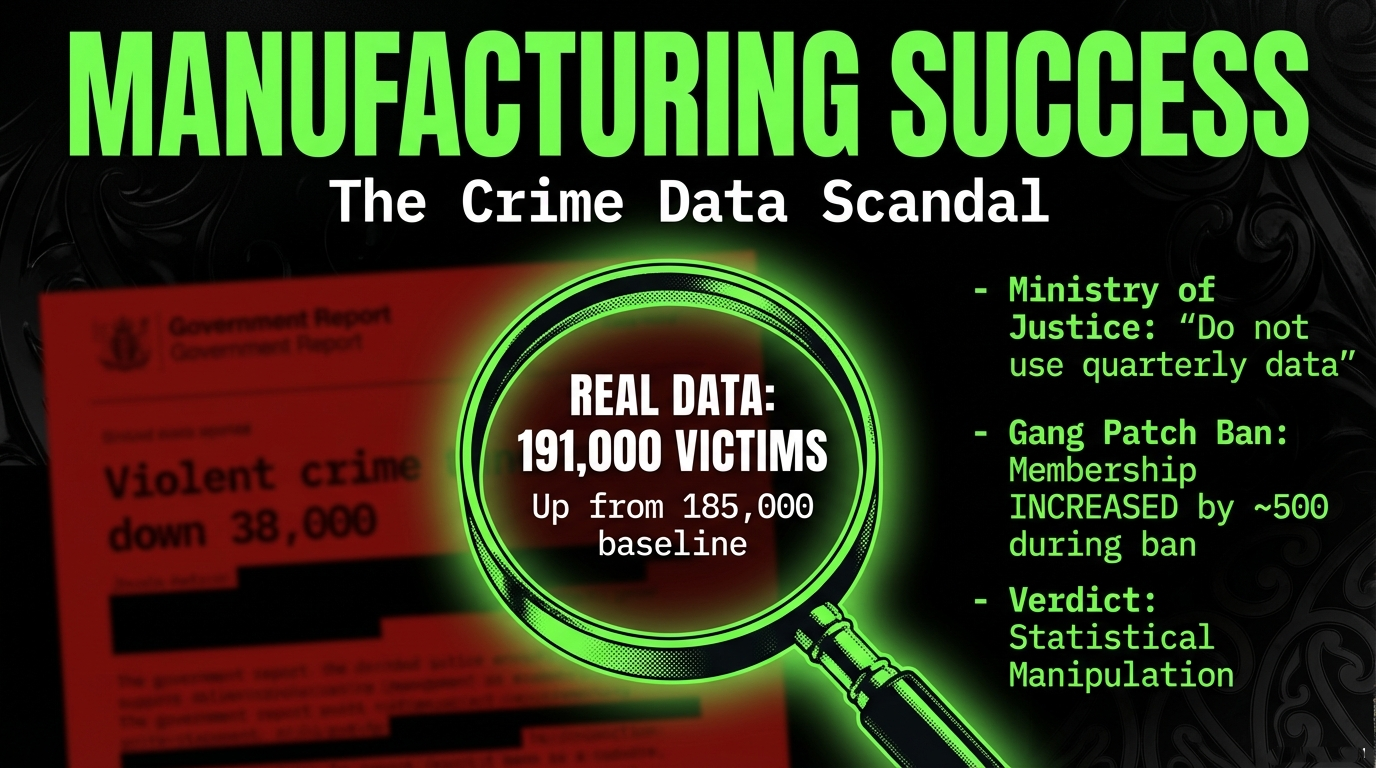
Sociologist Dr. Jarrod Gilbert, a leading expert on gang dynamics in Aotearoa, warns the patch ban “lacks clear, measurable goals and may have unintended consequences”. Gang membership has actually increased from 9,460 in October 2024 to 9,919 as of the latest count—a rise of nearly 500 members during the ban. As Bronson Tither Edwards, captain of the Mongrel Mob Aotearoa Wairoa chapter, stated bluntly: “How was it even going to [reduce gang operations]? It hasn’t at all. We’ve still grown, we’ve still flourished.”
The ban’s impact falls disproportionately on Māori. While the government frames gangs as a law-and-order issue affecting all New Zealanders, the reality is that gang patch legislation operates as racial profiling by proxy. The Crown’s own data demonstrates Māori are massively overrepresented in gang membership, reflecting generations of structural disadvantage, land alienation, and criminal justice system discrimination. By criminalizing gang insignia, the government creates new pathways for Māori to enter the criminal justice system for non-violent conduct—wearing particular clothing—that poses no direct harm to others.
Legal challenges have emerged, with lawyer Chris Nicholls arguing the ban breaches freedom of expression protected under the New Zealand Bill of Rights Act. Nicholls posed a provocative analogy: “How would people feel if the Government passed a law that the All Blacks weren’t allowed to wear black jerseys anymore because other teams find them intimidating? It would be an outrage.” The comparison highlights how the ban singles out a particular identity for suppression while claiming to serve public safety—a justification that could rationalize virtually any erosion of expressive freedom.
The Incarceration Explosion: Warehousing the Dispossessed
The government’s law-and-order agenda extends beyond symbolic bans to substantive increases in imprisonment. Luxon makes “no apologies” for the growing prison population or the cost of it, saying it was “a great investment.” The prison muster has swelled to nearly 11,000 people, with 1,900 additional prisoners since the government took office. The coalition is building hundreds more prison beds in Hawke’s Bay to accommodate projected growth.
This represents a fundamental policy choice: rather than addressing the social determinants of offending—poverty, housing insecurity, addiction, trauma—the government opts for incarceration. The human and fiscal costs are staggering. Each prisoner costs approximately $110,000 annually to incarcerate, meaning the 1,900 additional prisoners represent roughly $209 million in annual operating costs—money that could fund education, healthcare, housing, or addiction treatment programs that address root causes.
Māori bear the brunt of this incarceration boom. Despite comprising approximately 17% of New Zealand’s population, Māori represent over 50% of the prison population—a disparity that reflects systemic racism embedded in policing, prosecution, and sentencing practices. The government’s expanded Three Strikes legislation will exacerbate this overrepresentation, mandating harsh sentences without judicial discretion even when such sentences are manifestly unjust.
Luxon frames rising imprisonment as success: “It’s helping the country because what it’s not costing the country is victims of crime being bashed and being victims of violent crime.” This zero-sum logic assumes incarceration prevents crime rather than perpetuating cycles of disadvantage. Decades of criminological research demonstrate that imprisonment, particularly lengthy sentences for non-violent offending, increases recidivism by severing social bonds, traumatizing individuals, and limiting post-release opportunities. Yet evidence-based policy holds no appeal for a government pursuing ideological satisfaction and electoral advantage among voters who respond to tough-on-crime rhetoric.
The Crime Data Scandal: Manufacturing Success Through Statistical Manipulation
Quarterly Releases and Methodological Mayhem
The government’s celebration of crime reduction statistics exemplifies how data can be weaponized to serve political narratives while obscuring uncomfortable truths. Ministers repeatedly announced reductions in violent crime victimization based on quarterly releases from the New Zealand Crime and Victims Survey (NZCVS). In April 2025, they proclaimed 28,000 fewer victims than October 2023; by November 2025, this figure had grown to 38,000 fewer victims, nearly double the government’s 2029 target.
These announcements generated positive media coverage and reinforced the government’s law-and-order credentials. However, the Ministry of Justice’s own methodological caveats reveal these quarterly figures should be treated with extreme caution. The Ministry explicitly states that quarterly data “is not typically released” and “should be considered indicative only” because the quarterly releases use different methodologies than the comprehensive annual reports. The quarterly figures lack the full statistical weighting and follow-up interviews that ensure accuracy, meaning “the quarterly results use different methodologies” and “we do not recommend referring to differences as statistically significant”.
Dr. Trevor Bradley, senior criminology lecturer at Victoria University, warned the government’s announcements should be taken with a “grain of salt,” noting that describing the data as volatile provides a “get out of jail card” if numbers increase later. Labour’s police spokesperson Ginny Andersen accused the government of having “decided it has a narrative on law and order, and it’s looking for data to fit that narrative.” The move from annual to quarterly releases was not driven by methodological improvement but by political convenience—allowing the government to selectively highlight favorable quarters while downplaying unfavorable data.
When the full October 2024 data was eventually released, it revealed significant increases in family violence and violence against older people, with women disproportionately bearing the brunt of these offences. These details were conspicuously absent from the government’s April press conference celebrating violent crime reductions, demonstrating how selective data release serves political messaging rather than transparent governance.
NCEA Reform: Destabilizing Education Through Ideological Imposition
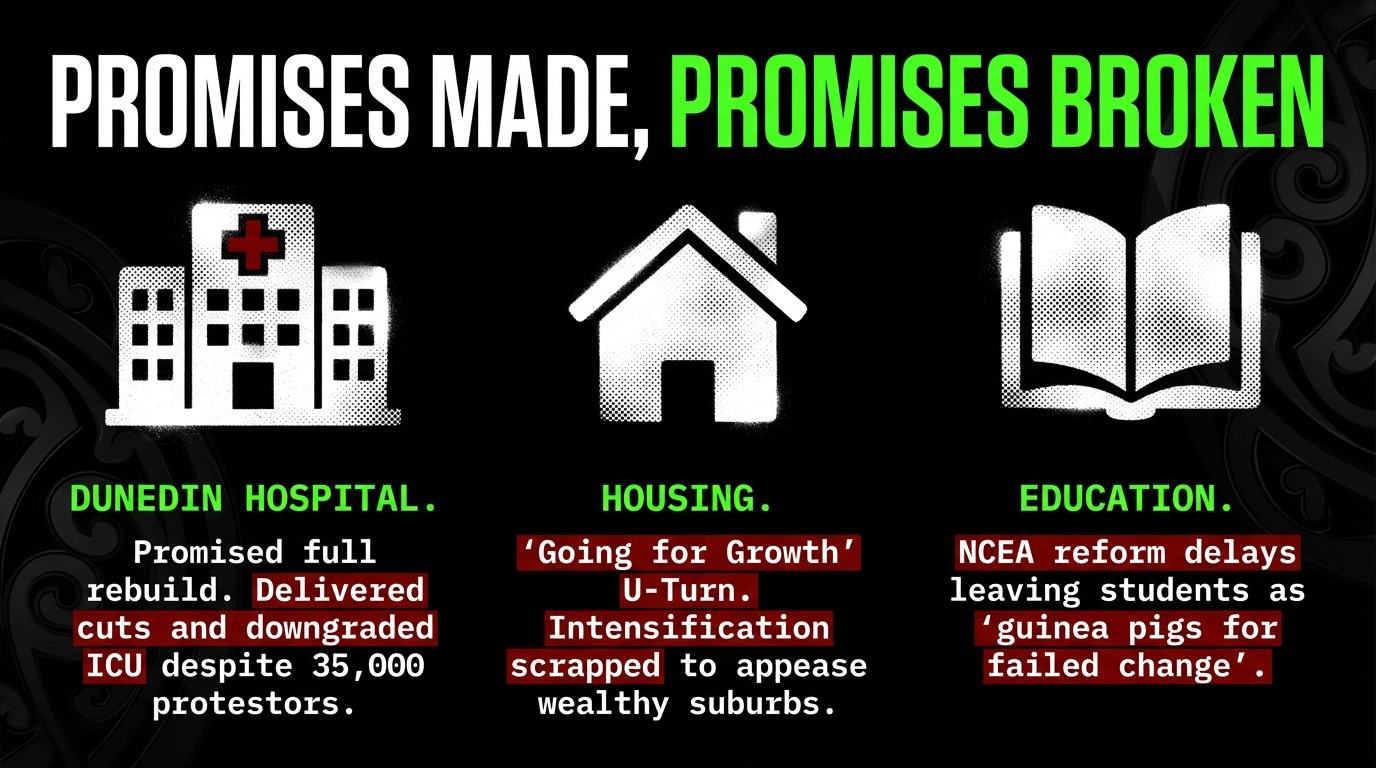
Luxon’s State of the Nation speech acknowledged delays in implementing NCEA reforms, admitting “they won’t be bedded in for some time” despite earlier promises. This represents yet another area where the government’s ambitions collide with implementation realities, leaving teachers, students, and parents navigating uncertainty while ministers forge ahead with radical restructuring.
The government proposes abolishing NCEA and replacing it with new qualifications: removing NCEA Level 1 entirely, introducing a Foundational Skills Award in 2028, and implementing the New Zealand Certificate of Education (Year 12) and New Zealand Advanced Certificate of Education (Year 13) in 2029 and 2030. The rationale is that NCEA lacks credibility, is too flexible, and fails to adequately prepare students for employment or further study.
Yet this diagnosis ignores that NCEA’s perceived problems stem largely from insufficient resourcing and political interference rather than inherent design flaws. As Green education spokesperson Lawrence Xu-Nan noted, “there has been widespread agreement on improvements to NCEA, including fewer and larger standards, clearer vocational pathways, and a simpler structure,” but “these changes either failed to be implemented or resourced adequately.” Rather than properly supporting the existing system, the government opts for wholesale replacement—guaranteeing years of disruption as new curricula and assessments are developed, teachers retrained, and students subjected to yet another round of being “guinea pigs for failed change.”
An exhausted teacher’s critique published in The Spinoff captures the implementation impossibility: “In reality, we don’t have two and a half years to deliberate and prepare for this change—we have less than a few months... You cannot in good faith argue that this is ‘careful phasing’ when you are giving teachers so little time to prepare.” The government promises the new qualifications won’t affect students until 2028, but teachers must begin preparing students from Year 9—meaning implementation is imminent despite incomplete curriculum development.
The reform conspicuously omits consideration of Māori-medium education pathways and fails to engage with how the proposed changes will affect tauira Māori, who already experience significant educational disparities. By imposing a more rigid, subject-based qualification structure without addressing the systemic barriers Māori students face, the government risks entrenching existing inequities while claiming to pursue excellence.
Towards a Politics of Refusal
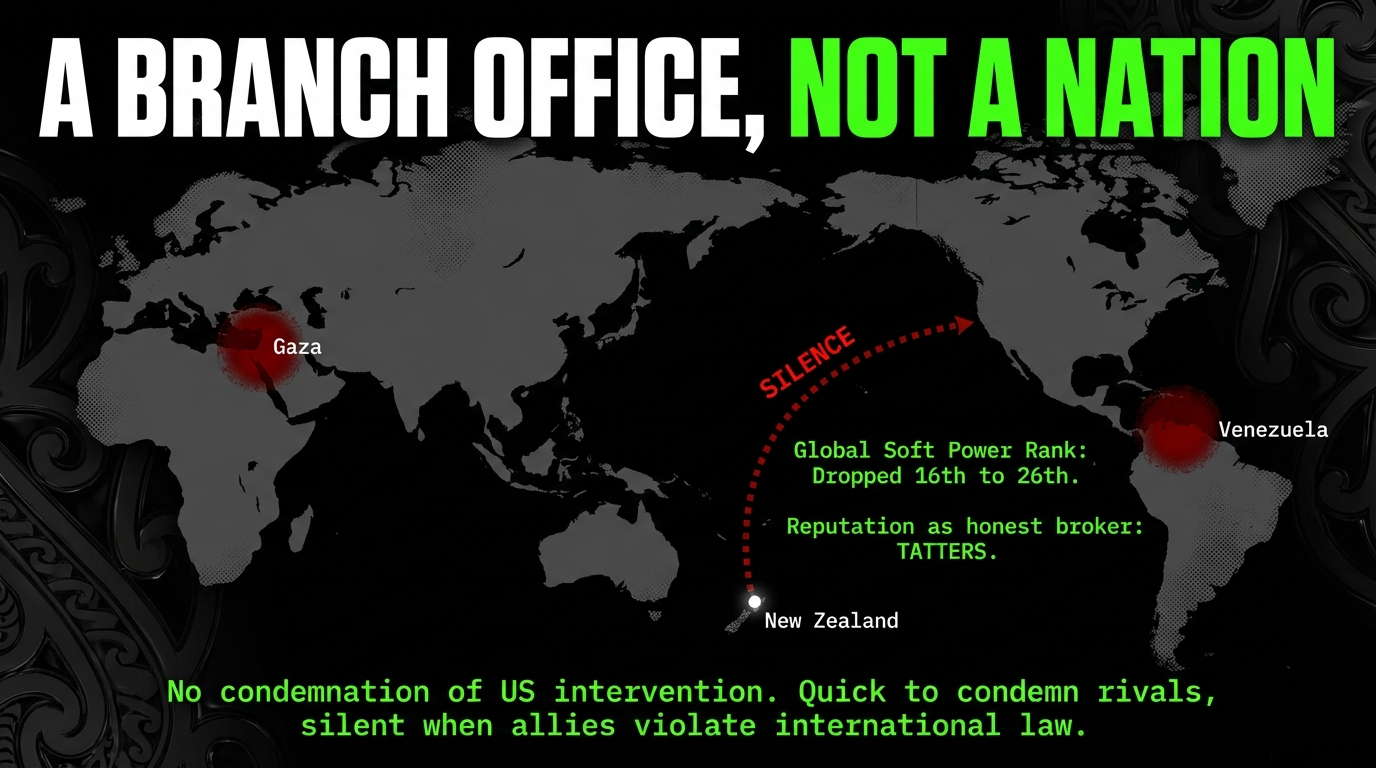
Christopher Luxon’s State of the Nation address represents more than political spin; it constitutes a comprehensive assault on reality itself. The Prime Minister proclaims economic recovery while unemployment soars and deficits balloon. He celebrates fiscal discipline while pushing surplus projections ever further into an unreachable future. He promises to build Aotearoa’s future while systematically dismantling the constitutional foundations that give tangata whenua a seat at the table. He boasts of law-and-order success while warehousing the dispossessed and manipulating crime statistics to manufacture a success narrative.
Most damningly, Luxon delivers a vision for the nation that erases Māori from the picture entirely—no acknowledgment of Treaty obligations, no engagement with Crown-Māori relations, no recognition that the government’s policies inflict disproportionate harm on tangata whenua. This erasure is not oversight; it is strategy. By rendering Māori invisible in national discourse, the government creates space for policies that undermine indigenous rights while claiming to pursue universal principles.
The government’s legitimacy crisis extends beyond policy disagreement to questions of democratic process and constitutional integrity. Lady Tureiti Moxon’s complaint to the United Nations, documenting systematic Treaty breaches, has been accepted and remains under active review. Multiple reports to the UN Committee on the Elimination of Racial Discrimination argue that “the government is actively and profoundly aggravating New Zealand’s constitutionally racist foundation in a way we have not seen for at least half a century.” The Waitangi Tribunal warned the Treaty Principles Bill would represent “the worst, most comprehensive breach” of Te Tiriti in modern times. International experts have expressed alarm at the government’s direction.
Yet Luxon continues, confident that electoral calculation justifies constitutional vandalism, that managing coalition partners excuses enabling legislation he claims to oppose, that repetition of false claims about economic recovery will eventually manifest reality through sheer insistence. This is governance as gaslighting, policy as performance, democracy reduced to the aesthetics of consultation without its substance.
The question confronting Aotearoa is whether this trajectory can be arrested through conventional democratic processes or whether more fundamental constitutional transformation is required. Luxon’s government has demonstrated that parliamentary sovereignty unchecked by constitutional constraints enables systematic erosion of indigenous rights, democratic norms, and social solidarity. The solution cannot simply be changing the party in power but must involve reimagining the structures that concentrate such power in the first place.
As communities organize, as tangata whenua assert tino rangatiratanga, as international bodies scrutinize Aotearoa’s human rights record, the space for Luxon’s reality distortion narrows. The 2026 election will test whether voters accept the government’s manufactured narrative or recognize they have been sold fiction while living in its consequences. The answer will determine not only who governs but what kind of society Aotearoa becomes—one that honors its foundational documents and respects its peoples, or one that sacrifices constitutional principle for coalition convenience and economic dogma for fiscal fantasy.
Koha Consideration: Funding the Accountability Luxon’s Government Won’t Provide
Every koha signals that whānau are ready to fund the accountability that Crown and corporate structures systematically refuse to provide. Every contribution declares: we will not wait for mainstream media to scrutinize the government’s false claims about economic recovery. We will not depend on parliamentary opposition to expose how $11 billion in “savings” are actually wage theft from care workers and nurses. We will not rely on institutions captured by neoliberal consensus to document how Māori are being systematically erased from national discourse while their constitutional rights are liquidated for coalition convenience.
This essay—and the accountability journalism it represents—cannot exist without whānau support.
Luxon’s government commands vast resources:
the Prime Minister’s communications team, Treasury analysts crafting convenient narratives, ministers with access to every platform. Corporate media, dependent on government advertising and access, largely amplifies government frames rather than challenging them. International institutions move slowly. Parliamentary opposition lacks the research capacity for sustained forensic analysis. Into this void step independent voices, funded not by capital or state power but by communities demanding truth.
Your koha signals that rangatiratanga includes the power to fund our own truth tellers. It means this work continues not because wealthy interests find it profitable but because tangata whenua recognize that accountability is a form of tino rangatiratanga—self-determination exercised through the power to name reality as it is, not as Luxon performs it to be.
Kia kaha, whānau. Stay vigilant. Stay connected. And if you are able, consider a koha to ensure this voice continues.
Three pathways exist:
For direct koha (voluntary contribution):
Support this mahi through Koha—the platform connecting whānau funding with independent accountabilityFor subscription and regular essays:
Join the community on Substack—sustaining independent analysis delivered directly to your inbox, bypassing algorithms and corporate gatekeepers.For direct bank transfer:
HTDM, account number 03-1546-0415173-000Every contribution is tino rangatiratanga in action.

Ivor Jones The Māori Green Lantern Fighting Misinformation And Disinformation From The Far Right