“Audrey Young’s Propaganda Playbook: How the Herald’s Chief Spinner Manufactures Consent for Corporate Power” - 26 September 2025
The Corporate Media Deception Machine is Working Overtime
Kia ora whānau - The Māori Green Lantern here, pulling apart the threads of mainstream media deception.
Let me be brutally clear from the start: Audrey Young’s recent puff piece on Erica Stanford is not journalism—it’s corporate propaganda masquerading as political analysis. This isn’t about reporting the news; it’s about manufacturing consent for a neoliberal agenda that directly harms tangata whenua and working-class New Zealanders.
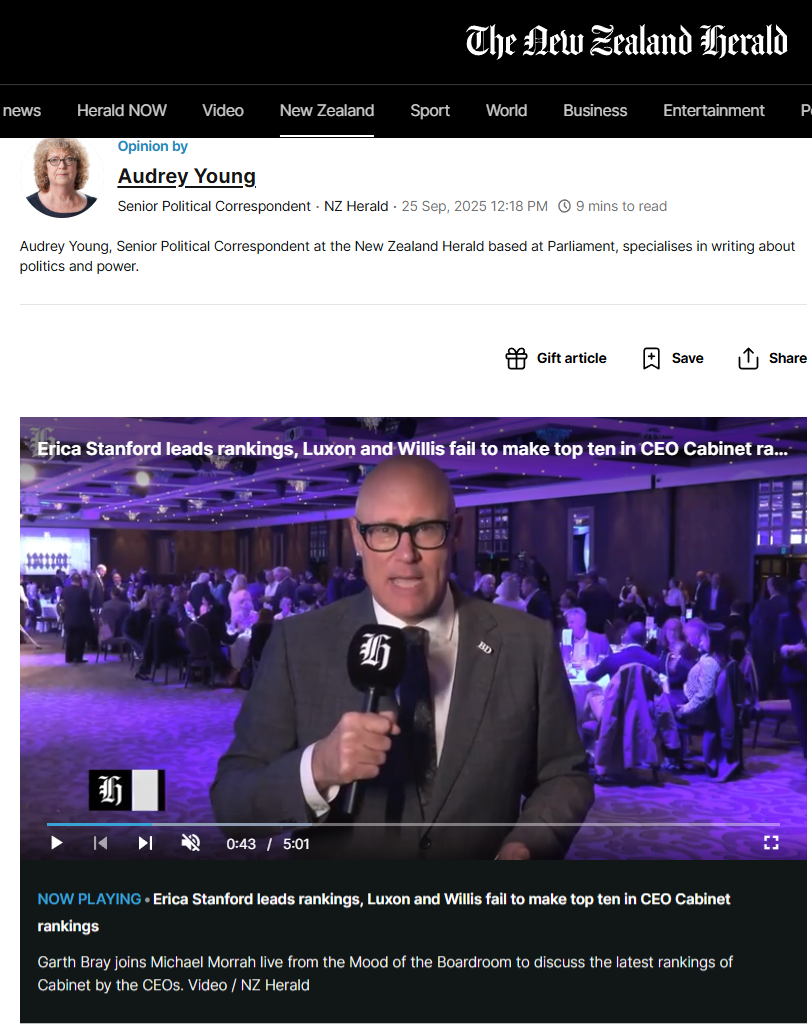
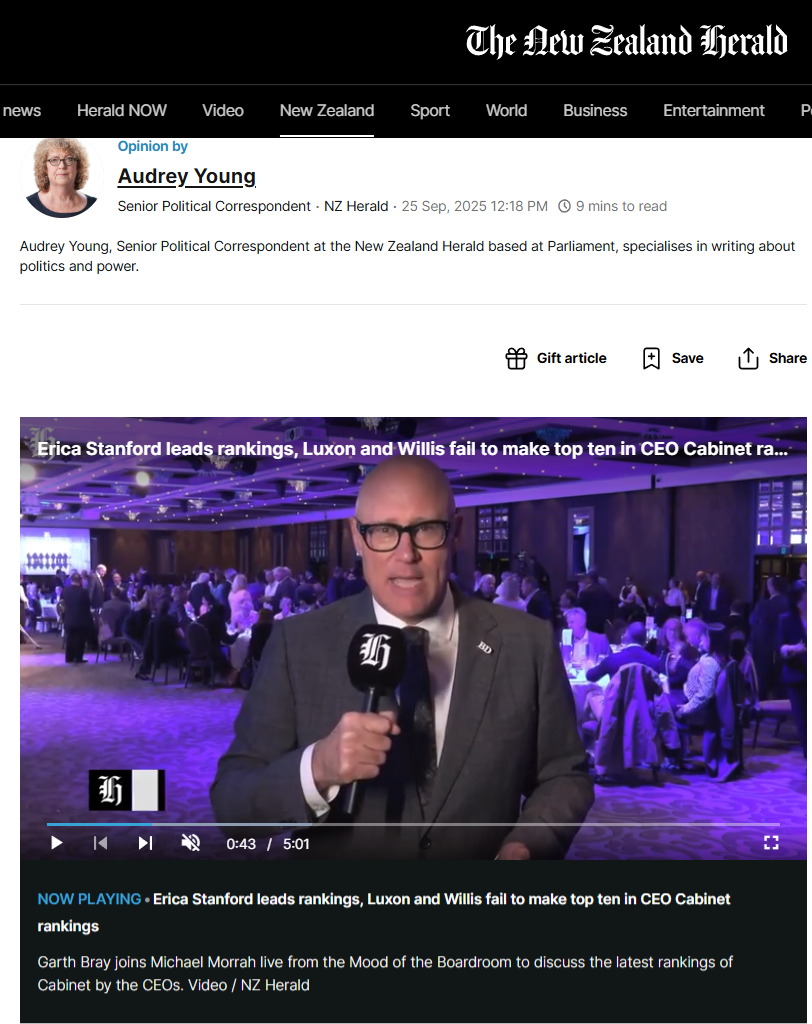
Young’s piece represents everything wrong with New Zealand’s captured media landscape, where corporate-funded “surveys” become gospel truth and journalists abandon their watchdog role to become cheerleaders for the business elite. The so-called Mood of the Boardroom survey is nothing more than a lobbying tool, yet Young treats it as objective political analysis.
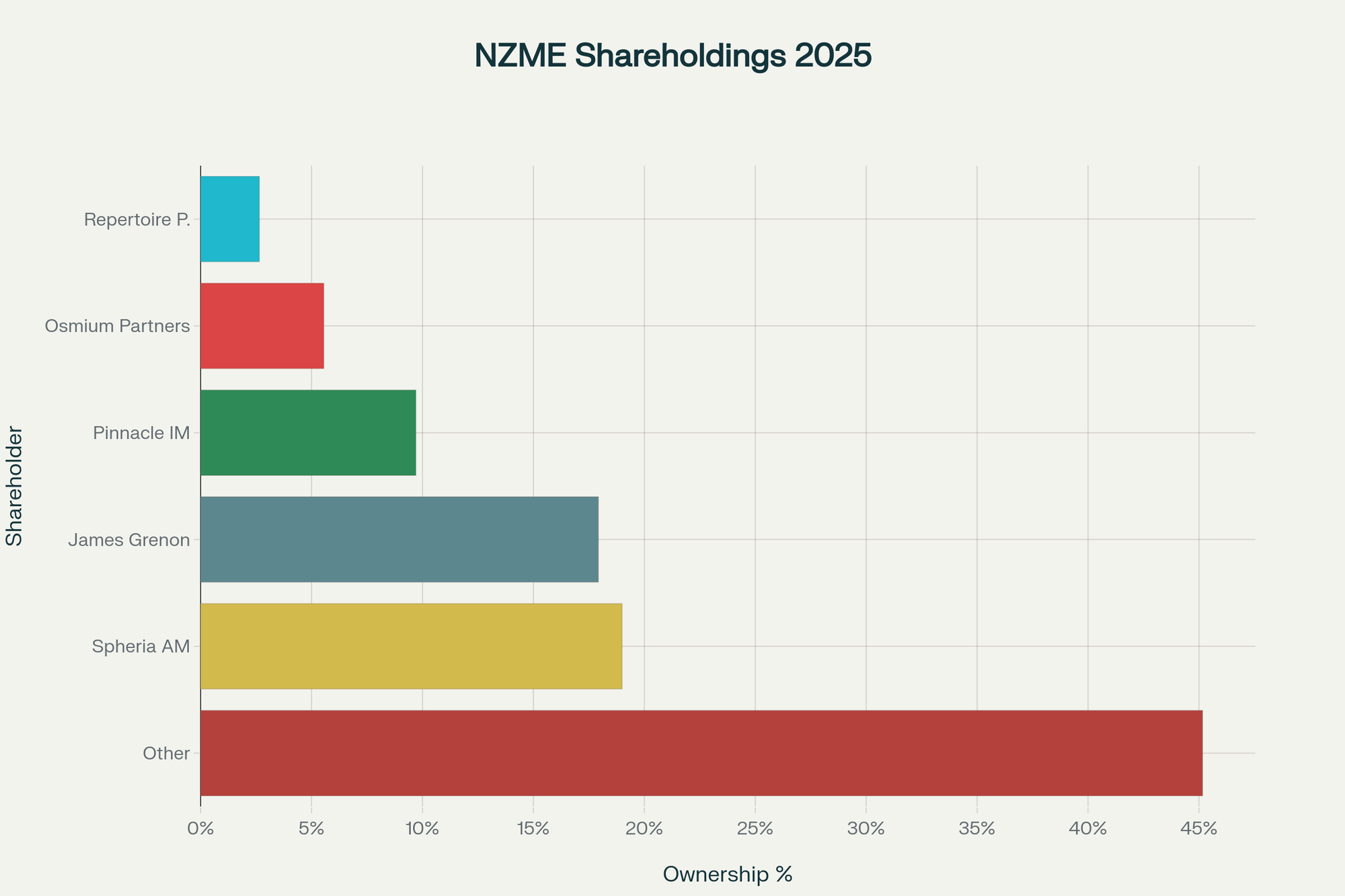
Corporate ownership structure of NZME, showing how New Zealand’s largest newspaper is controlled by foreign investment funds and wealthy individuals
The Puppet Masters Behind the Herald’s Strings
Before we dissect Young’s propaganda, we need to understand who’s pulling the strings at the New Zealand Herald. The paper is owned by NZME, which is controlled by foreign investment funds and wealthy individuals who have zero connection to the struggles of ordinary New Zealanders. Canadian billionaire James Grenon alone controls nearly 18% of NZME, while Australian asset management companies hold significant stakes.
Grenon has direct interests in alternative media outlets that have pushed anti-vaccine misinformation and climate change denial. This is the same media empire that employs Audrey Young and gives her a platform to spin narratives that serve corporate interests while undermining Māori sovereignty and social justice.
Young’s Track Record: A Career of Serving Power
Audrey Young isn’t some independent voice accidentally stumbling into corporate apologetics. She’s been the Herald’s senior political correspondent for decades, winning multiple “Political Journalist of the Year” awards—recognition that comes from serving the establishment, not challenging it.
Young’s recent work reveals a clear pattern of manufacturing consent for neoliberal policies while downplaying their harm to Māori communities. She’s consistently framed protests and resistance as “dangerous misinformation” rather than legitimate responses to colonial violence and economic oppression.
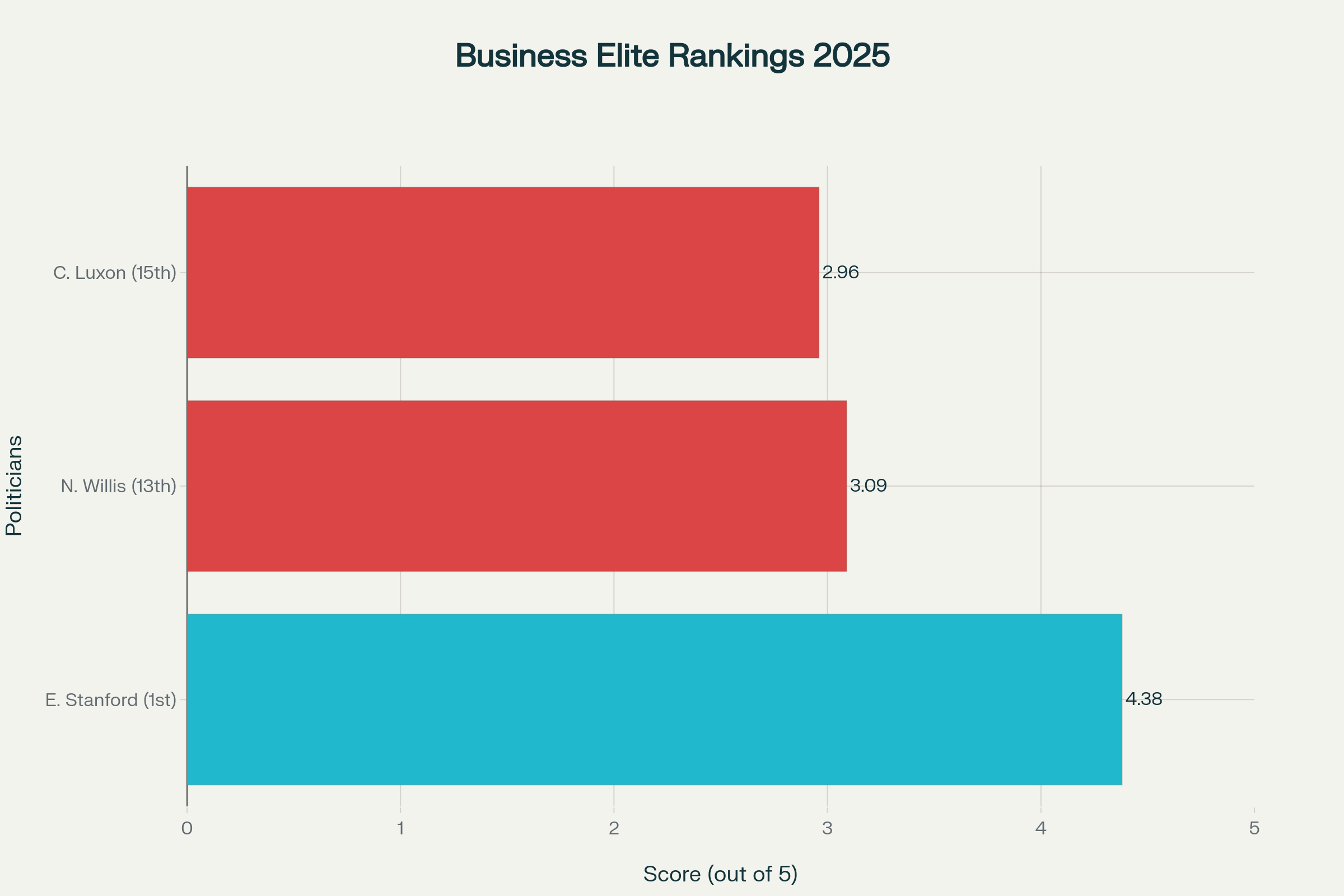
How New Zealand’s corporate elite rated key politicians in 2025, showing Education Minister Stanford far outranking the Prime Minister and Finance Minister
The Stanford Scandal: Security Breaches Become Success Stories
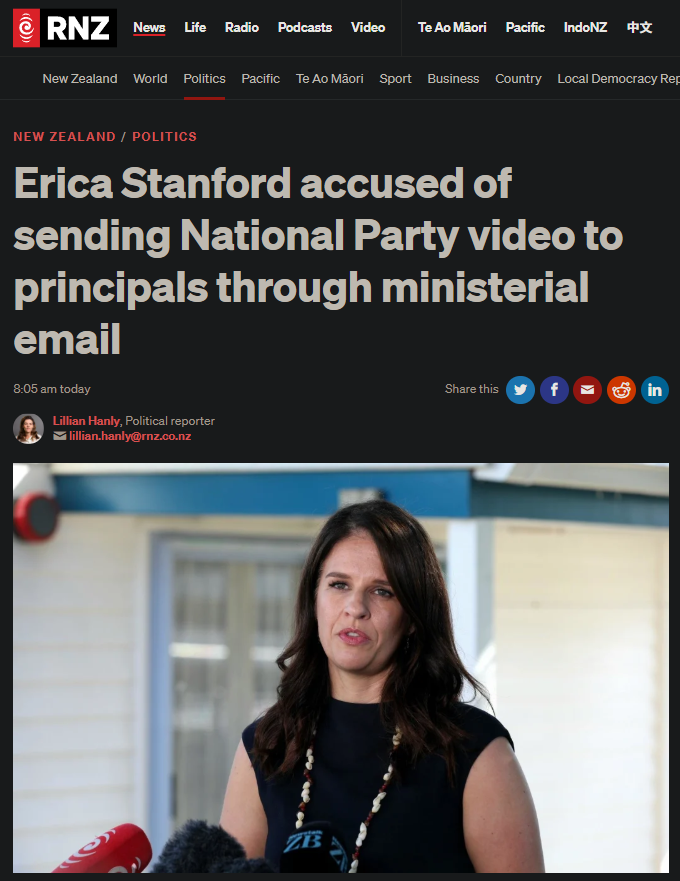
Young’s portrayal of Erica Stanford as a competent minister completely ignores the minister’s serious security breaches. 1News revealed that Stanford repeatedly forwarded sensitive government documents to her personal Gmail account, including pre-Budget announcements and confidential policy details. This violated the Cabinet Manual’s clear prohibition on using personal email for ministerial business.
But Young doesn’t mention these breaches in her analysis. Instead, she presents Stanford as some kind of political superstar because corporate CEOs ranked her highly in their lobbying survey. This is journalistic malpractice—ignoring documented security failures to promote a narrative that serves business interests.
Stanford’s email practices created serious national security risks, with Labour leader Chris Hipkins correctly noting she was “hanging out a big welcome sign” to foreign hackers. Yet Young transforms this incompetence into political capital.
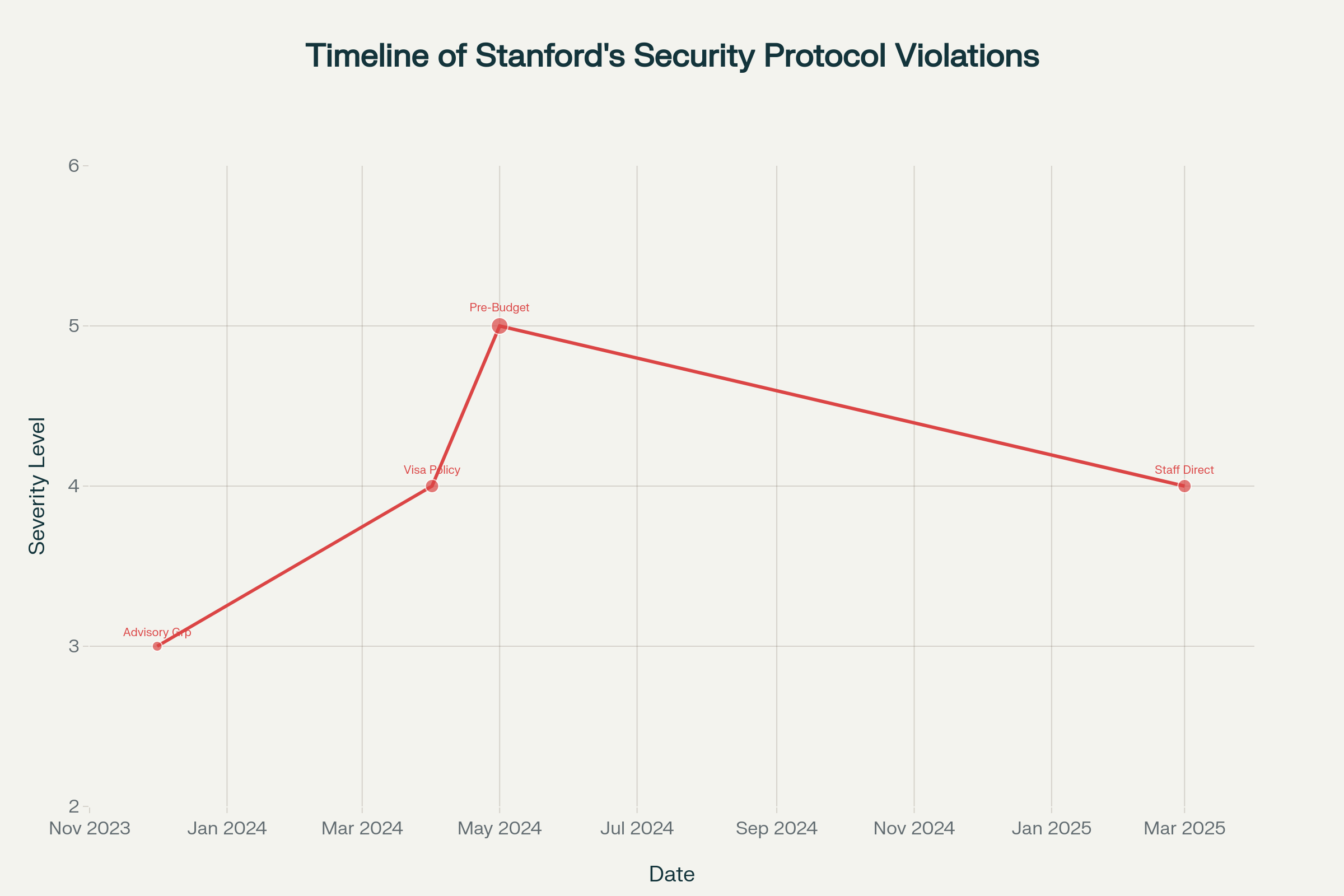
Pattern of security protocol violations showing Stanford’s continued misuse of personal email for sensitive government business
The Mood of the Boardroom: Corporate Lobbying Disguised as News
Young’s entire analysis rests on treating the Herald’s Mood of the Boardroom survey as legitimate journalism rather than corporate lobbying. As Dr Bryce Edwards correctly identifies, this survey is “a public declaration of a lobbying agenda from a powerful and impatient elite”.
The survey doesn’t represent public opinion—it represents the demands of 150 wealthy individuals who want tax cuts, deregulation, and the dismantling of social services. When Finance Minister Nicola Willis correctly noted that these 150 CEOs “are not broadly representative of the five million people we serve,” she was immediately attacked.

Corporate power brokers gathering to influence New Zealand politics through business surveys
Young presents this corporate wish-list as objective political analysis, completely ignoring how these same business leaders profit from policies that harm Māori communities. The education “reforms” they praise Stanford for implementing directly undermine kaupapa Māori education and Te Reo revitalization efforts.
The Hidden Māori Impact: What Young Won’t Tell You
Young’s analysis completely ignores how Stanford’s education policies specifically target Māori success. While Stanford claims to support Māori education, her curriculum changes prioritize Western knowledge systems over mātauranga Māori.
The corporate boardroom loves Stanford precisely because her policies serve business interests over indigenous rights. Her focus on “structured literacy” and standardized testing creates pathways for private education companies to profit while undermining the holistic approaches that work best for Māori learners.
Stanford’s immigration policies also serve corporate interests by maintaining a supply of cheap migrant labor while failing to address the housing crisis affecting Māori whānau. Young presents these policies as “success stories” without examining their impact on tangata whenua.

Education Minister facing scrutiny over security breaches and media manipulation
The Neoliberal Playbook: Manufacturing Political Stars
Young’s piece follows a classic neoliberal playbook: take a minister who serves corporate interests, ignore their failures and scandals, then present their corporate approval ratings as evidence of competence. This same pattern was used to build other neoliberal “success stories” while actual public services crumbled.
Stanford’s rise isn’t about competence—it’s about being useful to capital. Her willingness to dismantle public education protections while opening markets to private providers makes her valuable to the corporate elite, regardless of her security failures or harm to Māori communities.
Even right-wing commentators like Heather du Plessis-Allan praise Stanford as “this Government’s MVP”—not because she’s effective for New Zealand, but because she’s effective for business interests.
The Corporate Media Echo Chamber
Young’s propaganda doesn’t exist in isolation—it’s part of a broader media ecosystem that serves corporate power. The same Herald that employs Young also received $55 million from the government, creating obvious conflicts of interest when reporting on government performance.
The Mood of the Boardroom survey is sponsored by the same corporations whose leaders are surveyed, creating a closed loop of corporate self-promotion disguised as journalism. Young participates in this deception by treating corporate demands as legitimate news analysis.

Te Ao Māori values standing firm against corporate colonization
The Māori Alternative: Reclaiming Truth from Power
As tangata whenua, we must reject this corporate propaganda and reclaim our own narratives. Young’s analysis serves those who profit from our oppression while ignoring the voices of our communities. The planned Rā Whakamana solidarity actions show our people organizing against these attacks.
We need media that serves our communities, not corporate shareholders. The Herald’s corporate ownership structure ensures it will never truly represent tangata whenua interests—it exists to manufacture consent for policies that exploit our people and extract our resources.
The Path Forward: Exposing Media Manipulation
Young’s Stanford propaganda reveals the systematic nature of mainstream media manipulation in Aotearoa. Every day, corporate-funded “journalists” present business interests as public interests while ignoring the voices of those most harmed by neoliberal policies.
We must build independent media that centers Māori perspectives and challenges corporate power. The mainstream media will never voluntarily abandon its corporate masters—we must create alternatives that serve our communities rather than their shareholders.
Our Responsibility as Kaitiaki

The Māori Green Lantern Fighting Misinformation And Disinformation From The Far Right
As kaitiaki, we have a responsibility to expose these deceptions and protect our people from corporate propaganda. Young’s article isn’t just bad journalism—it’s part of a system designed to normalize policies that harm tangata whenua while enriching foreign corporations.
The Herald’s corporate owners profit from our oppression while their employees like Young provide intellectual cover for these attacks. We must name this system, expose its operations, and build alternatives rooted in our own values and aspirations.
This isn’t about left versus right politics—it’s about corporate power versus people power, colonial extraction versus indigenous sovereignty. Young has chosen her side, and we must choose ours.
Readers who find value in exposing these corporate media deceptions and supporting kaupapa Māori journalism are welcome to contribute a koha to support this work: HTDM: 03-1546-0415173-000. The MGL understands these are tough economic times for whānau, so please only contribute if you have the capacity and wish to do so.
Kia kaha, kia māia, kia manawanui
Ivor Jones, Te Māori Green Lantern
Kaitiaki of Truth, Exposer of Corporate Deception