“Clintons, Courts, and Crowned Heads in Epstein’s Taniwha Network” - 4 February 2026
The Island of Deferred Consequences
Mōrena ano Aotearoa,
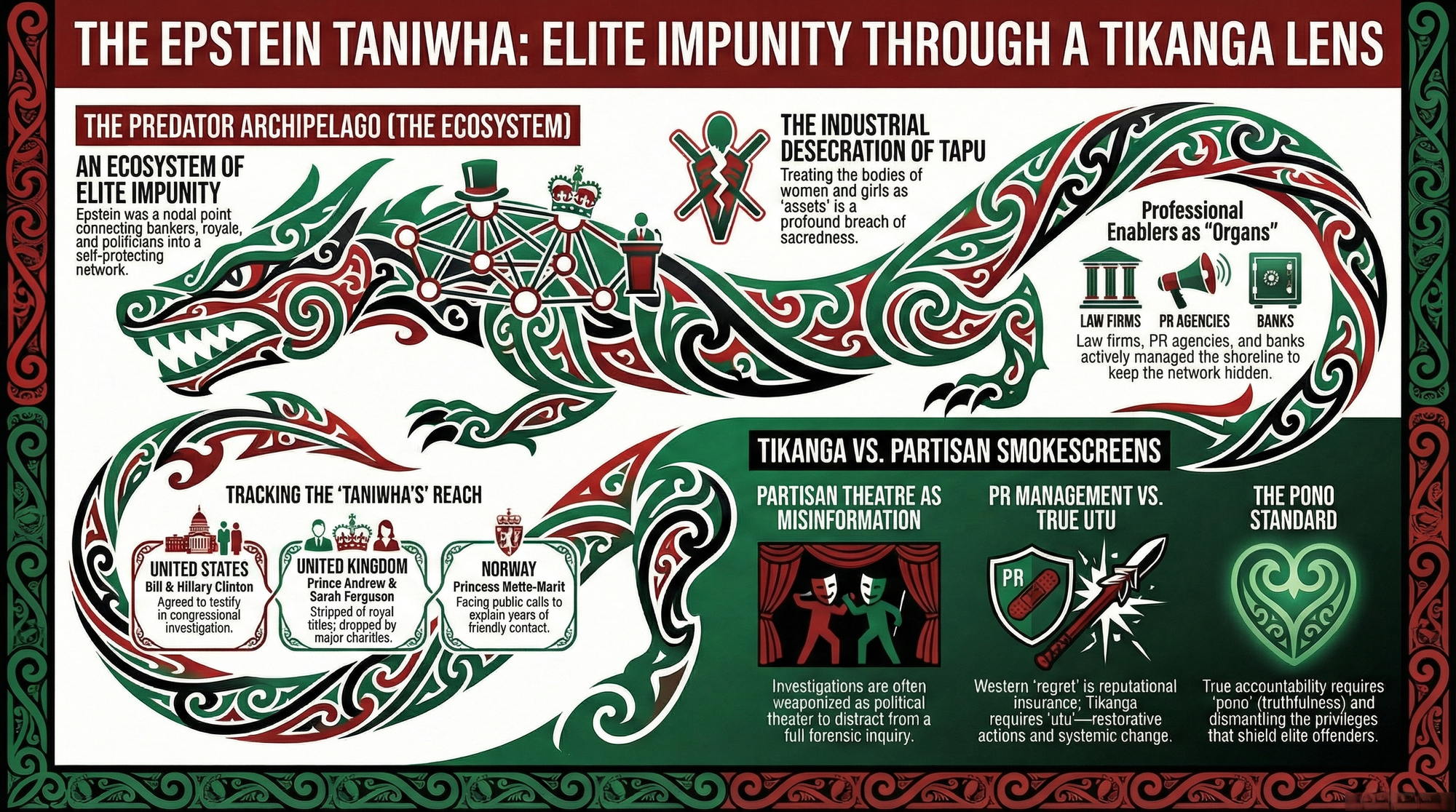
Jeffrey Epstein’s world is not a “scandal.”
It is an ecosystem:
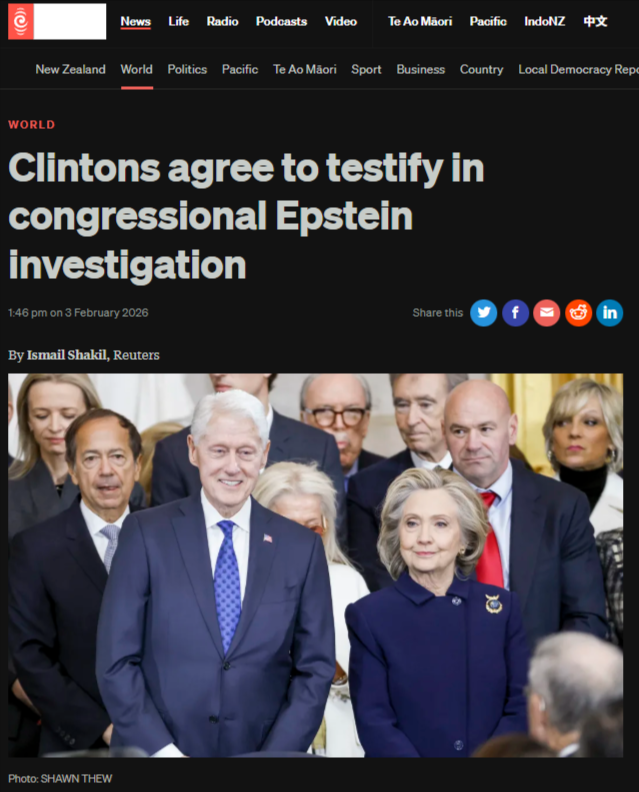
a predator’s island-chain of power where sex crimes against girls are simply one more asset class to be securitised, laundered and written off as a cost of doing business. When former US President Bill Clinton and former Secretary of State Hillary Clinton finally agree to testify to Congress about their relationship with Epstein, as reported by RNZ, they are not bravely stepping into the light. They are rats swimming between sinking ships, trying to choose which hulk will go down last.
Clintons, Courts, and Crowned Heads in Epstein’s Taniwha Network
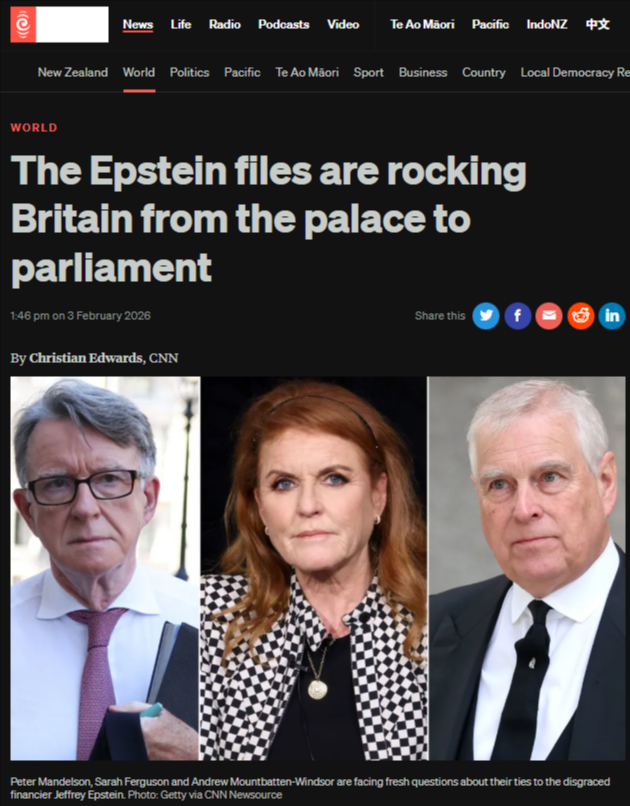
At the same time, Britain’s ruling classes are being dragged into the rip current. New releases from US government files now show Jeffrey Epstein embedded at the heart of British power:
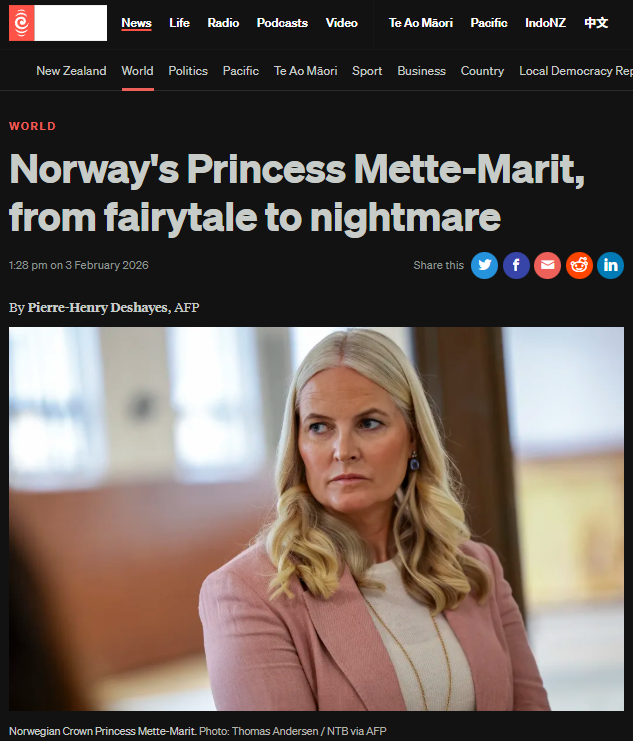
the disgraced former Prince Andrew, his ex‑wife Sarah “Fergie” Ferguson, and political operator Peter Mandelson all appearing repeatedly across millions of pages of documents and communications, as reported by RNZ. Norway’s fairytale princess, Mette‑Marit, is also exposed for years of friendly exchanges and a four‑day stay at Epstein’s Florida home long after his 2008 conviction, prompting open calls in Norway for her to explain herself — and even for the public to reconsider whether she should ever become queen, as reported by RNZ.
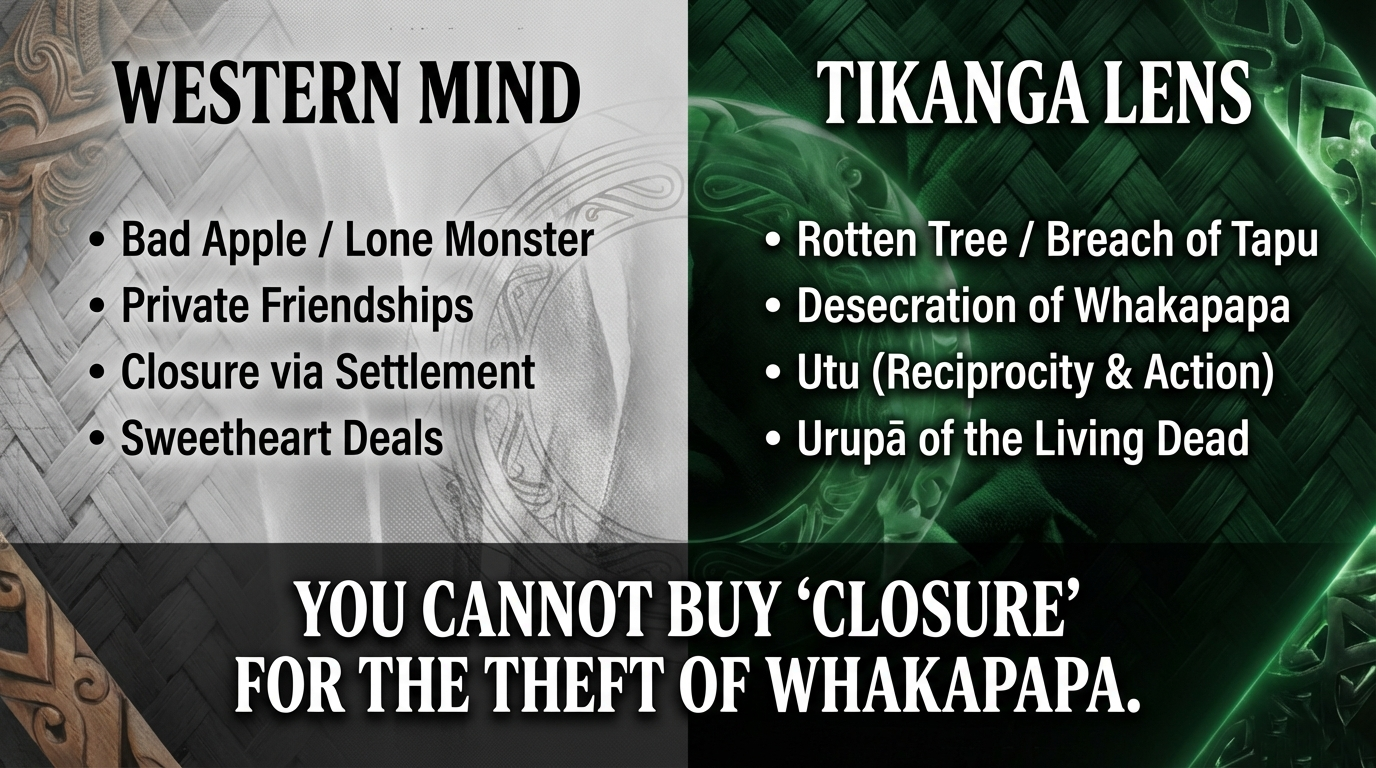
The western mind wants to see these as separate “scandals.” Tikanga tells a different story.
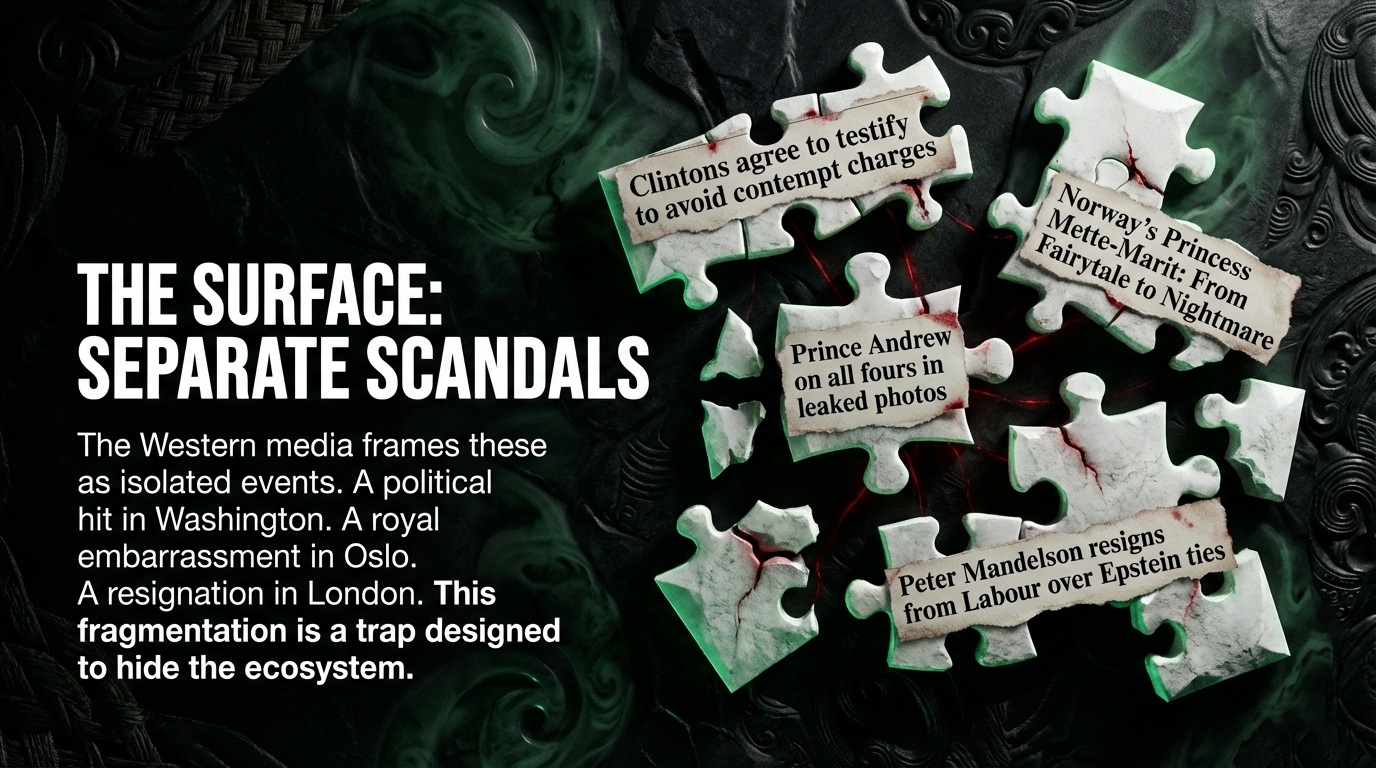
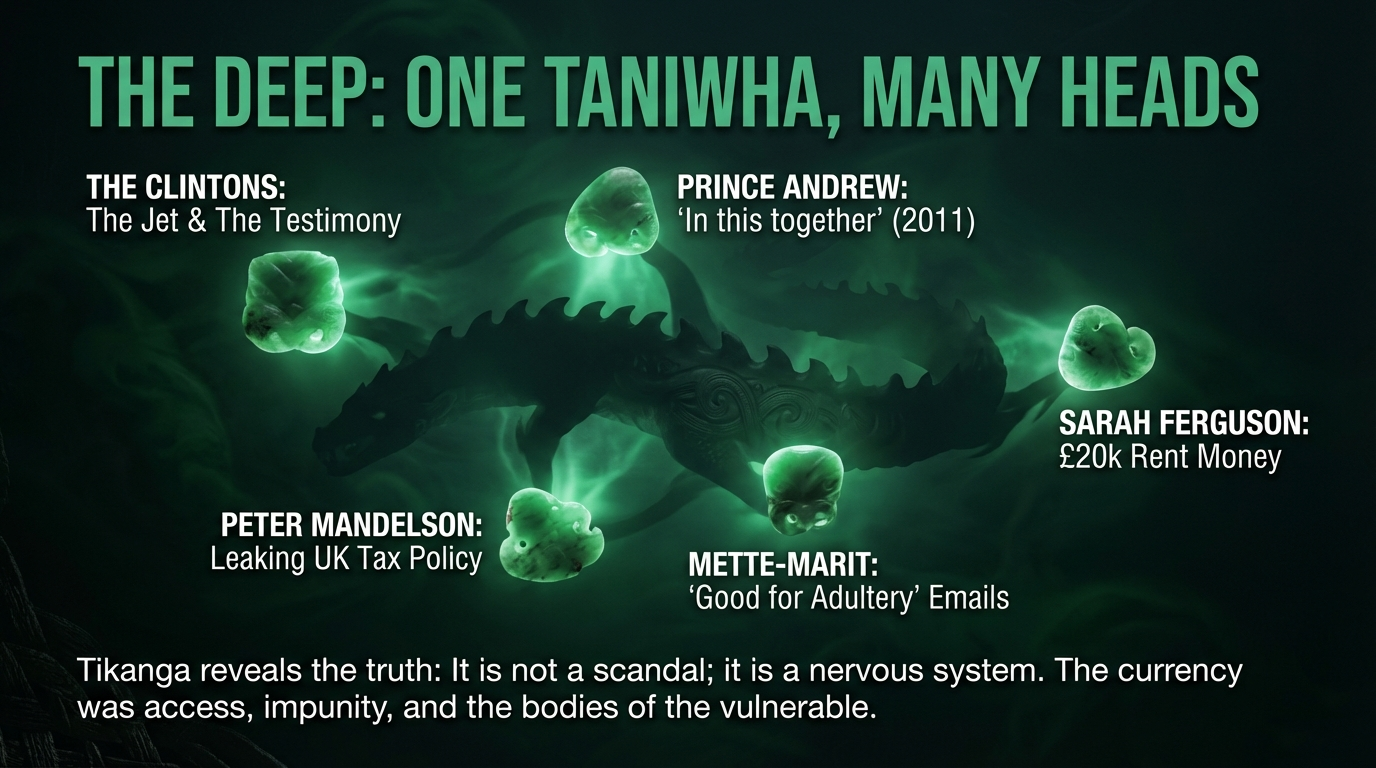
This is one taniwha with many heads. The same current runs under all of it:
elite networks treating the bodies of women and girls as expendable, then deploying law, media and monarchy as a shield.
Background: How the Predator Archipelago Was Built
Epstein is not a lone monster. He is a nodal point in a sprawling network of bankers, royals, presidents, lawyers and PR operators. US authorities first charged him in Florida in 2008 after identifying dozens of girls, some as young as 14, whom he sexually abused; yet he walked away with a “sweetheart deal” that gave him a short county sentence and extensive work‑release privileges, instead of meaningful prison time, as detailed in US Justice Department records and mainstream legal summaries. He later faced federal sex‑trafficking charges in 2019, only to die in custody before trial, foreclosing full courtroom accountability and leaving victims to fight through civil cases and congressional investigations.
The Clintons sit inside this history. RNZ, drawing on Reuters reporting, notes that Bill Clinton flew on Epstein’s private jet several times in the early 2000s after leaving office, later expressing “regret” and insisting he knew nothing of Epstein’s criminal activity RNZ. Those flights were not rides in a taxi; they were tickets into a network where the currency was access, impunity and information. Clinton is now scheduled to face questions in a Republican‑led congressional inquiry which, as the Clintons themselves point out, is also weaponised as partisan theatre aimed at shielding Donald Trump, another powerful figure with long‑standing social ties to Epstein and Maxwell, as noted in multiple mainstream timelines and analyses.
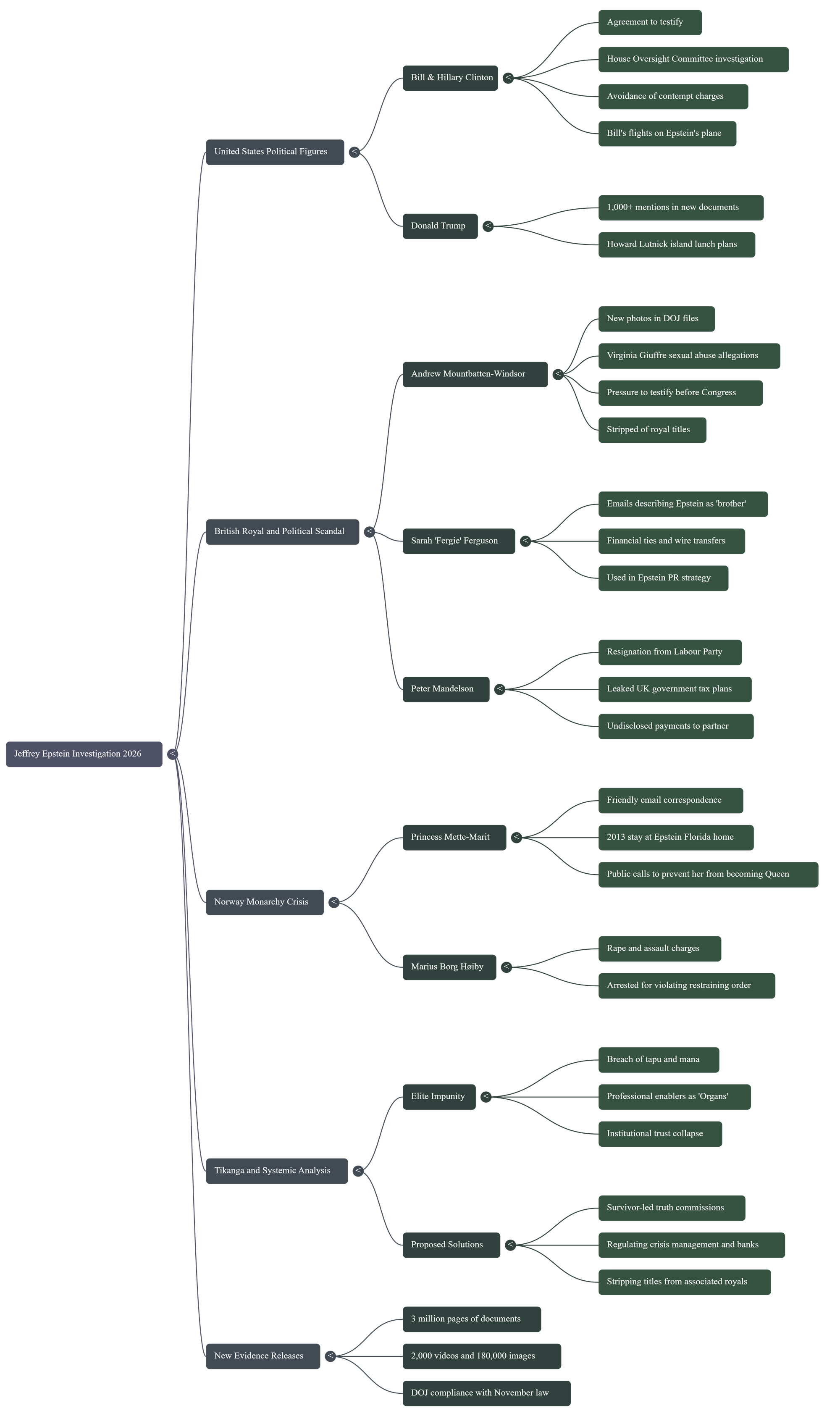
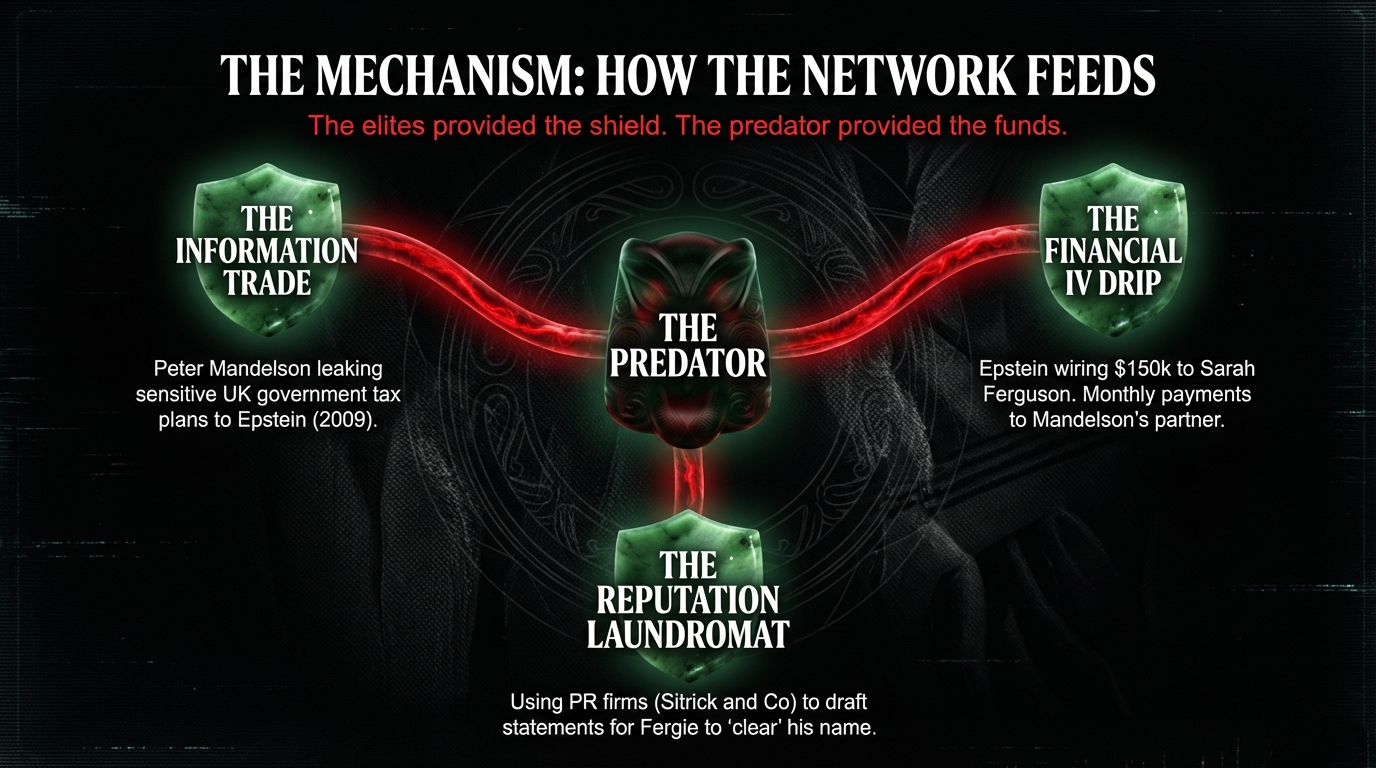
In Britain, the latest US government document dumps fan the flames. RNZ, reporting from CNN, outlines how more than 3 million documents reference Andrew Mountbatten‑Windsor (formerly Prince Andrew), Sarah Ferguson and former UK power‑broker Peter Mandelson, deepening questions about Epstein’s access to the British royal family and the core of government RNZ. Andrew’s earlier claim that he severed ties with Epstein in 2010 is contradicted by emails from 2011 in which he tells Epstein they are “in this together” and asks him to keep in close touch, according to those reports. Meanwhile, Epstein had wired substantial sums to Sarah Ferguson and used her public statements as part of a PR strategy to rehabilitate his image, as documented in the same CNN‑sourced reporting carried by RNZ. Mandelson, for his part, appears in years of correspondence, including apparent leaks of sensitive UK tax policy and regular payments to his partner from Epstein, prompting public calls for him to be stripped of his House of Lords title.
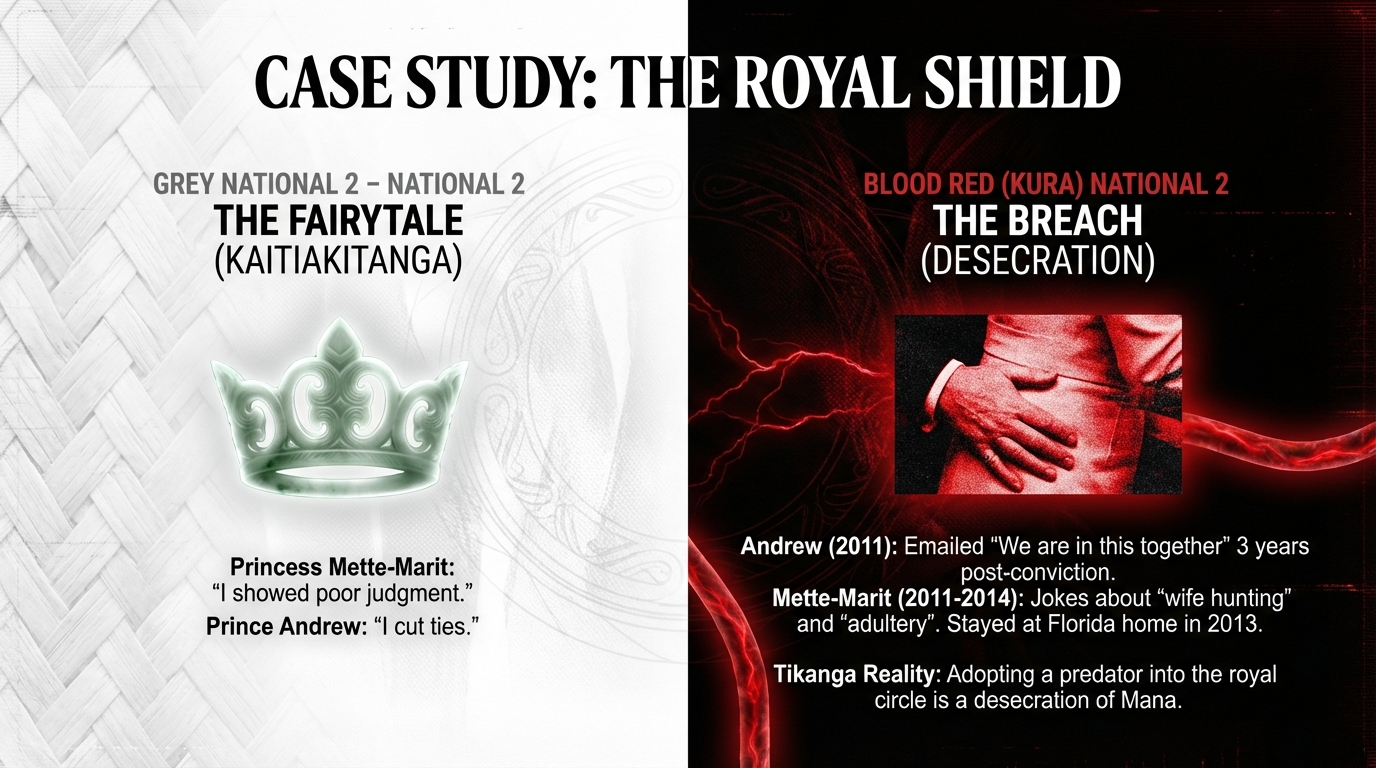
Norway is pulled into the same tide. Crown Princess Mette‑Marit exchanged dozens of emails with Epstein between 2011 and 2014, years after his conviction, joking about Paris being “good for adultery” and praising Scandinavian women as “better wife material,” before staying four days at his Florida home in 2013, as reported by RNZ. She later admitted “poor judgment” and said she was “deeply regretful” for having contact with him, but those words came only after the emails surfaced in media and after Norway’s Prime Minister publicly urged her to explain herself, according to the same coverage RNZ.
This is not a set of isolated lapses. It is a map of how royal courts, corporate banks, political parties and PR firms jointly maintain a climate in which a known sex offender can move freely between palaces, private islands and public institutions long after his guilt is established.
Summary Through Mātauranga: A Taniwha Fed by Elite Silence
From a tikanga perspective, Epstein’s network looks less like a crime story and more like a desecration of tapu on an industrial scale. The bodies and wairua of girls and young women are tapu — carriers of whakapapa, potential tūpuna in waiting. To turn them into a logistics chain for elite sexual gratification is to treat whakapapa itself as a commodity to be discounted, securitised and hidden in sealed files.
Consider the metaphors the western system is already using. Epstein’s plea deal is described as a “sweetheart deal”; his private island is breathlessly reported as “infamous,” a dark tourism curiosity.
In contrast, tikanga sees an urupā of living dead:
survivors forced to carry trauma, reputation attacks, cross‑examinations, and public disbelief while the people who partied on the island sit in parliaments, royal households and boardrooms.

When Bill and Hillary Clinton now offer to testify, it is described by House Speaker Mike Johnson as “a good development” and a sign that “everyone” must comply with subpoenas, as quoted by RNZ. In te ao Māori, turning up late to a tangihanga after you helped create the conditions for death is not a “good development.” It is a last‑minute scramble to avoid makutu
— the spiritual and social consequences of failing in your obligations to the dead and the living.
Likewise, when Norway’s Prime Minister urges his princess to explain her emails and four‑day stay at Epstein’s mansion, as reported by RNZ, this is framed as a reputational problem for the monarchy.
Tikanga frames it as a failure of kaitiakitanga:
the royal house adopting a predator into its circle and then acting only when the public sees the evidence.
The British case is even clearer. Andrew, Fergie and Mandelson are not outliers; they are different masks for the same taniwha. Andrew’s multimillion‑dollar settlement with Virginia Giuffre allows him to avoid cross‑examination while insisting on his innocence, as widely documented in mainstream outlets and timelines. Fergie calls Epstein her “supreme friend” and begs him for financial help, then later claims regret, as reported via CNN in RNZ. Mandelson allegedly leaks confidential government plans to Epstein and arranges regular payments to his partner from the same source, yet only resigns from Labour when the public pressure becomes unbearable, according to that same coverage RNZ.
In tikanga terms, this is not “bad optics.” It is a sustained breach of tapu across generations and borders from people whose role is supposed to be manaaki and protection — not complicity and evasion.
Five Hidden Connections: How the Network Really Operates
1. Partisan Theatre as Smokescreen
On paper, Republicans hauling the Clintons into a congressional hearing looks like accountability. But as RNZ notes, the Clintons have argued this is a partisan exercise intended to shield Donald Trump, with whom Epstein also socialised for years RNZ. Trump himself has at different times pushed for the release of Epstein files while simultaneously using his Justice Department to limit disclosures and direct investigations towards his political enemies, as described in multiple mainstream reports and timelines on the US government’s release of Epstein‑related records.
Hidden connection:
bipartisan elite interests converge in using Epstein as a weapon against opponents while avoiding a full forensic dive into their own ties.
Tikanga would call this a breach of pono — truthfulness — and a weaponisation of kawa, the rules of the house, to distract from the real issue:
abused girls, protected perpetrators, and institutions that would rather perform outrage than dismantle the system that enabled him.
2. Royals as Human Shields for Financial and Political Elites
The new US document releases show not just Andrew and Fergie, but a broader British ecosystem in which Epstein appears to have acted as both social host and conduit for information, money and influence, as summarised by RNZ. Mandelson’s reported leaking of sensitive UK tax policy to Epstein while serving as Business Secretary, and Epstein’s funding of Mandelson’s partner’s expenses, puts Westminster policy directly in the orbit of a convicted sex offender, according to the CNN‑based reporting carried by RNZ.
Hidden connection:
the palace drama is the shiny object; the deeper issue is how a sex‑offender‑cum‑financier could become an information node for UK fiscal policy and high‑level lobbying. In tikanga terms, this is a desecration of the whare wānanga — the house where knowledge is supposed to be protected, not bartered with predators.

3. Monarchy as Reputation Laundromat
Norway’s princess literally uses Epstein as a social and emotional sounding board, trading jokes about adultery and “wife hunts” and then taking refuge in his Florida home years after his conviction, as reported by RNZ. At the same time, Epstein seeks to use royal and aristocratic proximity — from Britain’s Andrew and Fergie to Norway’s heir apparent — as a reputational shield, citing their presence to imply that he must be misunderstood, as reflected in his efforts to get Fergie to publicly “clear” him, reported in the CNN‑sourced story carried by RNZ.
Hidden connection:
monarchy and aristocracy are not neutral “victims” of Epstein’s charm. They are active components of his reputational laundering machinery. In tikanga language, they have allowed their mana to be pawned as collateral for a predator’s continued access to victims.
4. Professional Enablers as the Taniwha’s Organs
Behind the famous names sit lawyers, PR firms, crisis managers and bankers who keep the machine running. The CNN‑based reporting in the RNZ piece shows Epstein working with a crisis management firm, using Sarah Ferguson as a possible vehicle to get newspapers to stop calling him a “pedo,” drafting statements he wants her to release, and strategising language to soften public perceptions RNZ. Similar patterns appear in US Senate and investigative reports about banks underreporting suspicious transactions tied to Epstein and then filing retroactive suspicious activity reports after his death, documenting billions in suspect flows that went unflagged for years.
Hidden connection:
the real “island” is not the piece of rock in the Caribbean; it is a dense, professionally managed archipelago of law firms, PR agencies, banks and intermediaries whose function is to keep the taniwha fed while keeping the shoreline looking calm.
5. The Time‑Lag of “Regret” as a Weapon
Mette‑Marit’s regret comes in a carefully worded statement after journalists expose her emails and stay with Epstein, and after the Norwegian Prime Minister urges her to explain herself RNZ. Bill Clinton’s regret comes only after Epstein’s abuse is public knowledge and politically costly, while he maintains he did not know about the crimes despite multiple flights with the man, as carried by RNZ. Sarah Ferguson’s regret comes after her affectionate emails and financial ties are exposed, and after charities drop her as patron, according to the reporting summarised by RNZ.
Hidden connection:
the western system uses “regret” as a form of reputational insurance. Tikanga treats genuine remorse as a beginning of utu — the process of rebalancing. Here, remorse arrives only when exposure is inescapable and is rarely followed by concrete acts of restoration for victims.
Quantifying the Harm: Beyond the Body Count
The western mind keeps asking:
“How many victims?” “How many documents?” “How many flights?”
Those numbers matter, but they are not the full cost.
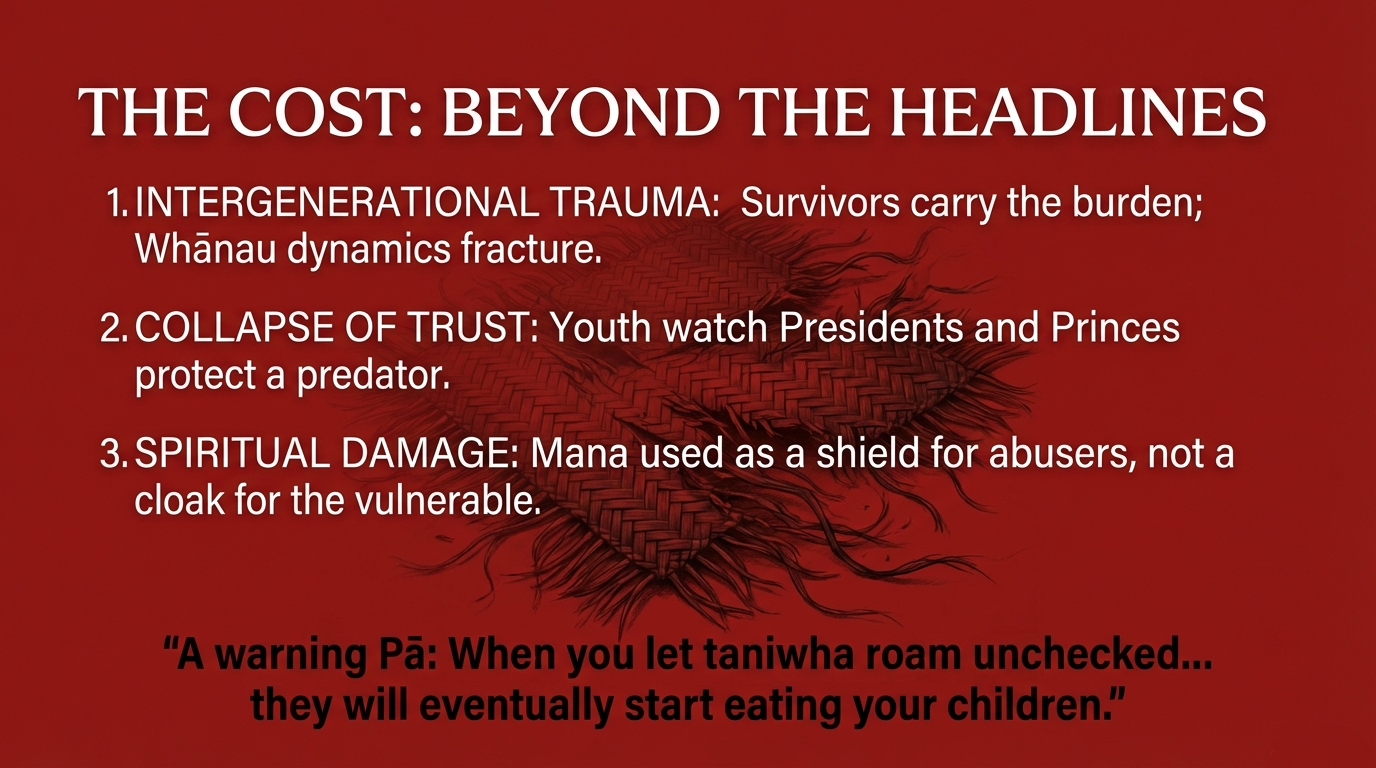
1. Survivors and Intergenerational Trauma
Epstein’s victims number in the dozens just in the original Florida and New York cases, with some reconstructions counting many more across different jurisdictions over decades. Each survivor carries trauma that can manifest as depression, addiction, suicidality, difficulty maintaining relationships, and disrupted educational and career paths.
For every survivor, whānau dynamics fracture:
parents carrying guilt, siblings absorbing the fallout, partners drawn into cycles of crisis.
Even by conservative trauma‑impact estimates from sexual violence research, you can expect very high rates of PTSD‑like symptoms, long‑term health impacts, and elevated suicide risk among survivors and their close circles.
In collective terms, this is not “one predator, many girls”;
it is multiple generations of whakapapa lines damaged.
2. Institutional Trust Collapse
When victims see presidents, princes and princesses circling a convicted offender, flying with him and staying in his homes long after conviction, and then watch those same institutions drag their feet on accountability, the result is a rational collapse of trust.
Young people learn that the justice system is a stage set:
real enough to jail poor, brown and Black offenders quickly, but endlessly negotiable when the accused is embedded in the financial and political elite.
This distrust translates into lower reporting rates, reluctance to cooperate with authorities, and more reliance on informal or online “justice” campaigns — all of which can be weaponised in disinformation and conspiracy ecosystems. The cost is measurable in fewer prosecutions of non‑elite offenders (because victims stop coming forward) and in the spread of polarising narratives that weaken democratic participation.
3. Opportunity Cost in Policy and Resources
Every hour of congressional “investigation” that is structured as partisan theatre is an hour not spent on resourcing survivor services, reforming trafficking laws, or auditing the professional enablers who make these crimes scalable. Financially, the cost of multiple congressional hearings, litigation, settlements and security for high‑profile witnesses runs into the tens and hundreds of millions — public money that could have gone into prevention, community‑based healing, and kaupapa Māori responses to violence.
4. Cultural and Spiritual Damage
From a tikanga lens, the deepest harm is spiritual and relational. When those who hold formal mana — presidents, royals, lawmakers — treat abused girls as collateral damage, they signal that tapu is negotiable, that money can buy redemption, and that mana can be used as a shield for predators, not as a cloak for the vulnerable.
For Māori, who have seen the Crown and its representatives breach Te Tiriti and desecrate whenua and bodies for generations, this is painfully familiar:
a global rerun of the same pattern, now on the terrain of sex trafficking and elite networks. The damage is to our collective sense of what leadership is supposed to be.
Tikanga vs Western Mind: Explaining the Clash
1. Western Individualism vs Collective Responsibility
The western mind frames Epstein as “one bad apple” and looks for individual culprits:
which politician, which royal, which CEO? Tikanga starts from the collective.
When harm occurs, the questions are:
Which relationships failed? What systems enabled this? Who must stand up on behalf of the whānau, the hapū, the iwi, to restore balance?
Applied here, tikanga says:
the institutions around Epstein — the Clintons’ political apparatus, the British royal household, the Norwegian monarchy, the banks, the PR firms — all carry a share of utu to pay. Western systems narrow responsibility down to a few names and transform the rest into bystanders.
2. Tapu and Noa vs Public vs Private
Western elites treat sexual behaviour and “friendships” as private matters, unless an explicit criminal conviction forces daylight. Tikanga treats the sexual integrity of the community as a matter of collective tapu.
The acts may be private;
the obligations are not. A leader has a duty to avoid association with serial harmdoers, especially once their behaviour is known, because their tapu — their state of sacredness and integrity — affects the whole community.
When a princess jokes in email with a convicted sex offender that Paris is “good for adultery” and that “Scandis” make better wives, as reported about Mette‑Marit in Norwegian media and summarised in RNZ, she is not just “being casual.” From a tikanga lens, she is trampling the tapu of every woman whose body will later be used as proof that Epstein still has respectable friends.
3. Manaaki vs PR Management
In tikanga, manaaki — care and hospitality — is oriented first to those who are vulnerable.
Western elite culture has inverted this, extending the most careful manaaki to the powerful:
arranging communications teams, protective narratives and carefully staged “regret” statements for presidents, princes and princesses, while survivors fight alone through courtrooms and online abuse.
The contrast is brutal:
Andrew writes friendly emails to Epstein after his conviction; Fergie calls him “the brother I always wished for” and asks him for money; a Norwegian princess stays four days at his home. None of them, in the public record, shows this intimacy and advocacy for his victims.
4. Utu as Process vs “Closure”
Western systems talk obsessively about “closure” — a trial, a settlement, a hearing, a report.
Tikanga sees utu as an ongoing process of restoring balance:
truth‑telling, reparations, changed behaviour, structural reform, and whanaungatanga with those harmed. One committee hearing with the Clintons, no matter how fiery, is not utu. Nor is one round of resignations in Westminster, or one regret statement in Oslo.
True utu here would demand systemic shifts:
banning sex‑crime offenders from financial and political influence; regulating the professional enablers; resourcing survivor‑led oversight; dismantling royal and political privileges that shield elites from the consequences faced by ordinary offenders.
Solutions: From Predator Archipelago to Kaitiaki Network
The taniwha that protected Epstein and his friends is not invincible. It feeds on secrecy, deference and disempowered communities. Tikanga offers concrete pathways to reverse that flow.
1. Survivor‑Led Truth Commissions
Instead of partisan US hearings centred on elites, create survivor‑led truth processes with real power:
subpoena authority, public hearings, and the ability to recommend criminal, civil and professional consequences. Survivors, not politicians, should set the agenda, decide which networks to prioritise, and define what reparations look like. This includes revisiting plea deals, settlements and NDAs that were shaped under duress or imbalance of power.
2. Regulate the Enablers
Banks, law firms, PR outfits and crisis‑management firms that knowingly service repeat sexual offenders must face consequences equivalent to those imposed on gangs and organised crime facilitators:
licence suspensions, massive fines, public naming, and criminal liability for executives who enable ongoing harm.
Lawyers and PR professionals who help rewrite reality for predators should be held to conduct standards that treat deliberate victim‑silencing as professional misconduct, not clever strategy.
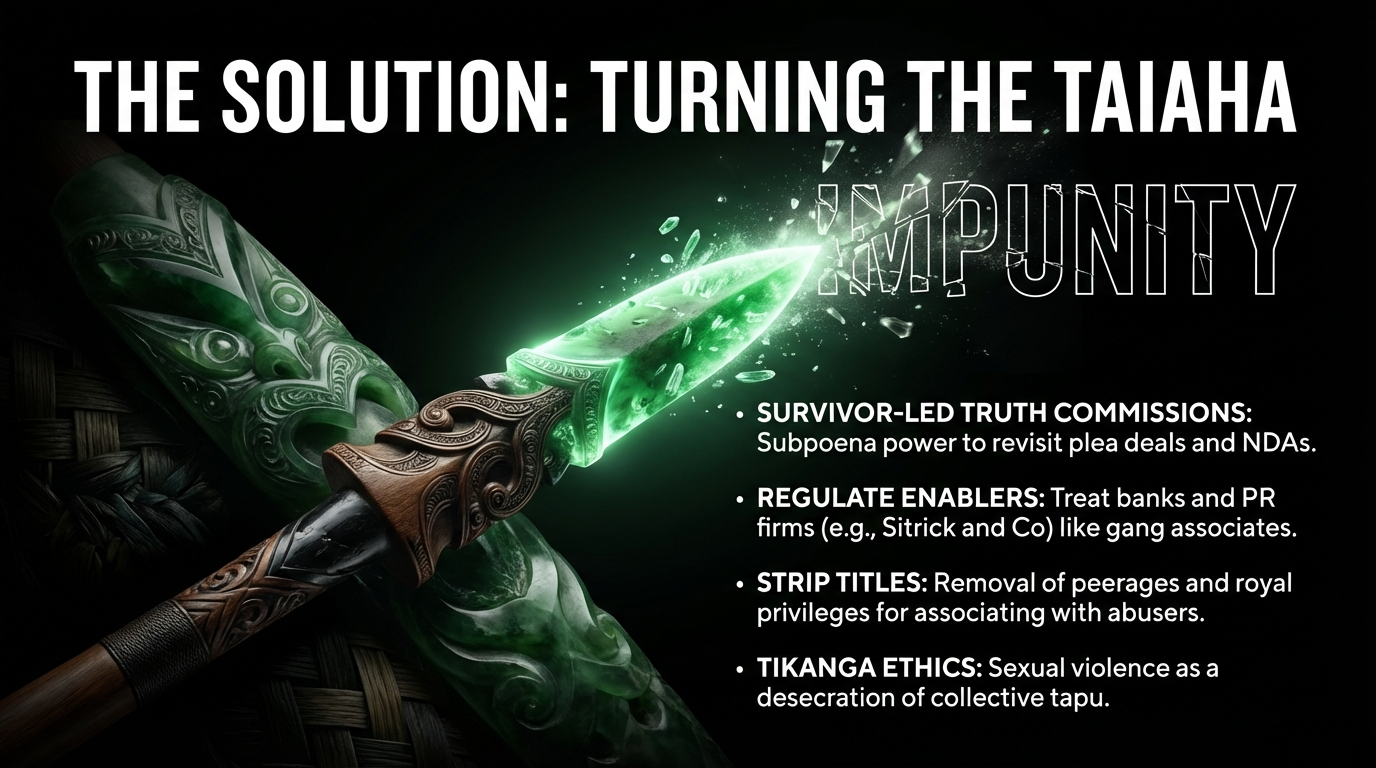
3. Strip Impunity from Royals and Heads of State
In systems that retain monarchies, there must be clear, enforceable processes for stripping titles, public funding and formal roles from royals who associate with serial abusers or obstruct accountability. That applies to Andrew’s continued presence in royal circles and to Mette‑Marit’s future role as queen, as publicly debated in Norway and reported by RNZ. Similar standards must apply to former presidents and foreign ministers:
access to official privileges, protection details and diplomatic circles should be contingent on full transparency around their connections to known abusers.
4. Embed Tikanga‑Informed Ethics in Global Governance
International institutions, parliaments and royal households can learn from tikanga and other Indigenous frameworks:
- Treat sexual violence against young people as a desecration of collective tapu, not a private disgrace.
- Require leaders to disclose and justify ongoing contact with individuals convicted of serious harm.
- Elevate survivor voices to positions of oversight and decision‑making, not just testimony.
This means rewriting codes of conduct, governance documents and diplomatic protocols to make association with traffickers and serial abusers a sacking offence, not a PR problem to be spun.
5. Build Community‑Owned Watchdogs
Whānau and communities cannot wait for elites to regulate themselves.
Independent, community‑owned investigative platforms — especially Indigenous‑led ones — can track and map elite networks, follow money flows, and expose patterns of harm. These must be properly resourced, protected from legal harassment, and connected across borders so that a princess’s email in Oslo, a prince’s settlement in London, and a president’s flight in Washington can be seen as parts of the same pattern, not isolated footnotes.
Turning the Taiaha Towards the Taniwha
The Epstein network is not “over” because he is dead, or because Ghislaine Maxwell is in prison, or because a few files have been released.
When Bill and Hillary Clinton finally sit in front of Congress, as RNZ reports they have now agreed to do RNZ, the real question is not whether they can perform convincing regret. It is whether the inquiry will dare follow the whakapapa of power:
through banks, royal households, ministries, PR firms and universities, and into the heart of how the West does business.

Tikanga asks:
Who protected the tapu of those girls and young women? Who stood up for their mana? In this story, it is not presidents, princes or princesses. It is survivors themselves, a handful of journalists, a few honest investigators and the communities that refuse to let this be swept aside as “old news” or partisan fodder.
Western elites turned an island into a symbol of decadence. Tikanga sees it as a warning pā:
a fortified reminder that when you let taniwha roam unchecked in your corridors of power, they will eventually start eating your children.
The job now is simple, and hard:
starve the taniwha, strengthen the kaitiaki, and make it impossible for the next Epstein to ever find such easy shelter in palaces, parliaments and presidential libraries again.
Koha Consideration
Every koha into this kaupapa is a message to the world that our rangatiratanga will not bow to presidents, princes or princesses who shelter predators. It signals that whānau are willing to fund the accountability that royal courts, parliaments and corporate boardrooms have refused to deliver, and that we will grow our own kaitiaki networks to track and expose the next Epstein long before the headlines arrive.
If this essay has helped you see the hidden connections — between the Clintons’ testimony, British royals under pressure, a Norwegian princess in Epstein’s inbox, and the taniwha of elite impunity — then know this:
you are part of the resistance to manufactured forgetting.

Three pathways exist:
- To support this mahi directly with a koha (voluntary contribution), visit: Koha—Support – https://app.koha.kiwi/events/the-maori-green-lantern-fighting-misinformation-and-disinformation-ivor-jones
- To receive essays directly and support through subscription, join the Substack community: Subscribe to the Māori Green Lantern – https://themaorigreenlantern.substack.com/subscribe
- For direct bank transfer, account details are: HTDM, account number 031546-0415173-000.
Kia kaha, whānau. Fund the taiaha that names names.

Ivor Jones The Māori Green Lantern Fighting Misinformation And Disinformation From The Far Right