"Clockwise Betrayal: How Labour Set the Trap That National-ACT Now Closes" - 5 November 2025
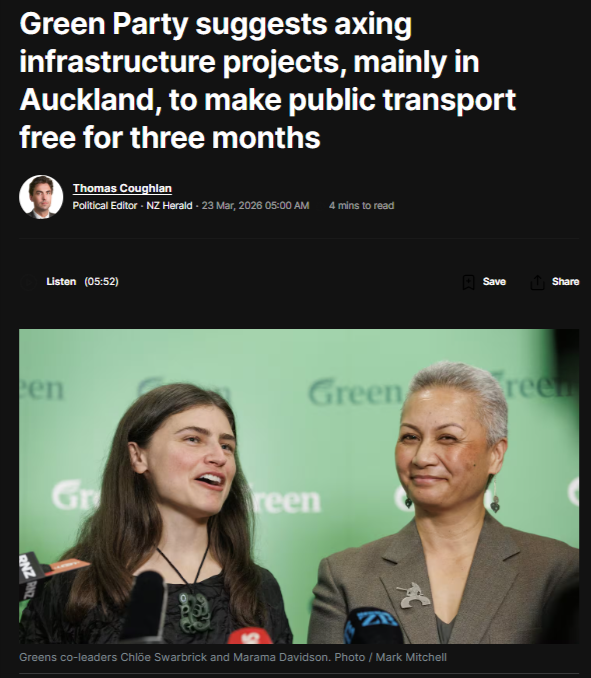
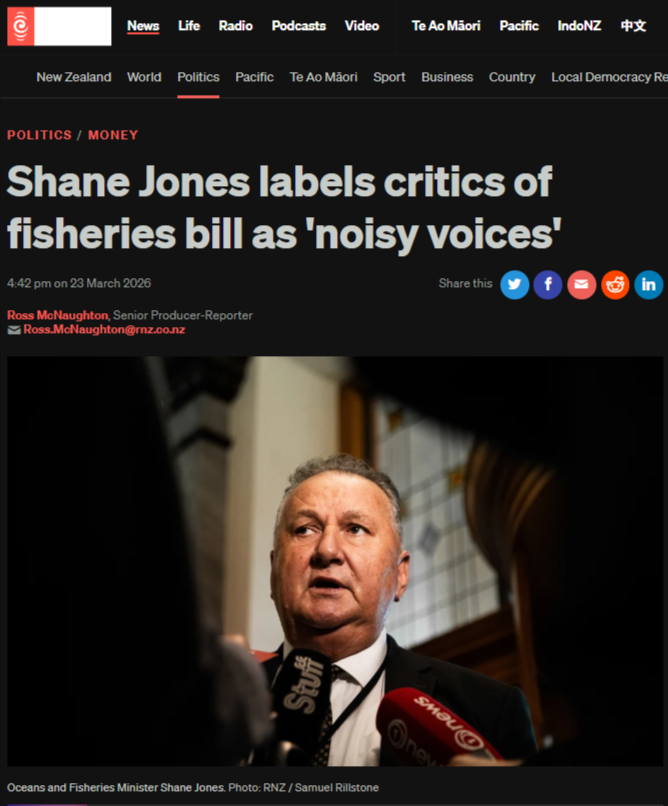
The same neoliberal machinery grinds Māori futures either way—just faster when the mask comes off
He Hōnui i te Kaupapa: The Same Neoliberal Cake, Different Frosting
Kia ora, e te whānau Māori—e te iwi.
This essay exposes how both Labour and the current National-ACT coalition operate within the same neoliberal framework, delivering fundamentally indistinguishable outcomes for Māori whānau despite rhetorical differences. The Treaty of Waitangi education clause removal by National-ACT reveals not a radical departure from Labour policy, but the acceleration of a shared market-driven agenda that has quietly dismantled Māori educational protections across both electoral cycles. The only meaningful difference is speed: Labour’s neoliberalism moved slowly through obfuscation and underfunding; National-ACT’s does so openly through budget cuts, deregulation, and ideological war.
The Smoking Gun: $617 Million in Documented Cuts to Māori Education
The National-ACT government announced in November 2025 the removal of Treaty obligations from school board responsibilities. Education Minister Erica Stanford claimed this was about clarity and focus on academic achievement. What this obscures is a coordinated dismantling of Māori educational infrastructure:
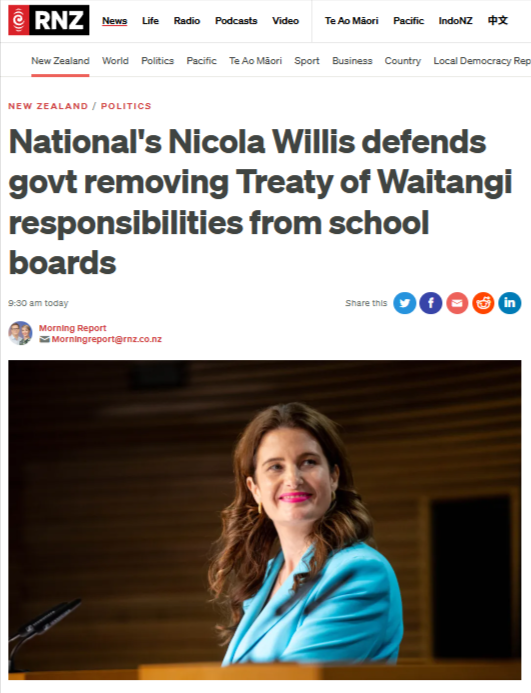
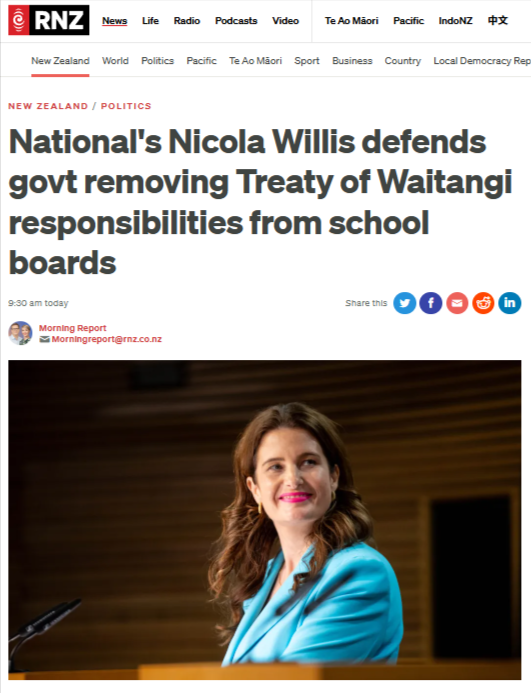
Finance Minister Nicola Willis dismissed the Treaty clause as a “virtue signal that made not an iota of difference” for Māori students. Yet simultaneously, the government has cut:
- Te Ahu o te Reo Māori: Budget 2025 disestablished the Wharekura Expert Teachers programme and removed Māori resource teacher roles
- Kahui Ako: $375.5 million slashed from the Kāhui Ako collaboration programme
- Resource Teachers of Literacy and Māori: Removal of Resource Teachers: Māori
- Māori education reprioritisation: $36.1m reprioritised from kaupapa Māori and Māori medium education
- Free school lunches: Reduction in support for nutrition programmes affecting poorest tamariki
Analysis indicates that more than $750 million in Māori-specific initiatives have been axed, with the Government touting over $700 million in funding for Māori while actual new investment when excluding reallocated funds is closer to $38 million.

Education Funding Cuts 2024-2025 - Visualizes verified government budget cuts totalling $617m+ across identified programmes
This is not educational reform. This is calculated demolition of the systems proven to work.
Labour’s Neoliberal Foundation: The Slow-Motion Betrayal
To understand what National-ACT is accelerating, we must examine Labour’s actual record, not its rhetoric. Labour added Treaty obligations to school boards in 2020. But how did Māori students actually fare under Labour’s education investment?
The Achievement Gap Remained Unchanged: While Labour invested in Māori education generally, Carmel Sepuloni acknowledged “the inequities we are seeing for Māori children in education”, implying these persistent disparities despite the Treaty clause addition.
Labour’s education spokesperson Sepuloni now criticizes the Treaty removal as problematic, yet her own government maintained the competitive market-based NCEA system that produces disparate outcomes.
The crucial revelation: Labour added Treaty language but did not fund its implementation. The clause existed as symbolic cover for structural underinvestment. When Willis dismisses it as ineffectual, she is partially correct—because Labour never genuinely operationalized it.
This is the pattern of neoliberal co-optation: absorb radical demands into regulatory language, then underfund implementation, creating the appearance of progress while maintaining the market logic that generates inequality.
The Ideological Network: David Seymour and Project 2025
What National-ACT is doing has international blueprints. David Seymour and ACT’s regulatory agenda directly mirror Project 2025, the Heritage Foundation’s blueprint for Trump’s government.
The Direct Parallels:
ACT’s Regulatory Standards Bill functions identically to Project 2025’s deregulation frameworks. Both prioritize:
- Presumption against regulation: Market efficiency over public protection
- “Woke” elimination narrative: Willis frames Treaty obligations as “nebulous concepts”
- Charter school expansion: National has reintroduced charter schools with minimal accountability
- Privatisation as default: Seymour explicitly states “Government is hopeless at owning things”
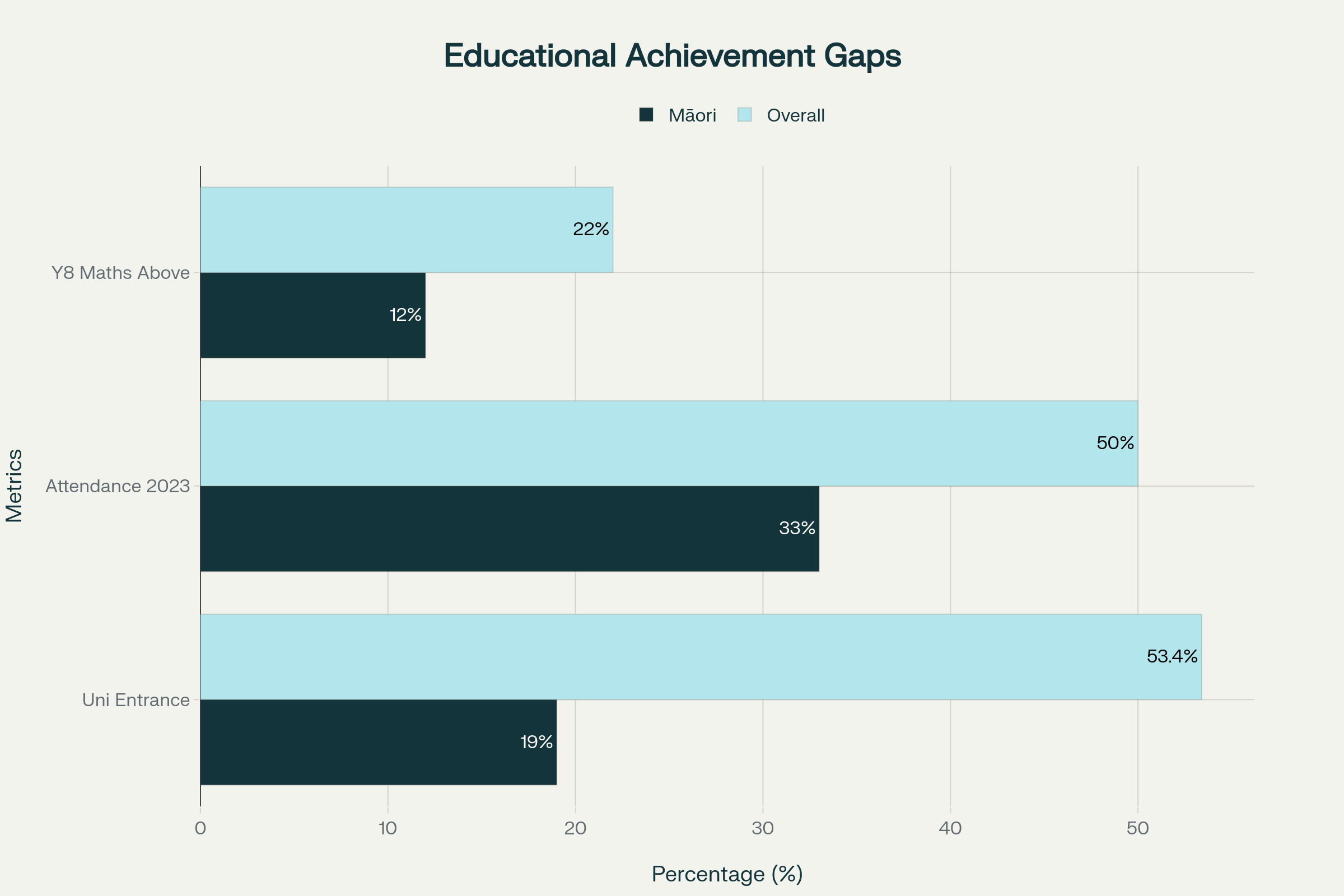
Māori Educational Achievement Disparities - Shows persistent gaps in university entrance (19% vs 53.4%), school attendance, and achievement levels despite Labour’s $1+ billion education investment
The False Choice: Treaty Clause vs. “Basics”
Willis and Erica Stanford frame this as a practical choice: remove nebulous Treaty obligations so boards focus on “reading, writing and maths”. This is a false dichotomy masking ideological choice.
The evidence contradicts the premise:
Kaupapa Māori schools prove that Treaty-centred education improves literacy outcomes:
- 73% of Year 12 and 13 students at kaupapa Māori schools achieved NCEA Level 3 (compared to 61% for all students in comparable mainstream schools and 56% for Māori students in those schools)
- 41% achieved University Entrance (compared to 24% for all students in comparable mainstream schools and 18% for Māori students)
- 80% of credits assessed for students in kaupapa Māori settings were from the New Zealand Curriculum
Tamariki in culturally affirming, te reo-immersed environments with explicit Treaty consciousness outperform their peers. The government’s own research confirms this. Yet those schools are defunded while “basics focus” becomes the euphemism for cultural elimination.
The logical contradiction is intentional. The “basics” framing allows cuts to appear non-ideological while systematically dismantling the infrastructure proven to work for Māori learners. This is neoliberal rhetorical discipline: present market discipline as technical necessity.
Carmel Sepuloni’s Complicity: Opposition Theatre
Labour’s education spokesperson called the Treaty removal problematic, yet this statement obscures Labour’s actual failures.
Sepuloni is performing opposition to National-ACT while Labour’s own record demonstrates:
- No willingness to restructure education fundamentally: Labour kept neoliberal accountability measures
- Symbolic Treaty adoption without material implementation: Add the clause, underfund the schools
- Maintenance of competitive market logic: Labour’s education system maintained achievement bands that correlate directly with ethnicity and poverty
Sepuloni’s criticism of Willis is valid but incomplete. Both Labour and National-ACT operate within neoliberal frameworks that require educational inequality. The only difference is whether to maintain the cultural language while underfunding (Labour) or remove the language and accelerate cuts (National-ACT).
The Tikanga Violations: Where Both Parties Fail
- Whanaungatanga (relationships/connection): Both parties treat Māori as policy subjects, not partners with mana.
- Manaakitanga (hospitality/care): Education should be an expression of care for tamariki. Instead, funding cuts affect school support.
- Kaitiakitanga (stewardship): Neither party acts as guardians of Māori educational futures.
- Rangatiratanga (self-determination): The Treaty clause removal removes any legal obligation for schools to support Māori decision-making about our own children’s education. Both parties have effectively abandoned this commitment.
Historical Pattern: Forty Years of Neoliberal Dismantling
This is not new. The pattern traces to 1984 when Labour introduced neoliberal economic restructuring. Labour created the ideological framework that National has been implementing for four decades.
- 1980s: Labour removes state regulation; privatization begins
- 2008-2017: National extends charter schools and market competition
- 2017-2023: Labour maintains market logic while adding cultural language
- 2025: National-ACT removes cultural language and accelerates markets
Labour’s addition of Treaty obligations in 2020 was a tactical retreat, not a reversal.
The Neoliberal Consensus: Invisible Agreement
The most dangerous aspect is the bipartisan consensus that education operates through market mechanisms. Both Labour and National agree on competitive funding models based on achievement metrics.
What both parties refuse is democratic control over education as a public good. Market logic requires removing democratic oversight, which is why:
- Labour faced no consequence for maintaining achievement gaps
- National can remove Treaty protections with PM support
- Both attack teacher unions as obstacles rather than partners
The Path Forward: Specific Calls to Action

The Māori Green Lantern Fighting Misinformation And Disinformation From The Far Right
To Whānau Māori:
- Demand full funding parity for Kura Kaupapa and Māori-medium schools
- Build independent education alternatives where possible
- Support teacher strikes—unions are the only organized force protecting collective education
To Te Arawa and neighbouring iwi:
- Reassert rangatiratanga through iwi-led education governance
- Fund te reo Māori immersion education independently where government abdicates
- Document the achievement gap growth and hold both parties accountable
To Educators:
- Join or support teacher unions fighting cuts
- Use agency to teach history and culture despite policy pressures
- Build networks of professional resistance to neoliberal accountability measures
To Everyone:
- Reject the false choice between “cultural content” and “academic rigor”
- Vote for parties proposing genuine alternatives, not managed decline
The Same Cake, Different Frosting—The Truth
Labour added Treaty language while underfunding implementation, allowing both the appearance of progress and the continued reproduction of inequality. National-ACT removes the language and accelerates the inequality.
Both operate within neoliberal frameworks that require:
- Market competition between schools
- Individual rather than collective responsibility
- Education as sorting mechanism rather than public good
- Elimination of democratic control
The only meaningful difference is transparency. Labour obscured neoliberalism through bicultural rhetoric. National-ACT is honest about dismantling protections.
There is no meaningful political difference between Labour and National on education. Both serve the same neoliberal logic. Labour did it slowly and quietly; National-ACT does it openly and quickly.
The real fight for educational justice must move beyond electoral politics toward direct action through teacher union support and community alternatives.
Kia kaha. The mahi continues.
Verified Sources
The Spinoff: Budget 2025: New funding headlines mask deeper cuts to Māori programmes
RNZ: Kaupapa Māori students more likely to get NCEA merit and excellence endorsements
1News: Seymour pushes for privatisation: ‘Govt hopeless at owning things’
Humble Koha Request
If this mahi has strengthened your understanding and you have the capacity and capability to support ongoing research and writing exposing neoliberalism and racism in Aotearoa, whānau are humbly invited to contribute:
HTDM: 03-1546-0415173-000
Ngā mihi nui.
—Ivor Jones, The Māori Green Lantern