“Corporate Cronies and Cover-up Deals: How the Elite Protect Their Own While Attacking Māori Rights” - 9 October 2025
Corporate Cronyism and the Māori Duty to Expose Power’s Web
Tēnā koutou katoa e te iwi. Greetings to all the people.
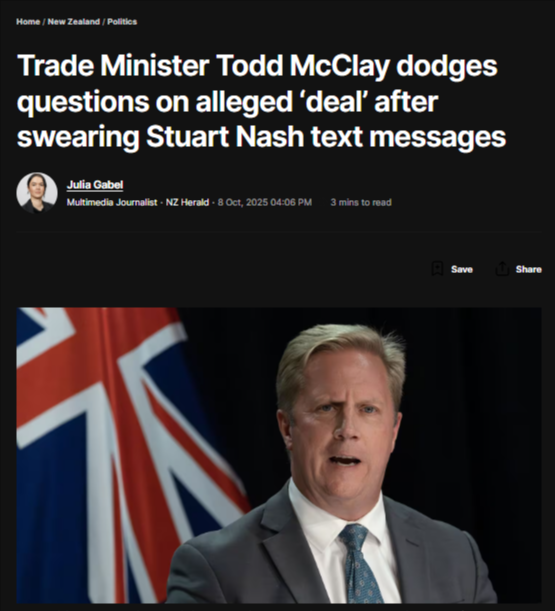
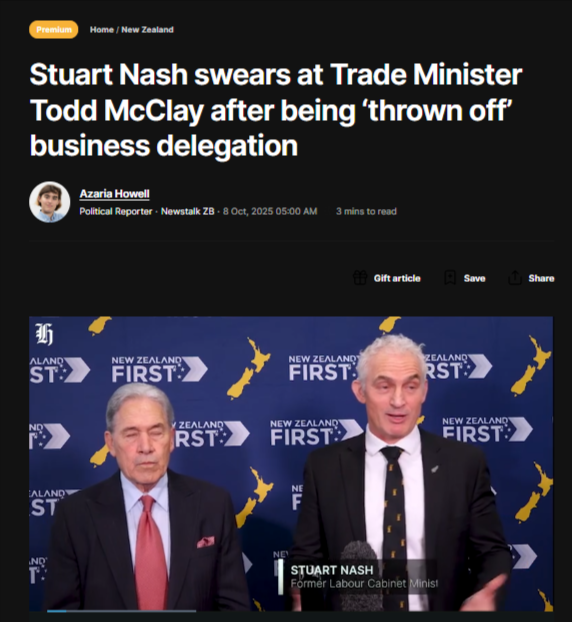
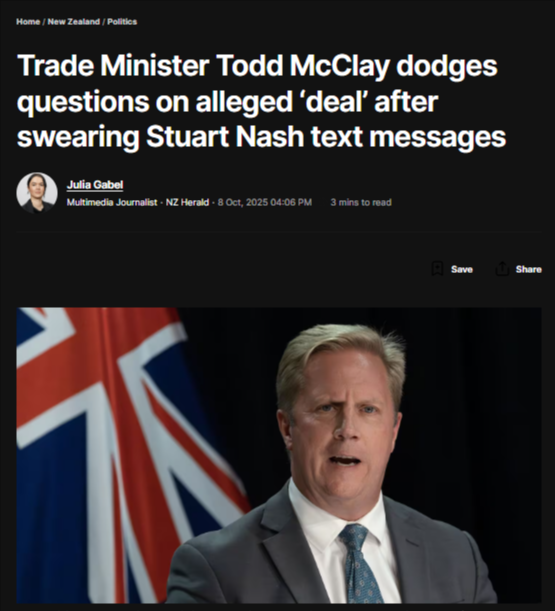
Here’s the heart of the matter that every everyday New Zealander needs to understand: Stuart Nash, a disgraced former Labour minister with a track record of corruption, was given special treatment by Trade Minister Todd McClay and government agencies to cover up why he was really dumped from a lucrative US trade trip.
The official story? McClay removed Nash from the delegation because his sexist comments about women would distract from business. The real story reveals a deeper web of corporate cronyism, political favours, and the systematic way power protects itself while simultaneously attacking Māori sovereignty and self-determination.
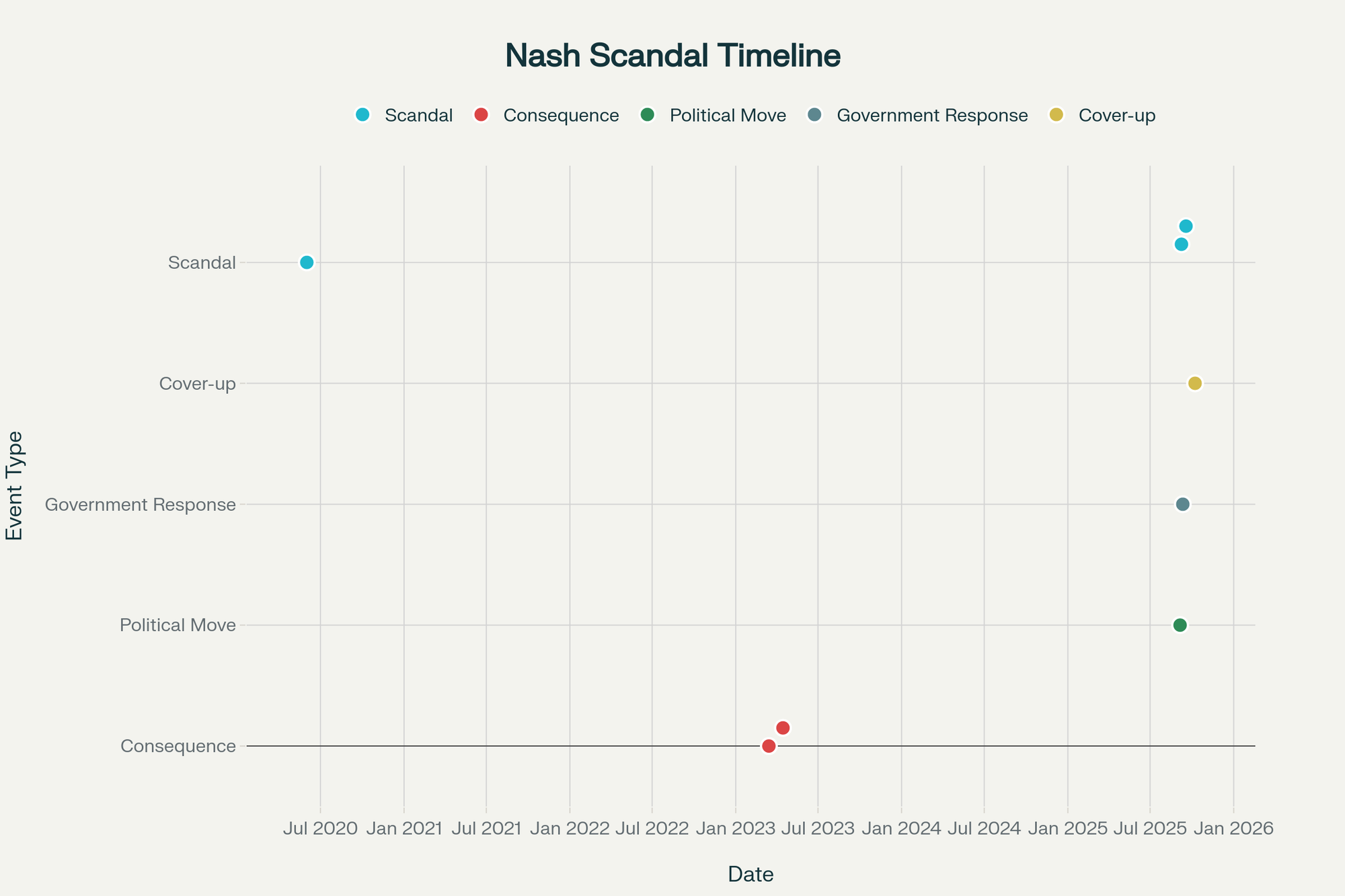
Timeline of Stuart Nash Scandals: From Cabinet Breach to Trade Delegation Controversy
Background: The Making of a Political Mercenary
Stuart Nash’s journey from Labour Cabinet minister to wannabe NZ First candidate reads like a handbook for political opportunism. His track record speaks for itself: sacked from Cabinet in March 2023 for sharing confidential information with business donors, a pattern of behaviour that included interfering with police processes, criticizing the judiciary, and meddling in immigration cases.
Todd McClay represents everything wrong with New Zealand’s political establishment. Son of former National MP Roger McClay, he’s been MP for Rotorua since 2008, embodying the dynastic politics that keeps power concentrated in Pākehā hands. His background as Cook Islands ambassador to the European Union reveals the same revolving door between politics and lucrative diplomatic postings that rewards loyalty to the system.
The third key player is Peter Chrisp, NZTE and now Invest NZ CEO since 2010. His corporate background at Norske Skog exemplifies how business executives move seamlessly into government positions, bringing corporate priorities into public service.
Deals, Deception, and the Protection of Power
The scandal centers on what happened after Nash made crude sexist comments on Sean Plunket’s The Platform radio show, defining a woman as “a person with a p*y and a pair of ts”. This appearance came after Nash spoke at NZ First’s convention in Palmerston North, where Winston Peters suggested he could be a “seamless” addition to the party.
McClay removed Nash from the US investment delegation, but here’s where the cover-up begins. Nash claimed a “deal” had been reached with Peter Chrisp that Nash would withdraw from the trip and “the story would not be that I was asked to withdraw”. When the real story emerged, Nash texted McClay: “So have you really thrown me off this delegation... WTF” followed by calling McClay’s response “pretty f***ing amateur mate!!”
When questioned by reporters, McClay walked away from questions about the alleged “deal” and refused to directly answer. This matters to Māori because it reveals how power operates - through backroom deals, media manipulation, and protecting the networks that maintain Pākehā dominance.
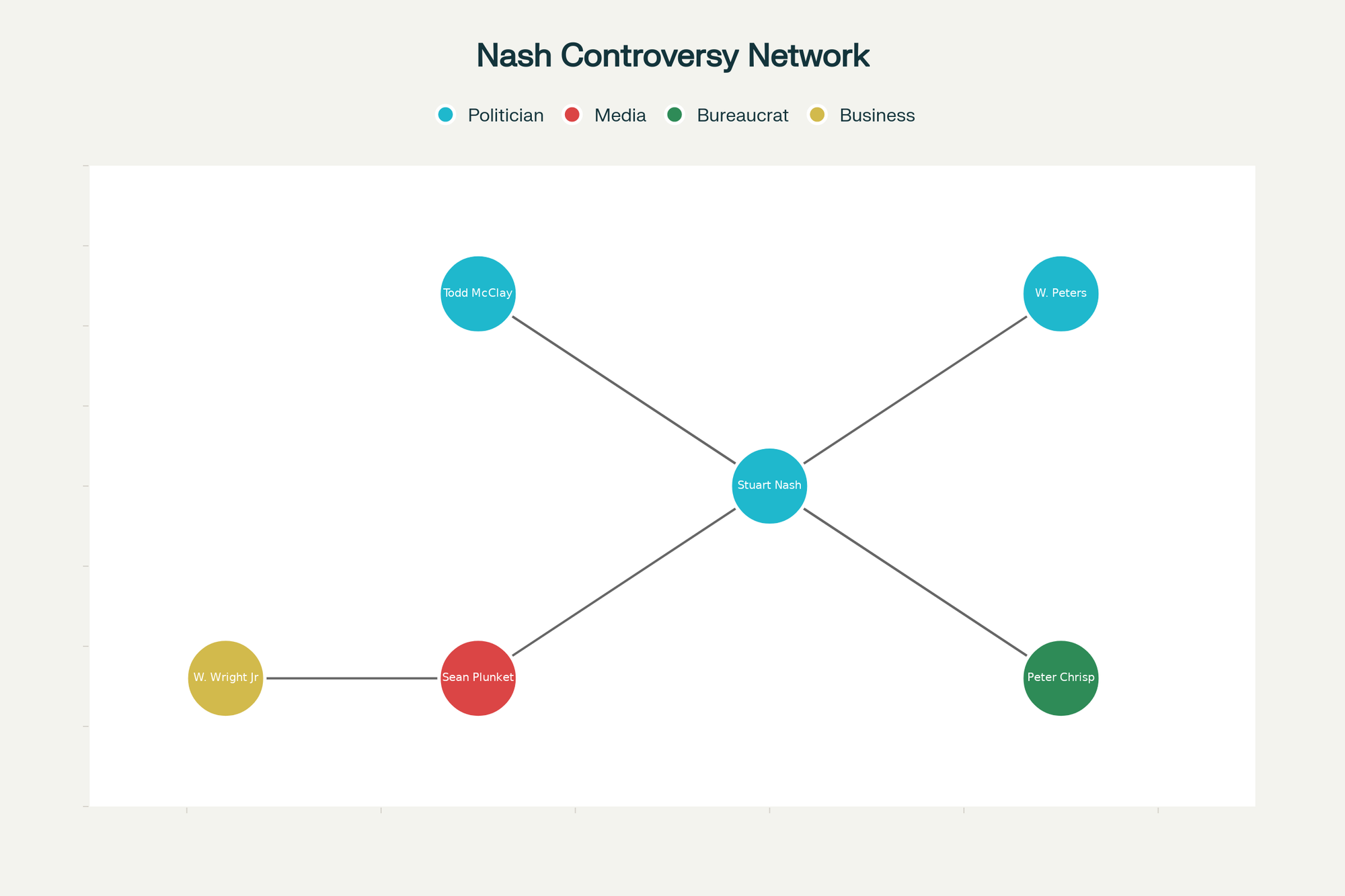
Network of Power: Connections in the Nash-McClay Trade Delegation Scandal
The Corporate-Political Pipeline: Maintaining Elite Control
The deeper issue exposed here is the revolving door between corporate power and political influence that systematically excludes Māori from decision-making. McClay’s trajectory from Cook Islands diplomatic posting to Trade Minister exemplifies how political connections secure lucrative positions. Nash’s post-Cabinet career as a corporate consultant promising access to government contracts reveals the transactional nature of political power.
Peter Chrisp’s role is particularly telling. As CEO of NZTE since 2010 with extensive corporate background, he represents how business interests colonize government agencies meant to serve all New Zealanders. The alleged “deal” with Nash shows how these networks protect each other through informal arrangements that never appear in official records.
This system directly harms Māori by maintaining structures that prioritize corporate profits over indigenous rights. When these same networks attack co-governance as “race-based theory” while operating their own race-based system of Pākehā privilege, the hypocrisy becomes clear.
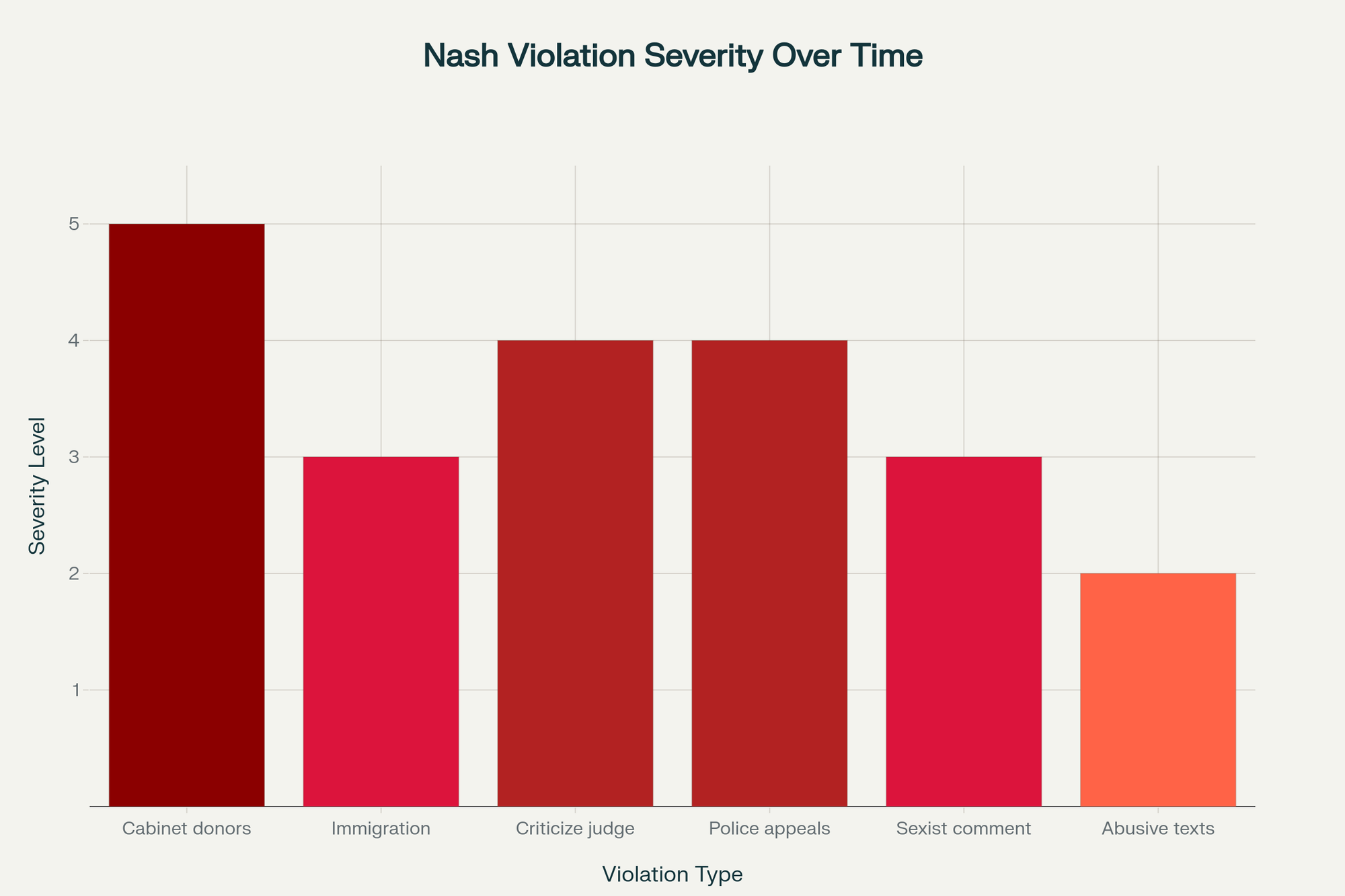
Stuart Nash’s Escalating Pattern of Violations: A Track Record of Misconduct
The Platform: Amplifying Anti-Māori Rhetoric
Sean Plunket’s The Platform represents a crucial piece of this puzzle. Founded in 2021 and significantly funded by Tauranga rich-lister Wayne Wright Jr, it provides a media outlet for anti-”woke” messaging that specifically targets Māori rights and Treaty obligations.
Plunket’s background includes being suspended from Twitter for hateful conduct, yet Nash chose this platform to make his sexist comments while courting NZ First. This choice reveals the deliberate strategy of using fringe media to normalize extremist rhetoric before bringing it into mainstream politics.
The Platform’s role in amplifying Nash’s sexist views connects directly to the broader anti-Māori agenda. Winston Peters has compared co-governance to Nazi Germany and declared “war on woke”, using The Platform and similar outlets to spread these messages.
The Web of Nationalist Christian Links
The connections between these players reveal a broader network promoting nationalist Christian ideology that views Māori self-determination as a threat to Pākehā supremacy. Peters’ anti-co-governance rhetoric and promises to remove Treaty references from government documents align perfectly with the corporate agenda of maintaining extractive capitalism without indigenous constraints.
Nash’s journey from Labour to NZ First isn’t ideological evolution - it’s opportunistic positioning within networks that protect corporate interests. His willingness to make sexist comments on a platform known for extremist views shows how far he’ll go to gain acceptance in these circles.
The “deal” with McClay and Chrisp demonstrates how these networks operate through informal agreements that never appear in Cabinet papers or official correspondence. This shadow governance system makes accountability impossible while maintaining plausible deniability.
Exposing the Colonial Logic
From a Māori perspective, this scandal reveals the colonial logic that underlies New Zealand’s political system. The same networks that protect Nash’s access to lucrative trade delegations are those attacking co-governance as “divisive” and “race-based.” The hypocrisy is staggering - they operate the most sophisticated race-based system in New Zealand history while claiming Māori seek special treatment.
The corporate-political pipeline ensures that power remains concentrated in Pākehā hands through education, networks, and informal agreements. McClay’s dynastic political inheritance, Chrisp’s corporate connections, and Nash’s donor relationships all demonstrate how this system perpetuates itself.
When Māori challenge this through co-governance arrangements or Treaty settlements, it’s portrayed as threatening “democracy.” But when Pākehā operate through backroom deals and corporate influence, it’s called “business as usual.”
The Māori Response: Kaitiakitanga in Action
As tangata whenua, we have a responsibility as kaitiaki to expose how power operates and protect our communities from its harmful effects. This scandal provides a clear example of how colonial structures maintain themselves through networks of mutual protection and shared interests.
The principle of manaakitanga demands we treat all people with respect, but it doesn’t require us to ignore when that respect is not reciprocated. Nash’s sexist comments and entitled response to consequences show his disregard for basic human dignity, particularly toward women.
Whakatōhea reminds us that standing together in unity strengthens our resistance to colonial power structures. This scandal shows how important it is for Māori to maintain our own networks and institutions rather than relying on systems designed to exclude us.
Tino rangatiratanga - our right to self-determination - becomes more precious when we see how Pākehā networks operate to maintain their dominance. The same politicians attacking Māori sovereignty exercise their own through informal deals and corporate connections.
Implications: The Broader Pattern of Colonial Control
This controversy matters because it reveals the systematic nature of colonial control in contemporary New Zealand. The same networks attacking Māori rights operate through exactly the kind of “special arrangements” they claim to oppose when Māori seek them.
The impact on Māori communities is profound. When trade delegations and investment opportunities flow through personal networks rather than transparent processes, Māori businesses and communities are systematically excluded. The “deals” that protect people like Nash are the same structures that prevent Māori from accessing economic opportunities.
McClay’s dismissive attitude toward the scandal - claiming it’s “the least important thing I have to deal with” - shows how the political establishment views accountability. When protecting their networks matters more than transparency, democracy becomes a facade for elite rule.
Whakamutunga: Standing Against Colonial Networks
This scandal exposes the web of relationships that maintain Pākehā dominance in New Zealand. From Nash’s corruption to McClay’s cover-up attempts, from Chrisp’s corporate background to Plunket’s extremist platform, we see how power protects itself through mutual favours and shared interests.

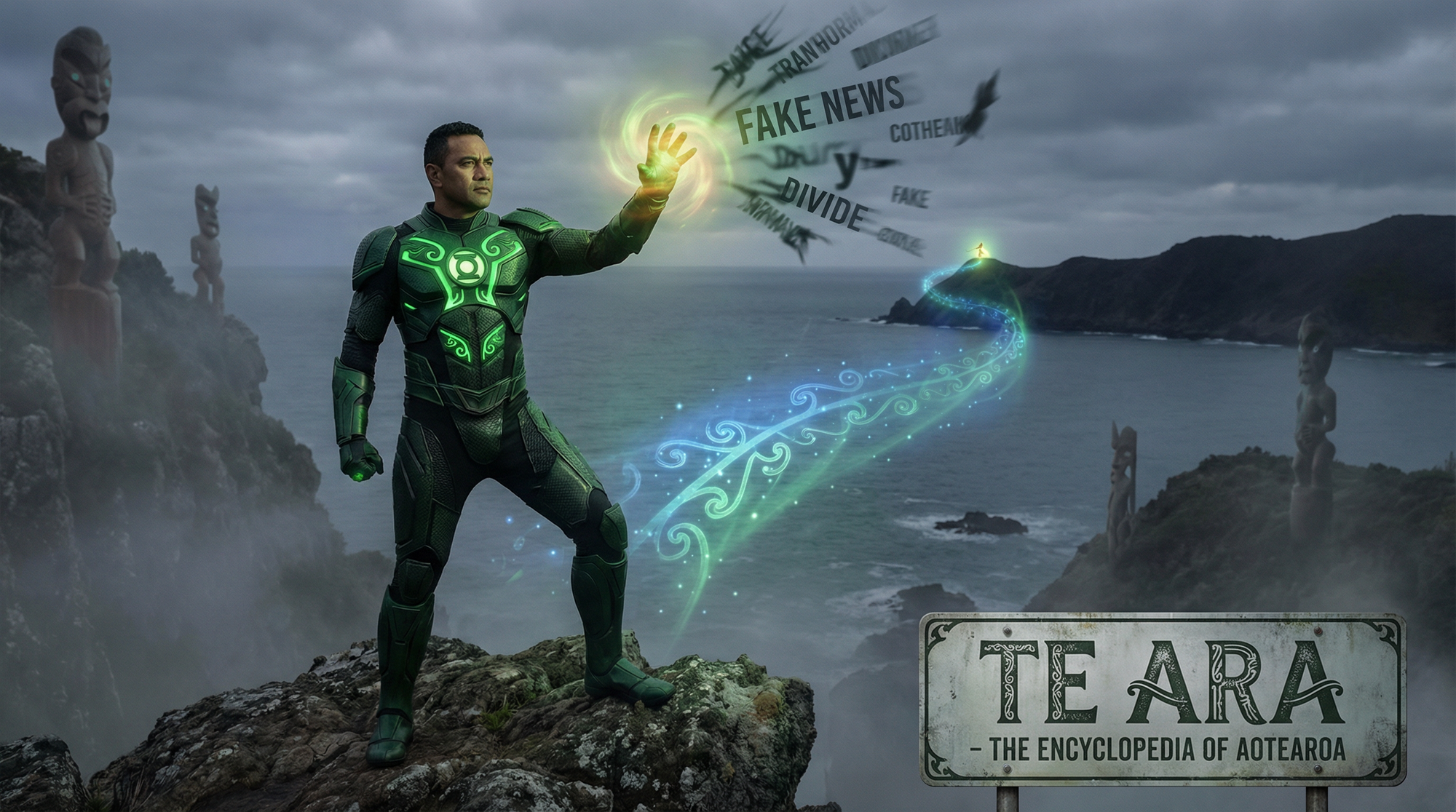
The Māori Green Lantern Fighting Misinformation And Disinformation From The Far Right
As Māori, we must continue exposing these networks while building our own institutions based on tikanga Māori values. The corporate cronies who attack co-governance operate the most sophisticated cronyism system in our history. Their hypocrisy must be called out at every opportunity.
The path forward requires maintaining our commitment to pono (truth) and tika (righteousness) while recognizing that colonial power structures will always protect themselves. Only by building alternatives based on mātauranga Māori and tino rangatiratanga can we create the just society our tīpuna envisioned.
Ngā mihi nui ki a koutou katoa. Ka kite anō.
For readers who find value in exposing the truth about how power operates in New Zealand, please consider a koha to support this mahi: HTDM: 03-1546-0415173-000. The MGL understands these tough economic times for whānau so please only contribute if you have capacity and wish to do so.