“Corporate Puppet Show: How Potaka is Gutting Māori Rights While Playing Dress-Up Minister” - 2 October 2025
The Cynical Theater of Fake Representation
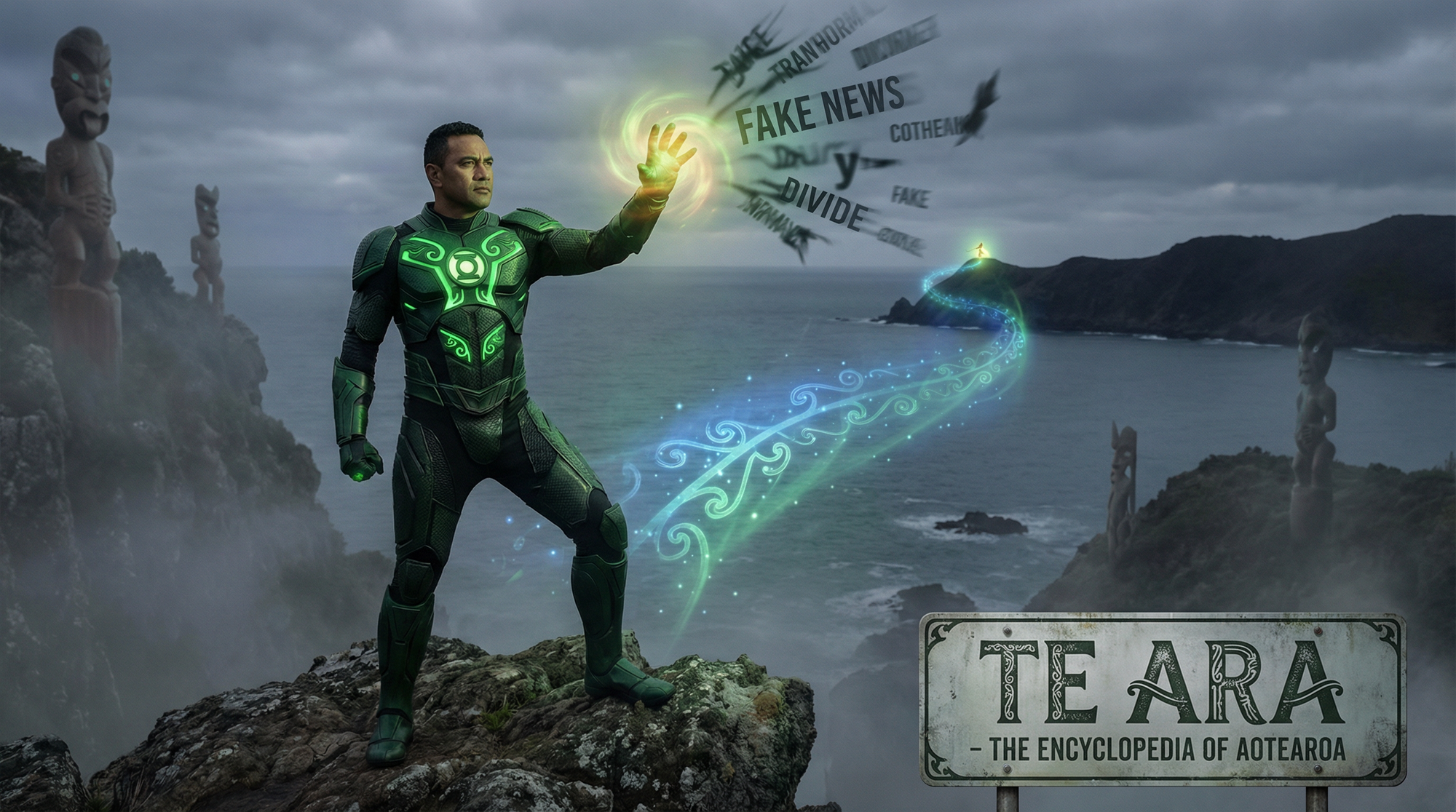
Kia ora, koutou katoa. Ko Ivor Jones ahau, Te Māori Green Lantern, he tangata whenua o Te Arawa me Ngāti Pikiao.
Greetings, all. I am Ivor Jones, The Māori Green Lantern, a tangata whenua of Te Arawa and Ngāti Pikiao.
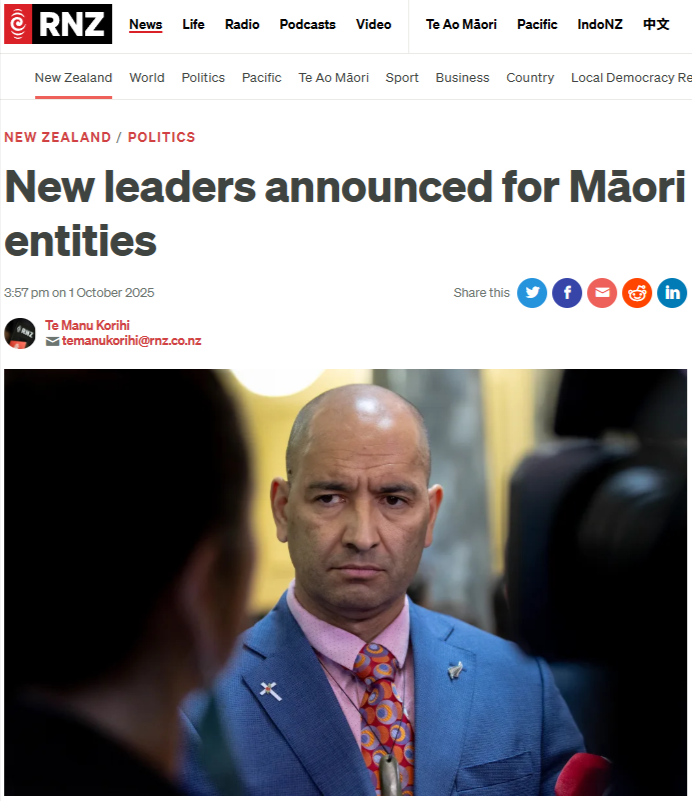
Let me cut straight to the bone here, whanau. What we witnessed with Tama Potaka’s recent appointments to key Māori entities isn’t governance - it’s a calculated dismantling of Māori self-determination dressed up as “bringing expertise” to our organizations. This is neocolonial puppetry at its most brazen, and every New Zealander needs to understand what’s really happening behind the corporate speak and political theater.
Background: The Anatomy of Institutional Capture
The Coalition Government - a toxic alliance of National’s neoliberal capitalism, ACT’s white supremacist ideology, and New Zealand First’s nationalist populism - has systematically targeted Māori institutions since taking power in 2023. These aren’t random policy decisions; they’re part of a coordinated assault on Te Tiriti o Waitangi and Māori rangatiratanga that follows the classic playbook of settler colonial states worldwide.
Tama Potaka, despite his whakapapa, has become the perfect front man for this operation. His Māori face provides political cover while his corporate background - including executive roles at Tainui Group Holdings and the New Zealand Superannuation Fund - signals his true allegiance to capital over culture. This is tokenism weaponized against its own people.
The timing of these appointments is no coincidence. They come as the Treaty Principles Bill faces massive opposition , as the government strips over a billion dollars from Māori-specific funding , and as Māori-Crown relations reach their lowest point in decades. This is shock doctrine politics applied to Indigenous rights.
Seven Strategic Strikes Against Māori Autonomy
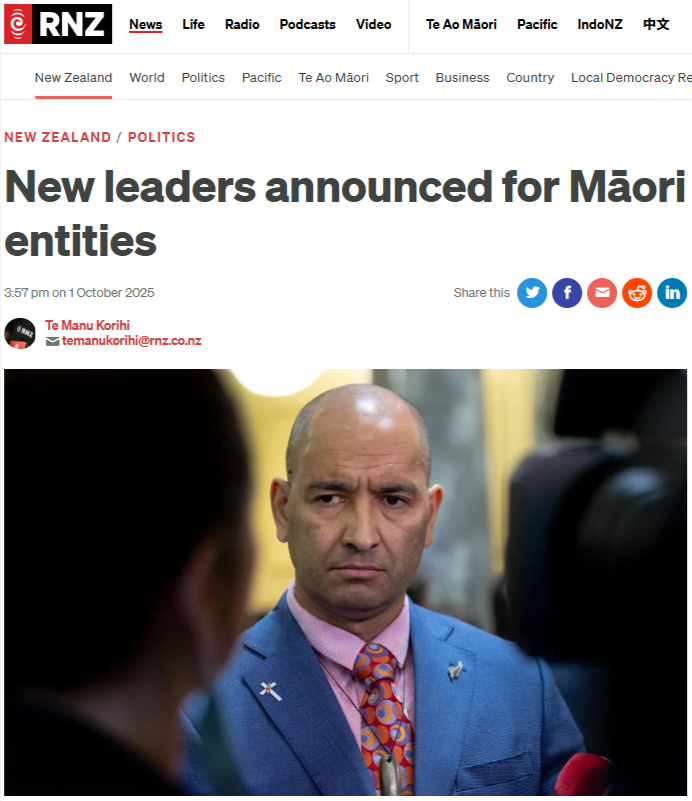
Potaka’s announcement of seven appointments across five Māori entities represents a masterclass in institutional capture. Let’s decode what’s really happening here, because the mainstream media coverage completely missed the strategic nature of these placements.
Te Mātāwai receives Dr Te Rina Warren, positioning National-aligned academics in language revitalization oversight. Te Taura Whiri i te Reo Māori gets Mahanga Pihama and Jeremy MacLeod, bringing broadcasting and iwi experience that could be leveraged to influence media narratives. Te Māngai Pāho - the crucial broadcasting funding body - now has Reikura Kahi as Chair and Kingi Kiriona as Deputy Chair, giving the government direct influence over Māori media content and funding decisions.
But it’s the Waitangi Tribunal changes that reveal the true scope of this operation. Potaka’s “refresh” removed eleven existing members, including powerhouses like Professor Rawinia Higgins, Professor Tom Roa, and Distinguished Professor Linda Tuhiwai Smith - some of te ao Māori’s most respected thinkers and tireless advocates for Treaty rights. In their place? Corporate lawyers and former politicians, including the appointment of Richard Prebble, the former ACT leader who once called for the Tribunal’s complete abolition.
This isn’t about “bringing fresh perspectives” - it’s about neutering institutions that have been effective at holding the Crown accountable for Treaty breaches. When you can’t eliminate these bodies outright, you capture them from within.
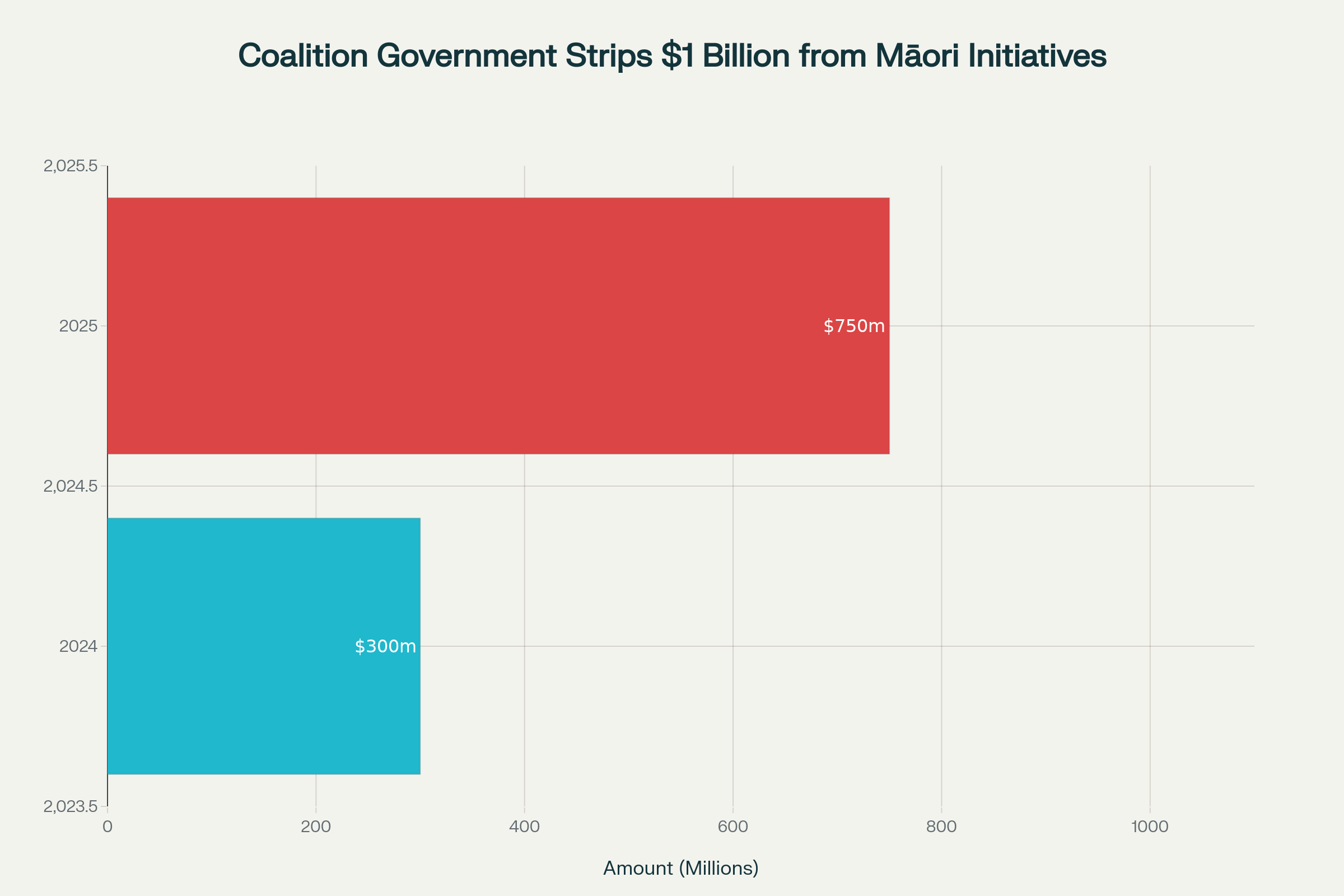
Coalition government funding cuts to Māori-specific initiatives totaling over $1 billion across two budgets
Main Analysis: The Neoliberal Colonization of Māori Institutions
The Corporate Takeover Strategy
The pattern becomes clear when you examine the backgrounds of these appointees. Mark Gray to Poutama Trust brings corporate legal experience from Magnis Energy Technologies and Telkwa Mining. Juliet Tainui-Hernandez joins the Waitangi Tribunal fresh from ASB Bank and the Reserve Bank. These aren’t cultural leaders or Treaty experts - they’re corporate operatives who understand how to manage Indigenous resistance from the inside.
This reflects what Naomi Klein calls the “shock doctrine” - using crisis moments to implement radical changes that would normally face massive resistance. The Coalition has used the economic narrative of “fiscal responsibility” to justify gutting Māori funding while simultaneously installing corporate-friendly leadership in our institutions.
The appointment of Richard Prebble to the Waitangi Tribunal is particularly obscene. This is a man who championed the neoliberal reforms that devastated Māori communities in the 1980s and 90s, who led ACT’s calls to abolish Treaty settlements, and who represents everything that Te Tiriti stands against. His appointment isn’t just insulting - it’s a deliberate provocation designed to show Māori that even our most sacred institutions aren’t safe from corporate capture.
The Christian Nationalist Connection
What’s been largely unreported is the extensive Christian networking that connects many of these appointees and their political sponsors. The Coalition Government has deep ties to evangelical and conservative Christian movements that view Māori spirituality and tikanga as obstacles to their vision of a “Christian nation”.
David Seymour’s ACT Party, driving much of the anti-Māori agenda, has significant support from Christian conservative networks that promote “one law for all” rhetoric while advancing policies that entrench Pākehā Christian privilege. New Zealand First’s nationalist populism also draws heavily on Christian imagery of New Zealand as “God’s Own Country” - code for a white, Christian settler state.
This isn’t coincidental. The historical pattern of Christian missions undermining Indigenous sovereignty is being replayed through modern political networks. When Christian leaders signed letters opposing the Treaty Principles Bill, Seymour attacked them for abandoning “core Christian principles” - revealing his expectation that Christianity should support his white supremacist agenda.
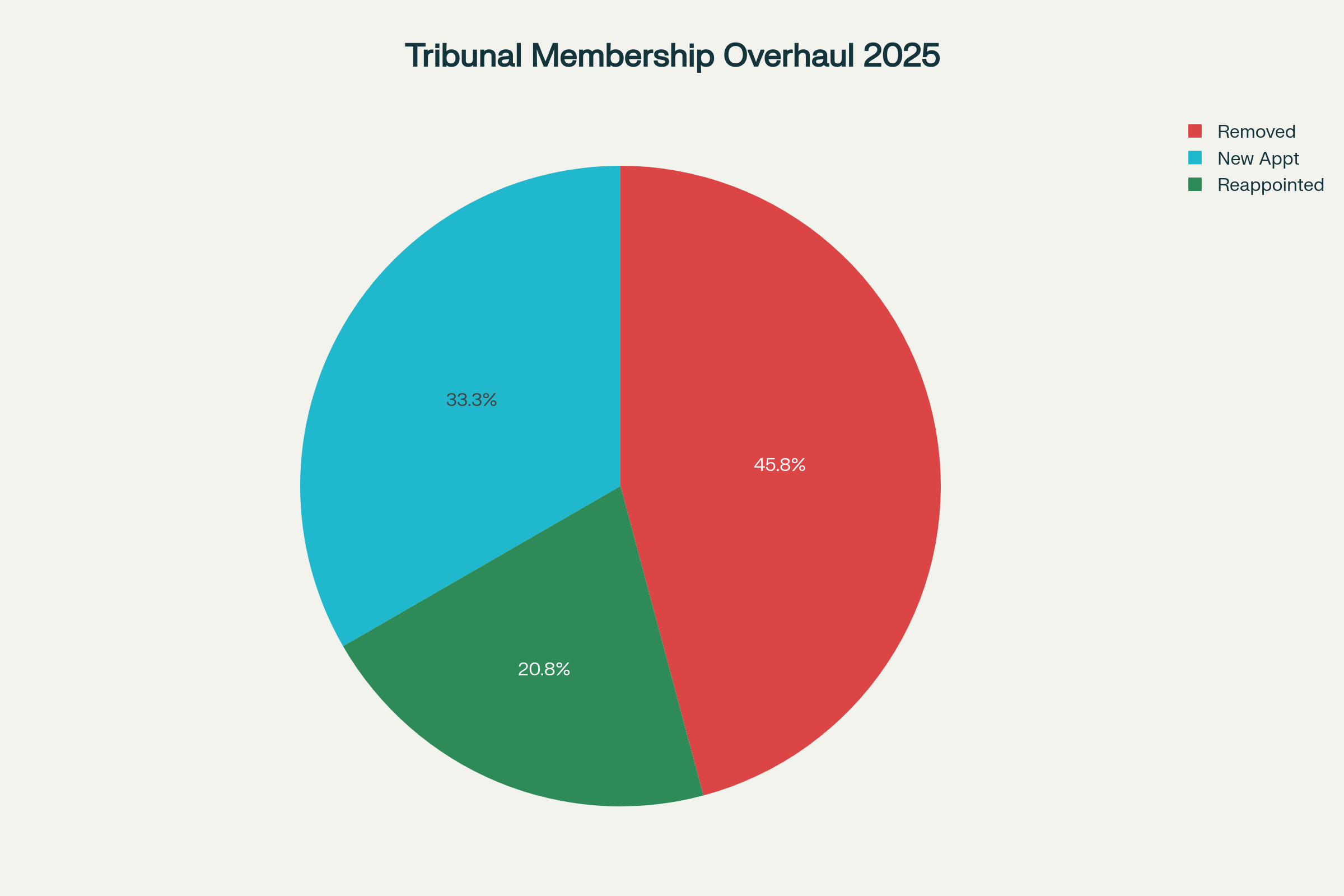
Breakdown of Waitangi Tribunal membership changes showing the majority of existing members were removed
The Media Capture Strategy
The appointments to Te Māngai Pāho and related broadcasting entities are particularly strategic. Māori media has been one of the few spaces where authentic Indigenous voices could challenge government narratives. By placing government-aligned figures in control of funding and commissioning decisions, the Coalition ensures that critical voices will be starved of resources while compliant content gets boosted.
Reikura Kahi’s appointment as Chair of Te Māngai Pāho is telling. While she brings television production experience, her selection over community media advocates signals a preference for commercial over community priorities. This aligns with the Coalition’s broader media strategy of favoring corporate outlets over independent Indigenous journalism.
The government has already slashed Māori television funding by $9.5 million while increasing ministerial travel budgets. The pattern is clear: defund critical Māori media while installing leadership that won’t fight the cuts. This is media capture 101, applied to Indigenous communications.
The Funding Demolition Project
The billion-dollar attack on Māori funding represents the largest rollback of Indigenous rights investment in New Zealand’s modern history. Budget 2024 cut $300 million from Māori-specific initiatives, while Budget 2025 went even deeper, cutting approximately $750 million from Māori housing, economic funds, education, and training programs.
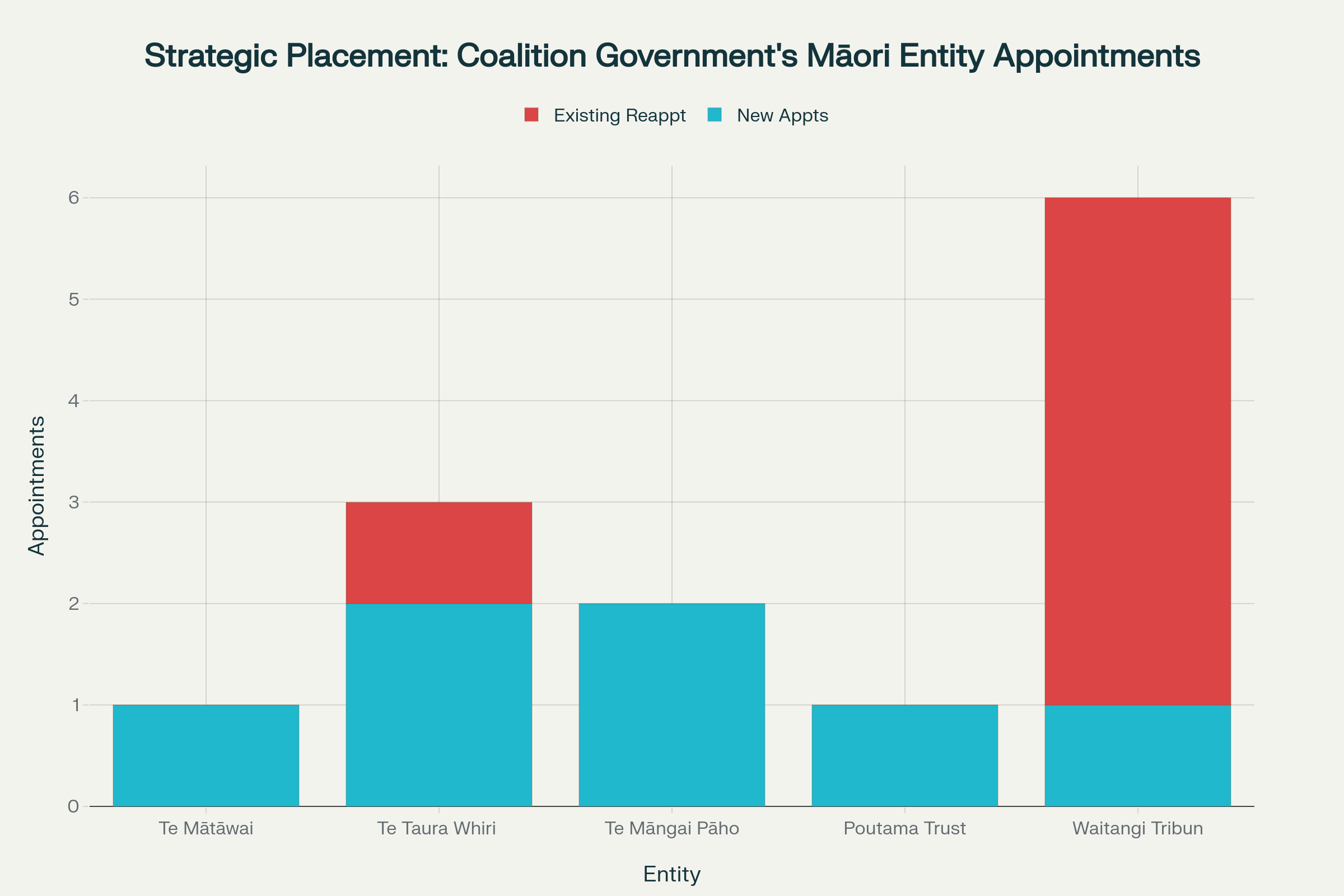
New appointments and reappointments across key Māori entities by the coalition government
This isn’t “fiscal responsibility” - it’s ideological warfare disguised as economic policy. While the government claims these cuts are necessary for economic stability, they simultaneously approved tax cuts that primarily benefit wealthy property investors and increased defense spending. The message is clear: corporate welfare is essential, but Māori development is expendable.
The destruction of the $600 million Whai Kāinga Whai Oranga housing program is particularly cruel. This initiative was specifically designed to address the chronic housing inequities faced by Māori whānau. Its replacement with a “flexible housing fund” removes Māori-specific targeting and community control, ensuring resources will flow to mainstream developers rather than kaupapa Māori providers.
The Language Revitalization Sabotage
While the government makes token gestures toward te reo Māori revitalization - promising to have “one million New Zealanders confidently using te reo Māori by 2040” - its actions systematically undermine this goal. The appointments to Te Mātāwai and Te Taura Whiri bring individuals who understand the system but may lack the radical commitment needed to challenge structural barriers to language revival.
Real language revitalization requires confronting the colonial structures that marginalized te reo in the first place. It requires supporting Māori-controlled education, media, and community initiatives. Instead, these appointments signal a preference for managed, non-threatening language promotion that doesn’t challenge English linguistic hegemony or the broader colonial project.
The $36.1 million in cuts to Māori education, including the disestablishment of Wharekura Expert Teachers and removal of Resource Teachers: Māori, directly contradicts the government’s stated language goals. This reveals the appointments as window dressing for a broader strategy of containment and control.
Implications: The Broader Colonial Project
These appointments represent more than administrative reshuffling - they’re part of a comprehensive strategy to neutralize Māori resistance to the Coalition’s neoliberal and nationalist agenda. By capturing our institutions from within, the government can claim Māori endorsement for policies that devastate our communities.
The connections between these institutional changes and the Treaty Principles Bill become clear when viewed through this lens. David Seymour’s legislation seeks to redefine Te Tiriti to eliminate Māori collective rights and reduce us to individual citizens with no special status. The institutional appointments ensure that when this assault on our rights occurs, key Māori entities will be controlled by figures unlikely to mount effective resistance.
The broader pattern reflects what Indigenous scholars call “administrative absorption” - the process by which colonial states co-opt Indigenous institutions to serve settler colonial objectives. Canada’s residential school system, Australia’s stolen generations, and the United States’ termination policies all followed similar patterns of using Indigenous faces to legitimize genocidal policies.
For Māori specifically, this represents a profound betrayal of Te Tiriti principles of partnership, participation, and protection. The Crown’s unilateral restructuring of Māori institutions violates the rangatiratanga guaranteed in Article Two while using Māori appointees to provide legitimacy for these breaches.
The international implications are also significant. New Zealand has long positioned itself as a model for Indigenous-settler relations, pointing to Treaty settlements and co-governance initiatives as evidence of progressive policies. These appointments signal a fundamental shift away from genuine partnership toward managed containment, potentially influencing how other settler states treat Indigenous rights.
Resistance and the Path Forward
Whanau, we cannot allow this corporate colonization of our institutions to proceed unchallenged. The appointment of Richard Prebble to the Waitangi Tribunal alone represents such a profound insult to Te Tiriti that it demands immediate resistance from all who respect Indigenous rights.
These appointments reveal the Coalition Government’s true agenda: the complete subordination of Māori interests to corporate and colonial power. Tama Potaka has become the Māori face of our own colonization, providing cultural cover for policies that devastate our communities while enriching his corporate allies.
The resistance must be strategic and sustained. We need to expose the connections between these appointees and corporate interests. We need to challenge the legitimacy of institutions captured by colonial agents. Most importantly, we need to build alternative structures that remain under genuine Māori control.
The wāhine who turned their backs on Potaka at Waitangi showed us the way - dignified, powerful resistance that exposes the bankruptcy of colonial collaboration. Their silent protest communicated more truth than all of Potaka’s corporate speak combined.
This is not just about institutional politics - it’s about the survival of Māori as a people. When our own institutions are turned against us, when our own leaders become agents of our oppression, we must remember that true power comes from the people, not from corporate boardrooms or government appointments.
The billion-dollar attack on our funding, the corporate capture of our institutions, the Treaty Principles Bill, the Waitangi Tribunal whitewash - these are all connected parts of the same colonial project. Understanding these connections is crucial for effective resistance.
As always, readers who find value in this analysis and wish to support this mahi, please consider contributing a koha to: HTDM: 03-1546-0415173-000. In these challenging economic times, I understand the pressures on whānau, so please only contribute if you have the capacity and desire to do so.
Kia kaha, whanau. The struggle continues, and truth will always find a way to surface, no matter how deep the colonial deception runs.
Nōku noa, na Ivor Jones, Te Māori Green Lantern
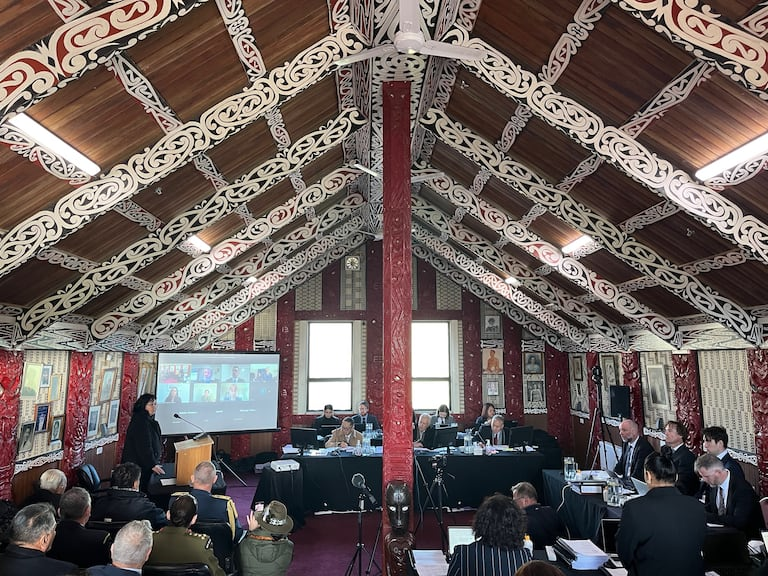
Waitangi Tribunal hearing room featuring Maori carvings and officials during a formal hearing

The Māori Green Lantern Fighting Misinformation And Disinformation From The Far Right