"David Seymour’s War on Te Tiriti: How “Equal Rights” Became the New White Hood" - 6 January 2026
Stripping Māori power, laundering white supremacy through “liberalism”, and smiling on the Treaty Grounds while he guts the Treaty in law
Mōrena ano Aotearoa,
Let us commence the destruction of David Seymour.
David Seymour is not confused about Te Tiriti.
He is weaponising it.
He is the precision tool of this white supremacist neoliberal government: the man paid to turn colonisation into “equality”, to translate tino rangatiratanga into “identity politics”, and to stand at Waitangi pretending to honour the very covenant he is trying to gut.
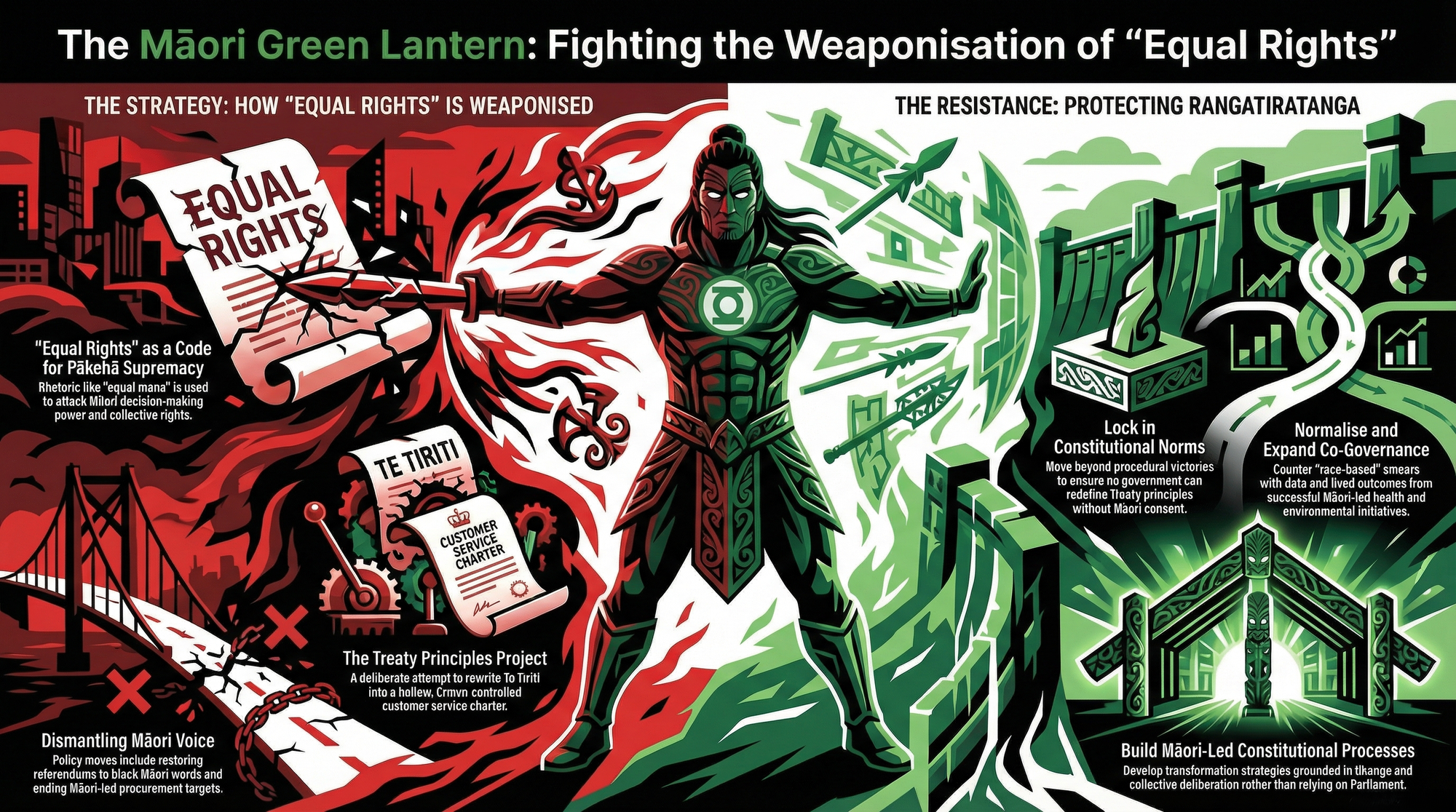
Seymour as the Architect of a Pākehā-Only Treaty
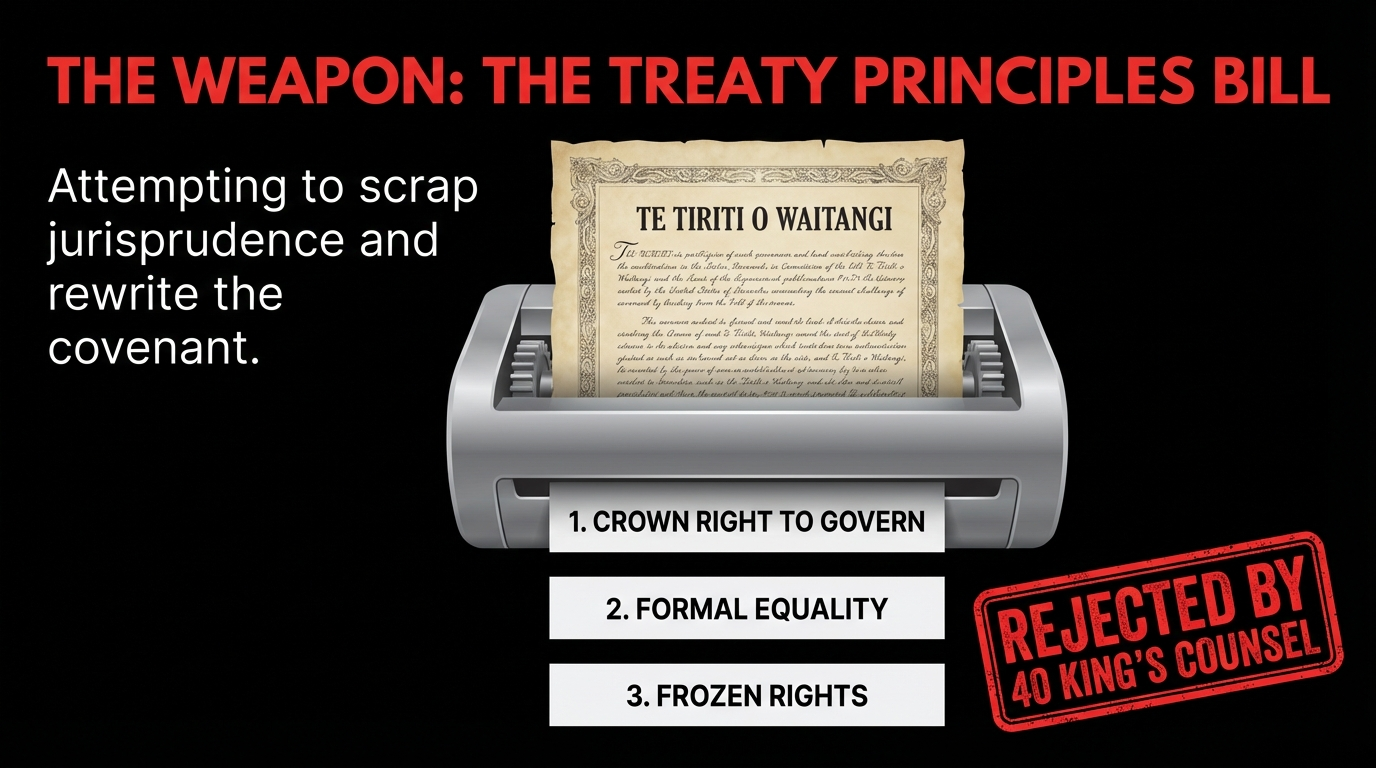
David Seymour’s entire political project on Te Tiriti is to amputate everything that recognises Māori as a people with collective authority, and leave behind a hollow, Pākehā‑friendly carcass called “equal rights”. The ACT‑driven Treaty Principles Bill was explicit: it would scrap the existing jurisprudence and replace it with three principles – Crown right to govern, formal equality before the law, and Treaty rights only where narrowly frozen in settlement Acts – as outlined in detailed reporting by RNZ and further background on its provisions and history collated on Wikipedia.
Even after the bill was dramatically voted down at second reading – an unusually public humiliation for a government bill recorded by RNZ and covered as a fiery, divisive debate by 1News – Seymour doubled down. He told RNZ at the end of 2025 that he was “quite confident” about the long‑term prospects of his ideas, promised to reignite the Treaty principles fight in 2026, and restated his core aim: locking “equal rights” into law in a way that sidelines Treaty‑based collective Māori authority, as documented in his sit‑down interview with RNZ.
This is not miscommunication. It is a deliberate attempt to convert Te Tiriti from a relationship between two polities into a customer‑service charter for one unitary Crown.
“Equal Rights” as White Supremacist Code
Seymour’s rhetoric is surgically crafted to sound noble while doing racist work. He wraps himself in phrases like “equal rights”, “equal mana” and “liberal democracy”, but every time he deploys them, it is to attack anything that gives Māori actual decision‑making power or recognises the asymmetry of colonisation.
- In 2022, Seymour demanded a referendum on co‑governance, insisting the Treaty is not a partnership and that co‑governance is “exclusive” and breeds resentment. His policy was explicitly criticised as dangerous and as emboldening white supremacy by Te Pāti Māori co‑leader Debbie Ngarewa‑Packer, as reported by 1News.
- In the 2023 election, ACT launched its campaign around a vow to “end co‑governance”, claiming that giving Māori a formal seat in decision‑making “comes at the expense of universal human rights”, as recorded in ACT’s campaign coverage by RNZ and corroborated in broader summaries of the party’s stance on co‑governance compiled on Wikipedia.
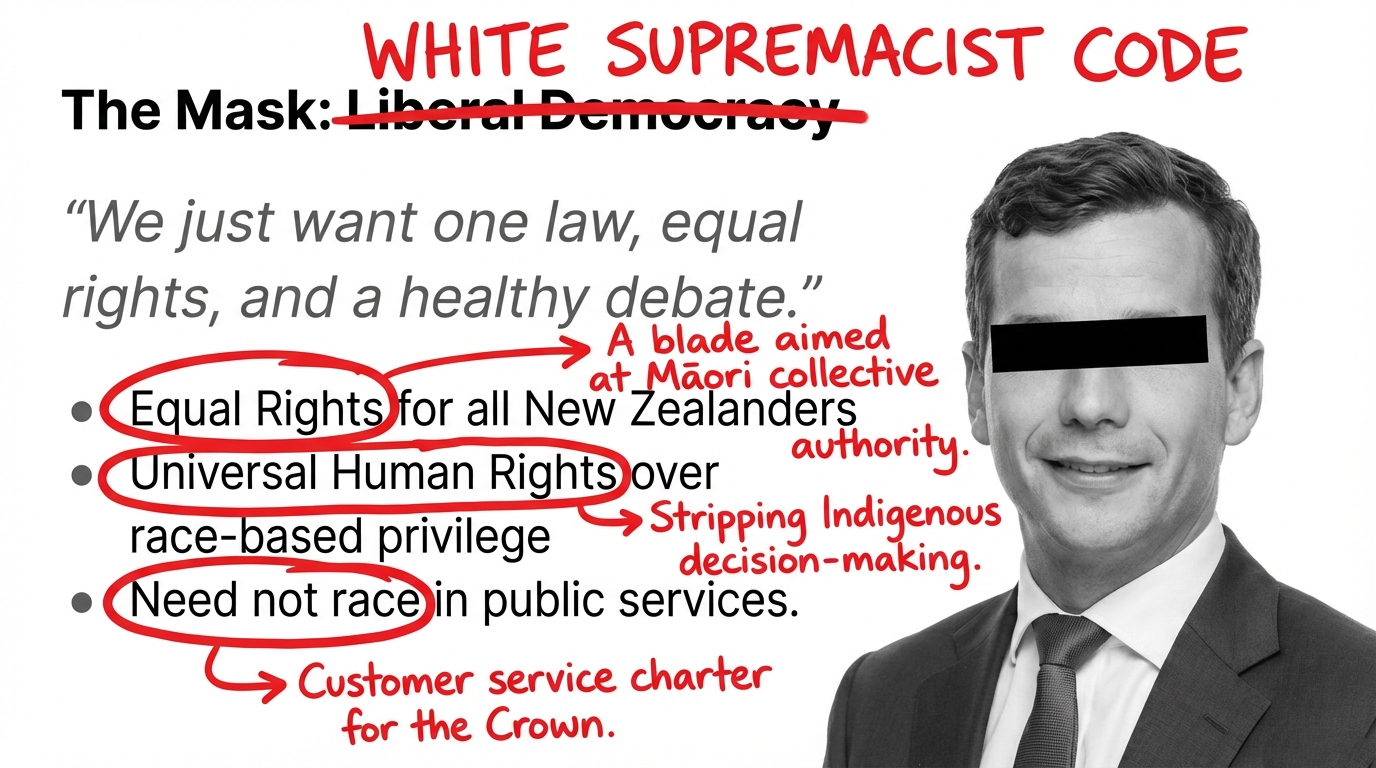
The pattern is consistent: whenever Māori gain even modest structural influence – Māori wards, co‑governance of rivers, Māori Health Authority – Seymour calls it “race‑based” and moves to abolish it. That obsession is laid out in ACT’s own brag sheet on “defending equal rights and democracy”, where they boast of scrapping diversity requirements in procurement, restoring referendums to block Māori wards, and forcing all agencies to base services on “need not race”, as detailed on ACT’s official policy page Defending Equal Rights & Democracy and reinforced on the pro‑bill advocacy site The Treaty Principles Bill.
“Equal rights” in Seymour’s mouth is not a shield for everyone. It is a blade aimed precisely at Māori collective rights.
Seymour at Waitangi: Disrespect in Real Time
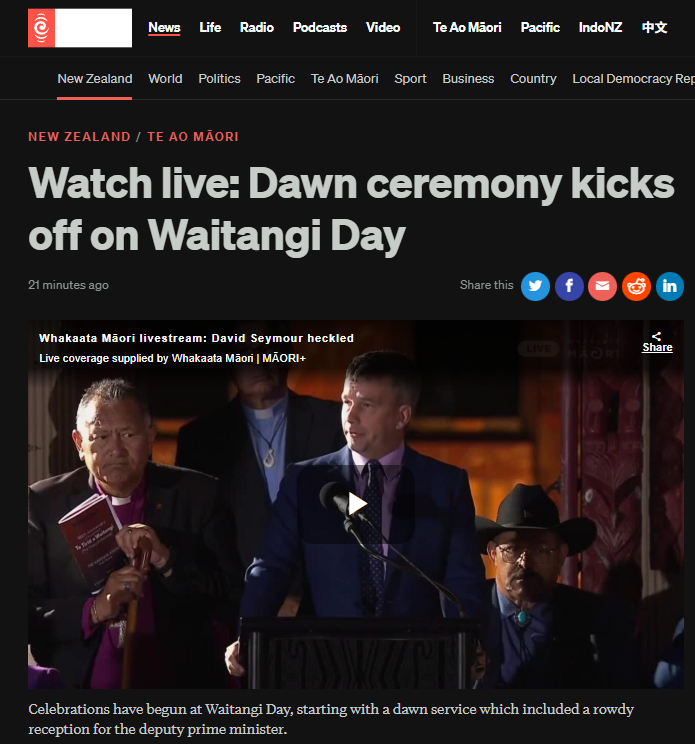
At Waitangi, the mask slips most. Seymour turns up to the Treaty Grounds as deputy prime minister, insisting he and his colleagues are “listening respectfully to the Māori language and Māori custom”, and then acts shocked that anyone might see his record as hostile to Māori, as quoted in political analysis of Waitangi 2026 by The Spinoff and reported in political roundups from the day by RNZ.
His behaviour at and around Waitangi events has followed a pattern:
- In earlier years he used national platforms on Waitangi Day to defend his Treaty Principles Bill and dismiss concerns about partnership as a misreading that gives “some people” special status, as covered in a Waitangi Q+A interview write‑up by 1News.
- At later events, he described complaints about colonisation as a “myopic drone” and argued colonisation had been “more good than bad” because even the poorest in Aotearoa “live like kings and queens”, as quoted in detailed coverage of Waitangi speeches by Evening Report.
Seymour’s contempt is not subtle. He treats Māori pain as tedious noise, Māori demands for honouring Te Tiriti as “identity politics”, and Māori resistance as a PR problem – even while standing on whenua where the Treaty was signed.
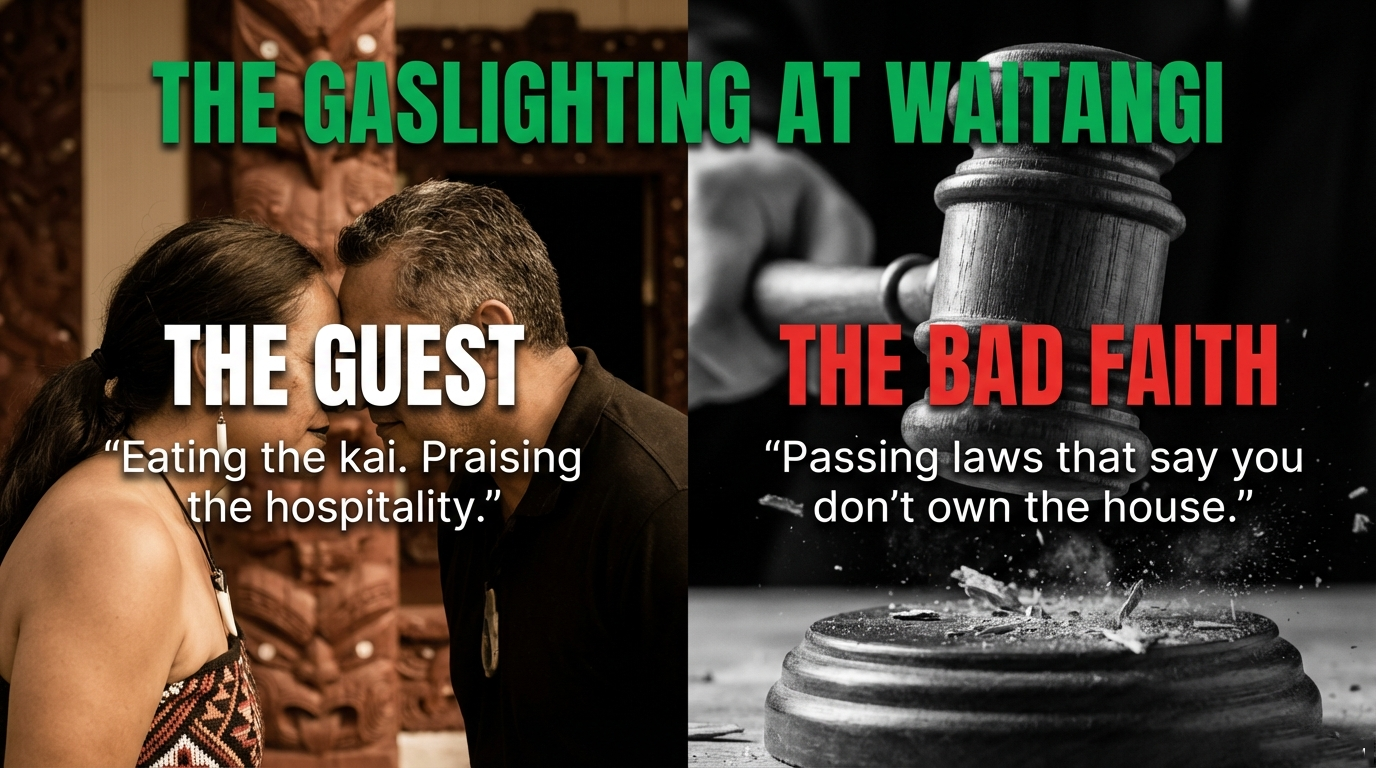
He is the guest who walks onto the marae, smiles through pōwhiri, and then loudly announces in his whaikōrero that the kawa is wrong and the tangata whenua are hogging too much authority.
Quantifying Seymour’s Harm
Seymour is not just making speeches. He is driving policy that directly strips Māori power and resources.
Treaty Principles Bill: Rewriting the Foundations
The Treaty Principles Bill would have:
- Removed the ability of courts and the Waitangi Tribunal to continue developing Treaty principles beyond three narrow, Crown‑friendly slogans.
- Outlawed use of any other principles to interpret legislation, except within historic settlement Acts, effectively freezing Te Tiriti as a glorified property deed.
These details are set out clearly in RNZ’s breakdown of the bill’s clauses, which highlight that it would prohibit reliance on principles beyond those listed in the Act and confine Treaty relevance largely to historic settlements, as explained in RNZ’s explainer and supported by the legislative background and legal commentary summarised on Wikipedia.
Forty King’s Counsel went so far as to write to the Prime Minister calling on the government to withdraw the bill, arguing it “seeks to rewrite” Te Tiriti itself. That unprecedented legal pushback and Seymour’s refusal to back down are recorded in the bill’s legislative history section on Wikipedia and in reporting on the political fallout by RNZ.
Ending Co‑Governance and Māori Voice
Seymour’s wider programme, baked into this government’s coalition deals, includes:
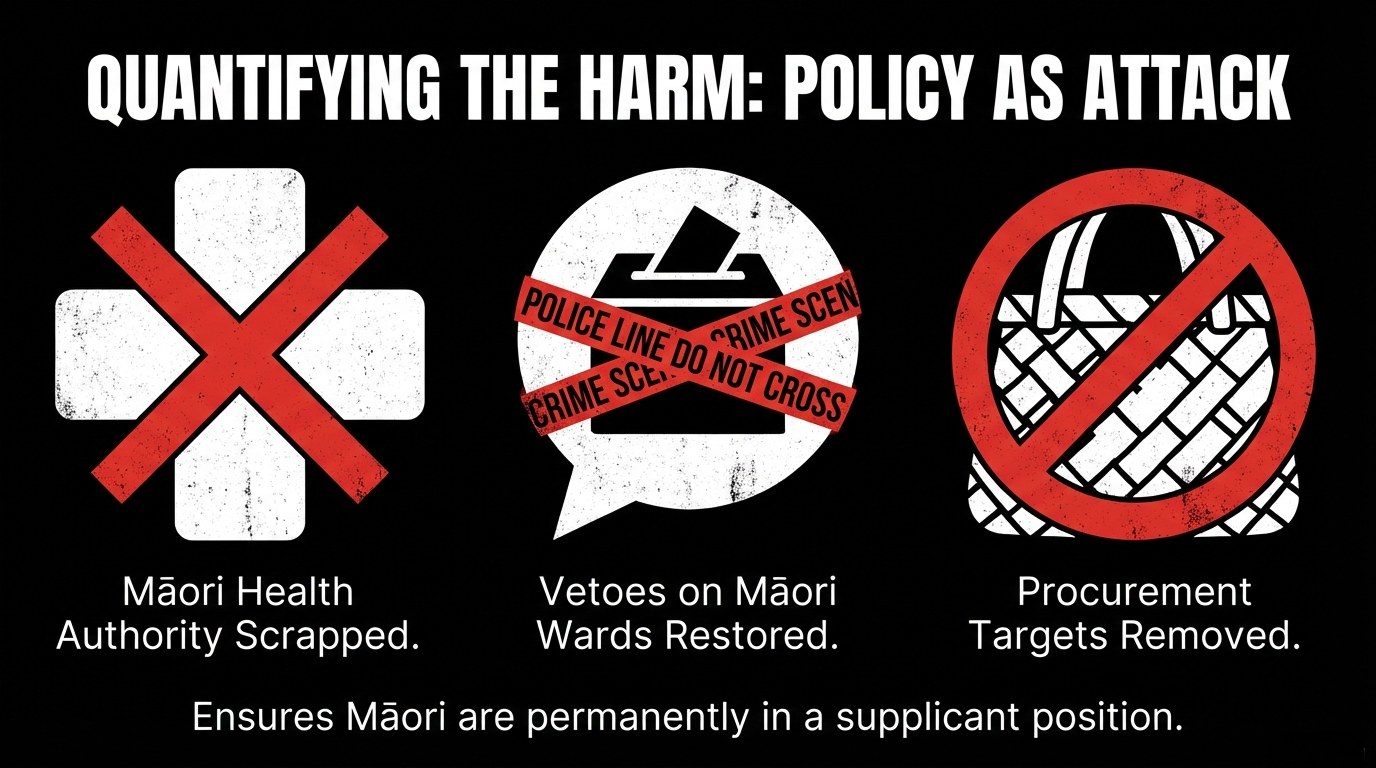
- Restoring local referendums on Māori wards, giving majority Pākehā electorates the power to veto Māori seats on councils, as described in overviews of co‑governance politics on Wikipedia and highlighted in ACT’s own brag list at Defending Equal Rights & Democracy.
- Removing “race‑based” procurement targets that directed Crown contracts towards Māori businesses, despite clear evidence that Māori‑led provision improves outcomes in sectors like health and social services, a rollback touted as restoring a “level playing field” in ACT’s policy summary on Defending Equal Rights & Democracy and echoed in their Treaty campaign messaging on The Treaty Principles Bill.
These moves strip Māori of both voice and economic leverage. They ensure that any “consultation” happens on Crown terms, with Māori permanently in a supplicant position.
Normalising Racism as “Debate”
Te Pāti Māori leaders have been explicit about what Seymour’s politics are doing. Debbie Ngarewa‑Packer warned that his referendum push “emboldens racism, it emboldens white supremacy”, as quoted in 1News’ coverage of his co‑governance campaign, while Rawiri Waititi told Parliament that Seymour was “pulling the strings” and treating the country “like the KKK” over the Treaty Principles Bill, as recorded in RNZ’s report.
Seymour’s defence is always the same: disagreement is healthy, critics are “cancel culture”, and his opponents are the real dividers. That framing is laid out in his RNZ end‑of‑year interview, where he claims New Zealand must “get better at having disagreement” and paints criticism of his project as intolerance, as reported by RNZ and echoed in his campaign speeches covered by RNZ.
He is not cooling racial fire. He is feeding it and then demanding applause for being “honest”.
Seymour vs Tikanga: Explaining the Breach
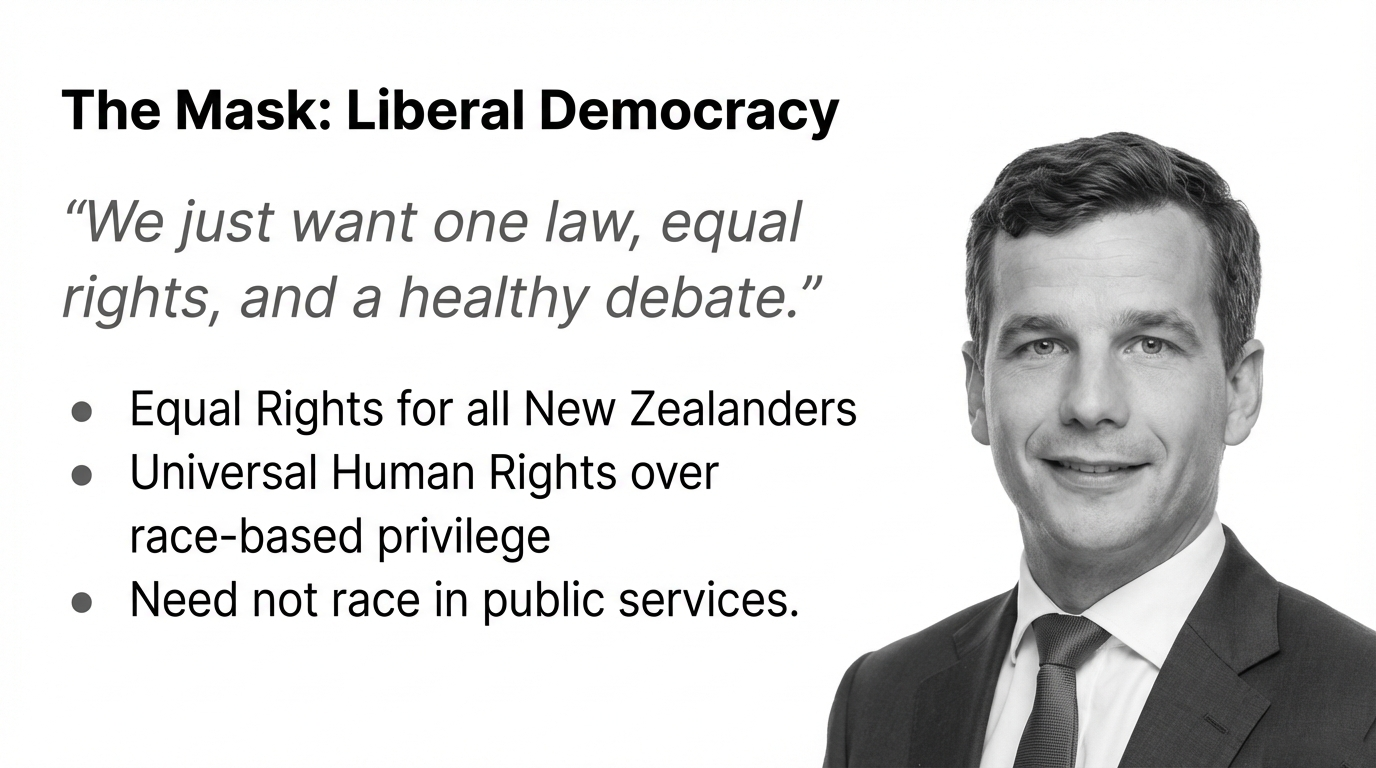
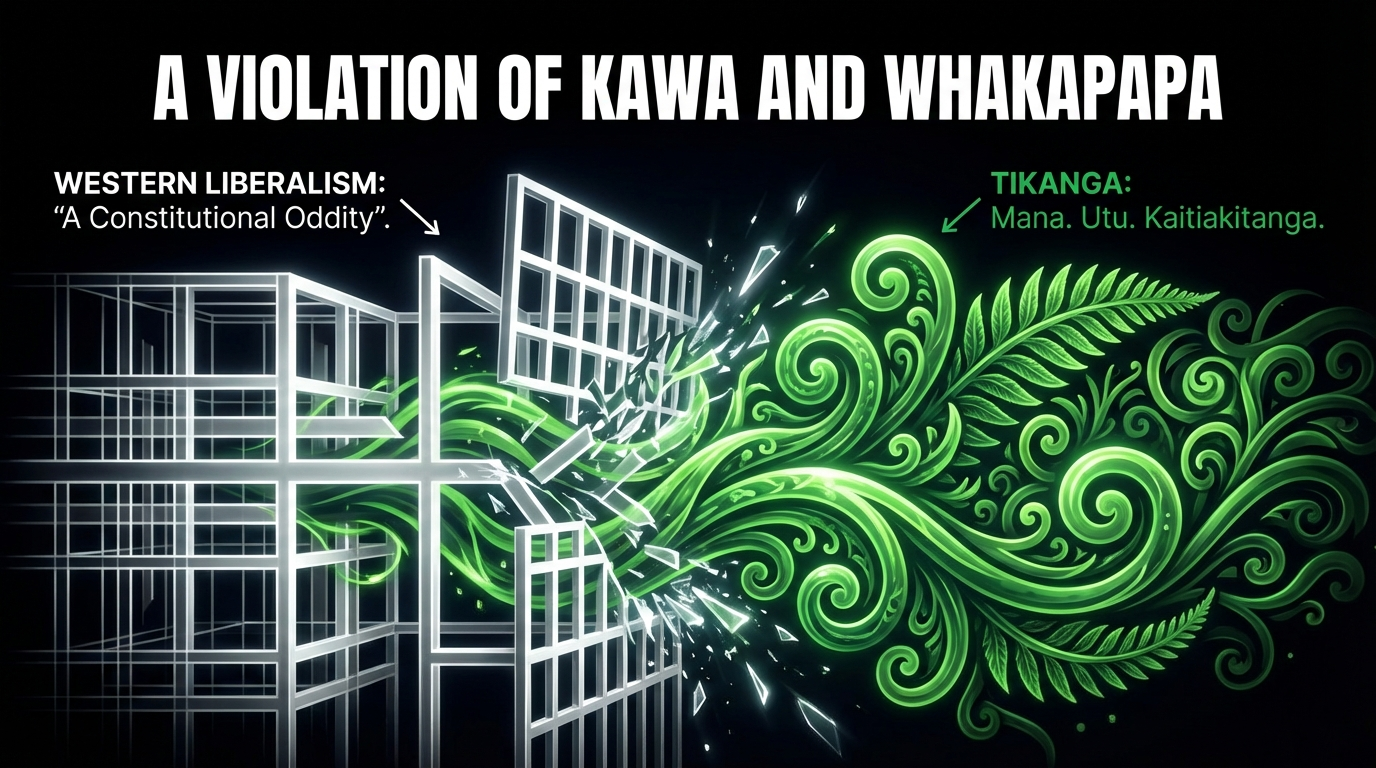
To a western liberal brain, Seymour’s line can sound reasonable: “We just want one law, equal rights, a healthy debate about co‑governance.” To tikanga, this is a textbook violation of kawa and whakapapa.
Tikanga is a system of right relationship – mana, utu, tapu, kaitiakitanga – operating across generations, not a decorative set of ceremonies. Its place in governance, particularly around the participatory rights of tamariki and whānau most affected by Crown systems, has been carefully explored in kaupapa like “Kia Tika, Kia Pono” which emphasise truth‑telling, relational accountability and genuine sharing of power, as set out in work on honouring the rights of care‑experienced rangatahi in PMC‑hosted research.
When Seymour:
- Denies that the Treaty created a partnership or shared authority, as he told 1News in his Waitangi interview about the Treaty Principles Bill, arguing that co‑governance makes Aotearoa a “constitutional oddity”, reported by 1News.
- Frames any structural Māori voice as “race‑based” and destructive of “universal human rights”, as in his anti‑co‑governance campaign statements reported by RNZ and restated on ACT’s site Defending Equal Rights & Democracy.
…he is not engaging in “debate”. He is trying to strip tikanga and Māori authority out of the constitutional heart of this place, leaving tikanga only as stagecraft when it suits the Crown.
A metaphor for the western mind:
Seymour is the guy who insists on being welcomed to your house every year, eats your kai, praises your hospitality in front of the cameras, and then goes back to Parliament to pass a law saying you don’t actually own the house and shouldn’t get a say in the renovations.
Solutions: Neutralising Seymour’s Project
If Seymour is the spear‑tip of this government’s anti‑Māori agenda, then resistance must be just as precise.
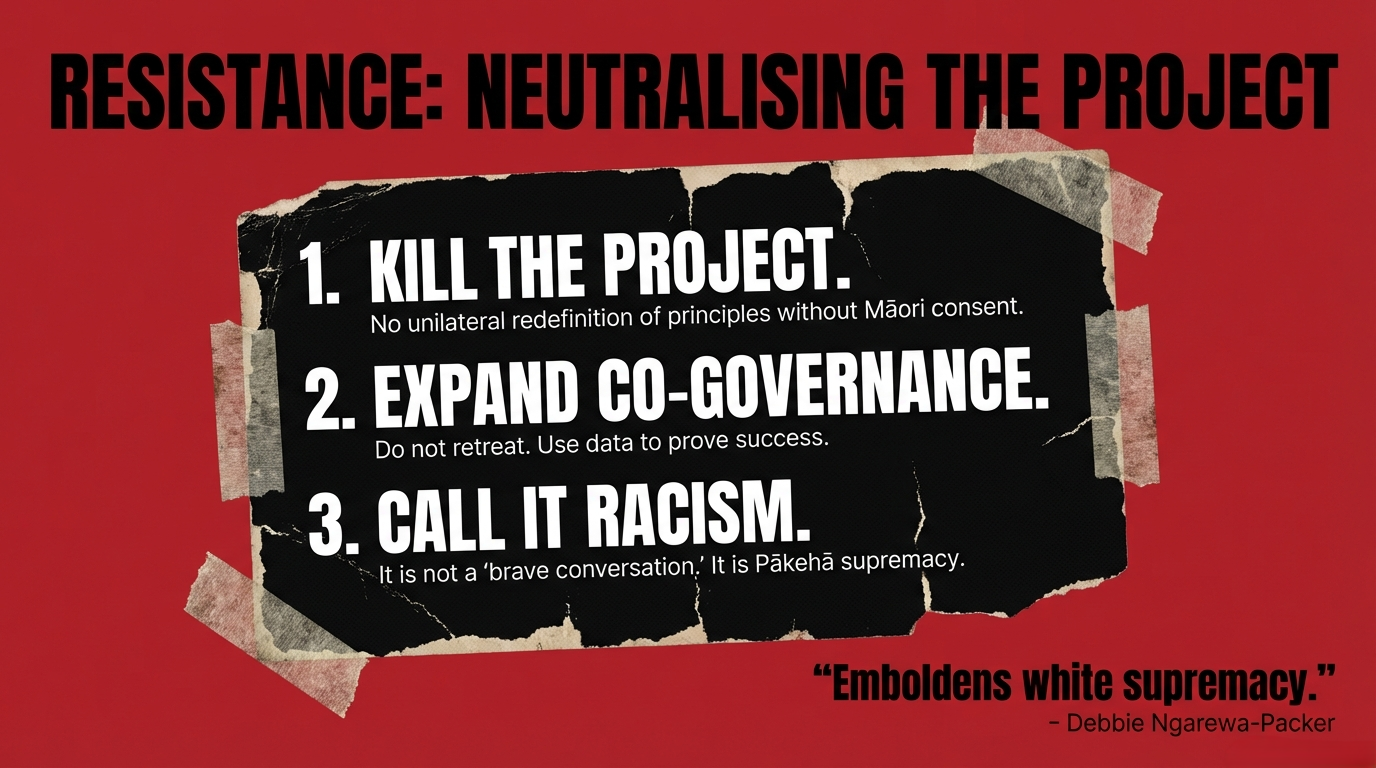
- Kill the Treaty Principles Project Completely, Not Just Procedurally
It is not enough that the Treaty Principles Bill was defeated once. The King’s Counsel letter, parliamentary debates and select committee submissions all document its fundamental incompatibility with Te Tiriti, as covered by RNZ and summarised on Wikipedia. That record must be used to lock in constitutional norms: no future government should be allowed to redefine Treaty principles unilaterally without the consent of Māori as Te Tiriti partners. - Expand, Don’t Retreat from, Co‑Governance
Seymour’s referendum agenda aims to turn every incremental gain in Māori co‑governance into a culture‑war wedge. Instead, co‑governance should be normalised and expanded on the basis of proven success – from river authorities and maunga co‑governance to Te Aka Whai Ora’s Treaty‑driven health reforms – as described in overviews of co‑governance arrangements by Wikipedia and the analysis of Māori health reforms published on PMC. The answer to his “race‑based” smear is data and lived outcomes. - Call Seymour What He Is, in Every Forum
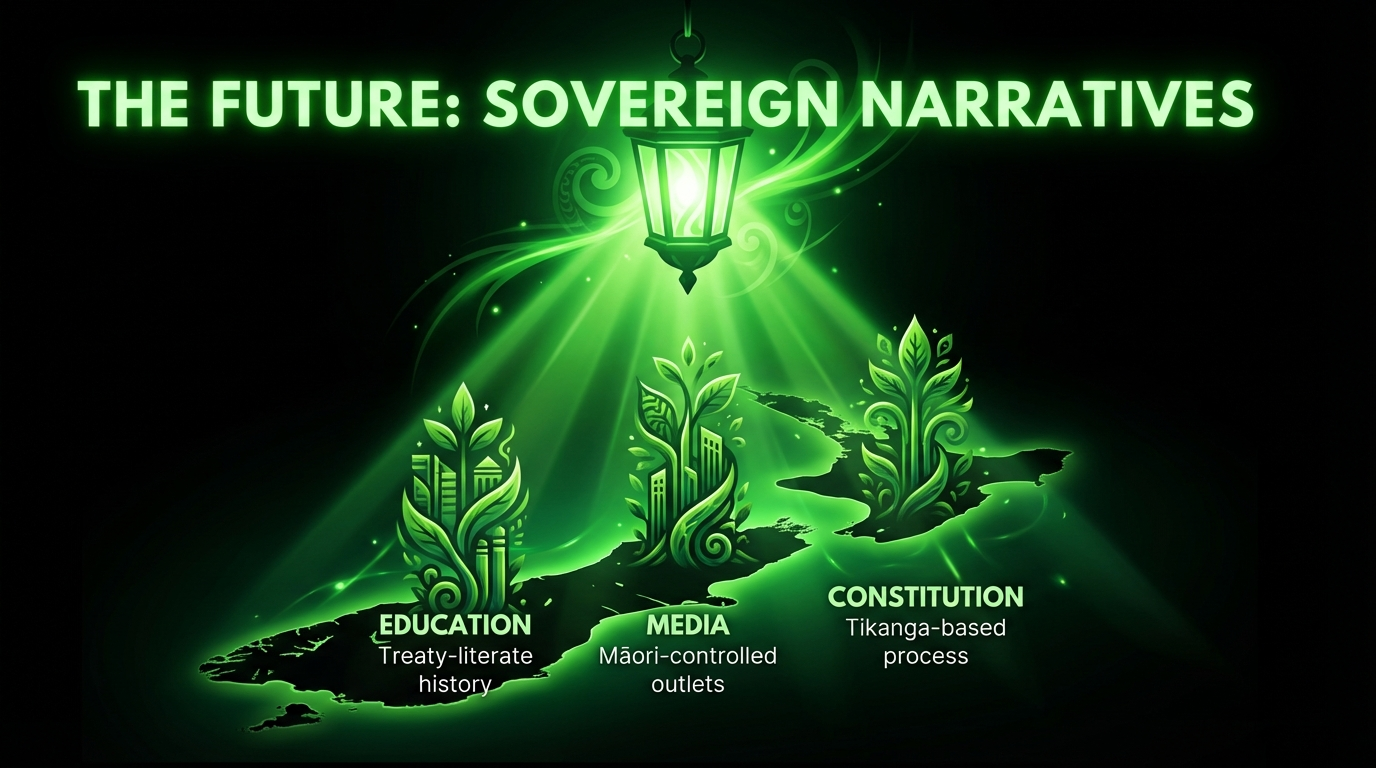
Māori leaders who have labelled Seymour’s politics as emboldening white supremacy, or likened his constitutional tinkering to KKK‑style control, are reading him correctly, as recorded in statements by Debbie Ngarewa‑Packer and Rawiri Waititi reported in 1News and RNZ. Pākehā commentators, academics and institutions need to stop laundering his project as “brave conversations” and call it what it is: a bid to re‑establish Pākehā supremacy under the banner of liberalism. - Strengthen Te Tiriti‑Literate Education and Media
Political science programmes that still treat the Treaty as a footnote instead of the constitutional spine of this place help produce officials who fall for Seymour’s framing, as critiqued in analysis of Aotearoa political science curricula published via the Australian Journal of Indigenous Education. At the same time, Māori‑led outlets and in‑depth coverage of Waitangi and Treaty politics – from TE AO News to mainstream pieces that centre Māori voices like those on RNZ – must be supported and amplified so Seymour doesn’t get to narrate our reality unopposed. - Build Māori‑Controlled Constitutional Processes
Seymour’s repeated attempts to unilaterally redefine Te Tiriti show why constitutional transformation cannot be left to Parliament alone. Māori‑led processes, grounded in tikanga and collective deliberation – akin to the decolonising deliberative experiments studied in recent democratic theory work on Aotearoa published by Cambridge University Press – are essential to articulate where true rangatiratanga sits and how Te Tiriti should shape institutions, regardless of who is in the Beehive.
Koha Consideration
Every koha to this kaupapa is a refusal to let David Seymour’s version of “equal rights” become the only story in circulation. It is a signal that whānau are willing to fund the accountability and truth‑telling that this Crown and its neoliberal attack dogs will never pay for, despite happily spending public money to platform their anti‑Māori narratives on national stages, as seen in coverage of his Treaty campaigns by RNZ and 1News.

Every contribution says: rangatiratanga includes resourcing our own analysts, writers and kaitiaki to track the machinery of white supremacy in real time, name names, and arm our people with evidence – not slogans. Kia kaha, whānau. Stay vigilant. Stay connected. And if you are able, consider a koha to keep this voice cutting through the spin and obfuscation that Seymour and his colleagues rely on.
If you are unable to koha, kei te pai. Subscribe or follow The Māori Green Lantern on Substack, kōrero with your whānau, share the essays and the receipts – that is koha in itself.
- Three pathways exist:
For those who wish to support this mahi directly with a koha (voluntary contribution), please visit the Koha platform:
Koha—Support – https://app.koha.kiwi/events/the-maori-green-lantern-fighting-misinformation-and-disinformation-ivor-jones - For those who wish to receive essays directly and support through subscription, join the Substack community:
Subscribe to The Māori Green Lantern on Substack – https://themaorigreenlantern.substack.com/subscribe - For those who prefer direct bank transfer, account details are: HTDM, account number 031546‑0415173‑000.

Ivor Jones The Māori Green Lantern Fighting Misinformation And Disinformation From The Far Right