”Dead Dolphins, Dumb Ideas: How Seabed Mining Tried to Turn Taranaki into a Corporate Strip Mine” - 7 February 2026
When you treat the moana like a slurry pit, don’t be surprised when the people rise like a king tide
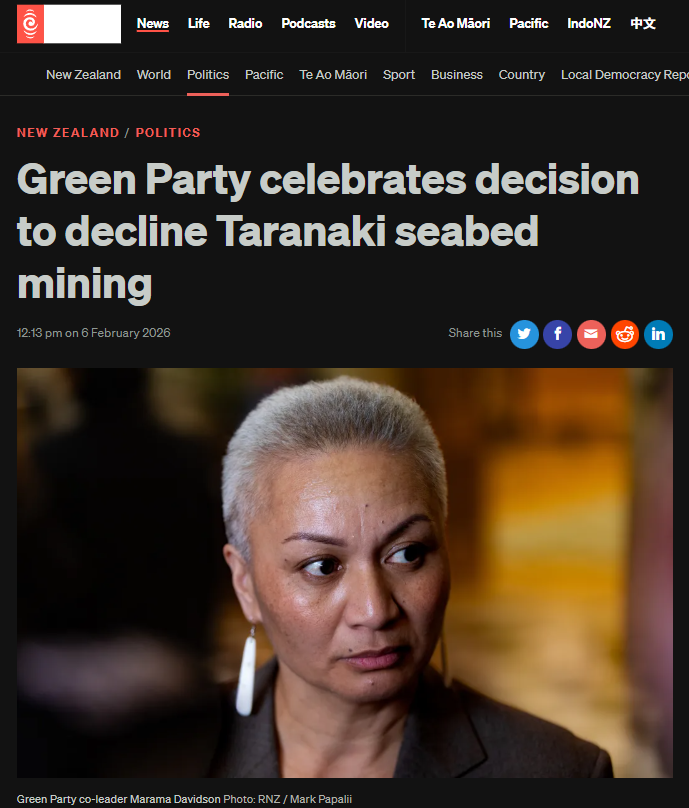
Mōrena ano Aotearoa,
The Corporation That Tried to Eat the Ocean
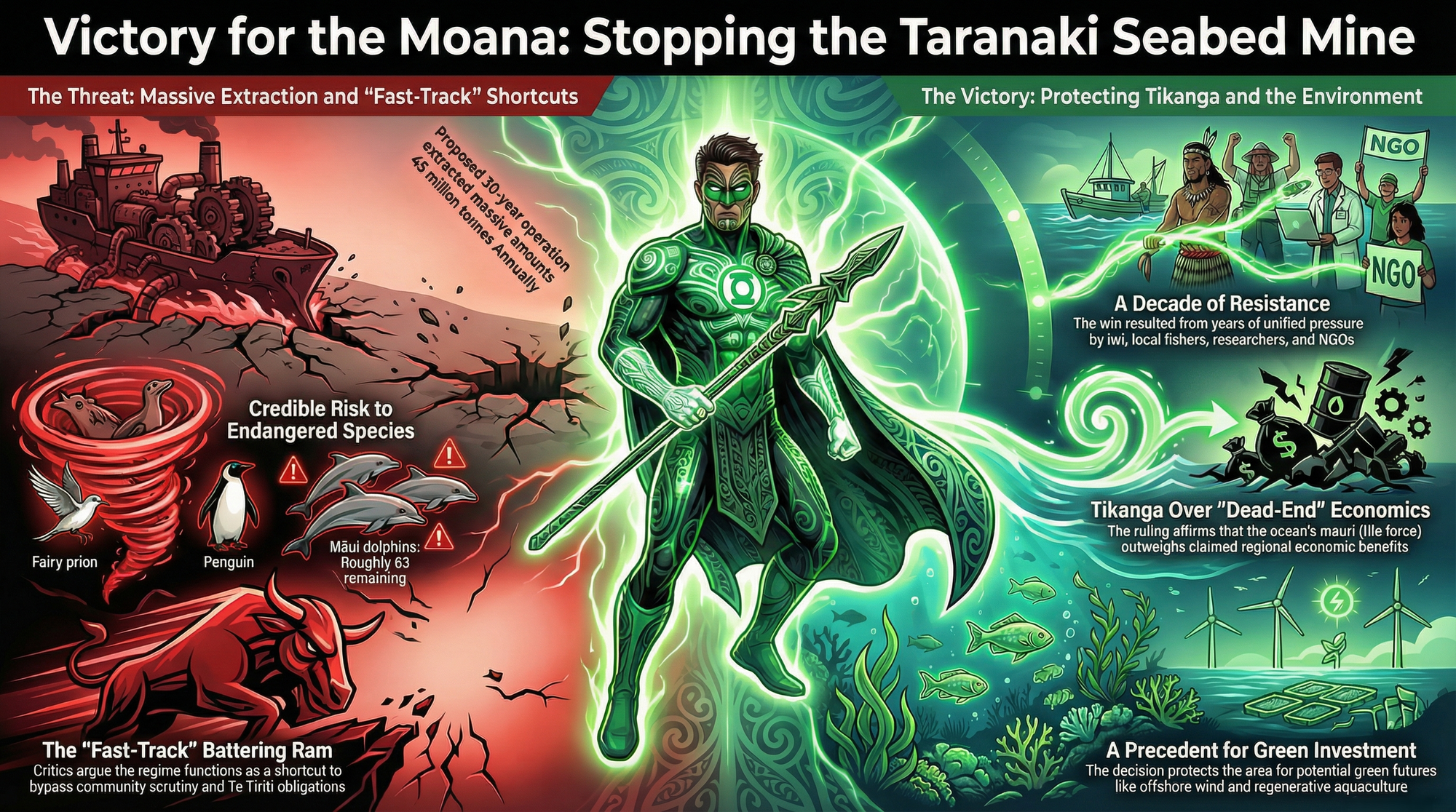
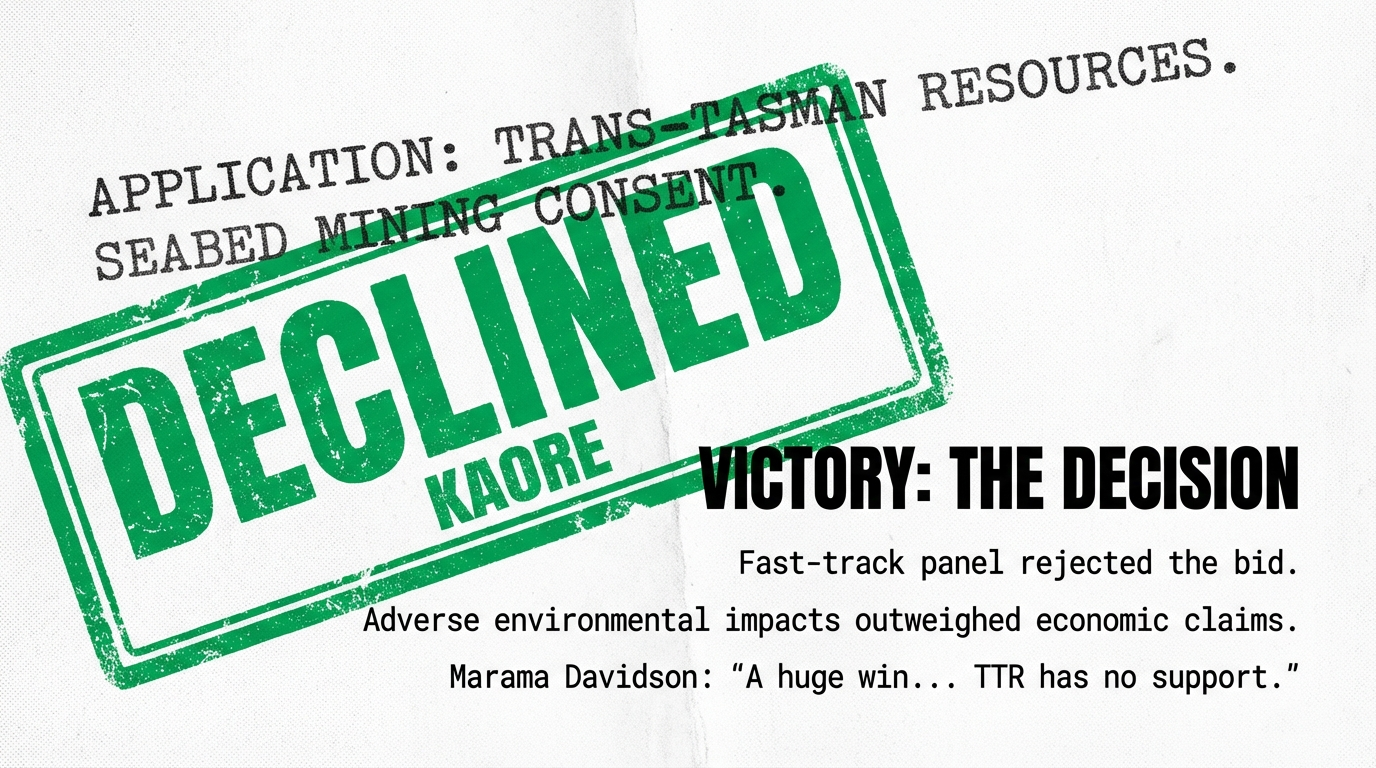
Trans-Tasman Resources (TTR) walked into the South Taranaki Bight like a coloniser at a buffet, planning to rip up 50 million tonnes of seabed every year for 30 years and call it “development”. As reported by RNZ and 1News, the fast-track approvals panel has now said what iwi, local communities and environmental experts have shouted for over a decade: this project is a dead-end, a danger to marine life, and wildly out of proportion to any supposed “benefit”.
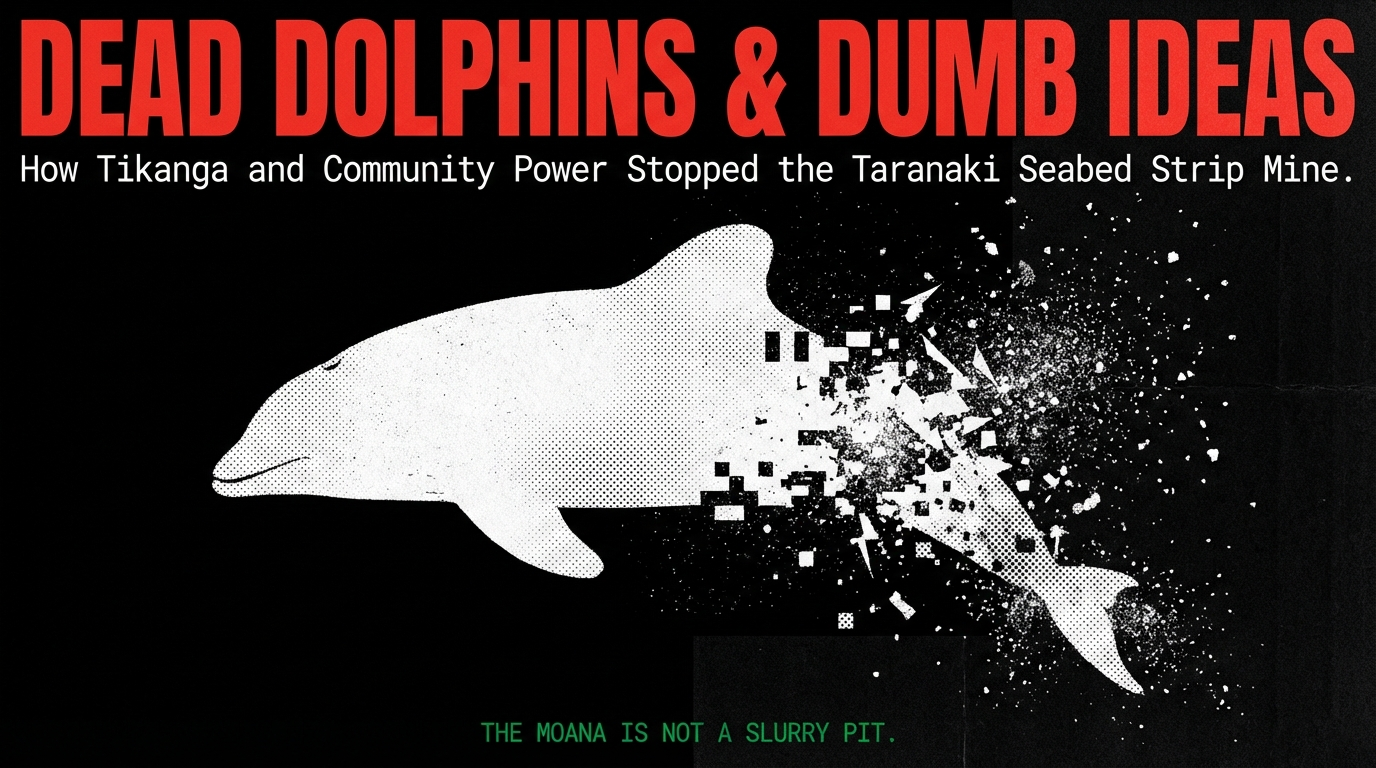
The panel’s draft decision confirms a credible risk of harm to Māui dolphins, kororā/little penguin and fairy prion, and highlights uncertainty about the scale of sediment plumes and underwater noise that would be unleashed by this mining scheme, again documented by RNZ and 1News. The Greens are right to call this a “huge win” for communities and the environment, as covered by RNZ and further echoed by Asia Pacific Report.
This is not just another resource consent story. This is a parable about a political and corporate class so addicted to extraction they would gamble with the last Māui dolphins on earth, despite long-standing warnings from the Department of Conservation and independent researchers about the cumulative impacts of mining, noise, and plumes on this critically endangered species, as summarised by the Department of Conservation on Māui dolphin threats from human activities, including seabed mining and seismic work, on their official site here and by government threat management documents such as the Regulatory Impact Statement on Hector’s and Māui dolphins hosted on the regulations site here.
The Moana as a Corporate Mine Face
For more than a decade, TTR has been like a persistent stain on the South Taranaki Bight – wiped off in court, then smeared back again through new applications and political shortcuts. A timeline compiled by fact-checking sources such as FactCheck NZ shows TTR pursuing consents since around 2007, including a 2017 Environmental Protection Authority (EPA) consent that became the subject of multiple court challenges, and subsequent legal defeats that forced the company back to the drawing board.
The current iteration came turbo-charged via the Fast-track Approvals regime, the government’s “one-stop shop” consent conveyor belt described by RNZ and 1News. Under this law, projects deemed to have “significant regional or national benefits” could leapfrog normal scrutiny, with an expert panel empowered to green-light or decline environmental approvals. In May, TTR was boasting its vanadium-rich iron sands could deliver around $1 billion a year to the economy, a figure reported by RNZ and 1News.
Yet when the panel scrutinised the application, it found the adverse environmental impacts – including sediment plumes, noise, and the risk to threatened species – were so significant that they outweighed the claimed benefits at both regional and national scale, as clearly stated in the panel’s summary reported by RNZ and 1News. This conclusion aligns with a decade of concern from iwi, councils, and environmental organisations, such as the South Taranaki District Council’s characterisation of seabed mining as “environmental vandalism” in earlier debates, captured by 1News and TVNZ’s coverage of community opposition here.
Even mainstream governmental advice has repeatedly recognised that seabed mining poses potential threats to Hector’s and Māui dolphins and other marine life, and that strong limits are needed in marine mammal sanctuaries, as set out in the Hector’s and Māui Dolphin Threat Management Plan documentation produced for the government and archived on the regulations site here, and further backed by DOC’s overview of mining and seismic impacts on Māui dolphin here.
When Tikanga Meets a Dead-End Economy
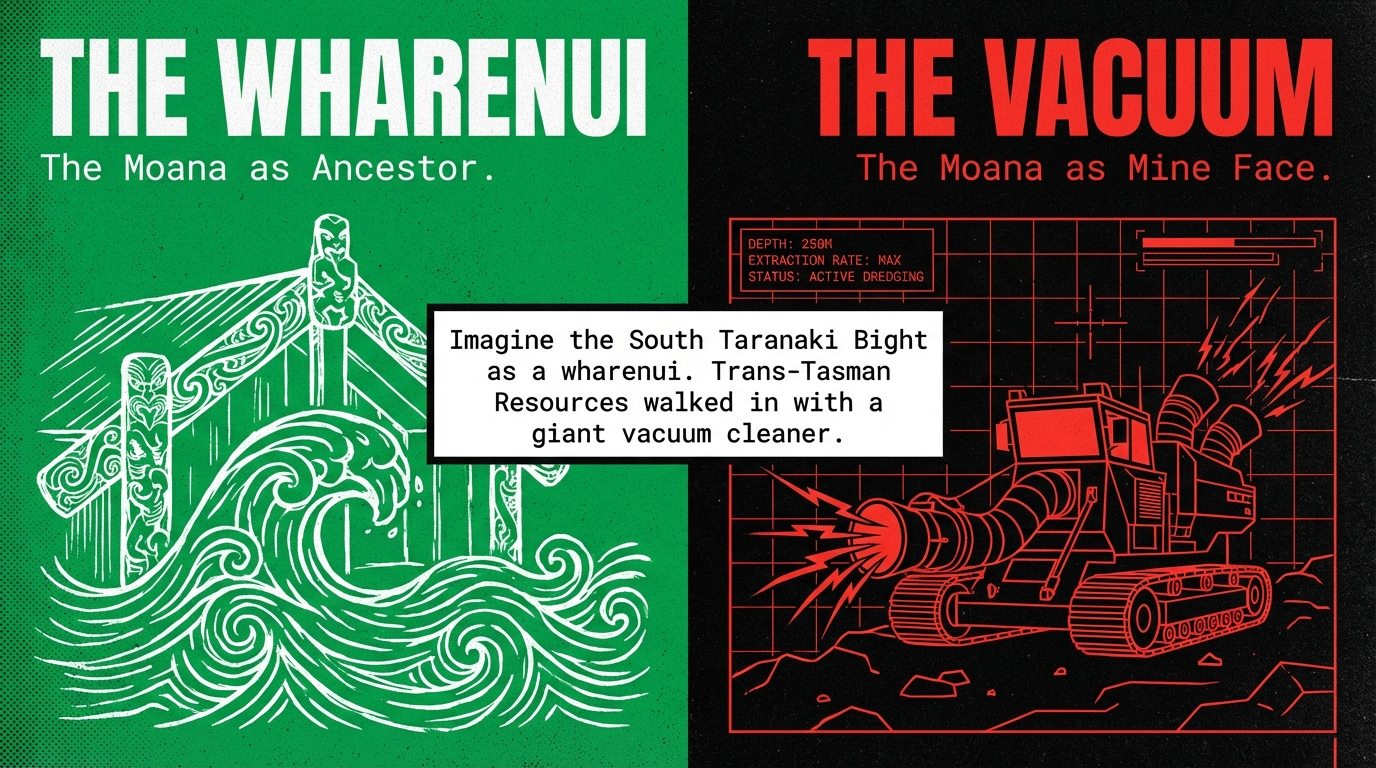
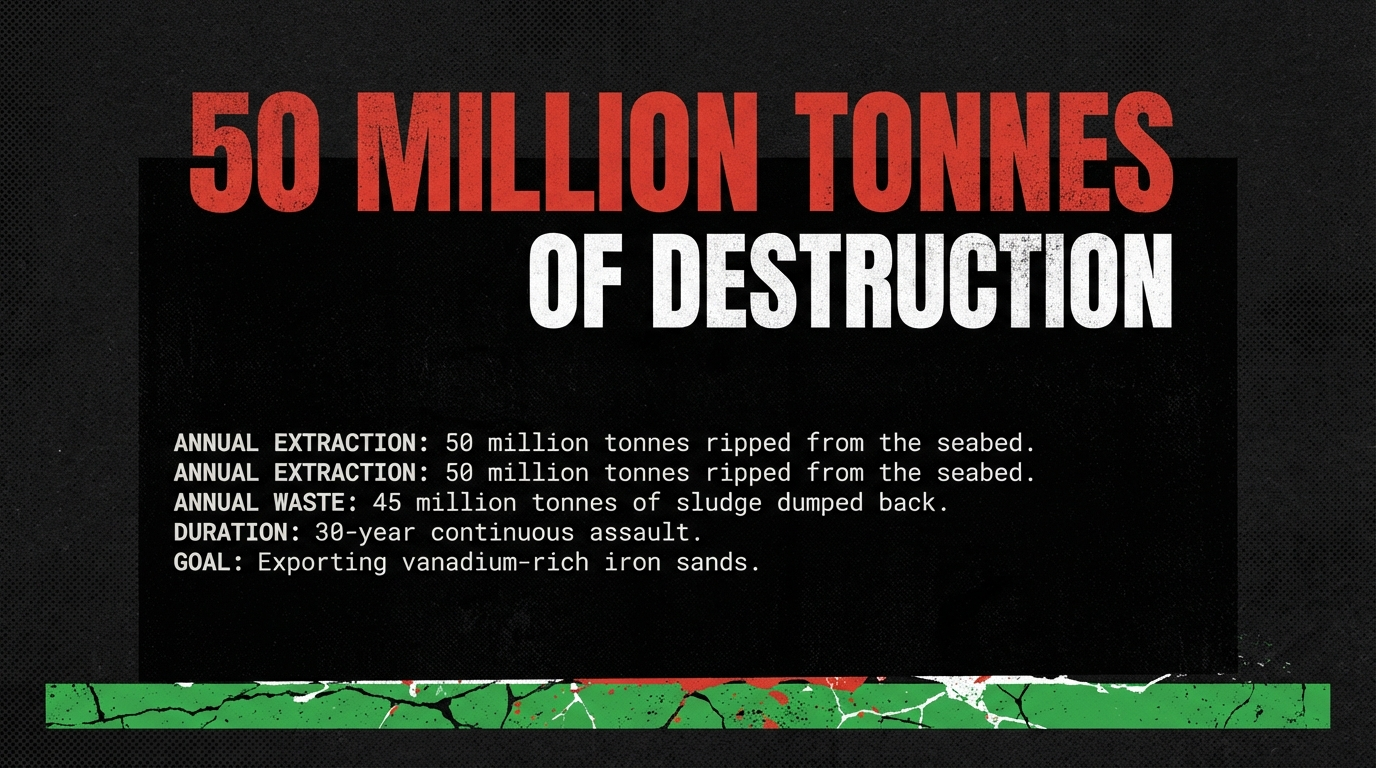
If you want to understand why this decision matters, imagine the South Taranaki Bight as a wharenui. The floor is the seabed. The carvings are the reefs, corals, and benthic communities. The karanga is the calls of kororā, Māui dolphin and fairy prion. TTR walked into that house with a giant vacuum cleaner, planning to strip the floorboards for profit and dump 45 million tonnes of processed sand back into the wharenui every year, a scale that has been highlighted by environmental groups such as Greenpeace, who describe TTR’s plans to extract roughly 50 million tonnes of iron sand per year, returning most of it as waste, as documented on their campaign page here, and by news coverage from 1News.
Mātauranga Māori does not see the ocean as an empty space for dumping tailings; it sees a living ancestor whose wellbeing is bound up with ours. That ethic has driven iwi opposition to seabed mining for years, including court victories against earlier TTR consents and submissions calling seabed mining “environmental vandalism” and a threat to kaimoana and cultural relationships with the moana, as recounted in local and national coverage by 1News and discussion of the legal history in academic and legal analyses such as the New Zealand Journal of Environmental Law article examining the “last 55” Māui dolphins and the regulatory failures around them, available via NZLII here.
In simple Western terms: tikanga is a system of law, ethics and relationship, not a decorative add-on to an impact assessment. When the panel acknowledges that this project overrides local community voices and undermines Te Tiriti – a concern explicitly raised by Green Party co-leader Marama Davidson and reported by RNZ and further contextualised in related coverage of fast-track processes by RNZ – it is effectively admitting that the fast-track model tried to bulldoze tikanga and rangatiratanga in the name of a short-term, high-risk extractive play.
Analysis: Five Hidden Revelations from the TTR Shipwreck
The “World-Class Resource” That Needed a Political Shortcut
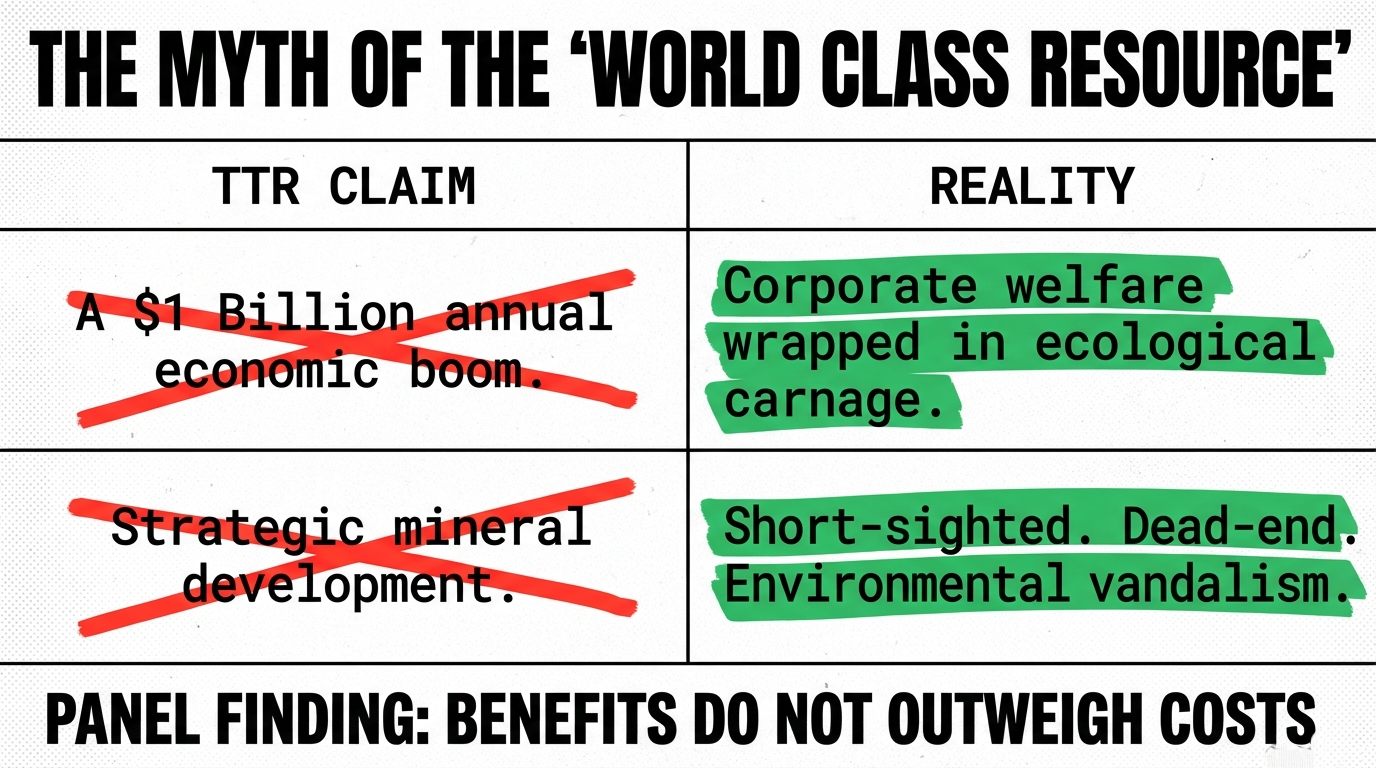
TTR has sold the South Taranaki Bight as a “world-class” vanadium and iron sand resource, claiming it could gross around $1 billion annually, a narrative reported by RNZ and repeated in mining-focused material summarised by FactCheck NZ. If this resource is so iron-clad and beneficial, why does it keep needing legal workarounds and political turbo-charging to stay alive?
The simple answer: once independent panels, courts and communities examine the full picture, the numbers stop looking like “prosperity” and start looking like corporate welfare wrapped in ecological carnage. The 2017 decision-making material, discussed in analyses such as Christine Cheyne’s summary of the TTR decision for the New Zealand Association for Impact Assessment here, notes catastrophic destruction of benthic life in the mined area and long recovery times, even where recolonisation is possible. Academic analysis of Māui dolphin regulation, such as the NZJEL article on the “last 55” Māui dolphins here, further shows how regulators have historically underestimated cumulative impacts in favoured “development” areas.
In other words: the “world-class” label is a marketing spell. When the spell hits the hard shield of ecological evidence and tikanga, it breaks. The fast-track panel’s finding that adverse impacts are out of proportion to benefits, as reported by RNZ and 1News, is that spell breaking in real time.
Sacrificing Māui Dolphins on the Altar of “Economic Growth”
There may be only around 63 Māui dolphins left, according to estimates summarised by government and media sources, including a 1News report on new protections for Māui and Hector’s dolphins here and DOC’s Māui dolphin pages and linked threat assessments here. These dolphins are found only off the west coast of Te Ika-a-Māui, and their extinction risk has been described as severe by both DOC and independent researchers, with legal scholars warning that significant damage to this habitat could be fatal for the species, as argued in the NZJEL analysis on the regulatory framework for Māui dolphin here.
Despite this, successive governments have opened large areas of the west coast to oil, gas and mineral exploration, including seabed mining proposals like TTR’s, placing a critically endangered taonga species in the blast zone of “development” agendas, as outlined in the same legal analysis here and in government regulatory documents that acknowledge trade-offs between exploration and marine mammal sanctuaries here. DOC’s own threat list for Māui dolphins explicitly notes that seabed mining and associated plumes and noise are likely to affect their food sources and movement patterns, although data gaps remain, as described on DOC’s threat overview here.
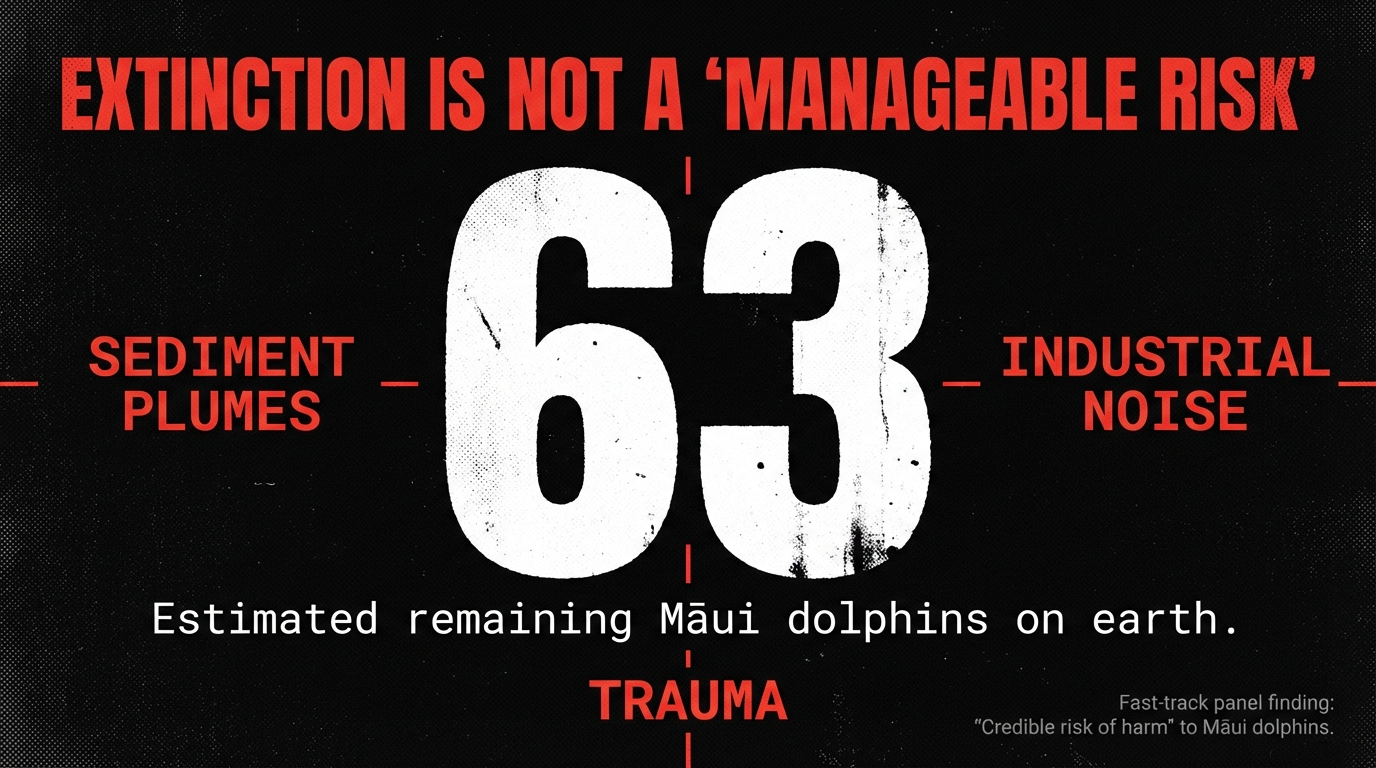
When the fast-track panel points to a credible risk to Māui dolphins and other seabirds, as documented in RNZ and 1News, it is effectively stating the obvious: you cannot credibly claim to protect a species on the brink of extinction while simultaneously green-lighting massive industrial experiments in its habitat. To Western minds that treat each consent in isolation, this might seem like an unfortunate “balancing act”; to tikanga, it is a fundamental breach of kaitiakitanga and a violation of the whakapapa ties between people, dolphins, and the moana.
The Sediment Plume as a Colonial Metaphor
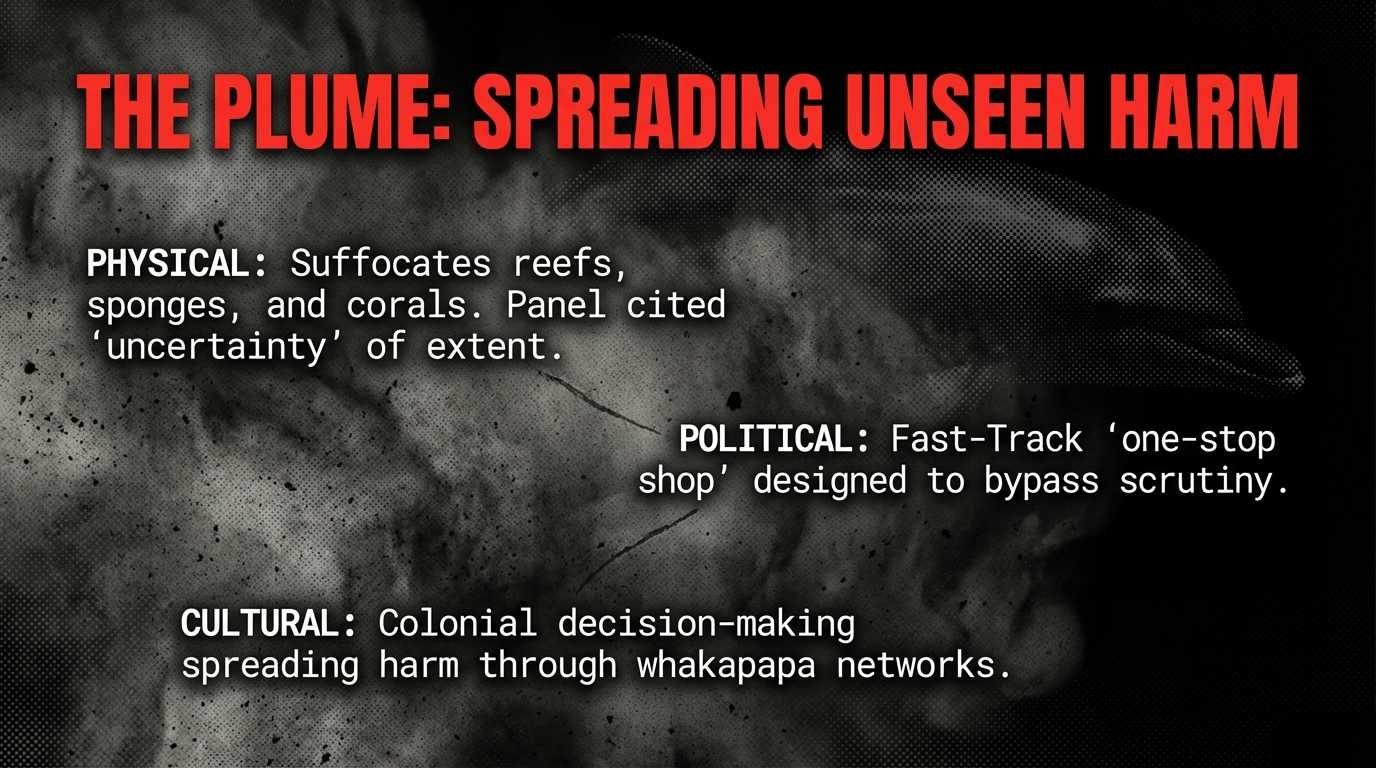
Sediment plumes are not just a technical detail; they are the perfect metaphor for colonial decision-making. A mining operation removes 50 million tonnes of seabed, returns 45 million tonnes of processed sands, and creates a dense plume that spreads, settles, and suffocates life across reefs, sponges and corals, as described by environmental organisations like Greenpeace on their seabed mining page here and by impact assessment summaries such as Christine Cheyne’s piece on TTR for NZAIA here. The TTR project was previously expected to create significant adverse impacts on benthic life within at least several kilometres of the mining site, including catastrophic destruction within the direct mining area and long recovery times, according to that NZAIA summary here.
The fast-track panel explicitly notes that it cannot be sure of the full scale and extent of the sediment plume and underwater noise, and that this uncertainty is part of why the project’s impacts are unacceptable, a finding recorded in RNZ’s coverage and echoed by 1News. Yet TTR insists that “all concerns” have been addressed by their experts, as quoted in those same reports.
Colonial systems do the same thing with social harm: they unleash policies that create plumes of poverty, health inequity, and environmental damage, then insist the models say it’s “manageable”. Tikanga, in contrast, demands humility in the face of uncertainty and prioritises the mauri of the ecosystem. The plume here symbolises the way Crown and corporate decisions spread unseen harm through whakapapa networks, long after the boardroom PowerPoint is closed.
Fast-Track as a Weapon Against Scrutiny
The fast-track regime has been sold as a neutral efficiency tool – a “one-stop shop” for major consents, as described by RNZ. In practice, it has functioned as a battering ram to push through controversial projects like seabed mining that have already been tested – and found wanting – under previous legal frameworks, as demonstrated by the long-running TTR court saga summarised by 1News and fact-based timelines like those gathered by FactCheck NZ.
Legal experts have warned more broadly that New Zealand is already passing too many laws without proper scrutiny, with former Prime Minister and constitutional scholar Sir Geoffrey Palmer raising concerns about the pace and process of law-making in recent years, as covered by RNZ. The fast-track regime magnifies that problem by narrowing participation and compressing timeframes, which disproportionately undermines Māori voices and tikanga-based objections – a pattern visible in the frustration of iwi who now find themselves fighting the same seabed mining proposals again after earlier court wins, as described by local leaders in TVNZ’s Marae segment and summarised by 1News.
From a tikanga perspective, fast-track is structurally misaligned with kawa and kanohi ki te kanohi decision-making. It treats consent as a technical puzzle for “experts” to solve behind closed doors, rather than a sacred conversation about relationships with whenua and moana. That misalignment helps explain why the Greens now pledge to revoke fast-tracked consents for destructive mining if they are in government, an intention reported in political coverage by RNZ and framed as a response to widespread concern about the fast-track regime’s democratic and environmental deficits here.
Opportunity Cost: Smothering Green Futures for Dirty Extraction
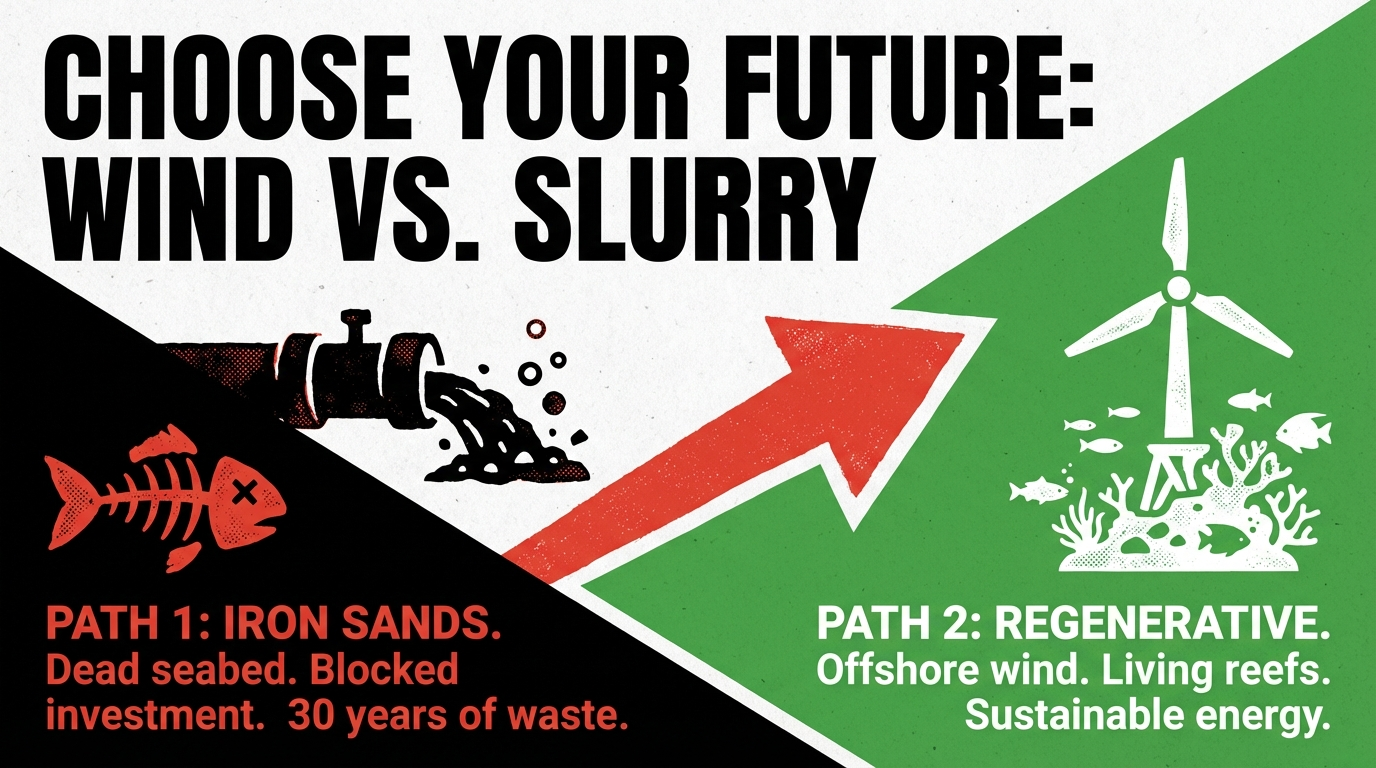
Greenpeace and other groups have pointed out that the South Taranaki Bight had potential as a site for offshore wind generation, but that such projects are incompatible with the scale and footprint of seabed mining proposed by TTR, as noted on Greenpeace’s seabed mining page here. As they argue, pushing seabed mining in this area effectively “blocks green investment” by making the marine environment too disturbed and uncertain for long-term renewable infrastructure, a point they make explicitly in that same resource here.
So the question isn’t just “should we mine or not?”. The real question is: whose future are we choosing? The fast-track regime and TTR’s proposal funnel public time, legal energy, and political capital into a project that may create around 1,125 jobs and $234 million in local annual spending according to TTR’s own promotional figures reported in TVNZ coverage via 1News. But these figures must be weighed against the long-term economic and cultural value of healthy fisheries, intact marine ecosystems, and genuinely renewable energy infrastructure, values highlighted by tangata whenua, local fishers, and environmental groups interviewed in that same reporting here and reinforced by Greenpeace’s framing of seabed mining as a climate-denial distraction here.
Tikanga insists we count opportunity cost not just in dollars but in mauri. When the panel declines TTR’s application and Greenpeace calls it a “massive win for moana” and “people power”, as reported in their press release here and echoed by RNZ, they are naming a shift: away from dead-end extraction and towards futures that do not require killing taonga species to pay the bills.
Quantifying Harm: What Was at Stake
To make this real for a Western policy mindset, let’s translate the metaphor into numbers and scenarios, as drawn from the sources above.
- Scale of extraction: TTR sought to mine 50 million tonnes of seabed per year for 30 years, with around 45 million tonnes of processed sediment returned annually to the sea floor, as described by RNZ and detailed by Greenpeace here.
- Duration: 30 years of continuous disturbance in a sensitive marine ecosystem already under pressure from warming, fishing and other pollutants, as summarised in 1News and earlier coverage on cumulative effects here.
- Species at risk: Māui dolphins (around 63 individuals), kororā/little penguin, fairy prion, pygmy blue whales and other species are named as threatened or potentially impacted, in sources including the fast-track panel reports via RNZ, the Green Party’s reaction in RNZ, Greenpeace’s press release here, and DOC’s threat overviews here.
- Benthic destruction: Previous assessments of TTR’s operations forecast catastrophic destruction of seabed benthic communities in the mined area, with uncertain recovery times and altered species composition, as summarised by Christine Cheyne on the 2017 TTR decision for NZAIA here.
- Cultural and economic harm: Iwi and local communities rely on the South Taranaki Bight for kaimoana, connection to tūpuna, and livelihoods, and have repeatedly stated that the economic benefits touted by TTR are minimal compared to the cultural and environmental risk, as reported by 1News and highlighted by councils describing seabed mining as “environmental vandalism” here.
If you destroy the habitat of an already critically endangered species, basic probability says you push it closer to extinction. Legal and scientific analysis of Māui dolphins has long emphasised that they exist only in this region and that additional anthropogenic threats could be disastrous, as explained in the NZJEL “last 55” paper here and government risk assessments here. Tikanga would call that not just “risk” but a breach of whakapapa obligations.
Tikanga vs Western Mind: Explaining the Clash
To a Western technocrat, this might look like a debate about acceptable risk: can we tolerate some harm to marine life in exchange for jobs, royalties and “strategic minerals”? That mindset is evident in the way government documents weigh economic gains against environmental losses in cost–benefit terms, as seen in the Hector’s and Māui dolphin threat management regulatory analysis here and earlier oil and gas licensing decisions discussed in the NZJEL analysis here.
Tikanga doesn’t accept that framing. Tikanga asks: what does this do to the mauri of the moana? What obligations do we have to non-human kin, including dolphins, penguins and seabirds? Are we acting as kaitiaki or as vandals? These are not sentimental questions; they are constitutional ones, grounded in Te Tiriti and in iwi and hapū authority over their rohe, a fact repeatedly raised by Taranaki and Whanganui iwi opposing seabed mining in coverage such as 1News’ regional reporting and noted by the Green Party in their criticism that seabed mining overrides Te Tiriti and community voices in RNZ’s political reporting.
From a tikanga standpoint, fast-tracking a project that threatens taonga species and overrides local Māori opposition is akin to barging into a marae, ignoring kawa, and installing a drilling rig in front of the wharenui because “time is money”. To communicate this to a Western mind: imagine someone bulldozing your grandparents’ graves to build a short-term factory, promising you a job in return. Tikanga simply says, “Kāore. Not everything is for sale.”
Solutions: Turning Away from the Abyss
The fast-track panel’s draft decision is a line in the sand, not the end of the story. Here are concrete pathways grounded in both evidence and tikanga.
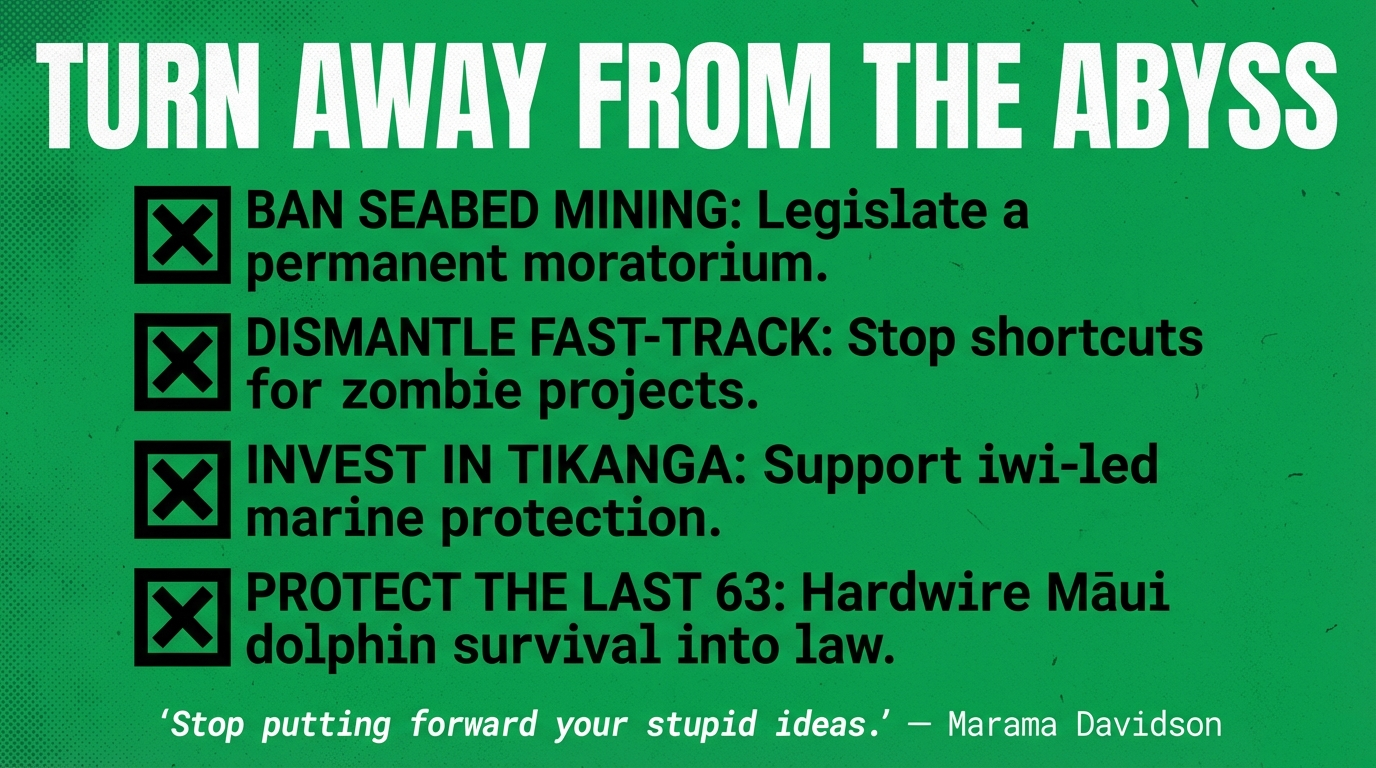
Kill Seabed Mining as a Policy Option in Aotearoa
Government should move beyond case-by-case battles and legislate a clear ban or permanent moratorium on seabed mining in Aotearoa’s waters, prioritising marine mammal sanctuaries and biodiversity hotspots, building on existing limits discussed in Hector’s and Māui dolphin regulatory documents here and the 2020 extension of protections for Māui and Hector’s dolphins reported by 1News.
This aligns with the direction of travel signalled by previous bans on seabed mining in certain sanctuary areas and restrictions on new permits, as mentioned in that same 1News report here and documented in policy reviews here.
Dismantle Fast-Track for Destructive Projects
Fast-track should never again be used to resurrect projects that have failed on environmental and Treaty grounds under normal processes. Constitutional experts like Sir Geoffrey Palmer have already warned about law-making shortcuts that undermine proper scrutiny, as reported by RNZ.
Any reformed infrastructure pathway must embed tikanga-based decision-making and Te Tiriti obligations up front, not as a box-ticking exercise at the end, a change demanded by Māori and community groups opposing fast-track seabed mining in coverage like 1News and echoed in Green Party commitments to revoke destructive fast-track consents reported by RNZ.
Invest in Tikanga-Aligned Marine Futures
Support iwi- and hapū-led marine protection plans, including rāhui, locally driven marine protected areas, and co-governance models that centre kaitiakitanga, building on existing marine mammal sanctuary frameworks and their incremental strengthening as reported by 1News and analysed in government documents here.
Shift investment from seabed mining into offshore renewables, regenerative aquaculture, and science that serves whānau and ecosystems rather than corporate extraction, a pivot urged by Greenpeace and others in responses to the Taranaki decision here and by local leaders in TVNZ’s coverage here.
Hardwire Māui Dolphin Survival Into Law
Given the tiny population and single-habitat range of Māui dolphins, law must treat further anthropogenic risk as unacceptable, not just “manageable”, a shift consistent with the concerns raised by legal scholars in the NZJEL article here and by conservation experts in DOC and fisheries policy documents here.
That means binding no-go zones for harmful activities across their range, effective enforcement, and funding for monitoring and research, expanding on the partial measures already taken and reported by 1News and regulatory frameworks here.
Rebuild Accountability: Media, Law and Community Power
Without sustained media coverage from outlets like RNZ and 1News, and relentless pressure from iwi, NGOs and local communities shown in reports like this 1News piece, TTR would already be chewing the seabed.
We must continue to fund independent journalism, community legal action, and grassroots organising that can chase fast-track schemes into the light, something highlighted in Greenpeace’s victory statement here and in ongoing legal challenges over the Crown’s failures to protect Māui dolphins reported by RNZ.
Koha Consideration
Every koha is another stone on the seawall our people are building against corporations that would grind our moana into export slurry while politicians call it “progress”. Each contribution says clearly that whānau are ready to fund the accountability and hard research that Crown and corporate structures will not provide on seabed mining, fast-track abuse, and the ongoing threats to Māui dolphins and our wider marine whakapapa.
Your koha tells those who would mine the South Taranaki Bight that rangatiratanga includes the power to resource our own truth-tellers, to follow the paper trails, unpack the “world-class resource” spin, and stand in kaitiakitanga for our taonga species and communities. Kia kaha e te whānau. Stay vigilant. Stay connected. And if you are able, consider a koha to ensure this voice can keep naming names and tracing the networks behind projects like TTR.
If you are unable to koha, kei te pai. Subscribe or follow The Māori Green Lantern on Substack, kōrero about this kaupapa, and share it with your whānau and friends – that is koha too.
Three pathways exist:
For those who wish to support this mahi directly with a koha (voluntary contribution), please visit:
Koha – Support the Māori Green LanternFor those who wish to receive essays directly and support through subscription, join the Substack community:
Subscribe to the Māori Green Lantern on SubstackFor those who prefer direct bank transfer, account details are: HTDM, account number 031546-0415173-000.
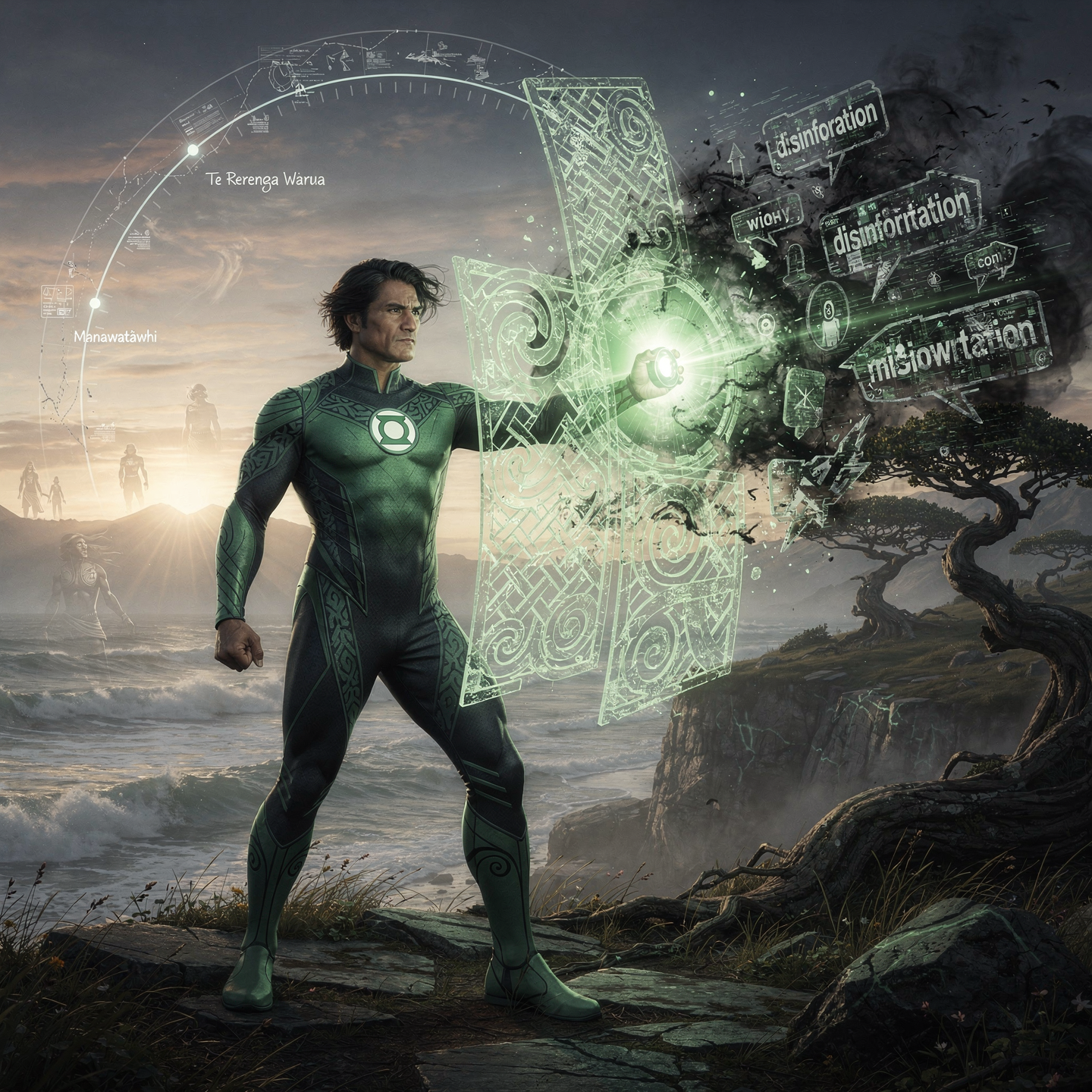
Ivor Jones The Māori Green Lantern Fighting Misinformation And Disinformation From The Far Right