“Democracy Died by Post: How the Coalition Rigged the 2025 Māori Wards Referendum” - 20 October 2025
The Shifting Tide
Kia ora e te whānau
Let me tell you straight up what happened. The government just pulled off one of the slickest voter suppression schemes this country has seen. They forced 42 councils to hold referendums on Māori wards, and 24 councils voted to remove them. But here is the part they do not want you to know: more actual voters supported keeping Māori wards than removing them. 520,113 people voted to keep them versus 458,332 who voted to remove them. So how did 24 councils still lose their wards? Because this referendum was designed to fail from the start, targeting low turnout areas where older Pākehā voters dominate, while Māori and younger voters were systematically locked out.
This essay exposes the calculated white supremacist strategy behind the 2025 Māori wards referendum. It reveals how National, ACT, and NZ First weaponized local democracy to dismantle Indigenous representation, how the Christian conservative Simeon Brown rushed through legislation while Hobson’s Pledge spread disinformation, and how voter suppression through postal voting ensured Māori voices were drowned out. The connection between far-right lobby groups, coalition agreements, and anti-Māori propaganda reveals a coordinated assault on te Tiriti.
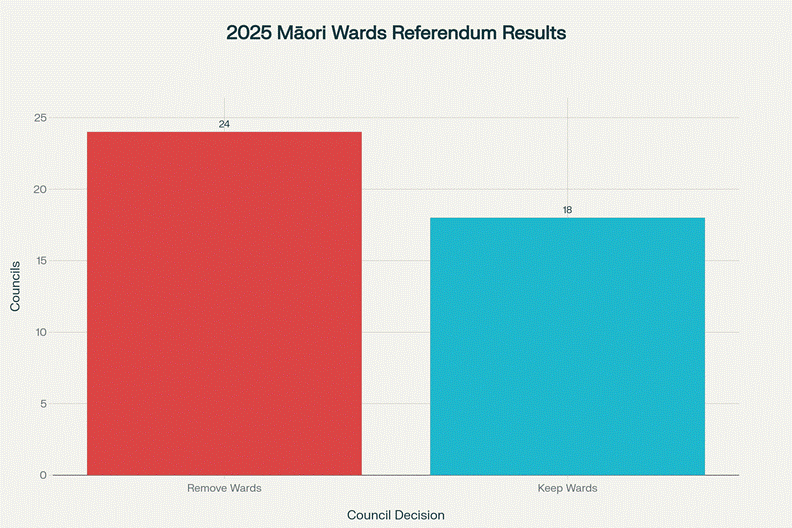
2025 Māori Wards Referendum Results: 24 councils voted to remove Māori wards while 18 voted to keep them, revealing deep divisions across Aotearoa.
Background: The Architecture of Suppression
To understand what happened in 2025, you need to know how we got here. In 2021, the Labour government finally removed the binding poll provision that allowed 5 percent of voters to force referendums on Māori wards. This provision never applied to any other type of ward - not rural wards, not urban wards, only Māori wards. It was segregation by legislation.
Before 2021, councils tried establishing Māori wards 24 times. Only three succeeded. Hobson’s Pledge, fronted by Don Brash, organized petition campaigns that forced binding polls. These polls systematically rejected Māori representation. In 2018, five councils held referendums: Palmerston North rejected wards 68.8 percent, Western Bay of Plenty 78.2 percent, Whakatāne 56.4 percent, Manawatu 77 percent, and Kaikōura 55 percent. Voter turnout averaged only 40 percent.
New Plymouth mayor Andrew Judd tried establishing a Māori ward in 2014. The council supported it. Then Hobson’s Pledge organized a petition. In the 2015 referendum, 83 percent voted against it. Judd was labeled a separatist, verbally abused, and spat on in the street. He did not run for re-election. He later described himself as a recovering racist and spent years campaigning to change the law.
When Labour removed the poll provision in 2021, 45 councils established Māori wards without referendums. Māori representation on councils jumped from 14 percent to over 20 percent. For the first time, tangata whenua had genuine representation in local government decision-making.
Then the 2023 election happened. National formed a coalition with ACT and NZ First. Both coalition agreements included commitments to restore binding polls on Māori wards. Local Government Minister Simeon Brown announced in April 2024 that councils would be forced to either dismantle their Māori wards or hold binding polls at the 2025 elections.
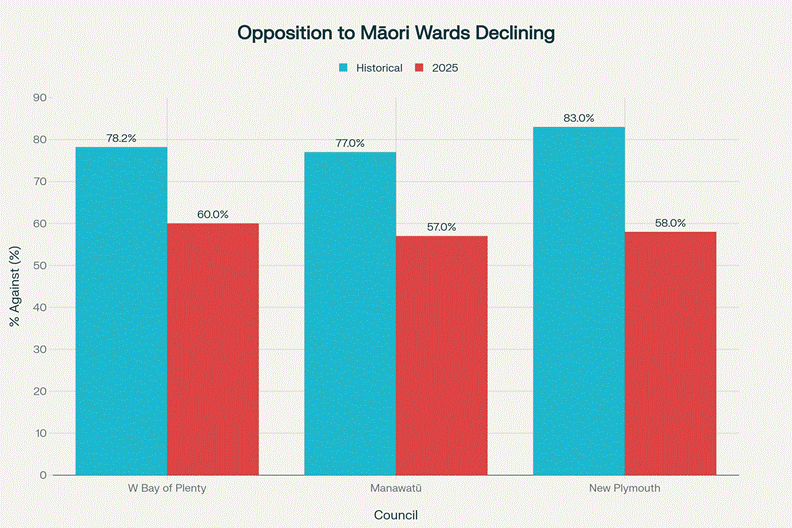
Shifting Ground: Opposition to Māori wards has significantly decreased in councils that held multiple referendums, with Western Bay of Plenty dropping from 78% opposition (2018) to 60% (2025), Manawatū from 77% to 57%, and New Plymouth from 83% (2015) to 58% (2025).
The Issue: White Supremacy Disguised as Democracy
The coalition government framed this as restoring local democracy. Simeon Brown said the previous government’s changes denied local communities the ability to determine whether to establish Māori wards. ACT leader David Seymour celebrated the move, claiming Labour stripped democracy from local government. National, ACT, and NZ First painted themselves as champions of the people against unelected Māori privilege.
This is white supremacy 101. The rhetoric weaponizes democracy to suppress Indigenous rights. It claims equal treatment while ignoring structural inequality. It pretends Māori representation threatens Pākehā while erasing 180 years of deliberate exclusion.
The referendum requirement applies only to Māori wards. Not rural wards. Not urban wards. Not ward systems designed to overrepresent wealthy areas. Only Māori wards face this discriminatory barrier. The law treats Māori representation as uniquely suspicious, requiring extraordinary public approval that no other form of representation needs.
ACT’s David Seymour said he would vote against Māori wards because of what he called a corrosive obsession with a person’s race. He claimed it privileges some humans over others based on ancestry from 200 years ago. This is replacement theory rhetoric - the far-right narrative that Indigenous rights threaten the majority population.
The coalition government gave councils two options: dismantle wards immediately or hold a poll in 2025, with results taking effect in 2028. Only Kaipara and Upper Hutt chose to dismantle wards without a poll. The rest held referendums. The government projected costs over 2 million dollars, forcing financially struggling councils to fund their own dismantling of Indigenous representation.
This matters to Māori because it targets our political voice. Māori wards guarantee representation in local government decision-making. They ensure councils consult meaningfully with mana whenua on issues affecting our communities. Without Māori wards, Māori representation drops dramatically. In Taranaki, Māori hold only 4 percent of general seats despite being over 20 percent of the population. Māori wards brought that to 14 percent.
The scope of this analysis covers the 2025 referendum, but it sits within a broader pattern of coalition government attacks on Māori. The same government tried to rush through the Treaty Principles Bill. It dismantled the Māori Health Authority. It removed te reo Māori from public service names. It imposed English-first language policies. The Māori wards referendum is one weapon in a coordinated campaign to roll back Māori rights.
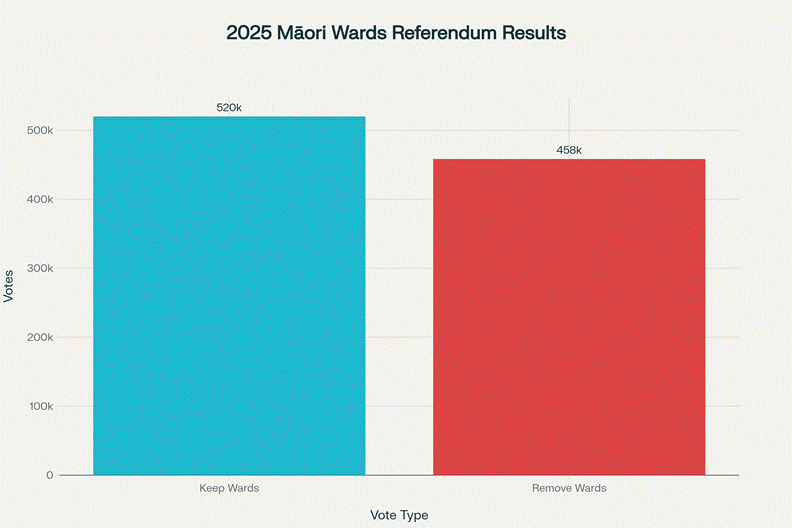
The Democratic Paradox: While 24 councils voted to remove Māori wards, the majority of individual voters (520,113) actually supported keeping them, compared to 458,332 who voted to remove them.
Analysis: The Web of White Supremacy
The Coalition Agreement: Premeditated Assault
The 2025 Māori wards referendum did not happen by accident. It was written into coalition agreements signed on 24 November 2023. Both the National-ACT and National-NZ First agreements included commitments to restore the right to local referendum on the establishment or ongoing use of Māori wards, including requiring a referendum on any wards established without referendum at the next local body elections.
This reveals how far-right parties used coalition negotiations to impose their agenda. National needed both ACT and NZ First to form government. ACT and NZ First made Māori wards referendums a bottom-line condition. National agreed. The decision to force 42 councils into referendums was made before the government was even sworn in, negotiated in private deals that gave no voice to the councils or communities affected.
Simeon Brown: The Christian Conservative Enforcer
Simeon Brown was appointed Local Government Minister with the specific mandate to implement this policy. Brown is a devout Reformed Baptist who opposed same-sex marriage, called abortion child abuse in the womb, and voted against conversion therapy bans. His social conservatism aligns with a Christian nationalist worldview that sees Māori rights as a threat to traditional hierarchies.
Brown rushed the Local Government Electoral Legislation and Māori Wards and Māori Constituencies Amendment Act 2024 through Parliament. It passed its third reading on 30 July 2024. Brown celebrated it as a great day for democracy. He claimed the previous government denied local communities the ability to determine whether to establish Māori wards, taking away voices and undermining democracy.
This language inverts reality. Labour’s 2021 changes gave councils the same decision-making power over Māori wards that they already had for every other type of ward. Councils consulted communities, heard submissions, and made decisions. The binding poll provision was the mechanism that undermined democracy, allowing a small minority to overturn council decisions through low-turnout referendums that never applied to rural or urban wards.
Brown’s rhetoric about community voices is a dog whistle. It means Pākehā majority voices. It erases Māori community voices that supported Māori wards. It ignores that over 50 mayors and regional council chairpersons wrote to the government criticizing the bill, saying councils already seek community views and referendums are not called for other representation decisions.
Hobson’s Pledge: The Propaganda Machine
Hobson’s Pledge led the campaign against Māori wards. Founded in 2016 by Don Brash, the group aims to remove Māori electorates, abolish the Waitangi Tribunal, restrict tribal powers, and remove all references in law to Treaty partnership and principles. Brash delivered the infamous Orewa Speech in 2004, attacking Māori rights as racial privilege.
Hobson’s Pledge organized petition campaigns that forced the 2018 referendums. In 2025, they ran billboard and social media campaigns urging no votes. Their tactics reveal the cynicism at the heart of their operation. In August 2025, Hobson’s Pledge used a photo of Te Arawa kuia Ellen Tamati without her permission on billboards saying My mana doesn’t need a mandate. Vote no to Māori wards.
Tamati was devastated. She told media she never gave permission for her photo to be used, she did not authorize Hobson’s Pledge to use her face, and her moko kauae represents her whakapapa to Te Arawa and Mataatua. She urged people to vote for Māori wards because we need them. Hobson’s Pledge pulled the billboards but showed no remorse. Brash said they purchased the image from a stock photography site and made no apologies.
Hobson’s Pledge also used photos of Māori councillors like Dinnie Moeahu without permission, claiming their election to general seats proved Māori do not need wards. Moeahu called the ads disgusting and said it was disinformation. When asked if he was concerned about impacting the mana of Moeahu and his family, Brash replied not at all.
This is colonial violence. Using Māori faces and moko to argue against Māori representation weaponizes our culture against us. It reduces our identity to props for white supremacist propaganda. It shows the contempt these groups have for Māori autonomy and dignity.
The Casey Costello Connection
The links between Hobson’s Pledge and the coalition government run deeper. Casey Costello, a Cabinet minister for NZ First, was a spokesperson for Hobson’s Pledge for seven years before entering Parliament. She held senior positions in the organization and was instrumental in campaigns against Māori rights. NZ First’s website celebrates her role pushing back against an agenda of race-based division.
Costello’s ministerial appointments include Customs, Seniors, and associate roles in Health, Immigration, and Police. She sits at the Cabinet table. Hobson’s Pledge celebrated her appointment, saying we can be confident that there will be at least one minister at the Cabinet table speaking up for what we stand for.
This is the network. Far-right lobby groups like Hobson’s Pledge organize campaigns. Their spokespeople enter Parliament through coalition parties. Those parties negotiate policy commitments as conditions for government formation. Once in power, ministers implement the lobby group agenda using state resources. Then lobby groups campaign for the policy, creating the illusion of grassroots support.
The Voter Suppression Strategy
The referendum was designed to suppress Māori votes. Local government elections use postal voting. Turnout is chronically low, especially among Māori, young people, renters, and ethnically diverse communities. As of 9 October 2025, nationwide turnout was only 28.49 percent. Auckland recorded 21.8 percent. Hamilton City 22.98 percent. Porirua City 25.11 percent.
Analysis shows Māori voter turnout is historically much lower than Pākehā in local elections. Auckland data from 2022 showed Māori turnout around 25 percent. Younger voters aged 18 to 35 have turnout rates much lower than older age groups. Urban and ethnically diverse wards with higher proportions of renters and transient populations show lesser engagement.
This demographic pattern advantages opponents of Māori wards. Older, homeowning Pākehā voters are most likely to return postal ballots. They are also most likely to oppose Māori wards, shaped by decades of media narratives about Māori privilege and special treatment. Meanwhile, Māori voters face multiple barriers: transient housing, distrust of government systems, limited engagement with local politics, and postal voting that requires stable addresses and reliable mail delivery.
The government knew this. They timed the referendum for the 2025 local elections, which have lower turnout than general elections. They rejected proposals for online voting or in-person polling that would increase accessibility. They structured the question as a simple yes-no vote, erasing the complexity of Māori representation and Treaty obligations. They gave councils minimal time to educate voters, creating confusion about what Māori wards actually do.
The result? In Whanganui, fewer than 3 percent of electors had returned voting papers by late September. Māori ward turnout was lower than general ward turnout. Across the country, the referendum question appeared on ballots alongside council elections, buried in paperwork that many voters did not fully read or understand.
The Democratic Paradox
Here is the stunning contradiction. Despite 24 councils voting to remove Māori wards, the total number of individual voters who supported keeping them was higher. There were 520,113 votes to keep Māori wards and 458,332 votes to remove them. Some people voted in two referendums for regional and district councils, but the overall pattern is clear: more people voted to keep than remove.
How did more councils remove wards if more people supported keeping them? Because population is distributed unevenly. Bigger councils with more voters tended to keep wards. Wellington, Hamilton, Porirua, Palmerston North, Nelson, and Gisborne all voted to keep. These are larger urban centers with more diverse populations and higher Māori populations.
Smaller rural and provincial councils voted to remove. These councils have smaller populations, older demographics, less diversity, and lower Māori populations. The referendum structure gave every council equal weight regardless of population. A small rural council with 5,000 voters had the same impact as a city council with 50,000 voters. This is minority rule masquerading as democracy.
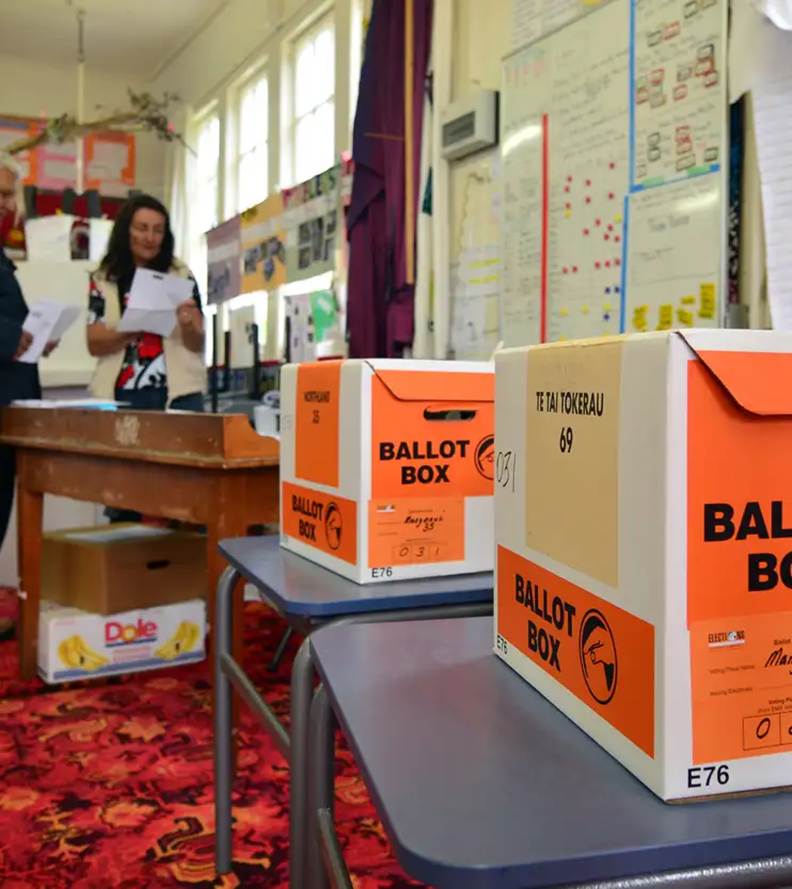
New Zealand local election ballot boxes in a polling station, highlighting the Maori electoral area Te Tai Tokerau.
The Shifting Tide
The results also reveal something the government does not want acknowledged. Opposition to Māori wards is declining. In councils that held referendums in both 2018 and 2025, the no vote dropped significantly. Western Bay of Plenty went from 78.2 percent opposition in 2018 to 60 percent in 2025. Manawatu dropped from 77 percent to 57 percent. New Plymouth fell from 83 percent in 2015 to 58 percent in 2025.
One in five voters changed their minds over seven years. This shows community attitudes evolving. Māori wards have proven their value. Councils with Māori representation report better relationships with iwi, cost savings through improved consultation, and more informed decision-making on environmental and cultural issues. The fearmongering about apartheid and separatism has been exposed as false.
But the government imposed referendums before this shift could consolidate. They forced the vote now, while opposition remained above 50 percent in enough councils to claim victory. They weaponized the current moment before demographic change and attitudinal evolution tipped the balance toward justice.
Implications: The Road Ahead
The 2025 Māori wards referendum is a warning. It shows how white supremacist forces use democratic mechanisms to dismantle Indigenous rights. It reveals the coordination between lobby groups, political parties, and government ministers in targeting Māori representation. It demonstrates how voter suppression operates through structural barriers rather than explicit disenfranchisement.
For Māori communities, the impact is immediate. Twenty-four councils will lose Māori wards for the 2028 and 2031 elections. Councillors elected in 2025 will serve their terms, but after that, Māori representation drops. Councils will return to the same exclusionary systems that locked Māori out for 180 years. Decision-making on resource management, urban planning, cultural heritage, and environmental protection will happen without guaranteed Māori voices at the table.
This connects to larger patterns of coalition government policy. The Treaty Principles Bill seeks to redefine the Treaty to eliminate partnership. The repeal of the Māori Health Authority removes targeted health services. The push for one law for all erases structural inequities. The attack on co-governance removes Māori from decision-making. These policies form a coherent agenda: reassert Pākehā dominance and roll back Māori gains from 50 years of Treaty settlements and activism.
The far right is organizing. Groups like Hobson’s Pledge, the Taxpayers’ Union, and various Christian conservative networks coordinate campaigns, share resources, and support each other’s causes. They use social media to spread disinformation. They lobby MPs and ministers. They organize petition campaigns and protests. They present themselves as grassroots when they are funded by wealthy donors with ideological agendas.
The intersection of race, class, and colonization is stark. The councils that voted to remove Māori wards are predominantly rural and provincial areas where Pākehā landowners hold economic and political power. These are the same regions where Māori land was confiscated, where Māori were displaced from ancestral territories, where poverty and marginalization are highest for Māori communities. Removing Māori wards entrenches that historical dispossession by denying political voice.
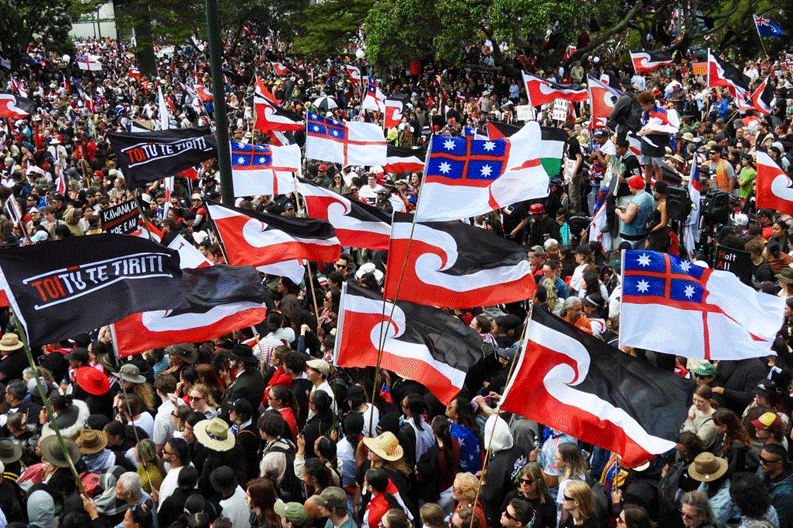
Large crowd at a Maori rights protest in Auckland holding Tino Rangatiratanga and other flags.
Kia Kaha, Kia Maia
The 2025 Māori wards referendum was not democracy. It was a calculated attack on Indigenous representation, designed by a coalition government serving far-right lobby groups, implemented through voter suppression, and justified with white supremacist rhetoric about equal citizenship.

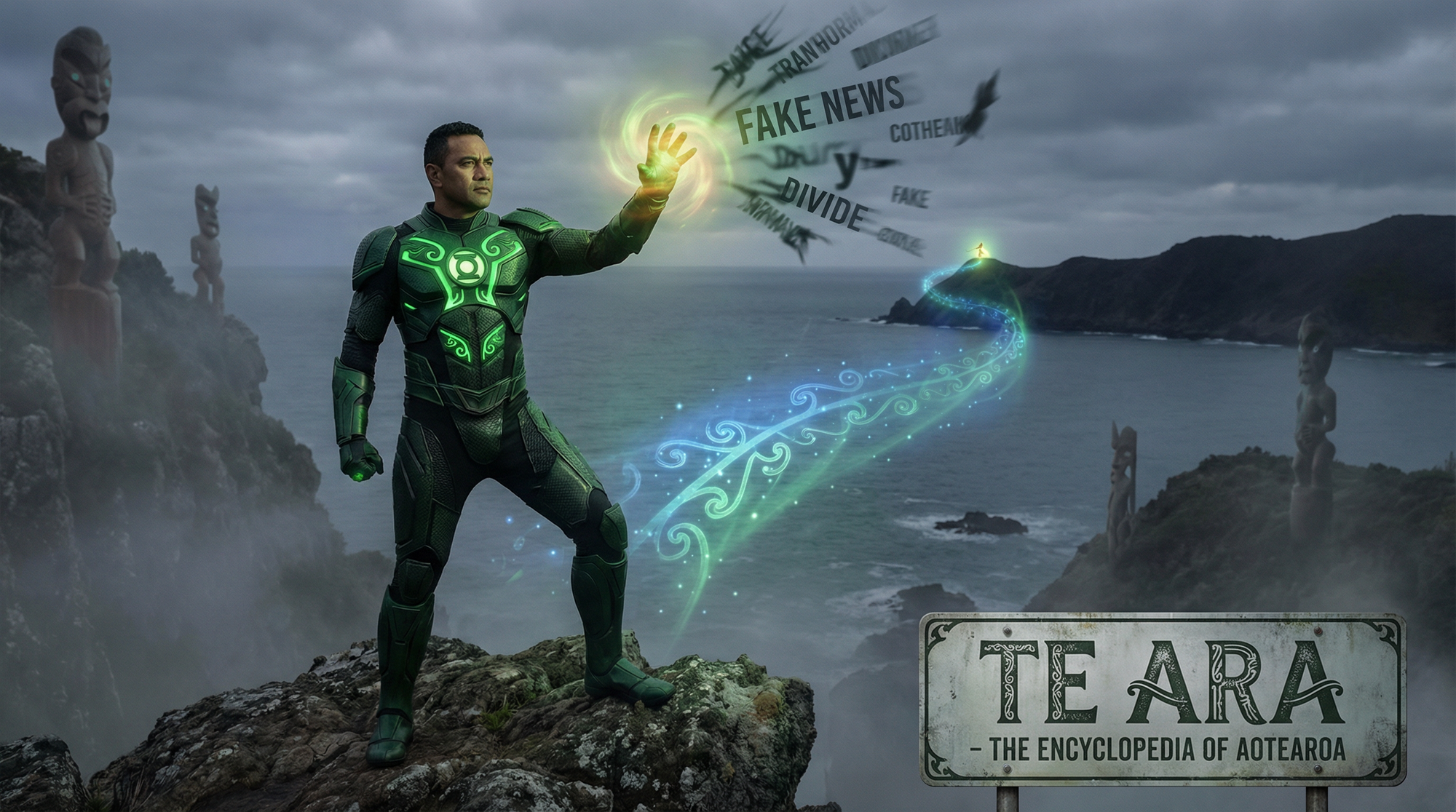
The Māori Green Lantern Fighting Misinformation And Disinformation From The Far Right
But we are not defeated. Eighteen councils kept their Māori wards. Gisborne voted 9,904 to 5,704 to keep. Horizons Regional Council kept wards by 776 votes after special votes were counted. Whanganui kept its wards by about 600 votes. These victories matter. They show communities choosing partnership over division.
The shift in opposition over time shows we are winning the long game. When communities experience Māori representation, they support it. When councils work with mana whenua, they see the benefits. The government forced this referendum now because they knew waiting would mean losing.
We fight on. We organize our communities. We increase voter turnout. We educate about what Māori wards actually do. We expose the networks between Hobson’s Pledge, ACT, NZ First, and National. We name the white supremacy for what it is. We honor our tūpuna who fought for these seats and our mokopuna who will inherit our resistance.
To those who find value in this work, I ask humbly for your support. These are tough economic times for whānau, so please only contribute a koha if you have capacity and wish to do so. HTDM: 03-1546-0415173-000.
Kia kaha. Kia maia. Kia manawanui.
Ivor Jones
The Māori Green Lantern
Te Arawa/Ngāti Pikiao
2. https://www.tandfonline.com/doi/pdf/10.1080/09615768.2023.2246289?needAccess=true&role=button
3. /content/files/assets/Links/2024-06-24-representation-review-analysis.pdf
4. https://en.wikipedia.org/wiki/Casey_Costello
5. https://e-tangata.co.nz/comment-and-analysis/maori-wards-more-than-a-vote/
6. https://www.democracyaction.org.nz/2025_local_government_elections_candidate_report
7. https://www.hobsonspledge.nz/why_i_am_stepping_down_as_spokesperson_of_hobson_s_pledge
8. https://www.npdc.govt.nz/council/about-the-council/elections/previous-elections-including-expense-returns/maori-ward-poll-2015/
9. https://www.votelocal.co.nz/maori-wards-and-constituencies/
10. https://www.facebook.com/groups/aotearoanzhistory/posts/1281036130385413/
11. https://www.tandfonline.com/doi/full/10.1080/1177083X.2023.2181194
12. https://www.rnz.co.nz/news/national/421771/new-plymouth-councillor-prepared-to-fight-against-maori-ward-proposal
13. /content/files/core/services/aop-cambridge-core/content/view/417B98AD001FFBEF97A5167F9D463E8C/S0034670523000761a/div-class-title-integration-referendums-as-expressions-of-constituent-power-ireland-as-a-case-study-div.pdf
14. https://www.nzherald.co.nz/gisborne-herald/news/gisborne-election-most-council-hopefuls-support-keeping-maori-wards/OI4DS5URBVAQZBDU2OFAM2AEMY/
15. https://www.rnz.co.nz/news/political/504765/nz-first-mps-maiden-speeches-highlight-family-and-service
16. https://www.rnz.co.nz/news/national/435268/new-plymouth-council-signals-support-for-ditching-of-maori-ward-polls
17. https://www.nzherald.co.nz/whanganui-chronicle/news/local-body-elections-low-voting-paper-returns-worry-whanganui-district-council-candidates/7PDPAKRFVFGGDFHKP7PACMHK2I/
18. https://www.nzherald.co.nz/nz/politics/election-2023-who-might-become-nz-first-mps-former-ministers-mps-councillors-and-anti-vax-conspiracy-theorists/IRAI5CHO2JFVVDBRFFFT3GSZI4/
19. https://www.rnz.co.nz/national/programmes/morningreport/audio/2018633010/hobson-s-pledge-action-disgusting-racist-andrew-judd
20. https://www.nzherald.co.nz/nz/politics/election-2023-audrey-young-new-zealand-first-national-party-at-crossroads-as-coalition-talks-hit-jagged-edge/EVOPWF3L7NH6DHTIZSLGTLTOWA/
21. https://www.nzherald.co.nz/nz/former-new-plymouth-mayor-andrew-judd-appears-at-select-committee-to-fight-for-maori-wards/U3I2KX3OLQXTNQJNKLDXVTYZ7A/
22. https://www.nzherald.co.nz/gisborne-herald/news/concept-of-democracy-is-being-tested-roger-handford/KSL3OK2IKZGPHDPY5OEOUN2ML4/
23. https://www.rnz.co.nz/news/on-the-inside/500651/week-in-politics-the-multiple-reasons-why-labour-lost-so-badly
24. https://www.tandfonline.com/doi/full/10.1080/08111146.2024.2410840
25. https://www.rnz.co.nz/news/ldr/442899/masterton-councillors-to-vote-on-maori-wards-for-2022
26. https://www.nzherald.co.nz/hawkes-bay-today/news/hawkes-bay-voting-rates-well-up-on-last-local-elections-so-far-as-final-countdown-begins/5GRIYFFY4VA6TPNLAQPHACS3GY/
27. https://www.rnz.co.nz/news/political/498121/election-2023-all-the-latest-developments-on-16-september
28. https://www.rnz.co.nz/news/political/397641/new-plymouth-district-council-seats-we-need-a-good-mix-to-make-good-decisions
29. https://www.nzherald.co.nz/nz/taurangas-first-maori-ward-councillor-mikaere-sydney-undergoing-medical-treatment-in-hospital/74JEZLIJSZGZZKUSDED3H4HZTQ/
30. https://www.rnz.co.nz/programmes/30-with-guyon-espiner/story/2018938627/jordan-williams-on-what-the-taxpayers-union-really-is-and-who-funds-it
31. https://www.nzherald.co.nz/nz/angry-ratepayers-seek-supercity-referendum/OTTT2A46RJ2TIZJV4DXLEIMW3E/
32. https://www.facebook.com/TeAoWithMoana/posts/in-council-news-regarding-the-māori-wards-the-following-results-have-been-confir/1422768256525556/
33. https://thespinoff.co.nz/politics/11-10-2025/local-elections-live-decision-day-2025
34. https://www.facebook.com/caseycostellonzfirst/mentions/
35. https://en.wikipedia.org/wiki/2025_New_Zealand_local_referendums_on_Māori_wards_and_constituencies
36. https://www.beehive.govt.nz/release/coalition-government-require-referendums-māori-wards
37. https://www.rnz.co.nz/news/ldr/514146/corrosive-obsession-with-a-person-s-race-david-seymour-on-maori-wards
38. https://www.gdc.govt.nz/council/news/media-releases/gisborne-district-council-final-election-results-meet-your-new-council
39. https://www.mpdc.govt.nz/component/content/article/105-news-a-events/news-a-have-your-say/3619-should-council-establish-maori-wards
40. https://www.act.org.nz/news/promise-delivered-local-voters-get-a-say-on-māori-wards-from-today
41. https://thespinoff.co.nz/politics/16-10-2025/the-local-election-results-by-the-numbers
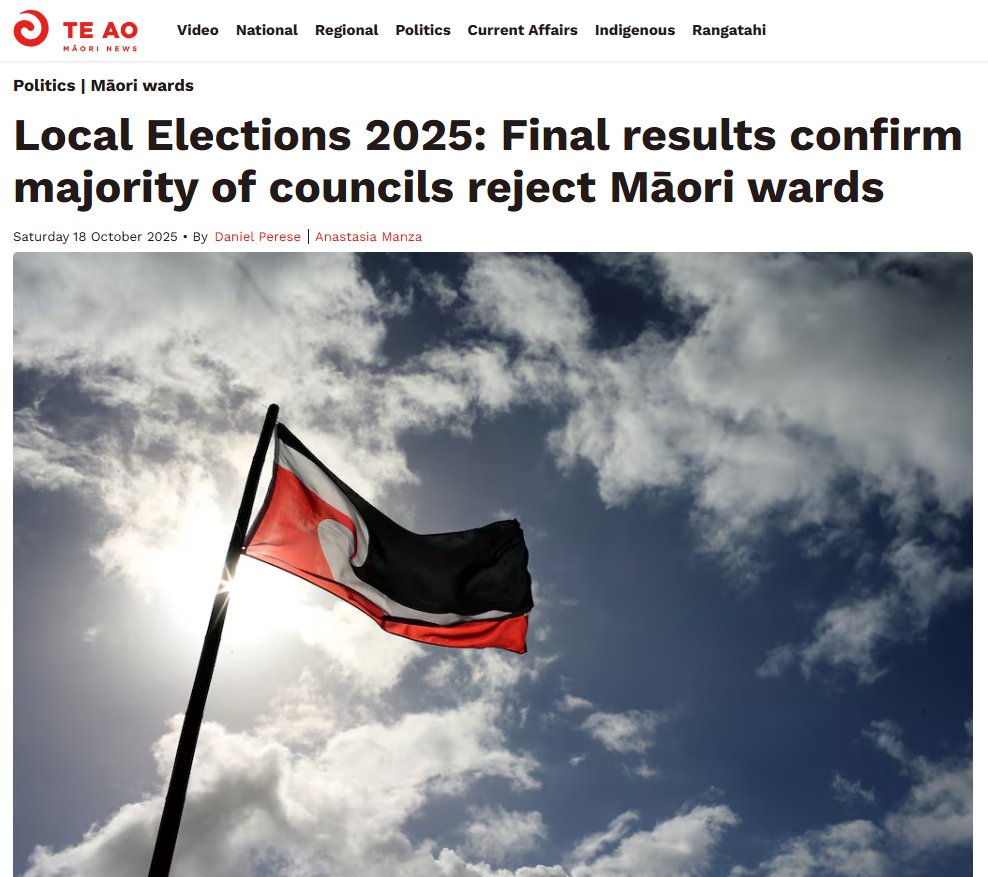
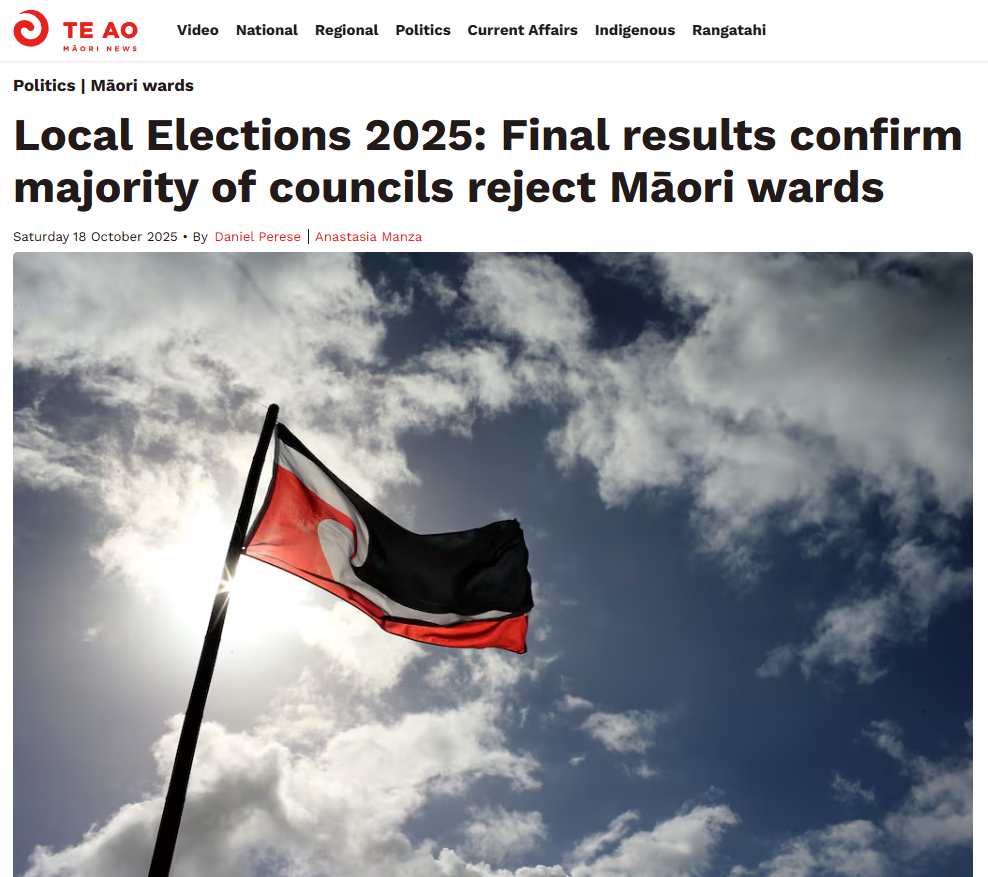
42. Local-Elections-2025-Final-results-confirm-majority-of-councils-reject-Maori-wards-Te-Ao-Maori-News-10-20-2025_01_24_PM.jpg
43. /content/files/assets/RIS-Documents/ris-dia-bpe-mar24.pdf
44. https://www.nzherald.co.nz/bay-of-plenty-times/news/act-leader-david-seymour-would-vote-against-maori-wards-for-auckland/WU6C6FJ2XBBEPOKB5LPJMYUM44/
45. https://www.rnz.co.nz/news/ldr/576326/nail-biting-win-for-maori-seats-at-horizons-regional-council
46. https://www.dia.govt.nz/maori-wards
47. https://www.rnz.co.nz/news/political/524376/what-you-need-to-know-about-maori-wards
48. https://www.greens.org.nz/maoriwards
49. https://en.wikipedia.org/wiki/Māori_wards_and_constituencies
50. https://www.rnz.co.nz/news/te-manu-korihi/575906/maori-councillors-take-stock-of-maori-ward-referendum-results
51. /content/files/assets/Resources-Representation-Review/maori-ward-supplementary-guidelines-2024.pdf
52. https://www.facebook.com/davidseymourACT/posts/act-campaigned-for-and-won-the-right-for-communities-to-vote-on-māori-wards-whil/1337483391082269/
53. https://www.teaonews.co.nz/2025/10/18/local-elections-2025-final-results-confirm-majority-of-councils-reject-maori-wards/
54. https://www.whakatane.govt.nz/about-council/governance/local-elections-2025/elections-2025-results
55. https://www.facebook.com/davidseymourACT/posts/māori-wards-keep-them-or-ditch-them-thanks-to-act-the-choice-is-yours/1309830103847598/
56. https://www.rnz.co.nz/news/te-manu-korihi/523622/maori-wards-bill-passes-third-reading
57. https://www.nzherald.co.nz/kahu/maori-wards-24-districts-vote-to-scrap-18-choose-to-keep-in-2025-polls/P4H6IP7KC5AIXLCNTU24ZEKUBM/
58. https://www.rnz.co.nz/news/political/513401/maori-wards-ultimatum-for-councils-as-coalition-government-imposes-referendums
59. https://www.nzherald.co.nz/whanganui-chronicle/news/local-elections-2025-horizons-voters-narrowly-back-maori-constituencies-in-preliminary-result-reversing-progress-result/7B4D7JJJANE6XBBEWXT7YHEUGU/
60. https://www.rnz.co.nz/news/ldr/523597/reversal-of-maori-wards-utterly-shameful-says-labour-mp-kieran-mcanulty
61. https://www.1news.co.nz/2024/04/04/referendums-on-local-council-maori-wards-to-return-govt/
62. https://www.rnz.co.nz/news/ldr/576030/whanganui-elects-first-maori-ward-councillors-as-voters-signal-support-for-seats
63. https://www.1news.co.nz/2024/05/28/more-harm-than-good-council-calls-for-rethink-on-maori-wards/
64. https://journal.media-culture.org.au/index.php/mcjournal/article/view/2738
65. https://www.1news.co.nz/2024/05/22/exclusive-over-50-mayors-chairs-critical-of-govts-maori-ward-changes/
66. https://www.nzherald.co.nz/nz/politics/maori-ward-results-did-your-region-vote-to-keep-them/4YYRLZFWTFCVXKOWGP5W6LTRLE/
67. https://www.rnz.co.nz/news/te-manu-korihi/572542/referendums-begin-for-maori-wards-at-42-councils
68. https://www.nzherald.co.nz/nz/what-you-need-to-know-about-maori-wards/STUCK3TR7NFV3GQERXP6ZQHHYQ/
69. https://www.rnz.co.nz/news/national/576235/seven-votes-decide-two-taupo-council-positions
70. https://www.rnz.co.nz/news/ldr/526910/western-bay-of-plenty-votes-to-keep-maori-ward
71. https://www.rnz.co.nz/news/political/576302/21-year-old-maori-tongan-rangatahi-secures-council-seat-in-rural-tararua
72. https://www.1news.co.nz/2024/08/22/council-leaders-vote-to-challenge-new-maori-ward-polling-law/
73. https://en.wikipedia.org/wiki/Hobson’s_Pledge
74. https://www.nzfirst.nz/coalition-agreement
75. https://openaccess.wgtn.ac.nz/articles/thesis/Campaign_Expenditure_Effects_on_Electoral_Results_in_the_New_Zealand_Local_Government_Sector/29242589
76. https://en.wikipedia.org/wiki/Simeon_Brown
77. https://www.massey.ac.nz/about/news/opinion-hobson-would-have-been-horrified/
78. https://www.horizons.govt.nz/HRC/media/Media/Supplementary-Documents/Horizons-Regional-Council-(2)/Regional-Council-Meeting-2024-28-05/2465 Annex E The Mori Ward and Constituuencies Urgent Inquiry Report Wai 3365.pdf
79. https://www.metromag.co.nz/society/the-enfant-terrible-simeon-brown
80. https://www.1news.co.nz/2025/09/19/hobsons-pledge-doesnt-care-if-mana-hit-by-disgusting-ad/
81. https://thespinoff.co.nz/politics/27-05-2024/the-maori-wards-bill-explained
82. https://www.beehive.govt.nz/minister/biography/simeon-brown
83. https://www.bassettbrashandhide.com/post/don-brash-the-truth-about-our-māori-ward-billboards
84. /content/files/media/haxjinrp/national-act-nz-first-coalition-government-policies-constitution-and-rights.pdf
85. https://www.facebook.com/NZLabourParty/posts/today-health-minister-simeon-brown-wouldnt-say-whether-he-thinks-abortion-is-hea/1226385855524108/
86. https://journals.sagepub.com/doi/pdf/10.1177/10398562241229611
87. https://www.facebook.com/RohanForNelson/posts/so-the-racist-a-historical-bunch-at-hobsons-pledge-have-decided-to-try-use-my-na/1233445158799999/
88. https://www.reddit.com/r/nzpolitics/comments/1ai8jh4/win_and_a_prayer_how_simeon_brown_is_defying_his/
89. https://thespinoff.co.nz/atea/06-08-2025/how-did-ellen-tamatis-face-end-up-on-hobsons-pledge-billboards
90. https://www.lgnz.co.nz/news/news-insights/sitting-down-with-our-new-local-government-minister/
91. https://www.rnz.co.nz/news/national/571503/maori-wards-rotorua-mayor-tania-tapsell-criticises-hobson-s-pledge-for-using-her-image
92. https://www.dpmc.govt.nz/publications/co-24-2-national-act-and-new-zealand-first-coalition-government-consultation-and-operating-arrangements
93. https://www.1news.co.nz/2022/02/16/kiritapu-allan-speaks-of-own-experience-with-conversion-practices/
94. https://www.rnz.co.nz/news/political/350889/lobby-group-confident-in-fighting-maori-wards
95. https://www.rnz.co.nz/news/political/503176/what-does-the-new-government-mean-for-maori
96. https://www.1news.co.nz/2024/10/22/girls-were-pure-and-private-thoughts-were-banned-ksb-survivor-speaks-out/
97. /content/files/core/services/aop-cambridge-core/content/view/57A7D6C19F108E37710207BD55789EAD/S0143814X23000119a/div-class-title-the-aftermath-of-ballot-box-success-and-failure-evidence-from-land-preservation-referendums-div.pdf
98. https://www.1news.co.nz/2025/08/06/kuia-devastated-over-use-of-her-image-on-anti-maori-ward-billboards/
99. https://www.1news.co.nz/2023/10/27/what-you-need-to-know-about-maori-wards/
100. https://www.rnz.co.nz/national/programmes/ninetonoon/20250605
101. https://www.nzherald.co.nz/rotorua-daily-post/news/hobsons-pledge-use-of-rotorua-kuias-image-whanau-consider-legal-options/MUV6XWRKBBCKBJYAPWCDJ3A55M/
102. https://www.1news.co.nz/2025/09/16/priests-protesting-gaza-war-remain-chained-to-willis-office-door-overnight/
103. https://www.rnz.co.nz/news/national/574597/nzme-to-keep-running-controversial-anti-maori-wards-ad-that-stuff-removed-after-complaints
104. https://www.rnz.co.nz/news/national/508400/all-wards-should-be-treated-the-same-says-local-government-new-zealand-president
105. https://www.nzherald.co.nz/nz/priests-stage-sit-ins-at-nicola-willis-and-simeon-browns-offices-over-gaza/YAYT3CYQ6II73GIDXKNIDPQB4M/
106. https://www.1news.co.nz/2023/11/25/nationals-coalition-deals-which-policies-made-the-cut/
107. https://www.1news.co.nz/2023/03/21/new-details-on-second-gloriavale-christian-community-revealed/
108. https://www.tandfonline.com/doi/pdf/10.1080/1177083X.2023.2293988?needAccess=true
109. https://www.rnz.co.nz/national/programmes/thepanel/20250806
110. https://www.rnz.co.nz/news/political/575888/mean-spirited-maori-lawyer-joins-calls-to-stop-marine-and-coastal-rights-law-changes
111. https://en.wikipedia.org/wiki/Sixth_National_Government_of_New_Zealand
112.https://www.tandfonline.com/doi/full/10.1080/1177083X.2017.1345766
113. https://www.semanticscholar.org/paper/5d6728d8d1a08c7343354f9e7766b2fb92213360
114./content/files/kotare/article/download/602/414.pdf
115. https://www.tandfonline.com/doi/pdf/10.1080/09615768.2023.2253386?needAccess=true&role=button
116.https://www.mdpi.com/1660-4601/18/3/865/pdf
117. https://onlinelibrary.wiley.com/doi/pdfdirect/10.1111/tran.12606
118. https://journals.lww.com/10.4103/0972-4923.132134
119.https://www.tandfonline.com/doi/full/10.1080/13597566.2023.2234295
120. /content/files/journals/index-php/phrj/article/download/254/238.pdf
121.https://www.tandfonline.com/doi/pdf/10.1080/17449057.2022.2096767?needAccess=true
122. https://www.tandfonline.com/doi/pdf/10.1080/1177083X.2023.2295021?needAccess=true
123. https://www.teaonews.co.nz/2024/04/05/andrew-judd-promises-to-fight-maori-ward-rule-reversal/
124. https://www.hobsonspledge.nz/have_you_seen_what_was_in_the_coalition_agreements
125. https://www.nzcpr.com/turning-point-or-warning-sign-maori-ward-referenda-results/
126. https://waateanews.com/2025/10/11/low-voter-turnout-marred-2025-local-government-elections-in-new-zealand/
127. https://www.nzfirst.nz/casey-costello
128. /content/files/server/api/core/bitstreams/740281ac-8b74-4ea2-8104-36765cce1c18/content.pdf
129. https://www.beehive.govt.nz/minister/biography/casey-costello