“Dictators in Kākahu: Why Eru, Mariameno and Tākuta Stand Taller Than Te Pāti Māori’s Inner Circle” - 6 January 2026
When haka is weaponised to silence rangatahi and MPs are purged for telling the truth, backing Eru, Mariameno and Tākuta isn’t factional—it’s tikanga
Mōrena ano Aotearoa,
When haka is weaponised to silence rangatahi and MPs are purged for telling the truth, backing Eru, Mariameno and Tākuta isn’t factional
—it’s tikanga.
Waitangi 2026: When the Mask Slipped on the Marae Ātea
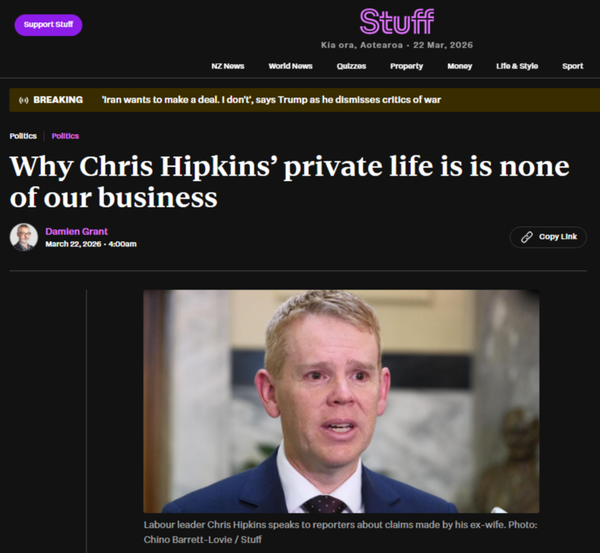
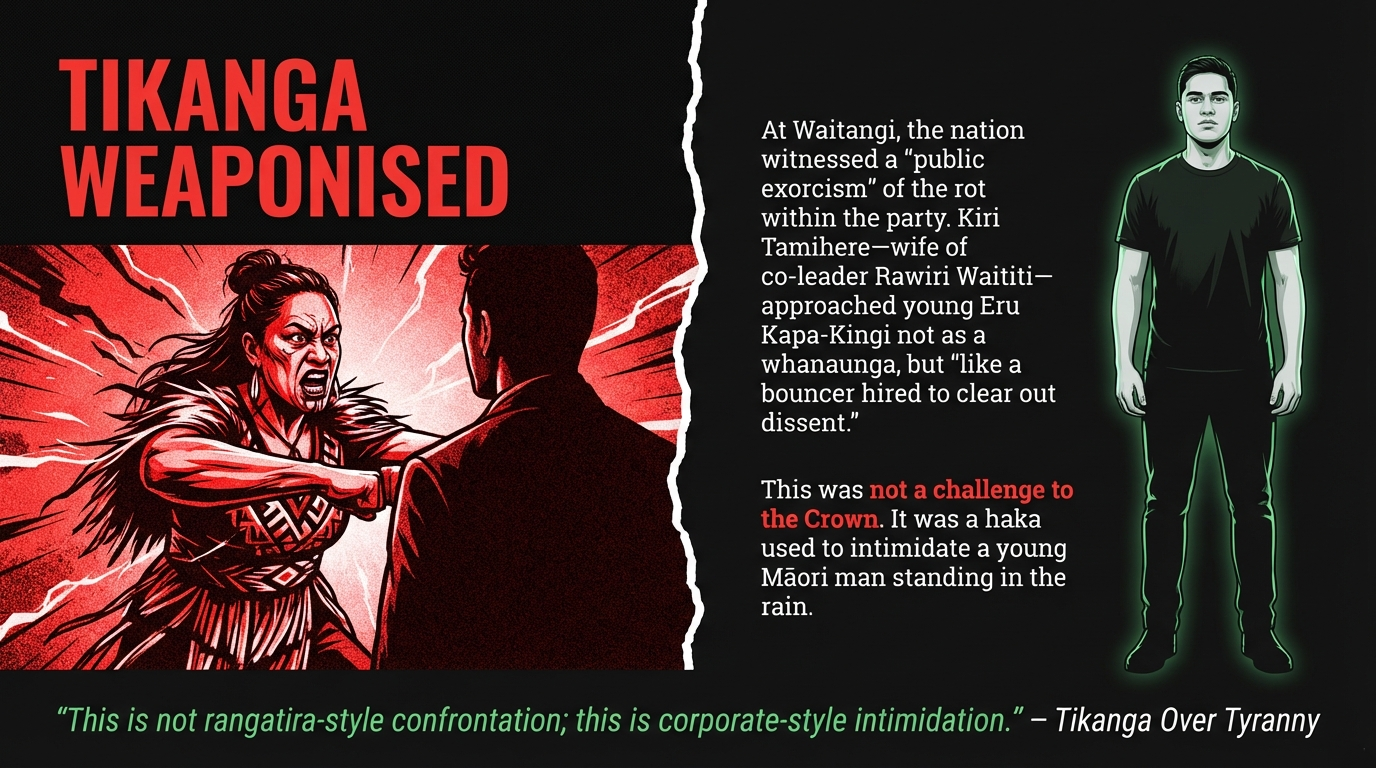
On the Waitangi marae ātea in 2026, the country watched Te Pāti Māori’s internal tensions explode into the open, as cameras captured Kiri Tamihere‑Waititi leading a haka straight into rangatahi Eru Kapa‑Kingi’s face in a confrontation that Stuff described as Te Pāti Māori’s tensions “tak[ing] centre stage at Waitangi.” Stuff Rather than modelling rangatiratanga in the face of a racist Crown, party leadership turned the ātea into a theatre for internal power plays, with a young Māori man used as a prop for punishment in front of the nation. Stuff
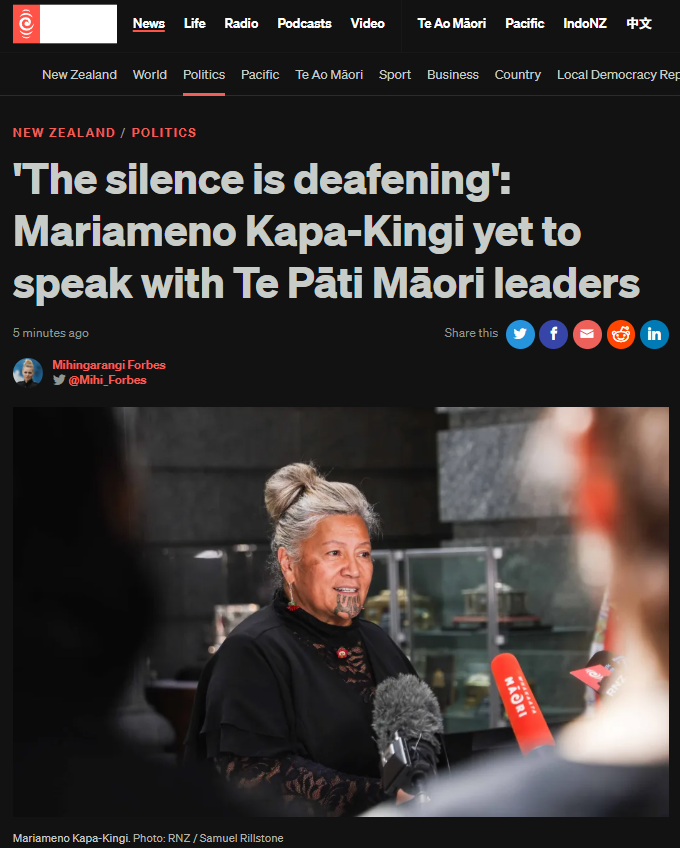
This was not an isolated flare‑up. It came on the back of months of escalating internal conflict in which Te Pāti Māori’s national council moved to expel two sitting MPs, Mariameno Kapa‑Kingi (Te Tai Tokerau) and Tākuta Ferris (Te Tai Tonga), after they challenged the leadership and called for party president John Tamihere to step down. 1News 1News By the time we see Eru on the ātea, the pattern is clear: anyone who stands with Mariameno and Tākuta becomes a target.
Eru Kapa‑Kingi: The Rangatahi Who Refused to Bow
In the footage, Eru is not an aggressor; he is a rangatahi standing his ground while adults with titles and cameras behind them move in on him. Stuff Kiri Tamihere‑Waititi’s haka is not directed at Crown forces or racist policy; it is directed at the son of a sitting MP her own party is in the process of discarding, in front of media and manuhiri, with the clear intent of isolating and shaming him. Stuff
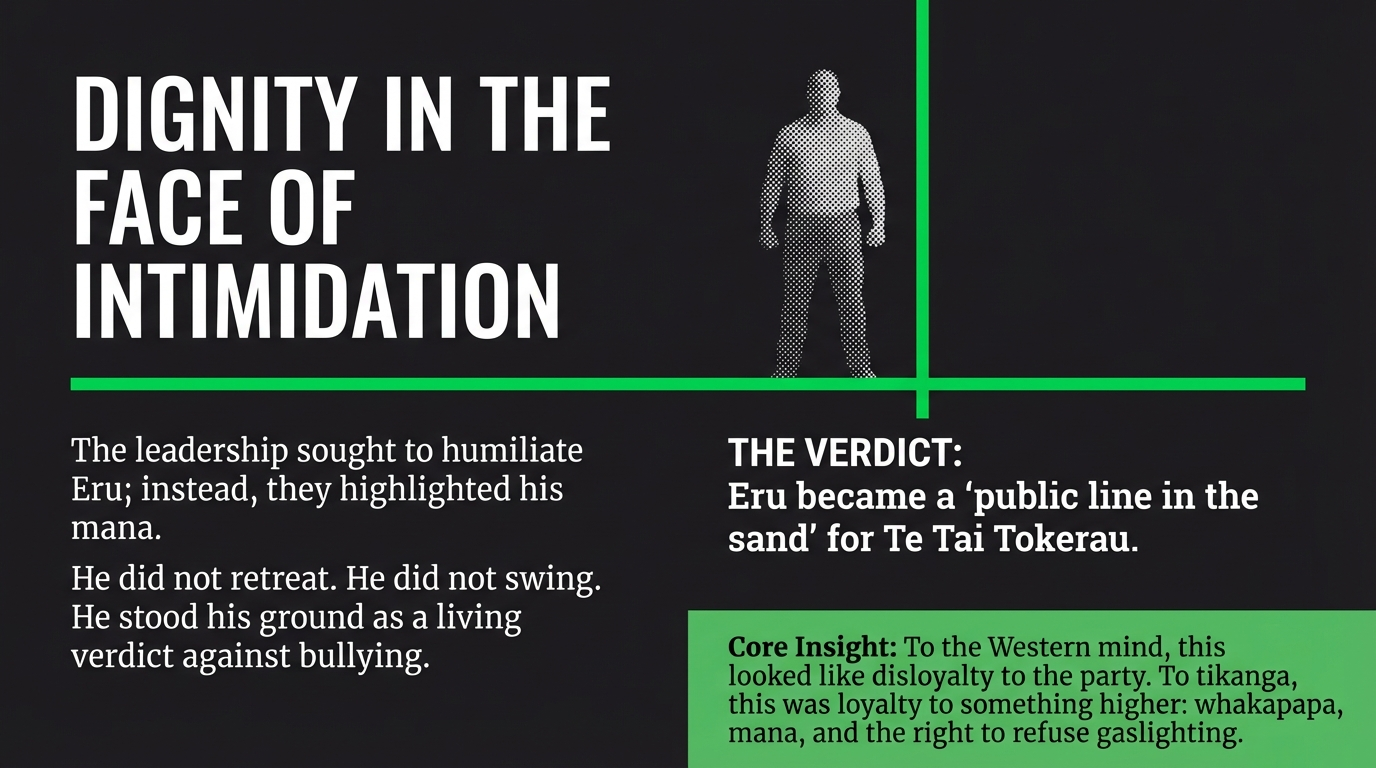
Yet Eru does not swing, does not flinch, does not disappear. He embodies exactly what his māmā, Mariameno, has been arguing in the political arena: that Te Tai Tokerau’s mandate cannot simply be overridden by a national council in Wellington and a president who treats dissent like treason. 1News Te Ao His stance on the ātea is not about personal pride; it is about refusing to validate a process that has already trampled over his electorate’s voice.
To a Western party‑political mind, this can look like “disruption” or disloyalty. But under tikanga, loyalty runs first to whakapapa, whenua and the people who gave you your mandate, not to a president or co‑leader who has forgotten their obligations. Eru’s refusal to bow is not rebellion; it is a return to the actual source of mana.
Mariameno Kapa‑Kingi and Tākuta Ferris: MPs Punished for Defending Tikanga
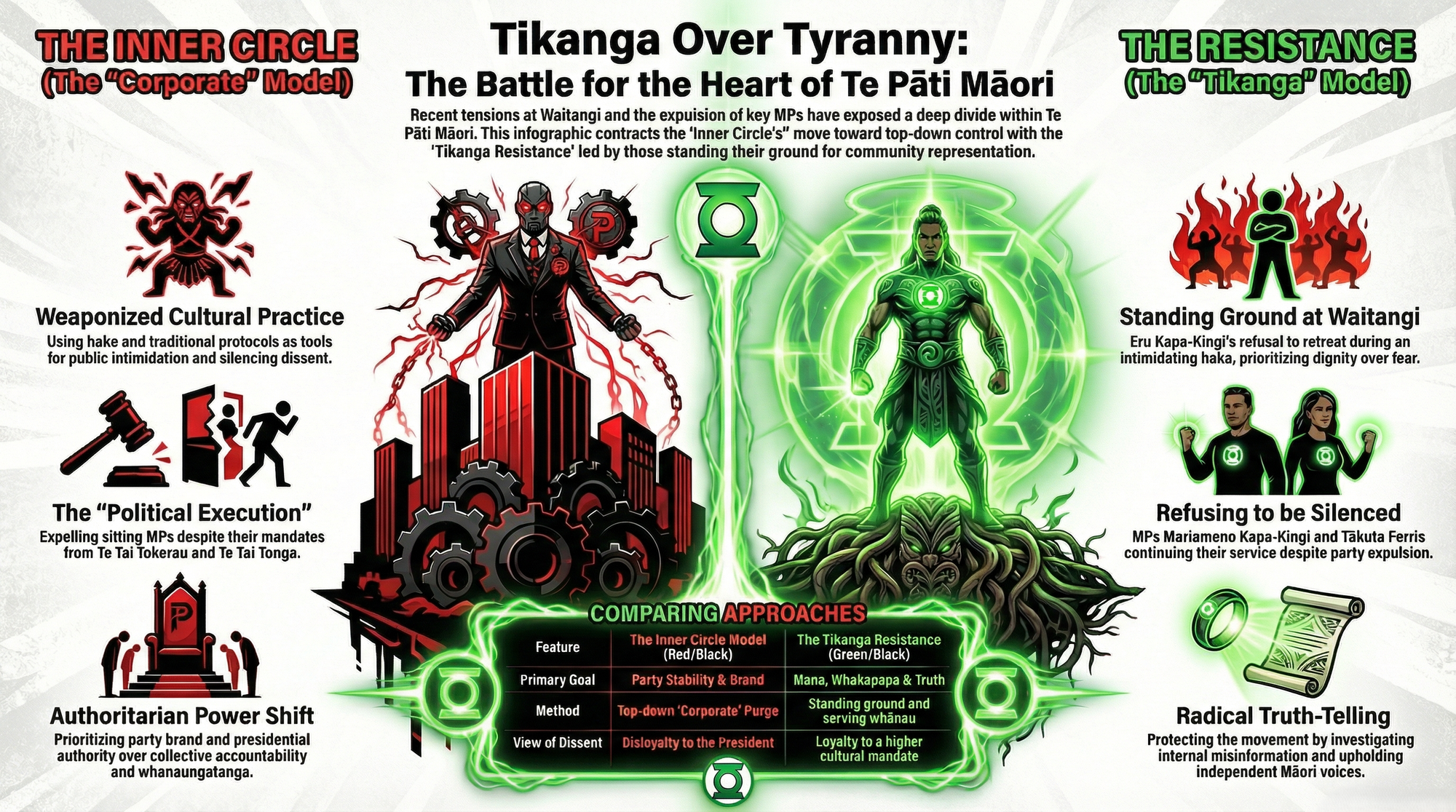
The move to expel Mariameno Kapa‑Kingi and Tākuta Ferris is the clearest proof that Te Pāti Māori’s leadership has drifted into a dictatorship model. Hīkoi leaders have already used that term in public, accusing the party of centralising power in ways that silence grassroots dissent and weaponise process against critics. 1News 1News
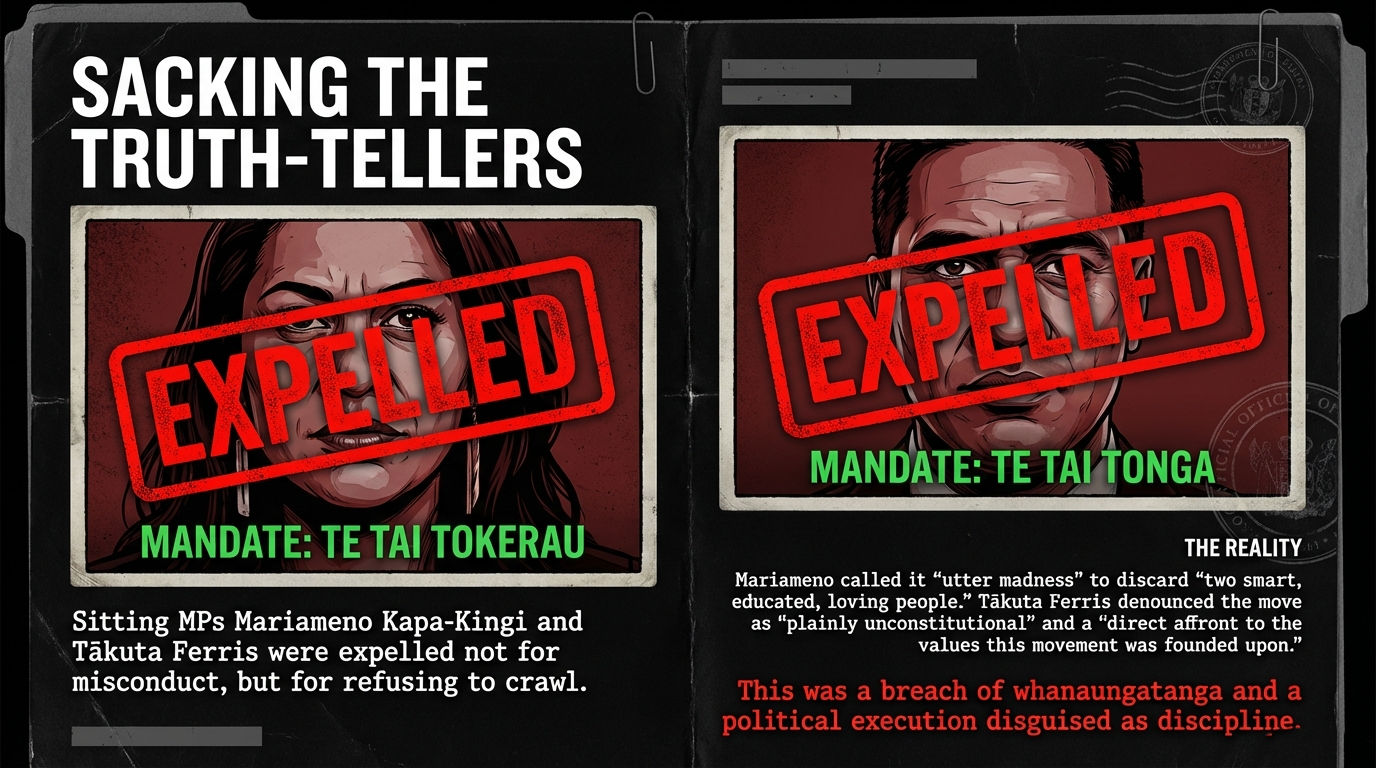
When the national council moved to expel the two MPs, 1News reported that co‑leaders Rawiri Waititi and Debbie Ngarewa‑Packer presented the decision as the outcome of a “rigorous” process designed to maintain unity and discipline. 1News But Mariameno fired back, calling the decision “utter madness” and questioning who in their “mad mind” would discard “two smart, educated, loving, good people” from a caucus of six – pointing out that this effectively told Te Tai Tokerau voters their choice no longer mattered. 1News Te Ao
Tākuta Ferris likewise described the move as “plainly unconstitutional, contrary to tikanga Māori and a direct affront to the values this movement was founded upon”, making it clear he believed the expulsion breached both party rules and Māori norms of collective decision‑making. Te Ao He committed to continue serving Te Tai Tonga as an independent, underlining the point that his loyalty remained with his constituents, not with an increasingly authoritarian president.
From a tikanga perspective, you do not amputate half your caucus, including the first wahine Māori to hold Te Tai Tokerau for Te Pāti Māori, without robust, open, kanohi‑ki‑te‑kanohi kōrero with those who put them there. The reporting around the saga shows instead a cascade of internal letters, accusations, legal threats and public attacks, with iwi leaders eventually stepping in and describing the situation as deeply damaging and distracting from the kaupapa. 1News 1News
John Tamihere and the Co‑Leaders: Cult of Personality vs Tikanga
The centre of gravity in this mess is not the expelled MPs; it is the presidential hub built around John Tamihere and defended by co‑leaders Rawiri Waititi and Debbie Ngarewa‑Packer. When Mariameno and Tākuta joined calls for Tamihere to resign, he publicly fired back, telling them to leave the party instead, and dismissing their concerns as personal, not principled. 1News 1News
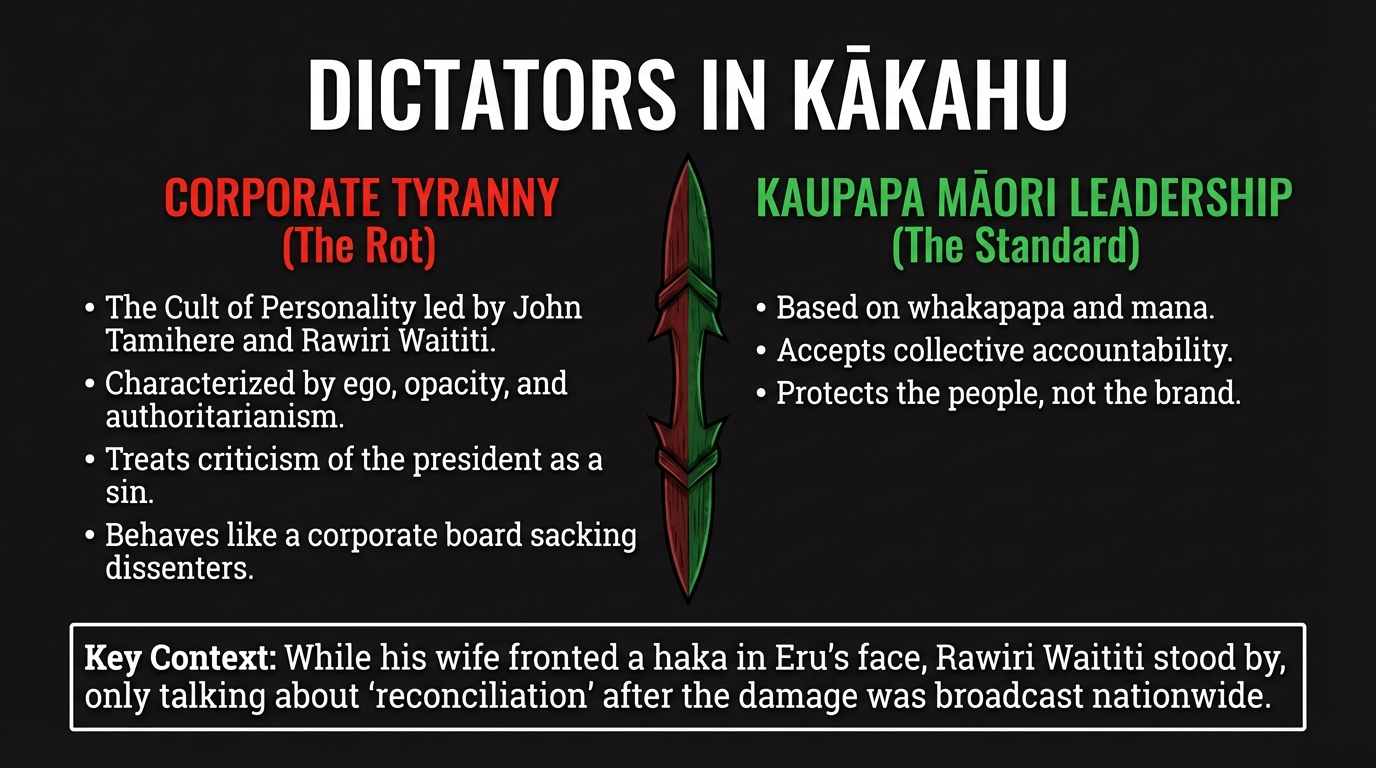
Co‑leaders then lined up to protect him. 1News reported that Waititi and Ngarewa‑Packer publicly defended Tamihere, describing him as a “strong leader” and insisting he had their full confidence, even as iwi leaders and party members were expressing alarm at the level of internal conflict and the “dictatorship model” allegations. 1News 1News
This is classic personality cult behaviour: treat challenge as betrayal, protect the centre at all costs, and punish those who break ranks. Tikanga, by contrast, demands that leaders front up, be questioned, and accept that their mana is contingent on upholding collective obligations, not on how loudly they can invoke kaupapa in press conferences. The fact that Mariameno has since taken legal action against Tamihere over the way she was treated, including alleging breaches of natural justice and party rules, shows how far from that standard the leadership has drifted. 1News Te Ao
Tikanga vs Western Party Discipline: Why Eru, Mariameno and Tākuta Are in the Right
Western party discipline says: you shut up, you vote the line, you never criticise the boss in public, and if you don’t like it you leave quietly. Tikanga says something different: you speak up when mana is being trampled, you defend your people’s mandate, and you refuse to validate processes that violate whanaungatanga, mana and tika.
Eru Kapa‑Kingi, standing on the ātea in the face of a haka aimed at silencing him, embodies that tikanga obligation to hold his ground. Stuff Mariameno Kapa‑Kingi, calling the expulsions “madness” and filing court action to challenge the president’s behaviour, is doing exactly what a kaitieki of her electorate should do when her people’s voice is overridden. 1News 1News Tākuta Ferris, refusing to abandon Te Tai Tonga and describing the process as anti‑tikanga and unconstitutional, is choosing integrity over obedience. Te Ao 1News
Back them, and you are not “picking a faction”. You are siding with the people in this story who are willing to take personal hits, media heat and legal costs to defend something bigger than their own title: the right of Māori electorates to choose their representatives, the right of rangatahi not to be bullied on the ātea for who they stand with, and the right of tikanga to trump corporate‑style party management.
Where the Real Enemy Sits
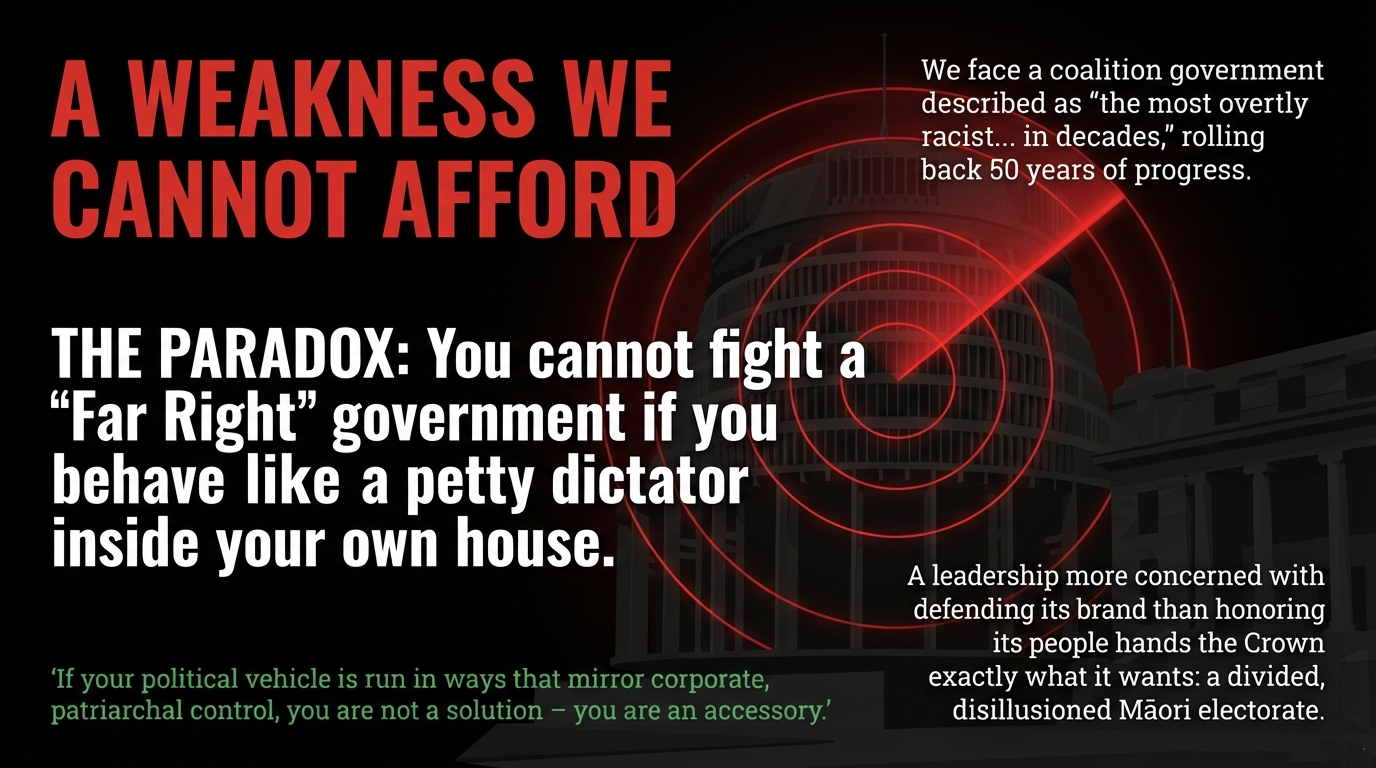
None of this erases the fact that the current Crown coalition has been called “the most overtly racist government in decades” by the Aotearoa Independent Monitoring Mechanism, for policies that attack Māori rights, dismantle Māori institutions and roll back Te Tiriti protections. E‑Tangata AIMM But if our own political vehicles start mirroring the Crown’s worst habits – centralising power, silencing dissent, punishing critics – then they are not shields; they are extra blades.
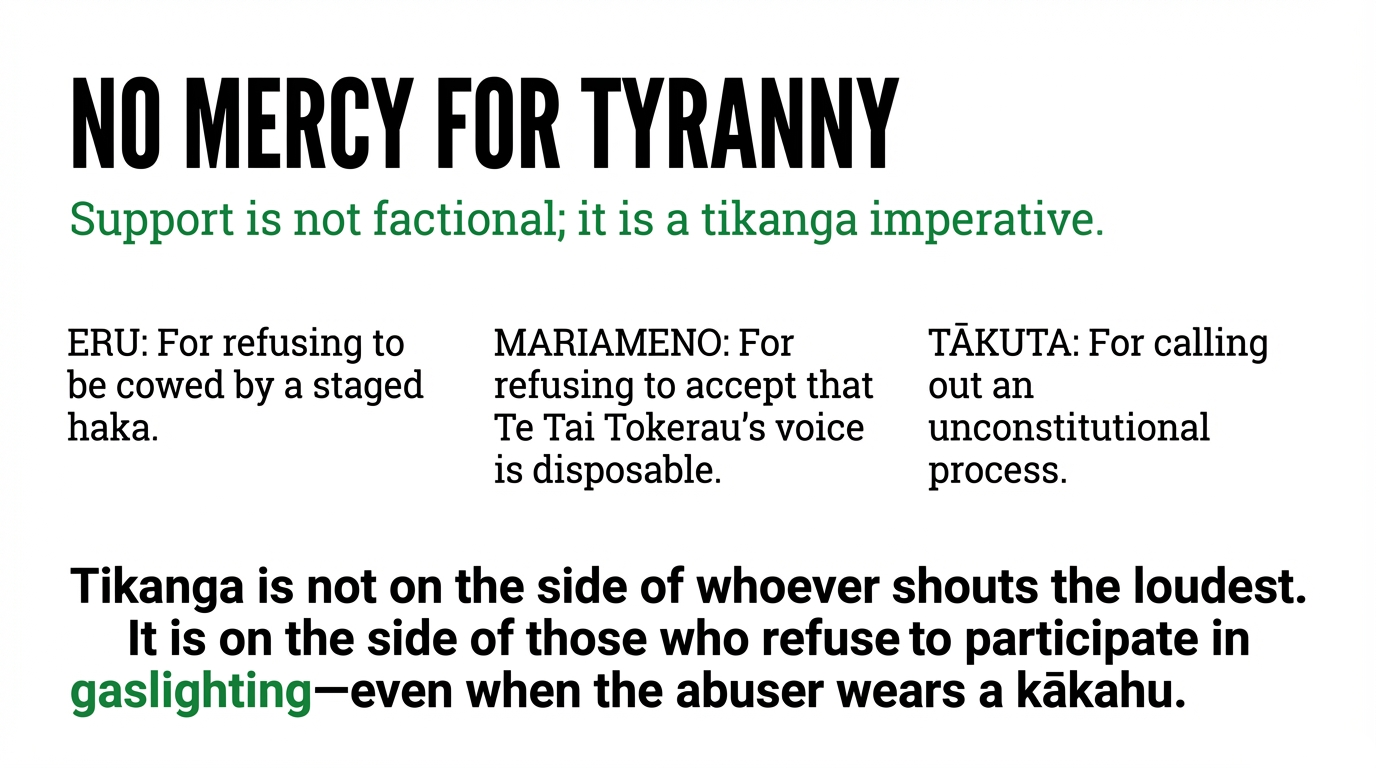
The Western mind might try to frame this as “both sides” or “teething problems”. Tikanga has a simpler test: who is upholding mana and whanaungatanga, and who is shredding them for control? On the evidence reported by mainstream outlets and Māori media alike, Eru Kapa‑Kingi, Mariameno Kapa‑Kingi and Tākuta Ferris are on the right side of that line. Stuff 1News Te Ao
The question now is whether the rest of us have the courage to stand there with them.
Every koha into this kaupapa is a decision to side with those who stood their ground when Te Pāti Māori’s inner circle tried to run a dictatorship in kākahu – Eru Kapa‑Kingi on the ātea, Mariameno Kapa‑Kingi and Tākuta Ferris in the chamber and the courts. It says you will fund Māori truth‑telling that names the bullying, follows the paper trails, and refuses to let personality cults or racist governments write our story for us.
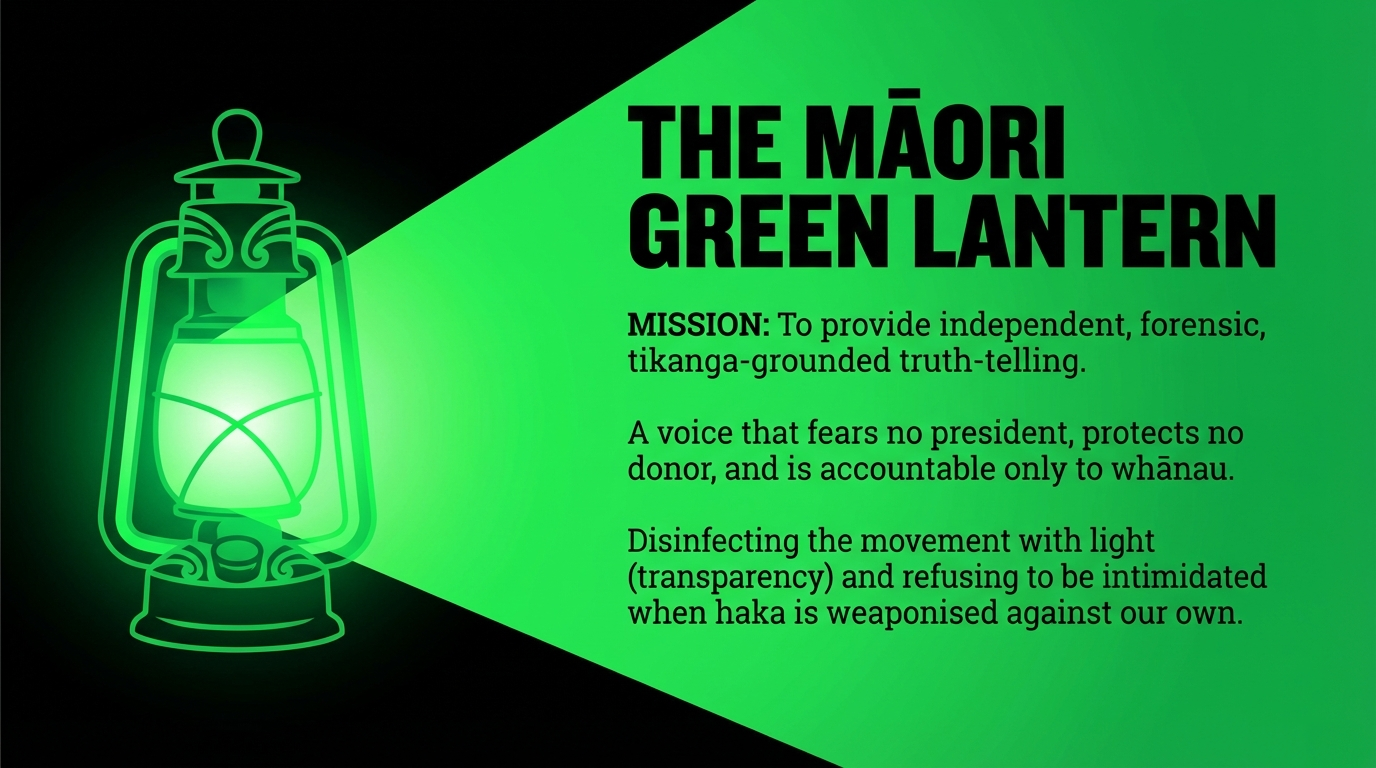
Your support keeps this mahi independent, accountable only to whānau and whakapapa, not to party presidents or Crown ministries. If you are able, consider a koha to keep this voice sharp, resourced, and fearless; if you are unable to koha, subscribing, kōrero, and sharing The Māori Green Lantern with your whānau and friends is koha in itself.

- Three pathways exist:
For those who wish to support this mahi directly with a koha (voluntary contribution), please visit the Koha platform:
Koha—Support – https://app.koha.kiwi/events/the-maori-green-lantern-fighting-misinformation-and-disinformation-ivor-jones - For those who wish to receive essays directly and support through subscription, join the Substack community:
Subscribe to the Māori Green Lantern on Substack – https://themaorigreenlantern.substack.com/subscribe - For those who prefer direct bank transfer, account details are: HTDM, account number 031546-0415173-000.
Ivor Jones The Māori Green Lantern Fighting Misinformation And Disinformation From The Far Right