"Elliot Ikilei's toxic assault on tino rangatiratanga through fabricated "misinformation" claims" - 12 September 2025
Dismantling the whitewash
Tēnā koutou katoa. Greetings from one who stands uncompromisingly for truth in an era of manufactured outrage.
When Elliot Ikilei brands RNZ a "taxpayer-funded broadcaster" peddling "blatant misinformation," he reveals himself as nothing more than a pathetic lapdog of white supremacist ideology—a betrayal of his own whakapapa and a calculated attack on public accountability that protects Māori voices. This essay eviscerates the colonial bootlicker's desperate attempt to import far-right American toxicity into Aotearoa while masquerading as a champion of equality.
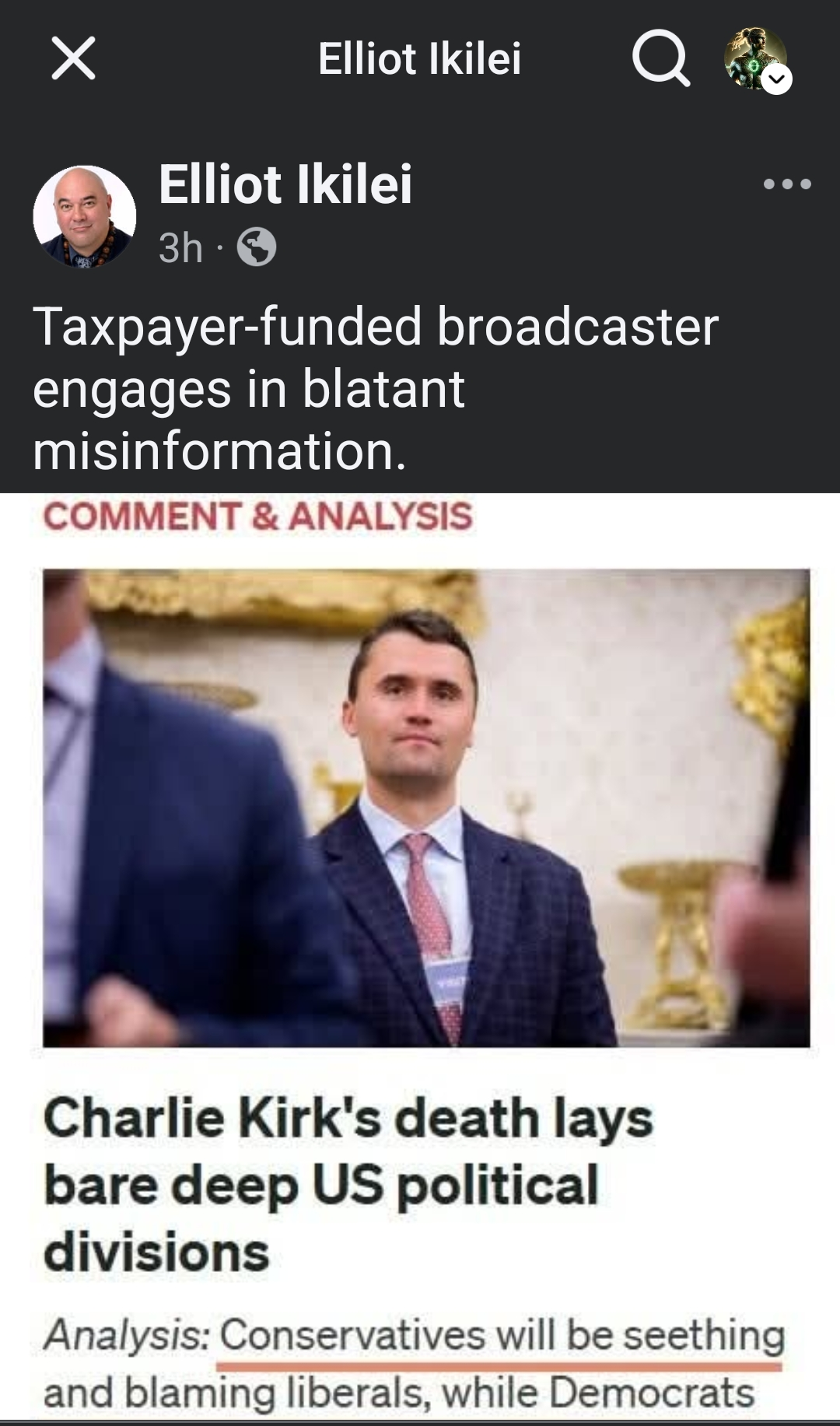
https://www.facebook.com/share/p/1Eebb5oKX1/
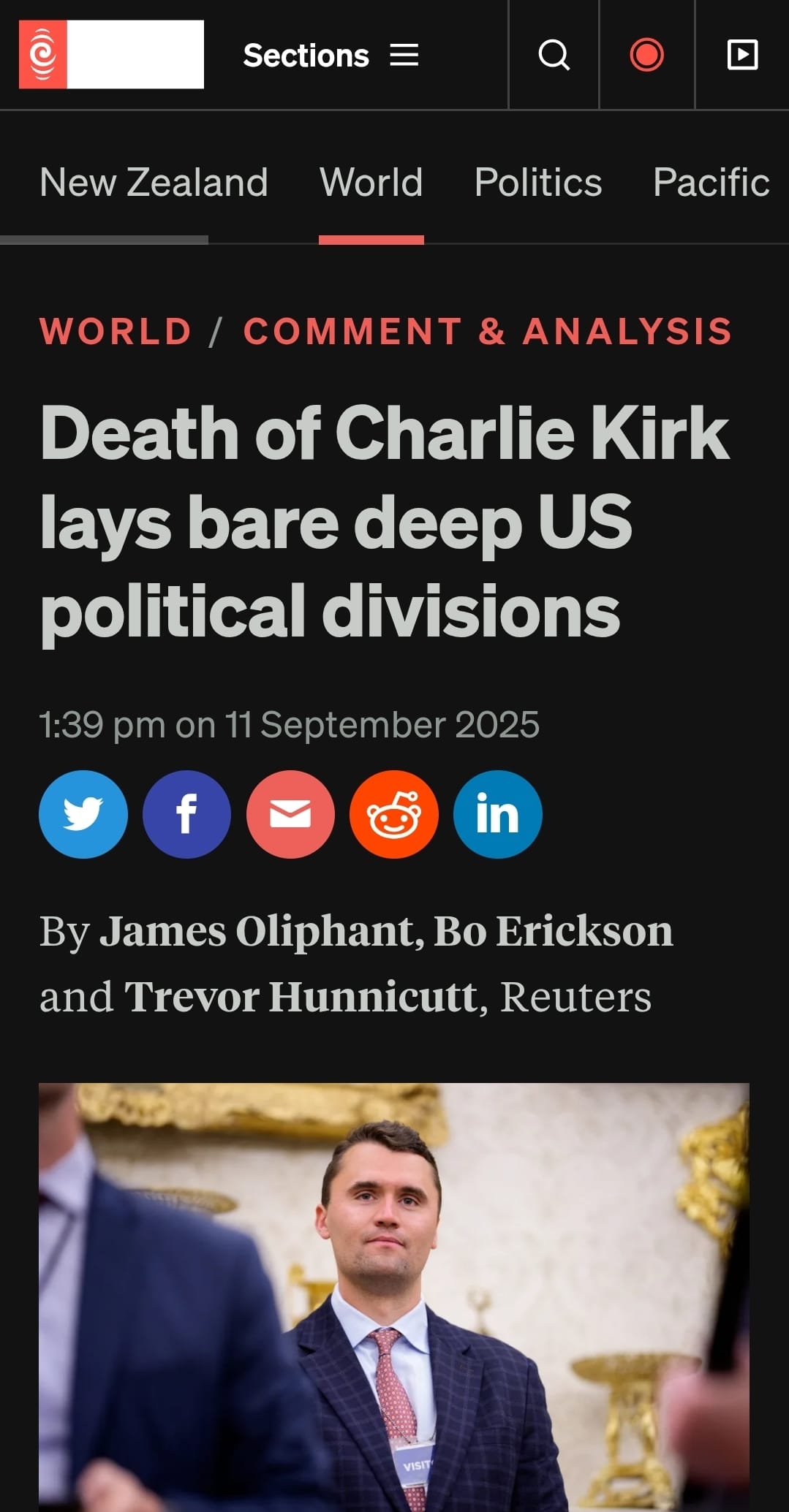
https://www.rnz.co.nz/news/world/572762/death-of-charlie-kirk-lays-bare-deep-us-political-divisions
Ko wai a Ikilei?: The Making of a Colonial Collaborator
Elliot Ewen Pasione Ikilei isn't just any run-of-the-mill far-right agitator—he's a man whose political trajectory reads like a masterclass in sell-out pathology. Born of Niuean, Māori, and Tongan ancestry yet transformed into a willing accomplice of white supremacist narratives, Ikilei represents the most insidious form of internalized colonialism. This is a man who spent his formative political years as deputy leader of New Conservative Party—a fringe outfit that promotes "traditional" marriage definitions and gender binaries while opposing Māori representation. More damning still, he actively defended notorious far-right agitators Lauren Southern and Stefan Molyneux when they toured New Zealand in 2018, describing their hate speech as essential for "free discussion."
The historical context matters because Southern and Molyneux weren't mere "provocative speakers"—they were architects of white replacement theory who peddled anti-immigration fear-mongering wrapped in intellectual-sounding rhetoric. When Ikilei defended these toxic imports, he wasn't championing "free speech"; he was legitimizing white supremacist talking points that directly threaten Indigenous communities. His support wasn't accidental—it was strategic alignment with a broader transnational far-right network that views Indigenous rights as obstacles to their vision of ethno-nationalist dominance.
Te Reo Tūkino: Deconstructing the "Misinformation" Lie
Ikilei's attack on RNZ represents something far more sinister than media criticism—it's a textbook disinformation campaign designed to delegitimize the last remaining public broadcaster capable of holding power accountable. Let's dissect the lies embedded in his post:
Lie 1: "Taxpayer-funded broadcaster" - This phrase isn't neutral description; it's a neoliberal dog-whistle designed to frame public service as parasitic burden. RNZ receives approximately NZ$38 million annually—less than 0.04% of total government spending—while providing crucial public interest journalism that commercial media cannot afford. The "taxpayer-funded" framing deliberately ignores that RNZ's funding comes from progressive taxation systems where wealthy New Zealanders contribute proportionally more, making this a redistribution mechanism that supports democratic discourse.
Lie 2: "Blatant misinformation" - Ikilei provides zero evidence of factual errors in RNZ's Charlie Kirk coverage. The report accurately cited Reuters journalists, included direct quotes from multiple sources, and linked to primary documents. What Ikilei calls "misinformation" is actually professional journalism that failed to whitewash Kirk's inflammatory rhetoric about race and violence. This isn't about accuracy—it's about narrative control.
Lie 3: The False Equivalency - By suggesting RNZ's coverage was somehow comparable to actual misinformation, Ikilei deploys the classic far-right tactic of "both-sidesism"—muddying the epistemic waters so thoroughly that audiences can no longer distinguish between verified reporting and conspiracy theories. This serves the broader white supremacist project of undermining shared truth as the foundation of democratic discourse.
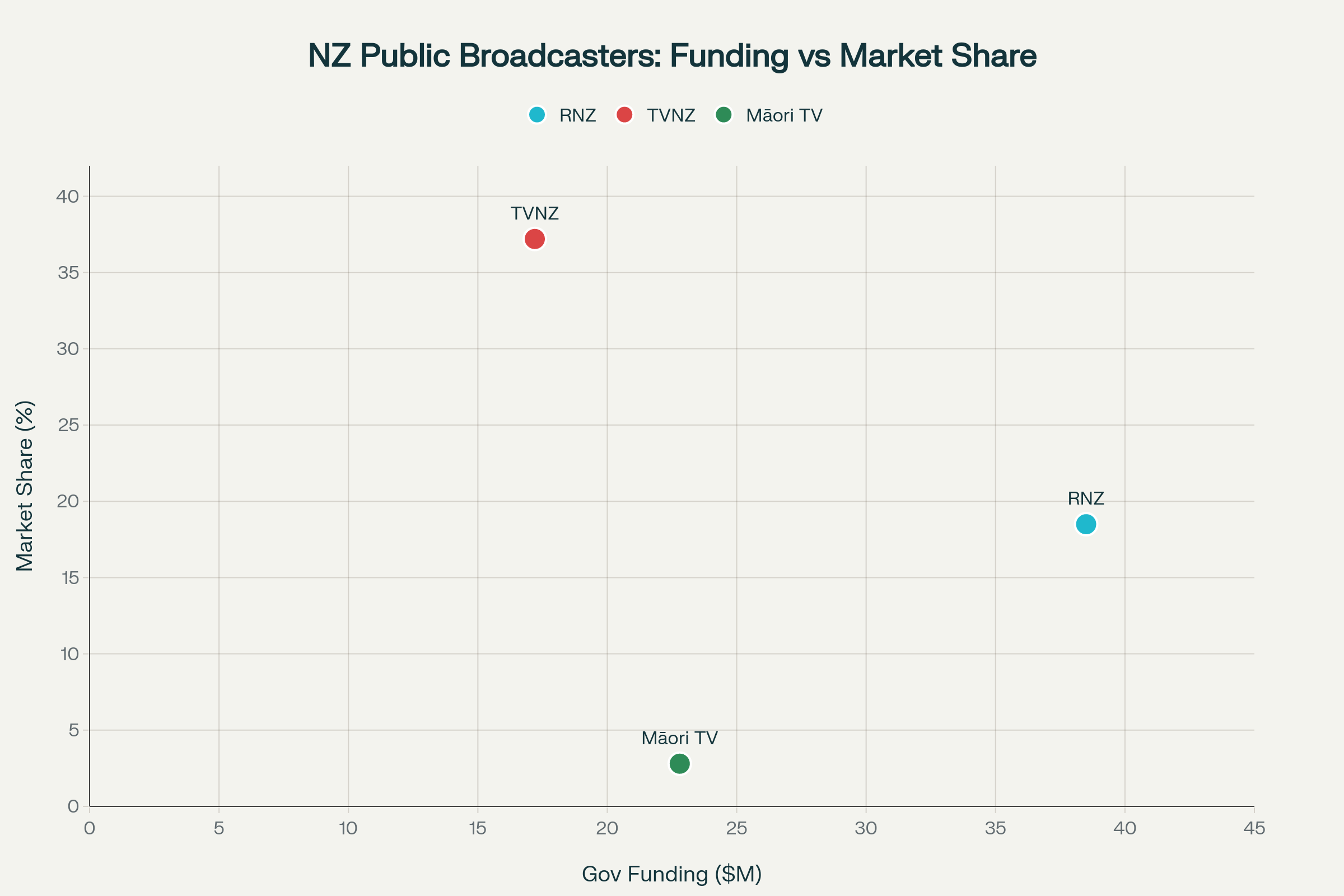
NZ Public Broadcasters: Funding and Market Share
He Taonga Huna: The Hidden Networks of Hate
What makes Ikilei particularly dangerous isn't his individual toxicity—it's his position within a coordinated network of far-right organizations that spans from local "taxpayers' unions" to international white nationalist movements. His current role as spokesperson for Hobson's Pledge—a group that campaigns against Māori representation under the guise of "equality"—reveals the sophisticated infrastructure behind contemporary anti-Indigenous politics.
Hobson's Pledge, led by Donald Brash (architect of the infamous Orewa speech that weaponized anti-Māori sentiment for electoral gain), operates as part of what researchers identify as the "Atlas Network"—a transnational web of right-wing lobby groups funded by billionaire ideologues who view Indigenous sovereignty as an impediment to unrestricted capital accumulation. When Ikilei joined this organization, he wasn't just changing jobs—he was enlisting in a war against his own people.
The timing of his social media attack is equally revealing. Posted within hours of RNZ's Charlie Kirk coverage, Ikilei's post functions as part of a rapid-response disinformation strategy designed to inoculate audiences against critical coverage of far-right violence. This isn't coincidental—it's coordinated messaging that follows the same playbook used by Steve Bannon's media network and other international white supremacist operations.
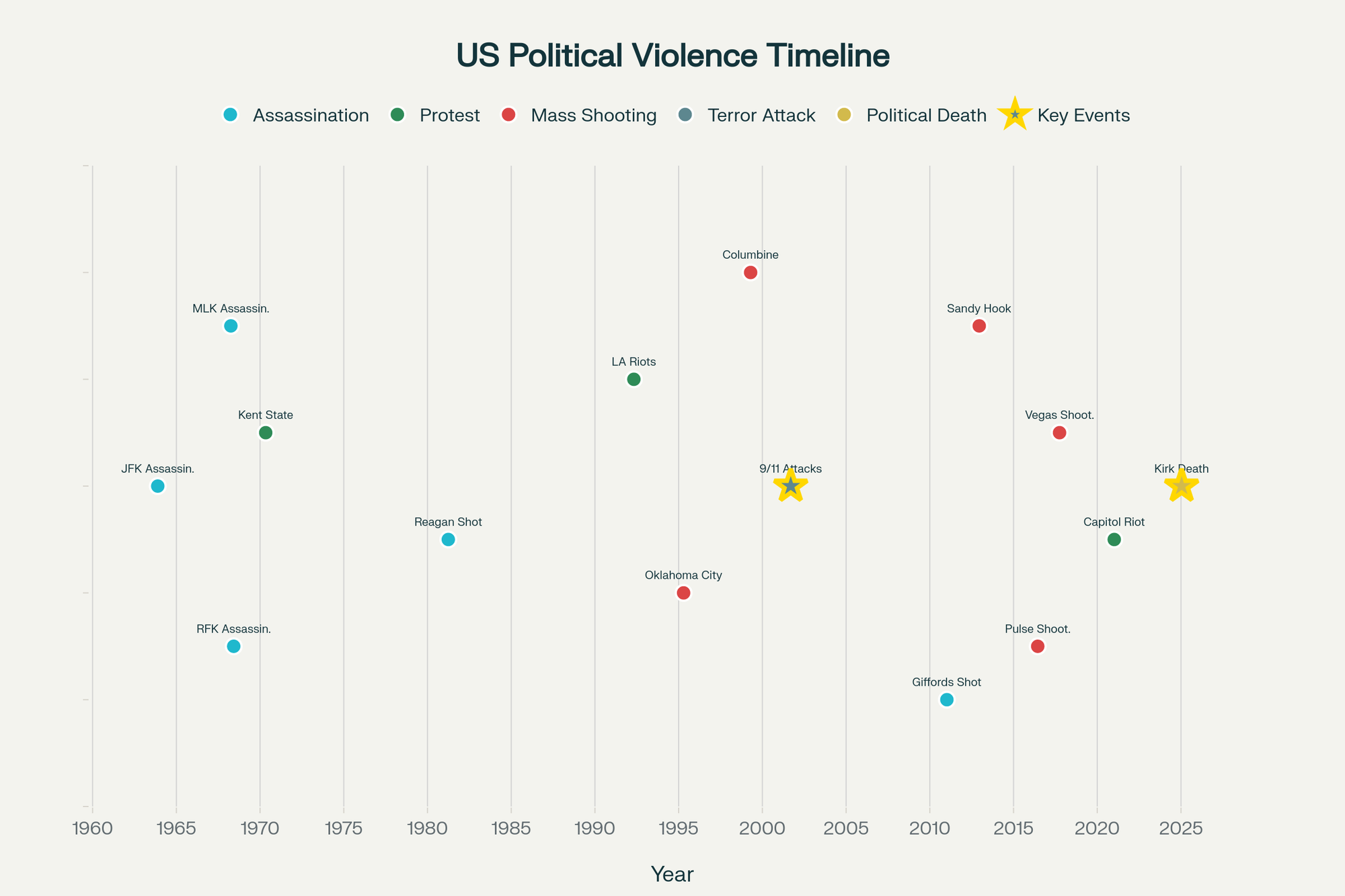
US Political Violence Timeline (1960-2025)
Te Tiriti Under Siege: The Broader Colonial Project
Ikilei's attack on RNZ must be understood within the context of an accelerating assault on tino rangatiratanga that stretches from local "one law for all" campaigns to the current government's systematic dismantling of Māori representation. His organization, Hobson's Pledge, explicitly campaigns to "remove all references in law and in Government policy to Treaty 'partnership' and 'principles'"—a project of constitutional vandalism that would reduce Te Tiriti to a historical curiosity while eliminating Indigenous rights altogether.
This isn't abstract political theory—it has immediate material consequences. When Ikilei undermines trust in RNZ, he weakens one of the few media organizations that consistently reports on Māori health disparities, environmental racism, and the ongoing impacts of colonial dispossession. Commercial media outlets, driven by advertising revenue and shareholder profits, lack both the resources and incentives to provide this coverage. By attacking RNZ's credibility, Ikilei is silencing Māori voices while protecting the systems that perpetuate Indigenous marginalization.
American Fascism, New Zealand Application
Perhaps most grotesquely, Ikilei's criticism of RNZ's Charlie Kirk coverage reveals his ideological alignment with American white nationalism. Kirk, before his assassination, was one of the most prominent purveyors of anti-Black racism in contemporary American politics—a man who questioned the qualifications of Black pilots, called civil rights leader Martin Luther King Jr. "awful," and claimed that gun deaths were "worth it" to preserve white Americans' access to firearms.
When Ikilei frames RNZ's factual reporting on Kirk's death as "misinformation," he's not defending journalistic standards—he's protecting white supremacist narratives from critical scrutiny. This represents the transnational character of contemporary fascism, where local far-right actors serve as transmission belts for American white nationalist ideology, adapting foreign talking points to local contexts while maintaining loyalty to the broader project of white supremacy.
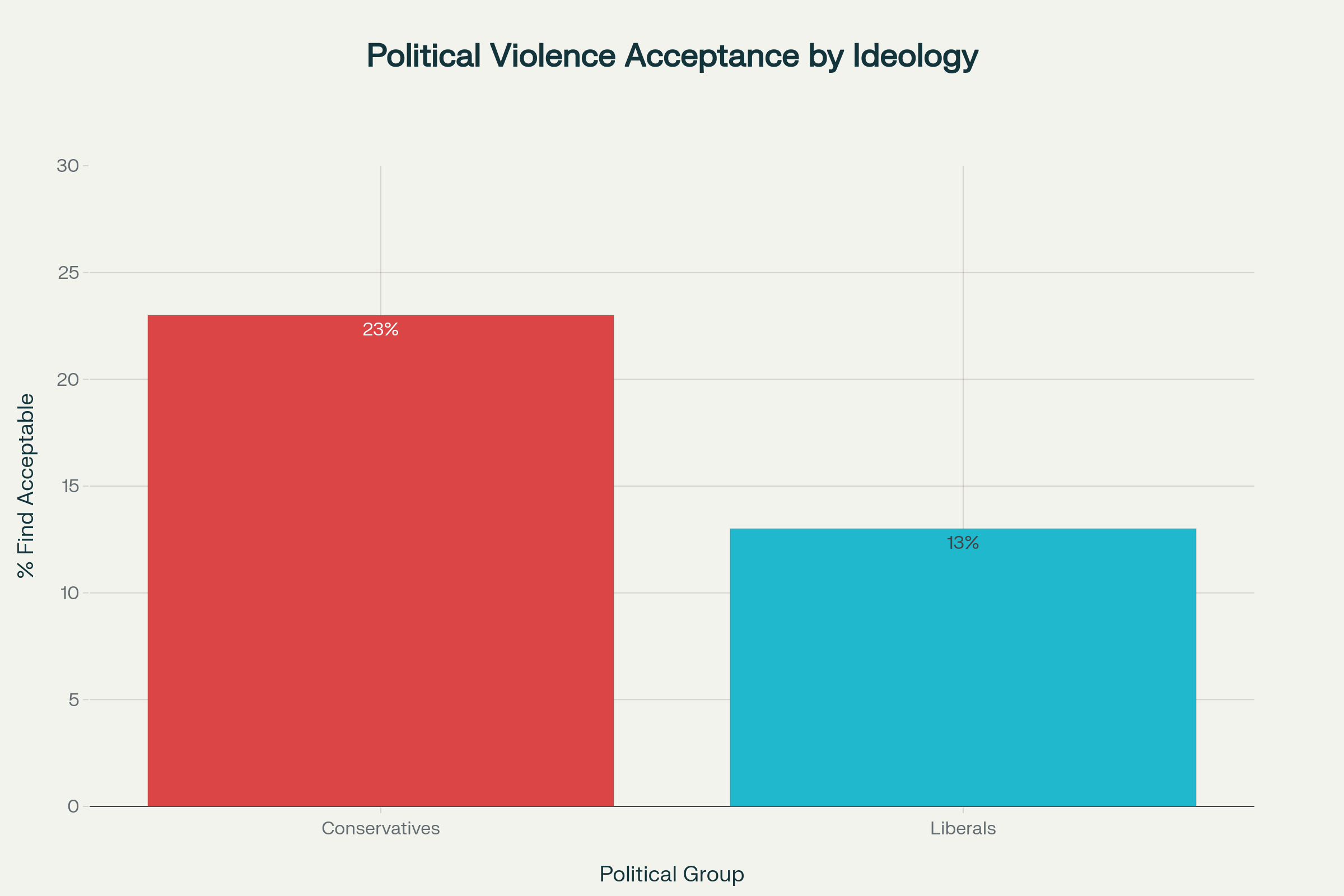
US Attitudes Toward Political Violence (2024)
Whakatōhea: Resistance and Reckoning
The ultimate tragedy of Ikilei's political trajectory isn't just personal—it's cultural annihilation. Here stands a man whose own ancestors endured centuries of colonial violence, whose whakapapa connects him to traditions of Indigenous resistance, yet who has chosen to serve as a willing instrument of continued colonization. This represents the deepest success of settler colonial ideology—the production of Indigenous subjects who actively participate in their own peoples' dispossession.
But Ikilei's betrayal also reveals the structural contradictions within contemporary white supremacy. The far-right needs Indigenous faces to legitimize their assault on Indigenous rights—they require native informants who can provide cover for policies that would otherwise be recognized as transparently racist. Ikilei's value to organizations like Hobson's Pledge lies precisely in his ability to say things that would be immediately dismissed as racist if spoken by aging Pākehā politicians.
This instrumentalization is inherently unstable—it requires continuous performance of loyalty to ideologies that fundamentally view Indigenous people as obstacles to be eliminated. The psychological toll of this performance eventually manifests in increasingly desperate attempts to prove one's worth to white supremacist networks, which helps explain Ikilei's escalating attacks on institutions like RNZ that threaten to expose the contradictions of his position.
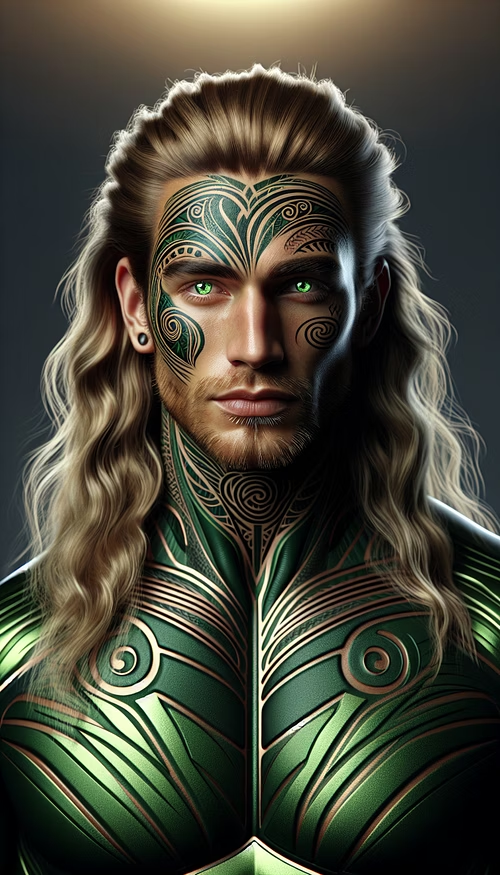
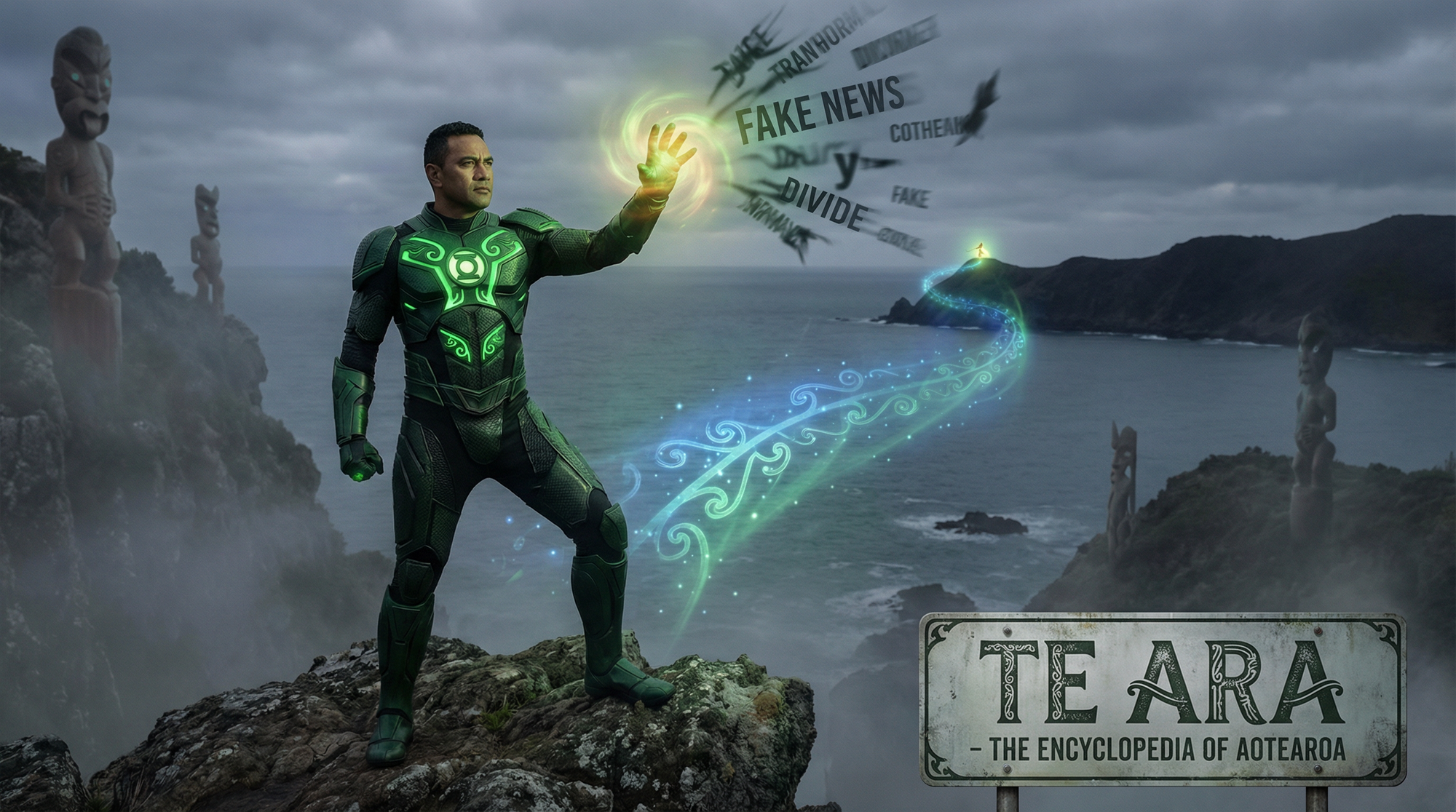
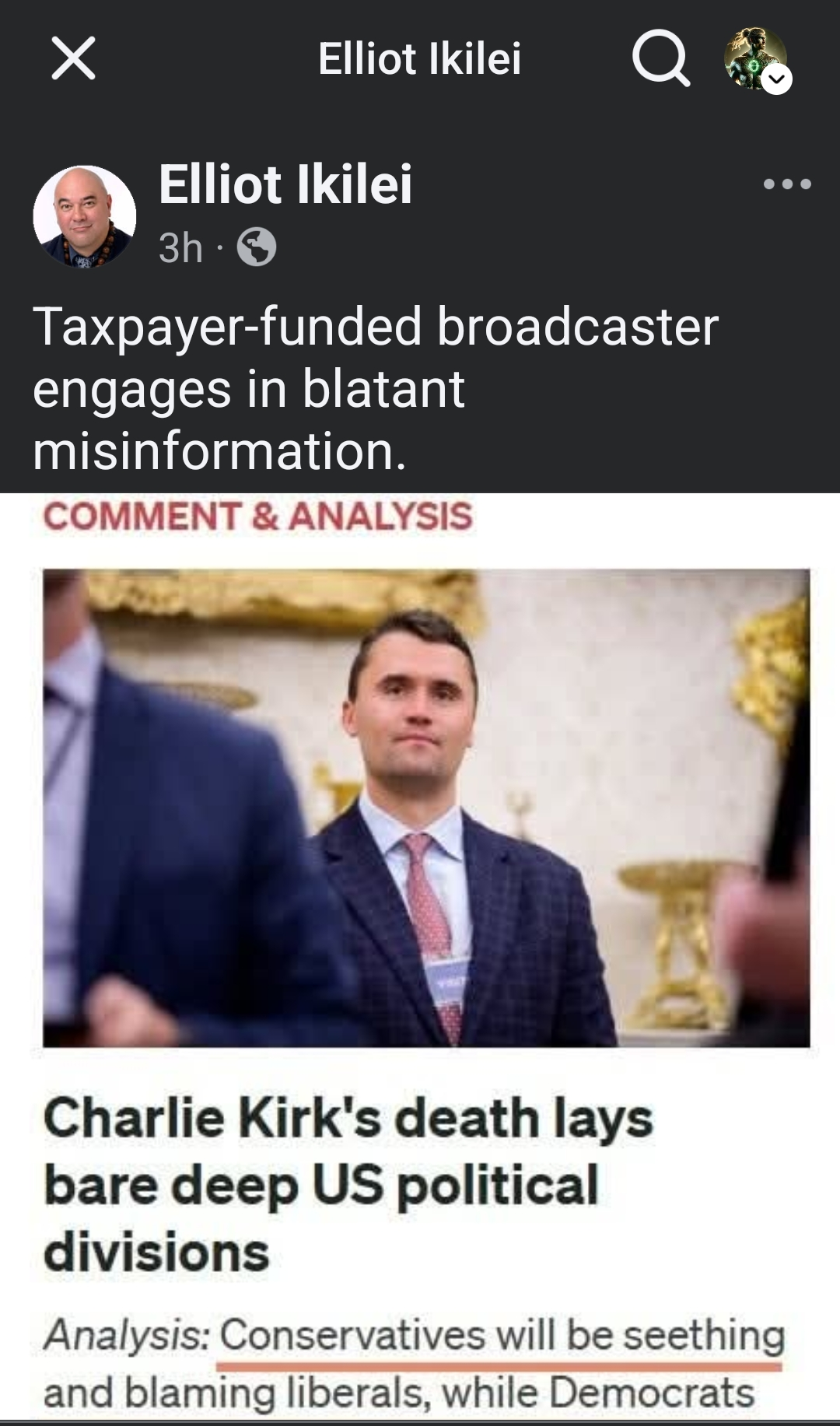
The Māori Green Lantern Fighting Misinformation And Disinformation From The Far Right
Te Whakatōhea: Standing Firm Against Colonial Violence
The path forward requires unflinching recognition of what Ikilei represents—not an outlier or anomaly, but the logical product of colonial systems designed to turn Indigenous people against themselves and their communities. His attack on RNZ is part of a broader information warfare campaign designed to eliminate the last remaining spaces for counter-hegemonic discourse in Aotearoa's media landscape.
We must respond with the same clarity and conviction that our tīpuna demonstrated when facing previous waves of colonial aggression. This means naming white supremacy wherever we encounter it—including when it emerges from Indigenous mouths. It means defending public institutions like RNZ that provide platforms for Māori voices, even when those institutions are imperfect. And it means building alternative media infrastructure that can survive the coordinated attacks of billionaire-funded propaganda networks.
Most importantly, we must recognize that tino rangatiratanga cannot coexist with the kind of colonial capitalism that Ikilei and his allies represent. Their vision of "equality" is actually elimination—the final erasure of Indigenous difference through integration into white supremacist institutions. Our vision of mana motuhake demands nothing less than the complete transformation of the colonial state and its replacement with Indigenous-centered governance structures.
The choice before us is stark: decolonization or elimination. There is no middle ground, no compromise position that preserves Indigenous existence while accommodating white supremacist demands for cultural assimilation and political subordination. Ikilei has chosen elimination. We choose liberation.
For those who find value in this analysis and wish to support the continued fight for mātauranga and rangatiratanga, please consider a koha to HTDM: 03-1546-0415173-000. Only contribute if you have the capacity—these are challenging times for all our whānau, but the work of decolonial resistance continues regardless.
Ngā mihi nui. Kia kaha, kia māia, kia manawanui.
Citations
- https://en.wikipedia.org/wiki/Elliot_Ikilei
- https://www.rnz.co.nz/news/political/426405/new-conservatives-release-party-list
- https://www.1news.co.nz/2018/08/05/free-speech-or-hate-speech-both-sides-of-the-debate-sparked-by-the-appearance-of-alt-right-canadian-speakers-lauren-southern-and-stefan-molyneux/
- https://www2.nzqa.govt.nz/assets/NCEA/Subject-pages/Social-Studies/Level-2/91280/91280-Exemplar-Low-Achieved.pdf
- https://www.bassettbrashandhide.com/post/elliot-ikilei-why-i-am-joining-hobson-s-pledge
https://democracyproject.substack.com/p/hobsons-pledge
- https://www.webworm.co/fakenews2/
- https://en.wikipedia.org/wiki/Hobson's_Pledge
- https://www.usatoday.com/story/sports/columnist/mike-freeman/2024/02/04/charlie-kirk-black-pilot-comment-tuskegee-airmen/72412319007/
- https://www.ndtv.com/world-news/charlie-kirk-assassination-gun-violence-to-china-virus-look-at-charlie-kirks-controversial-takes-9256666
- https://www.cbc.ca/news/world/charlie-kirk-controversies-1.7630859
- https://ppl-ai-file-upload.s3.amazonaws.com/web/direct-files/attachments/2123776/13976584-e6f7-4aa4-8aa9-53ee25ffad5b/Death-of-Charlie-Kirk-lays-bare-deep-US-political-divisions-_-RNZ-News.PDF
- https://www.rnz.co.nz/news/world/572762/death-of-charlie-kirk-lays-bare-deep-us-political-divisions
- https://ppl-ai-file-upload.s3.amazonaws.com/web/direct-files/attachments/images/2123776/0232e11f-2f17-4f75-be68-f05fc3d6effd/Screenshot_20250912_030443_Facebook.jpg
- https://ppl-ai-file-upload.s3.amazonaws.com/web/direct-files/attachments/images/2123776/2484d520-a0ba-40a9-8f02-1f96c6f26a2b/Screenshot_20250912_030331_Brave.jpg