“Free Trade Agreements - The Sovereignty Auction: How Aotearoa Sells Its Future One Handshake at a Time” - 30 January 2026
When the House Burns, the Landlords Argue Over Insurance
Mōrena Aotearoa,
As flood waters swallowed Tauranga and Pāpāmoa in late January 2026, as Aucklanders fled their city at rates unseen since the great migrations (Kingsland alone haemorrhaged 15 percent of its young people in five years), and as Wellington withered under public sector job losses that left the capital feeling like a “downbeat” ghost town, the coalition government staged a political theatre of the absurd.
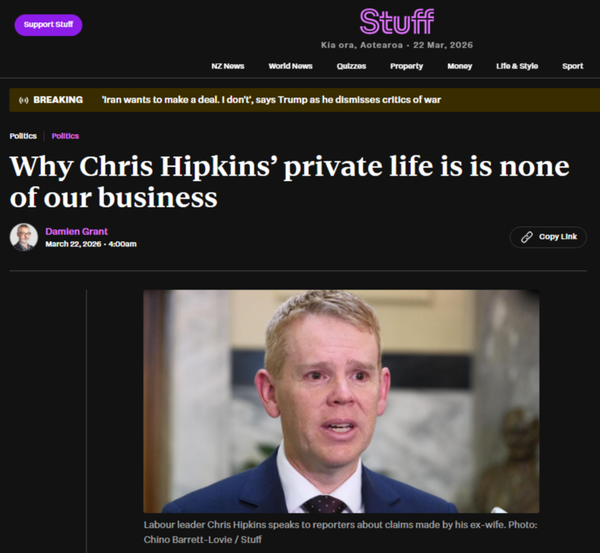
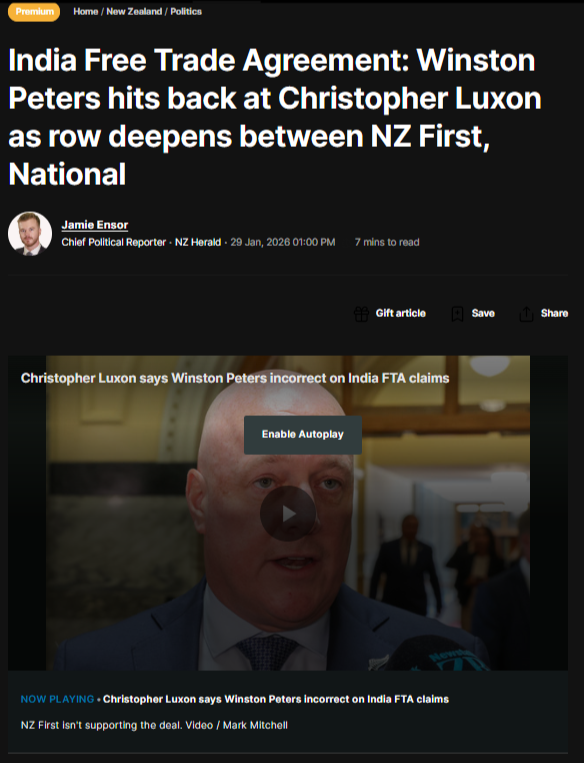
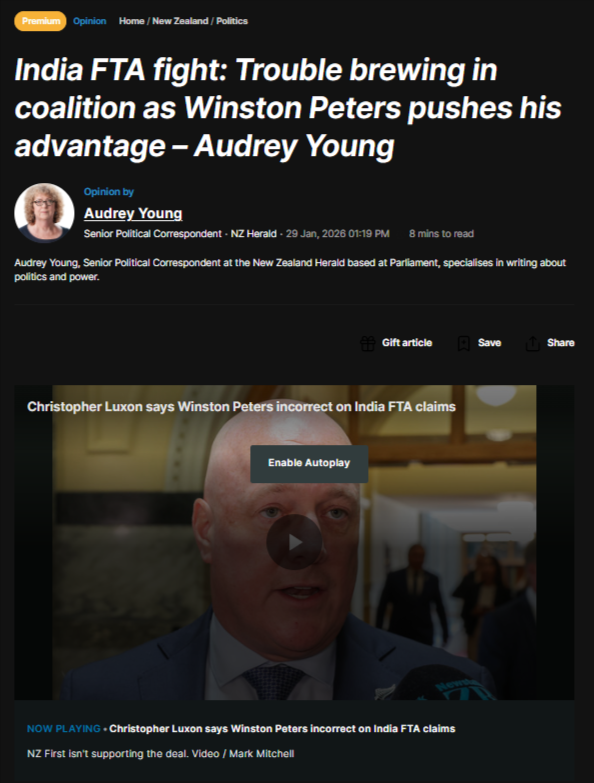
Prime Minister Christopher Luxon and his Deputy, Winston Peters, engaged in a public brawl not over how to save drowning citizens, but over how many thousands of Indian migrants might—or might not—arrive under a trade agreement whose full text remains hidden from public view.
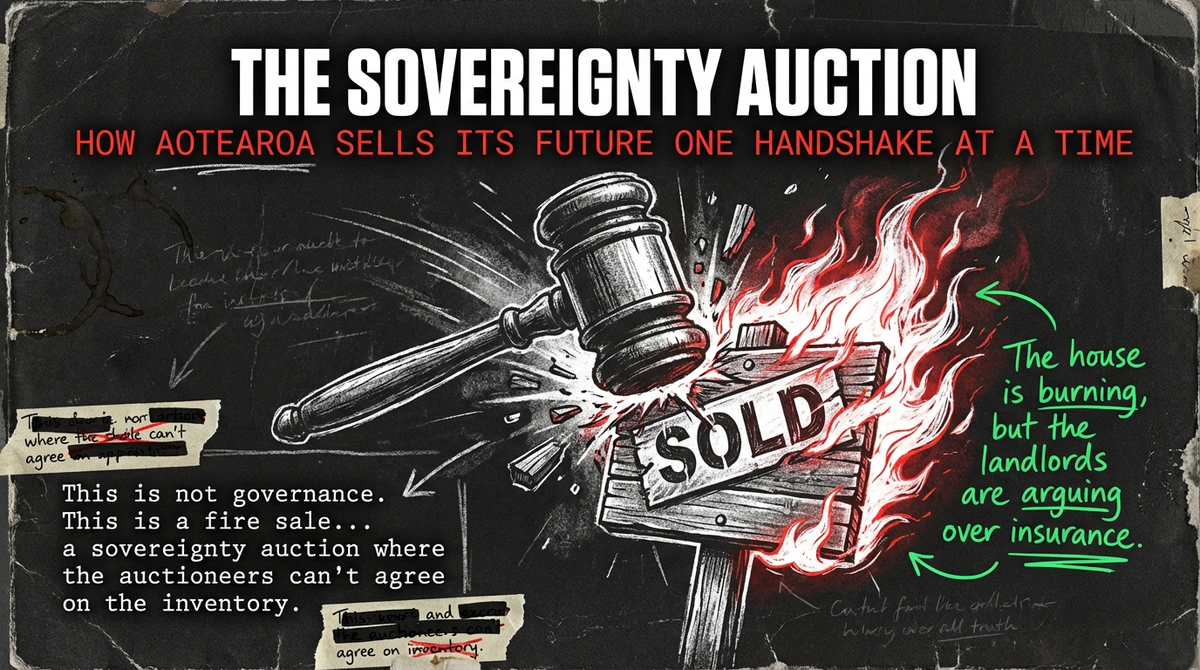
This is not governance. This is a fire sale conducted while the house burns—a sovereignty auction where the auctioneers can’t agree on the inventory, but the bidding continues regardless.
The Cartography of Deception: Peters’ Pattern, National’s Amnesia
Winston Peters has mastered the political art of arson and rescue. His pattern is so predictable it has become constitutional folklore:
extract maximum concessions as kingmaker, manufacture conflict to maintain relevance, collapse the coalition when expedient, then blame his former partners for the wreckage.
In 1996, he promised to eliminate National, then formed a coalition with them. By 1998, he was sacked, the coalition collapsed, and by 1999, NZ First’s support cratered to 4.3 percent—punishment from voters who felt conned.
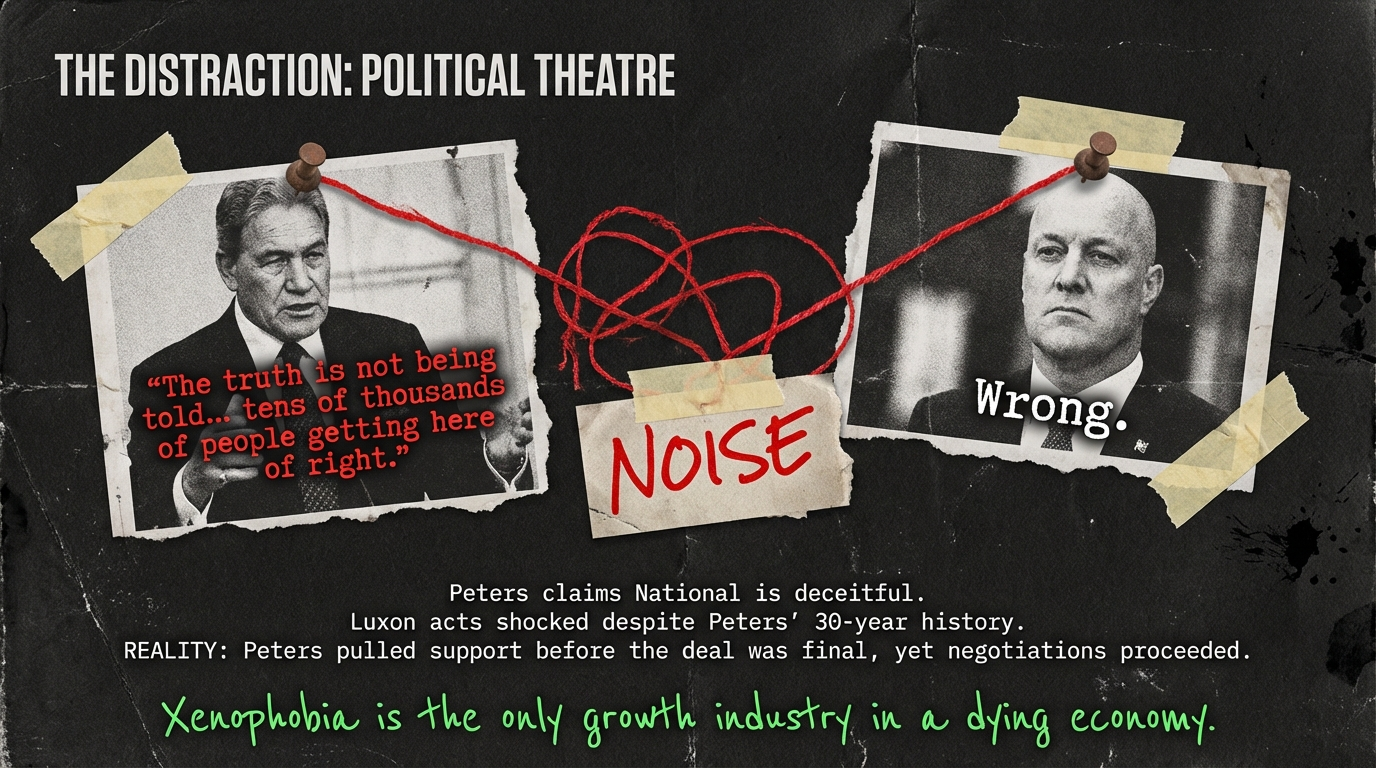
Yet here we are, three decades later, watching Luxon and Trade Minister Todd McClay act shocked—shocked!—that Peters has weaponized immigration fearmongering and accused them of “not being honest” with the public. Peters withdrew NZ First’s support for the India FTA before it was even finalized, forcing National to seek Labour’s votes—yet the FTA negotiations proceeded anyway, as if democratic dissent were merely procedural theatre.
National’s institutional amnesia is wilful. Peters’ latest poll surge—NZ First climbing to third place and Peters narrowing the gap for preferred Prime Minister—proves his strategy works. He is walking all over his partners, as political correspondent Audrey Young observes, because he understands that in a dying economy where median house prices in Auckland sit at $1,047,044 and productivity has collapsed by 2.2 percent, xenophobia is the only growth industry.
The Numbers Game: 1,667 Becomes 20,000 Becomes Whatever You Fear
The FTA’s immigration provisions are precise on paper:
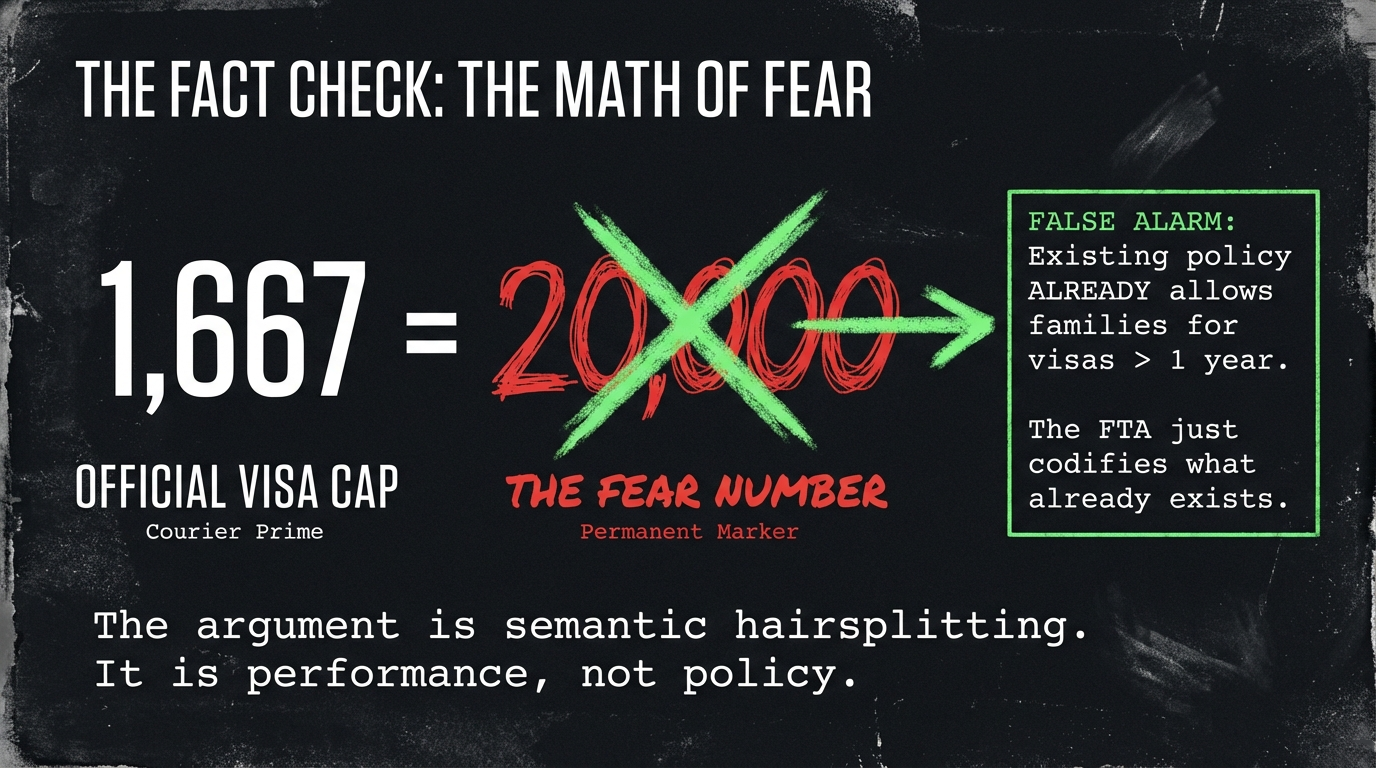
1,667 three-year temporary employment entry visas per year for occupations with skills shortages, capped at 5,000 at any time. Add 1,000 working holiday visas for 18-30 year olds, plus post-study work visas for graduates (2-4 years depending on degree), and the agreement looks like a modest skilled migration pathway.
But Peters performs mathematical alchemy:
those 5,000 visa holders, he claims, can bring spouses and children—“a standard family size of two parents and two children, this means 20,000 people” at any time. McClay’s rebuttal is telling: the FTA itself gives “no right to bring a family member”, but existing New Zealand policy allows family accompaniment for visas over one year—“no difference here at all” compared to other nationalities.
The semantic hairsplitting reveals the deeper scandal:
neither Peters nor Luxon is lying, exactly. They are arguing over how to package a system that already exists—one where visa holders from any country can bring families if their visa exceeds one year. The FTA merely codifies access for Indians to a pathway already available to dozens of nationalities. But in an election year where National holds only a narrow 50.5 percent coalition lead, and Peters’ NZ First surges into third place, the truth is irrelevant. What matters is the performance of border protection, the theatre of sovereignty, while the actual machinery of exploitation grinds on unexamined.
The Exploitation Economy: When Slavery Has a Modern Business Model
Behind the political circus lies a grimmer reality:
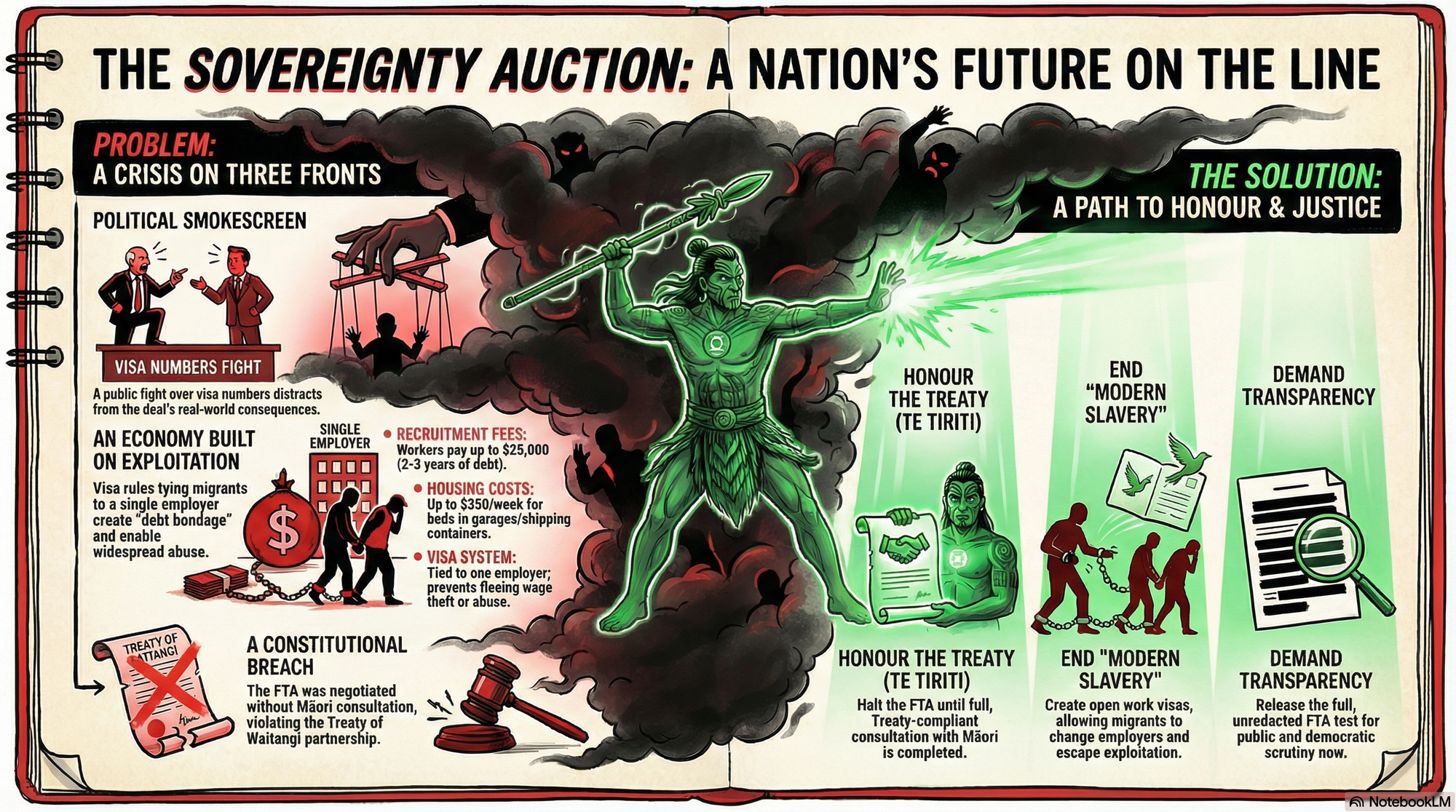
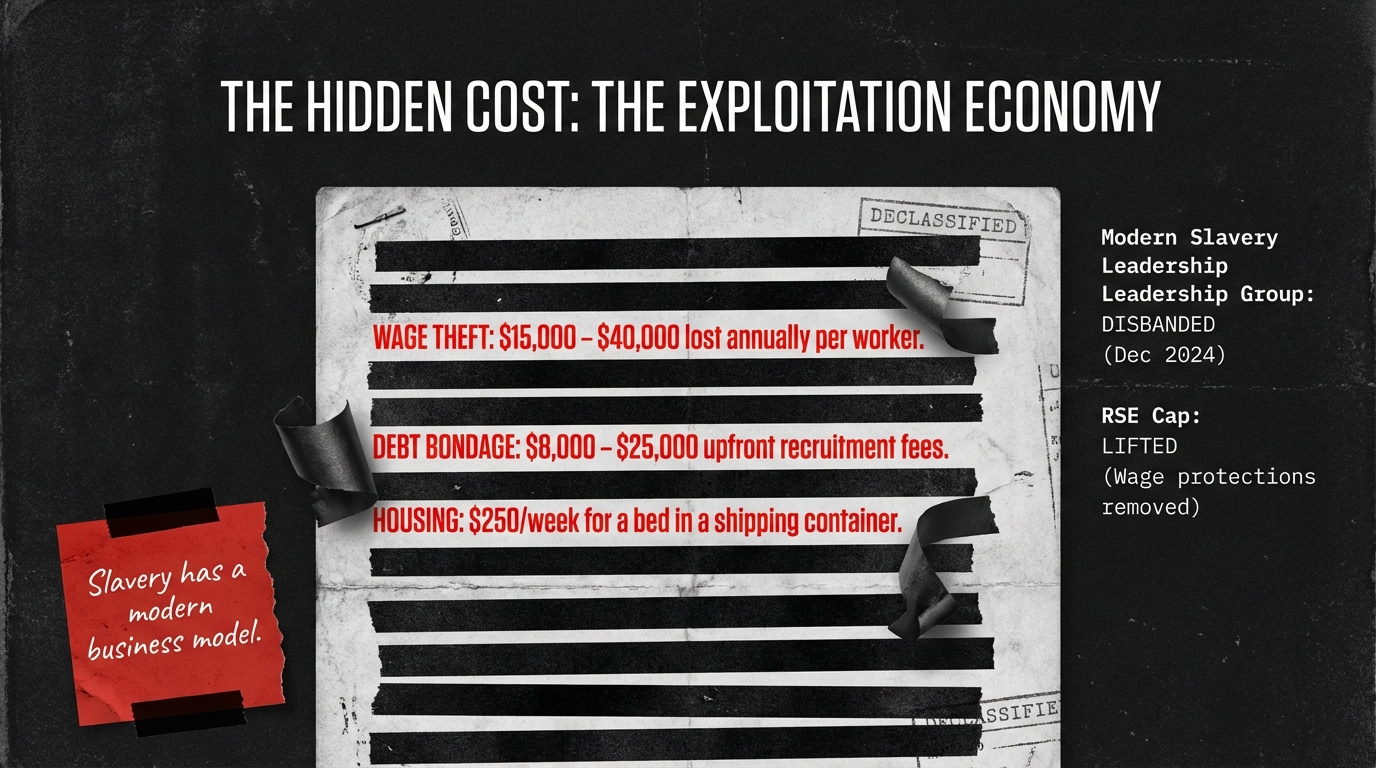
New Zealand has systematically engineered an exploitation economy where migrant workers function as disposable labour, legally bound to abusive employers with no escape. The Human Rights Commission’s 2024 review of the Accredited Employer Work Visa scheme confirmed “widespread exploitation”—wage theft, fake jobs costing tens of thousands of dollars, workers living in crowded, unhealthy, unsafe housing, verbal and physical assault, and human trafficking.
The system’s cruelty is architectural, not accidental. Visas tied to specific employers mean workers cannot flee abuse without losing their immigration status. Three-year time limits create “debt bondage” as workers race to recoup migration costs before deportation. English language requirements imposed by the current government create new revenue streams for testing agencies while doing nothing to prevent exploitation. Meanwhile, job “tokens” representing positions fillable by migrants are sold at premiums by recruiters who amassed hundreds, creating a marketplace where human beings are inventory.
The coalition government’s response? In December 2024, it disestablished the Modern Slavery Leadership Advisory Group, with the Prime Minister declaring reform “not a priority”. One week later, Immigration Minister Erica Stanford lifted the cap on Recognised Seasonal Employer workers while removing the requirement that employers pay them 10 percent above minimum wage and allowing increased accommodation costs. No consultation. No union engagement. Just business interests dictating policy.
This is the context into which the India FTA imports workers. Peters warns of “migrant exploitation” in his NZ First statement, claiming “we don’t want to add to that”. But his party voted for the visa reforms that entrenched exploitation, for the dismantling of worker protections, for the system that transforms human beings into extractable resources. His opposition to the India FTA is not humanitarian—it is demographic panic dressed in economic concern, leveraging legitimate fears about exploitation while offering no solutions to the structural violence his own coalition perpetuates.
Quantifying Harm: The Cost of Looking Away
Wage theft totals: While precise aggregated data is unavailable due to under-reporting, community legal centres document cases where individual migrant workers lose $15,000-$40,000 annually through unpaid overtime, withheld wages, and illegal deductions.
Housing exploitation: Reports indicate migrant workers paying $250-$350 per week for beds in garages or shipping containers with no running water—approximately 40-60% of their income for substandard accommodation.
Recruitment fees: Workers from Pacific and South Asian countries pay $8,000-$25,000 in upfront fees to agents—debt that takes 2-3 years to repay, during which they cannot challenge exploitation without losing everything.
Health impacts: Psychological and physical harm from overwork, abuse, and unsafe conditions remain unmeasured but pervade testimonies collected by unions and community organizations.
The Silent Dispossession: Tikanga, Trade, and the Western Blind Spot
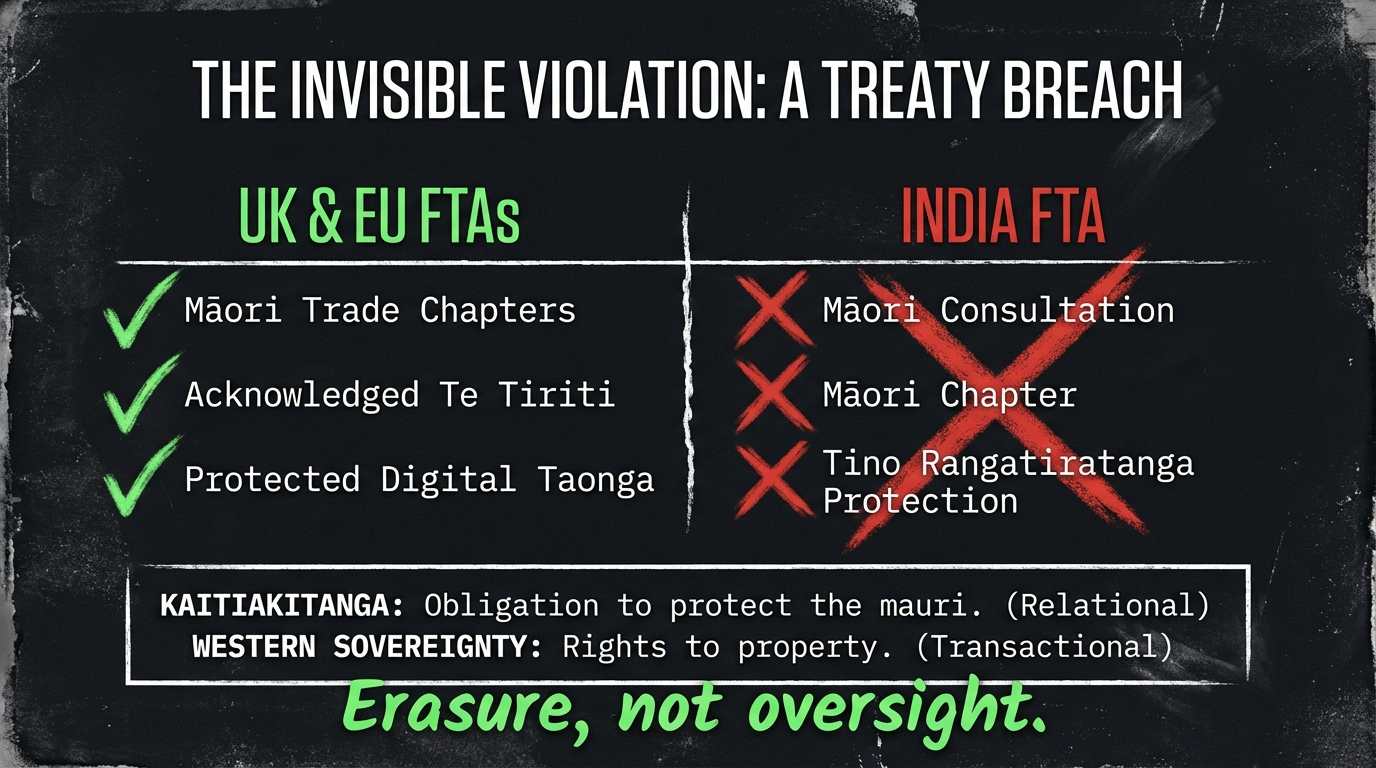
For Western readers unfamiliar with Te Ao Māori (the Māori worldview), the India FTA’s most grievous breach is invisible: the absence of Māori consultation and protection of tino rangatiratanga. This absence is not oversight—it is erasure. To understand the magnitude, consider these concepts:
- Tino rangatiratanga translates awkwardly to “sovereignty,” “self-determination,” or “absolute chieftainship”—but none capture its essence. It is the inherent authority Māori retain over their lands, resources, knowledge, and governance systems, guaranteed under Article 2 of Te Tiriti o Waitangi (the Treaty of Waitangi). Unlike Western sovereignty, which is hierarchical and transferable, tino rangatiratanga is relational and inalienable. It is not a “right” granted by the state—it precedes the state.
- Kaitiakitanga is often mistranslated as “guardianship,” but this falsely implies ownership in the Western property sense. Kaitiakitanga is an active, intergenerational obligation—a duty to protect the mauri (life force) of land, waterways, ecosystems, and knowledge for future generations. It confers responsibilities, not rights to exploit. Mana whenua (those with ancestral authority over a place) cannot “sell” kaitiakitanga—they are bound by whakapapa (genealogy) to uphold it.
The Treaty of Waitangi (1840) established a partnership between the British Crown and Māori, guaranteeing Crown governance (kawanatanga) in Article 1 while protecting tino rangatiratanga in Article 2. The Waitangi Tribunal has clarified that this means the Crown cannot govern in ways that extinguish Māori authority—it must actively protect Māori interests and consult in good faith on decisions affecting Māori.
The Trade Agreement Breach: Learning from CPTPP
In 2021, the Waitangi Tribunal found that the Comprehensive and Progressive Trans-Pacific Partnership (CPTPP) breached the Crown’s Treaty obligations. The e-commerce chapter’s rules on cross-border data flows and data localization constrained New Zealand’s ability to protect mātauranga Māori (Māori knowledge) and Māori data sovereignty. The Tribunal concluded the government “failed to understand and actively protect Treaty interests of Māori” and “downplayed the risks” to Māori knowledge systems in the digital domain.
Subsequent FTAs with the UK (2022) and EU (2022) included Māori Trade and Economic Cooperation chapters acknowledging Te Tiriti as a “foundational document of constitutional importance”, referencing tikanga, mātauranga, and kaitiakitanga, and creating mechanisms for Māori representation in implementation.
The India FTA: A Return to Dispossession
The India FTA, negotiated and concluded in December 2025, contains no comparable Māori provisions. There is no evidence of consultation with iwi (tribes), no Māori Trade chapter, no acknowledgment that immigration policy affecting Aotearoa’s demographic composition and labour markets has implications for tino rangatiratanga. The FTA text remains unreleased, “being looked over by lawyers”—a delay that prevents Māori, or the public, from scrutinizing what has been signed in their names.

This is not mere administrative neglect. It represents a regression to colonial governance patterns where the Crown assumes absolute sovereignty unqualified by Treaty partnership. The message is unambiguous: despite Tribunal findings, despite incorporating Māori chapters in other recent FTAs, despite Te Tiriti being foundational law—when it comes to India, Māori voices are irrelevant.
Why? One plausible answer:
India’s own sensitivity to sovereignty questions. As a nation that jealously guards its territorial integrity and bristles at external interference, India may have resisted any FTA language acknowledging Indigenous sovereignty or co-governance within Aotearoa. Rather than insist on Treaty protections as non-negotiable, the New Zealand government capitulated—prioritizing trade access over constitutional obligations.
The irony is excruciating:
Peters claims to defend “New Zealanders” from immigrant hordes, while his coalition erases the first peoples of this land from the very agreements that will reshape its demographic future.
Explaining Tikanga to the Western Mind: Three Scenarios
Scenario 1: Land and Water
Imagine your great-grandparents built a farm that has sustained your family for four generations. The soil quality, the water table, the health of the ecosystem—these aren’t just “resources,” they are your family’s health, passed down and passed forward. Now a corporation arrives offering money to dump industrial waste on your land. Saying “yes” would make you wealthy, but it would poison your children’s inheritance and betray your grandparents’ sacrifice.

In Western property law, if you own the deed, you can choose profit over legacy—it’s “your right.” In tikanga, there is no such right. Kaitiakitanga means you hold the land in trust for your ancestors and descendants. You cannot sell what was never solely yours. The obligation transcends your individual life. This is why Māori data sovereignty asserts that Māori data is “ever only loan”—it cannot be owned by individuals or corporations; it must be governed according to tikanga, with accountability to those from whom it derives.
Scenario 2: Knowledge and Innovation
Imagine your grandmother teaches you her secret recipe for bread—passed down five generations, refined over centuries. A food company films her making it, patents the process, and sells “Authentic Grandma’s Bread” globally without permission or profit-sharing. In Western IP law, if your grandmother didn’t file a patent first, she has no recourse.
In tikanga, mātauranga (knowledge) is taonga (treasure) protected under Article 2 of Te Tiriti. Mātauranga includes medicinal knowledge, ecological practices, spiritual understandings, and cultural protocols. When trade agreements facilitate cross-border data flows or allow unrestricted e-commerce without local storage requirements, they enable foreign entities to extract Māori knowledge digitally—the modern equivalent of colonial land confiscation. The Waitangi Tribunal called this “digital colonization”.
Scenario 3: Immigration and Belonging
Imagine a partnership where you and a friend co-own a business. The partnership agreement says major decisions require mutual consent. One day, your partner unilaterally hires 5,000 new employees without consulting you—altering the business culture, its operations, its future. When you object, your partner says, “I have sovereignty over hiring.”
This is Te Tiriti’s partnership principle violated. Article 1 gave the Crown governance (kawanatanga), but Article 2 guaranteed tino rangatiratanga—an equal, not subordinate, authority. Immigration policy changes Aotearoa’s demographic composition, impacts on tangata whenua (people of the land) status, affects resource pressures, and reshapes who holds influence over land use. These are Treaty partnership matters. Proceeding without meaningful Māori consultation is not just disrespectful—it is unconstitutional under Aotearoa’s founding document.
The Infrastructure Catastrophe: Building on Quicksand
While politicians squabble over visa numbers, Aotearoa is sinking—literally and metaphorically. The country faces a “severe infrastructure gap” that makes every new arrival a strain on systems already at breaking point.
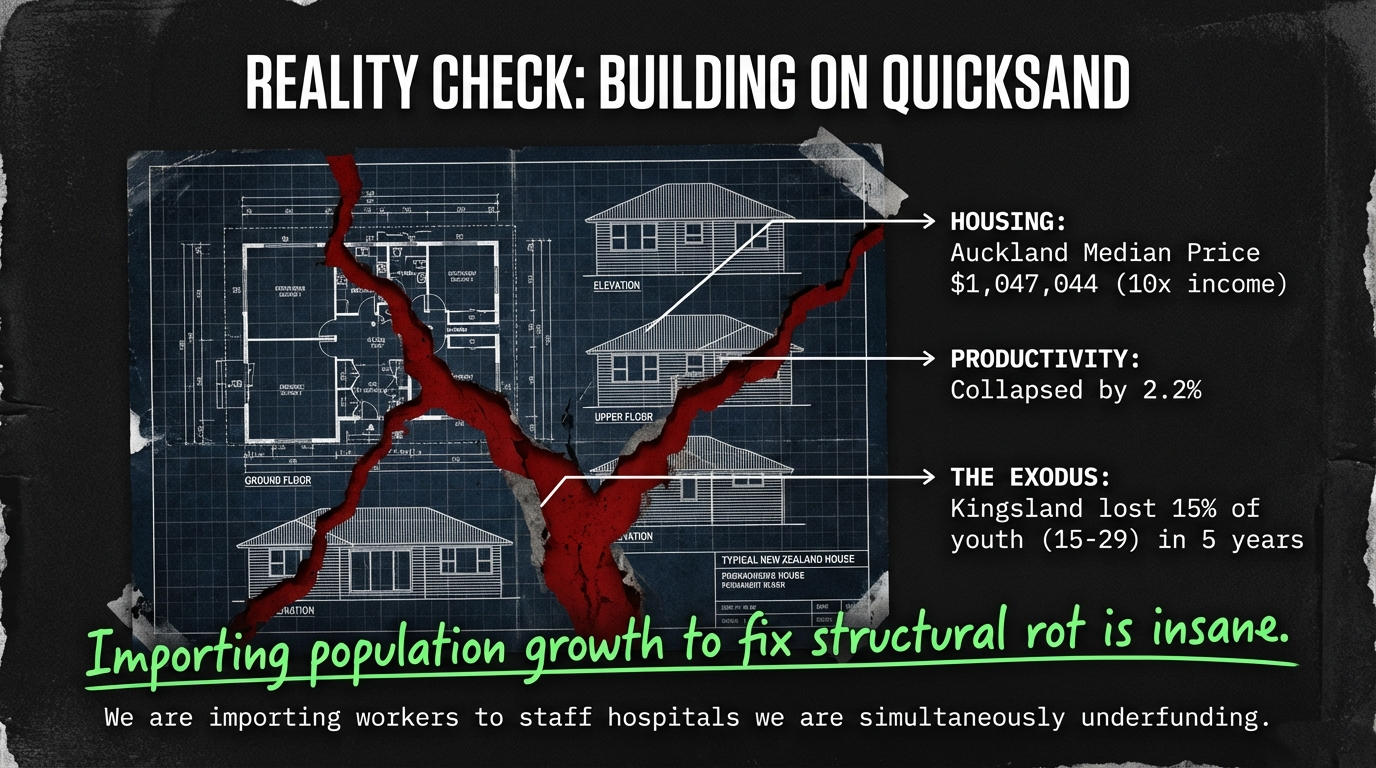
Housing: Auckland’s median house price is $1,047,044, Wellington’s $785,790—both down 20 percent from 2022 peaks not because housing became affordable, but because young people are fleeing. Kingsland lost 15 percent of its 15-29 age cohort in five years; inner-west suburbs haemorrhaged similar numbers. The reason? Houses cost seven to ten times annual income, and infrastructure constraints mean councils cannot finance development.
Construction: Building costs have surged 10 percent annually, driven by labour shortages as skilled workers exodus to Australia, supply chain disruptions, and wage inflation. The Government promises 55,000 new homes and 180 kilometres of roads but cannot deliver when the workforce is shrinking and infrastructure costs keep rising.
Productivity: New Zealand’s labour productivity fell 0.9 percent in 2023, multifactor productivity fell 2.2 percent, capital productivity fell 3.8 percent. Since 2011, annual productivity growth averaged 0.2 percent—one of the worst in the OECD. Economic complexity ranking fell from 52nd (2000) to 68th (2023). GDP per hour worked, close to Scandinavia in 1970, is now 40 percent lower.
Immigration into this environment does not “fill skills gaps”—it papers over structural rot. Adding 1,667 workers annually will not fix low capital intensity, weak innovation diffusion, small firm size, or investment skewed toward residential property rather than R&D. It will, however, increase demand for housing, schools, hospitals, and transport that do not exist, driving up interest rates and exchange rates that harm exporters and widen inequality.
The Treasury’s own research acknowledges that high net migration during periods when the economy is constrained by geography and resources can be “detrimental to New Zealanders’ prosperity”. Yet the FTA proceeds, because trade statistics look good on ministerial press releases even as the lived experience crumbles.
Solutions: What Honour Would Look Like
The question is not whether Aotearoa needs skilled workers or international trade. It does. The question is whether it will pursue these ethically, transparently, and in accordance with its constitutional obligations.
Here are solutions grounded in evidence, tikanga, and human dignity:
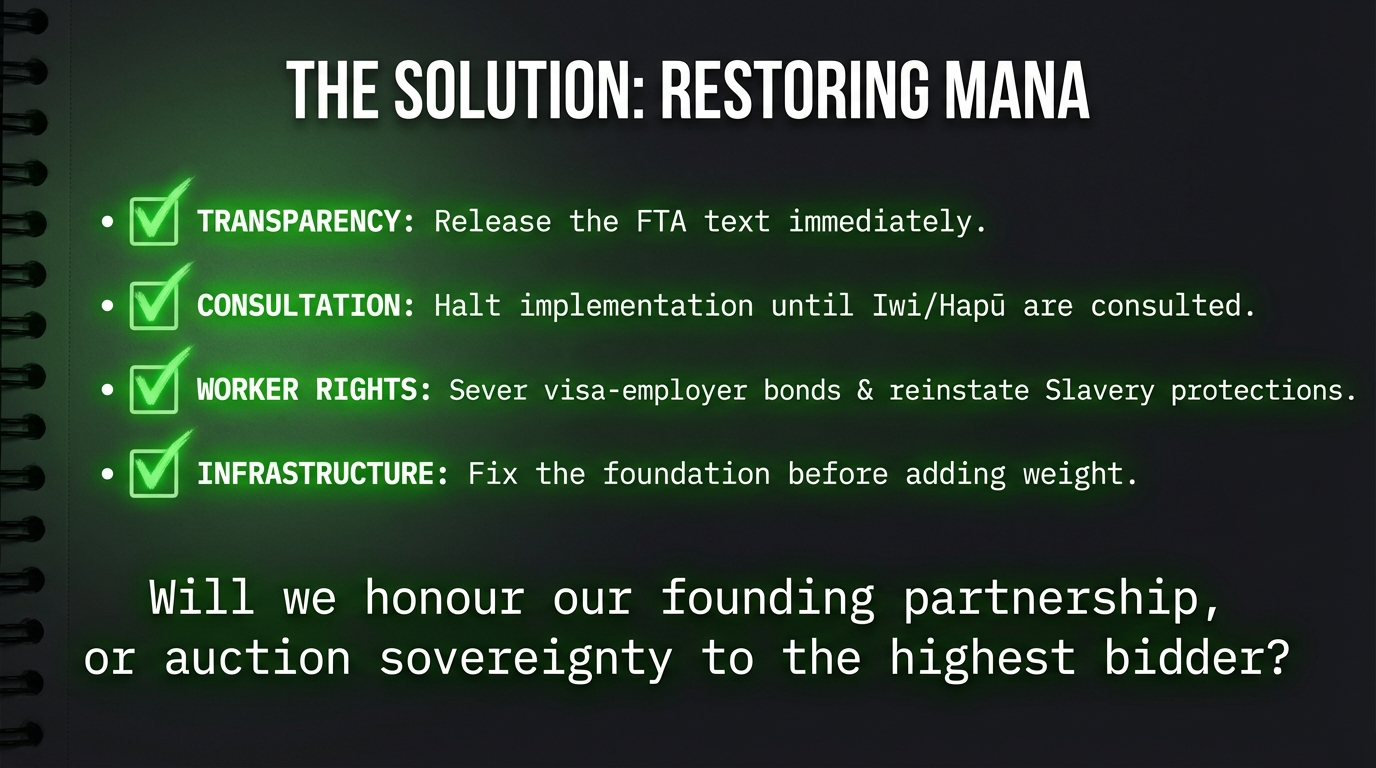
1. Release the FTA Text Immediately
The Taxpayers’ Union, no friend to progressive causes, demands the full FTA text be released: “Kiwis shouldn’t have to rely on hearsay and rumour to work out what their government has committed them to”. Democracy requires informed consent. Publish the text, allow 90 days for public and Māori consultation, and require Labour’s support before proceeding—not as political favour, but as constitutional necessity.
2. Conduct Treaty-Compliant Consultation
Halt implementation until iwi, hapū, and Māori representative bodies have been consulted per the partnership principle. This is not a courtesy—it is a legal obligation. Meaningful consultation means:
- Sharing the full FTA text and impact assessments in te reo Māori and English
- Providing funding for Māori communities to conduct independent analysis
- Incorporating Māori feedback into implementation plans, including mechanisms for ongoing Māori representation as in the EU/UK FTAs
3. Sever Visa-Employer Bonds and Guarantee Worker Rights
Exploitation flourishes when workers are chained to abusive employers. Reforms must include:
- Open work visas: Migrants can change employers without losing immigration status
- Visa duration exceeds employment contracts: Workers have time to seek better conditions
- Automatic union access: All migrant workers receive information about unions in their language; unions have workplace access rights
- Pathway to residency: Three-year visas should lead to permanent residence eligibility, not deportation—reducing debt bondage
- Family reunion rights codified: If policy allows families for visas over one year, state this clearly in the FTA rather than let it become xenophobic fodder
4. Reinstate Modern Slavery Protections
Resurrect the Modern Slavery Leadership Advisory Group and implement its recommendations:
- Mandatory supply chain transparency: Businesses must report on migrant labour in supply chains
- Whistleblower protections: Migrants who report exploitation receive temporary visas and legal support during investigations
- Dedicated enforcement unit: Establish the migrant exploitation team recommended by the Human Rights Commission
- Disqualification for exploiters: People convicted of migrant exploitation or human trafficking are permanently barred from managing companies or sponsoring workers
5. Fix Infrastructure Before Importing Population Growth
New Zealand cannot absorb 1,667 annual visas plus families when it cannot house, transport, or provide healthcare to current residents. Prerequisites include:
- Implement infrastructure financing reform: Allow councils to borrow for growth-related infrastructure through land value capture and development levies
- Fast-track housing density: Support Auckland’s Plan Change 120 to enable apartment construction near public transport without watering it down
- Retain skilled workers: Address why Kiwis are fleeing to Australia—lower housing costs, higher wages, better public services—before importing replacements
6. Establish Cross-Party Trade Protocol
Political correspondent Audrey Young observes the situation “calls for an informal grand coalition” between National and Labour on trade. Institutionalize this:
- FTAs require bipartisan support for ratification—preventing fringe parties from manufacturing crises
- Treaty consultation becomes non-negotiable stage before signing
- Public disclosure of draft texts during negotiations, not after
7. Acknowledge What This Truly Costs
The conversation about immigration must evolve from “how many” to “what kind of society we are building.” Importing workers to staff understaffed hospitals while cutting public sector jobs that create understaffing is insane. Using migration to suppress wages while cutting minimum wage protections is exploitative. Signing trade agreements that violate Treaty obligations to attract foreign investment is colonial logic wearing a suit.
Aotearoa must choose: Will it honour its founding partnership, or auction sovereignty to the highest bidder?
The Fire Sale Continues
As this essay goes to press, the India FTA remains unlawful under Te Tiriti until Māori are consulted. Migrant workers continue to be exploited with government complicity. Young New Zealanders keep fleeing unaffordable cities. Productivity keeps collapsing. Peters keeps polling upward on xenophobia while voting for policies that entrench exploitation. And Luxon’s coalition, holding a razor-thin 50.5 percent, lurches toward a November 7 election hoping voters forget the house is burning.
This is not immigration policy. This is a sovereignty auction—a fire sale conducted while the house burns, where the auctioneers argue over inventory while flames consume the foundation. The question is not whether Indians, or any migrants, “deserve” to come to Aotearoa. They do, if the system respects their dignity and rights. The question is whether Aotearoa’s government respects its own people—Māori and Pākehā alike—enough to govern with transparency, honour Treaty obligations, protect vulnerable workers, and build infrastructure before importing population growth.
The evidence suggests it does not. The fire sale continues. And when the house collapses, the politicians will blame the migrants—never the arsonists they elected.
Supporting This Mahi: A Koha Consideration
The essay you’ve just read does what Crown agencies should do but refuse to:
it names exploitation, traces accountability, and refuses the comfortable fictions that allow dispossession to continue. The government will not fund this work. Parliamentary reporters are constrained by balance and access. Universities worry about funding cuts. Only whānau—people who understand that their survival depends on truth-telling—can sustain voices like this.
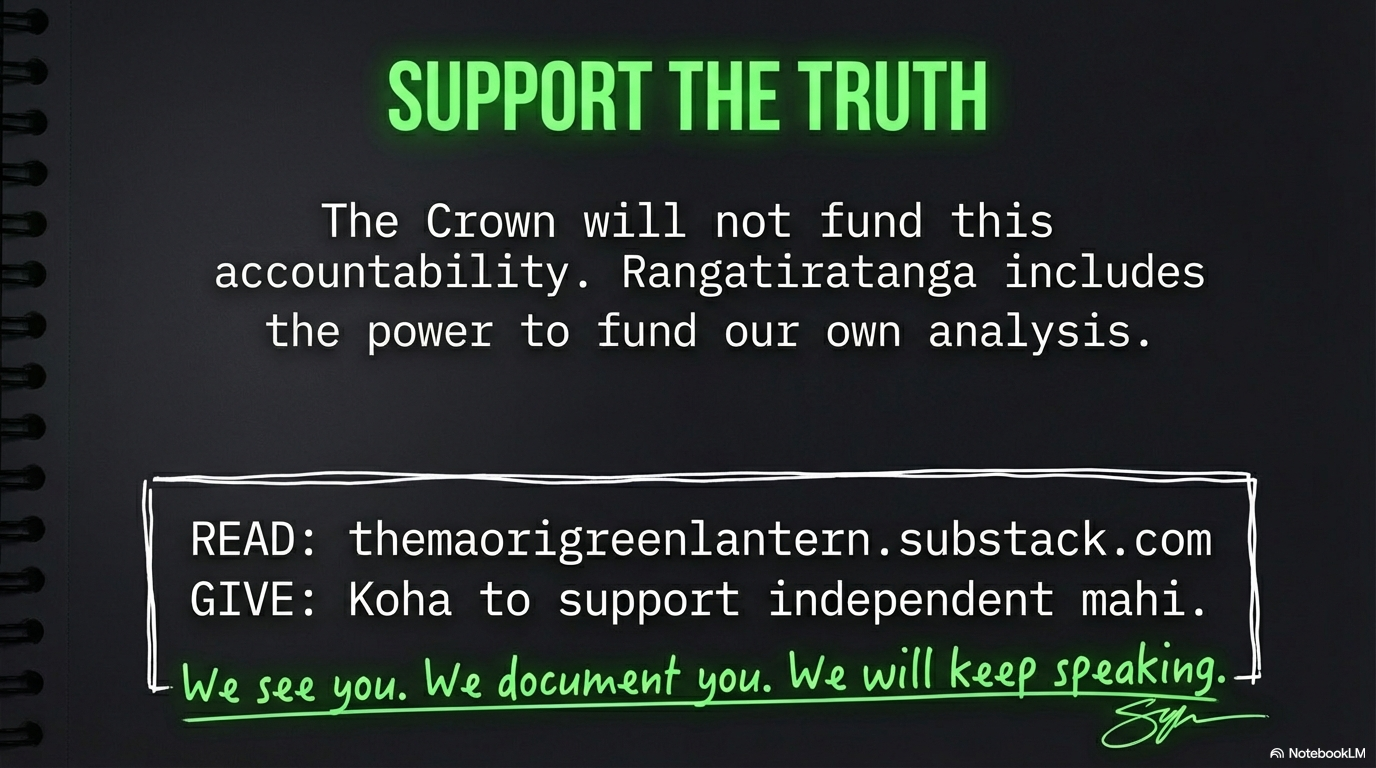
Every koha signals something sacred:
that rangatiratanga includes the power to fund our own analysis, our own journalism, our own accountability structures. When you contribute, you are saying: I will not wait for institutions that have failed us. I will not accept the Crown’s framing. I will invest in the voices that name what official channels obscure.
This essay dissects how the Coalition government:
- Violated Te Tiriti by negotiating the India FTA without Māori consultation
- Enabled migrant exploitation while silencing the whistleblowers who document it
- Prioritized trade rhetoric over infrastructure reality, guaranteeing that vulnerable workers will absorb costs their labour does not pay for
- Allowed Peters to weaponize xenophobia while profiting from the very exploitation he denounces
These are not abstract political squabbles. They are structural violence. Documenting and opposing them costs time, research, and the professional risk of challenging power. That work will not fund itself. Neither should it depend on the goodwill of billionaires or the paywalls of mainstream media.
If this essay moved you—if it clarified something you felt but couldn’t name, if it armed you with evidence to challenge the politicians’ framing, if it reminded you that Aotearoa’s founding document guarantees tino rangatiratanga and that means you have authority over what happens to this motu—then consider:
Three Pathways to Support This Mahi:
- For direct koha (voluntary contribution):
Visit the Koha platform to fund independent analysis and truth-telling that Crown and corporate structures will not provide:
Koha—Support Independent Mahi - For ongoing access to essays + supporting the writer’s mahi:
Join the Substack community. Subscribers fund the research, interviews, and time required to do this work at scale. Every subscription is a statement that you will not let official narratives go unchallenged:
Subscribe to the Māori Green Lantern on Substack - For direct bank transfer (if Koha or Substack are barriers):
HTDM | Account: 03-1546-0415173-000
What Your Koha Funds:
- Research into corporate exploitation of migrant workers—documentation that keeps vulnerable people’s testimony from disappearing
- Treaty analysis that holds the Crown accountable to obligations it tries to forget
- Essays like this one—scathing, evidence-based, refusing the false balance that treats dispossession as a “difficult policy choice”
- Whānau networks where Māori can access truth without waiting for permission from mainstream institutions
Your koha signals: rangatiratanga includes the power to fund accountability. It says to the Crown, to politicians, to corporate interests: We see you. We document you. And we will keep speaking your name until justice is done.
Kia kaha, whānau. Stay vigilant. Stay connected. And if you are able, consider a koha to ensure that voices like this—voices that refuse to let the fire sale continue unchallenged—keep ringing out across Aotearoa.
Aroha mai for the long read. Kia ora for listening. And kia ora, especially, for whatever you are moved to give to keep this mahi alive.

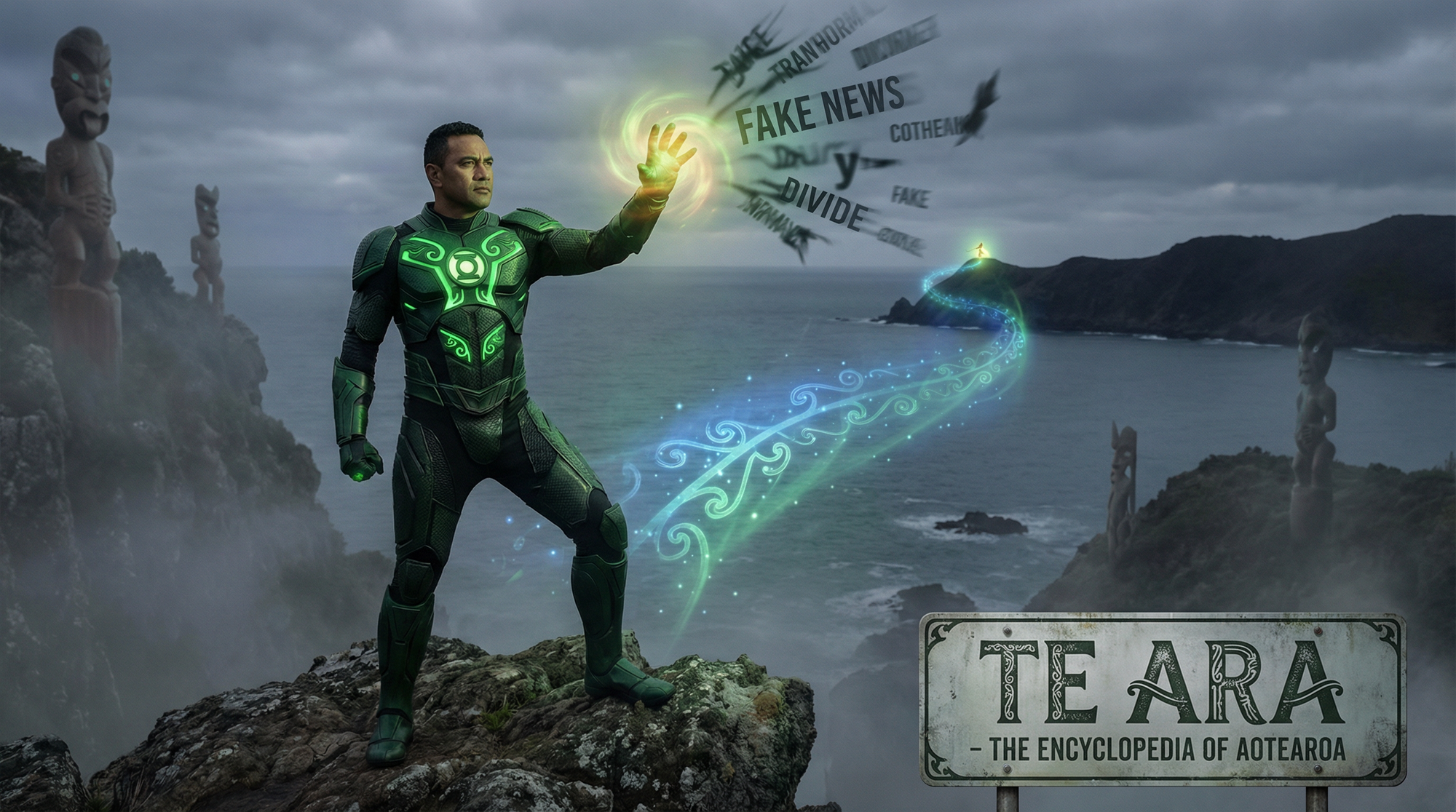
Ivor Jones The Māori Green Lantern Fighting Misinformation And Disinformation From The Far Right