"From Kotahitanga to Control: How Global Neoliberalism Weaponized Te Pāti Māori Against Itself" - 3 November 2025
Russell Vought, David Seymour, and the International Network Dismantling Māori Political Resistance While John Tamihere Fractures the Party From Within
Kia Ora, Whānau – A Smoking Gun, Power Plays, and the Machinery of Co-option.
Te Pāti Māori’s public implosion in October 2025 is not a tragedy of ordinary political failure. It is a window into how neoliberal ideology and international libertarian networks work to fracture Māori movements from within—using money, power, and the vocabulary of accountability to mask control and suppress the tino rangatiratanga that threatens elite interests.
The smoking gun: John Tamihere and his co-leaders have weaponized internal party processes to destroy a rival faction, but the real story is not about individual greed or family drama. It is about what happens when a Māori political movement built on kaupapa gets captured by the very neoliberal machinery it should be resisting—and then must be dismantled when it refuses to stay captured.
THE WHAKAPAPA: Neoliberalism, Regulatory Capture, and Tikanga Violated
To understand what Te Pāti Māori is experiencing, we must trace the genealogy of ideas and money flows that created the conditions for this breakdown.
The Global Architecture: Project 2025 and Russell Vought
In Washington, Russell Vought, Director of the Office of Management and Budget (OMB), is implementing Project 2025, a 922-page policy blueprint authored primarily by the Heritage Foundation. Vought drafted over 350 executive orders, regulations, and memos for a Trump administration bent on what he himself describes as “Christian nationalism”—a fusion of market fundamentalism with religious authoritarianism. Project 2025 proposes mass federal workforce reductions, decimation of regulatory agencies, and consolidation of executive power to bypass Congress.
This is not abstract. In October 2025, Vought oversaw the firing of thousands of federal workers during a government shutdown, testing whether the Posse Comitatus Act—which prohibits federal military from civilian law enforcement—applies to presidential directives. He lost that battle in federal court, but the architecture of Project 2025 is now embedded in American governance.
The New Zealand Pipeline: David Seymour, The Heritage Foundation, and Atlas Network
David Seymour, ACT Party leader and Regulation Minister, worked for libertarian think tanks before entering Parliament—including the Frontier Centre for Public Policy and the Manning Foundation, both members of the Atlas Network. The Atlas Network is a global federation of 550 libertarian think tanks in over 100 countries, explicitly committed to promoting “individual liberty, property rights, limited government, and free markets”.
In Aotearoa, Atlas members include the Taxpayers Union and the New Zealand Initiative (formerly the Business Roundtable). The Heritage Foundation has directly provided at least $84,000 to fund the New Zealand Climate Science Coalition.
The Regulatory Standards Bill is the New Zealand instantiation of Project 2025’s deregulation agenda. Seymour’s bill proposes embedding libertarian principles into law—framing regulation as a “tax on growth” rather than protection for workers, environment, or iwi. The bill is rooted in work by economist Bryce Wilkinson and the Business Roundtable dating to the early 2000s, itself inspired by American legal theorist Richard Epstein’s doctrine of “regulatory takings”—an extreme libertarian idea that treats regulations as compensation-worthy property seizures.
The consultation on the proposed bill garnered 23,000 responses—88 percent opposed. Yet the government proceeded without meaningful consultation with Māori, in breach of te Tiriti obligations.
New Zealand’s Neoliberal Genealogy: Rogernomics to Co-Governance Dismantling
New Zealand’s embrace of neoliberalism began in 1984 with “Rogernomics”—Finance Minister Roger Douglas’s radical deregulation, which eliminated foreign exchange controls, floated the currency, introduced GST, and privatized state assets. The 1987 sharemarket crash exposed the recklessness of unregulated finance, destroying tens of billions in wealth and traumatizing capital markets for decades.
Yet the neoliberal project continued. By the 1990s, it embedded itself in structures like the Public Finance Act, which mandated low public debt, and later, the Reserve Bank’s single mandate for price stability (which the current coalition has reinforced by stripping the employment mandate).
What is crucial: the coalition government has systematically dismantled co-governance structures—disestablishing the Māori Health Authority, scrapping Fair Pay Agreements, rolling back smokefree legislation, and attempting to rewrite Te Tiriti principles in law. This is not accident. It is ideological alignment with Project 2025’s mandate to consolidate power and eliminate institutional checks.
THE CRISIS: Te Pāti Māori’s Public Breakdown and the Hidden Networks Behind It
The Surface Story: October 2025 Explosion
On October 13, 2025, Te Pāti Māori’s leadership emailed party members a dossier of allegations against MP Mariameno Kapa-Kingi and her son, Eru Kapa-Kingi. The charges: Kapa-Kingi had overspent her parliamentary office budget by up to $133,000, with funds allegedly funneled to pay her son, Eru, who was hired as a contractor.
Eru, a lead organizer of Toitū Te Tiriti (which led the historic 2024 Hīkoi mō te Tiriti), had just publicly accused Te Pāti Māori leadership of operating a “dictatorship model” with “bullying tactics”. In response, the leadership destroyed Mariameno’s credibility by leaking confidential parliamentary documents and allegations of assault by her son against parliamentary staff.
The pattern: when a faction challenges leadership power, the response is not dialogue but retaliation wrapped in language of fiscal responsibility and conduct standards.
The Deeper Story: Money, Control, and Ideological Capture
1. Waipareira Trust: Charity as Political Machine
John Tamihere, Te Pāti Māori president, is chief executive of Waipareira Trust, a West Auckland social services provider. For over four years, Charities Services investigated Waipareira for using charitable funds to bankroll Tamihere’s political campaigns.
The trust provided Tamihere with $385,307 in interest-free loans—$150,000 for his 2019 Auckland mayoral campaign and over $200,000 for Te Pāti Māori’s 2020 general election campaign. Under charity law, this is illegal. Tamihere repaid the loan in May 2023 only after the Charities Registrar formally demanded it.
More damning: Waipareira’s executive salaries nearly doubled after the loan was repaid, making it New Zealand’s highest-paid charity sector by average executive compensation ($500,000+ per position). Tamihere’s wife, Awerangi, is Chief Operating Officer.
This is not accountability. This is the privatization of public resources into personal and familial wealth.
2. Electoral Roll Manipulation and Political Strategy
The attempt to move Māori onto the Māori electoral roll during 2023 was not accidental. From 2023 onwards, law changes allowed Māori voters to switch rolls outside the five-yearly census window, leading to almost 31,000 voters switching to the Māori roll and 25,000 new voters choosing Māori enrolment by 2025. This directly benefited Te Pāti Māori, which contests Māori seats.
Using a public health trust to mobilize this shift was a coordinated political strategy—not a Māori health initiative.
3. Financial Disclosure Failures and Electoral Law Breaches
Te Pāti Māori has repeatedly failed to comply with electoral donation disclosure laws. In 2020, the party failed to declare over $300,000 in donations during the regulated election period and only belatedly disclosed them months later. The Electoral Commission referred this serious breach to Police in April 2021.
This pattern reveals a party structure that prioritizes loyalty and insider benefit over transparency.
TACTICAL DECONSTRUCTION: How Power Eliminates Rivals
Logical Fallacies and Rhetorical Techniques
False Accountability Frame
When Mariameno Kapa-Kingi’s budget overspend was alleged, Tamihere framed it as a conduct and fiscal management failure—individual misconduct. He omitted that MPs’ budgets are complex, that supporting extra staff to cover a deceased colleague’s electorate work was a structural necessity, and that the party itself had failed to implement transparent budgeting oversight.
Instead of solving the systemic problem, the leadership weaponized it against a rival.
Ad Hominem Through Family Association
By highlighting allegations of Eru Kapa-Kingi’s conduct toward parliamentary staff and characterizing him as a “bully,” the leadership discredited both Mariameno and Eru without addressing Eru’s substantive critique: that Te Pāti Māori operates without internal democracy, consultation, or constitutional respect.
This is a classic deflection—personalizing structural critiques as character failures.
Dog-Whistle Language
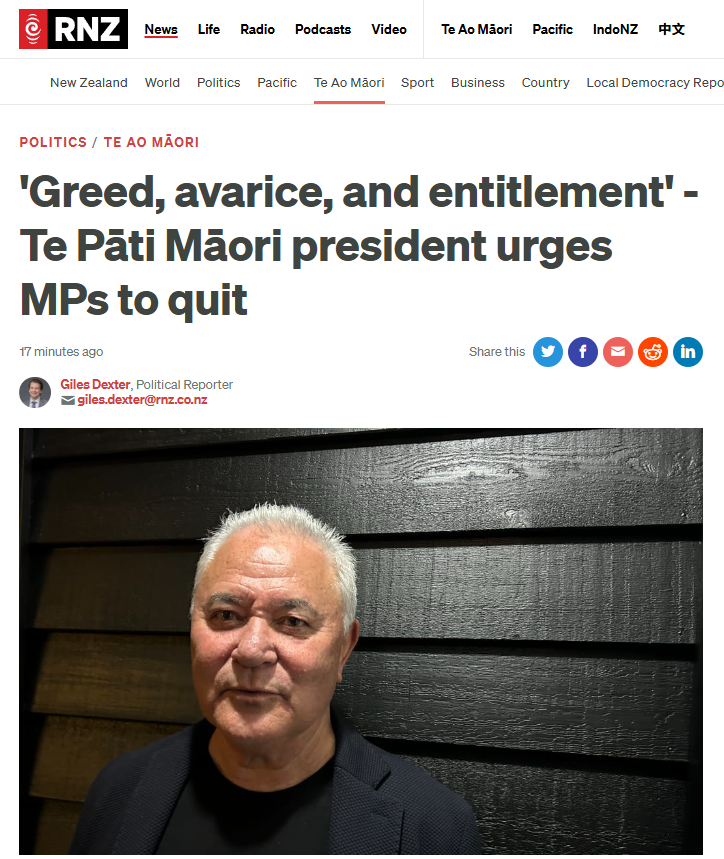
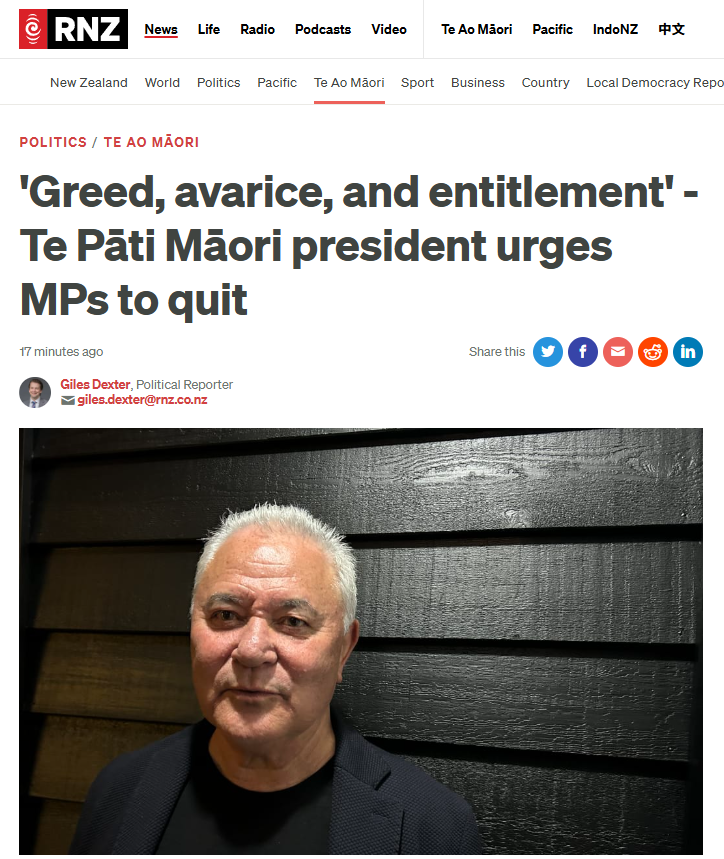
Tamihere accused Kapa-Kingi and Ferris of “greed, avarice, and entitlement”—language borrowed directly from welfare scapegoating rhetoric that frames poor and marginalized people as morally corrupt. Applied to a Māori MP challenging leadership, this rhetoric invokes deep colonial stereotypes about Māori as untrustworthy and self-serving.
Omitted Context
The leadership email to members omitted that:
- Kapa-Kingi had been demoted from party whip without adequate explanation
- She had challenged policy directions internally
- The budget “adjustment” occurred during a period of supporting a dying colleague
- The party had no transparent, constitutional process for addressing internal disputes
Reversed Accountability
Eru Kapa-Kingi explicitly stated that the party operates without constitutional process, that decisions are made by a small leadership group, and that members who challenge this are “sidelined or silenced”. Rather than address these systemic failures, the leadership responded by appearing to prove his point—using confidential documents, leaks, and public accusations to punish dissent.
HIDDEN CONNECTIONS: The Network Exposed
Connection 1: Te Pāti Māori’s Structural Capture by Neoliberal Logic
Te Pāti Māori was born in 2004 as a response to the foreshore and seabed crisis, representing a reassertion of tino rangatiratanga against Crown dispossession. Yet by 2020, under new leadership, it embraced parliamentary representation as the primary strategy. By 2023, it held six Māori seats and appeared to represent a resurgent Māori political force.
But the leadership internalized neoliberal governance logics:
- Financialization of kaupapa: Using charities to fund political campaigns, employing family members on taxpayer money without transparency, and prioritizing operational efficiency over democratic process.
- Individualization of accountability: Rather than addressing structural governance failures, the leadership blamed individuals (Kapa-Kingi, Ferris) for “entitlement” and “greed.”
- Centralization of power: Leadership decisions made by co-leaders and president without adequate caucus or membership consultation, mimicking corporate hierarchy rather than iwi/hapū collective decision-making.
- Reputational management over kaupapa: Responding to Eru’s critique by leaking damaging documents to media rather than engaging in honest internal dialogue.
Connection 2: Christopher Luxon’s Coalition and Treaty Dismantling
The Coalition government, led by Prime Minister Christopher Luxon and including ACT’s David Seymour and NZ First’s Winston Peters, has systematically dismantled Te Tiriti institutions. This is not coincidental; it is ideologically coordinated.
Luxon appointed Seymour as Deputy Prime Minister and gave him the Regulation portfolio. The Regulatory Standards Bill Seymour is advancing treats Māori protections and environmental regulations as “burdens” to be assessed against libertarian principles of property rights and limited government.
This is coordinated ideological assault. And Te Pāti Māori, fractured and discredited, cannot provide coherent resistance.
Connection 3: International Libertarian Networks and Ideological Reproduction
David Seymour is not acting in isolation. He is executing a globally coordinated strategy to embed libertarian governance principles into law, to eliminate co-governance mechanisms (which limit corporate and state power), and to reframe environmental and social protections as anti-growth impediments.
Te Pāti Māori’s dysfunction is not a side effect of this strategy—it is a desired outcome. A fractured Māori party cannot organize coherent resistance to Treaty dismantling, to health authority destruction, or to regulatory rollbacks that accelerate environmental destruction and inequality.
QUANTIFIED HARM: What Te Pāti Māori’s Collapse Enables
Māori Unemployment and Economic Dispossession
As of December 2024, Māori unemployment stands at 9.7%—nearly double the national rate of 5.1%. In Auckland, Māori unemployment has surged from 9.2% in March 2024 to 11.5% in March 2025.
Youth Māori unemployment is catastrophic: 20.4% for ages 15-24. Young Māori face a jobs market that has contracted since the coalition took power, with government service cuts and benefit sanctions disproportionately targeting Māori whānau.
Health Disparities and Abandonment
Māori life expectancy remains 7-8 years lower than Pākehā life expectancy. Māori and Pacific bowel cancer screening has been cut, despite Māori having higher rates of early-onset bowel cancer.
The Māori Health Authority, disestablished in February 2024, had been tasked with reducing health inequities. Its destruction means no dedicated institutional mechanism to address these disparities.
With Te Pāti Māori fractured, who holds government to account?
Educational Abandonment and Future Generations
Only 11.5% of Māori adults hold bachelor’s degrees or higher qualifications. Cutting education funding locks generations into low-wage precarity—exactly the condition that neoliberal policy requires to suppress demands for redistribution and dignity.
Benefit Sanctions and Youth Homelessness
From November 2026, parents earning over $65,000 will be expected to financially support 18-19-year-old children on Jobseeker, meaning young people from low-income whānau will lose support. Youth homelessness advocates warn this will push more rangatahi onto the streets.
As of June 2025, over 15,000 18-19-year-olds are on Jobseeker support. These are primarily Māori and Pacific young people.
TIKANGA VIOLATIONS: A Framework for Understanding Betrayal
Whanaungatanga Broken
Te Pāti Māori’s leadership failed to honor the principle of whanaungatanga—relationships of mutual respect and reciprocal obligation. Instead, it built power structures where decisions were made by an elite few and imposed on the wider whānau.
Manaakitanga Abandoned
Manaakitanga—caring for others with generosity and hospitality—was replaced with transactional relationships. Employees like Mariameno became tools to be discarded when they challenged leadership, rather than whānau to be cared for.
Kaitiakitanga Betrayed
As kaitiaki (guardians) of a political movement built to protect Māori rights and te Taiao, the leadership failed this responsibility. Instead of stewarding resources for collective benefit, they channeled public money and charitable donations into private and familial benefit.
Kotahitanga Destroyed
Kotahitanga—unity and collective purpose—was shattered through public accusation, document leaks, and retaliation rather than collective problem-solving. The party that promised to unify Māori in common cause fractured under the weight of leadership control and individualized accountability frames.
Aroha Replaced with Punition
Aroha—compassion and love—gave way to punitive action. When challenged, leadership responded not with humility or dialogue but with character assassination and institutional punishment.
IMPLICATIONS: Quantified Losses and Rights Under Threat
- A Political Voice Silenced: With Te Pāti Māori fractured, Māori opposition to Treaty dismantling, regulatory rollbacks, and health authority destruction is diffuse and weakened. The party that could mobilize tens of thousands at the Hīkoi mō te Tiriti now battles internal factions in the court of public opinion.
- Democratic Accountability Eroded: The coalition government advances policies—the Regulatory Standards Bill, fast-track consenting, benefit sanctions—without robust Māori political challenge. Te Pāti Māori’s dysfunction enables this.
- Economic Inequality Deepening: Māori median income remains substantially below Pākehā median income. Rising unemployment, cut public services, and dismantled co-governance institutions mean fewer resources directed toward Māori economic development. The wealth gap widens.
- Health System Inequality Accelerating: With the Māori Health Authority destroyed and Māori representation in health governance dismantled, the institutions that could advocate for equitable resource allocation are gone. Health disparities will worsen.
- Environmental and Regulatory Protections Disappearing: The Regulatory Standards Bill will treat iwi rights, environmental protections, and labor standards as regulatory “burdens” to be weighed against property rights and market efficiency. Fast-track consenting bypasses environmental review. With Te Pāti Māori fractured, coordinated resistance is nearly impossible.
- International Capital Access Enabled: The Heritage Foundation strategy for the Pacific treats island governance as strategic terrain. Aotearoa, with its natural resources, strategic location, and Māori lands, is equally targeted. Dismantled co-governance removes institutional friction to extractive capital investment.
THE CALL: Specific Actions for Accountability and Resistance
To Toitū Te Tiriti and Grassroots Movements
Maintain organizational independence from parliamentary parties. The Hīkoi mō te Tiriti was powerful precisely because it was not subordinate to Te Pāti Māori. Reconstruct that autonomy. Build kaupapa-based collectives that can resist neoliberal capture and hold all parties—including Māori ones—accountable to tikanga and whānau wellbeing.
To Iwi and Hapū Leadership
Withdraw support from parties that prioritize elite power over whanaungatanga and kotahitanga. Reassert tino rangatiratanga by building independent Māori institutions for health, education, economic development, and resource management—not dependent on parliamentary parties or government funding streams subject to political whim.
To Labour and the Greens
If you seek Māori support in the 2026 election, commit publicly to:
- Reversing the dismantling of the Māori Health Authority
- Rejecting the Regulatory Standards Bill entirely
- Protecting co-governance mechanisms in health, education, and environmental governance
- Canceling fast-track consenting and restoring environmental review requirements
- Raising welfare benefits to above inflation and removing benefit sanctions
Vague commitments will not work. Māori whānau have been promised before.
To Monitoring Institutions
- Electoral Commission: Investigate Te Pāti Māori’s ongoing donation disclosure failures and recommend strengthened enforcement.
- Charities Commission: Complete oversight of Waipareira Trust and hold leadership to account for pattern of political donation use under the guise of charitable work.
- Ombudsman: Investigate the coalition government’s failure to meaningfully consult Māori on the Regulatory Standards Bill, which breaches te Tiriti obligations.
To Community Media and Investigative Journalists
Document the connections between Heritage Foundation ideology, Project 2025, and New Zealand libertarian networks. Expose funding flows from international sources to local think tanks and politicians. Make visible what is deliberately obscured.
Moral Clarity and the Path Forward
Te Pāti Māori’s public breakdown is not a story of individual failure. It is a story of how neoliberal governance logics—individualization, financialization, centralized power, reputational management—corrupt Māori political movements from within.

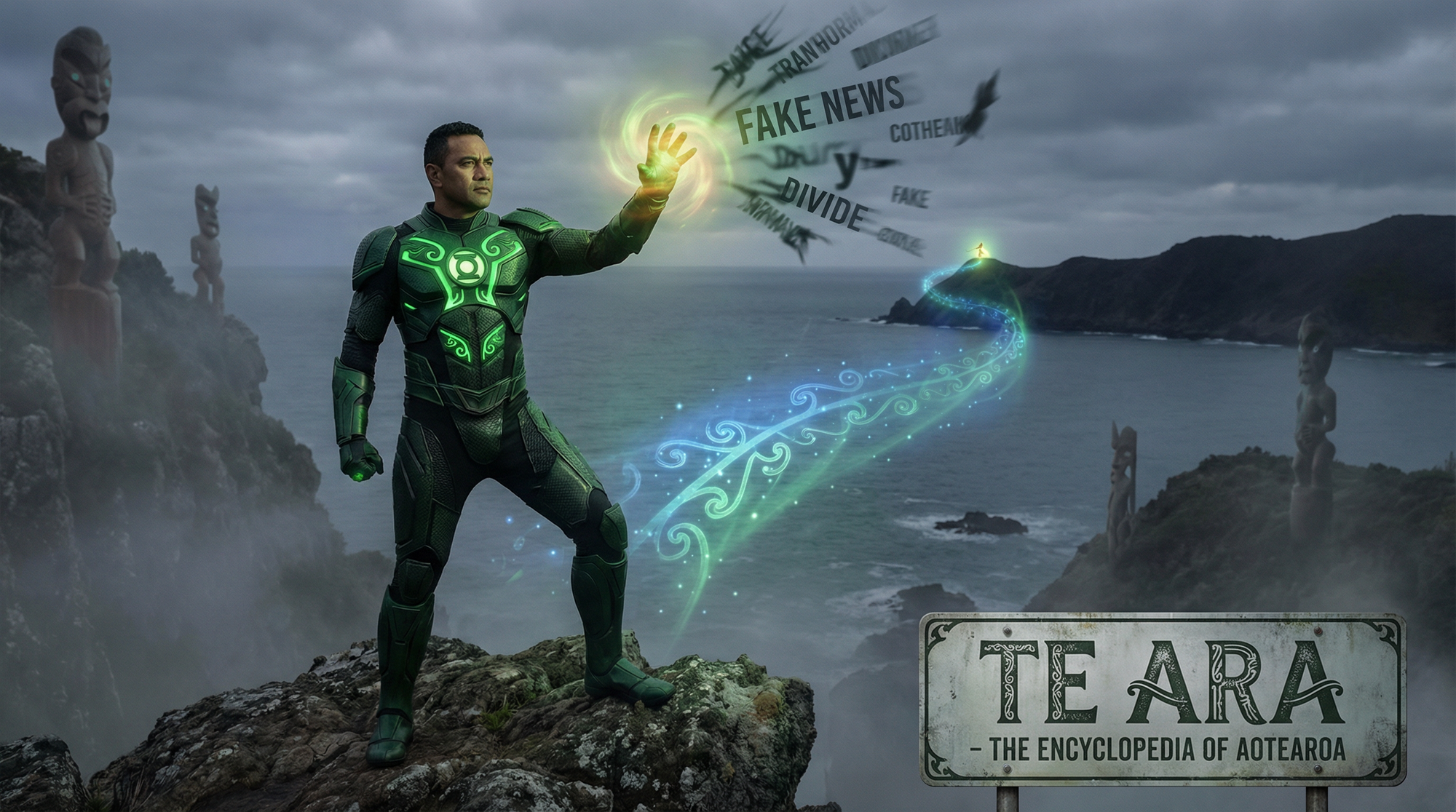
The Māori Green Lantern Fighting Misinformation and Disinformation From The Far Right
John Tamihere channeled charitable donations into political campaigns. He built a leadership structure without internal democracy. When challenged, he responded not with humility but with punitive retaliation. He violated the tikanga he claims to represent.
But Tamihere is not acting in isolation. He is executing—consciously or not—a strategy of political fragmentation that serves the broader neoliberal project: dismantling co-governance, advancing deregulation, and consolidating power in executive hands.
Russell Vought is building a shadow state in Washington, drafting executive orders to reshape American governance. David Seymour is embedding libertarian governance principles into Aotearoa law through the Regulatory Standards Bill. The Atlas Network is coordinating libertarian think tanks across 100+ countries to shift “the climate of opinion in favour of market approaches”.
And Te Pāti Māori—the movement that promised to defend tino rangatiratanga and te Tiriti—is fractured, discredited, and unable to mount coherent resistance.
This is not accident. This is strategy.
The path forward requires:
- Restoring kaupapa over power—rebuilding Te Pāti Māori on principles of whanaungatanga, kotahitanga, and aroha, or accepting that it has failed and investing energy in independent Māori institutions.
- Resisting neoliberal capture by refusing parliamentary representation as the primary strategy. Power lies in organized communities, collective resource control, and institutional independence—not in the number of seats in a compromised parliament.
- Building international solidarity with indigenous movements resisting libertarian policy capture, mining expansion, and environmental destruction across Oceania and the Pacific.
- Speaking truth to power with specificity, evidence, and unflinching moral clarity. Naming Tamihere. Naming Seymour. Naming Vought. Tracing the money. Exposing the networks.
Te Tiriti promised partnership. Instead, the Crown has coordinated a neoliberal assault on Māori institutions, health, education, and sovereignty.
Ngā Māori must respond with equal coordination, clarity, and commitment to tino rangatiratanga.
Kia kaha tātou.
REFERENCES
ProPublica, “What You Should Know About Russ Vought, Trump’s ‘Shadow President’” (2025). https://www.propublica.org/article/about-russell-vought-trump-shadow-president
Wikipedia, “Russell Vought.” https://en.wikipedia.org/wiki/Russell_Vought
BBC News, “Project 2025: The right-wing wish list for Trump’s second term” (2025). https://www.bbc.com/news/articles/c977njnvq2do
1News, “White House begin mass firings of federal workers in Govt shutdown” (2025). https://www.1news.co.nz/2025/10/11/white-house-begin-mass-firings-of-federal-workers-in-govt-shutdown/
ProPublica, “What You Should Know About Russ Vought, Trump’s ‘Shadow President’” (2025).
The Conversation, “Shrugging-Off The Atlas Network” by Chris Trotter (2024).

PSA, “Understanding Atlas: how a right-wing network is building global influence” (2024). https://www.psa.org.nz/journals/understanding-atlas-how-a-right-wing-network-is-building-global-influence
Ibid.
Community Research, “A Major Leftwing Think Tank In Aotearoa” [PDF]. /content/files/wp-content/uploads/formidable/a-major-leftwing-think-tank-in-aotearoa-pdf.pdf
RNZ, “The Regulatory Standards Bill: What is it, what does it propose and what’s next?” (2025). https://www.rnz.co.nz/news/political/563636/the-regulatory-standards-bill-what-is-it-what-does-it-propose-and-what-s-next
Melanie Nelson Substack, “New Zealand’s Epstein Files: The Foreign Influence Behind the Regulatory Standards Bill” (2025).

RNZ, “The Regulatory Standards Bill: What is it, what does it propose and what’s next?” (2025).
Ibid.
Wikipedia, “Rogernomics.” https://en.wikipedia.org/wiki/Rogernomics
NZ Herald Listener, “The 1984 Revolution part II: Crash and burn” by Aaron Smale (2024). https://www.nzherald.co.nz/the-listener/politics/the-1984-revolution-part-ii-crash-and-burn/OHK6BLKBIWS3DPN7V4/
RNZ, “Parliament urgently debates Reserve Bank dual mandate repeal” (2023). https://www.rnz.co.nz/news/political/504573/parliament-urgently-debates-reserve-bank-dual-mandate-repeal
Wikipedia, “Sixth National Government of New Zealand.” https://en.wikipedia.org/wiki/Sixth_National_Government_of_New_Zealand
RNZ, “Explosive email accuses Te Pāti Māori MP of $133k overspend” (2025). https://www.rnz.co.nz/news/political/575869/explosive-email-accuses-te-pati-maori-mp-of-133k-overspend
NZ Herald, “Te Pāti Māori’s Mariameno Kapa-Kingi allegedly warned of $133k office overspend” (2025). https://www.nzherald.co.nz/nz/politics/te-pati-maoris-mariameno-kapa-kingi-allegedly-warned-of-133k-office-overspend-urged-to-take-action-so-staff-paid-party-emails-claims-about-mp-and-her-high-profile-son-to-members/MO7W4PIYHBHKLLAKSWRHBABE5U/
Ibid.
1News, “’Dictatorship model’ - Te Pāti Māori slammed by hīkoi leader” (2025). https://www.1news.co.nz/2025/10/02/dictatorship-model-te-pati-maori-slammed-by-hikoi-leader/
The Integrity Institute, “Te Pāti Māori’s integrity crisis and civil war” (2025).
NZ Herald, “Investigation into Waipareira political donations referred to Charities Registration Board” (2024). https://www.nzherald.co.nz/business/investigation-into-waipareira-political-donations-referred-to-charities-registration-board/DIQYISJ46VHTLHKGZTVLBVIOPA/
University of Auckland, “Charities no place for politics” (2025). https://www.auckland.ac.nz/en/news/2025/01/23/charities-no-place-for-politics.html
NZ Herald, “Waipareira’s controversial campaign loan repaid while executive salaries skyrocket” (2024). https://www.nzherald.co.nz/business/waipareiras-controversial-campaign-loan-repaid-while-executive-salaries-skyrocket/EYVHUCDXLRGJBKODYEVFLPZCOU/
NZ Herald, “New Zealand’s highest paid charity executives revealed” (2024). https://www.nzherald.co.nz/business/new-zealands-highest-paid-charity-executives-revealed/SJXYXYWWCJB7HB3PFGGW4YZ2ZM/
The Integrity Institute, “Waipareira Trust” by Bryce Edwards (2025).
https://theintegrityinstitute.substack.com/p/waipareira-trust
The Spinoff, “Far from kotahitanga: the unravelling of Te Pāti Māori” (2025). https://thespinoff.co.nz/politics/15-10-2025/far-from-kotahitanga-the-unravelling-of-te-pati-maori
RNZ, “Law change prompts spike in Māori electoral roll registrations” (2025). https://www.rnz.co.nz/news/political/566592/law-change-prompts-spike-in-maori-electoral-roll-registrations
The Integrity Institute, “Integrity Briefing: Te Pāti Māori’s ongoing financial challenges” (2025).
https://theintegrityinstitute.substack.com/p/integrity-briefing-te-pati-maoris/
Ibid.
Ibid.
Te Ao Māori News, “Analysis: Te Pāti Māori turmoil exposes a deeper hurt for Māori” (2025). https://www.teaonews.co.nz/2025/10/14/analysis-te-pati-maori-turmoil-exposes-a-deeper-hurt-for-maori/
1News, “Te Pāti Māori: What the heck is going on?” (2025). https://www.1news.co.nz/2025/10/28/te-pati-maori-what-the-heck-is-going-on/
RNZ, “’Greed, avarice, and entitlement’ - Te Pāti Māori president urges MPs to quit” (2025). https://www.rnz.co.nz/news/te-manu-korihi/577653/greed-avarice-and-entitlement-te-pati-maori-president-urges-mps-to-quit
Te Ao Māori News, “Analysis: Te Pāti Māori turmoil exposes a deeper hurt for Māori” (2025).
The Spinoff, “Far from kotahitanga: the unravelling of Te Pāti Māori” (2025).
Wikipedia, “Sixth National Government of New Zealand.”
RNZ, “Christopher Luxon announces foreign investment agency in State of Nation address” (2025). https://www.rnz.co.nz/news/political/539737/christopher-luxon-announces-foreign-investment-agency-in-state-of-nation-address
Melanie Nelson Substack, “Decoding Seymour’s presentation on the Libertarian Regulatory Standards Bill” (2025).
Wikipedia, “Sixth National Government of New Zealand.”
Breaking Defense, “US Heritage Foundation offers Pacific Islands’ blueprint for Trump” (2025). https://breakingdefense.com/2024/10/us-heritage-foundation-offers-pacific-islands-blueprint-for-trump/
PSA, “Understanding Atlas: how a right-wing network is building global influence” (2024).
1News, “Release: Māori and Pacific people hit hardest by lack of jobs” (2025). https://www.1news.co.nz/2025/02/04/release-maori-and-pacific-people-hit-hardest-by-lack-of-jobs/
Ibid.
Waatea News, “Maori unemployment in Auckland on the rise” (2025). https://waateanews.com/2025/08/17/maori-unemployment-in-aotearoa-on-the-rise/
Figure.NZ, “Unemployment rate of Māori adults in New Zealand” (2025). https://figure.nz/chart/6vLuAHWwQRkMreTi-QJdZnUw4Rr1tKNeW
NZ Herald Kahu, “Blues lend support to free health checks at home games as poor Māori health stats remain below Pākehā” (2024). https://www.nzherald.co.nz/kahu/blues-lend-support-to-free-health-checks-at-home-games-as-poor-maori-health-stats-remain-below-pakeha-new-research/HUFVMV7RZBBDXFARGFADVKT73U/
RNZ Learning and Development, “Govt ends pilot programme for Māori and Pacific, sparking outrage” (2024). https://www.rnz.co.nz/news/ldr/537272/govt-ends-pilot-programme-for-maori-and-pacific-sparking-outrage
1News, “Bill to disestablish Māori Health Authority to be introduced today” (2024). https://www.1news.co.nz/2024/02/27/bill-to-disestablish-maori-health-authority-to-be-introduced-today/
1News, “Māori leaders give disappointed reaction to ‘yeah-nah’ Budget” (2025). https://www.1news.co.nz/2025/05/23/maori-leaders-give-disappointed-reaction-to-yeah-nah-budget/
Ngā Pae o te Māramatanga, “Te Arotahi” [PDF]. /content/files/media/7339/download.pdf
1News, “Jobseeker changes: ‘Punished for economic crisis they didn’t create’” (2025). https://www.1news.co.nz/2025/10/06/jobseeker-changes-punished-for-economic-crisis-they-didnt-create/
RNZ, “Government benefit changes could leave more rangatahi homeless – advocate warns” (2025). https://www.rnz.co.nz/news/te-manu-korihi/575211/government-benefit-changes-could-leave-more-rangatahi-homeless-advocate-warns
Ibid.
The Spinoff, “Far from kotahitanga: the unravelling of Te Pāti Māori” (2025).
Ibid.
Te Ao Māori News, “Analysis: Te Pāti Māori turmoil exposes a deeper hurt for Māori” (2025).
MBIE, “Overview of Māori employment outcomes in Aotearoa New Zealand” (2024). https://www.mbie.govt.nz/business-and-employment/employment-and-skills/employment-strategy/maori-employment-action-plan/annexes/overview-of-maori-employment-outcomes-in-aotearoa-new-zealand
Melanie Nelson Substack, “Decoding Seymour’s presentation on the Libertarian Regulatory Standards Bill” (2025).
Breaking Defense, “US Heritage Foundation offers Pacific Islands’ blueprint for Trump” (2025).
The Spinoff, “Far from kotahitanga: the unravelling of Te Pāti Māori” (2025).
ProPublica, “What You Should Know About Russ Vought, Trump’s ‘Shadow President’” (2025).
RNZ, “The Regulatory Standards Bill: What is it, what does it propose and what’s next?” (2025).
PSA, “Understanding Atlas: how a right-wing network is building global influence” (2024).
HUMBLE KOHA REQUEST
If this mahi resonates and you have the capacity to support independent kaupapa Māori analysis and resistance research, humble koha is welcome and deeply appreciated:
HTDM: 03-1546-0415173-000
All koha goes directly toward investigative work, te reo resources, and whānau support.
Kia ora nui atu.
—Ivor Jones, The Māori Green Lantern
Kaitiaki, Te Arawa / Ngāti Pikiao