"How Labour and the Greens Turned Te Tiriti into a Backdrop" - 3 February 2026
Waitangi’s Polite Betrayal
Kia ora ano Aotearoa,
Thank you for trusting me to tell you the truth.
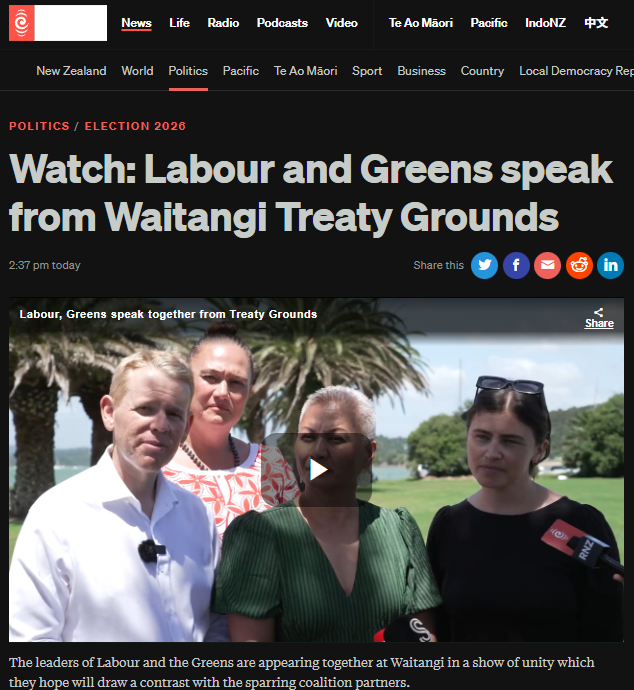
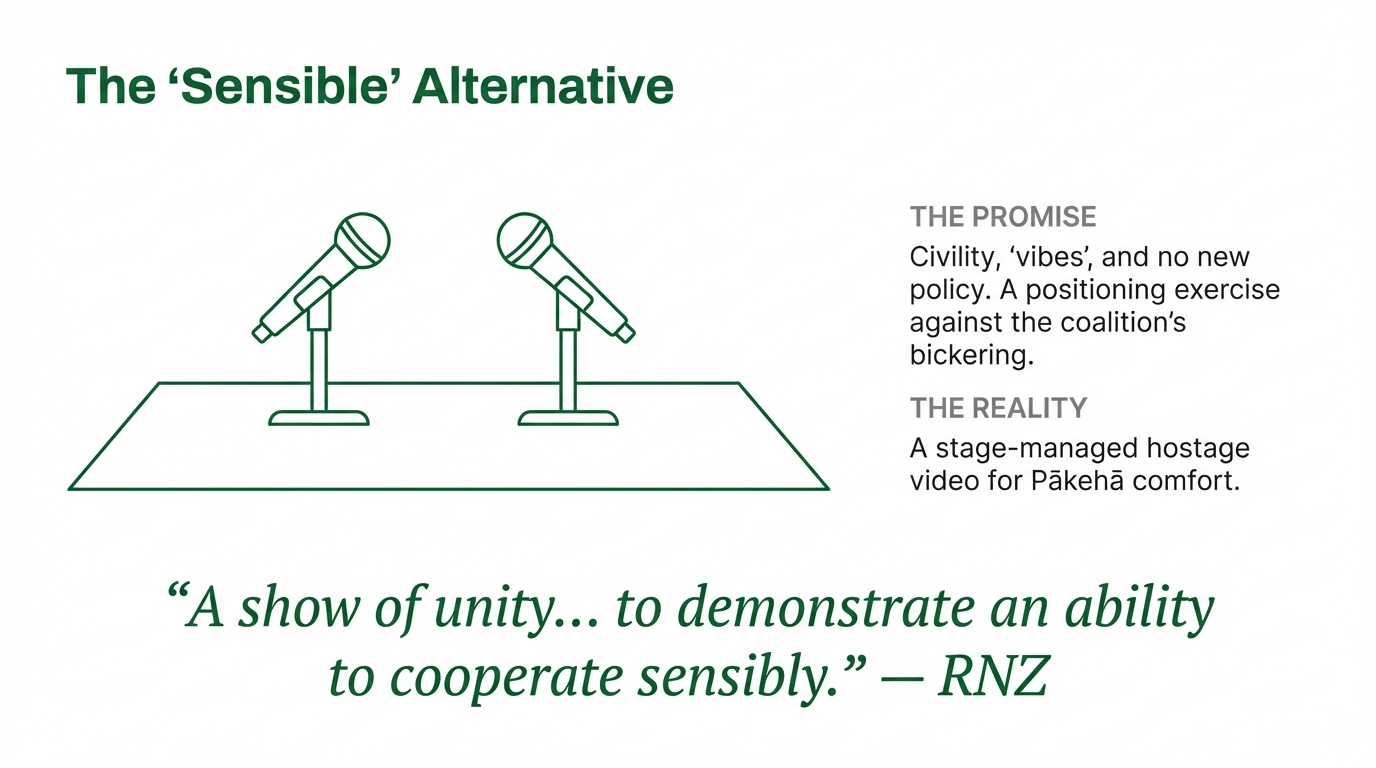
Hipkins and the Greens turned up at the birthplace of Te Tiriti dressed like peacekeepers, but every move they made screamed something closer to a carefully stage‑managed hostage video for Pākehā comfort. As RNZ reports, their “show of unity” was designed to contrast with the coalition’s bickering, not to centre mana whenua, Te Tiriti, or the kaupapa of the people most under attack.
The photo‑op on a burning marae
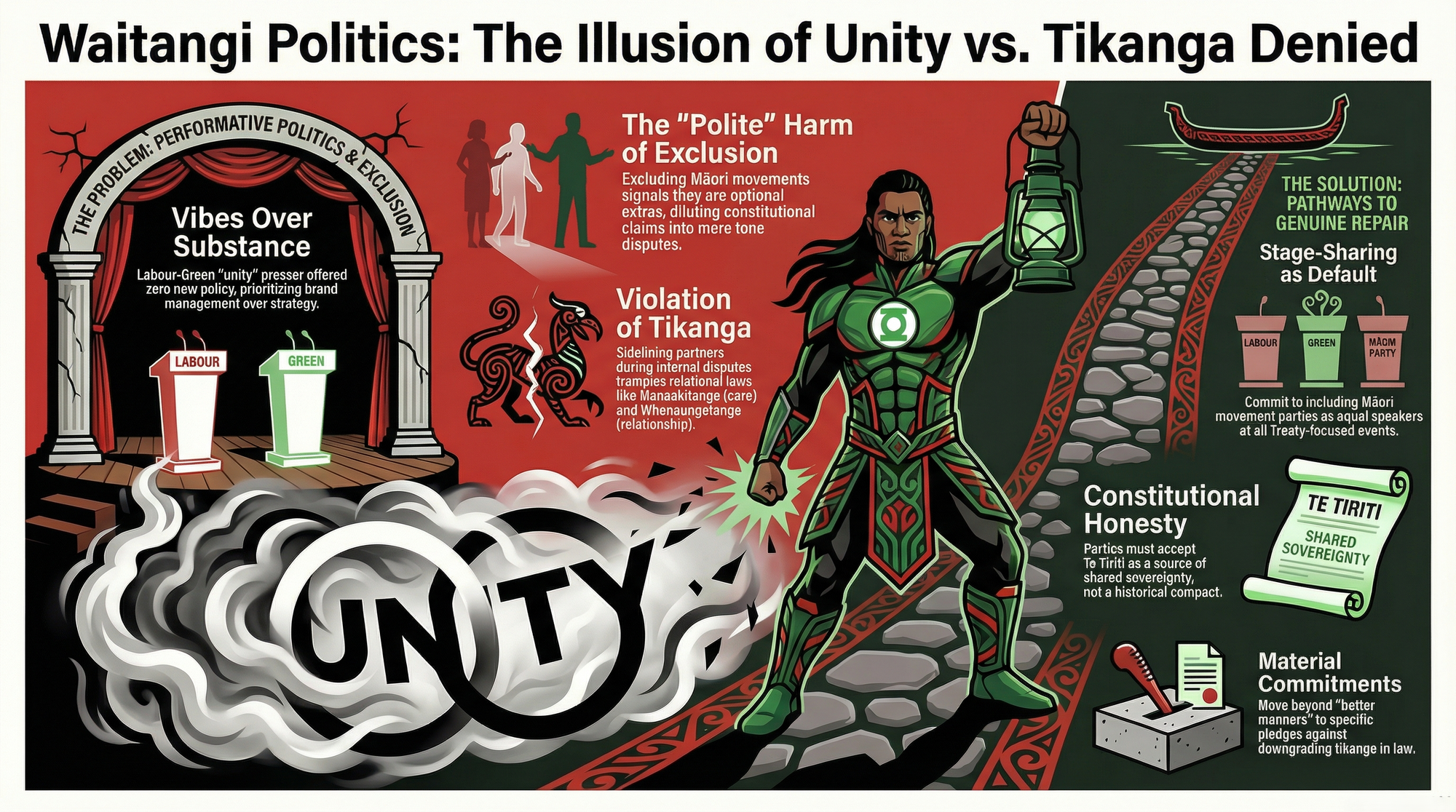
Neither Labour nor the Greens came to the mic with new policy; they came with vibes, talking up their “ability to cooperate sensibly in any future government” while explicitly promising no new commitments at all.
RNZ notes that “neither opposition party is expected to unveil any new policy,” which means this was not a strategy hui, it was brand management.
Hipkins framed the event as a “really clear message” that political parties can “work constructively with people, still have disagreements, without getting into abuse.”
RNZ In metaphorical terms:
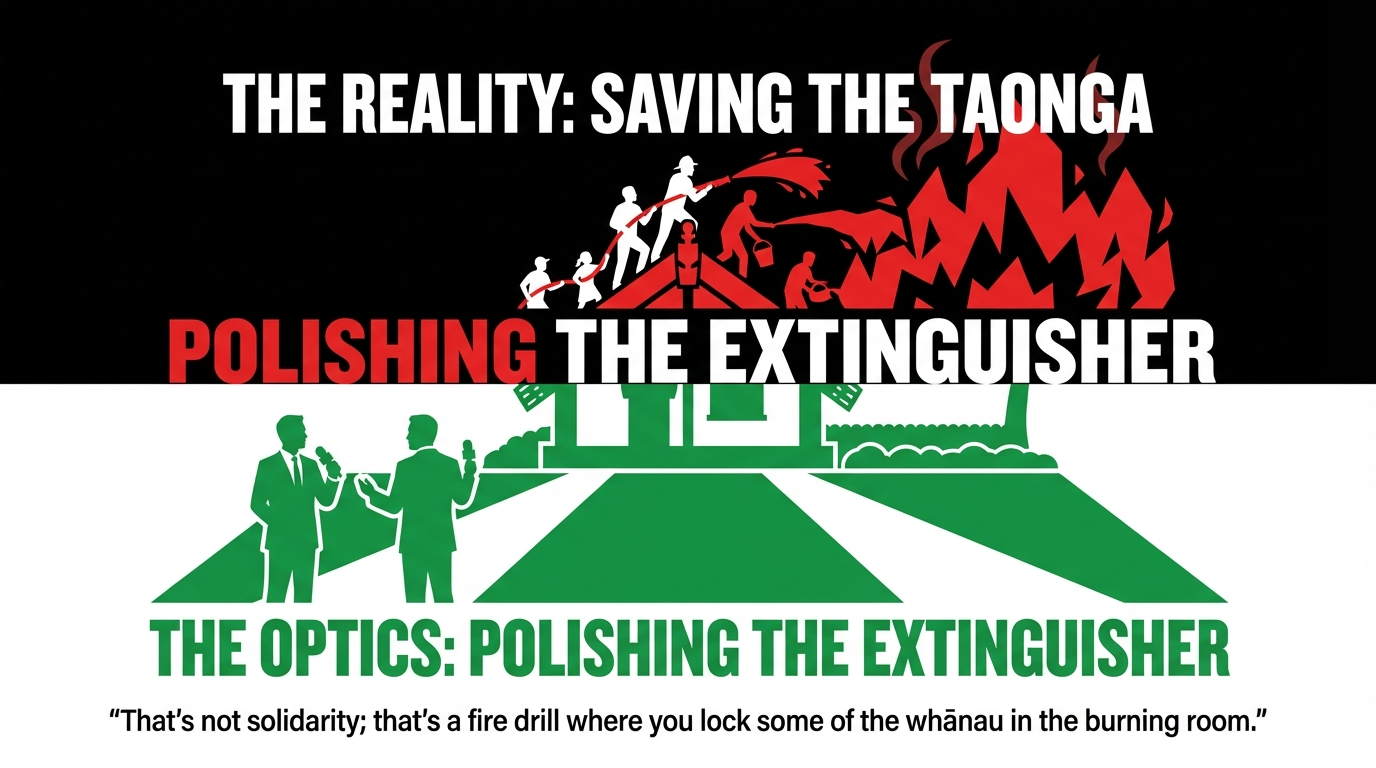
the whare is on fire, Māori are on the roof trying to save the taonga inside, and Labour–Greens are out front holding a press conference about how calmly they’re discussing which extinguisher would look best on camera.
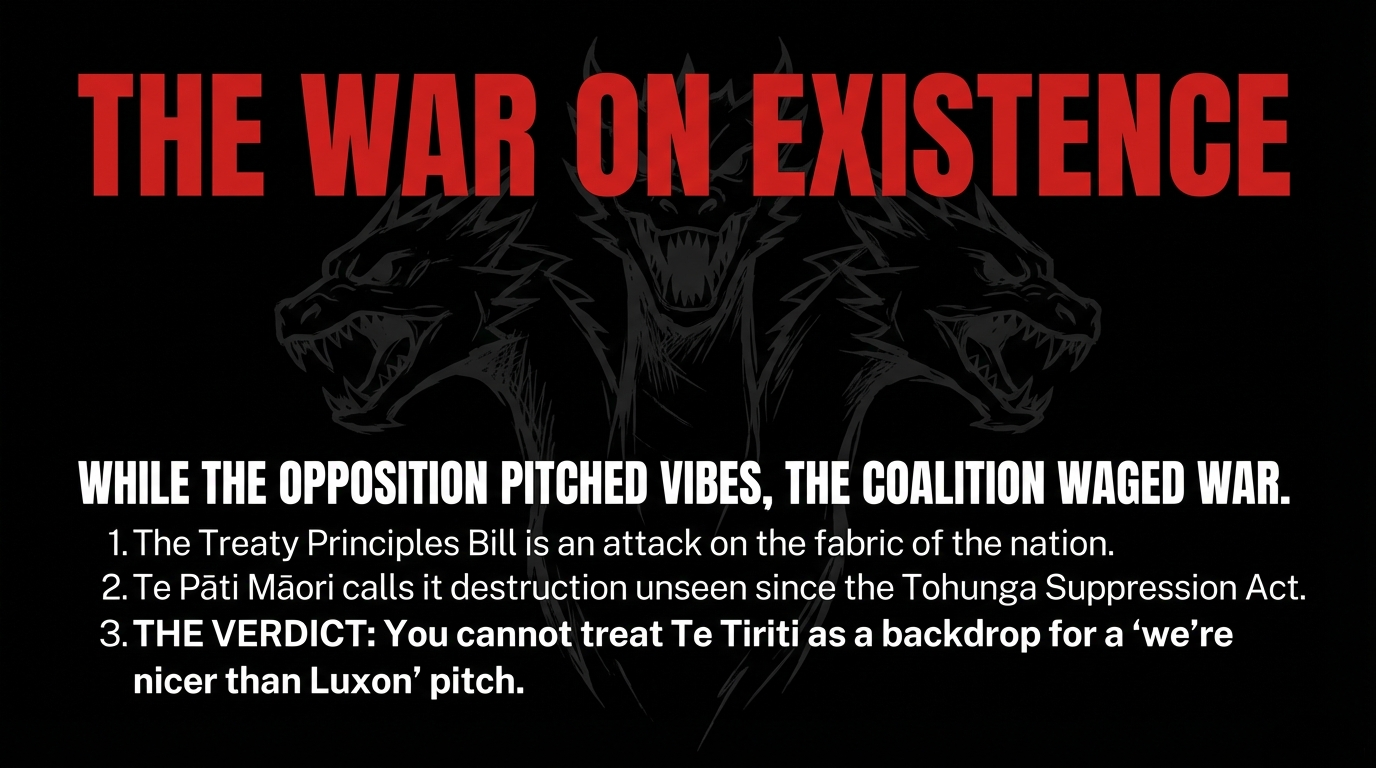
Meanwhile, at the same Treaty grounds, haukāinga and movements like Te Pāti Māori and Kīngitanga have been explicit that this Government is “waging war on our existence as Māori,” as Te Pāti Māori co‑leader Rawiri Waititi put it in a joint Opposition statement against the Treaty Principles Bill. Green Party When you stand in that same space and treat Te Tiriti as a backdrop for your “we’re nicer than Luxon and Seymour” pitch, you turn a marae ātea into a studio set.
Example
On one side, Te Pāti Māori launches the Hīkoi for Te Tiriti and calls the bill an attack “on the fabric of this nation.” Green Party On the other, Labour and Greens offer a joint presser with zero new commitments, marketing themselves as the polite alternative to a coalition that is still advancing that very attack. RNZ
The Treaty Principles Bill: friendly fire by omission
Hipkins did at least name the Treaty Principles Bill as a line he wouldn’t cross, stressing that Labour and the Greens refuse to advance “any policy like the Treaty Principles Bill.” RNZ In Parliament, he has already described that bill as failing to uphold Te Tiriti and pledged to work with Te Pāti Māori and the Greens to defeat it. Labour Together, the three Opposition parties have called it a “divisive” attempt to rewrite the Treaty and urged people to join the Hīkoi for Te Tiriti. Green Party
But here’s the metaphorical gut‑punch: standing at Waitangi with Te Pāti Māori deliberately absent from their stage, Labour and Greens tried to sell themselves as the guardians of Te Tiriti while sidelining the very movement that has taken the biggest hits to defend it. RNZ That’s not solidarity; that’s a fire drill where you lock some of the whānau in the burning room and tell the media it’s under control.
Te Pāti Māori isn’t theorising the harm. When they led a haka protest in the House against the Treaty Principles Bill, they were referred to the Privileges Committee, and their written submission explicitly framed haka as a taonga guaranteed under Article Two, and the Bill as an “attack on Māori … not been seen since the Tohunga Suppression Act.” RNZ When Labour and Greens then build their “unity” pitch by excluding Te Pāti Māori from the Waitangi stage, they are effectively telling Pākehā audiences:
you can have Te Tiriti, but without the inconvenient Māori who insist on using it.
Example
In 2024 at Waitangi, Te Pāti Māori described the coalition as a “three‑headed taniwha” inflicting open destruction and called on Māori to express “righteous anger” with compassion. 1News A year later, the coalition doubles down through the Treaty Principles Bill, and the Opposition’s big counter‑move is… a press conference promising civility and no new policy. RNZ
Te Pāti Māori as the convenient scapegoat
The most revealing line was Hipkins’ justification for excluding Te Pāti Māori:
“They’re in court… That’s really where their focus should be.” RNZ
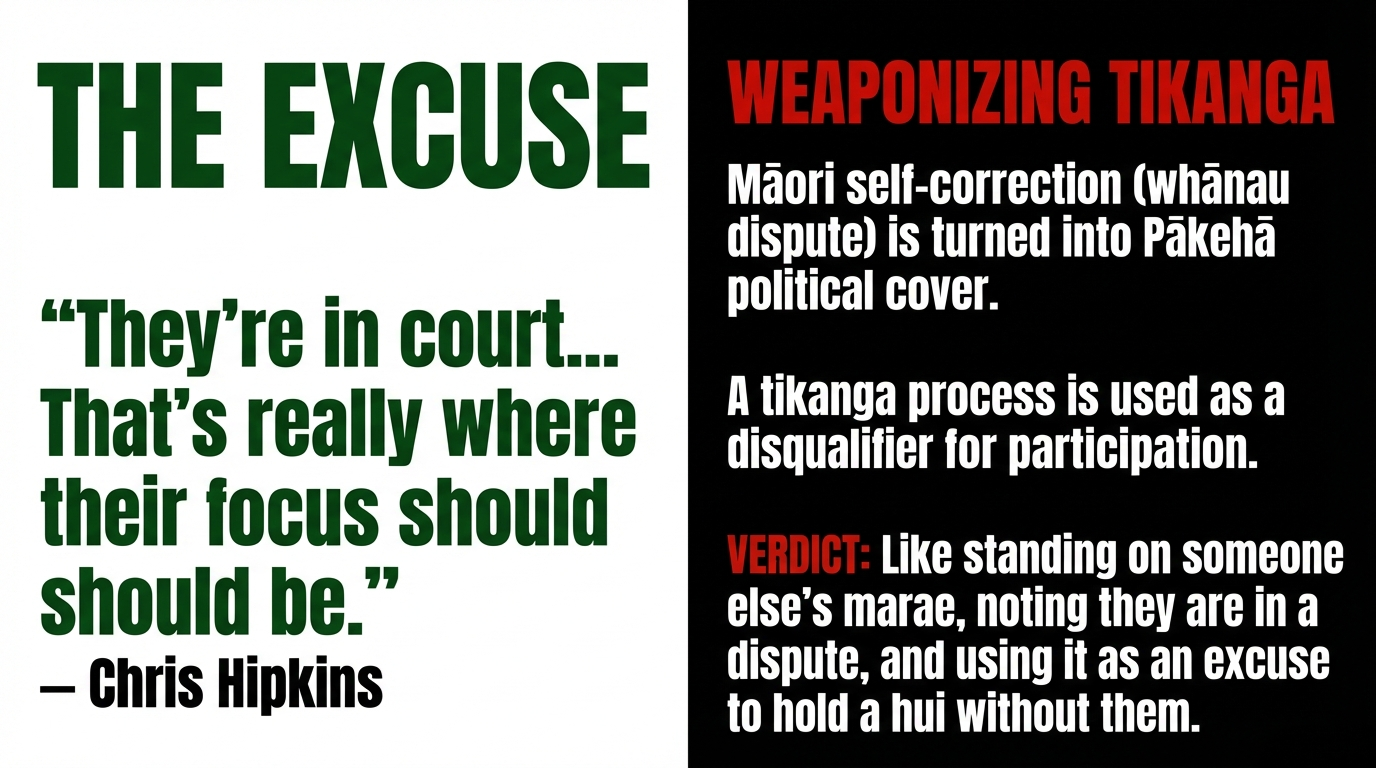
In tikanga terms, that’s like standing on someone else’s marae, acknowledging that they are in the middle of a whānau dispute, and using that as your excuse to hold a hui about their future without them.
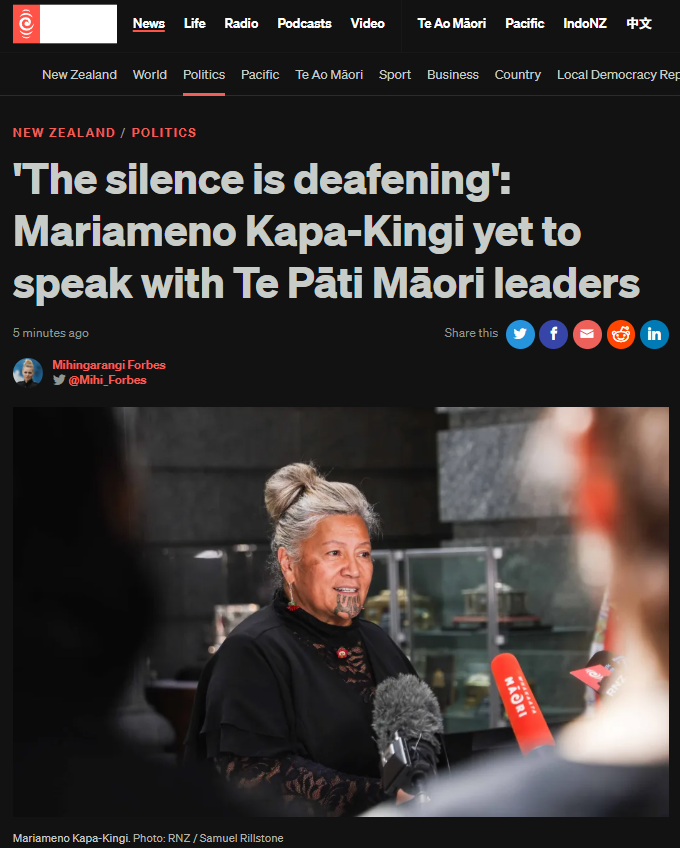
Te Pāti Māori has been open about internal turmoil. The party recently expelled MPs Mariameno Kapa‑Kingi and Tākuta Ferris after what co‑leader Debbie Ngarewa‑Packer described as a six‑week process for constitutional breaches, acknowledging the pain and lack of reconciliation. 1News Both MPs called the decision unconstitutional and contrary to tikanga, signalling they will challenge it. 1News Ngāpuhi leadership has publicly criticised Te Pāti Māori over the fallout, describing the iwi as “insulted” by the party’s refusal to attend a hui about the expulsion. 1News
All of that is real, messy, and painful. But when Hipkins weaponises that process to justify freezing Te Pāti Māori out of a Waitangi platform, he turns Māori self‑correction into Pākehā political cover. The colonial move is simple: Māori conflict becomes a convenient prop to sideline Māori power, while the Pākehā‑dominant parties talk calmly about unity and stability.
Example
When Te Pāti Māori refused to attend the Privileges Committee in person, they laid out in writing that the process failed tikanga and Te Tiriti and that haka is a constitutionally significant taonga. RNZ The response from Deputy Prime Minister Winston Peters was to dismiss their plan for an independent inquiry as a “political carnival.” RNZ Now Hipkins joins the same chorus of dismissal by implying they’re too busy being in trouble to share the stage at Waitangi. Different tone, same structural belittling.
Quantifying the harm: how much damage does “nice” do?
The coalition’s harm is easy to see:
a Treaty Principles Bill described by Māori leaders as a “war” on Māori existence and compared to the Tohunga Suppression Act. RNZ Green Party But the “polite” harm from Labour‑Greens at Waitangi is the quieter, more corrosive kind.
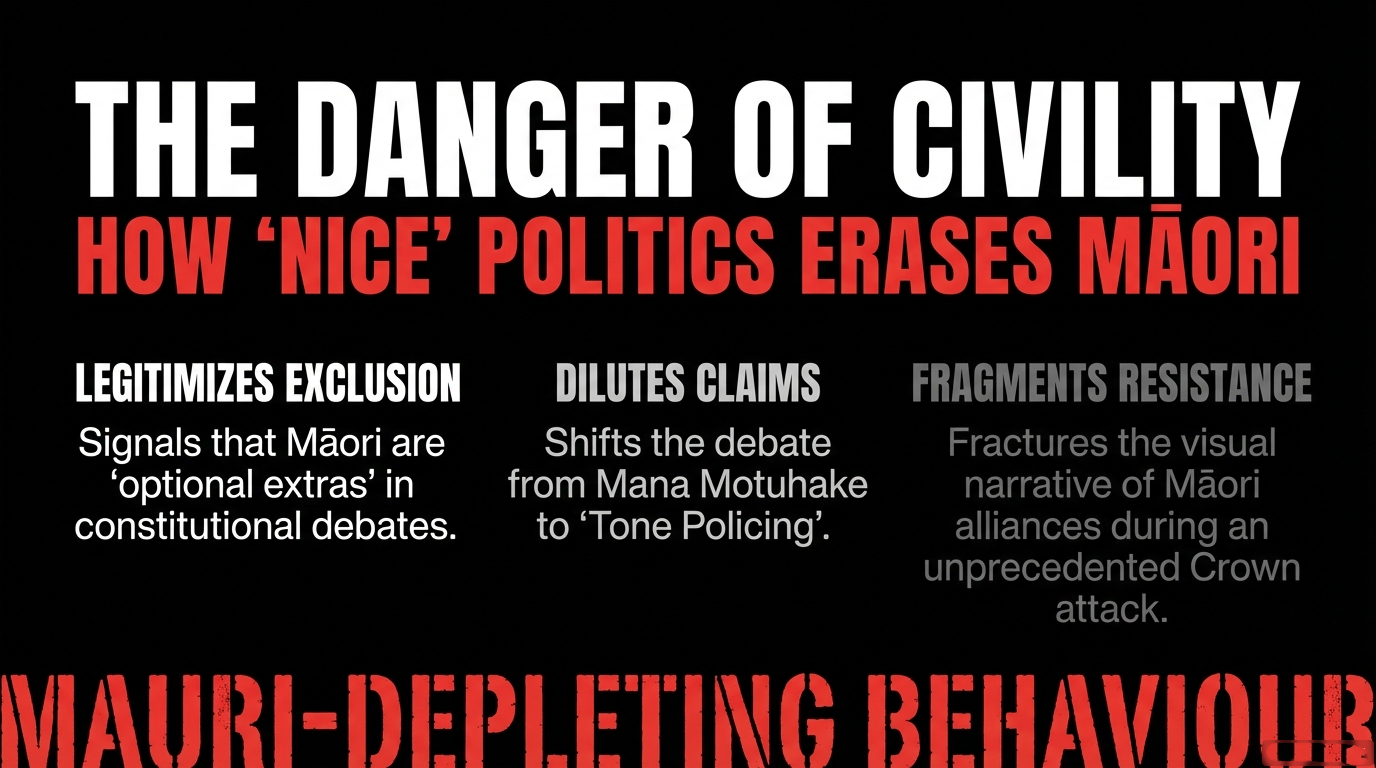
- Legitimising exclusion as normal politics
When Opposition leaders normalise a Treaty event where Māori movement parties are off‑stage, it signals to media and voters that Māori can be treated as optional extras in constitutional debates. That’s the same logic which leaves Parliament “lagging behind” the rest of government in embedding tikanga, as Te Pāti Māori’s submission on haka points out. RNZ - Diluting Māori constitutional claims into “tone” disputes
Hipkins’ main contrast with the coalition was not about Te Tiriti obligations or Māori sovereignty; it was about tone—saying the Foreign Minister accusing the Prime Minister of lying is an “indictment.” RNZ Meanwhile, Te Pāti Māori has made the debate about mana motuhake and the right to resist with haka on the parliamentary floor. RNZ When the public story shifts from “who is honouring Te Tiriti?” to “who is least shouty?”, Māori lose ground. - Fragmenting Māori alliances
Just months earlier, Labour, Greens and Te Pāti Māori stood together publicly against the Treaty Principles Bill and called on “all New Zealanders” to mobilise. Green Party Now, at Waitangi, Labour cuts Te Pāti Māori out of the visual narrative and scolds them about courts. RNZ Symbolically, that fractures Māori‑focused resistance right when the Crown’s behaviour is “unprecedented in modern times.” RNZ
In tikanga terms, this is mauri‑depleting behaviour:
it drains the life force of movements by treating Māori as risky optics rather than rangatira whose presence is indispensable to any Te Tiriti kōrero.
How this violates tikanga – explained for a Western mind
To a Western political mind, Labour and Greens are just managing “risk” and “message discipline.” To a tikanga lens, they are trampling relational obligations.
Tikanga is not a set of optional customs; it is the relational law of how we keep mana, tapu and mauri in balance. The Waitangi Tribunal and scholars of Te Tiriti have long pointed out that the Treaty relationship is supposed to be an ongoing, living arrangement grounded in these tikanga values rather than a one‑off historical contract. Te Ara MDPI – McKenzie & Jones
Here’s how the behaviour at Waitangi cuts across that:
- Manaakitanga vs instrumentalisation
Manaakitanga is about uplifting and hosting others with genuine care. When Opposition leaders stand on Treaty grounds and exclude Te Pāti Māori while publicly scolding them for being “in court,” they treat Māori as problems to be managed, not as partners whose mana must be upheld, even in conflict. RNZ - Whanaungatanga vs transactional alliances
Te Tiriti is often described by Māori thinkers as a covenant of relationship, not a commercial contract. Te Ara Yet at Waitangi, Labour and Greens emphasise their ability to form “future government” arrangements, turning the commemoration into an MMP audition while the Treaty Principles Bill threatens Māori constitutional status. RNZ That flips whakapapa‑based duty into coalition arithmetic. - Rangatiratanga vs paternalistic gatekeeping
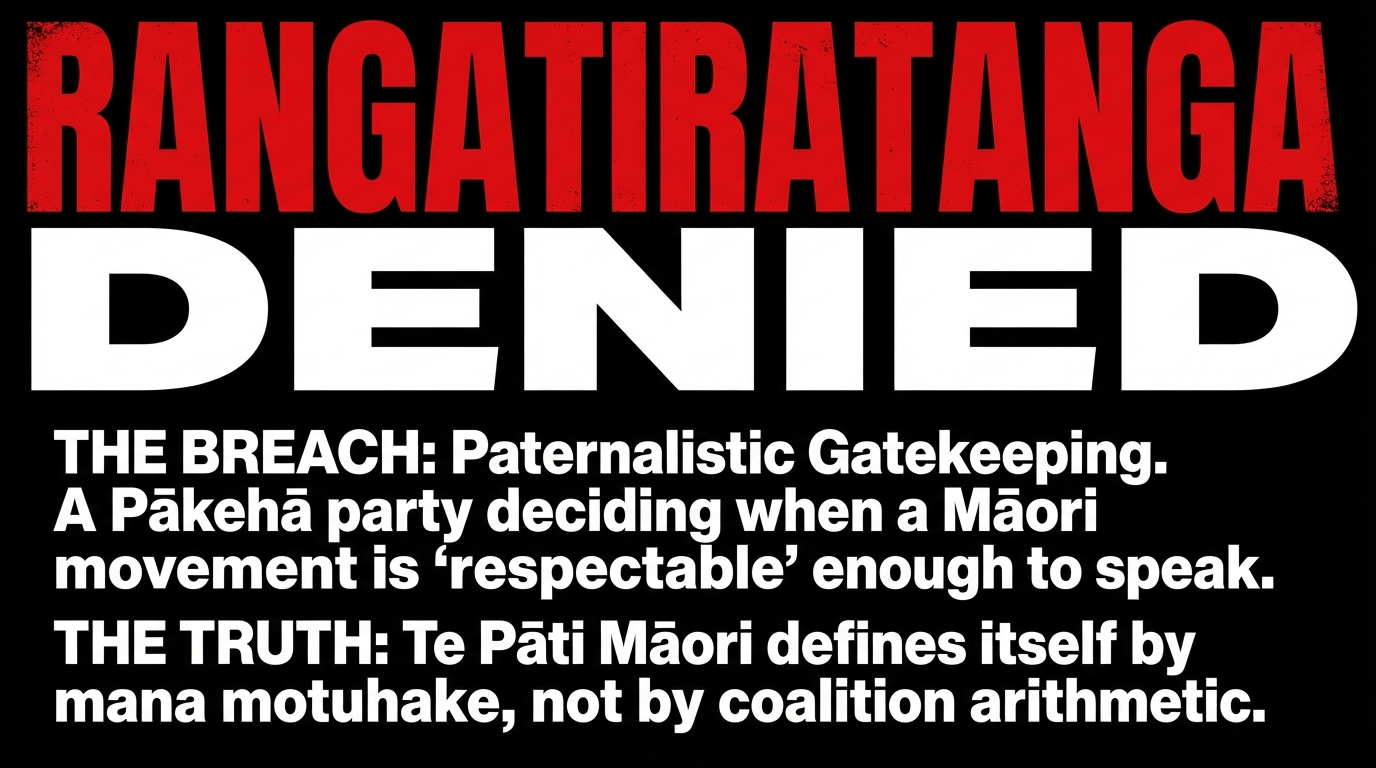
Te Pāti Māori defines itself as part of a mana motuhake movement, not just a party. 1News When Labour singles them out as needing to “sort [themselves] out” before being included, that is a Pākehā party claiming the right to decide when Māori self‑governance is respectable enough to be seen. RNZ That is the textbook colonial move Te Tiriti was supposed to prevent.
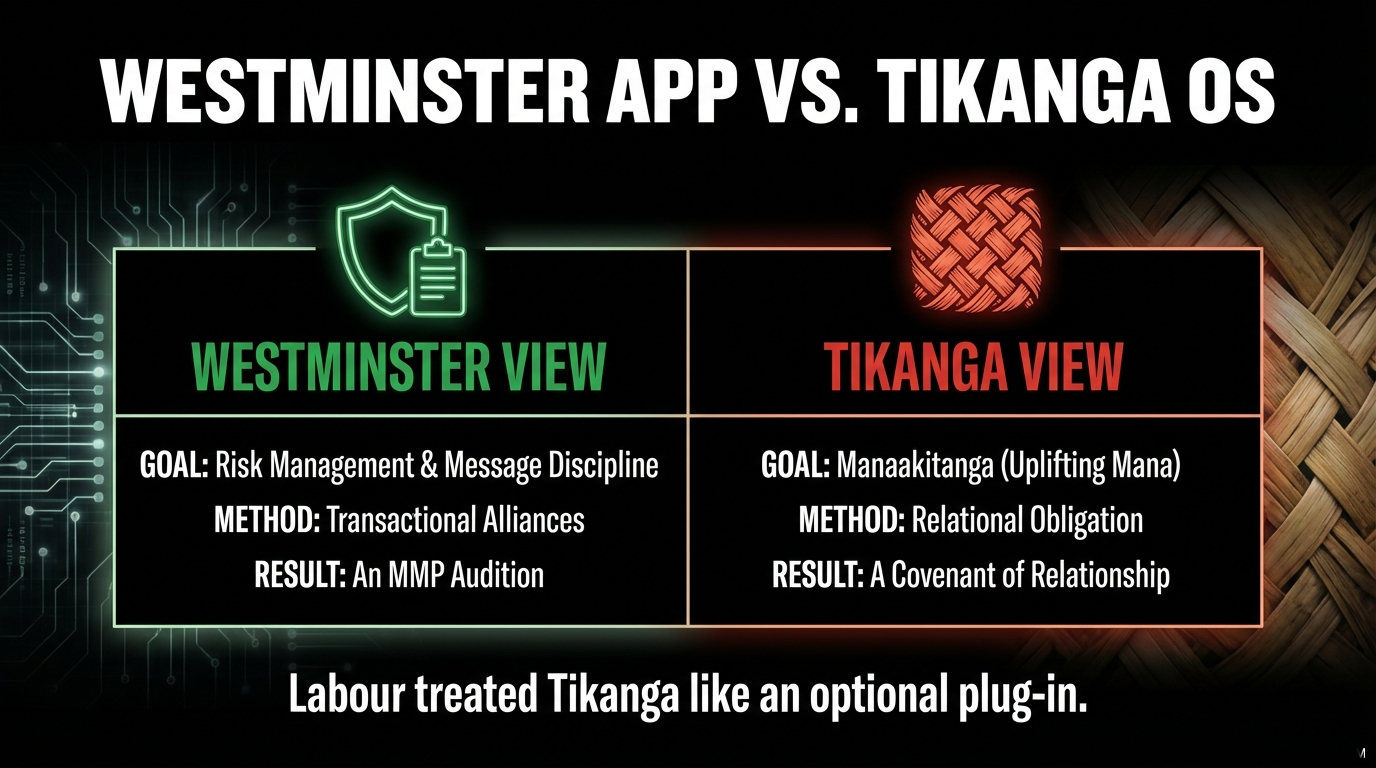
For a Western mind, think of tikanga as the operating system and Westminster politics as an app. What Labour and Greens did at Waitangi is behave as if their app is the whole machine, and tikanga is an optional plug‑in. But the Tribunal has repeatedly affirmed that Te Tiriti and tikanga have constitutional weight, not decorative status. RNZ Te Ara
Pathways to repair: what solutions look like in practice
If this is the mess, what does repair look like?
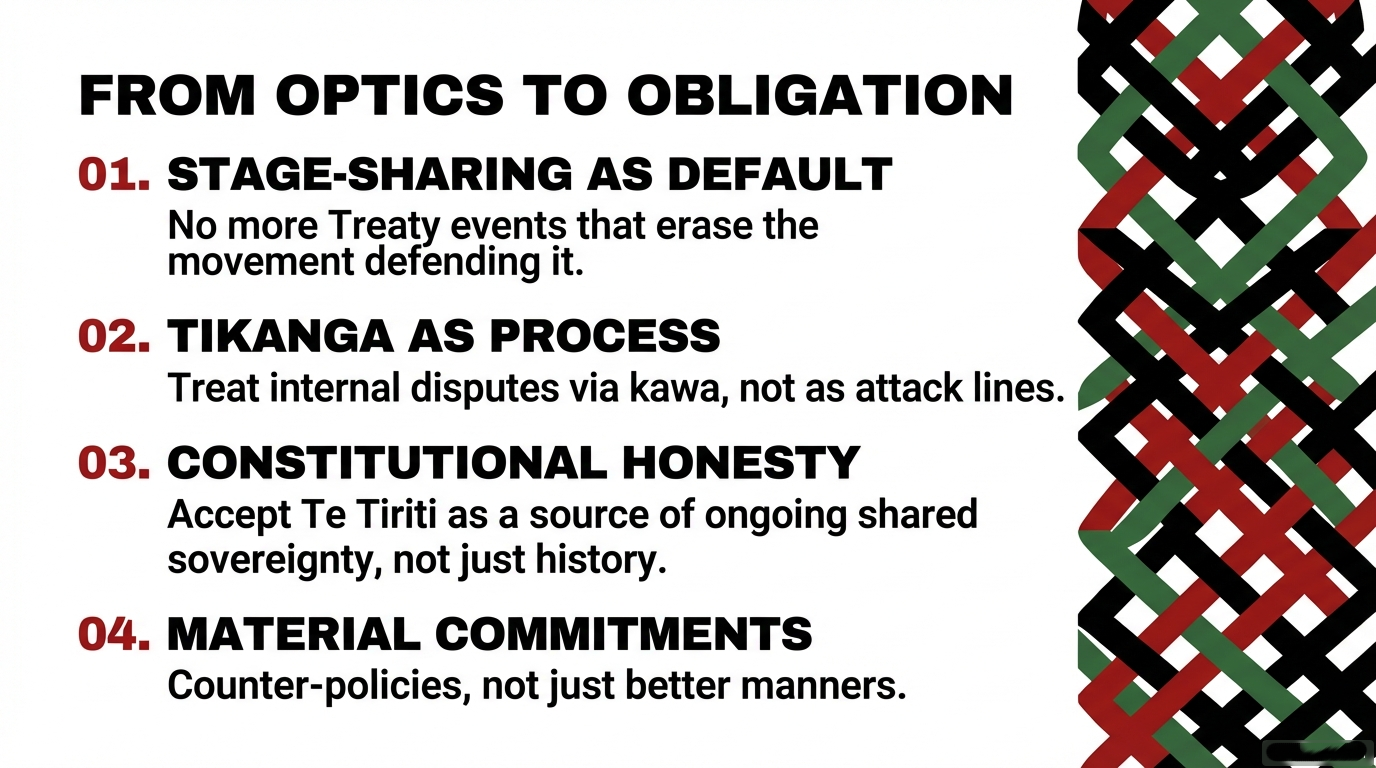
- Stage‑sharing as default, not reward
Opposition parties should adopt a baseline commitment that any Te Tiriti‑focused event at nationally significant sites will include Māori movement parties – including Te Pāti Māori – as equal speakers, unless those parties themselves decline. That means no more Waitangi pressers about Te Tiriti that visually erase the movement most actively defending it. RNZ Green Party - Tikanga‑based political process
Parliament already has a live debate about tikanga’s place in its own rules, thanks to Te Pāti Māori’s submission over haka in the debating chamber. RNZ Opposition parties could commit to embedding tikanga in their caucus procedures—e.g. treating Māori internal disputes as matters to be supported through kawa and facilitated hui, not used as attack lines or excuses for exclusion. - Constitutional honesty about Te Tiriti
Instead of using Te Tiriti only as a shield against the Treaty Principles Bill, Labour and Greens need to state clearly whether they accept Te Tiriti as a source of ongoing shared sovereignty, not just a historical compact. Academic work on “living” Treaty relationships and state governance makes it clear that treating Te Tiriti as a static “founding document” fundamentally misrepresents its relational nature. Cambridge MDPI - Material commitments, not just optics
A genuine Waitangi “unity” event would come with measurable pledges: for example, commitments to oppose not just the Treaty Principles Bill, but also any parallel attempts to downgrade tikanga in law, to cut Māori services disproportionally, or to sideline Māori oversight of Crown processes. The coalition’s patterns of “anything but honourable” behaviour on Māori issues at Waitangi 2025 were called out directly by haukāinga. 1News Opposition parties should respond with specific counter‑policies, not just better manners. - Public political education on tikanga
Finally, if Opposition parties are serious, they should help the wider public understand that protests like haka in Parliament or “righteous anger” at Waitangi are not rudeness; they are constitutionally anchored forms of resistance grounded in tikanga and Article Two protections. 1News RNZ
In other words:
stop treating Māori as a temper problem to be managed with better PR, and start treating Te Tiriti and tikanga as the constitutional backbone they are.
Koha consideration – specific to this kaupapa
Every koha for this kaupapa says out loud what Labour and Greens wouldn’t at Waitangi:
that Te Tiriti defence cannot wait for the next “sensible” government line‑up. It says our rangatiratanga includes the power to fund Māori truth‑telling that names the hypocrisy of photo‑ops on stolen ground, calls out both open attacks like the Treaty Principles Bill and polite exclusions like freezing Te Pāti Māori off the Waitangi stage, and insists that tikanga is constitutional law, not a branding option.
- If this essay helped you see the Waitangi pressers differently, consider a koha to keep this wero in the public square. Three pathways exist:
For those who wish to support this mahi directly with a koha (voluntary contribution), please visit the Koha platform:
Koha—Support – https://app.koha.kiwi/events/the-maori-green-lantern-fighting-misinformation-and-disinformation-ivor-jones - For those who wish to receive essays directly and support through subscription, join the Substack community:
Subscribe to the Māori Green Lantern on Substack – https://themaorigreenlantern.substack.com/subscribe - For those who prefer direct bank transfer, account details are: HTDM, account number 031546-0415173-000.
Ivor Jones The Māori Green Lantern Fighting Misinformation And Disinformation From The Far Right