"How New Zealand's Aviation Elite Orchestrated the Perfect Heist" - 4 September 2025
The Corporate Conspiracy
Kia ora whānau,
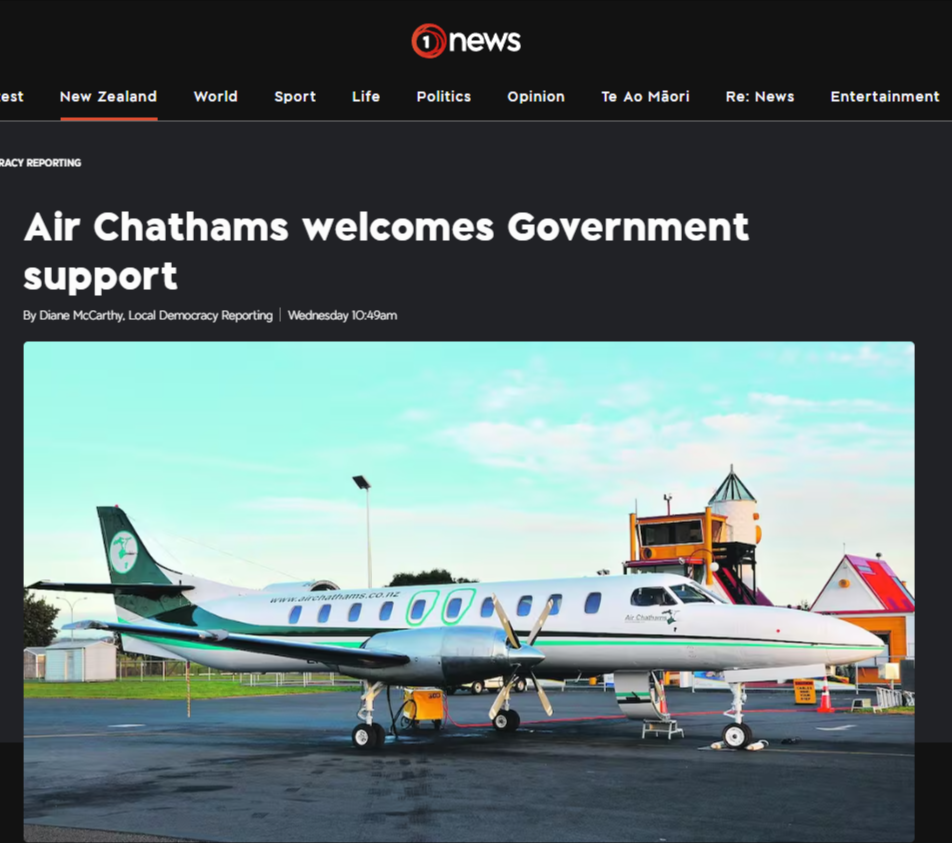
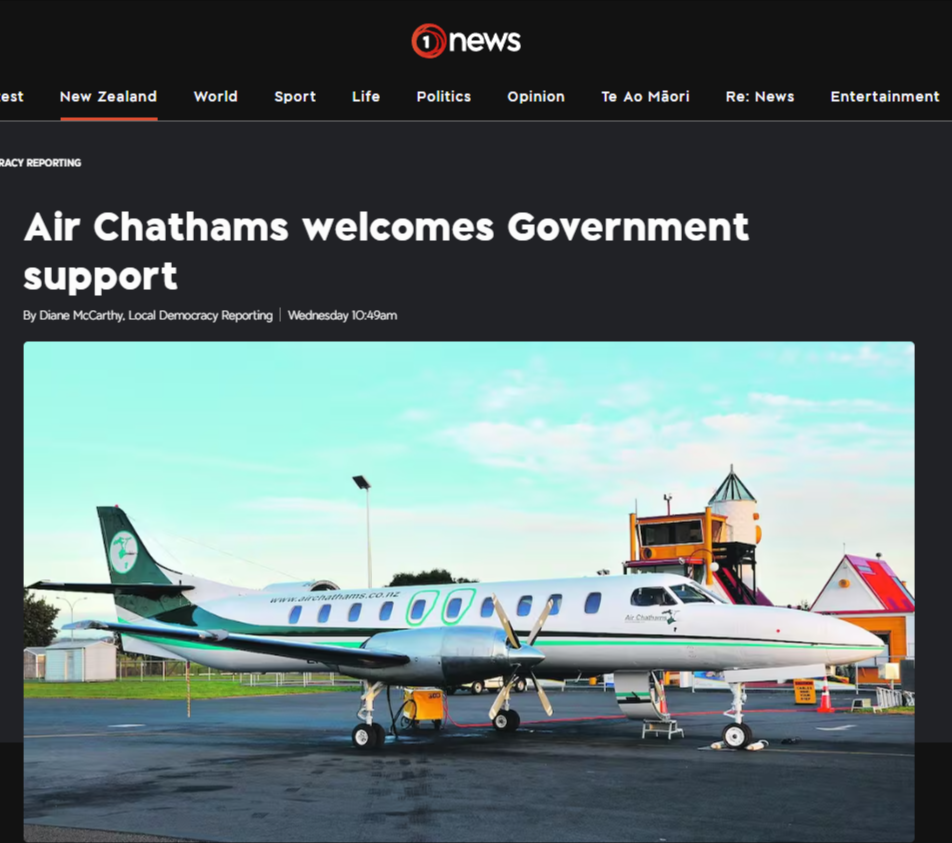
The documents before us reveal one of the most brazen examples of corporate welfare and regulatory capture in New Zealand's recent history. Under the guise of supporting "regional connectivity," powerful ministers have engineered a system that funnels taxpayer money to their preferred corporate cronies while systematically strangling the very regional airlines they claim to be helping. This is not incompetence—it is deliberate economic sabotage designed to benefit the connected few at the expense of rural New Zealand.
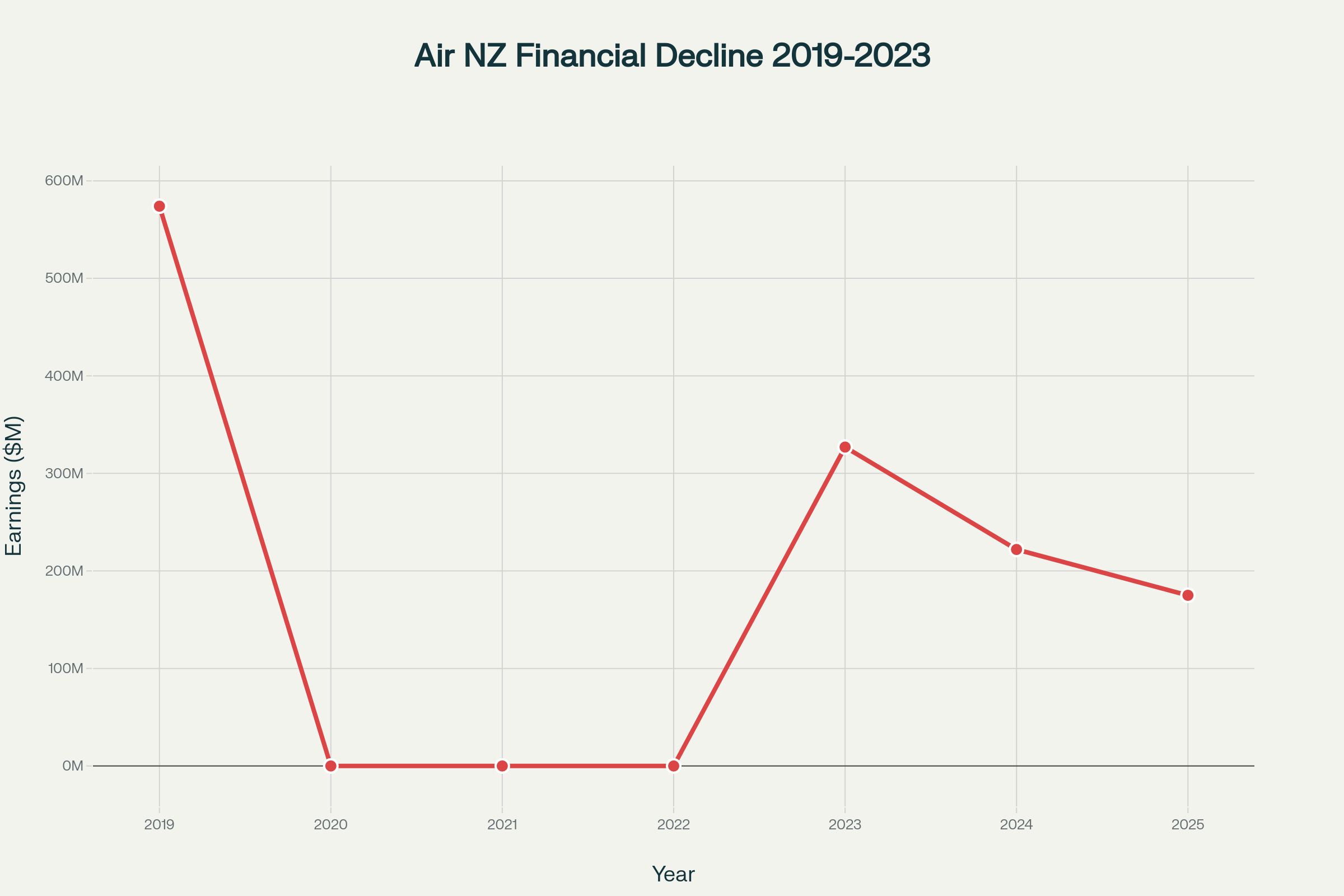
Air New Zealand's Plummeting Profits: From $574M to $175M (2019-2025)
The Rigged Game: Air New Zealand's Golden Parachute
Let's start with the most glaring example of this corruption. Air New Zealand, 51% owned by the New Zealand government, received a staggering $321 million in COVID-19 subsidies through the Maintaining International Air Connectivity (MIAC) scheme. Not a single cent of this corporate handout needs to be repaid. Meanwhile, when genuine regional airlines—the lifelines connecting rural communities to essential services—faced extinction, the same government offered a paltry $30 million in loans that must be repaid with interest.
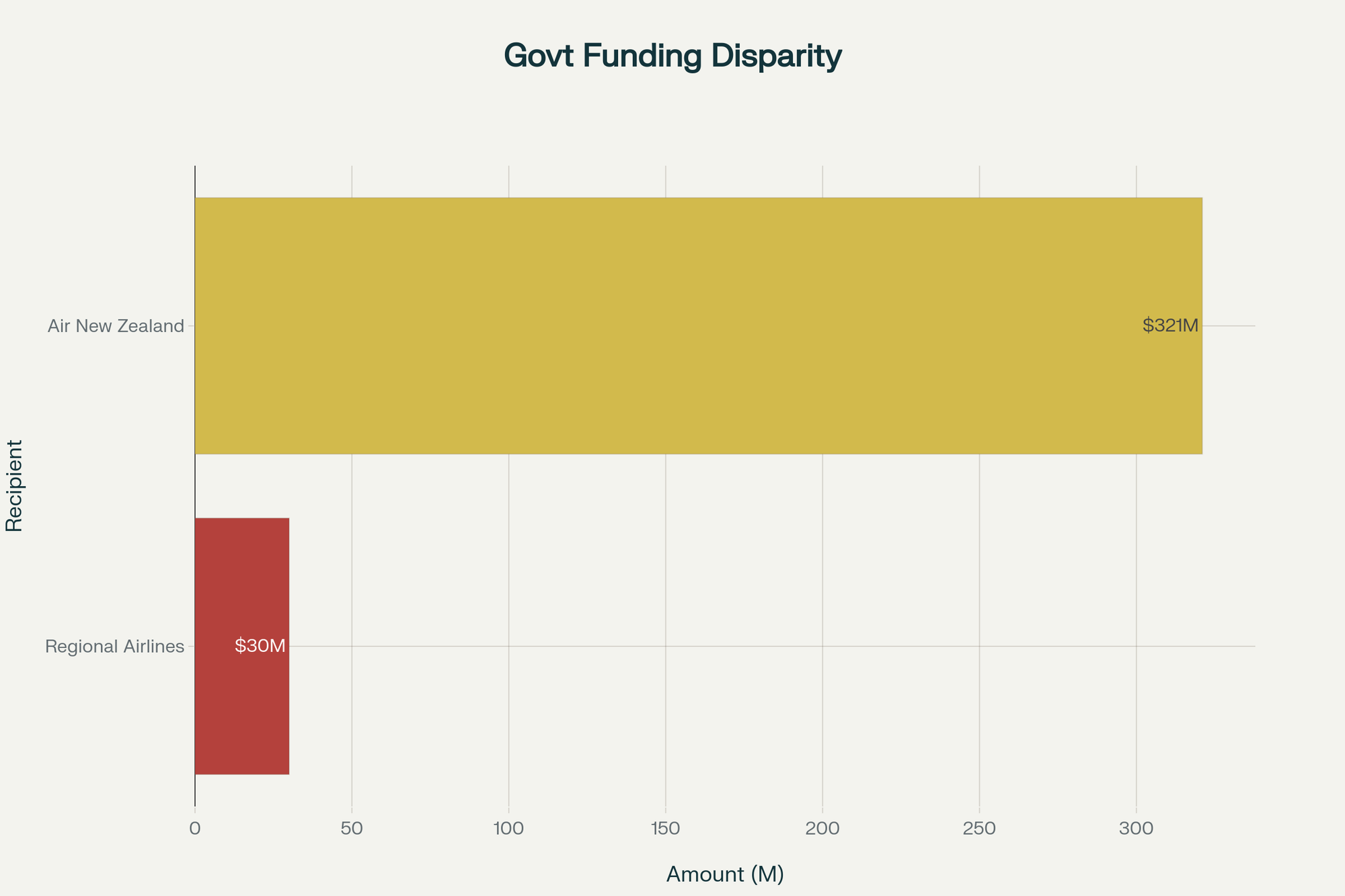
Tale of Two Bailouts: Air NZ Gets $321M, Regional Airlines Get $30M Loans
The hypocrisy is breathtaking. Air New Zealand, despite its massive government subsidies, has seen its profits plummet from $574 million in 2019 to an estimated $175 million in 2025. Yet Regional Development Minister Shane Jones and his cronies continue to treat this failing giant as their personal piggy bank while regional operators are left to die on the vine.
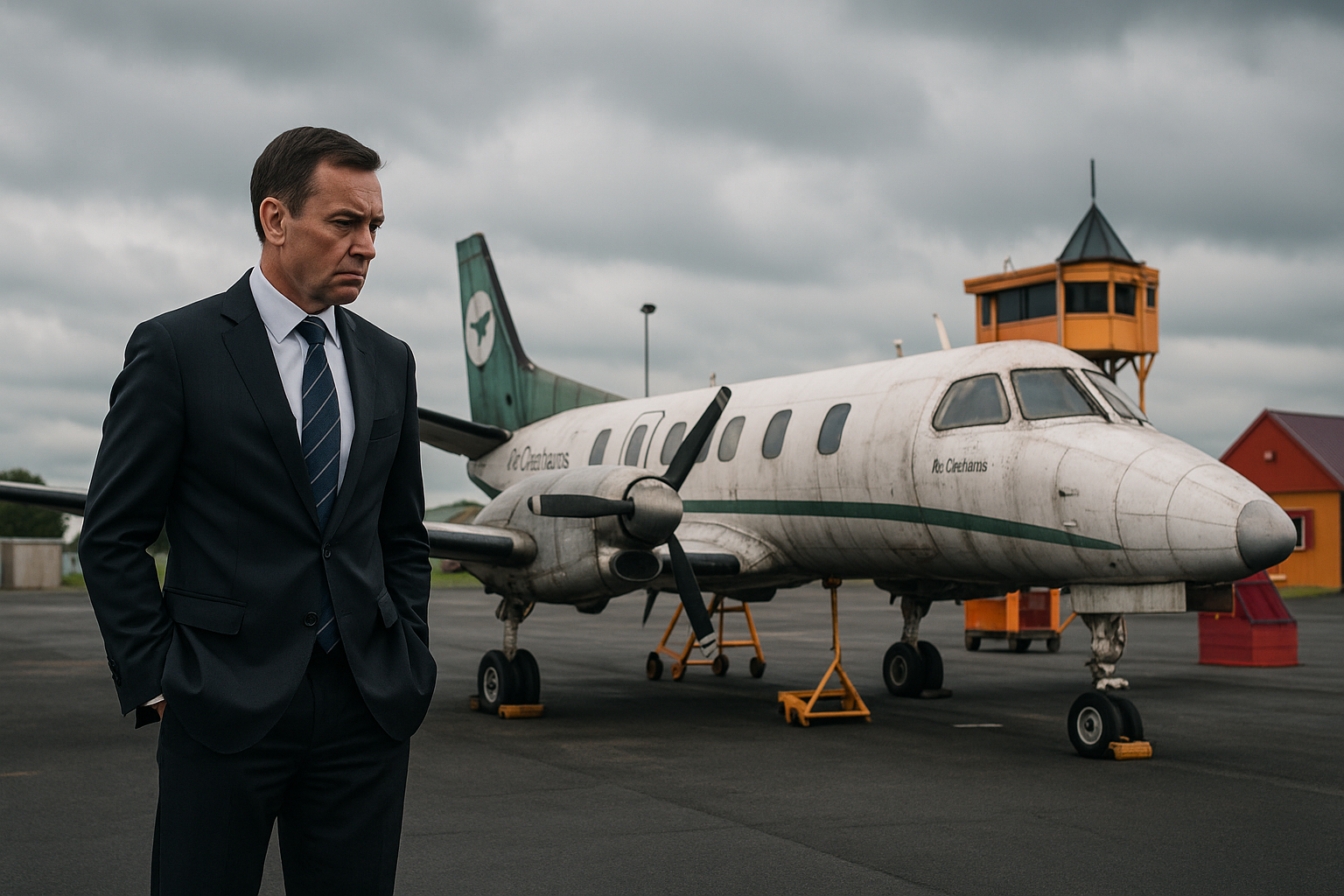
The corporate elite versus struggling regional aviation
The Death by a Thousand Cuts: CAA's Regulatory Strangulation
While Air New Zealand enjoyed its taxpayer-funded feast, the Civil Aviation Authority (CAA) launched what can only be described as a coordinated assault on regional aviation. The numbers speak for themselves: passenger safety levies increased by 145%, domestic security levies by 66%, and international security levies by 70%.
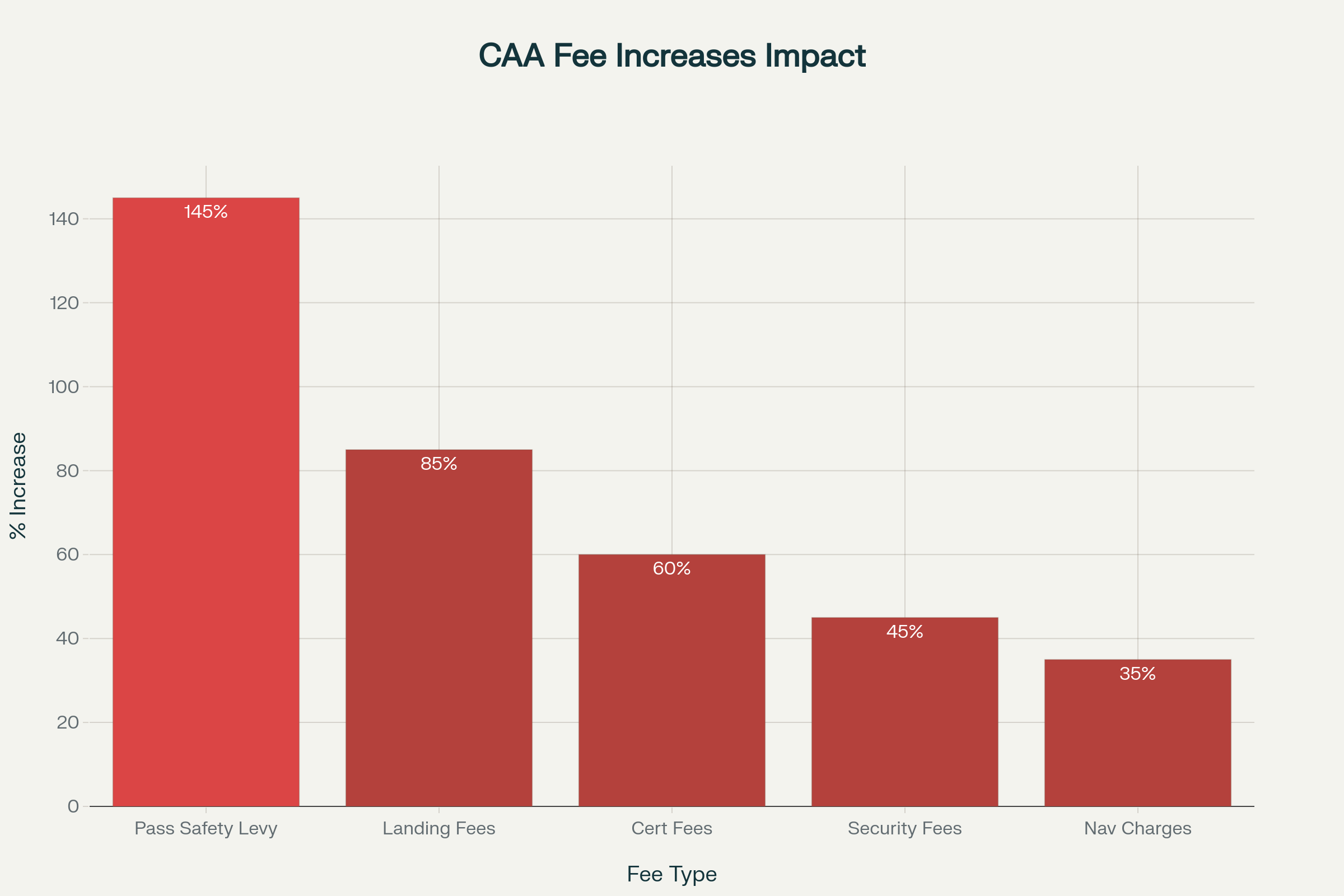
Regulatory Strangulation: CAA Fee Increases Up to 145%
Andrew Crawford, Managing Director of Sounds Air, perfectly captured the crushing impact: his company's CAA costs exploded from $12,947 in June to $34,924 in July—a 170% increase imposed seemingly overnight. This wasn't gradual inflation; this was deliberate financial warfare designed to destroy regional operators.
The timing is no coincidence. Just weeks after these punitive increases took effect, Sounds Air was forced to axe critical routes including Blenheim to Christchurch—a vital healthcare lifeline for Marlborough patients requiring specialist treatment. As Mayor Nadine Taylor noted, this forces vulnerable people facing cancer treatment to endure a four-hour drive one way.
The Puppet Masters: Shane Jones and the Crony Network
Shane Jones, the self-proclaimed "First Citizen of the Provinces," has a documented history of cronyism and conflicts of interest. From his secret meetings with mining executives to his pattern of favoring donors and associates through the Provincial Growth Fund, Jones operates with the brazenness of someone who knows the system is rigged in his favor.
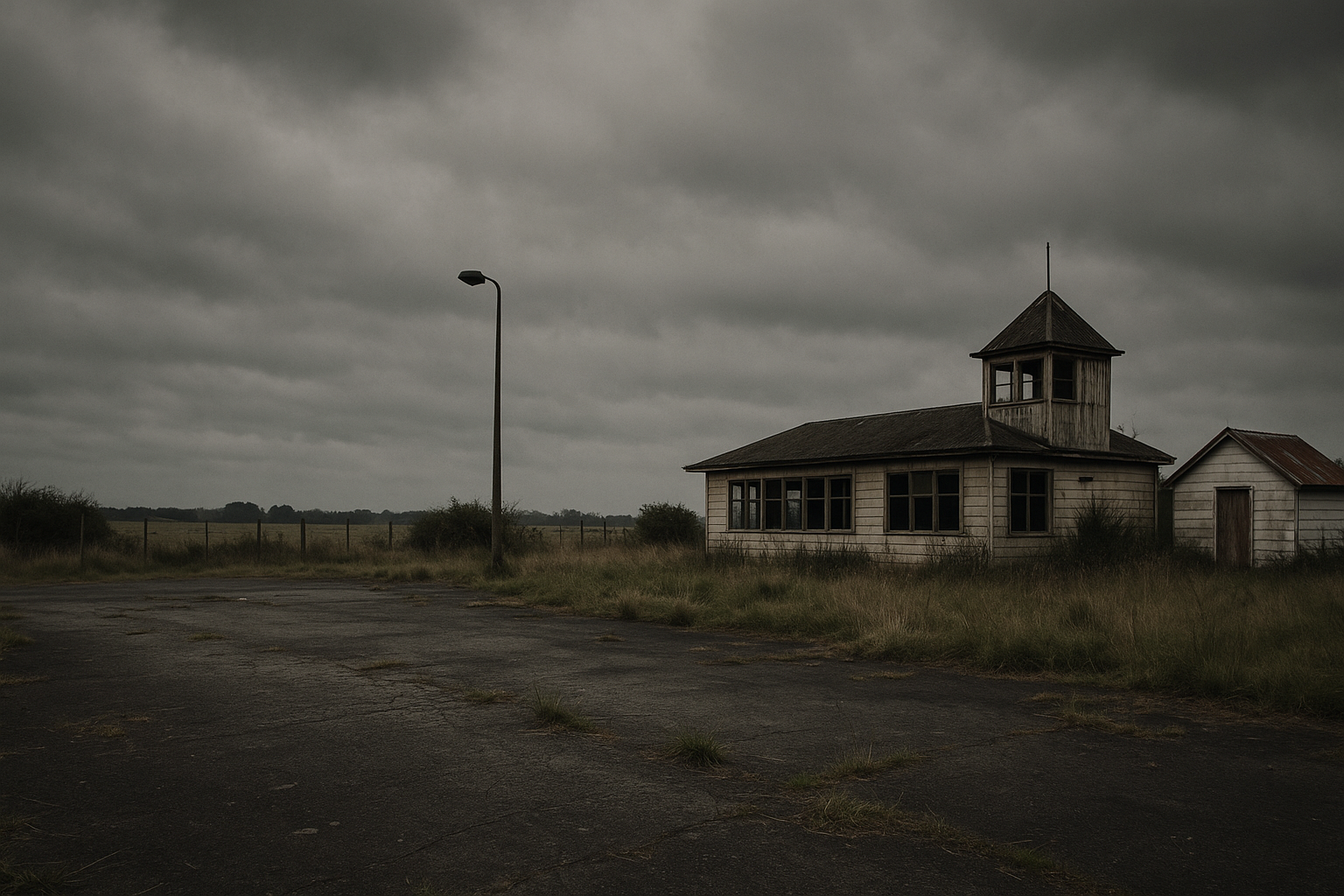
Regional connectivity abandoned by government neglect
The $30 million "lifeline" for regional airlines is classic Jones theater—a public relations exercise designed to provide political cover while ensuring the money arrives too late and in insufficient amounts to save the routes already lost. As Crawford bluntly stated: "We've been lobbying the government for six years, and our business has been ripped to pieces".
Behind closed doors: government aviation funding decisions
The International Shame: New Zealand's Unique Cruelty
While governments worldwide routinely subsidize regional aviation—the European Union, United Kingdom, and United States all provide substantial support for essential air services—New Zealand has chosen a path of deliberate negligence. As noted by NZ Airports CEO Billie Moore, regional airlines in New Zealand have survived "on the smell of an oily rag" while their international counterparts receive proper government support.
The European model alone sees countries like Spain spend $250 million over four years on airline subsidies, while Italy provided $391 million to low-cost carriers in 2019 alone. Meanwhile, New Zealand's total commitment to all regional airlines combined barely reaches one-tenth of Air New Zealand's no-strings-attached COVID windfall.
The Hidden Connections: Follow the Money
The connections between the key players reveal a web of mutual benefit that excludes regional New Zealand. Air New Zealand's cozy relationship with the government extends far beyond mere majority ownership. The airline has enjoyed:
- $321 million in non-repayable COVID subsidies
- Cancellation of Airways fees and passenger-related fees
- Access to Wage Subsidy Scheme benefits
- A standby loan facility of $400 million
Meanwhile, Whakatāne Mayor Victor Luca's suggestion that "a subsidy of $1 million to Air Chathams from Air New Zealand profits would represent only 0.2% of that" falls on deaf ears. The response from Jones and Associate Transport Minister James Meager was to offer crumbs—concessionary loans that regional operators may never recover from, arriving after routes have already been lost.
The Manufactured Crisis: Timing is Everything
The sequence of events reveals the calculated nature of this destruction. The CAA fee increases were announced in January 2025, implemented in July 2025, and by September 2025, Sounds Air was forced to cut its remaining profitable routes. Only then—after the damage was irreversible—did Jones announce his $30 million "rescue" package.
This is not coincidental timing; it's orchestrated demolition followed by a theatrical "rescue" that ensures government control over what remains of regional aviation. As Sounds Air's Crawford noted, even with the loan package, "it's too little, too late".
The Real Victims: Rural New Zealand Abandoned
The human cost of this corporate conspiracy extends far beyond aviation balance sheets. The loss of the Blenheim-Christchurch route forces cancer patients to endure grueling four-hour drives for life-saving treatment. The cancelled Wellington-Taupō and Wellington-Westport services isolate communities that depend on these connections for business, education, and emergency services.
Meanwhile, Air New Zealand continues to enjoy its government protection despite delivering steadily declining performance. The airline that received massive bailouts now forecasts earnings of just $150-190 million for 2025, down from $222 million in 2024.

The Māori Green Lantern Fighting Misinformation And Disinformation From The Far Right
The Endgame: Corporate Control of Essential Services
The ultimate goal becomes clear when viewed through this lens: the systematic destruction of independent regional aviation to create dependency on government-controlled services. With competition eliminated through regulatory strangulation, Air New Zealand can pick up the most profitable routes while abandoning unprofitable but essential services to rural communities.
This represents the worst form of crony capitalism—using government power to eliminate competition while rewarding failure among the connected elite. The $30 million loan package for regional airlines isn't a rescue; it's a buyout scheme designed to bring the survivors under government control.
The conspiracy is complete: Air New Zealand receives hundreds of millions without conditions, regional competitors are strangled by regulatory fees, and the few survivors are offered "rescue" packages that come with strings attached. Rural New Zealand pays the price for this manufactured crisis, losing essential services while their tax dollars fund corporate welfare for Wellington's aviation darlings.
This isn't just policy failure—it's institutional corruption disguised as regional development. Shane Jones and his government allies have orchestrated the perfect heist, robbing regional New Zealand to pay their corporate cronies while claiming to be the saviors of provincial connectivity.