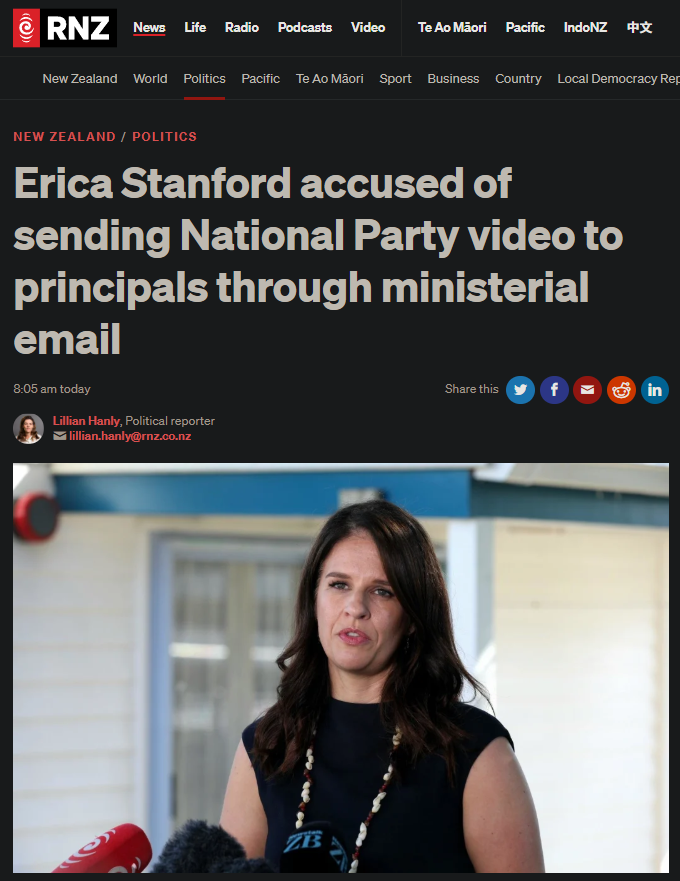
"How Simon Watts Wasted Nearly $1 Million While Kiwis Choose Between Heating and Eating" - 3 October 2025
Power Plays and Public Plunder
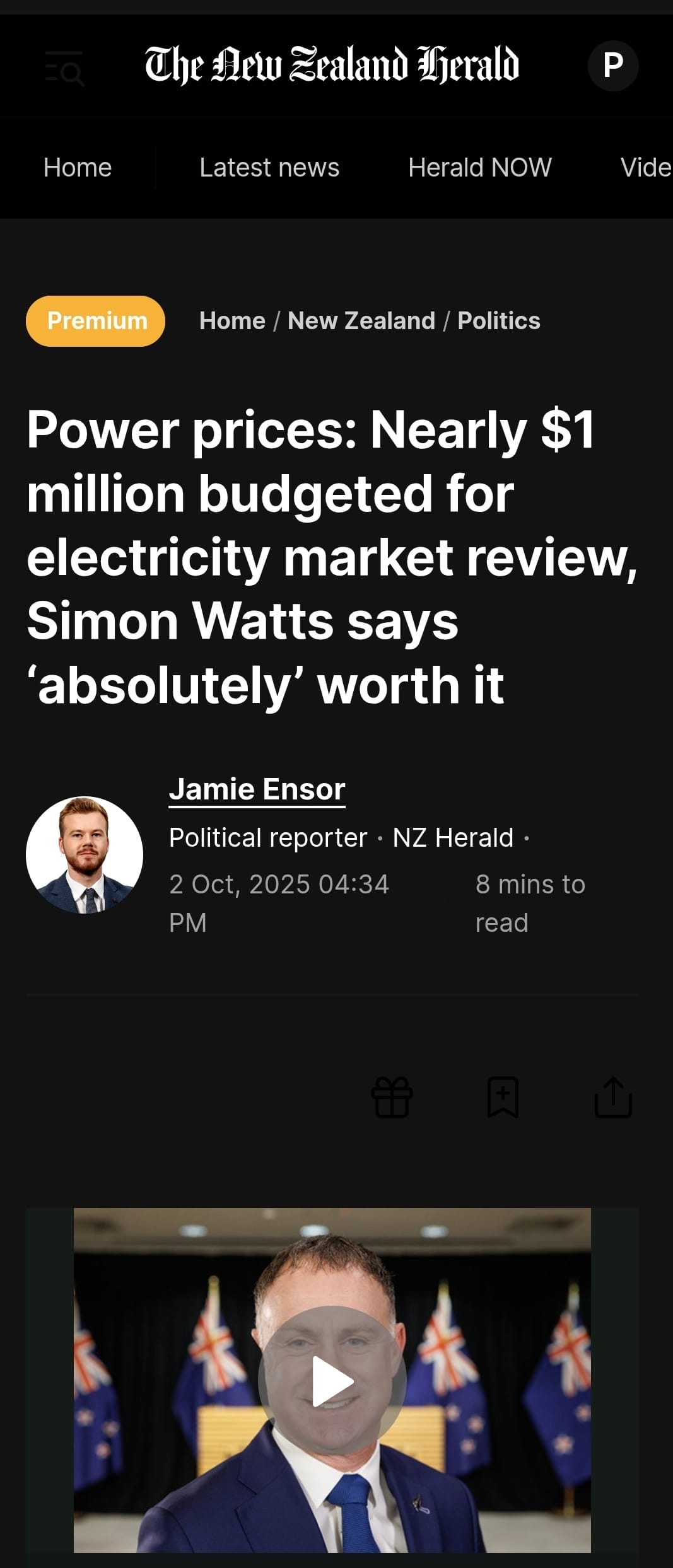
Kia ora koutou katoa (Greetings to you all). The truth is laid bare: nearly one million dollars of your money was flushed down the drain on an electricity market review that this Government treated like expensive toilet paper.
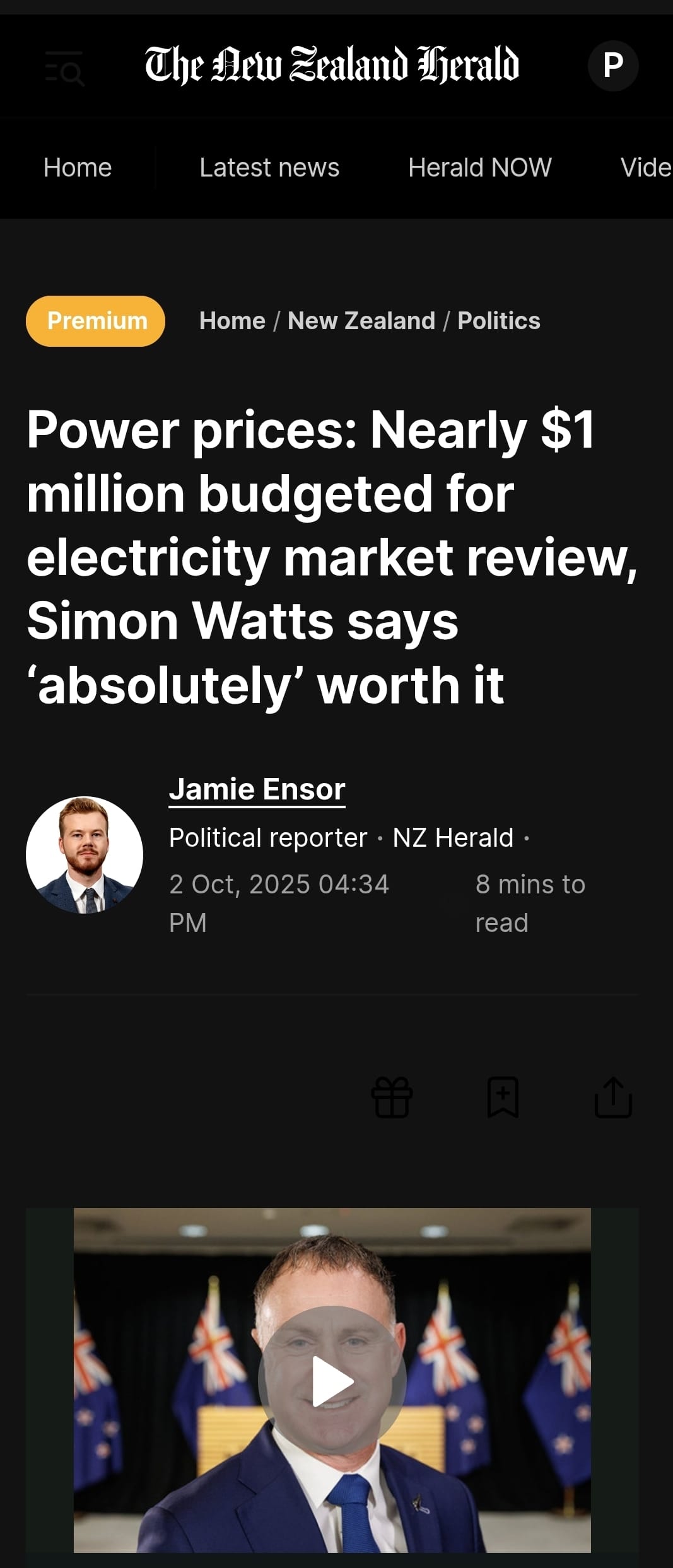
Paywalled article: https://www.dropbox.com/scl/fi/qx14b7dw9rfr0svo46wr7/Power-prices_-Nearly-1-million-budgeted-for-electricity-market-review-Simon-Watts-says-absolutely-worth-it-NZ-Heral-1.PDF?rlkey=hsgq37mlskehyl4wjijsqdgan&st=45kchamw&dl=0
The Coalition Government has just demonstrated the most brazen display of fiscal irresponsibility since they took power, spending nearly $1 million on an electricity market review that they promptly ignored like a teenager dismissing parental advice. While tangata whenua and working families across Aotearoa struggle to pay power bills that have increased by 174% since 2018, Energy Minister Simon Watts had the audacity to call this monumental waste “absolutely worth it”.
This is not merely government incompetence - this is a calculated demonstration of how neoliberal capitalism operates, where public money flows freely to private consultants while the people freeze in their homes. The $931,500 total cost breaks down to $550,000 for Frontier Economics to write a report, $200,000 for two peer reviews, and $60,000 for local expertise. What did Kiwis get for this investment? A Government that rejected every major recommendation and continued business as usual.
Background: Privatisation and the Gentailer Greed Machine
Understanding this waste requires examining how New Zealand’s electricity system became a money-printing machine for corporate shareholders while impoverishing ordinary citizens. The privatisation of electricity generation began in the 1990s, with the National Party’s “ownership split” forcing community-owned companies to sell their generation businesses to larger corporations. This created the current gentailer oligopoly where four companies - Contact, Genesis, Meridian, and Mercury - control over 80% of generation and retail.
These gentailers operate as a vertically integrated cartel, generating electricity through their generation arms and selling it to themselves at artificially low prices while charging independent retailers premium rates. This rigged market structure has delivered exactly what economic theory predicts from oligopolies: record profits for shareholders and crushing costs for consumers.
The market concentration problem has deep historical roots in the neoliberal reforms that dismantled public ownership. When the Fourth National Government privatised Contact Energy in 1999, it signaled the beginning of electricity becoming a commodity for profit extraction rather than an essential service. The Electricity Industry Reform Act 1998 forced the breakup of community ownership, creating the concentrated market structure that enables today’s price manipulation.
A Million-Dollar Charade
The Frontier Economics review represented everything wrong with how this Government operates. Instead of addressing the fundamental structural problems in our electricity market, they commissioned expensive consultants to provide academic cover for maintaining the status quo. The review’s major recommendations included creating a new Crown entity for thermal generation, divesting Crown shareholdings in gentailers, and removing electricity from the Emissions Trading Scheme.
Cabinet rejected every significant recommendation. Instead, they announced toothless measures like “writing letters to gentailers” to reassure them about capital availability and launching procurement for LNG infrastructure. Labour’s energy spokesperson Dr Megan Woods correctly identified this as the Government “deciding what they were going to do anyway” regardless of the review’s findings.
This matters deeply to Māori because electricity poverty disproportionately affects our whānau and communities. When power bills consume up to 8% of household income for the lowest decile families, as shown in official statistics, it forces impossible choices between heating, food, and other necessities. The gentailer profits extracted from our communities flow to wealthy shareholders, many overseas, while our people suffer.
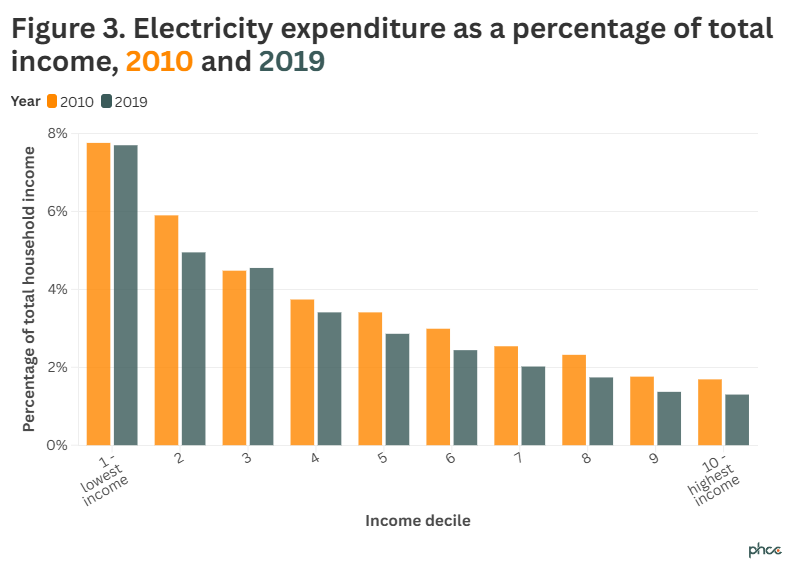
Electricity costs as a higher percentage of income disproportionately affect New Zealand’s lowest-income households, showing minimal relief from 2010 to 2019
The scope of this analysis reveals how the electricity market review functions as a smokescreen for maintaining corporate welfare while ordinary Kiwis bear the costs of an oligopolistic market structure designed to extract maximum profits.
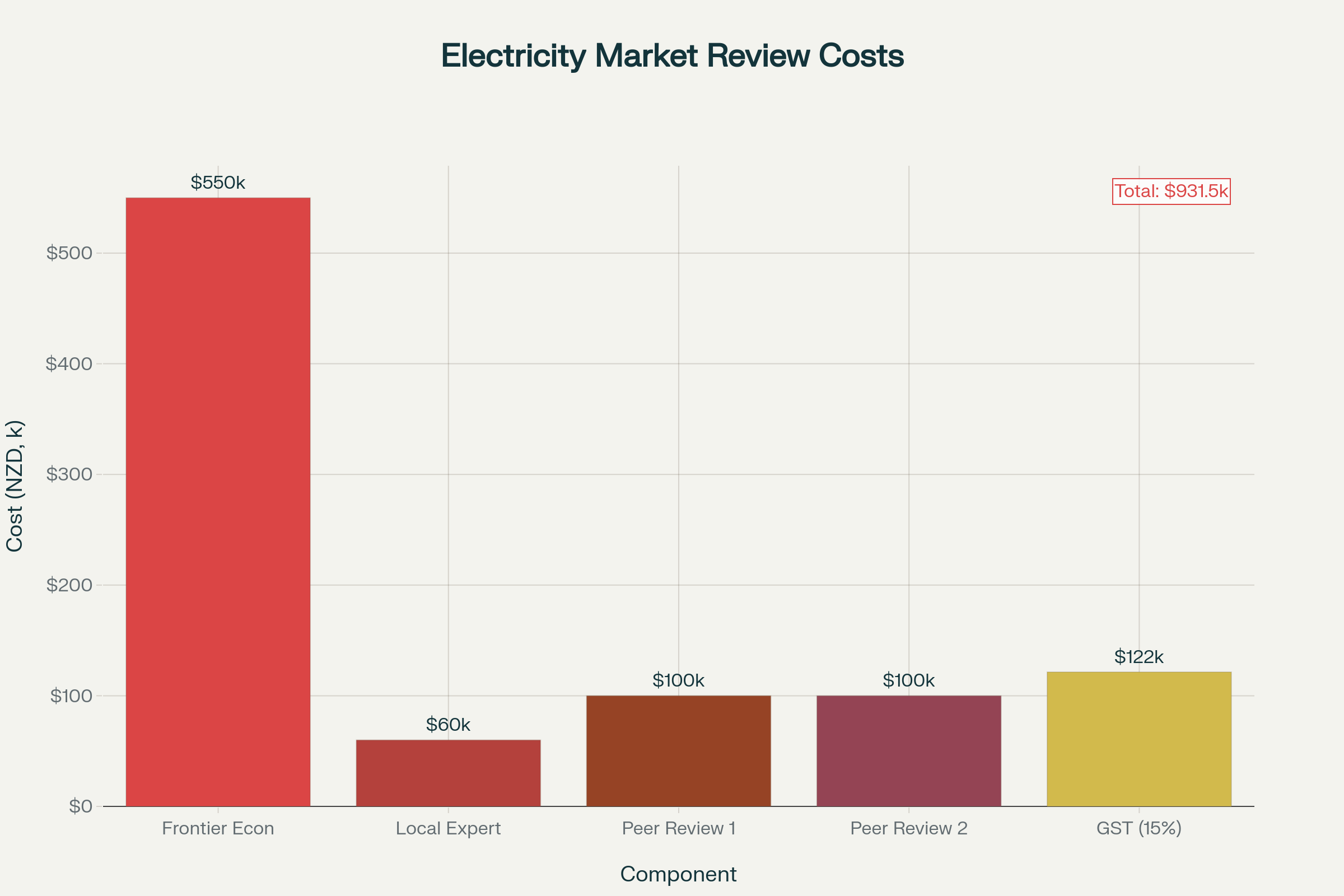
Nearly $1 million wasted on an electricity market review that the Government ignored
Corporate Welfare and Market Manipulation
The gentailer cartel’s profit extraction has reached obscene levels while this Government protects their interests. The Big Four extracted $2.81 billion in EBITDAF profits during 2023 - over $7 million every single day. These profits come directly from the pockets of struggling families through artificially inflated electricity prices enabled by market concentration.
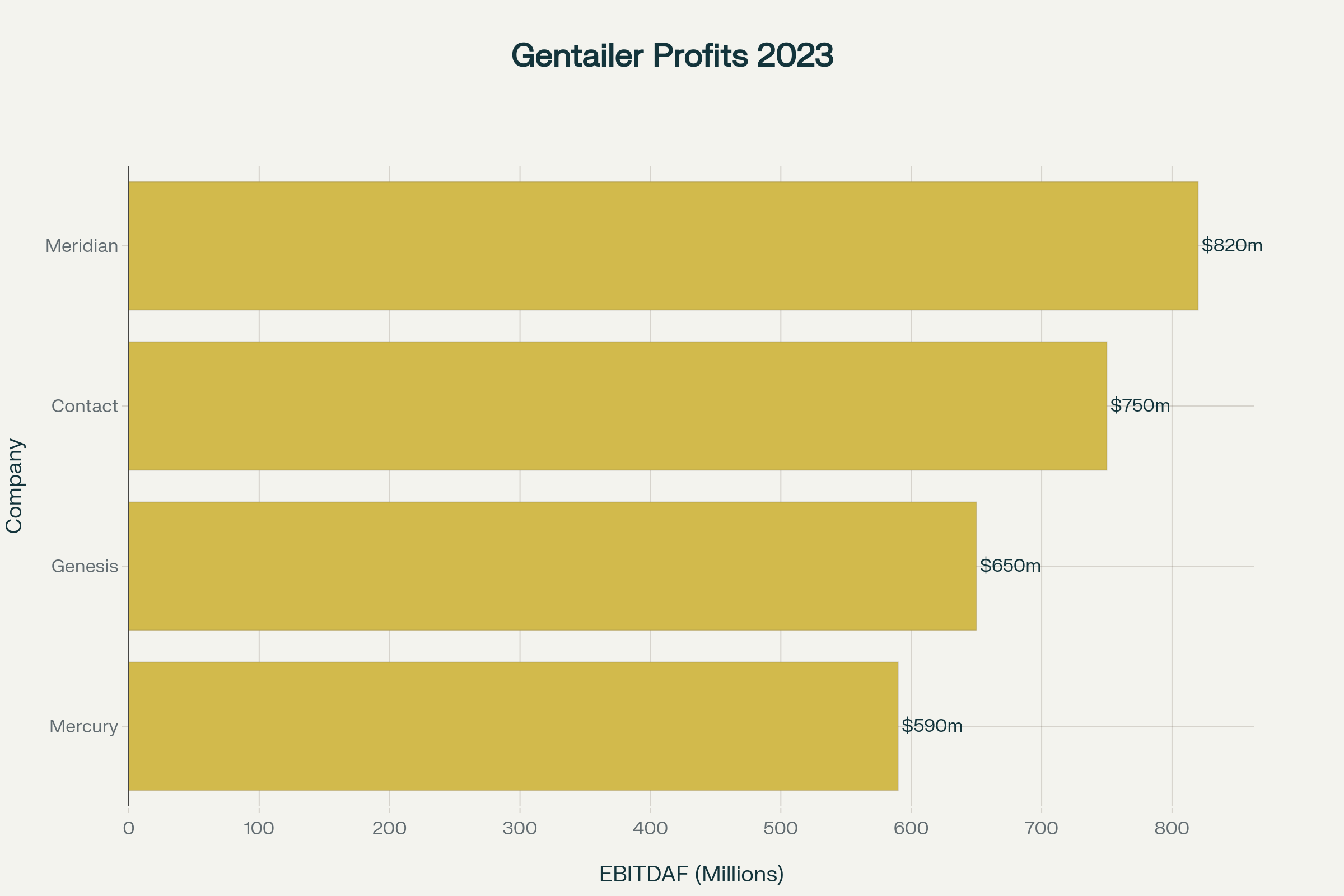
Big Four gentailers extracted $2.81 billion in profits while Kiwis struggle with power bills
Genesis Energy recently reported half-year profits almost doubling to $70.3 million, explicitly crediting “high wholesale prices” for their windfall. Contact Energy’s revenue jumped 31% to $1.71 billion. These companies profit from scarcity they help create through coordinated market manipulation.
The OECD has explicitly called for breaking up the gentailer structure, noting that “electricity futures prices are high and above the threshold considered sustainable for the economy in the long run”. International experts recognize what local politicians refuse to acknowledge: our electricity market operates as a legalized cartel extracting wealth from consumers.
Wholesale electricity prices have exploded from 7.3 cents per kWh in 2018 to 20.0 cents in 2024 - a staggering 174% increase that dwarfs inflation. This price manipulation occurs while gentailers consistently make margins of over $70 million per week.
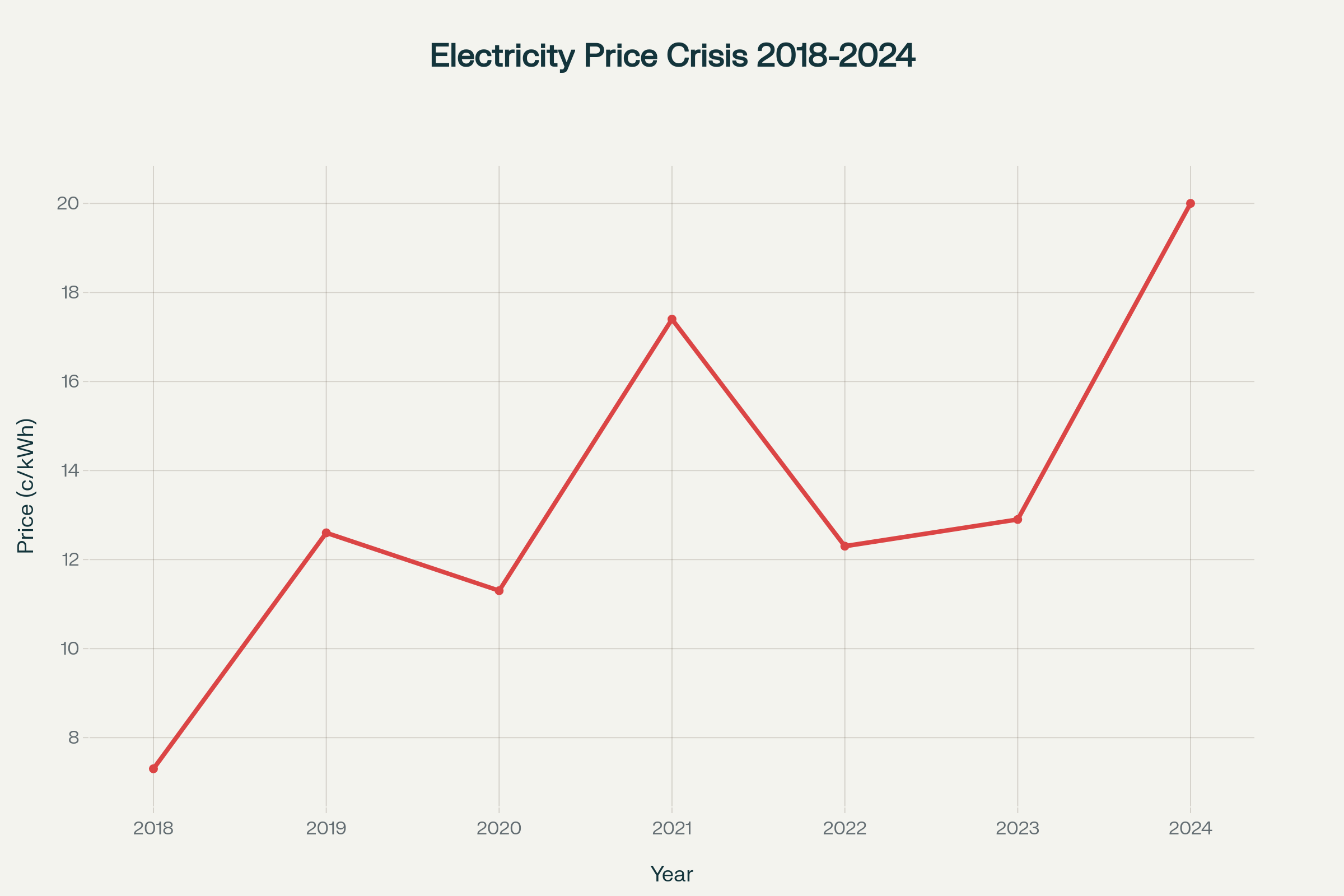
Wholesale electricity prices have skyrocketed 174% since 2018 while gentailers profit
The timing reveals the calculated nature of this corporate greed. Price spikes coincide perfectly with winter demand when families desperately need heating. Daily wholesale prices ranged between $164.52 and $853.57 per MWh in August 2024, compared to a maximum of $168.43 in August 2023. This represents coordinated exploitation of essential services.
Simon Watts and his corporate masters understand that New Zealanders have no choice but to pay these extortionate prices. The market operates exactly as designed - extracting maximum profit from captive consumers while maintaining the illusion of competition through multiple retail brands owned by the same oligopolistic generators.
Hidden Networks of Power and Influence
The connections between National Party politicians and corporate interests run deeper than most realize. Simon Watts received $61,070.65 in donations during the 2020 election, placing him among the highest-funded National candidates. The National Party raised an unprecedented $2.3 million from 24 big donors in 2022, creating the largest political war chest in New Zealand history.
These donation patterns reveal a systematic purchase of political influence by wealthy interests who benefit from maintaining the current oligopolistic market structure. The record $5.1 million National netted in big donations during 2022 was more than 12 times Labour’s $419,364. This financial dominance translates directly into policy outcomes that protect corporate profits over public interest.
The ideological framework underpinning these relationships connects to broader patterns of Christian nationalist influence within the National Party. Research has exposed how right-wing religious groups target political influence through coordinated campaigns that merge economic and social conservatism. Christopher Luxon’s connections to Upper Room church and evangelical networks demonstrate how religious ideology intersects with neoliberal economics.
This ideological synthesis manifests in policies that treat market fundamentalism as divine mandate while portraying corporate welfare as natural law. The electricity market review represents this worldview in action - spending public money to validate predetermined conclusions while ignoring evidence that contradicts corporate interests.
The National Party’s historic ties to Exclusive Brethren networks and contemporary connections to prosperity theology create ideological justification for extreme wealth inequality. When Simon Watts declares the million-dollar review “absolutely worth it” while families choose between heating and eating, he expresses this theological framework that sanctifies profit over people.
The 1999 electricity privatisations occurred under the Fourth National Government, establishing patterns of corporate capture that persist today. The same political networks that dismantled public ownership now protect the oligopolistic structures they created, using public money to fund reports that legitimize their predetermined policies.
Broader Implications for Māori and Communities
This electricity market manipulation exemplifies broader patterns of colonial extraction that continue to impoverish tangata whenua while enriching corporate shareholders. The concentration of electricity ownership in foreign and domestic corporate hands recreates colonial relationships where essential resources generate profits for distant owners while local communities bear the costs.
Electricity poverty affects up to 25% of New Zealand households, with Māori families disproportionately represented among those struggling to afford power. When gentailers extract $2.81 billion annually in profits, this wealth flows away from our communities into corporate accounts and offshore dividends.
The structural racism embedded in electricity pricing manifests through geographic and income-based discrimination. Rural and remote Māori communities face higher connection costs and less reliable supply while paying premium prices that subsidize urban infrastructure. The gentailer oligopoly perpetuates these inequities by prioritizing profitable urban customers over underserved rural populations.
Connection to Māori values reveals the fundamental spiritual violence of treating electricity as a commodity for profit extraction. Whakatōhea principles of collective responsibility and care for community wellbeing stand in direct opposition to market systems that price essential services beyond reach of whānau in need. The gentailer model violates tikanga Māori by prioritizing individual corporate profit over collective community welfare.
This connects to larger patterns of neoliberal colonization that transform public goods into private commodities. The electricity market represents one front in a broader assault on collective ownership and democratic control over essential services. Each dollar extracted in excessive profits represents wealth stolen from communities and transferred to corporate shareholders.
The environmental implications compound these social harms. Gentailer profits depend on maintaining fossil fuel generation to create artificial scarcity during dry years. This business model directly contradicts climate goals and perpetuates environmental racism by concentrating pollution in working-class and Māori communities while profits flow to wealthy shareholders.
Call to Action and Resistance

The Māori Green Lantern Fighting Misinformation And Disinformation From The Far Right
The electricity market review waste demonstrates that this Government cannot be trusted to represent public interests over corporate profits. The solution requires dismantling the gentailer oligopoly and returning electricity generation to democratic public control. This means breaking up the Big Four through forced divestiture of generation or retail assets, eliminating vertical integration that enables market manipulation.
Immediate actions must include price controls on essential electricity services, windfall profit taxes on excessive gentailer margins, and investigation of price manipulation through coordinate market behavior. The Commerce Commission must exercise its competition powers to break up this legalized cartel instead of producing toothless reports.
Democratic control over electricity requires rebuilding public ownership through regional electricity authorities accountable to local communities rather than distant shareholders. These authorities could generate electricity at cost while reinvesting surpluses in renewable infrastructure and community development rather than private profits.
The connection to tino rangatiratanga makes electricity sovereignty essential for Māori political and economic self-determination. Community-owned renewable generation can provide energy independence while creating local employment and economic development that benefits whānau rather than corporate shareholders.
Resistance strategies include supporting independent electricity retailers who challenge gentailer dominance, advocating for community energy projects, and organizing around electricity justice as a fundamental human right. The current crisis creates opportunities for political mobilization around public ownership and democratic control.
Simon Watts and his corporate beneficiaries understand that public anger over electricity costs threatens their profitable arrangements. The million-dollar review represents defensive spending to legitimize an indefensible system. Our response must demand nothing less than fundamental restructuring that puts people before profits.
The whakatōhea value of collective responsibility demands that we organize to protect our communities from corporate predators who profit from essential services. The electricity market oligopoly represents one battle in the larger war for economic democracy and social justice.
For readers who find value in exposing these connections between corporate power and government waste, please consider supporting this work with a koha to HTDM: 03-1546-0415173-000. The MGL understands these are tough economic times for whānau, so please only contribute if you have capacity and wish to support this essential mahi of holding power accountable.
Kia kaha, kia māia, kia manawanui.
Na Ivor Jones, Te Māori Green Lantern