“How the National-Led Coalition Used a 20-Second Delay to Kill Legislation That 95 Percent of New Zealanders Wanted” - 23 October 2025
When Power Cannot Win The Argument, It Weaponises The Rules
Kia ora, whānau,
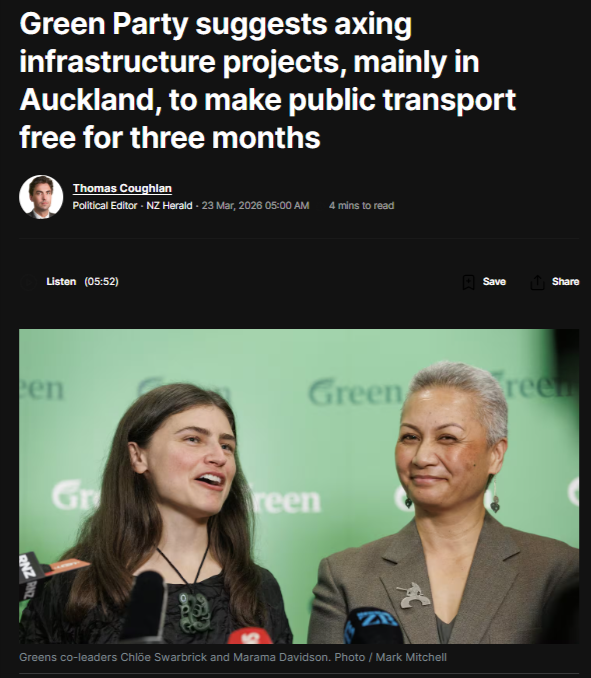
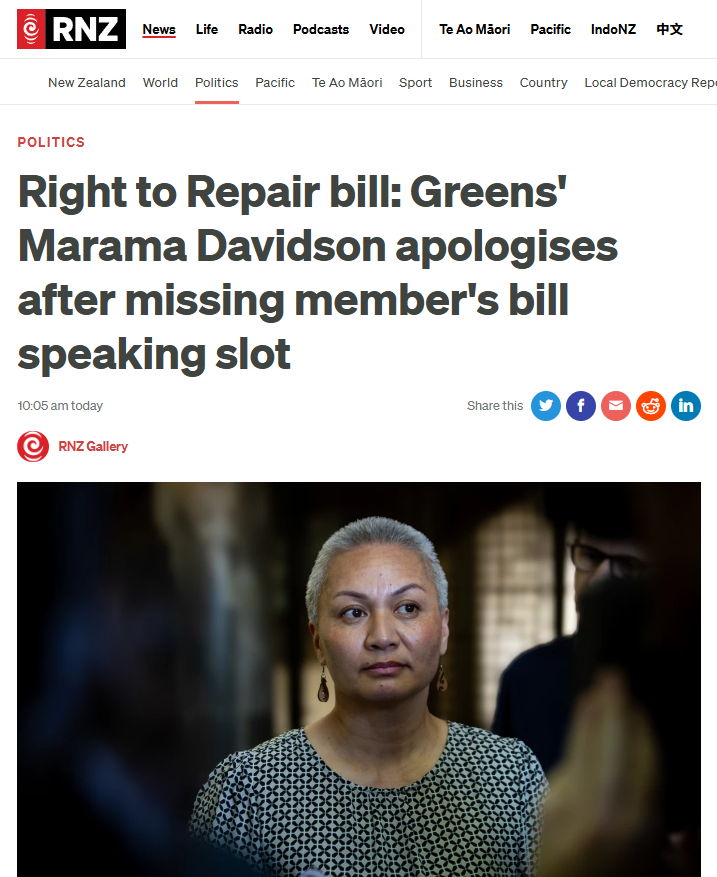
On October 22, 2025, at precisely the moment Marama Davidson’s Consumer Guarantees Right to Repair Amendment Bill came up for its second reading in Parliament, she was not in her seat. She arrived twenty seconds later—close enough to see National MP Tom Rutherford leap to his feet to declare she “hasn’t turned up to the House.” Close enough to watch Assistant Speaker Maureen Pugh—a National Party operative who once expressed support for the Parliament occupation protest and has been described by her own party leader as unreliable—discharge the bill from the order paper entirely. Close enough to ask for leave to reinstate it. And close enough to hear the coalition majority say no.
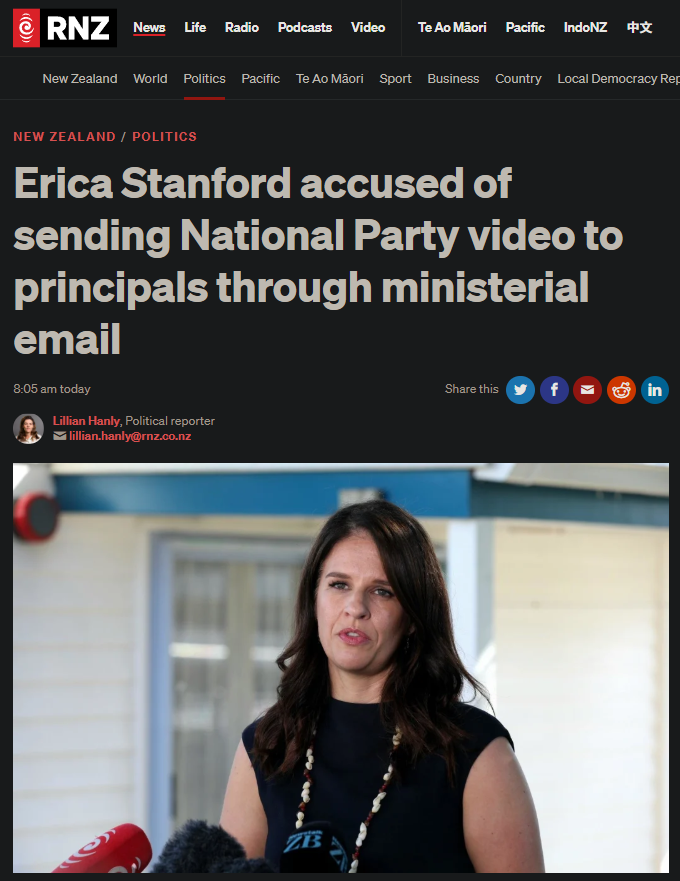
Twenty seconds. That is how long it took for a bill backed by 95 percent of public submissions to vanish from Parliament’s agenda. Not because anyone voted against it. Not because the government made a public case for why consumers should be locked into buying expensive replacements instead of fixing their own property. But because the National-ACT-NZ First coalition saw an opportunity to deploy parliamentary procedure as a weapon—and RNZ, the state-funded broadcaster that published this story, framed it as Davidson’s mistake rather than the coalition’s calculated assassination of democracy.
This is not journalism. This is stenography for power.
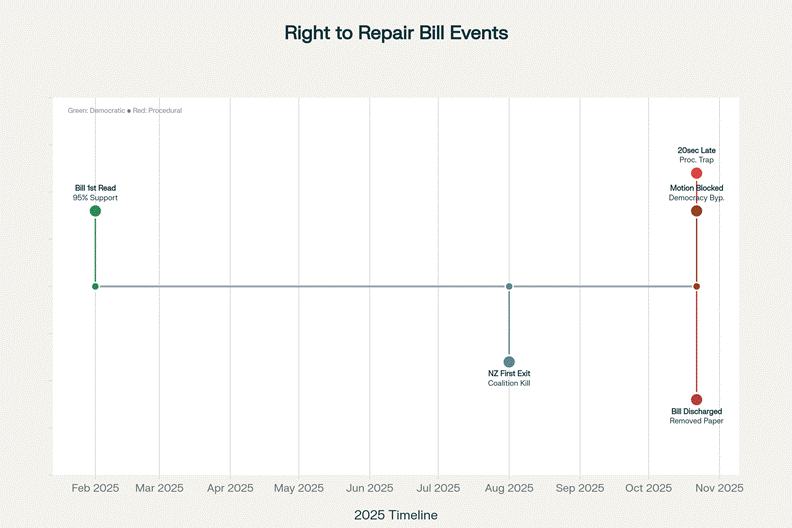
Timeline: How a Bill With 95% Public Support Was Killed By Parliamentary Procedure
Background: What RNZ Refuses to Investigate
Radio New Zealand is Aotearoa’s publicly funded national broadcaster, operating under a charter requiring “comprehensive, independent, impartial and balanced national news services.” Yet the article published on October 23, 2025, by RNZ’s political reporters reads like a press release dictated by the National Party’s communications office. It opens with Davidson’s apology. It centers her “mistake.” It quotes Rutherford’s theatrical performance. It mentions—almost in passing—that the bill “was likely to have been voted down anyway by the government parties.”
The article never asks why.
It never examines who benefits from killing right-to-repair protections. It never follows the money trail connecting National’s corporate donations totaling $10.4 million since 2021—seven times more than Labour—to policy decisions that serve those donors. It never interrogates why Social Development Minister Louise Upston’s bill was reinstated in July 2024 when she missed her speaking slot by several minutes, but Davidson’s bill—with overwhelming public backing—was buried for being twenty seconds late.
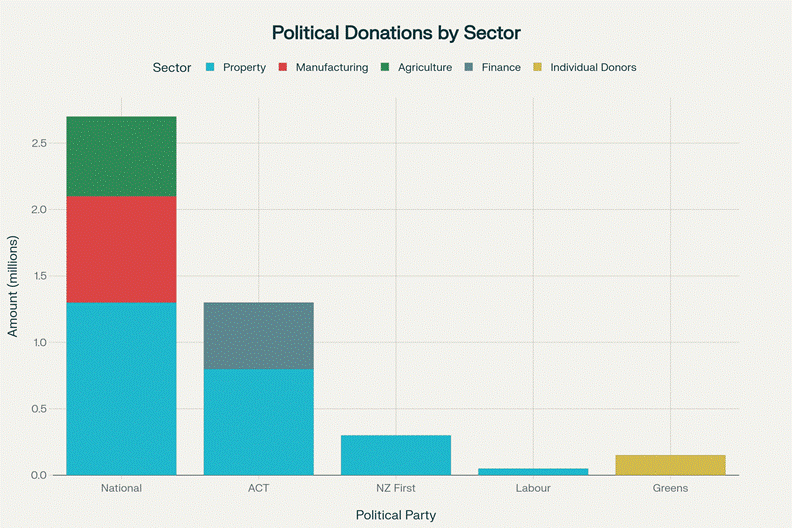
Who Pays the Coalition: Corporate Donations to Parties That Killed Right to Repair
RNZ’s reporting erases the structural violence of this moment and replaces it with a personality-driven narrative where an individual MP “made a mistake.” This is not accidental. This is how neoliberal media manufactures consent for anti-democratic outcomes.
What the Right to Repair Bill Actually Threatened
The Consumer Guarantees (Right to Repair) Amendment Bill would have required manufacturers to provide consumers with access to repair parts, tools, software, and documentation. It would have stopped corporations from using warranty clauses to force consumers into expensive replacements. It would have empowered farmers to fix their own tractors without waiting weeks for manufacturer-approved technicians. It would have kept functional appliances out of landfills.
This is not radical environmentalism. This is basic consumer protection that aligns with international precedents in France, the European Union, and Australia. France introduced a repairability index in 2021 that rates products based on how easy they are to fix, turning durability into a competitive market advantage. The EU passed comprehensive right-to-repair legislation in 2023. Even conservative governments overseas recognize that allowing manufacturers to trap consumers through planned obsolescence damages both household budgets and environmental sustainability.
But in Aotearoa, where property, manufacturing, and finance sectors donated millions to National, ACT, and NZ First, consumer protection loses to corporate profit every single time.
The bill passed its first reading in February 2025 with support from Labour, Greens, Te Pāti Māori, and crucially, New Zealand First. It went to select committee, where 95 percent of submissions supported it. Then NZ First—a self-described nationalist party that campaigns on protecting “ordinary Kiwis” from elites—withdrew its support in August 2025, calling the bill “unworkable and costly.”
Unworkable for whom? Costly to whom?
Follow the money. Property industry donations topped political contributions in recent years, with the bulk flowing to coalition parties. The party’s coalition agreement with National includes support for loosening environmental regulations, fast-tracking resource consents, and prioritizing corporate development over community consultation. Winston Peters—the man who built his career on attacking the “Treaty Grievance Industry” while taking money from developers—now sits as Deputy Prime Minister in a government funded by the very corporate interests right-to-repair legislation threatens.
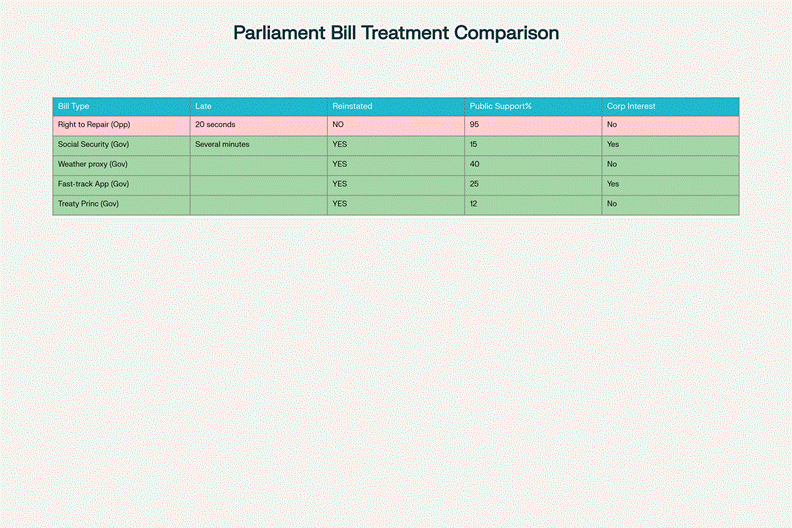
The Double Standard: Which Bills Get Procedural Cooperation and Which Get Buried
The Hidden Connections: Who Sits Where and Why It Matters
Let us examine the cast of characters in this procedural assassination.
Maureen Pugh: National Party MP, Assistant Speaker, former mayor of Westland District, and someone who has been in and out of Parliament multiple times due to special votes. Pugh’s political career is defined by loyalty to National Party leadership and a voting record that consistently favors deregulation, resource extraction, and corporate interests over environmental protection. In February 2022, Pugh expressed public support for the Parliament occupation protesters who opposed vaccine mandates—then deleted her post after backlash. Her pattern is clear: populist rhetoric for the base, procedural enforcement for the donors.
When the moment came to discharge Davidson’s bill, Pugh did not hesitate. She did not wait to see if Davidson would arrive. She did not exercise the discretion that speakers routinely use to manage parliamentary business. She moved immediately to the next item, ensuring the bill died before debate could begin.
Tom Rutherford: National MP for Bay of Plenty, age 28, elected in 2023. Rutherford worked for former National MP Tania Tapsell at Rotorua Lakes Council before entering Parliament. His mother, Sharon Nightingale, is National’s event manager in the Bay of Plenty. Rutherford is a product of the National Party machine—trained, groomed, and deployed to execute the party’s agenda without question.
His theatrical declaration that Davidson “hasn’t turned up to the House”—delivered the instant Pugh called the bill, before Davidson could even move—was not spontaneous outrage. It was coordinated political theater designed to create the appearance of procedural legitimacy for what was, in fact, a planned ambush.
Louise Upston: Social Development Minister, National Party, architect of the traffic light sanctions system that punishes beneficiaries for missing appointments while she herself missed her own bill’s first reading in July 2024. When her Regulatory Systems (Social Security) Amendment Bill came up and she wasn’t there, the House granted leave to reinstate it. Upston joked about being on her “first strike”—a reference to the punitive welfare sanctions she imposes on beneficiaries who face transportation barriers, childcare emergencies, or health crises that prevent them from attending MSD appointments.
The double standard is the point. When government ministers serving corporate interests make mistakes, the system bends to accommodate them. When opposition MPs championing consumer and environmental protections arrive twenty seconds late, the system snaps shut like a trap.
Why RNZ’s Framing Matters: Media as Accomplice
The RNZ article never mentions Upston’s precedent. It never compares how Parliament treats government versus opposition business. It never asks why the coalition refused to grant Davidson the same procedural courtesy routinely extended to its own members. Instead, it centers Davidson’s apology and frames the story as a cautionary tale about punctuality.
This is not neutral reporting. This is actively shaping public perception to protect power.
RNZ has documented form when it comes to failing to challenge narratives that serve elite interests. During Israel’s assault on Gaza, media scholars demonstrated how RNZ framed Israeli actions through a “self-defense” narrative despite overwhelming evidence of war crimes and ethnic cleansing. The broadcaster’s refusal to adjudicate contested claims—when the evidence was publicly available—amounted to editorial complicity in genocide denial.
The same structural pattern applies here. RNZ had access to parliamentary footage. It had access to the standing orders. It had access to donation records showing which industries fund which parties. It had access to precedent showing how the House treats government versus opposition bills. Yet it chose to write a story that individualizes systemic failure and erases the coalition’s coordinated use of procedure to kill popular legislation.
This is not because RNZ reporters are bad people. This is because RNZ operates within an ideological framework that treats parliamentary procedure as neutral, coalition politicians as legitimate authority figures, and opposition MPs as supplicants who must follow rules that government members routinely ignore.
The Neoliberal Playbook: Procedure as Violence
What happened on October 22 is not an isolated incident. It is part of a systematic pattern where the National-led coalition uses procedure to bypass democracy when substantive argument fails.
Consider the timeline:
In February 2025, the Right to Repair Bill passed its first reading with cross-party support. At this stage, New Zealand First joined opposition parties to vote in favor, demonstrating that the legislation had genuine momentum.
During the select committee process, 95 percent of public submissions supported the bill. Farmers, environmental organizations, consumer advocates, repair café networks, and rural communities lined up behind it. The evidence was overwhelming. The public mandate was clear.
Then in August 2025, New Zealand First withdrew its support, citing concerns the bill was “unworkable and costly.” No detailed analysis was provided. No alternative proposals were offered. The party simply reversed its position after months of coalition negotiations behind closed doors.
By October, the coalition had the numbers to vote the bill down. But that would require a public vote. It would require National, ACT, and NZ First MPs to go on record opposing consumer protection, environmental sustainability, and farmers’ rights to repair their own equipment. It would create a clear electoral record for 2026.
So when Davidson arrived twenty seconds late, they seized the opportunity. Pugh discharged the bill. Rutherford performed his outrage. National blocked reinstatement. And the legislation died without a vote, without a debate, without anyone having to publicly defend why manufacturers should be allowed to trap consumers through planned obsolescence.
This is neoliberalism in its mature form. When markets fail—when manufacturers abuse their power, when products designed to break fill our landfills, when environmental costs skyrocket—neoliberals don’t defend the market. They deploy procedure, bureaucracy, and the fog of technical rules to make the problem disappear.
The Māori Values Connection: Kaitiakitanga Under Assault
For Te Arawa whānau and Māori communities across Aotearoa, the Right to Repair Bill embodied something fundamental to our way of being: kaitiakitanga—the principle of guardianship and stewardship of resources. When we take responsibility for what we use and what we pass on to future generations, we are not engaging in abstract philosophy. We are practicing wisdom about how to build systems that sustain life.
The current consumer economy—where products are designed to fail, where manufacturers lock people out of repairs, where perfectly functional goods end up in landfills—violates kaitiakitanga at every level. We treat resources as disposable. We allow corporate profit margins to determine what stays in circulation and what gets thrown away. We build waste into the system as a feature rather than a flaw.
The Right to Repair Bill would have shifted that calculus. It would have embedded responsibility for durability and repairability into consumer law itself. It would have aligned legal frameworks with environmental values that Māori have practiced for centuries.
But the coalition government—the same government actively dismantling Treaty protections through the Treaty Principles Bill, the same government cutting funding to Māori health providers and education programs, the same government attacking co-governance as “divisive”—killed this legislation through procedure rather than debate.
The pattern is consistent. When Māori values align with environmental protection, consumer rights, or community wellbeing, this government finds ways to eliminate them without having to argue against them publicly. Procedure becomes the weapon of choice.
The Christian Nationalist Connection: Who Really Controls This Coalition
Understanding this government requires understanding the religious conservative networks that have quietly built influence within National, ACT, and especially New Zealand First over the past decade.
New Zealand First has strategic conservatives embedded throughout its organizational structure. These are not the evangelical Christians of previous generations who formed their own parties and lost. These are operatives who learned from those failures and adopted a different strategy: infiltrate existing parties, focus on procedural power, advance a socially conservative agenda through coalition agreements rather than manifestos.
Winston Peters himself may not be a committed Christian, but his party has become a vehicle for Christian nationalist goals: opposing co-governance, defending “traditional values,” attacking what they call “woke ideology,” and most importantly, using nationalist rhetoric to build coalitions with conservative Pākehā who feel threatened by Māori political advancement.
The coalition agreement between National, ACT, and NZ First includes multiple provisions that serve this agenda: reversing Māori health authority reforms, attacking te reo Māori in schools and government services, fast-tracking resource extraction on Māori land, and undermining Treaty settlements through the Treaty Principles Bill.
What does this have to do with right to repair? Everything. Because the same ideological framework that opposes Māori political rights also opposes environmental regulation, consumer protection, and any form of collective action that limits corporate power. Christian nationalism in Aotearoa has always been intertwined with neoliberal economics—the prosperity gospel dressed in parliamentary procedure.
The people who oppose kaitiakitanga also oppose right to repair. The people who want to dismantle Treaty protections also want to protect manufacturers’ ability to trap consumers. The people who describe Māori as “divisive” also describe consumer protection as “costly and unworkable.”
It is the same ideology. It is the same donor base. It is the same coalition.
The Consequences for Whānau and Our Environment
Without right-to-repair legislation, Aotearoa is heading toward becoming a dumping ground for cheap, unrepairable products. Countries with stronger consumer standards will export their disposable goods to markets with weaker protections. We will end up paying more for products that break faster while our landfills overflow with electronics and appliances that could have been repaired.
For Māori whānau on lower incomes, this means bearing a disproportionate share of the cost. Lower-income communities get priced out of participation in the circular economy. They get stuck with the cheapest products—the ones most likely to break. They bear the environmental burden of dumped waste in their neighborhoods while wealthier communities access products designed to last.
This is environmental racism enacted through economic policy. And it is happening right now, with media complicity, under a coalition government funded by the industries that benefit most from planned obsolescence.
What RNZ Should Have Reported
Imagine if RNZ had done its job. Imagine if the article published on October 23 had asked these questions:
Why did Louise Upston receive procedural courtesy when she missed her bill by several minutes, but Marama Davidson did not when she was twenty seconds late?
Which industries donate to the coalition parties that killed this bill, and what financial interest do those industries have in blocking right-to-repair protections?
Why did New Zealand First reverse its position between February and August 2025, and what coalition negotiations happened during that period?
What precedent does this set for future member’s bills, and how does it affect Parliament’s ability to pass legislation that has overwhelming public support but threatens corporate interests?
How does the death of this bill connect to the coalition’s broader pattern of using procedure to bypass democratic accountability on everything from Treaty rights to environmental protections?
These are basic journalistic questions. They require no special expertise. They require only a willingness to interrogate power rather than transcribe its press releases.
But RNZ did not ask them. RNZ wrote a story that centers an individual mistake and erases systemic corruption. And in doing so, RNZ became an accomplice to the coalition’s procedural violence against democracy.
The Call to Action: What Happens Next
Marama Davidson has stated she will not give up on this kaupapa. The bill can be pulled from the biscuit tin again if the Greens are in government after 2026. But waiting until 2026 means three more years of manufacturers trapping consumers, three more years of functional goods filling landfills, three more years of farmers paying inflated repair costs to corporate technicians.
What can whānau do right now?
Contact your local MPs—especially National, ACT, and NZ First representatives—and ask them directly: Why did you refuse to reinstate the Right to Repair Bill when Louise Upston received the same courtesy? Why do you oppose consumer protections that 95 percent of New Zealanders support? Which corporate donors influenced your decision?
Support local repair cafés and repair networks. Organizations like Repair Café Aotearoa are building the infrastructure for a circular economy from the ground up, despite government opposition.
Challenge RNZ’s coverage directly. Write to the broadcaster. Demand they cover the corporate money trail. Demand they ask hard questions about procedural manipulation. Public media is accountable to the public—but only if the public holds it accountable.
Vote accordingly in 2026. Remember which parties killed consumer protection through procedure rather than debate. Remember which media outlets covered for them.
A Final Word on Power and Procedure
What happened on October 22, 2025, was not a mistake. It was not bad luck. It was not about punctuality.

The Māori Green Lantern Fighting Misinformation And Disinformation From The Far Right
It was a calculated deployment of parliamentary procedure to kill legislation that threatened corporate profits. It was enabled by a coalition government funded by the industries that benefit from planned obsolescence. It was covered by state media that framed systemic corruption as individual error.
And it will keep happening—on climate policy, on Treaty rights, on workers’ protections, on everything that matters—until we name it for what it is: the weaponization of democracy against itself.
Kia kaha, kia maia, kia manawanui. The fight for kaitiakitanga continues.
If you found value in this analysis and want to support The Māori Green Lantern’s ongoing work exposing misinformation, white supremacy, racism, and neoliberal power plays from the far right, please consider a koha to:
HTDM: 03-1546-0415173-000
The MGL understands these are tough economic times for whānau, so please only contribute if you have the capacity and wish to do so.
Ivor Jones
The Māori Green Lantern
Kaitiaki of truth against the far right