"How Upston’s Benefit Cuts Knowingly Drive Young People to Food Banks" - 14 nOVEMBER 2025
Throwing Rangatahi to the Wolves
Kia tū—Slicing the Taiaha
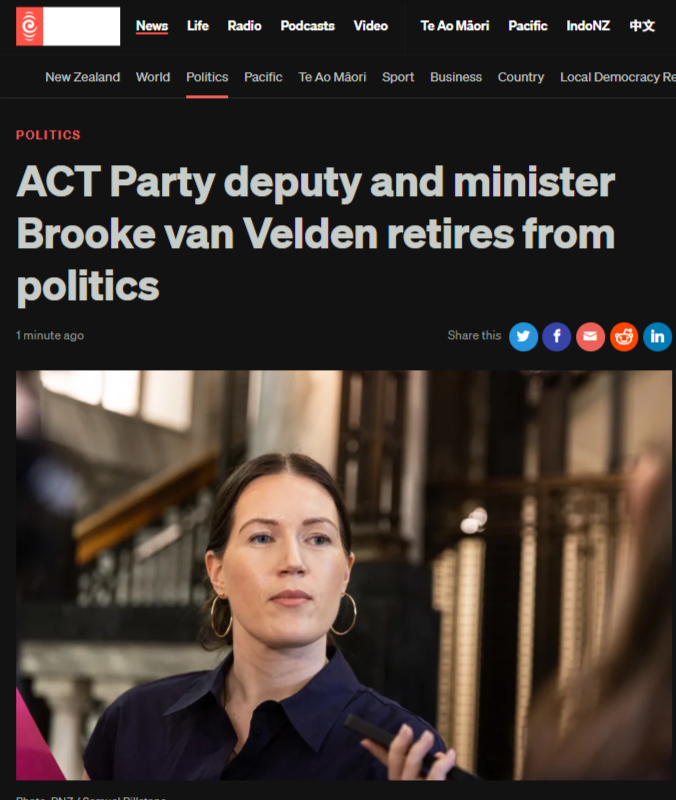
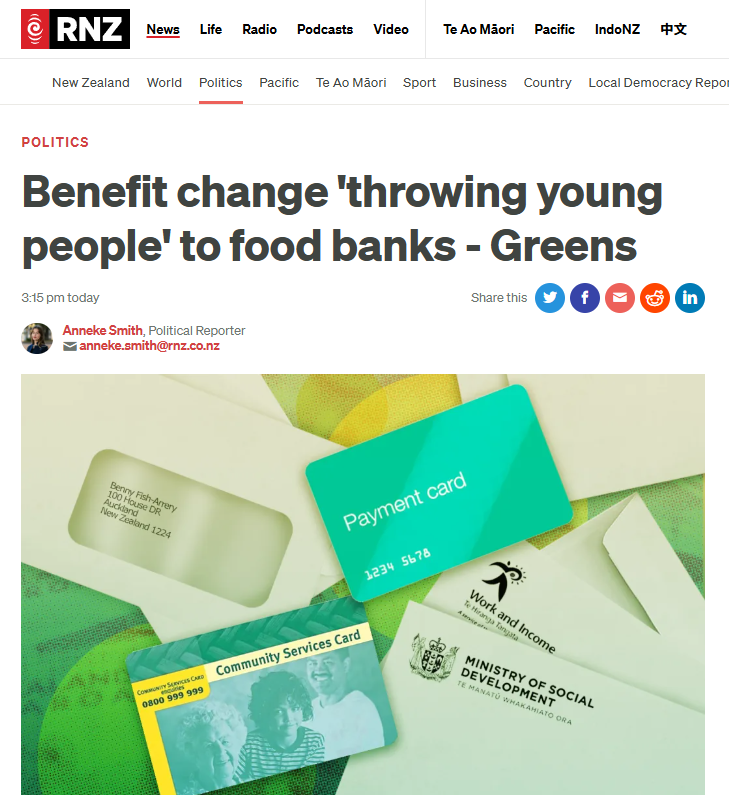
Louise Upston stands in Parliament and admits her policy will drive more young people to food banks. She knows this. The Ministry of Social Development told her. The Regulatory Impact Statement confirmed it. Yet she pushes ahead anyway, cutting 4,300 eighteen and nineteen-year-olds from the Jobseeker benefit from November 2026. The Green Party’s Ricardo Menéndez March names it plainly: the government is “willingly throwing young people towards food banks”. This is not accidental harm—this is calculated cruelty dressed up as “personal responsibility”.[1][2][3][4][5][6]
Cui bono? The coalition government, drowning in its own failure to meet employment targets, cooks the books by removing rangatahi from the welfare rolls to claim false progress toward its 50,000 Jobseeker reduction target by 2030. Cui malo? Young Māori and Pacific peoples—already facing unemployment rates of 10.5% and 12.1% respectively, double the 5.3% national average—are abandoned to destitution while the government hands $14 billion in tax cuts to high earners and $2.9 billion to landlords.[2][3][7][8][9][10][11][12]
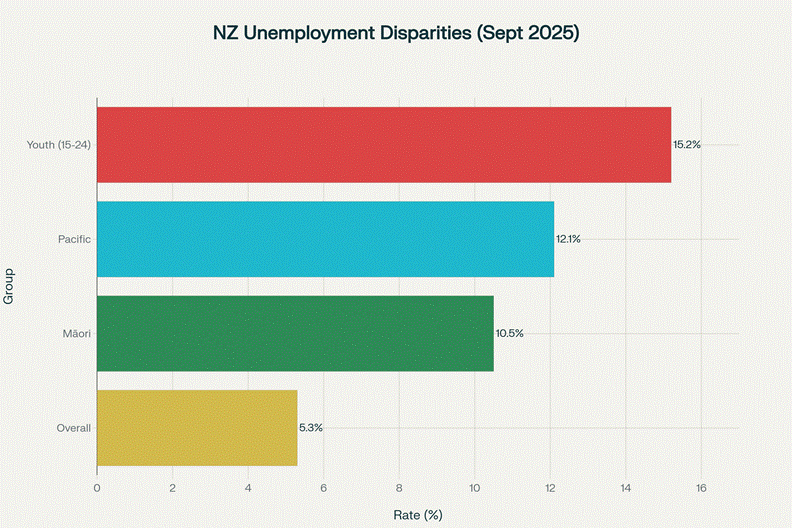
Unemployment rates show severe disparities: youth unemployment at 15.2% is nearly three times the overall rate, while Māori and Pacific peoples face double the overall unemployment rate.
This is neoliberal capitalism in its purest, most predatory form: transferring wealth upward while punishing the poor for an economic crisis they did not create. It violates every principle of tikanga—whanaungatanga (obligation to collective care), manaakitanga (unconditional hospitality and support), kaitiakitanga (guardianship of vulnerable members), and rangatiratanga (self-determination and mana-enhancing governance). The policy is mauri-depleting at its core.[13][14][15][16]
Te Kauwae Runga: Historical Context—Ruthanasia Redux
New Zealand has walked this path before. In 1991, Finance Minister Ruth Richardson slashed welfare benefits as part of the “Mother of All Budgets,” implementing what critics dubbed “Ruthanasia”. Richardson, like Upston, believed welfare created “dependency” and that cutting benefits would force people into self-reliance. The result? Poverty exploded, foodbank use skyrocketed, and the damage reverberated through generations.[17][18][19][20][21][22]
The Bolger government’s neoliberal reforms continued the work begun under Roger Douglas’s “Rogernomics” in the 1980s—dismantling the welfare state, deunionizing the workforce through the Employment Contracts Act 1991, and imposing “user pays” in health and education. The principle was clear: individual responsibility over collective wellbeing, market discipline over state protection. For Māori, already bearing the wounds of colonization and land dispossession, these policies deepened poverty, unemployment, and intergenerational trauma.[18][19][23][20][22][12][24][25][26][27][28][17]
The Waitangi Tribunal has repeatedly found the Crown in breach of Treaty obligations through welfare policies that fail to actively protect Māori wellbeing or consult adequately with iwi. The 2023 Housing Policy and Services inquiry found the Crown breached Treaty principles of active protection, equity, and good government by formulating policies without Māori consultation, failing to collect adequate data on Māori hardship, and refusing to reform welfare systems to improve Māori outcomes. Upston’s benefit cuts repeat this pattern: no Treaty consultation, no acknowledgment of disproportionate Māori harm, no regard for whakapapa or collective responsibility.[24][29][30][31]
Louise Upston herself has deep roots in National’s neoliberal wing. Elected in 2008, she gave her maiden speech calling for “making New Zealand safe again” through harsher criminal sentences, framing the world as “police are good, criminals are bad. It’s that simple”. As Minister for Corrections (2016-2017), she required all corrections officers to carry pepper spray and launched mental health pilots for prisoners—punitive measures wrapped in rehabilitation rhetoric. Now, as Minister for Social Development, she champions benefit sanctions, mandatory reapplications every six months, and traffic light systems to categorize and punish beneficiaries. She promotes National’s claim that benefit sanctions are “effective in encouraging movement from benefits to work,” despite the Welfare Expert Advisory Group explicitly rejecting this claim.[32][33][34]
Upston’s rhetoric mirrors Christopher Luxon’s personal responsibility gospel. Luxon declares: “I will never accept that a life on welfare is a good option for young people”. He insists there are “jobs available in every shop front window in this country”—a statement divorced from reality in November 2025, when unemployment sits at a nine-year high of 5.3%, with 160,000 people unemployed and 18,000 jobs lost in the past year. Youth unemployment is 15.2%—yet Luxon blames young people for not trying hard enough.[1][3][35][10][36][11][37][38][39]
This is textbook neoliberal deflection: frame systemic unemployment as individual moral failure, then punish people for conditions created by your own economic mismanagement.[22][40][12]
Te Kauwae Raro: Deconstructing the Policy—Dog Whistles and Epistemic Gatekeeping
The policy operates through a Parental Assistance Test comprising two components: a parental income test (parents earning above $65,529 disqualify their child) and a parental support gap test (proving inability to rely on parents). The $65,529 threshold is absurdly low—below the average household income of $134,599—ensuring thousands of working-class families are caught.[2][3][4][41]
Rhetorical Devices Exposed:
“Welfare Trap” Fallacy: Upston claims going on welfare young “is a trap, with recent modelling suggesting people under 25 on Jobseeker will spend an average of 18 or more years on a benefit”. This is correlation presented as causation. The modelling does not prove welfare causes long-term dependency—it may equally reflect structural barriers to employment, lack of training opportunities, discrimination, or health conditions. Susan St John from the University of Auckland notes the policy assumes there are jobs available when unemployment is rising and businesses are shedding staff.[3][4][42][43][2]“Personal Responsibility” Dog Whistle: Luxon insists “personal responsibility is not only one of the National Party’s core values... work is the central solution to poverty”. This frames poverty as a character flaw rather than a structural issue. It echoes the Reagan-Thatcher “welfare queen” myth used to demonize beneficiaries while ignoring economic inequality, discrimination, and lack of opportunities.[1][19][44][22][34][3]“Parents Should Support Their Children” Deflection: The policy transfers responsibility from the state to parents, ignoring that many parents at $65,529 are already struggling to meet their own needs. The policy also assumes functional family relationships, erasing young people fleeing abuse, homelessness, or family breakdown. While the “parental support gap test” theoretically covers these cases, verification requires medical or counseling proof—a bureaucratic barrier that will exclude many in crisis.[42][2][3]“Education, Training, or Employment” False Choice: Upston and Luxon repeatedly say “our expectation is that they are in further education, training or a job”. But the policy offers no increase in education funding, apprenticeship places, or job creation programs. Youth employment opportunities have actually declined—filled jobs for 15-19 year olds dropped by 9,758 (down 8.2%) in the year to August 2025. The government cut 2,100 apprenticeship scheme sectors in January 2025, limiting access to trades training. This is not about helping young people—it is about cutting costs.[4][9][45][43][2][3]
Epistemic Gatekeeping: The Ministry of Social Development recommended more education and training services as the preferred option to reduce young people on Jobseeker. Upston rejected this advice, choosing instead to introduce the parental tests. She then brought the policy forward from July 2027 to November 2026—speeding up implementation to meet the government’s failing Jobseeker reduction target. As Chris Hipkins observes, “they failed on all their targets, now they’re just trying to find ways of manipulating the numbers”.[7][5][2][3]
Analysis: Five Hidden Connections Exposing the Network
Connection 1: The $163.7 Million Sleight of Hand
The policy is projected to save $163.7 million over four years—a figure derived by cutting support to 4,300 young people annually by 2027/28. But consider the context: the government is spending $14 billion on income tax cuts over five years and $2.9 billion on landlord tax breaks over four years. That is $16.9 billion transferred to the wealthy while $163.7 million is clawed back from the most vulnerable.[2][3][4][41][46][9][12]
The arithmetic is damning: $163.7 million / $16.9 billion = 0.97%. Benefit cuts fund less than 1% of the coalition’s tax giveaways. This is not fiscal responsibility—it is ideological punishment of the poor to justify rewarding the rich.[22][40][12]
Connection 2: Food Banks as Outsourced Welfare
Upston admits her policy will increase demand on food banks. The Regulatory Impact Statement explicitly states: “Upston’s preferred policy would lead to an increase in demand for assistance provided by community service providers or other non-governmental organisations, like food banks”. This is the privatization of welfare: transferring state responsibility to charities and volunteers.[5][2]
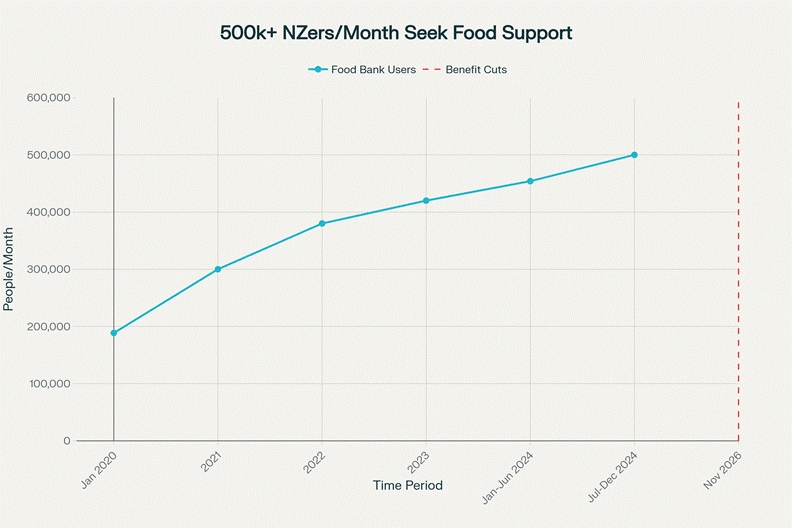
Food bank demand has exploded 165% since the pandemic, with over half a million New Zealanders now accessing food support monthly. The government’s own regulatory impact statement predicts this will increase further when benefit cuts take effect in November 2026.
Food banks are already overwhelmed. Over 500,000 New Zealanders accessed food support monthly in late 2024—a 165% increase since the pandemic. One in ten Kiwis now rely on food banks each month. Manukau Foodbank, one of the largest, has capped numbers and introduced online booking because demand exceeds supply. Auckland City Mission has no secure funding beyond June 2025. The government allocated $15 million for food banks in 2025/26—a one-off grant, not permanent funding—while admitting it “won’t be enough” to meet growing demand.[47][48][49][50][51][52][53]
The government is knowingly pushing thousands more young people onto overstretched food banks. This is not an unintended consequence—it is the designed outcome. The state abdicates its Treaty and moral obligations, outsourcing poverty management to under-resourced charities while funneling billions to landlords.
Connection 3: Māori and Pacific Youth Sacrificed
Māori and Pacific peoples are disproportionately affected. Māori unemployment is 10.5%, Pacific unemployment is 12.1%—both roughly double the 5.3% national rate. Māori children experience material hardship at 23.9%, Pacific children at 28.7%, compared to 13.4% overall. These disparities are not accidents—they are the result of structural racism embedded in employment, education, housing, and criminal justice systems.[10][11][54][55][56][25][26][27][57][58][59]
A 2024 Ministry of Justice study confirmed Māori continue to experience 38% of crime victimization despite being 15% of the population, driven by poverty, state housing, and unemployment. A two-year Police review found “bias” and “structural racism” within policing, with Māori men more likely to be stopped, prosecuted, and tasered. Māori make up 51% of the prison population. These inequities are rooted in colonization, land dispossession, and ongoing Crown breaches of Treaty obligations.[24][25][29][26][30][31][59]
Upston’s benefit cuts will hit Māori and Pacific youth hardest. They are overrepresented on Jobseeker, more likely to have parents earning below $65,529, and more likely to face discrimination in hiring. The policy violates Article Two of Te Tiriti, which guarantees tino rangatiratanga (self-determination and control over resources and wellbeing) and Article Three, which promises equal rights and active Crown protection. By cutting welfare without Māori consultation or impact analysis, the Crown breaches the Treaty principles of partnership, active protection, equity, and good government.[2][25][29][60][61][28][31][58][24]
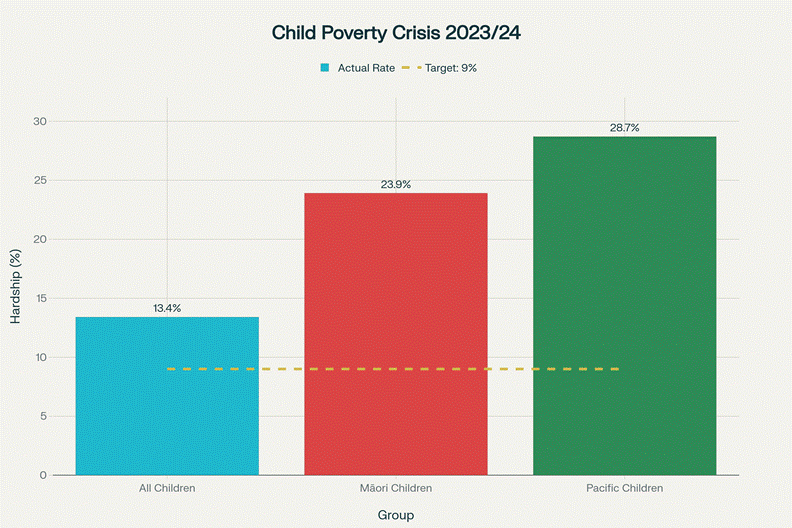
Nearly one in four Māori children (23.9%) and more than one in four Pacific children (28.7%) live in material hardship, going without essentials like food, heating, and doctor visits. The government missed its 9% target by 4.4 percentage points.
Connection 4: Cooking the Books to Meet Targets
The coalition government set a target to reduce Jobseeker numbers by 50,000 by December 2030. By June 2025, Jobseeker numbers had risen to 216,000—26,000 above the December 2023 baseline and 76,000 away from the target. The target is “at risk” of failure.[62][63][64][65][8][9]
Upston insists the youth benefit cuts are “not about the target”. But the math tells a different story. Cutting 4,300 young people from Jobseeker annually (approximately 17,800 over four years) directly reduces the official Jobseeker count—even if those young people remain unemployed and destitute. This is statistical manipulation, not genuine employment growth.[2][66][7][41][46][9]
Labour leader Chris Hipkins calls it “cooking the books”: “They failed on all of their targets, now they’re just trying to find ways of manipulating the numbers to make it look not quite so horrific for them”. The target includes people who die, go to prison, move overseas, or switch to superannuation—not just people who find work. Upston herself admits the policy could help meet the target but refuses to revise it. This is not about helping young people into jobs—it is about hiding the government’s economic failure.[66][7]
Connection 5: Neoliberal Continuity—National’s Ideological Project
The policy must be understood within National’s long neoliberal project. From Rogernomics (1984-1988) to Ruthanasia (1990-1993) to the Key government’s partial privatizations (2008-2017), National has consistently pursued market fundamentalism, welfare retrenchment, and individual responsibility rhetoric. The current coalition’s policies—repealing Fair Pay Agreements, removing the Reserve Bank’s employment mandate, cutting public sector jobs, reducing benefit indexation from wages to inflation, tightening benefit sanctions—are all drawn from the neoliberal playbook.[32][17][18][23][67][20][21][68][69][12]
This is not “back on track” (the coalition’s slogan)—it is regression to 1990s-style austerity in an economy with higher unemployment, deeper inequality, and climate crisis. The coalition’s economic policy has produced a near-recession, with GDP shrinking, jobs disappearing, and business confidence plummeting. Instead of Keynesian stimulus or investment in education and infrastructure, the government imposes fiscal austerity—cutting welfare, freezing public sector wages, and slashing climate and social programs—while gifting billions to landlords and high earners.[35][10][67][22][40][70][12]
This ideological commitment overrides evidence. The Welfare Expert Advisory Group found benefit sanctions do not improve employment outcomes. International research shows punitive welfare reduces social cohesion and entrenches poverty. Treasury forecasts unemployment will remain high through 2026. Yet the coalition presses on, driven not by evidence but by neoliberal dogma that markets discipline, welfare corrupts, and poverty is a personal failing.[8][71][17][19][10][72][21][44][22][34][12]
Implications: Quantified Harm and Threatened Mana
The harm is measurable and severe:
- 4,300 young people will lose income support annually by 2027/28
- Increased food bank demand at a time when 500,000+ people/month already seek food assistance—a system at breaking point
- Worsening child poverty: 156,600 children already live in material hardship (13.4%), with the government missing all three 2023/24 targets by wide margins
- Deepening Māori and Pacific inequality: Māori children at 23.9% material hardship, Pacific children at 28.7%—both worsening
- Youth unemployment at 15.2% while government cuts benefit access—guaranteeing increased homelessness, crime, mental health crises, and long-term scarring
Tikanga Violations:
- Whanaungatanga (collective care and reciprocity): The policy severs collective responsibility, abandoning whānau in crisis to fend for themselves
- Manaakitanga (unconditional support and hospitality): Benefit cuts impose conditional, punitive support—violating the ethic of care without judgment
- Kaitiakitanga (guardianship of vulnerable): The Crown fails its duty as kaitiaki of rangatahi wellbeing, actively harming those it is obligated to protect
- Rangatiratanga (self-determination): The policy strips young Māori of mana and autonomy, forcing dependence on parents or destitution, denying pathways to rangatira (leadership) status
The Waitangi Tribunal has repeatedly held that Crown welfare policies which disproportionately harm Māori without consultation or mitigation breach Treaty obligations. Upston’s benefit cuts—implemented without Treaty analysis, iwi consultation, or Māori impact assessment—continue this pattern of Crown betrayal.[24][29][30][31]
Rangatiratanga Action and Moral Clarity

Ivor Jones The Māori Green Lantern Fighting Misinformation And Disinformation From The Far Right
The path forward requires constitutional transformation and economic justice:
- Repeal the benefit cuts immediately. Restore full Jobseeker access for 18-19 year olds and implement the Ministry of Social Development’s preferred option: investment in education, training, numeracy, and literacy support.
- Index benefits to wages, not inflation, reversing the coalition’s 2024 policy that will strip $670 million from beneficiaries over four years.
- End benefit sanctions. The Welfare Expert Advisory Group and international evidence confirm sanctions do not improve employment and increase poverty.
- Guarantee secure, permanent food bank funding, ending the cycle of one-off grants that leave charities unable to plan.
- Implement Treaty-compliant welfare reform. Co-design policies with iwi, collect comprehensive data on Māori outcomes, and uphold the principles of active protection, partnership, equity, and rangatiratanga.
- Tax wealth, not poverty. Reverse the $16.9 billion in tax cuts to landlords and high earners, and redirect resources to education, housing, health, and employment programs.
- Create jobs, don’t cut benefits. Public investment in green infrastructure, social housing, and community services can provide meaningful work for rangatahi while addressing climate and inequality crises.
Louise Upston admits her policy will drive young people to food banks. Christopher Luxon admits the government is failing its employment targets. Yet they push ahead, sacrificing 4,300 rangatahi annually to protect an ideological commitment to neoliberalism. This is not governance—it is institutional violence against the vulnerable.
The mauri of this policy is toxic. It depletes rather than enhances life force. It severs whakapapa connections rather than strengthening them. It punishes poverty rather than addressing its causes. It violates tikanga at every turn.
Kia kaha. Ka tū. We stand with rangatahi. We stand with whānau. We stand against a government that willingly throws young people to the wolves while feeding billions to the already-wealthy. The taiaha is drawn. The Ring empowers. Every essay: rangatiratanga manifested.