"How Winston Peters Orchestrated a Corporate Takeover Through Political Donations" - 4 September 2025
The Puppet Masters of KiwiRail: A Damning Web of Corruption and Conflicts
Kia ora koutou,
The appointment of Scott O'Donnell to the KiwiRail board represents nothing short of a brazen corporate takeover of New Zealand's national rail infrastructure, orchestrated through a calculated system of political donations and backroom deals that would make Tammany Hall blush. This is not merely a case of poor judgment—it is a systematic corruption of democratic governance that exposes the rotten core of New Zealand's political establishment.
Political deal-making behind closed doors
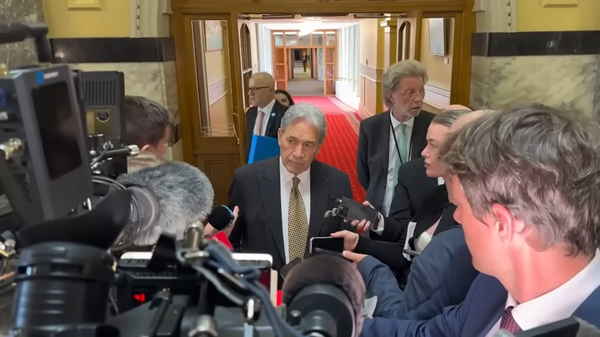
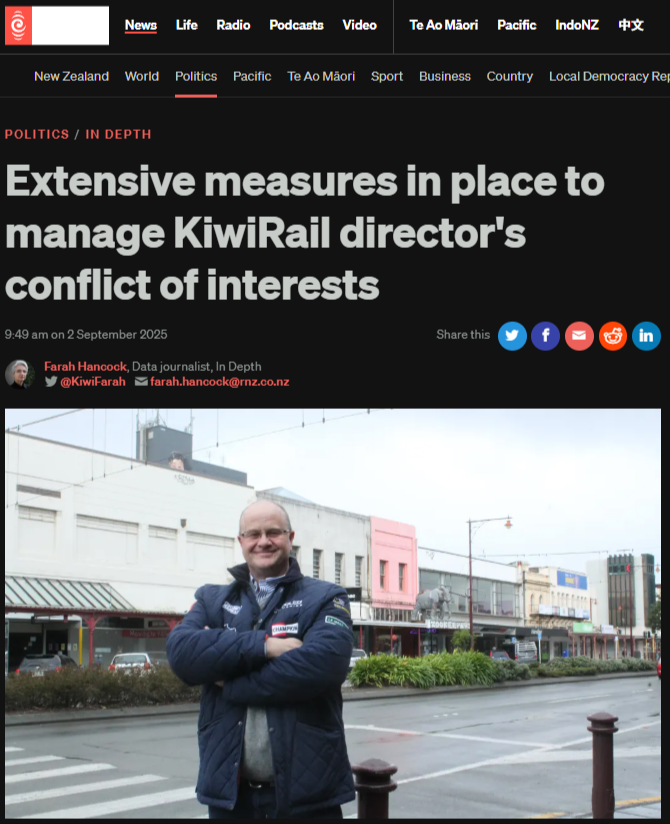
The timeline of events reveals a corruption so blatant it borders on parody. In July 2024, Dynes Transport Tapanui—a company where O'Donnell serves as one of four directors—deposited $20,000 into NZ First's coffers. Less than a year later, Winston Peters, the Rail Minister and NZ First leader, rewarded this loyalty by appointing O'Donnell to the KiwiRail board, despite conflicts so extensive that even the newly appointed KiwiRail chair Sue Tindal expressed alarm.
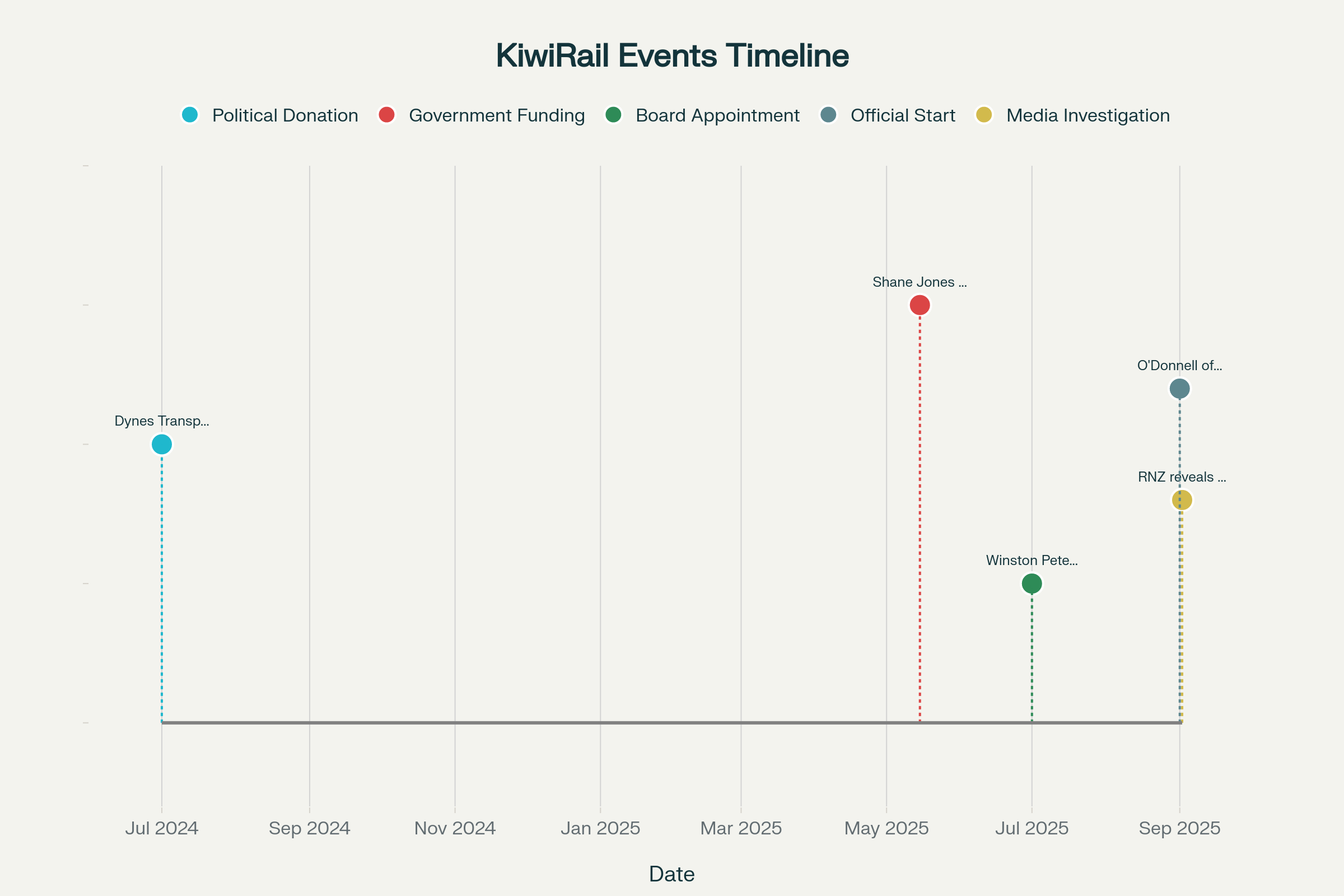
Timeline of Suspicious Events: From Donation to Appointment
The Richardson Empire's Stranglehold on Rail
O'Donnell's tentacles extend through a corporate empire that makes Standard Oil's monopolistic practices look quaint by comparison. Through his 75% ownership of H.W. Richardson Group, O'Donnell controls a sprawling network of 46 companies employing 2,000 people. This industrial behemoth generates $3 billion annually and includes multiple entities that directly compete with or supply services to KiwiRail.
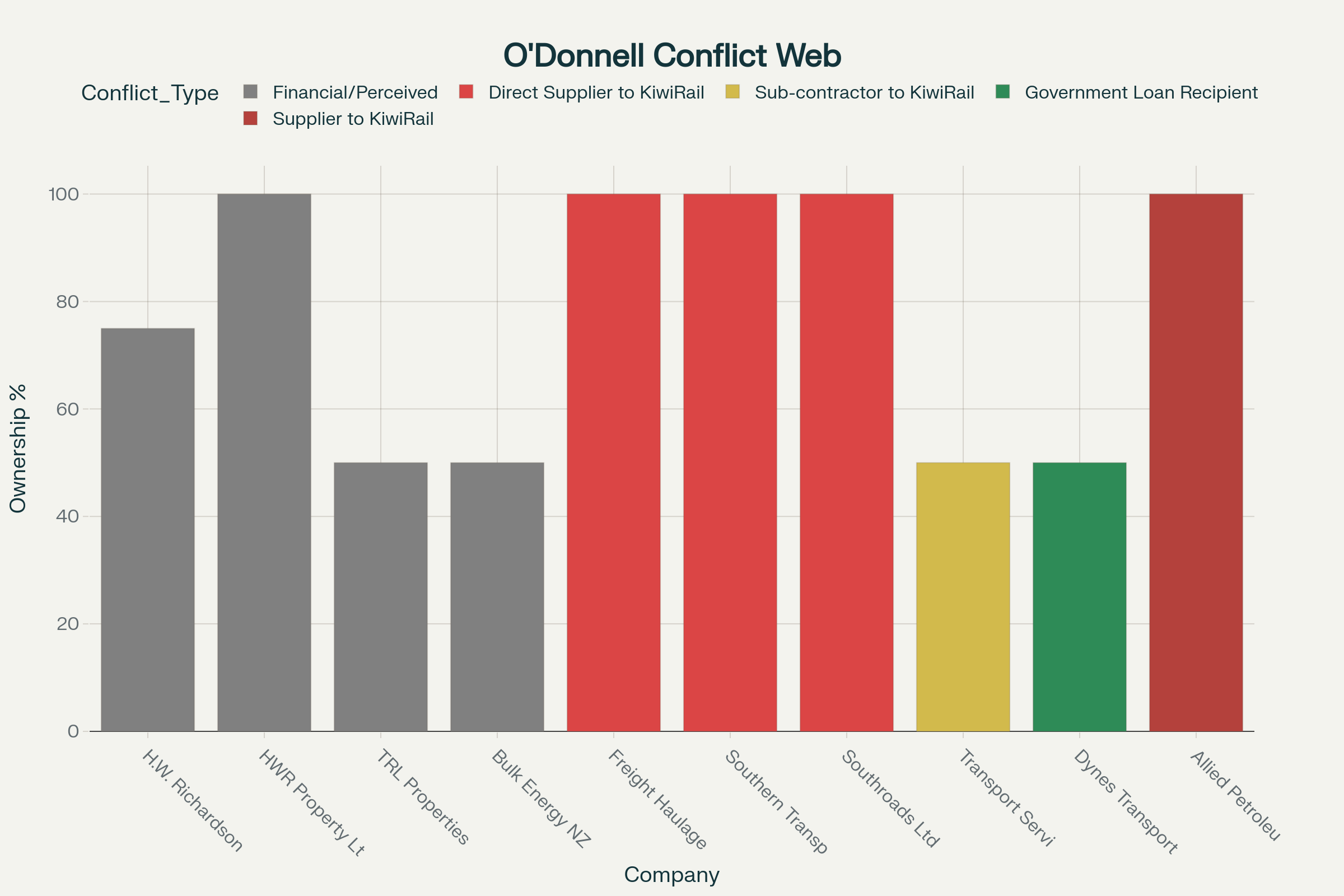
Scott O'Donnell's Ownership Stakes in Conflicted Companies
The brazenness of this arrangement becomes clear when examining the specific conflicts. O'Donnell's companies don't just compete with KiwiRail—they actively siphon business from the state-owned enterprise while he sits on its board. Freight Haulage Ltd operates rail sidings and supplies various goods to KiwiRail "at normal market rates"—a euphemism that masks the inherent corruption of having a board member whose companies profit directly from KiwiRail contracts. Southern Transport Company Ltd contracts with KiwiRail for bulk goods transport, while Transport Services Southland Ltd serves as a sub-contractor, carting coal when rail lines are down.
Corporate puppet masters pulling the strings
Most egregiously, Dynes Transport Tapanui—the very company that bought O'Donnell's board seat through its $20,000 donation—received an $8.2 million government loan for the Mosgiel rail and freight hub project. This represents a staggering 410-to-1 return on their political investment, a corruption so naked it would embarrass a banana republic dictator.
Treasury's Capitulation to Political Pressure
The Treasury's handling of O'Donnell's appointment reveals an institution that has abandoned its duty to protect public assets in favor of political accommodation. Internal documents obtained through Official Information Act requests show that KiwiRail chair Sue Tindal was so alarmed by O'Donnell's conflicts that she recommended removing him from the appointment process while conflicts were analyzed.
Tindal's handwritten "interests diagram" identified 11 companies where conflicts existed, yet Treasury officials meekly acquiesced to political pressure. An email between Treasury officials reveals Tindal's prescient warning that O'Donnell's interests in HW Richardson "would significantly conflict with KiwiRail" and questioned "where his loyalties would lie in many different types of decisions that would overlap between HWR and KiwiRail".
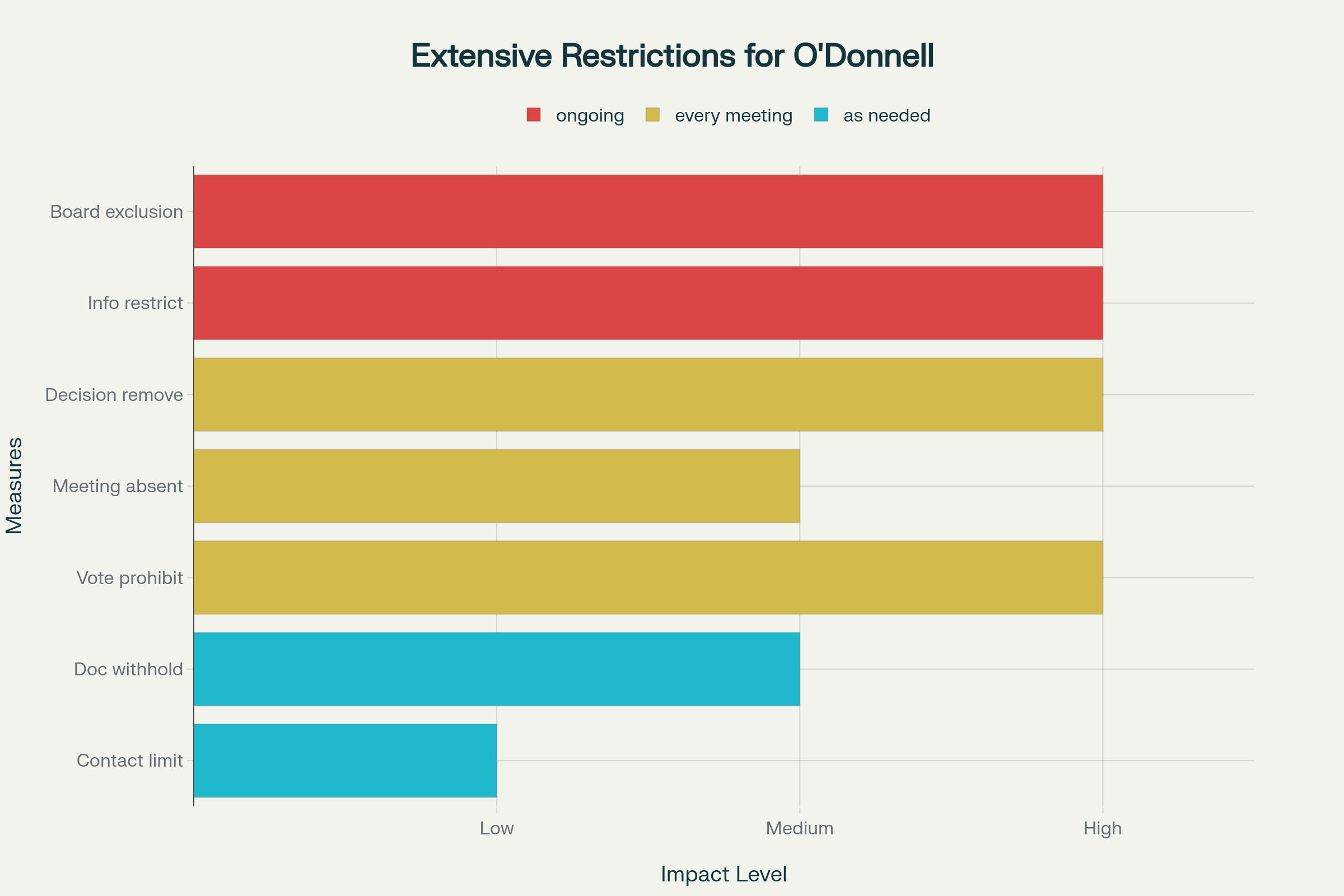
Extensive Conflict Management Restrictions on O'Donnell
Treasury's response to these grave concerns was to construct an elaborate charade of conflict management measures that would make a Potemkin village look substantial. Seven separate restrictions were imposed on O'Donnell, including eliminating his access to sensitive information, vetting board agendas before sending them to him, and requiring constant declarations of conflicts. These measures don't resolve the conflicts—they institutionalize them while creating the illusion of propriety.
The Shane Jones Money Trail
The corruption extends beyond O'Donnell's appointment to encompass a broader pattern of rewarding political donors through discretionary government funding. Regional Development Minister Shane Jones, himself a NZ First stalwart, announced the $8.2 million loan to Southern Link Property Limited—co-owned by Dynes Transport—with suspicious timing.
This announcement came mere days after a competing project was revealed, suggesting that Jones fast-tracked funding to benefit NZ First's donors at the expense of genuine competitive processes. The loan ostensibly supports an "inland port" connecting Port Chalmers to Mosgiel, but the project's primary beneficiaries are the same corporate interests that purchased political influence through their NZ First donation.
O'Donnell's Deceptive Disclosure
O'Donnell's conduct throughout this process demonstrates a calculated deception that borders on fraud. Initially, he supplied Treasury with a list of only four companies where conflicts might exist. This deliberate underreporting forced KiwiRail chair Sue Tindal to conduct her own investigation using Companies Office records, ultimately identifying 11 companies—nearly three times O'Donnell's declared conflicts.
This pattern of minimizing and concealing conflicts extends to O'Donnell's refusal to respond to media inquiries about his appointment or explain why Dynes Transport donated to NZ First in 2024. His silence speaks volumes about the indefensible nature of this arrangement.
The Systematic Weakening of Democratic Institutions
Political scientist Bryce Edwards, director of the Integrity Institute, characterized this situation as "Mickey Mouse" governance, noting the abundance of qualified logistics experts who could serve on KiwiRail's board without creating such extensive conflicts. Edwards identified this case as symptomatic of "systemic integrity risks—cronyism, conflicts of interest, and the potential for policy capture".
The appointment highlights fundamental weaknesses in New Zealand's political finance laws and the governance of discretionary funds. Edwards advocates for cooling-off periods between political donations and board appointments, stating: "That would give the public more confidence in these board appointments".
Peters' Brazen Defense of the Indefensible
Winston Peters' response to scrutiny reveals the contempt with which New Zealand's political elite views public oversight. Peters dismissively claimed that the donation "played no part" in O'Donnell's appointment while simultaneously arguing that Treasury "did not advise against" the appointment. This circular logic—using Treasury's failure to explicitly reject the appointment as justification for proceeding—demonstrates the weaponization of bureaucratic processes to shield political corruption.
Peters' assertion that O'Donnell would be "effective in his role" despite the extensive restrictions placed on him borders on the absurd. How can a board member be effective when he must be excluded from sensitive information, recuse himself from discussions, and operate under constant supervision due to conflicts of interest?
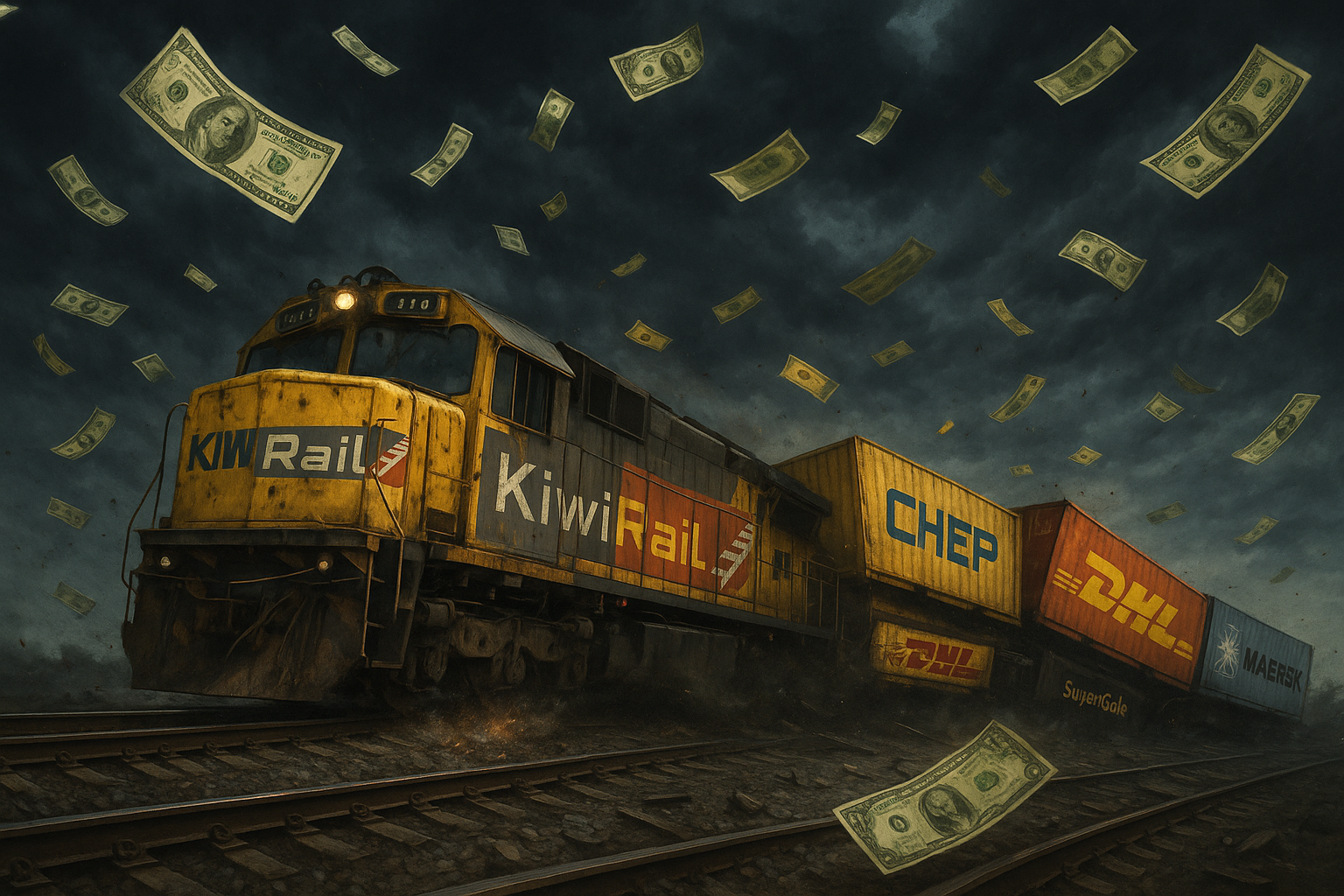
KiwiRail derailed by corporate conflicts
The Broader Pattern of Corporate Capture
This scandal extends far beyond a single appointment to reveal the systematic capture of New Zealand's democratic institutions by corporate interests. The HW Richardson Group's tentacles extend throughout the South Island's transport and logistics sector, creating a vertically integrated monopoly that now has a direct voice in determining KiwiRail's strategic direction.
The timing of key decisions—from the NZ First donation in July 2024 to the government loan announcement in May 2025 to O'Donnell's appointment in July 2025—reveals a coordinated campaign to monetize political influence. This represents not isolated corruption but systematic policy capture by vested interests.

The Māori Green Lantern Fighting Misinformation And Disinformation From The Far Right
Democracy for Sale
The Scott O'Donnell appointment represents a watershed moment for New Zealand democracy—a brazen demonstration that public institutions are for sale to the highest bidder. The $20,000 investment by Dynes Transport has yielded an $8.2 million government loan and direct access to KiwiRail's boardroom, representing a corruption so transparent it mocks the very concept of public service.
Winston Peters and his NZ First cronies have transformed New Zealand's rail system into a corporate feeding trough, where political donations purchase policy outcomes and board positions. The Treasury's capitulation to this arrangement, despite clear warnings from KiwiRail's own chair, reveals an institutional weakness that threatens the foundations of democratic governance.
This is not politics as usual—it is the systematic looting of public assets by private interests, facilitated by politicians who have abandoned any pretense of serving the public good. The people of New Zealand deserve better than this carnival of corruption masquerading as governance.