"Imported Death: How Billionaire Networks, Project 2025, and Corporate New Zealand Dismantled Māori Mental Health" - 4 Noveber 2025
From American Think Tanks to Waikato Hospital Floors—The Money Trail Behind Aotearoa's Mental Health Crisis
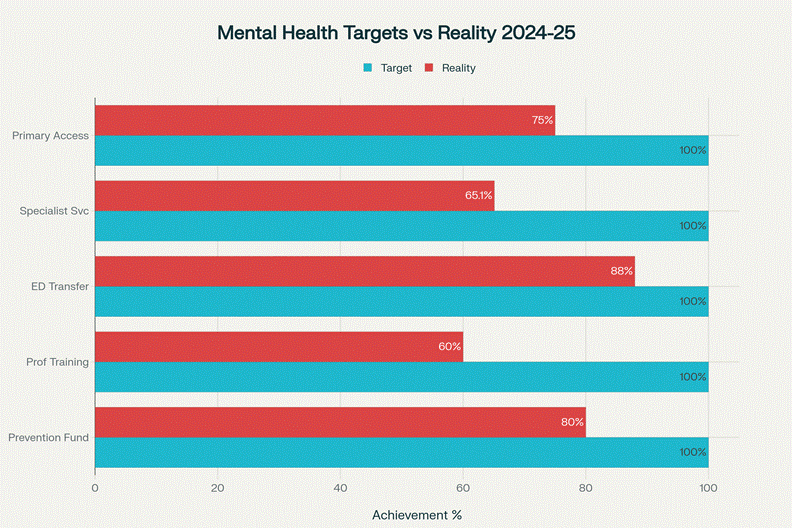
Tēnā koutou katoa. While New Zealand’s mental health crisis deepens—with 35,000 people accessing crisis services annually, one in three youth waiting more than three weeks for care, and Māori receiving only 11% of mental health funding despite comprising 17% of the population and experiencing 30% mental distress rates—the coalition government redirected $9.72 million earmarked for frontline mental health services to fund a controversial innovation scheme while dismantling Te Aka Whai Ora under urgency. This is not policy failure. This is ideological warfare dressed as fiscal responsibility.[1][2][3][4]
The template is American. The money trail leads to billionaires. And the damage falls on te iwi Māori.
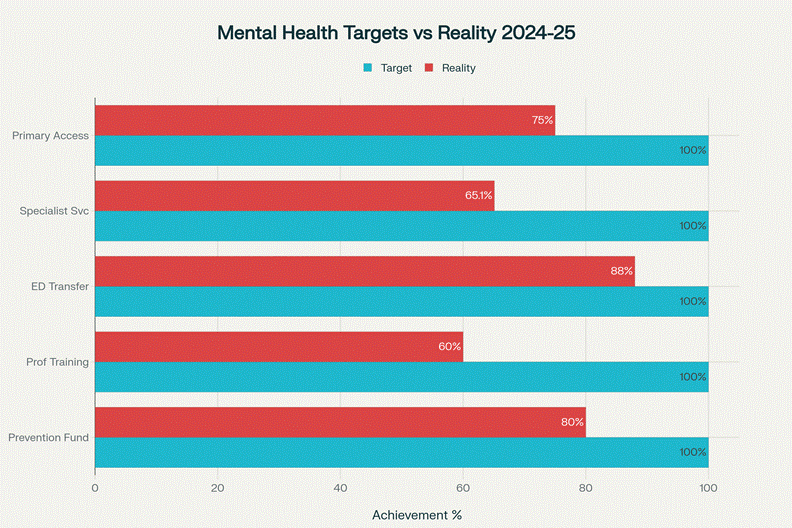
Comparison of government mental health targets against current service delivery reality, showing significant gaps in achieving stated goals for access and wait times.
Historical Roots: The Corporate Blueprint
David Seymour’s Regulatory Standards Bill, which passed its first reading in May 2025, did not emerge from democratic demand. It originated from a 2001 report commissioned by the Business Roundtable—now the New Zealand Initiative—written by former Treasury director Dr Bryce Wilkinson. This bill has failed three times since 2006, yet the coalition agreement guaranteed its passage.[5][6][7]
Emeritus Professor Jane Kelsey identifies the bill’s objective: “to bind governments forever to the neoliberal logic of economic freedom.” It establishes a Regulatory Standards Board appointed by Seymour himself, empowered to publicly critique legislation that doesn’t align with libertarian principles prioritizing property rights over social, environmental, and Te Tiriti considerations.[8][9][5]
The international connection is explicit. The New Zealand Initiative and Taxpayers’ Union are both official partners of the Atlas Network, a global coalition of 550 think tanks in over 100 countries founded in 1981 to promote free-market fundamentalism. Wilkinson’s lobbying incorporated the work of Richard A Epstein, a fringe American libertarian thinker associated with right-wing think tanks.[10][11]
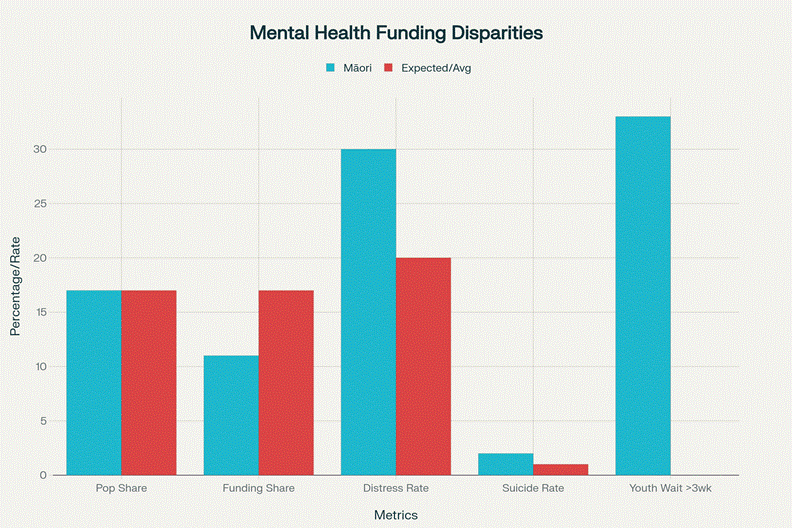
Stark disparities showing Māori receive only 11% of mental health funding despite comprising 17% of the population and experiencing 30% mental distress rates and double the suicide rate.
The American Parallel: Project 2025 and DOGE
The similarities to Trump’s Project 2025 are undeniable. Russell Vought, Director of the Office of Management and Budget, is a key architect of Project 2025—the Heritage Foundation’s 920-page blueprint to reshape the federal government. Vought founded the Center for Renewing America, which seeks to “renew a consensus of America as a nation under God” and advocates Christian nationalism—the fusion of American identity with Christian doctrine.[12][13][14]
Vought drafted over 350 executive orders, regulations and memos for Trump’s second term, creating what he called “shadow agencies”. His vision includes banning pornography, dismantling federal oversight, and deploying military for domestic law enforcement. During the October 2025 government shutdown, Vought initiated mass firings of federal workers—an aggressive escalation beyond typical shutdown procedures.[15][16]
Elon Musk’s Department of Government Efficiency (DOGE), created via executive order, slashed 12% of the federal workforce—approximately 260,000 workers—through “threats of firings, buyouts and early retirement offers”. Despite promises of $2 trillion in savings, DOGE claimed only $170 billion while gutting agencies like USAID, which lost nearly 20,000 workers.[17][18][19]
The parallel in Aotearoa? Seymour’s Regulatory Standards Bill operates like DOGE—an advisory body with non-binding recommendations that creates political pressure on ministers to conform to ideological principles or face public criticism. The bill would cost an estimated $18 million annually—money that could employ dozens of mental health workers.[5][20][21]
The Money: Who Benefits?
The coalition’s mental health failures are not accidental—they’re funded. ACT Party leader David Seymour received nearly $1 million in donations in 2024, including $100,000 from billionaire Graeme Hart—New Zealand’s richest man, worth US$10.6 billion. Hart’s Rank Group donated $700,000 to right-wing parties between 2021-2023—$200,000 to ACT, $400,000 to National, $100,000 to NZ First.[22][23][24]
In 2023, National raised $10.4 million in donations—more than double any other party. ACT received $4.3 million. Donors stick to one side of the political spectrum, and one admitted large donations help “get a meeting with the minister”.[25][26]
Internationally, the Heritage Foundation raised over $150 million in 2023—described as “a vote of confidence” in Project 2025. Nearly 40 Project 2025 advisory organizations received funding from dark-money groups linked to Leonard Leo—the Federalist Society co-chairman who shaped Trump’s judicial appointments and received a $1.6 billion gift, likely the largest political donation in U.S. history.[27][28][29]
Six billionaire fortunes funneled over $120 million into Project 2025 advisory groups since 2020, including funding from the Koch brothers, who donated at least $4.8 million to Heritage between 1998-2012.[30][31]
The Mental Health Crisis: Quantified Harm
While corporations fund ideological restructuring, the mental health system collapses:
Access Declining: Specialist mental health service access dropped from 3.8% of the population (2018-19) to 3.3% (2023-24). The Access & Choice programme missed its target by over 100,000 people—reaching 207,000 instead of 325,000 annually.[32][33]
Workforce Crisis: Psychiatrist numbers declined from 518 FTE (2022) to approximately 470 (2024). Vacancy rates range from 20-31% in some regions, with Rotorua’s child and adolescent services cut by 90%. A draft report showed 1,485 frontline mental health workers needed immediately—including 145 psychiatrists and 145 clinical psychologists—but these numbers were removed from the final report to Minister Doocey.[34][35][36][37]
Youth Abandoned: Only 65.1% of youth aged 0-18 were seen within three weeks in 2023-24—far below the government’s 80% target. Almost 1 in 3 rangatahi aged under 24 waited longer than 3 weeks. In rural Waikato, over 200 tamariki/rangatahi have open referrals, with 10 per month waiting for ADHD assessments.[38][39][40]
Budget Redirections: Minister Matt Doocey redirected $9.72 million in forecasted “underspends” from Health NZ’s mental health budget to fund his $10 million Innovation Fund after Treasury rejected his budget bid. The Royal Australian and New Zealand College of Psychiatrists condemned this, noting 650 mental health vacancies including 130 psychiatrists. Meanwhile, $24 million over four years went to Gumboot Friday—despite official advice that it didn’t meet funding criteria.[2][41]
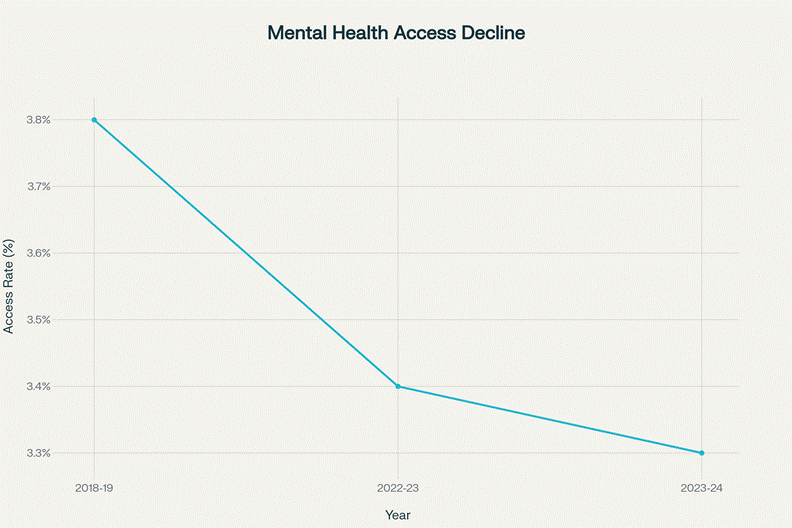
Downward trend in both specialist mental health service access rates and psychiatrist workforce numbers, showing system deterioration despite rising demand.
Māori Health: The Deliberate Dismantling
Te Aka Whai Ora—established in 2022 following decades of Māori health advocacy—was dismantled under urgency in February 2024, passing all three readings in under 24 hours. Green MP Hūhana Lyndon called it “the recolonisation of hauora Māori.”[42][4]
The evidence of inequity is stark:
Māori make up 17% of the population[3]Māori experience 30% mental distress rates[3]Kaupapa Māori services receive only 11% of total mental health funding[3]Māori suicide rate is double that of non-Māori[43]Wāhine Māori have over three times the maternal suicide rate of Pākehā[44]
Health Minister Shane Reti promised “a different path” would improve Māori health outcomes. The reality? Iwi Māori Partnership Boards struggle with inadequate funding, with some using private sector resources to fill gaps. Iwi- and whānau-led programmes are underfunded despite proven success.[38][45]
Te Aka Whai Ora’s functions and $35.5 million annual budget transferred to Health NZ, which reported a $722 million deficit for 2023-24. Several Māori health providers challenged the disestablishment in High Court, alleging breaches of Te Tiriti and the Bill of Rights Act.[46][47][48]
Tikanga Violations: The Assault on Māori Values
Every principle of tikanga Māori is violated by this neoliberal assault:
- Whanaungatanga (relationships and kinship): Fragmented services make it difficult for whānau to navigate support, with families reporting “more barriers than support” and “wait times exorbitant”.[1][49]
- Manaakitanga (care and hospitality): Mental health patients in Waikato sleep on floor mattresses due to bed shortages, while residential mental health services face waitlists.[50]
- Kaitiakitanga (guardianship): The government removed numbers showing workforce shortages from its official report, hiding the scale of the crisis.[51]
- Wairuatanga (spirituality): Kaupapa Māori services that honor wairua are systematically underfunded, forcing providers to “hold tight to each other” in “a state of abeyance”.[3][52]
- Kotahitanga (unity): Instead of unified mental health strategy, services developed in piecemeal fashion, creating “a confusing maze for young people and families”.[53]
- Rangatiratanga (self-determination): Te Aka Whai Ora’s disestablishment represents the “strongest expression of rangatiratanga Māori have had” being stripped away, denying “the ability and right of Māori to look after ourselves in our way”.[54]
- Aroha (compassion): One in three people wait more than two weeks for a GP appointment, with Māori, Pasifika and disabled people more likely to report not visiting due to wait times. A coroner found a “dreadful lack of access to adequate mental healthcare” contributed to deaths.[55][56]
Hidden Connections: The Network Exposed
Connection 1: The Business Roundtable to ACT Pipeline
The Business Roundtable (now New Zealand Initiative) was among the main proponents of New Zealand’s neoliberal reforms in the 1980s-90s. Economist Oliver Hartwich has been executive director since 2012. The Initiative’s predecessor organizations’ networks maintain corporate and academic contacts while receiving corporate member sponsorships.[57][58]
Connection 2: Atlas Network—The Global Neoliberal Web
Both the New Zealand Initiative and Taxpayers’ Union are official Atlas Network partners. Atlas links 550 think tanks globally, promoting “the most effective, yet subtle, vehicles for influencing public policy” by winning “the respect of journalists and government officials”. Founded by Antony Fisher, devotee of F.A. Hayek, Atlas promotes policies favoring corporate interests: public service cuts, climate denial, deregulation, eroding workers’ rights, privatization.[11][59]
Connection 3: Heritage Foundation and Dark Money
The Heritage Foundation raised over $150 million in 2023, with over 500,000 patriotic Americans donating. Six billionaire family fortunes funneled over $120 million into Project 2025 advisory groups since 2020. Nearly 40 Project 2025 organizations received funding from Leonard Leo’s dark-money network. Leo’s personal wealth ballooned after his judicial activism, receiving a $1.6 billion gift—likely the largest political donation in U.S. history.[30][27][28][60][29]
Connection 4: Billionaire Donors—Hart, Koch, and Corporate Power
Graeme Hart donated $700,000 to right-wing parties in two years—$200,000 to ACT, $400,000 to National, $100,000 to NZ First. In the U.S., Koch brothers donated at least $4.8 million to Heritage Foundation between 1998-2012, with millions more through Donors Trust. One New Zealand donor admitted: “if you make a donation you have a greater opportunity to get a meeting with the minister”.[31][23][26]
Connection 5: Seymour, Musk, and the Efficiency Grift
Seymour’s Regulatory Standards Bill will cost $18 million annually for non-binding recommendations. Musk’s DOGE cost untold millions, granted Musk unprecedented access to sensitive government data, and failed to deliver promised savings. Both are advisory bodies that create political pressure without accountability, empowering ideologues to publicly critique policies they oppose.[5][17][20][19][61][21][10]
Rhetorical Techniques: The Manipulation Playbook
Economic Fear-Mongering: Seymour claims “low productivity can be blamed on poor regulation” and “regulation isn’t neutral—it’s a tax on growth”. Yet New Zealand ranks 99 out of 100 for regulatory quality in the World Bank index. Seymour dismissed this ranking, claiming it only measures whether countries are “basically a third-world country”.[62][63]
Transparency Theater: Seymour calls his bill “a modest transparency measure” that “will better inform the public”. Critics warn it “provides a means to weaken Treaty protections” and “prioritise corporate property rights over public interests”.[64][65][66]
Innovation Rhetoric: Doocey’s $10 million Innovation Fund promises “new and innovative initiatives” but requires dollar-for-dollar matched funding—excluding cash-strapped community providers who need support most. The fund has “unfair criteria” that stopped many organizations from accessing money.[2][67]
Deficit Narratives: Health NZ’s $722 million deficit is blamed on “3000 more nurses than budgeted”, framing healthcare workers as the problem rather than chronic underfunding.[46][68][69]
Property Rights Dogwhistle: The bill’s emphasis on “protection of private property and wealth” echoes Project 2025’s focus on property rights, prioritizing corporate interests over environmental, social, and Treaty considerations.[8][13]
Counter-Evidence: What Actually Works
The He Ara Oranga Mental Health Inquiry found people wanted community-based support, wrap-around whānau services, and more peer-support workers. They reported having to “fight and beg for services”, not meeting thresholds for treatment, and “cruelty of being encouraged to seek help from unavailable services”.[70]
Kaupapa Māori services work. Tāngata whaiora Māori emphasized funding disparity, noting “only 11% of current expenditure is on Kaupapa services” despite Māori making up 17% of the population with higher levels of mental distress.[3]
Iwi- and whānau-led programmes like Hauora Waikato, Te Awhi Whānau, and Puāwai Project are underfunded despite proven success in building resilience and wellbeing.[38]
Research shows youth want services that listen to them, promote connection and fun, and protect their futures—not austerity measures and corporate handouts.[71]
Implications: The Future Under Corporate Control
The Regulatory Standards Bill threatens to create a parallel “regulatory constitution” where laws are measured against selective economic tests. The Waitangi Tribunal hearing found serious issues with lack of Māori consultation, recommending Parliament immediately halt the bill’s progress.[21][66]
If this trajectory continues:
Mental health services will further deteriorate as workforce shortages worsen[37]Māori will remain systemically underfunded at 11% despite comprising 17% of population[3]Youth will face longer waits as services fail to meet 80% access target[40]Corporate interests will gain formal power to challenge regulations protecting public health and environment[21]Te Tiriti will be excluded from regulatory principles, eroding Crown obligations to Māori[64]
Suicide remains the leading cause of maternal mortality, accounting for over 40% of deaths. Wāhine Māori have over three times the suicide rate of Pākehā. These are not statistics—they are our whānau.[44]
Call to Action: Resistance and Restoration
The select committee must hear opposition to the Regulatory Standards Bill. Submissions can be made through Parliament’s website.[5]
Demand:
1. Full restoration and increased funding for kaupapa Māori mental health services to match 17% population share
2. Immediate hiring of 1,485 frontline mental health workers as documented in draft reports
3. Rejection of the Regulatory Standards Bill and withdrawal from Atlas Network influence
4. Transparent disclosure of all political donations over $1,000 to expose corporate influence
5. Establishment of an independent inquiry into mental health funding redirections
Support: Te Puna Ora o Mataatua, Ngāti Hine Health Trust, Te Kohao Health and Papakura Marae continue their High Court challenge against Te Aka Whai Ora’s disestablishment.[47]
Organize: Join unions demanding better mental health workforce conditions and opposing Atlas Network influence.[37][11]
Expose: Share this essay. Name Seymour’s billionaire donors. Connect Project 2025 to local policy. Reveal the international corporate networks reshaping Aotearoa.
The Choice Before Us
The mental health crisis is not inevitable—it is manufactured through deliberate policy choices that prioritize corporate ideology over human wellbeing. When Graeme Hart can donate $100,000 to ACT while 35,000 people struggle to access crisis services, the system is working exactly as designed—for the wealthy.[1][22]

The Māori Green Lantern Fighting Misinformation And Disinformation From The Far Right
Russell Vought’s Project 2025 and Seymour’s Regulatory Standards Bill share the same DNA: billionaire-funded, corporate-serving, and devastating to the vulnerable. The Atlas Network’s 550 think tanks operate globally to “shift the climate of opinion in favour of market approaches”. In Aotearoa, this means dismantling Māori health infrastructure, redirecting mental health funding, and excluding Te Tiriti from regulatory principles.[2][5][12][64][4][11]
The choice is clear: continue down the path of corporate capture, or reclaim our mental health system for te iwi. This is about more than policy—it is about survival. Every day 100 people access crisis services. Every year hundreds die by suicide. Māori die at twice the rate.[72][43][1]
We have the evidence. We have the solutions. What we lack is political will—bought and sold by the same interests that destroyed American governance.
Kia mau ki te aroha. Kia mau ki te rangimārie. Kia mau ki te tika.
Stand firm in compassion. Stand firm in solidarity. Stand firm in justice.
If you have the capacity and capability, please support this mahi through koha:
HTDM: 03-1546-0415173-000
Nāku noa, nā,
Ivor Jones
The Māori Green Lantern
All citations are hyperlinked inline throughout the essay. Key sources include:
· Mental Health and Wellbeing Commission monitoring reports[73]
· RNZ investigative reporting on mental health funding and policy[1]
· Heritage Foundation Project 2025 documentation[13]
· Atlas Network analysis by Public Service Association[11]
· New Zealand Initiative and Regulatory Standards Bill documentation[5]
· Electoral Commission political donation records[23]
· Te Aka Whai Ora disestablishment legal challenges and analysis[47]
1. https://www.rnz.co.nz/news/political/577697/mental-health-services-fragmented-inaccessible-report
2. https://www.rnz.co.nz/news/political/541697/frontline-mental-health-cash-used-for-controversial-fund
3. https://www.mhwc.govt.nz/news-and-resources/more-investment-needed-for-kaupapa-maori-mental-health-and-addiction-services/
4. https://www.rnz.co.nz/news/political/510396/bill-to-disestablish-maori-health-authority-passes-third-reading
5. https://www.rnz.co.nz/news/political/563636/the-regulatory-standards-bill-what-is-it-what-does-it-propose-and-what-s-next
6. https://www.rnz.co.nz/news/in-depth/564236/why-opponents-and-supporters-of-the-regulatory-standards-bill-are-so-far-apart
7. https://www.rnz.co.nz/news/on-the-inside/505478/act-s-attempt-at-regulatory-reform-in-nz-has-failed-3-times-already-what-s-different-now
8. https://www.rnz.co.nz/news/political/538931/the-regulatory-standards-bill-what-you-need-to-know
9. https://e-tangata.co.nz/comment-and-analysis/proposed-bill-an-ideological-project-that-must-be-stopped/
10. https://thespinoff.co.nz/politics/18-09-2025/nz-first-is-digging-its-own-grave-by-backing-the-regulatory-standards-bill
11. https://www.psa.org.nz/journals/understanding-atlas-how-a-right-wing-network-is-building-global-influence
12. https://www.propublica.org/article/about-russell-vought-trump-shadow-president
13. https://en.wikipedia.org/wiki/Project_2025
14. https://www.politico.com/news/2024/02/20/donald-trump-allies-christian-nationalism-00142086
15. https://www.1news.co.nz/2025/10/11/white-house-begin-mass-firings-of-federal-workers-in-govt-shutdown/
16. https://en.wikipedia.org/wiki/Russell_Vought
17. https://www.rnz.co.nz/news/on-the-inside/542018/elon-musk-s-doge-agency-is-at-the-centre-of-controversy-in-the-us-so-what-is-it
18. https://www.rnz.co.nz/news/world/562542/elon-musk-has-left-the-trump-administration-white-house-confirms
19. https://www.rnz.co.nz/news/world/562023/elon-musk-s-doge-prompts-new-york-leaders-to-take-aim-at-tesla
20. https://www.rnz.co.nz/news/political/561717/david-seymour-defends-18m-annual-cost-of-regulatory-standards-bill
21. https://e-tangata.co.nz/uncategorised/how-the-regulatory-standards-bill-gives-companies-more-rights-than-the-public/
22. https://www.nzherald.co.nz/nz/politics/act-party-donations-drive-nets-almost-1-million-from-rich-listers/TC65IND7DIGN6GIMQAK3IGYTQ4/
23. https://www.rnz.co.nz/news/political/498251/billionaire-graeme-hart-s-700k-in-donations-to-right-wing-parties
24. https://www.rnz.co.nz/news/business/513312/peter-jackson-graeme-hart-the-kiwis-that-featured-on-forbes-billionaires-list
25. https://www.rnz.co.nz/news/top/515911/national-raised-10-point-4m-in-donations-in-2023
26. https://www.rnz.co.nz/news/in-depth/523415/why-new-zealand-political-donations-have-more-than-tripled
27. https://www.nbcnews.com/politics/2024-election/donations-surged-groups-linked-conservative-project-2025-rcna125638
28. https://www.heritage.org/press/heritage-foundation-raises-more-150-million-record-breaking-fundraising-year
29. https://www.politico.com/news/2023/05/02/leonard-leo-federalist-society-00094761
30. https://www.desmog.com/2024/08/14/project-2025-billionaire-donor-heritage-foundation-donald-trump-jd-vance-charles-koch-peter-coors/
31. https://www.sourcewatch.org/index.php/Heritage_Foundation
32. https://www.rnz.co.nz/national/programmes/ninetonoon/audio/2018981674/mental-health-support-programme-misses-target-by-100-000
33. https://www.rnz.co.nz/news/in-depth/542176/data-reveals-drop-in-access-to-mental-health-and-addiction-services
34. https://www.ranzcp.org/news-analysis/no-lifeline-for-struggling-mental-health-system-in-budget-say-psychiatrists
35. https://www.rnz.co.nz/news/national/519284/psychiatrist-shortage-sees-months-long-private-sector-wait-lists-public-sector-vacancies
36. https://www.nzherald.co.nz/nz/crisis-point-dwindling-numbers-of-psychiatrists-in-overstretched-public-mental-health-system/HKT3PBKD65EPPKM6PUYQDCTLNQ/
37. https://www.psa.org.nz/news-media/mental-health-worker-numbers-dont-tell-full-story-of-service-under-stress-and-strain
38. https://tetiratu.co.nz/2025/09/23/rangatahi-maori-mental-health-in-rural-waikato-is-in-crisis/
39. https://www.mhakpi.health.nz/resources/wait-time-measures-for-mental-health-and-addiction-services-key-performance-indicator-literature-review-march-2025/
40. /content/files/assets/Reports/SPE3-infographics/mhwc-services-access-data-summary-may-2025.pdf
41. https://www.rnz.co.nz/programmes/in-depth-special-projects/story/2018919377/the-rolling-crisis-in-youth-mental-health-that-leaves-thousands-waiting-weeks-for-help
42. https://www.rnz.co.nz/news/in-depth/514549/how-the-coalition-plans-to-replace-the-quickly-scrapped-maori-health-authority
43. https://www.nzherald.co.nz/northern-advocate/news/maori-health-authority-helped-historic-underfunding-for-the-benefit-of-all/Z5BY3I4H65COHLZHOTAZMQBFAM/
44. https://www.rnz.co.nz/news/political/568550/government-funds-more-mental-health-support-for-pregnant-women-new-mothers
45. https://www.nzherald.co.nz/kahu/maori-health-services-struggle-amid-te-aka-whai-ora-disestablishment-and-cuts-rob-campbell/KEVJYHPZ7JEB7CWMX6DKQBVNAY/
46. https://www.tewhatuora.govt.nz/corporate-information/news-and-updates/health-nz-end-of-year-deficit-confirmed
47. https://en.wikipedia.org/wiki/Te_Aka_Whai_Ora
48. https://www.health.govt.nz/system/files/2025-05/H2024044051-Memo-Update-on-the-disestablishment-of-Te-Aka-Whai-Ora-Māori-Health-Authority.pdf
49. https://www.nzherald.co.nz/rotorua-daily-post/news/te-whatu-ora-lakes-spent-417m-on-mental-health-services-in-one-year/7VND54GLCBGBLMPM6SRHEN6UEQ/
50. https://www.rnz.co.nz/news/national/569914/waikato-mental-health-patients-sleeping-on-floor-mattresses-because-of-bed-shortage-nurse
51. https://www.nzherald.co.nz/nz/mental-health-shortages-minister-under-fire-for-hiding-worker-shortage-data/WXKNU2ZU25BUPNWMCI2FOKH6QY/
52. https://www.teaonews.co.nz/2024/07/09/how-maori-health-providers-are-getting-on-after-the-end-of-te-aka-whai-ora-maori-health-authority/
53. https://kiwisforgood.co.nz/stories/fragmented-mental-health-services-failing-new-zealands-youth-auditor-generals-report-urges-urgent-reform
54. https://www.rnz.co.nz/news/te-manu-korihi/571035/this-really-isn-t-just-about-the-demise-of-te-aka-whai-ora
55. https://www.facebook.com/RadioNewZealand/posts/it-was-the-dreadful-lack-of-access-to-adequate-mental-healthcare-and-support-tha/1096074595891821/
56. https://www.rnz.co.nz/news/poll/556965/one-third-of-new-zealanders-waiting-more-than-two-weeks-to-see-gp-poll
57. https://en.wikipedia.org/wiki/New_Zealand_Initiative
58.
https://theintegrityinstitute.substack.com/p/the-new-zealand-initiative
59.
60. https://www.politico.com/news/2023/03/01/dark-money-leonard-leo-judicial-activism-00084864
61. https://www.rnz.co.nz/news/world/542278/white-house-says-elon-musk-is-not-doge-employee-has-no-authority
62. https://www.rnz.co.nz/news/political/563095/we-have-massive-problems-with-regulation-seymour-defends-regulatory-standards-bill
63. https://www.beehive.govt.nz/release/regulatory-standards-bill-passes-first-reading
64. https://www.greenpeace.org/aotearoa/story/winston-peters-regulatory-standards-bill/
65. https://www.nzinitiative.org.nz/reports-and-media/opinion/property-liberty-transparency-the-principled-basis-for-the-regulatory-standards-bill/
66. https://www.equaljusticeproject.co.nz/articles/a-new-name-the-same-agenda-the-dangers-of-the-regulatory-standards-bill
67. https://www.beehive.govt.nz/release/new-fund-mental-health-services-set-open
68. https://www.rnz.co.nz/news/national/535521/health-nz-says-cuts-will-keep-going-to-2027-reports-722m-deficit
69. https://www.rnz.co.nz/news/national/530222/improved-efficiencies-needed-to-turn-health-new-zealand-s-deficit-around-commissioner
70. https://mentalhealth.inquiry.govt.nz/inquiry-report/he-ara-oranga/executive-summary
71. https://www.rnz.co.nz/news/national/425172/new-zealand-young-people-facing-silent-pandemic-of-psychological-distress
72. https://www.rnz.co.nz/news/national/564510/the-new-suicide-prevention-action-plan-what-you-need-to-know
73. https://www.mhwc.govt.nz/our-work/mental-health-and-addiction-system/mental-health-and-addiction-service-monitoring/
74. https://www.rnz.co.nz/news/national/514703/mental-health-foundation-staff-cuts-loom-with-funding-falling-behind-rising-costs
75. https://www.rnz.co.nz/news/political/574629/better-access-to-mental-health-services-but-minister-matt-doocey-acknowledges-regional-variance
76. https://www.rnz.co.nz/news/national/486311/mental-health-building-projects-face-soaring-costs-delays-review
77. https://www.1news.co.nz/2024/02/15/19-billion-was-invested-into-mental-health-has-it-made-a-difference/
78. https://embeds.rnz.co.nz/audio/2018751151
79. https://www.1news.co.nz/2024/07/02/funding-cuts-for-some-budget-services-quite-frightening-mentor/
80. https://www.rnz.co.nz/news/political/577027/not-good-enough-petition-calls-for-urgent-government-action-on-youth-mental-health
81. https://www.wellbeingsupport.health.nz/about-access-and-choice
82. /content/files/assets/Reports/Budget-investment/mha-budget-investment-report-august-2024.pdf
83. https://www.rnz.co.nz/news/national/577697/mental-health-services-fragmented-inaccessible-report
84. https://www.rnz.co.nz/news/national/509267/mental-health-needs-of-many-young-people-are-not-being-met-auditor-general-investigation-finds
85. https://www.rnz.co.nz/news/national
86. https://www.rnz.co.nz/news/thedetail/552186/where-is-the-mental-health-support-in-new-zealand
87. https://www.rnz.co.nz/news/national/575194/fewer-workers-reporting-excellent-health-doctors-union-report-says
88. https://www.rnz.co.nz/news/chinese/512443/community-groups-call-for-diversity-awareness-in-planned-mental-health-services-at-emergency-departments
89.
https://www.rnz.co.nz
90. https://www.rnz.co.nz/news/national/518664/fewer-nzers-able-to-access-specialist-mental-health-support
91. https://www.rnz.co.nz/news/national/438264/mental-health-system-struggles-it-s-really-difficult-to-get-into-services
92. https://www.rnz.co.nz/national/programmes/morningreport/audio/2018975320/number-accessing-mental-health-and-addiction-care-declines-data
93. https://www.rnz.co.nz/news
94. https://www.nzherald.co.nz/nz/mental-health-and-wellbeing-commssion-report-system-not-working-for-maori-young-people/GWIRYUTQLVEPLEHRU6DIOPY4LE/
95. https://www.rnz.co.nz/news/national/419798/major-health-review-remains-split-on-how-to-reduce-inequalities
96. https://www.rnz.co.nz/national/programmes/checkpoint/audio/201840861/review-finds-mental-health-services-under-resourced-and-struggling
97. https://www.rnz.co.nz/news/national/573582/more-maori-nurses-are-needed-nz-nurses-organisation-says
98. https://www.mhwc.govt.nz/news-and-resources/karen-orsborn-appointed-as-mental-health-and-wellbeing-commission-chief-executive/
99. https://www.ranzcp.org/news-analysis/aotearoa-s-mental-health-system-no-longer-fit-for-purpose-new-study-of-over-500-physicians-shows
100. https://www.nzherald.co.nz/nz/politics/mental-health-crisis-wait-times-for-those-in-distress-more-than-double-amid-increase-in-urgent-calls-for-help/EF4RMGQBNBEINEUMM5HFETJ3XE/
101. https://nz.linkedin.com/in/karen-orsborn-70722213
102. /content/files/media/pages/journal/vol-135-no-1567/mental-health-inequities-for-maori-youth-a-population-level-study-of-mental-health-service-data/f52101060a-1696476078/mental-health-inequities-for-maori-youth-a-population-level-study-of-mental-health-service-data-open-access.pdf
103. https://www.mhwc.govt.nz/news-and-resources?q=mental%2Bhealth%2Bcommission%2Brecovery&start=30
104. https://www.mhwc.govt.nz/news-and-resources/key-mental-health-and-addiction-findings-nz-health-survey/
105. https://www.mhwc.govt.nz/where-to-get-support/
106. https://www.mhwc.govt.nz/about-us/our-people/leadership/
107. https://www.nzherald.co.nz/nz/frontline-mental-health-cash-used-for-controversial-fund/OOSYSBZIUNHKHD76CG346LA62E/
108. https://www.rnz.co.nz/programmes/in-depth-special-projects/story/2018918734/what-ever-happened-to-the-dollar2-billion-that-was-poured-into-mental-healthcare