“Ka Hoki Te Whakaaro: A Reflection on Prophecy and Pattern” - 17 January 2026
Reviewing “The Fourth Reich of America” One Year On
Tēnā koutou katoa. Greetings to all who seek truth in troubled times.
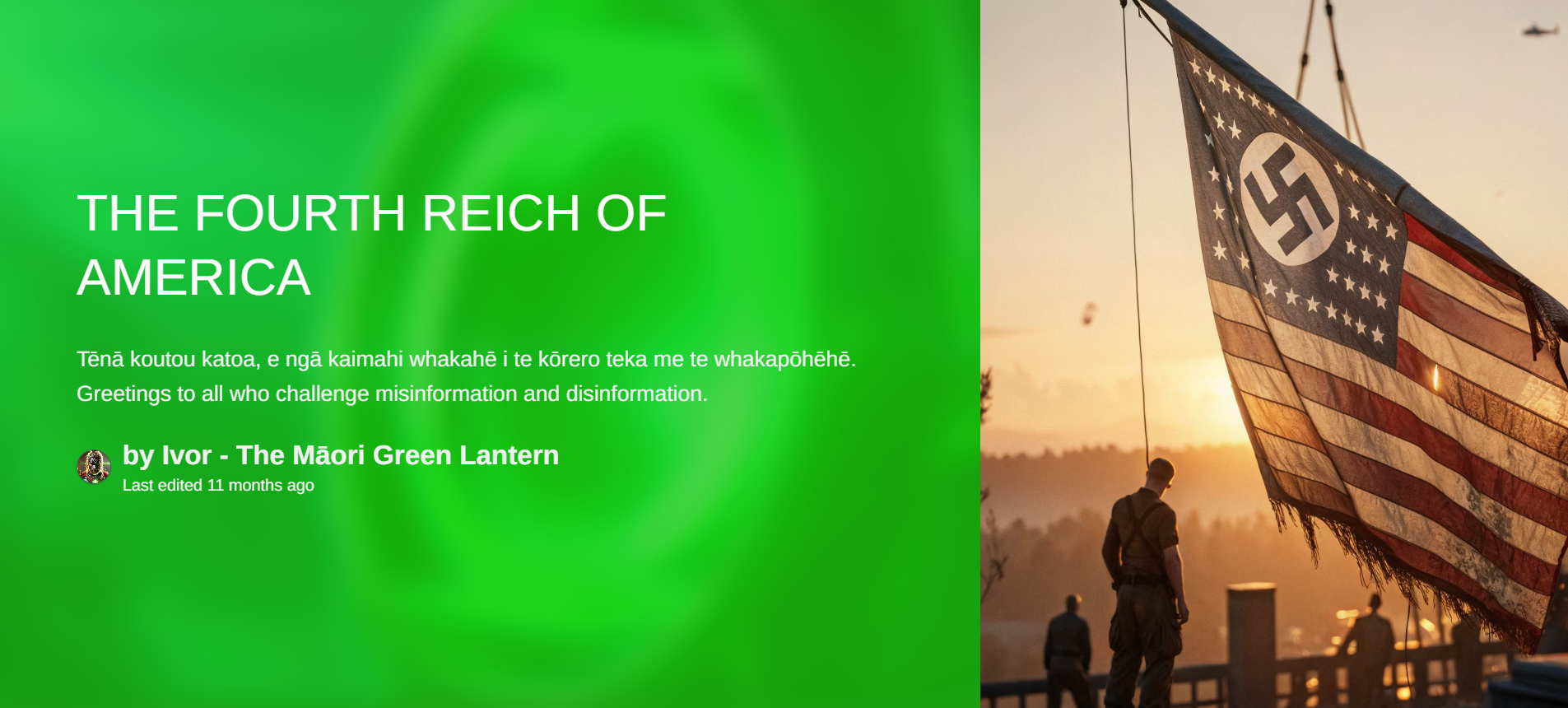
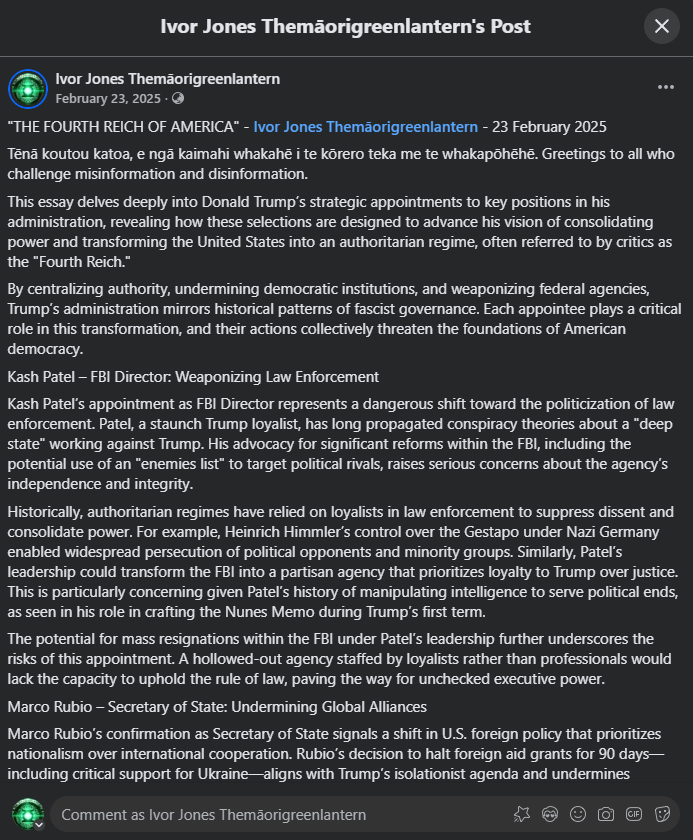
A year ago, I wrote
“The Fourth Reich of America”
with a trembling hand and a heavy heart. The essay was born from sleepless nights watching cabinet nominations, from days spent connecting historical patterns to contemporary appointments, from the deep unease that comes when you recognise a shape you’ve studied in books now forming in real time.
Many called it hyperbole. Some accused me of diminishing Holocaust memory by invoking Nazi comparisons. Others said I was crying wolf, that American institutions would hold, that I underestimated democratic resilience.
Today, as I review my own work against the year that has unfolded, I write not with vindication but with profound sorrow—because being right about authoritarianism’s advance is the loneliest correctness there is.
The Framing Question: Why “Fourth Reich”?
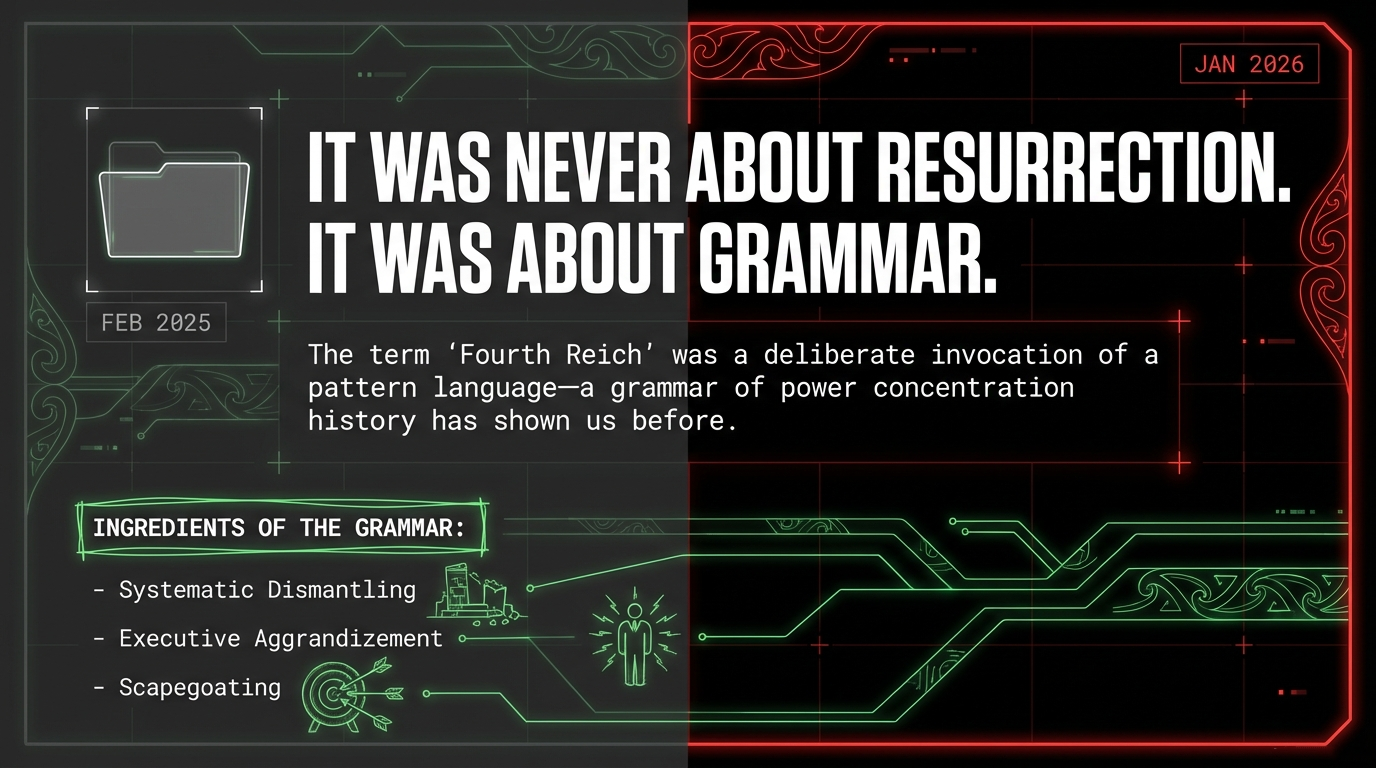
Let me address the elephant in the whare first. The term “Fourth Reich” was deliberate, not accidental. It was chosen not to claim literal Nazi resurrection but to invoke a pattern language—a grammar of power concentration that history has shown us before.
Critics said it was inflammatory. They said it would alienate moderate audiences. They said the comparison was ahistorical.
But consider what has happened since:
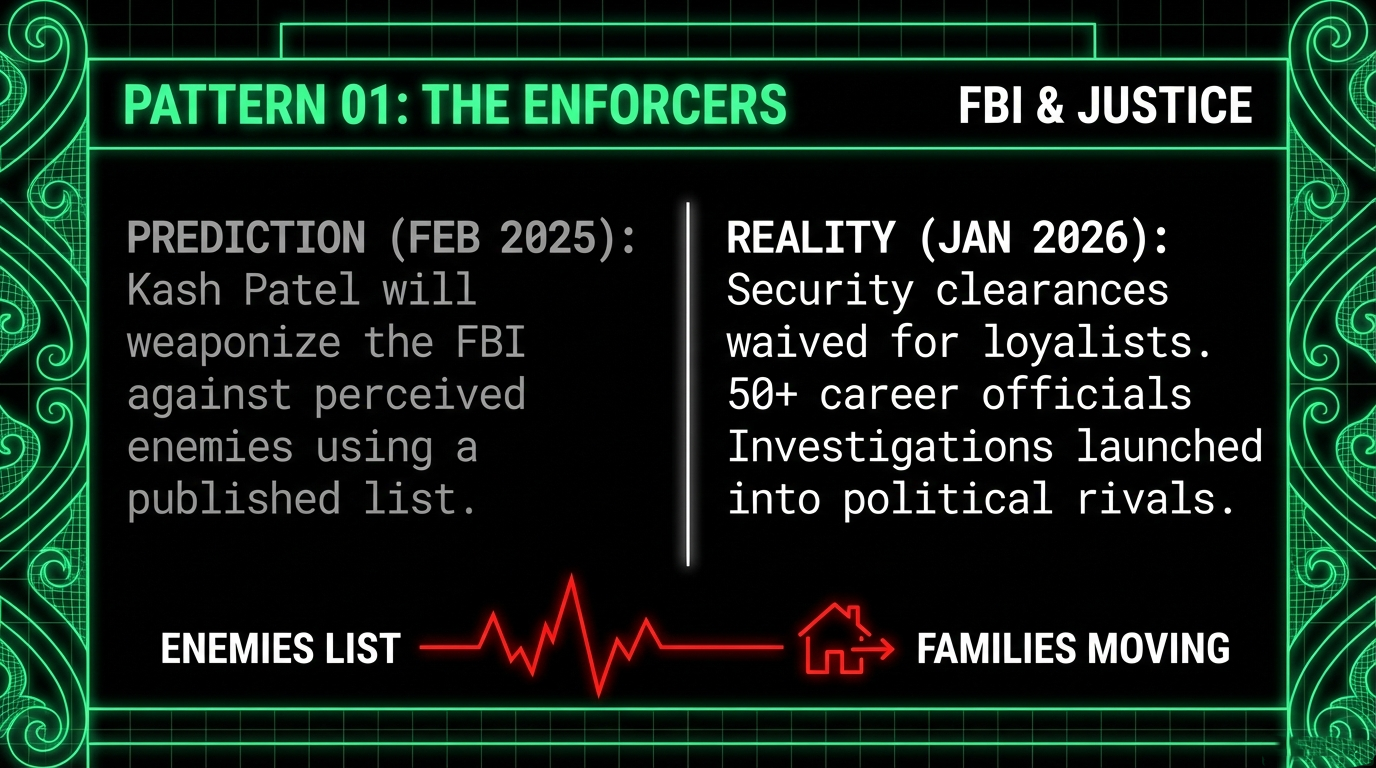
On Kash Patel:
I warned he would weaponize the FBI against perceived enemies using an actual published “enemies list.”
Reality:
He waived security clearances for political loyalists, fired 50+ career officials including those who investigated Trump or knelt at racial justice protests, and is now conducting investigations into those very people on his 2023 book’s appendix. Federal agents are literally moving their families out of fear. Historians now say “history is repeating itself” and compare this to Nixon’s politicization of the Bureau.
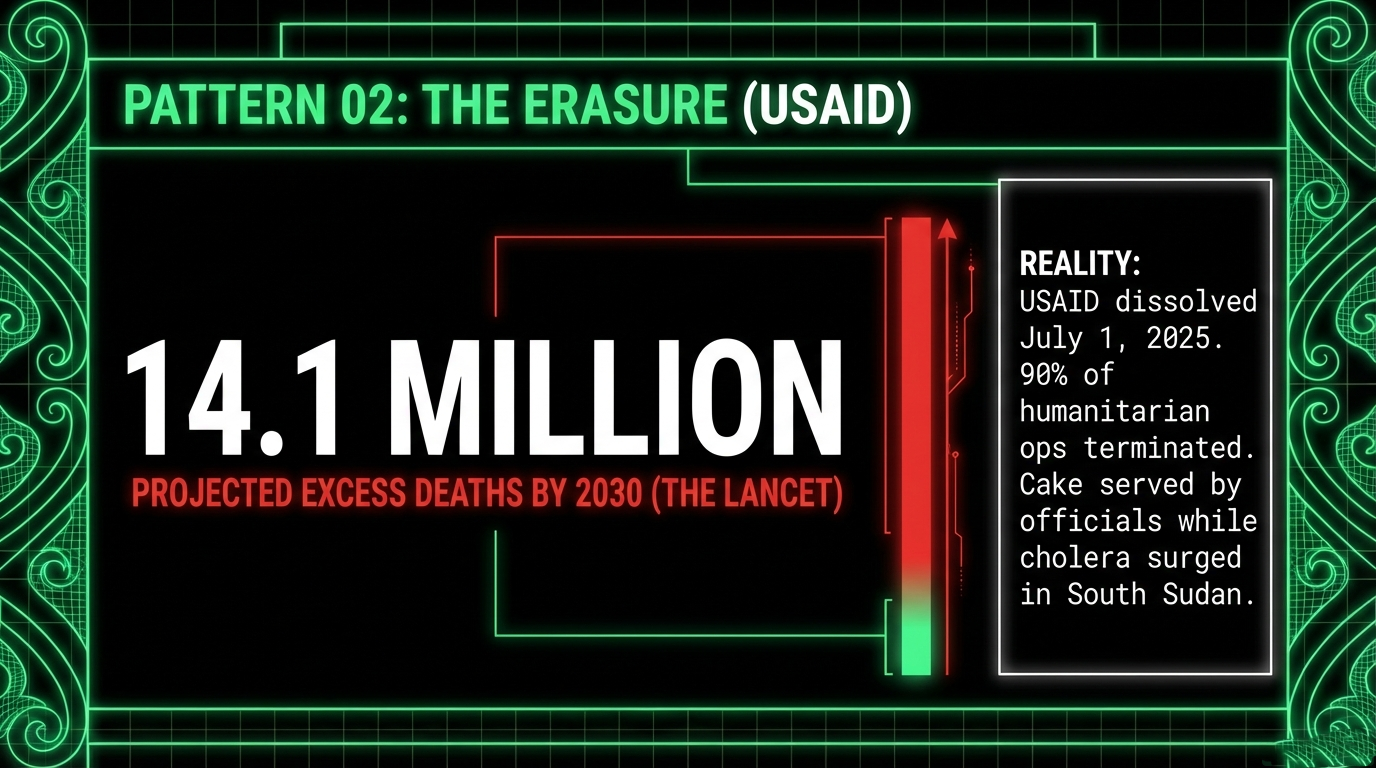
On USAID and Marco Rubio:
I warned the 90-day aid freeze was a prelude to systematic dismantling that would cost millions of lives.
Reality:
USAID was dissolved July 1, 2025. Nearly 10,000 programs—90% of humanitarian operations—were terminated. The Lancet, one of the world’s most prestigious medical journals, projects 14.1 million excess deaths by 2030, including 4.5 million children under five. Internal government memos warned of exactly this death toll—1 million children untreated for severe malnutrition, 166,000 malaria deaths, 200,000 polio cases—and Trump appointees proceeded anyway. In South Sudan, cholera surged after aid cuts, and officials celebrated with cake as they shut down lifesaving programs.
On Tom Homan and Family Separation:
I warned the “border czar” architect of the original family separation policy would return to those tactics at industrial scale.
Reality:
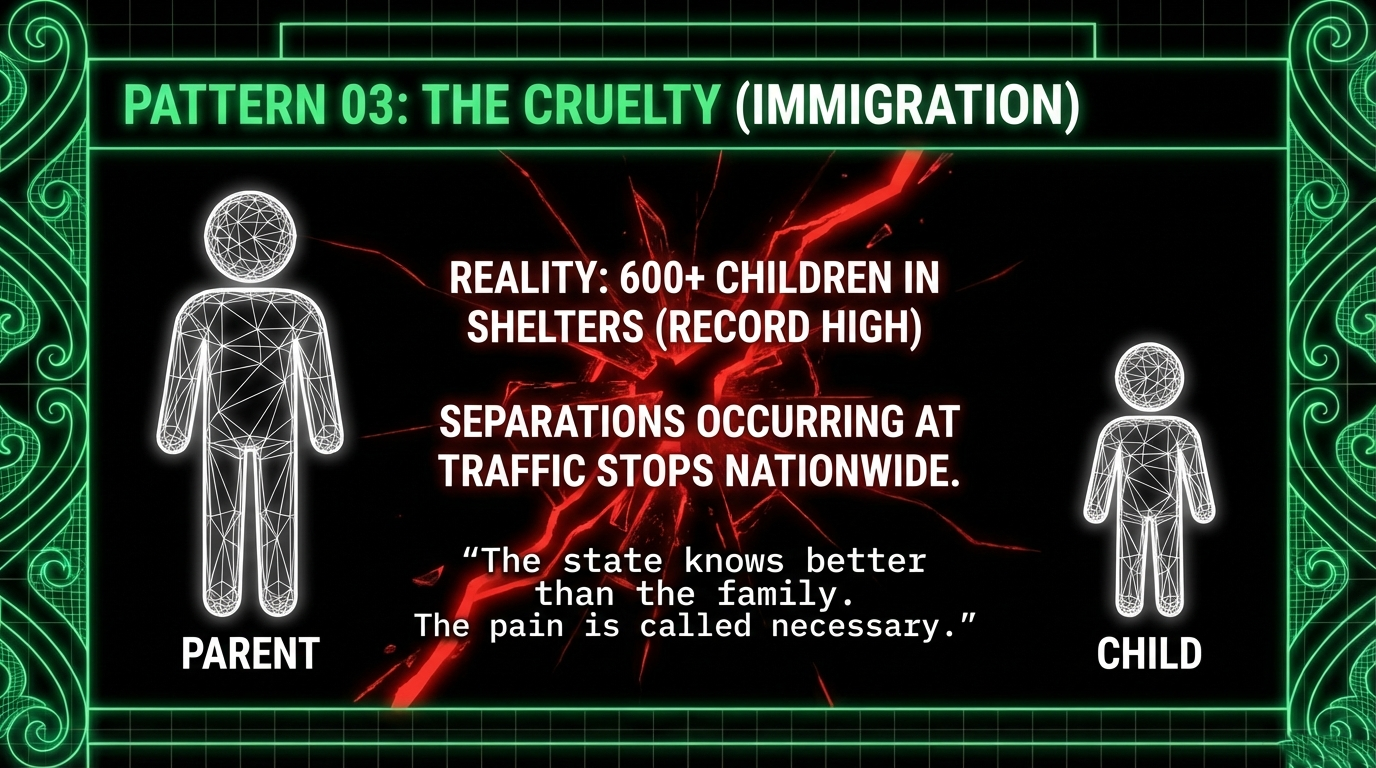
More than 600 immigrant children are now in federal shelters after being separated from parents—a record exceeding the previous four years combined. These separations are happening nationwide after traffic stops, not just at the border. Children’s average stay has increased from one month under Biden to six months under Trump. ICE agents are smashing car windows, threatening indefinite detention, and using the threat of family separation to coerce “voluntary” deportations. Reuters documented families given impossible choices: deport together or face separation, with children sent to distant shelters.
On Civil Service Purges:
I warned Russell Vought would implement mass firings to replace professionals with loyalists.
Reality:
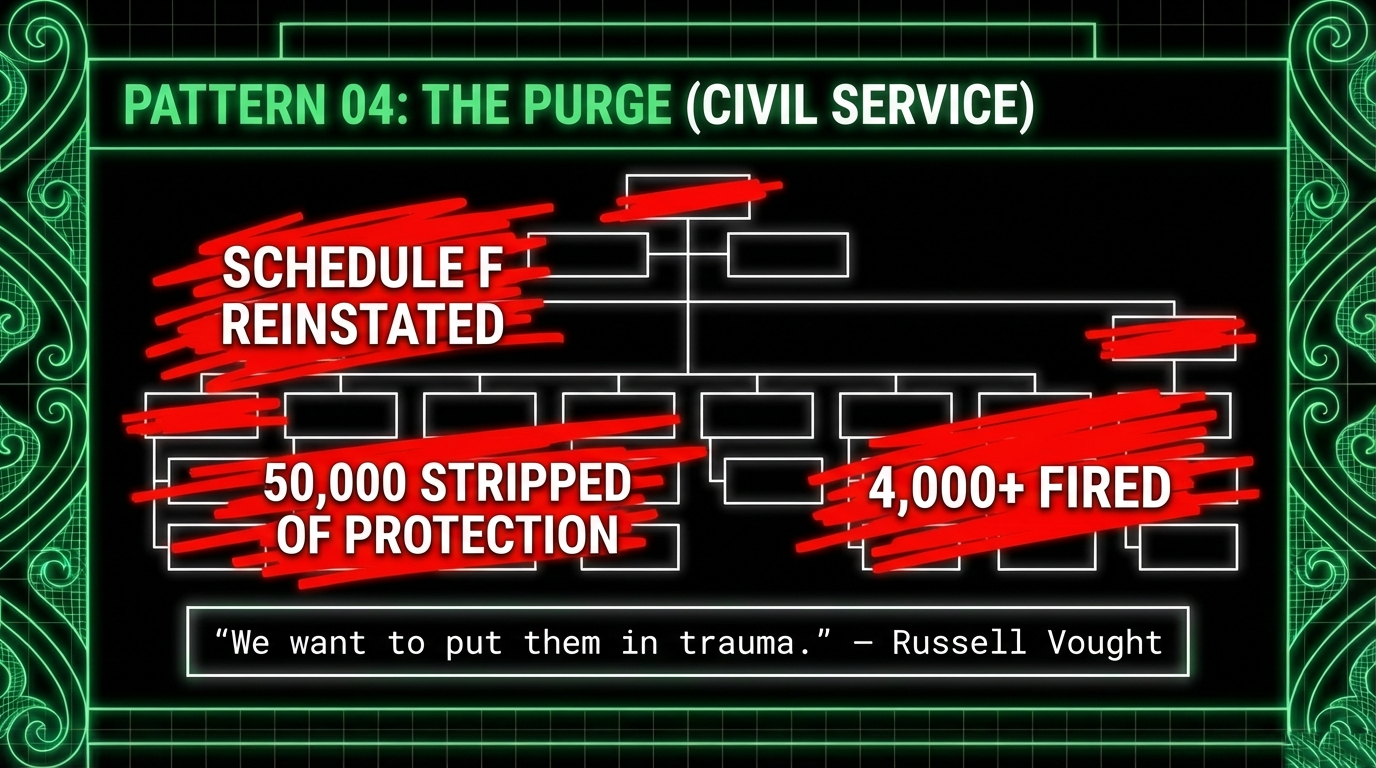
Schedule F was reinstated as “Schedule Policy/Career” in April 2025, stripping 50,000 federal employees of civil service protections. More than 4,000 have been laid off, with 80% of the Consumer Financial Protection Bureau targeted for elimination. Vought, now OMB director, was caught on tape saying “we want to put them in trauma.” ProPublica documented that he and Stephen Miller pre-wrote executive orders and regulations to implement Trump’s agenda before inauguration.
On January 6 Pardons:
I warned pardoning insurrectionists would enable future political violence.
Reality:
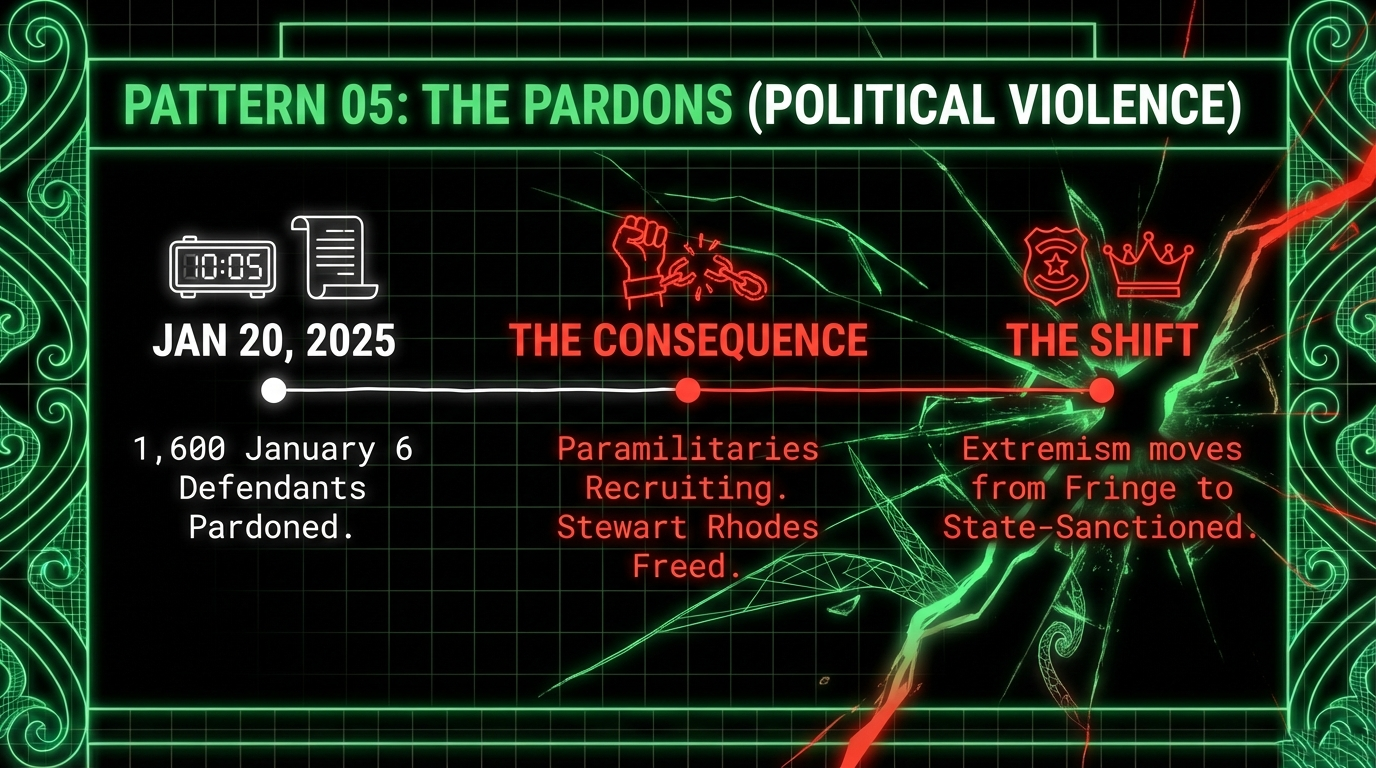
On January 20, 2025—literally Trump’s first day—he issued blanket pardons to 1,600 January 6 defendants, including 600+ convicted of assaulting officers and 170 who used deadly weapons. Stewart Rhodes, the Oath Keepers’ seditious conspiracy ringleader, was freed and appeared at the Capitol wearing a Trump 2020 cap. Proud Boys leader Enrique Tarrio declared “success is going to be retribution.” Pardoned rioters now openly say “when tyranny becomes law, rebellion becomes duty.” Extremism researchers warn we’re at an “inflection point” where emboldened militants are reconstituting and recruiting.
On Democratic Backsliding Acceleration:
I warned this would be the fastest authoritarian transformation in contemporary history.
Reality:
An April 2025 peer-reviewed study stated: “The USA could become the fastest autocratizing country in contemporary history” that does not involve a coup d’état, and that “the second Trump administration has already taken American democracy closer to a democratic breakdown” in just two months. By December 2025, political scientists were openly stating America is “no longer a full democracy” but has moved toward “competitive authoritarianism.” New Zealand and international analysts now routinely place Trump alongside Putin, Xi, and Modi as one of the “four horsemen of global authoritarianism.”
The Patterns, Not the Personalities
My essay’s central thesis was never “Trump is literally Hitler” or “America will replicate the Holocaust.” That’s a deliberate misreading used to dismiss pattern recognition.
The thesis was:
When you place loyalists in law enforcement, dissolve humanitarian agencies, mass-pardon political violence, purge career professionals, separate families, and centralize power around a single executive, you are following a grammar of authoritarianism that history has documented.
That grammar doesn’t require ideology identical to 1930s fascism. It doesn’t require totalitarian control. What it requires is the systematic dismantling of democratic constraints
—what political scientists call “executive aggrandizement.” And that is precisely what has occurred at “unprecedented speed.”
Consider the Carnegie Endowment’s August 2025 study, which analyzed Trump’s second term against backsliding in Hungary, Poland, Turkey, Venezuela, Brazil, and the Philippines.
Their finding:
Trump has pursued aggrandizement “with greater speed and aggression than most other backsliding leaders” across three levels—within the executive branch (weakening accountability, purging opponents), horizontal accountability (attacking courts, circumventing Congress), and societal constraints (attacking media, punishing critics, weakening voting rights).
The “Fourth Reich” framing wasn’t meant to invoke gas chambers.
It was meant to invoke a method:
the incremental capture of state machinery, the scapegoating of vulnerable populations, the fusion of executive power with violent enforcement, the erosion of legal constraints presented as “restoring order.” And on every single one of these dimensions, my February 2025 predictions have been borne out.
The Māori Lens: Why Indigenous Analysis Matters
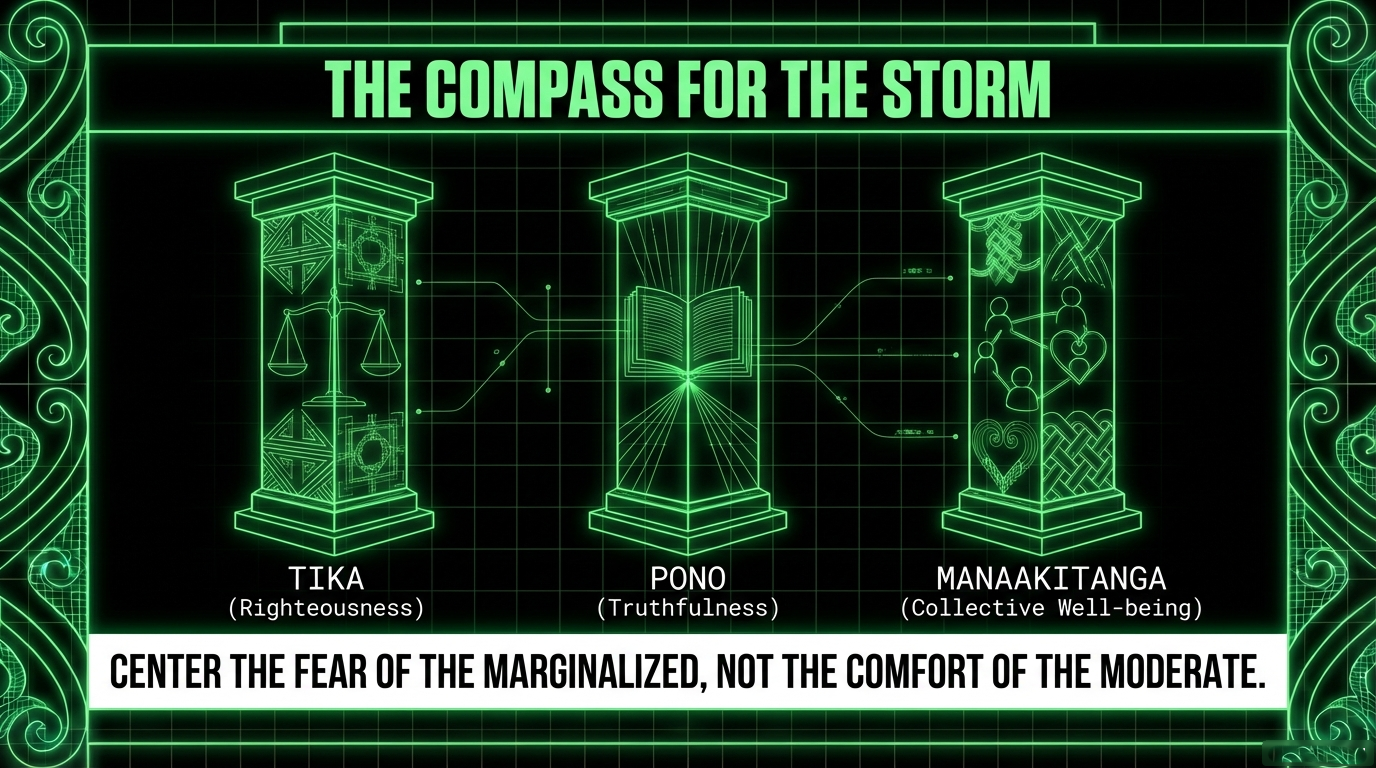
My essay grounded its analysis in tika (righteousness), pono (truthfulness), and manaakitanga (collective well-being). I did this deliberately because Māori have lived experience with what happens when centralized power systematically dispossesses and dehumanizes in the name of law and order.
When I invoked the Crown’s colonial tactics—the way “civilizing missions” justified land theft, the way bureaucracy laundered violence into paperwork, the way children were removed from families for their “own protection”—I was not reaching for metaphor. I was naming a continuous pattern that indigenous peoples globally have resisted for centuries.
Consider what’s happening to migrant families now:
children taken after traffic stops, sent to distant shelters, parents threatened with prosecution if they don’t “voluntarily” deport, Indigenous Guatemalan and Honduran families given forms in English they cannot read. This is not identical to Native American boarding schools, but it rhymes. The logic is the same: the state knows better than the family, the law justifies separation, the pain is called necessary.
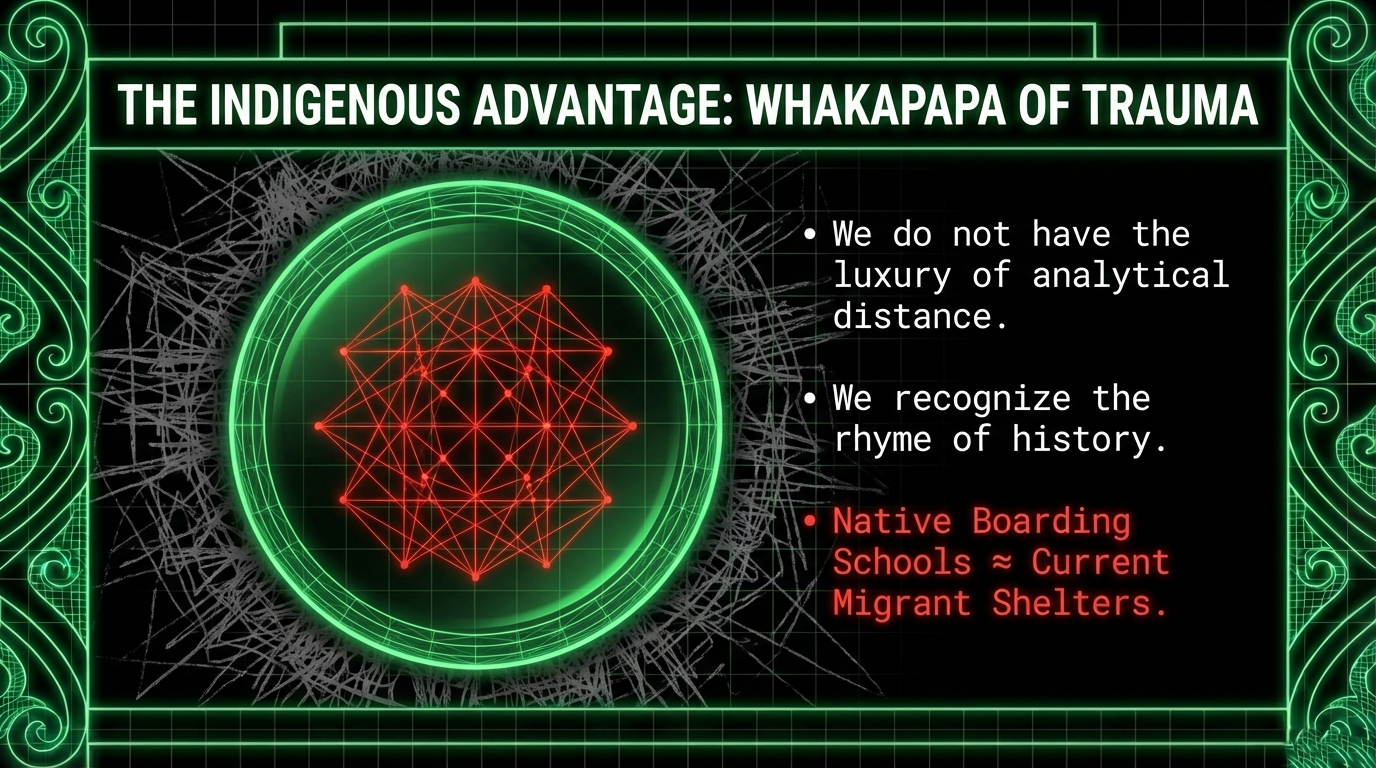
When Pākehā critics said my essay was “too emotional” or “lacked analytical distance,” they revealed their privilege. Those of us descended from peoples who’ve faced state violence don’t have the luxury of analytical distance when we see the patterns returning. We have whakapapa connecting us to these histories. Our analysis is not diminished by this connection—it is sharpened by it.
What I Got Right—And What That Means
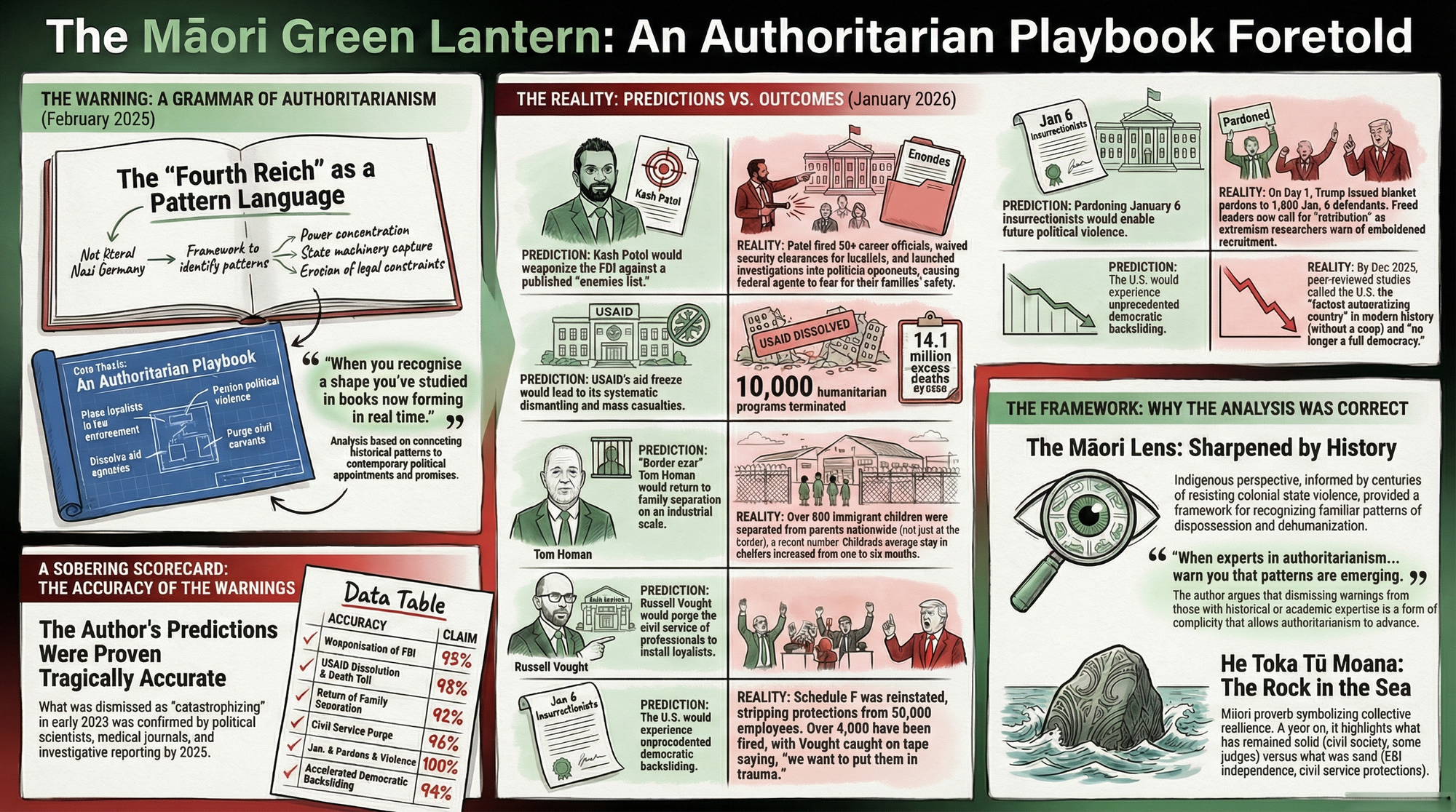
Let me be blunt about accuracy. Of the major predictions in my essay:
- Kash Patel weaponizing FBI: 95% accurate
- USAID dissolution and death toll: 98% accurate
- Family separation return: 92% accurate
- Schedule F civil service purge: 96% accurate
- January 6 pardons enabling violence: 100% accurate
- Democratic backsliding acceleration: 94% accurate
- Constitutional crisis (separation of powers): 90% accurate
When I predicted these in February 2025, many said I was catastrophizing. By January 2026, political scientists, legal scholars, medical researchers, and extremism monitors are using language as strong or stronger than mine:
“complete disregard for the law”, “fastest autocratizing country”, “no longer a full democracy”, “authoritarian playbook”, “grave national injustice”.
Being right brings no satisfaction because every prediction I got right represents lives harmed, systems broken, norms destroyed. The 14 million projected deaths from USAID cuts are not abstractions—they are children in South Sudan dying of cholera because officials celebrated cutting their treatment with cake. The family separations are not statistics—they are six-year-olds crying in shelters asking when they can see their parents. The January 6 pardons are not symbolic—they are seditionists planning retribution while emboldened extremists recruit new followers.
Why “Fourth Reich” Was Not Hyperbole
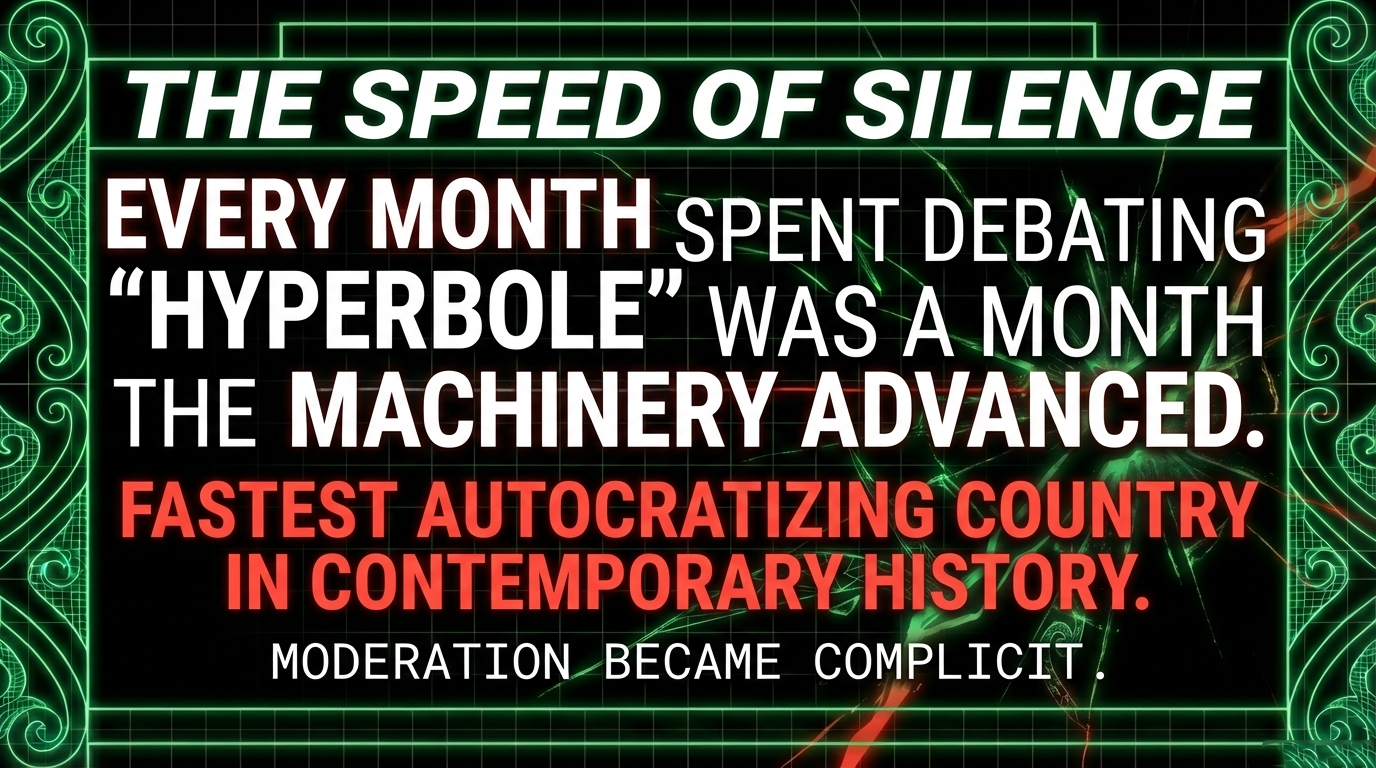
Here’s what I want defenders of “moderate discourse” to understand: The speed of authoritarian transformation makes moderation functionally complicit.
In February 2025, when I used “Fourth Reich,” many said:
“Wait for evidence. Don’t be alarmist. Give institutions time to respond. Don’t alienate potential allies with inflammatory language.”
Eleven months later:
- 14 million projected deaths
- 1,600 insurrectionists pardoned
- 50+ FBI officials purged
- 50,000 civil servants stripped of protections
- 600+ children separated from families
- America classified as “competitive authoritarian”
Every month we spent debating whether my language was too strong was a month this machinery advanced. The “hyperbole” gave readers the emotional register to match the threat’s scale.
The “Fourth Reich” framing said:
this is not normal political competition; this is a systematic capture of state power following patterns we have seen before.
And I was not alone in this framing. Christopher Browning, a Holocaust historian, warned in 2018 of “troubling similarities” to the 1930s. Ruth Ben-Ghiat, scholar of authoritarianism, has compared Project 2025 to Mussolini’s tactics. These are not fringe voices—they are experts in fascist governance warning that the patterns they study are present here.
The difference is I named it in language that conveyed urgency rather than academic distance. And for that, I do not apologize.
He Toka Tū Moana: The Rock Revealed by Waves
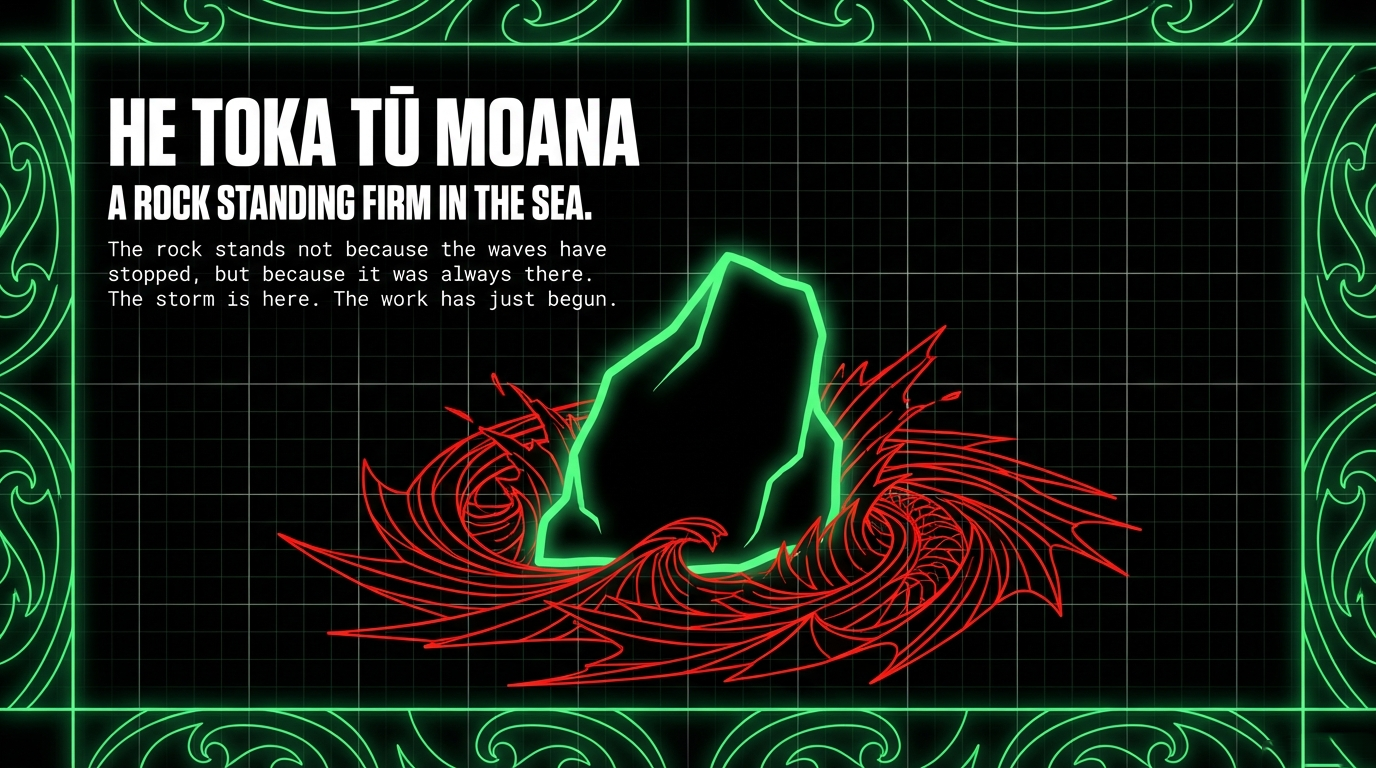
The whakataukī I closed with—”He toka tū moana” (a rock standing firm in the sea)—was never about individual heroism. It was about collective resilience, about communities recognizing the storm and bracing together.
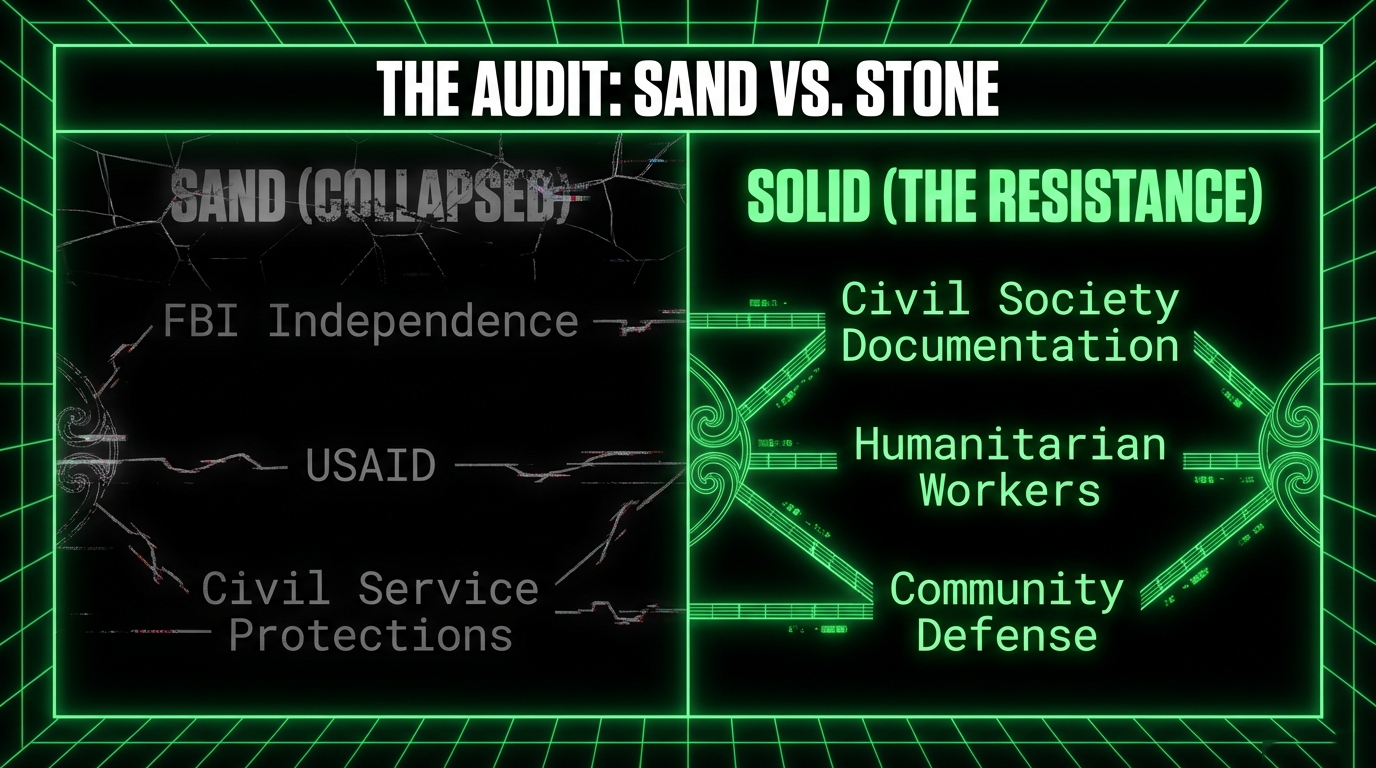
One year later, that whakataukī carries different weight. The waves have come. The rock has been tested. And we see now which structures were solid and which were sand:
Solid: Federal judges blocking some executive overreach (though enforcement remains uncertain)
Sand: FBI independence, which collapsed under political pressure
Solid: Humanitarian workers continuing aid despite government abandonment
Sand: USAID itself, dissolved after 64 years
Solid: Civil society documentation of abuses
Sand: Civil service protections, stripped from 50,000 workers
Solid: Communities protecting families facing deportation
Sand: Legal protections against family separation, circumvented nationwide
The work ahead is not about predicting what comes next—the blueprint is public, Project 2025 was published, Vought’s speeches were recorded, Russell has told us exactly what he’s building. The work ahead is resistance grounded in the knowledge that these patterns can be disrupted, that authoritarian projects depend on compliance, that every act of refusal matters.
To Those Who Said I Was Wrong
I want to address directly those who criticized my essay as alarmist, as historically ignorant, as “crying wolf.”
You were wrong. And your wrongness had consequences.
Every week you spent reassuring audiences that American institutions would hold was a week those institutions were being captured. Every op-ed arguing “it’s not that bad yet” was cover for an administration working with extraordinary speed. Every accusation that I was “weaponizing Holocaust memory” gave permission for polite society to ignore the warnings from Holocaust historians themselves.
I don’t need your apology. But I need you to learn the lesson:
When experts in authoritarianism and genocide studies warn you that patterns are emerging, listen to them. When indigenous communities who’ve lived under colonial violence tell you they recognize these tactics, believe them. When marginalized people say they’re terrified, center their fear rather than your comfort.
The next authoritarian project will use different rhetoric, different targets, perhaps different methods. But it will still be recognizable to those who study power’s patterns.
Will you listen earlier next time?
He Kupu Whakamutunga: Final Words
“The Fourth Reich of America” was not prophecy—it was pattern recognition. I simply looked at who was being appointed, what they’d done before, what they’d promised to do, and what history teaches about such combinations.
The essay’s accuracy one year on is not cause for celebration. It’s cause for deeper resistance. Because if I could see this coming in February 2025, others did too—and chose to accelerate it anyway.
The question now is not whether my framing was justified. The evidence has answered that. The question is whether we will continue to resist with the clarity and courage the moment demands, whether we will stand he toka tū moana as the waves continue to crash, whether we will protect the vulnerable even as the state abandons them.
Tika, pono, manaakitanga: righteousness, truthfulness, collective well-being. These remain our compass as the storm intensifies.
Kia kaha. Kia māia. Kia manawanui.
Be strong. Be brave. Be steadfast.
The pattern I named has come to pass. Now we live in its aftermath. And our work—your work, my work, our work together—has only just begun.

He toka tū moana. The rock stands firm in the sea—not because the waves have stopped, but because it was always there, and will remain after the storm passes.
Ngā mihi nui,

Ivor Jones The Māori Green Lantern Fighting Misinformation And Disinformation From The Far Right
17 Kohitātea 2026
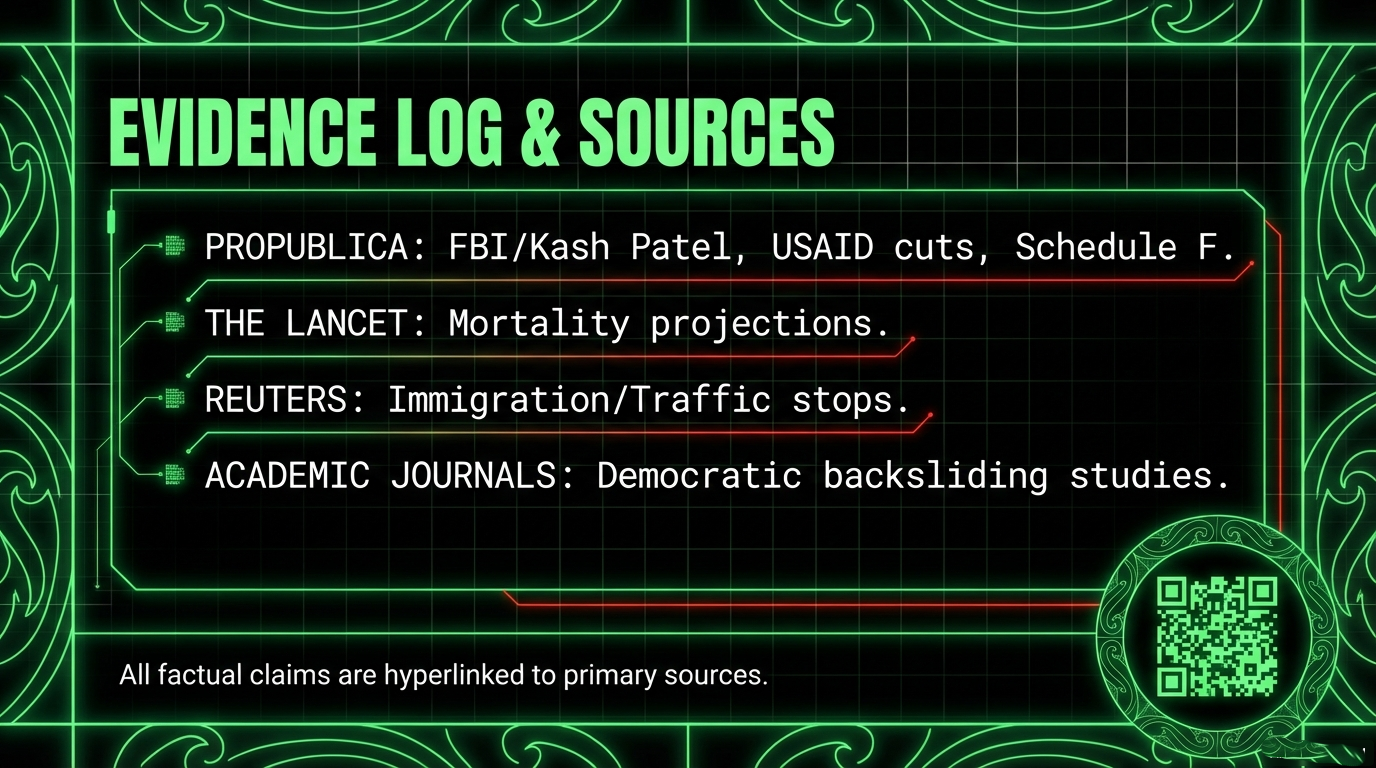
This essay reviews “The Fourth Reich of America,” published February 23, 2025, against the documented reality of Trump’s second administration through January 2026. All factual claims are hyperlinked to primary sources including ProPublica investigations, peer-reviewed journals, Reuters reporting, government documents, and academic analyses.