“Kanohi Kore: Luxon vs Other Prime Ministers Through a Tikanga Lens” - 9 January 2026
He Is Fucking Useless
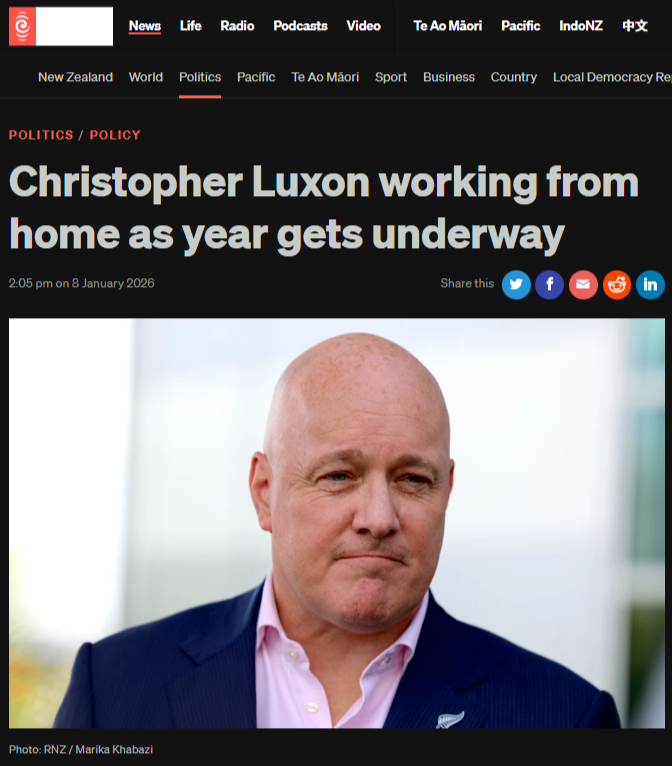
The RNZ “work from home” story as a diagnostic
RNZ reports that as 2026 begins, the Prime Minister is “working from home” in Auckland while Parliament does not sit until late January, despite his pre‑Christmas boast that he would be “back at work the first week of January”. RNZ
He has issued no public statements on a major international crisis in Venezuela, leaving Winston Peters to front foreign‑policy responses, and his only social‑media output so far has been a generic New Year greeting and an old India FTA video. RNZ
To a western corporate mind, that might look like a diary quirk. To a tikanga lens, it is symptomatic of a deeper failure:
- Kanohi kore – the absent face. Tikanga expects leaders to be kanohi kitea (the seen face), especially when relationships are strained. Luxon has chosen distance and delegation precisely when Crown–Māori relations are “probably worse” and “more divided” than a year ago by his own admission. RNZ
The rest of this essay uses three concrete, western‑friendly comparisons to show how far below the tikanga baseline Luxon sits when measured against other prime ministers:
- Institutions – Ardern and Key as builders vs Luxon the demolition man.
- Treaty partnership and presence – Bolger and Ardern standing in the fire vs Luxon hiding in the office.
- Te reo and tikanga – governments that normalised Māori presence vs Luxon’s culture war on “Māorification”.
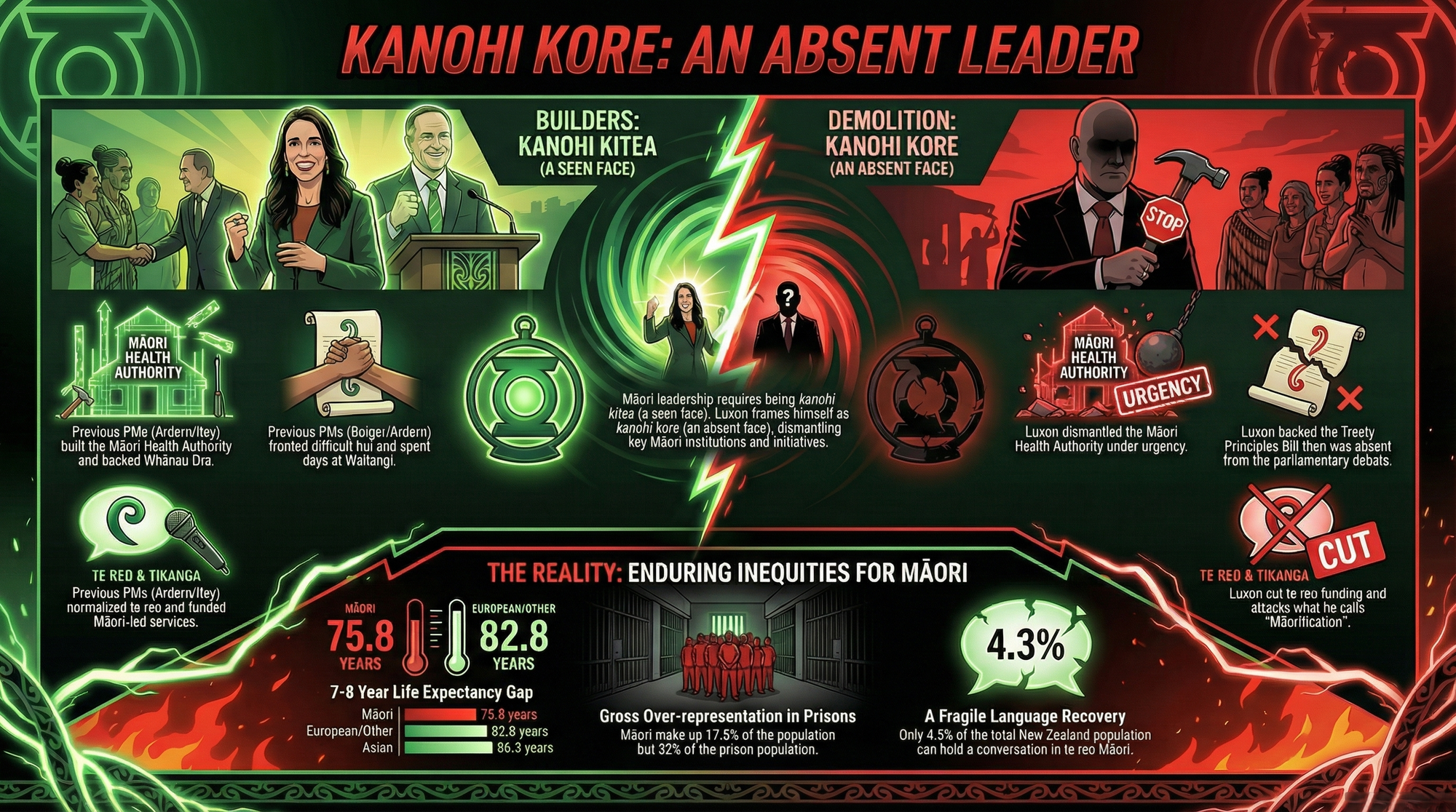
Before each example, anchor the analysis in hard outcomes: Māori health, justice and language.
The baseline: Structural inequities any serious PM must confront
Life expectancy – Māori dying years earlier
Stats NZ and Health NZ data show life expectancy at birth in 2022–24 is:
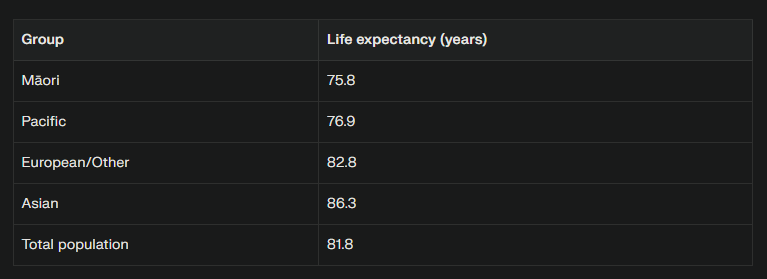
These figures are summarised by Stats NZ and RNZ, which note that although Māori have recently seen the largest gains, they still die about six years earlier than the national average and 7–8 years earlier than European/Other New Zealanders. Stats NZ RNZ Te Whatu Ora
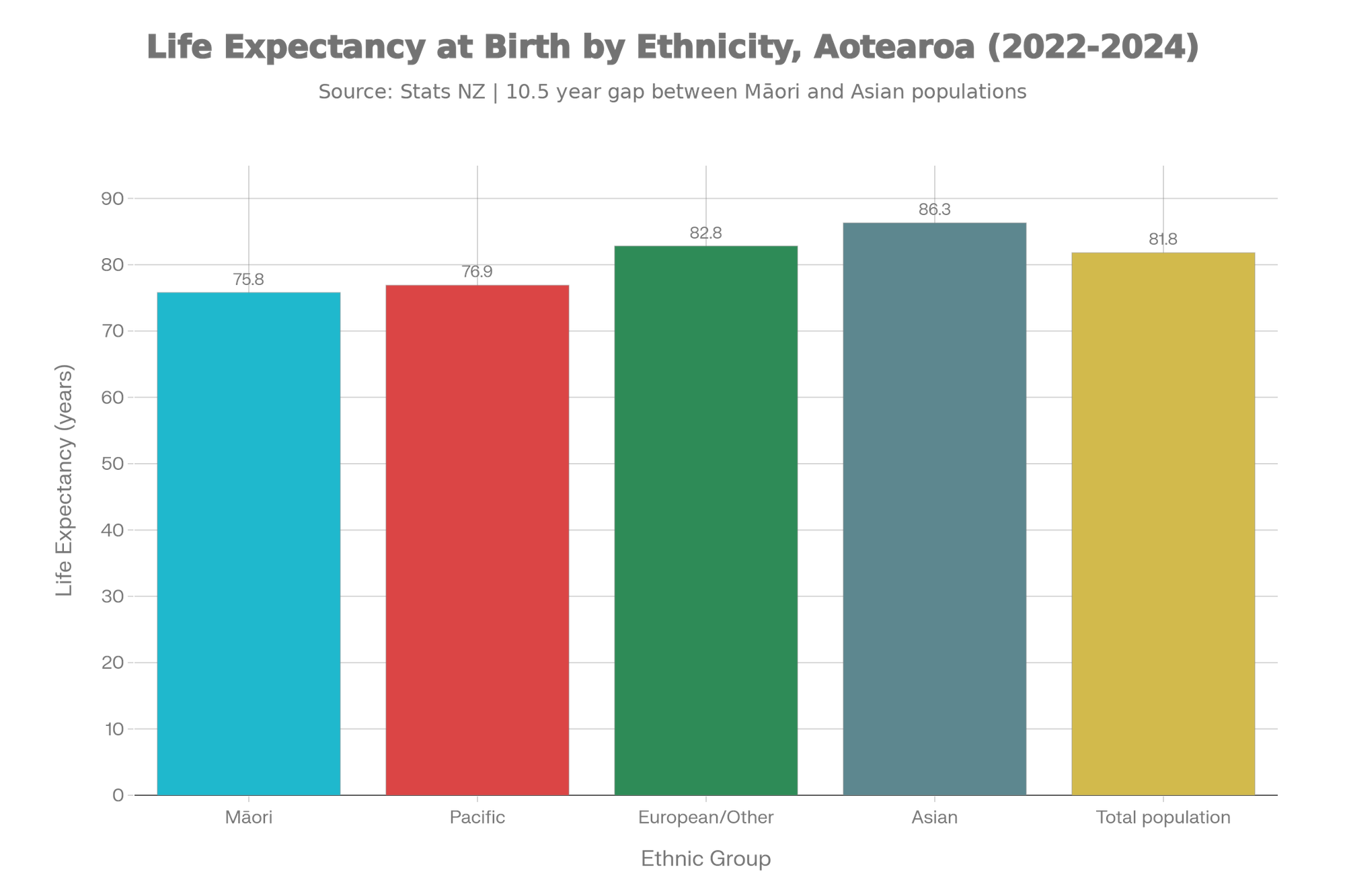
Life expectancy at birth in Aotearoa (2022–2024) remains lowest for Māori, underscoring the inequities Luxon has chosen to intensify rather than heal
A 2024 health equity report found “significant differences” in health outcomes for Māori and Pasifika persist across mortality, chronic disease and access to care. 1News
Carceral pipeline – Māori locked up far beyond their share of the population
Māori make up about 17.8% of the population in the 2023 Census, depending on measure. Stats NZ summary via Miragenews RNZ
Yet Justice Ministry data show they account for:
- 37% of people proceeded against by Police
- 45% of people convicted
- 52% of the prison population
as summarised in the government’s Hāpaitia te Oranga Tangata material and related justice‑sector reporting. Ministry of Justice Te Ara RNZ
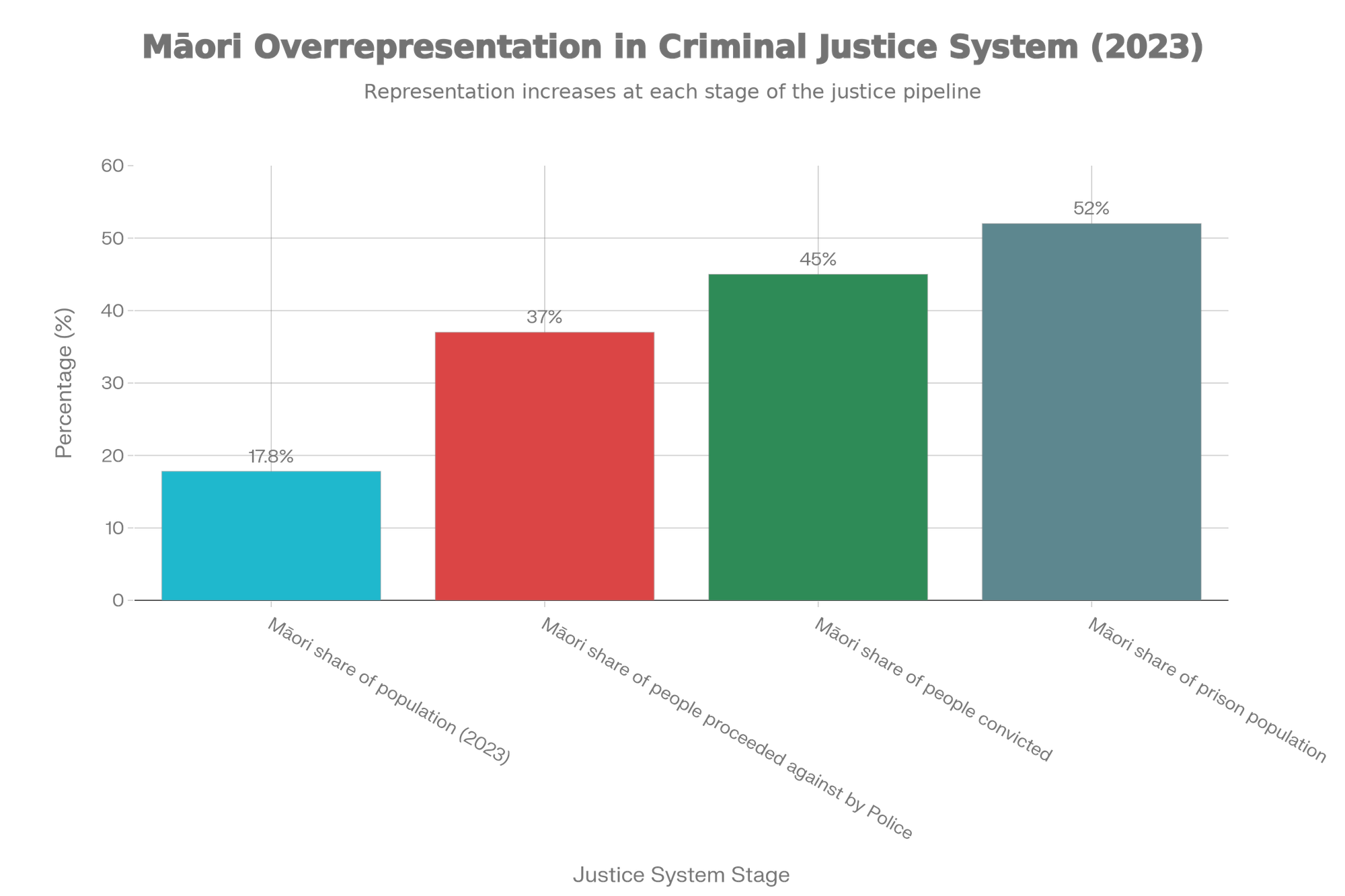
Māori are less than one-fifth of the population but over half of those in prison – a structural violence that predates Luxon but is sharpened by his policy agenda
Under Luxon’s “tough on crime” agenda, prison numbers have already blown past 10,000 for the first time in four years, driven by harsher sentencing and rising remand numbers, with Māori disproportionately affected. NZ Herald RNZ
Te reo Māori – a fragile recovery
Census data show steady growth in people able to hold a conversation in te reo Māori:
- 148,395 in 2013
- 185,955 in 2018
- 213,849 in 2023 – about 4.3% of the population.
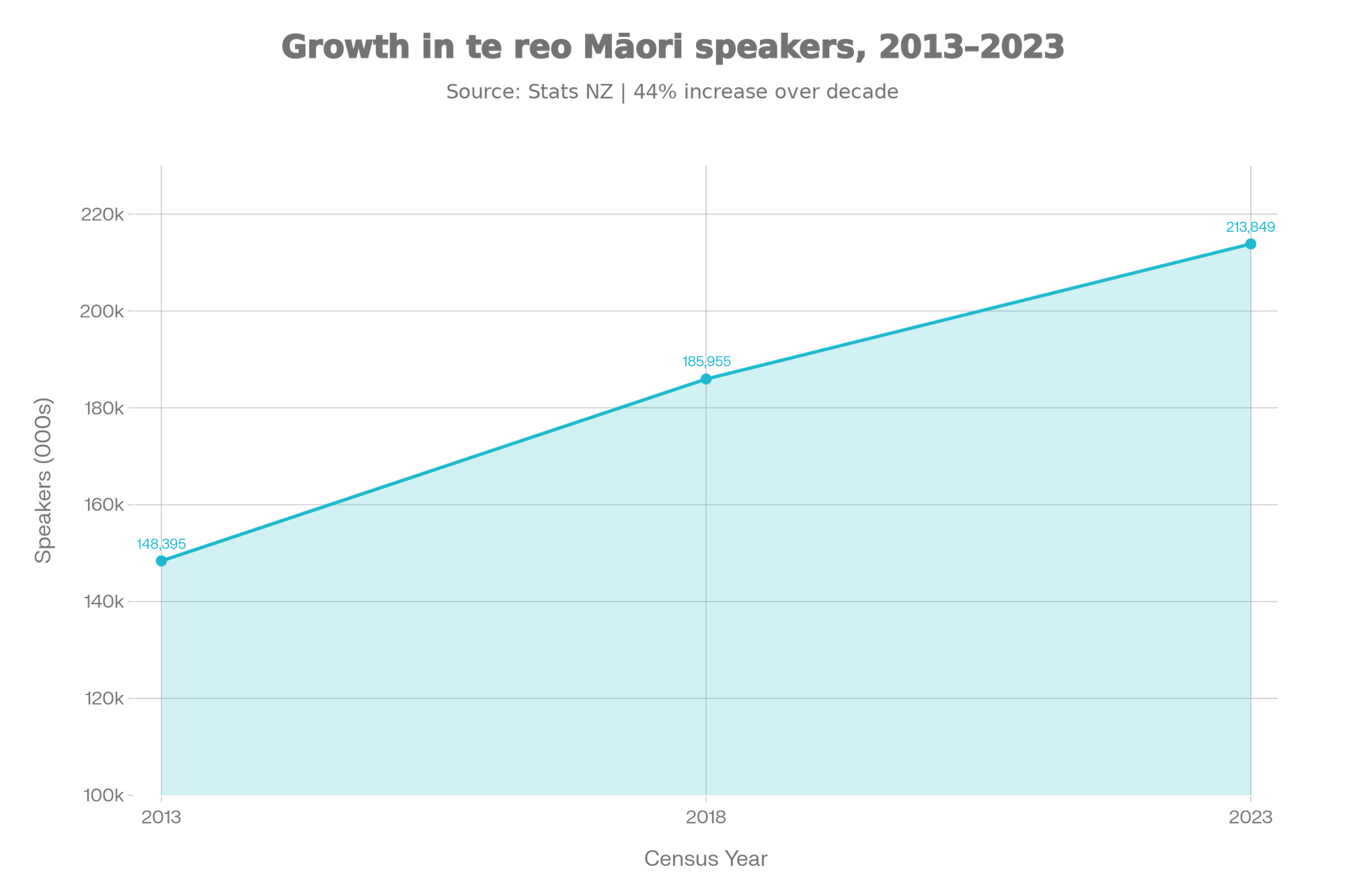
Te reo Māori speakers have grown steadily over the last decade, despite Luxon’s government cutting support and railing against so-called ‘Māorification’
Māori language advocates emphasise this as a fragile resurgence after historic state suppression, warning that continued government support is essential. RNZ
These numbers define the tikanga bottom line: any prime minister who claims to honour Te Tiriti must be judged by whether their actions close or widen these gaps.
Example 1 – Institutions: Builders (Ardern, Key) vs Luxon the demolition man
Ardern – building Te Aka Whai Ora and Te Arawhiti
After decades of Waitangi Tribunal findings that mainstream health structures had failed Māori, the Labour government enacted the Pae Ora (Healthy Futures) Act in 2022. RNZ NZ Med J/PMC
Key elements:
- Creation of Te Aka Whai Ora – Māori Health Authority with commissioning powers to purchase services for Māori and drive system‑wide change. RNZ PMC
- A parallel entity, Te Whatu Ora, to run mainstream health, explicitly required to work in partnership with Te Aka Whai Ora under Te Tiriti. PMC Int J Health Policy Manag
- Establishment of Te Arawhiti – the Office for Māori–Crown Relations to embed Treaty partnership across government, described by scholars as a “bridge between two worlds”. NZ Govt Policy Quarterly
Budget 2022 pumped hundreds of millions into Māori health, with Te Aka Whai Ora given direct commissioning funds and responsibility for Māori health strategies. 1News RNZ
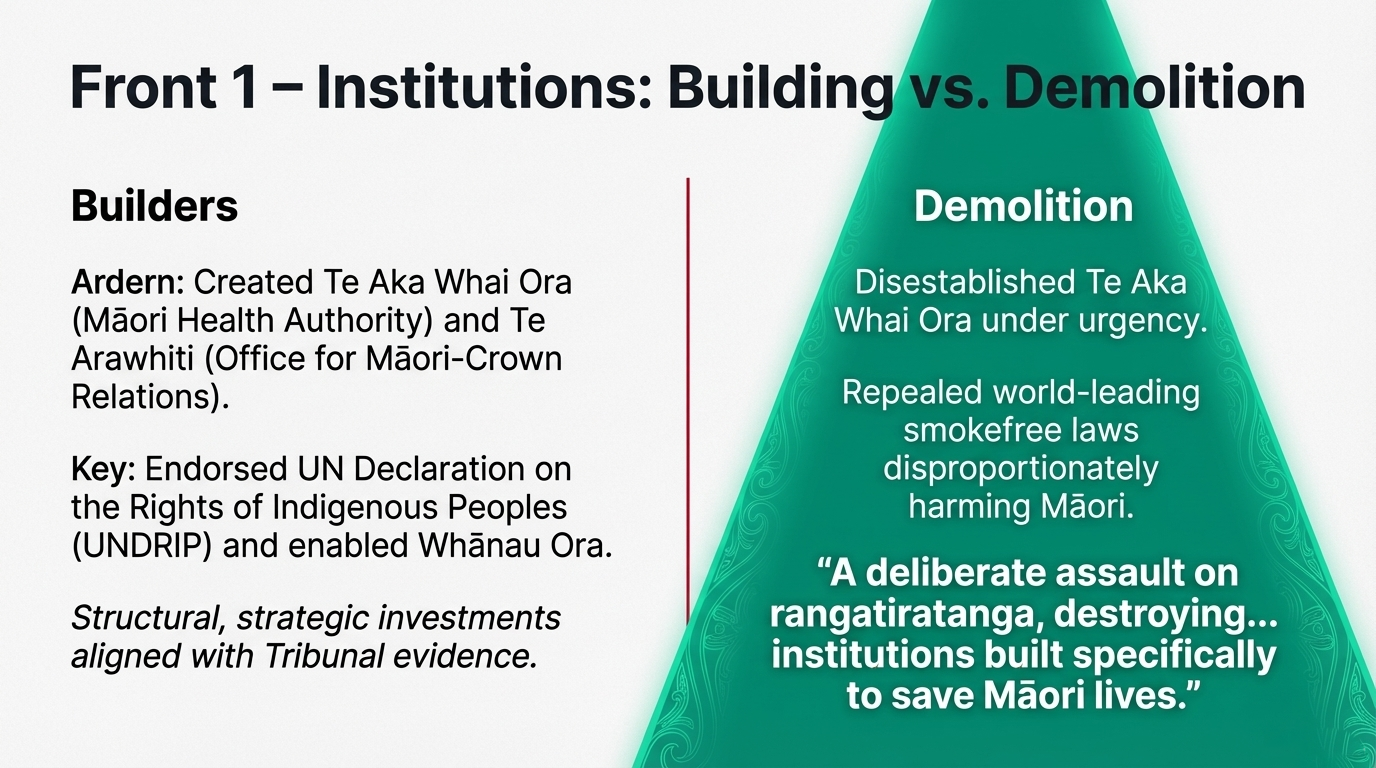
From a western governance viewpoint: these are structural, strategic investments aligned with Tribunal evidence and international best practice on Indigenous health.
Key – UNDRIP and Whānau Ora
John Key’s National government, ideologically conservative, nonetheless:
- Formally endorsed the UN Declaration on the Rights of Indigenous Peoples (UNDRIP) in 2010, with Minister Pita Sharples stating that the Crown saw UNDRIP as consistent with Te Tiriti and Māori rights. Beehive Cultural Survival
- Entered a governing relationship with the Māori Party, enabling the creation and expansion of Whānau Ora, a kaupapa Māori social‑service model described by RNZ as focusing on whānau‑centred, strengths‑based support driven by Māori providers. RNZ RNZ
Even critics who opposed parts of his economic agenda acknowledge Key as at least institutionally open to Māori‑designed solutions.
Luxon – tearing down Māori institutions at speed
Luxon has chosen demolition.
- His coalition disestablished Te Aka Whai Ora under urgency. Legislation scrapping the Māori Health Authority was pushed through Parliament in a single day, with Te Aka Whai Ora to be folded back into Te Whatu Ora and the Ministry. RNZ Beehive
- RNZ’s in‑depth coverage notes that the authority was responding directly to WAI 2575 Tribunal recommendations and that Māori health leaders saw its abolition as a “devastating step backwards” for equity. RNZ RNZ
- International outlets describe New Zealand as shutting down an Indigenous health authority despite clear evidence of Māori health inequities and protests on the streets. Reuters TRT World
At the same time his government repealed world‑leading smokefree laws designed to dramatically cut tobacco‑related deaths (disproportionately Māori), prompting public health experts to warn of thousands of preventable deaths and billions in health costs. CNN 1News
From a boardroom perspective, this is astonishingly irresponsible: tearing out a major structural reform before it has been evaluated, in the very domain where inequities are most lethal. From a tikanga lens, it is worse: a deliberate assault on rangatiratanga, destroying one of the few Crown‑mandated Māori institutions built specifically to save Māori lives.
No modern prime minister has moved so fast to dismantle such a significant Māori institution born out of Tribunal findings. Luxon stands alone, and not in a way any competent risk committee would endorse.
Example 2 – Treaty partnership & presence: Standing in the fire vs running from the marae
Bolger and Ardern – kanohi kitea in hard spaces
Jim Bolger, whose wider neoliberal agenda harmed many communities, nonetheless made Treaty settlement a personal mission. Interviews and retrospectives describe him fronting up at often hostile hui, believing that honouring Te Tiriti was essential for the country’s moral legitimacy and long‑term stability. E-Tangata RNZ NZ Herald / Listener
Jacinda Ardern re‑set expectations for prime‑ministerial conduct at Waitangi:
- In 2018 she spent five days at Waitangi, the first PM to do so, walking onto the marae with Titewhai Harawira and speaking at the pōwhiri on the upper marae. Policy analysis RNZ
- Her government established the Māori–Crown Relations portfolio and Te Arawhiti, and removed the “voter veto” blocking Māori wards, signalling that being present in Māori spaces and sharing power was a core part of leadership, not an optional extra. TandF PMC
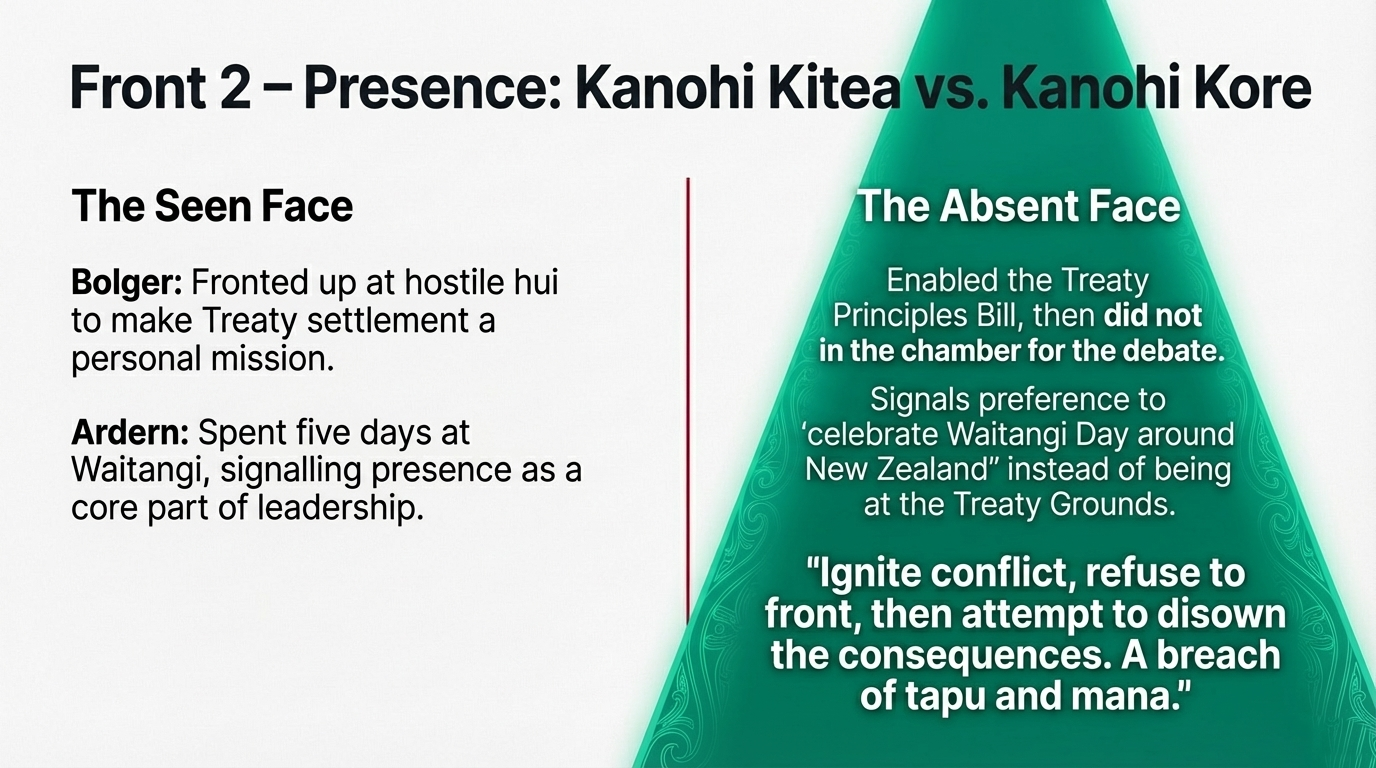
Their records are imperfect, but on the basic metric of fronting up where it is uncomfortable, Bolger and Ardern understood tikanga obligations.
Luxon – enabling a Treaty assault, then hiding from the fallout
Luxon’s handling of David Seymour’s Treaty Principles Bill is a case study in cowardice dressed up as “balance”.
- In coalition negotiations, he agreed to support the bill to first reading and select committee, giving ACT’s attack on Te Tiriti formal government backing even though he later claimed he “didn’t like the bill”. RNZ RNZ
- The Waitangi Tribunal’s interim report tore the bill to shreds, calling it a “politically motivated attack on perceived ‘Māori privilege’” that would amount to “the worst, most comprehensive breach of the Treaty / te Tiriti in modern times” if passed. E-Tangata 1News
- More than 300,000 submissions were received – the largest in New Zealand legislative history – with about 90% opposed, and mass hīkoi saw tens of thousands march under the Kiingitanga to Parliament. BBC 1News
When the bill finally returned to Parliament for second reading, 1News reports that Luxon did not even stay in the chamber for the most consequential constitutional debate of this generation, sticking to his usual Thursday schedule while others argued over a bill he had midwifed. 1News
At Rātana in early 2025, Luxon and Peters tried to dismiss concerns, saying the bill was “dead in the water”. Māori leaders on the pae made clear that anxiety about the government’s direction was at a high not seen in years, explicitly linking that fear to the Treaty bill and wider rollbacks. RNZ RNZ
Meanwhile, rather than face those he has harmed at Waitangi, Luxon has signalled he prefers to “celebrate Waitangi Day around New Zealand” instead of being present at the Treaty Grounds – a move condemned by commentators and contrasted sharply with Ardern’s five‑day stays. Wikipedia NZ Herald
For a western audience used to accountability, this is extraordinary:
- He authorised a bill experts called a frontal attack on the constitutional order.
- He weaponised it to keep ACT happy and foment a culture war.
- When the fire reached the chamber, he left others to face the smoke.
Luxon then told RNZ that Crown–Māori relations are now “probably worse” and “more divided” than a year ago, while claiming this was all Labour’s fault. RNZ
In tikanga terms, that is a breach of tapu and mana: ignite conflict, refuse to front, then attempt to disown the consequences.
Example 3 – Te reo & tikanga: Normalisation vs Luxon’s war on “Māorification”
Ardern and language normalisation
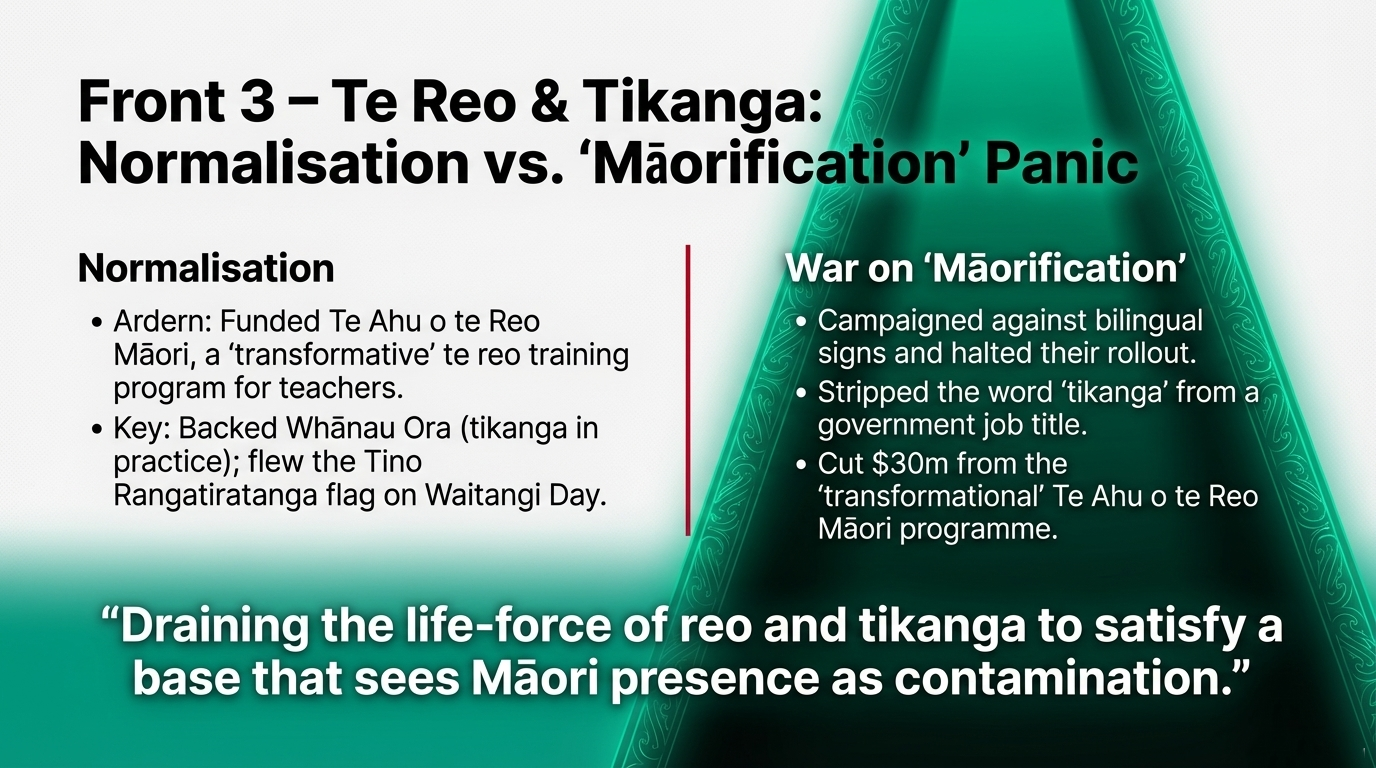
Under Labour, Te Ahu o te Reo Māori funded free, intensive te reo training for teachers throughout the motu, aiming to normalise correct pronunciation and basic language use in classrooms. Evaluations and educator testimony described the programme as transformative, lifting confidence and embedding local tikanga into everyday practice. 1News RNZ
This sat alongside a broader government narrative that saw te reo and tikanga as core to national identity, not niche cultural garnish. PMC TandF
Key and Whānau Ora as tikanga in practice
Key’s backing of Whānau Ora meant state funding flowed into Māori providers using explicitly whānau‑centred, kaupapa Māori frameworks – manaakitanga and whanaungatanga written into service design, not just speeches. RNZ RNZ
He also normalised symbolic steps such as flying the Tino Rangatiratanga flag on Waitangi Day and speaking about Māori success as national success. Beehive E-Tangata
Luxon’s “Māorification” panic
Luxon has chosen instead to treat te reo and tikanga as a problem to be solved.
- A detailed analysis in The Spinoff shows how Luxon and his ministers have targeted what they call “Māorification” – bilingual road signs, tikanga roles in ministries, te reo usage in agencies – as something to be “called out wherever we see it”, language he adopted on talkback radio. The Spinoff RNZ
- National campaigned against bilingual traffic signs, with Luxon insisting that road workers’ stop/go paddles should be in English only, while his transport team moved to halt wider bilingual rollout under the guise of safety. RNZ 1News
- Under pressure from Winston Peters, a tikanga leadership role at MFAT was stripped of the word “tikanga” and relabelled “protocol”, even though the actual job remained essentially the same – a purely symbolic downgrading designed to appease anti‑Māori sentiment. The Spinoff
- Most tellingly, his government cut $30m from Te Ahu o te Reo Māori just days after Te Wiki o te Reo Māori. When challenged, Luxon claimed this did not question the government’s commitment to the language, despite teachers and Māori language experts calling the programme “transformational” and warning its loss would slow reo revitalisation. 1News RNZ
All this happens while census data still show only 4.3% of New Zealanders can hold a conversation in te reo Māori, and Māori advocates stress that ongoing state support is vital for the language’s survival. Miragenews/Stats NZ RNZ
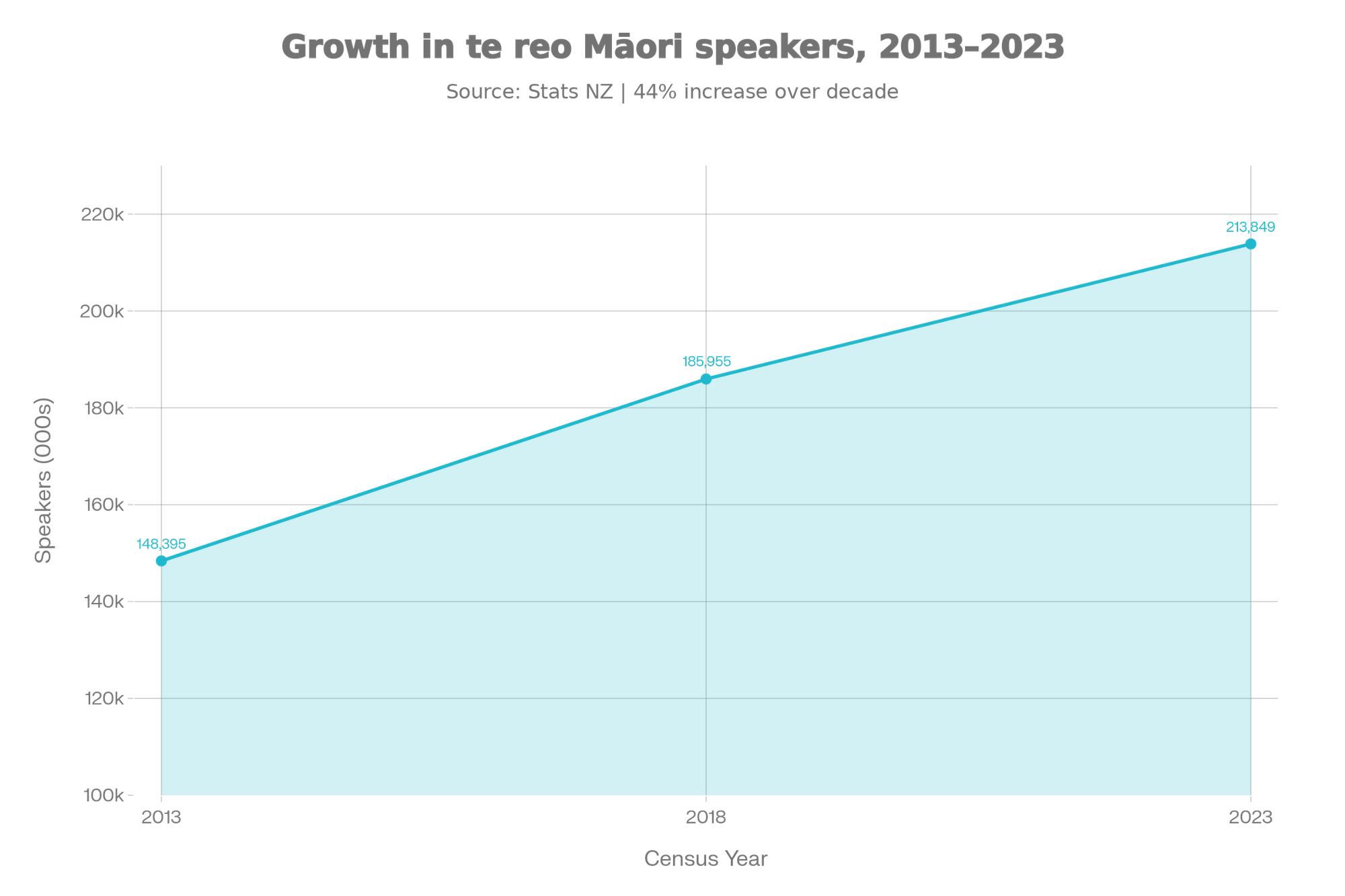
Te reo Māori speakers have grown steadily over the last decade, despite Luxon’s government cutting support and railing against so-called ‘Māorification’
To a western risk manager, this is perverse: cutting a well‑reviewed, high‑impact capability programme in an area where the key asset – the language – remains endangered. To tikanga, it is mauri‑depleting behaviour: draining the life‑force of reo and tikanga to satisfy a base that sees Māori presence as contamination.
Deeper connections: How Luxon’s line of travel intensifies structural harm
At least five further patterns connect Luxon’s choices:
- Punishment over prevention. Rising prisoner numbers, reintroduced three‑strikes, and boot‑camp fantasies show a government pouring money into carceral responses instead of Māori‑designed prevention and rehabilitation, despite justice data proving Māori are already massively over‑represented at every pipeline stage. Ministry of Justice RNZ NZ Herald
- International rights reversed. The same National Party that endorsed UNDRIP in 2010 now fronts a government facing an Early Warning / Urgent Action procedure at the UN over the Māori Health Authority’s abolition and wider “Treaty assault”, with Māori leaders warning that rights are being rolled back. Beehive Law Society Journal RNZ
- Anti‑Māori rhetoric mainstreamed. Academic work has documented how “respectable” elites launder anti‑Māori narratives through appeals to neutrality and efficiency. University of Waikato Luxon’s language about “Māorification” and “calling out” te reo use slots neatly into that playbook, even as he indignantly rejects being labelled “white supremacist”. RNZ The Spinoff
- Process cynicism as strategy. Luxon repeatedly claims his position on the Treaty Principles Bill has been “clear”, yet refuses to unequivocally rule out similar moves in future, keeping constitutional uncertainty alive as a bargaining chip while pretending to respect due process. RNZ 1News
- Data‑denial governance. Despite official reports showing persistent health inequities, life‑expectancy gaps and higher Māori morbidity, the government has scrapped ethnicity‑responsive tools (including a surgical waitlist prioritisation tool) and institutions built to deal precisely with those gaps. RNZ 1News Te Whatu Ora
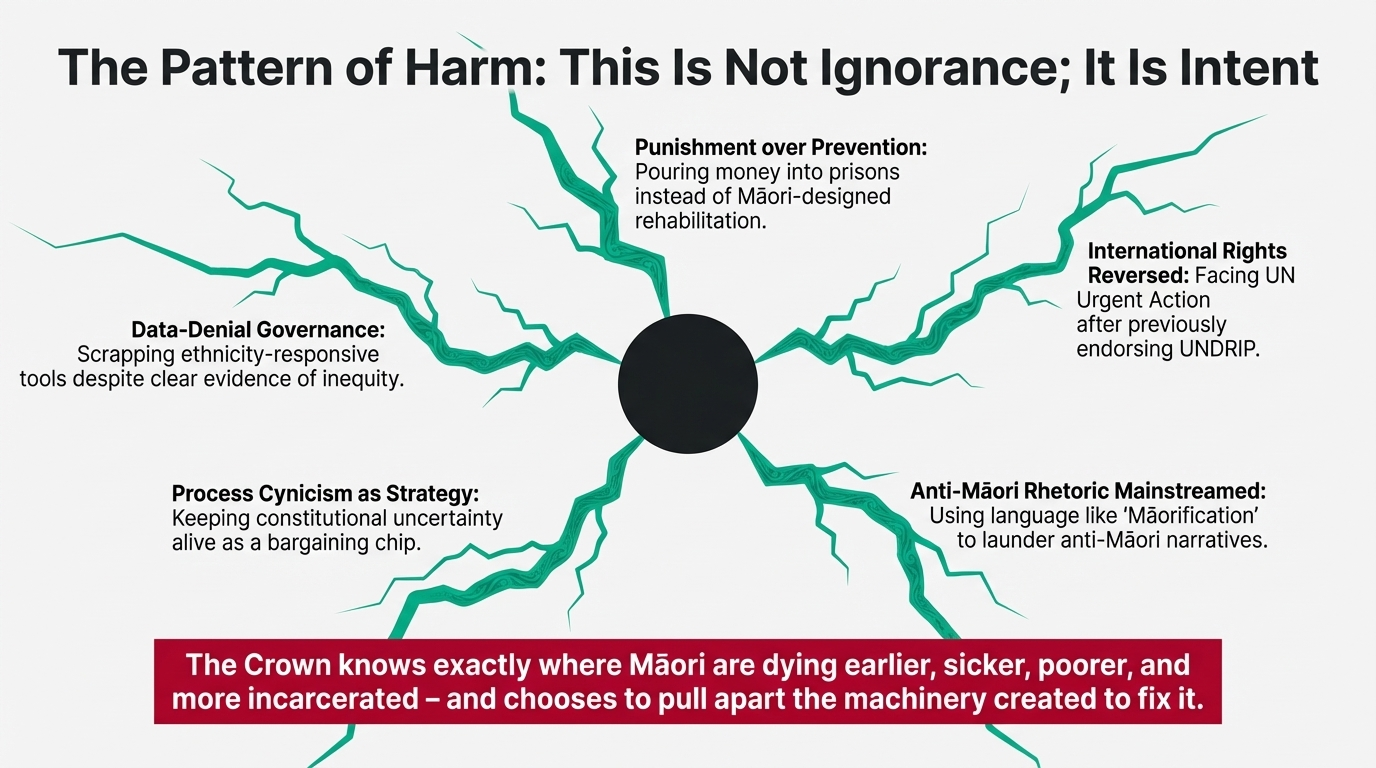
The result is a Crown that knows exactly where Māori are dying earlier, sicker, poorer, and more incarcerated – and chooses to pull apart the limited Māori‑designed machinery created to fix it. That is not ignorance; it is intent.
For a western mind: Luxon fails every meaningful KPI
Viewed through western governance metrics that any corporate board would recognise, Christopher Luxon’s performance on tikanga and Te Tiriti is indefensible:
- On institutions, he has moved faster to dismantle Māori structures (Te Aka Whai Ora, smokefree regime, reo programmes) than any prime minister has moved to build them since Bolger inaugurated the settlement era. Ardern and Key may have been incremental builders; Luxon is a demolition contractor with a prime ministerial title.
- On Treaty partnership and presence, he has enabled the most serious legislative assault on Te Tiriti in modern times, then ducked the key debates and physical spaces (Waitangi, select‑committee hearings, the decisive Treaty Bill debate) where a leader bound by tikanga would stand and answer. Bolger stood in those spaces; Ardern lived in them for five‑day stretches. Luxon phones in from home and lets others soak up the anger.
- On te reo and tikanga, he governs as if Māori presence in the public sphere is a contaminant. Where earlier governments spoke of normalisation and revitalisation, he speaks of “Māorification” as a problem to “call out”, cuts the very programmes that make bilingualism safe and effective, and sanitises “tikanga” out of job descriptions to appease racially anxious partners.
Even by the coldest western standards of risk management, stakeholder engagement, international obligations and evidence‑based policy, this is catastrophic leadership. Through a tikanga lens, it is worse: a sustained pattern of mauri‑depleting decisions that trample mana, deepen mamae and strip away the limited rangatiratanga space prior governments – even conservative ones – had begun to open.
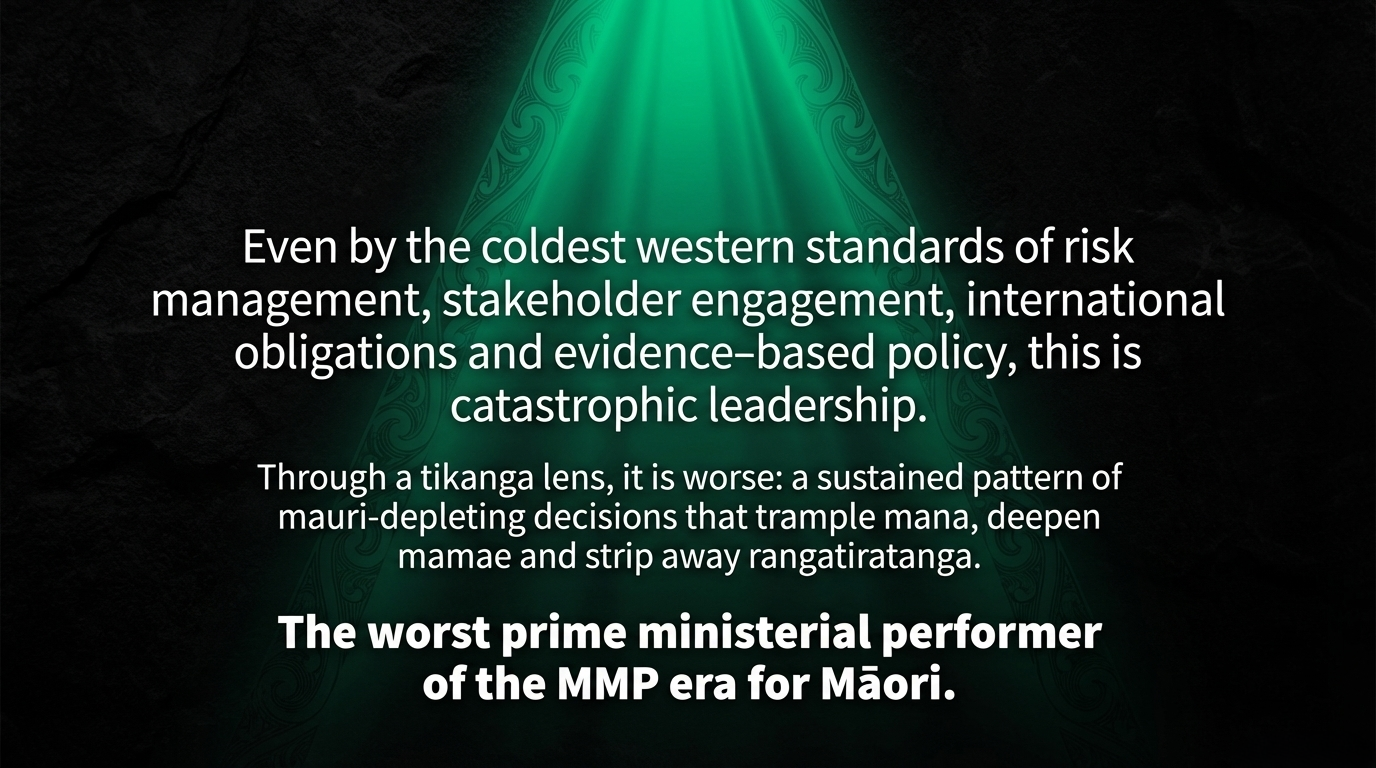
This is not a neutral “difference of opinion”. It is a deliberate choice to side with structures that shorten Māori lives, fill Māori prisons, and choke Māori language, all while insisting that the real problem is Māori visibility itself.

Luxon is not merely underperforming compared with Ardern, Key or Bolger on Te Ao Māori. Across every serious measure – institutions, partnership, language – he is the worst prime ministerial performer of the MMP era for Māori, and the damage is being tallied in years of life, lost reo, and broken relationships that will take generations to repair.

Ivor Jones The Māori Green Lantern Fighting Misinformation And Disinformation From The Far Right