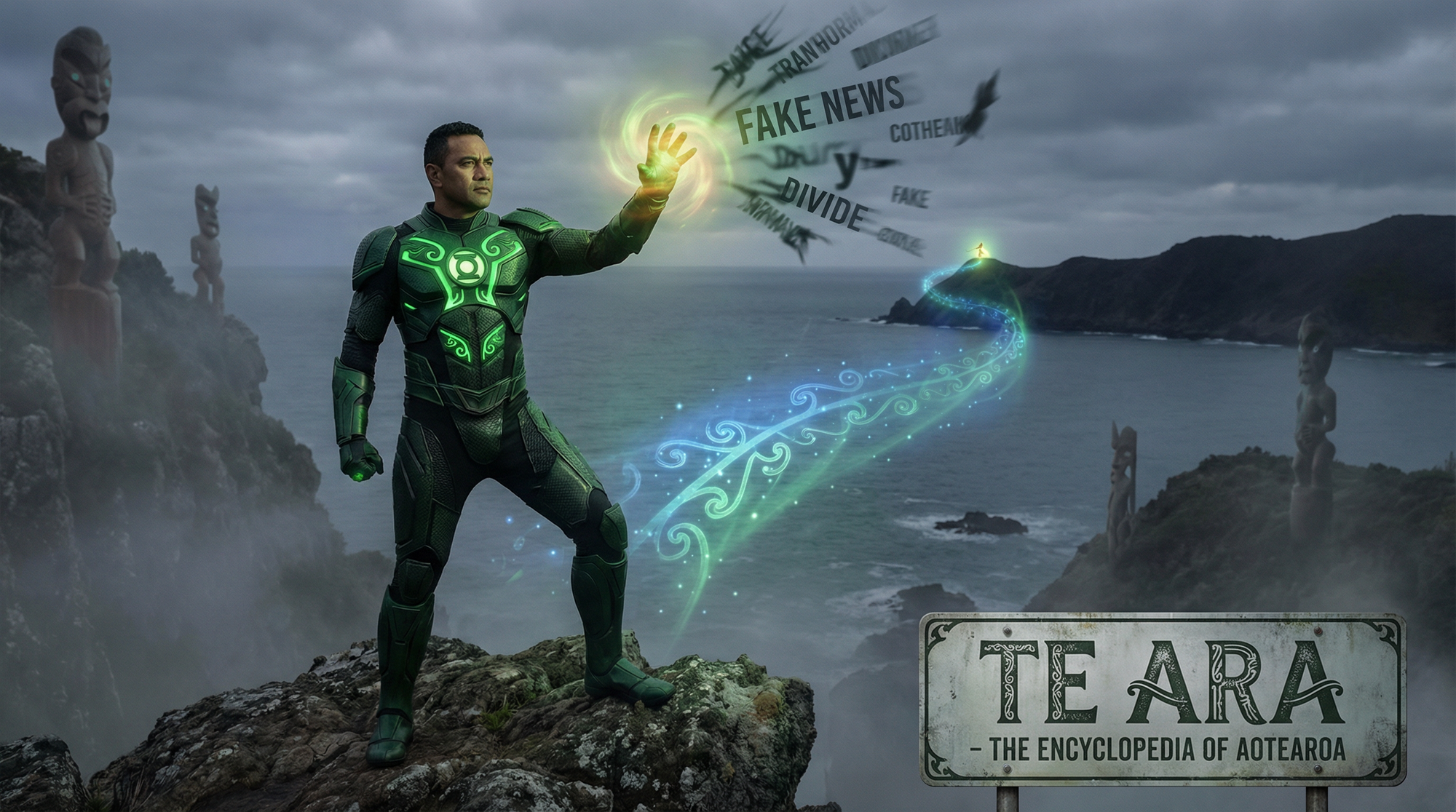
“Kia ora, my name is Ivor Jones, The Māori Green Lantern, exposing the Crown's colonial arrogance and neoliberal assault on Te Tiriti o Waitangi” - 16 July 2025
The Diplomatic Disaster that Exposed the Coalition's Anti-Māori Agenda
Kia ora koutou katoa,
A diplomatic fiasco has erupted within the coalition government, exposing the very essence of what The Māori Green Lantern has long warned about regarding the far-right's assault on Indigenous rights1. Deputy Prime Minister David Seymour's unilateral response to a United Nations letter about Indigenous rights has torn the mask off this government's white supremacist agenda, revealing the dangerous ideological divide that threatens Te Tiriti o Waitangi and the constitutional foundations of Aotearoa.
The sequence of events reads like a textbook example of colonial arrogance meeting international accountability. When UN Special Rapporteur Albert K. Barume criticized the coalition's anti-Māori policies, particularly Seymour's Regulatory Standards Bill that systematically excludes tikanga Māori and undermines Treaty principles2, the response was predictably defensive and dismissive.
Background: The Colonial Context of Constitutional Vandalism
To understand this diplomatic disaster, we must first examine the broader context of this coalition government's systematic assault on Māori rights. The Regulatory Standards Bill represents a fundamental constitutional shift that prioritizes neoliberal economic principles over Indigenous rights3. This legislation, according to Te Hunga Rōia Māori's submission, deliberately omits Te Tiriti o Waitangi and entrenches contested neoliberal ideology under the guise of neutral regulatory standards4.
The UN Special Rapporteur's concerns were entirely justified. Barume's letter expressed particular worry about the Bill's exclusion of Māori traditions and failure to uphold Treaty principles5. This wasn't external interference but legitimate international scrutiny of a government systematically dismantling Indigenous protections.
A Diplomatic Meltdown Exposes Government Dysfunction
The crisis began when Seymour, writing as Minister for Regulation, fired back at Barume's letter, calling it "presumptive, condescending, and wholly misplaced"6. His response was a masterclass in colonial defensiveness, claiming to speak for all Māori while systematically undermining our collective rights.
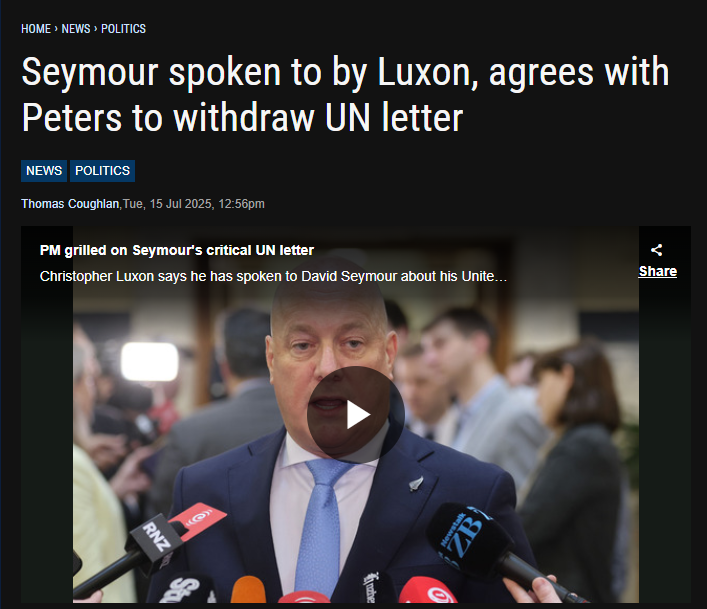
The diplomatic protocol breach was staggering. Prime Minister Christopher Luxon had to intervene, making clear that Foreign Minister Winston Peters should handle UN communications1. Yet Luxon's own response was equally telling - he described the UN letter as "total bunkum" and a "waste of time," revealing the government's fundamental contempt for international human rights oversight.
The chaos deepened when Peters publicly contradicted Seymour's claim that the official response would echo his letter, stating "That's not true. Why would he say that?"7. This wasn't just a procedural disagreement but a fundamental rupture in the coalition's approach to Indigenous rights.
Deconstructing the Colonial Propaganda Machine
The Weaponization of Mixed Heritage
Seymour's response deployed one of the most insidious tactics in the white supremacist playbook - the weaponization of mixed heritage to silence Indigenous voices. His claim that "as an indigenous New Zealander myself, I am deeply aggrieved by your audacity in presuming to speak on my behalf"6 represents a classic colonial tactic of co-opting Indigenous identity to advance anti-Indigenous agendas.
This strategy reflects what Indigenous scholars call "strategic essentialism in reverse" - using partial heritage to claim authentic voice while systematically dismantling the collective rights of the very communities being claimed. Seymour's own party profile makes no mention of his whakapapa or iwi connections8, yet he positions himself as speaking for all Māori when convenient for his political agenda.
The Neoliberal Assault on Indigenous Sovereignty
The Regulatory Standards Bill represents a textbook example of neoliberal colonialism9. By elevating individual property rights and economic efficiency above collective Indigenous rights, the legislation attempts to entrench what legal scholars identify as "monocultural legal standards that marginalize Māori as legal subjects"4.
The Waitangi Tribunal's urgent inquiry found that the Crown's policy development occurred without targeted engagement with Māori, violating Treaty principles of partnership and active protection10. This wasn't oversight but deliberate exclusion, designed to advance an agenda that treats Indigenous rights as obstacles to economic efficiency.
The Colonial Sovereignty Myth
Seymour's description of the UN intervention as "an affront to New Zealand's sovereignty" reveals the fundamental colonial lie at the heart of this government's approach. As legal expert Dr. Carwyn Jones noted, this represents a fundamental misunderstanding of how sovereignty actually works in a Treaty relationship11.
The Crown's sovereignty in Aotearoa is not absolute but shared, derived from and constrained by Te Tiriti o Waitangi. When the UN monitors compliance with Indigenous rights, it's not threatening sovereignty but holding the Crown accountable to its Treaty obligations12.

The Diplomatic Incompetence Cover-Up
The government's framing of this crisis as a mere "process issue" attempts to obscure the fundamental ideological differences exposed. Winston Peters' criticism of "megaphone diplomacy" was less about diplomatic protocol than about the substance of Seymour's anti-Indigenous message13.
The coalition's inability to present a unified response to legitimate international scrutiny reveals the deep fractures in their approach to Indigenous rights14. This wasn't about diplomatic procedure but about whether New Zealand would continue to honor its international obligations to Indigenous peoples.
The Pattern of Far-Right Misinformation
This diplomatic disaster fits perfectly into the broader pattern of far-right misinformation tactics that The Māori Green Lantern has consistently exposed15. The coalition's response employed classic white supremacist narratives:
Historical revisionism: Seymour's claim that the Bill "neither undermines nor overrides" Treaty protections has been thoroughly debunked by legal experts12.
Reverse racism rhetoric: The portrayal of UN scrutiny as "external interference" when it's actually legitimate international oversight16.
Colonial apologia: The defense of "New Zealand's sovereignty" while systematically undermining Indigenous sovereignty17.
Implications: The Broader Assault on Indigenous Rights
This diplomatic crisis represents more than government incompetence - it exposes the systematic assault on Indigenous rights that defines this coalition's agenda. The Regulatory Standards Bill is just one piece of a broader neoliberal project to dismantle Treaty-based protections18.
The coalition's response to legitimate international scrutiny reveals their fundamental contempt for Indigenous rights and international law12. This isn't about sovereignty but about avoiding accountability for policies that systematically disadvantage Māori.
The crisis also exposes the dangerous precedent of using individual Indigenous identity to silence collective Indigenous voices. When politicians like Seymour claim to speak for all Māori while advancing policies that undermine Māori rights, they're engaging in a form of colonial violence19.
The Resistance Continues
This diplomatic disaster has achieved something the coalition never intended - it has exposed the racist foundations of their agenda for all to see. The UN Special Rapporteur's intervention has provided international validation for what Māori have been saying all along about this government's anti-Indigenous policies12.
The coalition's response - from Seymour's colonial arrogance to Luxon's dismissive contempt to Peters' diplomatic damage control - reveals a government fundamentally opposed to Indigenous rights and international accountability. Their inability to present a coherent response exposes the ideological contradictions at the heart of their project.
But this crisis also demonstrates the power of international scrutiny and the importance of maintaining pressure on governments that systematically undermine Indigenous rights. The UN's intervention, combined with domestic resistance from Māori communities and legal experts, has forced the coalition to confront the racist implications of their policies10.
The fight continues, and every exposure of their colonial agenda brings us closer to justice. Ka whawhai tonu mātou.
Reader Support: For those who find value in exposing the truth about this government's anti-Māori agenda, please consider supporting this crucial work through a koha to HTDM: 03-1546-0415173-000. In these challenging economic times, please only contribute if you have the capacity and wish to support the cause of justice and truth-telling.
Mauri ora,
Ivor Jones
The Māori Green Lantern