"Labour’s Capital Gains Con Job Exposes Decades of Neoliberal Betrayal" - 2 November 2025
Hipkins’ Hollow Promises
Tēnā koutou katoa,
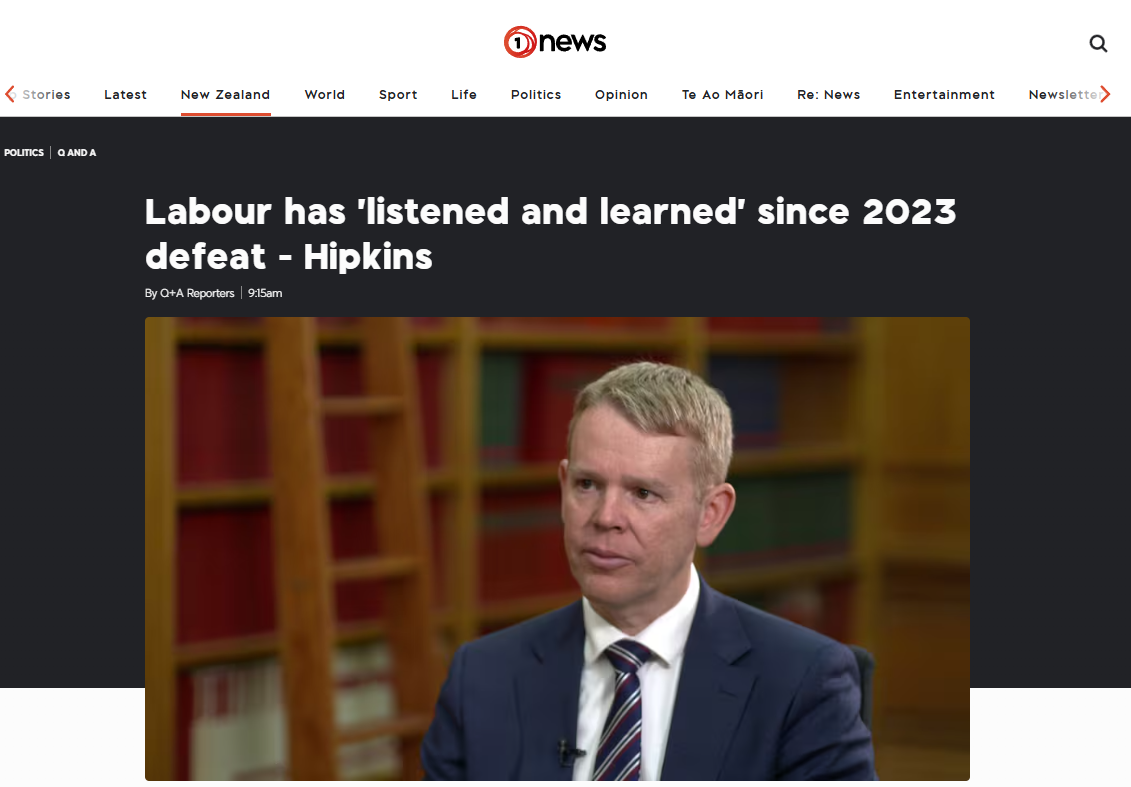
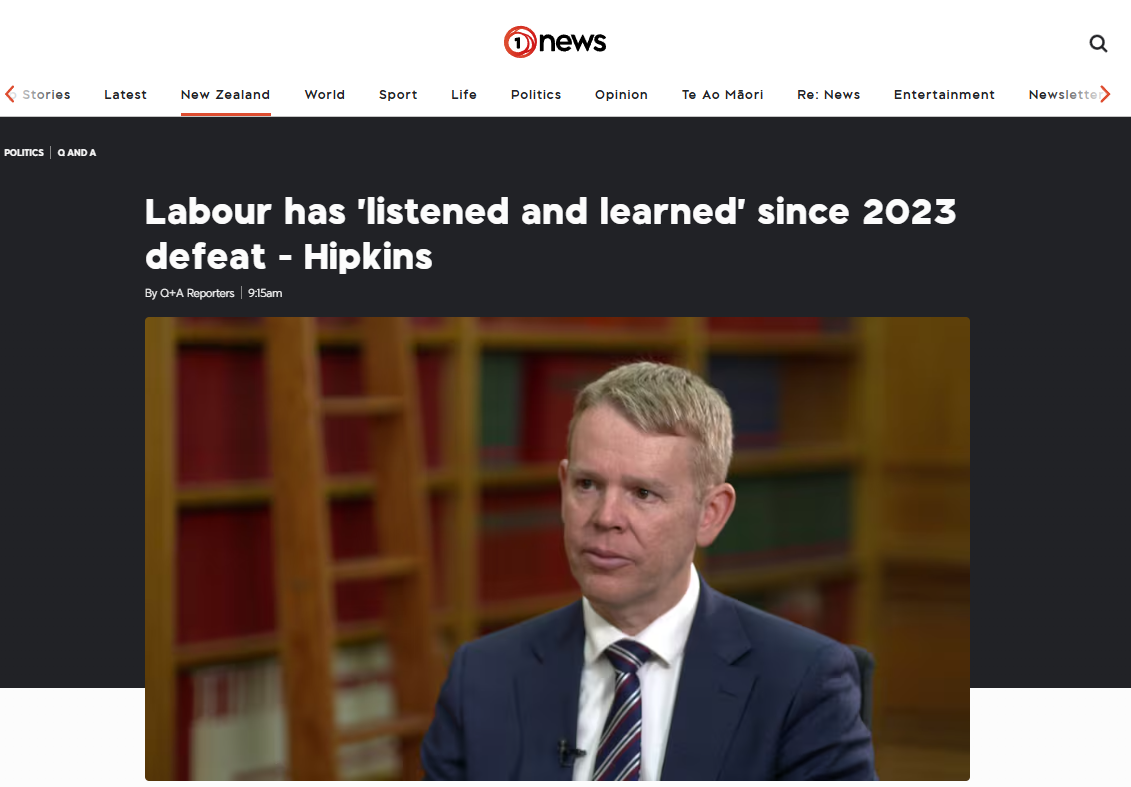
Chris Hipkins stands before Aotearoa a year out from the 2026 election, suit pressed, smile rehearsed, peddling the same tired snake oil Labour has been selling since Roger Douglas gutted this country in 1984. His “listened and learned” routine is political theatre of the crudest kind - a cynical performance designed to memory-hole Labour’s comprehensive failure while avoiding any genuine reckoning with the neoliberal orthodoxy that has hollowed out working-class communities, dispossessed Māori, and enriched a tiny elite.
Labour’s proposed capital gains tax won’t raise enough revenue to fund its own centrepiece health policy in the first year - creating a $223 million funding black hole that Hipkins conveniently forgets to mention. The party estimates $323 million will be needed in the first year to fund free doctors visits, but the CGT will raise only $100 million in 2027-2028. This isn’t policy. It’s a con.
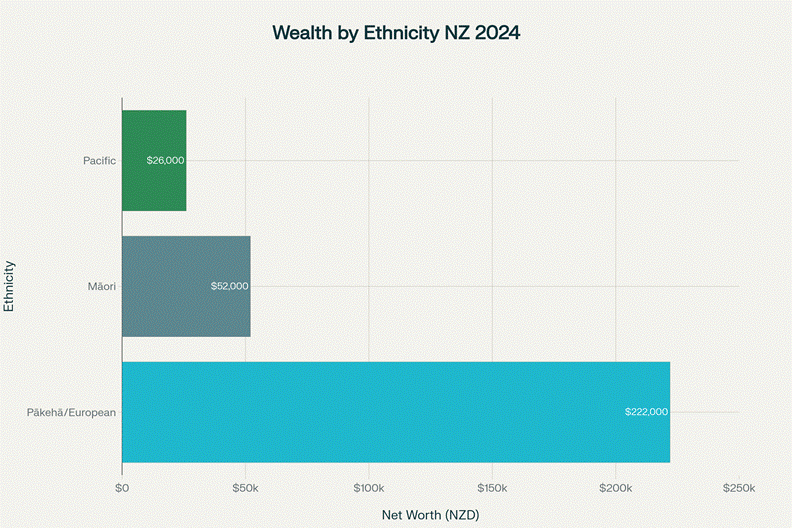
This chart exposes the massive wealth gap facing Māori in Aotearoa, with Pākehā holding over four times the median net worth of Māori - a direct legacy of colonial dispossession and ongoing systemic racism in housing, employment, and capital access.
But the deception runs far deeper. This is a party that has abandoned the working class it once claimed to represent, a party captured by the professional-managerial elite. A party that speaks te reo in press releases while perpetuating the economic violence of colonialism through policy. A party that promises transformation while clinging to the Budget Responsibility Rules that guarantee austerity.
Hipkins isn’t offering change. He’s offering managerial neoliberalism with a progressive aesthetic - the same policy framework that has seen Māori median net worth stagnate at $52,000 while Pākehā wealth hits $222,000. Four decades of Labour and National governments trading power have produced this obscene inequality, and Hipkins’ watered-down CGT does nothing to challenge it.
The Historical Whakapapa of Labour’s Betrayal
Labour’s relationship with capital gains taxation reveals everything you need to know about the party’s ideological bankruptcy. For nearly a decade - from 2011 to 2019 - Labour campaigned on implementing a comprehensive CGT, selling it as essential tax fairness. Phil Goff made it his centrepiece in 2011. David Cunliffe stumbled over it in 2014. Jacinda Ardern established a Tax Working Group in 2017 that recommended a broad CGT covering land, businesses, shares, and intangible property.
Then in April 2019, Ardern killed it. “After almost a decade campaigning on it... we have been unable to build a mandate for a capital gains tax,” she announced, ruling it out “under my leadership in the future”. The real reason? New Zealand First refused to support it, and Labour prioritized staying in power over tax justice.
When Hipkins became Prime Minister in February 2023, he initially refused to play the “rule in, rule out game” on CGT. But by July 2023 - five months before the election - he explicitly ruled out both wealth tax and CGT, declaring it “end of story”.
Then came the 2023 electoral wipeout. Labour crashed from 50% in 2020 to just 26.92% of the vote. Suddenly, Hipkins discovered he’d been listening all along. By November 2024, tax was back on the table - a “blank page” for policy development.
Now, in October 2025, Hipkins unveils not the comprehensive CGT that tax experts recommended, but a deliberately narrow “watered down” version that targets only investment property and commercial property - excluding family homes, farms, KiwiSaver, shares, business assets, and inheritances.
This isn’t principle. It’s polling. Labour has focus-grouped its way to a policy designed to offend the minimum number of swing voters while creating the appearance of progressive taxation. This is the party that veteran trade unionist Matt McCarten - himself a former Labour Chief of Staff - describes as having lost connection with working people, becoming missionaries who “love the poor, but they smell”.
Deconstructing the CGT Con: Labour’s Math Doesn’t Add Up
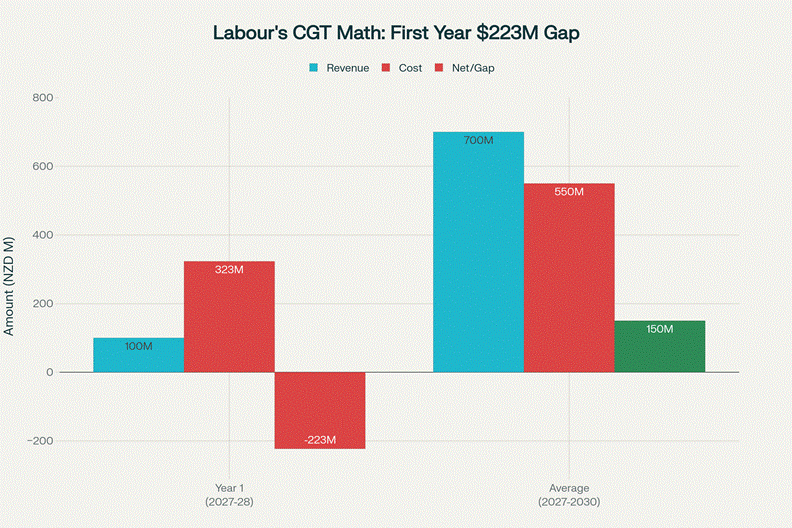
Labour’s capital gains tax promises three free GP visits funded by CGT revenue - but the numbers reveal a massive first-year funding gap of $223 million. This is Hipkins selling dreams while hiding the debt.
Hipkins’ CGT proposal collapses under the slightest scrutiny. The numbers simply do not work.
The Promise: A 28% tax on capital gains from investment and commercial property sales (excluding family homes and farms), starting July 1, 2027. Revenue will fund three free GP visits per year for all New Zealanders through a new “Medicard” scheme, with surplus funds ringfenced for healthcare.
The Reality: Labour projects the CGT will raise an average of $700 million per year across the forecast period (2027-2031), while the free doctor visits will cost approximately $550 million annually - leaving a $150 million surplus for other health spending.
But these are averages that mask a catastrophic first-year shortfall. In Year 1 (2027-28), the CGT will raise only $100 million while the GP visits will cost $323 million - a $223 million funding gap. Year 2 brings in $385 million against $490 million annual costs. The policy doesn’t reach break-even until Year 3 at the earliest.
Where does the money come from to cover this gap? Labour won’t say. Hipkins claims the “four-year budget cycle” will “smooth” the difference but acknowledges “there could be timing issues” - financial doublespeak for “we’ll borrow the money or cut other health spending.”
The Revenue Problem is Structural: Because the CGT only applies to gains made after July 1, 2027, and isn’t retrospective, it will take years to generate meaningful revenue. Someone who bought a rental property in 2020 and sells it in 2028 pays zero CGT on the gains accumulated before 2027.
As economist Ryan Greenaway-McGrevy notes, Labour’s entire funding model is “predicated on house prices going up”. “If house prices don’t go up, then we won’t have any capital gains taxes at all available in order to fund those GP visits,” he warns. Labour is betting New Zealand’s primary healthcare access on continued property speculation - the very thing a CGT is supposed to discourage.
Finance Minister Nicola Willis calls it “uncooked”. She’s not wrong.
The Capacity Delusion: Even assuming the money materializes, can the health system actually deliver? The Royal New Zealand College of GPs supports increased funding but warns general practice is “already working at full capacity” and “the workforce would need to be expanded”.
Labour is confident the policy can work within current workforce constraints. This confidence is unearned. The party that promised 100,000 KiwiBuild homes and delivered far fewer, that promised light rail in Auckland and never laid a meter of track, now promises to revolutionize primary care with funding that doesn’t exist and capacity that isn’t there.
The Policy Bonfire: Hipkins’ Track Record of Broken Promises
Before Hipkins lectures anyone about listening and learning, let’s review what he actually did when he inherited power in February 2023 after Jacinda Ardern’s resignation.
Within two weeks, Hipkins launched what became known as his “policy bonfire” - a wholesale abandonment of Labour’s policy program justified as refocusing on “bread and butter” issues. The carnage:
RNZ/TVNZ merger: Scrapped after spending $16.1 million. Nearly three years of work across three ministers thrown away.
Social insurance scheme: Paused indefinitely after costing $16.7 million. Grant Robertson’s signature policy to provide income protection for unemployed workers - abandoned.
Biofuels mandate: Cancelled after spending $4.28 million. Climate policy sacrificed to avoid a 2.5 cent per liter increase in fuel costs.
Hate speech legislation: Halted and referred to the Law Commission, despite being introduced to protect religious communities after the Christchurch terrorist attack.
Total cost of cancelled and delayed policies: Over $37 million in wasted taxpayer money.
Hipkins justified this scorched earth approach by admitting Labour had tried to do “too much, too fast” - a tacit acknowledgment that Ardern’s transformational rhetoric had produced policy chaos. But the bonfire revealed something deeper: Labour had no core principles worth defending. Everything was negotiable, disposable, focus-groupable.
This is the man now telling New Zealanders he’s “listened and learned” since the 2023 defeat. What he’s learned is that Labour can promise anything during campaigns because voters have goldfish memories for broken promises.
The Neoliberal Consensus: Labour’s Ideological Straightjacket
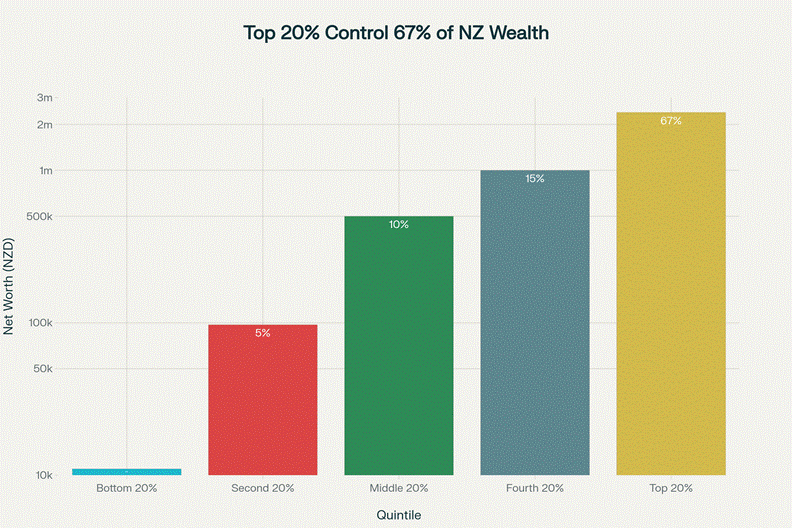
This chart exposes the brutal reality of wealth concentration in Aotearoa: the richest 20% hold two-thirds of all wealth while the bottom 40% remain locked out of asset ownership - a direct result of four decades of neoliberal policy from both National and Labour.
To understand why Hipkins’ CGT is so limited, why Labour can never deliver transformative change, we must examine the ideological cage the party has locked itself inside: the Budget Responsibility Rules.
Announced in March 2017 by Grant Robertson and Green Party co-leader James Shaw, these rules committed a future Labour-Green government to maintaining government spending at or below 30% of GDP, reducing net core crown debt to 20% of GDP within five years, and delivering surpluses across the economic cycle.
These weren’t economic necessities. They were political theater designed to neutralize National’s attacks on Labour’s fiscal credibility. But they locked Labour into a neoliberal spending straitjacket that made genuine transformation impossible.
And Labour didn’t just meet these rules - they beat them. Grant Robertson’s 2018 Budget delivered spending at just 28% of GDP, lower than National’s average. RNZ’s Guyon Espiner called it bluntly: “This was a triumph of neoliberalism or at least a continuation of it”.
The pattern continued through Labour’s entire 2017-2023 term. Yes, Labour lifted the minimum wage, introduced fair pay agreements, built some state houses. But it also maintained the fundamentals of the neoliberal policy regime: monetarist Reserve Bank independence, regressive taxation dominated by GST, benefit levels that remained below pre-1991 cuts, and tertiary education with high fees and massive student debt.
Most damningly, both Ardern and Hipkins ruled out wealth taxes and capital gains taxes while in power, maintaining “low tax rates, aside from a minor increase in the top income tax rate”. Labour’s reforms “do not signify a profound departure from neoliberalism”.
This neoliberal continuity explains why Hipkins’ CGT is so deliberately narrow. A comprehensive CGT would challenge property speculation, the core engine of wealth accumulation for New Zealand’s professional-managerial class. It would violate the unwritten rule of New Zealand neoliberalism: capital is sacrosanct, labor is disposable.
The Working Class Abandoned: Labour’s Demographic Catastrophe
The most damning indictment of Labour comes not from the right but from the left - specifically from veteran trade unionist Matt McCarten, who served as Labour’s Chief of Staff under David Cunliffe.
In a 2021 interview, McCarten delivered a blistering assessment of contemporary Labour: “There’s a liberal left and then there’s a working class left. I come from the working class left. The liberal left are people who think they know what’s best for the rest of us but they do us a disservice”.
McCarten describes a “cultural division” between “a flat white left” and “a working class left who think a flat white is a plate”. While the working class built Labour and the union movement, they’ve been replaced by middle-class professionals “in paid, salaried and safe jobs” who don’t understand the precarity facing workers.
“They look down on the working class,” McCarten told Newsroom’s Aaron Smale after Labour’s 2023 defeat. “’We love the poor, but they smell.’ Because they’re not part of them. They’re in the leafy suburbs, the hip suburbs, the Grey Lynns of this world.”
This abandonment has electoral consequences. Labour’s 2023 wipeout saw the party lose previously safe working-class seats across Auckland. Labour holds just 17 electorate seats in the current Parliament - a catastrophic collapse from the 46 it held after 2020.
When even its own former Chief of Staff says the party has become disconnected from working people, when electoral heartlands fall to National and Te Pāti Māori, the crisis is existential.
And what is Hipkins’ response? A CGT so narrow it affects minimal New Zealanders, coupled with free GP visits that don’t address the systemic underfunding gutting public health. It’s tinkering. It’s management. It’s neoliberalism with a compassionate face.
Quantifying the Harm: Who Labour’s Failures Hurt Most
The consequences of Labour’s neoliberal consensus aren’t abstract. They devastate real communities, and those consequences fall disproportionately on Māori.
Wealth inequality has reached obscene levels. Stats NZ data for the year ending June 2024 shows Pākehā median individual net worth: $222,000 and Māori median net worth: $52,000. Pākehā hold 4.27 times more wealth than Māori. This isn’t random market outcome - it’s the direct result of colonial land theft, racist housing policy, discriminatory lending practices, and four decades of neoliberal policy.
Wealth concentration is accelerating. Between June 2021 and June 2024, the wealthiest 20% of households saw wealth increase 19% to a median $2.4 million, while the bottom 40% saw no statistically significant change.
The richest quintile now holds 67% of all household wealth. The top 1% - about 40,000 people - control 17.5% of the country’s wealth, with median net worth of $11.2 million. Meanwhile 109,000 households (5.4%) have negative net worth - they owe more than they own.
Unemployment is rising, with 400,000 people needing welfare support as of December 2024 - the highest since the 1990s. Māori beneficiaries face costs rising at 2.4%.
Labour’s six-year term did nothing to fundamentally change these trajectories. The neoliberal orthodoxy they refused to challenge - the Budget Responsibility Rules, the monetarist Reserve Bank, the refusal to tax wealth - guaranteed these were band-aids on a hemorrhage.
The Pay Equity Theft: Labour’s $12.8 Billion Failure
While Hipkins pontificates about fairness and “listening,” the Coalition Government he claims to oppose has stolen $12.8 billion from underpaid women - money Labour’s flawed pay equity scheme had set aside for settlements.
Budget 2025 reveals the full scale of Coalition wage theft: $2.7 billion per year in ongoing savings from gutting pay equity, $1.8 billion in one-off “repurposed” contingency funding, and 180,000 women affected by cancelled pay equity claims.
The Coalition passed amendments under urgency in May 2025, raising the threshold to prove work has been “historically undervalued” due to sex discrimination.
This is theft dressed as fiscal responsibility. But here’s the uncomfortable truth: Labour created the conditions for this theft through incompetent policy design.
The pay equity scheme established in 2020 was projected to cost $3.7 billion over four years. Instead, costs exploded to $12.8 billion - a 246% blowout. Labour failed to anticipate the volume of claims, failed to properly fund the scheme, and failed to design robust protections against future governments gutting it.
The Public Service Association calls it “wage theft” and a “pay equity betrayal.” They’re right. But Labour shares blame for designing a scheme so poorly it became fiscally unsustainable, giving the Coalition political cover to dismantle it.
The Tikanga Violations: How Labour Betrays Māori Values
Every element of Labour’s neoliberal project violates tikanga Māori:
Whanaungatanga (kinship, connection) demands we care for each other’s wellbeing. Labour’s Budget Responsibility Rules and monetarist orthodoxy deliberately create unemployment to fight inflation, treating working people as expendable economic tools. When Māori net worth stagnates at $52,000 while Pākehā wealth soars to $222,000, Labour’s policy settings shatter the bonds of collective responsibility.
Manaakitanga (caring, hospitality, generosity) requires ensuring everyone has what they need to live with dignity. Labour’s refusal to implement comprehensive CGT that could fund social services, its tolerance of 109,000 households drowning in debt - these choices violate the fundamental obligation to care for the vulnerable.
Kaitiakitanga (guardianship, stewardship) demands we protect resources for future generations. Labour’s policy bonfire included cancelling the biofuels mandate designed to reduce emissions, delaying action on climate change, and maintaining an economic model based on property speculation rather than sustainable productivity.
Rangatiratanga (self-determination, sovereignty) means respecting people’s authority over their own lives. Labour’s missionary approach - deciding what’s good for working people from leafy suburbs - denies agency to those most affected by policy. When CGT exempts inherited wealth perpetuating intergenerational inequality, Labour denies working people and Māori communities the tino rangatiratanga to determine their economic futures.
Kotahitanga (unity, collective action) requires building solidarity across communities. Labour’s policies have instead deepened division - between asset owners and renters, between professional-managerial class and working class, between Pākehā benefiting from property speculation and Māori locked out of wealth accumulation.
Aroha (love, compassion) demands we approach policy with genuine care for people’s wellbeing. There is no aroha in designing a healthcare policy with a $223 million first-year shortfall. No aroha in abandoning comprehensive tax reform to protect landlords and investors. No aroha in promising transformation and delivering incrementalism while inequality accelerates.
Immediate:
- Reject Labour’s narrow CGT. Demand comprehensive wealth taxation including shares, business assets, and financial instruments. No exemptions for inherited property.
- Demand Labour reverse the Budget Responsibility Rules and commit to public investment at European levels.
- Require transparency on all policy costings before the election. No more hidden shortfalls.
First 100 Days of Any Progressive Government:
- Reinstate pay equity settlements in full, with $12.8 billion restored to women’s wages over four years
- Implement universal free primary healthcare - not three GP visits, but comprehensive coverage
- Introduce rent controls immediately to stop landlord profiteering
- Restore Fair Pay Agreements with expanded coverage
Structural Transformation:
- Reform the Reserve Bank Act to end the use of unemployment as inflation control
- Close the wealth gap through progressive taxation
- Build 50,000 state houses per year to break the property speculation cycle
- Free tertiary education with living allowances
- Legislate genuine co-governance that redistributes economic and political power to iwi and Māori communities
Hold Labour Accountable:
- Demand Hipkins explain the $223 million first-year healthcare funding gap in televised debates
- Organize community forums in working-class electorates where Labour MPs must face constituents
- Support Te Pāti Māori and progressive independents who offer actual alternatives
- Build trade union and community resistance regardless of who wins 2026
The 2026 election isn’t about choosing between Labour and National’s competing visions - it’s about whether we accept managed neoliberalism or demand transformation.
The Call to Action: What Must Be Done
Immediate:
- Reject Labour’s narrow CGT. Demand comprehensive wealth taxation including shares, business assets, and financial instruments. No exemptions for inherited property.
- Demand Labour reverse the Budget Responsibility Rules and commit to public investment at European levels.
- Require transparency on all policy costings before the election. No more hidden shortfalls.
First 100 Days of Any Progressive Government:
- Reinstate pay equity settlements in full, with $12.8 billion restored to women’s wages over four years
- Implement universal free primary healthcare - not three GP visits, but comprehensive coverage
- Introduce rent controls immediately to stop landlord profiteering
- Restore Fair Pay Agreements with expanded coverage
Structural Transformation:
- Reform the Reserve Bank Act to end the use of unemployment as inflation control
- Close the wealth gap through progressive taxation
- Build 50,000 state houses per year to break the property speculation cycle
- Free tertiary education with living allowances
- Legislate genuine co-governance that redistributes economic and political power to iwi and Māori communities
Hold Labour Accountable:
- Demand Hipkins explain the $223 million first-year healthcare funding gap in televised debates
- Organize community forums in working-class electorates where Labour MPs must face constituents
- Support Te Pāti Māori and progressive independents who offer actual alternatives
- Build trade union and community resistance regardless of who wins 2026
The 2026 election isn’t about choosing between Labour and National’s competing visions - it’s about whether we accept managed neoliberalism or demand transformation.
Breaking the Cycle of Betrayal

The Māori Green Lantern Fighting Misinformation And Disinformation From The Far Right
Chris Hipkins’ “listened and learned” performance is insulting to everyone paying attention. This is a man who scrapped $37 million in policies within weeks of becoming PM, ruled out progressive taxation when electorally convenient, then resurrected it in weakened form when desperate. A man whose healthcare flagship has a $223 million funding hole he won’t acknowledge. A man leading a party that talks like progressives and governs like fiscal conservatives.
The capital gains tax proposal crystallizes Labour’s failure: narrow enough to avoid offending property owners, limited enough to raise insufficient revenue, designed to create the appearance of fairness while protecting the wealth structures that perpetuate colonial inequality. When Māori hold one-quarter the wealth of Pākehā, when 400,000 people need welfare support, Labour offers tinkering.
Four decades of neoliberalism - implemented by Labour in the 1980s, continued by National in the 1990s, softened but never challenged by Clark and Ardern - have produced obscene inequality and hollowed-out communities. Hipkins promises more of the same, just managed more nicely.
We deserve better. Māori deserve tino rangatiratanga over economic systems that perpetuate our dispossession. Working people deserve parties that fight for them rather than missionary managers administering their poverty.
The choice in 2026 isn’t Labour versus National. It’s between accepting managed neoliberalism and building the collective power to demand transformation. Labour has shown repeatedly it won’t lead that transformation. So we must build it ourselves - in our communities, through our unions, with our rangatahi leading.
Kia kaha. Kia māia. Kia manawanui.
If this mahi has value for you and your whānau, and you have capacity, please consider supporting this work through koha: HTDM: 03-1546-0415173-000. Only give if you can - solidarity doesn’t require payment, but sustaining this work does require resources. Ngā mihi nui.