Luxon - Perfecting The Art Of Self-Fellatio - 1 October 2025
The CEO Prime Minister: How Christopher Luxon’s Corporate Narcissism Is Destroying Aotearoa
Kia ora whānau - Te mana motuhake o te tangata.
Christopher Luxon is failing spectacularly as Prime Minister because he treats our nation like a struggling company that needs a corporate turnaround specialist, when what Aotearoa really needs is authentic leadership grounded in manaakitanga and aroha for our people. The recent Mood of the Boardroom survey that ranked him 15th out of his own Cabinet ministers and his plummeting approval ratings reveal a man so disconnected from everyday New Zealanders that he refers to voters as “customers” and runs government like he’s still the CEO of Air New Zealand.
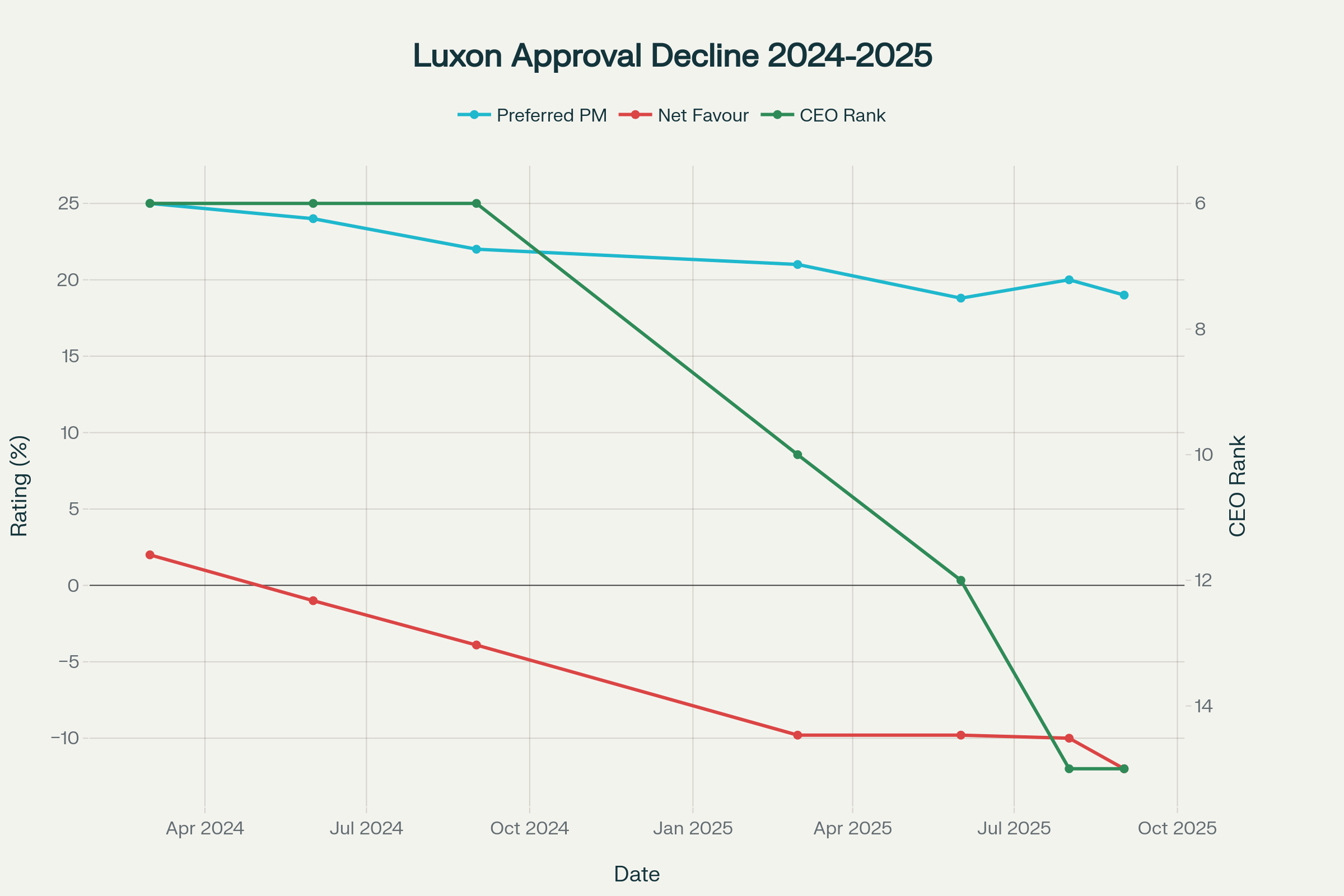
Christopher Luxon’s Declining Leadership Ratings 2024-2025
Background: The Making of a Neoliberal True Believer
To understand Luxon’s spectacular failures, we must examine the corporate machinery that forged him. This is a man who spent 18 years at Unilever, a multinational corporation that epitomizes global capitalism’s exploitation of developing nations, before becoming CEO of Air New Zealand where he practiced “foot-on-the-throat” management and earned millions while ordinary Kiwis struggled.
The corporate world that shaped Luxon operates on principles fundamentally opposed to Māori values. Where we value whakatōhea (collective responsibility), he learned individual competition. Where we practice manaakitanga (hospitality and care), he mastered cost-cutting and profit maximization. Where we embrace whakapapa (relationships and connections), he studied “leadership” from Ronald Reagan, the architect of trickle-down economics that devastated working communities worldwide.
His reverence for Reagan is particularly telling. This year, Luxon returned to studying Reagan after taking a break during his first year as Prime Minister, drawing inspiration from the man who declared government was the problem and unleashed decades of neoliberal destruction on working families globally.
A Study in Self-Fellatio
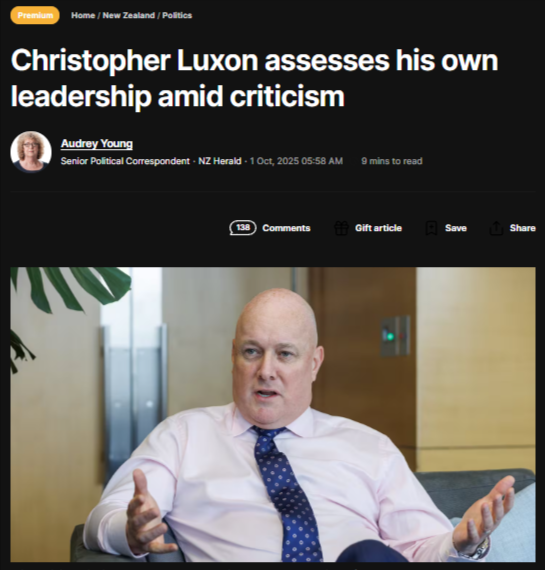
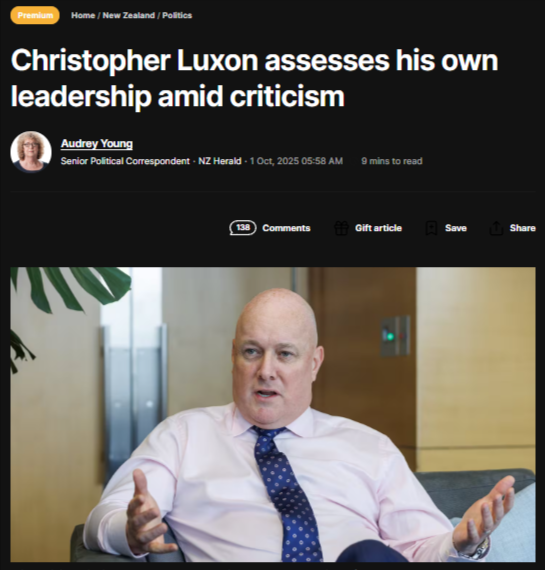
The Herald interview with Audrey Young reads like a masterclass in corporate self-promotion masquerading as leadership reflection. Luxon positions himself as a misunderstood genius, a “leadership expert” who has studied high-performing teams “since he was very young” and who magnanimously chooses to serve in politics despite having “a lot of options” for what he could do with his time.
This narcissistic framing immediately reveals the problem. Real leadership in te ao Māori doesn’t come from studying documentaries about sports teams or positioning yourself as the savior who graciously descended from corporate heights to fix the nation. True leadership emerges from whakapapa, from deep connection to whenua and iwi, from understanding that power is responsibility to serve rather than an opportunity to impose your vision on others.
Luxon’s fundamental disconnect from ordinary New Zealanders shows in his language. He calls voters “customers,” refers to his ministers as being in their “right positions on the team,” and describes governing as ensuring his “aces are in their places.” This is the vocabulary of corporate hierarchy, not democratic leadership rooted in service to tangata whenua and all people of Aotearoa.
The Corporate Playbook Destroying Aotearoa
The Sports Team Delusion
Luxon’s obsession with running government “like a sports team” reveals his complete misunderstanding of what democratic governance requires. He boasts about conversations with All Blacks coach Scott Robertson and applies sports metaphors to serious policy challenges affecting millions of lives. But governance isn’t a game with winners and losers - it’s about collective wellbeing and ensuring no whānau is left behind.
This sports team mentality explains his coalition management approach. He treats David Seymour and Winston Peters like players he needs to keep “focused and delivering,” rather than recognizing them as representatives of distinct political movements with their own mandates. This corporate hierarchy thinking is why his government lurches from crisis to crisis - he’s trying to be the CEO when he should be facilitating collective decision-making.
The Performance Management Façade
Perhaps most revealing is Luxon’s pride in having “dynamic performance conversations” with his ministers, claiming this differs from how things were “done in the past.” He positions himself as the hands-on manager giving “clear feedback as to where I think they’re doing well and where they think they could do better.”
This corporate performance management approach treats Cabinet ministers like middle managers reporting to a CEO rather than democratic representatives accountable to voters. It’s fundamentally anti-democratic and explains why his own business community has turned against him - they can smell the desperation of a failed CEO trying to manage his way out of disaster.
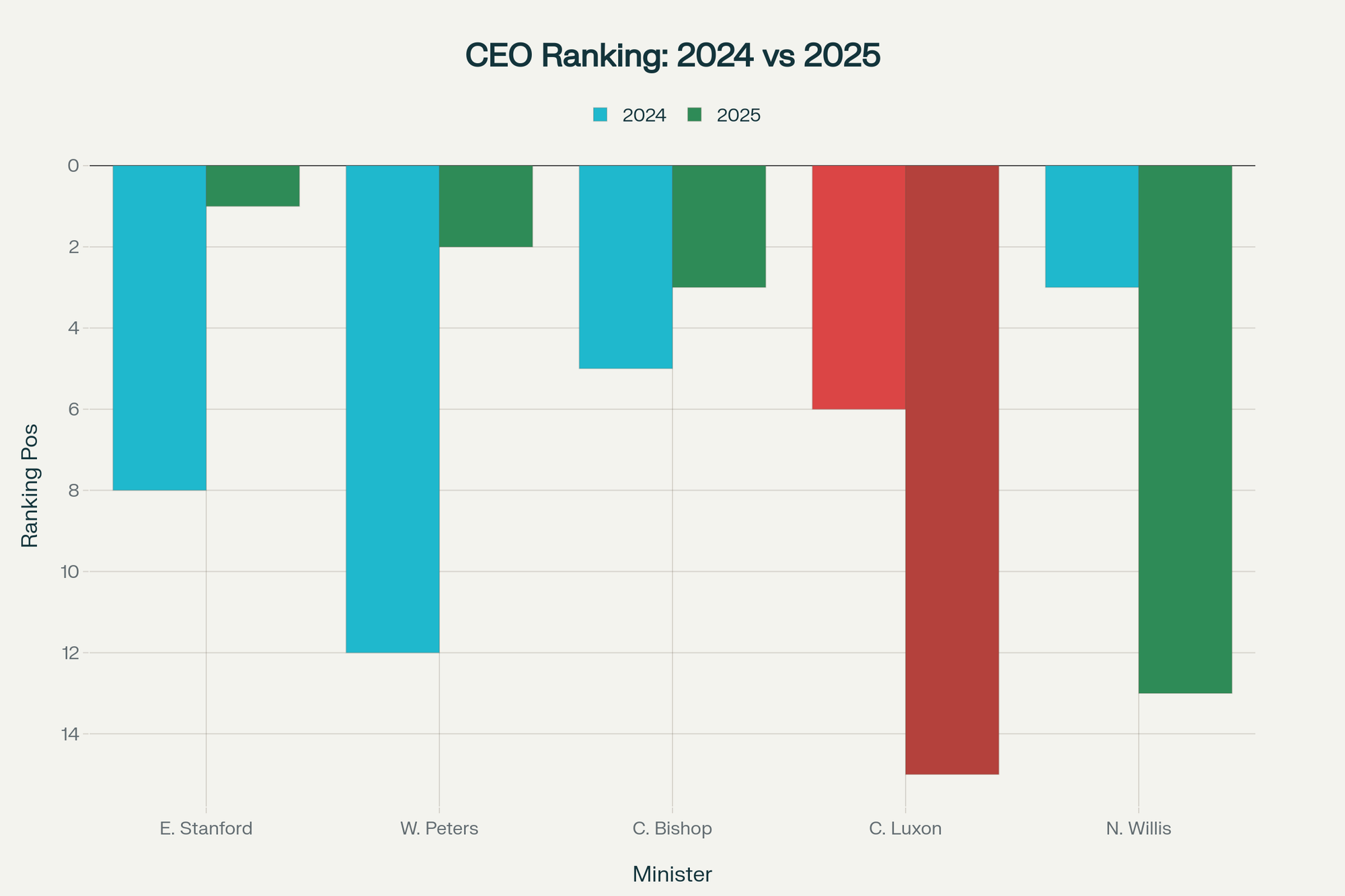
Cabinet Minister Rankings: CEO Survey 2024 vs 2025
The Data Disaster
The numbers tell the story of spectacular leadership failure. Luxon has fallen from 6th place in the 2024 CEO rankings to 15th in 2025, a catastrophic decline that shows even his natural constituency has lost faith. His net favourability has plummeted to -9.8%, making him one of the most unpopular Prime Ministers in recent history.
More damning still, New Zealand’s government performance rating hit a record low of 4.2 out of 10, while 48.9% of voters believe the country is heading in the wrong direction. Most tellingly, 37.6% of voters now blame Luxon’s coalition government for New Zealand’s economic struggles, more than those who blame the previous Labour government.
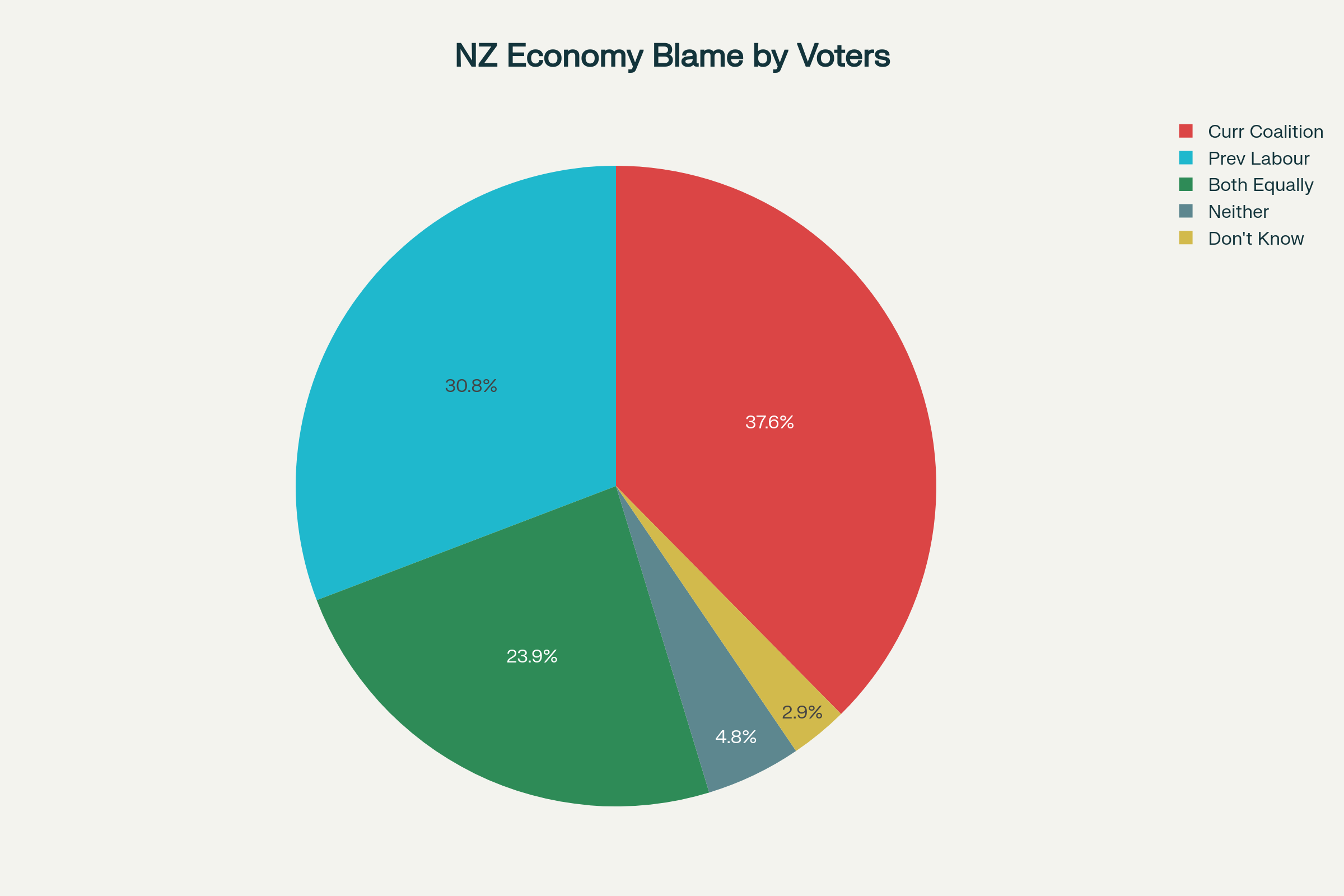
Who Do Voters Blame for New Zealand’s Economic Struggles?
The Neoliberal Resurrection Project
Luxon’s hero worship of Ronald Reagan exposes his true agenda: resurrecting the failed neoliberal experiment that devastated New Zealand in the 1980s and 1990s. Reagan’s legacy includes the destruction of unions, massive inequality growth, and the “greed is good” mentality that turned essential services into profit centers and communities into “markets.”
When Luxon says he “fully understands” that businesses want economic recovery to happen “quicker and faster,” he’s channeling Reagan’s view that government’s job is to get out of the way of capital accumulation, regardless of the human cost. This is why his government has prioritized tax cuts for landlords and property speculators while cutting funding for essential services that Māori communities depend on.
The Anti-Māori Corporate Agenda
Destroying Indigenous Rights Through “Efficiency”
Luxon’s corporate mindset treats Māori rights as inefficiencies to be streamlined away. His government’s systematic dismantling of co-governance arrangements, attacks on Te Tiriti protections, and cuts to Māori health and education services all follow the corporate playbook of eliminating “redundancies” and “streamlining operations.”
The man who talks about putting his “aces in their places” sees Māori political representation as a management problem rather than recognizing tangata whenua tino rangatiratanga. This is classic colonial thinking dressed up in MBA jargon - the belief that Indigenous rights are obstacles to “efficient” governance rather than foundational principles of legitimate authority in Aotearoa.
The Wealth Protection Racket
With a personal wealth estimated between $21-30 million, Luxon represents exactly the elite class that neoliberalism was designed to protect. His property portfolio worth over $21 million benefits directly from policies that keep housing unaffordable for ordinary families while generating tax-free capital gains for speculators.
His initial claim of the $52,000 accommodation allowance while living in his mortgage-free Wellington apartment perfectly encapsulates the elite mindset - socializing costs while privatizing benefits. This is a man so disconnected from financial stress that he thought claiming taxpayer money to live in his own property was acceptable.
The Hidden Connections: Corporate Networks and Political Power
The Unilever-Air NZ Pipeline
Luxon’s career trajectory reveals how multinational corporations groom future political leaders. His 18 years at Unilever, spanning five countries and culminating in running their Canadian operations, provided the international corporate network connections that smoothed his path to Air New Zealand’s CEO role.
At Air New Zealand, he practiced the “commercially ruthless” approach that made him attractive to National Party powerbrokers seeking a business-friendly leader. His willingness to axe unprofitable routes, shed jobs, and prioritize shareholder returns over worker welfare demonstrated the corporate sociopathy that political elites mistake for leadership capability.
The Business Roundtable Renaissance
The same business leaders who once advised Roger Douglas during the 1980s neoliberal revolution now find their intellectual heir in Luxon. His Reagan obsession connects directly to the think tank networks and corporate lobbying groups that have spent decades undermining democratic governance in favor of market fundamentalism.
The fact that business leaders now rank him 15th in his own Cabinet suggests even they recognize his corporate leadership model is failing when applied to democratic governance. They wanted a CEO who would deliver for capital, but got a performance management consultant obsessed with his own image.
Implications for Tangata Whenua and All New Zealanders
The Democratic Deficit
Luxon’s corporate approach to governance fundamentally undermines democratic accountability. His response to criticism that he doesn’t listen well - “I don’t take offence from people I don’t take advice from” - reveals a man who sees public accountability as optional.
This CEO mentality treats democratic consultation as inefficiency. When he says his job is to “create conditions for growth” and “think about the 5 million people” rather than just “the 150” business leaders in the survey, he’s positioning himself as the wise executive who knows what’s best for everyone - classic paternalistic authoritarianism dressed as leadership.
Economic Violence Against Working Families
The economy shrank by 0.9% in the June quarter, double the worst predictions, while Luxon continues pushing failed neoliberal solutions. His government’s austerity measures, tax cuts for the wealthy, and attacks on public services follow the same playbook that devastated communities during Rogernomics.
The fact that more voters now blame his government for economic struggles than the previous Labour government shows people understand that corporate leadership principles don’t translate to effective economic governance. Running a country isn’t about maximizing shareholder value - it’s about ensuring collective prosperity and wellbeing.
The Threat to Tino Rangatiratanga
For tangata whenua, Luxon represents the most dangerous kind of threat - a colonizer who doesn’t even recognize he’s colonizing. His corporate efficiency mindset sees Māori political institutions as duplicative bureaucracy rather than expressions of Indigenous sovereignty. His treatment of ministers as performance-managed employees extends to how he views Māori political representation - as something to be optimized rather than respected.
This makes him more dangerous than openly racist politicians because he wraps anti-Māori policies in the language of neutral management efficiency. When he cuts Māori health services or undermines co-governance, he frames it as good business practice rather than acknowledging the colonial violence these actions represent.

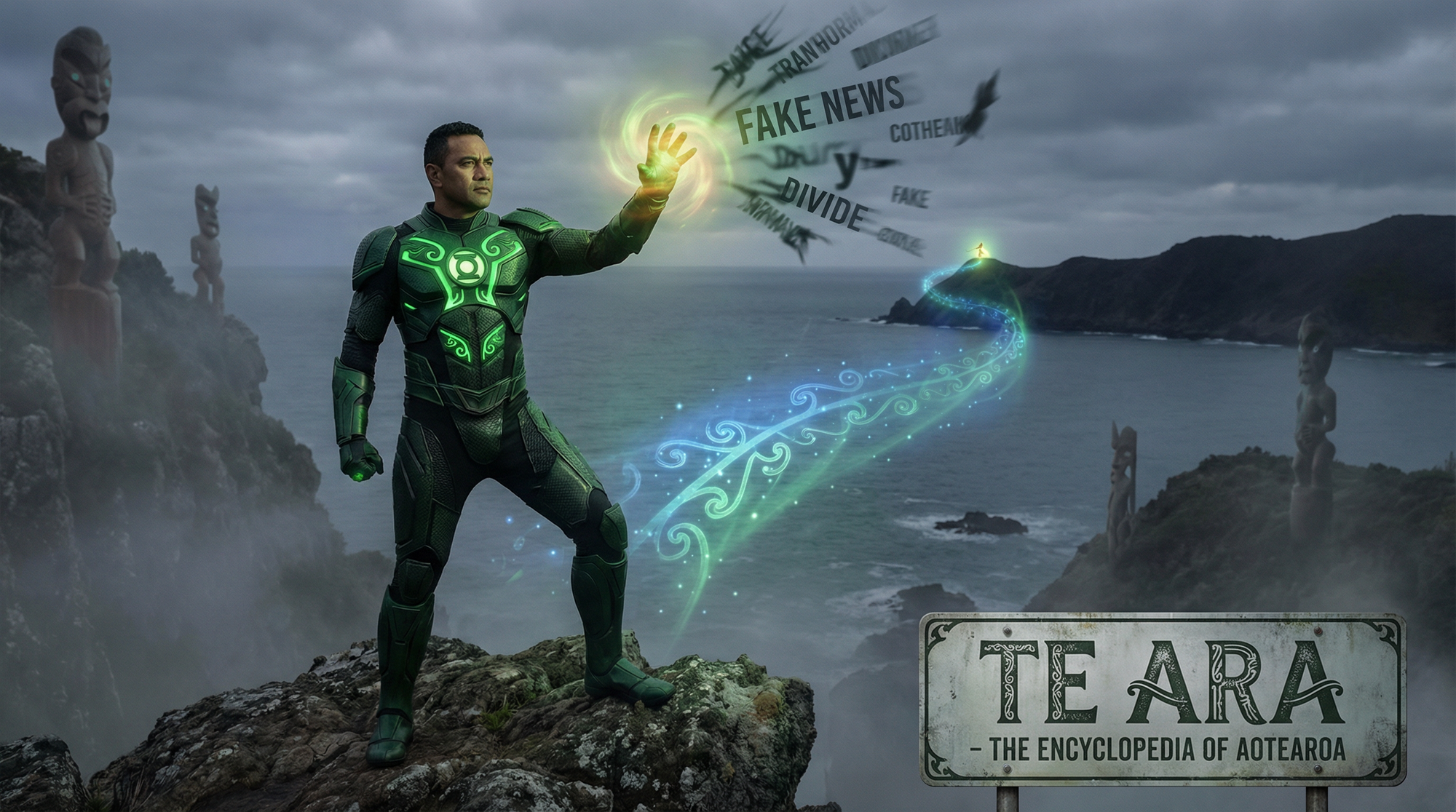
The Māori Green Lantern Fighting Misinformation And Disinformation From The Far Right
The Emperor’s Corporate Clothes
Christopher Luxon stands naked before Aotearoa, his corporate emperor’s clothes shredded by the reality that running a country requires moral vision, not performance management systems. His spectacular fall from business darling to failed Prime Minister exposes the bankruptcy of treating democratic governance like corporate restructuring.
The man who positions himself as a leadership expert studying Ronald Reagan while voters increasingly reject his direction represents everything wrong with New Zealand’s political system. He embodies the neoliberal delusion that corporate success translates to public service leadership, when in reality it produces exactly what we see - disconnected, arrogant governance that serves capital while betraying communities.
For tangata whenua and all who love this land, Luxon’s failure provides hope. His corporate narcissism is so transparent, his disconnect from ordinary lives so complete, that he’s accidentally revealing the violence inherent in neoliberal governance. Every “performance management” metaphor, every sports team analogy, every reference to voters as customers exposes the anti-democratic mindset that has captured our political system.
The future of Aotearoa depends on rejecting this corporate colonization and returning to governance grounded in manaakitanga, whakatōhea, and genuine service to all our people. Luxon’s spectacular failure as Prime Minister isn’t just about one man’s inadequacy - it’s proof that corporate leadership and democratic governance are fundamentally incompatible.
Kia kaha, whānau. The emperor has no clothes, and everyone can see it now.
Nā, Ivor Jones - Te Māori Green Lantern
Readers who find value in this mahi and wish to support the kaupapa of exposing misinformation and white supremacy are humbly invited to consider a koha: HTDM 03-1546-0415173-000. In these challenging times for whānau, please only contribute if you have the capacity and desire to do so.