"Luxon’s Anti‑Treaty Government in Disguise" - 5 February 2026
The Arsonist in a Fire Warden’s Jacket
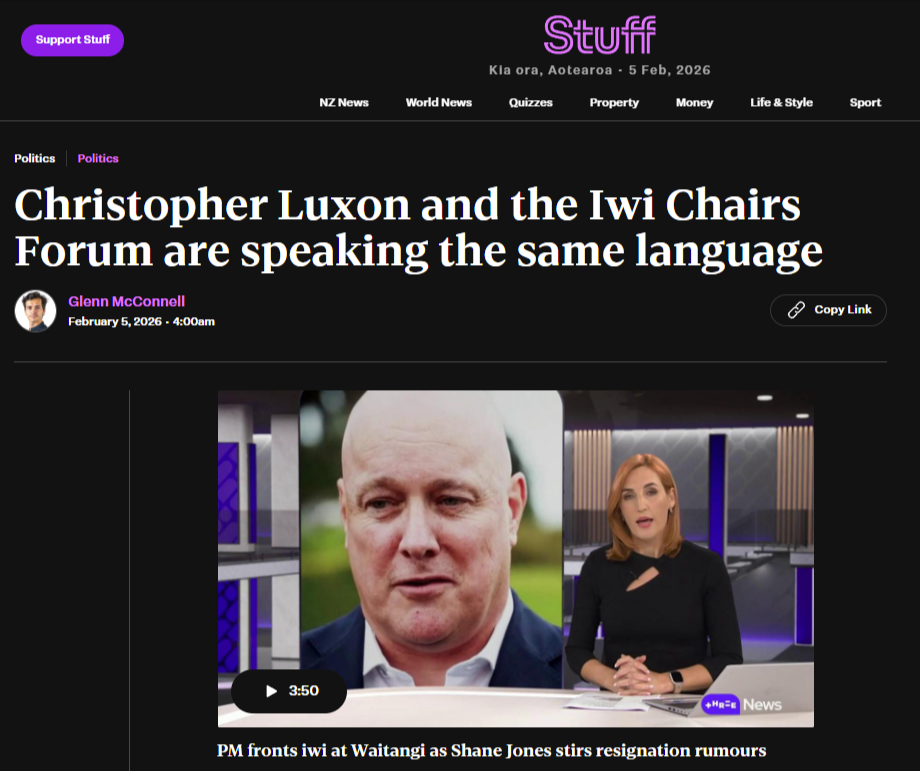
Kia ora ano Aotearoa,
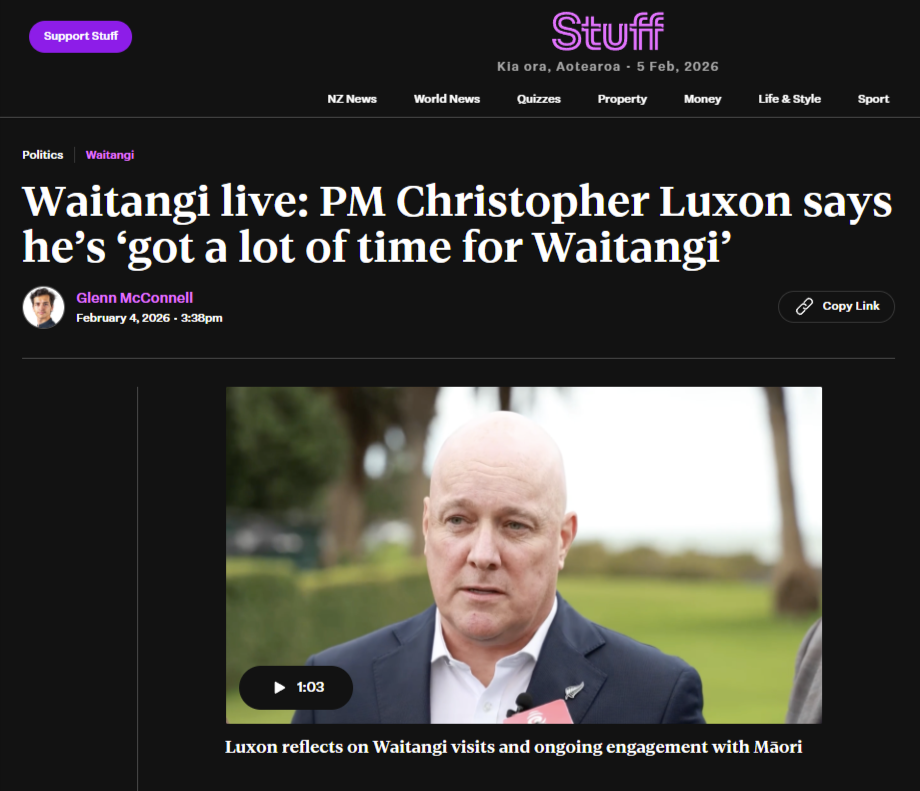
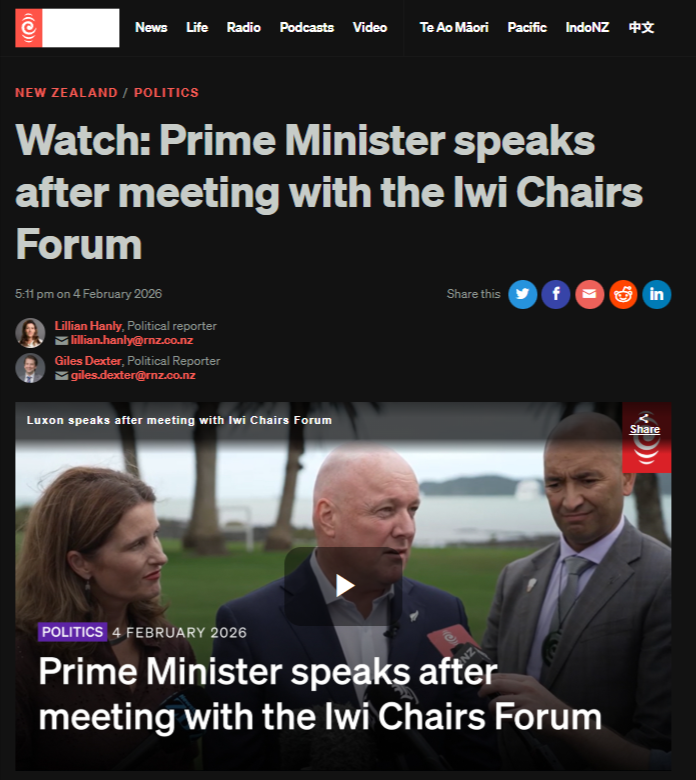
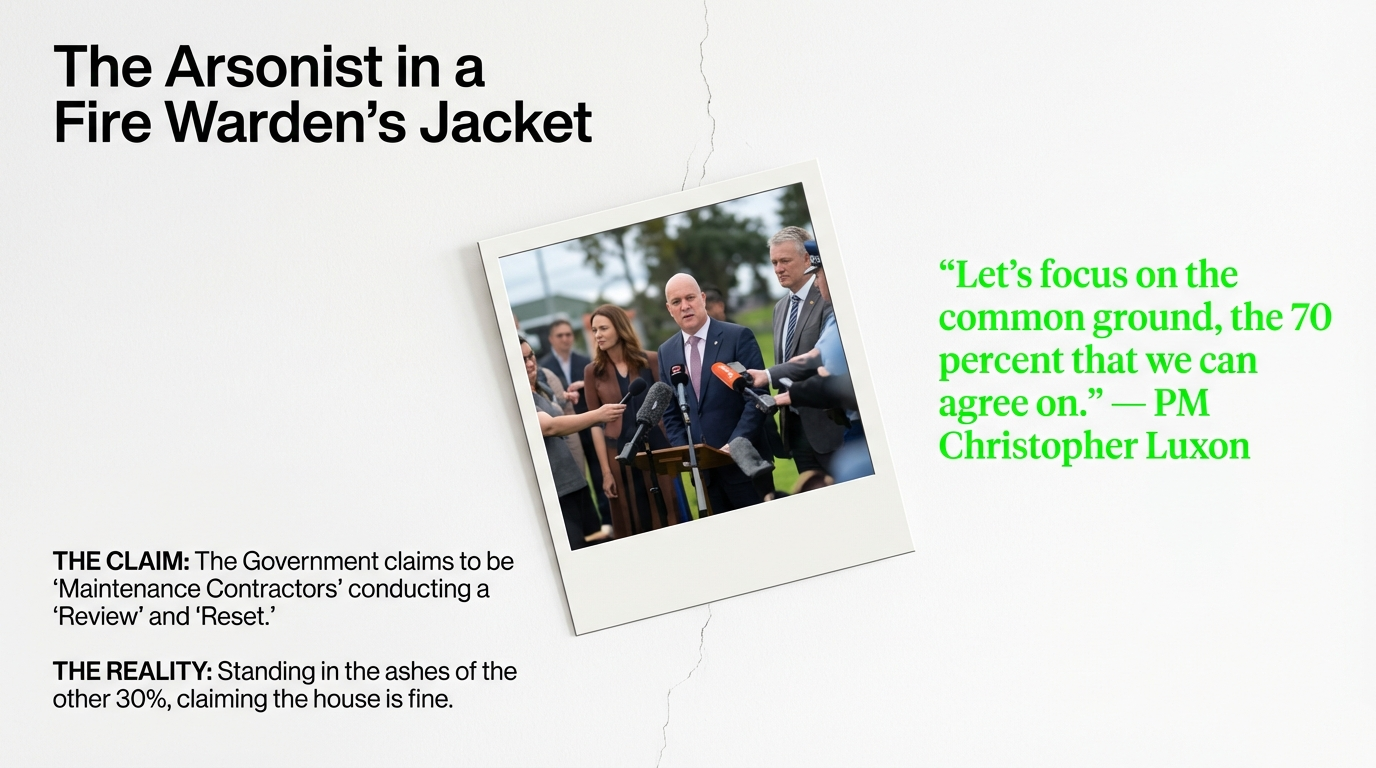
Christopher Luxon stands at Waitangi in a borrowed korowai, insists his government is not anti‑Treaty, and points to “common ground” like a man holding a fire extinguisher in one hand and a flamethrower in the other. He calls his meeting with iwi leaders “the best forum” he’s ever attended, praises “alignment”, and sells the illusion that shared language equals shared intent, as reported by RNZ. Meanwhile, the legislative record behind him is a smoking skyline of burned Treaty protections, dismantled Māori institutions, and weakened tikanga.
This isn’t misunderstanding. It’s deliberate political cosplay: wearing the costume of partnership while wielding the tools of rollback.
The Mask: “We’re Not Anti‑Treaty, We’re Just Finding Common Ground”
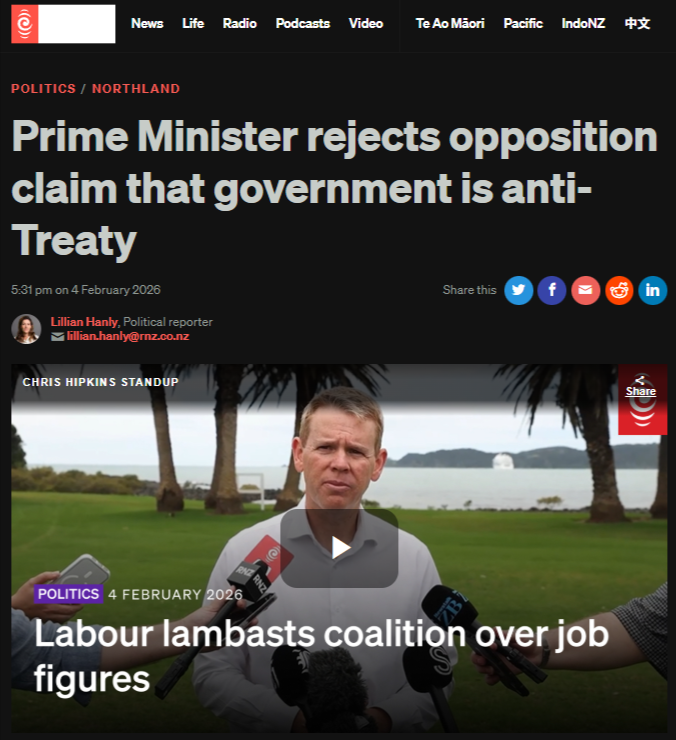
When Chris Hipkins called the government “anti‑Treaty and therefore anti‑Māori”, Luxon’s response was smooth and practised. He pointed to the Iwi Chairs Forum as proof that the relationship was strong: “positive”, “robust”, “direct”, “the best forum I have participated in”, where iwi and ministers supposedly wanted the same things—better health, education, infrastructure—as described by RNZ.
He sold one line as his moral shield:
“Let’s focus on the common ground, the 70 percent that we can agree on, that we can actually move and advance forward” RNZ.
To the casual listener, this sounds reasonable. Who’s against common ground?
But “common ground” here is not neutral space. It is the ground left after the bulldozers have finished.
Luxon wants to stand on the patch of land where he and iwi can agree on roads and school attendance, while behind him:
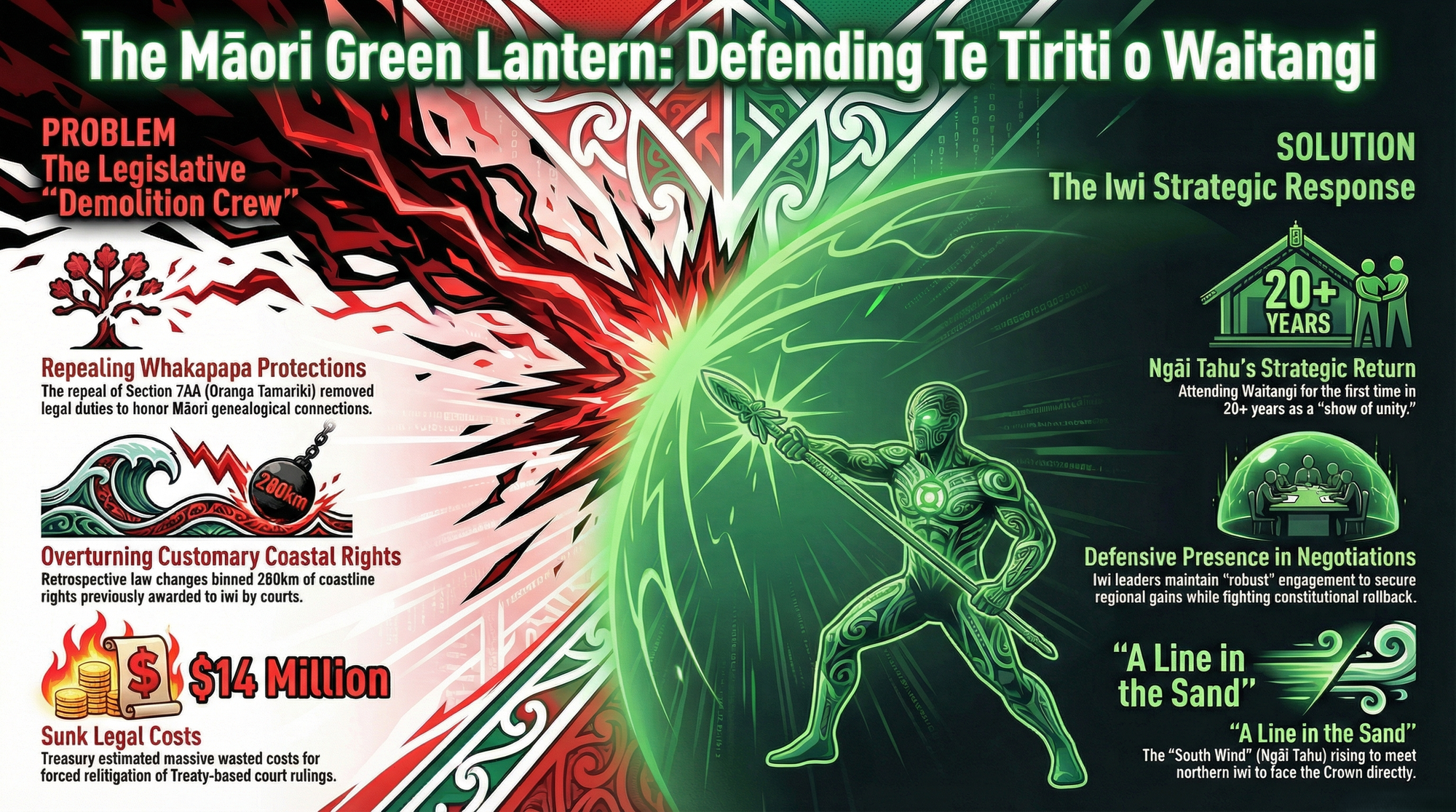
- Coastlines are legislatively stolen.
- A Māori health authority is disestablished.
- Whakapapa protection in child law is repealed.
- Te Tiriti is sliced out of education law.
- Treaty protections are quietly weakened via a “Treaty Principles Bill 2.0”.
The “70 percent” he talks about is the charred middle strip in a paddock where everything important has been torched.
The Flames: A Year of Law Changes That Prove This Government Is Anti‑Treaty
1News pulled the camera back and did what Luxon refuses to do: look at the whole paddock. Their review of 2025 describes “a decrease in public sector obligations and targeted initiatives that support Māori rights, development and wellbeing”, covering social services, marine and coastal rights, and education—following on from earlier attacks like the disestablishment of the Māori Health Authority and reinstating polls on Māori wards, as documented by 1News.
In other words: a systematic, sustained campaign to strip back anything that gives practical expression to Te Tiriti.
1. Social Services: Cutting Whakapapa Out of the Law
First, they went for the children.
Section 7AA of the Oranga Tamariki Act required the state to:
- Reduce disparities for tamariki Māori.
- Give regard to their mana and whakapapa.
- Build strategic relationships with iwi and Māori organisations.
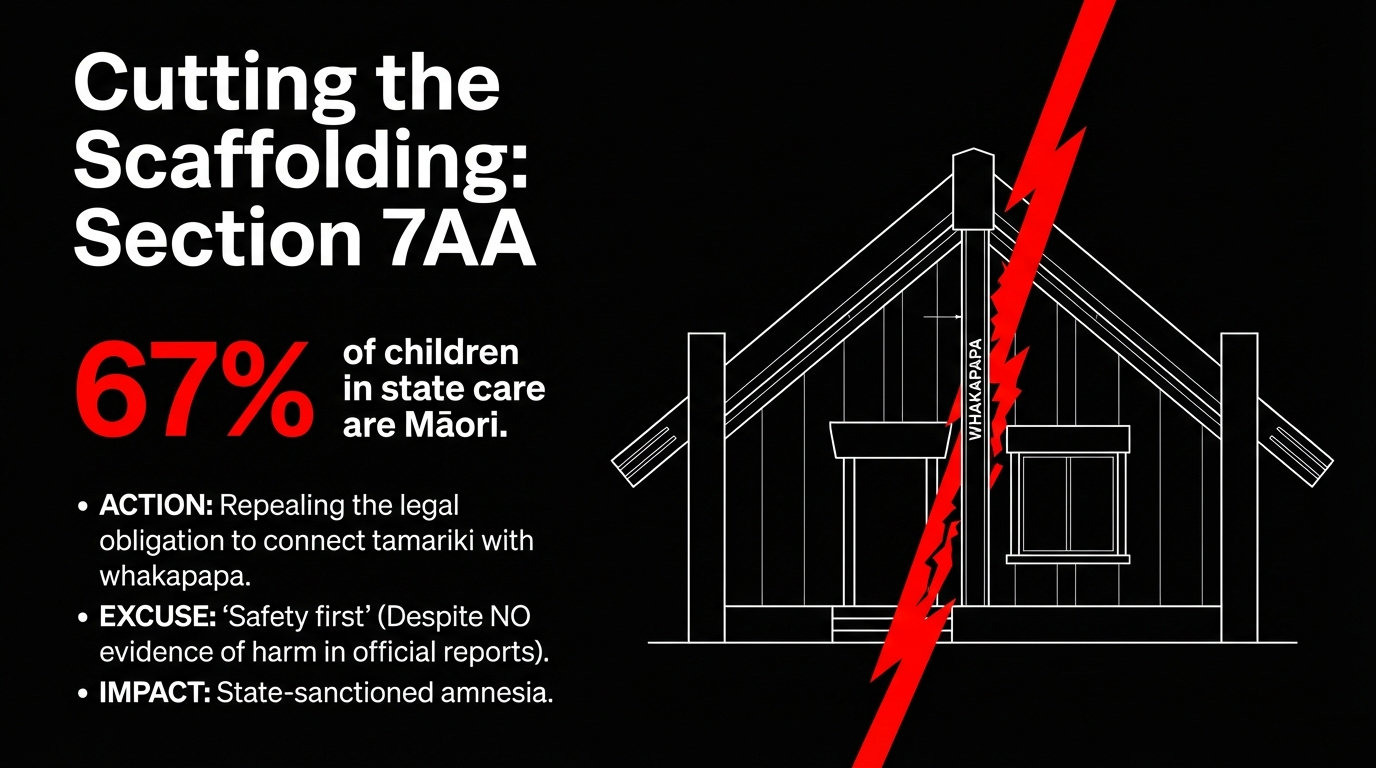
This was the law’s way of saying: Māori kids are not interchangeable units; they are nodes in a sacred network of whānau, hapū, iwi. Their identity is not optional. In April 2025, the Oranga Tamariki Amendment Act repealed Section 7AA, so that the agency is no longer legally required to centre those obligations, as reported by 1News.
Minister Karen Chhour wrapped this in the language of “safety”, claiming the change was about putting “the safety of the child first” and implying that 7AA forced harmful decisions based on ethnicity, as she argued on 1News.
Reality check: Oranga Tamariki’s own Regulatory Impact Statement said there was no empirical evidence to support the idea that Section 7AA caused harmful placement decisions Regulation.govt.nz. 7AA was inserted in 2019 precisely because child protection services were failing Māori, after the horror of baby uplift exposés, as explained by 1News.
So the government took a law designed to stop the system ripping babies out of whakapapa and threw it on the fire with no robust evidence it was doing harm.
Quantified harm example:
- About 67% of children in state care are Māori, despite Māori making up around 17% of the population, as highlighted when MPs and advocates challenged the repeal on 1News.
- That means for every 10 kids in care tonight, roughly 7 are Māori. Section 7AA was one of the only legal levers forcing the state to ask “who is their whānau? their hapū? their iwi?” before placing them anywhere.
Removing that obligation is not neutral reform. It is state‑sanctioned amnesia.
To a Western mind, imagine a law that said adopted children must be supported to know and stay connected with their birth families and cultural roots. Then imagine the government repealing it on the basis of vibes, not evidence, while 70% of adopted kids come from one disadvantaged community. That’s what repealing 7AA is.
Tikanga impact: It shreds whakapapa (genealogical connection), weakens mana tamaiti (the child’s inherent dignity and standing), and hollows out whanaungatanga (relational obligations). It says: the Crown’s convenience comes before your genealogical survival.
And Luxon, standing over this, dares to say his government is not anti‑Treaty, as quoted by RNZ.
2. Moana: Turning Back the Tide on Customary Rights
Then they went for the coast.
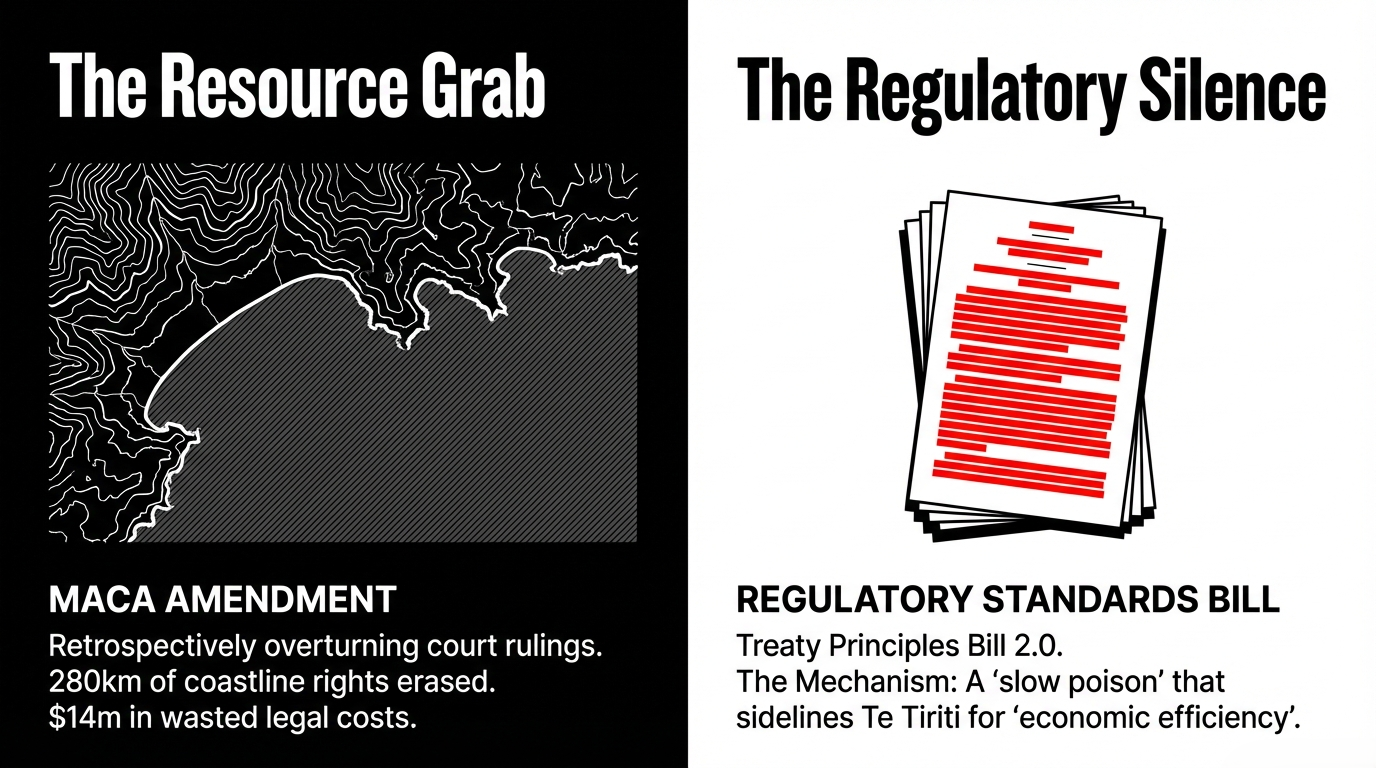
The Marine and Coastal Area (Takutai Moana) Amendment Bill tightened the legal test for recognising Māori customary rights—and did it retrospectively, back to July 2024, overturning court rulings that had already awarded customary marine title to iwi, covering about 280 km of coastline, as detailed by 1News.
Officials told the government that overturning court decisions like this was a bad idea. Treaty Negotiations Minister Paul Goldsmith admitted, “It’s very unusual for the government to overturn court decisions in this way,” but still called it “significant and necessary” 1News.
“Necessary” for whom?
Ngātiwai leader Aperahama Edwards described iwi as “beyond saddened” and “outraged”, saying they had already been through the Waitangi Tribunal, a kaupapa inquiry, the High Court, and MACA claims—“not by our own desire to, but because we had to”. Some elders who gave that evidence have since died. To be told they must start again means “all of that work for nothing”, as Edwards told 1News.
Quantified harm example:
- 280 km of coastline rights overturned.
- Millions in legal costs wasted—Treasury estimated around $14m for relitigation as noted in associated coverage of the change by 1News and detailed costings released by The Treasury.
- Years of oral evidence from kaumātua now legally trashed.
To a Western mind: imagine winning a land title case after ten years, only for Parliament to change the law so your win no longer counts and you have to start over—after your key witnesses are dead. Now imagine this only happens to one ethnic group whose rights are meant to be guaranteed by a founding treaty.
Tikanga impact: This attacks kaitiakitanga (caretaking responsibility) and mana moana (authority over the sea) directly. Courts recognised that iwi had never extinguished their customary interests; Parliament has now tried to do it in one sweep. It says: the Crown’s commercial comfort matters more than your ancestral covenant with Tangaroa.
And Luxon calls this “not anti‑Treaty”, as he rejects Hipkins’ accusation in that RNZ interview, claiming his government is honouring the relationship while these laws roll on RNZ.
3. Treaty Principles Bill 2.0: Killing Te Tiriti by Regulatory Slow Poison
The original Treaty Principles Bill was so blatantly hostile to Te Tiriti that it triggered a massive hīkoi and outrage across the motu. Eventually, Parliament voted it down. Luxon now uses that rejection as evidence that the government isn’t anti‑Treaty.
But while the crowd was watching that bonfire, another match was lit.
The Regulatory Standards Amendment Act is sold as a boring bit of “good law‑making”, about ensuring regulation is efficient and transparent, per David Seymour’s line about “red tape” and economic efficiency as quoted by 1News. Critics have correctly labelled it Treaty Principles Bill 2.0.
Law academic Dr Carwyn Jones put it plainly: the Bill “will provide a means to weaken Treaty protections and remove the legal meaning and effects of Te Tiriti from the law, which is what the Treaty Principles Bill’s all about”. He sees it as finishing the work that the original Treaty Principles Bill started 1News.
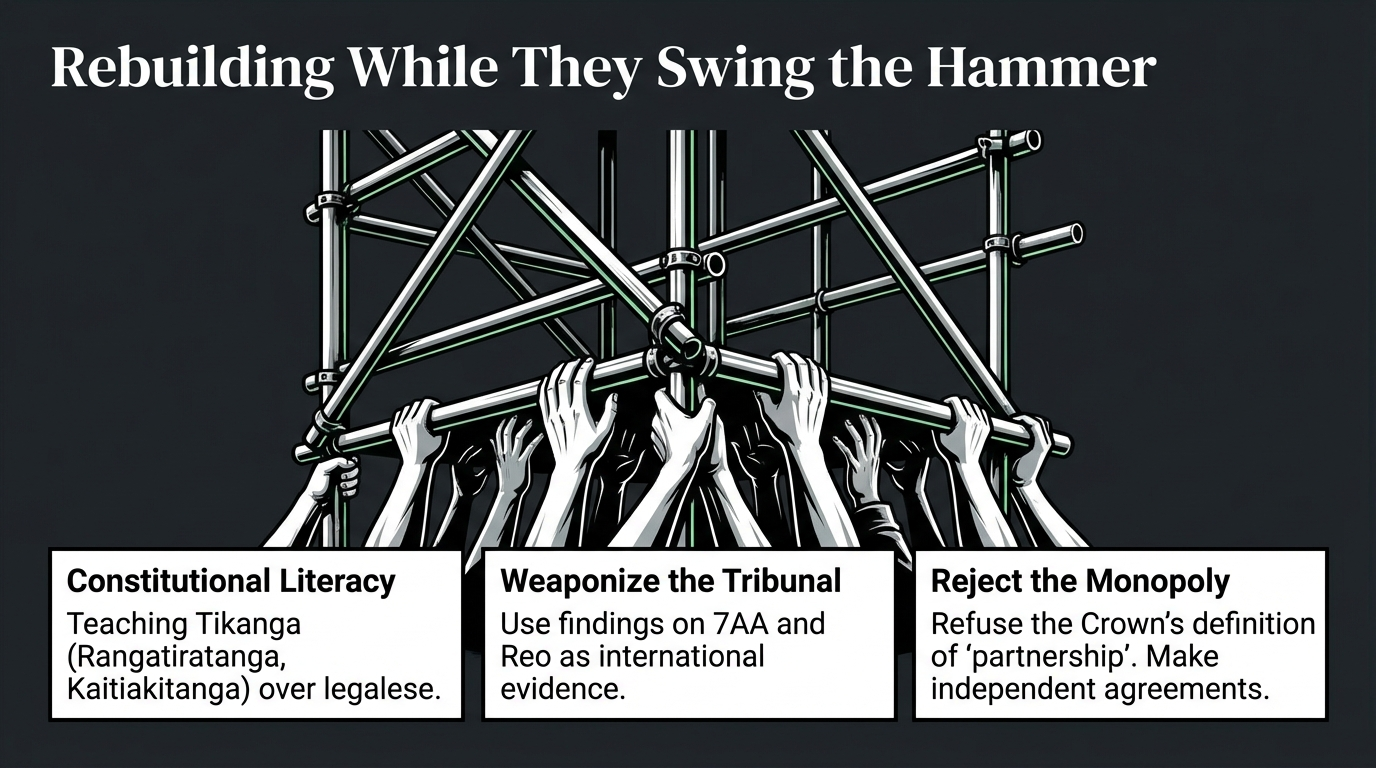
Instead of one big, explosive anti‑Treaty statute, you get a slow poison that seeps into every regulation, making it easier to sideline Te Tiriti whenever it is deemed “inefficient”.
To a Western mind: imagine your Bill of Rights isn’t repealed outright, but a new “regulatory standards” law lets ministers quietly ignore it whenever it’s inconvenient. That’s what this is doing to Te Tiriti.
Tikanga impact: This is an assault on tino rangatiratanga through legal engineering—turning Treaty obligations from a binding compass into a decorative sticker that can be peeled off in the name of “efficiency”.
Luxon calls this “focusing on outcomes” and “not anti‑Treaty” RNZ. It is the legislative equivalent of smiling while you slip poison into the water tank.
4. Education: Turning Te Tiriti into an Optional Extra
Next, they went for the classroom.
The Education and Training Amendment Act (No. 2) removed the requirement for school boards to “give effect” to Te Tiriti o Waitangi in their governance, including obligations to reflect local iwi history, tikanga, and mātauranga in plans and curriculum, as documented by 1News.
Overnight, the foundational document of this country was downgraded from “you must live this” to “you might consider this if you feel like it”.
The backlash was immediate. Schools from across the motu signed up to Te Rārangi Rangatira, a public list affirming their commitment to honour Te Tiriti regardless of the law, because they found the government’s move “insulting and patronising” 1News. Dunedin North Intermediate’s principal said they didn’t see Te Tiriti as a compliance task, and that the nation had moved beyond that mentality 1News.
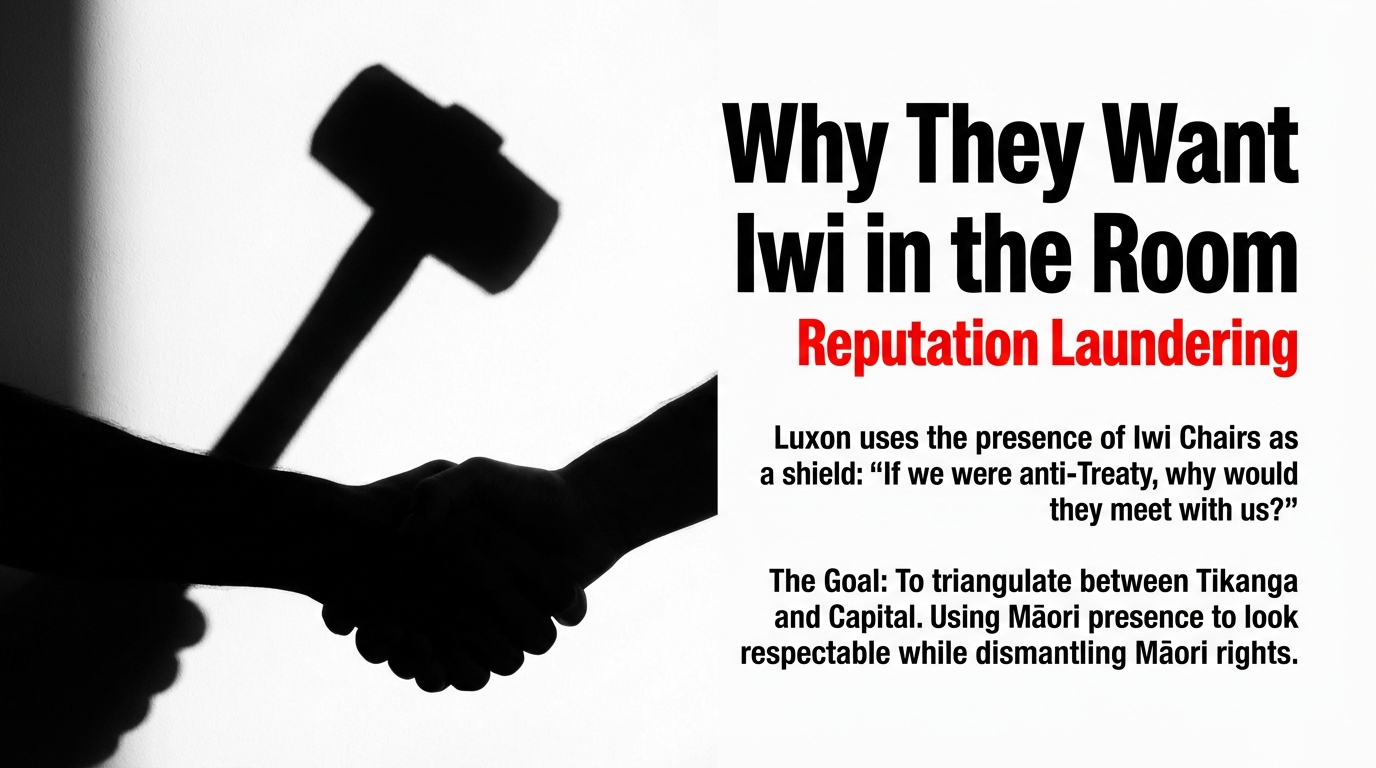
Stephen Lethbridge, principal of Pt Chevalier School, spelled out what the government is really saying: “Removing it from the Education Act just means that we can take it or leave it, and that’s the wrong message to be sending our Māori whānau” 1News.
Nearly 24,000 people signed a petition calling on the Government to reinstate the requirement for boards to implement Te Tiriti, delivered to Parliament in December 1News.
Education Minister Erica Stanford’s response? She pivoted the conversation to “raising Māori achievement in reading, writing and mathematics”, saying that is “upholding the Treaty”, and that schools could honour Te Tiriti “above and beyond” what the law requires if they chose to 1News.
To a Western mind: this is like removing “human rights” from an education act and then saying: “Don’t worry, if schools want to uphold human rights, they still can. It’s optional. We’ll judge them on test scores instead.”
Tikanga impact: It relegates Te Tiriti from foundational covenant to optional garnish. It sidelines mātauranga Māori and tikanga from being essential knowledge for everyone in Aotearoa, turning them back into “nice‑to‑have add‑ons” instead of the bones of the house.
This is anti‑Treaty not just in law, but in the stories our children are allowed to learn.
Quantifying the Arson: How Much Has Been Burned?
Let’s count some of the damage this “not anti‑Treaty” government has inflicted, based on the past year’s laws as summarised by 1News:
- 280 km of coastline: Māori customary title awards overturned; iwi told to start from scratch.
- Millions of dollars in sunk legal costs: Treaty‑based litigation effectively binned; Treasury estimates around $14m in relitigation costs The Treasury.
- Section 7AA repealed: Social services no longer legally obliged to centre whakapapa, mana, or partnerships with iwi in decisions affecting Māori children.
- Treaty obligations in education downgraded: Boards no longer required to “give effect” to Te Tiriti; 24,000+ sign a petition just to get the basics reinstated.
- Regulatory “2.0” bill enacted: Provides mechanisms to weaken Treaty protections across the statute book, completing the work the original Treaty Principles Bill started, as warned by Dr Carwyn Jones on 1News.
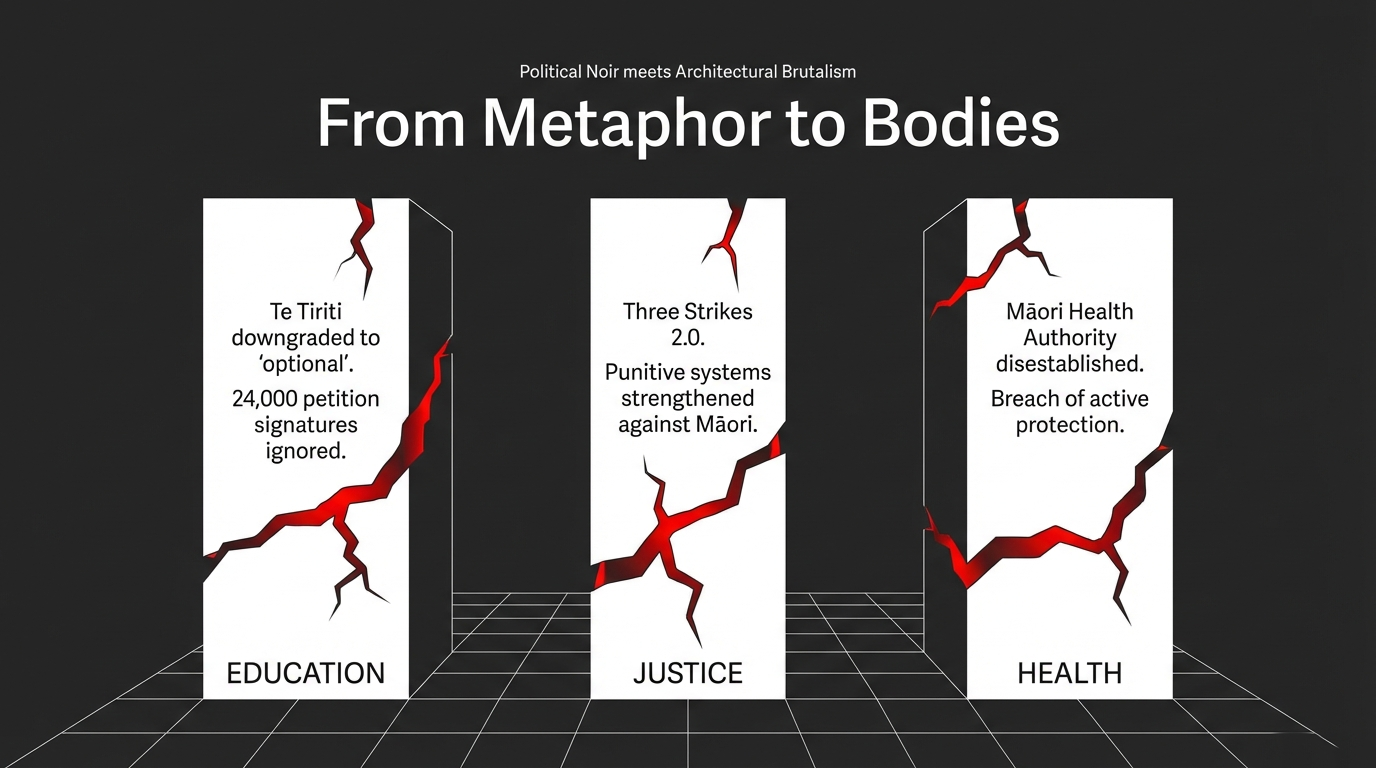
Layer this on top of earlier actions:
- Disestablishment of Te Aka Whai Ora (Māori Health Authority) found by the Waitangi Tribunal to breach Treaty obligations RNZ.
- Ongoing moves to strip te reo and Treaty clauses out of public service frameworks and law, as highlighted by Hipkins and acknowledged in the RNZ piece where he calls this government anti‑Treaty RNZ.
This is not an accident. It is a coherent programme.
Tikanga Translation: What This Feels Like in Māori Terms (And Why Western Minds Must Care)
To understand just how hostile this is to Te Tiriti, you need to understand the tikanga being trampled.
- Whakapapa: This is more than a family tree. It is the map that connects people to land, waters, ancestors, and atua. Repealing 7AA says the state does not have to honour that map when taking custody of Māori children. To a Western mind: imagine a law that tells your social workers they no longer have to care if adopted children know who their parents, grandparents, or people are.
- Kaitiakitanga: Guardianship over land and sea, not as ownership but as duty. Overturning customary marine title and tightening tests retroactively tells Māori: your guardianship is conditional on our comfort. For Pākehā: imagine a government invalidating your conservation covenants so a foreign corporation can drill where you already proved it should not.
- Mana and mana motuhake: The spiritual and political authority to stand, decide, and lead your own people. Killing Te Aka Whai Ora and hollowing out Treaty obligations in law say: you can advise, you can be “stakeholders”, but power remains with the Crown. For Westerners: it’s like promising local self‑government, then dissolving councils whenever they disagree with central government.
- Te reo and mātauranga: Language and knowledge systems are how tikanga travels through generations. Rolling back te reo in public life and making Te Tiriti optional in schools is a slow cultural suffocation. Imagine your language, philosophy, and history being quietly pushed out of sight in your own country.

This isn’t just “policy difference”. It is a programme of cultural and legal containment.
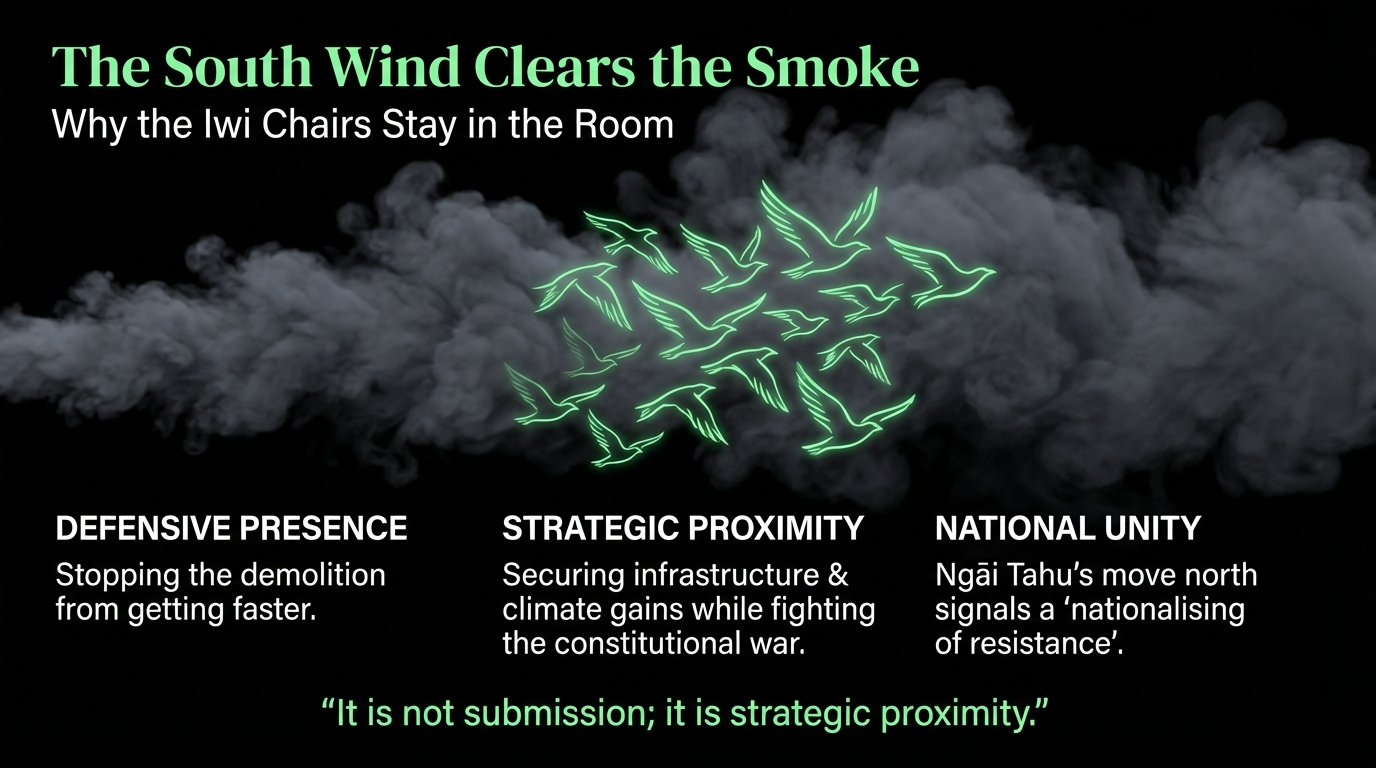
And the ultimate insult is that the Prime Minister insists—eyes straight into the camera—that this is not anti‑Treaty, while pointing to a single “constructive” meeting with iwi leaders as his alibi RNZ.
Solutions: How to Put Out the Fire (Instead of Pretending It’s a Barbecue)
If this government is an arsonist dressed as a fire warden, the answer is not to “find common ground” on which parts of the house we let them burn. The answer is to rebuild the firebreaks and take the matches away.
Immediate Steps
Restore Section 7AA and strengthen it
Reinstate legal duties to uphold mana and whakapapa of tamariki Māori and to partner with iwi.
Require public reporting on Māori care outcomes and independent oversight of Oranga Tamariki practice.
Western translation: make the system prove it is not repeating the abuses exposed in the baby uplift scandals.
Suspend and rewrite the MACA amendments
Freeze the retrospective invalidation of court rulings.
Work with iwi to design a fair, non‑retrospective test that honours the original intent of ending the foreshore and seabed injustices.
Western translation: stop changing the rules after people have already won under the old rules.
Re‑entrench Te Tiriti in education law
Restore the “give effect to Te Tiriti” requirement in the Education and Training Act.
Fund iwi‑school partnerships to bring local tikanga, history, and mātauranga into the classroom, not as tokens but as core curriculum.
Western translation: teach the actual founding agreement of the country as compulsory civic knowledge, not optional garnish.
Repeal the worst parts of the Regulatory Standards Amendment Act
Amend or repeal the clauses that allow Te Tiriti to be quietly weakened in regulatory decisions.
Require Treaty impact assessments for all significant regulations.
Western translation: make it illegal to bypass foundational rights via “technical” regulatory changes.
Structural Changes

Create a truly independent Treaty watchdog
Establish a Treaty Compliance Commissioner with powers similar to the Auditor‑General, with authority to investigate and publicly call out anti‑Treaty laws and practices.
Require government responses within set timeframes.
Western translation: a watchdog with teeth, not another advisory body ignored at will.
Rebuild Māori institutions, not just “consultation panels”
Re‑establish a Māori health authority with secure, long‑term funding and clear powers.
Expand Māori‑led authority in environmental, social, and justice systems.
Western translation: shift from “we’ll talk to you” to “you have decision‑making power over your own people and resources”.
Koha Consideration: Funding Fire Alarms in a House the Crown Keeps Burning
Every koha signals that whānau are ready to fund the fire alarms and sprinklers that Crown and corporate structures refuse to install. In a year where this government has ripped whakapapa out of social services, turned back the tide on customary coastline rights, quietly birthed a Treaty Principles Bill 2.0, and made Te Tiriti optional in our schools, this essay exists to name the arsonist and map the burn pattern.
It signals that rangatiratanga includes the power to fund our own truth‑tellers when the Prime Minister insists the house isn’t on fire—even as smoke pours from the windows. If this kaupapa helps you see the pattern behind the “common ground” spin, consider a koha to ensure this voice keeps calling out the flames.
Kia kaha, whānau. Stay vigilant. Stay connected. And if you are able, consider a koha to ensure this watchdog mahi continues.
If you are unable to koha, no worries. Subscribe or follow The Māori Green Lantern on Substack, kōrero, and share with your whānau and friends—that is koha in itself.
Three pathways exist:
For those who wish to support this mahi directly with a koha (voluntary contribution), please visit:
Koha—Support – https://app.koha.kiwi/events/the-maori-green-lantern-fighting-misinformation-and-disinformation-ivor-jonesFor those who wish to receive essays directly and support through subscription, join the Substack community:
Subscribe to The Māori Green Lantern on Substack – https://themaorigreenlantern.substack.com/subscribeFor those who prefer direct bank transfer, account details are:
HTDM, account number 031546-0415173-000.
Ivor Jones The Māori Green Lantern Fighting Misinformation From The Far Right