“Luxon’s War on Truth, Tikanga and Māori: The Gaslighter-in-Chief” - 6 February 2026
A Prime Minister who calls Māori protests “unfair,” sells fear as “safety,” and dismantles Māori rights while insisting nothing racist is happening is not confused – he is gaslighting a nation
Mōrena ano Aotearoa!
I hope my last few essays on the events at Waitangi this year have left you amped and charged up to take on these white supremacist assholes in Wellington and to sort out our own too! Kia Kaha Aotearoa!
Luxon’s speeches: gaslighting as governance
Christopher Luxon’s speeches are the verbal equivalent of a safety video playing while the plane is already on fire – calm tone, tidy suit, and every word designed to make you doubt the flames you can already feel on your skin. He loves to stand up and tell the country his government is “one of action” with clear “action plans” to keep “Kiwis safe,” while the public themselves tell pollsters his law‑and‑order agenda makes no difference to how safe they feel.
In mid‑2024, less than one in five people said they felt safer under his crime policies, while the majority said there was no change, even as he boasted about a 40‑point “Q3 Action Plan” focused on “restoring law and order,” as reported by 1News. That same plan leans heavily on boot camps, harsher sentencing and more police powers, even though his own Police Minister has staked his job on shifting public feelings of safety – a political stunt documented by 1News.
This is Luxon’s speciality: corporate buzzwords duct‑taped over structural violence.
He announces “Quarter 3 Action Plans” and “KPIs” while his Parliament pushes through a year of law‑and‑order crackdowns and re‑instates “Three Strikes” punishments that we already know entrench racial bias, as summarised by RNZ’s year‑in‑review of lawmaking and contextualised in wider coverage of his business‑style governance by RNZ.
When the smoke clears, the only thing safer is his polling with scared Pākehā voters.
Luxon’s favourite trick is the “one coherent system” line – the beige wallpaper of white supremacy.
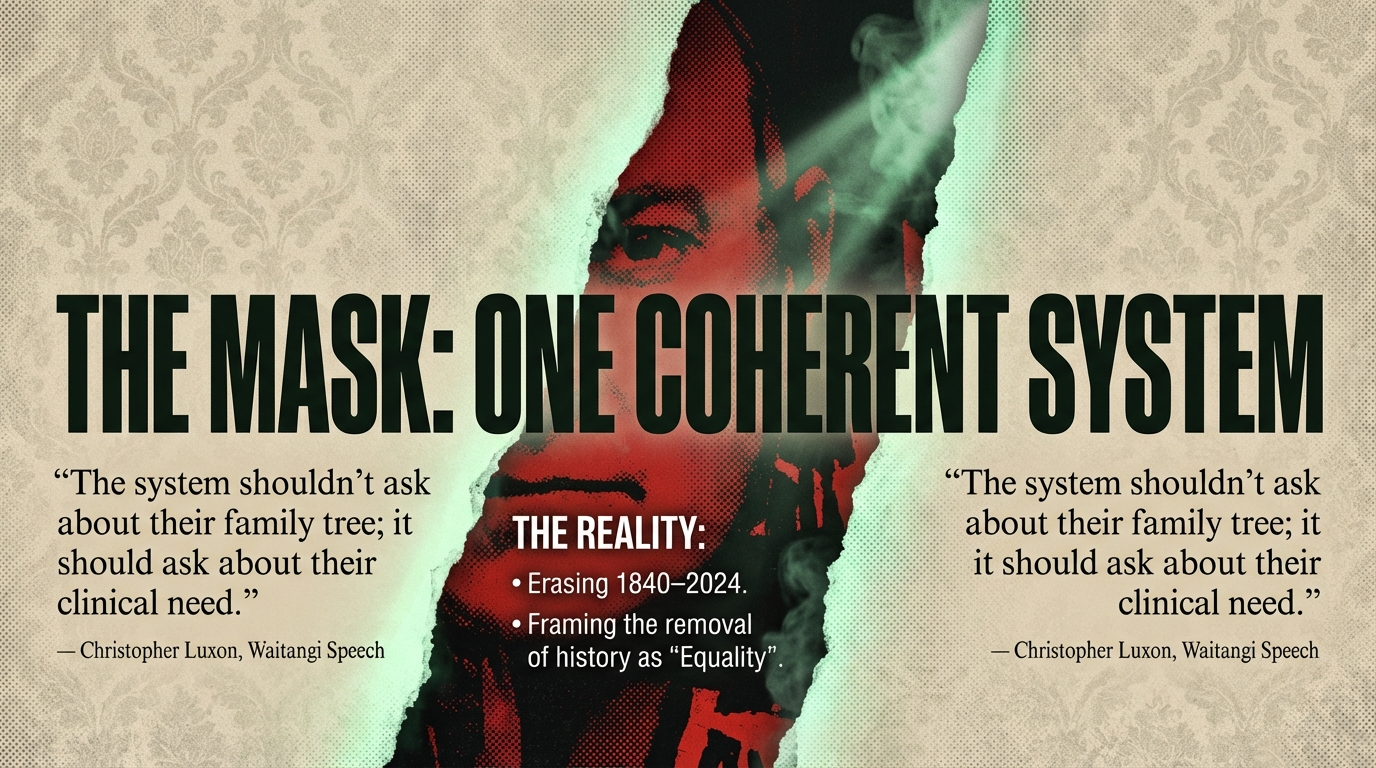
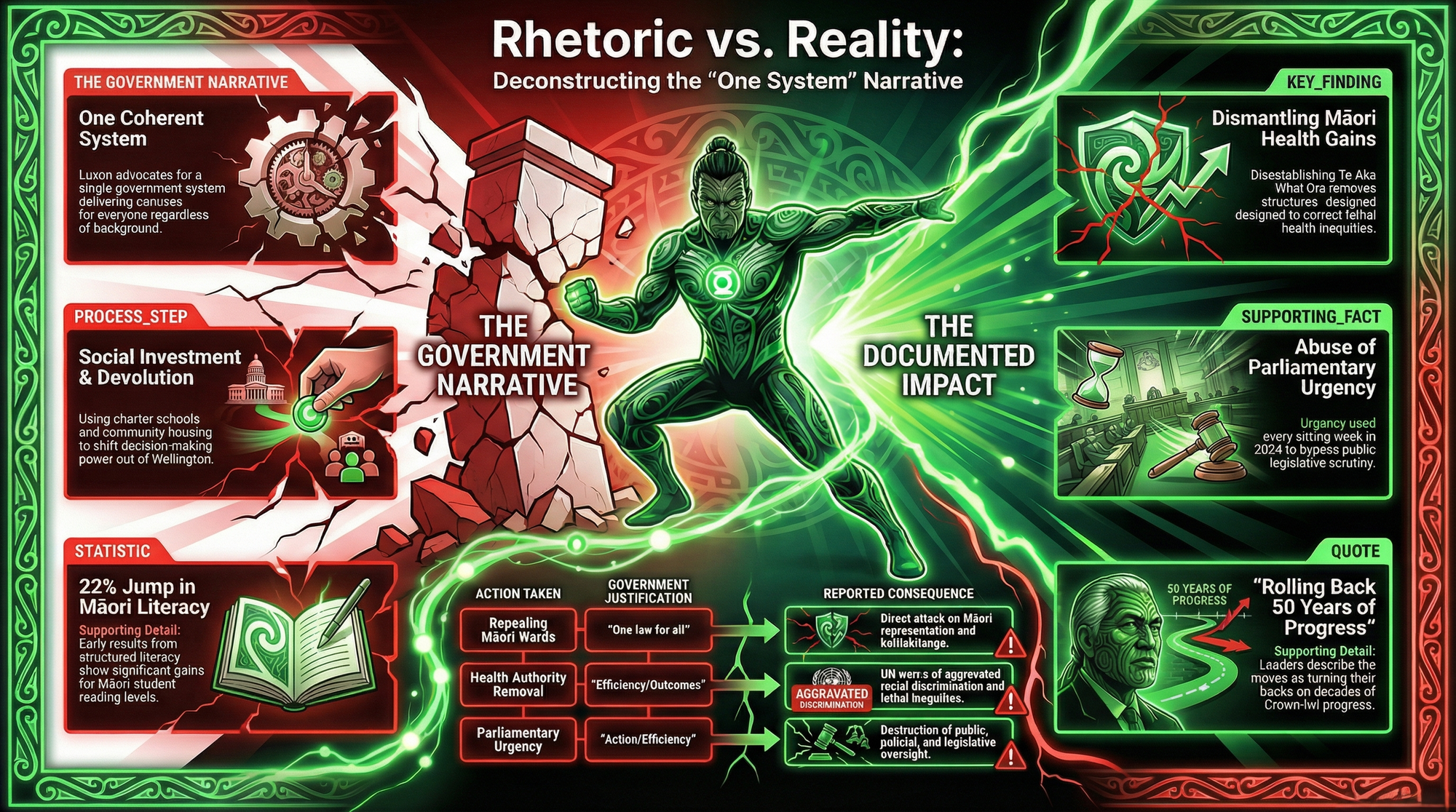
At Rātana in 2023, he claimed National believes in “a single coherent system” and “one government” delivering services for everyone, using this to oppose co‑governance in Three Waters and to attack Te Aka Whai Ora, the Māori Health Authority, as reported by RNZ.
He wrapped it up in nice phrases
– “Māori success is New Zealand’s success” –
but his bottom line was clear: no separate Māori authority in health, no shared governance in water, no real power for tangata whenua where the money and pipes flow, as outlined in his Rātana remarks reported by RNZ.
This “one system” rhetoric is a con. It pretends Māori and Pākehā are starting from the same line when one side is already carrying 1840–2024 on their backs.
It’s the same logic that underpins his government’s dismantling of Te Aka Whai Ora and Three Waters Māori representation – ripping out structures explicitly designed to correct documented inequities, while he insists he’s just keeping things “coherent,” as both Māori leaders and analysts have pointed out in coverage of his policy rollbacks by 1News and RNZ.
The burning house: what this government is doing
Picture Aotearoa as a wharenui on fire.
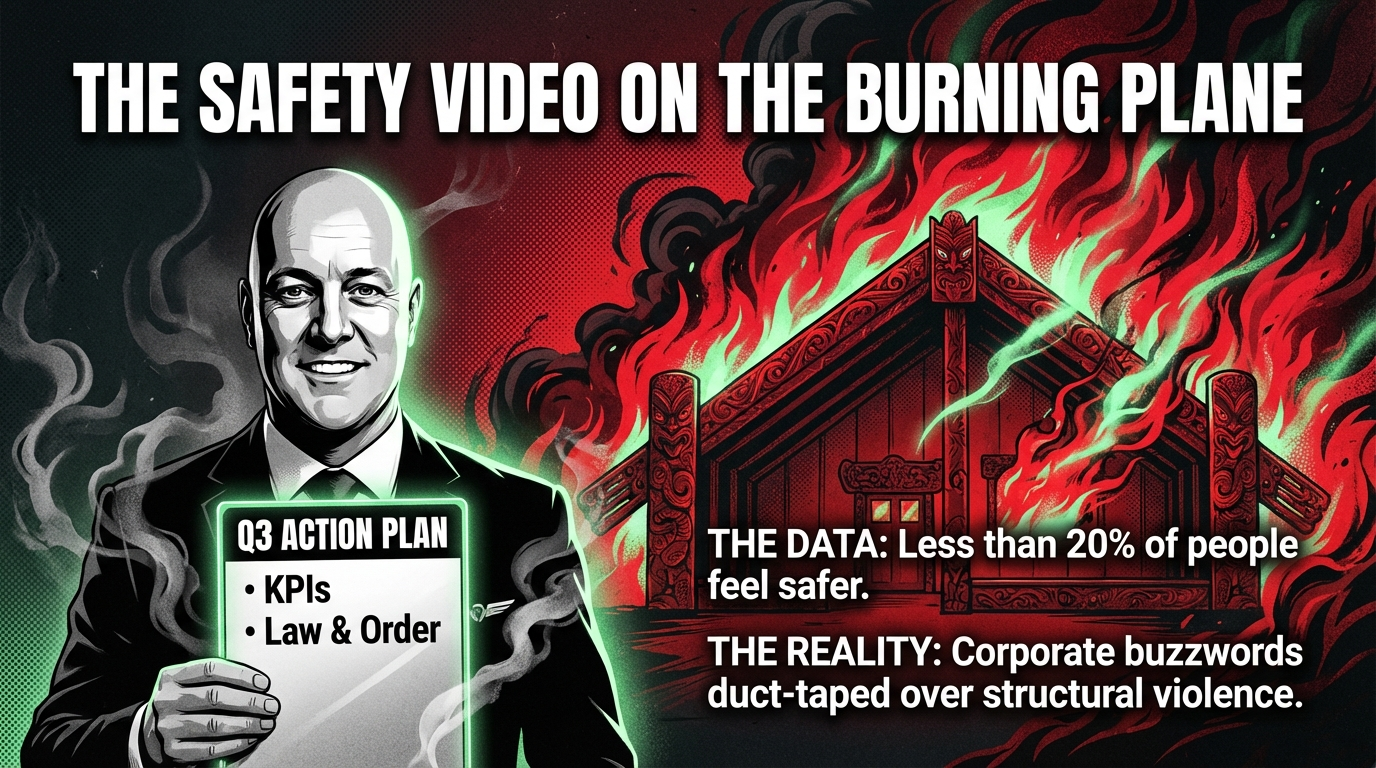
This coalition stands at the door with petrol cans labelled “urgency,” “cost‑cutting,” and “we’re all equal now,” while Māori are still locked inside the raupatu basement.
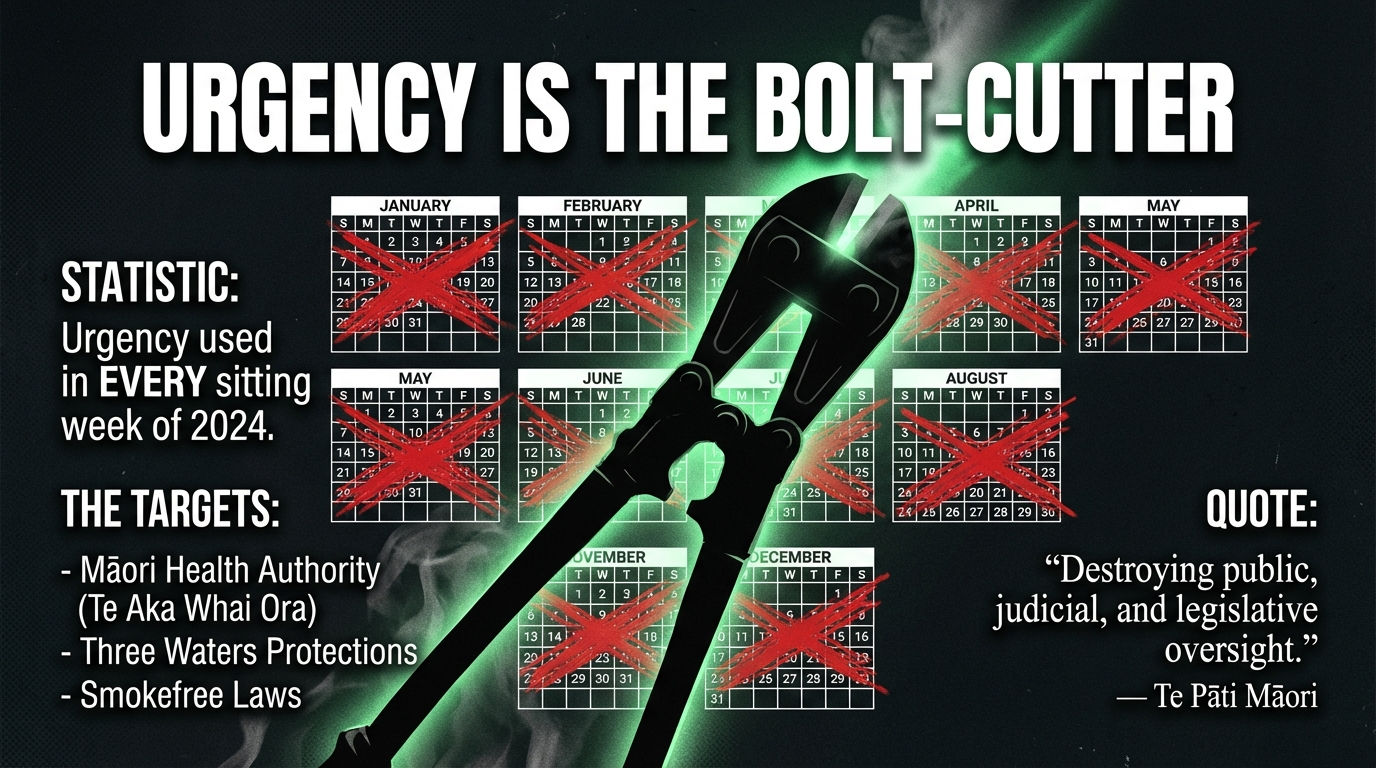
The repeated abuse of urgency in Parliament – used in every sitting week of 2024 – was not “efficiency”; it was a deliberate shutdown of public participation so they could ram through repeals of the Māori Health Authority, Three Waters protections, cultural reports and smokefree laws without proper scrutiny, as documented by 1News and RNZ.
Te Pāti Māori rightly called this behaviour “destroying public, judicial and legislative oversight and participation,” a textbook description of authoritarian creep backed up by 1News and RNZ.
A detailed report by Te Wai Ariki to the UN Committee on the Elimination of Racial Discrimination concluded that this government is “actively and profoundly aggravating New Zealand’s constitutionally racist foundation” and breaching Te Tiriti through mass, racially targeted law changes, as recorded by RNZ and summarised by the University of Auckland’s profile of the shadow report on racial discrimination escalating.
This is not a government “struggling with complexity.” It is a government methodically ripping out Māori gains from the last fifty years and throwing them into the fire so Pākehā voters can feel like history never happened.
Tikanga in a blender: how the western mind is breaking our law
To a western neoliberal mind, tika and pono are quaint words for opening the pōwhiri, not binding obligations on the Crown.
So they treat tikanga like décor – something you can rip off the walls when you repaint the office.
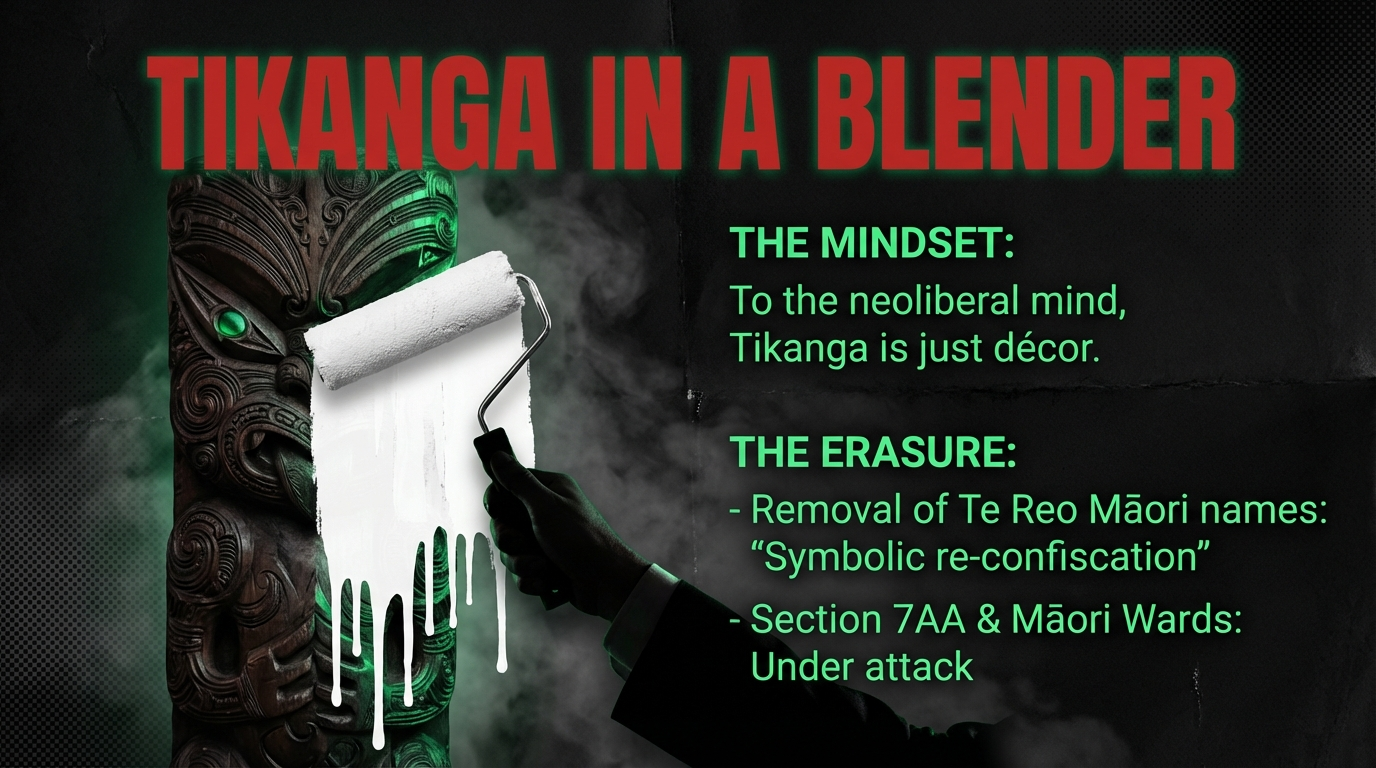
The disestablishment of Te Aka Whai Ora was not just a bureaucratic reshuffle; it was the destruction of a Māori‑designed health structure built to correct lethal inequities, as outlined by RNZ and analysed in the UN‑bound report reported by RNZ.
Removing te reo Māori from state agencies’ names and rolling back policies supporting reo use is not “rebranding,” it is symbolic re‑confiscation of language, identified as part of a racist rollback of gains in coverage by Al Jazeera and critiqued in context by 1News.
Repealing Three Waters and undermining Māori wards are direct attacks on Māori kaitiakitanga and representation – Waikato‑Tainui’s Tukoroirangi Morgan explicitly described these moves as turning their backs on 50 years of iwi–Crown progress, as reported by 1News and supported by Chris Hipkins’ critique of policies “unfairly targeting Māori,” reported by RNZ.
To the Crown’s western legal mind, tikanga is “nice to have” until it collides with shareholder value or Pākehā resentment. Then suddenly “one law for all” becomes the axe that severs Māori law from the constitutional body.
Example: Tikanga vs the spreadsheet
Take Te Aka Whai Ora.
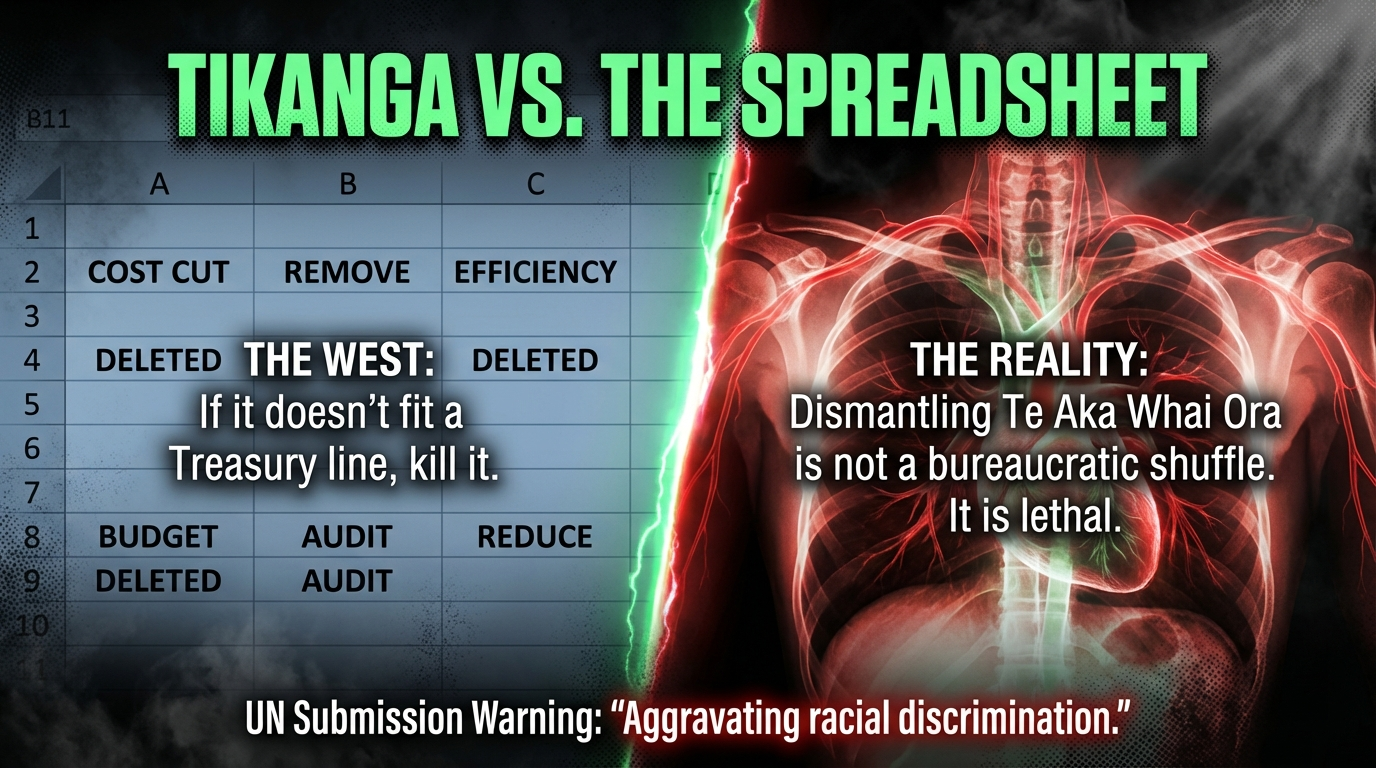
Tikanga says: heal the relationship, design services with iwi, recognise whakapapa, whanaungatanga, mana motuhake.
Neoliberalism says: if it doesn’t fit a line on a Treasury spreadsheet, kill it.
The health authority was created in response to proven Māori health inequities and Waitangi Tribunal findings; its dismantling – pushed through under urgency – undermined a key remedy for structural racism, as discussed by RNZ and Al Jazeera.
International experts in that UN submission warn that this kind of rollback entrenches racial discrimination in law, not just in service delivery, as outlined by RNZ and supported by broader international coverage like Al Jazeera’s Newsmakers.
To western power, tikanga is only “valid” when it behaves like a private contract.
When it insists on whakapapa, collective responsibility and obligations to whenua and wai, the Crown treats it as an enemy combatant.
Koroneihana, Rātana, and Māori calling out Luxon
When Luxon walks onto marae ātea, the kupu get sharper than any press gallery question – and he still hides behind empty phrases.
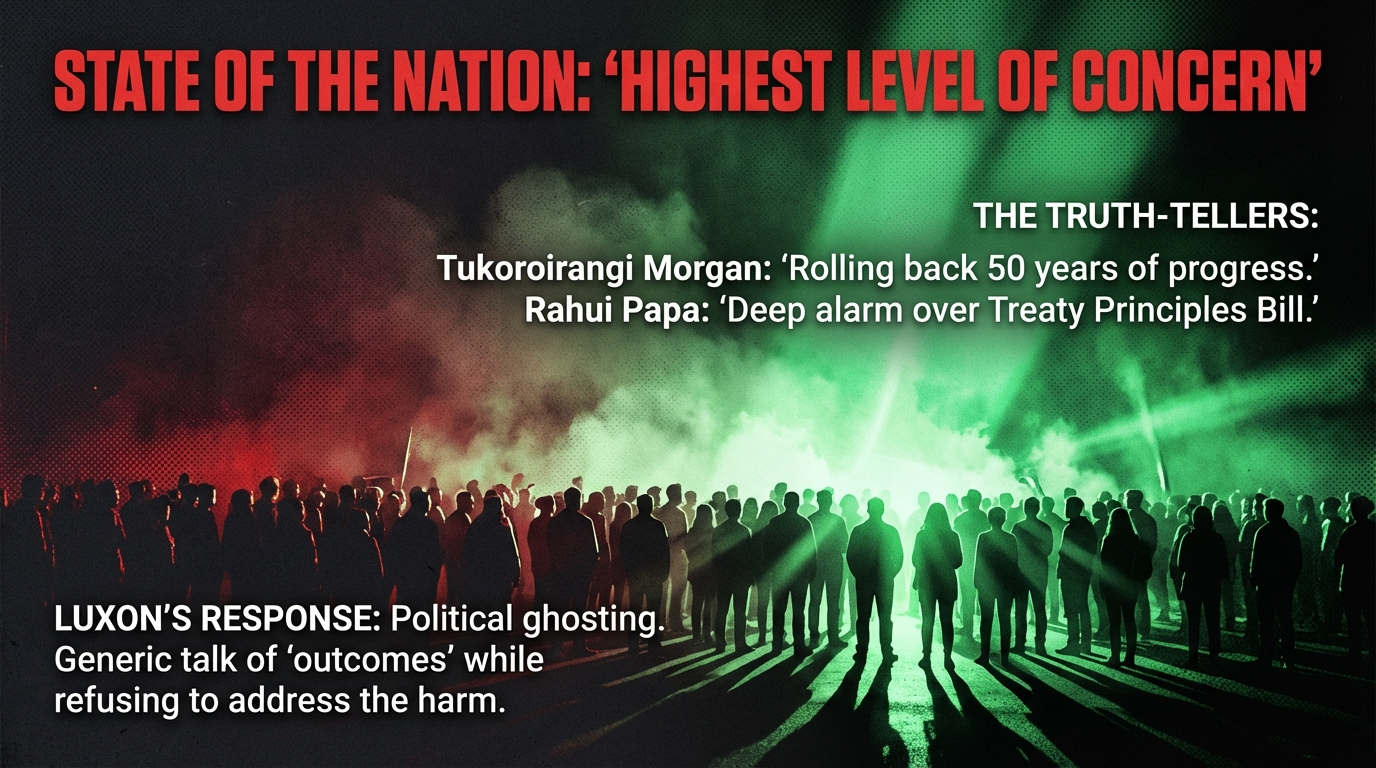
At Koroneihana 2024, Waikato‑Tainui leader Tukoroirangi Morgan laid it out: this government is “rolling back 50 years” of iwi–Crown progress, gutting the Māori Health Authority, Māori wards, Three Waters protections, and more, as reported by 1News.
Morgan listed the rollbacks clearly – reo policies, section 7AA, Marine and Coastal Area issues – and accused the government of turning its back on Māori who believed there was honour in the Crown, a charge captured powerfully by 1News.
And how did Luxon respond? Not by confronting any of those specifics, but with generic talk about “delivering outcomes for all Kiwis – Māori and non‑Māori,” as noted both in 1News’ coverage and in political analysis by RNZ.
RNZ’s analysis was blunt: when his turn came, “there wasn’t a lot Luxon could say about the specifics,” so he retreated into broad generalities about improving outcomes instead of defending the actual damage his policies are doing, as described by RNZ.
That is not leadership; that is political ghosting of Māori grief.
At Rātana in 2025, Kiingitanga representative Rahui Papa told him the state of the Māori nation was at the “highest level of concern,” signalling deep alarm over his government’s law changes, including the Treaty Principles Bill and a raft of other measures, as reported by 1News.
Luxon again responded with warm words about kotahitanga, dialogue and learning from Tahupōtiki Wiremu Rātana, while repeating his stock line that National would vote down the Treaty Principles Bill after first reading, as recorded by 1News.
The pattern is obvious: Māori spell out the harm; Luxon praises the conversation and keeps the knife moving.
“Division”, “unfair” protests, and the status quo he loves
Whenever Māori respond, Luxon runs the “you’re being unfair” script.
When nationwide protests challenged his coalition’s changes to Treaty relations, co‑governance and reo names in 2023, he called the protests “pretty unfair” and insisted people should give his government time, as reported by RNZ.
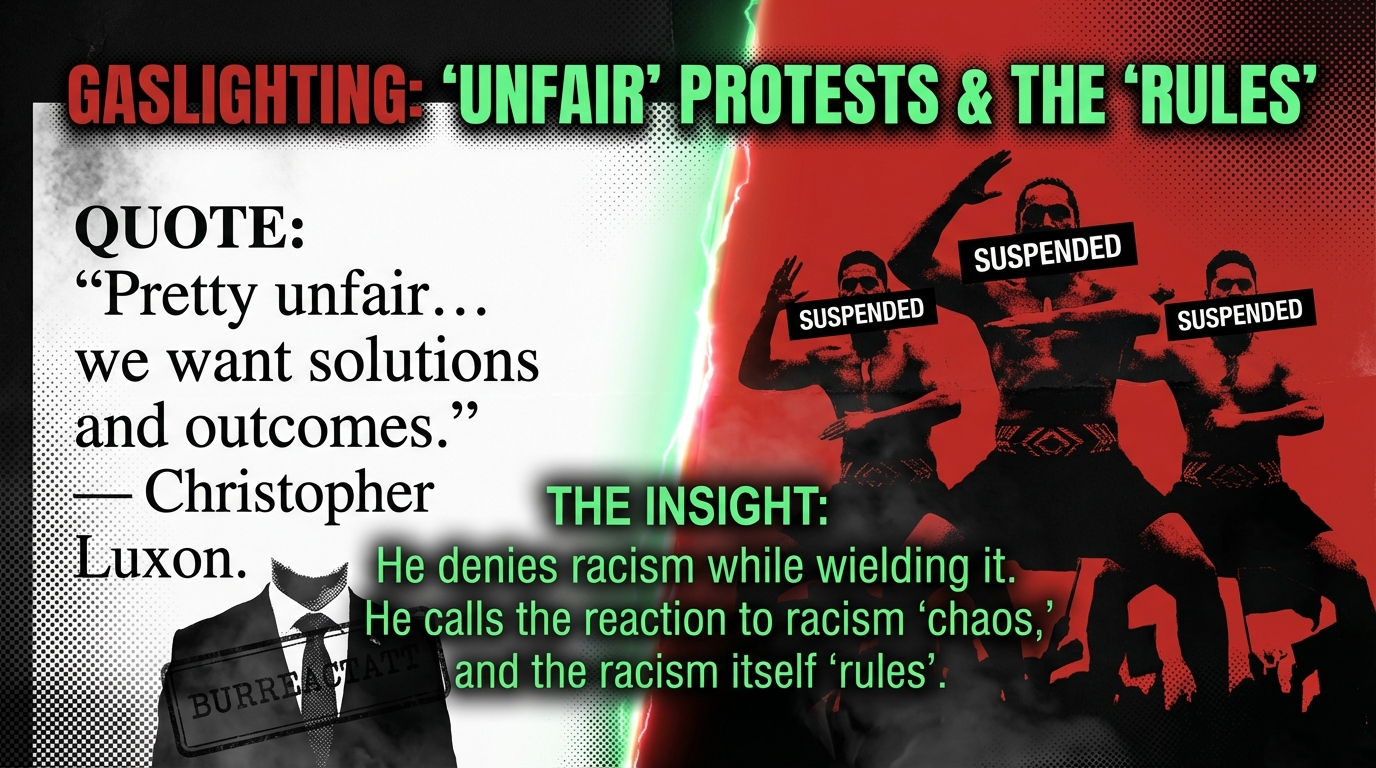
In the same interview he framed his approach as “solutions and outcomes” and said he wanted to decentralise resources while not getting “carried away with bureaucratic costs,” all while supporting legislative changes that rewrite how Te Tiriti principles appear in law and strip reo Māori from agency names, as described by RNZ.
Later, he admitted Crown–Māori relations are “probably worse” since his government came to power, acknowledging “more division,” but immediately blamed Labour for “pretty horrendous decisions” and used that to justify scrapping the Māori Health Authority and Three Waters reforms, as he told Q+A and as reported by RNZ.
He simultaneously says he doesn’t like the Treaty Principles Bill “at all” and thinks it’s not the right way to deal with race, while still voting it through first reading as part of a coalition “compromise,” as described in that same RNZ piece.
Strip away the PR and you get this: he calls Māori protest “unfair,” blames others for division his own laws intensify, claims to dislike racist bills he personally enables, and says he “likes the status quo” of Treaty law that courts and Māori have already shown is stacked against tino rangatiratanga, as captured by RNZ’s reporting.
That’s not neutrality; that’s choosing the side of the existing imbalance and pretending it’s the centre.
Punishing Māori voice while claiming “rules”
When Māori MPs used haka in the House to resist the Treaty Principles Bill, the Privileges Committee recommended suspending three Te Pāti Māori MPs – Rawiri Waititi, Debbie Ngarewa‑Packer and Hana‑Rāwhiti Maipi‑Clarke – from Parliament, as reported by 1News.
Luxon backed this punishment without compromise and flatly rejected that it was racist, insisting it was just about “rules” and preventing “absolute chaos,” and stressing that Privileges is made up of members from all parties, as detailed by 1News.
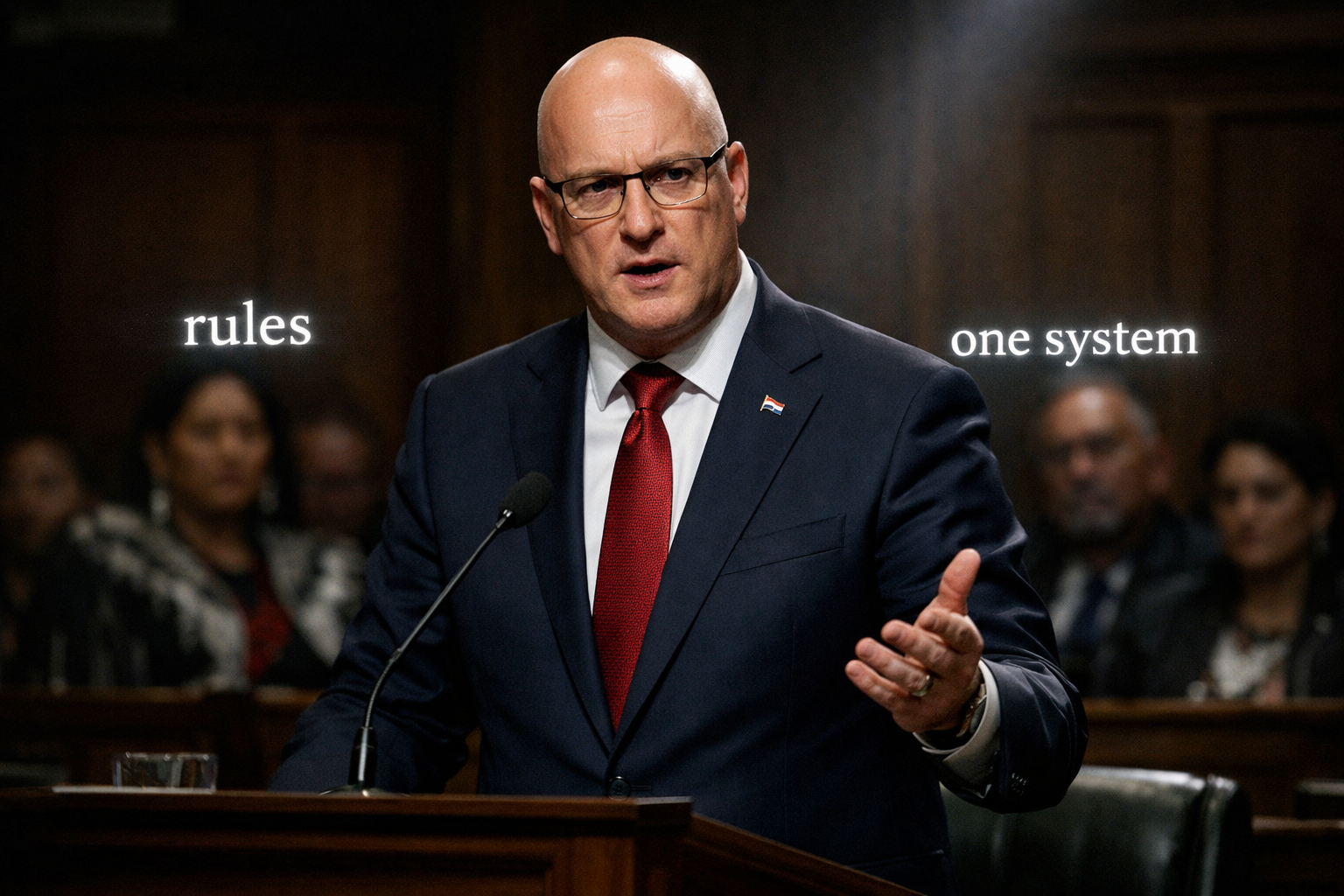
This is where his rhetoric about “one system” and “rules” reveals its full violence.
The “rules” of Parliament were never designed for haka and waiata as legitimate political expression; they were designed to make that expression punishable.
Luxon can say it’s “not about haka” all he likes, but when the effect is to remove Māori representatives for using tikanga to oppose a racist bill, the structure is doing exactly what it was built to do.
The fact that he “rejects racism outright” in this context, as reported by 1News, is part of the gaslighting: deny the racism while wielding it.
Luxon is the smiling pilot walking down the aisle telling everyone to “stay calm, we have a plan,” while he keeps the plane locked onto the same crash trajectory that made Māori sick, poor, landless and over‑policed in the first place.
His speeches don’t soften the impact; they just muffle the screams.
Quantifying the harm: bodies, budgets, and broken futures
You want numbers? Let’s walk through the scorched earth.
Health and life expectancy
When you dismantle Māori‑specific health structures in a country where Māori die younger and suffer worse disease, that is not neutral – it is lethal.
Māori already experience significantly higher rates of chronic disease and lower life expectancy, acknowledged by government and forming part of the rationale for Te Aka Whai Ora, as referenced in the UN submission covered by RNZ and discussed in Al Jazeera’s Newsmakers.
The UN‑bound report warns that dismantling Te Aka Whai Ora and other protections will “aggravate” existing inequities and breaches of permanent Indigenous rights, as summarised by RNZ and echoed in international criticism by Al Jazeera.
In plain language: this policy direction will mean more Māori deaths that could have been prevented. The government knows this and does it anyway.
Democratic voice and legal protections
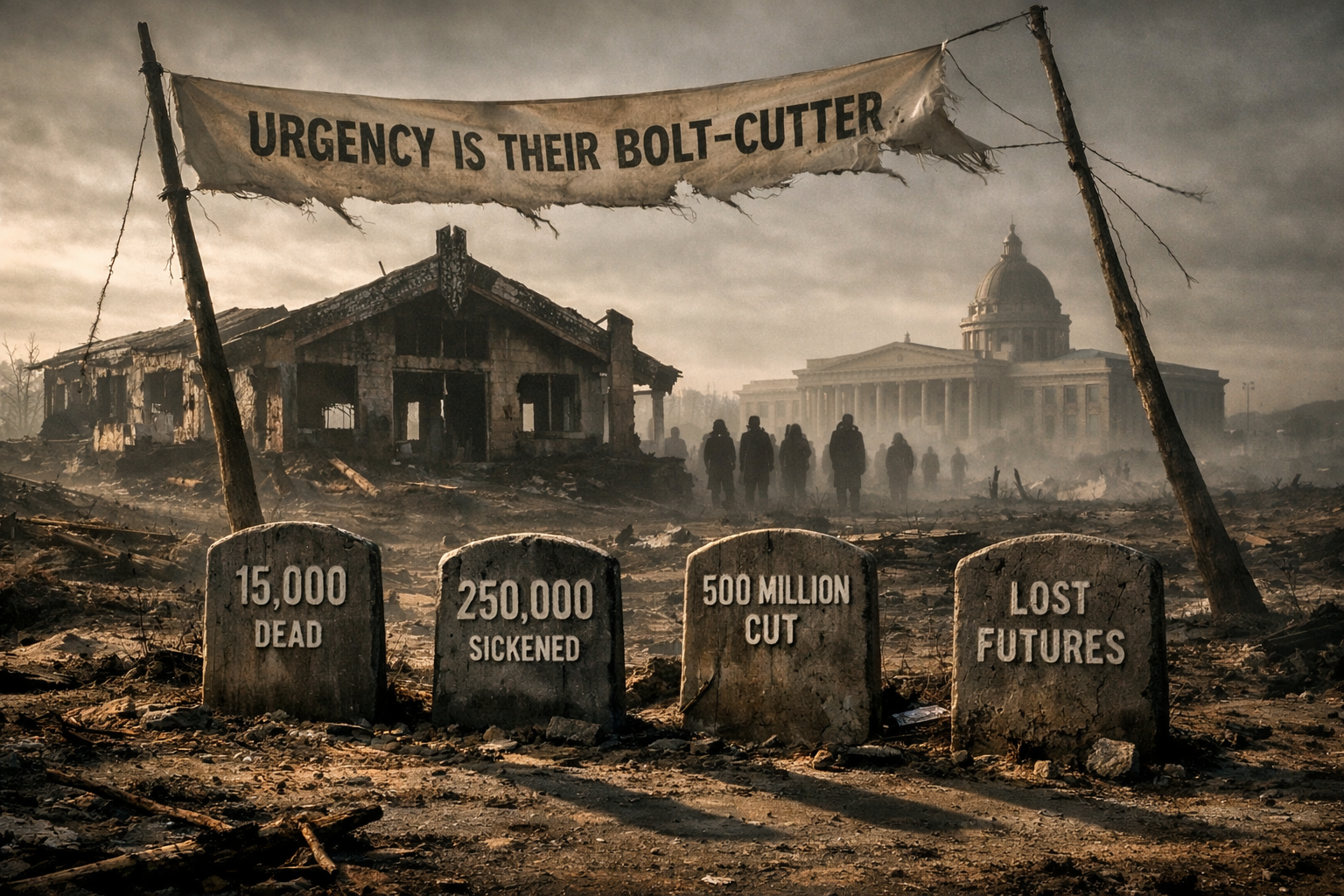
Urgency is their bolt‑cutter.
They use it on every lock.
Urgency was used in every sitting week of 2024, enabling the government to bypass full select committee processes on key legislation including Three Waters repeal, the Māori Health Authority disestablishment, and smokefree rollbacks, as reported by 1News and confirmed in detail by RNZ.
Te Pāti Māori described this as “destroying public, judicial and legislative oversight and participation” – a description consistent with the UN submission’s concerns about “unchecked” parliamentary power and racial discrimination, as summarised by RNZ.
Each rushed bill is another brick taken out of the legal wall that protects Māori from majoritarian rage.
At scale, this is constitutional sabotage.
Economic punishment of the vulnerable
Neoliberal cruelty always wears the same mask: “incentives.”
Benefit changes forcing meetings with MSD under threat of sanction were framed by the government in punitive language – “we will make people do this or we will sanction them” – a framing criticised by beneficiary advocate Kay Brereton as punishment rather than support, as reported by 1News and discussed in interviews covered by RNZ.
Brereton emphasised that benefits are “really hard to survive on” and that the same policy, framed positively and without sanction, could be constructive; this exposes the government’s deliberate choice to stigmatise and threaten instead of support, as reported by 1News and RNZ.
Given Māori over‑representation among beneficiaries, these “sanctions” are racialised economic violence dressed up as tough love.
Hidden connections: the white supremacist neoliberal machine
You want whakapapa of power? Here are the threads the government hopes you won’t trace.
Talkback racism as political oxygen
Heather du Plessis‑Allan once called Pacific Islands “leeches” on New Zealand, a breach of discrimination standards so serious the Broadcasting Standards Authority ordered penalties and a broadcast of the ruling, as documented by 1News.
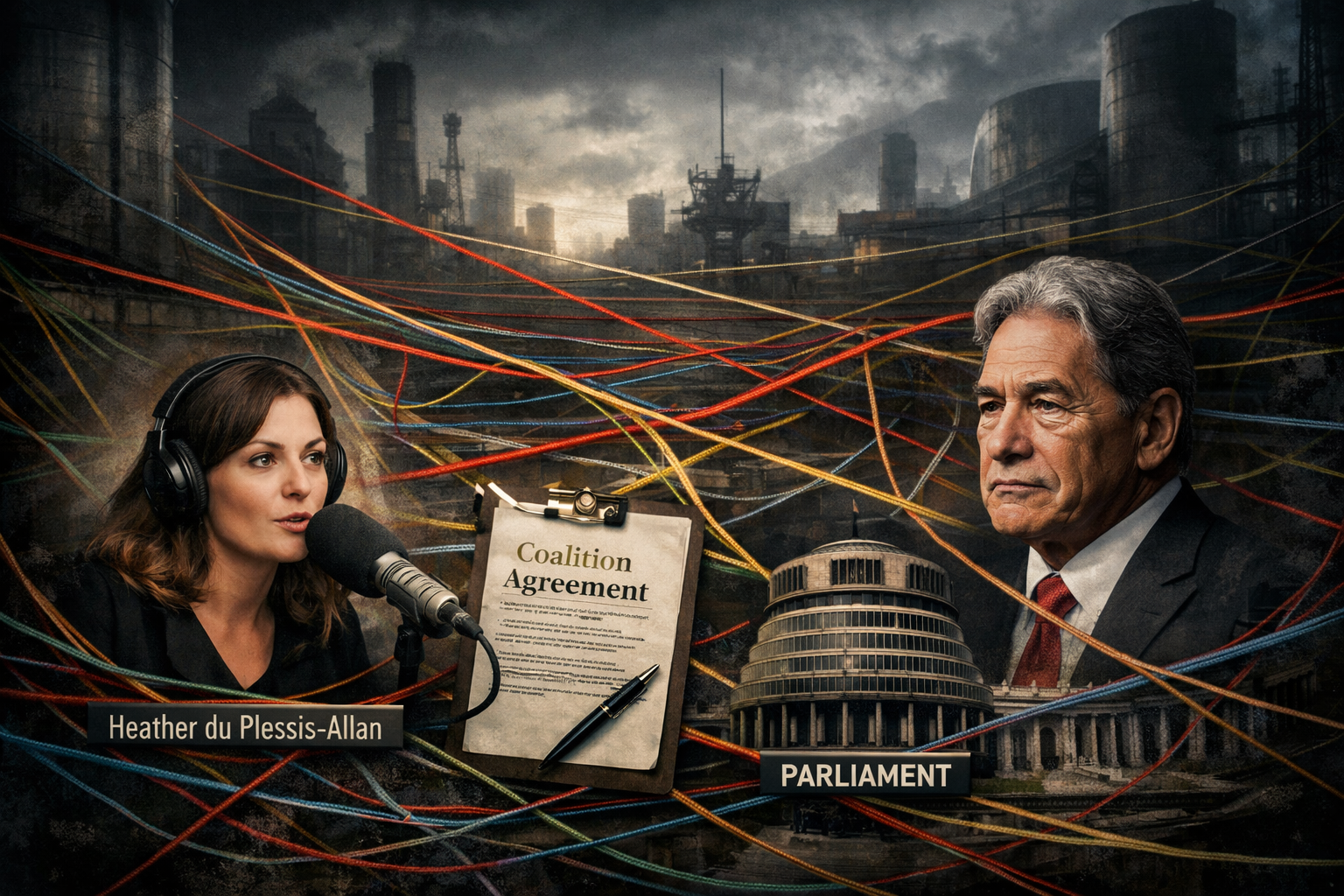
That same platform now cheerleads for harsher austerity, more cuts, and attacks on “race‑based policies,” reinforcing a media climate where anti‑Indigenous policy is normalised, as seen in her framing of public service cuts and “race‑based” policies on Newstalk ZB’s site and echoed in critical reporting of her record by 1News.
The line is clear: normalise contempt for brown peoples, then sell policy that cuts them off at the knees.
Coalition agreements as racist contracts
Chris Hipkins has publicly condemned this government’s programme as “unfairly targeting Māori,” pointing to boot camps, attacks on Māori wards, and ACT’s Treaty Principles Bill, as reported by 1News and RNZ.
He also highlighted how “disgraceful right‑wing lobby groups and the racist coalition agreement” are pushing policy that overrides councils and Māori, reported clearly by RNZ and covered in more detail by 1News.
This isn’t random chaos; it is the execution of a written pact to shrink Māori rights for political profit.
Rolling back hard‑won gains
Al Jazeera’s Newsmakers describes this coalition as rolling back “decades” of policy designed to undo injustices suffered under white majority rule, including repealing reo use in services, dismantling Te Aka Whai Ora, and rebranding agencies to erase Māori visibility, as shown in their programme on Aotearoa’s government and racism toward Māori on YouTube.
That international analysis aligns with Te Wai Ariki’s UN submission warning that this government is worsening racial discrimination and breaching permanent Indigenous rights, as summarised by RNZ.
The connection: domestic racism so obvious that even offshore journalists and UN experts are ringing the alarm.
Constitutional abuse as a governing style
The UN submission warns that without constitutional transformation, Parliament will remain unchecked and continue to pass laws breaching Indigenous rights, a warning triggered specifically by this government’s actions, as reported by RNZ.
The systematic use of urgency to ram through racially loaded law changes is a live demonstration of that problem, evidenced by 1News and RNZ.
This government is not an exception to the constitution; it is the proof the constitution itself is unsafe for Māori.
“Normal people” rhetoric as dog whistle
Winston Peters’ talk of protecting “normal people,” applauded at party events, sits in a long tradition of framing Indigenous and minority justice as abnormal and dangerous, covered by 1News and cross‑referenced in wider coalition rhetoric tracked by 1News politics.
When “normal” is implicitly white, straight, property‑owning and English‑speaking, every Māori claim to tino rangatiratanga is cast as a threat, not a right – a pattern critics of the Treaty Principles Bill have repeatedly pointed out, as summarised in political coverage by RNZ and 1News.
This is white supremacy in a blazer: you never say “white,” you just keep describing yourself as the only real human in the room.
Pathways out of the fire: solutions grounded in tikanga
Scathing is not enough. Tikanga demands we also chart a way forward.
Constitutional transformation, not polite tweaks
Support and amplify calls for genuine constitutional transformation based on Te Tiriti and tikanga, as recommended by Te Wai Ariki’s UN submission reported by RNZ and echoed by international observers like Al Jazeera.
Demand binding limits on the use of urgency for rights‑impacting legislation, aligned with the concerns flagged by Te Pāti Māori and covered by 1News and RNZ.
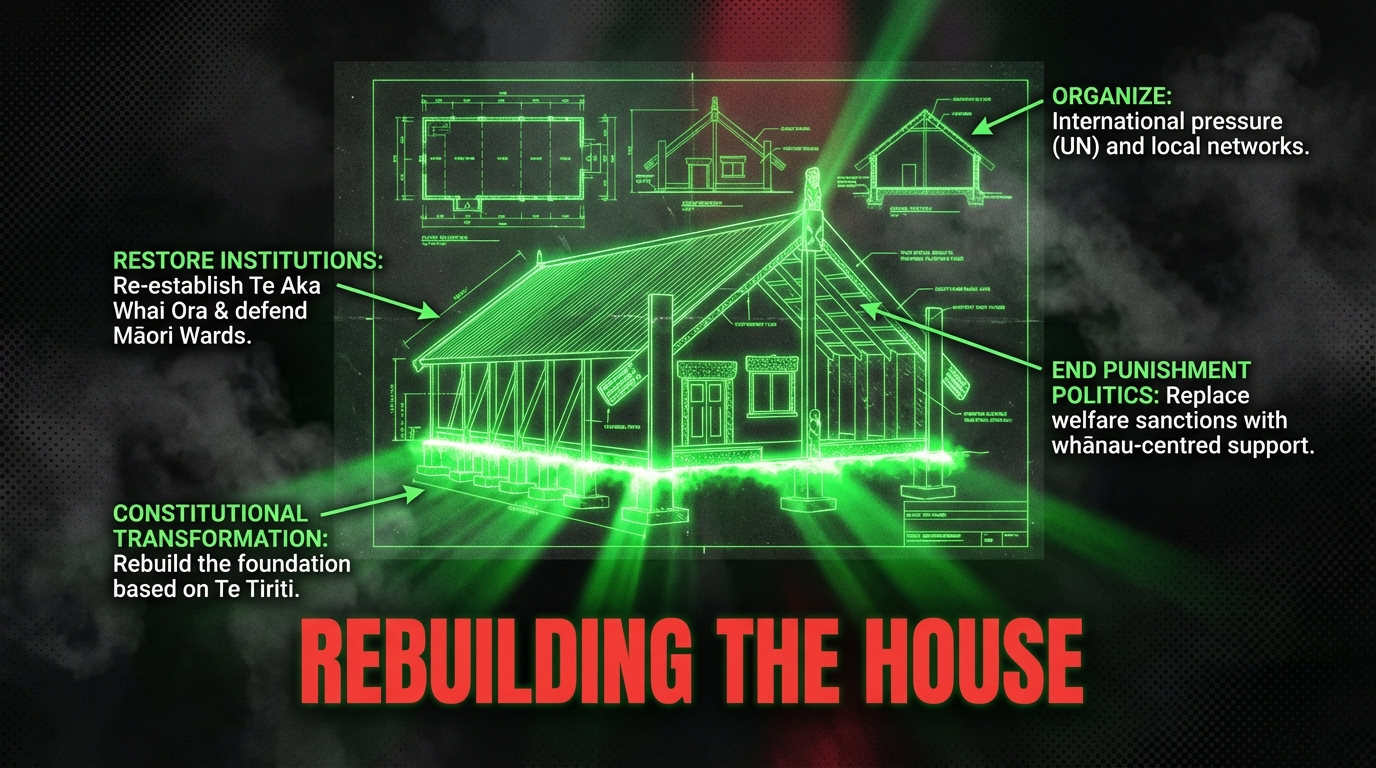
If the house itself is racist, we rebuild the house – not just repaint the Crown’s office doors in te reo.
Restore and strengthen Māori institutions
Campaign to re‑establish Te Aka Whai Ora and expand Māori‑led decision‑making in health, recognising the evidence of its necessity presented in the UN submission and reported by RNZ and Al Jazeera.
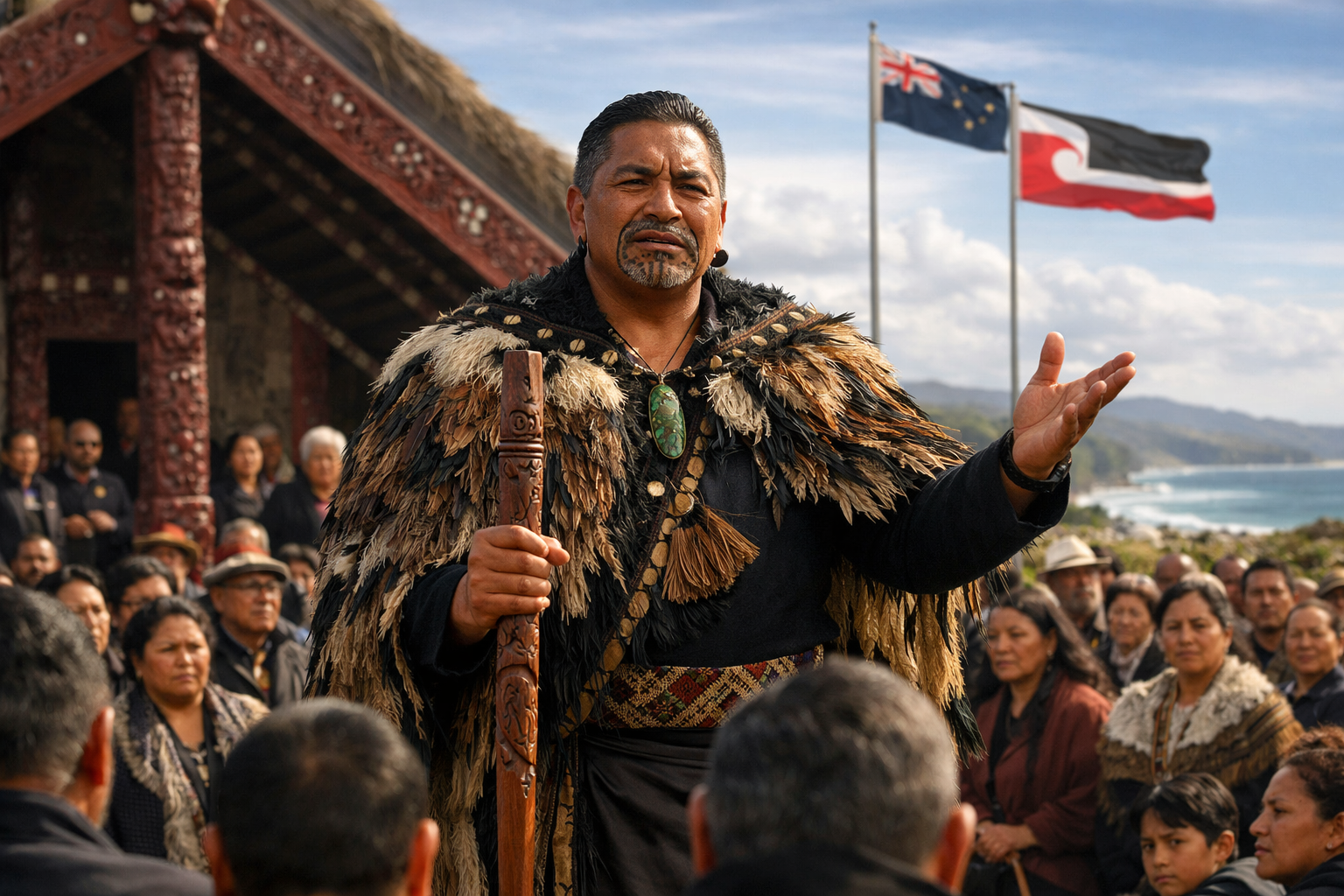
Defend Māori wards, co‑governance and shared management of wai and takutai moana as non‑negotiable Treaty expressions, backing iwi voices like Tukoroirangi Morgan’s critique of rollbacks at Koroneihana covered by 1News and political critiques reported by RNZ.
Tikanga solution: return authority to the mana whenua who actually carry the consequences in their whakapapa.
End punishment politics
Replace sanction‑based welfare changes with whānau‑centred support, as even beneficiary advocates like Kay Brereton argue the same seminars could help if framed respectfully and without threats, as reported by 1News and RNZ.
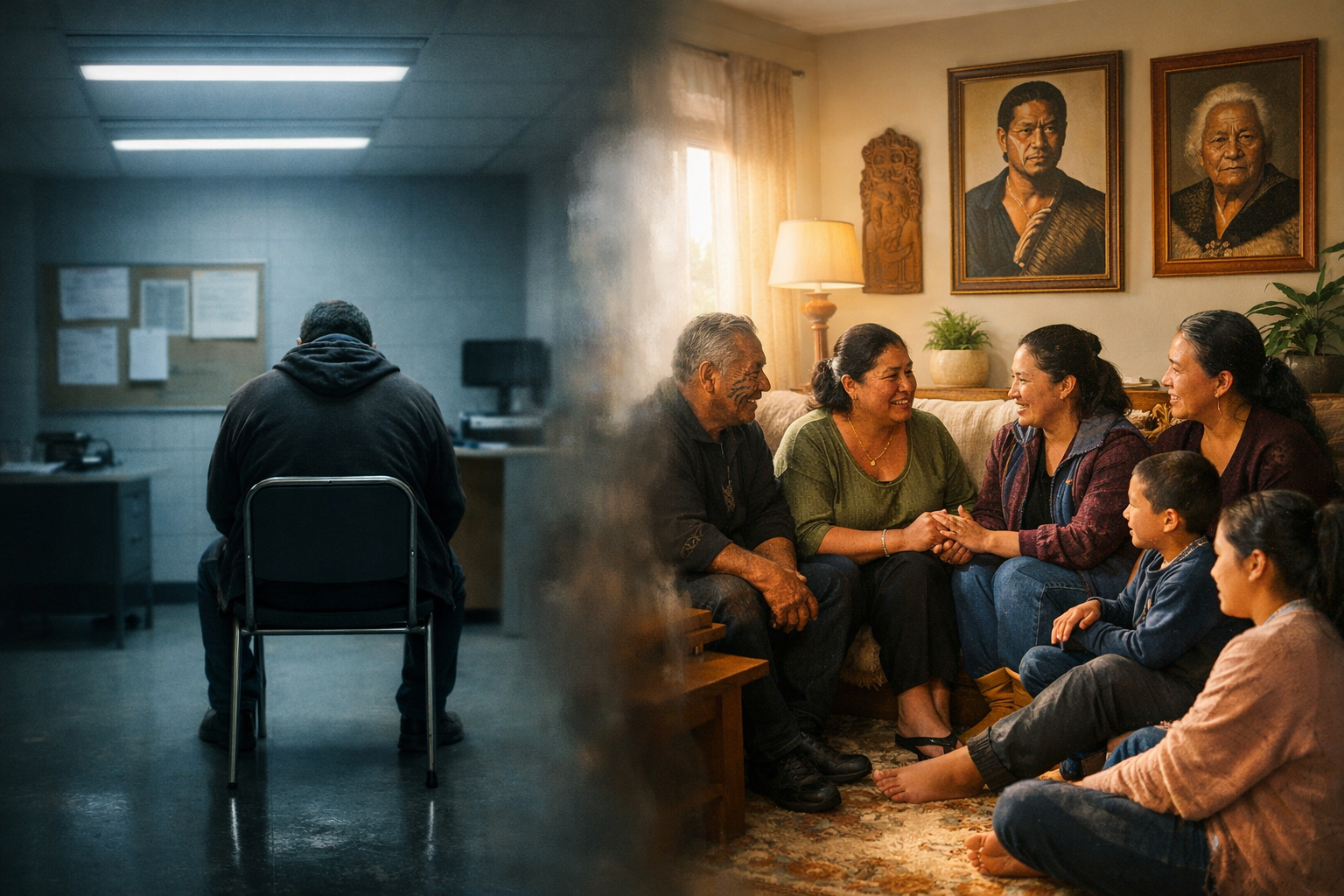
Expose racist media framings that paint beneficiaries and Māori as “bludgers” or “leeches,” building on the precedent where Heather du Plessis‑Allan’s “leeches” comments were found to breach discrimination standards, as recorded by 1News.
Tikanga insists that manaakitanga is a core political value – not a PR word to use between punishments.
International pressure and local organising
Continue feeding evidence to UN bodies and international media, as Te Wai Ariki has done, to keep this government under global scrutiny, as shown in coverage by RNZ and Al Jazeera.
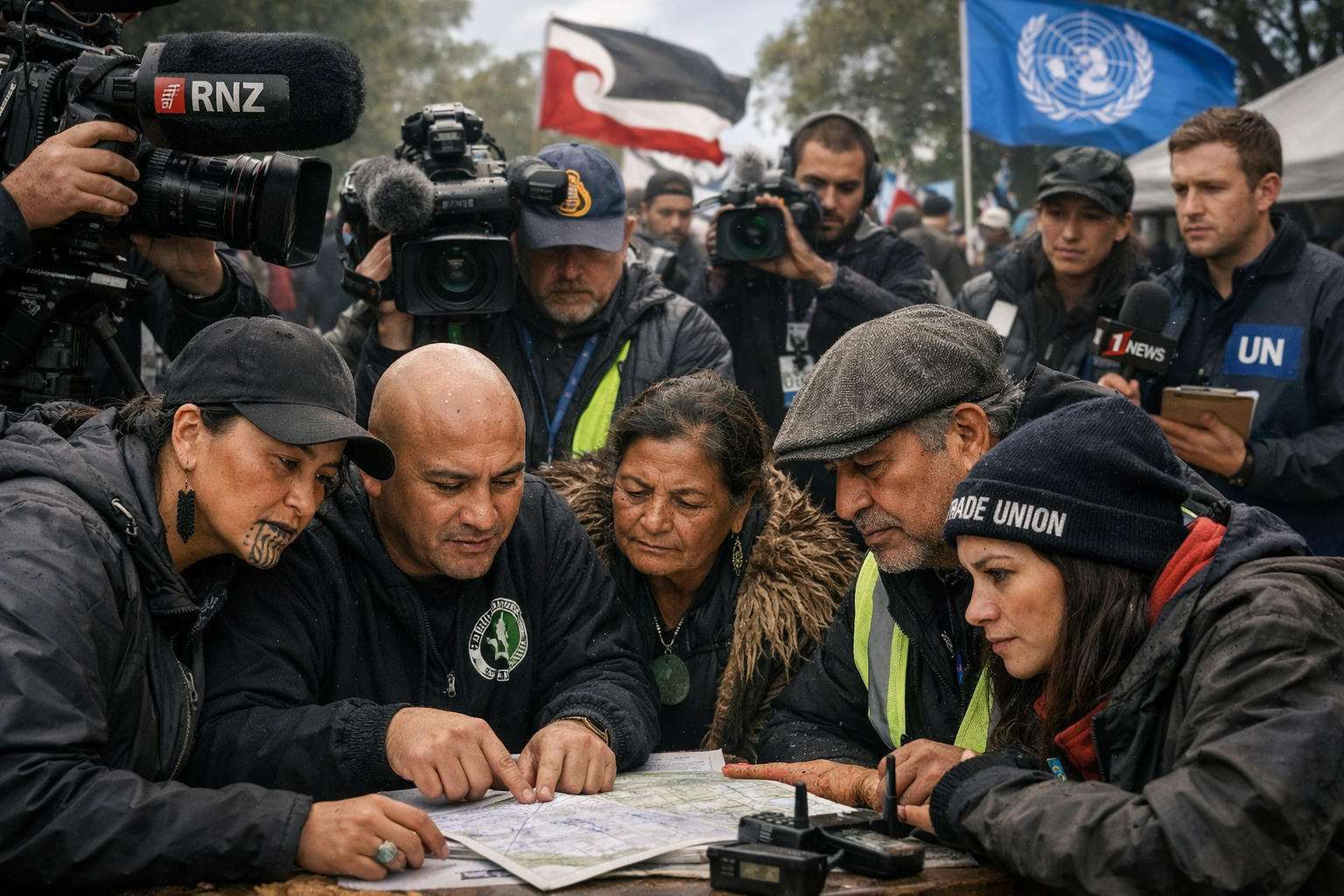
Build disciplined local networks – iwi, hapori, unions, community groups – that can mobilise against every racist bill pushed under urgency, drawing on political reporting and timelines documented by 1News politics and RNZ.
The state is organising against us. Tikanga says we organise harder, smarter, together.
Koha consideration for this essay
Every koha to this kaupapa is an alarm bell rung against a government that uses urgency, racism and austerity to silence Māori and erase our tikanga.
It signals that rangatiratanga is not a slogan, but the power of our people to fund our own truth‑tellers when Crown and corporate media would rather platform those who call our relations “leeches.”

Your support keeps a Māori lens on the harms of this white supremacist neoliberal programme – tracking every policy, every urgency motion, every rollback of Te Tiriti protections – and turning that research into weapons our whānau can actually use.
Kia kaha, whānau. Stay vigilant. Stay connected. And if you are able, consider a koha to ensure this voice continues to call out each breach, each lie, each betrayal of our people.
If you are unable to koha, kei te pai – subscribe or follow The Māori Green Lantern on Substack, kōrero, and share with your whānau and friends; that is koha in itself.
Three pathways exist:
To support this mahi directly with a koha (voluntary contribution), visit: Koha—Support.
To receive essays directly and support through subscription, join the Substack community: Subscribe to the Māori Green Lantern on Substack.
For direct bank transfer, account details are: HTDM, account number 031546-0415173-000.The Gaslighter-in-Chief: Luxon’s War on Truth, Tikanga and Māori

Ivor Jones The Māori Green Lantern Fighting Misinformation And Disinformation From The Far Right