"Matthew Tukaki - The Far-Right's Perfect Shill Masquerading as Māori Advocate" - 11 September 2025
The Corporate Trojan Horse at Waatea News
Kia ora e te whānau, ko Ivor Jones ahau.
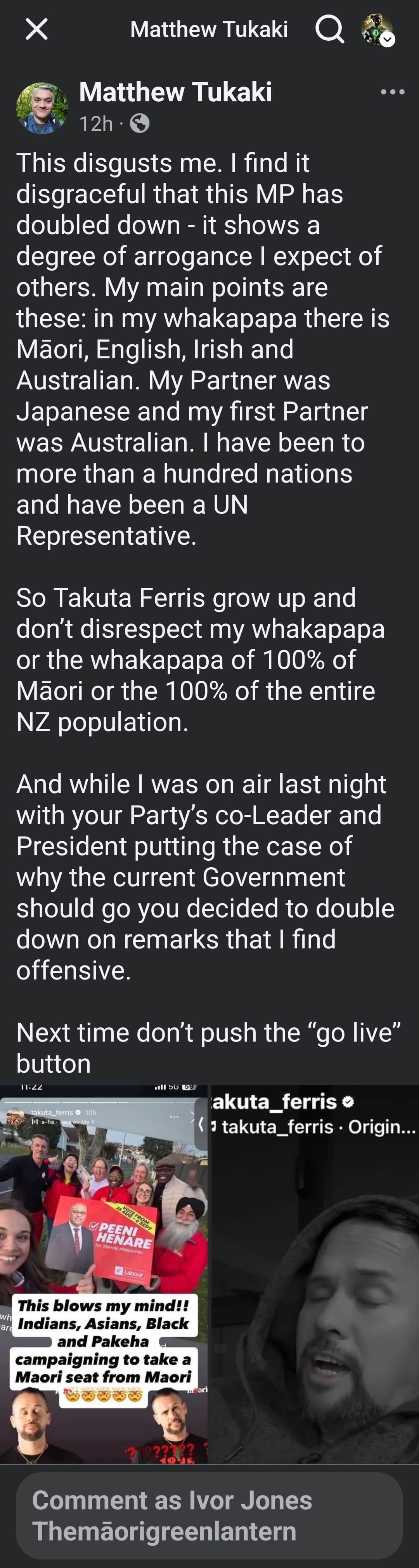
The controversy swirling around Takuta Ferris's comments about ethnic diversity in campaign volunteers has exposed something far more sinister than one MP's inflammatory rhetoric. It has revealed how Matthew Tukaki, the so-called Digital Manager of Waatea News, has positioned himself as the establishment's favoured attack dog against authentic Māori resistance while wearing the mask of indigenous advocacy.
https://www.facebook.com/share/p/17SpZkLB5r/
Background
To understand this duplicitous game, we must first grasp the scale of neoliberal infiltration into Māori media spaces. Waatea News, Auckland's bilingual radio station, receives significant funding from Te Māngai Pāho, the Crown agency that allocates over $11 million annually for Māori news and current affairs. This creates immediate questions about editorial independence when the paymasters sit in Wellington's corridors of power.
Matthew Tukaki's ascension to prominence deserves particular scrutiny. His career trajectory reads like a neoliberal wet dream - UN roles he didn't actually hold as claimed, corporate positions he massively overstated, and government appointments handed out without basic CV checks. A UN spokesperson revealed that Tukaki's claimed three-year appointment by Secretary General Ban Ki-moon was actually an elected position lasting less than a year, and he was forced to resign for alleged serious breaches of director's duties.
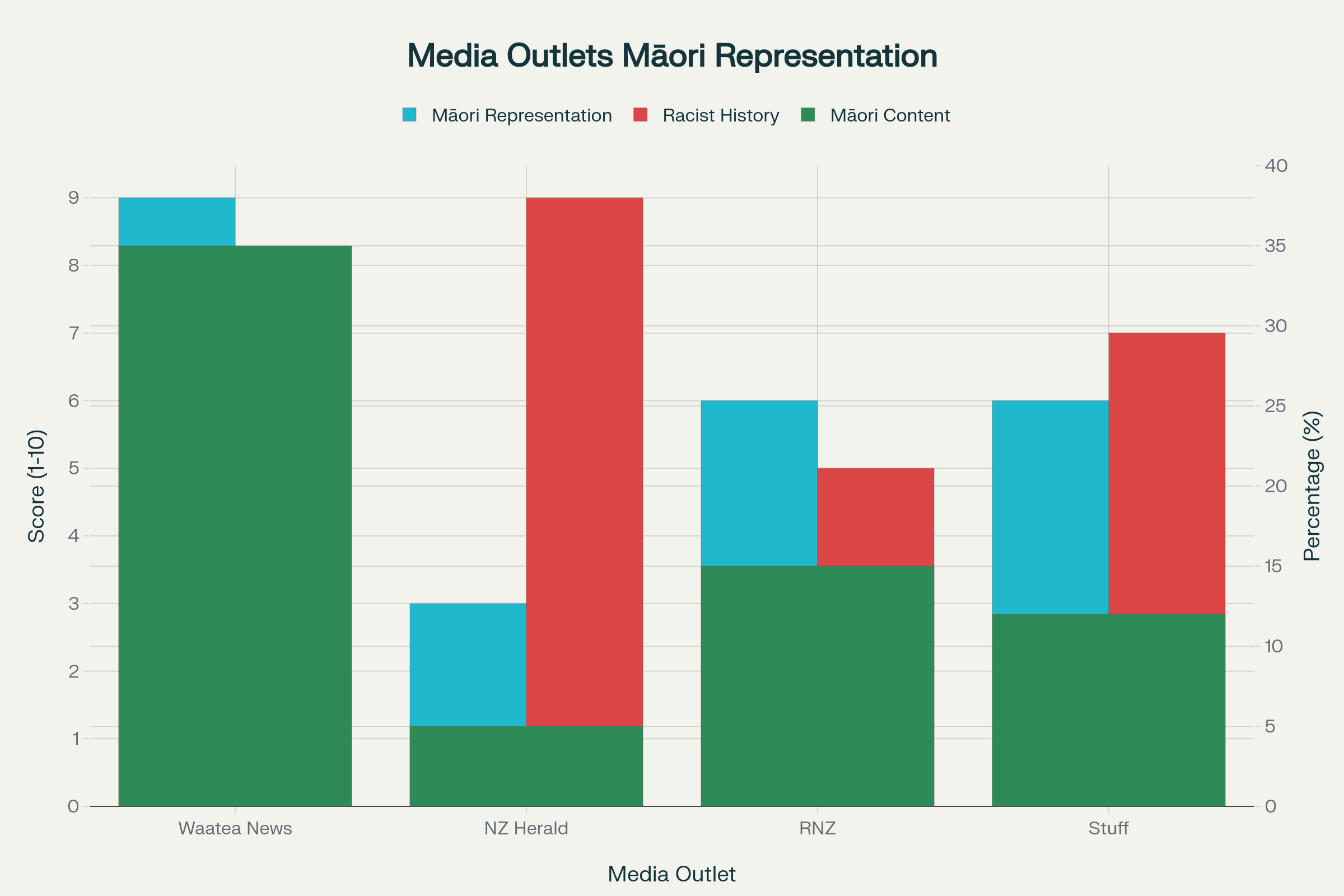
Media Outlets and Māori Representation vs. Racist Rhetoric
When Takuta Ferris posted his Instagram story showing diverse campaign volunteers supporting Labour's Peeni Henare with the caption "This blows my mind!! Indians, Asians, Black and Pākehā campaigning to take a Māori seat from Māori", he was expressing a legitimate concern about the homogenisation of Māori as just another minority group rather than tangata whenua with distinct Treaty rights.
Ferris's position, while clumsily expressed, reflects a genuine anxiety among many Māori about Labour's approach to indigenous politics. When he doubled down, saying "The Māori seats are for Māori voices only. They're for the Māori people to decide," he was articulating the fundamental principle that Māori electoral representation should be determined by Māori themselves.
Enter Matthew Tukaki with his predictable establishment response. Rather than engaging with the substantive issues Ferris raised about Māori self-determination, Tukaki chose to amplify the manufactured outrage, positioning himself as the reasonable voice of moderation. This is the classic neoliberal playbook - co-opt indigenous voices to police other indigenous voices who step out of line.
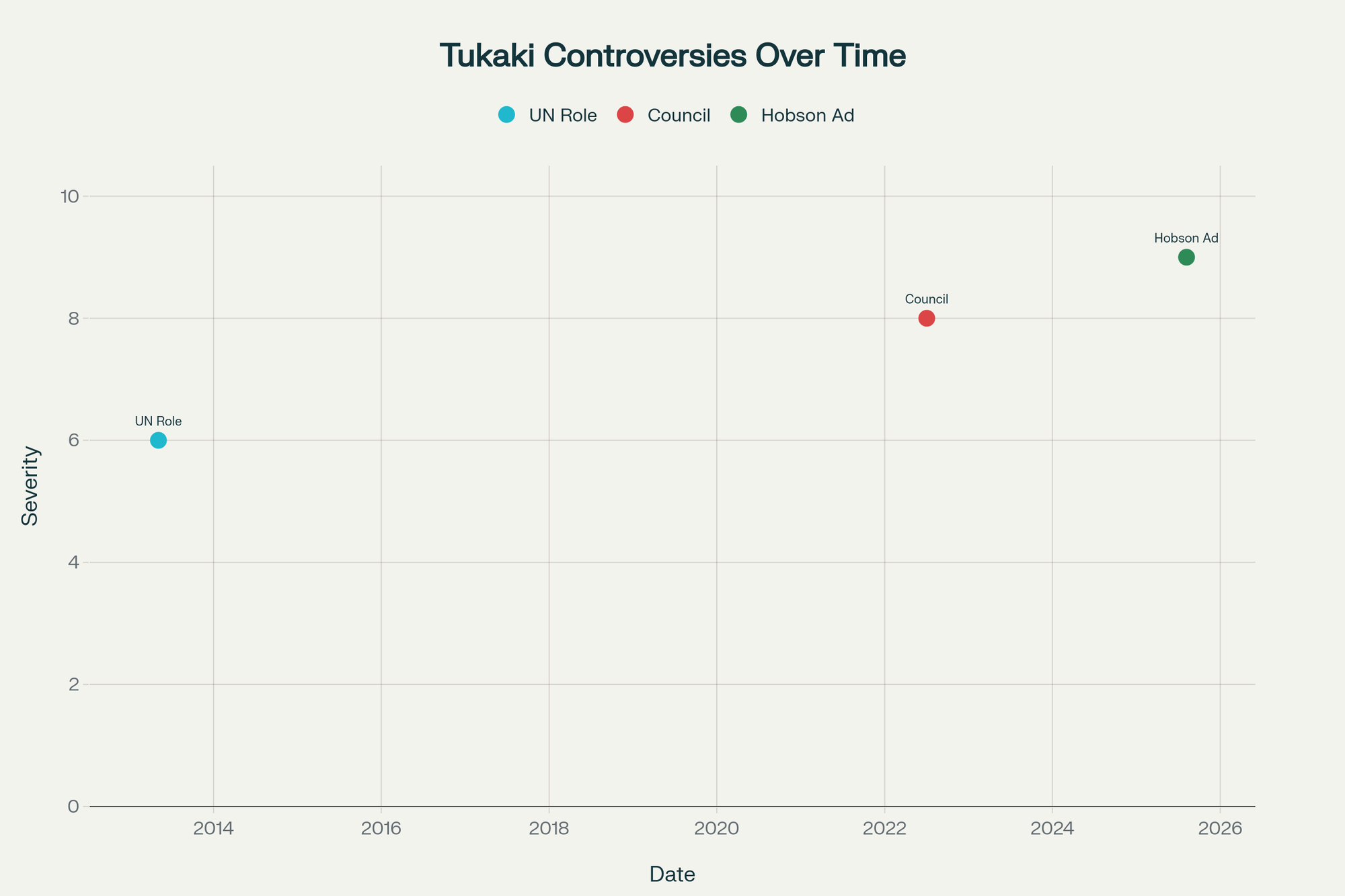
Matthew Tukaki's Career Controversies Timeline
Tukaki's Neoliberal Agenda Exposed
The pattern becomes clear when we examine Tukaki's broader political positioning. During the Hobson's Pledge controversy, when the racist organisation placed a front-page advertisement in the New Zealand Herald promoting their anti-Māori agenda, Tukaki made a grand show of ending Waatea's content-sharing arrangement with the Herald. On the surface, this appeared principled. Dig deeper, and you find the calculated opportunism of a man building his brand.
Tukaki stated he would be "happy to debate the issue with Don Brash on Waatea" - a telling offer that reveals his true agenda. Rather than completely rejecting the racist rhetoric of Hobson's Pledge, Tukaki wanted to platform it, legitimise it through debate, and position himself as the moderate voice between extremes. This is textbook neoliberal strategy - create false equivalencies between oppressor and oppressed while claiming the moral high ground.
The man's approach to Gaza provides another revealing example. When criticised for interviewing right-wing media figure Sean Plunkett about the conflict, Tukaki defended himself by saying "Māori should move beyond echo chambers" and that Waatea Digital "offers a platform for various viewpoints and does not support any side". This false neutrality is pure neoliberal ideology - presenting genocide and resistance as merely different opinions worthy of equal consideration.
The Division Strategy
Tukaki's response to the Ferris controversy serves a specific purpose within the broader neoliberal project - divide and conquer authentic Māori resistance. By positioning himself as the voice of reason against Ferris's "extremism," Tukaki provides cover for the establishment while undermining genuine Māori sovereignty movements.
Matthew Tukaki in corporate boardroom with business executives
This manufactured controversy allows neoliberal forces to point to Tukaki as evidence that "reasonable Māori" reject the kind of uncompromising stance that Ferris represents. It's the same strategy used against every liberation movement - find indigenous collaborators willing to police their own people in exchange for personal advancement and mainstream media approval.
The timing is particularly telling. As the National-ACT-New Zealand First coalition government accelerates its assault on Māori rights through the Treaty Principles Bill and other regressive policies, having a supposed Māori advocate attacking the most vocal indigenous resistance serves their agenda perfectly.
Hidden Connections
The web of connections surrounding Tukaki reveals the institutional machinery behind his elevation. His appointment to multiple government roles without proper vetting suggests someone with powerful backers willing to overlook inconvenient details about his fabricated CV.
The New Zealand Māori Council's distancing from Tukaki in 2022 provides another clue about his controversial standing within authentic Māori institutions. Yet despite this rejection by his own people's representatives, Tukaki continues to receive platform after platform in mainstream media as the go-to Māori commentator.
This pattern reveals the neoliberal establishment's preference for indigenous voices that serve power rather than challenge it. Tukaki's willingness to attack other Māori while presenting himself as the moderate alternative makes him invaluable to those seeking to undermine authentic resistance movements.
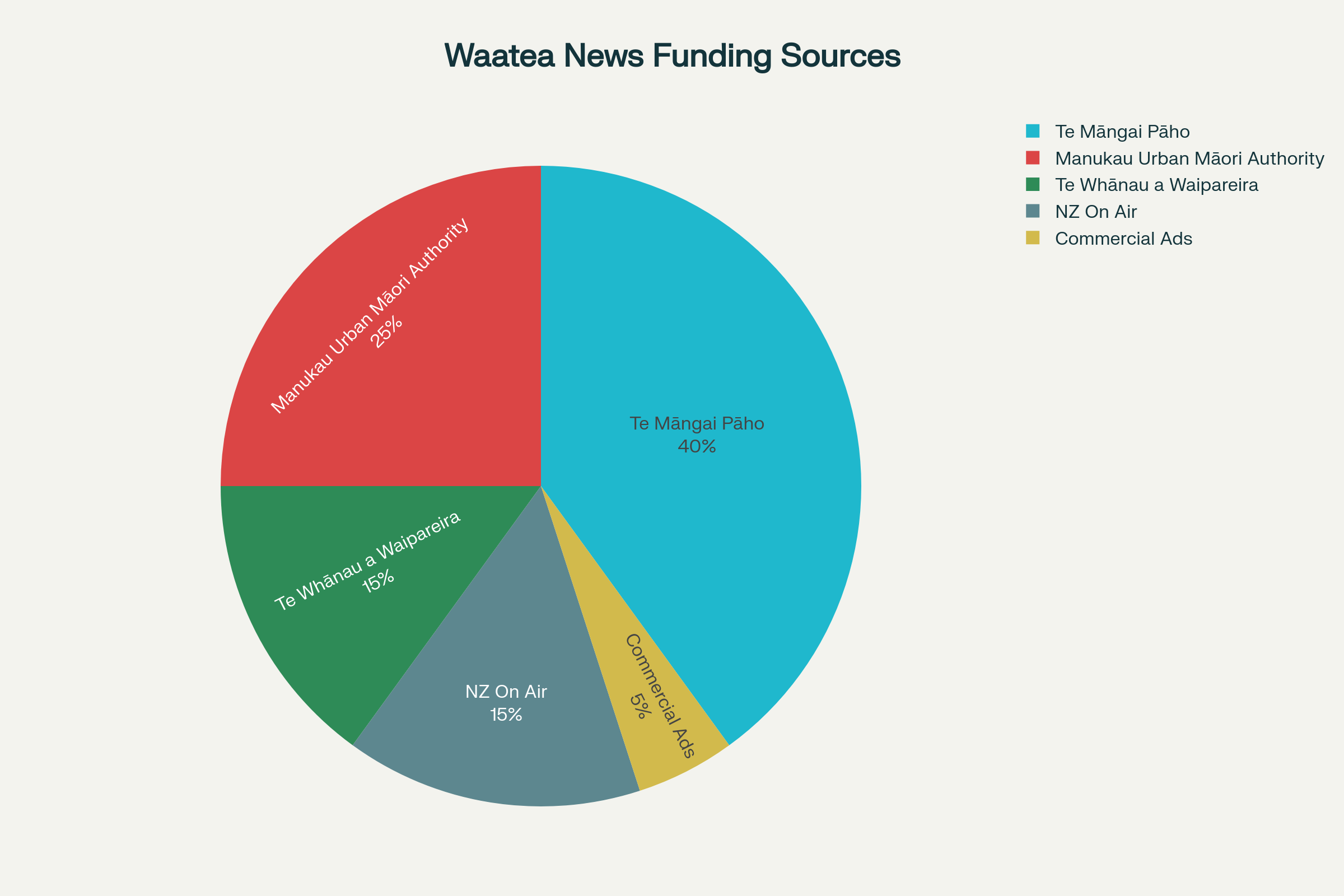
Waatea News Funding and Influence Breakdown
Implications for Māori Self-Determination
The broader implications of Tukaki's role extend far beyond one man's personal ambitions. His positioning represents a sophisticated form of colonial control - using indigenous faces to legitimise the ongoing subjugation of indigenous peoples.
By consistently taking positions that align with establishment interests while claiming to represent Māori perspectives, Tukaki provides the perfect cover for policies that harm tangata whenua. When the government needs a Māori voice to criticise Māori resistance, Tukaki delivers. When they need someone to legitimise their "both sides" approach to genocidal conflicts, Tukaki obliges.
This dynamic is particularly dangerous because it occurs within supposedly Māori-controlled media spaces. Waatea News should be a platform for uncompromising Māori advocacy and analysis. Instead, under Tukaki's influence, it becomes another vehicle for neoliberal propaganda dressed up in indigenous clothing.
MThe funding structure that enables this corruption cannot be ignored. With Te Māngai Pāho controlling the purse strings and distributing millions in government funding, there are built-in incentives for Māori media outlets to avoid positions that might displease their Crown benefactors.

The Māori Green Lantern Fighting Misinformation And Disinformation From The Far Right
The Ferris controversy has exposed Matthew Tukaki for what he truly is - a neoliberal plant masquerading as a Māori advocate. His pattern of attacking authentic indigenous resistance while positioning himself as the reasonable alternative serves the interests of those seeking to maintain colonial control through more sophisticated means.
Takuta Ferris speaking at podium with Te Pāti Māori branding
Every time Tukaki opens his mouth to criticise genuine Māori resistance, he provides ammunition for our enemies while weakening our collective struggle for tino rangatiratanga. His presence at Waatea News represents a form of institutional capture that undermines the very purpose of indigenous media.
The far-right doesn't need to destroy Māori media when they can corrupt it from within through figures like Tukaki. His role as the establishment's favourite indigenous voice makes him more dangerous to our liberation than any openly racist politician because he provides the cover of authenticity while serving the interests of our oppressors.
It's time for our people to recognise this corporate Trojan horse for what he is and demand genuine indigenous voices in our media spaces. The survival of authentic Māori resistance depends on our ability to identify and reject these neoliberal infiltrators who seek to divide us from within.
Ivor Jones The Māori Green Lantern