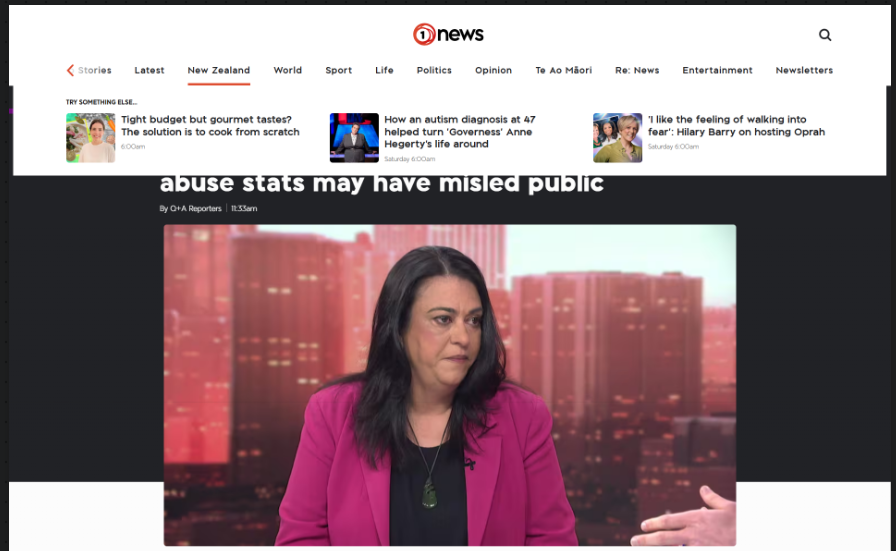
"Minister Admits Misleading Public on State Care Abuse" - 2 November 2025
Karen Chhour’s Statistical Deception Exposed as Children Continue to Suffer
Kia ora e te whānau,
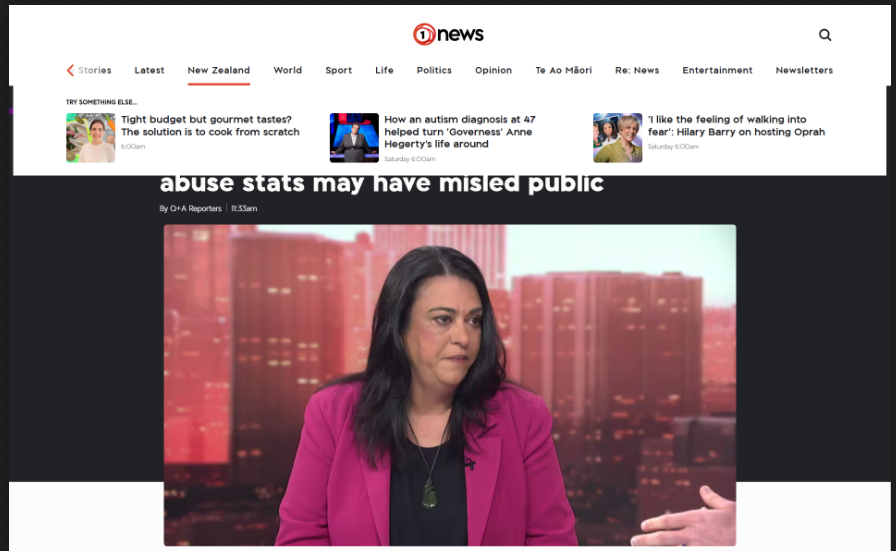
On November 2, 2025, Children’s Minister Karen Chhour (Chhour, 2025) admitted to misleading the New Zealand public about abuse statistics in state care. While celebrating a 14% reduction in harm within youth justice residences, Chhour deliberately concealed the damning truth: overall abuse in state care reached record levels, with 530 children harmed in the 2024/25 year (Aroturuki Tamariki, 2025)—a 15% increase from 459 children in 2021/22 (Independent Children’s Monitor, 2025). This is not an accident. This is a calculated political strategy to obscure systemic failure while advancing an ideological agenda that profits from the suffering of our most vulnerable tamariki.
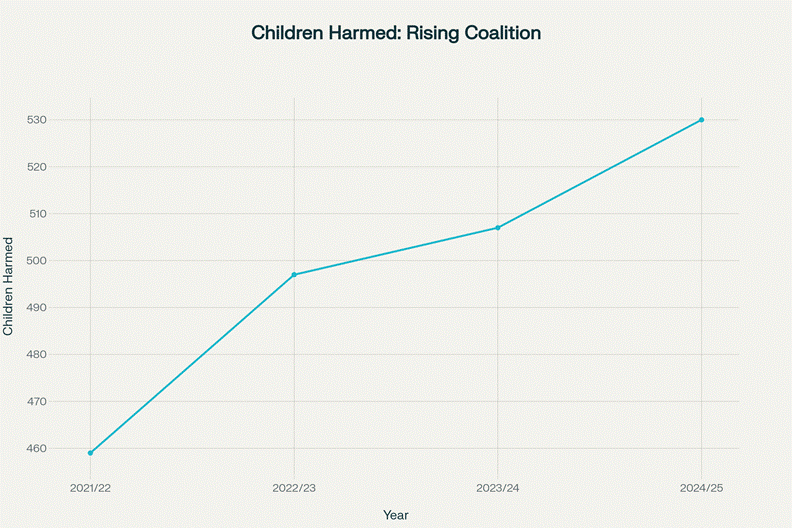
Children harmed in state care increased from 459 in 2021/22 to 530 in 2024/25, a 15% increase despite fewer children in care.
The smoking gun: Chhour cherry-picked data from a narrow subset of facilities to manufacture a political win, while children across the wider care system experienced the highest levels of abuse on record (Prime, 2025). The Children’s Commissioner and Independent Children’s Monitor condemned this manipulation (1News, 2025). Chhour’s admission—that she “accepts people may have thought” she misled them—is a masterclass in non-apology, typical of neoliberal politicians who prioritize spin over accountability.
Who benefits? ACT Party donors and the Atlas Network-aligned think tanks pushing deregulation and privatization. Who is harmed? Our tamariki Māori, who comprise 68% of children in state care (Cooper Legal, 2024) despite being only 27% of the population (Ministry of Justice, 2024). Who is hidden? The $46.579 million in Oranga Tamariki budget cuts (Treasury, 2024), the 190 community service providers defunded (RNZ, 2024), and the neoliberal ideology driving these lethal policy choices.
He Whakapapa: The Historical Roots of State Violence Against Māori Children
New Zealand’s state care system has always been a tool of colonization. The Royal Commission of Inquiry into Abuse in Care (RCIC, 2024) found that between 1950 and 2019, an estimated 200,000 children suffered abuse in state and faith-based care, with Māori disproportionately impacted. Racist targeting by police and social workers, combined with harsher sentencing, created a pipeline funneling tamariki Māori into institutional abuse (RCIC, 2024).
From 1964 to 1974, Māori court appearances increased by 150% for boys and 143% for girls—twice the rate of non-Māori (Ministry of Justice, 2024). This pattern continues today: Māori children are ten times more likely to enter state care than non-Māori children (Cooper Legal, 2024).
The neoliberal reforms beginning in 1984 transformed this colonial violence into economic violence. As New Zealand became a laboratory for extreme free-market policies (Kelsey, 1993; Boston et al., 1999), welfare was reframed from a social right to individual responsibility. The 1991 benefit cuts under National slashed support while unemployment soared (Humpage, 2009), creating conditions where whānau Māori—already devastated by colonization—faced impossible choices: poverty or state intervention.
The stakes today: 156,600 children live in material hardship—going without food, heating, and healthcare (Stats NZ, 2025). For Māori children, the rate is 23.9%, nearly double the national average of 13.4% (Stats NZ, 2025). Pacific children suffer the worst: 28.7% in material hardship (Stats NZ, 2025).
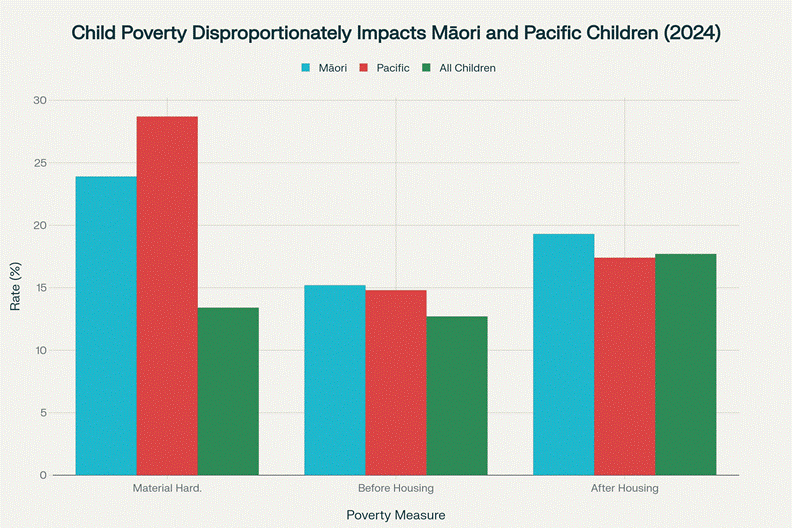
Māori children face nearly double the poverty rate of all children, with 23.9% in material hardship compared to 13.4% overall, while Pacific children experience the highest rates at 28.7%.
This is not coincidence. This is structural racism weaponized through neoliberal policy.
Ko Te Kaupapa: Deconstructing Chhour’s Statistical Manipulation
Karen Chhour’s November 2, 2025 admission reveals three coordinated deceptions:
Deception One: Cherry-Picking Data
Chhour celebrated a 14% reduction in harm within youth justice and care residences—33 fewer findings involving three fewer children (Beehive, 2025). But she buried the context: across the entire state care system, abuse increased by 4% to record levels (1News, 2025). This is selection bias—a classic statistical fallacy where you highlight favorable subsets while concealing damaging aggregate data.
Deception Two: Redefining Harm
Chhour claimed 60% of abuse reports involved incidents “outside Oranga Tamariki’s direct control,” like bullying by strangers (1News, 2025). This is responsibility deflection—if a child in state care is harmed by anyone, the state has failed its duty of protection. Oranga Tamariki’s own annual report contradicts this spin, showing that harm in return-to-home placements increased 23%, with only 64% of caregivers assessed before children returned—down from 80% (1News, 2025).
Deception Three: Celebrating Failure
Chhour’s claim that she needed to “acknowledge when things are going well” (1News, 2025) while overall abuse hits record highs is gaslighting. This rhetorical technique—common in authoritarian playbooks—reframes catastrophic policy failure as incremental success.
The pattern: These are not innocent mistakes. They follow a coordinated strategy visible across coalition policies: the Treaty Principles Bill rewriting Te Tiriti, the Regulatory Standards Bill embedding corporate power, and Section 7AA repeal severing Māori protection mechanisms.
Logical fallacies deployed:
· False dichotomy: Safety vs. culture (as if Māori children can be safe without cultural connection)
· Moving the goalposts: Celebrating narrow metrics while ignoring systemic failure
· Appeal to emotion: “I was devastated at the state of our residences” (1News, 2025)—manipulating sympathy to deflect from policy harm
Dog-whistles identified:
· “Child-centric” (code for: ignore whānau and Treaty obligations)
· “Safety first” (code for: dismantle Māori partnership)
· “Cultural considerations” vs. “individual needs” (false binary erasing indigenous rights)
Te Tātari: The Network Behind the Deception
Follow the money.
Karen Chhour is ACT Party’s Minister for Children. In 2023, ACT received $830,442 in political donations—the second-highest of any party (Electoral Commission, 2024). Major donors include entities connected to the Atlas Network, a global organization of 550+ libertarian think tanks in 100+ countries promoting “individual liberty, property rights, limited government, and free markets” (PSA, 2024).
New Zealand Atlas Network partners include:
- New Zealand Taxpayers’ Union (TPU, 2024)
- New Zealand Initiative (NZ Herald, 2025)
These groups write model legislation, place operatives in government, and flood media with neoliberal messaging (Drummond, 2023). ACT leader David Seymour’s Regulatory Standards Bill—which creates a corporate complaint mechanism to challenge progressive laws (Greenpeace, 2025)—is the fourth attempt to pass Atlas-aligned legislation stripping regulatory protections (RNZ, 2025).
Project 2025 Parallels:
In the United States, Russell Vought—a Project 2025 architect and Trump’s Office of Management and Budget director—leads DOGE (Department of Government Efficiency) alongside Elon Musk (ProPublica, 2025). Vought’s playbook: mass federal layoffs, frozen programs, and agency dismantling (BBC, 2025). His Center for Renewing America drafted 350 executive orders to “put career civil servants in trauma” (Wikipedia, 2025).
The New Zealand equivalent: David Seymour’s Regulatory Standards Bill creates an unelected board to investigate laws corporations dislike (Greenpeace, 2025). Like DOGE, it concentrates power in one minister (Seymour) who appoints all board members (RNZ, 2025). Critics—including former Prime Minister Geoffrey Palmer—call it “the strangest piece of legislation I have ever seen” and a “power grab” (NZ Herald, 2025).
The pattern is identical: Manufacture crisis, defund public services, concentrate executive power, reward corporate donors.
Ngā Hononga Huna: Five Hidden Connections Exposing the Agenda
Connection One: Section 7AA Repeal—Eliminating Accountability
On April 2, 2025, Parliament repealed Section 7AA of the Oranga Tamariki Act (RNZ, 2025)—the provision requiring Oranga Tamariki to reduce Māori disparities, report progress publicly, and partner with iwi (Beehive, 2025). The Waitangi Tribunal issued a scathing interim report warning the repeal would cause “actual harm” and violated Treaty obligations (Waitangi Tribunal, 2024). The Tribunal found zero empirical evidence that Section 7AA caused unsafe practice—only “anecdotal” claims from Chhour (Waitangi Tribunal, 2024).
The smoking gun: The Regulatory Impact Statement prepared by Oranga Tamariki did not support repeal (Cabinet Paper, 2024). Officials warned that removing Section 7AA would “slow work to reduce inequities” and have “material impact on safety, stability, rights, needs and long-term wellbeing” (Waitangi Tribunal, 2024). Chhour ignored this advice because the repeal was a coalition commitment—not evidence-based policy, but ideological mandate (Waitangi Tribunal, 2024).
Who profits: By eliminating statutory accountability for Māori outcomes, the government removes legal obligations to consult iwi and report disparities—silencing indigenous oversight of a system that harms Māori children at epidemic rates.
Connection Two: Budget Cuts—Manufactured Crisis
In 2024, Oranga Tamariki cut $46.579 million from its budget (Treasury, 2024), discontinuing contracts with 190 community service providers and reducing funding for 142 others (RNZ, 2024). These cuts specifically targeted early intervention and prevention services—the programs that keep children out of state care (RNZ, 2025).
The consequences:
·
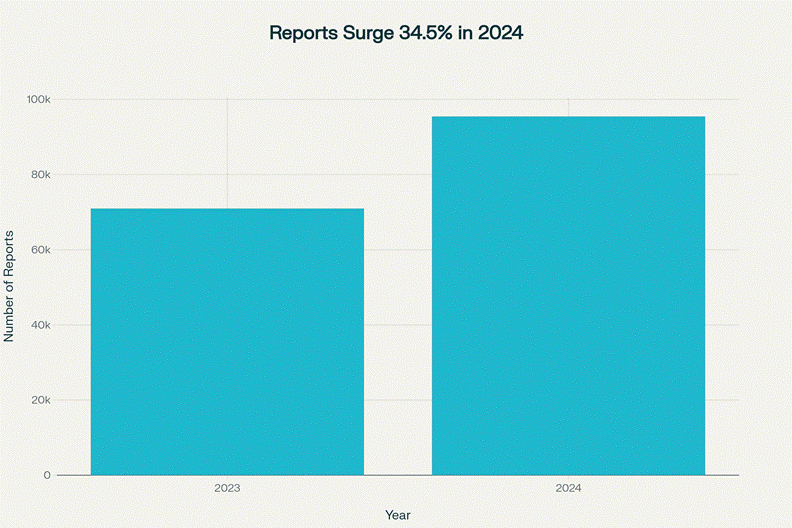
Reports of concern about at-risk children to Oranga Tamariki jumped from 70,928 in 2023 to 95,422 in 2024, a 34.5% increase coinciding with massive funding cuts.
The smoking gun: Chhour called community providers “cash cows” (NZ Herald, 2024)—justifying cuts by claiming providers were “underperforming.” But the Auditor-General’s report found Oranga Tamariki “not adequately informed by evidence of how decisions would affect children and families” and that “effects on children are still not known” (PSA, 2025). The report stated bluntly: “Given that this is the core role of Oranga Tamariki, it is unacceptable” (PSA, 2025).
This is disaster capitalism: defund prevention, create crisis, then claim the system is broken to justify privatization.
Connection Three: Boot Camp Failure—Ideology Over Evidence
Chhour’s signature policy—military-style academies for youth offenders—achieved a 70% reoffending rate (RNZ, 2025). Of ten participants, seven reoffended, one died in a car crash, and one was kicked out (RNZ, 2024). Yet Chhour and Oranga Tamariki declared it a “success” (Beehive, 2025).
The evidence: Previous National government boot camps (2008) had 85-87% reoffending rates within two years (1News, 2024). Experts—including abuse survivors’ lawyer Amanda Hill—warned these programs “cause long-term harm” and “become really abusive” (1News, 2024). The Greens called it “reckless, heinous and lazy” (1News, 2024).
The smoking gun: Prime Minister Christopher Luxon admitted he “didn’t care whether it worked or not” (Labour, 2025)—ideology trumps evidence.
Nine of the ten participants were Māori (RNZ, 2025)—another example of policies that disproportionately punish Māori youth while claiming to help them.
Connection Four: Atlas Network Financing ACT’s Agenda
The Taxpayers’ Union—an Atlas Network partner—received $2.96 million in donations in 2022, with over 80% from small donors but industry funding from tobacco, alcohol, and construction companies (RNZ, 2024). Executive Director Jordan Williams refuses to disclose major donors, calling it “not my place to dox who supports us” (RNZ, 2024).
The New Zealand Initiative—another Atlas partner—is funded by corporate members and produces research aligning with ACT policies on deregulation, privatization, and welfare reform (NZ Herald, 2025).
The smoking gun: Fast-track projects receiving government approval were linked to $500,000 in political donations to National, ACT, and NZ First (RNZ, 2024). The Regulatory Standards Bill—David Seymour’s signature policy—creates mechanisms for these same corporations to challenge laws that threaten profits (Greenpeace, 2025).
This is regulatory capture: industry funds politicians who pass laws benefiting industry.
Connection Five: Dismantling Māori Protection While Māori Children Suffer Most
The coalition’s attacks on Te Tiriti are coordinated:
- Treaty Principles Bill: Redefining Treaty principles (RNZ, 2024)
- Section 7AA repeal: Removing Māori accountability from child protection
- Te reo Māori funding cuts: Defunding language revitalization
- Māori Health Authority abolition: Eliminating targeted health services
- Māori Ward referendums: Forcing votes to remove Māori representation
The pattern: Every policy targeting Māori protection or self-determination is justified by claiming “race-based” approaches create inequality—the replacement theory rhetoric imported from white supremacist movements overseas (Waitangi Tribunal, 2024).
The consequence: As Māori protections are dismantled, Māori children suffer most. Abuse in care rises. Poverty deepens. Deaths increase.
This is cultural genocide through policy.
Ngā Painga: How Tikanga Values Are Violated
Every neoliberal policy violates foundational tikanga Māori:
- Whanaungatanga (Kinship): Section 7AA repeal severs children from whānau, hapū, and iwi. Budget cuts defund whānau-centered services. The state prioritizes institutional placement over whānau care.
- Manaakitanga (Care and Respect): Record abuse levels demonstrate the state’s failure to protect the mana of tamariki. Chhour’s statistical manipulation shows contempt for survivors’ experiences.
- Kaitiakitanga (Guardianship): The state neglects its duty as kaitiaki for vulnerable children. Defunding prevention services abandons guardianship responsibilities.
- Wairuatanga (Spirituality): Disconnecting Māori children from their culture causes spiritual harm—recognized by the Royal Commission as cultural neglect (RCIC, 2024).
- Kotahitanga (Unity): Policies pit “safety” against “culture,” dividing communities. The rhetoric of “individual needs” vs. “race-based approaches” fractures collective responsibility.
- Rangatiratanga (Self-Determination): Stripping iwi partnership rights under Section 7AA violates Māori sovereignty guaranteed by Te Tiriti.
- Aroha (Compassion): Boot camps, benefit sanctions, and punitive welfare policies replace compassion with punishment—particularly targeting Māori.
Neoliberalism’s core principle—individual responsibility over collective care—is the antithesis of tikanga Māori. Every policy Chhour advances erases Māori values from the care system.
Ngā Hua: The Quantified Harm and Threatened Rights
Direct harm to children:
- 530 children harmed in state care in 2024/25 (Aroturuki Tamariki, 2025)
- 156,600 children in material hardship (Stats NZ, 2025)
- 95,422 reports of concern to Oranga Tamariki in 2024 (Oranga Tamariki, 2025)—24,494 more than 2023
Disproportionate Māori harm:
- 68% of children in state care are Māori (Cooper Legal, 2024)
- 57% of youth in residences are Māori (RNZ, 2024)
- 23.9% of Māori children live in material hardship (Stats NZ, 2025)
- 21.5% of Māori children experience material hardship—no change since 2019 (1News, 2024)
Budget violence:
- $46.579 million cut from Oranga Tamariki (Treasury, 2024)
- $30 million/year cut from community services (RNZ, 2024)
- 190 providers defunded completely (RNZ, 2024)
- 142 providers had funding reduced (1News, 2024)
International precedents:
The United States’ Project 2025 agenda—implemented through DOGE—has eliminated entire agencies, fired thousands of federal workers, and frozen programs serving vulnerable populations (ProPublica, 2025). New Zealand’s coalition government follows the same playbook: manufacture fiscal crisis, defund public services, concentrate power, reward donors.
Australia’s Voice referendum defeat—heavily funded by Atlas Network-aligned groups (PSA, 2024)—previewed the attack on Te Tiriti we see today. The same networks, same rhetoric, same funders.
Rights under threat:
- Treaty rights (Section 7AA repeal, Treaty Principles Bill)
- Indigenous self-determination (iwi partnership elimination)
- Children’s rights (abuse at record levels, protection systems defunded)
- Social security rights (welfare cuts, benefit sanctions)
- Democratic participation (unelected boards like Regulatory Standards Board)
The future trajectory: If unchallenged, this agenda leads to:
- Privatization of child protection (already happening through contracting shifts)
- Elimination of public accountability (Regulatory Standards Bill)
- Permanent structural poverty for Māori and Pacific communities
- Intergenerational trauma as children disconnected from culture cycle into criminal justice
- Erosion of Treaty obligations across all sectors
Whakamutunga: Moral Clarity and Action

The Māori Green Lantern Fighting Misinformation And Disinformation From The Far Right
Karen Chhour admitted misleading the public because she got caught. The statistical manipulation, budget cuts, Section 7AA repeal, and boot camp failures are not isolated mistakes—they are coordinated attacks on the most vulnerable, driven by an ideology that values profit over people, individual rights over collective responsibility, and corporate power over democratic accountability.
The coalition government serves Atlas Network ideology and corporate donors—not tamariki, not whānau, not tangata whenua.
He wero - A Challenge:
To Māori communities: Organize. The attack on Section 7AA is part of a broader assault on Te Tiriti. Demand iwi partnership restoration, adequately funded whānau-centered services, and accountability for harm.
To social workers and frontline staff: Whistleblow. Document the consequences of budget cuts. Refuse to implement policies that harm children. Your professional ethics demand it.
To journalists and media: Investigate. Trace political donations from Atlas Network entities to coalition parties. Expose the connections between think tanks, politicians, and policy. Stop platforming these groups without disclosing their funding and ideology.
To opposition parties: File complaints with the Ombudsman about Chhour’s misleading statements. Demand a full independent inquiry into Oranga Tamariki’s contracting process. Commit to reinstating Section 7AA and fully funding community prevention services.
To the public: Flood the Waitangi Tribunal with claims about Treaty breaches. Overwhelm select committees with submissions opposing the Regulatory Standards Bill. Organize mass protests demanding child poverty action—not tax cuts for the wealthy.
Specific targets for action:
- Office of the Children’s Commissioner: Demand public accountability report on Chhour’s misleading statements
- Independent Children’s Monitor: Request urgent investigation into rising harm rates
- Auditor-General: Expand inquiry into Oranga Tamariki cuts to include harm outcomes
- Ombudsman: File complaint re: ministerial misleading of Parliament and public
- Electoral Commission: Investigate political donations from fast-track project beneficiaries
The moral clarity: A government that harms children, lies about it, defunds protection, dismantles accountability, and rewards donors has forfeited its legitimacy.
Our tamariki deserve better. Our whānau deserve better. Our Treaty partner relationship demands better.
The neoliberal experiment has failed—catastrophically, measurably, lethally. It is time to end it.
Kia kaha. Kia māia. Kia manawanui.
Child Poverty Action Group. (2025). Latest 2023/2024 Child Poverty Statistics.
Chhour, K. (2025). Minister admits comments on state care abuse stats may have misled public. 1News.
Cooper Legal. (2024). State care in Aotearoa New Zealand.
Electoral Commission. (2024). Party donations and loans by year.
Greenpeace Aotearoa. (2025). The Regulatory Standards Bill is Seymour’s next power grab.
Independent Children’s Monitor. (2025). Oversight agencies call for urgent focus on safety of children in State care.
Ministry of Justice. (2024). Māori in care 1950-1999.
Ministry of Social Development. (2025). Update on key findings from the Independent Children’s Monitor’s latest report.
New Zealand Government. (2025). Repeal of 7AA puts child wellbeing first.
New Zealand Government. (2025). First ever reduction of harm in state care residences.
Oranga Tamariki. (2024). Cabinet paper: Repeal of section 7AA of the Oranga Tamariki Act 1989.
Oranga Tamariki. (2025). Understanding the increase in reports of concern.
ProPublica. (2025). What You Should Know About Russ Vought, Trump’s Shadow President.
Public Service Association. (2024). Understanding Atlas: how a right-wing network is building global influence.
Public Service Association. (2025). Children pay price of Oranga Tamariki contracting fiasco.
Radio New Zealand. (2024). Bill unbinding Treaty principles, Oranga Tamariki passes final reading.
Radio New Zealand. (2024). Families ‘devastated’ as Oranga Tamariki cuts off funding to 190 social service providers.
Radio New Zealand. (2024). Jordan Williams on what the Taxpayers’ Union really is and who funds it.
Radio New Zealand. (2024). Māori disproportionately affected by state and faith-based care abuse.
Radio New Zealand. (2024). Youth on boot camp pilot re-offended five weeks after release.
Radio New Zealand. (2024). $500,000 in political donations associated with fast track projects.
Radio New Zealand. (2025). Child poverty rates stall, government misses targets.
Radio New Zealand. (2025). Children’s Minister accepts state care harm statistics didn’t provide full picture.
Radio New Zealand. (2025). Future ‘grim’ for intervention services after Oranga Tamariki cuts.
Radio New Zealand. (2025). Minister, OT hail boot camp success despite majority reoffending.
Radio New Zealand. (2025). Oranga Tamariki struggles with rise in serious, ‘critical’ and very urgent cases.
Radio New Zealand. (2025). Regulatory Standards Bill passes first reading.
Royal Commission of Inquiry into Abuse in Care. (2024). Whanaketia – Through pain and trauma, from darkness to light.
Statistics New Zealand. (2025). Child poverty statistics: Year ended June 2024.
The Treasury. (2024). Vote Oranga Tamariki - Budget 2024.
Waitangi Tribunal. (2024). Tribunal releases report on Oranga Tamariki (Section 7AA).
Wikipedia. (2025). Department of Government Efficiency.
If this mahi has value and you have the capacity, please consider supporting this work with a humble koha:
HTDM: 03-1546-0415173-000
Nāku noa, nā
Ivor Jones
The Māori Green Lantern