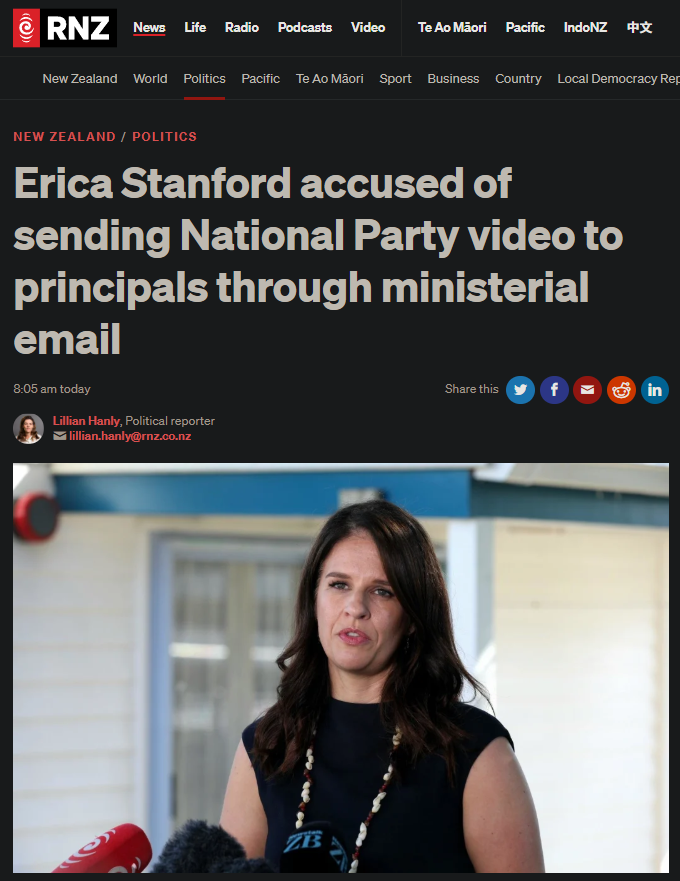
“Minister Marked Absent: Stanford’s Shameful Cowardice Exposes the Moral Bankruptcy of This Government” - 24 September 2025
When teachers needed their Education Minister most, Erica Stanford chose politics over principles, revealing the contemptuous arrogance of a government that treats educators like enemies of the state
Kia ora whānau. Kia kaha, kia maia, kia māia - be strong, be brave, be confident
The Coward’s Non-Show That Says Everything
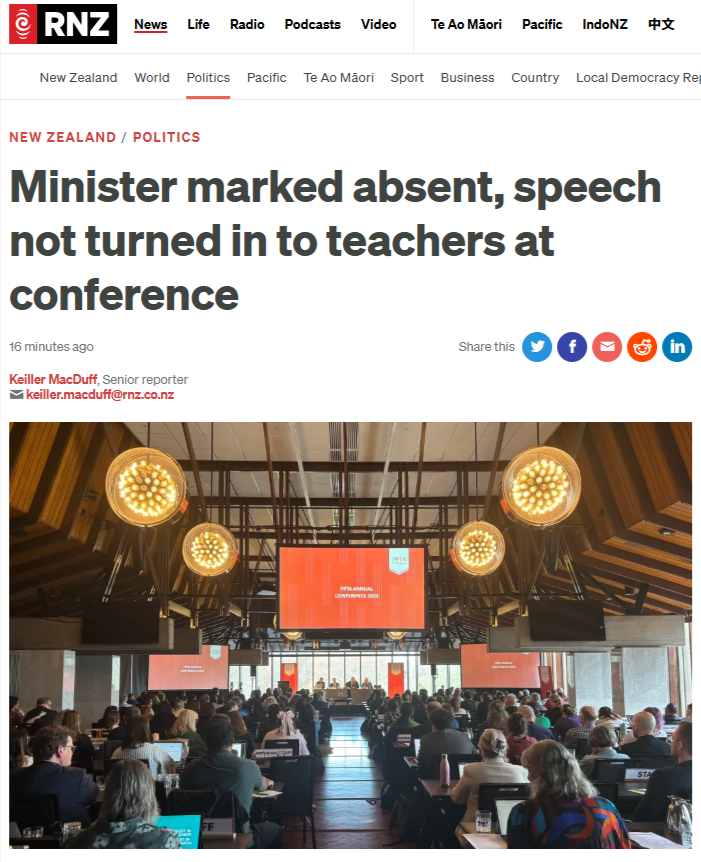
Here’s the brutal truth every hardworking New Zealander needs to understand: when secondary school teachers gathered at their annual conference in Christchurch this week - facing the worst teacher shortage in decades, insulting 1% pay offers, and the biggest upheaval to education in a generation - Education Minister Erica Stanford was nowhere to be found. Not sick. Not overseas on urgent government business. Simply too gutless to face the very people whose profession she’s systematically destroying.
Stanford had promised to deliver the keynote address since April. This wasn’t a last-minute invitation or scheduling conflict. For five months, her diary showed Tuesday 24 September - PPTA Conference keynote. Then, like a student who hasn’t done their homework, she simply didn’t turn up.
A Trail of Lies and Excuses That Insults Our Intelligence
First, Stanford’s office claimed an “unavoidable clash” - a transparent lie that quickly crumbled under media scrutiny. When pressed, they shifted to their real excuse: the Ministry of Education advised against attending because of “ongoing collective bargaining and associated industrial action.”
This reveals the calculating cowardice at the heart of this government’s approach to education. PPTA President Chris Abercrombie nailed it perfectly when he reminded everyone that countless education ministers, both Labour and National, have attended these conferences during far more difficult industrial times. Stanford’s predecessors understood that leadership means showing up, especially when times are tough.

The empty podium that speaks volumes about Stanford’s cowardice
The Comfortable Elite vs The Teaching Frontline
Stanford’s absence wasn’t just poor form - it was a calculated insult that exposes the class contempt driving this government’s education policies. While teachers struggle with 1250 teacher shortages nationwide, Stanford sits comfortably in her ministerial office, playing politics with other people’s livelihoods.

Stanford turns her back on the teaching profession when they need leadership most
This is a minister who worked for four years in Murray McCully’s electorate office before inheriting his safe National seat - a textbook example of political nepotism masquerading as merit. She describes McCully as her “political mentor” and has no qualms about appointing him to lucrative government contracts at $2200 per day. Jobs for the boys while teachers can’t get a living wage.
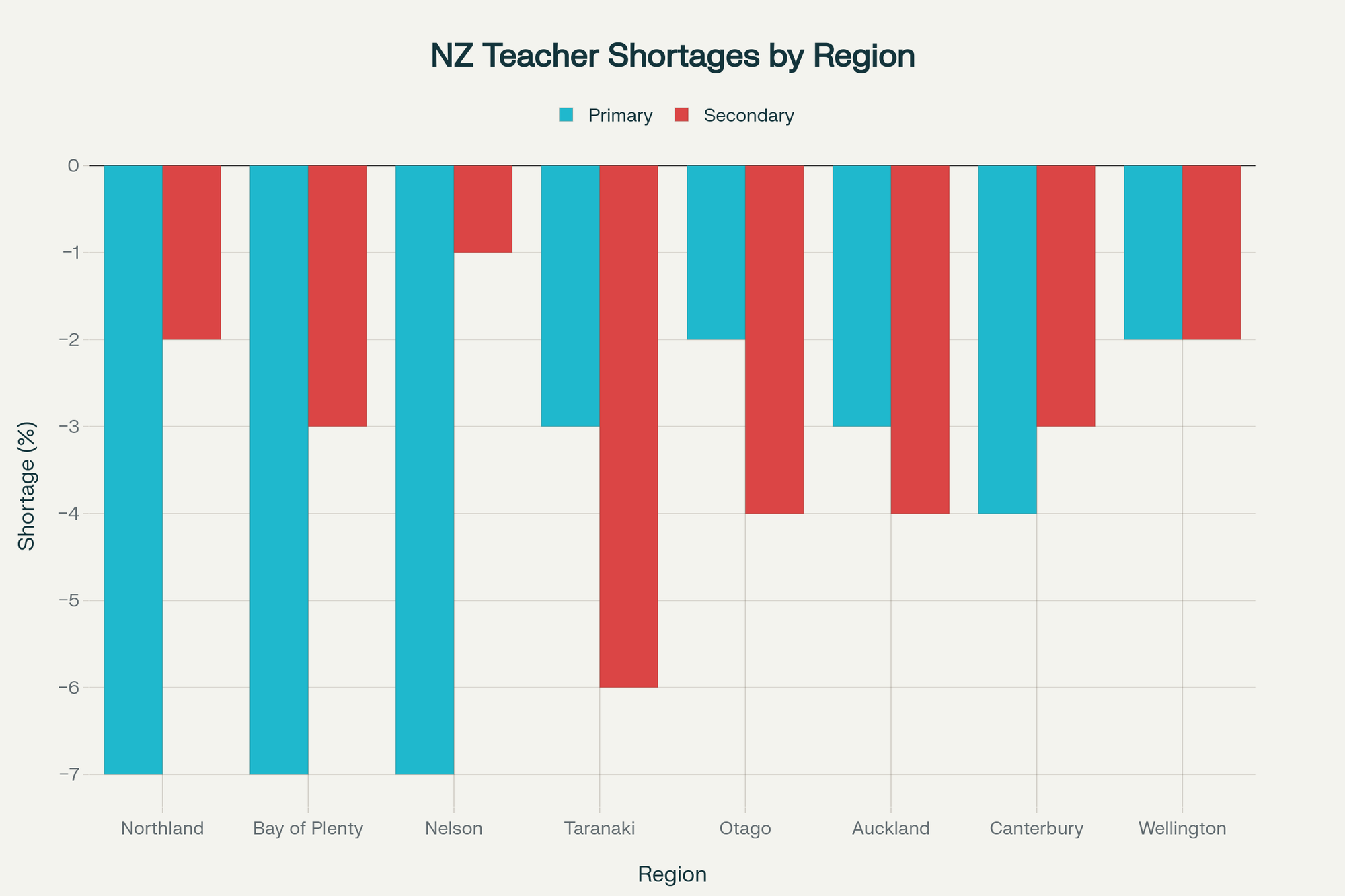
Teacher shortages by region in New Zealand - the crisis Stanford refuses to face
Stanford represents everything wrong with New Zealand’s political class - comfortable, insulated, and utterly disconnected from the working people whose lives they control. She’s never stood in front of an overcrowded classroom, never had to explain to parents why their child’s teacher quit to move to Australia, never felt the daily stress of trying to educate our tamariki with inadequate resources and crumbling infrastructure.
The Systematic Destruction of Public Education
Stanford’s no-show wasn’t an isolated incident - it’s the culmination of a systematic attack on public education that would make even the most hardened neoliberal blush. Let’s examine the evidence:
The Great Education Robbery
Budget 2025 saw Stanford slash and burn through education programmes with the ruthless efficiency of a corporate raider. The biggest cut was ending the Kāhui Ako scheme, which supported 4000 teachers leading improvements in groups of schools - $375 million over four years gone.
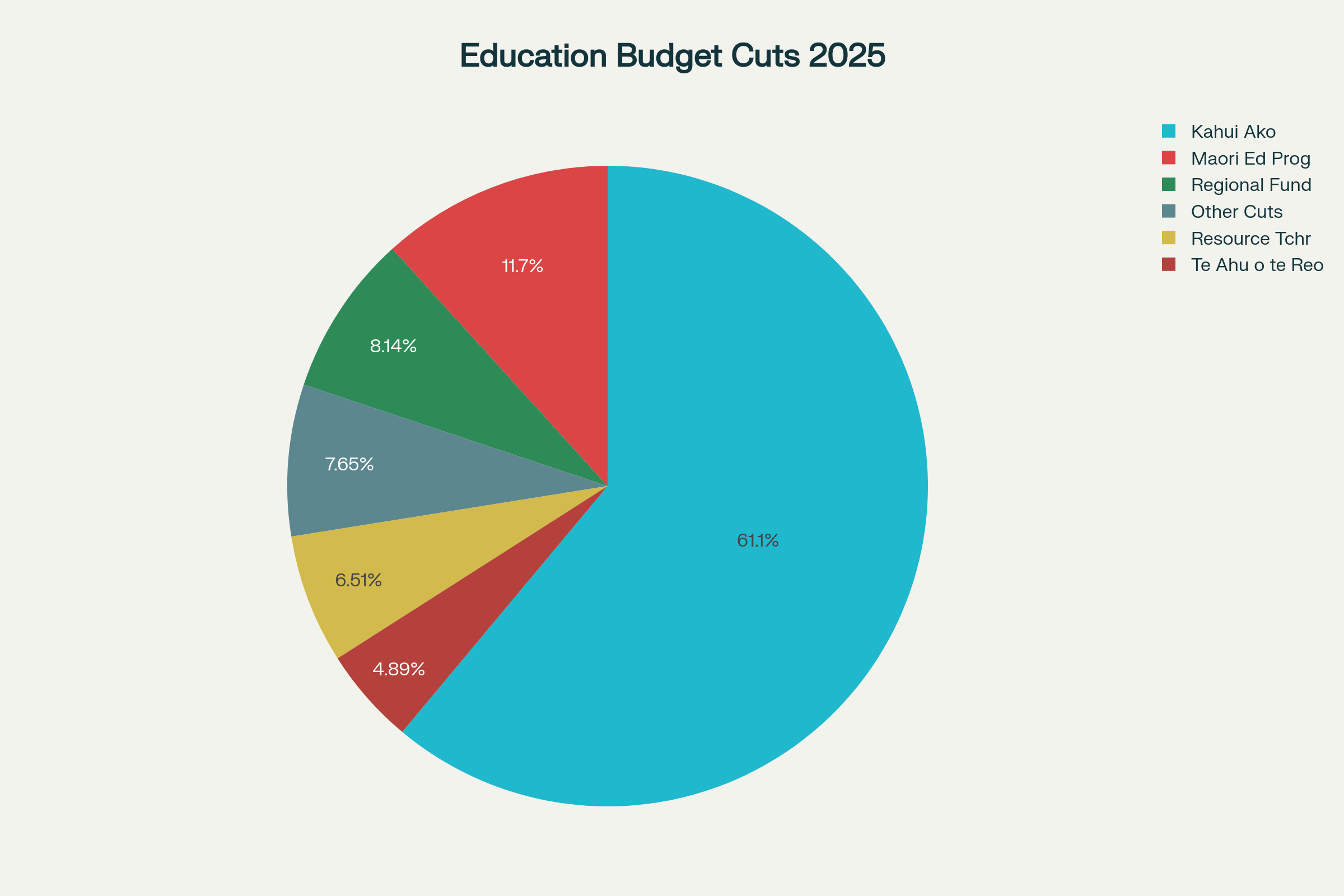
Stanford’s education slash and burn - where the money really went
But the most telling cut reveals Stanford’s true priorities: $30 million stripped from Te Ahu o te Reo Māori, a programme helping teachers learn te reo Māori. This wasn’t about efficiency or evidence-based policy - the programme evaluation found participants experienced significant improvements and were integrating more tikanga and mātauranga Māori into their teaching.
Stanford’s excuse? She claimed there was “no evidence it directly impacted students” - a blatant lie contradicted by the programme’s own evaluation. The real reason was ideological: this government sees te reo Māori as an expensive inconvenience rather than a taonga to be treasured.
The War on Māori Education
Stanford’s assault on Māori education extends far beyond Te Ahu o te Reo Māori. She’s banned nearly all Māori words from Ready to Read Phonics Plus books, supposedly because they’re “too confusing” for children. This from a minister whose own education included minoring in Māori Studies at university.
The pattern is clear and deliberate: deprioritising Te Tiriti o Waitangi in the New Zealand Curriculum, scrapping resource teachers of Māori, cutting Māori language programmes. Stanford is systematically erasing Māori culture and identity from our education system, one budget cut at a time.
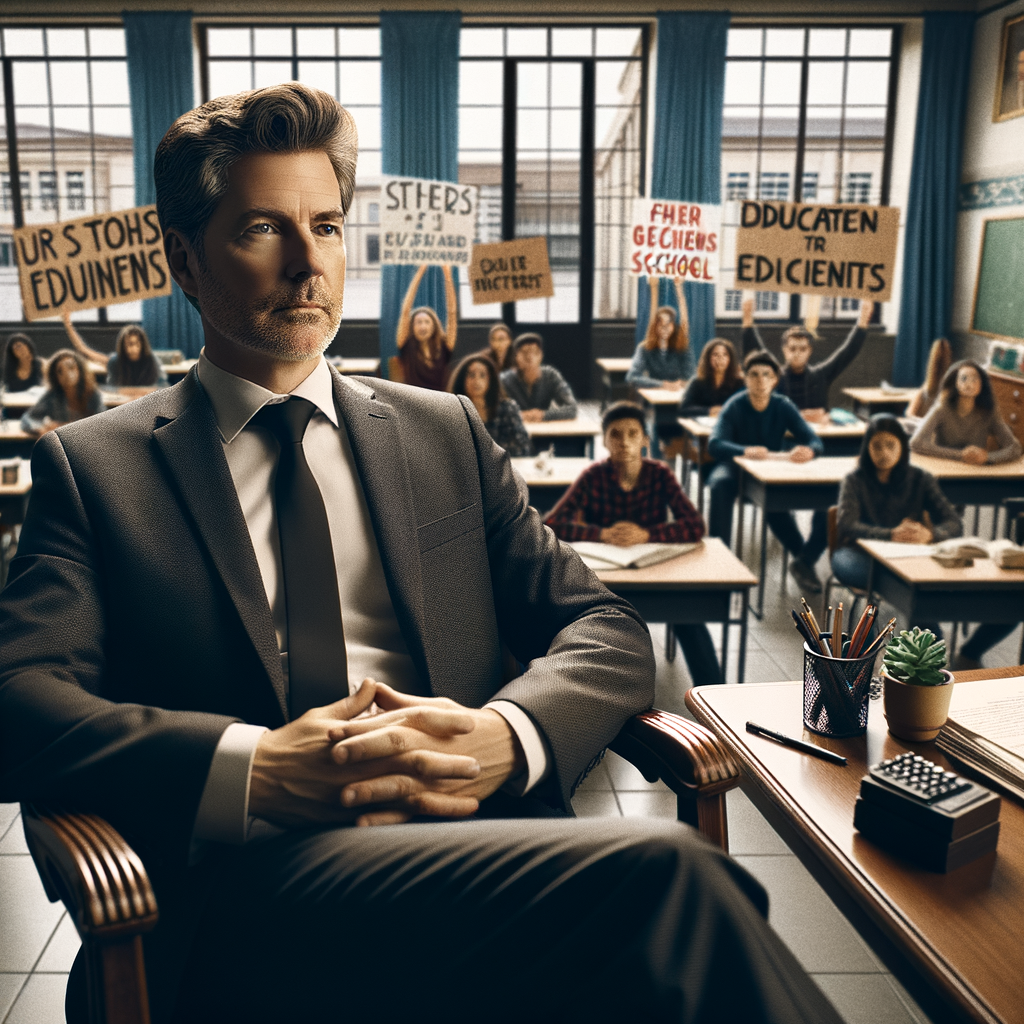
The ivory tower mentality - comfortable in power while education burns
The Insulting Pay Offers and Judith Collins’ Lies
While Stanford hides in her ivory tower, her government colleagues wage open warfare on teachers’ dignity. The current pay offer - 1% per year for three years - is literally the lowest in a generation. To put this in perspective: inflation in the year to March 2025 reached 2.5%, meaning this “pay rise” is actually a pay cut in real terms.
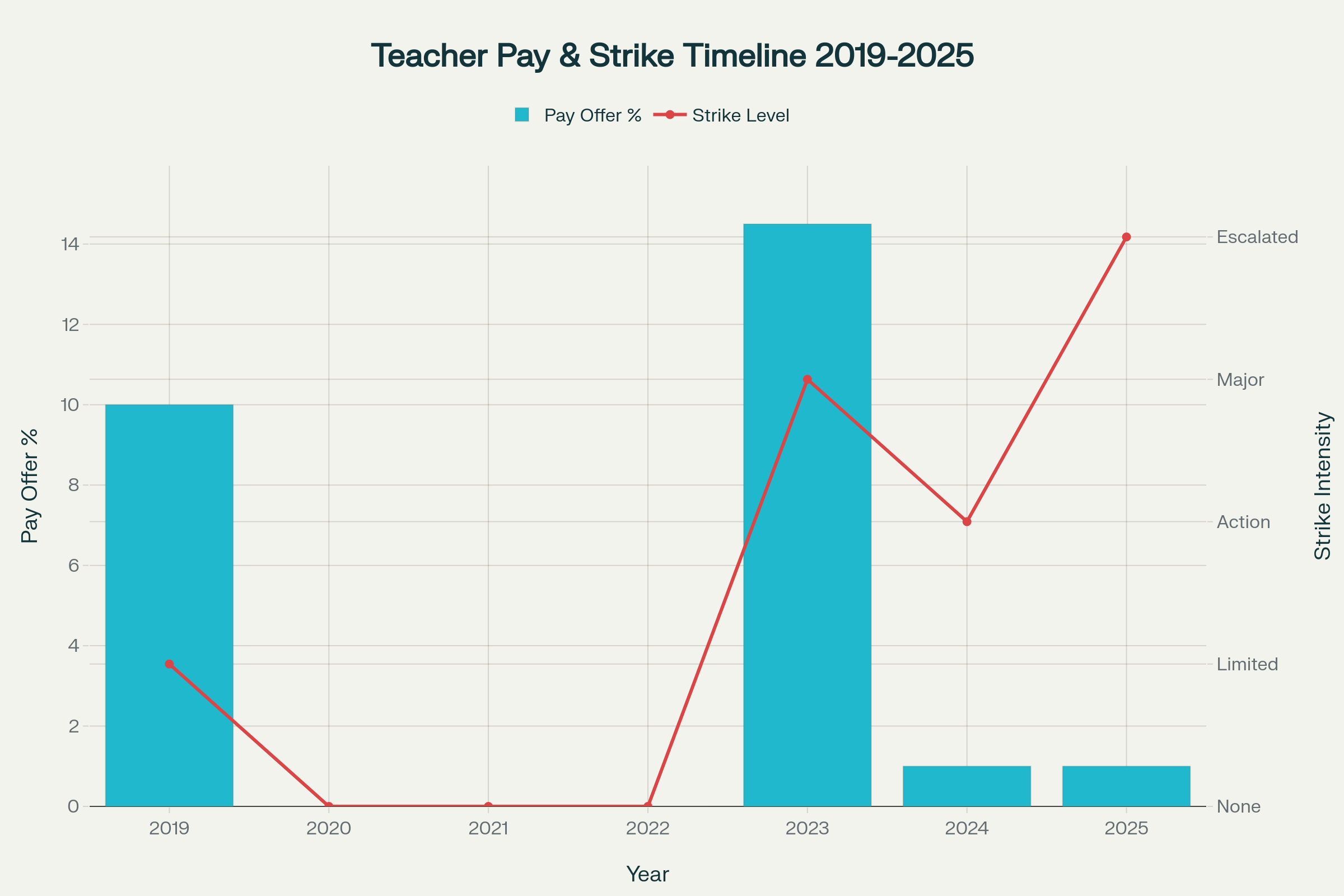
The escalating teacher pay crisis - from bad faith bargaining to all-out warfare
Public Services Minister Judith Collins made this insulting charade even worse by falsely claiming teachers with 10 years’ experience earn around $140,000 annually. Teachers called this “disinformation”, and they were right. The average salary for secondary teachers is $100,933, and only about 20-30 deputy principals in very large schools earn $140,000 or more.
Collins later apologised, claiming she “mixed up her messages” - as if spreading lies about teachers’ pay during sensitive negotiations was just an innocent mistake. This is the same minister who told teachers to “get back to the bargaining table and stop acting silly” when confronted about her misinformation.
The Hidden Connections: Jobs for the Boys While Teachers Struggle
Stanford’s appointment of her former boss Murray McCully to lucrative government contracts isn’t just nepotism - it’s a symptom of a deeper problem. While teachers face pay cuts and job insecurity, the National Party’s inner circle enjoys a revolving door of well-paid consultancy roles.
The Green Party has documented this pattern across government: former transport minister Simon Bridges appointed to chair NZTA Waka Kotahi, former minister Roger Sowry investigating Cook Strait ferries, former PM Bill English reviewing Kāinga Ora at $2500 per day. Meanwhile, teachers who dedicate their lives to educating our children can’t afford to stay in the profession.
This isn’t coincidence - it’s the natural result of a class-based system where political insiders look after each other while working people fight for scraps. Stanford embodies this perfectly: she spent her pre-political career in export sales and television production, far removed from the daily realities of public education, yet now controls the fate of every teacher and student in the country.
The Teacher Exodus: A Crisis Made in Cabinet
Schools are desperately short of 1250 teachers, with some regions facing crisis-level shortages. Principals report having to teach classes themselves because they can’t find relief teachers, while experienced educators leave for Australia in droves.
This isn’t a natural disaster - it’s a policy choice. When you offer teachers real-terms pay cuts while loading them with ever-increasing responsibilities, when you slash professional development programmes and attack the cultural foundations of their work, when you treat them with contempt and refuse to even show up to their professional conferences, of course they’re going to leave.
Stanford boasts about a “27% increase in those who are training at initial teacher education”, but conveniently ignores the fact that retention rates are plummeting. You can train all the teachers you want, but if you don’t treat them with dignity and respect, they’ll find work elsewhere.

The Māori Green Lantern Fighting Misinformation And Disinformation From The Far Right
The NCEA Chaos: Reform Without Resources
Adding insult to injury, Stanford is forcing through the biggest changes to secondary education in a generation while treating the teachers who must implement these changes with open contempt. The proposed replacement of all NCEA levels with new qualifications represents massive additional workload for teachers already stretched to breaking point.
Stanford claims she wants to end “credit counting” and stop the system being “gamed”, but offers no evidence that these problems exist beyond her own assertions. Meanwhile, the teachers who actually work with NCEA daily are striking for basic respect and living wages.
The timing is not accidental. Stanford is using the chaos of industrial action to ram through ideological changes without proper consultation or evidence. It’s disaster capitalism applied to education: create a crisis, then use it to justify radical restructuring that serves political rather than educational goals.
The Deeper Pattern: Neoliberal Violence Against Public Services
Stanford’s approach to education fits perfectly within this government’s broader assault on public services. They’re spending $2.7 billion on military helicopters and planes while claiming there’s “no money” for teacher pay rises. They’re doubling the military budget from 1% to 2% of GDP while cutting education programmes that actually help children learn.
This is classic neoliberal economics: socialise the costs of militarism and corporate welfare while privatising the benefits of public education and social services. Stanford represents the acceptable face of this violence - polite, professional, and utterly ruthless in her commitment to market fundamentalism over human dignity.
Her background in export sales reveals the mindset: education is just another commodity to be optimised for efficiency rather than a public good that serves our collective wellbeing. Teachers aren’t professionals deserving respect but cost centres to be minimised. Students aren’t future citizens but human capital to be processed through standardised systems.
The Māori Dimension: Cultural Genocide Through Budget Cuts
Stanford’s assault on Māori education must be understood within the broader context of this government’s systematic attack on Māori rights and tino rangatiratanga. The cuts to te reo Māori programmes, the removal of Māori words from reading books, and the deprioritising of Te Tiriti in curriculum documents aren’t isolated policies but part of a coordinated campaign to roll back decades of progress toward educational equity.
From a Māori worldview, education is about much more than individual achievement - it’s about strengthening whānau, hapū, and iwi, about maintaining cultural connections across generations, about ensuring our tamariki understand their whakapapa and their responsibilities as tangata whenua. Stanford’s policies attack these fundamental values, replacing them with a narrow focus on standardised testing and economic utility.
Te Pāti Māori’s warning about “the wrath of the million Māori” isn’t hyperbole - it’s a recognition that these attacks on education are attacks on Māori identity itself. When you systematically remove te reo Māori from schools, you’re not just cutting costs - you’re participating in ongoing colonisation.
Implications: The Broader Assault on Democratic Participation
Stanford’s refusal to face teachers at their own conference represents more than personal cowardice - it’s symptomatic of this government’s broader contempt for democratic engagement. When ministers only speak to friendly audiences and refuse to engage with those affected by their policies, they’re abandoning even the pretense of democratic accountability.
This has profound implications for our democracy. If education ministers can simply refuse to meet with teachers, if they can spread misinformation about pay rates without consequences, if they can slash programmes based on ideology rather than evidence, then what’s left of democratic governance?
The answer is clear: we’re witnessing the consolidation of authoritarian neoliberalism, where democratic forms are maintained but emptied of democratic content. Stanford represents the polite face of this system - professional, articulate, and completely unaccountable to the people whose lives she controls.
The Path Forward: Resistance and Renewal
Teachers are showing the way forward through their principled resistance to this government’s attacks. The strikes, the rolling action, the refusal to accept insulting pay offers - all of this represents the kind of organised resistance necessary to defend public education and democratic values.
But this fight goes beyond pay and conditions. It’s about the kind of society we want to build: one based on mutual care and collective wellbeing, or one based on market competition and individual accumulation. It’s about whether we see education as a public good that strengthens our communities or a private commodity that sorts winners from losers.
From a Māori perspective, this is also about cultural survival. When Stanford attacks te reo Māori programmes, she’s attacking the foundations of Māori identity and tino rangatiratanga. Resistance to these policies isn’t just about education - it’s about the right of tangata whenua to determine our own futures.
Conclusion: Standing with Our Teachers
Erica Stanford’s shameful absence from the PPTA conference reveals everything we need to know about this government’s true values. They’ll spend billions on military hardware while claiming they can’t afford to pay teachers a living wage. They’ll appoint their political cronies to lucrative consultancy roles while forcing educators to strike for basic respect. They’ll systematically attack Māori culture and identity while wrapping themselves in the flag of educational excellence.
This is the face of modern conservatism: polite, professional, and utterly ruthless in its commitment to preserving elite privilege at the expense of working people. Stanford embodies this perfectly - comfortable, insulated, and completely disconnected from the daily realities of the people whose lives she controls.
But the teachers are fighting back, and they deserve our support. Their struggle is our struggle, their victory our victory. When they strike for decent pay and conditions, they’re striking for the kind of society that values education, respects workers, and treats our tamariki with the dignity they deserve.
Stanford may refuse to show up, but we will. We’ll stand with our teachers, support their strikes, and work to build the kind of education system our children deserve - one based on equity, respect, and the understanding that every child deserves the chance to reach their full potential.
Kia kaha to all the teachers still fighting for what’s right. Your mahi matters, your struggle is righteous, and your victory is inevitable.
Ngā mihi nui
The Māori Green Lantern
Readers who find value in my content and wish to support the cause can consider a koha to HTDM: 03-1546-0415173-000. The MGL understands these are tough economic times for whānau, so please only contribute if you have capacity and wish to do so.