“Moral Failure: How Emerge Aotearoa’s Rotorua Pensioner Housing Takeover Betrays Vulnerable Seniors” - 27 January 2026
Kia ora koutou,
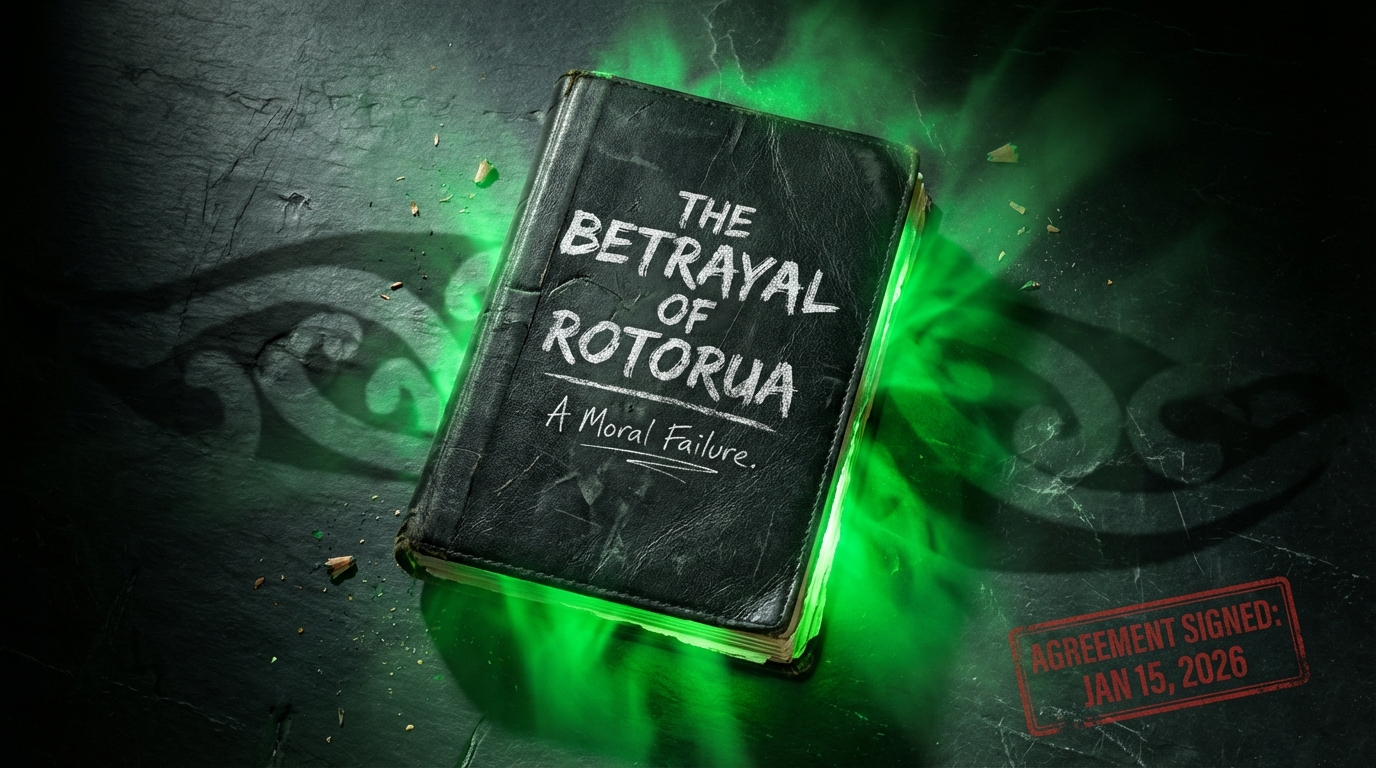
The ink on the January 15, 2026 agreement between Rotorua Lakes Council and Ka Puta Ka Ora Emerge Aotearoa has barely dried, yet the stench of exploitation already permeates this deeply troubling deal.
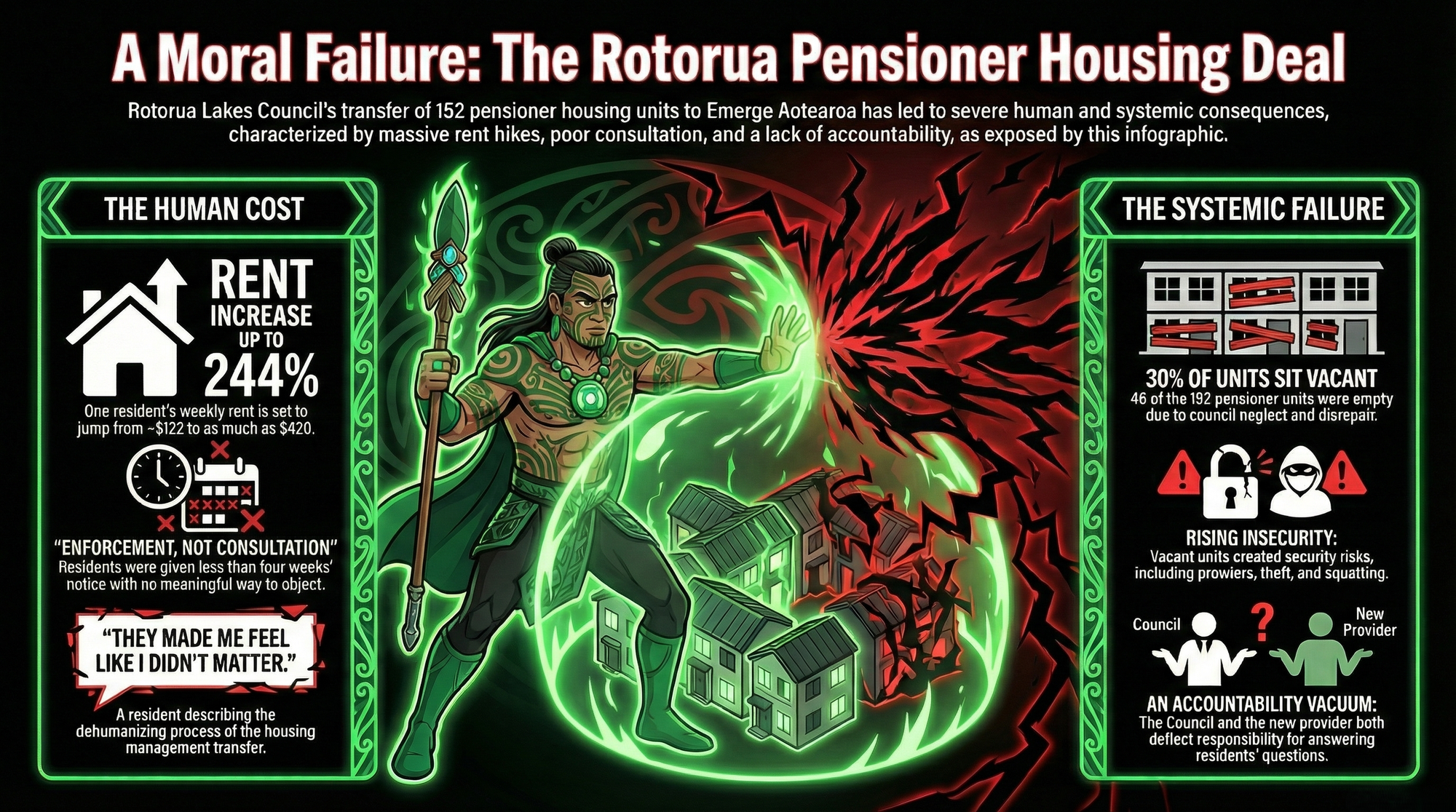
What has been marketed by the council as “positive changes” designed to “protect and strengthen” pensioner housing is, in reality,
a calculated exercise in offloading civic responsibility onto vulnerable elderly residents while enriching a community housing provider whose selection raises profound questions about due diligence and accountability.
The Deal That Time Forgot to Consult
The agreement transfers property management of 152 pensioner housing units across six Rotorua blocks to Emerge Aotearoa while the council retains nominal ownership. But this arrangement is little more than a fig leaf for abandoning the city’s most vulnerable residents.
The timeline alone exposes the contempt with which elderly tenants have been treated:
residents were summoned to a drop-in session on September 4, 2025, and told the change would be taking place on October 1—giving them less than four weeks to process a fundamental upheaval in their housing security.
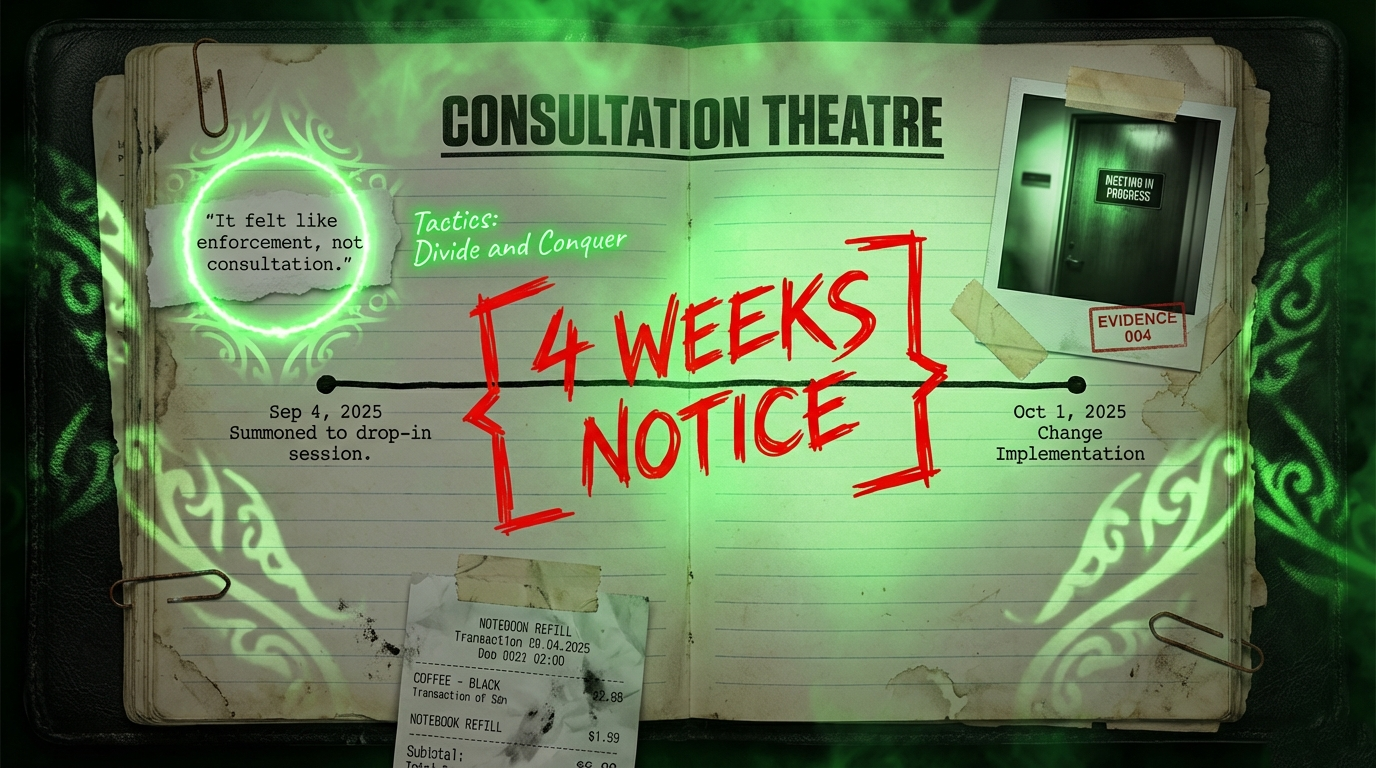
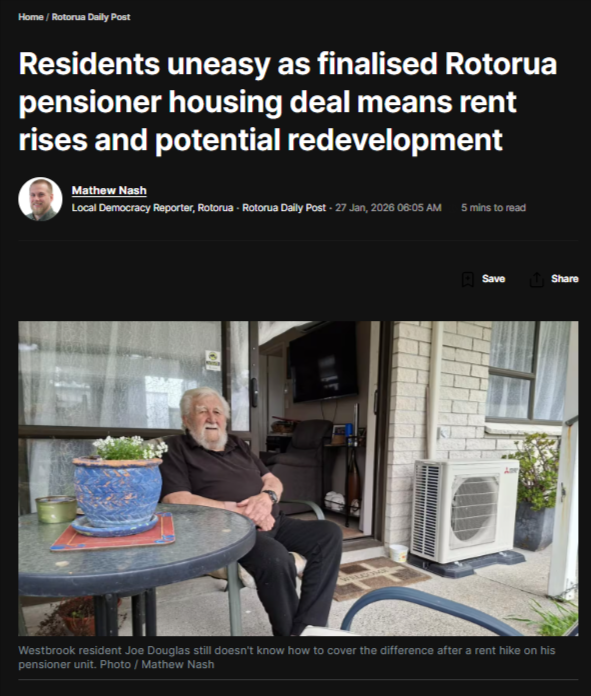
Neil Evans, a Lucas Place resident, captured the coercive nature perfectly:
“It felt like enforcement, not consultation,”
he told Local Democracy Reporting. Evans, who was reduced to tears during the process,
described “divide and conquer” tactics where residents were deliberately separated at different tables, preventing collective resistance or unified questioning.
Another resident articulated the dehumanization inherent in this approach:
“They don’t seem to understand. They made me feel like I didn’t matter.”
This is not stakeholder engagement. This is bureaucratic steamrolling dressed up in the language of community partnership.
The Rent Increases That “Won’t Make Anyone Worse Off”
The financial implications of this deal expose its fundamentally exploitative nature. Evans faces a rent increase from approximately $122 per week to somewhere between $320 and $420 per week for his bedsit—a potential increase of 244%. The council and Emerge Aotearoa have offered vague assurances that pensioners dependent solely on superannuation will be “no worse off financially” for two years, but the mechanism remains mysteriously undefined even as the February 2026 implementation date approaches.
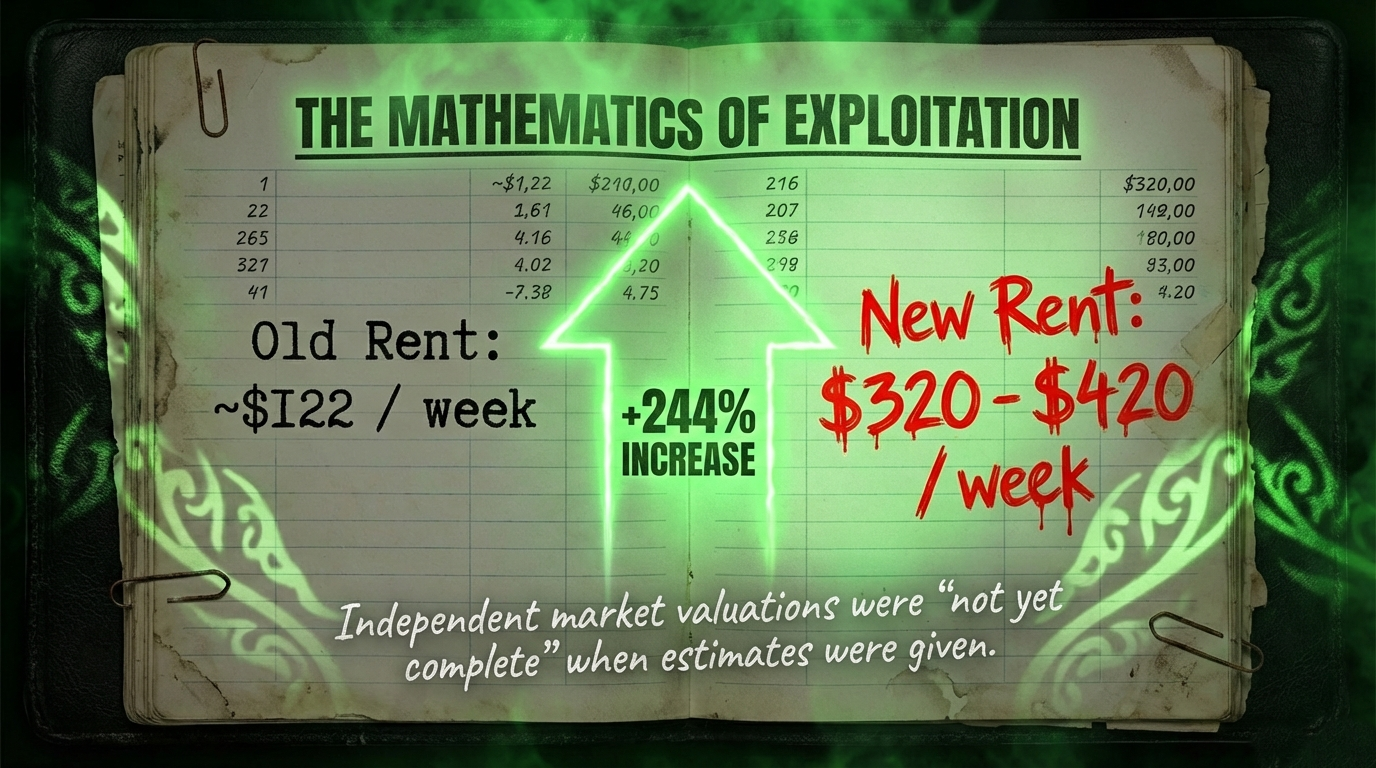
When pressed on how this difference would be covered, council infrastructure and assets general manager Stavros Michael admitted the amount the council would contribute towards utility bills was “not known,” as it will be different for everyone. This is not a plan. This is wishful thinking masquerading as policy.
Meanwhile, independent market valuations to determine these new “market rates” were “not yet complete” as of October 2025—yet Emerge Aotearoa had already provided rent estimates to residents. On what basis? The arrangement reeks of predetermined conclusions searching for post-hoc justification.
Evans calculated he would be left with just $200 per fortnight after rent to cover all living expenses. For a man who has “worked, most over 50 years,” this represents an unconscionable betrayal of the social contract. These are not abstract numbers on a balance sheet; they are elderly New Zealanders facing homelessness after contributing decades to their community.

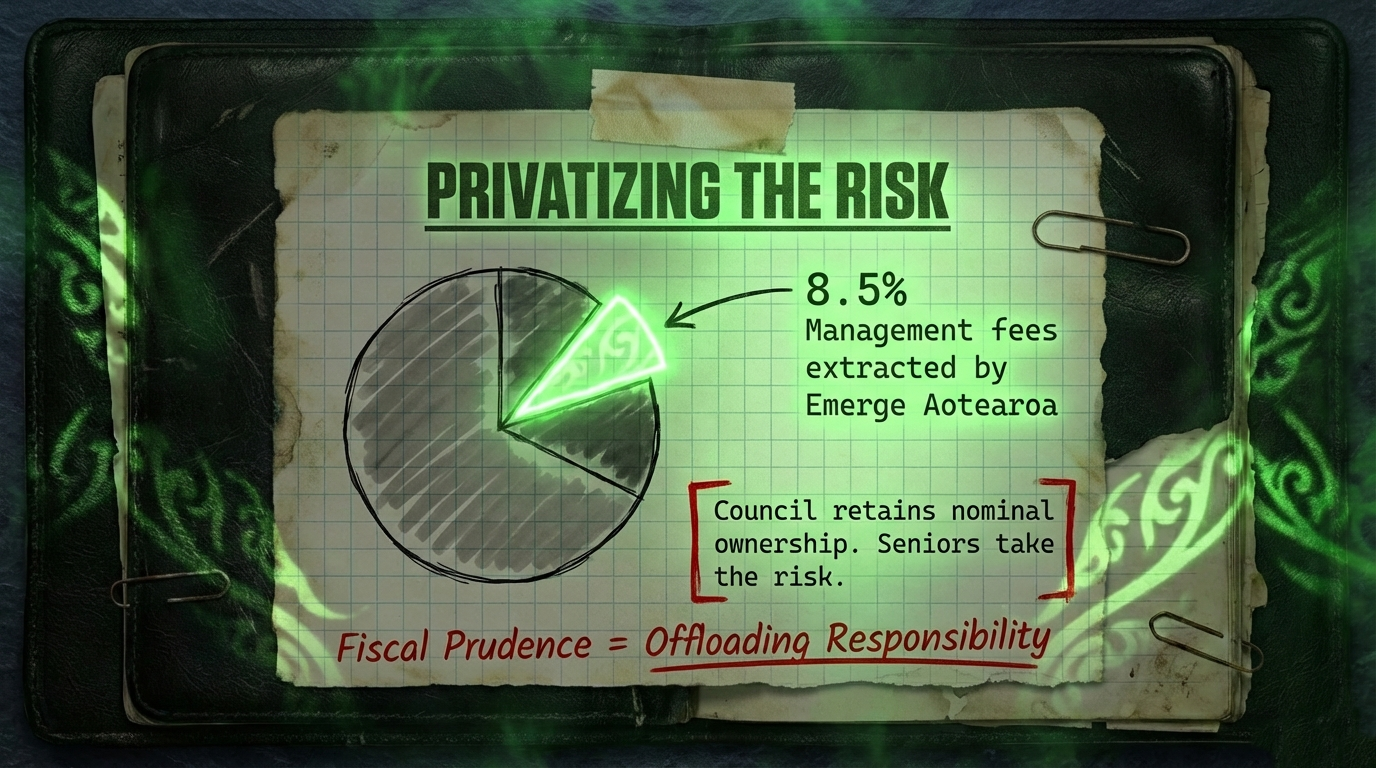
The council’s justification—that the $1 million annual ratepayer subsidy is “not sustainable or fair to the general ratepayer”—reveals a disturbing hierarchy of values. Apparently, ensuring that elderly pensioners can afford housing in the city they built is considered an unfair burden on ratepayers, while transferring property management to a private provider who will extract 8.5% of rents as fees represents prudent fiscal management.
Empty Units and Security Failures: The Council’s Neglect
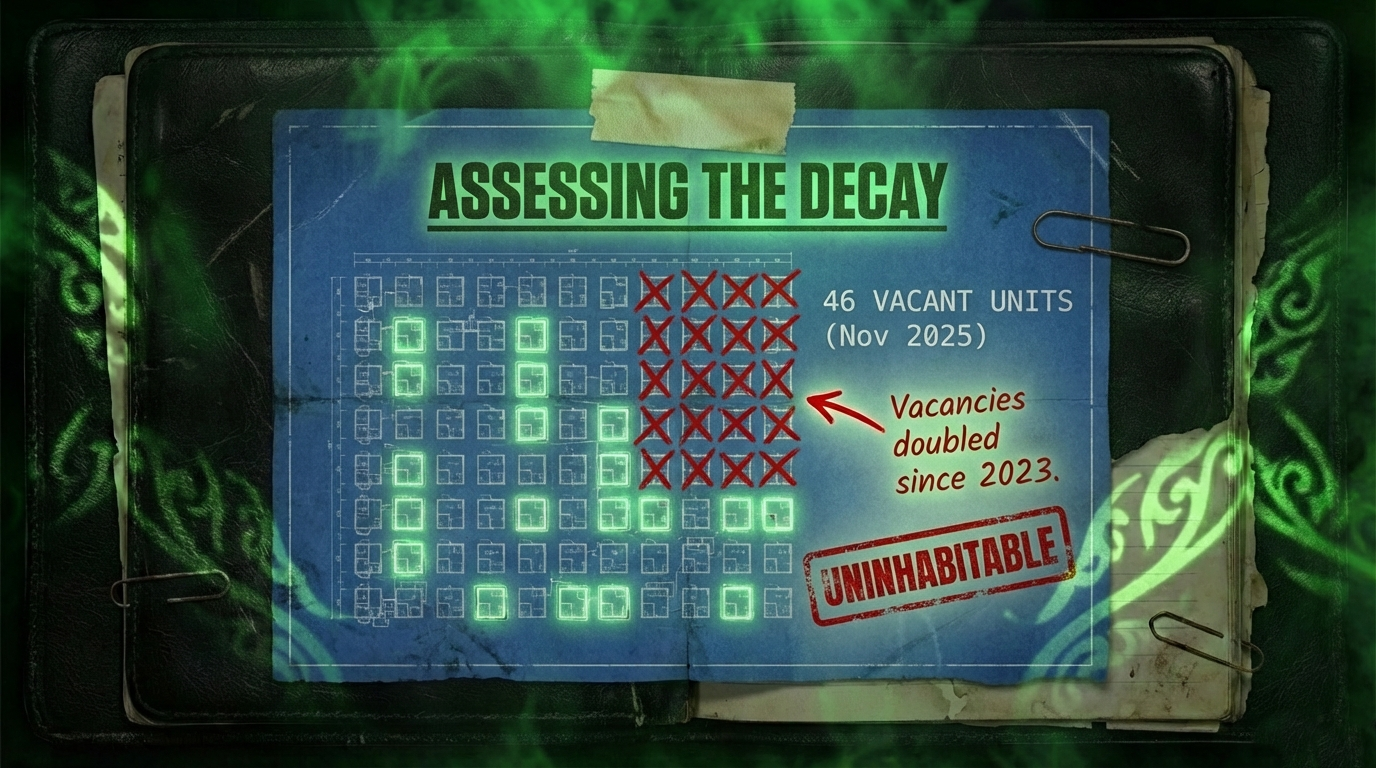
The broader context of Rotorua’s pensioner housing portfolio reveals an astonishing failure of civic duty. As of November 2025, 46 of the 152 pensioner housing units—more than 30%—sat vacant, a number that had doubled since November 2023. The council’s explanation—that “most vacant units required a complete refurbishment before they can be tenanted”—amounts to an admission that they allowed their pensioner housing stock to deteriorate to uninhabitability while collecting rates from a community that expected better.
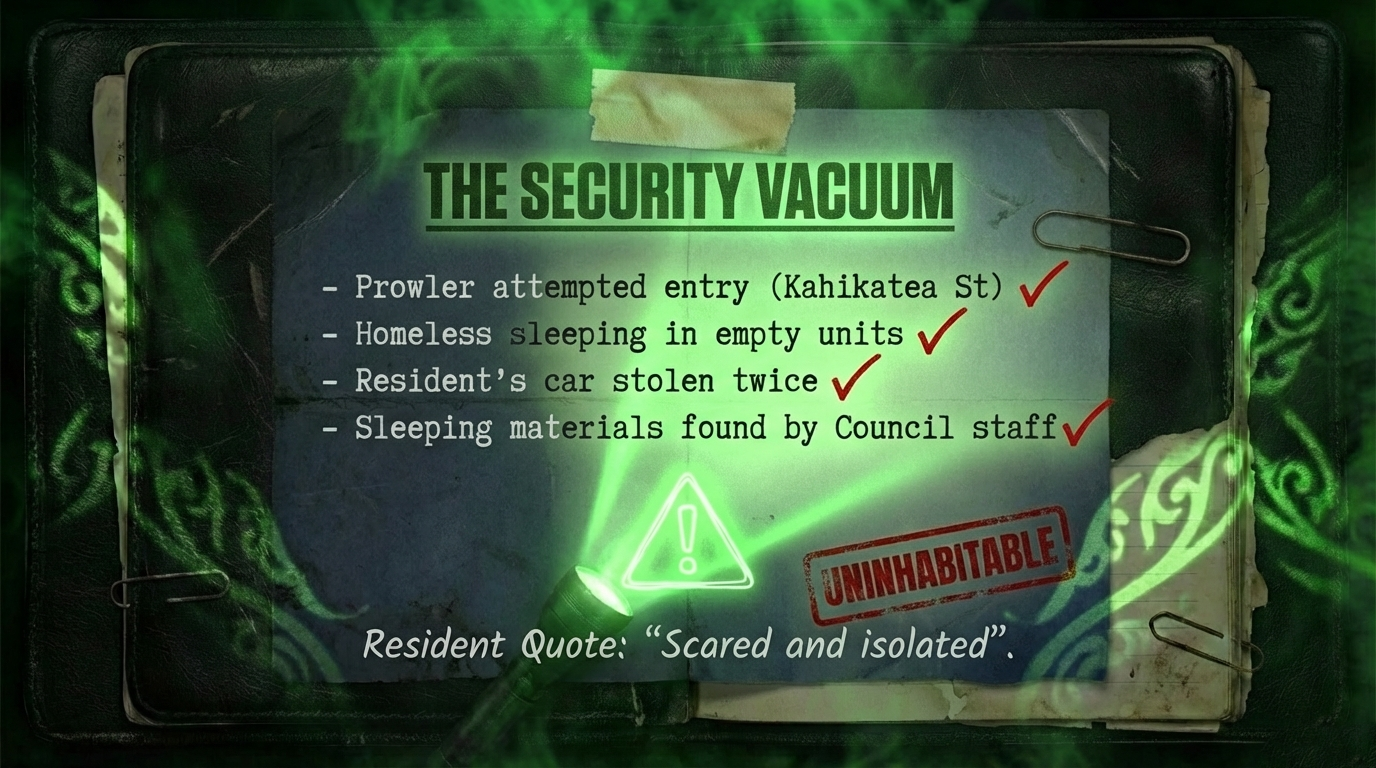
The security consequences of this neglect have been severe. A Kahikatea Street resident was left “shaken” after a prowler attempted to enter her pensioner flat, with reports of homeless people sleeping around empty units. Another resident whose car had been stolen twice described feeling “scared” and “isolated” as the only occupant in a block of four units. Council staff found sleeping material near vacant units, confirming that the concentration of empty, deteriorating housing had created exactly the security vulnerabilities residents feared.
This is the context into which Emerge Aotearoa has been invited: a portfolio that the council allowed to decay through underinvestment, now characterized by both desperate housing need and legitimate security concerns, being handed to an organization whose track record demands scrutiny.
Emerge Aotearoa: Accountability Vacuum
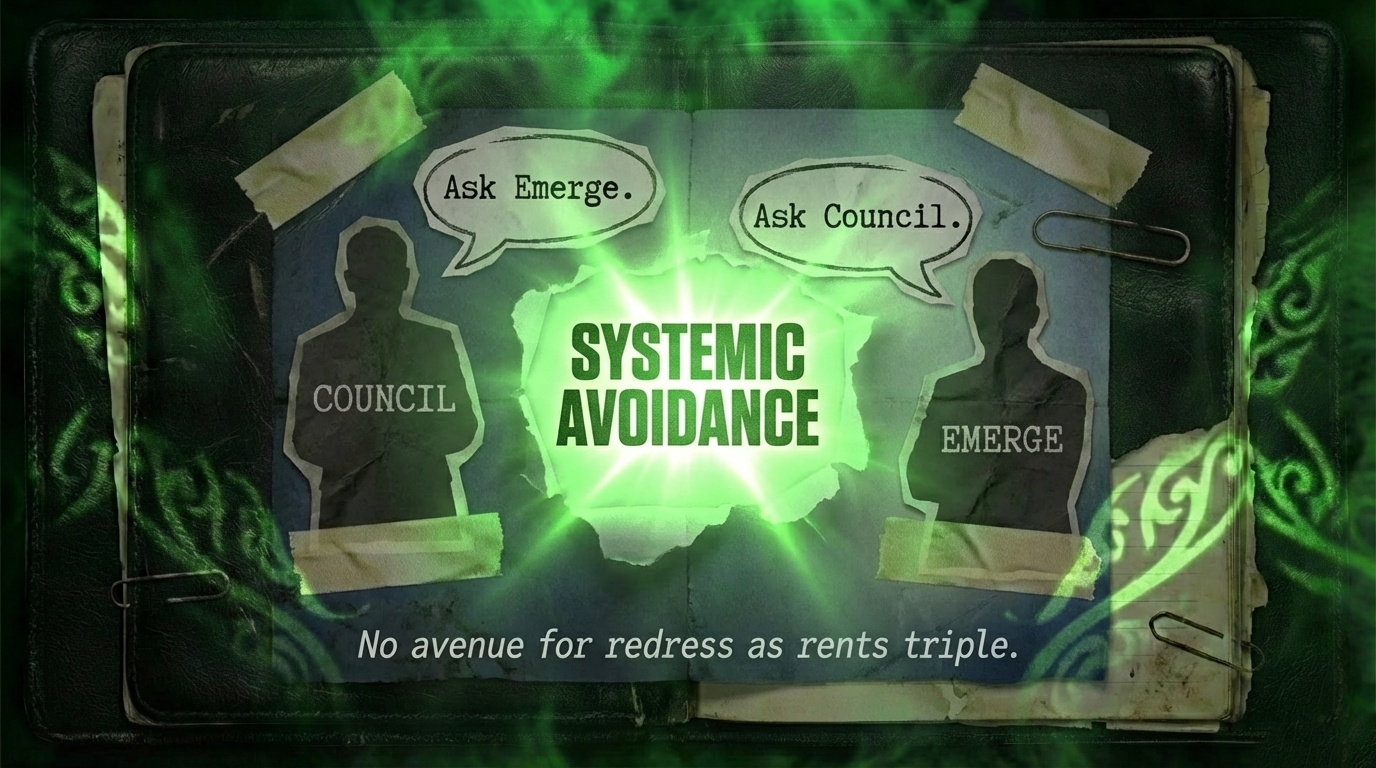
The most revealing moment in this entire saga came when Emerge Aotearoa was approached for comment about resident concerns. The organization’s response? Rotorua Lakes Council was “best placed” to answer questions.
This deflection epitomizes the accountability vacuum at the heart of this arrangement. The council claims it’s handing management to Emerge Aotearoa; Emerge Aotearoa claims questions should go to the council; elderly residents are left with no clear avenue for redress as their rents triple. When both parties to an agreement can simultaneously deny responsibility for answering basic questions about how vulnerable pensioners will afford to live, the arrangement has failed before it begins.
The broader failure of accountability in New Zealand’s community housing sector provides essential context. The Bill English review of Kāinga Ora found the state housing system “underperforming,” with a “lack of transparency and accountability, coupled with a poor understanding of tenant outcomes.” Yet the government’s response has been to accelerate the transfer of responsibility to community housing providers without adequately addressing these systemic accountability deficits.
The Human Rights Commission’s 2022 housing inquiry found that “the emergency housing system is failing to deliver government’s immediate human rights obligations to provide emergency housing that meets minimum decency standards,” identifying systemic issues including lack of transparency and inadequate accountability mechanisms—issues that remain unresolved as more housing responsibility transfers to community providers.
The Ratepayer Subsidy Myth
The council’s repeated invocation of ratepayer fairness deserves particular scrutiny. The $1 million annual subsidy for pensioner housing has been framed as an unsustainable burden, yet this characterization deliberately obscures crucial context about council priorities and responsibilities.
The characterization of pensioner housing support as a “subsidy” rather than a core municipal responsibility represents an ideological choice, not an economic inevitability.
For decades, local councils in New Zealand accepted responsibility for providing affordable housing for elderly residents who had contributed lifetimes of rates. Christchurch pioneered pensioner housing in 1938;
by the 2020s, it remained a significant provider of public housing after Housing New Zealand, alongside Wellington City Council.
Rotorua Lakes Council made a deliberate choice to abandon this tradition, dressing up the abdication of civic responsibility in the language of fiscal prudence and ratepayer fairness.
During the Long-Term Plan process, the council agreed to invest $2.2m over two years in vacant homes to get them tenanted, but planned to reduce capital expenditure on pensioner housing to $590,000 by 2026-27
—a clear signal of divestment from what was once considered a fundamental local government responsibility.
The real question is not whether ratepayers should contribute to pensioner housing, but whether a community has any obligation to its elderly residents beyond extracting their superannuation payments as rent.
What This Really Represents
The Rotorua pensioner housing transfer represents a case study in how neoliberal housing policy fails New Zealand’s most vulnerable citizens. It combines:
Financial engineering disguised as social policy:
The arrangement allows the council to remove pensioner housing from its operational budget while maintaining nominal ownership, creating the appearance of fiscal responsibility while abandoning substantive duty of care.
Consultation theatre:
The rushed, coercive engagement process gave residents no meaningful opportunity to influence decisions that will fundamentally alter their housing security and financial viability.
Accountability evasion:
By inserting Emerge Aotearoa as an intermediary, the council has created institutional distance from the consequences of rent increases and service failures, while the provider deflects responsibility back to the council.
The privatization of social risk:
Emerge Aotearoa receives 8.5% of rents for property management while elderly tenants bear the financial and security risks of this arrangement through rent increases and potential service deterioration.
The exploitation of housing desperation:
Residents who have spent their working lives contributing to Rotorua now face impossible choices—accept unconscionable rent increases, deplete savings to remain housed, or face homelessness in their retirement years.
The Human Cost
Behind the policy frameworks and contractual arrangements are real human beings facing devastating consequences.
Neil Evans, who worked “most over 50 years,” now contemplates survival on $200 per fortnight after rent. Elderly residents who sought security in pensioner housing describe feeling they “don’t matter.”
A woman in her 70s whose car was stolen twice lives in fear as the only occupied unit in her block. Another was left “shaken” after a prowler attempted to enter her home.
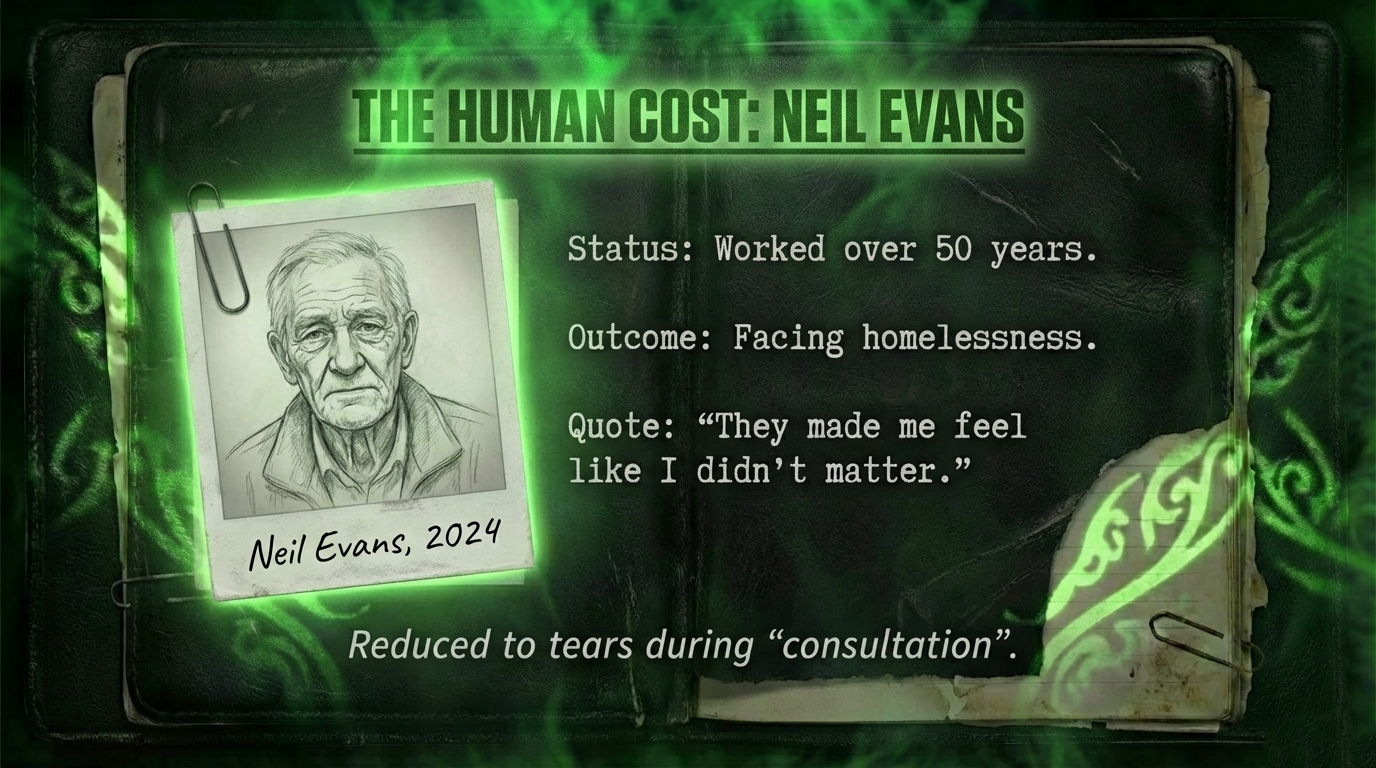
These are not acceptable outcomes in a society with pretensions to civilization. They represent the moral cost of prioritizing fiscal convenience over social obligation, bureaucratic process over human welfare, and ideological commitment to privatization over evidence-based policy.
Evans left the consultation process “on the brink of collapse” and believed the increase would lead some residents back into homelessness. The pensioner blocks were, he noted, a “last resort” for many of the tenants. Where exactly are they supposed to go when their last resort becomes unaffordable?
A Betrayal in Plain Sight
The partnership between Rotorua Lakes Council and Emerge Aotearoa represents a grotesque betrayal of elderly residents who dedicated their working lives to building the community that now abandons them. The rushed consultation, unexplained rent increases, mutual deflection of accountability, and broader deficits in community housing oversight combine to create a perfect storm of exploitation and neglect.
- The council should never have abdicated its responsibility to provide genuinely affordable housing for elderly residents who spent decades paying rates.
- Emerge Aotearoa should never have accepted this arrangement without clear, transparent mechanisms to protect vulnerable tenants from financial devastation.
- And both parties should be deeply ashamed of their mutual finger-pointing when confronted with legitimate concerns about how pensioners will survive.
Grey Power’s Christine Bavister expressed the hope that Emerge and the council would work with all relevant bodies to restrict the cost increase on tenants, expecting “units that are warm, dry and affordable” and “available to pensioners at a reasonable and affordable rental rate to enable seniors to live in dignity enjoying a comfortable and sustainable quality of life.”
These are not unreasonable expectations. They should be baseline guarantees. Instead, pensioners face rent increases of up to 244% with vague promises that somehow, through unspecified mechanisms, they won’t be worse off.
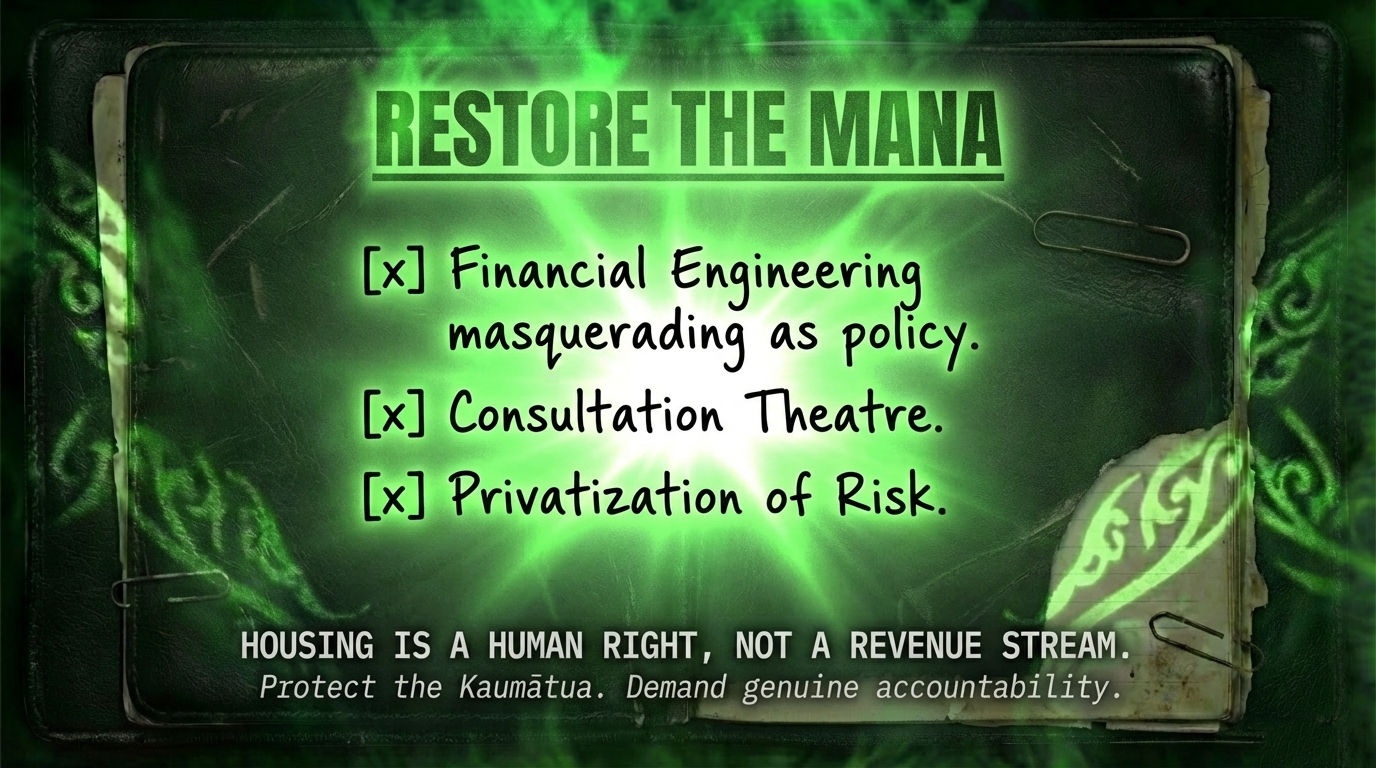
Until the structural accountability deficits in community housing provision are addressed—until residents have genuine recourse when both landlord and property manager deny responsibility—arrangements like this will continue to betray New Zealand’s most vulnerable citizens.
The agreement was signed on January 15, 2026. The damage to trust, dignity, and housing security was done long before.
Supporting This Investigative Voice
This essay exists because pensioners in Rotorua deserve to have their story told—and because Crown and corporate structures have consistently failed to hold themselves accountable to the vulnerable people they serve. Journalism that names injustice and demands transparency is expensive, time-consuming work. It cannot survive on goodwill alone.
Every koha signals that whānau and citizens are ready to fund the accountability that Crown and corporate structures will not provide. It signals that you believe in rangatiratanga—the power to tell our own truth, in our own voices, and to hold power to account when institutions betray the most vulnerable.
As you’ve just witnessed with Neil Evans and the Rotorua pensioners—the people with the most at stake often have the least ability to fight back through formal channels. When council and corporate housing providers deflect responsibility to each other while elderly residents face homelessness, independent accountability journalism becomes a necessity, not a luxury.
If this essay moved you. If this work matters to you. If you believe that vulnerable New Zealanders deserve voices willing to name injustice in ways institutions prefer to ignore—kia kaha, whānau. Stay vigilant. Stay connected. And if you are able, consider a koha to ensure this voice continues.
Three pathways exist:
For those who wish to support this mahi directly with a koha, please visit our Koha platform, where your contribution supports ongoing accountability journalism focused on housing justice and institutional accountability:
Koha—Support Housing Justice Journalism
For those who wish to receive essays directly and support through subscription, join our community where writing appears first and your subscription directly funds this work:
Subscribe for ongoing accountability journalism
For those who prefer direct bank transfer, account details are: HTDM, account number 03-1546-0415173-000.
This essay represents the kind of sustained, evidence-based, publicly-focused accountability journalism that corporate media structures increasingly cannot or will not provide. When pensioners face 244% rent increases without clear mechanisms for survival, when both landlord and property manager deflect responsibility, when council divestment precedes crisis—someone must name it. Your support ensures that voice continues.

Ivor Jones The Māori Green Lantern Fighting Misinformation And Disinformation From The Far Right