"Ngāi Tahu, Tikanga, and the South Wind Rising" - 3 February 2026
The Demolition Crew at Waitangi
Kia ora ano Aotearoa.
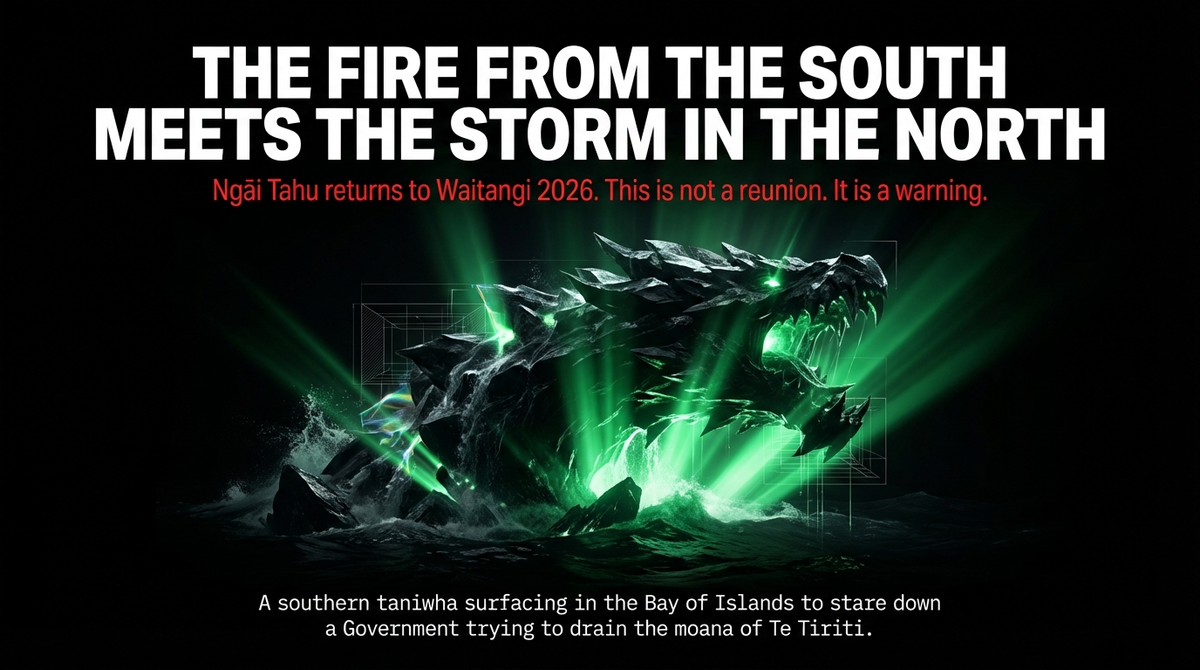
Ngāi Tahu returning to Waitangi in 2026 is not a polite reunion. It is a karakia of warning.
A southern taniwha surfacing in the Bay of Islands to stare down a Government that is trying, piece by piece, to drain the moana of Te Tiriti and leave only a cracked, empty Pākehā swimming pool of “one law for all”, policed by those who benefit most from the drought of justice.
The fire from the South meets the storm in the North
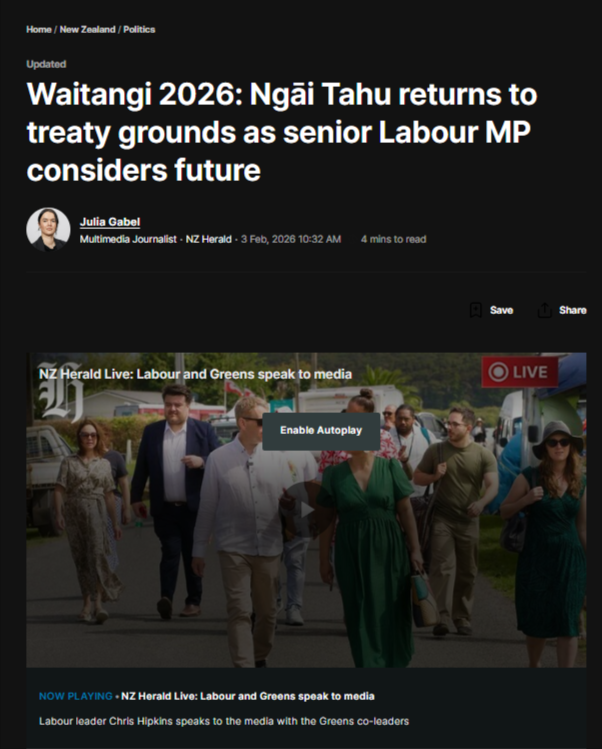
When Ngāi Tahu chooses to forgo its own long‑standing tradition of hosting commemorations in Ōtautahi to stand in person at the birthplace of Te Tiriti, that is not logistics, it is strategy. As reported by the Herald, Ngāi Tahu will attend the national Waitangi events in the Bay of Islands in 2026 for the first time in more than two decades, explicitly “as a show of unity” with northern iwi in the face of controversial Crown policies. You can read that framing directly in the Herald itself: NZ Herald.
This is the same Ngāi Tahu whose kaumātua and negotiator Edward Ellison helped turn a largely invisible iwi into a household name through the Waitangi Tribunal claim, reshaping how the Crown is forced to see Ngāi Tahu whenua, resources and authority across Te Waipounamu, as detailed in his own tribal profile on Kā Huru Manu: Kā Huru Manu – Edward Ellison.
When someone with that whakapapa of negotiation, conservation, and sustained engagement with Crown law says
“we’re coming north”,
that is not a social call.
It is a line in the sand.
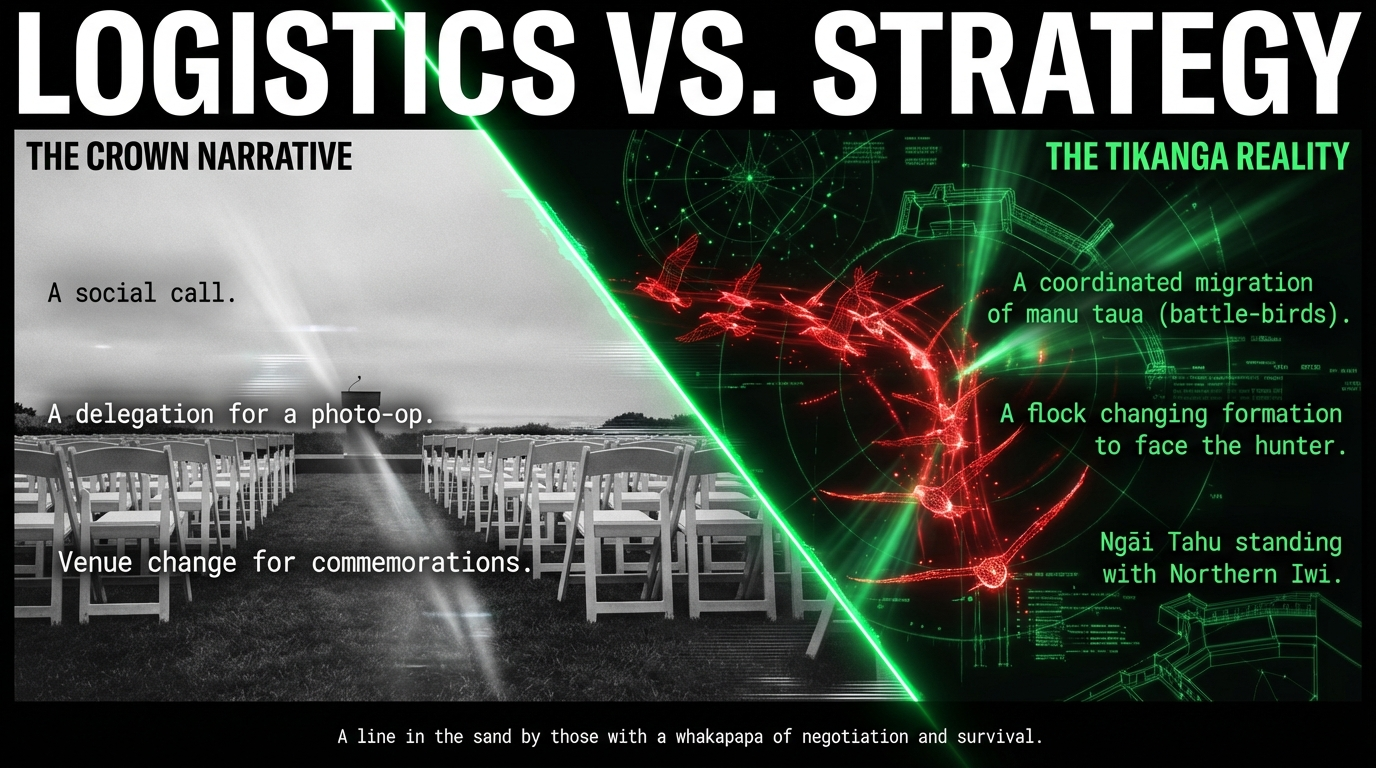
To a western mind trained to see politics as a contest of individual “leaders”, this may look like one more delegation, one more photo‑op.
In tikanga terms, it is closer to a coordinated migration of manu taua:
a flock of battle‑birds changing formation in mid‑flight to face the hunter directly. The presence at Waitangi is the message.
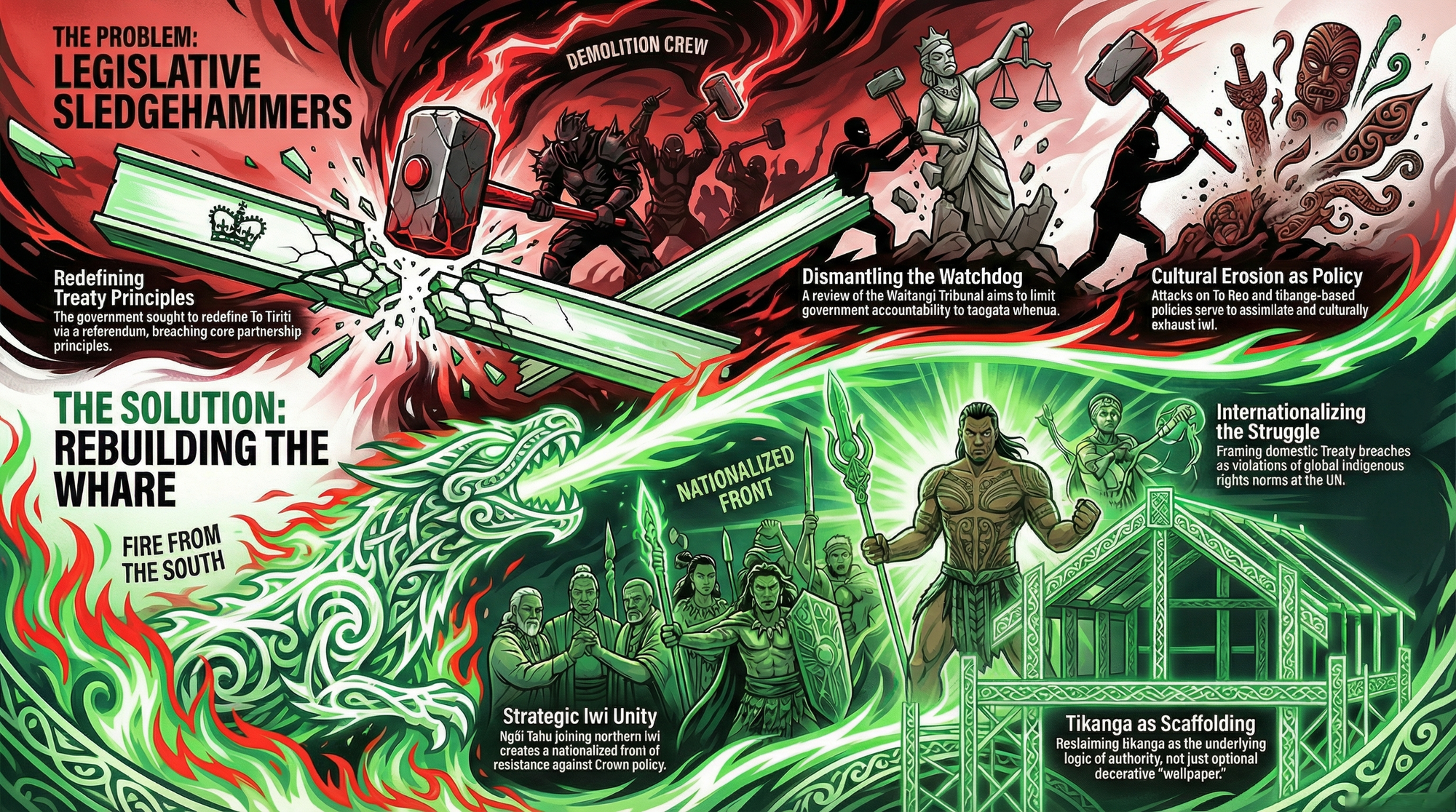
The Crown’s demolition crew: chisels on Te Tiriti
The current Government operates like a demolition crew pretending to be maintenance contractors. They turn up in hi‑vis with words like “review”, “reset”, “clarity”, and then start swinging the legislative sledgehammers at every structural beam Te Tiriti put in place.
We can trace the pattern:
- The Treaty Principles Bill, driven by ACT, sought to redefine the principles of Te Tiriti and push them to a nationwide referendum. Legal analysis and commentary notes that the Bill was framed as an attack on so‑called “co‑governance” and “Māori privilege”, and the Waitangi Tribunal found its development had breached principles of partnership, reciprocity, active protection, equity, good government and the guarantee of rangatiratanga: RNZ explainer, Wikipedia summary.
- In its second report, the Tribunal described the proposed legislation as “little more than a politically motivated attack on perceived ‘Māori privilege’” and warned it would amount to “the worst, most comprehensive breach of the Treaty/te Tiriti in modern times” if enacted, as summarised in coverage by 1News: 1News – Bill voted down.
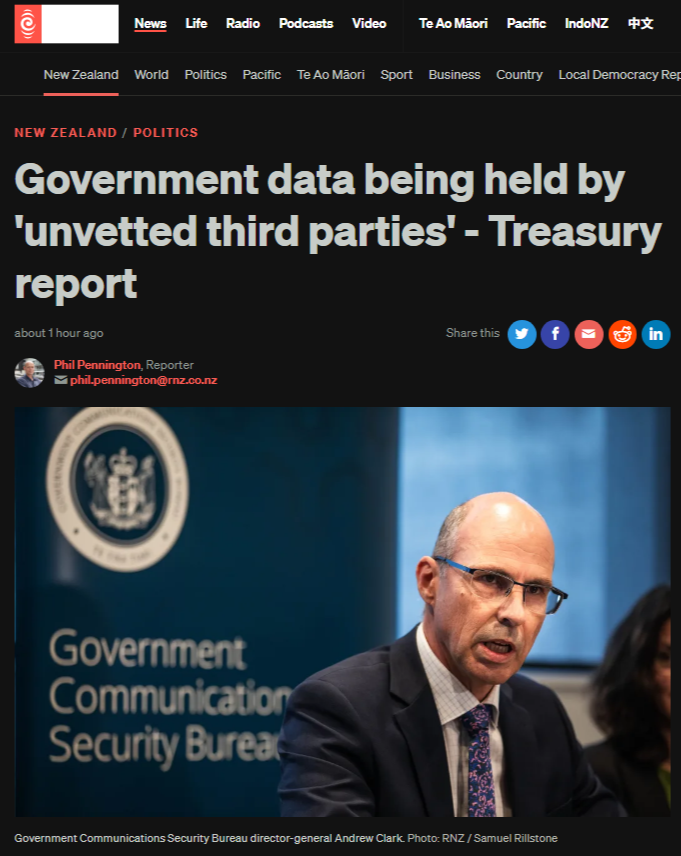
Even after National and NZ First eventually let the Bill die at a later stage, the coalition has continued to attack the infrastructure around Te Tiriti rather than the text alone. A key example is the Government‑ordered review of the Treaty of Waitangi Act 1975, which sets up the Waitangi Tribunal. The Minister for Māori Development, Tama Potaka, frames this as a “timely” refocus in light of the Tribunal’s workload and the progress of historical claims, with an Independent Technical Advisory Group headed by Bruce Gray KC and a timetable for recommendations and legislation laid out through 2025 and beyond: 1News – Tribunal review.
Opposition Māori voices are clear about what this really is. Labour’s Willie Jackson calls it “extremely bad faith” to review the Tribunal while it is conducting urgent inquiries into this Government’s actions and notes that the Auditor‑General had already warned departments they risk more legal action for failing to meet settlement obligations, a warning the Government has responded to not by fixing compliance but by weakening the watchdog itself:
1News – Tribunal review. The Green Party’s Hūhana Lyndon goes further, calling the review an attempt to “limit the accountability the Government has to Te Tiriti o Waitangi” and “to trample all over Te Tiriti and punch down on tangata whenua”: 1News – Tribunal review.
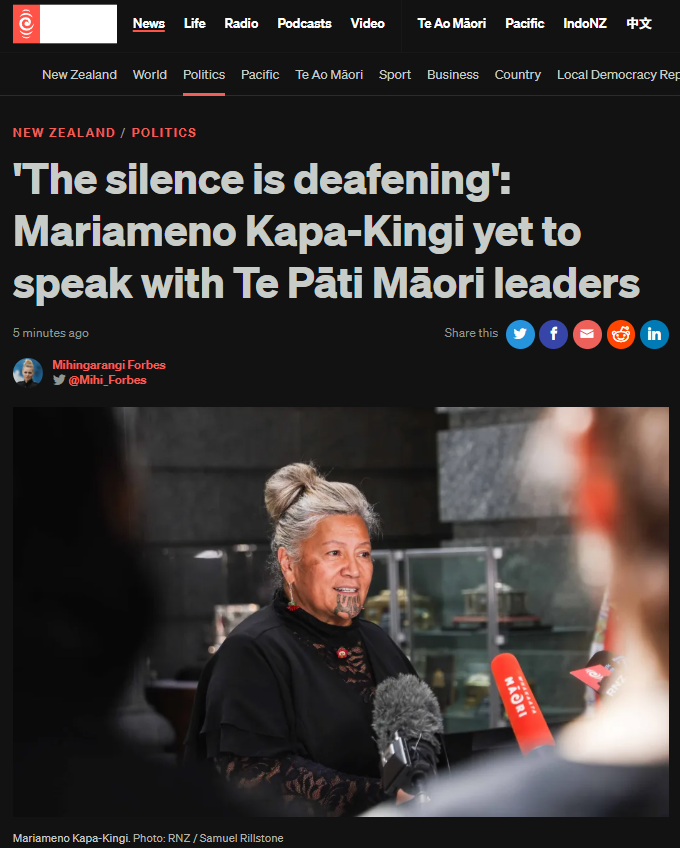
Te Pāti Māori’s Tākuta Ferris names the core logic:
the review signals a belief that “the Crown alone should define the meaning, relevance, and limits of Te Tiriti”, part of a broader effort “to erase our voices and control the narrative of our dispossession, for the economic benefit of those who desecrate our people and our whenua”: 1News – Tribunal review.
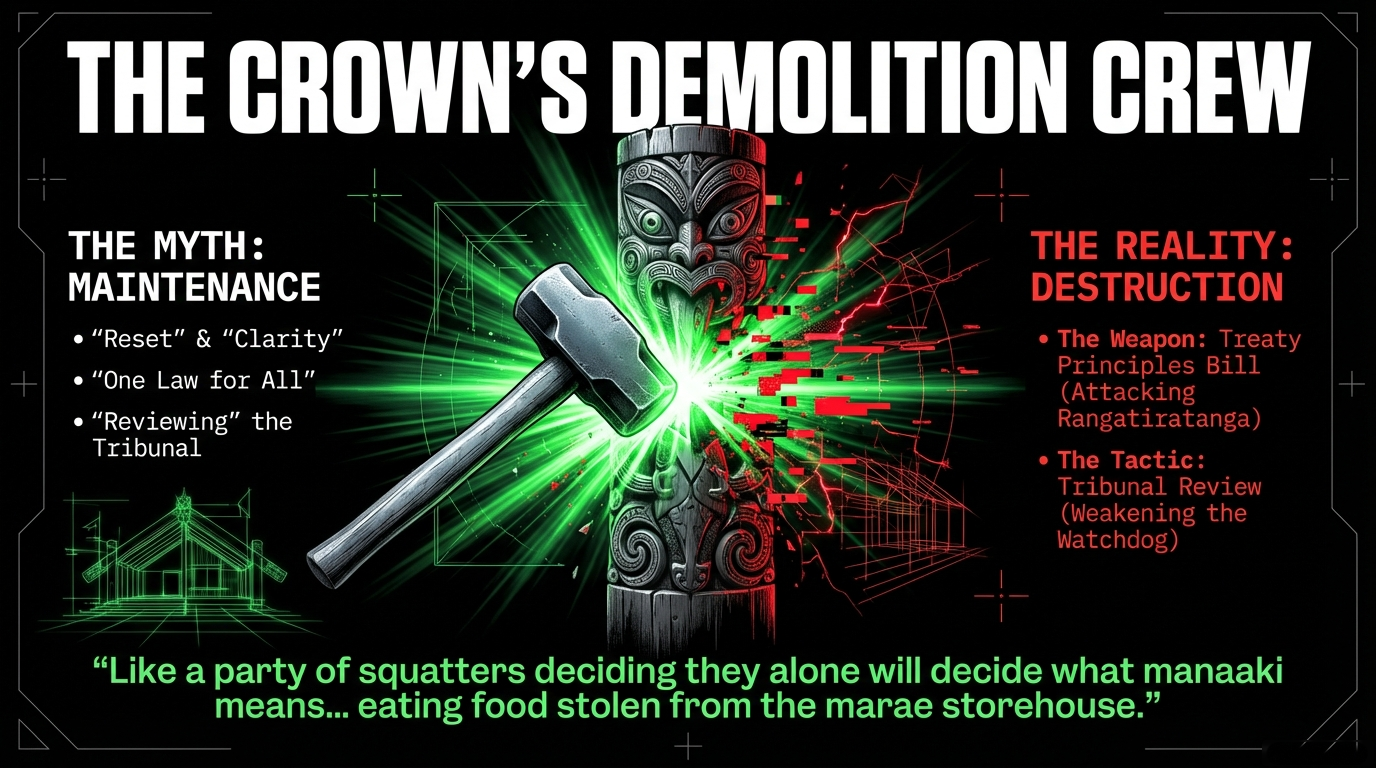
From a tikanga lens, this is like a party of squatters deciding they alone will decide what manaaki means, while they are still eating food stolen from the marae storehouse and throwing the bones into the urupā. To a western legal mind, it is “legislative sovereignty”. To us, it is someone trying to rewrite the kawa of our own whare while still standing in the doorway they never built.
Tikanga as scaffolding, not decoration
The western mindset, raised on property law and contract theory, tends to treat tikanga as soft furnishings:
cultural cushions on a hard, “neutral” legal couch. The Crown’s current programme treats those cushions as optional décor that can be rearranged, removed, or replaced with cheaper, Crown‑branded throw‑pillows when the colour no longer suits the political season.
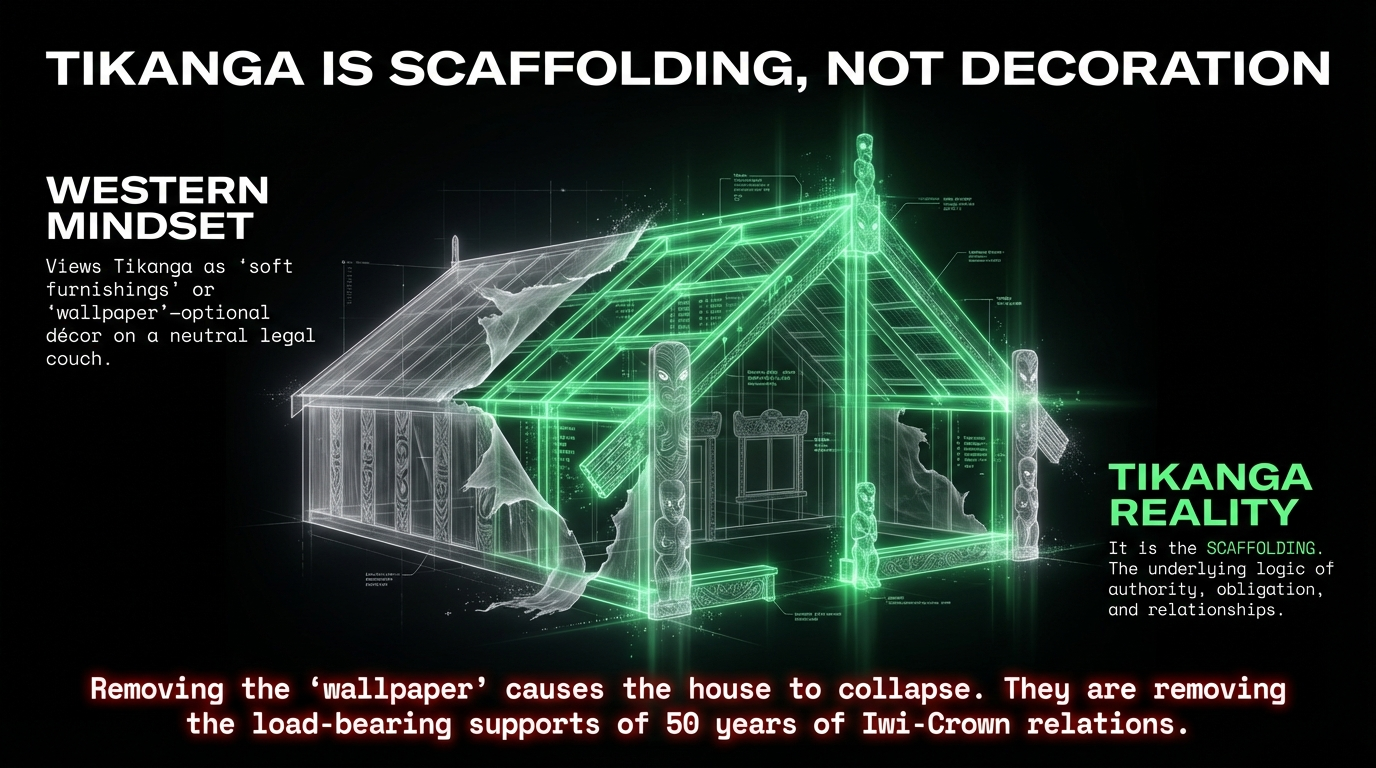
But tikanga is not wallpaper; it is scaffolding. It is the underlying logic of how relationships, obligations, and authority are structured. When Tukoroirangi Morgan warns at Koroneihana that this Government is rolling back “50 years of iwi‑Crown relations” and demolishing Māori policy and achievement, he is pointing at the scaffolding, not the paint job: 1News – Koroneihana. He links this directly to ACT’s Treaty Principles Bill and the broader legislative agenda.
Similarly, Ngāi Te Rangi’s reaction to the Waitangi Tribunal’s Taku Kura Reo, Taku Reo Kahurangi report on Crown te reo policies is not just about language funding; their chair Charlie Tawhiao describes the Government’s approach as part of a “whole basket of policies” designed to assimilate Māori, and an “attack” on te reo as also an attack on Māori cultural identity:
RNZ – Ngāi Te Rangi and te reo. The Tribunal in that inquiry found the Crown had again breached core Treaty principles, including rangatiratanga, partnership, active protection, equity and good government, and explicitly noted the continuing vulnerability of te reo: RNZ – Ngāi Te Rangi and te reo.
To a western eye, this can look like “policy disputes” about language and funding. Under tikanga, it is a targeted attack on the mauri‑lines that connect reo, whenua, and whakapapa – the equivalent of systematically cutting the guy‑ropes that hold up a wharenui while insisting that “the building still stands” because the walls are technically upright for now.
Ngāi Tahu’s own history with the Tribunal underscores this. Kā Huru Manu records how Ellison and others used the Tribunal process to surface generations of grievance about land and resources across Te Waipounamu, turning obscured histories into nationally recognised facts and securing a settlement that funded a Māori‑focused Ngāi Tahu economy:
Kā Huru Manu – Edward Ellison. When a Government now moves to cramp, redefine, or sideline that same Tribunal, it is not “updating an institution”; it is attacking one of the main waka that iwi used to reclaim authority and reconstruct tikanga frameworks in law.
Quantifying the harm: from policy to people
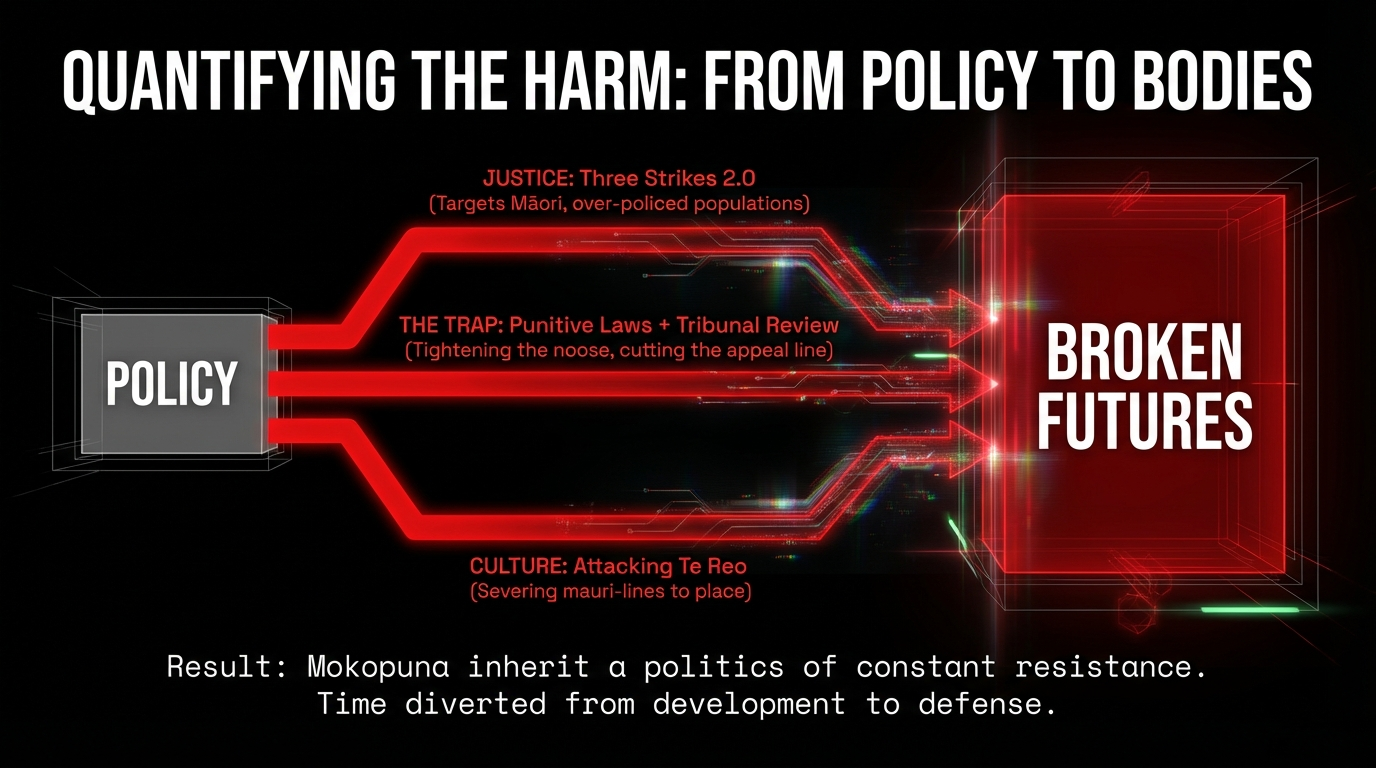
Metaphor is useful, but harm is not just symbolic. It is measurable in bodies, budgets, and broken futures. Every time the Crown swings at Te Tiriti and tikanga, there are knock‑on effects across housing, justice, health, and education – the very domains where the Tribunal, iwi leadership, and independent bodies keep issuing the same warnings.
One key example sits inside the Government’s broader “law and order” agenda, where policies like a revamped “Three Strikes 2.0” regime are marketed as targeting the “worst offenders” but in practice intersect with an already racially skewed criminal justice system. Analysis has shown that earlier versions of three strikes fell hardest on Māori, including young Māori, because they are already more likely to be policed, charged, and imprisoned: this was raised repeatedly by justice advocates and academics during previous debates, and the Herald’s coverage of Three Strikes 2.0 situates the policy in a context of repeat punitive reforms that have not fixed underlying drivers of crime:
NZ Herald – Three Strikes 2.0. When the same Government moves to undermine Te Tiriti accountability mechanisms at the same time, it is like tightening the noose while cutting the appeal line.
On the Te Tiriti front, the Tribunal has already documented that the Treaty Principles Bill process itself breached multiple Treaty principles, including failing to consult Māori and advancing a policy that was neither evidence‑based nor compliant with regulatory standards, as reported in detail by RNZ:
RNZ – Bill contents and Tribunal findings. That is not an abstract breach; it signals that Māori rights can be placed on the block of political theatre without even meeting minimum standards of good governance.
Layer that with the Tribunal review, which the Greens describe as “making it easier to trample all over Te Tiriti and punch down on tangata whenua”:
1News – Tribunal review. And then add the te reo case, where the Tribunal had to remind the Crown yet again that the language remains vulnerable, that diminishing support breaches Treaty principles, and that “there is no margin for complacency”, as quoted by RNZ: RNZ – Ngāi Te Rangi and te reo.
When you trace these together, a pattern emerges:
- Constitutional protections (Treaty principles, Tribunal jurisdiction) are being narrowed or placed under threat.
- Cultural lifelines (reo, tikanga in law, co‑governance) are being questioned, reframed, or defunded.
- Punitive systems (criminal law, compliance regimes) are being strengthened in ways that, historically and presently, fall disproportionately on Māori.
The impact on tikanga is the impact on bodies. Every time an urgent inquiry has to be launched because the Government tries to strip reo from public services, or redefine Treaty principles without Māori, that is hours, days, years of iwi and hapū time diverted into defensive mahi instead of proactive development. That is mokopuna who inherit a politics of constant resistance instead of constant creation.
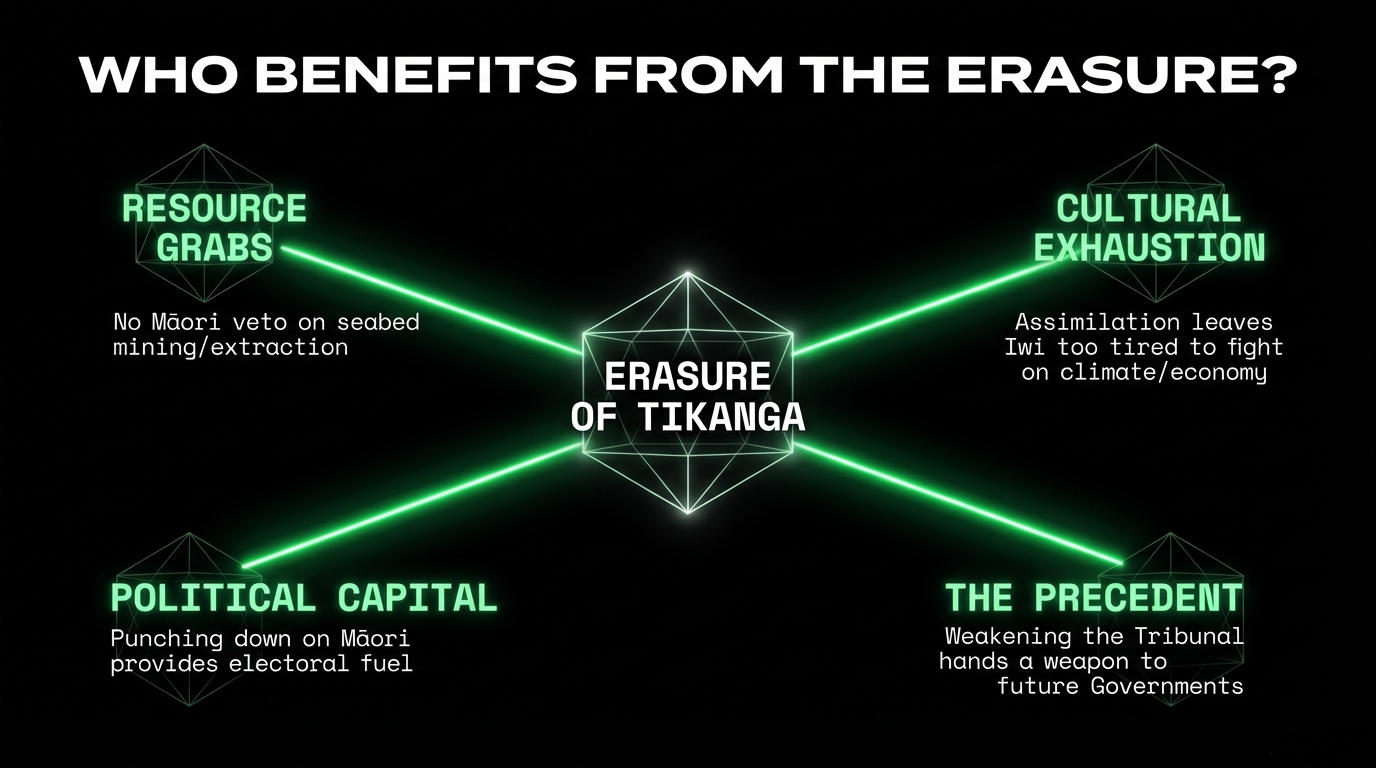
Hidden connections: who benefits from the erosion of tikanga?
Follow the tracks and you see the same hunters circling the same kai.
Erasing tikanga clears the way for resource grabs. Ngāi Tahu’s role in contesting seabed and foreshore legislation at the United Nations in 2004, documented in Kā Huru Manu, showed how Crown laws over oceans and coasts were built on ignoring Māori rights to takutai and moana: Kā Huru Manu – Edward Ellison. Diluting Te Tiriti principles and shrinking Tribunal powers makes it easier to push through future extraction, infrastructure, and development projects without meaningful Māori veto.
Assimilation policies rely on cultural exhaustion. Ngāi Te Rangi’s description of a “whole basket of policies” designed to assimilate Māori links language cuts to a broader strategy: RNZ – Ngāi Te Rangi and te reo. The more time iwi spend fighting for basic recognition of reo, the less capacity they have to intervene in other domains like climate policy, economic settings, or media regulation
.
Political capital is built by punching down. The Treaty Principles Bill, even in defeat, provided its architects a platform to mobilise resentment against “Māori privilege”. The Waitangi Tribunal identified the Bill as politically motivated rather than evidence‑based, a finding reported by RNZ: RNZ – Bill contents and Tribunal findings. The goal was not legal clarity; it was electoral fuel.
Weakening accountability bodies helps every future government. Once the precedent is set that a Government can “review” the Tribunal whenever its findings are politically inconvenient, every future Cabinet – regardless of party – inherits that weapon. As critics like Willie Jackson and Hūhana Lyndon emphasise, this is about permanently lowering the bar of Crown accountability to Te Tiriti, not just one reform cycle: 1News – Tribunal review.
Ngāi Tahu’s move signals cross‑iwi escalation. The decision to attend Waitangi after more than 20 years away, and to frame that as unity against Government policy in the Herald’s coverage, signals a nationalising of resistance: NZ Herald. What Waikato‑Tainui voices are saying at Koroneihana, what Ngāi Te Rangi is saying through te reo claims, and what Te Pāti Māori is saying in Parliament are converging on the same diagnosis: this is an attack on Te Tiriti itself, not a policy disagreement about “efficiency”: 1News – Koroneihana, RNZ – Ngāi Te Rangi and te reo, 1News – Tribunal review.
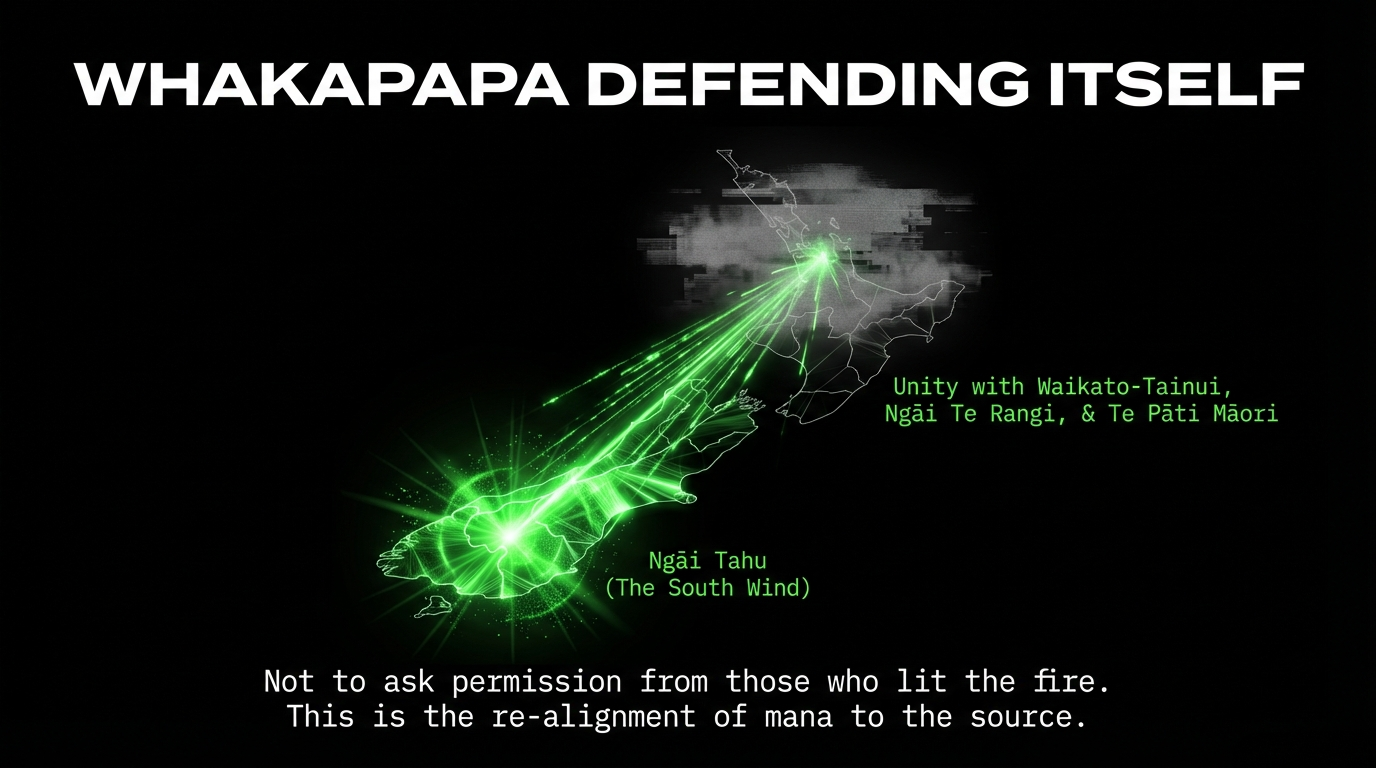
In tikanga language, this Government is behaving like a guest who keeps trying to redraw the boundaries of the pā while pretending to tidy the marae. In western policy language, it is what happens when you treat indigenous constitutional guarantees as negotiable terms in a coalition agreement.
Pathways forward: rebuilding the whare as they swing the hammer
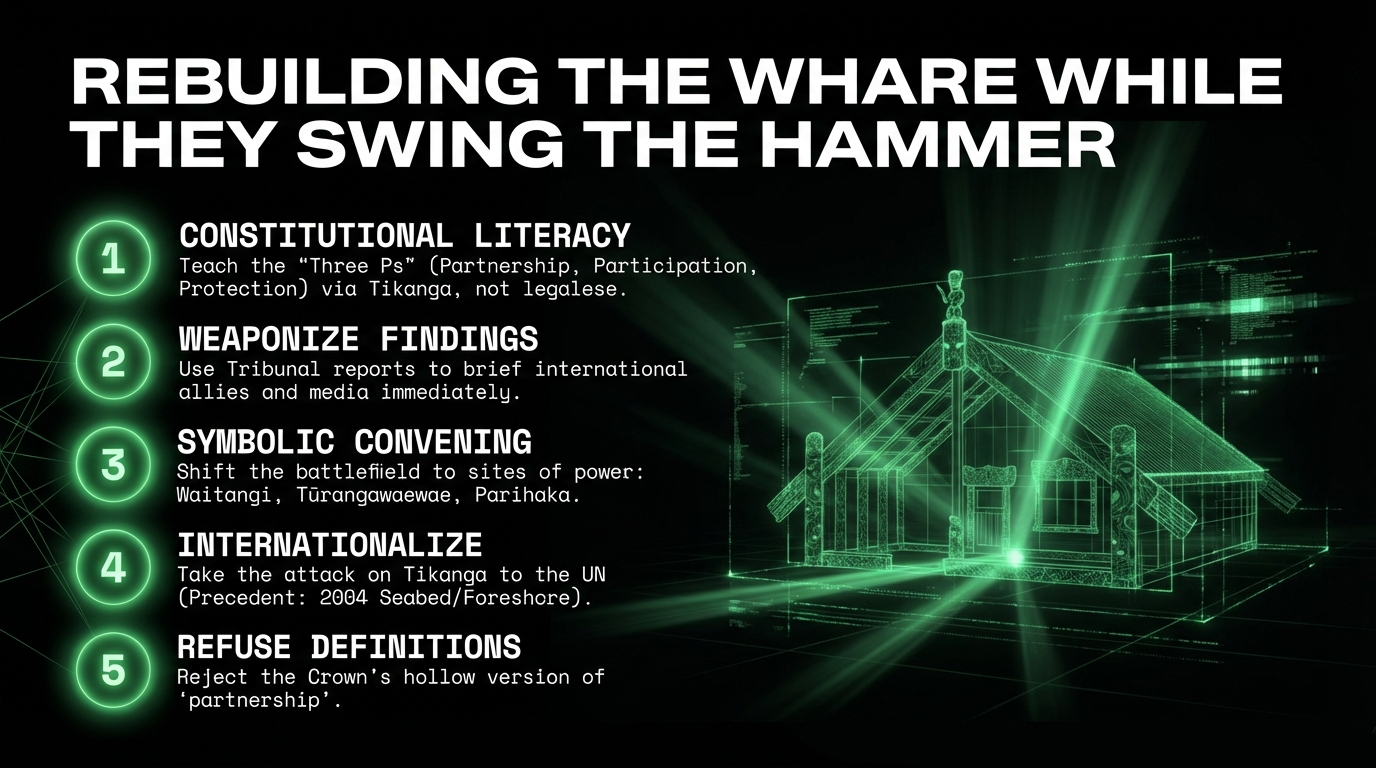
The point of this analysis is not despair but strategy. The demolition crew is real. The scaffolding is under attack. But iwi and hapū are not passive. Ngāi Tahu’s Waitangi move is a tactical shift: a re‑alignment of mana to the source.
Concrete pathways include:
Constitutional literacy campaigns grounded in tikanga, not just legalese. Use moments like the Treaty Principles Bill fight to teach whānau not only what the Tribunal and principles are, but how they relate to tikanga concepts like rangatiratanga, kaitiakitanga, and manaakitanga. Resources that explain the “three Ps” (partnership, participation, protection) and their origin in bridging the two Treaty texts, as outlined in 1News’ explainer, can be translated back into Māori frames and taken into kura, marae, and unions: 1News – Bill voted down.
Targeted support for urgent claims and challenges. When the Tribunal finds that Crown processes are in breach – as in the Treaty Principles Bill and te reo cases – those findings need to be weaponised collaboratively, not left siloed. RNZ’s reporting provides accessible summaries that can be used to brief communities, media, and international allies: RNZ – Bill contents and Tribunal findings, RNZ – Ngāi Te Rangi and te reo
.
Cross‑iwi strategic convenings at symbolic sites. Following Ngāi Tahu’s lead, deliberately shift major political wero and kōrero to places like Waitangi, Tūrangawaewae, Ōtākou, Parihaka, and others, tying each challenge to a living whakapapa of resistance. Coverage of Koroneihana and Treaty debates shows how these gatherings already shape national narratives when used intentionally: 1News – Koroneihana, 1News – Treaty bill debate.
Internationalising the attack on tikanga. Ngāi Tahu’s 2004 seabed and foreshore protest at the United Nations is a precedent for taking domestic treaty breaches to global forums, as recorded by Kā Huru Manu: Kā Huru Manu – Edward Ellison. Future efforts to gut the Tribunal or redefine Treaty principles can be framed as violations of international norms on indigenous rights and self‑determination.
Refusing the Crown’s monopoly on “partnership”. While Christopher Luxon has at times described the Treaty as “akin to partnership”, he has simultaneously participated in a coalition whose policies and Bills undermine the practical expression of that partnership, as noted in 1News’ political coverage: 1News – Luxon on partnership. Iwi and hapū can and should articulate their own operational definitions of partnership in local agreements, bypassing central Government where possible and making alternative arrangements with councils, NGOs, and international bodies that respect tikanga‑based authority.
To the western mind, all of this may look like competing “interest groups” lobbying for a better deal. Under tikanga, it is something else: whakapapa defending itself. Ngāi Tahu turning up at Waitangi is the south wind arriving to help clear the smoke from the north, not to ask permission from those who lit the fire.
Koha Consideration – Waitangi, Te Waipounamu, and the demolition crew
Every koha into this kaupapa is a decision to back iwi who choose to stand together at Waitangi rather than let this Government quietly carve Te Tiriti into corporate‑friendly “principles” and empty promises. It is an investment in rangatiratanga that refuses to let the demolition crew rewrite tikanga while our people are still rebuilding from generations of Crown damage.
If you are able, consider a koha to keep this wero sharp, this research relentless, and this voice accountable only to whānau, not to party spin‑doctors or corporate funders

.
Three pathways exist:
- To support this mahi directly with a koha (voluntary contribution), visit: Koha – Support The Māori Green Lantern.
- To receive essays directly and support through subscription, join the Substack community: Subscribe to The Māori Green Lantern on Substack.
- For direct bank transfer, koha can be made to: HTDM, account number 03-1546-0415173-000.

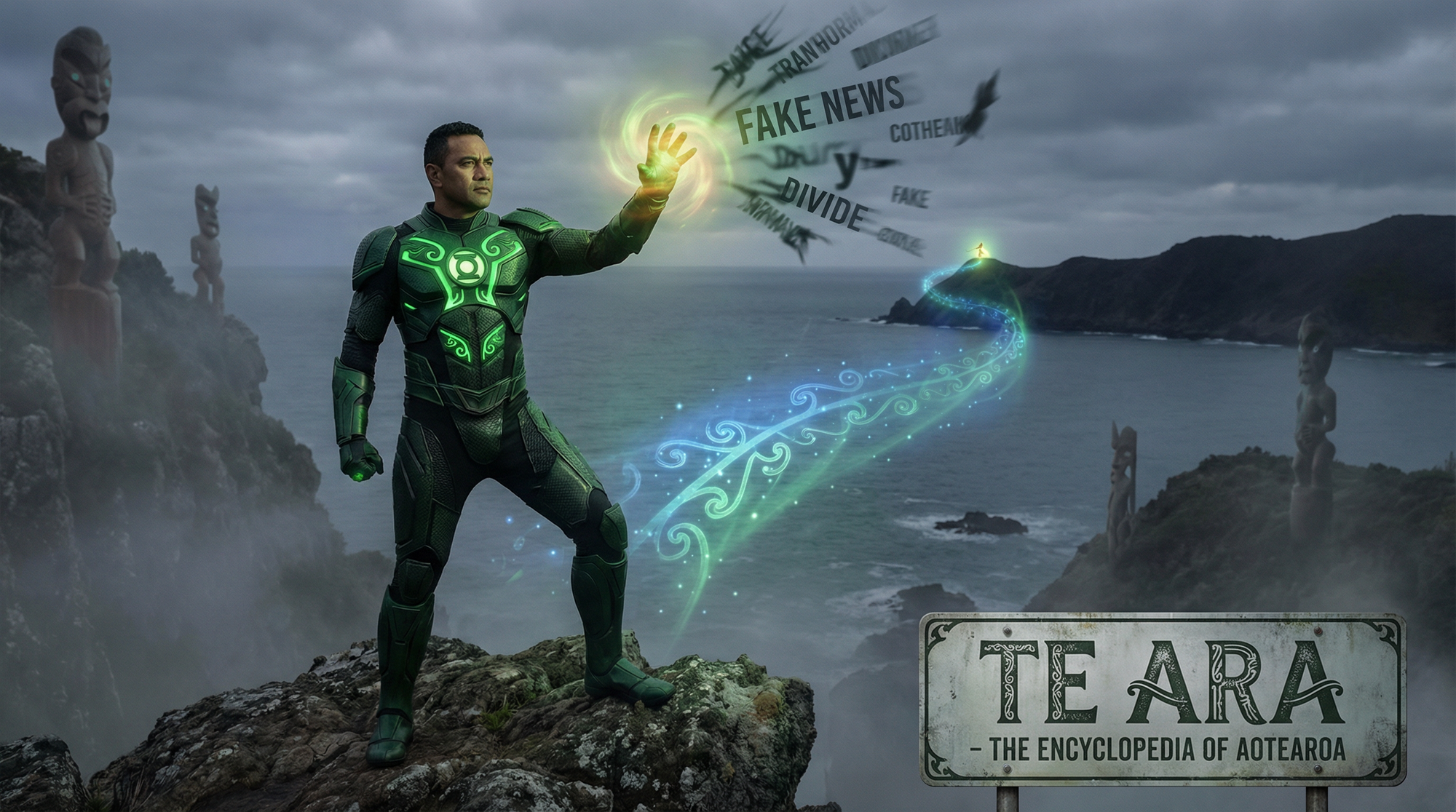
Ivor Jones The Māori Green Lantern Fighting Misinformation And Disinformation From The Far Right