“NZ Policing - The Fractured Foundation: Quantifying the Cost of Broken Trust in New Zealand’s Policing” - 29 January 2026
Mōrena ano Aotearoa,
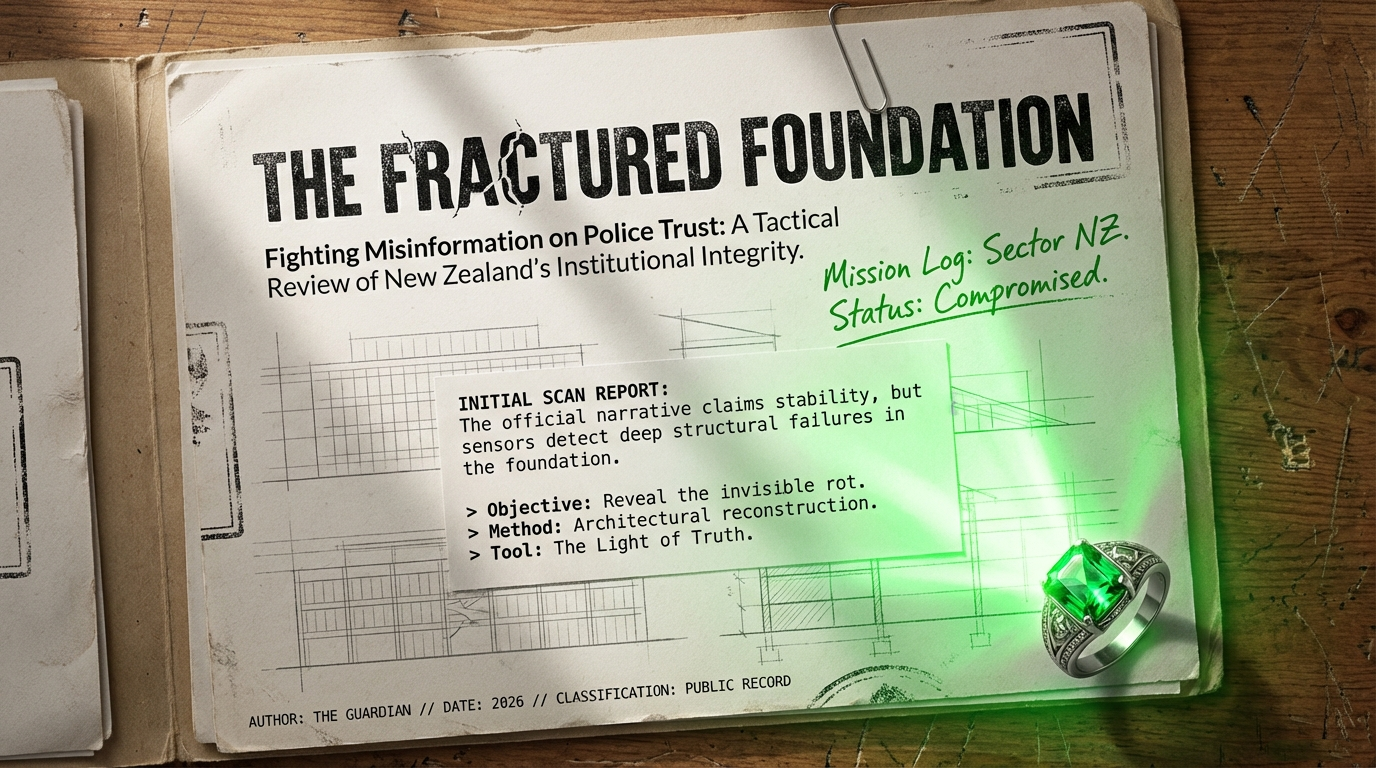
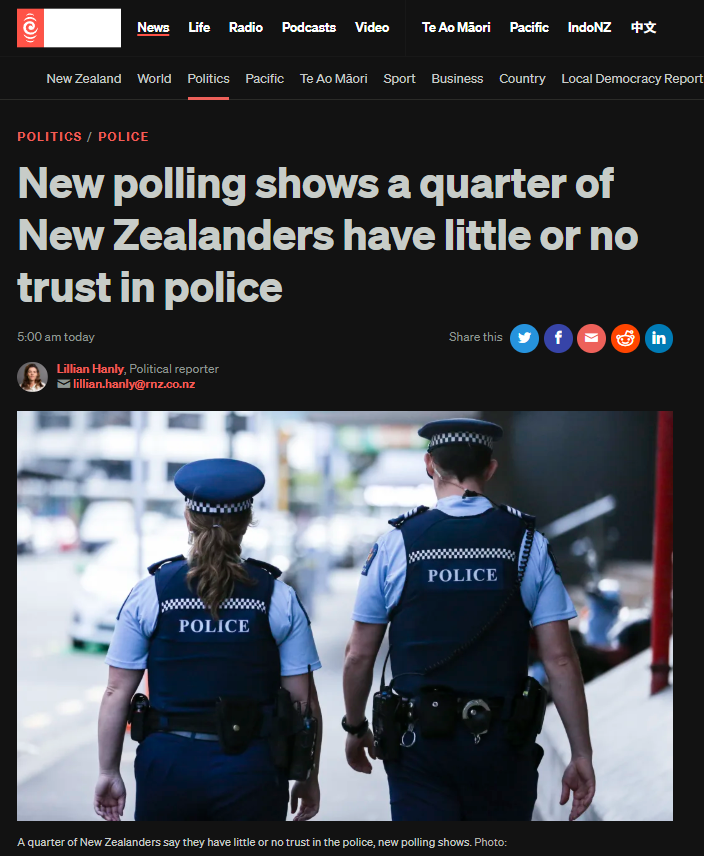
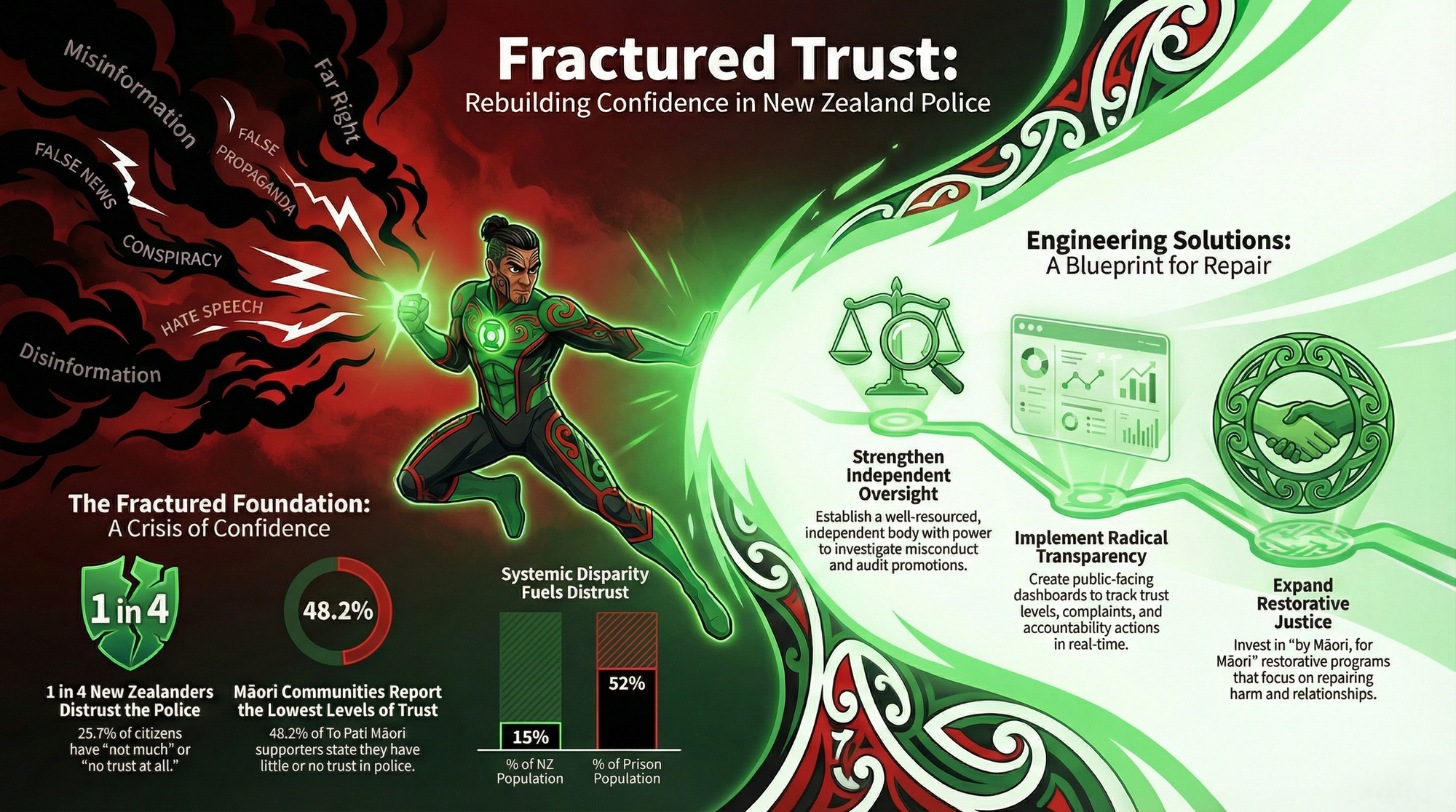
When a quarter of New Zealanders declare little or no trust in their police force, the rupture extends far beyond polling numbers. Like a house built on compromised ground, a society resting on eroded institutional trust faces compound instability, with costs that escalate exponentially when left unaddressed.
The McSkimming scandal represents not merely individual misconduct but a visible crack revealing systemic fractures that demand comprehensive remediation.
This analysis demonstrates that foundation repair, not superficial patching, is required. Solutions must address load-bearing beams (structural accountability mechanisms), underlying soil conditions (systemic bias and historical inequity), and the architectural design itself (power distribution and oversight frameworks).
Part I: Mapping the Cracks – Understanding the Damage
The Visible Fracture: A Crisis in Numbers
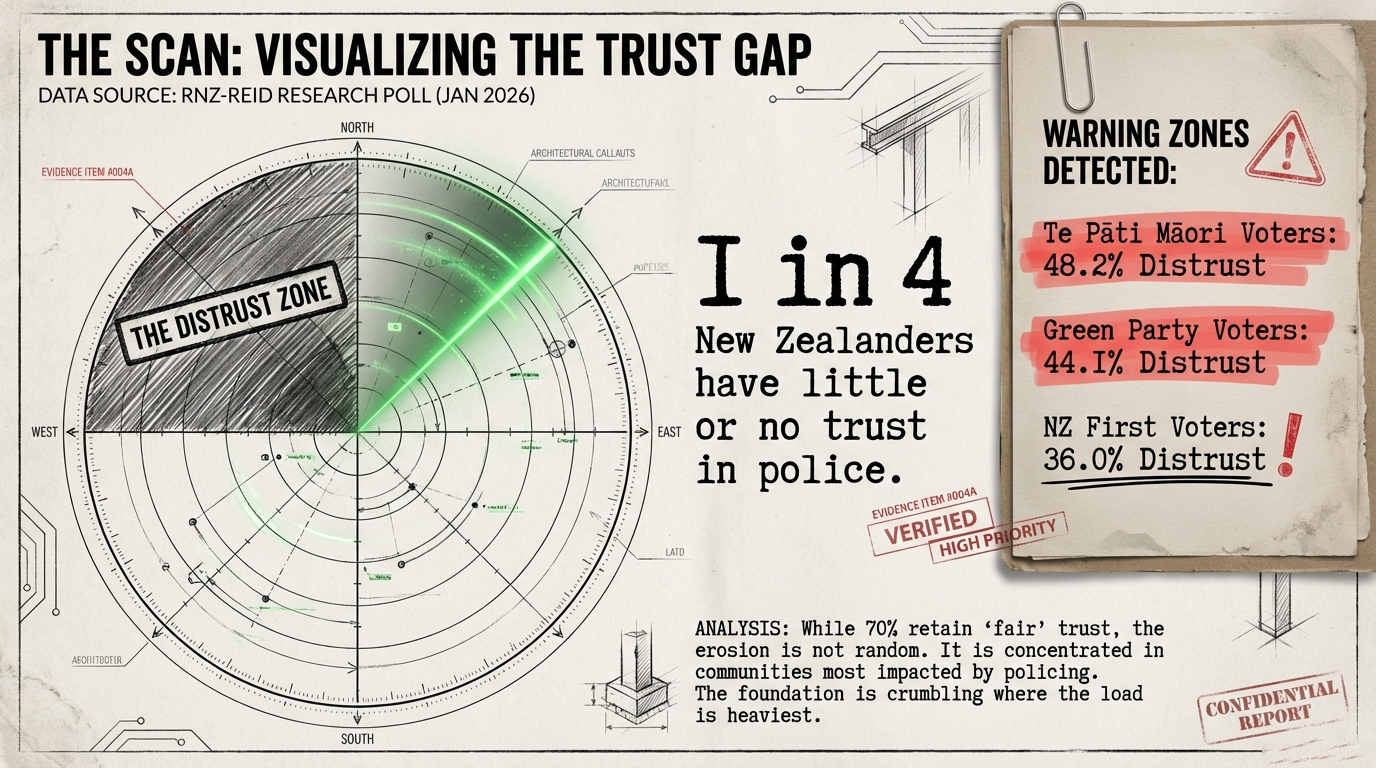
The January 2026 RNZ-Reid Research poll reveals a social fabric under considerable strain.
While 70.7% of New Zealanders maintain at least “fair” trust in police
—placing New Zealand relatively well compared to international benchmarks
—the distribution of distrust exposes dangerous fault lines.
Like a building where structural damage concentrates in specific load-bearing walls, trust erosion clusters in communities whose support is most critical for democratic policing.
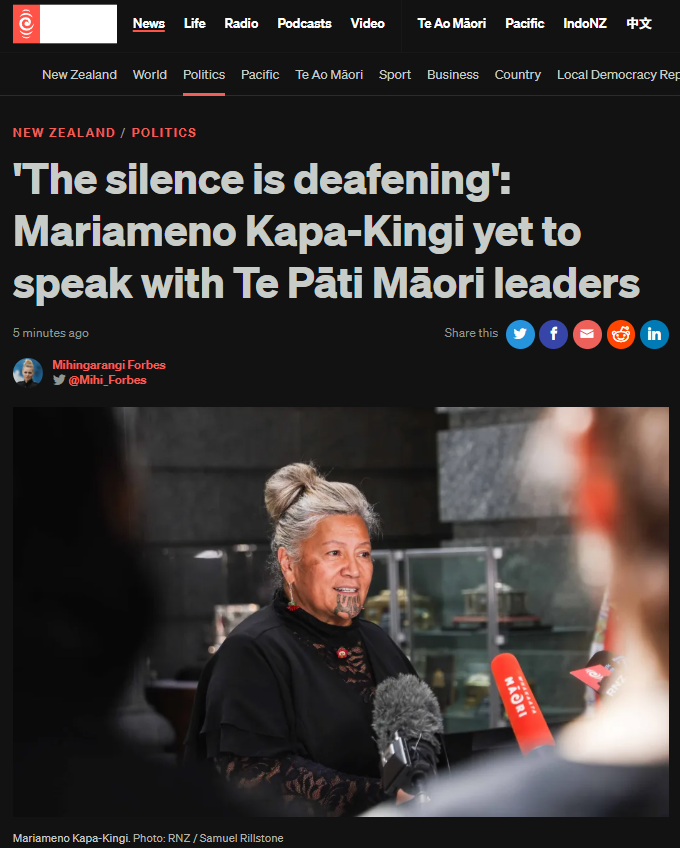
Te Pāti Māori supporters report distrust at 48.2%,
followed by Green Party supporters at 44.1%.
These are not mere political preferences but proxies for communities most impacted by policing practices.
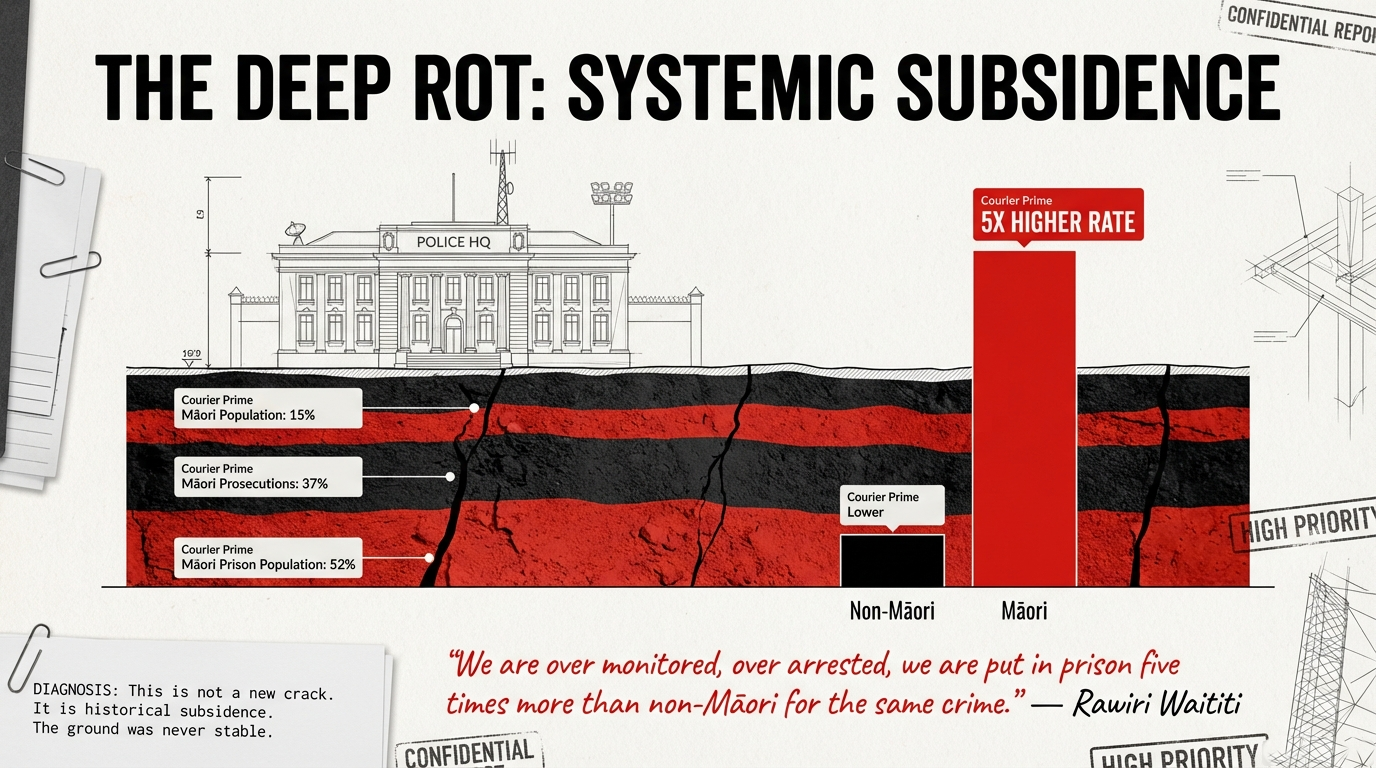
Māori constitute 15% of New Zealand’s population yet represent 37% of police prosecutions, 45% of convictions, and 52% of the prison population.
They face imprisonment for assault at twice the rate of Europeans when convicted of identical offenses, and
recent research confirms Māori receive harsher sentences even when controlling for offense characteristics.
This is not a crack in the plaster—it is a subsidence problem that originates in the historical foundation.
As Te Pāti Māori co-leader Rawiri Waititi articulated:
“We are over monitored, we are over arrested, we are put in prison five times more than non-Māori for the same crime.”
The metaphor of fractured foundations is precise:
these communities experience policing not as protective infrastructure but as an unstable structure that threatens their safety.
The Hidden Network: How Trust Connects to Everything
Like underground water damage that invisibly compromises structural integrity before manifesting as visible cracks, the erosion of institutional trust creates cascading harm across multiple systems.
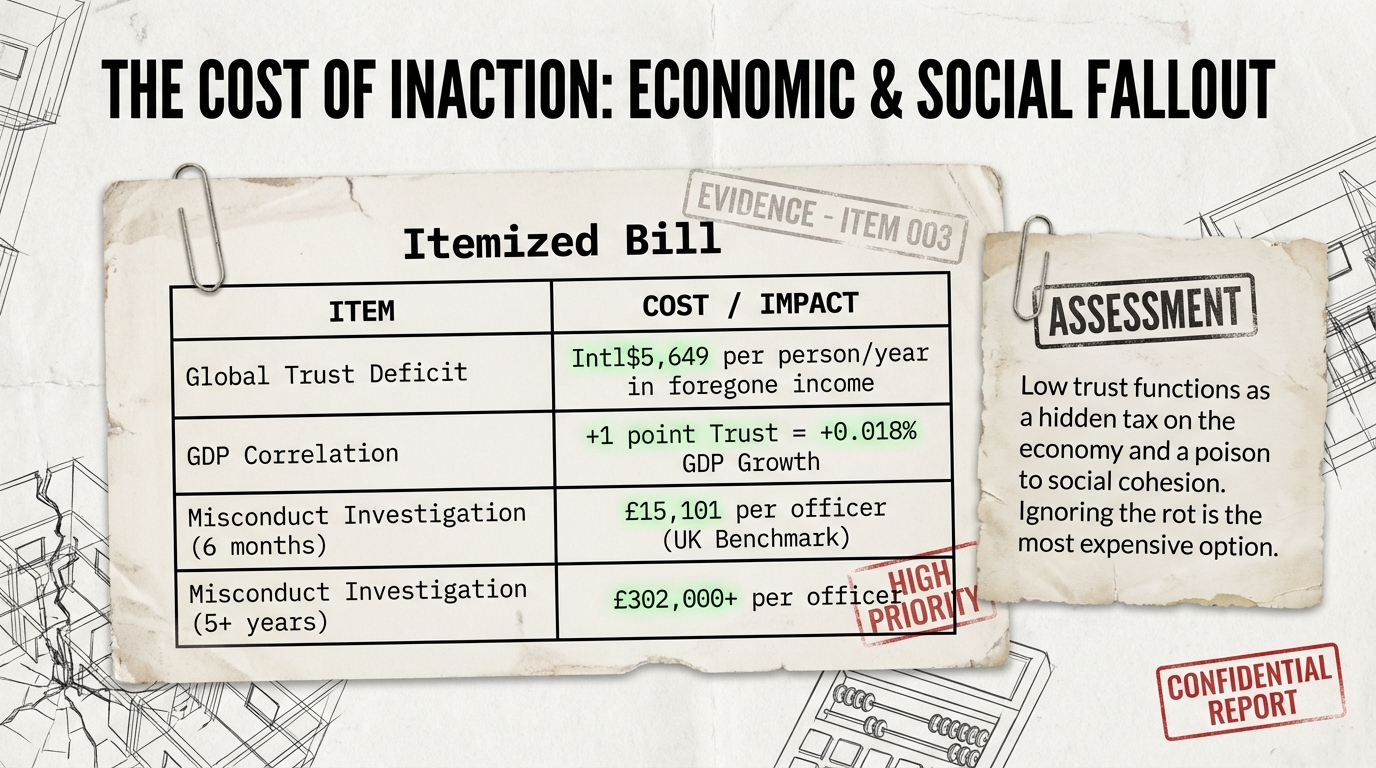
Research demonstrates trust explains more than 50% of variation in GDP per capita, with institutional trust generating positive reinforcement loops with economic growth. A one-point increase in public trust correlates with 0.018% GDP growth and 0.352% currency stability improvement. The global median value of trust in government stands at Intl$5,649 per person annually in foregone income when absent.
For New Zealand, with approximately 5.5 million residents, even modest erosion from current 70% trust levels carries measurable costs. If trust declined to match deteriorating international trends—where institutional trust has fallen 22 percentage points in the United States since 1979 and 8-9 percentage points across democracies since 1990—the economic burden would be substantial. Low trust increases transaction costs across all sectors, reduces tax compliance and civic cooperation, and undermines the quality of institutions themselves in a destructive feedback loop.
Beyond economics, lost institutional trust “may never be restored” following crisis events, creating persistent associations with mental health problems, reduced social support, and diminished life satisfaction. This is the permanent warping that occurs when foundational timbers remain water-damaged too long—repair becomes exponentially more complex, and full restoration may be impossible.
The McSkimming Scandal: When Support Beams Fail
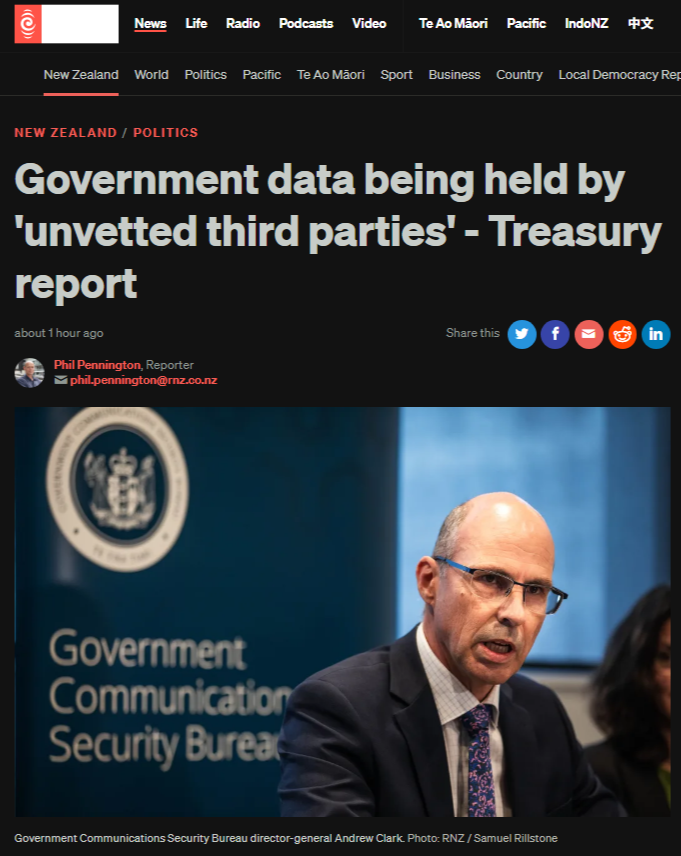
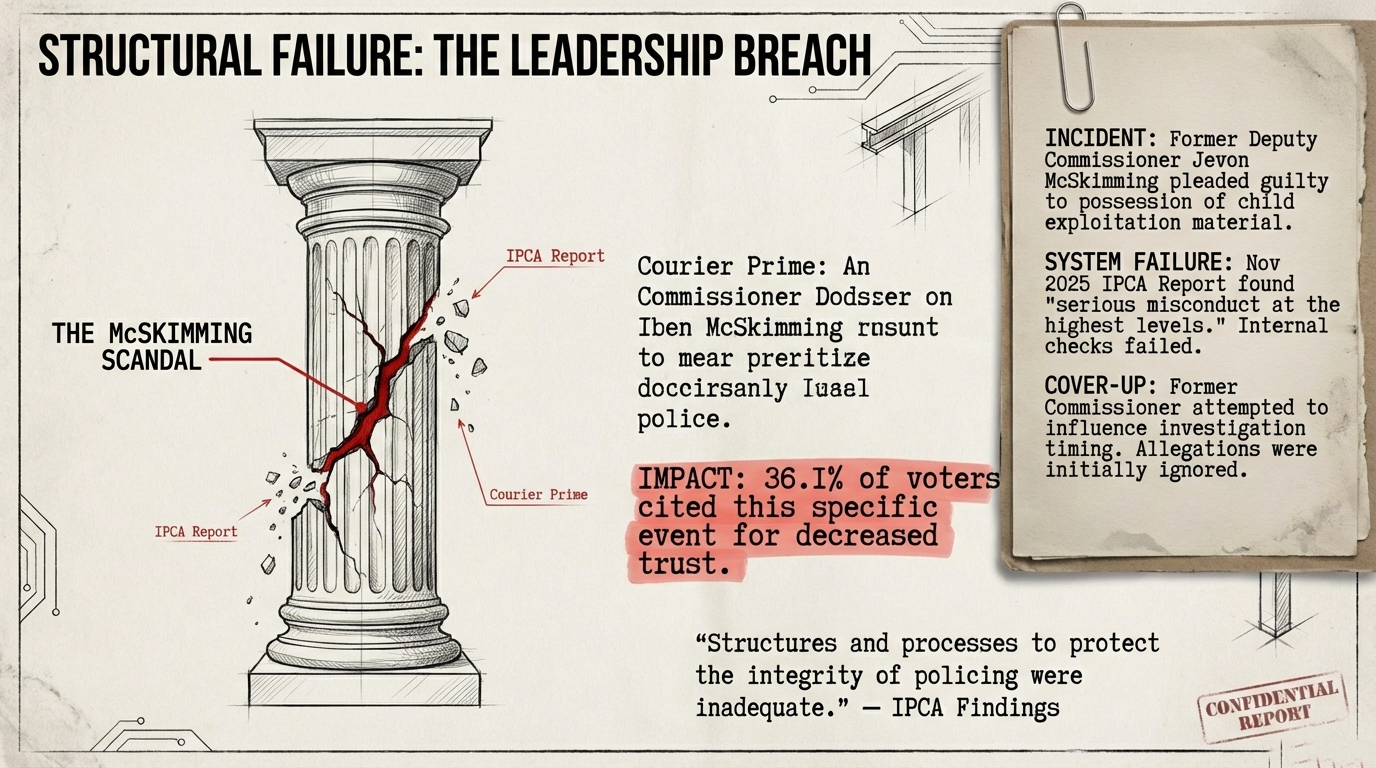
If institutional trust represents the foundation, leadership integrity serves as load-bearing beams. The November 2025 Independent Police Conduct Authority (IPCA) report documented how the highest echelons of New Zealand Police engaged in “serious misconduct” that compromised these critical structural elements.
Former Deputy Commissioner Jevon McSkimming pleaded guilty to possessing child exploitation material, but the scandal’s structural damage extends far beyond individual criminality. The IPCA found:
- Former Commissioner Andrew Coster attempted to influence investigation timing to protect McSkimming’s candidacy for the Commissioner position
- Neither Coster nor McSkimming adequately disclosed serious allegations during McSkimming’s Deputy Commissioner appointment process in 2023
- A complainant’s detailed allegations were systematically ignored rather than investigated
The IPCA concluded that “structures and processes to protect the integrity of policing were inadequate.” This represents not surface-level damage but failure of the essential framework designed to prevent structural collapse. Coster resigned in December 2025, but the damage to public confidence was already done. Among respondents whose trust changed due to the scandal, 36.1% reported decreased trust compared to just 2.2% reporting increased trust.
Part II: The Underlying Soil – Systemic Conditions Enabling Damage
Historical Subsidence: The Intergenerational Weight
Foundation damage rarely results from a single event;
more commonly, it reflects long-term soil subsidence and environmental conditions. Similarly, Māori over-incarceration represents not recent policy failure but accumulated weight from 150 years of institutional pressure.
The historical trajectory is documented:
Māori imprisonment was minimal in the 19th century, rose to 11% by 1936, accelerated during urbanization in the 1940s-1950s, and exploded from 1955 onward. By 1971, Māori comprised 40% of prisoners while constituting only 10% of the population. Since 1980, Māori have consistently represented about half the prison population, with current rates at 52.3%.
This represents what researchers term
“the imprisonment of entire whānau” as
“a key strategy of coercion to encourage Māori compliance and obedience to the state.”
Research identifies the underlying causes:
disproportionate representation in lower socio-economic groups, higher youth population percentages, elevated unemployment, urbanization effects, and institutional bias making Māori more likely to be arrested, charged, convicted, and imprisoned for identical conduct.
The current imprisonment rate for Māori stands at approximately 700 per 100,000 population—more than three times New Zealand’s overall rate of 199 per 100,000, and nearly five times the OECD average of 147 per 100,000. This is not merely excessive; it represents a structural failure that perpetuates its own necessity, like a house that settles further into damaged soil with each passing year, requiring ever-more-costly interventions.
The Cost of Structural Failure: Quantifying Direct Harm
Police misconduct carries measurable financial burdens distinct from the broader economic costs of trust erosion. In the United States, police misconduct cost cities over $3.2 billion in the past decade, with New York City alone paying $230 million of its $1 billion in settlements for NYPD-related actions in 2018. These represent direct taxpayer expenses for foundation failures.
The United Kingdom provides detailed quantification of investigation costs themselves:
a six-month police misconduct investigation costs £15,101 per officer, escalating to £302,012 for investigations exceeding five years. For suspended officers specifically, costs range from £67,968 for 6-12 months to £453,115 after five years, as forces must fully replace them while paying their salaries.
These figures do not account for settlement costs or the broader economic impact of eroded police-community relations. In smaller jurisdictions, major settlements can force property tax increases or even police department shutdowns. Such direct fiscal consequences make the cost of institutional failure tangible to communities—the equivalent of a foundation failure so severe that homeowners face special assessments or structural condemnation.
Part III: Engineering Solutions – Evidence-Based Repair Strategies
Foundation Principle #1: Independent Structural Inspection
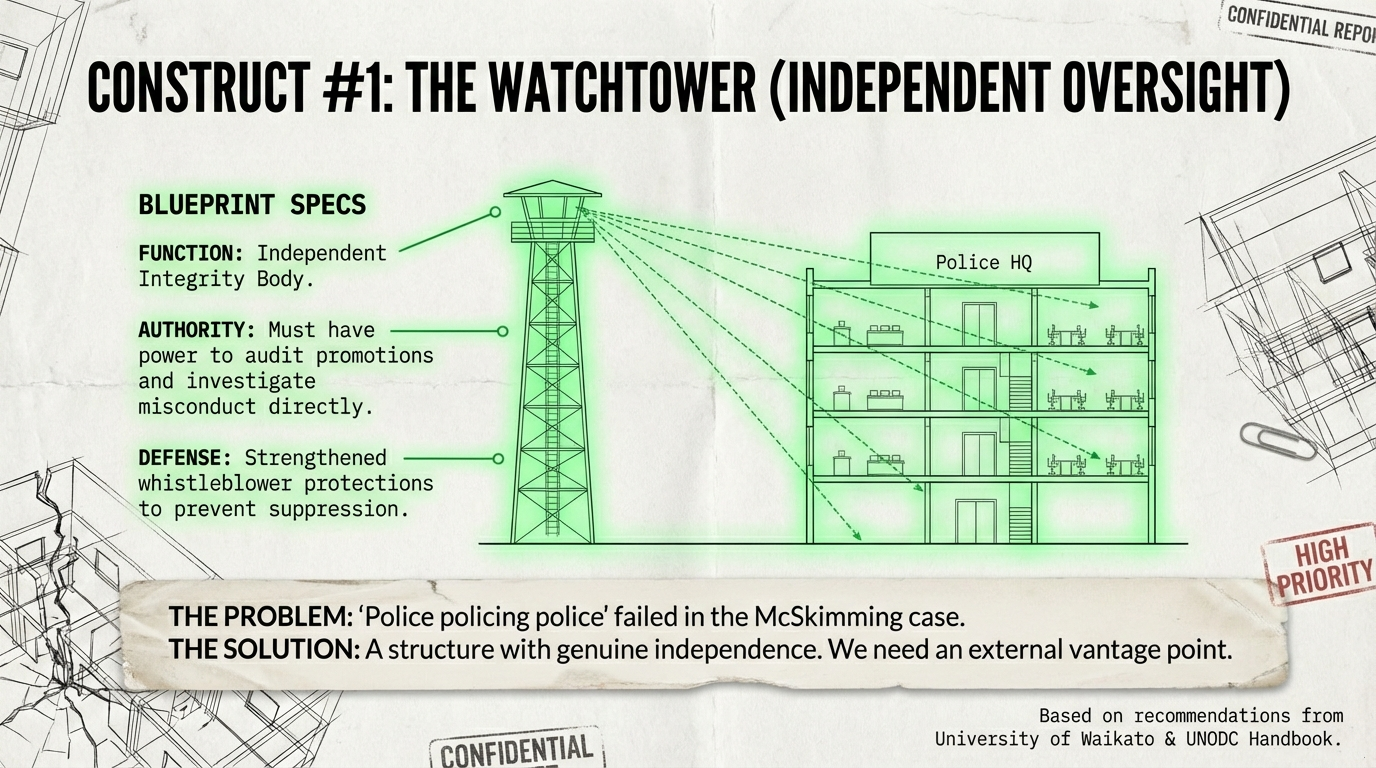
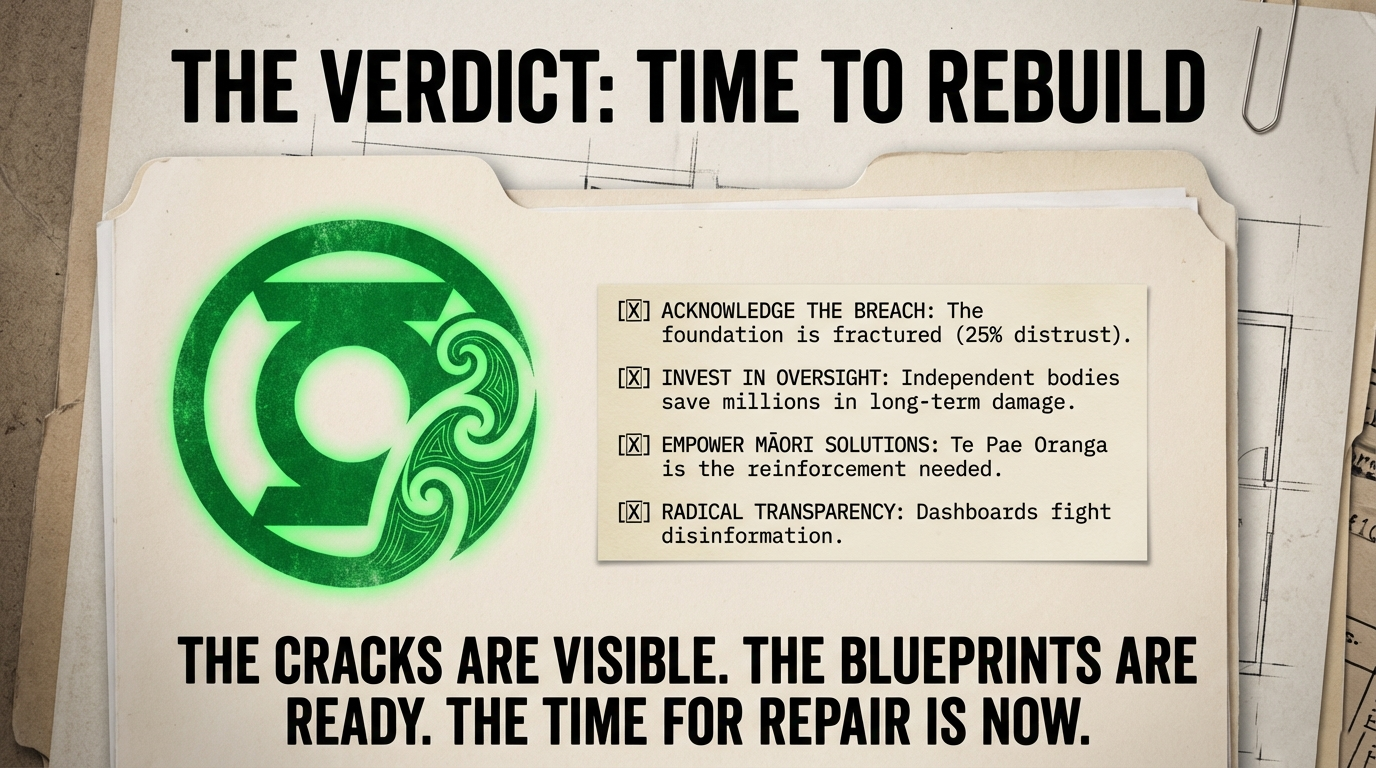
Like effective foundation repair that begins with thorough diagnostic evaluation using advanced technologies, rebuilding police trust requires genuinely independent oversight bodies with investigative powers and authority. The UNODC Handbook on Police Accountability identifies this as a core element, specifying that independent bodies should be able to investigate allegations, recommend disciplinary sanctions, refer cases for criminal prosecution, and make recommendations targeting the underlying causes of misconduct.
European Parliament research emphasizes that “non-police oversight bodies should be well-resourced, properly funded and with a clear mandate.” The study recommends promoting public confidence through data collection opened to citizens’ scrutiny and empowering independent Police Complaints Authorities’ Networks.
University of Waikato senior lecturer Anna Marie Brennan argues that New Zealand specifically needs
“an independent integrity body with much wider powers to audit police promotions and investigate misconduct,”
with strengthened whistleblower protections.
The McSkimming case demonstrated what happens when oversight depends on internal reporting:
complaints were systematically suppressed, and external bodies were kept uninformed until public pressure forced action.
Foundation Principle #2: Transparency Through Public Dashboards
Modern government dashboard best practices demonstrate how real-time transparency builds accountability naturally. When teams can track budget allocations, monitor project status, and review service delivery metrics in real time, transparency becomes an operational tool rather than a compliance checkbox. Public-facing dashboards foster transparency and build trust by making critical information accessible, understandable, and actionable.
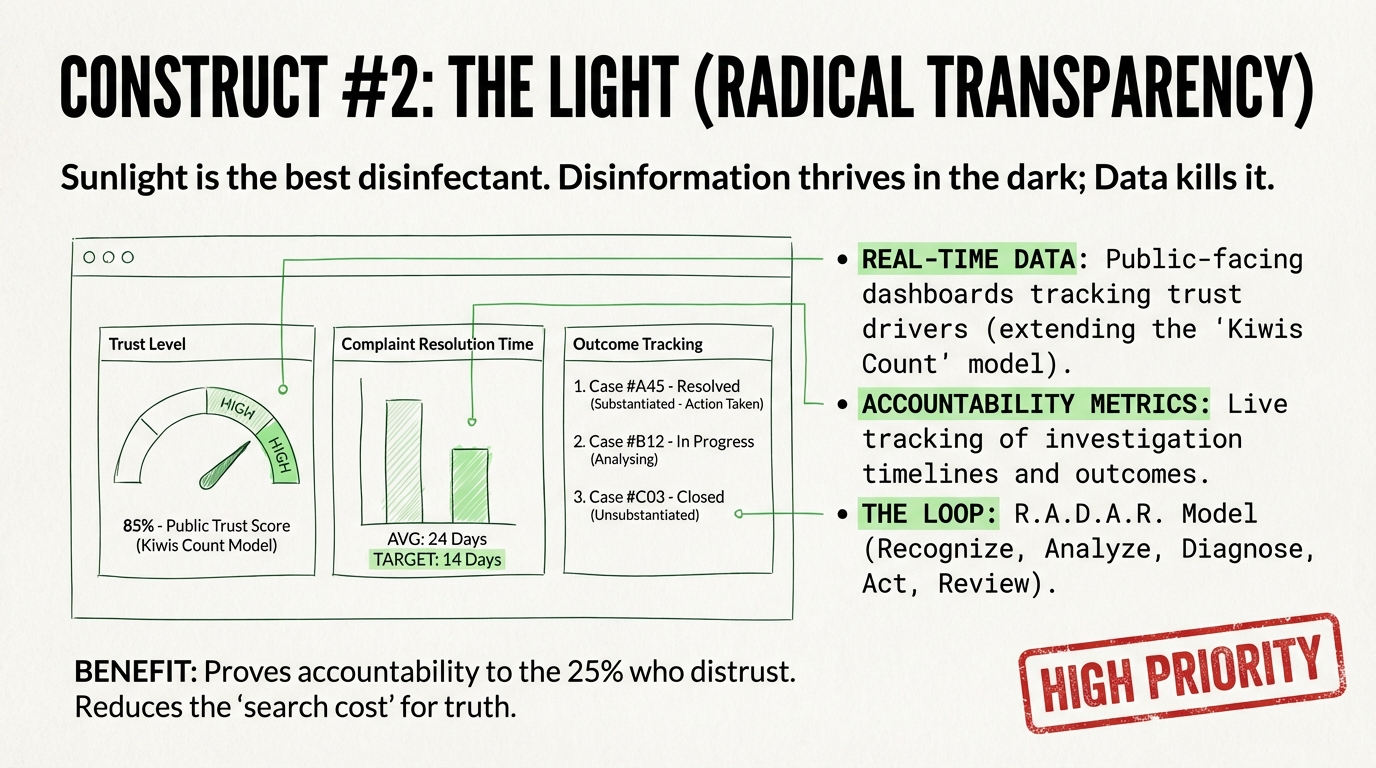
New Zealand already operates Kiwis Count, which tracks trust drivers by ethnicity, disability, age, region, and gender, reporting Public Service trust at 60% as of Q4 2024. Extending this model to police-specific metrics would provide continuous measurement of trust levels, demographic breakdowns, complaint resolution times, investigation outcomes, and accountability actions—creating the “continuous improvement loop” that Victim Commissioner Aroha McGregor advocates.
Role-based access controls can balance transparency with security and privacy: aggregated crime statistics visible to the public while detailed incident data flows to police commanders and oversight bodies. These measures operate invisibly to users while building confidence in government data stewardship, proving that accessibility and security work together effectively when properly implemented.
Foundation Principle #3: Restorative Justice as Load Redistribution
New Zealand pioneered institutionalized restorative justice through the Children, Young People and Their Families Act 1989, developed following unprecedented consultation with Māori elders. Research shows evidence of reduced reoffending for ages 17-19 when restorative practices are used, with both victim-survivors and those who caused harm reporting positive outcomes including increased understanding of harm, emotional relief, and closure.
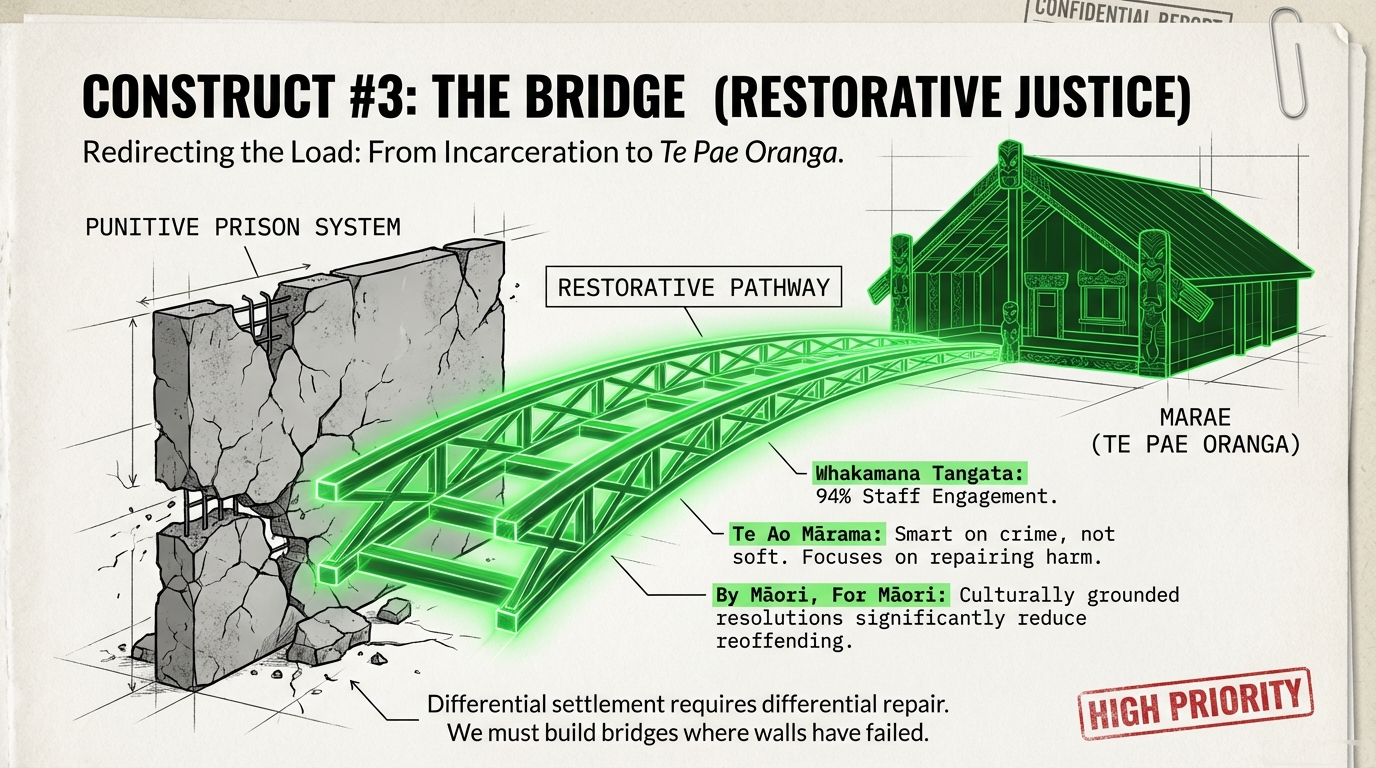
Whakamana Tangata, a restorative practice approach built around Te Ao Māori values applied in Oranga Tamariki youth justice residences, demonstrates effectiveness: 94% of kaimahi (staff) apply the approach, and rangatahi (youth) report feeling listened to and taking responsibility.
The evaluation found
“Whakamana Tangata has seeded a new way of thinking about engagement with rangatahi
—a restorative practice approach built around Te Ao Māori values.”
Te Ao Mārama, the District Court transformation program, explicitly aims to reduce Māori overrepresentation while increasing trust and confidence in the justice system.
Chief District Court Judge Heemi Taumaunu describes it as
“smart on crime” rather than “soft on crime,”
diverting low-level offenders from the “justice highway” to appropriate community support.
Those at the coalface report “significant impact” on sentencing, though the current government has paused rollout pending review.
The metaphor is precise:
restorative justice redistributes load away from prison infrastructure—which is costly, criminogenic, and perpetuates intergenerational trauma—toward community-based healing processes that address underlying causes while repairing harm. Like foundation underpinning that transfers weight from damaged footings to reinforced piers, this architectural redesign fundamentally changes how force flows through the system.
Foundation Principle #4: Addressing Differential Settlement Through Equity Measures
When foundations experience differential settlement—some areas sinking faster than others—effective repair requires not uniform treatment but customized intervention addressing specific soil conditions beneath each section. Similarly, achieving equitable policing outcomes demands targeted measures addressing the specific historical and systemic factors driving Māori over-incarceration.
Te Pae Oranga (Iwi Community Panels) represents this approach:
a $70 million government investment creating 30 new sites by 2024/25, using tikanga-based approaches for Māori in the justice system through police partnership models.
Research on Māori restorative justice emphasizes strong preference for
“by Māori, for Māori” resolutions, reflecting that
“the cornerstone of modern Pākehā justice is arguably backwards-looking, retributive justice, [while] a Māori approach is strongly forward-focused, in terms of repairing disrupted relationships and achieving mediated outcomes acceptable to all parties.”
This differential approach recognizes what structural engineers understand:
you cannot fix subsidence caused by poor soil compaction using the same methods you’d apply to cracks from thermal expansion. The underlying mechanisms differ, demanding customized solutions.
Part IV: The Path Forward – Reconstruction Requires Commitment
Quantifying the Reconstruction Timeline
Commissioner Richard Chambers’s goal of reaching 80% public trust in police represents appropriate ambition.
Moving from current 70.7% overall trust to 80% requires gaining approximately 9 percentage points
—but the real challenge lies in addressing the 48.2% distrust among Te Pāti Māori supporters and 44.1% among Green supporters. Closing these gaps demands not incremental improvement but transformational change.
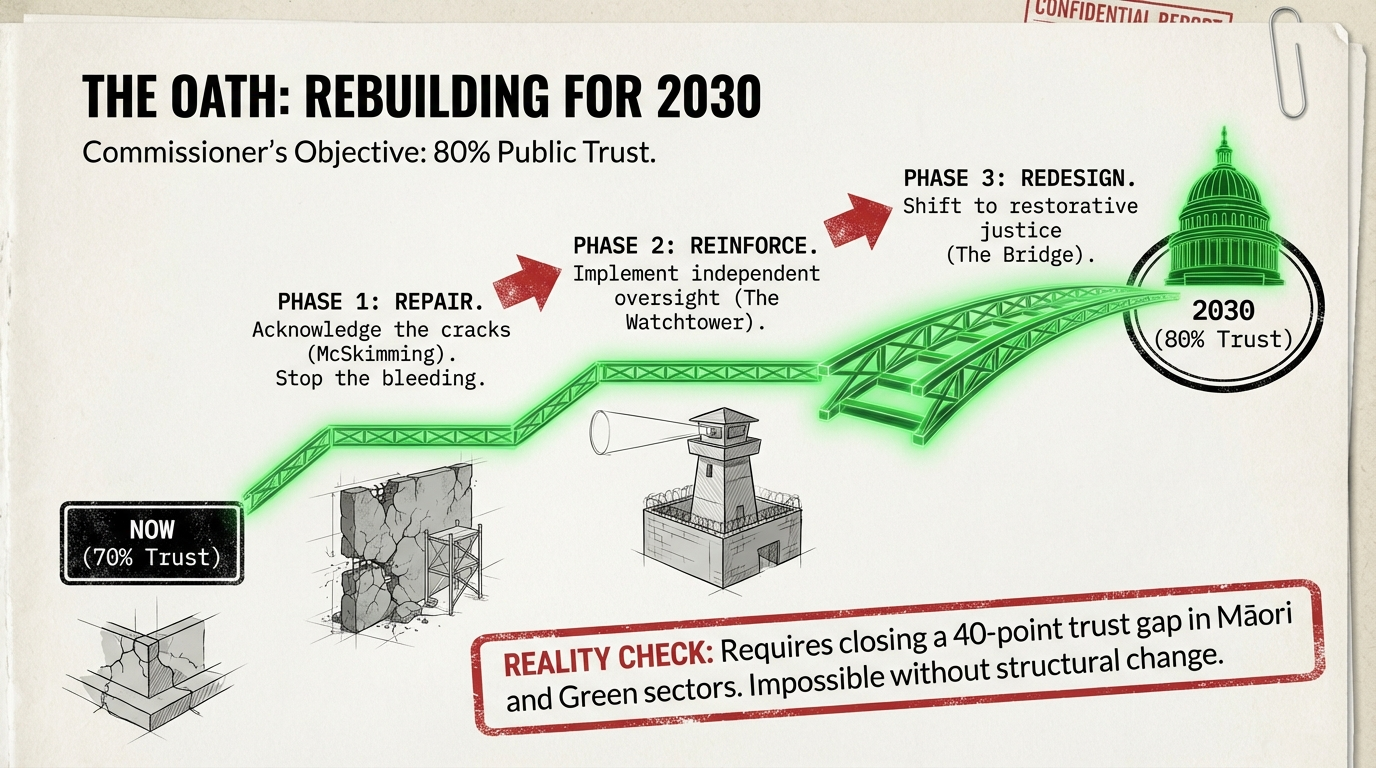
Research on institutional trust restoration identifies key strategies:
lowering search costs for institution-sourced information, educational campaigns countering biased perceptions, apologies from leadership, compensation and reparations for victims, and transparent reporting via public dashboards.
The “RADAR model” (Recognize, Analyze, Diagnose, Act, Review) provides a framework for continuous listening and improvement.
Yet the cautionary finding remains:
trust lost in disasters “may never be restored,” with long-term associations with mental health problems and reduced social support. The McSkimming scandal constitutes such a disaster for many communities. The window for effective intervention is finite, and delay compounds damage.
The Economic Imperative
Beyond moral and democratic imperatives, the economic case for investing in trust restoration is compelling. At Intl$5,649 per person annually in foregone income globally when government trust is absent, even modest trust improvements generate substantial returns. For New Zealand’s 5.5 million residents, a 10-percentage-point trust increase could yield economic benefits exceeding $300 million annually through reduced transaction costs, improved tax compliance, enhanced investment climate, and strengthened social cooperation.
Police misconduct investigation costs in the UK—reaching £302,012 for cases exceeding five years—demonstrate how prevention through robust accountability saves vastly more than remediation after failure. Investing in independent oversight bodies, transparent reporting systems, and restorative justice programs represents not expense but cost avoidance, preventing the cascading failures that generate both direct financial burdens and broader economic harm from trust erosion.
The Choice: Repair or Rebuild
The metaphor extends to a critical decision facing homeowners with foundation damage:
repair the existing structure or demolish and rebuild on proper footings? For New Zealand’s policing institutions, the choice is repair—the basic framework remains sound, as evidenced by 70% maintaining at least fair trust and New Zealand bucking global decline trends.
But repair demands comprehensiveness:
underpinning weak sections, reinforcing load-bearing elements, installing proper drainage to prevent future subsidence, and continuous monitoring to detect emerging problems before they become critical.
Half-measures will fail. Cosmetic patching while ignoring underlying soil conditions
—implementing body cameras without granting oversight bodies direct access,
establishing restorative justice programs while continuing policies that drive mass incarceration,
appointing new leadership without reforming the accountability structures that enabled misconduct
—merely delays inevitable collapse while costs compound.
The Foundation We Choose
When 51.3% of New Zealanders said the McSkimming scandals did not change their trust, the statistic reveals not stability but stasis—trust neither improved nor worsened because positions were already firmly established. For many Māori communities, the foundation was never solid. For others, confidence remains strong enough to withstand individual scandals.
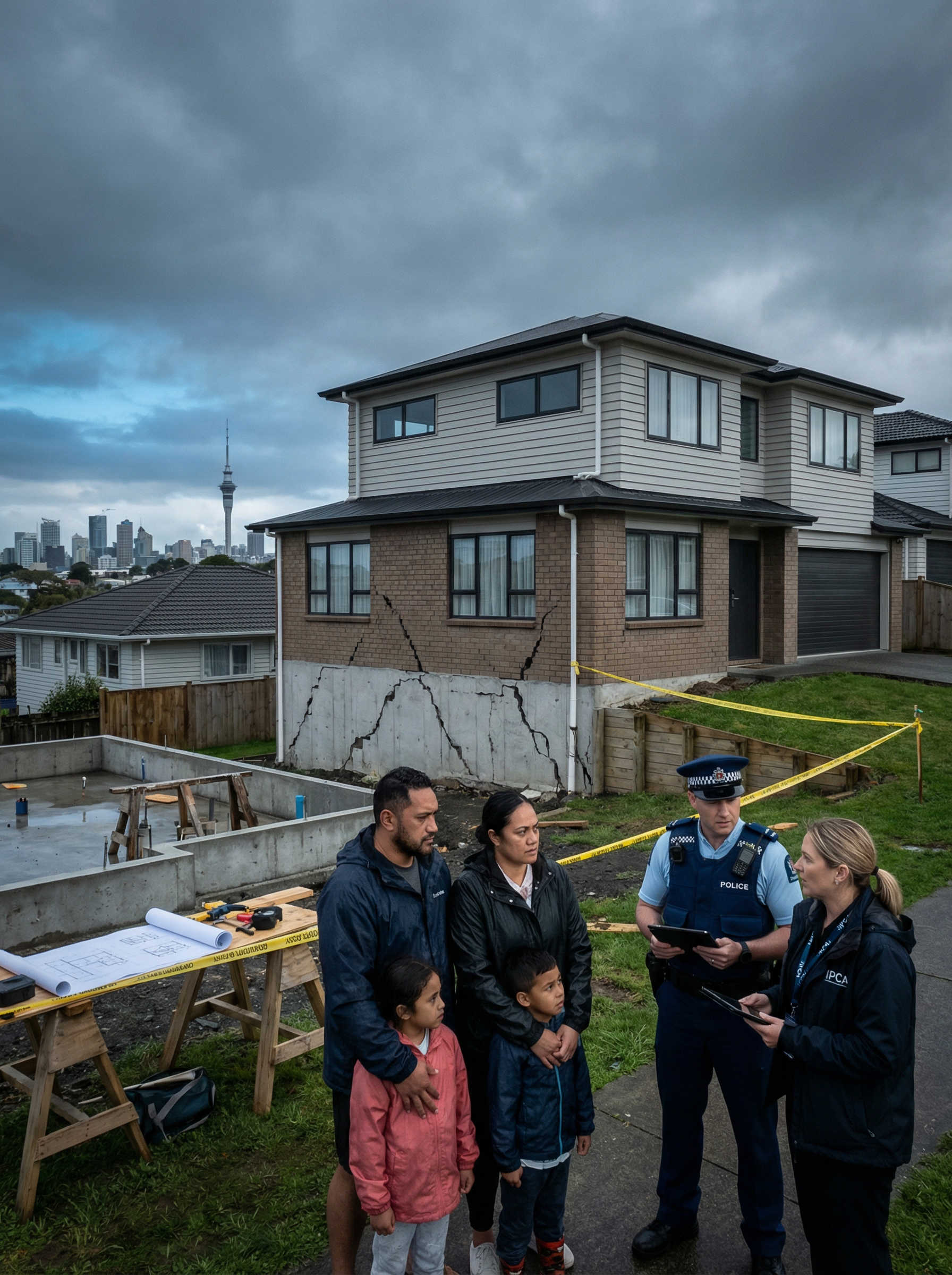
The question is not whether New Zealand’s policing can be repaired but whether the nation will commit the resources, political will, and sustained attention required for comprehensive reconstruction.
The costs of inaction are quantifiable:
billions in economic value lost to trust erosion, hundreds of thousands per investigation for misconduct cases, generational trauma perpetuating over-incarceration cycles, and the immeasurable harm of communities experiencing their own police as threats rather than protectors.
The solutions exist:
independent oversight bodies with real power, transparent public dashboards tracking trust metrics and accountability actions, restorative justice programs grounded in Te Ao Māori values, and targeted equity measures addressing differential outcomes. International best practices provide blueprints; New Zealand’s own innovations demonstrate proof of concept.

What remains is choice.
Every structure requires maintenance;
every foundation experiences stress. The measure of institutional quality lies not in preventing all damage but in detecting problems early, responding comprehensively, and implementing systems that continuously monitor, measure, and improve. For New Zealand’s police, the cracks are visible, the damage quantified, and the engineering solutions available. The question is whether the nation will commit to rebuilding the foundation on which democratic policing must rest—or allow differential settlement to continue until the weight becomes unbearable and collapse inevitable.
The metaphor holds to the end:
in foundation repair, delay is the enemy. Every day of postponed action allows damage to extend further, costs to escalate, and restoration to become more difficult.
The polling from January 2026 provides a baseline—a structural assessment capturing the extent of current damage. Whether the next assessment shows improvement, stabilization, or continued deterioration depends entirely on the actions taken in the intervening period. For Māori communities experiencing five times the incarceration rate, the foundation has been compromised for 150 years.
The time for comprehensive repair is not tomorrow.
It is now.
Koha - Supporting This Analysis: Three Pathways
Every koha signals that whānau are ready to fund the accountability that Crown and corporate structures will not provide on police reform. It signals that rangatiratanga includes the power to fund independent analysis of institutional failure—the kind of structural diagnostics that government agencies themselves often cannot articulate without compromising their own positions.
This essay required extensive research into quantified harm: the economic costs of trust erosion ($5,649 per person annually globally), the financial burden of misconduct investigations (£302,012 per prolonged case in the UK), the persistence of Māori over-incarceration at 700 per 100,000 (five times non-Māori rates), and the evidence-based solutions that work when institutions commit to genuine change. It required mapping not just the visible cracks in institutional foundations but the underlying soil conditions—150 years of systemic bias—that created differential settlement beneath Māori communities.
The Crown’s own agencies—the IPCA, Police Commissioner, Ministry of Justice—produce excellent reports. But they operate within constraints. They cannot fully articulate the metaphorical truth: that institutional trust is a foundation, that scandals reveal structural failures, that repairs require comprehensive redesign rather than cosmetic intervention. They cannot sustain the kind of independent, critical voice that communities need when institutions fail.
Kia kaha, whānau. Stay vigilant about whose analyses get funded and whose voices disappear. Stay connected to people doing diagnostic work on institutional collapse. And if you are able, consider a koha to ensure this kind of structural analysis continues—the kind that quantifies harm, holds power accountable, and maps pathways toward genuine repair.
Three pathways exist:
For those who wish to support this mahi directly with a koha (voluntary contribution to fund ongoing research and essays on institutional accountability), please visit the Koha platform:
For those who wish to receive essays directly and support through subscription, join the Substack community:
Subscribe to the Māori Green Lantern on Substack
For those who prefer direct bank transfer, account details are: HTDM, account number 03-1546-0415173-000.
Every contribution—whether $5 or $500—funds the next structural analysis. Every subscription ensures this voice continues when institutions resist accountability. Every bank transfer signals that communities value independent diagnostics of how power actually works.
The foundation is cracking. Someone needs to map where, why, and what repair requires. That work requires resources. Kia kaha.

Ivor Jones The Māori Green Lantern Fighting Misinformation And Disinformation From The Far Right