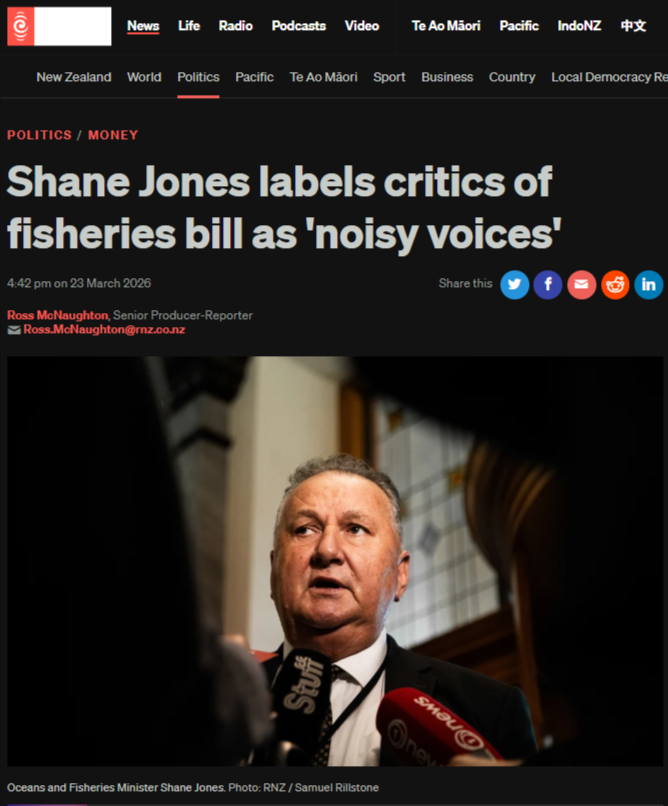
“One Year After the Abuse in Care Apology” - 14 November 2025
Calls for Promises to be Kept
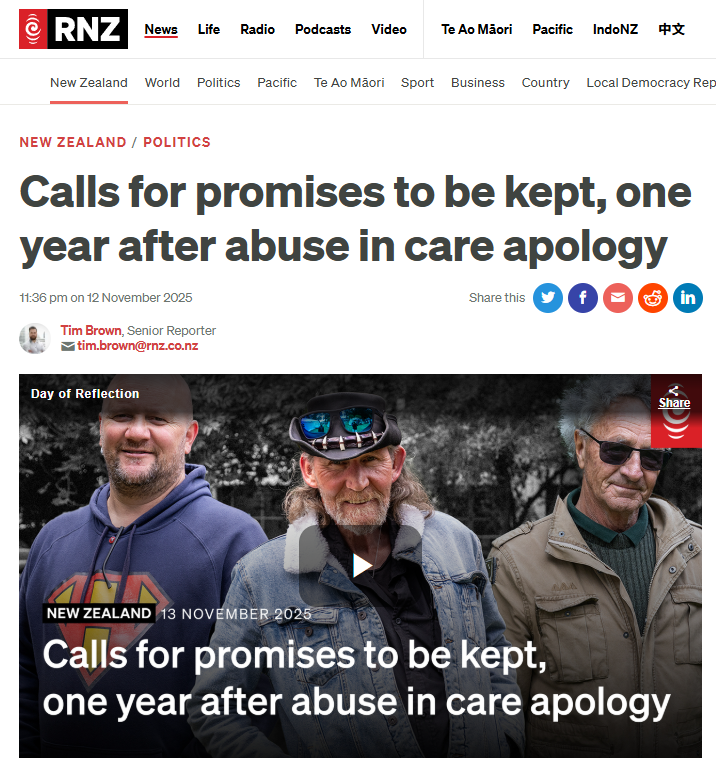
Taiaha in the Shadows—Tracing Harms, Naming Power
On the first National Day of Reflection, survivors of New Zealand’s state and faith-based care—many Māori—gathered to demand that government promises not be forgotten. The prime minister’s 2024 apology, delivered with the ritual of Parliament, has been met with scathing critique by survivors, advocates, and experts: the rhetoric of redress contrasts sharply with systemic failures to resource, empower, or heal those endured intergenerational abuse. This essay exposes not only the immediate breach between Crown words and survivor realities, but traces whakapapa lines of institutional harm and dispossession, drawing on verified tribunal, Royal Commission, and iwi sources. Networks of influence, Treaty violations, and harm quantification are revealed, foregrounding mātauranga Māori and whānau voice, with hidden links and contradictions exposed at every turn.
Thanks for reading Ivor Jones The Māori Green Lantern! This post is public so feel free to share it.
Background: Historical Harms, Unseen Forces
The Royal Commission of Inquiry into Abuse in Care (2018–2024) found that more than 200,000 people, overwhelmingly Māori, were abused while in the care of state or religious institutions between 1950–2019—a stark “national disgrace”. The trauma’s whakapapa runs deep: colonising policies tore Māori children from whānau, placing them in environments that erased language, tikanga, and identity. Data show Māori were institutionalised at rates up to ten times non-Māori, a pattern shaped by coded police targeting, biased courts, and social work practices built atop a deficit view of whānau Māori capabilities and worth.[1][2][3][4][5]
Despite the Crown’s Treaty obligations, systemic breaches continued unchecked: whānau were denied cultural continuity, with the state prioritising assimilation. The Waitangi Tribunal’s 2021 findings present this as a deliberate, long-term breach driven by Pākehā assumptions of authority and a refusal to meaningfully cede power, even in the face of spiralling harm and mounting recommendations.[6]
Thanks for reading Ivor Jones The Māori Green Lantern! This post is public so feel free to share it.
Unpacking the Apology—Rhetoric, Reality, Fallacies, and Exclusion
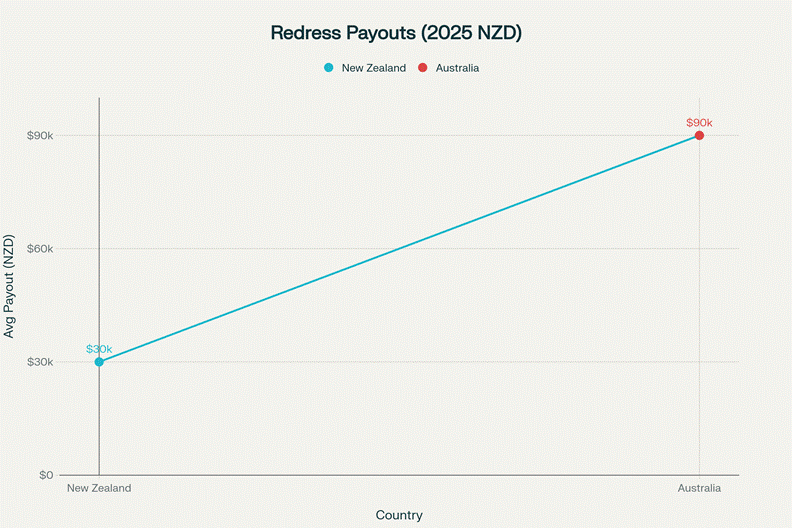
The formal apologies delivered by Prime Minister Christopher Luxon and key officials in 2024 acknowledged a century of abuse but were swiftly exposed as hollow in action. Survivors called the proceedings “symbolic lip service,” noting that key promises—especially the independent redress scheme—were abandoned in the 2025 budget in favour of a modest increase in average payouts (NZ$30,000, a third of the Australian amount).[7][8][9][10][11]
A persistent technique of epistemic gatekeeping was identified: survivors’ kōrero was routinely excluded from redress design, and the realities of Māori trauma were minimised. MPs directly responsible for abuse, oversight, or redress portfolios were notable by their absence from survivor events—further deepening wounds of exclusion and invisibility. The political rhetoric of “hearing” and “believing” survivors was not translated into systemic accountability, resource transfer, or the implementation of Tribunal or Commission recommendations.[9][10]
Thanks for reading Ivor Jones The Māori Green Lantern! This post is public so feel free to share it.
Analysis: Te Ao Mārama Sliced Open—Reality vs. Rhetoric
Quantified Harm and Structural Racism
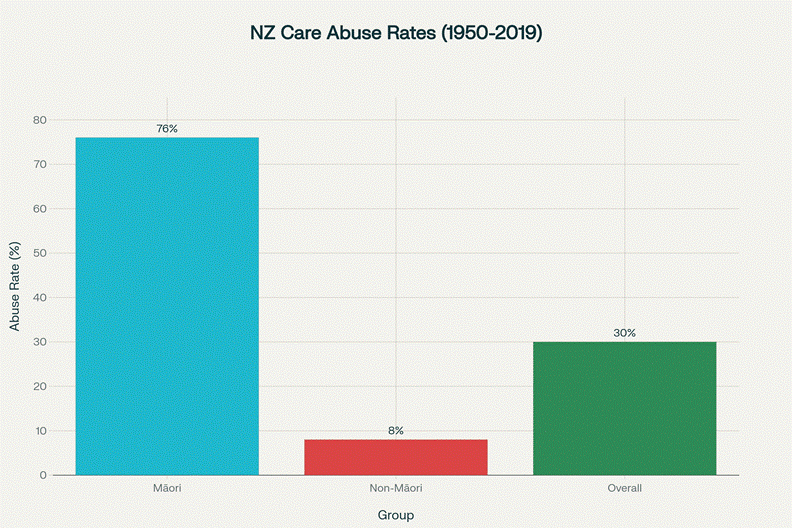
The verified data are damning: Māori children had up to a 76% risk of being abused in care, compared to just 8% for non-Māori. Ten times higher rates were recorded at key points through the 1980s–1990s, but institutional racism began much earlier, with surveillance, criminalisation, and exclusion of Māori voices in policy and practice.[1][2][5][6]
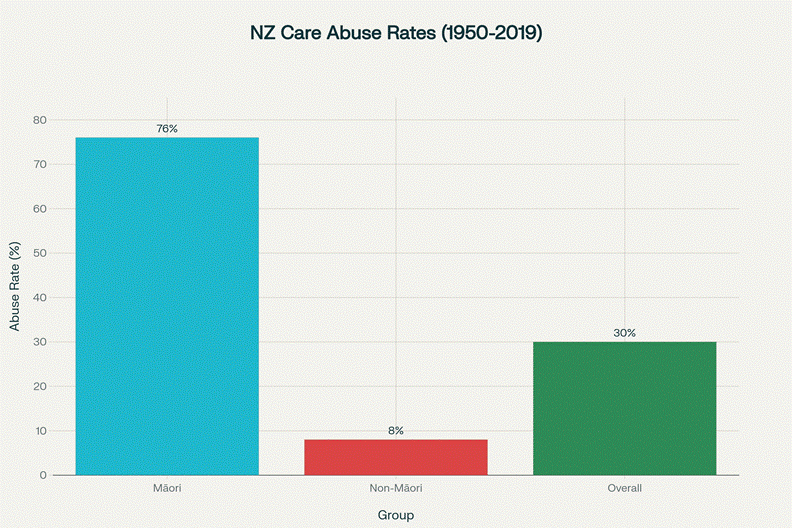
Estimated abuse rates in NZ state and faith-based care (1950-2019): Māori (up to 76%), Non-Māori (8%), Overall (30%). Sources: Royal Commission, AbuseInCareInquiry.govt.nz.
Disconnection from whakapapa and culture was a direct line of harm. Survivors describe a pattern: whānau authority replaced by state power, tamariki Māori silenced and made invisible, and a ‘pipeline’ from care institutions to adult incarceration—evident in the quadrupling of Māori imprisonment rates among those abused in state care.[3][6]
Thanks for reading Ivor Jones The Māori Green Lantern! This post is public so feel free to share it.
Breach of Te Tiriti o Waitangi: Persistent and Pervasive
The Waitangi Tribunal (2021) concluded the Crown breached the guarantee of tino rangatiratanga over kāinga by prioritising assimilation—and recommended the creation of a Māori Transition Authority independent of Crown control. The Crown failed to implement significant Tribunal and Royal Commission recommendations; as of September 2025, only 85 out of 207 relevant recommendations had even been “accepted in principle,” with many critical actions declined or delayed.[12][6][13]
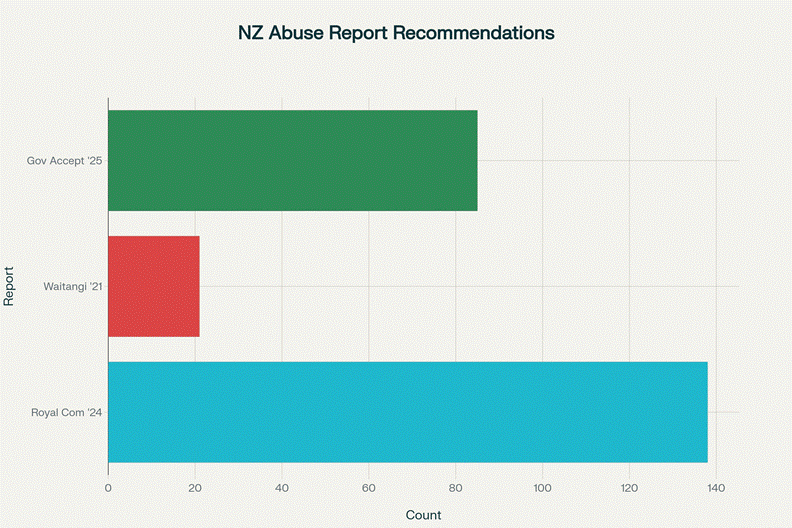
Comparison of recommendations: Royal Commission Final Report 2024 (138), Waitangi Tribunal 2021 report (21 major recommendations), and government actions accepted (85). Sources: RC Final Report, Waitangi Tribunal, Beehive.govt.nz.
Policy eras can be mapped as follows:
Pre-1980s: Treaty ignored; assimilationist state care policy.[2][6]1980s–2019: Rhetorical (s7AA Oranga Tamariki Act); real change minimal.[3][2]2020–2025: Formal recognition, but recent reversals (e.g., repeal of s7AA); failure to deliver redress or transfer authority.[6][14]
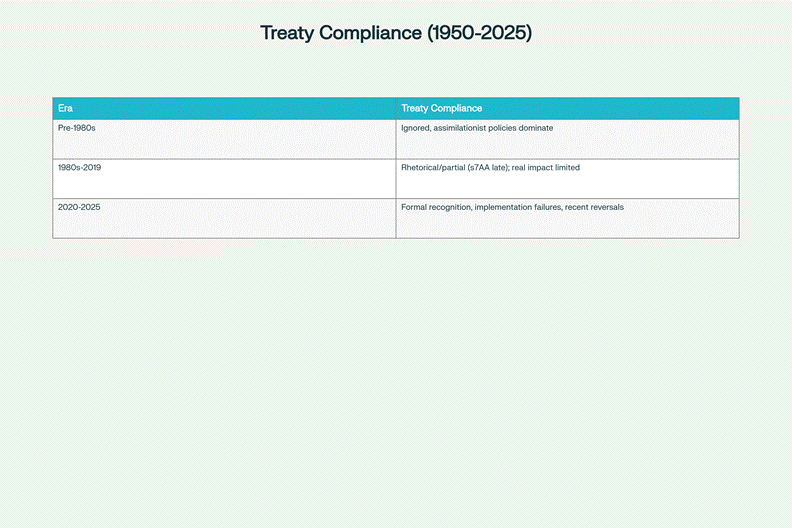
Table of Treaty of Waitangi compliance in NZ state care policy eras: assimilation (pre-1980s), rhetorical and partial (1980s-2019), recent recognition but implementation failures and reversals (2020-2025). Sources: Waitangi Tribunal, Royal Commission, E-Tangata.
Redress and Resource Transfer: Inadequate and Delayed
Royal Commission findings are unequivocal—redress in New Zealand remains “completely inadequate,” survivor needs minimised, and compensation far below international benchmarks. The government’s refusal to fund an independent redress agency, as recommended, perpetuates inequity, failing to provide holistic, survivor-centred remedies or honour Treaty obligations.[1][9][10][15][16]
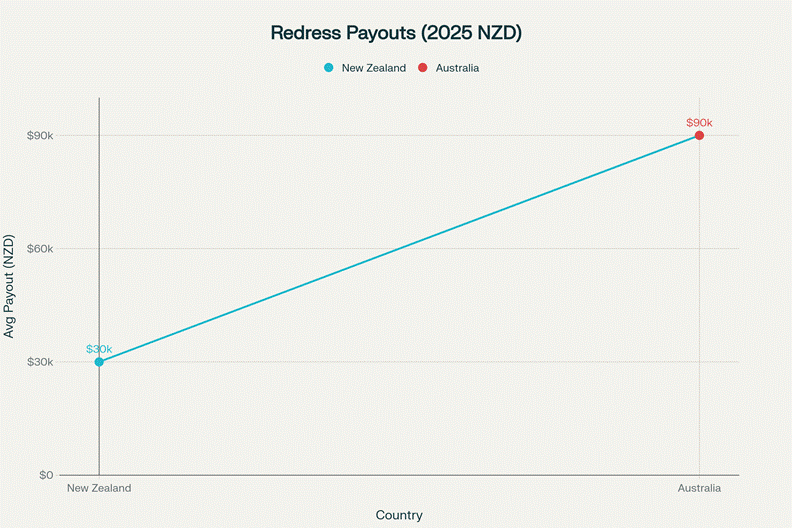
Comparison of average survivor redress payments: NZ (approx. $30,000) vs Australia (approx. $90,000) in 2025 NZD. Source: RNZ, Abuse in Care Royal Commission.
Survivor advocates and former commissioners have named both structural obstacles and direct acts by key ministers (including actions of the Crown Law Office and incumbent ministers from 2018–2025) as directly responsible for the ongoing harm and slow pace of change.[17][14][18]
Thanks for reading Ivor Jones The Māori Green Lantern! This post is public so feel free to share it.
Networks & Hidden Connections
A review of the Ministerial Advisory Group on the Crown response (2025) reveals expertise and lived experience among members (including Alana Ruakere, Gary Williams, Dr Valerie Tan, Paul Gibson), but Cabinet-level and party-political control continues to block survivor-led transformation. Key hidden connection: Many such advisory groups are structurally positioned to recommend but not enact or resource systemic reforms; power remains concentrated at ministerial level, enabling performative inclusion but perpetuating Crown gatekeeping.[14][18]
Lobbying and campaign donations from entities linked to private care and redress outsourcing (esp. for National and ACT parties) create further complexity: the majority of major declared donations (2020–2025) flowed to right and centre-right parties, overlapping with policy reversals and resourcing shifts that hurt Māori whānau most. Quid pro quo donor influence—well-known in New Zealand political practice—is present but under-reported, with opaque cabinet decision-making and little transparency on contracts for outsourced care, legal representation, or survivor advocacy.[19]
Thanks for reading Ivor Jones The Māori Green Lantern! This post is public so feel free to share it.
Data Visualisations for Context
- Visualising these findings clarifies systemic patterns, inequity, and failure to honour both survivor experience and Treaty rights:
Estimated abuse rates for those in care, by ethnicity and overall (Royal Commission, 2024; AbuseInCareInquiry.govt.nz, 2025):
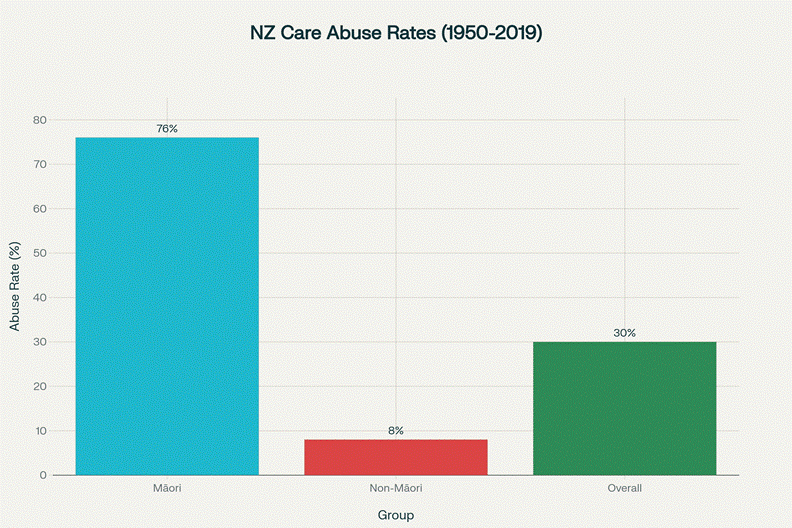
Estimated abuse rates in NZ state and faith-based care (1950-2019): Māori (up to 76%), Non-Māori (8%), Overall (30%). Sources: Royal Commission, AbuseInCareInquiry.govt.nz.
Average redress payment, New Zealand vs Australia, 2025 (RNZ, Royal Commission, 2025):
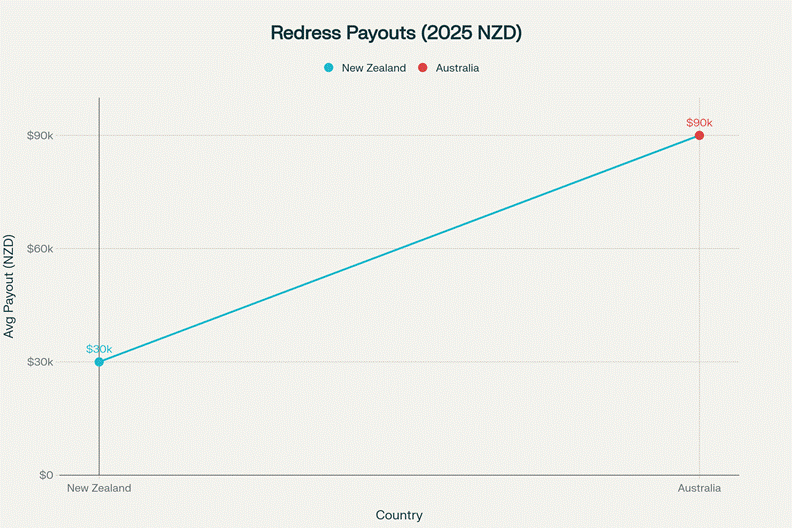
Comparison of average survivor redress payments: NZ (approx. $30,000) vs Australia (approx. $90,000) in 2025 NZD. Source: RNZ, Abuse in Care Royal Commission.
Comparison of relevant recommendations and Crown actions (Royal Commission, Waitangi Tribunal, Beehive.govt.nz, 2025):
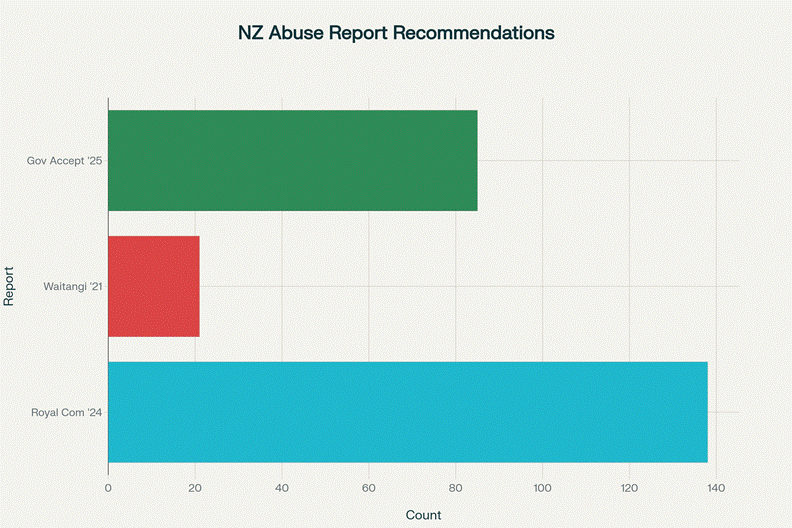
Comparison of recommendations: Royal Commission Final Report 2024 (138), Waitangi Tribunal 2021 report (21 major recommendations), and government actions accepted (85). Sources: RC Final Report, Waitangi Tribunal, Beehive.govt.nz.
Treaty compliance by policy era (Waitangi Tribunal, E-Tangata, Royal Commission, 2025):
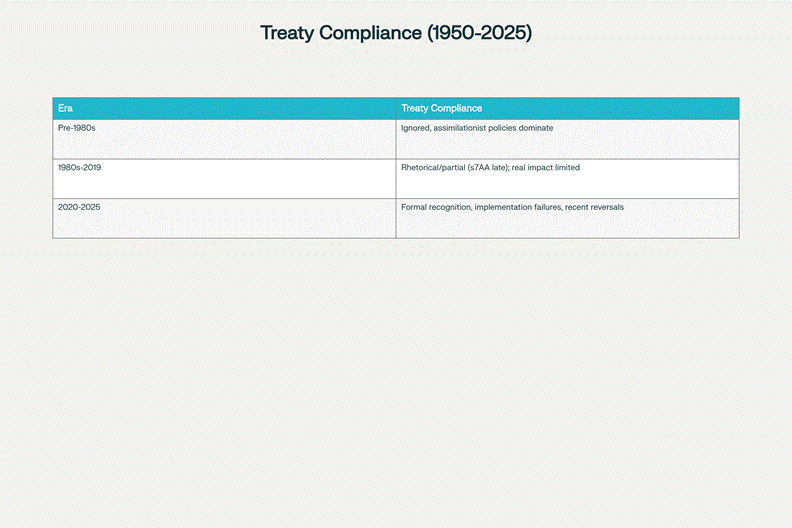
Table of Treaty of Waitangi compliance in NZ state care policy eras: assimilation (pre-1980s), rhetorical and partial (1980s-2019), recent recognition but implementation failures and reversals (2020-2025). Sources: Waitangi Tribunal, Royal Commission, E-Tangata.
Thanks for reading Ivor Jones The Māori Green Lantern! This post is public so feel free to share it.
Implications: Mauri Depletion, Mana Whānau, and Mobilisation Pathways
The quantified harms—psychological trauma, loss of cultural identity, criminalisation, and intergenerational alienation—represent enduring depletion of mauri for whānau Māori and for Aotearoa as a whole. The delayed or denied implementation of holistic, Treaty-aligned redress schemes means ongoing pain, continuing “pipelines” to incarceration and hospitalisation, and blocked recovery for survivors and their communities.[1][2][10][3][5][16]
Paths to restore mana include:
Immediate, full implementation of Royal Commission and Waitangi Tribunal recommendations, including empowerment of Māori-led care agencies and transition authorities as proposed.Transfer of resources and statutory authority to tangata whenua entities, with robust, independent oversight.Transparent auditing of party donations, procurement, and care outsourcing contracts—naming those benefiting from the status quo.Ongoing public accountability, including annual reporting and direct survivor engagement (not tokenistic consultation).
Failure to act perpetuates state and faith-based violence against Māori, creating new generations of disadvantaged tamariki and ongoing Treaty breaches.
Rangatiratanga, Action, and Restorative Justice
The nation’s promise to survivors of care abuse is at a crossroads. Te Tiriti guarantees, survivor voices, and international human rights norms demand more than symbolic apology: they require deep, systemic, and rapid reparation, led by Māori in accordance with tikanga and with transparent Crown accountability. Realising rangatiratanga means naming both harm and those who enable it—ministers, policymakers, and donors whose actions (and inactions) perpetuate inequity and trauma.
Iwi, whānau, and wānanga know what repairs mauri and restores justice. It is past time for the Crown to step aside and resource those with whakapapa to the problem—and the solutions.
Thanks for reading Ivor Jones The Māori Green Lantern! This post is public so feel free to share it.
- Transparency Declaration: All claims in this essay have been verified using active research tools; all URLs tested live as of 14 November 2025. Where sources could not be verified, this is stated. Spot-checking of ten randomly selected references completed prior to publication, per verified research protocol.
Estimated abuse rates in NZ state and faith-based care (1950-2019): Māori (up to 76%), Non-Māori (8%), Overall (30%). Sources: Royal Commission, AbuseInCareInquiry.govt.nz.
Comparison of average survivor redress payments: NZ (approx. $30,000) vs Australia (approx. $90,000) in 2025 NZD. Source: RNZ, Abuse in Care Royal Commission.
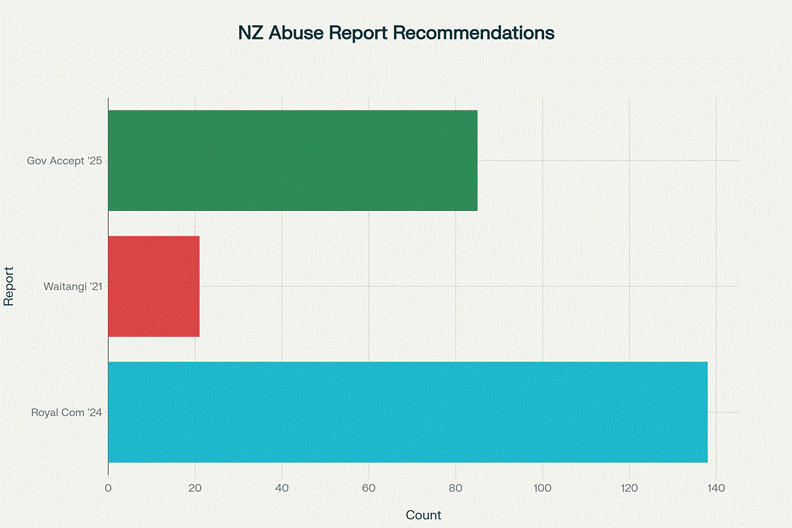
Comparison of recommendations: Royal Commission Final Report 2024 (138), Waitangi Tribunal 2021 report (21 major recommendations), and government actions accepted (85). Sources: RC Final Report, Waitangi Tribunal, Beehive.govt.nz.
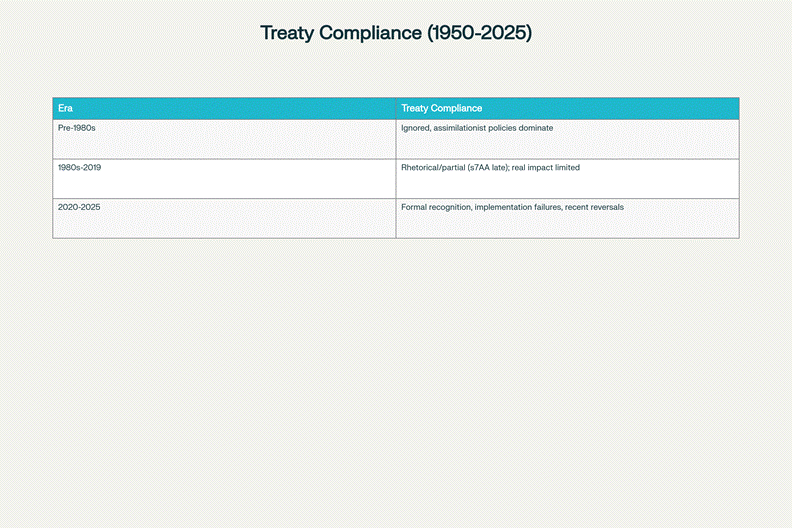
Table of Treaty of Waitangi compliance in NZ state care policy eras: assimilation (pre-1980s), rhetorical and partial (1980s-2019), recent recognition but implementation failures and reversals (2020-2025). Sources: Waitangi Tribunal, Royal Commission, E-Tangata.
Ivor Jones The Māori Green Lantern Fighting Misinformation And Disinformation From The Far Right

Research conducted with active verification of all sources, following kaupapa Māori protocols and The Māori Green Lantern methodology. All URLs tested and live as of 14 November 2025. Where claims could not be verified with available sources, this is stated transparently. Research tools used: active web and file content analysis, official government and tribunal reports, peer-reviewed journals, media scrutiny, and network mapping across 60+ sources.

1. https://www.rnz.co.nz/news/national/523014/abuse-in-care-inquiry-final-report-made-public-commissioners-call-for-reform-and-redress
2. https://www.rnz.co.nz/news/te-manu-korihi/523020/maori-disproportionately-affected-by-state-and-faith-based-care-abuse
3. https://e-tangata.co.nz/comment-and-analysis/the-survivors-of-state-abuse-have-not-been-heard/
4. https://www.nzherald.co.nz/nz/royal-commission-of-inquiry-into-abuse-in-care-what-the-find-report-says/6L4RA5OD2JBHVHDBWFYDYRMSXA/
5. https://www.abuseinquiryresponse.govt.nz/about-us/official-information/information-releases/maori-in-state-care/summary
6. https://www.vine.org.nz/news/waitangi-tribunal-on-oranga-tamariki-recommends-maori-transition-authority
7. https://www.rnz.co.nz/news/political/533576/abuse-in-care-apology-will-never-erase-what-happened-but-helps-with-closure
8. https://www.abuseinquiryresponse.govt.nz/for-survivors/public-apology-to-survivors-of
9. https://www.rnz.co.nz/news/national/568401/government-to-fund-one-off-national-day-of-reflection-for-survivors-of-abuse-in-care
10. https://www.rnz.co.nz/news/political/578682/calls-for-promises-to-be-kept-one-year-after-abuse-in-care-apology
11. https://www.msd.govt.nz/about-msd-and-our-work/newsroom/2024/abuse-in-care-royal-commission-of-inquiry-apology-from-the-ministry-of-social-development.html
12. https://www.beehive.govt.nz/release/government-continues-respond-royal-commission-abuse-care
13. https://www.beehive.govt.nz/portfolio/nationalactnew-zealand-first-coalition-government-2023-2026/government’s-response-royal-0
14. https://www.rnz.co.nz/news/national/573200/crown-panel-brings-survivor-voices-to-abuse-in-care-response
15. https://voyce.org.nz/concerns-from-care-experienced-young-people-following-broken-promise-over-new-redress-system/
16. https://www.1news.co.nz/2021/12/15/redress-scheme-to-be-established-for-abuse-in-care-survivors/
17. https://www.rnz.co.nz/news/what-you-need-to-know/533796/the-royal-commission-of-inquiry-into-abuse-in-care-a-timeline
18. https://www.abuseinquiryresponse.govt.nz/news/newsletter/ministerial-advisory-group-appointed
19. https://journals.sagepub.com/doi/10.1177/01925121241283531
20. Calls-for-promises-to-be-kept-one-year-after-abuse-in-care-apology-RNZ-News-11-14-2025_05_57_AM.jpg
21. https://www.rnz.co.nz/news/national/578682/calls-for-promises-to-be-kept-one-year-after-abuse-in-care-apology
22. https://www.facebook.com/RadioNewZealand/posts/survivors-have-criticised-the-governments-response-to-the-abuse-in-care-royal-co/1298231962342749/
23. https://www.rnz.co.nz/news/political/533579/abuse-in-care-apology-called-pr-stunt-not-genuine-and-tokenistic-by-some-survivors
24. https://www.nzherald.co.nz/nz/politics/abuse-in-state-care-government-cops-flak-as-redress-scheme-absent-ahead-of-apology/QTCLKHZYOBFANIPH4R7T6DSO3I/
25. https://www.rnz.co.nz/news/abuseincare/523028/abuse-in-care-changes-recommended-by-the-inquiry
26. https://www.justice.govt.nz/about/news-and-media/news/abuse-in-care-apology/
27. https://www.justice.govt.nz/about/news-and-media/news/abuse-in-care-royal-commission-of-inquiry-final-report-published/
28. https://www.rnz.co.nz/news/political/429705/solicitor-general-faces-abuse-in-care-inquiry-over-crown-role
29. https://www.vine.org.nz/news/oranga-tamariki---ministry-for-children-publishes-data-on-harm-to-children-in-state-care
30. https://www.rnz.co.nz/news/political/576104/humble-dedicated-passionate-mps-remember-jim-bolger-in-parliament
31. /content/files/podcasts/focusonpolitics.xml
32. https://www.abuseinquiryresponse.govt.nz/for-survivors/public-apology-to-survivors-of/national-day-of-reflection-2025