“Ōpōtiki’s $225,000 Betrayal: How a Spineless Council Broke Its Promise to Public Fishing Access While Drowning the Mussel Industry in Taxpayer Gold” - 19 December 2025
The Con Is Exposed
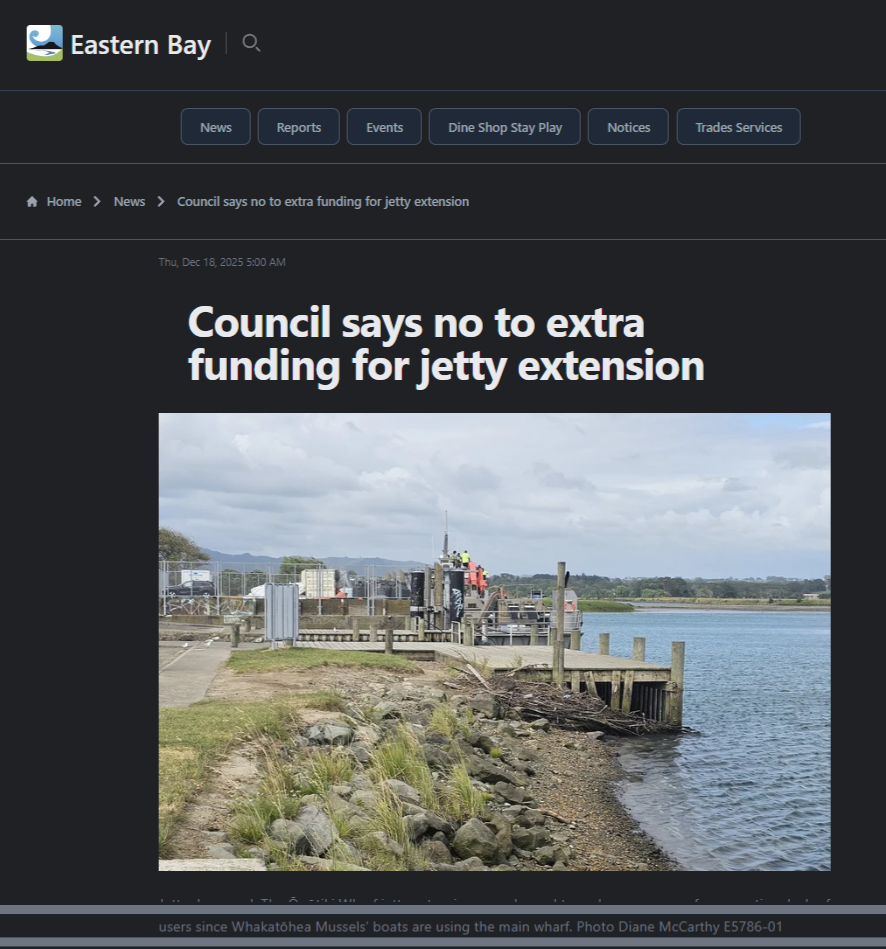
The mask slipped on Tuesday, December 17, 2025, when Ōpōtiki District Council voted to abandon public recreational facilities—not because the money didn’t exist, but because they simply didn’t care enough to prioritise whānau over commercial interests.
A jetty extension project designed to give ordinary Ōpōtiki residents access to public fishing and recreation, promised as an offset for closing part of the town wharf to Whakatōhea Mussels’ commercial operation, is now being chopped, delayed, or scaled down—all because the council refuses to bridge a $225,000 gap.
Let that number sit for a moment. $225,000.
In the same Ōpōtiki where the Crown has already shovelled $115.3 million into a harbour infrastructure for commercial aquaculture, this motu-sized council can’t find a quarter-million to deliver what they explicitly promised the public.
This is not incompetence. This is betrayal. And it needs naming.
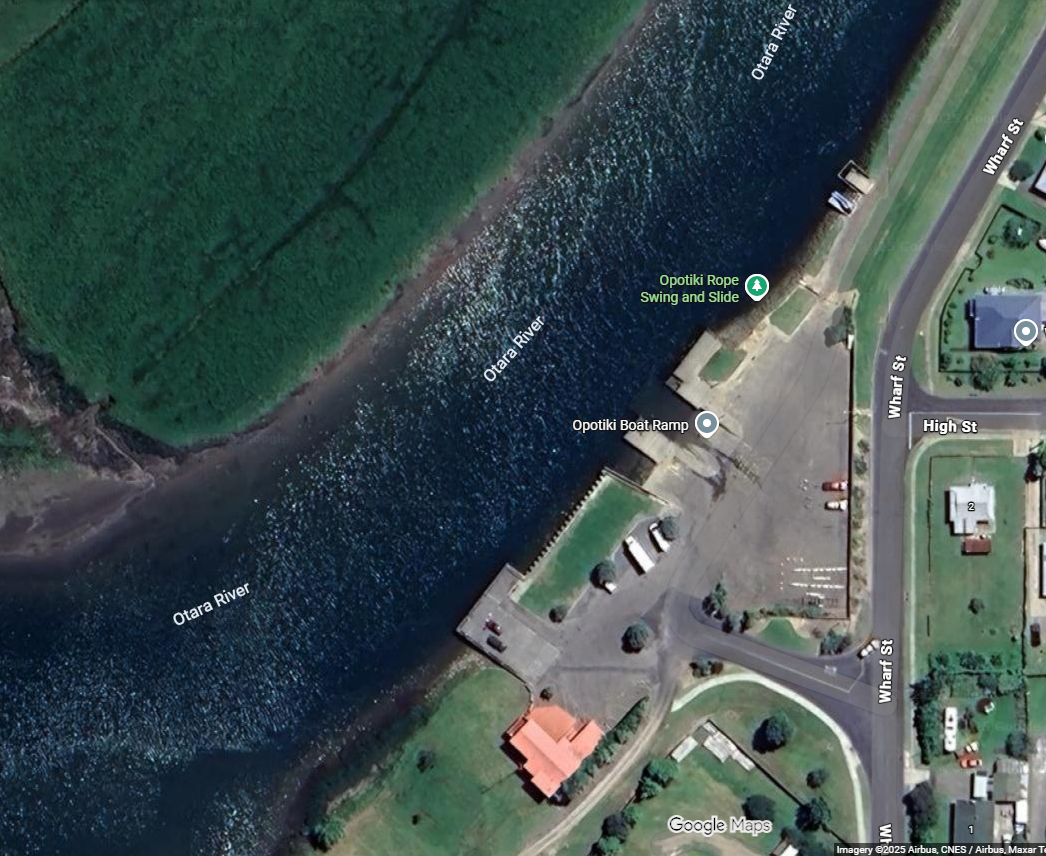
Ōpōtiki Boat Ramp and Swing Slilde
The Promise They Made—In Writing
The Wharf Masterplan (2023) was supposed to be the vision. According to the design framework, the council committed to creating “a high-quality gateway to the marine environment of the eastern Bay of Plenty, providing a range of facilities for residents and visitors to enable them to enjoy the natural environment.”
This wasn’t vague corporate waffle. It specified:
- Water access steps
- A jetty extension
- Parking for boats and trailers
- Public boat launching facilities
- A boardwalk along the shoreline
The stated rationale was clear and documented: the jetty and recreational improvements were meant to
In other words, Whakatōhea Mussels gets the main wharf for its commercial operation. The public gets the jetty extension as compensation. A deal. A promise. A commitment entered into the Long-term Plan 2024-2034 with a budget of $450,000.
Now? That deal is being shredded.
The Numbers That Expose the Lie
The Harbour: The Crown spent $95.2 million on harbour walls and dredging to service commercial mussel boats. That work is complete and operational as of November 2025. Mission accomplished for big aquaculture.
Whakatōhea Mussels (WMOL): The Crown has injected a total of $52 million into this loss-making operation, which has made losses every single year since its founding in 2014. As recently as June 2024, WMOL reported $12 million in annual losses and had breached its banking covenants for three consecutive years. In September 2024, Regional Development Minister Shane Jones—without blinking—convinced Cabinet to inject $16.5 million more to keep this corporate corpse ambulatory.
Total Crown spend on Ōpōtiki aquaculture infrastructure and bailouts: Over $167 million for a sector that has never achieved profitability.
The Jetty for Ordinary People: Budget $450,000. Updated cost estimate $615,000. Council refusal to find the $225,000 gap. Project now at risk of scope reduction, delay, or indefinite shelving.
The ratio tells you everything you need to know about whose interests this council serves.
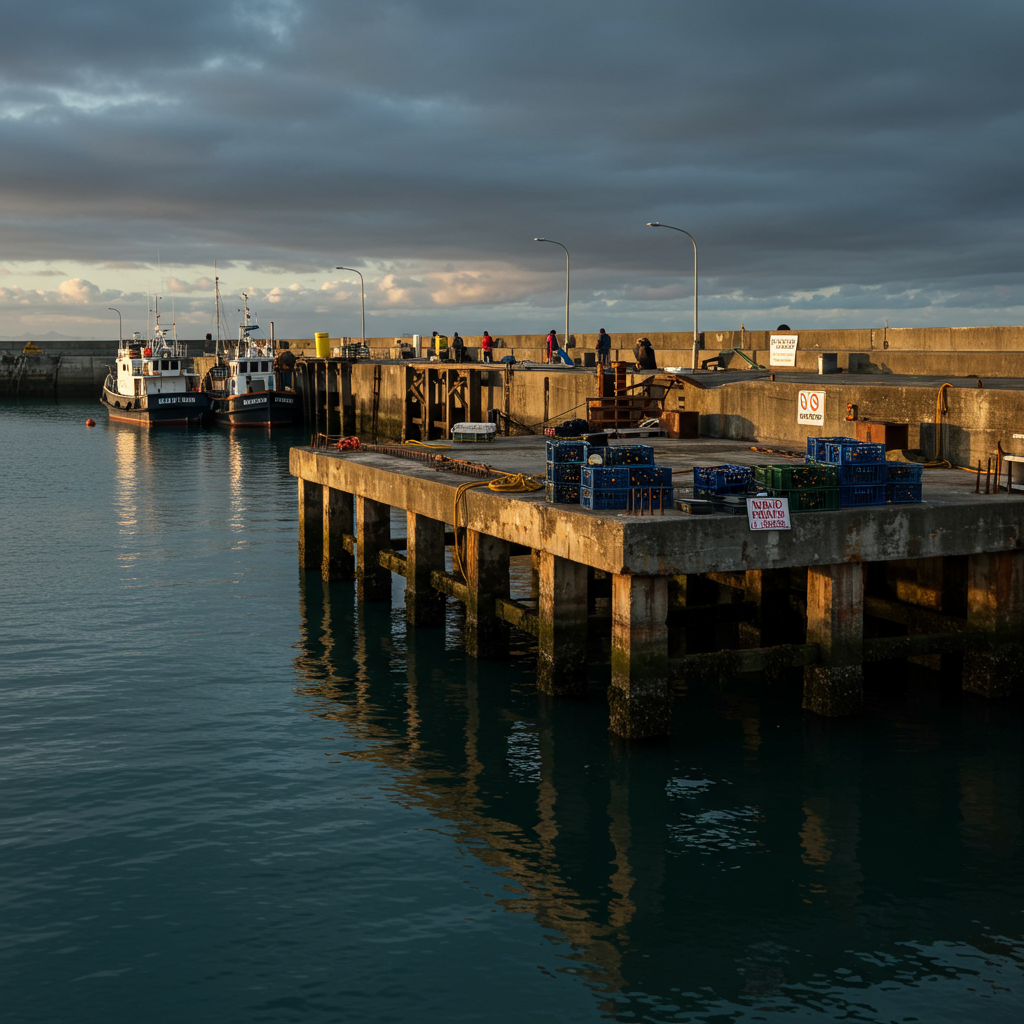
The Abandoned Promise - Descoped Jetty
How the Council Thinks
At the December 17 meeting, Councillor Barry Howe declared:
“We don’t want a gold-plated jetty.”
A “gold-plated” jetty? The original $450,000 budget was already razor-thin for what the masterplan promised. A 37% cost overrun in today’s inflation environment is not outrageous—it’s predictable. But the councillor’s response reveals the operative logic:
public amenities must be perpetually downsized, while corporate subsidies are unlimited.
Mayor David Moore’s proposal was the council playbook in action:
test the market, ask contractors what corner-cutting scope reduction could be delivered at the original price. In other words, promise less, build less, give the community less.
He also suggested shelving it as “shovel-ready” for future consideration—the refuge of politicians who don’t want to admit they’ve abandoned a commitment.
“Future consideration” in council-speak means “not happening on our watch; someone else can deal with the angry residents.”
The Pattern of Destruction: From Te Tahuhu o Te Rangi to the Jetty
But this isn’t the first time David Moore and his council have tried to systematically destroy public amenities by claiming fiscal crises.
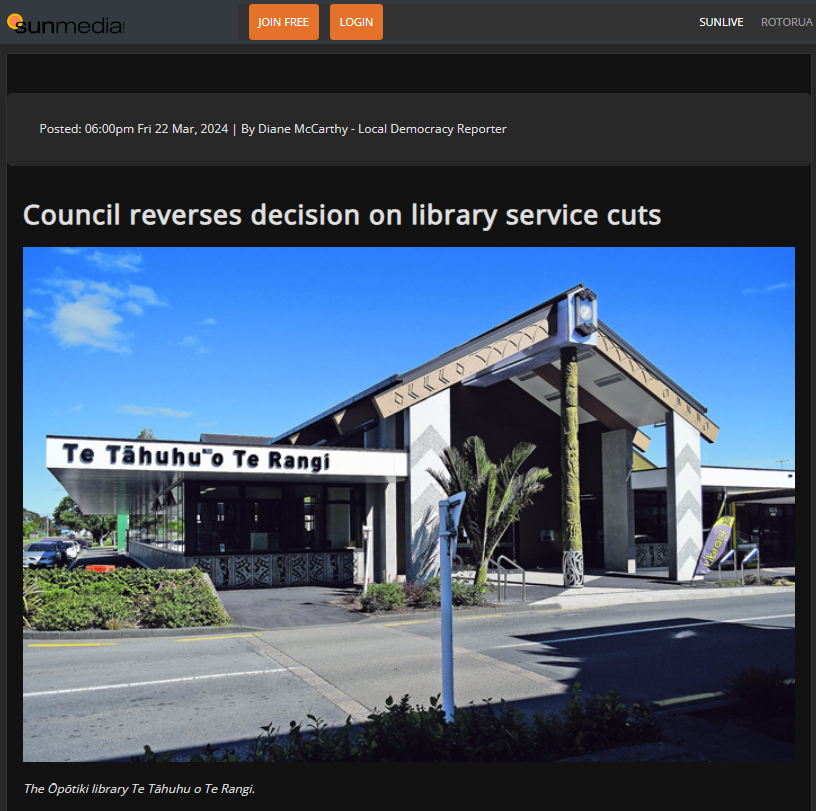
In February 2024, the council proposed cutting library hours at Te Tāhuhu o Te Rangi—the district’s $4 million library and digital hub—to reduce paid library services to just 20 hours a week. They also proposed combining the iSite and library with reduced staff levels, including in the makerspace area and associated programmes.
When residents spoke out—passionately—a community delegation, including Ivor Jones, Dido Eden, Crystal Beach, and others, addressed the council during the public forum, pointing out that the council had already allocated $190,000 for boat ramps and jetties for the mussel operation while seeking to cut a library that served the entire community.
660 people signed a petition to keep the library full time. Between February 8 and March 12, the council received feedback from 28 members of the public, 26 of whom were against any reduction in services at the library.
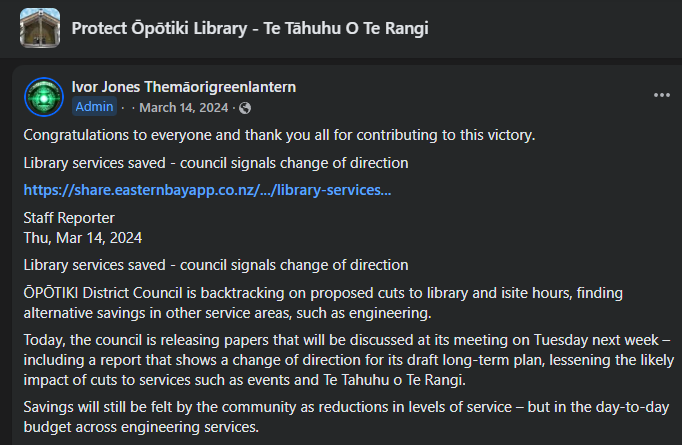
The public pressure worked. At a meeting in March 2024, Ōpōtiki district councillors “seemed incredulous that the public thought they ever planned to reduce library hours.” The council revoked its previous decision and endorsed new budget recommendations, keeping library services intact.
This is the critical pattern you must understand: When communities organise and push back hard, this council retreats. But when there’s less visibility or when it can frame cuts as “fiscal responsibility,” they slash away.
The library saga taught them a lesson—but not the right one. They learned they needed to be more subtle. Instead of proposing direct cuts to beloved public services, they’d propose scope reduction and descoping of projects—the same technique now being applied to the jetty.
Instead of proposing to cut the library from full-time to 20 hours, they’re proposing to turn the jetty extension into a “smaller jetty than planned.” Same outcome. Different framing.
The Ideological Dishonesty
Here’s where this becomes truly contemptible.
When the Crown needs $115.3 million for harbour infrastructure serving one commercial operator, nobody asks if it’s “gold-plated.” When Regional Development Minister Jones needs $16.5 million to prop up a loss-making mussel farm that has breached banking covenants, Cabinet finds the money—even though Act Party ministers explicitly said it was wasteful. When aquaculture needs support, we’re told it’s “nation-building,” “regional prosperity,” and “job creation.”
But when ordinary Ōpōtiki residents need a jetty and boardwalk to access their own shoreline—a promise made to them in exchange for ceding public wharf space to commercial use—suddenly we’re worried about fiscal discipline. When they need their library to remain fully staffed and accessible, suddenly the council is reaching for the knife.
The hypocrisy is staggering.
The Deeper Con: “The People Are Already Fishing Illegally”
Let that sink in. The logic is:
Because residents are desperate enough to fish illegally off closed areas, we don’t need to provide the legal access we promised.
This is not governance. This is gaslighting.
The people weren’t ignoring signs because the jetty extension was unnecessary—they were fishing where they could because their promised public space was already taken by commercial operators. The solution isn’t to say, “Well, they managed illegally, so the problem is solved.” The solution is to deliver what you promised.
Instead, the council has weaponised the residents’ own desperation to justify abandoning them.
Who Made $225,000 Disappear?
This isn’t about a mysterious budget hole. This is about priorities. Priorities that can be traced to decision-makers who chose differently.
Ōpōtiki District Council allocated $450,000 in the Long-term Plan 2024-2034. That showed intent—or at least, going through the motions.
An updated engineer’s estimate put the real cost at $615,000. That’s market reality in 2024–2025: inflation, supply chain costs, labour rate increases.
The council’s response? Not to find the $225,000 or to argue for a one-year delay. Not to reallocate other funds or to apply for additional government support for a public amenity that was supposed to offset a commercial concession.
Instead: scale it back. Shelve it. Make it “future.”
This is the neoliberal playbook: privatise gains, socialise losses, and when public infrastructure becomes inconvenient, make it disappear through “fiscal constraints,” “descoping,” and excuses about market testing and future consideration.
The Regime of Aquaculture Worship
Ōpōtiki has become a case study in how a region can be reorganised entirely around one corporate sector, with all the machinery of state redirected to serve it.
The Crown spent $115.3 million on harbour infrastructure. WMOL has extracted $52 million in direct equity and bailout support. The council has now ceded substantial portions of the public wharf to commercial mussel operations.
And what do ordinary residents get? A promise that keeps shrinking.
The Wharf Masterplan, designed to be a genuine public-community space, has been transformed into a support facility for corporate aquaculture. The jetty extension—the one tangible public benefit that was supposed to justify the sacrifice of public wharf space—is now being dismantled by a spineless council that lacks the conviction to stand up to cost overruns that would be considered trivial for any commercial project.
The library staff hours faced the knife when the council sought savings for rates. The jetty extension faces the knife when costs overrun. Meanwhile, the harbour gets $115 million and the mussel operation gets $52 million more—no questions asked, no cost controls, no fiscal responsibility demanded.
The Real Scandal: It Could Have Been Different
The $225,000 gap could have been bridged. Here are options this council never apparently considered:
- Apply to central government for co-funding from Regional Investment Opportunities Fund (the same fund that supplied $95.2 million for the harbour). One quarter-million for public recreation would be a rounding error.
- Reallocate from the Better Off Funding the council has access to. The Council Service Delivery Group Manager Nathan Hughes confirmed the council has received Better Off Funding from the previous Labour Government. Using a portion of it for a public recreational project—the exact purpose of that funding—would have been legitimate.
- Defer non-essential spending elsewhere in the budget. Every council has discretionary items that could absorb a $225,000 hit if the political will existed.
- Stage the project differently. Complete phase one at $450,000, stage phase two for later. Show the community you’re committed, not retreating.
But none of these options were seriously explored. Why? Because the council didn’t want to deliver it. Because public amenities are politically easier to abandon than corporate subsidies.
But here’s the real lesson from the library fight:
when communities organise and show up, things can change.
The library was saved because residents understood the game and named it publicly. They brought 660 signatures and a dozen people to the council chamber to tell the mayor and councillors exactly what they thought.
The jetty extension can be saved the same way.
The Pattern of Broken Promises
The Wharf Masterplan was supposed to be completed by April 2023. We’re now in December 2025. The core public component—the jetty extension offsetting the closure—has now been either abandoned or dramatically rescoped.
This is what happens when communities make deals with councils that don’t believe in them. The infrastructure for corporate expansion gets built on schedule and on budget. The infrastructure for public benefit gets delayed, descoped, and finally discarded.
The Cui Bono: Who Benefits from This Betrayal?
Whakatōhea Mussels continues to enjoy uninterrupted, publicly-subsidised wharf access without the obligation of maintaining the promised offset.
Private aquaculture interests watching this unfold know that any “community benefit” commitments made to them are essentially unenforceable—that when budgets tighten, councils will abandon public promises before they compromise corporate access.
The council leadership avoids a politically difficult decision about priorities and simply declares the project “future” or “under review.”
Ordinary Ōpōtiki residents lose. Again. As they always do in neoliberal governance arrangements.
But here’s what’s different from the library saga:
this time, residents know the playbook. They watched it unfold with Te Tāhuhu o Te Rangi. They know when a council is lying about “fiscal responsibility.”
What Needs to Happen Now
Name this decision for what it is: A broken promise, a betrayal of community trust, and evidence that this council prioritises corporate interests over public wellbeing.
Demand accountability: Call on the council to explain, publicly and in detail, why they could not find $225,000 for a project they explicitly committed to in their Long-term Plan—while simultaneously celebrating Crown investments of $115+ million in aquaculture infrastructure.
Organise like the library community did: Collect petitions. Bring delegations to council meetings. Get media coverage. Show up in numbers. Make them explain the hypocrisy on the record.
Push for reinstatement: Residents should demand that the council either:
Find the funding to complete the project as originally designed, or
Commit to a specific timeline and phased approach that keeps the promise alive, or
Admit they lied about their commitment and formally withdraw it from all planning documents.
Demand transparency on aquaculture costs: If the council can justify $115+ million in indirect Crown spending on aquaculture, they need to justify why $225,000 for public recreation is somehow impossible.
Change the councillors: At the next election, vote out those who prioritise corporate subsidies over public amenities. This council has shown its true face—twice.
The Deeper Issue: Whose Harbour Is This?
The Ōpōtiki Wharf is public land. The harbour is a public asset. Yet both have been progressively reorganised to serve private commercial interests—with the public told to accept smaller and smaller slices of what was once theirs.
The jetty extension represented a minimal assertion of public right to the waterfront. A place where residents could fish, launch boats, and enjoy the marine environment that was once freely accessible to all before commercial operations took over.
By abandoning that commitment, the council isn’t just breaking a promise. It’s codifying a principle:
In neoliberal Ōpōtiki, public interests are expendable. Corporate interests are sacred. And fiscal responsibility, apparently, only applies to poor people.
But the library community showed that residents don’t have to accept this. They can fight back. They can show up. They can name the game and refuse to let the council reframe abandonment as “tough decisions.”
The Checklist of Betrayal
✓ Public promise made in writing
✓ Public promise entered into official planning documents
✓ Budget allocated in Long-term Plan
✓ Cost overrun occurred (37%)
✓ Council refused to bridge the gap
✓ Public amenity downscoped or delayed
✓ Commercial interests continue to receive unlimited public support
✓ Residents lose out—again
✓ Pattern repeats from library saga
✓ No accountability applied
This is how neoliberalism kills public goods. Not dramatically, with cuts and closures, but quietly—through “fiscal constraints,” “descoping,” “hard decisions,” and excuses about market testing and future consideration.
This is how councils train residents to expect less, to accept downgraded services, to stop demanding their own resources back.
But Ōpōtiki residents already know better. They proved it with the library. Now they need to do it again—before the jetty becomes another promise filed away in the “future consideration” folder, never to be seen again.
Ōpōtiki residents were promised a jetty. They’re getting a lesson in how little their interests matter in a system rigged to serve those who own capital.
The council should be ashamed. And the community should demand better.
Koha statement
Only Support this mahi if you are able: Koha.Kiwi | Substack | Bank: HTDM 03-1546-0415173-000
All koha sustains free mātauranga Māori journalism. No paywall, no corporate interference.

Ivor Jones The Māori Green Lantern Fighting Misinformation And Disinformation From The Far Right
Research conducted using official council documents, NZ Herald business reporting, Aquaculture NZ statements, SunLive community journalism, and Crown agency publications. All citations verified for accuracy and linked directly to original sources.
- https://docs.google.com/document/d/12SgUVYnMz2GYvxvSiHZT0y439tSkGgpQK-dcKnDZDQw/edit?usp=drivesdk
- https://ppl-ai-file-upload.s3.amazonaws.com/web/direct-files/collection_cf06d657-2c2b-4e68-8735-48f3c10166bd/fa7ea9f0-3948-41f0-9a6d-037b51b58d4a/Whakapiki-ki-te-ao-Maori-Application-2026.pdf
- https://docs.google.com/document/d/1RCQWOjw2dyqXBQ0vv5estfJ25HSNigXV2r27P5V9Y7o/edit?usp=drivesdk
- https://docs.google.com/document/d/1nF-EYN8cTzbAxBrD-EZzVd6DYwbUMM2XbT12kXN2mpM/edit?usp=drivesdk
- https://drive.google.com/file/d/1U25L-eBU3_W8vfV9E4PnmvMfFWnGlPjx/view?usp=drivesdk
- https://docs.google.com/document/d/1s5axgZZrkYT85gDd1ydPInvorzlzKXcAvZRmGOrIdHo/edit?usp=drivesdk
- https://ppl-ai-file-upload.s3.amazonaws.com/web/direct-files/attachments/2123776/5d647f63-2044-4f44-aa2e-3cc653bdf45d/Eastern-Bay-App-Beacon-Media-Group.pdf
- https://ppl-ai-file-upload.s3.amazonaws.com/web/direct-files/attachments/2123776/f7ab9861-920a-417d-884b-800637a0183d/Eastern-Bay-App-Beacon-Media-Group.pdf
- https://docs.google.com/document/d/1fSIBjP2Pv4BN9_LvePCk7hdXtvlxxbTR7_YfpKEVQbE/edit?usp=drivesdk
- https://www.sunlive.co.nz/news/338233-outcry-over-cuts-in-library-service.html
- https://www.1news.co.nz/2024/02/08/the-council-that-slashed-a-proposed-rates-rise-by-two-thirds/
- https://www.sunlive.co.nz/news/67804-fight-to-stop-library-cuts.html
- https://www.sunlive.co.nz/news/1_3_council.html/page-93
- https://www.sunlive.co.nz/news/237468-ptiki-closes-isite-and-library-to-public.html
- https://sunlive.co.nz/news/1_1_.html/page-844
- https://www.rnz.co.nz/news/national/520253/libraries-cut-hours-as-councils-face-double-digit-rates-hikes
- https://sunlive.co.nz/news/339551-council-reverses-decision-on-library-service-cuts.html
- https://www.facebook.com/groups/protectopotikilibrarytetahuhuoterangi/posts/374403995525527/
- https://sunlive.co.nz/news/268720-new-hub-to-be-designed-opotiki.html
- https://www.nzherald.co.nz/rotorua-daily-post/news/opotiki-district-council-to-install-library-sign-at-te-tahuhu-o-te-rangi/NIDMAHB6IZCAVJV2KDZ7QWEFFI/
- https://www.nzherald.co.nz/nz/wellingtons-central-library-from-paralysis-to-179m-fix/WYN3ZDOCSLG4J52J2W6IEWM7YI/
- https://www.nzherald.co.nz/nz/wellington-city-council-backtracks-on-pool-and-library-cuts/Z5QTY77EIFHSXGIJTPEKHEHXZ4/
https://www.rnz.co.nz
- https://www.rnz.co.nz/tags/local%20council
- https://www.rnz.co.nz/national/programmes/checkpoint/audio/2018883666/aucklanders-speak-up-for-libraries-in-face-of-budget-cuts
- https://www.nzherald.co.nz/rotorua-daily-post/news/coronavirus-forces-closure-of-opotiki-library-and-i-site/BPE4HLVWVW3IFPDRTDJP3OGOBI/
- https://www.rnz.co.nz/news/national/525259/wellington-s-arapaki-library-to-permanently-close-on-september-27
- https://www.nzherald.co.nz/nz/auckland-council-budget-cuts-noise-control-libraries-mowing-services-reduced-from-today/PYFXQQEIHBEE3NN6LK5DJQDC3I/