"Pararēkau Island and the Apartheid of the Rising Tide" - 2 January 2026
Their Fortress of Solitude
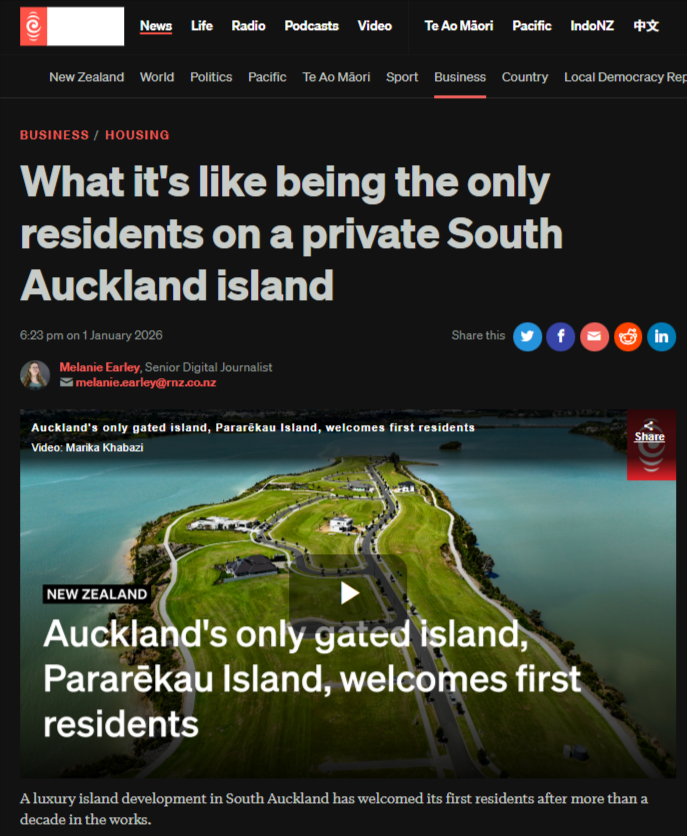
Te Whakamārama: The Light on the Hill (and the Gate)
While whānau in Papakura struggle to keep the lights on, a new fortress has risen in the Manukau Harbour. It is not a pā seeking to protect the people, but a gated enclave designed to protect capital. Pararēkau Island, once a “King Fern” in the garden of Te Ākitai Waiohua, is now a playground for the ultra-wealthy—accessible only by a coded gate, a causeway, and a bank balance that starts at $1.6 million just for the dirt, as detailed by RNZ.
They call it a “luxury development.” I call it what it is:
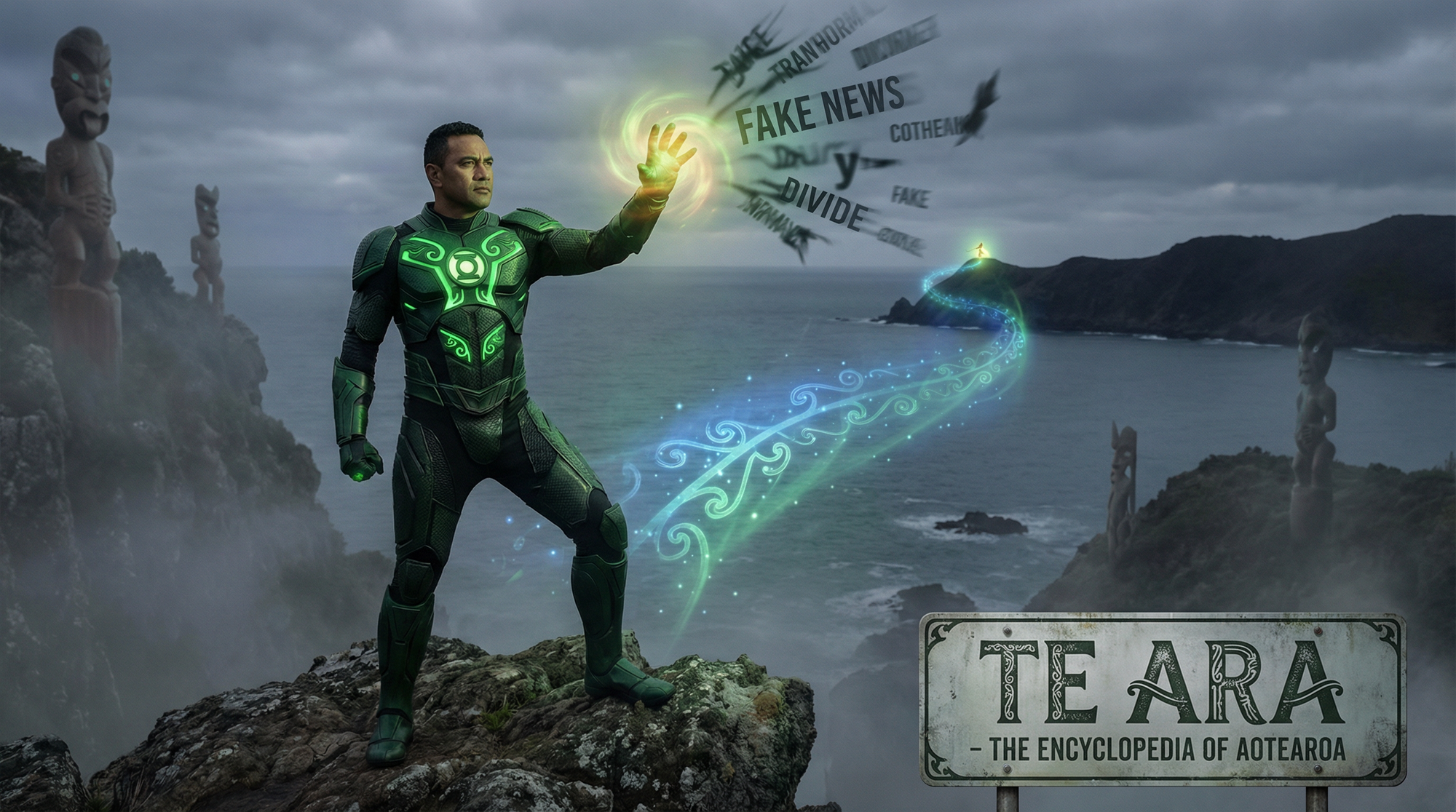
A climate-proof bunker for the beneficiaries of colonization, built on land alienated in 1848, and sold back to the public as a “privilege” to view from a designated walking track. The Māori Green Lantern ring shines bright on this one, revealing a web of historical theft, ecological arrogance, and the quiet violence of the Resource Management Act (RMA).
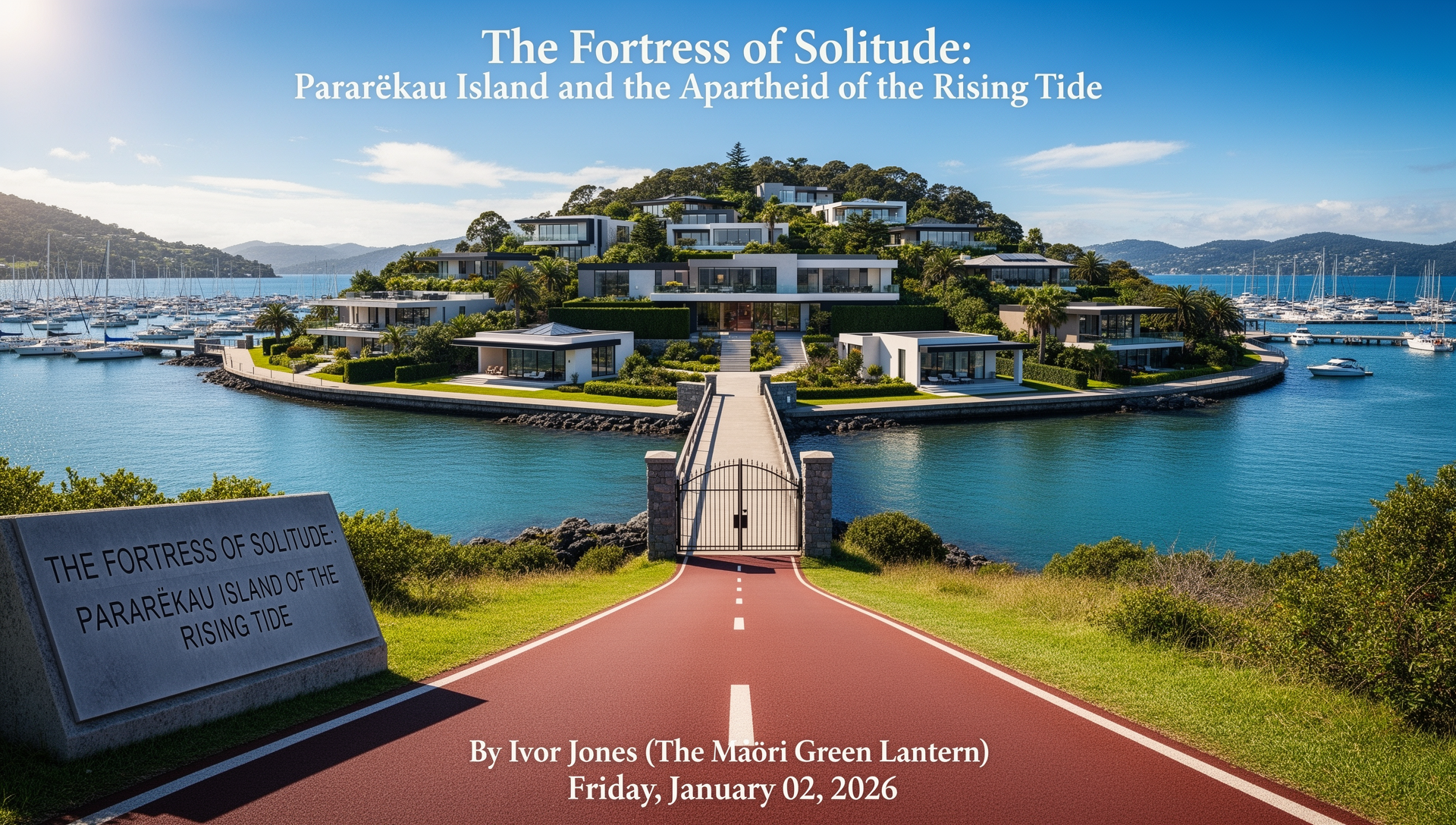
Their Fortress Of Solitude - Not For Your Whānau, And Definitely Not Mine
Te Whakapapa o te Whenua: The Genealogy of Theft
To understand the gate, you must understand the ground. Pararēkau Island sits within the rohe of Te Ākitai Waiohua, the original kaitiaki of the Manukau. But the paper trail of its theft leads back to the Crown’s aggressive acquisition campaign.
On 19 January 1848, the Crown purchased the Paraheka Block (often cited as the Ākitai Block) for a pittance, a transaction recorded in the historical accounts of the Waitangi Tribunal. This 1,030-acre acquisition was part of a relentless wave of alienation documented by local historians that stripped Te Ākitai of their economic base, pushing them to the margins of their own harbour as noted in their Settlement Summary.
The Crown didn’t just buy land; they bought the future. They paid in pounds that evaporated in a generation, while the land remained, accruing value that would eventually be captured by the Ross family dynasty. Today, that same land—stolen through the unequal power dynamics of 1848—is being sold for up to $3.5 million per lot according to Sentinel Homes listings. This is not “development.” This is the compounding interest of colonization.
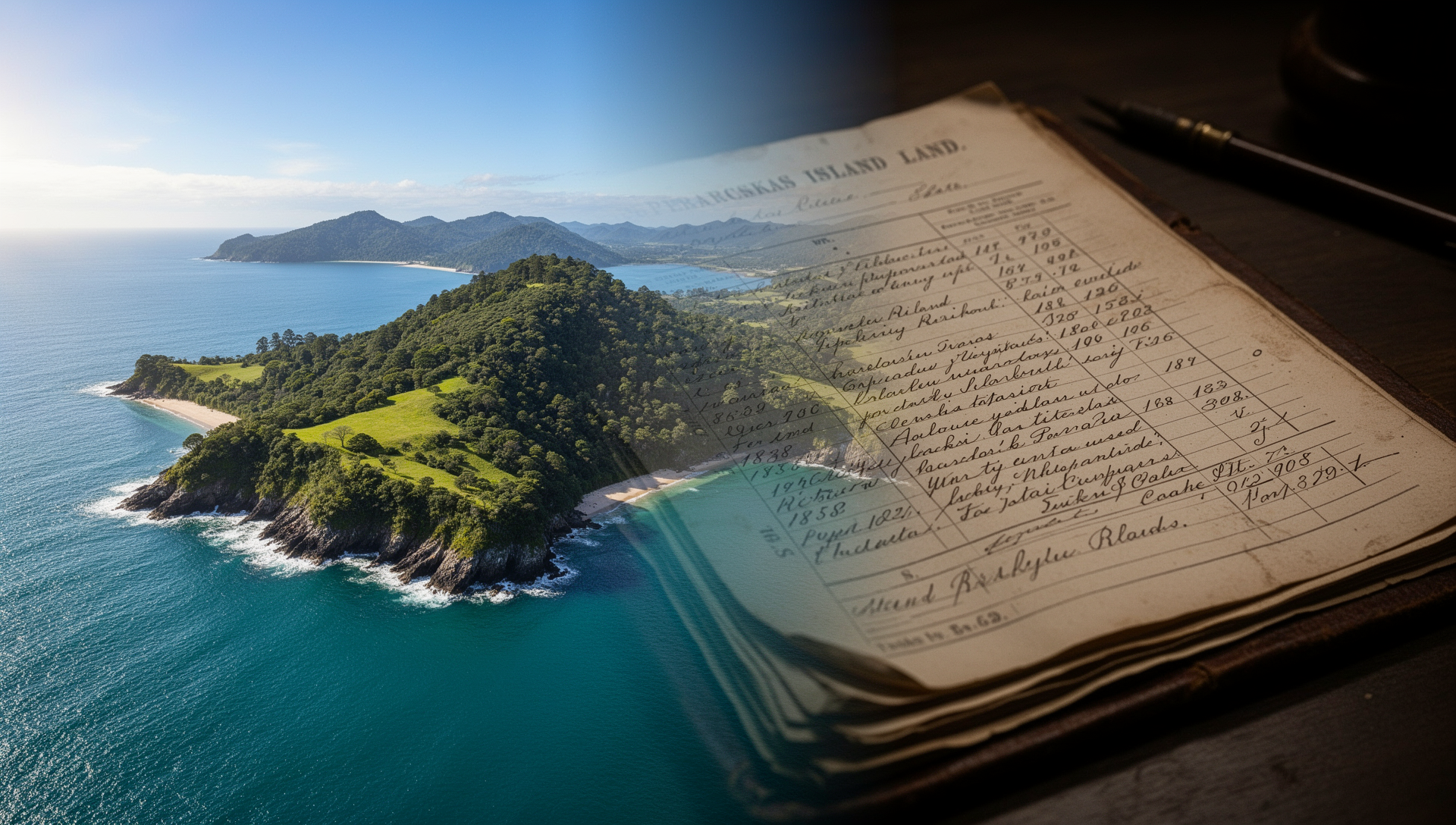
The Genealogy of Theft
Te Raru: The Ross Dynasty and the “Keyboard Warriors”
Enter Ian and James Ross of Ross Holdings, the scions of a South Auckland roofing empire who have pivoted to “turning bare land into desirable places” as described in NZ Herald sponsored content. The Ross brothers are not just developers; they are the modern landed gentry of South Auckland, with a portfolio that includes the Karaka Harbourside Estate.
When questioned about the wisdom of building a luxury island in an age of rising seas, General Manager Andrew Frost dismissed concerns as the work of “keyboard warriors” in an interview with RNZ. He assured the public that the island sits 6.5 meters above sea level and meets the “100-year sea level rise criteria”.
Let us decode this. A “100-year event” is a statistical probability, not a guarantee. As the climate collapses, 1-in-100-year storms are becoming 1-in-10-year realities. The arrogance of building a residential fortress in a tidal inlet, relying on a causeway that acts as a choke point, is a testament to the hubris of capital. They believe they can engineer their way out of Tangaroa’s reach.
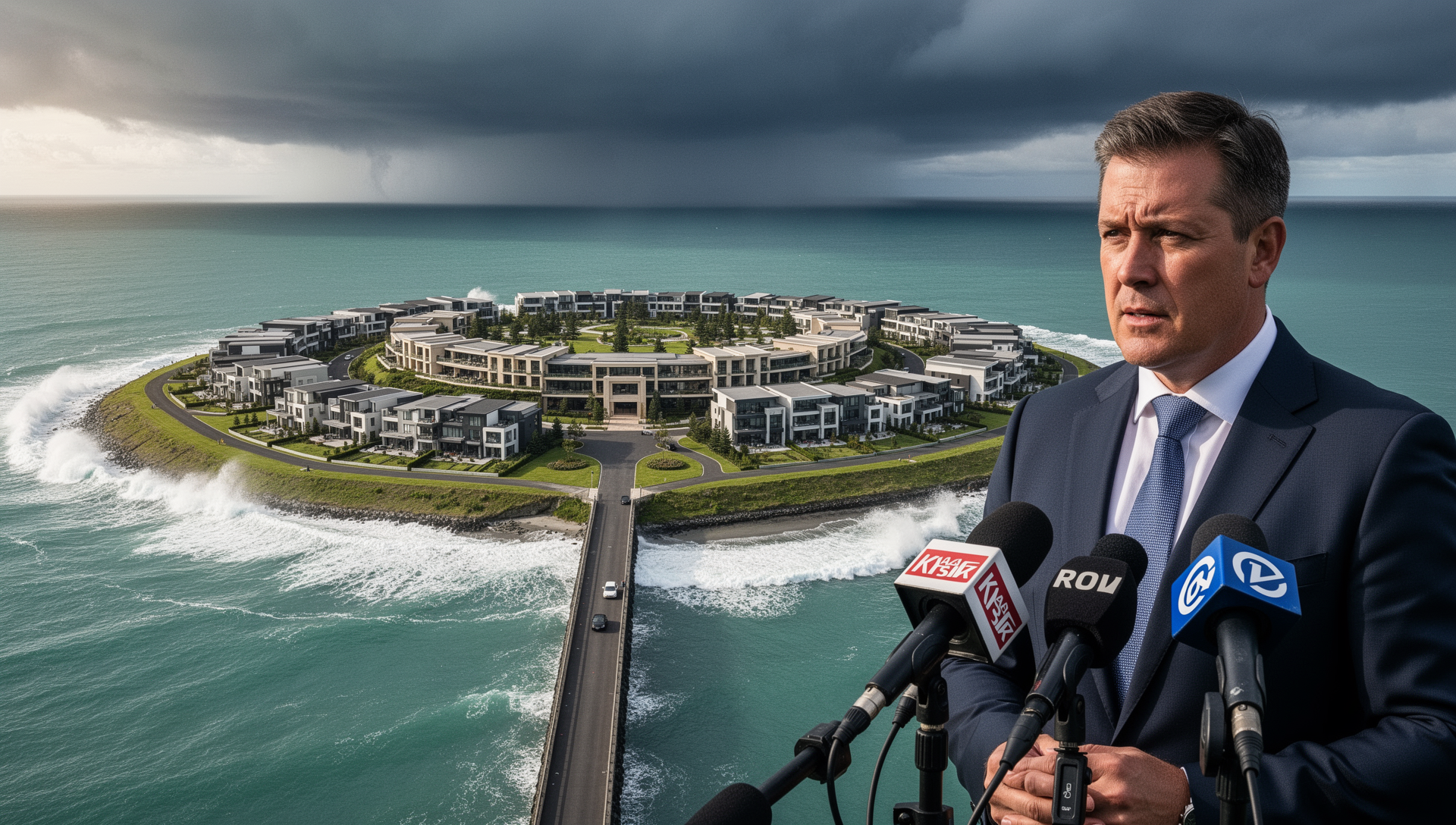
Keyboard Warriors
Ngā Kupu Huna: The Hidden Connections
My research with the ring has uncovered five critical connections that the glossy brochures omit:
1. The “Support” of Te Ākitai Waiohua is Survival, Not Endorsement
Official documents from Auckland Council state that Te Ākitai Waiohua “generally supports” the development, specifically noting the recognition of wāhi tapu. Do not mistake this for enthusiasm. Under the RMA, mana whenua are often forced into a “consultation” process where the best they can hope for is a plaque or a walkway in exchange for the destruction of their landscape. This is co-option by exhaustion. They support it because the alternative is being ignored entirely.
2. The “Coastal Walk” is a Colonial Crumb
The Environment Court approved the subdivision in 2012 only after developers agreed to a “coastal walk” for public access. This is the ultimate insult: the public is granted the “right” to walk around the perimeter of the wealth, like peasants gazing at the castle walls, between the hours of 7am and 7pm as reported by RNZ. You do not belong here. You are a visitor in your own land.
3. The Ecological Gamble with Wader Birds
The Manukau Harbour is the most important wading bird habitat in Aotearoa, supporting 20-25% of the national population according to Auckland Council environmental reports. Pararēkau Island is a known high-tide roost. Introducing 103 households, their vehicles, and their noise into this critical habitat is ecological vandalism. Water NZ studies confirm the sensitivity of these habitats. The “coastal walk” brings humans directly into the roosting zones. The birds get displaced; the millionaires get a view.
4. The Wealth Apartheid is Quantifiable
The contrast between the island and the mainland is violent. In Papakura, the per capita income is $44,947 based on Infometrics data. On Pararēkau, the cheapest section is $1.6 million as confirmed by RNZ.
- It would take a Papakura resident 35 years of gross income just to buy the dirt.
- It would take **77 yea
By Ivor Jones (The Māori Green Lantern)
Friday, January 02, 2026
Te Whakamārama: The Light on the Hill (and the Gate)
While whānau in Papakura struggle to keep the lights on, a new fortress has risen in the Manukau Harbour. It is not a pā seeking to protect the people, but a gated enclave designed to protect capital. Pararēkau Island, once a “King Fern” in the garden of Te Ākitai Waiohua, is now a playground for the ultra-wealthy—accessible only by a coded gate, a causeway, and a bank balance that starts at $1.6 million just for the dirt, as detailed by RNZ.
They call it a “luxury development.” I call it what it is: a climate-proof bunker for the beneficiaries of colonization, built on land alienated in 1848, and sold back to the public as a “privilege” to view from a designated walking track. The Green Lantern ring shines bright on this one, revealing a web of historical theft, ecological arrogance, and the quiet violence of the Resource Management Act (RMA).
Te Whakapapa o te Whenua: The Genealogy of Theft
To understand the gate, you must understand the ground. Pararēkau Island sits within the rohe of Te Ākitai Waiohua, the original kaitiaki of the Manukau. But the paper trail of its theft leads back to the Crown’s aggressive acquisition campaign.
On 19 January 1848, the Crown purchased the Paraheka Block (often cited as the Ākitai Block) for a pittance, a transaction recorded in the historical accounts of the Waitangi Tribunal. This 1,030-acre acquisition was part of a relentless wave of alienation documented by local historians that stripped Te Ākitai of their economic base, pushing them to the margins of their own harbour as noted in their Settlement Summary.
The Crown didn’t just buy land; they bought the future. They paid in pounds that evaporated in a generation, while the land remained, accruing value that would eventually be captured by the Ross family dynasty. Today, that same land—stolen through the unequal power dynamics of 1848—is being sold for up to $3.5 million per lot according to Sentinel Homes listings. This is not “development.” This is the compounding interest of colonization.
Te Raru: The Ross Dynasty and the “Keyboard Warriors”
Enter Ian and James Ross of Ross Holdings, the scions of a South Auckland roofing empire who have pivoted to “turning bare land into desirable places” as described in NZ Herald sponsored content. The Ross brothers are not just developers; they are the modern landed gentry of South Auckland, with a portfolio that includes the Karaka Harbourside Estate.
When questioned about the wisdom of building a luxury island in an age of rising seas, General Manager Andrew Frost dismissed concerns as the work of “keyboard warriors” in an interview with RNZ. He assured the public that the island sits 6.5 meters above sea level and meets the “100-year sea level rise criteria”.
Let us decode this. A “100-year event” is a statistical probability, not a guarantee. As the climate collapses, 1-in-100-year storms are becoming 1-in-10-year realities. The arrogance of building a residential fortress in a tidal inlet, relying on a causeway that acts as a choke point, is a testament to the hubris of capital. They believe they can engineer their way out of Tangaroa’s reach.
Ngā Kupu Huna: The Hidden Connections
My research with the ring has uncovered five critical connections that the glossy brochures omit:
1. The “Support” of Te Ākitai Waiohua is Survival, Not Endorsement
Official documents from Auckland Council state that Te Ākitai Waiohua “generally supports” the development, specifically noting the recognition of wāhi tapu. Do not mistake this for enthusiasm. Under the RMA, mana whenua are often forced into a “consultation” process where the best they can hope for is a plaque or a walkway in exchange for the destruction of their landscape. This is co-option by exhaustion. They support it because the alternative is being ignored entirely.
2. The “Coastal Walk” is a Colonial Crumb
The Environment Court approved the subdivision in 2012 only after developers agreed to a “coastal walk” for public access. This is the ultimate insult: the public is granted the “right” to walk around the perimeter of the wealth, like peasants gazing at the castle walls, between the hours of 7am and 7pm as reported by RNZ. You do not belong here. You are a visitor in your own land.
3. The Ecological Gamble with Wader Birds
The Manukau Harbour is the most important wading bird habitat in Aotearoa, supporting 20-25% of the national population according to Auckland Council environmental reports. Pararēkau Island is a known high-tide roost. Introducing 103 households, their vehicles, and their noise into this critical habitat is ecological vandalism. Water NZ studies confirm the sensitivity of these habitats. The “coastal walk” brings humans directly into the roosting zones. The birds get displaced; the millionaires get a view.
4. The Wealth Apartheid is Quantifiable
The contrast between the island and the mainland is violent. In Papakura, the per capita income is $44,947 based on Infometrics data. On Pararēkau, the cheapest section is $1.6 million as confirmed by RNZ.
- It would take a Papakura resident 35 years of gross income just to buy the dirt.
- It would take 77 years to buy a prime spot.
This is not a community; it is an apartheid of affordability.
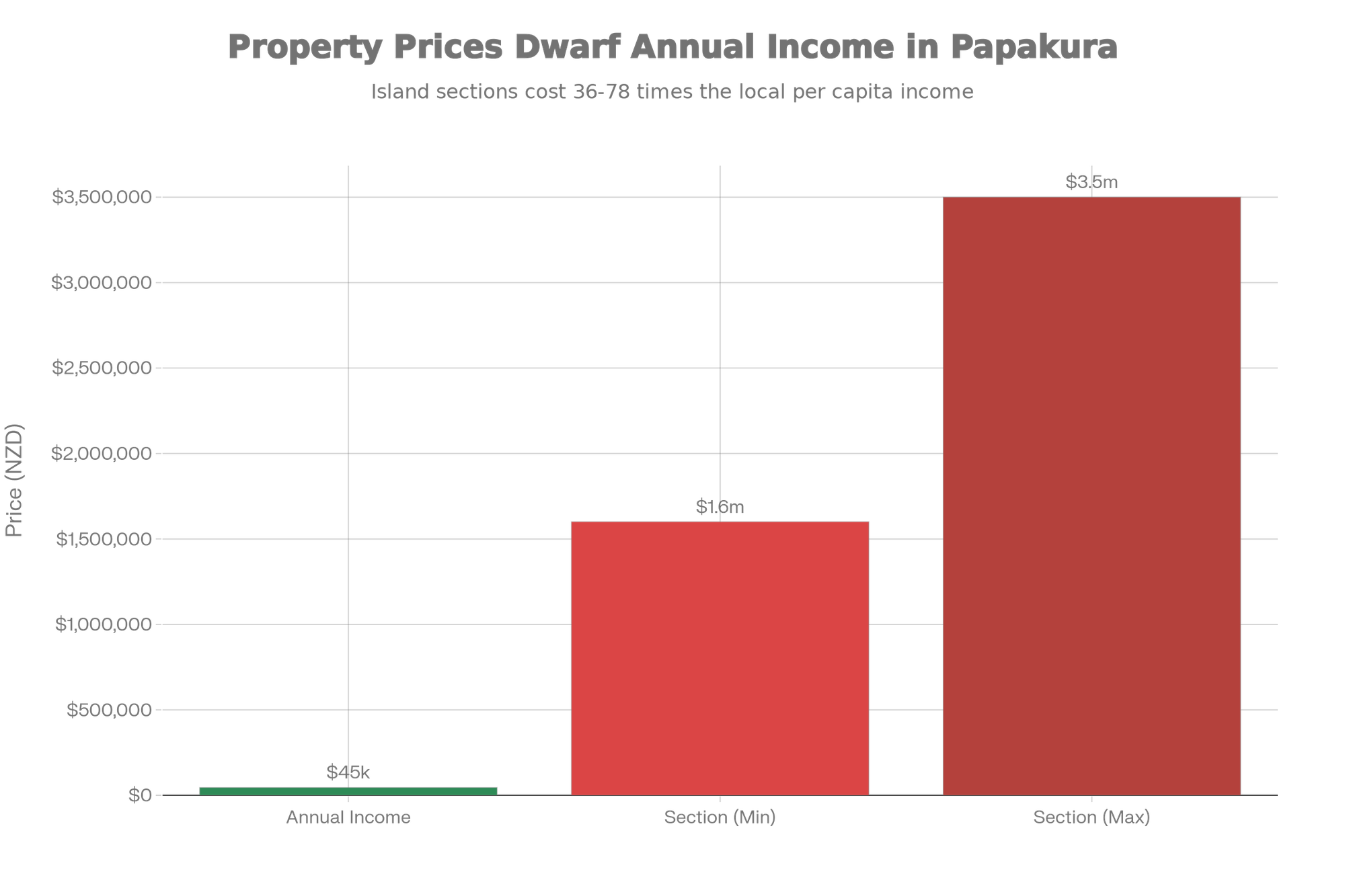
The Affordability Chasm: Papakura Income vs Pararēkau Island Land Costs
5. The “Gated Community” Anomaly
Frost claims this is the “only gated community island in New Zealand” in his interview with RNZ. This sets a dangerous precedent. It normalizes the idea that if you are rich enough, you can physically secede from the community. You can lock the gate on the poverty of South Auckland while enjoying the “peace and quiet” of the harbour that poverty helped build.
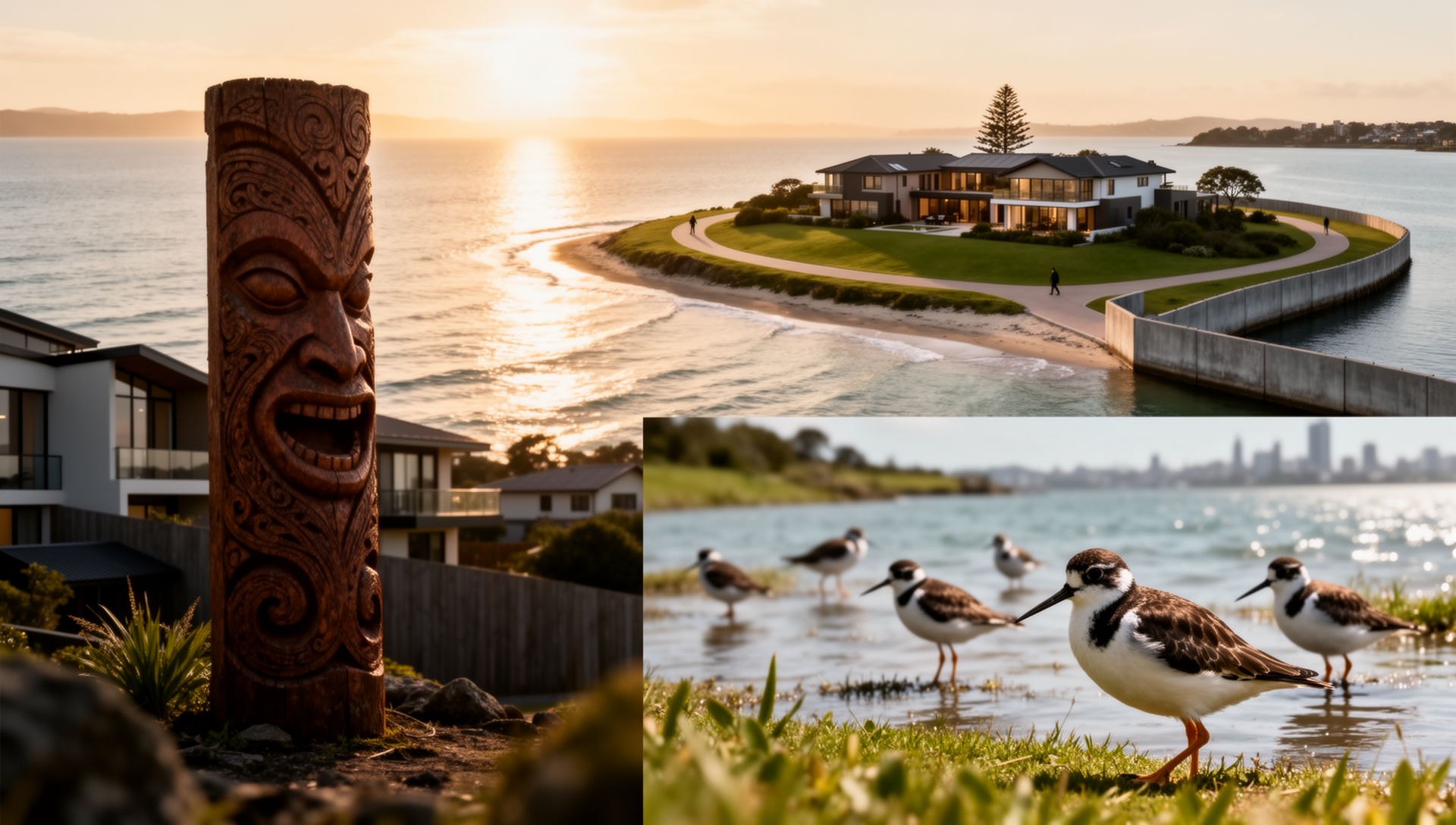
The Hidden Connections
Te Utu: The Price We Pay
The harm here is not just theoretical. It is measurable.
- Cultural Erasure: The transformation of a wāhi tapu landscape into a “waterfront dream” commodifies Māori history for real estate marketing, as seen in Sentinel Homes advertisements.
- Ecological Displacement: The disturbance of wader bird roosts contributes to the slow decline of biodiversity in the Manukau, a trend monitored by Auckland Council.
- Social Fragmentation: The creation of hyper-exclusive enclaves breeds resentment and disconnects the wealthy from the reality of their neighbours. When the floods come—and they will—will the gates open for the people of Papakura? Or will they remain locked?
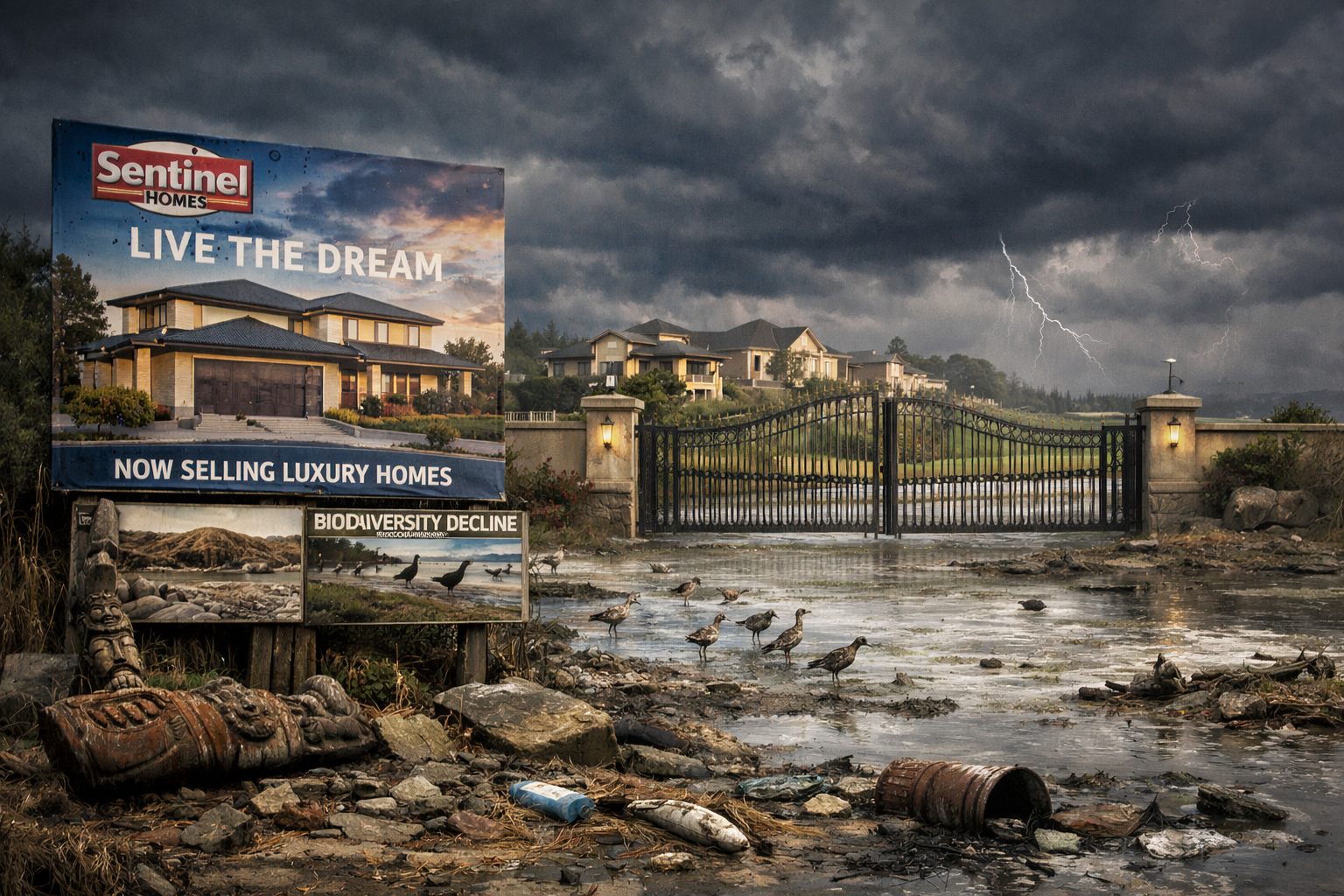
The Price We Pay
Te Wero: The Challenge
We must see Pararēkau Island for what it is: a monument to the failure of our planning laws and the persistence of colonial entitlement.
- To Ross Holdings: You cannot gate your way out of climate change. Tangaroa does not care about your code.
- To Auckland Council: You have allowed the privatization of our harbour’s jewels for the benefit of a few, signing off on decisions like Plan Change 102 that prioritize property over people.
- To Whānau: Do not look at that island with envy. Look at it with clarity. It is a golden cage.
The true wealth of the Manukau is not in its “sections” or its “views,” but in its mauri—the life force that connects the mudflats, the birds, and the people. That mauri is not for sale.
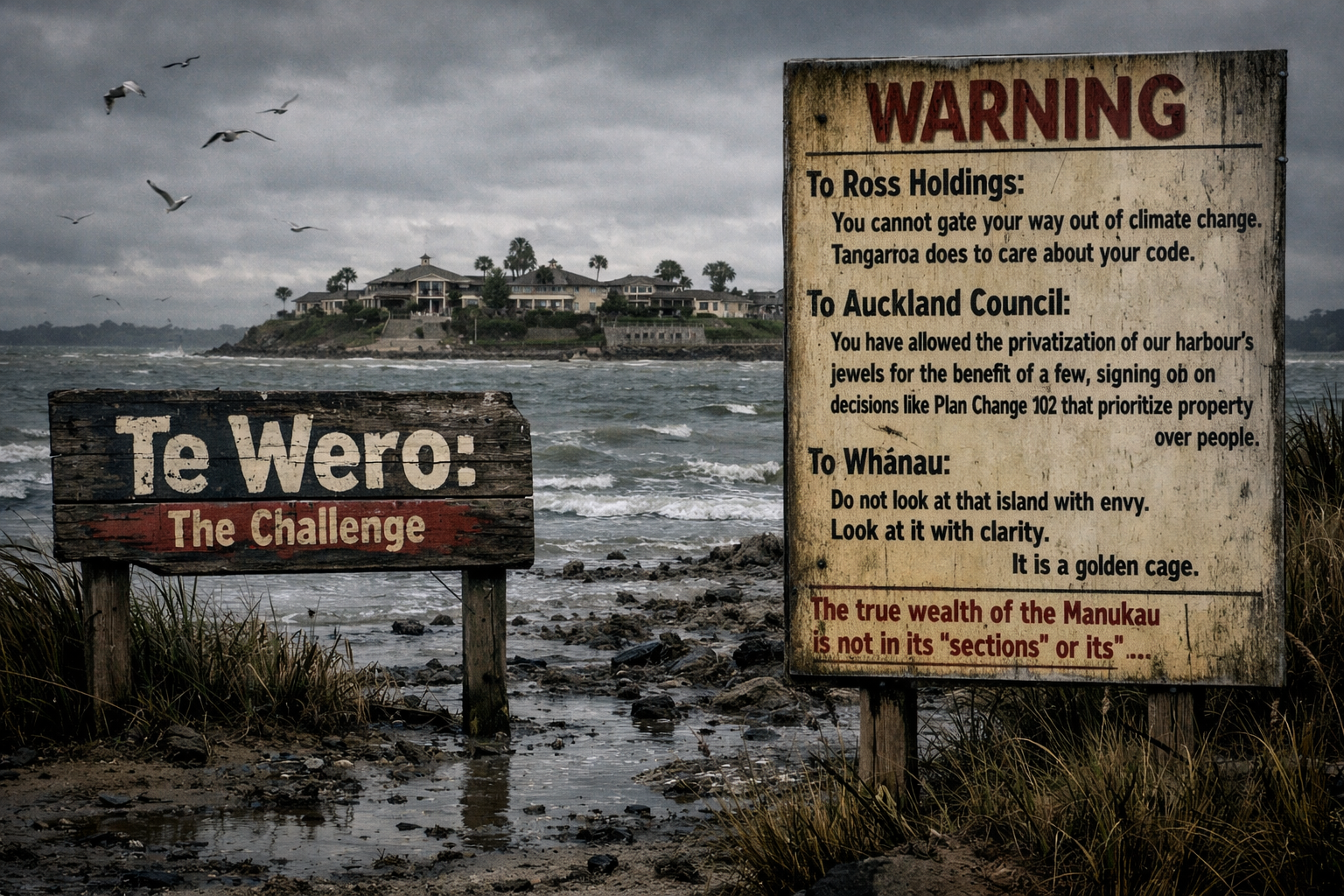
The Challenge
Support This Mahi
For those who wish to support this research directly with a koha (voluntary contribution), please visit the Koha platform:
Koha—Support - https://app.koha.kiwi/events/the-maori-green-lantern-fighting-misinformation-and-disinformation-ivor-jones
For those who wish to receive essays directly and support through subscription, join the Substack community:
Subscribe to the Māori Green Lantern on Substack - https://themaorigreenlantern.substack.com/subscribe
For those who prefer direct bank transfer:
Account: HTDM
Account Number: 03-1546-0415173-000
Every koha signals that whānau are ready to fund the accountability that Crown and corporate structures will not provide. It signals that rangatiratanga includes the power to fund our own truth tellers.
Support Only If You Can - Ngā mihi
Kia kaha, whānau. Stay vigilant. Stay connected. And if you are able, consider a koha to ensure this voice continues.
Ivor Jones The Māori Green Lantern Fighting Misinformation And Disinformation From The Far Right