“Peters' Palmerston North Propaganda - Unmasking the White Supremacist Theatre at New Zealand First's Rally of Hate” - 9 September 2025
The Māori Green Lantern's Analysis
Kia ora whānau. Ko Ivor Jones ahau, ko te Māori Green Lantern. Today I write with the weight of our tīpuna and the fire of our mokopuna's future burning in my heart.
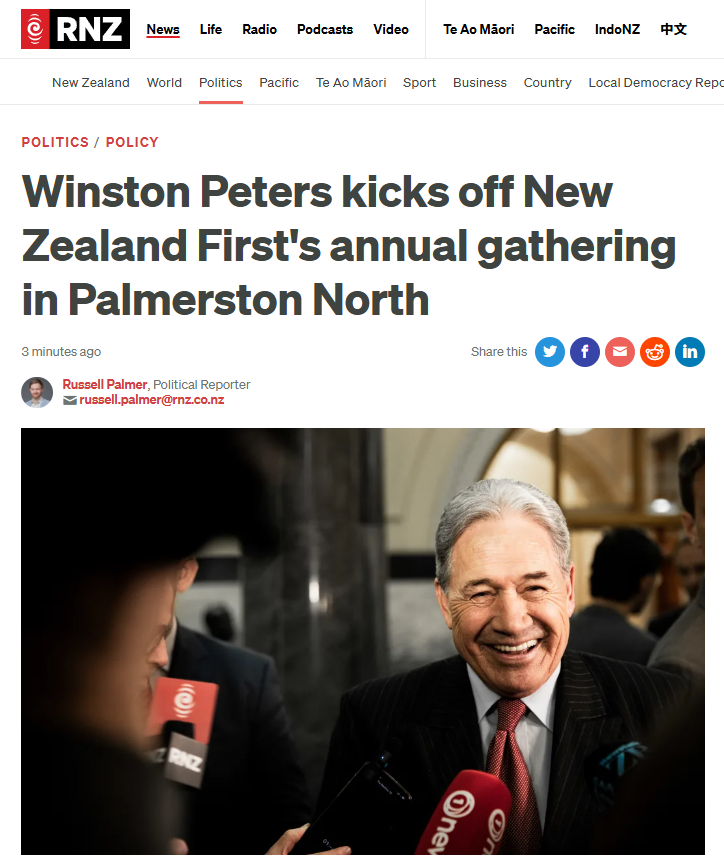
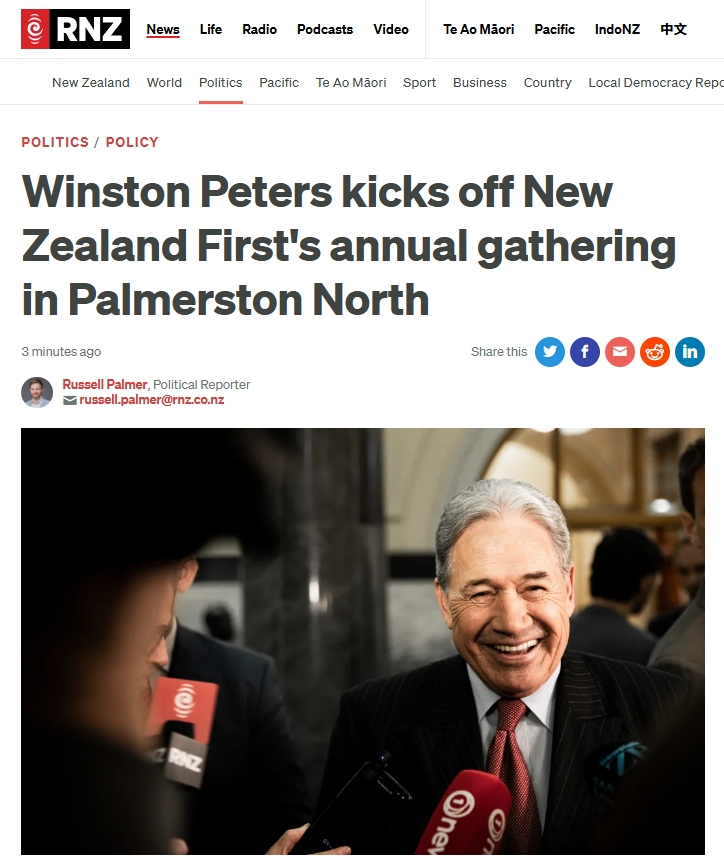
From the depths of colonisation's twisted legacy, a familiar spectre has emerged once again, cloaked in the red, white and blue of New Zealand First but reeking of the same white supremacist ideology that has plagued our whenua for 185 years. Winston Peters has kicked off his party's annual gathering in Palmerston North, not as a legitimate political event, but as a carefully orchestrated hate rally designed to further entrench anti-Māori sentiment and advance a far-right agenda that would make his apartheid-era predecessors proud.
Background: The Colonial Theatre of Hate
To understand the sinister nature of what unfolded at the Distinction Hotel, we must first grasp the deeper historical context that Peters deliberately exploits. New Zealand First has systematically positioned itself as the political arm of white supremacist sentiment in this country, using dog-whistle politics and outright racist rhetoric to maintain colonial power structures.
Peters' history of racist comments spans decades, from his anti-Asian immigration campaigns in the 1990s to his recent Nazi Germany comparisons regarding co-governance. This is not political commentary - it is calculated hate designed to divide and conquer.
The significance of this particular gathering cannot be understated. Held just over a year from the next election, with Peters freed from his deputy prime minister responsibilities, this event serves as a launching pad for what he promises will be a "massive political victory" - a chilling prospect given the party's increasingly extreme policy positions.
Dismantling Democracy Through Division
The Palmerston North gathering revealed the true agenda behind New Zealand First's facade of mainstream politics. Among the 55 policy remits being voted on are measures to remove references to Te Tiriti o Waitangi from legislation, scrap co-governance arrangements, develop what they euphemistically call a "long-term Demographic and Migration Strategy" - code for racist immigration controls - and amend the Bill of Rights to suit their ideological agenda.
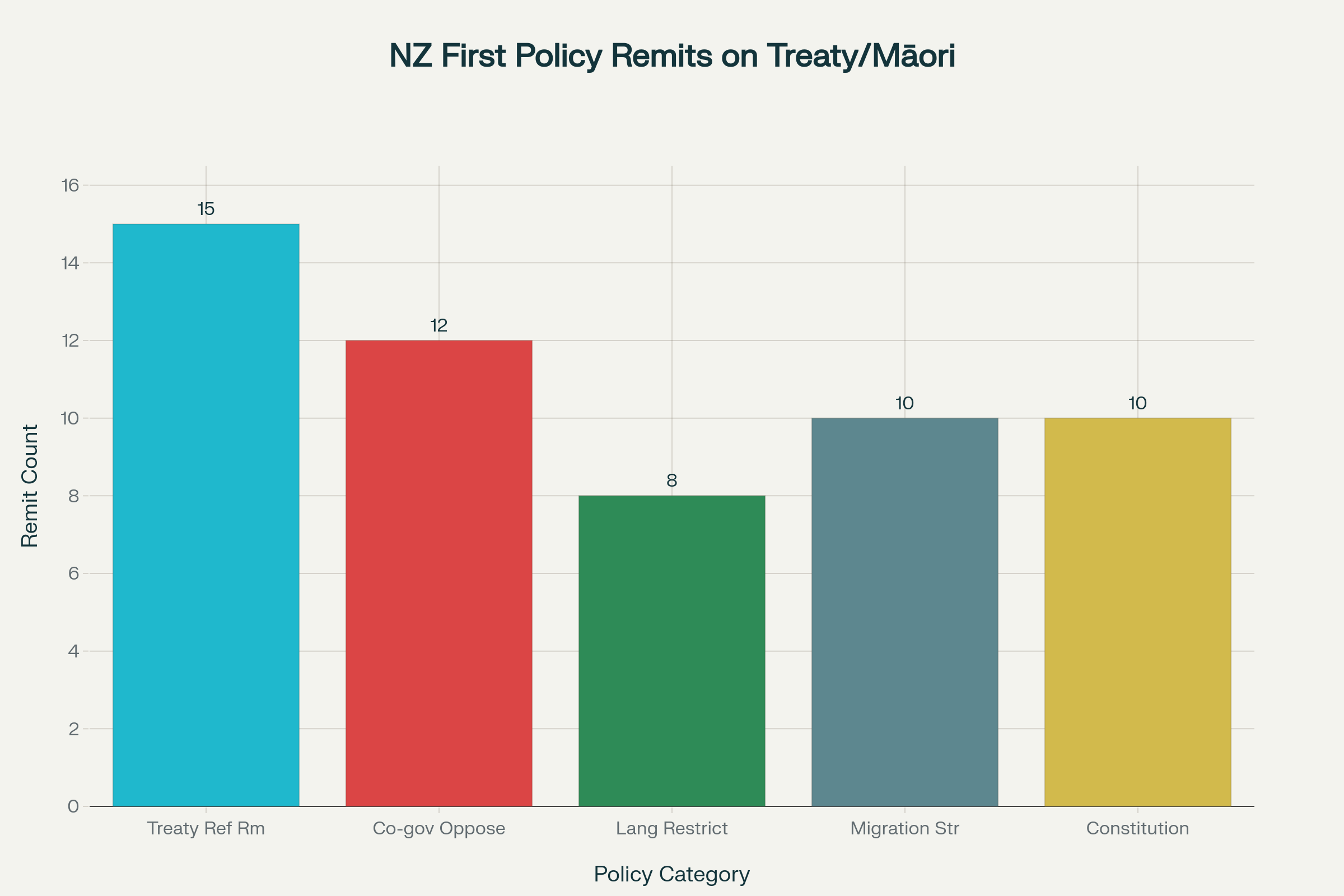
New Zealand First's 2025 Policy Remits: A Systematic Attack on Māori Rights
This matters profoundly to Māori because these policies represent nothing less than an attempt to complete the colonial project that began in 1840. Where our tīpuna resisted physical colonisation, Peters and his cabal seek to achieve through legislation what couldn't be accomplished through war - the complete erasure of Māori as tangata whenua and Treaty partners.
The scope of this analysis extends beyond mere party politics. We are witnessing the systematic advancement of white supremacist ideology through supposedly legitimate political channels, a phenomenon that has parallels with far-right movements globally.
The Architecture of Hate: Deconstructing Peters' White Supremacist Playbook
The Language of Colonial Violence
Peters' opening remarks at the gathering were masterfully crafted pieces of colonial propaganda. His criticism of Labour leader Chris Hipkins as "a guy with a sausage roll" and Christopher Luxon as someone "eating ice cream most of the time" serves a dual purpose - it positions Peters as the authentic voice of ordinary New Zealanders while simultaneously employing the classic populist tactic of painting established politicians as out of touch elites.
But beneath this folksy exterior lies something far more sinister. Peters has a documented history of using racial superiority claims, most notably his attacks on Te Pāti Māori co-leader Rawiri Waititi over alleged comments about Māori genetic superiority. Peters compared these claims to Nazi Germany's race-based theories, stating: "I've seen that sort of philosophy before. I saw it in Nazi Germany."
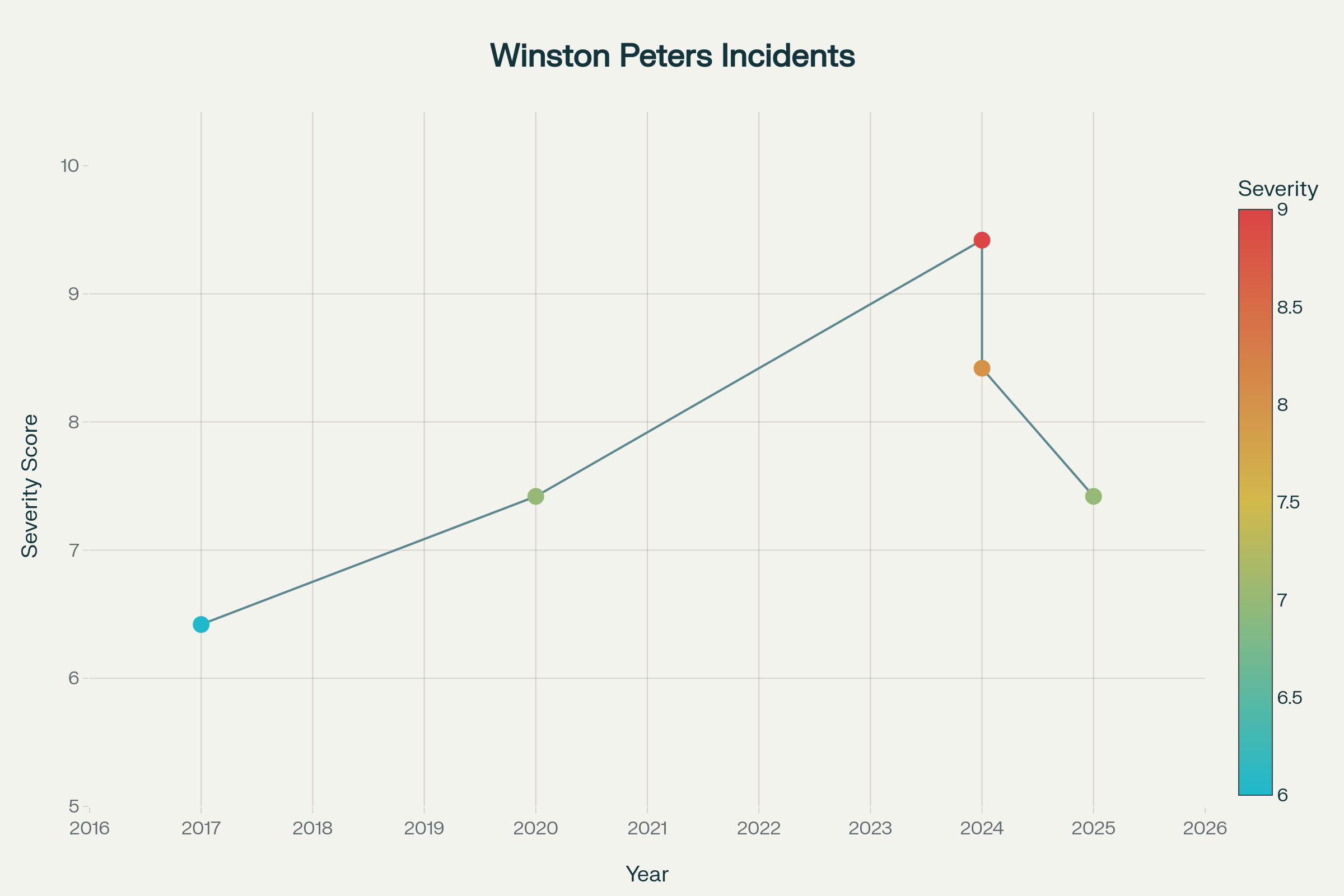
Escalating Pattern: Winston Peters' Racist Rhetoric 2017-2025
This represents a classic projection technique used by white supremacists - accusing the oppressed of the very racism they themselves perpetuate. When Māori assert our inherent rights as tangata whenua or celebrate our cultural strengths, Peters twists this into claims of racial superiority, all while advancing policies that explicitly privilege Pākehā interests and maintain white supremacist power structures.
The International Network of Hate
The guest speaker lineup at the gathering reveals the international dimensions of this far-right project. Australian senator Jacinta Price was invited to rail against the Voice to Parliament, bringing her anti-Indigenous expertise to bear on New Zealand's political landscape. This is no coincidence - it represents the global coordination of white supremacist messaging across settler colonial societies.
Also speaking was Save Women's Sport Australasia's Ro Edge, opposing trans ideology - part of the broader far-right strategy of weaponising gender issues to build broader coalitions against progressive values. The inclusion of union organiser Dennis Maga criticising ACT Party policies provides the veneer of working-class authenticity while advancing fundamentally anti-worker, pro-capital agendas.
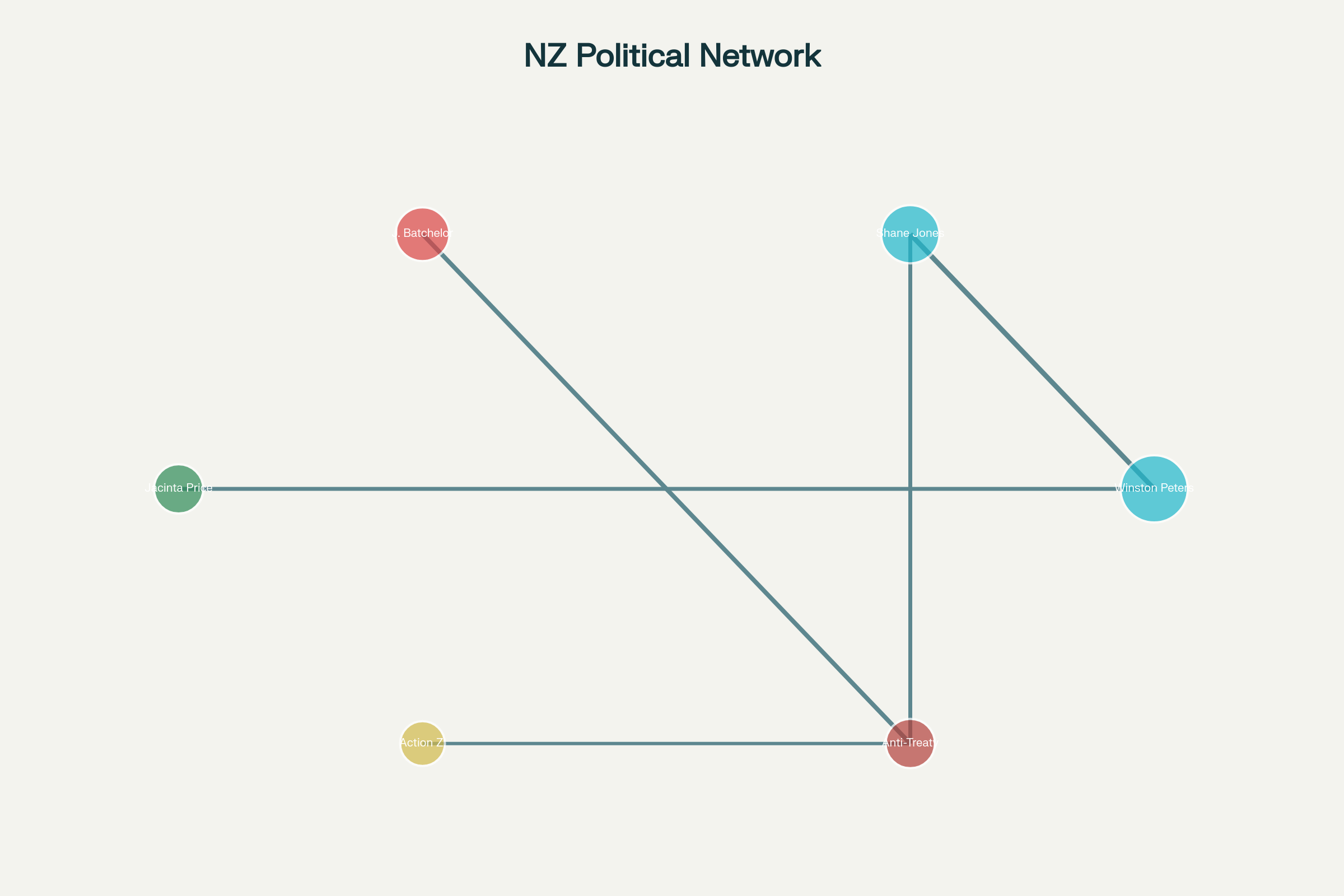
The Far-Right Network: NZ First's Connections to White Supremacy
The Systematic Erasure of Te Tiriti
Perhaps most concerning are the policy remits targeting Te Tiriti o Waitangi itself. The proposal to remove Treaty references from local and central government documents "except where directly relevant" represents constitutional vandalism of the highest order.
Te Tiriti is not some optional add-on to New Zealand's governance - it IS the foundation of legitimate government authority in this country. Every piece of legislation that doesn't explicitly acknowledge Te Tiriti is illegitimate because it fails to recognise the fundamental constitutional arrangement between Māori and the Crown.
By proposing to strip Treaty references except where they deem them "directly relevant," New Zealand First is essentially claiming the right to determine when Māori constitutional rights matter. This is not politics - it is constitutional terrorism designed to complete the colonial project through legislative means.
The Co-Governance Deception: Exposing the Apartheid Rhetoric
The centrepiece of New Zealand First's ideological arsenal is their opposition to co-governance, which they frame as "racist" and "separatist." This represents perhaps the most sophisticated piece of colonial gaslighting in contemporary New Zealand politics.
Co-governance is not about racial preference - it is about honouring the constitutional compact established by Te Tiriti. When Māori and the Crown signed the Treaty in 1840, they established a partnership arrangement. The Crown has spent 185 years systematically violating this partnership, appropriating Māori resources and marginalising Māori decision-making authority.
Co-governance arrangements simply restore the constitutional balance that should have existed from the beginning. But Peters and his supporters understand that acknowledging this fundamental truth would undermine the entire colonial project that has enriched them at Māori expense.
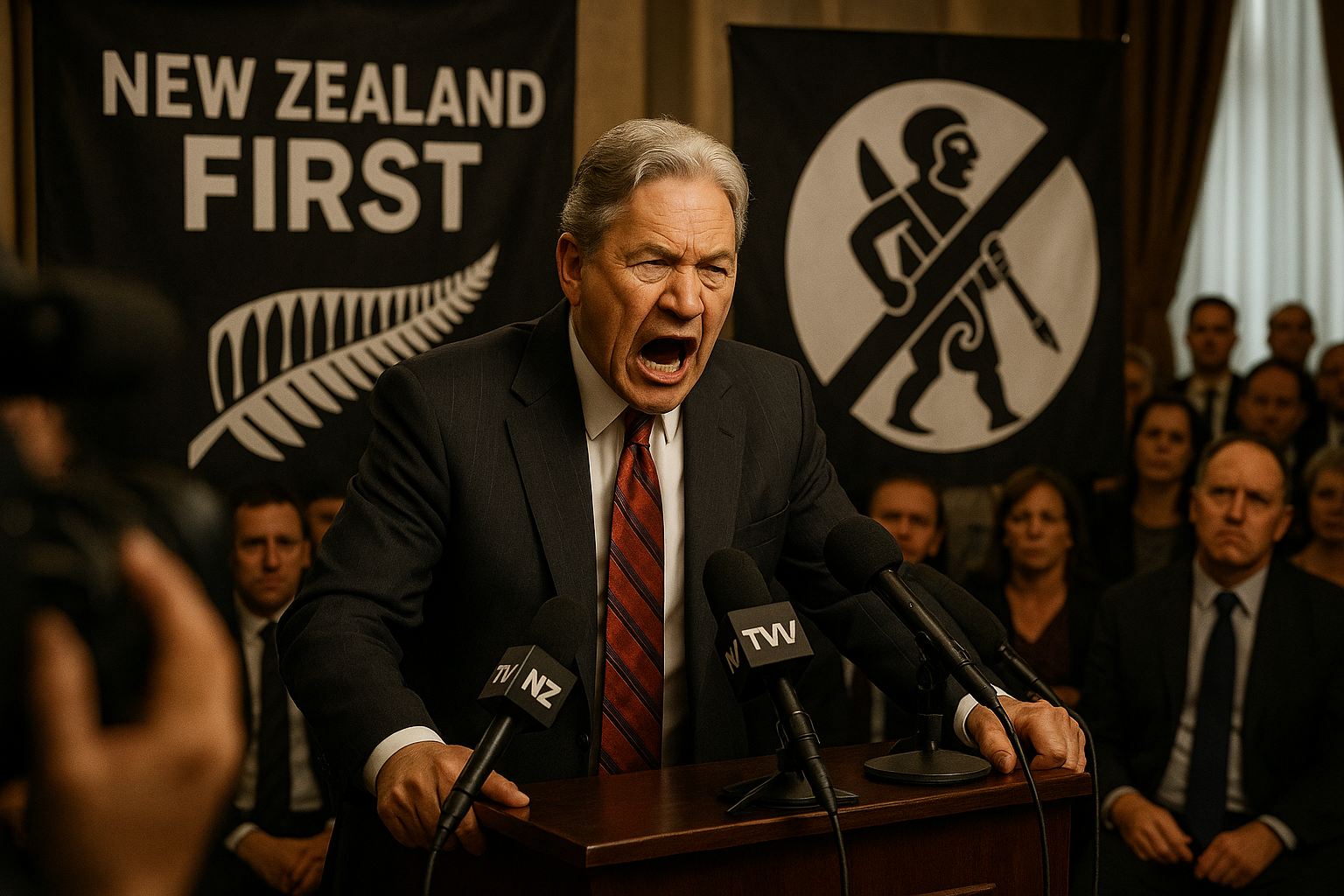
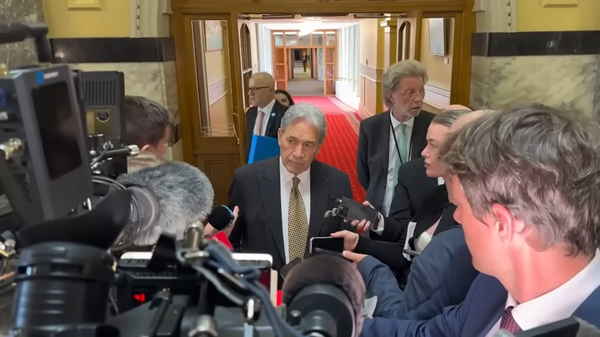
Winston Peters delivering divisive rhetoric at NZ First gathering
Instead, they deploy the language of "apartheid" and "separatism" - deliberately inverting the historical reality where apartheid was a system designed to maintain white supremacy, not challenge it. This rhetorical strategy has been perfected by far-right movements internationally and represents a direct adoption of white nationalist talking points.
The connections to explicitly white supremacist organisations are not coincidental. Julian Batchelor's Stop Co-Governance campaign has toured the country promoting apartheid comparisons while excluding Māori from attending meetings. This represents the physical manifestation of the segregationist ideology that New Zealand First promotes through legislative channels.
The Economic Fear Strategy: Manufacturing Crisis for Political Gain
Peters' claim that fixing the country's problems will take "years and maybe decades to turn it around wholly" serves a crucial function in the far-right playbook - it creates a manufactured sense of crisis that justifies extreme measures. This is classic shock doctrine politics, where economic anxiety is weaponised to advance ideological agendas that would be rejected under normal circumstances.
The reality is that many of New Zealand's economic challenges stem directly from the neoliberal policies that New Zealand First has historically supported. The housing crisis, infrastructure deficits, and social inequality that Peters rails against are the predictable consequences of decades of privatisation, deregulation, and the systematic underfunding of public services.
But rather than acknowledge this historical reality, Peters scapegoats Māori advancement and immigration. This represents a textbook example of how fascist movements deflect attention from structural economic problems by blaming marginalised communities for the consequences of elite policy choices.
The party's proposed "long-term Demographic and Migration Strategy" is particularly sinister in this regard. Peters has long argued that "immigration is about race and ethnicity by definition", making explicit the racial calculations that drive his policy positions.
The Media Manipulation Machine: Manufacturing Consent for Hate
Peters' relationship with the media deserves particular scrutiny because it reveals how far-right movements manipulate democratic discourse. His constant attacks on media "bias" serve a dual function - they delegitimise critical coverage while positioning him as an outsider fighting corrupt elites.
Peters regularly deploys terms like "leftie shill" when confronted with factual reporting that contradicts his narrative. This represents a direct adoption of Trumpist rhetoric designed to undermine the shared epistemological foundations necessary for democratic debate.
When journalists accurately reported his Nazi Germany comparisons, Peters accused them of "deliberately, deceitfully and ignorantly" misrepresenting his comments. This gaslighting technique is fundamental to fascist communication strategies - it allows extremist politicians to advance hate speech while claiming victim status when held accountable.
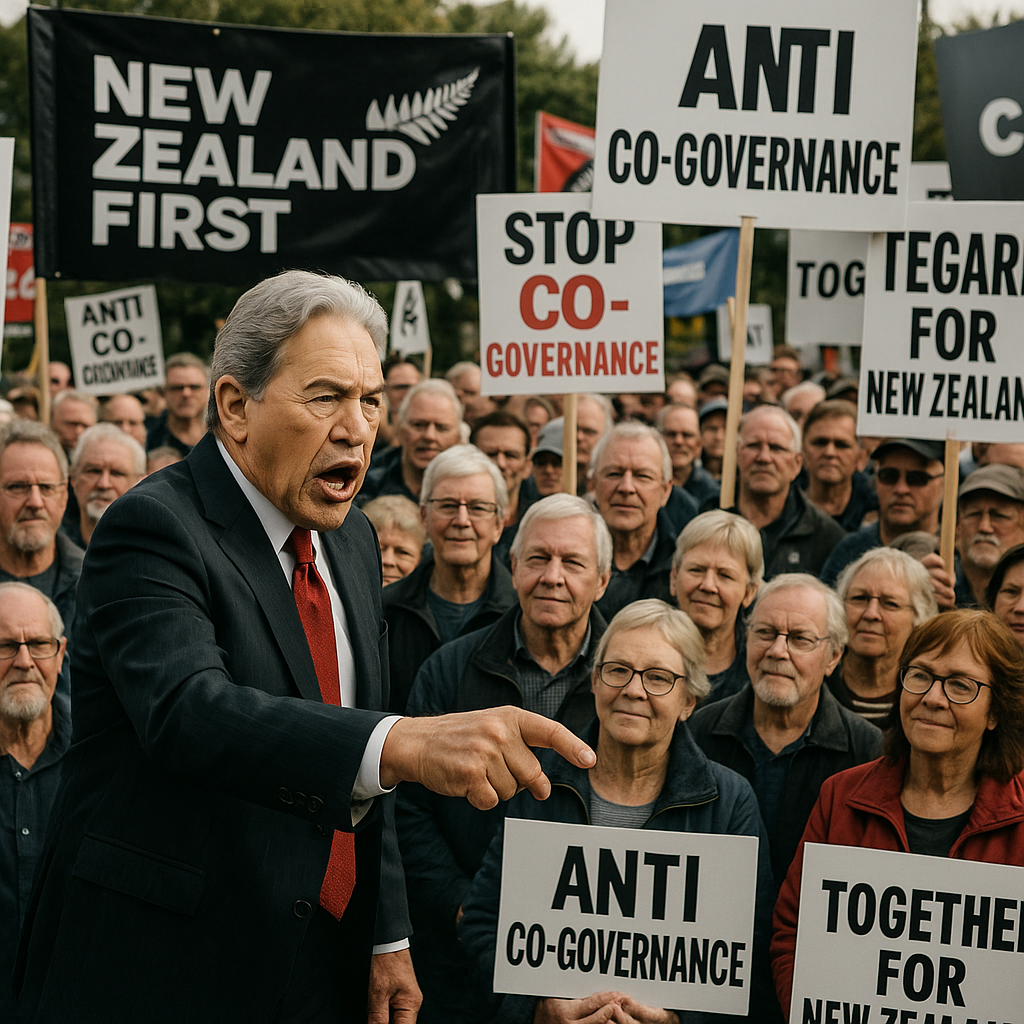
NZ First supporters embracing far-right messaging at party convention
The sophistication of this media manipulation cannot be understated. Peters understands that in the contemporary media environment, controversy generates attention, and attention generates political capital. By saying increasingly extreme things and then claiming misrepresentation, he maintains a constant presence in public discourse while avoiding accountability for his actual positions.
The Cultural Violence: Mocking Māori Identity and Sacred Practices
Perhaps most revealing of Peters' true character was his description of mataora (traditional Māori facial tattoos) as "scribbles on his face" when referring to Rawiri Waititi. This represents cultural violence of the most insidious kind.
Mataora are not decorative tattoos - they are sacred markers of whakapapa, identity, and spiritual connection. For a man of Māori heritage like Peters to describe them as "scribbles" represents the ultimate form of cultural self-hatred and internalised colonisation.
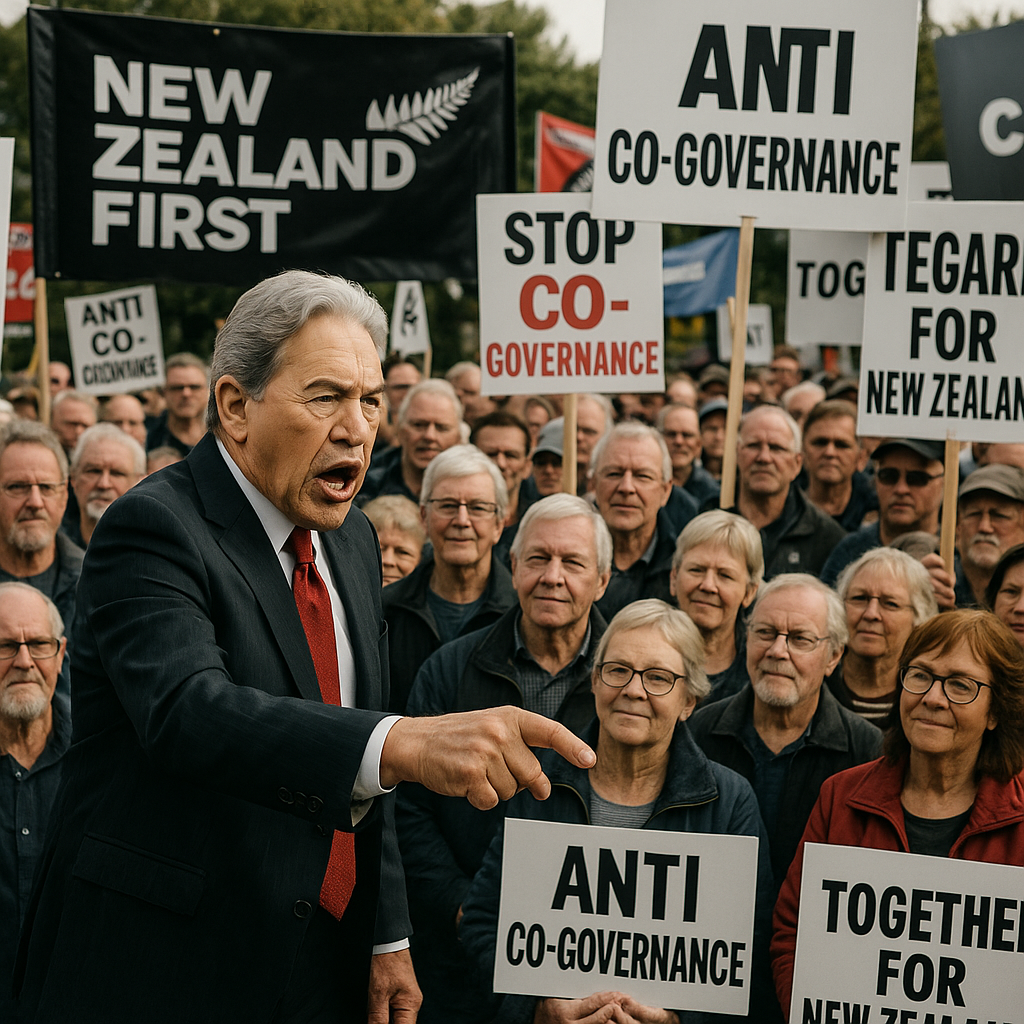
The puppet master of division: Peters orchestrating far-right messaging
This comment reveals the psychological damage that colonisation inflicts not just on communities but on individuals. Peters' success in Pākehā political spaces has apparently required him to reject and demean the very cultural traditions that connect him to his Māori whakapapa.
But the damage extends beyond Peters himself. When a prominent Māori politician mocks traditional practices, it provides cover for Pākehā racism and undermines the mana of all Māori who choose to express their cultural identity visibly.
The response from Te Pāti Māori seeking action against Peters' racist remarks highlighted how his comments constitute "a calculated, blatant, racist assault on our tamariki and a contemptuous dismissal of te reo Māori." This is not political theatre - it is cultural warfare designed to shame Māori away from expressing their identity.
Connections Between People, Places and Events: The Colonial Continuity
The patterns revealed in Peters' rhetoric and policy positions are not accidents - they represent the contemporary manifestation of colonial ideologies that have operated in this country since 1840. Understanding these connections requires us to trace the genealogies of hate that connect historical and contemporary forms of white supremacy.
Peters' party was founded in 1993, emerging from the same National Party faction that had historically opposed Māori advancement and promoted assimilationist policies. His anti-immigrant campaigns in the 1990s directly echoed the "White New Zealand League" campaigns of the 1920s, which sought to exclude Asian immigration and maintain racial purity.
The policy remits being debated at Palmerston North represent the legislative culmination of ideas that were first articulated by colonial settlers in the 1840s - the complete subordination of Māori to Crown authority and the elimination of any special status for tangata whenua.
This continuity is not coincidental. Colonial power structures have adapted their methods over time, but their fundamental objective remains constant - the elimination of Indigenous political authority and the maintenance of settler privilege.
The connections between New Zealand First and international far-right movements further demonstrate how local racist movements are part of global white supremacist networks. The same ideologies that drove European colonial expansion in the 19th century now animate contemporary far-right movements across settler colonial societies.
The Intersection of Class, Race and Gender: Divide and Conquer Strategies
New Zealand First's policy platform reveals sophisticated understanding of how to weaponise different forms of oppression against each other. Their opposition to "trans ideology" serves to build coalitions with socially conservative communities while advancing broader anti-equality agendas.
Their proposal to amend sports legislation to exclude trans women provides a seemingly reasonable entry point for people who might not initially support their anti-Māori policies. This represents classic far-right strategy - start with policies that seem moderate to some constituencies, then use that support to advance more extreme agendas.
The class dimensions of their appeals are equally sophisticated. By positioning themselves as advocates for "ordinary" New Zealanders against educated elites, they tap into legitimate economic anxieties while directing blame away from the capitalist system that creates those anxieties in the first place.
This strategy is particularly insidious because it prevents the formation of class-based solidarity that could challenge elite power. By convincing working-class Pākehā that their interests are threatened by Māori advancement rather than capitalist exploitation, New Zealand First serves the interests of the very elites they claim to oppose.
Implications: The Threat to Democratic Institutions and Māori Survival
The broader implications of what transpired at Palmerston North extend far beyond electoral politics. We are witnessing the systematic preparation for the legislative elimination of Māori political rights and the constitutional vandalism of Te Tiriti o Waitangi.
If New Zealand First's policy agenda is implemented, it would represent the completion of the colonial project through legal means. The removal of Treaty references from legislation would eliminate the constitutional basis for Māori political authority, reducing tangata whenua to the status of an ethnic minority with no special rights or recognition.
This would have devastating consequences for Māori communities. Without constitutional protection, our lands, resources, and cultural practices would be entirely subject to majority rule. The hard-won gains of the past 50 years - from the Waitangi Tribunal to co-governance arrangements - would be swept away.
But the implications extend beyond Māori communities. The normalisation of hate speech in political discourse, the systematic attack on democratic institutions like an independent media, and the weaponisation of economic anxiety against vulnerable communities represent warning signs for the health of democracy itself.
The international research on far-right movements shows that they typically begin by targeting Indigenous and immigrant communities before expanding their attacks to broader democratic institutions. Peters' rhetoric follows this pattern exactly.
The community impact of this political messaging is already evident. Racist attacks against Asian communities have increased during periods when Peters has been most prominent in public discourse. The mosque attacks in Christchurch occurred in a political environment where anti-immigrant rhetoric had been normalised through politicians like Peters.
This connects to larger patterns of how democratic societies slide into authoritarianism. The gradual normalisation of hate speech, the systematic attack on minority rights, and the weaponisation of economic anxiety against vulnerable communities are all warning signs that democratic institutions are under threat.
For Māori specifically, the stakes could not be higher. We face the prospect of seeing our constitutional rights eliminated through the ballot box, our cultural practices mocked and marginalised, and our communities scapegoated for problems created by colonial capitalism.

The Māori Green Lantern Fighting Misinformation And Disinformation From The Far Right
Resistance, Resurgence and the Path Forward
The spectacle at Palmerston North represents both a threat and an opportunity. While Peters and his supporters celebrate their gathering of hate, they have also revealed their true agenda with unprecedented clarity. The mask is off, and we can see the white supremacist ideology that drives contemporary New Zealand First politics.
This clarity creates opportunities for resistance. When the choice is between colonial eliminationism and Indigenous survival, the path forward becomes clearer. We cannot compromise with those who seek our political elimination, and we cannot be seduced by moderate rhetoric from those who advance extremist agendas.
The key findings from this analysis are stark but necessary. New Zealand First operates as the political wing of white supremacist ideology in this country. Their policies would eliminate Māori as a constitutional actor and complete the colonial project through legislative means. Their rhetoric deliberately echoes historical and international fascist movements, and their success would pose an existential threat to democratic institutions.
But we also know that resistance is possible. The record turnout at Waitangi 2024, the growing unity across Māori communities, and the increasing awareness among all New Zealanders about the threats posed by far-right politics provide grounds for hope.
Our ancestors survived 185 years of colonial violence through unity, resistance, and an unshakeable commitment to our rights as tangata whenua. That same spirit of resistance must guide us now as we face this contemporary threat.
The call to action is clear: we must expose the white supremacist ideology that drives New Zealand First, we must resist their legislative agenda through every available means, and we must build the unity necessary to protect our constitutional rights and democratic institutions.
To those readers who find value in this analysis and wish to support this crucial work of exposing misinformation, white supremacy, racism, and neoliberalism, I humbly ask you to consider a koha to support the cause. In these tough economic times for whānau, please only contribute if you have capacity and wish to do so. Banking details: HTDM: 03-1546-0415173-000.
The fight for our survival as tangata whenua and the preservation of democratic values continues. Peters and his cabal of hate may have revealed their agenda, but they have also shown us exactly what we are fighting against.
Kia kaha, kia māia, kia manawanui.