“Rewriting Te Tiriti Out of Education: When “Excellence” Becomes Epistemic Violence” - 10 November 2025
The Violent, Neoliberal War on Mātauranga Māori, Whānau, and the Right to Flourish
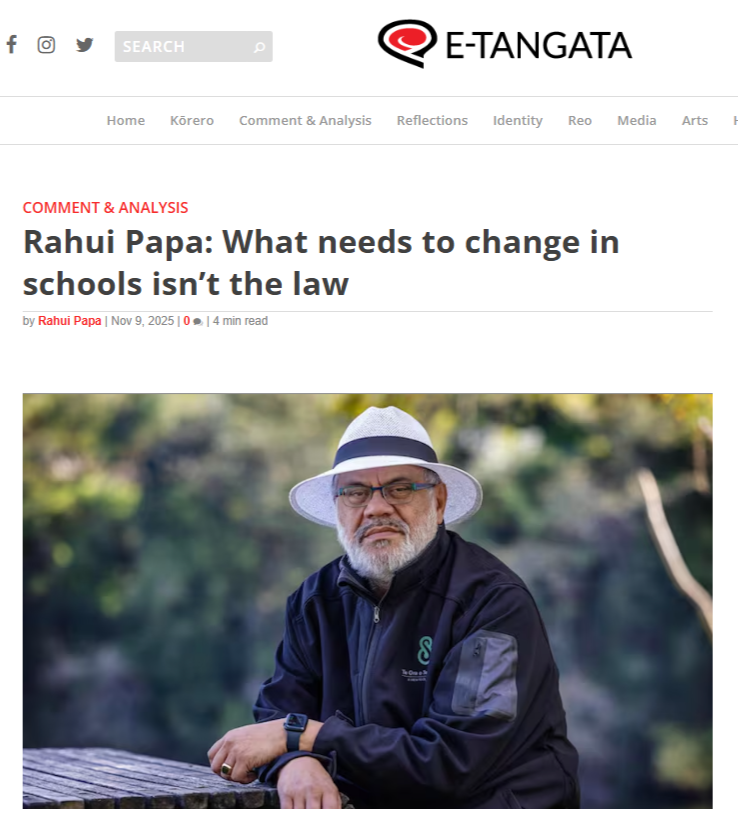
Tēnā koe JDub for sending this article to The Māori Green Lantern, so I can go “Māori Green Lantern On It!”.
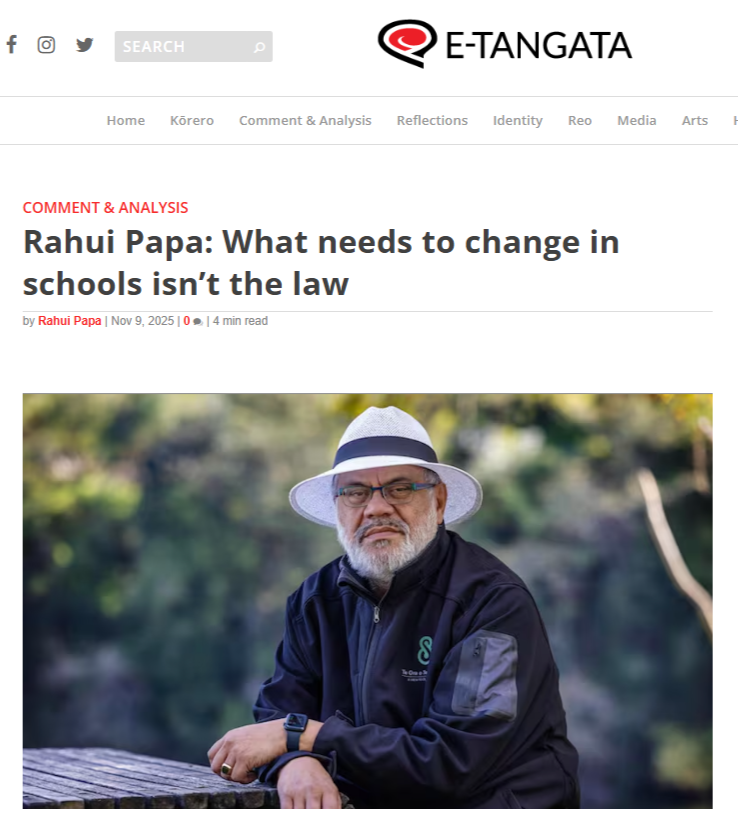
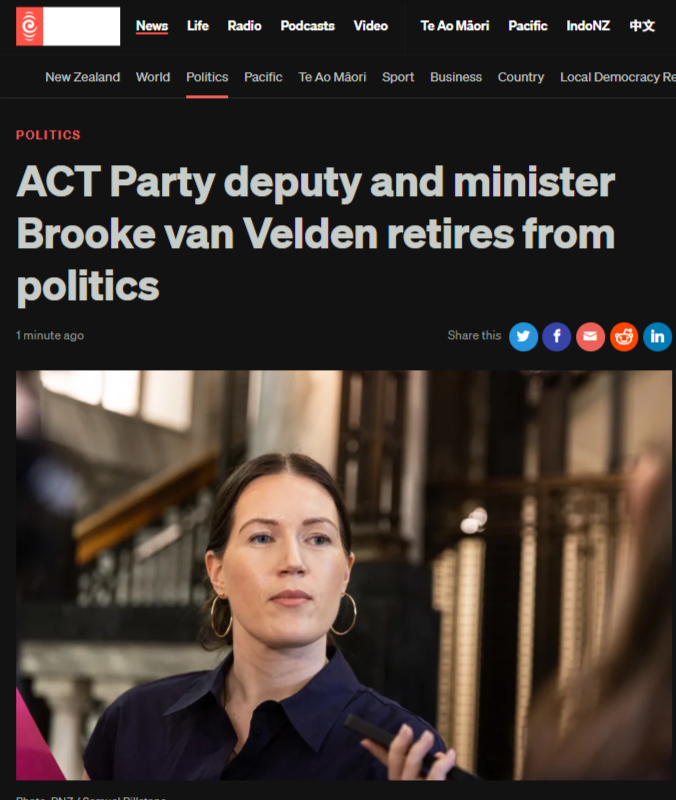
The Crown announces in November 2025 that school boards no longer must “give effect to Te Tiriti o Waitangi.” Education Minister Erica Stanford claims boards should not bear Treaty obligations because these
“rightfully sit with the Crown.” ACT leader David Seymour celebrates this as “a major step forward for Education.” Labour leader Chris Hipkins calls it “a victory for Hobson’s Pledge”—the lobby group that spent $283,899 in the 2023 election cycle promoting “colourblind” policies.
Cui bono? Follow the money and the knowledge networks. Hobson’s Pledge, founded by former National and ACT leader Don Brash, ran advertisements through entities like
“We Belong Aotearoa”—critics call this astroturfing—to disguise corporate lobbying as grassroots movements.
The lobby group’s founding trustee Casey Costello now sits in Parliament as an ACT MP. ACT received $830,442 in donations in 2023, with property developers and wealthy donors like Trevor Farmer ($115,000) and Christopher Meehan ($50,000) bankrolling the party. These networks converge on a singular objective: dismantling Te Tiriti obligations across government while positioning this demolition as
“excellence” and “merit.”
Cui malo? Ākonga Māori—78 percent fail to achieve University Entrance, compared to 51 percent of European students. Māori students are 1.36 times more likely to leave school without UE than European students, even after controlling for socioeconomic factors.
Yet when ākonga Māori are
“cloaked in their own culture” in kura kaupapa Māori, they achieve 63 percent at NCEA Level 1, 72 percent at Level 2, and 73 percent at Level 3—significantly outperforming the 50, 64, and 56 percent rates for Māori in English-medium schools.
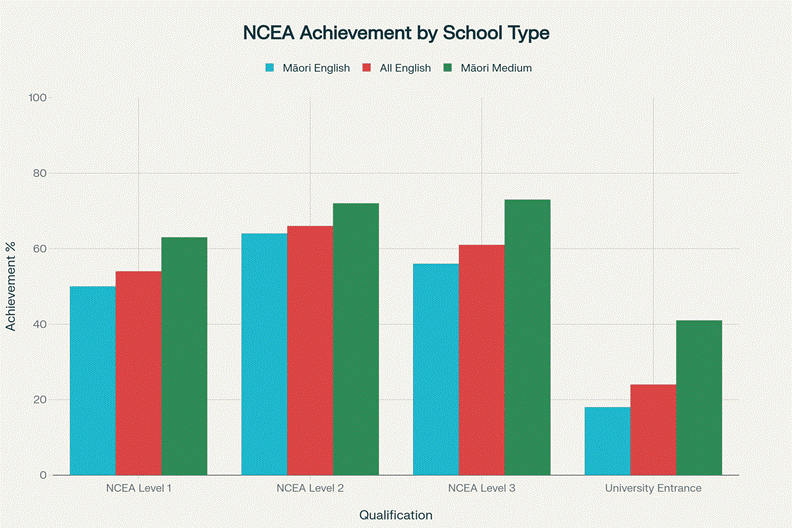
Comparison of NCEA achievement rates showing Māori students in Māori-medium education consistently outperform their peers in English-medium settings across all qualification levels (2024 data).
The hidden connection: This is not a debate about law—it is a battle over whose knowledge counts. The Crown systematically weaponizes Western epistemology while positioning Māori knowledge as primitive, unscientific, and expendable. From the Native Schools Act 1867 to the Tohunga Suppression Act 1907 to the 2025 legislative amendments, the pattern remains: fragment mātauranga Māori, suppress te reo, sever whakapapa, and commodify what remains through neoliberal rhetoric.
The atua watch. Te Kore gives way to Te Pō. But Te Ao Mārama demands we name what is happening:
this is epistemic violence disguised as educational reform.
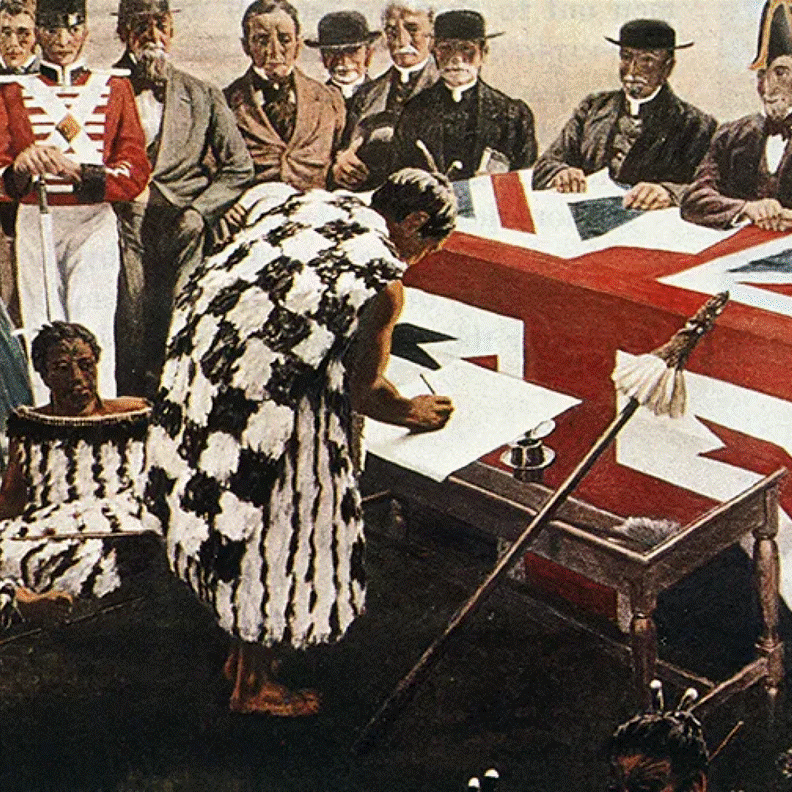
Illustration of a Māori chief signing Te Tiriti o Waitangi in 1840, symbolizing the foundational agreement between Māori and the British Crown.
Background: Whakapapa of Colonial Education
Te Kauwae Runga: The Celestial/Spiritual Dimension
Education is not neutral. It is a site of whakapapa—the transmission of identity, belonging, and ways of knowing across generations. When Governor George Grey introduced the Education Ordinance 1847, prioritizing English instruction, the Crown began a 178-year assault on Māori ways of being. The Native Schools Act 1867 established state-controlled schools requiring instruction “entirely in English where practical,” with Māori communities forced to donate land and pay for buildings. This was assimilation by design.
By 1890, education policy explicitly aimed to ensure Māori children “had [te reo Māori] replaced by English”—that te reo “had to be left at the school gates.” The Tohunga Suppression Act 1907 criminalized Māori knowledge keepers, branding them as practitioners “practising on [Māori] superstition or credulity.” Tohunga—holders of sacred knowledge, healers, and educators—faced fines up to 25 pounds or six months imprisonment.
The result: in 1913, 90 percent of Māori schoolchildren spoke te reo. By 1953, only 26 percent could do so—a 70 percent collapse in one generation.
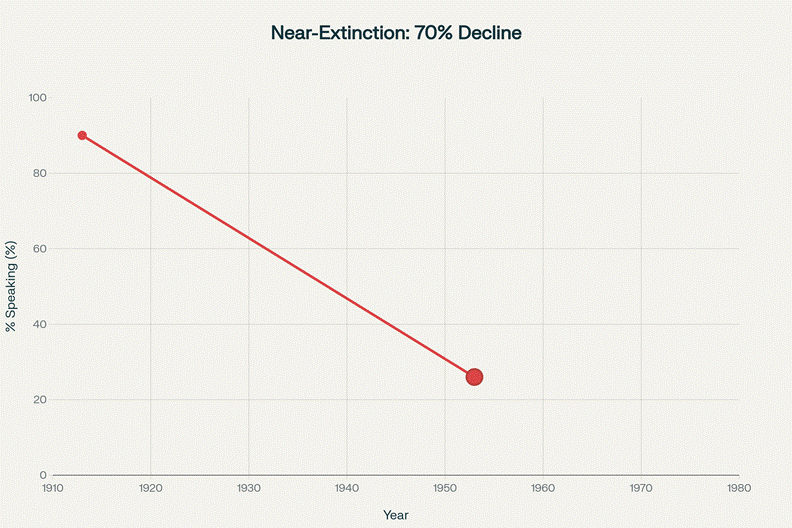
Line chart documenting the devastating 70% decline in te reo Māori speakers among Māori children from 90% in 1913 to just 26% in 1953, showing the destructive impact of colonial assimilation policies.
Te Kauwae Raro: The Terrestrial/Practical Dimension
The Education Act 1877 established “free, secular, and compulsory” schooling—but only for Pākehā children. Māori children were excluded until 1894, when compulsory education was extended to them. Native schools, transferred to the Department of Education in 1879, operated as separate, inferior institutions focused on “manual instruction” rather than academic subjects. The Department’s 1915 annual report stated: “there is no encouragement given to [Māori] boys who wish to enter the learned professions. The aim is to turn, if possible, their attention to the branches of industry for which the Māori seems best suited.”
This is not ancient history. The last native schools were only closed in 1969—just 56 years ago. The 1961 Hunn Report acknowledged these schools
“were no longer serving their purpose” but framed closure as “integration” rather than reparation for systemic harm.
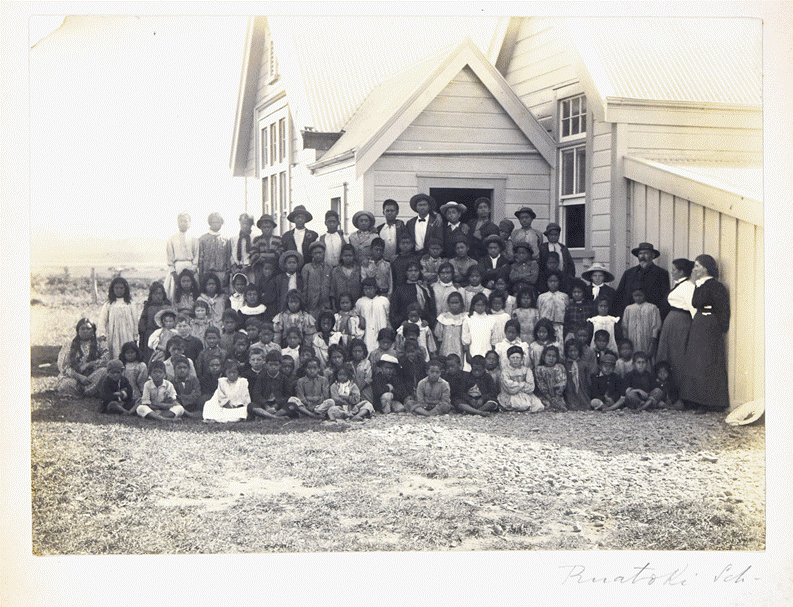
Historical group portrait of Māori children and adults outside a Native School building, illustrating the colonial era of Māori education and te reo Māori suppression.
Deconstructing the Crown’s Logic via Mātauranga Māori
Fallacy 1: False Universalism (”All Students” ≠ Equitable Outcomes)
Stanford argues the legislation creates a
This sounds neutral. It is not.
Exposed: The Ministry of Education’s own 2024 analysis shows Māori students face systemic barriers beyond socioeconomic factors. After controlling for income, parental education, and other variables, Māori students remain significantly less likely to achieve UE than European peers.
The Ministry states:
“differences between ethnic groups...often point to such things as bias and discrimination, institutional support...different expectations and academic pathways.” Yet the government’s “universal” approach ignores these structural inequities, treating them as irrelevant to educational achievement.
Mātauranga Māori response: Whakapapa is relational. You cannot separate a child from their tūpuna, their whenua, their reo.
Fallacy 2: Dismissing Tohunga (”Volunteers Can’t Interpret the Treaty”)
Stanford insists school boards—”volunteer members”—cannot be expected to “interpret and implement a Treaty obligation that rightfully sits with the Crown.” This dismisses the expertise of iwi, hapū, whānau, and community-based tohunga who have always known how to educate their children.
The kura operates through “shared leadership...from kaiako to whānau, ākonga to the board.” This is Te Tiriti partnership in action: decision-making power distributed across the community, grounded in whakapapa and mātauranga Māori.
Yet the Crown labels this success “too difficult” for mainstream boards to replicate.
Mātauranga Māori response: The Crown’s argument reveals its deeper agenda—gatekeeping whose knowledge is legitimate.
Boards led by Pākehā “volunteers” have governed schools for 36 years under Tomorrow’s Schools (1989). But when Te Tiriti obligations require boards to center mātauranga Māori, the Crown suddenly declares this “unreasonable.”
This is not about capacity—it is about control.
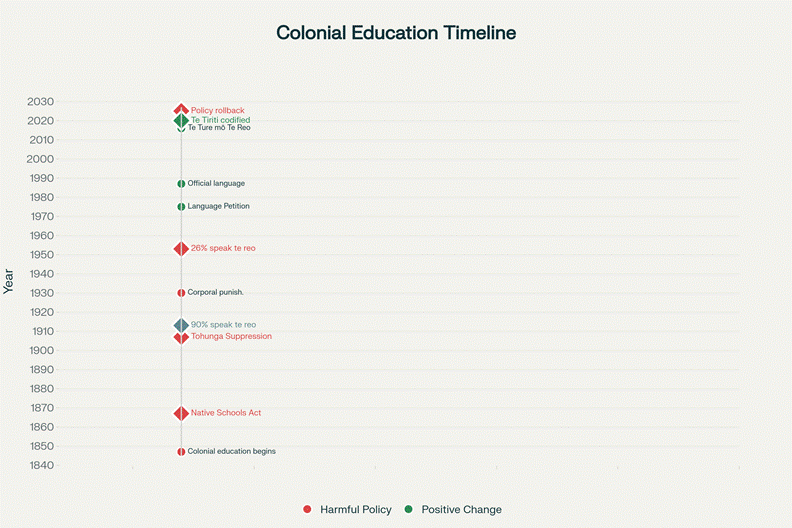
Timeline visualization showing key colonial education legislation and policies from 1847-2025, demonstrating systematic suppression of mātauranga Māori and te reo, followed by partial revival, and current government rollback.
Fallacy 3: Dog-Whistles (”Excellence,” “Merit,” “Paramount Objective”)
The government frames its changes as prioritizing “excellence” and “merit.” Prime Minister Christopher Luxon says boards need a “number one priority on advancing academic achievement.”
Exposed: These are dog-whistles. “Excellence” and “merit” are never neutral—they are defined by those in power. When Stanford says Māori students achieve worse outcomes than other learners, she omits that Māori-medium students outperform their English-medium peers on those same metrics. The “metrics” themselves are designed within a Western epistemological framework that devalues mātauranga Māori.
The government’s own Education Review Office found that incorporating mātauranga Māori improves outcomes—yet Stanford cut $30 million from Te Ahu o te Reo Māori (the program training teachers in te reo and tikanga) to fund maths workbooks.
She justified this by claiming the program showed “no evidence it directly impacted progress and achievements for students”—while simultaneously praising kura kaupapa for using structured literacy “very successfully.”
Mātauranga Māori response: This is mauri-depleting knowledge. The Crown extracts what it wants (structured literacy) while discarding the cultural context (te reo, tikanga, whakapapa) that makes it effective.
The Omission: Whose Mātauranga Is Valued?
The Crown’s silence is deafening. Neither Stanford nor Seymour acknowledges that mātauranga Māori is a complete epistemology
—not a “supporting objective” but a foundational way of knowing. The government positions Western science as “knowledge-rich” and “evidence-based,” while framing Māori knowledge as “ideology” to be “removed.”
Evidence: Stanford’s advisory group recommends removing Te Tiriti from the curriculum and replacing it with “the science of learning.” ACT’s coalition agreement promises to “restore balance to the Aotearoa New Zealand’s Histories curriculum,” which ACT claims “pushes a number of left-wing narratives.” The government has also moved to refocus the curriculum on “academic achievement and not ideology, including the removal and replacement of the gender, sexuality, and relationship-based education guidelines.”
This is epistemic violence: delegitimizing Māori knowledge while positioning Western epistemology as universal truth.
Analysis: Evidence, Networks, and Tikanga Violations
The Evidence: Māori-Medium Success vs. English-Medium Failure
The data is irrefutable. Kaupapa Māori students achieve 63 percent NCEA Level 1 vs. 50 percent for Māori in English-medium schools, 72 percent at Level 2 vs. 64 percent, 73 percent at Level 3 vs. 56 percent, and 41 percent University Entrance vs. 18 percent for Māori in English-medium schools. These are not marginal differences—they are transformational. Kura kaupapa students also attempt more NCEA credits, gain more merit and excellence endorsements, and are more likely to pass Scholarship exams than their English-medium peers.
Te Wharekura o Kirikiriroa exemplifies this success. Located in the Ngāti Wairere rohe of Hamilton, the kura serves a decile 1 community—among the most economically disadvantaged in the country. Yet it maintains an 87 percent attendance rate. The kura has a self-developed curriculum, a school-wide student achievement dashboard, and integrated power BI and AI systems. In November 2025, the kura’s kapa haka group won Te Mana Kuratahi, the national primary schools kapa haka competition.
This is not an accident. It is the result of partnership in action: shared leadership, culturally relevant curriculum, whānau engagement, and rangatiratanga.
Rhetoric vs. Reality: The Crown’s Hypocrisy
The Crown claims it “shares our aspirational and ambitious vision to support ākonga Māori to achieve their highest potential, and to close the equity gap.” Yet its actions tell a different story:
Budget Cuts to Māori Education: The 2024 and 2025 Budgets stripped over $750 million from Māori-specific initiatives. This includes:
$36.1 million cut from Māori education, including disestablishing the Wharekura Expert Teachers programme and removing Resource Teachers: Māori (RTM) roles$30 million slashed from Te Ahu o te Reo Māori to fund maths workbooks$375.5 million cut from Kāhui Ako (Communities of Learning), which included many Māori providers
Ignoring Consultation: The Mātauranga Iwi Leaders Group (ILG), established under a Mana Ōrite agreement with the Ministry of Education in November 2023, spent over a year advising the government to “stop tinkering with legislation” and “consider whether the Crown is upholding its Tiriti obligations in relation to education.” The ILG’s position was clear: “It isn’t now, and nor has it ever.” The Crown ignored this advice.
Waitangi Tribunal Findings: In July 2024, the Waitangi Tribunal found the Crown breached Treaty principles during the Tomorrow’s Schools review (2018-2022) by failing to sufficiently consult with kura kaupapa Māori and Te Rūnanga Nui. The Tribunal recommended establishing a stand-alone Kaupapa Māori education authority and co-designing policies for kura. The Crown has not implemented these recommendations.
The Tribunal’s Wai 2336 report on kōhanga reo (2012) found the Crown’s early childhood education system failed to adequately sustain the specific needs of kōhanga reo as environments for language transmission and whānau development. The Tribunal stated these failures constituted breaches of the Treaty principles of partnership and equity. The Crown has failed to fully implement the Tribunal’s recommendations.
Patterns: The Neoliberal Assault on Mātauranga Māori
This is not isolated policy—it is part of a global neoliberal project to commodify education while erasing Indigenous knowledge. The pattern is consistent:
Fragmentation: Tomorrow’s Schools (1989) devolved governance to individual school boards, creating a “my school” mentality and unhealthy competition. This fragmented collective responsibility for equity. Tomorrow’s Schools was the educational arm of Rogernomics—Finance Minister Roger Douglas’s neoliberal reforms that transformed New Zealand from 1984-1993. Rogernomics removed agricultural subsidies, floated the dollar, deregulated financial markets, introduced GST, flattened income taxes, corporatised state services, and privatised state assets. The result: farm incomes fell 30 percent, interest rates hit 20 percent, land values halved, and the agricultural sector plunged into prolonged recession. Unemployment surged. Poverty exploded—especially for Māori.
Marketization: Charter schools, reintroduced by ACT in 2024, position education as a market commodity. The government allocated $153 million over four years to establish 50 charter schools—15 new, 35 converted from state schools. Schools compete for students (and funding), with “successful” schools expanding and “failing” schools closed. This punishes communities already disadvantaged by colonization.
Charter schools are publicly funded but privately operated—by iwi, non-profits, or for-profit businesses. They receive bulk funding, allowing operators to spend taxpayer money however they want—including paying themselves “administration and management” fees. In 2015, eight charter schools paid their owners or related entities over $1 million in such fees. One school received $27,000 per student compared to $6,000 per student in state schools. Charter schools were collectively over-funded by $888,000 beyond their actual enrolments—being paid for students they did not have.
Standardization: ACT promises “online league tables,” standardized testing, and “science-based criteria for curriculums.” This imposes a monocultural assessment framework that ignores mātauranga Māori.
Privatization: Seymour’s “app store for teachers” approach allows “different curriculum writers” to provide curricula that schools “can choose.” This opens education to commercial exploitation while positioning mātauranga Māori as just another “option”—not a foundational epistemology.
Networks: Money, Personnel, Ideology
Financial Networks
The interconnections are stark:
Hobson’s Pledge spent $283,899 on election campaigning in 2023, running ads promoting “colourblind” policies and attacking co-governanceACT Party received $830,442 in donations in 2023, including $115,000 from Trevor Farmer and $50,000 from Christopher Meehan (property developer)National Party received $10.4 million in donations in 2023—the highest of any partyThe Campaign Company, directed by Taxpayers’ Union leader Jordan Williams, received $135,733 from Hobson’s Pledge, Taxpayers’ Union, and Groundswell for election advertising
Personnel NetworksDon Brash: Founded Hobson’s Pledge (2016), former National leader, former ACT leaderCasey Costello: Hobson’s Pledge founding trustee, now ACT MP in coalition governmentDavid Seymour: ACT leader, Associate Education Minister, driving education reformsErica Stanford: Education Minister, worked for Murray McCully (former National MP), implements ACT-driven reforms
Ideological Networks
The coalition’s ideological alignment is clear:
Anti-co-governance: All three coalition parties pledged to “remove co-governance from the delivery of public services”Treaty denialism: ACT’s Treaty Principles Bill sought to redefine Treaty principles to erase Māori rightsMarket fundamentalism: ACT promotes charter schools, “choice” in education, and cutting “demographic ministries”Individual responsibility: Framing educational outcomes as individual “merit” rather than structural inequity
Tikanga Violations
The Crown’s actions violate multiple tikanga:
Whanaungatanga (Kinship, Relationships): The Crown severs relationships between ākonga, whānau, and schools by deprioritizing Te Tiriti obligations. Boards are no longer required to ensure their “plans, policies, and local curriculum reflect local tikanga Māori, mātauranga Māori and te ao Māori.”
Manaakitanga (Care, Hospitality, Respect): Cutting $750 million from Māori education, housing, and economic development while increasing ministerial travel budgets shows contempt for Māori wellbeing.
Kaitiakitanga (Guardianship, Stewardship): The Crown fails to protect mātauranga Māori, te reo, and whakapapa—the very taonga guaranteed under Te Tiriti. Instead, it positions these as “supporting objectives” rather than core responsibilities.
Rangatiratanga (Self-determination, Authority): The Crown ignores iwi expertise, dismisses Waitangi Tribunal findings, and imposes top-down reforms without meaningful consultation.
Kotahitanga (Unity, Collective Responsibility): Tomorrow’s Schools fragmented education into competing units. The new legislation deepens this by removing any collective obligation to address inequity.
Hidden Connections
1. The Knowledge Gatekeeping Network
Western epistemology is defended as “knowledge-rich” and “evidence-based,” while mātauranga Māori is delegitimized as “ideology.” This gatekeeping is structural. Stanford’s advisory group recommends removing Te Tiriti from the curriculum and replacing it with “the science of learning.” Cuts to Te Ahu o te Reo Māori ($30 million) occur while increasing funding for Western-designed maths workbooks. NCEA is being replaced with a system “designed for university-bound students,” disadvantaging non-academic learners (disproportionately Māori and Pacific students).
2. The Waitangi Tribunal Ignored
The Crown systematically ignores Waitangi Tribunal findings. Of 130 Tribunal reports issued between 1978 and 2018, only 21 have been fully settled. Most recommendations are ignored, partially implemented, or their status is unknown. Treaty lawyer Annette Sykes: “The Crown has ignored and I believe deliberately ignored the gravamen of some of the issues that they have been confronted with.”
3. The Charter School Profit Machine
Follow the money. Charter schools are publicly funded but privately operated—meaning taxpayer dollars flow to private operators who can elect to run schools for profit. In the 2013-2018 charter school era, eight schools paid their owners or related entities over $1 million in “administration and management” fees. Schools were collectively over-funded by $888,000 beyond actual enrolments. Vanguard Military School received $27,000 per student vs. $6,000 in state schools.
4. The Demographics of Dispossession
The coalition government is weaponizing poverty against Māori. By 2024: 28 percent of Māori students leave school with no qualifications, compared to 14 percent of European students. 78 percent of Māori students fail to achieve University Entrance. Yet the government cuts $750 million from Māori services, removes Te Tiriti obligations from school boards, and frames Māori underachievement as individual failure rather than structural violence.
5. Epistemological Violence
The deepest hidden connection is epistemological. The Crown does not merely ignore mātauranga Māori—it actively positions it as inferior, unscientific, ideological. This is the colonial project at its core: define “knowledge” narrowly, within Western parameters, then declare all other ways of knowing illegitimate. Stanford praises kura kaupapa for “successfully” using structured literacy—then cuts $30 million from the program that trains teachers in te reo and tikanga to implement that literacy in culturally grounded ways. ACT demands “science-based criteria for curriculums”—but Western science itself is an epistemology, not a neutral arbiter.
This is mauri-depleting knowledge. It fragments the holistic systems that make learning meaningful for Māori. It severs roro (cognitive) from ngākau (embodied). It disconnects Te Kauwae Runga (celestial/spiritual) from Te Kauwae Raro (terrestrial/practical). It treats whakapapa as “background” rather than methodology.
Implications: Quantified Harm and Threatened Mana
Quantified Harm
The costs of fragmentation are measurable:
Educational: 78 percent of Māori students fail to achieve UE—26,598 ākonga per year. 28 percent of Māori students leave school with no qualifications—9,548 ākonga per year. Māori students are 1.36 times more likely to leave school without UE than European students, even after controlling for socioeconomic factors.
Linguistic: Te reo Māori declined from 90 percent of Māori children speaking it in 1913 to 26 percent in 1953—a 70 percent collapse in 40 years. The Crown cut $30 million from Te Ahu o te Reo Māori. Kōhanga reo face chronic underfunding, regulatory burdens, and inadequate capital support, threatening the survival of the most effective mechanism for language transmission.
Economic: The coalition cut over $750 million from Māori-specific programs in 2024-2025 Budgets. $36.1 million cut from Māori education specifically. Charter schools received $153 million over four years to operate 50 schools—money that could have funded kura kaupapa.
Whakapapa: When ākonga cannot access their language, they cannot access their whakapapa. When schools do not center mātauranga Māori, they sever the connection between tamariki and tūpuna. Each generation disconnected from te ao Māori represents mauri depletion—the diminishment of life force itself.
Threatened Mana
The Crown’s actions threaten multiple dimensions of mana:
- Mana tangata (individual dignity): Ākonga Māori are told their language, culture, and knowledge systems are “supporting objectives”—less important than “educational achievement” defined by Western metrics.
- Mana whānau (family authority): Boards are no longer required to consult whānau on how to reflect tikanga Māori, mātauranga Māori, and te ao Māori in school policies.
- Mana whenua (connection to land): Education disconnected from place, whakapapa, and rohe fragments the relationship between people and land.
Mana atua (spiritual authority): The Crown’s epistemological gatekeeping denies the validity of Māori cosmologies, creation narratives, and spiritual knowledge systems.
Reclaiming Integrated Systems
The Crown’s legislative tinkering is not reform—it is epistemic violence. By removing the requirement for school boards to give effect to Te Tiriti, the government fragments the very knowledge systems that enable ākonga Māori to thrive.
The evidence is irrefutable:
Māori-medium education works. Kura kaupapa students achieve 63-73 percent at NCEA Levels 1-3, compared to 50-56 percent for Māori in English-medium schools. They are more likely to achieve University Entrance, gain merit and excellence endorsements, and pass Scholarship exams. Te Wharekura o Kirikiriroa—serving a decile 1 community—maintains an 87 percent attendance rate and won the national primary schools kapa haka competition.
Yet the Crown cuts $750 million from Māori services, slashes $30 million from te reo teacher training, ignores partnership agreements, dismisses Tribunal findings, and diverts public funds to private charter school operators.
This is not about capacity. It is about control.
Rangatiratanga Action
Whānau, hapū, and iwi must reclaim education as a site of mana motuhake:
- Protect kura kaupapa: Demand adequate, sustainable funding for Māori-medium education. Kura kaupapa achieve superior outcomes—they must be resourced accordingly.
- Support kōhanga reo: Early childhood immersion is the most effective mechanism for language transmission. Kōhanga reo are essential to te reo survival and must be prioritized in funding, regulation, and capital investment.
- Challenge charter schools: Oppose the diversion of public funds to private operators. Demand transparency about where charter school money goes—and who profits.
- Enforce partnership: Hold the Crown accountable to Mana Ōrite agreements. The Crown’s unilateral legislative changes violate these agreements.
- Mobilize communities: Engage whānau in school governance. Even without legislative requirements, communities can demand boards center mātauranga Māori, te reo, and tikanga in planning, policies, and curriculum.
- Name the violence: Call epistemic violence what it is. The Crown’s positioning of mātauranga Māori as “ideology” is colonial erasure. Challenge this framing wherever it appears.
Moral Clarity
The Crown has failed its Tiriti obligations in education since 1867. The Native Schools Act, the Tohunga Suppression Act, the Education Act 1877, Tomorrow’s Schools, and now the 2025 legislative amendments: each represents another chapter in a 158-year assault on Māori knowledge systems.
The result: 78 percent of ākonga Māori fail to achieve University Entrance, te reo Māori remains endangered, and whānau are disconnected from the taonga guaranteed under Te Tiriti.
But the evidence also shows the path forward. When ākonga Māori are cloaked in their culture—when they learn through mātauranga Māori, te reo, and tikanga—they achieve 13-17 percentage points higher across NCEA Levels 1-3. They are 2.3 times more likely to achieve University Entrance (41 percent vs. 18 percent). They attend school at rates 37 percentage points higher than the national average for Māori students.
This is not theory. This is Te Ao Mārama—the world of light.
Reclaiming Integrated Systems
The Crown fragments knowledge: Te Kauwae Runga from Te Kauwae Raro, roro from ngākau, whakapapa from content, tapu from everyday practice. This fragmentation is deliberate—it makes Māori knowledge seem primitive, incomplete, unscientific.
But mātauranga Māori is holistic. It integrates the seen and unseen, the cognitive and embodied, the spiritual and practical. It recognizes that you cannot educate a child’s mind without nurturing their wairua. You cannot teach literacy without embedding it in whakapapa. You cannot measure achievement without acknowledging mana.
The Crown must stop tinkering with legislation and start honoring partnership. It must stop gatekeeping knowledge and start recognizing mātauranga Māori as a complete, sophisticated, effective epistemology. It must stop punishing poverty and start addressing the structural violence that creates it.
Until then, whānau, hapū, and iwi will continue the work of kaitiakitanga—protecting mātauranga Māori, te reo, and the mana of our tamariki. We will build kura kaupapa, strengthen kōhanga reo, and reclaim education as a site of rangatiratanga.
Ko te mana motuhake o te iwi Māori, ko te oranga o te iwi Māori.
The self-determination of Māori is the wellbeing of Māori.
Nō Māori ahau. Ko Ngāti Pikiao tōku iwi.
If this analysis serves you, consider supporting this mahi: HTDM: 03-1546-0415173-000.

The Māori Green Lantern Fighting Misinformation And Disinformation From The Far Right