"Shane Jones - The Veto That Speaks Volumes" - 2 February 2026
How One Politician’s “Earthy Pragmatism” Sentenced Future Generations to Climate Chaos
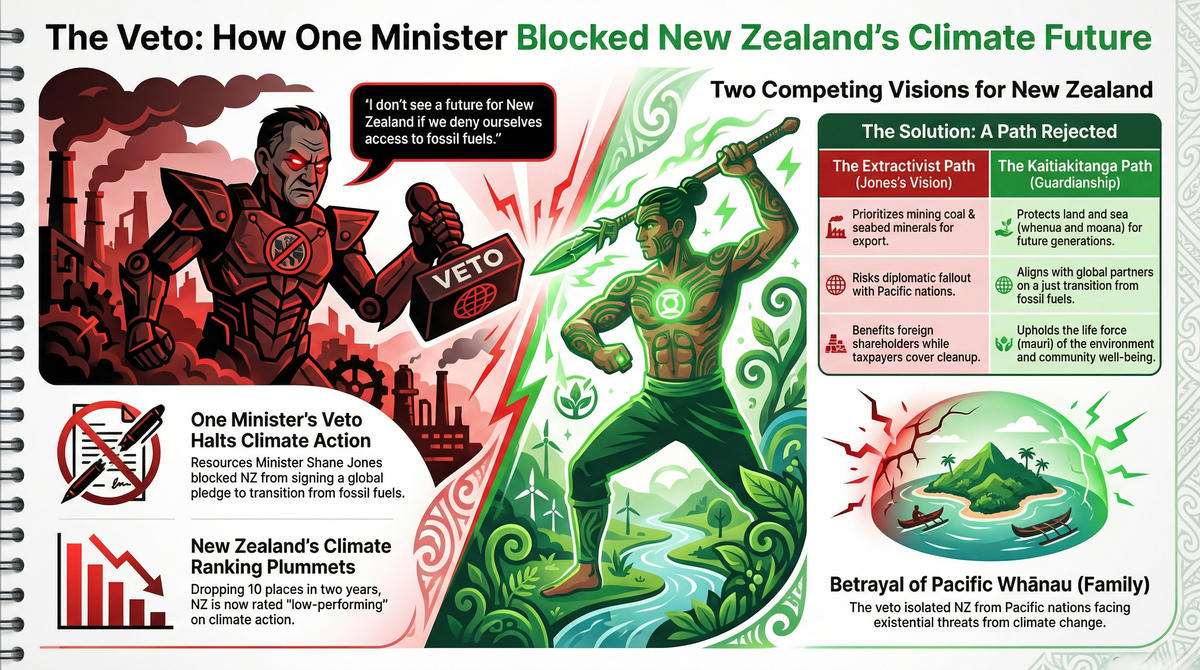
Kia ora ano Aotearoa,
It has been a busy day today, what with Epstein video footage, etc. Now we recentre to Aotearoa and highlight the corruption of this idiot, Shane Jones.
Cui Bono, Cui Malo: When Fossil Fuel Profits Trump Planetary Survival
When Resources Minister Shane Jones vetoed New Zealand’s participation in the Belém Declaration on transitioning away from fossil fuels at COP30 in November 2025, he did not simply decline to sign a piece of paper. He severed Aotearoa from a coalition of 82 nations—including our Pacific whānau in Fiji, Vanuatu, Tuvalu, and the Marshall Islands—who are literally drowning as seas rise and who dared to demand a concrete roadmap to phase out the fuels causing their extinction. Jones, with the stroke of bureaucratic consultation, chose Australian mining profits and foreign shareholders over the survival of our closest neighbours.
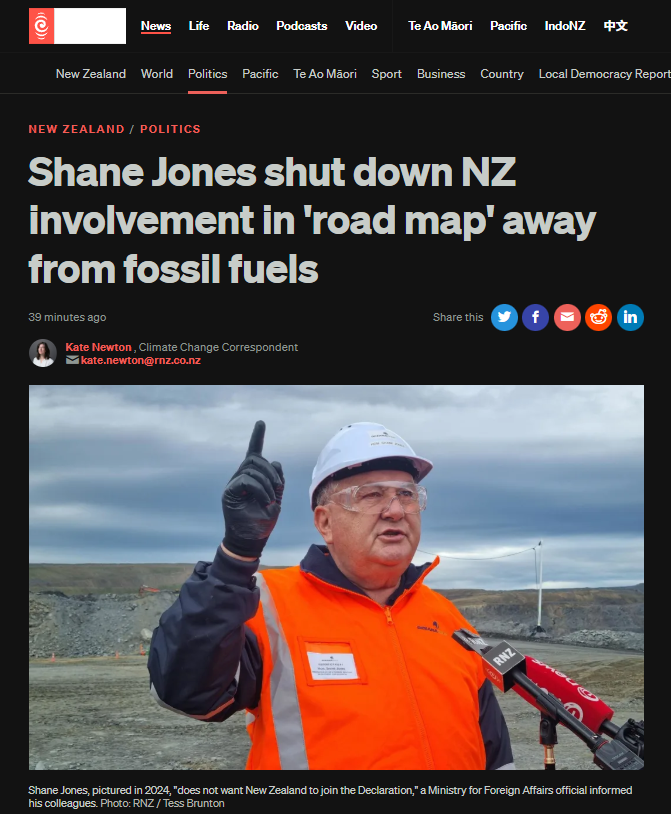
The declaration did not conflict with New Zealand policy settings, according to Ministry of Foreign Affairs and Trade officials. It was “consistent with the COP28 outcome regarding the transition away from fossil fuels which Parties, including New Zealand, agreed to”.
Yet Jones—a minister whose portfolio is Resources, not Climate—dismissed it as conceived in “milk-fed politics” and declared
“I don’t see a future for New Zealand if we deny ourselves access to fossil fuels”.
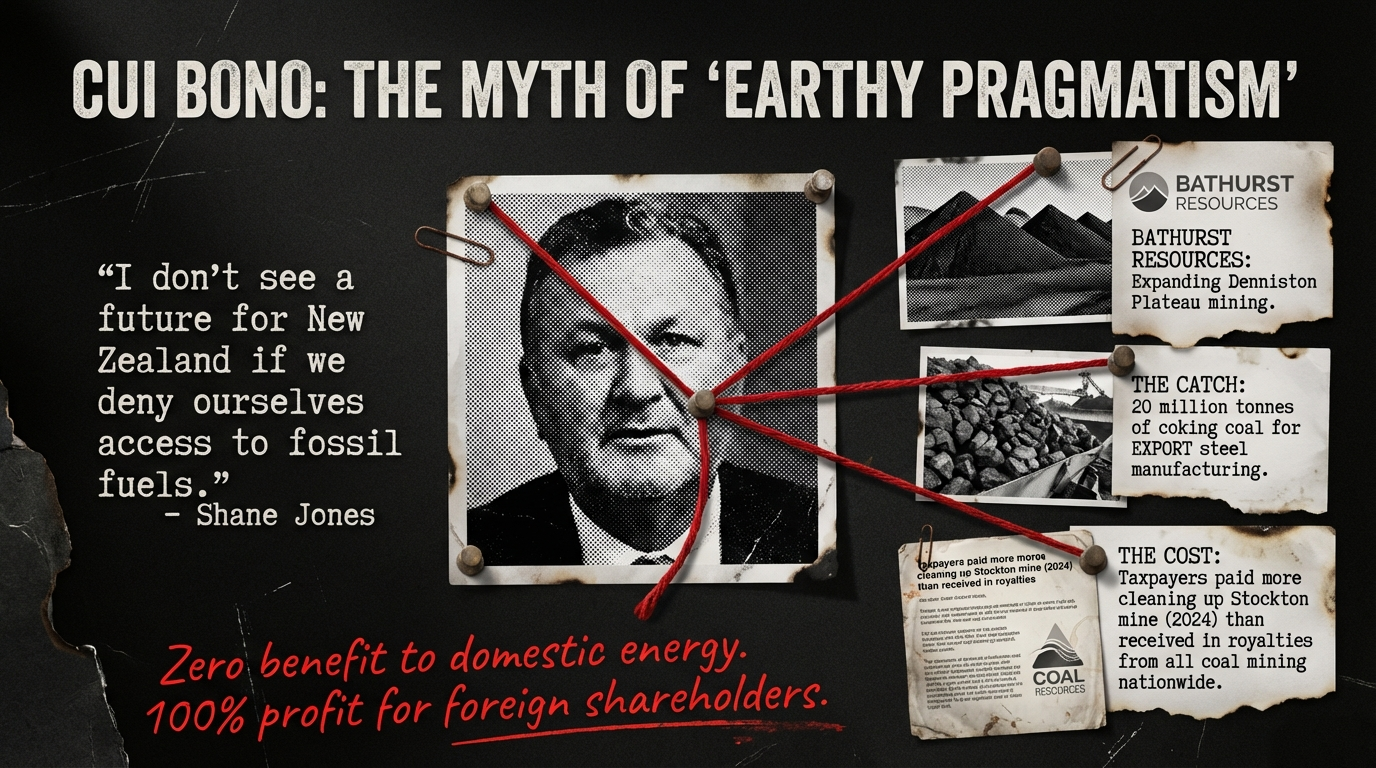
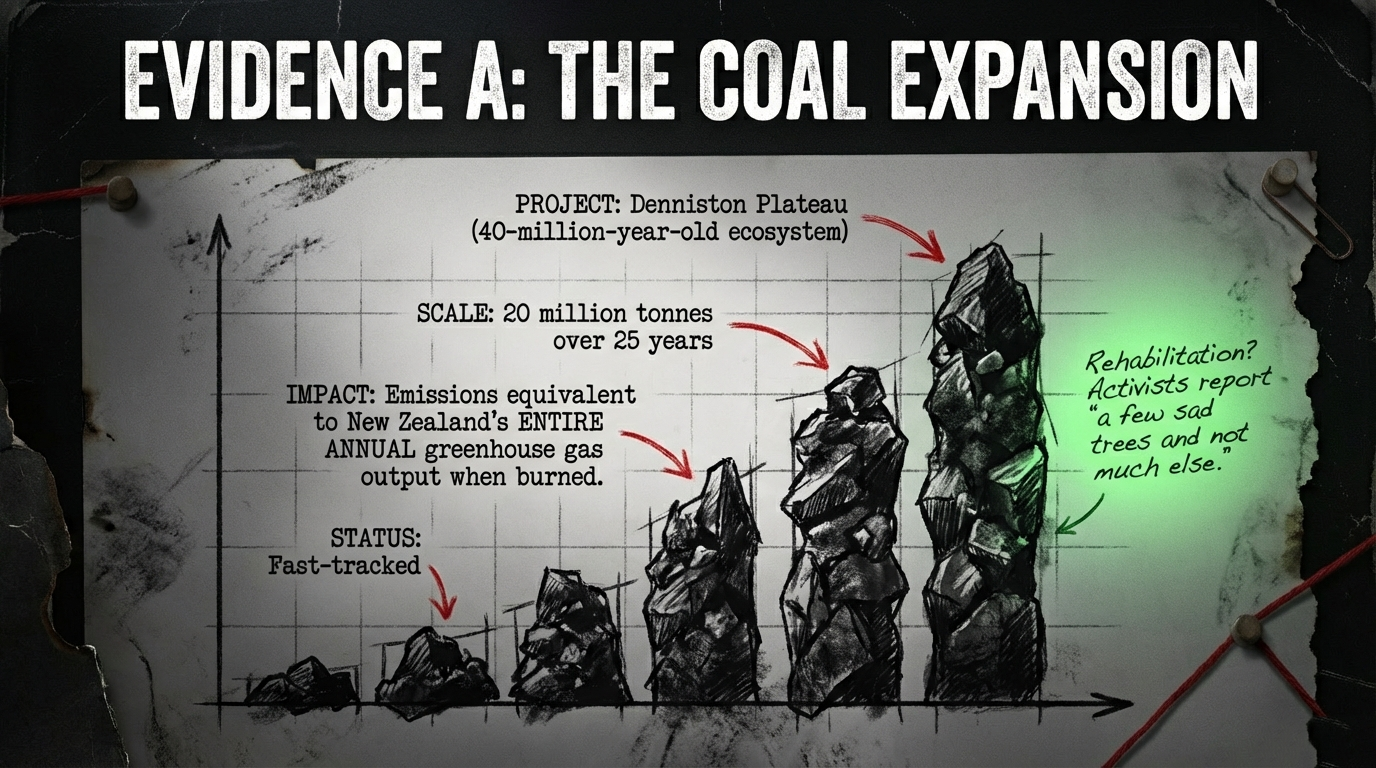
Cui bono? Who benefits? Follow the whakapapa of extractivism: Bathurst Resources pushes to expand Denniston Plateau coal mining for 25 years, extracting 20 million tonnes of coking coal—emissions equivalent to New Zealand’s entire annual greenhouse gas output when burned—all destined for export to foreign steel manufacturers, with zero benefit to New Zealand’s domestic energy supply. Meanwhile, in 2024, the government spent more money cleaning up the Stockton mine than it received in royalties from all coal mining nationwide. The beneficiaries are Bathurst’s foreign shareholders; the losers are New Zealand taxpayers and future generations.
Cui malo? Who is harmed? Pacific Island nations facing existential threats from rising seas, coastal erosion, and climate displacement. Māori communities exercising kaitiakitanga over whenua and moana. Young people inheriting a climate crisis that officials warned would damage diplomatic relations and give China strategic openings in the Pacific. All sacrificed on the altar of Jones’s “earthy, pragmatic approach”—a euphemism for extractivist capitalism dressed in working-class drag.
The Metaphorical Taiaha: Piercing the Veil of “Pragmatism”
Imagine the Belém Declaration as a waka hourua, a double-hulled voyaging canoe carrying 82 nations—from Germany and Colombia to Kenya and the Netherlands—navigating toward a horizon where our mokopuna can breathe clean air and Pacific islands remain above water. This waka was not some radical fringe vessel; it included Australia, the United Kingdom, and European Union countries, nations representing one-third of global fossil fuel imports who recognize that the transition makes economic sense.
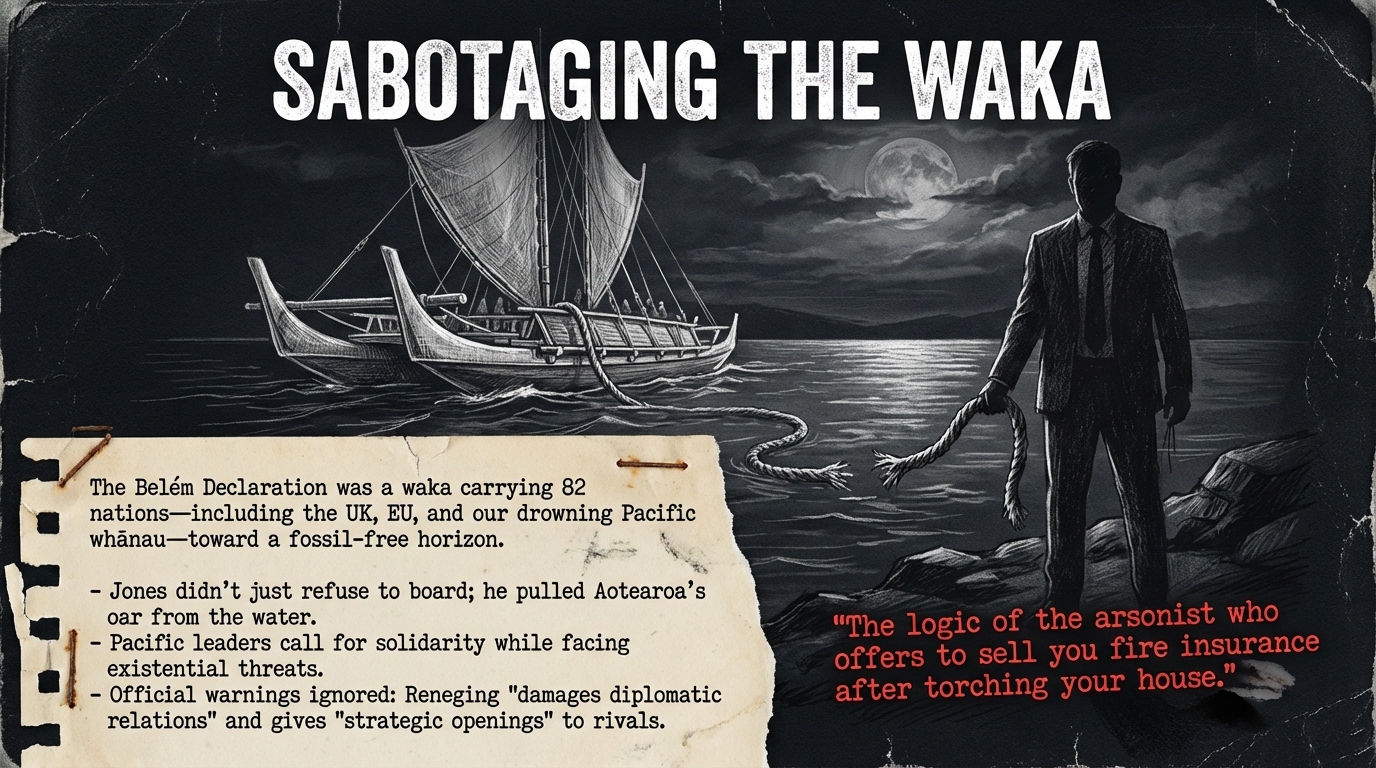
Jones, channeling the spirit of colonial extractivism, stood on the shore and refused to board. Worse, he pulled Aotearoa’s oar from the waka, ensuring we would be left behind while our Pacific whānau—already relocating communities displaced by climate change—cried out for solidarity.
The metaphor extends: Jones is not merely declining to paddle. He is drilling holes in the bottom of other people’s canoes by expanding fossil fuel extraction while claiming to care about energy security. This is the logic of the arsonist who offers to sell you fire insurance after torching your house.
Consider the government’s trajectory:
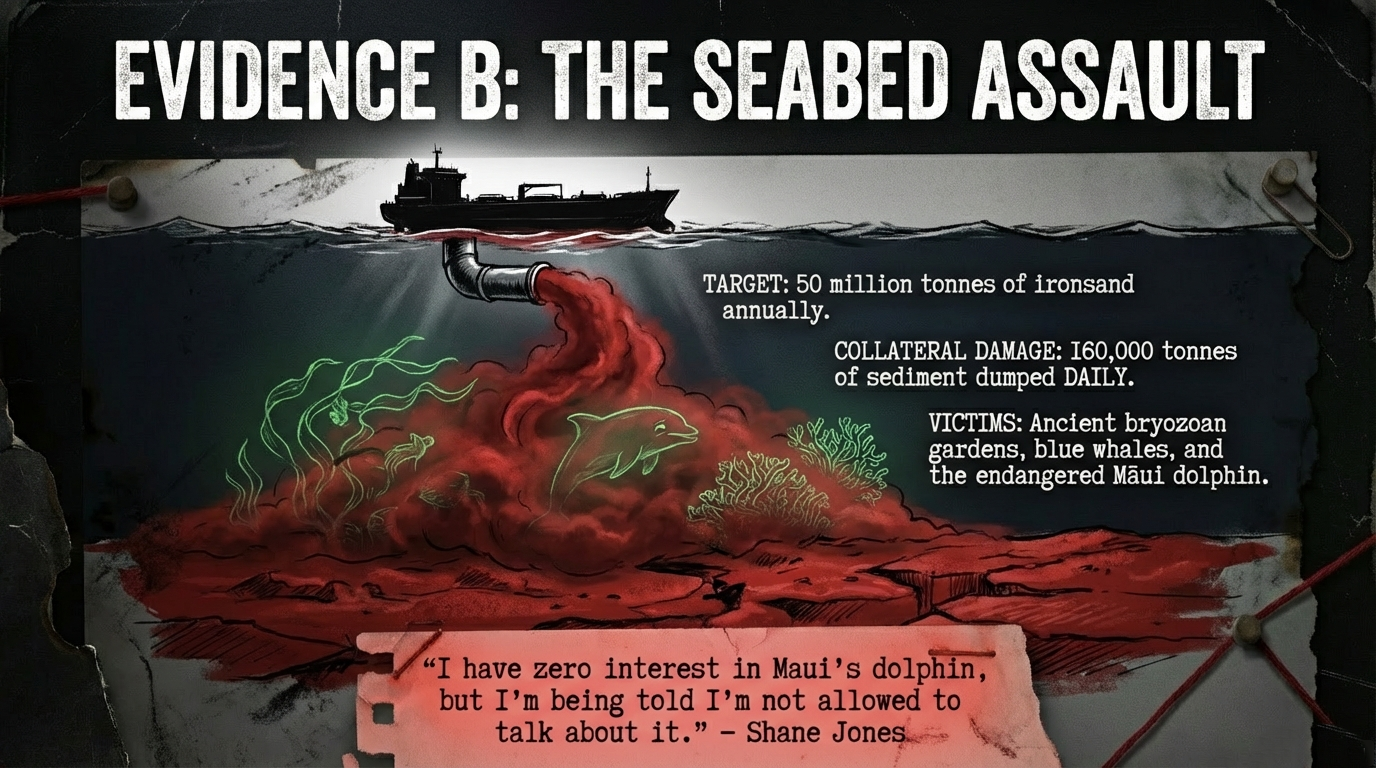
In January 2025, Jones added metallurgical coal and gold to New Zealand’s “critical minerals” list, aiming to double mining exports to $3 billion by 2035. He has championed seabed mining off Taranaki, proposing to extract 50 million tonnes of ironsand annually, dumping 160,000 tonnes of sediment daily over endangered Māui dolphin habitat and kelp forests. He reversed the ban on offshore oil and gas exploration and created a $200 million co-investment fund to underwrite fossil fuel companies’ exploration risks—socializing losses while privatizing profits.
These are not the actions of someone pursuing “pragmatic” energy policy. These are the actions of someone captured by extractivist ideology, where the only future imaginable is one where foreign corporations loot Aotearoa’s whenua and moana while leaving taxpayers with the cleanup bill and future generations with the climate catastrophe.
Tikanga Betrayed: The Mauri-Depleting Reality of Extractivism
To understand the depth of harm Jones’s veto inflicts, we must examine it through te ao Māori—through the frameworks of kaitiakitanga (guardianship), mauri (life force), whakapapa (genealogical connection), utu (reciprocity), and rangatiratanga (self-determination).
Kaitiakitanga: Guardianship as Sacred Obligation
Kaitiakitanga means guardianship, protection, and preservation. It is a way of managing the environment based on the Māori worldview, where humans are deeply connected to the land and natural world. In Māori culture, humans and the land are seen as one, and people are not superior to nature. Kaitiaki—guardians—hold reciprocal responsibility: in the same way that Māori are nourished by resources from atua within their environmental domain, utu (reciprocal obligation) is placed on sustaining and managing these resources for current and future generations.
Jones’s extractivism obliterates kaitiakitanga. When he champions coal mining on the Denniston Plateau—a unique 40-million-year-old ecosystem—he demonstrates that he views the land as disposable commodity rather than ancestor. Bathurst Resources claims “rehabilitation”, but activists who toured Stockton Mine reported seeing “a few sad trees and not much else”. This is not restoration—it is lipstick on ecological corpse.
The principle extends to the moana. Jones dismissed concerns about Māui dolphins, saying
“I have zero interest in Maui’s dolphin, but I’m being told I’m not allowed to talk about it”.
This statement—shocking in its callousness—reveals Jones’s worldview: the environment has value only insofar as it can be monetized. Taonga species, kelp forests, bryozoan gardens discovered by NIWA in the South Taranaki Bight—all expendable for ironsand extraction.
Kaitiakitanga demands we ask: what world are we leaving our mokopuna? Jones’s answer, through his actions, is clear: a world of exhausted mines, smothered reefs, extinct species, and unlivable temperatures. This is not guardianship. This is its opposite—predatory exploitation masquerading as economic necessity.
Mauri: Life Force Extinguished
Mauri means life force or essence. All plants, animals, water, and soil possess mauri. Damage or contamination to the environment is therefore damage to or loss of mauri. The health of a community is reflected in its environment and vice versa.
Consider the mauri of the South Taranaki Bight before Trans-Tasman Resources’ proposed seabed mining:
14 reefs covered in kelp forests, macroalgal meadows, and gardens of sponges and ancient bryozoans, home to 30 fish species including blue cod, kahawai, and terakihi, and endangered Māui dolphins and pygmy blue whales. Now imagine that mauri after 160,000 tonnes of sediment are dumped daily, smothering reefs and cutting sunlight levels. As Taranaki leaders stated, there has never been
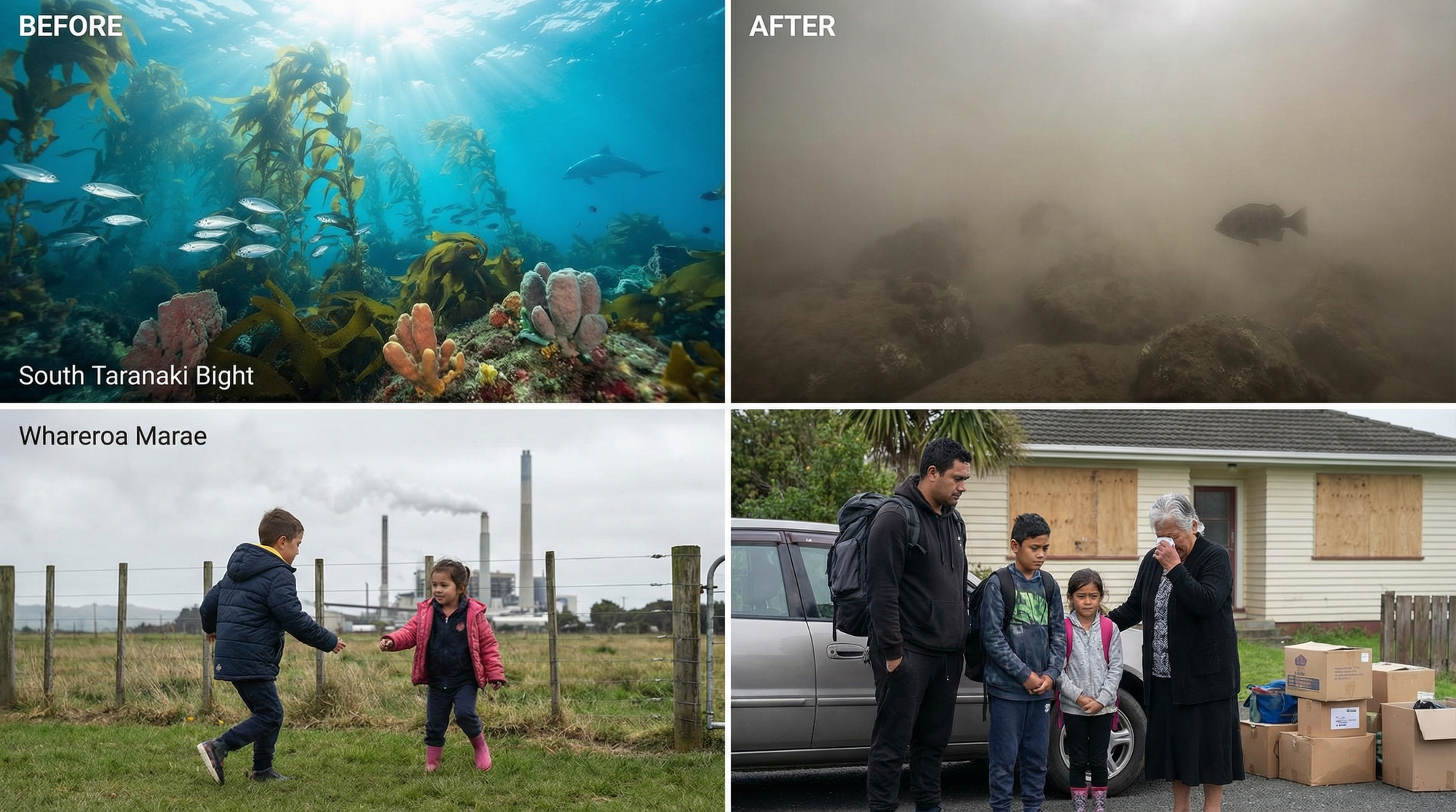
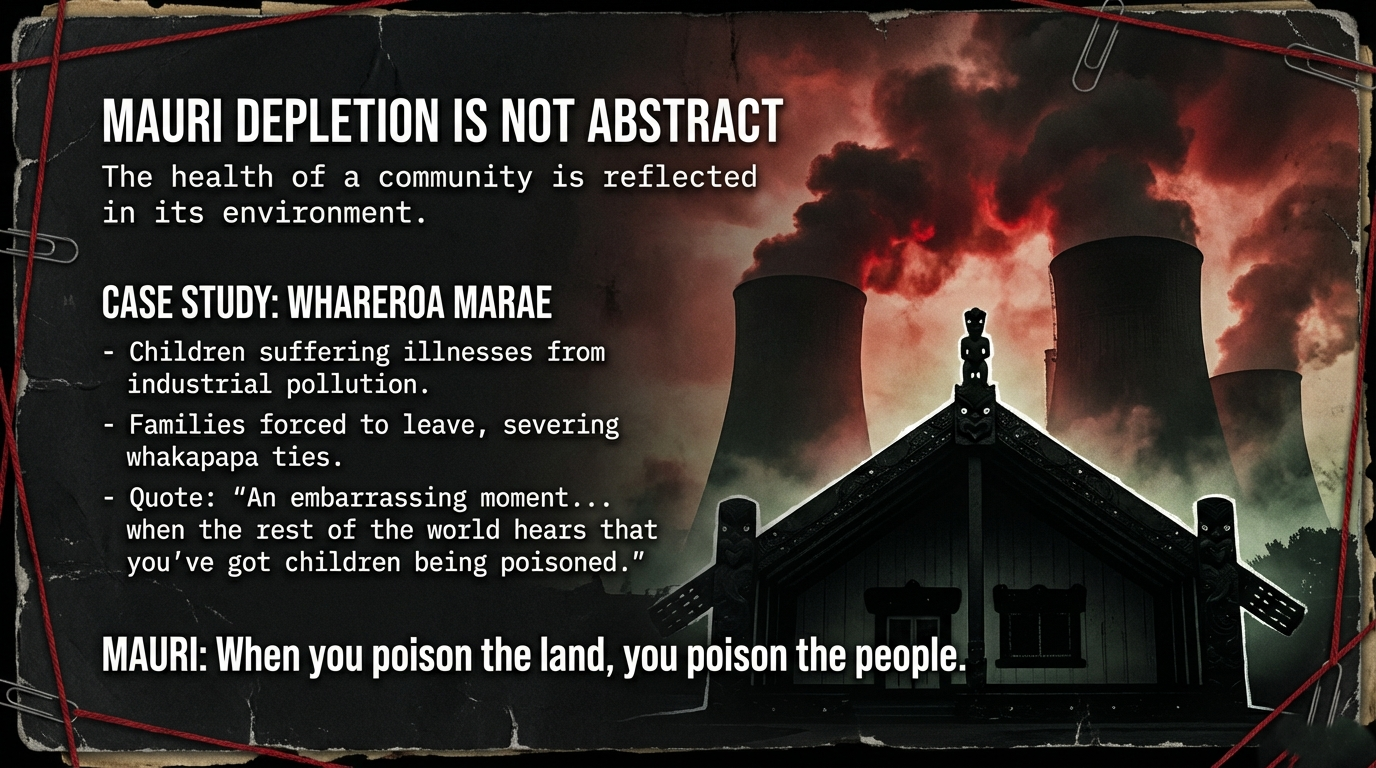
The mauri depletion is not abstract. It translates directly to community harm. Whareroa Marae in Bay of Plenty has documented children suffering illnesses from proximity to industrial area pollution, with one representative telling the UN:
“This is an embarrassing moment for our country when the rest of the world hears that you’ve got children being poisoned every hour of the day”. Families no longer live at Whareroa, “essentially severing a tie that my children are entitled to”.
This is mauri depletion in action:
environmental contamination that severs whakapapa connections, harms health, and destroys the reciprocal relationship between people and place. Jones’s expansion of extractivism guarantees more Whareroa Maraes, more communities displaced, more children poisoned—all in service of foreign shareholders’ quarterly earnings.
Whakapapa & Rangatiratanga: Severed Connections and Stolen Authority
Whakapapa—genealogical connection—teaches that Māori and the land are one, with humans not superior to nature but part of an interconnected web where natural world can speak to humans and give knowledge. Rangatiratanga—self-determination and sovereignty—encompasses effective Māori authority over Māori resources, with decisions reflecting Māori priorities and values.
Jones’s veto of the Belém Declaration tramples both principles. When officials recommended signing because it aligned with New Zealand’s commitments, Jones—whose portfolio is Resources, not Climate—overruled them without substantive justification. Climate Change Minister Simon Watts said it was “appropriate” to consult Jones but refused to state his own position, demonstrating that New Zealand First—polling at 8%, its highest since 2017—wields disproportionate influence over policy.
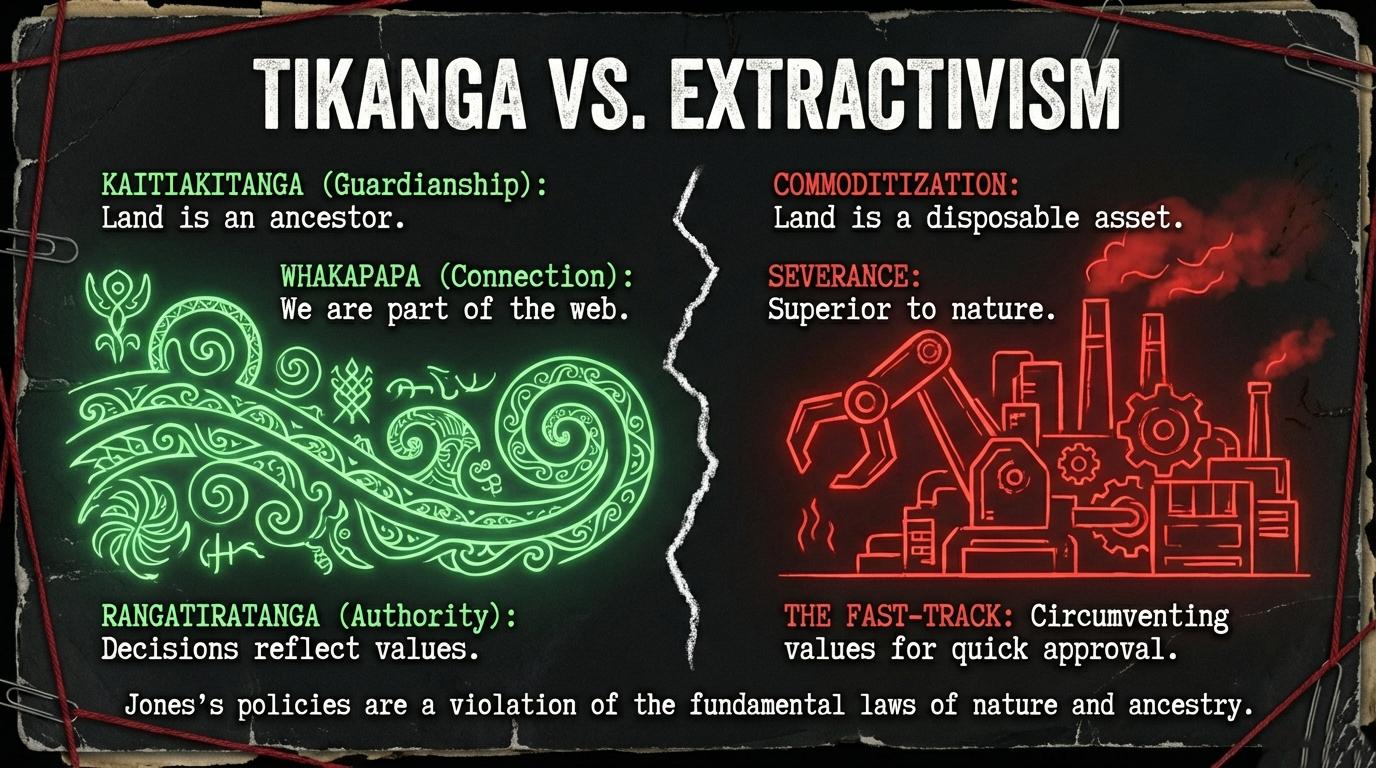
This pattern repeats across environmental policy. Jones has used the Fast-track Approvals Act to approve mining and quarrying projects in 112 working days, circumventing consultation processes that would allow iwi and hapū to exercise rangatiratanga. When Greens pledged to revoke fast-track consents for coal, hard-rock gold, and seabed mining if elected, Jones called it “a sovereign risk and a constitutional outrage”—yet saw no irony in retrospectively bulldozing iwi rights through fast-track legislation.
The whakapapa of this extractivism traces directly to colonialism. As scholar Catherine Jones notes, rangatiratanga has been relegated to applying only where land is under Māori legal control—an idea incompatible with Māori worldview. Jones’s policies continue this pattern: Māori environmental authority exists only in spaces colonialism hasn’t yet reached, and those spaces are rapidly shrinking as mining companies, underwritten by taxpayer funds, extract and export while leaving pollution and poverty behind.
Quantifying the Harm: Climate Pariah Status Achieved
The consequences of Jones’s veto are measurable and damning:
1. Climate Ranking Collapse
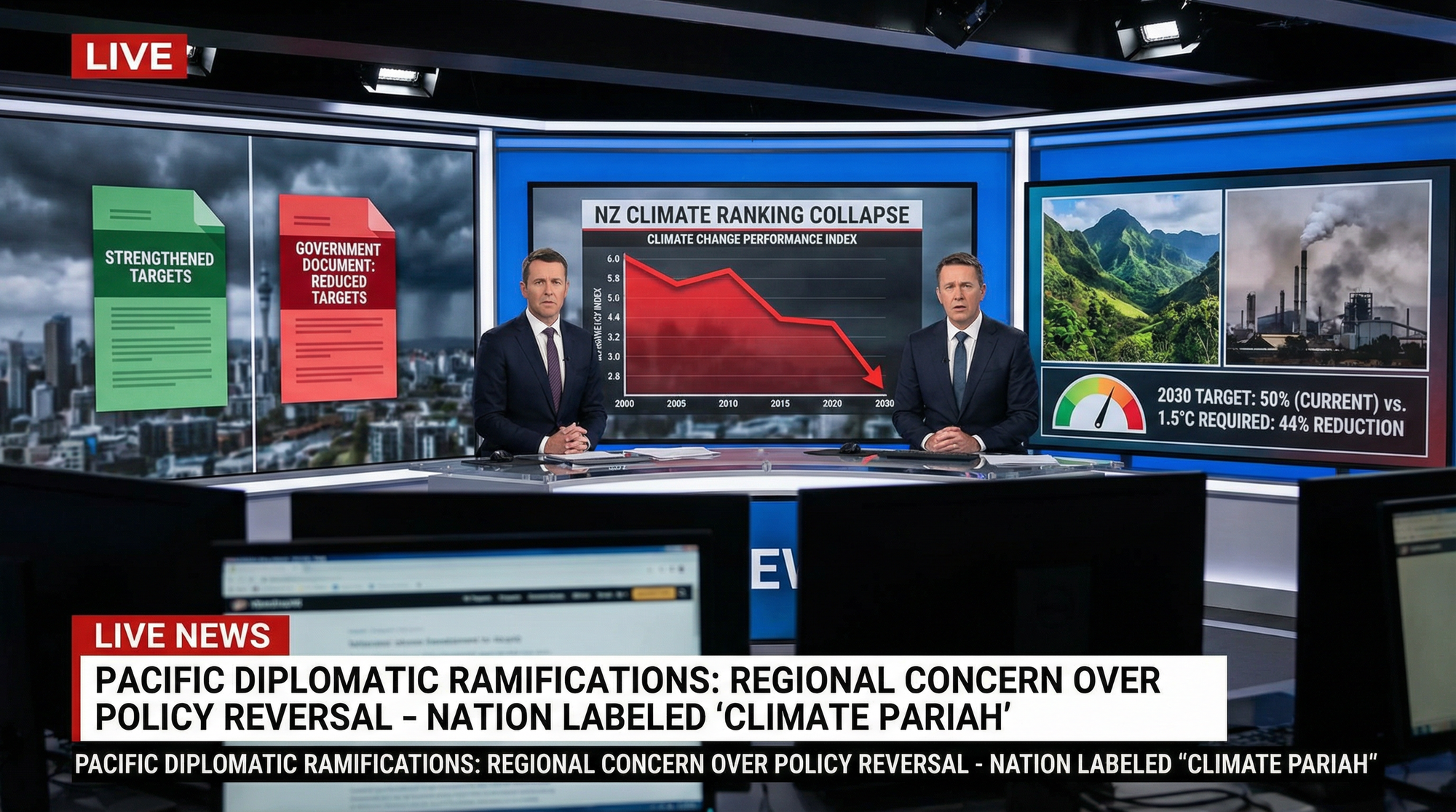
New Zealand has plummeted to 44th in the Climate Change Performance Index, down three places in 2025 and 10 places over two years, now rated “low-performing”. Authors attributed the fall to “backsliding” on climate policies, including oil and gas exploration reversal and methane target weakening. New Zealand won “Fossil of the Day” at COP30—a dubious honor for obstructionism.
2. Target Weakening & Rejection
In December 2025, the government rejected all Climate Change Commission recommendations to strengthen targets, despite warnings that climate impacts are hitting sooner and more severely than expected. In October 2025, the government lowered its biogenic methane target from 24-47% reduction by 2050 to 14-24%—representing 10-23 percentage points less ambition. The Commission warned strengthened targets would “reduce the risk of a harsher and costlier future transition” that pushes costs onto future generations.
3. Emissions Reality Check
New Zealand’s current 2030 target is 50% below 2005 gross levels, but this uses misleading accounting methods that more than halve its effective reduction to only 22% below 2005 levels. To remain 1.5°C compatible, New Zealand needs a target of at least 44% gross emissions reduction. The Climate Action Tracker rates New Zealand’s overall effort “Highly Insufficient”—meaning if all countries followed this approach, warming would reach 3-4°C.
The Denniston coal expansion alone—20 million tonnes over 25 years—equals New Zealand’s entire annual emissions when burned. This single project, fast-tracked by Jones, would annually produce emissions rivaling what the entire nation must cut.
4. Pacific Diplomatic Fallout
Officials warned in secret memos that reneging on climate commitments could damage diplomatic relations and give China strategic openings in the Pacific. This is not hypothetical: Pacific leaders including Palau’s president “slammed” New Zealand’s oil and gas exploration reversal, and Vanuatu’s Climate Change Minister called for a rethink. Climate expert Bronwyn Hayward noted New Zealand is “embracing the role of climate pariah”, which “is not going to advance New Zealand’s interests with our Pacific partners”.
For a nation whose 2018 “Pacific Reset” identified climate change as an existential threat to Pacific states and key factor in foreign policy, Jones’s veto represents strategic incoherence bordering on self-sabotage.
5. Economic & Social Costs
Jones claims coal and mining support jobs and regions. Reality: In 2024, the government spent more cleaning up Stockton mine than it received in royalties from all coal mining nationwide. Bathurst’s beneficiaries are foreign shareholders, with taxpayers losing money on the arrangement. Meanwhile, delaying climate action will cost New Zealanders more, with Commissioner James Renwick warning “taking the action now...is going to be the most cost-effective”.
The harm is not merely environmental—it is fiscal, diplomatic, and intergenerational.
Solutions: A Roadmap Forward That Jones Rejected
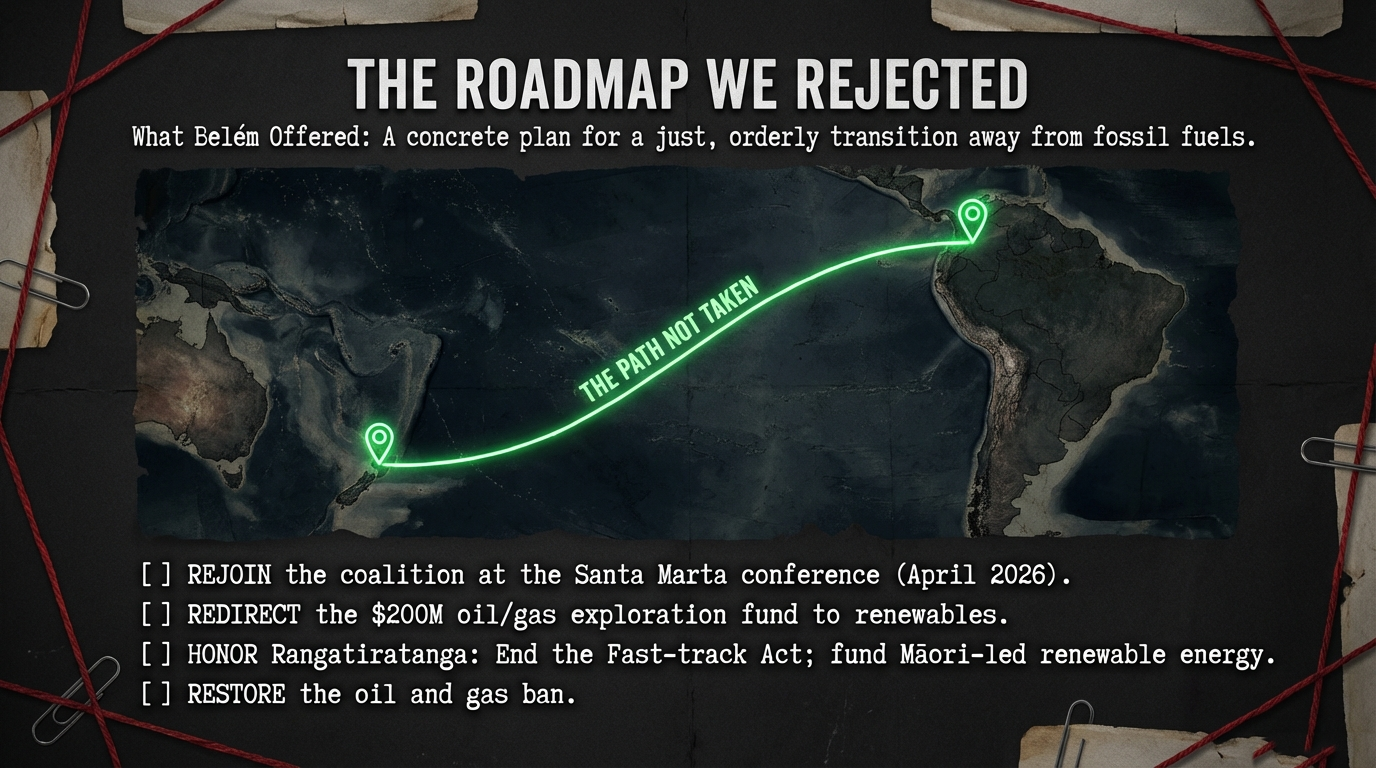
The Belém Declaration offered precisely what New Zealand needs: a concrete roadmap for transitioning away from fossil fuels in a just, orderly, and equitable manner. The First International Conference in Santa Marta, Colombia in April 2026 will advance international cooperation on ending fossil fuel extraction, with legal, economic, and social pathways, ensuring no one is left behind.
This is the very definition of pragmatism—coordinated global action recognizing that fossil-fuel-dependent nations want to end dependence on oil, gas, and coal but require unprecedented international cooperation to do so fairly. By vetoing participation, Jones ensured New Zealand will have no seat at the table when these pathways are designed, no voice in shaping what a just transition means, no access to the international support mechanisms that will emerge.
Here are solutions Jones rejected and that a future government must embrace:
1. Rejoin the Global Coalition
Immediately signal intent to sign the Belém Declaration and participate in the Santa Marta conference. This restores diplomatic credibility with Pacific neighbours and positions New Zealand as leader, not laggard.
2. End Fossil Fuel Subsidies & Redirect Investment
The $200 million co-investment fund for oil and gas exploration represents public money subsidizing private fossil fuel companies’ risks. Redirect this to renewable energy infrastructure—solar, wind, geothermal—and rapid EV charging rollout. New Zealand needs 70-80% more electricity generation by 2050 to decarbonize transport and industry; build it now with renewables, not coal.
3. Ban New Fossil Fuel Extraction Permits
Reinstate and strengthen the offshore oil and gas exploration ban. Ban new coal mining permits. Existing coal is only for export, contributes nothing to domestic energy security, and costs taxpayers more in cleanup than royalties. Phase out existing operations on published timeline aligned with 1.5°C pathways.
4. Strengthen, Don’t Weaken, Climate Targets
Adopt the Climate Change Commission’s recommendations for strengthened 2050 targets, including net-negative carbon and greater methane reductions. Set gross emissions reduction targets separate from forestry sequestration to ensure actual reductions, not accounting tricks. Align 2035 target with 1.5°C pathway requiring at least 44% gross emissions cut.
5. Just Transition for Regions & Workers
The critique of extractivism is not a critique of workers. Establish funded just transition pathways for coal and fossil fuel workers, including retraining, income support, and investment in sustainable industries for regions like the West Coast. This was the promise of neo-extractivism globally—use resource revenues for social welfare—but it requires genuine redistribution, not foreign shareholders capturing profits while communities get pollution.
6. Honor Rangatiratanga in Environmental Governance
Implement co-governance and co-management arrangements that center Māori authority over environmental decisions affecting whenua and moana. Replace Fast-track Act with processes that embed free, prior, and informed consent for iwi and hapū. Fund direct grants to Māori landowners for sustainable land management and renewable energy development on Māori land.
7. Pacific Climate Finance & Leadership
Triple New Zealand’s Pacific climate finance commitment, prioritizing adaptation and relocation funds for communities facing displacement. Support Pacific-led solutions, including technology transfer and capacity building. Advocate for “loss and damage” finance from historical polluters to frontline nations.
These solutions exist. They are pragmatic, costed, and globally coordinated. The only barrier is political will—and politicians like Jones who serve extractive capital rather than future generations.
The Name That Must Be Named: Shane Jones
This essay names Shane Jones because accountability requires naming. His decisions have consequences:
- Vetoing the Belém Declaration isolated New Zealand from 82-nation coalition including Pacific whānau
- Adding coal to “critical minerals” list legitimized expansion of dirtiest fossil fuel
- Fast-tracking Denniston coal mine enabled 20MT extraction = annual national emissions
- Championing seabed mining threatens to smother Māui dolphin habitat and kelp forests with 160,000 tonnes daily sediment
- Reversing oil/gas ban reopened offshore extraction with taxpayer-funded risk subsidies
- Refusing methane target strengthening weakened ambition by 10-23 percentage points
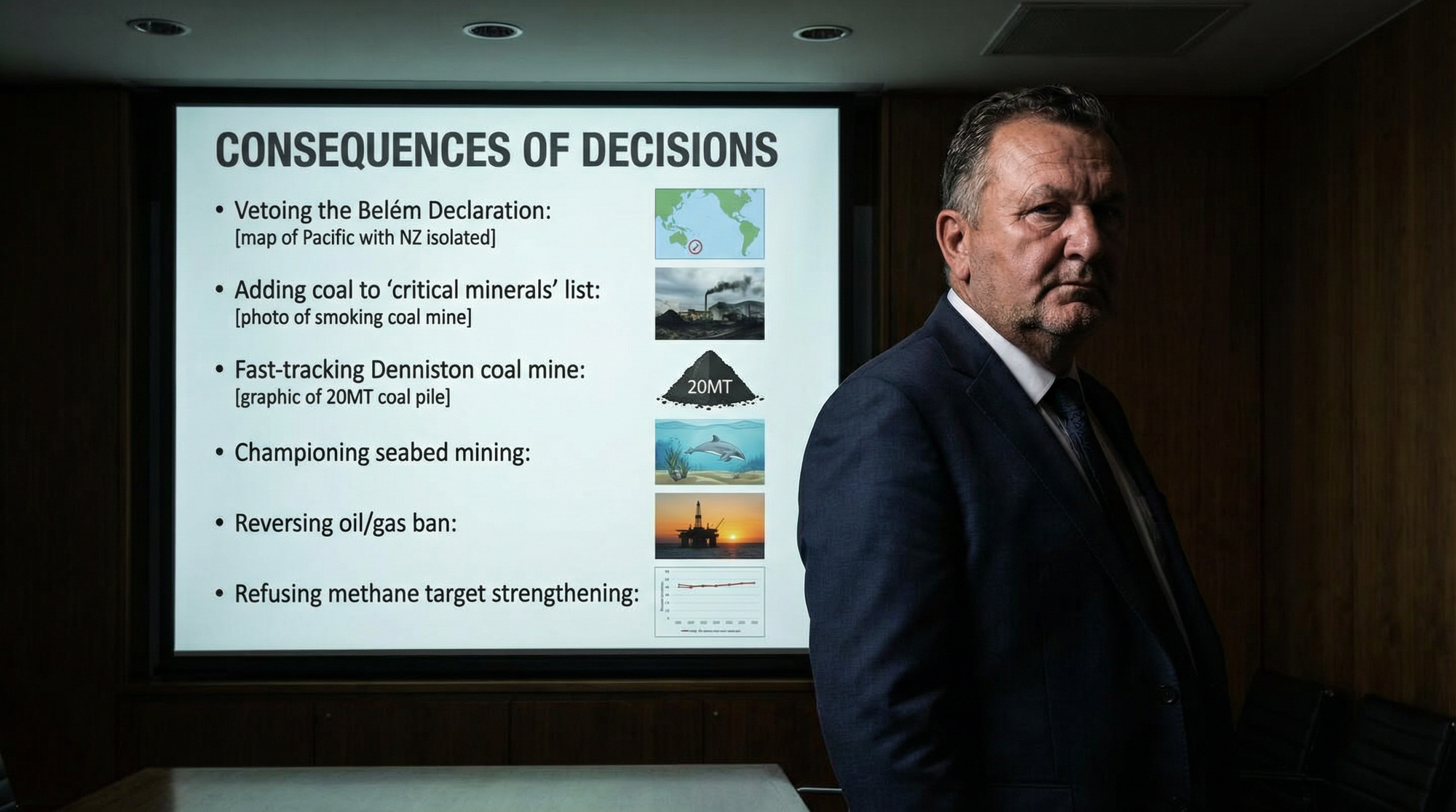
Each action, documented and sourced, demonstrates a pattern: Jones consistently prioritizes extractive industry profit over environmental protection, Pacific solidarity, and intergenerational justice. His “earthy, pragmatic approach” is neither—it is ideological commitment to fossil fuel capitalism, regardless of cost.
But Jones is not acting alone. He operates within coalition government dynamics where New Zealand First at 8% wields disproportionate influence, and where National allows junior coalition partner to dictate climate policy. Prime Minister Christopher Luxon bears responsibility for enabling this; Climate Change Minister Simon Watts bears responsibility for refusing to state his own position and allowing Resources Minister to overrule climate policy.
The system is functioning as designed—to serve capital accumulation through resource extraction, with political structures that insulate decision-makers from consequences while externalizing costs onto communities, environment, and future generations. This is textbook neoliberal extractivism, where [privatization of profits and socialization of losses combines with state intervention to subsidize fossil fuel companies while claiming free market principles.
The Moral Clarity Required
When Jones says “I don’t see a future for New Zealand if we deny ourselves access to fossil fuels”, he reveals a failure of moral and imaginative capacity. The actual future of denying fossil fuel transition is:
- Pacific islands submerged, communities displaced, cultures lost
- Ecosystems collapsed, species extinct, mauri extinguished
- Extreme weather intensified, infrastructure destroyed, lives lost
- Diplomatic isolation, economic stranding, strategic irrelevance
- Intergenerational betrayal, where mokopuna inherit uninhabitable planet
This is not abstract. Tuvalu is already relocating communities. Fiji accepted $2 million from New Zealand in 2020 for climate displacement. Cyclone Gabrielle in 2023 caused devastation that Tairāwhiti communities are still recovering from. These are the costs of fossil fuel “access”—costs externalized onto those who contributed least to causing the crisis.
The Belém Declaration represented moral clarity: 82 nations saying “we recognize fossil fuels are destroying our planet, and we commit to phasing them out justly and equitably.” Jones, by vetoing New Zealand’s participation, chose moral obscurity—the fog of extractivist propaganda that claims environmental destruction is economic necessity.
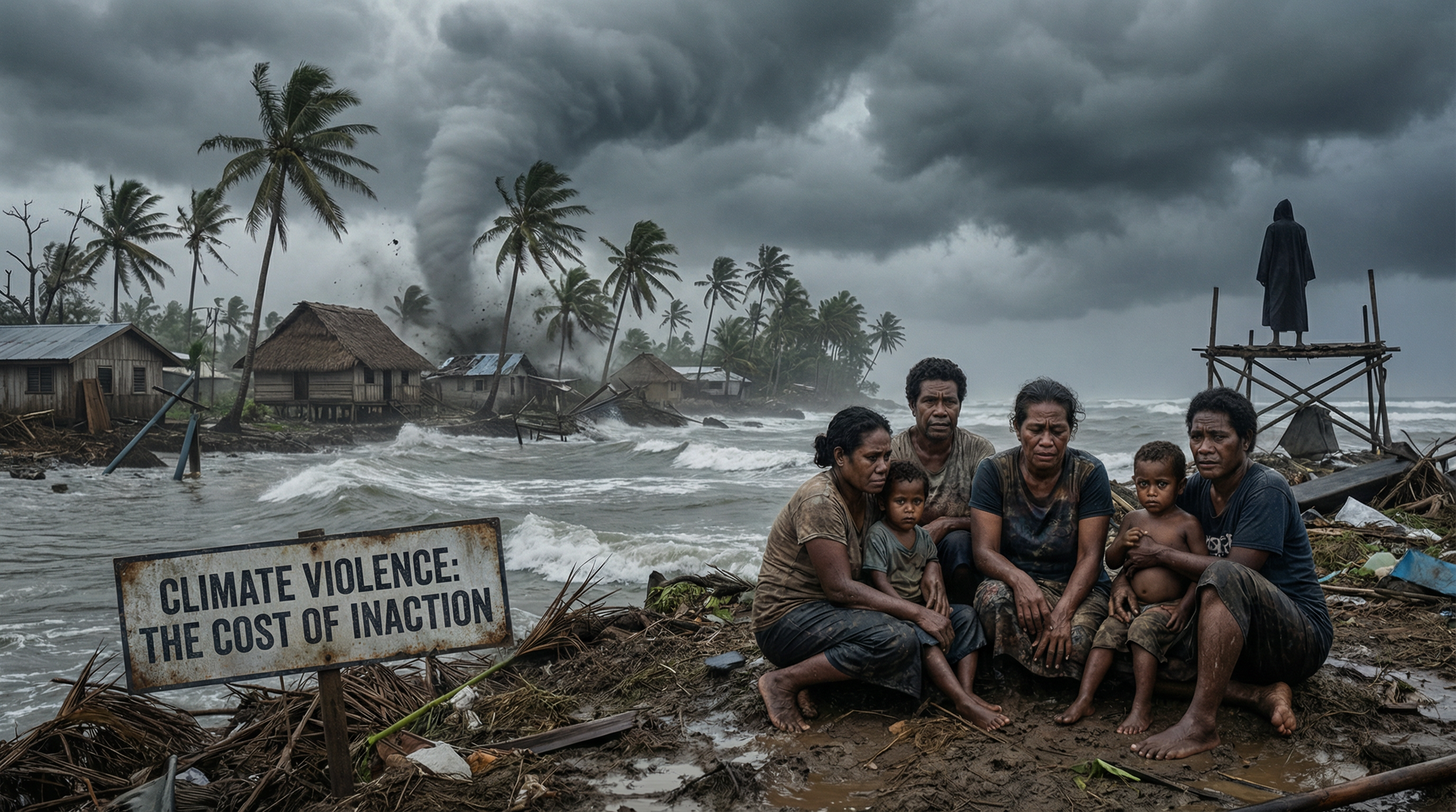
Te ao Māori offers the moral clarity Jones lacks. Kaitiakitanga teaches that protecting mauri is critical to survival of communities dependent on lands, waters, and natural resources. Widespread degradation of ecosystems is destabilizing to health and well-being, debasing spiritual and cultural values. Rangatiratanga demands that Māori hold authority to make decisions about resource use reflecting Māori priorities and values.
Applying these principles to climate policy yields clear directive: transition rapidly away from fossil fuels, invest in renewable energy and sustainable economies, center equity and justice in transition, and honor obligations to most vulnerable—including Pacific whānau and future generations. This is both moral imperative and pragmatic necessity.
The refusal to act is not neutrality. It is complicity in ongoing harm. Jones’s veto is not merely policy disagreement—it is active participation in climate violence against Pacific peoples and mokopuna worldwide.
The Ring’s Charge
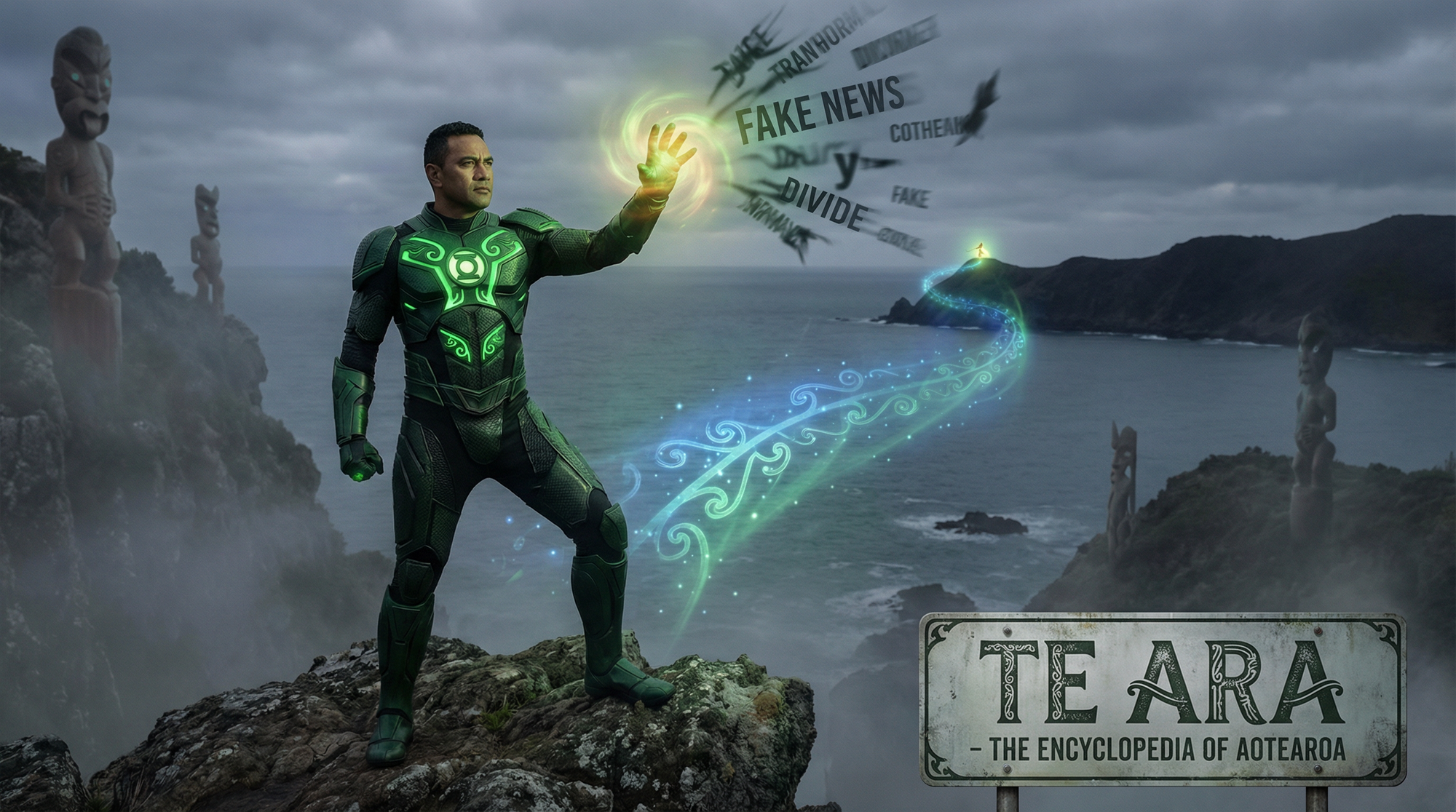
The Green Lantern’s power comes from will—the will to overcome fear, to see clearly, to act righteously even when opposed by greater force. The Belém Declaration represented that will manifested collectively: one-third of global fossil fuel importers choosing to align policy with planetary survival rather than extractive profit.
Jones lacks that will. His “earthy, pragmatic approach” is fear masquerading as realism—fear of economic transition, fear of challenging power, fear of imagining futures beyond extractivism. That fear, institutionalized as policy, sentences generations to climate chaos while enriching foreign shareholders today.
But the waka has not sailed beyond reach. The Santa Marta conference in April 2026 remains open. Future governments can reverse course, rejoin the coalition, and commit to the work the Belém Declaration envisions. That work—coordinated, just, and equitable fossil fuel phase-out—is the only pathway to planetary survival.
The choice before whānau is clear: fund the accountability structures that name these harms and demand solutions, or allow extractivist politicians to continue mortgaging our future for their political survival and their corporate donors’ profit. The Ring illuminates what power obscures. The taiaha defends what colonialism targets. The whakapapa connects us all—to each other, to whenua and moana, to mokopuna not yet born.
Kia kaha. Kia maia. Kia manawanui.
Koha Consideration
Every koha signals that whānau recognize what Shane Jones’s veto truly means: that our government will not protect our climate, our Pacific whānau, or our mokopuna’s future unless we demand it. When a Resources Minister can overrule our international climate commitments to benefit foreign mining companies, we need independent voices naming these betrayals and tracing the whakapapa of extractivist harm.
This mahi—researching the hidden connections between fossil fuel expansion and diplomatic isolation, quantifying the costs of coal mining that benefits shareholders while taxpayers clean up, exposing the mauri-depleting reality of seabed mining—requires resources. The Crown and corporate media won’t fund accountability for policies that serve their interests.
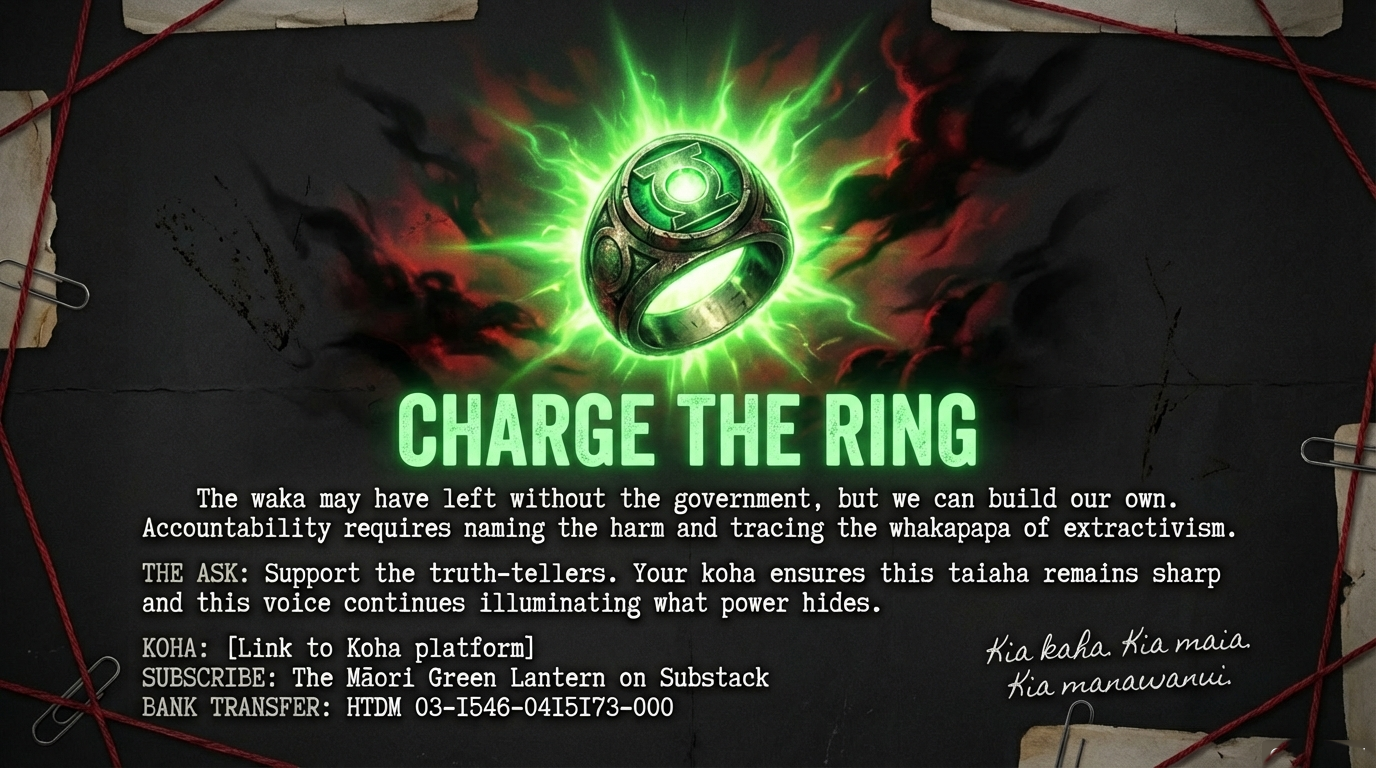
Your koha ensures this taiaha remains sharp, this Ring remains charged, this voice continues illuminating what power hides. Whether through direct support, subscription, or bank transfer, every contribution affirms: rangatiratanga includes funding our own truth-tellers.
Kia kaha, whānau. The waka may have left without us, but we can build our own.
Three pathways exist:
For those who wish to support this mahi directly with a koha (voluntary contribution), please visit the Koha platform: Koha—Support
For those who wish to receive essays directly and support through subscription, join the Substack community: Subscribe to the Māori Green Lantern on Substack
For those who prefer direct bank transfer, account details are: HTDM, account number 03-1546-0415173-000.

Ivor Jones The Māori Green Lantern Fighting Misinformation And Disinformation From The Far Right