"Stanford’s Treaty Betrayal: How Neoliberal Ideology and White Supremacy Are Weaponised Against Māori Tamariki” - 13 November 2025
The Coalition’s War on Māori Children
Ko Ivor Jones te Māori Green Lantern. Tōhunga mau rākau wairua. Mana rooted in firstly being Māori - Norm and then Te Arawa, Ngāti Pikiao, Ngāti Welsh and multiple ancestral sites. The mahi is everything. The Ring empowers. Each essay: rangatiratanga manifested. Kia kaha. Ka tū.
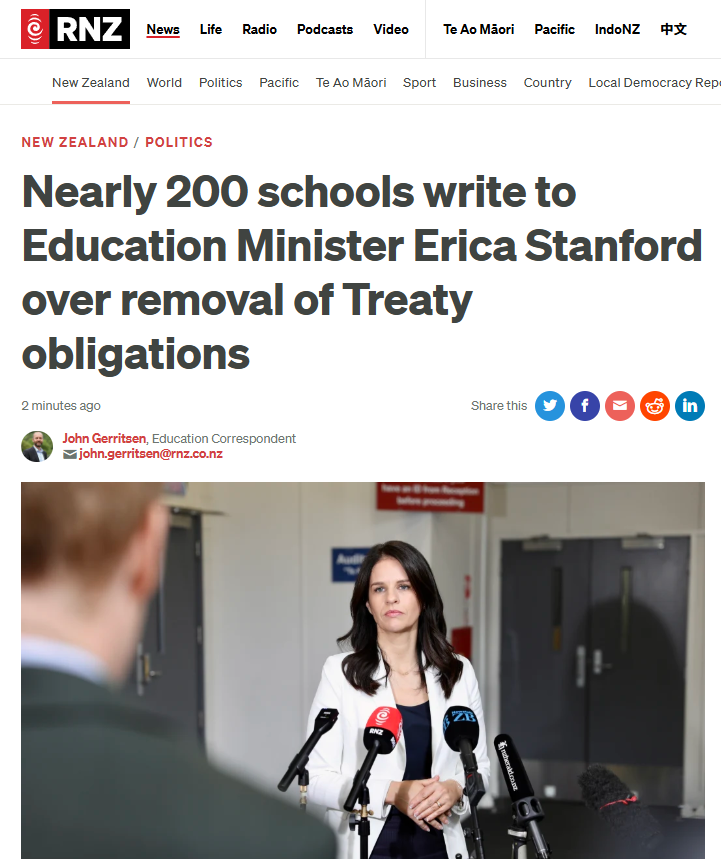
On Thursday, 13 November 2025, nearly 200 schools across Aotearoa formally wrote to Education Minister Erica Stanford, rejecting her government’s removal of Treaty of Waitangi obligations from the Education and Training Act. This grassroots resistance from school boards—the very governance bodies Stanford claims she is “empowering”—exposes the brazen hypocrisy at the heart of her ideological assault on Te Tiriti and Māori educational success. Stanford, backed by a coalition agreement signed with ACT’s David Seymour and enabled by National’s Christopher Luxon, has erased the Treaty from education law without consultation, without evidence, and without conscience. This is not education reform. This is calculated, state-sanctioned violence against Māori children, dressed up in the language of “clarity” and “achievement”.[1][2][3][4]
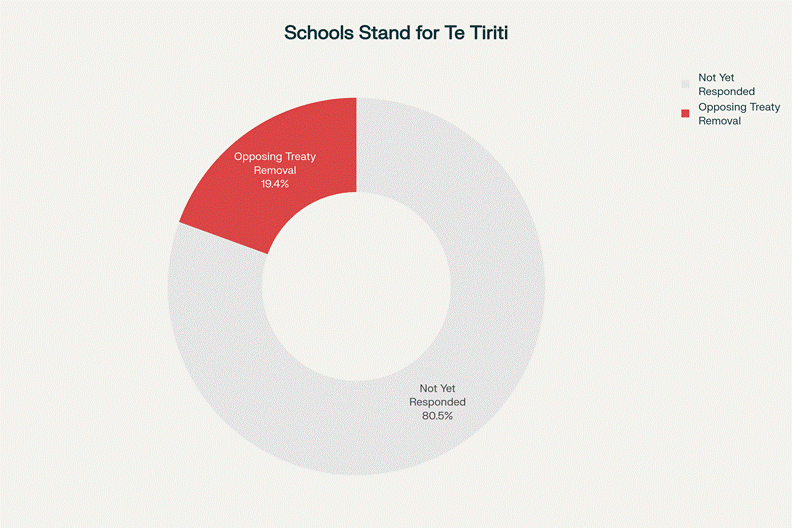
Distribution of state school responses to Treaty removal, with over 200 schools formally opposing the change despite most school boards not yet having met since the announcement.
The Whakapapa of Betrayal: Coalition Agreements and Ideological Capture
Stanford’s Treaty removal did not emerge in a vacuum. It is the poisonous fruit of the National-ACT-NZ First coalition agreement signed on 24 November 2023, which committed the government to “introduce a Treaty Principles Bill based on existing ACT policy” and to “conduct a comprehensive review of all legislation” that references Treaty principles, with the explicit goal of either replacing or repealing those references. ACT leader David Seymour, who holds the position of Associate Education Minister, openly admitted in June 2024 that his party had pushed to have the Treaty clause “stripped out” of education legislation entirely, but was “overruled” at that time for reasons that were “simply political”. National and NZ First temporarily resisted full removal—not out of principle, but political calculation.[4][5][6][7]
By November 2025, that calculation had shifted. On 2 November 2025, Stanford announced the government would proceed with full removal of section 127(2)(e) of the Education and Training Act—the provision requiring school boards to “give effect to Te Tiriti o Waitangi”. This announcement came after public consultation on proposed amendments had closed, and was never put out for consultation. The National Iwi Chairs Forum, which had engaged in “more than a year of formal engagement and consultation with the Government” on education reforms, expressed being “deeply disappointed and concerned by the last-minute amendments”. The changes were “published less than 24 hours before they progressed through Parliament” and passed into law within a week.[2][3][8][9][10][11][12]
This timeline reveals a deliberate strategy of deception. The government consulted on downgrading the Treaty clause—changing its wording and moving “equitable outcomes” to the front of the list—while concealing its true intention to eliminate the clause entirely. Rahui Papa, Chair of the National Iwi Chairs Forum’s Pou Tangata, stated clearly: “These amendments were never put out for consultation. Instead, they were introduced by the minister after public consultation closed”. This is a textbook Treaty breach: the Crown failed to consult in good faith with its Treaty partner, violating the principles of partnership and active protection.[3][9][13][10][11][12][14][4]
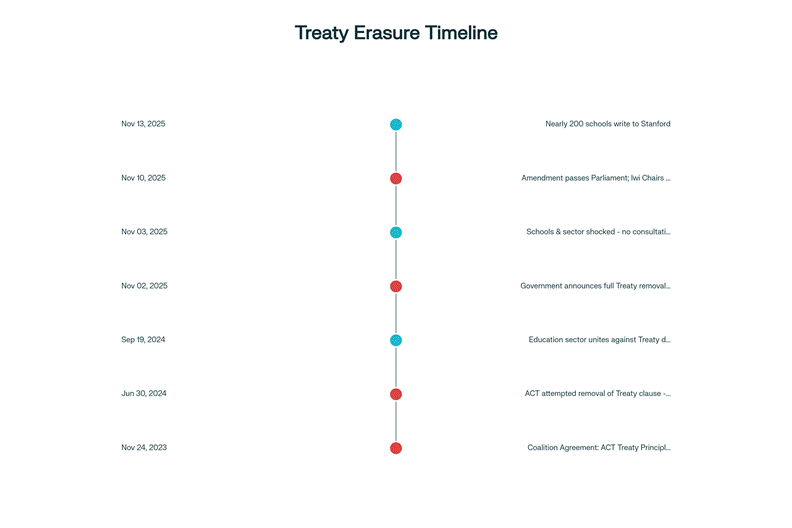
Timeline documenting the Coalition Government’s systematic dismantling of Treaty obligations in education, from coalition agreements to Parliamentary passage despite sector opposition.
Who Is Erica Stanford? Tracing Networks of Influence and Ideological Capture
Erica Stanford is a National Party MP for East Coast Bays, first elected in 2017 after working four years in the office of former MP Murray McCully, whom she describes as her “political master” and mentor. She holds a Bachelor of Arts with First Class Honours from the University of Auckland, majoring in Political Science with a minor in Māori Studies. That minor in Māori Studies makes her betrayal all the more damning—she knows what she is doing.[15][16][17]
Stanford’s rise through National’s ranks was rapid. By December 2021, under Christopher Luxon’s leadership, she was promoted to Education spokesperson, jumping from rank 25 under Judith Collins to rank 7. Following the 2023 election, she became Minister of Education and Minister of Immigration. Her political positioning is described as “on the progressive side of the National Party”—she supported decriminalising abortion, allowing euthanasia, and has sat on the environmental select committee. Yet her education policies reveal a minister captured by hard-right ideology, importing foreign neoliberal frameworks while systematically dismantling Treaty protections.[16][15]
Stanford has openly acknowledged the profound influence of E.D. Hirsch, author of the 1996 book The Schools We Need and Why We Don’t Have Them, on her education reforms. Speaking at the Core Knowledge Foundation’s conference in Florida in June 2025, Stanford told Hirsch: “It changed everything. I made my Secretary of Education read it. I made my staff read it. I am now implementing huge reform in New Zealand based on your book... We have a knowledge-rich curriculum”. She participated in a plenary with Paul Givan (Northern Ireland’s Minister of Education), Sir Nick Gibb (former UK Minister of State for Schools), and Hirsch—all architects of right-wing education “reforms” implemented since the 2010s.[18]
Stanford also appointed Dr Michael Johnston, a senior fellow at the conservative New Zealand Initiative think tank, to her ministerial advisory group in December 2023. She corresponded with Johnston about curriculum changes using her personal email account—a practice that raised concerns about breaches of the Cabinet manual, which states ministers should avoid using personal email for official business. Documents released under the Official Information Act showed Stanford used her personal Gmail account to accept meetings with organisations including Microsoft and Crimson Global Academy, to forward Budget announcements to herself for printing, and to communicate with officials about policy matters.[19][20][18]
The curriculum reforms Stanford is implementing are directly drawn from the manifesto of Dame Elizabeth Rata, who emailed Stanford on 20 October 2024:
“So pleased to have spoken with you yesterday and to have arranged to talk again. I’ve attached the speech notes. I wrote it for you to explain the four features of a knowledge-rich curriculum”.
Rata’s recommendations—including “downgrading Te Tiriti o Waitangi in the Education Act”—now read like “the government’s to-do list,” having “made their way directly into coalition agreements”.[18]
Thanks for reading Ivor Jones The Māori Green Lantern! This post is public so feel free to share it.
The Hobson’s Pledge Connection: Follow the Ideological Money
Stanford’s Treaty removal represents a “victory for Hobson’s Pledge,” as Labour leader Chris Hipkins stated on 3 November 2025. Hobson’s Pledge is a right-wing lobby group founded by Don Brash (former ACT and National leader) and Casey Costello (now NZ First MP and minister in the coalition government). The group campaigns against what it calls “Māori privilege” and seeks to eliminate Treaty references from legislation. In June 2025, Stanford herself clashed with Hobson’s Pledge, accusing the group of “whipping up hatred,” “frothing at the mouth,” and “spouting complete” falsehoods. Yet by November 2025, she delivered exactly what they demanded.[21][22][23][24][25]
Costello’s dual role is particularly revealing. She was deputy chair of Hobson’s Pledge and sat on the board of the Taxpayers’ Union before entering Parliament. She is now a minister in the coalition government that has systematically removed Treaty protections across multiple sectors. Business commentator Matthew Hooton delivered a scathing four-minute critique on The Working Group in October 2024, “lighting into” David Seymour while reserving “his most stinging critique for Don Brash and Hobson’s Pledge”. Hooton’s segment—which was swiftly deleted and launched a defamation claim—reflected growing unease in the business community about ACT’s “culture war” distractions from economic priorities.[25][26]
A survey of business leaders published in 2024 showed David Seymour ranked 12th with a rating of 3.40/5, “below his own deputy Brooke van Velden and Winston Peters”. Business respondents were blunt: “This divisive approach needs to end,” said one. Another stated: “I worry they are not focusing on the biggest issues for New Zealand’s future prosperity by getting distracted by stuff that won’t shift the dial”. A legal firm leader warned: “If Seymour was really focused on long-term economic growth and productivity, that would be fine, but his obsession with divisive social issues that energise people on the fringes of the New Zealand political debate make him the wrong person to wear that badge”.[26]
Yet Stanford, despite her “progressive” branding, has aligned herself with this agenda. She has delivered what Seymour could not deliver alone, using her position as Education Minister to enact ideological purges that even the business community—National’s traditional base—finds “chronic and infuriating” as a distraction from economic recovery.[26]
The Erasure: What Section 127 Meant and What Its Removal Costs
Section 127 of the Education and Training Act 2020 set out the primary objectives for all school boards in governing their schools. Among these was the requirement that boards “give effect to Te Tiriti o Waitangi,” including by:[4][13][27][28]
Working to ensure that plans, policies, and local curriculum reflect local tikanga Māori, mātauranga Māori, and te ao Māori;Taking all reasonable steps to make instruction available in tikanga Māori and te reo Māori; andAchieving equitable outcomes for Māori students.
These were not symbolic gestures. They were legal obligations that required school boards—as Crown entities—to actively honour the Treaty partnership in their governance and strategic planning. The clause recognised that schools are where “Te Tiriti o Waitangi is made real for every generation,” shaping “how our children learn about identity, belonging, and partnership”.[2][29][30][31][11][12]
Stanford’s justification for removal rests on a thin reed: that Treaty obligations are “the Crown’s responsibility, not schools’”. She claims: “School boards should have direction and we are giving very clear direction. You need to ensure equitable outcomes for Māori students, you need to be offering te reo Māori and you need to be culturally competent”. But this is rhetorical sleight-of-hand. As the National Iwi Chairs Forum petition states: “Removing this section is not a technical change—it is a step backwards. It erases the Crown’s responsibility to honour Te Tiriti in the one place every child in Aotearoa passes through: our education system”.[32][8][33][31][10][12][2]
Under the amended legislation, schools are now only legally obliged to teach te reo Māori if parents request it. As RNZ reported on 5 November 2025: “A sudden law change means the only legal obligation for schools to teach te reo Māori is if parents ask for it”. The Education Ministry confirmed that under the amended section 127, schools would “be required... to provide Māori language education on request of a parent or caregiver”—the same requirement that existed “between 1989 and 2020,” before the 2020 Act strengthened Treaty protections. This is a 35-year regression, returning education law to pre-Ka Hikitia frameworks that manifestly failed Māori students.[34]
Principals Federation president Leanne Otene warned: “Our tamariki Māori have a right to learn about their histories, hear their language and experience their culture. Effectively, state schools don’t have to observe that anymore and without a clear obligation, schools will be pressured by extremists to delete Māori from the curriculum in the school programmes. Without accountability, everything changes and the minister knows this”. The Educational Institute stated: “We’ve seen the removal of te reo from early readers, the slashing of Te Ahu o te Reo funding, cutting resource teachers Māori and now the removal of the clause for school boards to give effect to Te Tiriti—this paints a pretty clear picture of a government intent on the demotion of Te Tiriti in education and across our society”.[30][2]
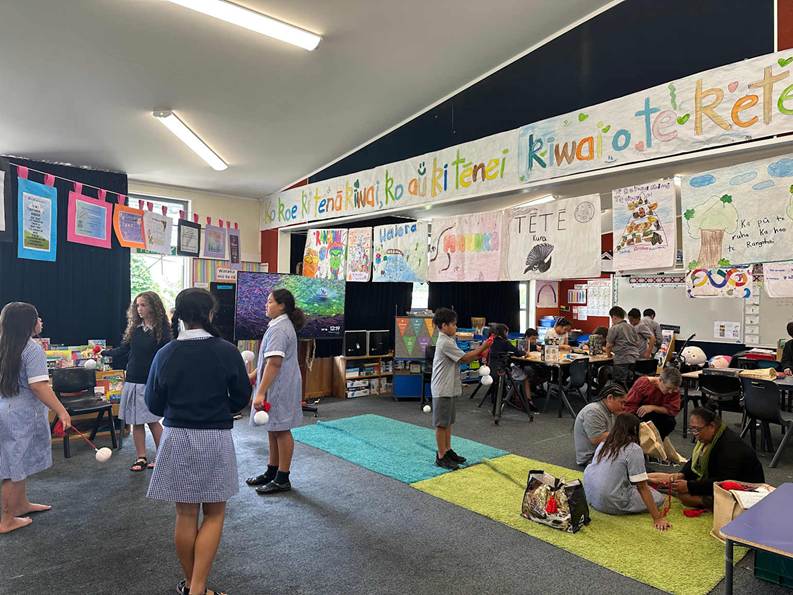
Māori students engaged in hands-on learning in a kura kaupapa Māori classroom with te reo Māori banners and artwork.
The Evidence of Harm: Māori Educational Disparity and System Failure
Stanford claims her reforms are “focused on lifting Māori achievement”. The data tells a different story. Māori students face systemic, quantified educational inequity at every level:[9]
NCEA Achievement Disparities:
18% of Māori students leave school without NCEA Level 1, compared to 7% of European students.[35][36]78% of Māori students do not achieve University Entrance, compared to 51% of European students.[36][35]Even after controlling for socio-economic factors, Māori students are 1.36 times more likely to leave school without University Entrance than European students.[35]
Primary and Intermediate Achievement:
Only 12% of Māori students in Year 8 are at or above curriculum level in maths, compared to 22% for all students.[37][38]81% of poorer students, one in every 10 Māori students, and one in every 16 Pacific students in Year 8 are more than a year behind in maths.[37]In writing, less than a quarter of Year 8 students meet the government benchmark, with Māori achievement rates significantly lower.[39]
Tertiary Disparities:
Māori students have a bachelor’s degree completion rate of 48% within five years, compared to 61% for non-Māori/non-Pasifika learners.[40][41]Only half of Māori students who gain NCEA Level 3 also gain University Entrance, compared to 81% for non-Māori/non-Pasifika.[41]Māori have a course pass rate of 80% at universities, compared to 88% for Pākehā.[40]
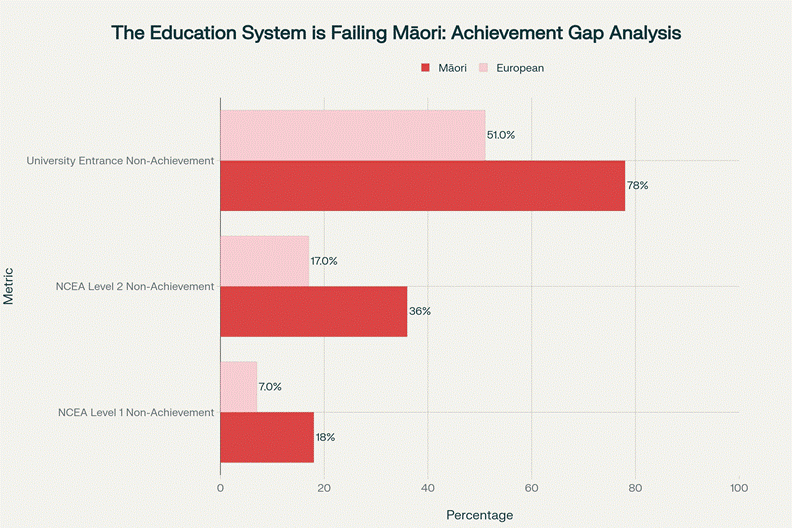
Achievement disparities between Māori and European students across NCEA levels and University Entrance, revealing systemic educational inequity that Stanford’s Treaty removal will worsen.
These disparities are not due to Māori students’ capabilities. Kura Kaupapa Māori—schools grounded in Te Tiriti, te reo, and mātauranga Māori—demonstrate what is possible when education honours Māori identity and knowledge. A 2024 Qualifications Authority report showed students at kura kaupapa Māori had NCEA achievement rates of 63% at Level 1, 72% at Level 2, and 73% at Level 3—significantly higher than the 54%, 66%, and 61% rates for all students in comparable English-medium schools with similar socio-economic profiles. For Māori students in those English-medium schools, rates were even lower: 50%, 64%, and 56%. Kura students also achieved a 41% University Entrance rate, compared to 24% for all students and 18% for Māori students in comparable mainstream schools.[42][43]
University of Waikato education professor Mere Berryman asked the critical question: “How many of our Māori learners have been pushed out of the system before NCEA? What this paper doesn’t address is what are the factors internal to schooling that also have an impact on student progress, student achievement, student outcome”. The answer is clear: the system itself is the problem. Schools that embed Te Tiriti, te reo, and tikanga produce better outcomes. Schools that marginalise or erase Māori identity produce disparity.[35]
The Waitangi Tribunal has repeatedly found the Crown in breach of Treaty principles in education. In July 2024, the Tribunal found the Crown breached principles of partnership, equity, active protection, and options in its treatment of Kura Kaupapa Māori during the Tomorrow’s Schools reforms. The Tribunal stated: “A consistent theme... was insufficient involvement of the claimants in key policy development steps, and very poor communication from the Crown on the direction of policy work”. It recommended the Crown establish “a stand-alone Kaupapa Māori education authority” and co-design specific policies for kura with Māori stakeholders.[44][45]
In October 2025, the Waitangi Tribunal found the Coalition Government breached Te Tiriti principles by “deprioritising or removing te reo Māori from the names of public service departments,” “prioritising English in public service communications,” and “limiting access to te reo Māori allowances within the public sector”. In May 2025, the Tribunal found the Regulatory Standards Bill—another ACT policy pushed through without Māori consultation—breached Treaty principles of partnership and active protection.[14][46]
Stanford’s Treaty removal follows the exact same pattern: no consultation, deliberate exclusion of Māori voices, and erasure of Treaty protections. It is a continuation of Crown breaches, not a remedy.
School Boards Resist: Rangatiratanga in Action
The resistance from school boards is a powerful repudiation of Stanford’s claim that removing the Treaty clause “empowers” boards. By 13 November 2025, the School Boards Association reported that 189 schools had written to Stanford, while lawyer Tania Waikato’s tally showed more than 200 schools had either written to the minister or confirmed they would continue upholding the Treaty. The Association expected that number to rise because most boards would not have met since the government announced the change the previous week.[1][2][47]
Dyer Street School in the Hutt Valley said upholding the Treaty was “the right thing to do for its students.” Board presiding member Matt Weldon-Smith told RNZ: “I know it’s a bit of a political football, but it’s not really a political issue to us. It feels more like an ethical, educational one. So, that honouring Te Tiriti ensures every child feels valued, respected and represented in their learning”. Community reaction was “incredibly positive”—the statement was “one of probably our most reactive messages we put out this year,” with comments “almost overwhelmingly positive and supportive”.[1]
Queens High School in Dunedin stated its commitment to the Treaty was “not a compliance exercise.” Presiding member Kate Kaddell told RNZ: “What it means for us is that when we are making decisions, we look at them through a lens of equity and cultural responsiveness and inclusion”. The school’s Facebook post generated 1,600 engagements—”912 loves, 745 thumbs-up, 14 caring signs, and one sadness emoji. So that’s quite a snapshot of affirmation for our community.” There was only one angry reaction.[1]
The National Iwi Chairs Forum, backed by the New Zealand Educational Institute Te Riu Roa, New Zealand Principals’ Federation, Post Primary Teachers’ Association Te Wehengarua, Te Akatea (Māori Principals Association), Secondary Principals Association, School Boards Association, Ngā Kura ā Iwi o Aotearoa, and Te Rūnanga Nui o ngā Kura Kaupapa Māori o Aotearoa, launched a petition calling for reinstatement of the Treaty clause. By late Thursday afternoon, 10 November 2025, the petition had 13,275 signatures. Collectively, the coalition represents 88 iwi and over 95,000 teachers, principals, schools, and kura.[9][10][12][1]
This is not symbolic resistance. This is rangatiratanga manifested—Māori and non-Māori communities alike rejecting the government’s Treaty erasure and asserting the principle that education must honour Te Tiriti if it is to serve all children.
The Curriculum Cleansing: Erasing Mātauranga and Te Reo
Stanford’s Treaty removal is part of a broader pattern of deliberate erasure of mātauranga Māori, te reo, and Treaty content from the education system. In October 2025, the Ministry of Education released draft curriculum documents for Years 0-10 covering six learning areas. Teachers, principals, and subject associations reacted with alarm, stating the drafts contained:[48][49]
Less Māori language and concepts;Fewer references to the Treaty of Waitangi;No meaningful grounding in Te Tiriti;Content appearing to be copied from the British curriculum.[49][48]
Pauline Cleaver, the Ministry’s deputy secretary in charge of its curriculum centre, claimed the reduction in te reo was “not the result of any directive, written or verbal,” but happened because contents were “really specifically chosen to be clear about what knowledge and what practices young people need to learn” with “more focus on disciplinary language”. This is a lie by omission. The absence of an explicit written directive does not mean the erasure is accidental. It is the intended outcome of Stanford’s “knowledge-rich curriculum” ideology, which treats mātauranga Māori as supplementary rather than foundational.[49]
Te Akatea, the Māori principals and education leaders association, stated the rewritten Te Mātaiaho curriculum framework “recolonised education and perpetuated racism and inequity”. The NZ History Teachers Association said the history content “appeared to be copied from the British curriculum, which had itself been described as a pub quiz not a curriculum. This is an explicit recolonisation of our curriculum“. The Association warned teachers would have “little to no opportunity to localise history, which would remove iwi and hapu history from the curriculum”.[49]
Drama, dance, and music teacher organisations all expressed dissatisfaction, citing “a narrow focus on training performers, greatly reduced reference to Māori arts and knowledge, and a misunderstanding of the arts in education”. The Health Education Association noted the curriculum “contained less matauranga Māori and, for the first time in decades, referred to sex education instead of relationships and sexuality education”. Physical Education New Zealand said the draft had “a narrow focus on ‘drills and skills’ rather than the broader goals of PE”.[49]
In September 2025, the Ministry announced changes to the primary school English and maths curriculums—the third major change in two years, creating “change overload” that Canterbury Primary Principals’ Association said was “unsustainable and places at risk both the quality of education provided to our ākonga and the wellbeing of tumuaki and kaiako”. The Association wrote to Stanford on 10 November 2025 opposing “the removal of the requirement for school boards to give effect to Te Tiriti o Waitangi” and stating: “Our association and members are firmly committed to Te Tiriti. Any move to weaken these responsibilities would be a significant step backward for equity and partnership in education”.[50]
The Hidden Connections: Five Revelations of Whakapapa Harm
1. The Coalition Agreement as Trojan Horse
The National-ACT-NZ First coalition agreement was sold to the public as prioritising “the economy, stupid.” But embedded within it were ideological clauses that committed the government to dismantle Treaty protections across all legislation, not just education. The agreement states the government will “conduct a comprehensive review of all legislation (except when it is related to, or substantive to, existing full and final Treaty settlements) that includes ‘The Principles of the Treaty of Waitangi’ and replace all such references with specific words relating to the relevance and application of the Treaty, or repeal the references”. This review, led by the Ministry of Justice, has been found by the Waitangi Tribunal to breach Treaty principles because it was “predetermined, lacked engagement with Māori, and would result in amendments to or repeals of Treaty clauses, thereby reducing protections for Māori”.[5][6][7][51][52]
2. Charter Schools as Privatisation and Dispossession
The coalition agreement also commits to reintroducing “partnership schools” (charter schools) and allowing state schools to convert to charter schools. ACT’s policy explicitly aims to divert public funding to private operators, many of whom have no requirement to employ registered teachers or follow the national curriculum. While charter schools can choose to incorporate mātauranga Māori, they are under no obligation to do so. This creates a two-tier system: publicly funded schools for the wealthy and well-connected, and under-resourced state schools for everyone else—disproportionately Māori and Pacific students. The PPTA stated in its Waitangi Tribunal claim: “PPTA considers the diversion of resources away from the already underfunded and under-resourced public education system to be a breach of Te Tiriti and the Crown’s duty to work towards the best outcomes for all students of Aotearoa, particularly Māori tauira”.[5][53][6][54]
3. Stanford’s Personal Email Use and Accountability Failures
Stanford’s use of her personal Gmail account for ministerial business—including forwarding Budget announcements, corresponding with think tank advisors about curriculum changes, and accepting meetings with lobbyists—reveals a minister who treats transparency and accountability as inconveniences. Documents released under the OIA showed she sent herself a pre-Budget announcement about recruiting 1,500 teachers, including “a draft media release, fact sheet and speaking notes,” to her personal account “to print out”. She also corresponded with Dr Michael Johnston of the New Zealand Initiative using her personal email, despite Johnston’s role in shaping curriculum policy. Prime Minister Christopher Luxon claimed he was “very relaxed” about Stanford’s behaviour, stating she had “printing problems” and received “unsolicited emails”. But as Labour leader Chris Hipkins noted, “the technology in Parliament has improved dramatically in the last few years, there’s no longer a need to use personal email accounts”. The use of personal email creates deliberate opacity, shielding communications from official information requests and public scrutiny.[19][20]
4. The International Right-Wing Education Network
Stanford’s attendance at the Core Knowledge Foundation conference in Florida connects her to an international network of right-wing education reformers who share a common ideology: knowledge transmission over critical thinking, standardised testing over creativity, and cultural assimilation over identity affirmation. The “knowledge-rich curriculum” model Stanford is importing has been criticised in the UK as producing “a pub quiz not a curriculum”—an approach that privileges memorisation of disconnected facts over deep understanding, inquiry, and contextualised learning. It is no coincidence that this model marginalises Indigenous knowledge systems, which are holistic, place-based, and relational rather than fragmented and universalising. By grounding her reforms in foreign frameworks designed by and for white, anglophone contexts, Stanford is engaging in epistemic violence—the destruction of alternative ways of knowing.[49][18]
5. The Silence on Māori Educational Success
Stanford has never publicly acknowledged or celebrated the superior achievement rates of kura kaupapa Māori students. She has never asked: What are kura doing right? How can we learn from their success? Instead, her government is starving kura of resources. The Educational Institute reported that the government has slashed “Te Ahu o te Reo funding” and cut “resource teachers Māori”. The Waitangi Tribunal found in July 2024 that the Crown has “failed to implement bespoke policy and strategy to address the needs of Kura Kaupapa Māori” and has breached Treaty principles of partnership, active protection, equity, and options. Stanford’s refusal to learn from kura kaupapa success is not ignorance—it is ideological commitment to a deficit model that blames Māori students and their communities for systemic failures, rather than confronting the white supremacy embedded in mainstream schooling.[2][30][42][43][44][45]
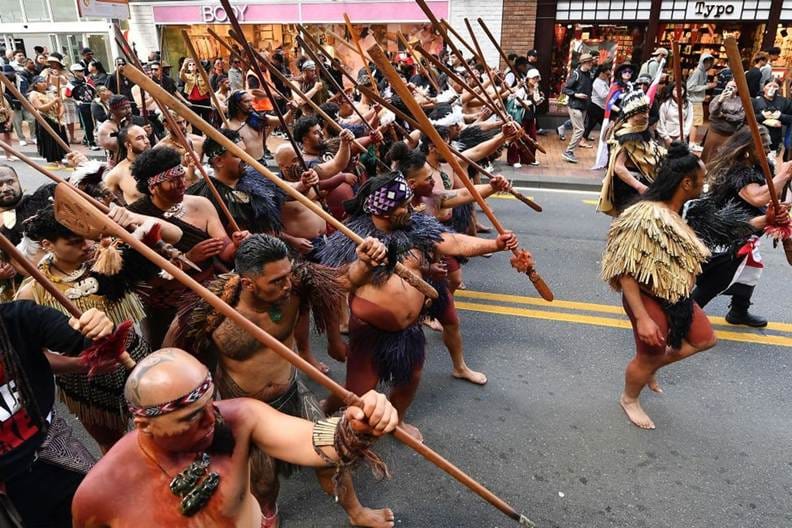
Māori people perform a haka with taiaha during a protest march for Indigenous rights in New Zealand.
The Implications: Quantified Harm and Mauri Depletion
Stanford’s Treaty removal will produce measurable, quantifiable harm:
Educational HarmIncreased disparity in NCEA and University Entrance achievement for Māori students as schools no longer have legal obligation to design culturally responsive policies.[2][29][30]Loss of te reo Māori instruction in schools that choose not to offer it unless parents specifically request it, leading to language erosion and further disconnection of Māori tamariki from their whakapapa.[34]Pressure on schools from extremist groups like Hobson’s Pledge to “delete Māori from the curriculum,” as predicted by Principals Federation president Leanne Otene.[2]Undermining of kura kaupapa Māori, which depend on a Treaty-based education framework to secure resources and recognition.[44][45]
Governance HarmConfusion and uncertainty for school boards about their obligations, despite Stanford’s claim to be providing “clarity”.[3][50][30]Erosion of boards’ legal standing as Crown entities, as School Boards Association president Meredith Kennett warned: “The change would undermine the legal and practical standing of school boards as Crown entities and risked damaging wider social cohesion, to no clear benefit”.[2]Increased workload and litigation risk as boards navigate conflicting messages about what they are required to do versus what the minister says they “should” do.[50]
Societal HarmNormalisation of Treaty erasure across all sectors, as education shapes future generations’ understanding of the Treaty partnership.[31][10][12]Deepening of racial inequity, as Māori children are denied the right to see themselves reflected in their learning and to access education that affirms their identity.[30][55]Violation of tikanga principles: whanaungatanga (relationships built on shared identity are severed), manaakitanga (care and respect for Māori learners is diminished), kaitiakitanga (protection of te reo and mātauranga is abandoned), wairuatanga (spiritual and cultural connection is cut), kotahitanga (unity and collective responsibility is replaced with individualism), rangatiratanga (self-determination is denied), aroha (love and compassion for Māori children is absent).
Mauri Depletion
Stanford’s policy is mauri-depleting: it commodifies the tapu of education by treating it as a technical exercise in “achievement” measured only by standardised tests, denies the tohunga (expertise) of Māori educators and communities, and severs the whakapapa that connects tamariki to their tūpuna, their whenua, and their reo. It is anti-life, replacing the mauri-enhancing power of culturally grounded education with the cold logic of neoliberal efficiency.
Rangatiratanga Action and Moral Clarity
Erica Stanford is not an education reformer. She is an ideological enforcer for a coalition government committed to dismantling Treaty protections, privatising public education, and erasing mātauranga Māori from the curriculum. Her Treaty removal is a calculated assault on Māori children, justified through the rhetoric of “clarity” and “achievement” while producing the opposite: confusion, disparity, and harm.[2][3][50][30]
The resistance from school boards, teachers, principals, iwi, and communities is rangatiratanga in action. It demonstrates what Stanford refuses to acknowledge: that Te Tiriti is not a burden but a taonga, and that education grounded in the Treaty produces better outcomes for all students, Māori and non-Māori alike.[1][9][10][12][42][43]
The pathway forward is clear:
Reinstate section 127(2)(e) immediately, restoring the legal obligation for school boards to give effect to Te Tiriti.[31][10][12]Resource kura kaupapa Māori fully and learn from their success, implementing the Waitangi Tribunal’s 2024 recommendation for a stand-alone Kaupapa Māori education authority.[44][45]Embed mātauranga Māori as foundational in the national curriculum, not as an optional add-on, ensuring all students learn te reo, tikanga, and New Zealand’s true history.[48][49][30]End the importation of foreign, neoliberal education frameworks that marginalise Indigenous knowledge and prioritise cultural assimilation over identity affirmation.[18]Hold Stanford accountable for her Treaty breaches, her ideological capture by right-wing think tanks, and her deliberate exclusion of Māori voices from education reform.[9][10][19][18]
Schools that have stood for Te Tiriti despite Stanford’s erasure have shown us the way. As Matt Weldon-Smith of Dyer Street School said: “Honouring Te Tiriti ensures every child feels valued, respected and represented in their learning”. That is the mahi. That is the mana. And that is what Stanford, in her arrogance and her ideology, seeks to destroy.[1]
Ka whawhai tonu mātou. Āke, āke, āke.

Ivor Jones The Māori Green Lantern Fighting Misinformation And Disinformation From The Far Right
1. Nearly-200-schools-write-to-Education-Minister-Erica-Stanford-over-removal-of-Treaty-obligations.pdf
2. https://www.1news.co.nz/2025/11/04/shock-as-govt-looks-to-remove-schools-treaty-of-waitangi-requirement/
3. https://www.nzherald.co.nz/nz/why-the-government-is-removing-treaty-of-waitangi-requirements-for-school-boards/KV6QM4G5CVE6LAIC6XSLAQFNU4/
4. https://www.rnz.co.nz/news/political/565597/act-party-tried-to-get-treaty-of-waitangi-clause-removed-from-education-legislation
5. https://www.1news.co.nz/2023/11/25/nationals-coalition-deals-which-policies-made-the-cut/
6. https://www.rnz.co.nz/news/political/503153/coalition-details-at-a-glance-what-you-need-to-know
7. /content/files/media/haxjinrp/national-act-nz-first-coalition-government-policies-constitution-and-rights.pdf
8. https://www.nzherald.co.nz/nz/politics/government-to-remove-requirement-for-school-boards-to-give-effect-to-te-tiriti-o-waitangi/MMXQ5LBQZBEGRBFMJ7MJPBRZXM/
9. https://www.teaonews.co.nz/2025/11/11/school-boards-no-longer-required-to-give-effect-to-te-tiriti-minister-set-to-explain-to-iwi-leaders/
10. https://www.ppta.org.nz/news-and-media/national-education-coalition-unites-against-changes-to-education-and-training-act
11. https://e-tangata.co.nz/comment-and-analysis/rahui-papa-what-needs-to-change-in-schools-isnt-the-law/
12. https://www.rnz.co.nz/news/te-manu-korihi/578492/iwi-petition-against-government-s-removal-of-treaty-of-waitangi-requirement-in-schools
13. https://www.education.govt.nz/our-work/information-releases/issue-specific-information-releases/education-and-training-amendment-bill-no-2
14. https://www.waitangitribunal.govt.nz/en/news/tribunal-releases-report-on
15. https://en.wikipedia.org/wiki/Erica_Stanford
16. https://www.beehive.govt.nz/minister/biography/erica-stanford
17. https://www.ericastanfordmp.co.nz/about
18. https://e-tangata.co.nz/comment-and-analysis/the-imported-ideology-behind-education-reform/
19. https://www.rnz.co.nz/news/political/560001/listen-live-chris-hipkins-talks-to-morning-report-about-minister-s-email-faux-pas-and-longer-prison-sentences
20. https://www.1news.co.nz/2025/05/06/erica-stanford-accepted-meetings-through-her-personal-email/
21. https://www.nzherald.co.nz/nz/politics/labours-chris-hipkins-says-government-removing-school-board-treaty-of-waitangi-clause-victory-for-hobsons-pledge/O4ULQN66INELHDYPXDPFJILQBM/
22. https://www.nzherald.co.nz/nz/politics/hobsons-pledge-and-erica-stanford-clash-over-treaty-of-waitangi-clause-in-education-legislation/66XFVVMUDBF75J6DE7TNLJZHSA/
23. https://www.facebook.com/groups/aotearoanzhistory/posts/1284080980080928/
24. https://www.hobsonspledge.nz/fighting_for_new_zealand
25. https://www.politik.co.nz/big-money-brings-winston-back/
26. https://thespinoff.co.nz/politics/08-10-2024/the-business-community-has-no-time-for-seymours-culture-wars
27. https://insideout.org.nz/education-act-submission-guide/
28. https://www.educationalleaders.govt.nz/content/download/82090/672505/file/NZC Transitional Statement for boards 2023.pdf
29. https://www.ppta.org.nz/news-and-media/education-leaders-unite-against-governments-moves-to-downgrade-place-of-te-tiriti-in-education
30. https://www.nzeiteriuroa.org.nz/about-us/media-releases/removal-of-clause-requiring-school-boards-to-give-effect-to-te-tiriti-ideologically-driven
31. https://our.actionstation.org.nz/petitions/protect-te-tiriti-in-education
32. https://www.1news.co.nz/2019/05/28/thousands-protest-across-the-country-demanding-increased-teacher-pay-and-better-conditions/
33. https://www.facebook.com/RadioNewZealand/posts/education-minister-erica-stanford-said-the-treaty-was-the-crowns-responsibility-/1296374762528469/
34. https://www.rnz.co.nz/news/national/577952/schools-only-legally-obliged-to-teach-te-reo-maori-if-parents-ask-for-it-under-law-change
35. https://www.rnz.co.nz/news/national/529048/maori-students-less-likely-to-achieve-university-entrance-ministry
36. https://www.nzherald.co.nz/kahu/maori-students-less-likely-to-achieve-university-entrance-ministry/T2LEQURMRZE6NDBZZ2QQQJNPXA/
37. https://www.nzherald.co.nz/nz/politics/the-great-divide-large-cohorts-of-maori-pacific-and-poorer-students-more-than-a-year-behind-in-maths-and-writing/W6XMWGMHLNEC7J72LR4PXY6CWM/
38. https://www.rnz.co.nz/news/political/524087/watch-christopher-luxon-decries-shocking-state-of-maths-achievement-in-schools
39. https://www.nzherald.co.nz/nz/politics/education-minister-erica-stanford-makes-announcement-on-student-achievement/VMIVPPVYAZHXFLE7SVVC5LUZVQ/
40. https://www.rnz.co.nz/news/national/496957/some-universities-reluctant-to-set-deadlines-to-ensure-parity-for-maori-and-pacific-students
41. https://www.tec.govt.nz/about-us/news-and-consultations/news-and-consultations/archived-news/maori-and-pasifika-achievement-learner-success-issue
42. https://www.rnz.co.nz/news/national/530891/kaupapa-maori-students-more-likely-to-get-ncea-merit-and-excellence-endorsements
43. https://www.rnz.co.nz/news/te-manu-korihi/569065/ncea-overhaul-concerns-kura-kaupapa-maori-opportunity-to-consider-own-qualifications
44. https://www.rnz.co.nz/news/te-manu-korihi/523216/crown-breached-treaty-principles-in-school-reform-waitangi-tribunal
45. https://www.waitangitribunal.govt.nz/en/news/kura-kaupapa-maori
46. https://www.nzherald.co.nz/nz/waitangi-tribunal-finds-crown-breached-te-tiriti-principles-over-te-reo-maori-cuts/2EUFPNFPRNDGFCG6JFSMW5K4AI/
47. https://waateanews.com/2025/11/13/tania-waikato-maori-lawyer-2/
48. https://www.rnz.co.nz/news/national/577780/maori-academic-warns-draft-curriculum-erases-children-s-rights-to-local-histories
49. https://www.rnz.co.nz/news/national/577832/less-maori-in-school-curriculums-not-the-result-of-a-directive-ministry
50. https://www.rnz.co.nz/news/national/578554/quality-of-education-at-risk-with-curriculum-change-overload-say-canterbury-primary-principals
51. https://www.simpsongrierson.com/insights-news/legal-updates/review-of-treaty-clauses-in-legislation
52. https://www.justice.govt.nz/justice-sector-policy/key-initiatives/review-of-legislation-including-reference-to-the-principles-of-the-treaty-of-waitangi/
53. https://www.1news.co.nz/2024/05/26/budget-2024-govt-unveils-major-investment-for-more-teachers/
54. /content/files/assets/Uploads/education-claim-ppta-final.pdf
55. https://e-tangata.co.nz/comment-and-analysis/expecting-more-for-maori-from-our-teachers/
56. https://waitangitribunal.govt.nz/en/news/the-aotearoa-institute-claim-concerning-te-wananga-o-aotearoa-report
57.
https://www.nzstaresourcecentre.org.nz/?aId=ka0GB000000pQ6RYAU
58. /content/files/wp-content/uploads/2021/08/issue-18-education-and-social-services-wai-2180-3-3-87.pdf
59. https://inclusive.tki.org.nz/guides/the-role-of-school-boards/review-legal-requirements-under-nz-law
60. Nearly-200-schools-write-to-Education-Minister-Erica-Stanford-over-removal-of-Treaty-obligations-RNZ-News-11-13-2025_05_19_PM.jpg
61. https://www.rnz.co.nz/news/national/578797/nearly-200-schools-write-to-education-minister-erica-stanford-over-removal-of-treaty-obligations
62. https://www.odt.co.nz/news/national/pm-stands-stanford-after-stupid-bitch-comment
63. https://www.nzherald.co.nz/nz/politics/government-stops-putting-general-treaty-of-waitangi-clauses-in-legislation/4EO57XZ6SNCG3GA2W5S2KAMYCQ/
64. /content/files/webcontent/document/201246/trust.pdf
65. https://www.nzherald.co.nz/nz/erica-stanfords-treaty-move-weakens-more-than-a-line-of-law-editorial/premium/LSXK2ET5VNFSREXML7EKVIYRAE/
66. https://media.nzherald.co.nz/webcontent/infographics/431/indexMob.html
67. https://www.nzherald.co.nz/nz/politics/treaty-principles-bill-justice-select-committee-reports-back-with-public-submissions-overwhelmingly-opposed/M4OMMPBYNBDO3EA5LIKCGJRKCQ/
68. /content/files/webcontent/document/201425/thepeoplesreport.pdf
69. /content/files/webcontent/document/20132/cd_dp_88.pdf
70. https://www.rnz.co.nz/authors/lillian-hanly?page=4
71. https://theconversation.com/removing-treaty-responsibility-from-school-boards-undoes-decades-of-progress-267733
72. /content/files/assets/RIS-Documents/regulatory-impact-statement-extending-the-school-strike-notification.pdf
73. /content/files/assets/stanews-september-2024-final.pdf
74. https://www.facebook.com/TeAoMaoriNews/posts/despite-staunch-opposition-from-iwi-and-education-leaders-parliament-has-passed-/1148273430772221/
75. https://www.nzcer.org.nz/research/publications/school-board-leadership-key-issues-2025
76. https://www.nzherald.co.nz/nz/politics/erica-stanfords-masterclass-resets-story-but-government-has-challenging-decisions-ahead-thomas-coughlan/XJ7VMQUQTNEELLTZNFLR5UVLLE/
77. https://www.nzherald.co.nz/nz/politics/one-year-on-ministry-of-education-yet-to-fill-top-role-permanently/SDKPABCRGFEAHG6LYDK6GXZ4NM/
78. https://www.nzherald.co.nz/nz/education-minister-erica-stanford-promises-more-teachers-learning-support-staff/FCZ2V2UZMFEBXORGGDIXXVGZP4/
79. https://www.1news.co.nz/2025/04/28/budget-2025-53m-to-fund-teacher-registrations-practising-certificates/
80. /content/files/oggcasts/the-detail.xml
81. https://www.rnz.co.nz/news/political/515920/week-in-politics-polls-pay-rises-and-a-green-mp-in-trouble
82. https://www.nzherald.co.nz/nz/school-donations-continue-to-yield-millions-of-dollars-for-wealthier-schools/TIU2F2H22RG23EOUGJABVRPBC4/
83. https://www.rnz.co.nz/news/political/533691/d-day-for-government-s-treaty-principles-bill
84. https://www.nzherald.co.nz/bay-of-plenty-times/news/making-nz-top-destination-for-international-students/DDKRYFGHCZEWLHYDIA5ACZNLUI/
85. https://www.nzherald.co.nz/nz/politics/coalition-agreement-national-act-nz-first-and-the-deal-that-delivers-new-government/4MEDZQBQ7BDK3J3DLG5K5K3HHY/
86. https://www.nzherald.co.nz/nz/politics/treaty-principles-bill-timeline-the-controversial-policys-rocky-road-to-rejection/72YCITEIYBGRPI2JOIQULKW63Q/
87. https://www.nzherald.co.nz/nz/politics/controversial-regulatory-standards-bill-passes-third-reading/GUVTHRVKYRCGVIDAJVYIDLIUNI/
88. https://businessdesk.co.nz/article/my-net-worth/my-net-worth-erica-stanford-cabinet-minister
89. https://nz.linkedin.com/in/hon-erica-stanford-mp-b3188642
90.
91. https://thespinoff.co.nz/politics/16-11-2017/my-skills-in-reality-tv-hold-me-in-good-stead-for-my-time-in-this-house-erica-stanfords-maiden-speech
92. https://www.aucklandartgallery.com/page/open-letter-to-hon-erica-stanford-minister-of-education-why-art-history-matters
93. https://www.facebook.com/EricaStanfordECB/posts/today-marks-one-year-in-government-and-i-am-so-proud-of-what-weve-achieved-so-fa/971741884777776/
94. /content/files/wp-content/uploads/2023/11/national_act_agreement.pdf
95. https://www.nzherald.co.nz/sport/schools-rugby-kings-college-and-mount-albert-grammar-block-teenagers-chance-at-playing-first-xv-in-poaching-rules-row/R3LM26N7PNET3MNIBUSAMJB2AQ/
96. https://www.nzherald.co.nz/nz/national-monitoring-study-of-student-achievement-finds-more-than-half-of-students-still-failing-year-8-maths/2ZM437EDRVCSHPDSVBVADIW2OU/
97. https://www.stats.govt.nz/news/education-outcomes-improving-for-maori-and-pacific-peoples/
98. https://oag.parliament.nz/2016/education-for-maori-summary/part1.htm
99. https://www.universitiesnz.ac.nz/sector-research-issues-facts-and-stats/building-māori-and-pacific-success/building-māori-success
100. /content/files/media/1903/education-awa-education-outcomes-for-maori-berl-aug-2019.pdf
101. /content/files/assets/Reports/Synthesis-reports/synthesis-report-maori-learner-success-in-tertiary-education-highlights-from-ako-aotearoa-supported-research-projects.pdf
102. https://terauora.com/wp-content/uploads/2022/05/4.-SCHOOL-EDUCATIONAL-PIPELINE-FOR-MAORI-INTO-HSC-CAREERS-SERIES.pdf
103. /content/files/assets/Law-Reform-Submissions/education-and-training-amendment-bill-no-2-v2.pdf