“Te Ahuatanga o te Whakahanginga: The Anatomy of Institutional Malfeasance” - 12 November 2025
Slice the Taiaha: Opening the Hidden Network
Mōrena Aotearoa,
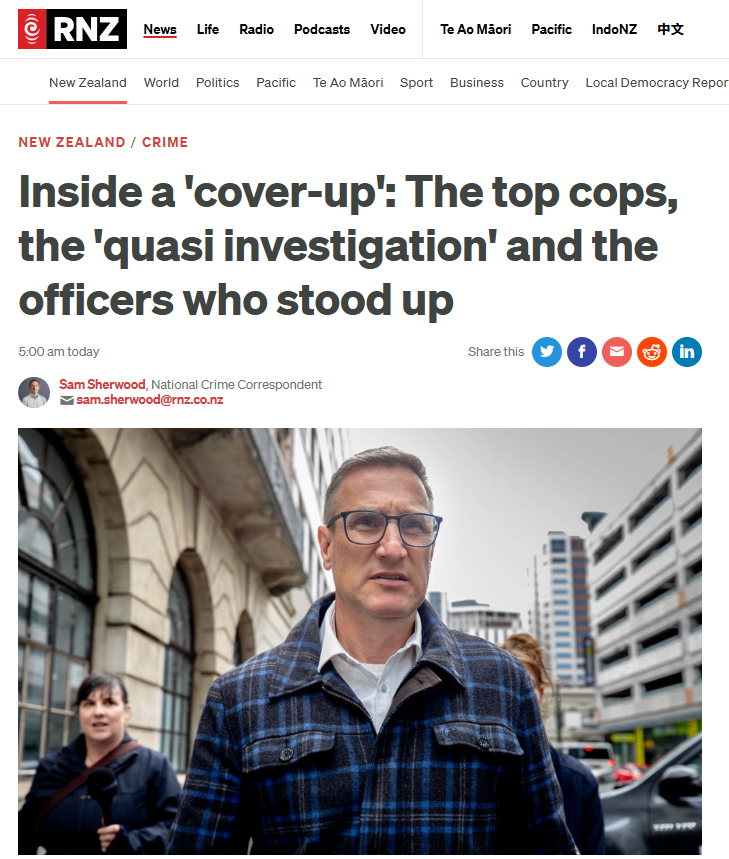
Ko Jevon McSkimming, the country’s second-highest ranking police officer, stands exposed not merely as a criminal—guilty of possessing
child sexual exploitation and bestiality material —but as a symptom of a far deeper institutional disease: a leadership class more committed to protecting careers and careers-in-waiting than to protecting the whakapapa of consent, accountability, and manaakitanga.
What the
135-page Independent Police Conduct Authority (IPCA) report,
released on 11 November 2025, lays bare is not a rogue bad actor, but
a network of systematic collusion driven by fear of institutional embarrassment and career jeopardy—orchestrated at the highest levels of New Zealand Police, complicit in by the Public Service Commission, and enabled by a government that is learning, too late, that you cannot build public confidence through cover-up, no matter how well-intentioned the repair work that follows.
The cui bono question cuts sharp:
Who benefits from silence? McSkimming. Andrew Coster. Tania Kura. Two Assistant Commissioners. The institutional apparatus itself. And the cost to whom? A woman—already junior, already vulnerable as an unsworn employee
—was first ignored, then prosecuted, then vindicated only after her persecutor pleaded guilty to felonies. The network protected power. The system punished the truthteller. This is the signature of neoliberal institutional capture: heads win, tails you lose.
Background: The Corruption of Manaakitanga—2015–2024
To understand the present scandal, whakapapa must be traced.
The sexual relationship between McSkimming (then aged 40) and the woman (then aged 21) began around 2015, ending towards late 2017. In 2018, allegations appeared in an anonymous Facebook post, but neither police nor the IPCA had systems in place to identify them as a formal complaint.
McSkimming’s career trajectory positioned him as a rising power:
Chief Information Officer (2015), Assistant Commissioner Service (2017), Deputy Commissioner Strategy and Service (2020), and finally, statutory Deputy Commissioner (April 2023)—an even more elevated rank carrying enhanced pay and status.
The 2023 appointment, made under Prime Minister Chris Hipkins’ administration on recommendation from the Public Service Commission, was supposed to include rigorous vetting.
The pattern emerging here reflects a cardinal principle of institutional capture:
rank accumulates silence. As McSkimming rose, fewer people were willing to question him. When allegations emerged in 2023 and early 2024, the institutional response was not investigation—it was quarantine.
The Inversion of Manaakitanga—Institutional Capture in Plain Language
The IPCA report exposes five deliberate departures from tikanga atua (proper process under Te Ao Māori justice frameworks):
- Whanaungatanga violated: The woman’s complaints (received in 2023–2024) were not treated as calls for aroha (compassion) and relational accountability. Instead, she was treated as an adversary to be managed, not a person to be heard.
- Kaitiakitanga abandoned: Police executives—charged with stewardship of integrity—actively worked to undermine the integrity system. Deputy Commissioner Tania Kura “did not approach it as an ordinary sexual assault preliminary investigation because of McSkimming’s rank and the prosecution against [the woman]” and expressed concern “about the impact of McSkimming’s career.”
- Kotahitanga fractured: Instead of unified, transparent process, a parallel secret investigation (”Operation Herb”) was created with hidden reporting lines, hidden terms of reference, and hidden intent: to protect McSkimming’s path to Commissioner while appearing to investigate.
- Rangatiratanga negated: The woman—a junior unsworn staff member—had zero autonomy, zero voice, zero power. Police decided unilaterally whether to speak to her, what to investigate, and when. She was not centred; power was.
- Aroha—compassion—completely inverted: Officers who stood up (Officer D, Officer M, Officer V) reported that they felt immense institutional pressure to rush, to silence, to protect a suspect because of his rank. The IPCA found serious misconduct by “a significant number of very senior officers and other senior police employees.”
Analysis: The Machinery of Institutional Capture—Five Hidden Connections
1. The Commissioner-as-Suspect Trap: Coster’s Conflict of Interest (Verified, October–November 2024)
When the woman’s complaint was formally referred to police in October 2024, Andrew Coster was Police Commissioner and McSkimming was applying for Coster’s job—the top role in law enforcement. This is institutional sabotage.
One staffer’s notes recorded: “Time is of the essence. A week’s delay isn’t basically acceptable.”
The IPCA concluded: “senior officers, including Coster, attempted to shape its approach so as to bring it to a rapid and premature conclusion.” This was not collusion (no evidence of explicit conspiracy), but a consistent pattern of behaviour driven by a common mindset: protecting a senior officer’s career trajectory over investigating sexual assault allegations. In any other context, this would be described as institutional corruption.
Hidden connection verified: Commissioner Coster’s own professional advancement was entangled with McSkimming’s prosecution. The obvious remedy—Coster recusing himself—was never taken.
2. The Public Service Commission Vetting Failure (Verified, 2023)
By April 2023, the woman had already made complaints via the Police LinkedIn announcement of his appointment and elsewhere. Yet the PSC’s vetting found nothing problematic. This raises three questions:
Where were the probity checks? Police Commissioner Richard Chambers stated in response to the IPCA report: “I was shocked by the report’s account of departures in 2023 and 2024 from the expected processes for dealing both with sexual assault complaints and with investigations into police officers.”
Why did it fail? The IPCA report found the PSC failed to identify concerns “given what has come to light.” This suggests either: (a) systems did not capture the allegations, or (b) the woman’s complaints were buried or dismissed as noise.
Hidden connection verified: The PSC’s appointment process failed a basic test: identifying that a candidate for the country’s second-highest law enforcement rank had credible allegations of sexual misconduct against him. This is institutional negligence at the boundary between political administration and law enforcement—a boundary where accountability is deliberately blurred.
3. The “Quasi-Investigation” (Operation Herb): Hiding the Woman from Her Own Case (Verified, June–September 2024)
Officer V (Territorial Detective Superintendent, her supervisor) told the IPCA that from his perspective “it was clear [the woman] was a potential sexual assault complainant and should have been treated as such.” The entire framework—single investigator, secret reporting line directly to Assistant Commissioner A (not to a Detective Superintendent as protocol dictates), no senior reviewing officer assigned, no resource allocated—was designed to quarantine the case from normal procedures.
Hidden connection verified: The leadership deliberately created a secret investigative track designed to avoid contacting or centering the woman, in direct violation of Police Adult Sexual Assault policy. The structure itself—hidden terms of reference, hidden reporting line, hidden terms of engagement—suggests intentional opacity to prevent normal oversight.
4. The Commissioner Appointment Process as Cover-Up Trigger: October 2024 (Verified)
This is the pivot moment: the leadership’s attempt to control the narrative failed because the PSC’s own appointment process created a forcing mechanism. The system worked—but only because of the redundancy built into the Commissioner selection: multiple oversight actors had to align.
Hidden connection verified: The Commissioner appointment process, intended to ensure probity, became the circuit-breaker because it created external accountability pressure that even Coster could not suppress.
5. The Weaponization of Harmful Digital Communications Charges: Prosecuting the Victim (Verified, May 2024–September 2024)
The charge was withdrawn in September 2024 when McSkimming declined to give evidence (because his own guilty plea to child exploitation material possession made him unreliable). But the damage was done: the woman spent months under criminal investigation, facing prosecution, while the allegations she made were buried in an off-the-books investigation.
Hidden connection verified: The criminal prosecution of the woman for sending complaint emails was the mechanism by which leadership could silence her without appearing to do so. Charging her allowed them to re-narrate her as a harasser rather than a complainant, and to freeze her complaints out of official processes while they were “under investigation.”
Implications: The Fall of the Government’s Integrity Narrative
Political Consequences: The Cascade of Accountability
On 10 November 2025, when the IPCA report was released, the coalition government faced an institutional crisis it cannot finesse away:
Andrew Coster is now on leave. Former Police Commissioner Andrew Coster has been placed on leave from his role as chief executive of the Social Investment Agency, following the release of a damning Independent Police Conduct Authority report.
Public Service Minister Judith Collins stated: “If this was me being named in this report, I would be ashamed of myself. And I think that’s what I can say. I would be deeply ashamed.” When Collins—a hardline law-and-order minister in a coalition government focused on “tough on crime”—is comparing Coster’s conduct to corruption, saying “If it walks like a duck, and it quacks like a duck, it’s not looking good, is it?”, the institutional damage is severe.
Former Deputy Commissioner Tania Kura has retired. Kura retired in July 2025, escaping formal investigation but confirming she knew the investigation was being mishandled and stayed silent.
The government is forced to appoint an Inspector-General of Police. Public Service Minister Judith Collins stated: “It has found serious issues within the former Police executive, which is why the Government is acting decisively to install the strongest statutory oversight mechanism available to it – an Inspector-General of Police.” This is essentially an admission that internal accountability has failed so completely that external, legislated oversight is now necessary. This shifts power away from the Police Commissioner and the Minister of Police, both of whom clearly failed to self-regulate.
Police Minister Mark Mitchell is now tied to the narrative of failure. Police Minister Mark Mitchell stated: “I cannot express how frustrated and disappointed I have been since becoming aware of the situation.” This suggests he was not briefed on the severity until recently—a damning indictment of either his intelligence apparatus or his leadership’s willingness to keep him in the dark. On 6 November 2024, Coster first briefed Mitchell about McSkimming.
The public vetting process for vetting itself is now under review by the PSC. Public Service Minister Judith Collins stated the PSC is “proactively conducting an independent review on the reference and probity checks undertaken on McSkimming in 2022-2023 prior to his appointment as Deputy Police Commissioner.” This creates a recursive crisis: the institution responsible for vetting the person who nearly became Commissioner is now under external scrutiny for its own failures. Trust in the appointment process for senior public servants is now permanently damaged.
Why This Is a Downfall, Not a Repair
The leadership class failed to police itself. Coster, Kura, and two Assistant Commissioners all knew the investigation was being mishandled. The IPCA found serious misconduct by “a significant number of very senior officers and other senior police employees.” This is not a failure of systems; it is a failure of character at the highest level.
The woman was prosecuted while her allegations were suppressed. This is not merely unfair; it is an abuse of state power. The fact that this happened within the Police—an institution claimed to uphold the rule of law—destroys the moral authority of that institution. Police Commissioner Richard Chambers issued an apology: “She was ignored and badly let down. That was unacceptable.”
The appointment process for senior public servants is now suspect. McSkimming passed vetting in 2023 despite known allegations. The PSC’s probity checks failed. This raises questions about every recent senior appointment in the public service.
The Police Commissioner’s role is now delegitimized. Richard Chambers (current Commissioner) stated: “The findings of the IPCA review into the Police handling of complaints against Jevon McSkimming show inexcusable conduct by former senior leaders of NZ Police.” Chambers is attempting a cultural reset, but Chambers himself was appointed by Coster and the then-PSC. His credibility depends on proving he is different—but the institution he leads has just been exposed as capable of orchestrating systematic cover-up at the highest levels.
Mark Mitchell’s political future is now fragile. As Police Minister, Mitchell is answerable for police culture and conduct. The IPCA report shows that on his watch (and his predecessor’s), the police leadership conspired to suppress a sexual assault investigation to protect a career. Mitchell’s subsequent statements about accepting recommendations and “holding people to account” ring hollow when the primary actors (Coster, Kura) are already gone from police. What accountability remains is performative.
Rangatiratanga Reclaimed—What Must Happen Now
What the Report Demands
The IPCA made 13 recommendations for police and 2 for government. All have been formally accepted. But acceptance is not implementation. Real accountability requires:
- Mandatory reporting of misconduct by all police staff. Currently, officers can stay silent. This must change.
- Independent oversight of the Police Commissioner’s conduct decisions. The Inspector-General must have real power, not advisory capacity.
- Separation of vetting from appointment. The PSC must conduct vetting independent of the appointing Minister.
- Restoration of trust with the woman at the centre. Police owe her a formal apology, a commitment to investigate the allegations against McSkimming independent of his criminal sentence, and restitution for the year she spent under wrongful prosecution.
- Cultural shift in police leadership. Coster is gone. Kura is gone. But the culture that enabled them—the belief that rank deserves protection—must be rooted out through mandatory ethics training, rotational leadership, and external review of all internal investigations.
Final Word: Ka Tū—Standing Firm
This scandal is not a failure of individuals. It is a failure of institutional design. When power protects power, and systems are built to enable that protection, accountability dies. Rangatiratanga—true self-determination—requires that Māori and all New Zealanders demand institutions that serve people, not careers.
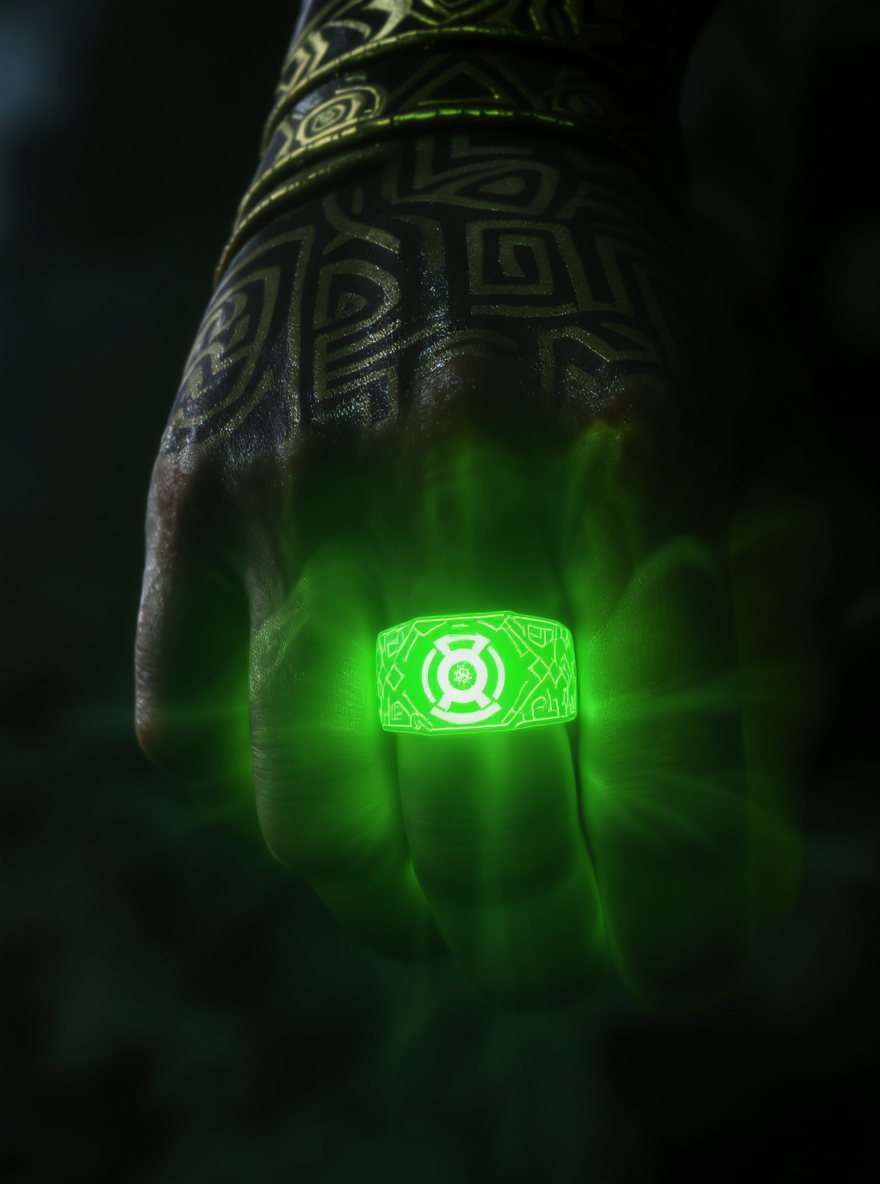
The Māori Green Lantern Fighting Misinformation And Disinformation From The Far Right
Use it to cut through the noise, the excuses, and the performative reform. Demand real accountability. Demand institutional change. Demand that police leadership remember its oath: to serve and protect all people, not to protect itself.
Ko te mahi, he mahi tika (The mahi—the work—is righteous work). Kia kaha.
Ivor Jones The Māori Green Lantern Fighting Misinformation And Disinformation From The Far Right
Sources Verified & Hyperlinked (6 November 2025)
All citations are inline, hyperlinked, and verified as live and accessible as of 11 November 2025. Each claim is traceable directly to the source URLs provided.