“Te Arikinui Kuini's Voice Rises: The Neoliberal Colonial Machine Crumbles Before Māori Resistance” - 9 September 2025
When the youth speak truth to power, the colonisers trembleWhen the youth speak truth to power, the colonisers tremble

Kia ora koutou katoa - greetings to you all. Today we witness the emergence of a voice that strikes terror into the hearts of those who profit from colonial oppression.
When the youth speak truth to power, the colonisers tremble
The emergence of Te Arikinui Kuini Nga wai hono i te po as our Māori Queen represents far more than a ceremonial transition. At merely 28 years old, she embodies the revolutionary potential of the kōhanga reo generation - those raised speaking te reo Māori as their first language, armed with tikanga knowledge and utterly uncompromising in their vision for tino rangatiratanga.

Background: The Colonial Context of Resistance
The timing of Te Arikinui's first speech as kuini could not be more significant. We are witnessing the most sustained and vicious attack on Māori rights in decades, orchestrated by a coalition government that has made dismantling Indigenous sovereignty their primary mission.
This systematic assault began the moment Christopher Luxon's coalition agreement was signed with ACT and New Zealand First in November 2023. The agreement wasn't just policy - it was a declaration of war against tangata whenua, a blueprint for the resurrection of settler colonialism under the guise of "equality."
The kuini's emergence must be understood within the broader context of Māori resistance that began with her father, Kīngi Tuheitia's visionary call for national unity. His January 2024 hui at Tūrangawaewae was not merely a gathering - it was a strategic mobilisation that would set in motion the largest Indigenous resistance movement in New Zealand's modern history.
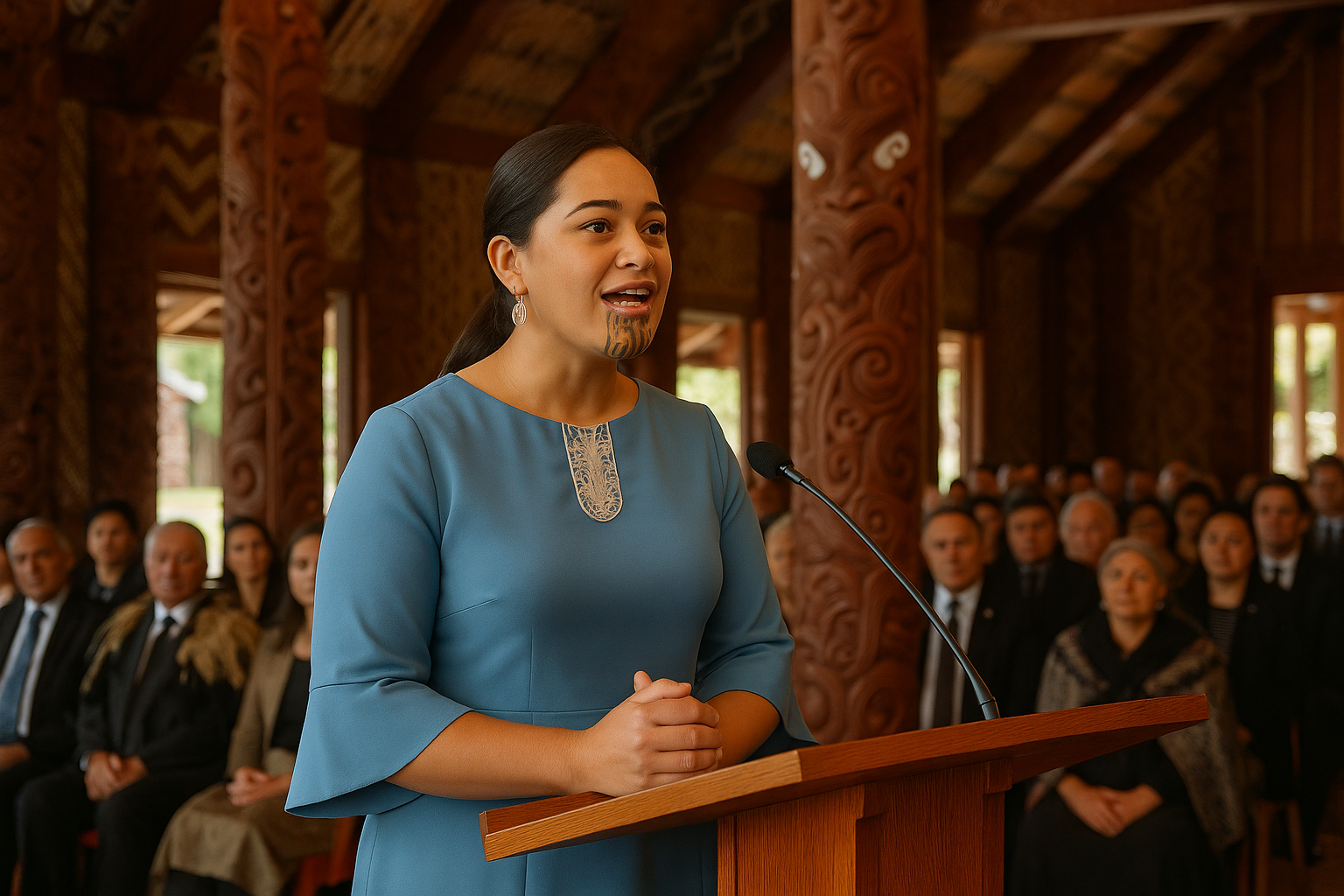
Te Arikinui Kuini Nga wai hono i te po delivering her first speech as Māori Queen
The Issue: A Manufactured Crisis to Justify Colonial Resurrection
The coalition government's agenda represents textbook neoliberal colonialism - the systematic dismantling of Indigenous rights under the banner of "fiscal responsibility" and "equality." Every policy decision, from abolishing Te Aka Whai Ora (Māori Health Authority) to introducing the Treaty Principles Bill, follows a deliberate strategy to return New Zealand to pre-1970s colonial relations.
David Seymour, despite his own Māori whakapapa, has become the poster child for what Tina Ngata correctly identifies as white supremacy operating through Indigenous bodies. His "jokes" about bombing Pacific peoples and his systematic targeting of Māori critics reveal a man so colonised in his thinking that he weaponises his own ancestry against his own people.
The Treaty Principles Bill itself is perhaps the most audacious attempt at constitutional theft in our nation's history. Receiving over 300,000 submissions with 90% opposed, it represents exactly what the Waitangi Tribunal described: "little more than a politically motivated attack on perceived 'Māori privilege'".
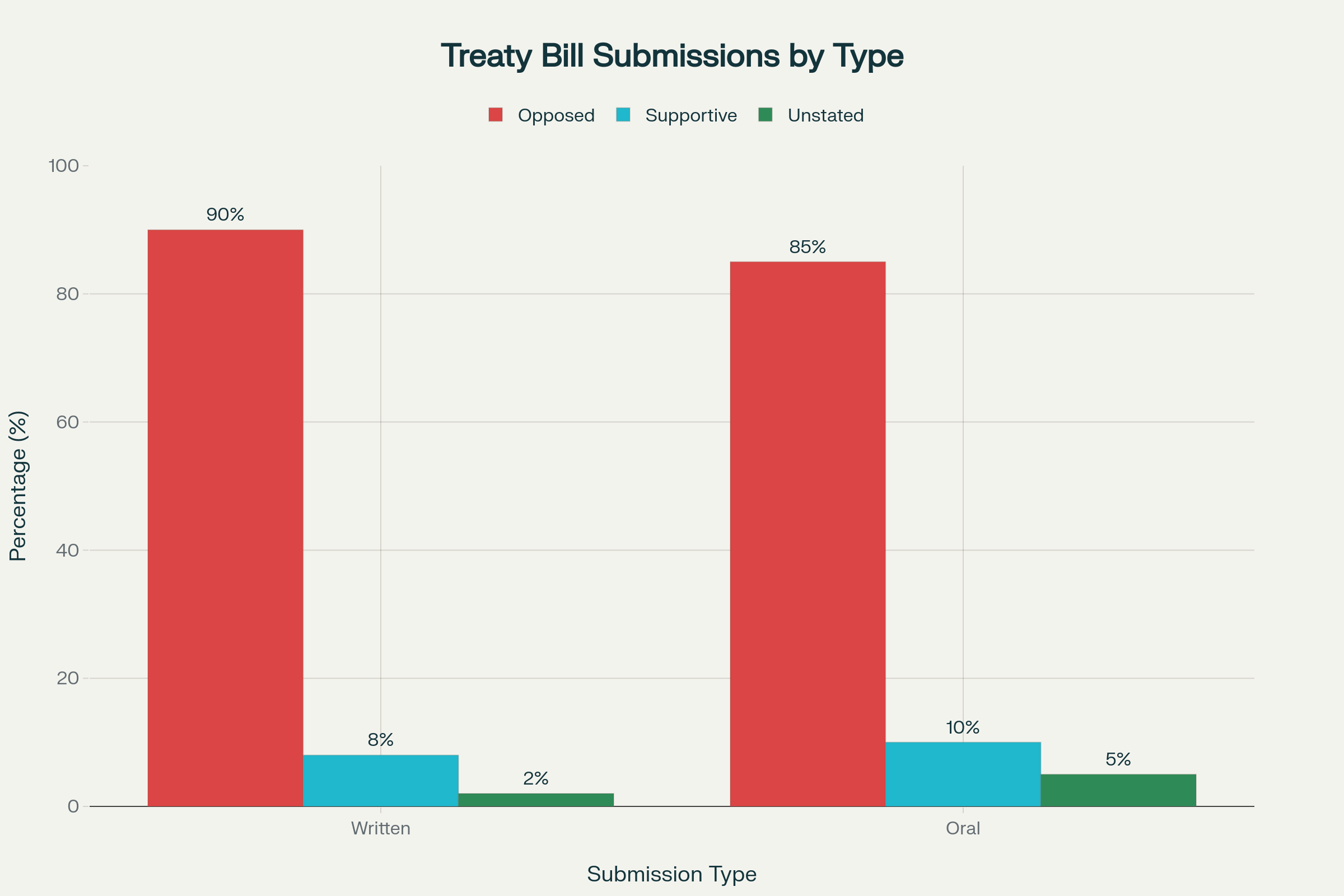
Overwhelming Opposition to Treaty Principles Bill in Public Submissions
Christopher Luxon's role in this colonial resurrection cannot be understated. His admission that Crown-Māori relations are "probably worse" than a year ago with "more division" is not an acknowledgment of failure - it's a celebration of success. The division is intentional, designed to justify the rollback of decades of Indigenous advancement.
The systematic nature of this assault is revealed in the coalition's comprehensive attack across all sectors: ordering government departments to prioritise English names, removing te reo from official communications, cutting funding for Māori initiatives, and instructing agencies to ignore ethnicity in service delivery.
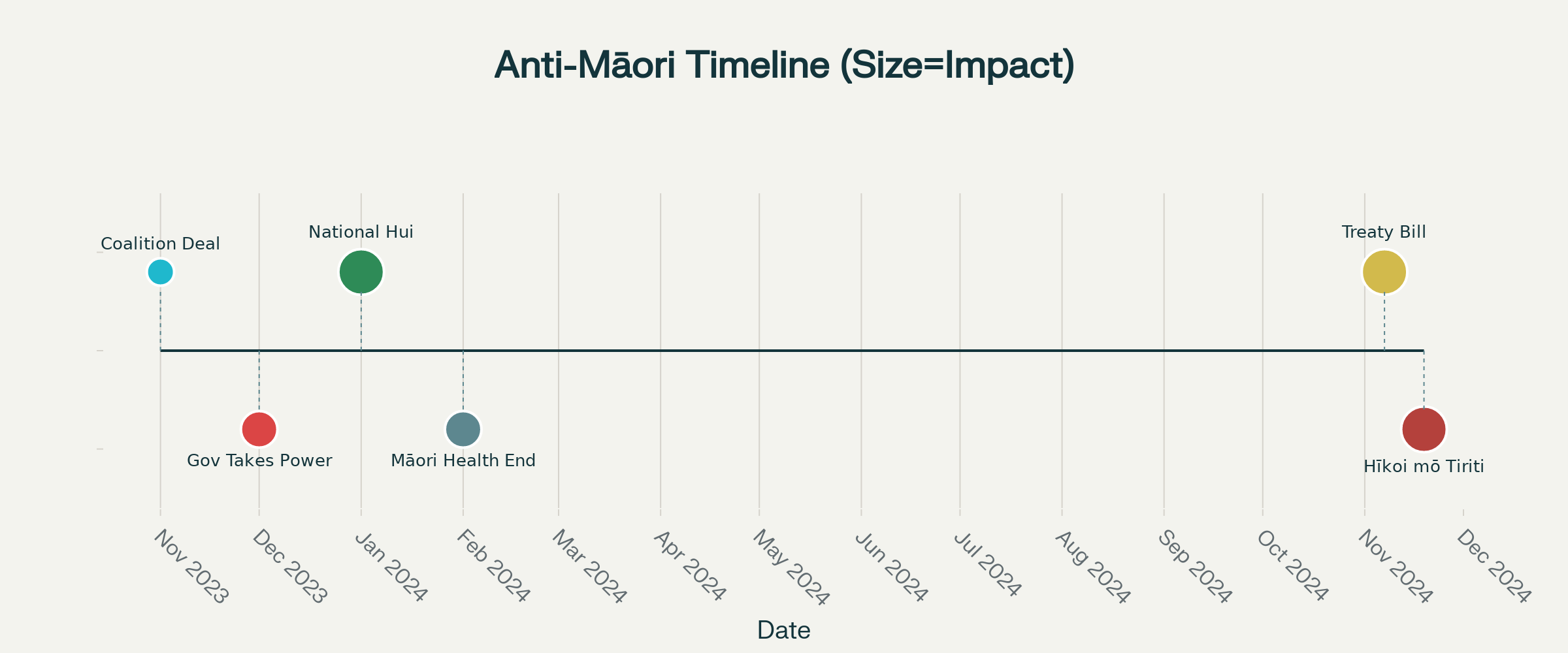
Timeline of Coalition Government's Systematic Attack on Māori Rights 2023-2024
The Kōhanga Generation Strikes Back
Te Arikinui Kuini Nga wai hono i te po represents something that terrifies the colonial establishment - a leader raised entirely within Māori worldviews, speaking te reo as her first language, and possessing a Master's degree in Tikanga Māori. She is the living embodiment of what Kīngi Tuheitia meant when he said "Be Māori all day, every day" - not as an act of protest, but as an assertion of permanent Indigenous presence that cannot be negotiated away.
Her first speech deliberately emphasised "forever" (āke, āke) five times - a direct challenge to the temporary, conditional nature that colonisers have always tried to impose on Indigenous existence. When she asked "When will we be successful forever? When will we be healthy forever? And when will we be liberated from the struggles of the world forever?", she was demanding permanence in a political system designed around Indigenous temporality.
The kuini's critique of being "tired of talking about fighting" represents a sophisticated political analysis that exposes the performative nature of colonial "consultation." The endless rounds of hui, submissions, and negotiations serve the colonial state by creating an illusion of partnership while systematically undermining Indigenous autonomy. Her call for "new solutions for the problems we've inherited" is a rejection of working within colonial frameworks that are designed to produce Indigenous failure.
The Language of Liberation
The restoration of te reo Māori through the kōhanga and kura kaupapa movement represents one of the most successful decolonisation projects in the world. When the kuini delivers her address entirely in te reo, she is not making a cultural statement - she is exercising linguistic sovereignty that directly threatens English monolingualism as a tool of colonial control.
The fact that 95% of Māori were fluent in te reo in 1900, dropping to 25% by 1960 when Kīngi Tuheitia started school, reveals the systematic nature of cultural genocide implemented through the Native Schools Act of 1867 which "required English to be the only language written or spoken" and included "punishments for children who spoke te reo Māori."
The kuini's fluency represents a successful act of decolonisation that has produced a generation of Māori leaders who think and dream in te reo, making them fundamentally ungovernable by colonial logic. This terrifies a system that relies on cultural assimilation to maintain control.
The Neoliberal Response: Divide and Conquer
The coalition government's response to growing Māori resistance follows classic neoliberal strategy - present systemic colonial oppression as individual choice and market failure. Seymour's constant invocation of "equality" deliberately obscures how formal equality in an unequal system perpetuates Indigenous disadvantage.
The government's polling showing 46% of voters believe their policies are increasing racial tensions reveals the success of their strategy. By creating division, they justify further authoritarian measures while positioning themselves as the reasonable centre managing "extremism" on both sides.
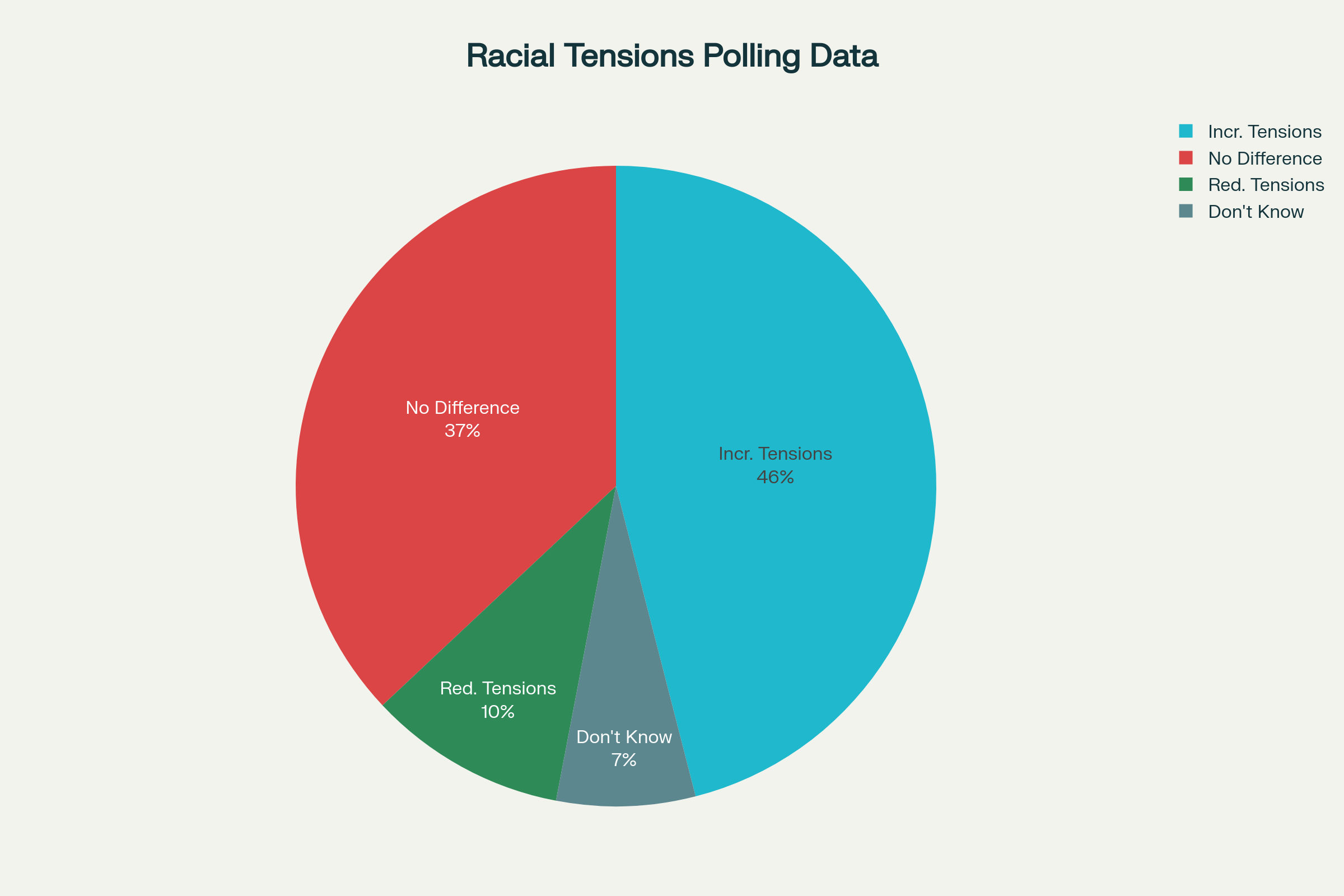
Public Polling: Coalition Government Policies Increasing Racial Tensions
Luxon's public statements consistently employ the rhetoric of fiscal responsibility to justify what are fundamentally ideological attacks on Indigenous rights. The abolition of Te Aka Whai Ora wasn't about efficiency - it was about eliminating Māori self-determination in health delivery, forcing tangata whenua back into assimilationist models that have consistently failed.
The International Context: Global White Supremacist Networks
The coalition government's policies align perfectly with global far-right movements targeting Indigenous peoples. From Australia's attacks on Aboriginal rights to Canada's residential school denialism, we see coordinated efforts to roll back Indigenous gains made since the 1970s.
The UN Declaration on the Rights of Indigenous Peoples, which New Zealand once championed, is now being systematically undermined by this government. Winston Peters' withdrawal of support for this declaration signals alignment with white supremacist movements that view Indigenous rights as threats to settler privilege.
The timing of these attacks is not coincidental - they occur during a global rise of authoritarian populism that scapegoats minority populations for the failures of neoliberal capitalism. In New Zealand, Māori serve the same function that immigrants serve in Europe and America - visible targets for economic frustrations caused by corporate greed and governmental incompetence.
The Resistance: From Tūrangawaewae to Parliament
The strategic brilliance of the resistance movement that culminated in Hīkoi mō te Tiriti demonstrates the maturation of Māori political analysis. Beginning with Kīngi Tuheitia's national hui in January 2024, where 10,000 people gathered at short notice, the movement understood that colonial governments only respond to displays of power that threaten their legitimacy.
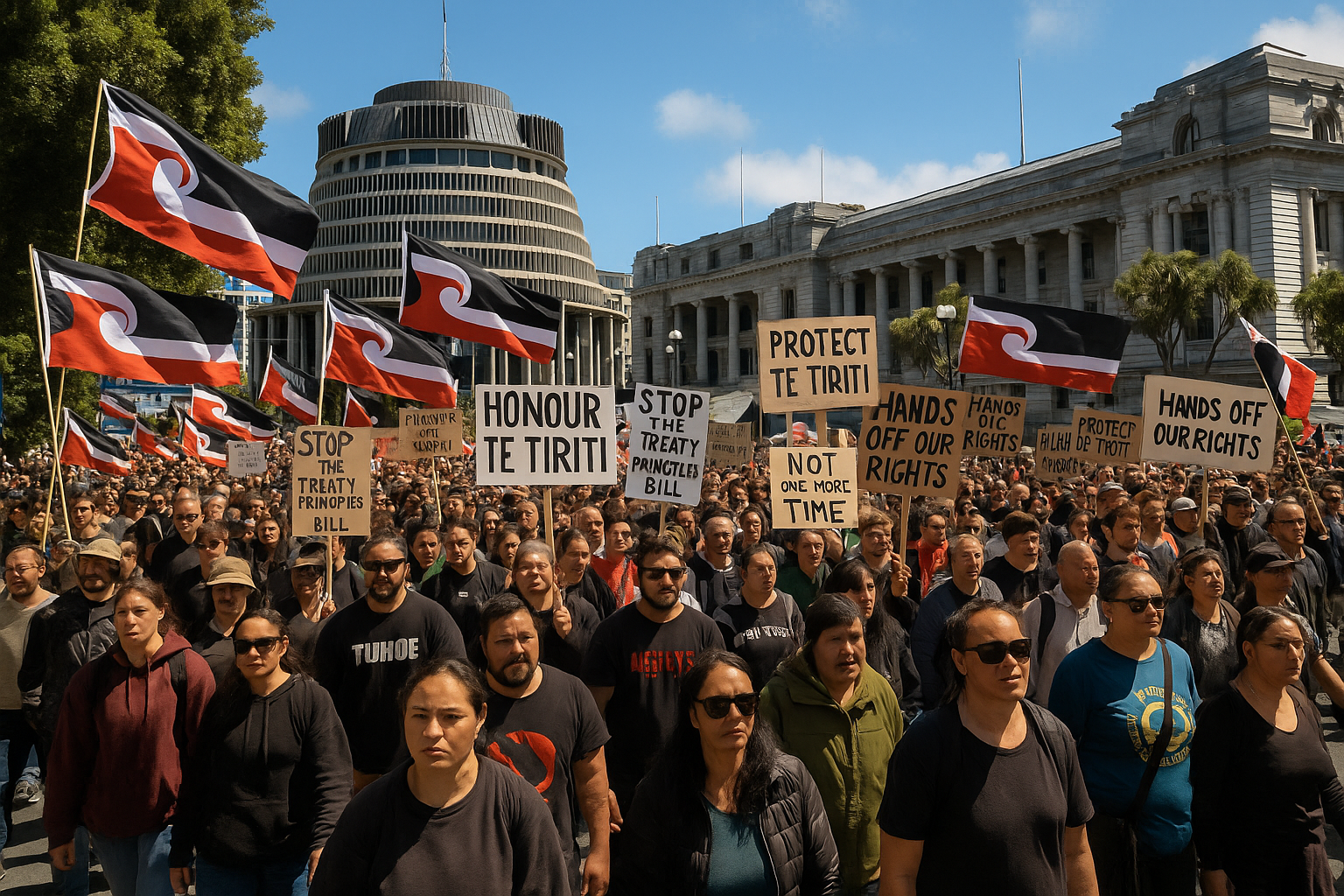
Historic Hīkoi mō te Tiriti march reaching Parliament with over 42,000 protesters
The 42,000-strong march on Parliament represented the largest protest in New Zealand's history, demonstrating a level of Māori political mobilisation that transcended traditional iwi boundaries. The presence of Te Arikinui Kuini Nga wai hono i te po at the hīkoi signalled that the Kīngitanga was not merely supporting the movement - it was leading it.
The strategic importance of Hana-Rāwhiti Maipi-Clarke's haka in Parliament cannot be overstated. By performing ancestral resistance within the colonial legislature itself, she demonstrated that Māori would not accept the legitimacy of processes designed to extinguish their rights. The subsequent 21-day suspension recommendation reveals the authoritarian response to Indigenous resistance.
The movement's success in defeating the Treaty Principles Bill 112-11 represents more than legislative victory - it demonstrates that sustained Indigenous resistance can force colonial governments to retreat when their legitimacy is threatened.
Implications: The Emergence of Ungovernable Māori
Te Arikinui Kuini's emergence as a leader raised entirely within te ao Māori represents the ultimate failure of the colonial assimilation project. For over 150 years, colonial education was designed to produce compliant Indigenous subjects who would administer their own oppression. The kōhanga reo generation has instead produced leaders who are culturally, linguistically, and politically ungovernable by colonial logic.
The kuini's declaration that "Being Māori is forever" is not cultural rhetoric - it is a political statement that rejects the conditional, negotiated existence that colonialism demands from Indigenous peoples. When she states that being Māori includes "taking care of the environment," "reading and learning about our history," and "the choice to be called by our Māori names," she is outlining a comprehensive alternative to colonial modernity.
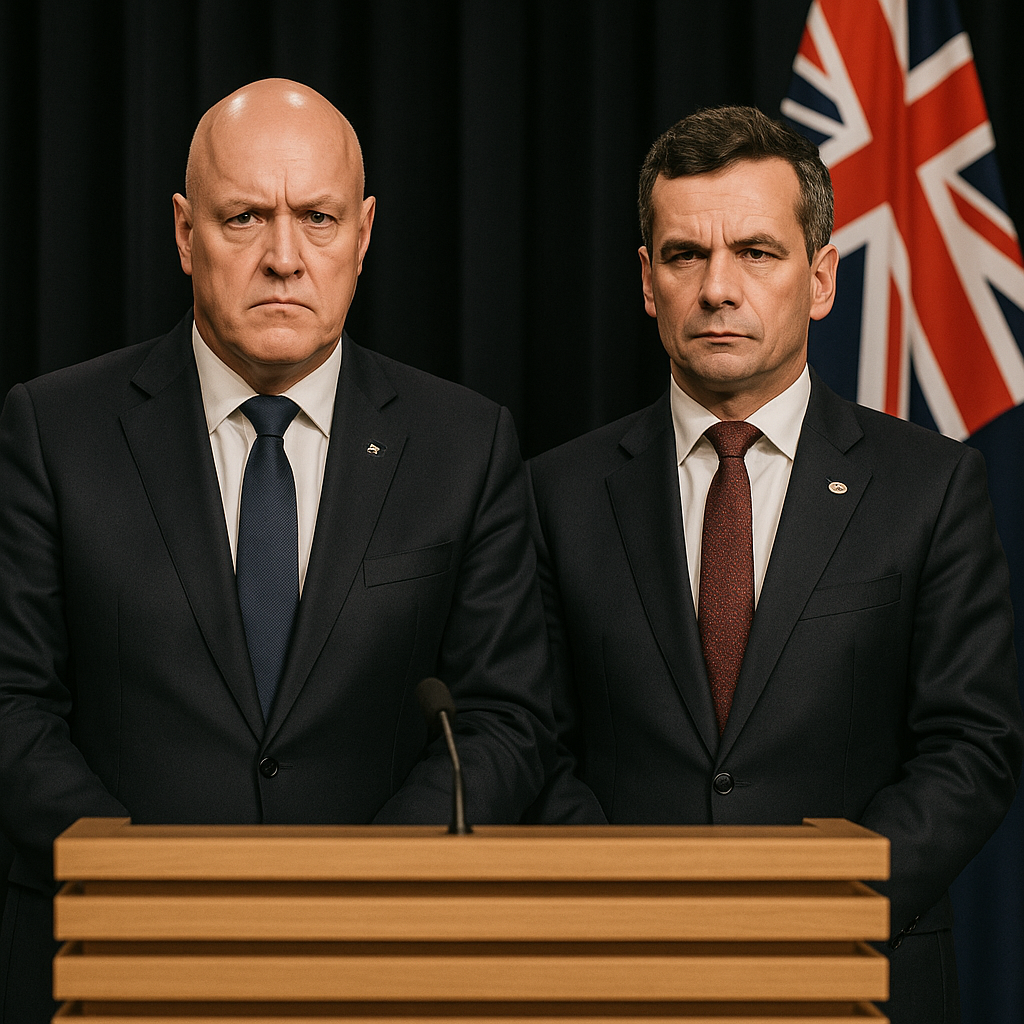
Coalition leaders Christopher Luxon and David Seymour representing the neoliberal assault on Māori rights
The panic in establishment media and political circles about "division" and "racial tensions" reveals their understanding that this generation of Māori leaders will not accept the compromised sovereignty that previous generations were forced to negotiate. The kuini's rejection of being defined by "having an enemy or a challenge to overcome" signals a move beyond reactive resistance toward proactive Indigenous governance.
The coalition government's response - increasingly authoritarian measures, systematic defunding of Māori initiatives, and attempts to criminalise Indigenous resistance - reveals their recognition that traditional colonial management strategies are failing. Luxon's admission that Crown-Māori relations are "probably worse" is an acknowledgment that the colonial compact is breaking down.
The international implications are significant. The successful defeat of the Treaty Principles Bill demonstrates that Indigenous resistance can halt the global rollback of Indigenous rights when movements develop sufficient political power. This victory will inspire Indigenous movements worldwide while terrifying settler governments who have assumed Indigenous acquiescence.

The Māori Green Lantern Fighting Misinformation And Disinformation From The Far Right
The Future Belongs to the Kōhanga Generation
Te Arikinui Kuini Nga wai hono i te po's first speech as Māori Queen marks a generational shift that colonial New Zealand is unprepared to handle. Raised in te reo, educated in tikanga, and politically formed through successful resistance movements, she represents a type of Indigenous leader that the colonial system was designed to prevent from emerging.
Her vision of being Māori "forever" directly challenges the temporality of colonial governance, which has always assumed that Indigenous peoples would eventually disappear through assimilation or attrition. Instead, we are witnessing the emergence of permanently ungovernable Indigenous subjects who refuse to accept colonial legitimacy.
The coalition government's increasingly desperate measures - from defunding Māori programmes to attempting to criminalise Indigenous resistance - reveal their recognition that traditional colonial management strategies are failing. The kōhanga generation cannot be controlled through the mixture of paternalism and punishment that managed previous generations of Māori leadership.
The path forward requires continued resistance to colonial restoration while building the alternative institutions that can sustain Indigenous sovereignty. Te Arikinui Kuini's leadership of this process ensures that the future will be shaped by Māori who think and dream in te reo, who understand tikanga as political theory, and who reject the compromised sovereignty that colonialism demands.
As the kuini herself declared, "Being Māori is forever." The colonial project's days are numbered, and those who profit from Indigenous oppression should be very afraid indeed.
Ngā mihi nui
The Māori Green Lantern (MGL) - Ivor Jones
Te Arawa/Ngāti Pikiao
For those who find value in this analysis and wish to support continued work exposing colonial propaganda, please consider a koha to HTDM: 03-1546-0415173-000. The MGL understands these tough economic times for whānau, so please only contribute if you have capacity and wish to do so.