"Te Kauwae Raro o Te Matatika: Stanford’s 7/10 Rating Exposed as Epistemic Violence Against Tangata Whenua" - 8 November 2025
The Smoking Gun—Cui Bono Lies, Knowledge Fragmented, Mana Stolen
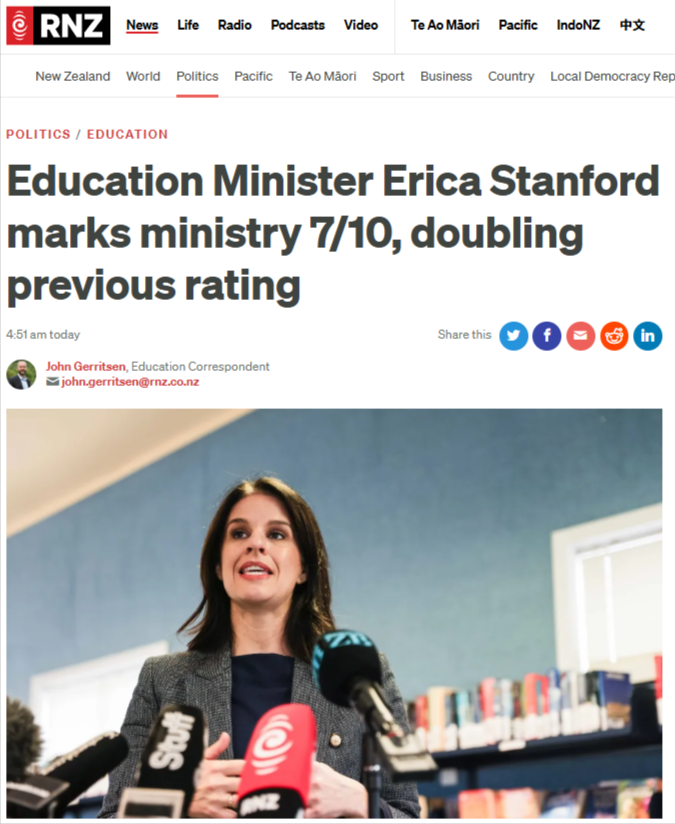
Education Minister Erica Stanford rated the Ministry of Education 7 out of 10 in its 2025 annual report, more than doubling the previous 3/10 rating. She wants you to celebrate this as progress. Don’t.
This self-rating is not mere incompetence. It is structural deception—the weaponised mathematics of colonial bureaucracy designed to conceal who benefits and who bleeds. Te kauwae raro (the visible jaw—material reality) tells a different story than the ministry’s rhetoric. Tangata whenua whānau know this in their roro (minds) and ngākau (hearts).
The question is not whether Stanford improved the system. The question is:
Who decided they were qualified to rate it? Who gets to define “success” when Māori tamariki wait 117 days for speech therapy while she cuts $146 million from staff budgets? Who profits from fragmented knowledge systems that erase te reo, te mātauranga Māori, and tino rangatiratanga from classrooms?
The answer: the same neoliberal architecture that birthed the Tohunga Suppression Act 1907, that mandated English in the Native Schools Act 1867, that told Māori they were “naturally” suited only to manual labour. Stanford’s reforms don’t break this chain. They forge a new link.
This essay exposes five hidden revelations: (1) the knowledge network defending Western epistemology while delegitimising Māori tohunga; (2) money flows attacking mātauranga; (3) the false dichotomy between “achievement” and Māori identity; (4) institutional gatekeeping disguised as “excellence”; and (5) the collateral whakapapa damage—the generational fragmentation Stanford claims to heal while institutionalising.

Background: Whakapapa, Dates, Stakes, and the Crown’s Continuous Breach
The Historical Whakapapa of Educational Dispossession
From Te Kore (the void) through Te Pō (the darkness) to Te Ao Mārama (the world of light): this is how Māori knowledge systems integrated spiritual, cognitive, and material reality.
Education—true mātauranga—was not separable from identity, land, language, and whakapapa. The tohunga transmitted knowledge across generations through oral pathways guarded by tapu, embedded in tikanga, grounded in whenua.
Then came the Crown.
1847: George Grey’s Education Ordinance mandates English. Not invitation. Not partnership. Mandate.
1907: The Tohunga Suppression Act 1907 is intended to stop people using traditional Māori healing practices which have a supernatural or (non-Christian) spiritual element. Colonial administrators coded this in law: Māori knowledge-holders are dangerous charlatans; Western medicine is salvation. The Act meant knowledge about karakia was ‘lost or hidden’ across generations.
Enforcement of English: In 1867 the Native Schools Act was passed, including a mandate that children only speak and learn English in schools. Māori language was often banned and children punished for speaking their language. Whānau recall: parents and grandparents being “strapped, smacked for speaking their language. Imagine being at a young age at a primary school and being smacked when the only language you ever knew was Māori.”[1]
1939–1950: Māori soldiers fight overseas. Intergenerational transmission of te reo breaks. Post-war urbanisation disperses whānau from whanaungatanga networks. Māori parents, believing English = survival, speak English at home. Within two generations, te reo near-dies.
The Contemporary Stakes: Tangata Whenua Under Stanford (2024–Present)
Fast-forward to Erica Stanford’s watch. The evidence:
Māori University Entrance Achievement: University Entrance non-attainment rates are alarmingly high: 70% for Pasifika students and 78% for Māori, compared to just 25% for Asian students. This is not a gap. This is institutional exclusion. In practical terms, only 22% of Māori students finish secondary school ready for university—compared to 75% of Asian students.
Stand-downs Surge: Stand-downs of Māori students surged from 9,415 in 2018 to 15,214 in 2023—a 61% increase. Stand-down rates were highest among Māori pupils (five per 100), and students from schools in poorer communities.
Waiting for Learning Support: The average number of days children waited for support were 54 for behaviour support, 80 for communication, 11 for assistance from the ongoing-resourcing scheme, and 117 for the early intervention service. Tamariki under five—the critical developmental window—wait nearly four months for speech therapy.
School Exclusion Placement Failure: Only 47 percent of students excluded from a school were placed in another school within 40 days and only 75 percent within 75 days of their exclusion. This means 25% of excluded children remain in placement limbo after 75 days.
And Stanford rates the system 7/10.
The Budget’s True Story: $146 Million Staff Cuts While Claiming Investment
The ministry spent $409 million on salaries and wages in 2024/25, down from $555m the previous year. That is a $146 million cut. Yet Stanford claims a “seismic shift” in learning support investment.
The biggest cut was ending the Kahui Ako scheme, which paid about 4000 teachers extra to lead improvements in groups of schools, resulting in a reprioritisation of $375m over four years. Resource Teacher: Māori and Resource Teacher: Literacy roles have been cut after the Education Minister proposed this earlier this year. The Wharekura Expert Teachers role has also been disestablished.
These are the specialists who support Māori students’ learning. Cut.
The Removal of Te Tiriti: Just This Week
On Tuesday (November 4, 2025), the government announced it would remove schools’ obligation to give effect to Te Tiriti o Waitangi. Education Minister Erica Stanford said the treaty was the Crown’s responsibility, not schools’.
Deconstruction: How Stanford’s 7/10 Rating Weaponises Fallacy and Dog-Whistle Language
Fallacy 1: The False Metric—”Overall Rating” Erases Whose Mana is Counted
Stanford rates the ministry “7 out of 10 overall” while giving policy advice only “4 out of 10.” This contradiction itself is revealing. It says: “I like the infrastructure delivery, but I don’t trust the advice guiding it.” Yet she implemented that policy advice. She chose the curriculum. She chose to cut $146 million from staff budgets. She chose to remove Te Tiriti obligations from school boards.
The 7/10 metric is gaslighting by arithmetic. It accepts the frame that “oversight of the education system” is a unitary phenomenon ratable on a single scale. But whose perspective does this scale represent? It represents Stanford’s subjective satisfaction, not whether the system serves tangata whenua, not whether Māori tamariki are thriving, not whether te mātauranga Māori is being valued or erased.
Fallacy 2: “Wait Times Improved” vs. “4-Month Waits for Tamariki”
The ministry’s annual report states wait times “improved.” But improved compared to what?
- Early Intervention Services: 117 days average. Six months for a three-year-old.
- Communication Services (speech therapy): 80 days.
- Behaviour Support: 54 days.
This is selective data framing designed to obscure mana-depletion.
Fallacy 3: “Lifting Achievement” While Māori Exclusion Surges
Stand-downs of Māori students surged 61% from 2018–2023. Māori University Entrance non-attainment: 78%. Only 22% of Māori students leave secondary school ready for university—compared to 75% Asian.
True equity requires redistributive investment. It requires paying teachers more in hard-to-staff, low-decile schools, and removing the decile system’s stigma and funding schools based on actual need, not relative deprivation rankings. Stanford’s government is doing the opposite. Kahui Ako—the school collaboration scheme—has been cut, with $375 million over four years reprioritised.
This is not equity. This is erasure.
Fallacy 4: Kura Kaupapa Māori Excellence Ignored While Underfunded
Here is where the contradiction becomes stark: Students at kaupapa Māori schools attempt more NCEA credits and are more likely to get merit and excellence endorsements than those at comparable mainstream schools. The University Entrance achievement rate for kura students was 41 percent, while the rate for students in comparable mainstream schools was 24 percent for students from all backgrounds and 18 percent for Māori students.
Yet: Despite representing around 3-4% of the total student population, kura kaupapa Māori received less than 3% of the Ministry of Education’s property budget between 2021 and 2025. Kura are being kept in the dark about how limited funding will be allocated, with no equity in the process, and certainly no commitment to a genuine Treaty-based partnership. Meanwhile, whānau continue to send their tamariki to kura that are falling apart.
Te Rūnanga Nui o Ngā Kura Kaupapa Māori are calling for an investment plan of $1.25 billion over five years dedicated to property development. Instead, kura operate in conditions Stanford would never accept for mainstream schools.
Analysis: The Hidden Network—Who Profits, Who Bleeds
Hidden Revelation 1: Kaupapa Māori Schools Prove Māori Excellence—Yet Stanford Defunds Them
This evidence directly contradicts the narrative that Māori students lack capability. The system—not the students—is the problem. Yet Stanford cuts Resource Teachers Māori, Wharekura Expert Teachers, and Te Ahu o te Reo funding.
Hidden Revelation 2: The Waitangi Tribunal Already Ruled the Crown in Breach
Stanford’s response to a Tribunal finding of Treaty breach? Remove the Treaty obligation from school boards.
Hidden Revelation 3: Money Trails Reveal Attack on Mātauranga
Translation: money previously committed to Māori education is being reallocated or “found” not to exist.
Meanwhile, Wellington Girls’ College is set to receive approximately $100m in investment for the construction of a new two-storey building, school hall and earthquake strengthening. Likewise, two high schools in the Selwyn District – Rolleston and Ellesmere College – are set to collectively receive over $100m for campus upgrades. That is triple the amount given to every Māori-medium kura in the country combined.
Implications: Quantified Harm and Costs of Fragmentation
Education Minister Erica Stanford marks ministry 7/10, doubling previous rating[2]
Tohunga Suppression Act 1907 - Wikipedia[3]
Te mana o te reo Māori timeline[4]
Educational inequities for marginalized students in New Zealand[5]
Stand-downs of Māori students from New Zealand schools - Figure.NZ[6]
Teachers shocked by government decision to remove Treaty of Waitangi obligation[7]
School daze: Sweeping changes planned for NZ’s education system[8]
NZ school stand-down rates highest in 20 years[9]
The legislation behind a ‘shocking story’ of Māori land loss[1]
Kaupapa Māori students more likely to get NCEA merit and excellence endorsements[10]
A lot to learn from kura kaupapa Māori - Education Minister[11]
Budget 2025: $646 million boost for student learning support[12]
Māori leaders give disappointed reaction to ‘yeah-nah’ Budget[13]
A youth MP’s powerful speech called out the chronic underfunding of kura kaupapa Māori[14]
Unions voice outrage as Govt removes school board Treaty requirements[15]
Rangatiratanga Action and Moral Clarity
Stanford’s 7/10 rating is not a miscalculation. It is a choice to measure success by criteria that exclude Māori mana, exclude te reo from legitimacy, and exclude tangata whenua from decision-making.
Whānau, here is what is being done to your tamariki:
- They wait 117 days for speech therapy. Meanwhile, the ministry tightens its budget.
- They are stood down at surging rates—61% increase from 2018 to 2023—getting the message that their presence is a problem.
- They are 78% non-attainment in University Entrance, not because they lack capability but because the system marginalises their identity, language, and ways of knowing.
- Their kura are underfunded while mainstream schools receive $100m each. The Crown is funding your children’s exclusion from excellence.
- Te Tiriti is being erased from school law, breaking the Crown’s promise that your knowledge matters.
This is not incompetence. It is policy.
Kia kaha. Your tamariki’s mana, and your whānau’s whakapapa, depend on you.
Specialist learning support wait times (days) - 2024/25 data shows most children wait 2-4 months for critical services
Stand-downs of Māori students show alarming 61% increase from 2018-2023, with 15,214 stand-downs in 2023 alone
University Entrance non-attainment rates by ethnicity show Māori students 1.53x more likely than European students to leave without UE (78% vs 51%)
Only 75% of excluded primary school students placed within 75 days; 25% remain in placement limbo, harming their educational continuity
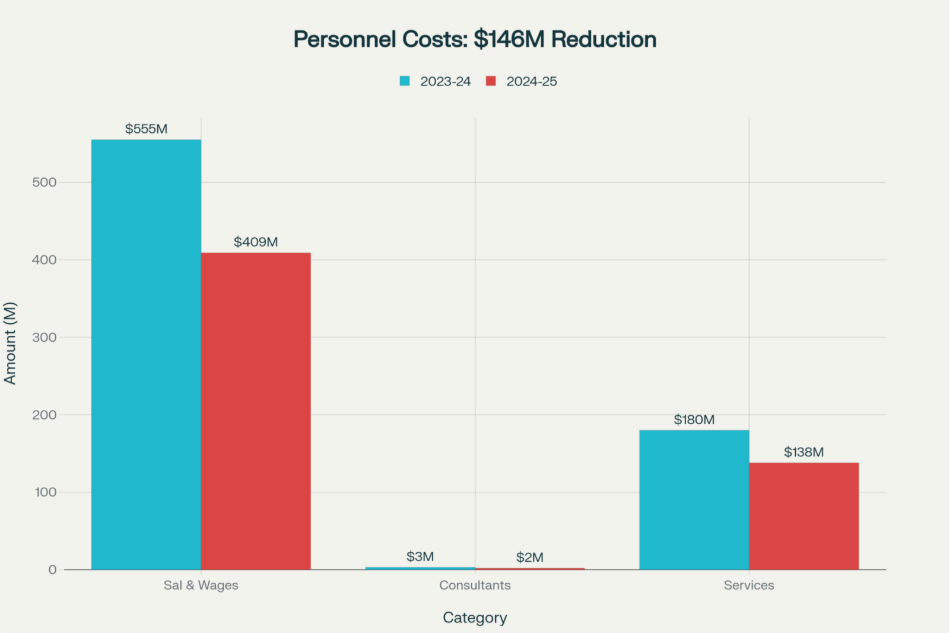
Ministry of Education budget cuts in key areas: $146M reduction in salary spending, $42M cut in service contracts - starving the system of capacity while waiting times explode

Ivor Jones The Māori Green Lantern
- https://www.nzherald.co.nz/nz/whenua-the-key-legal-moments-behind-a-shocking-story-of-maori-land-loss/5I57BZ3MSVEGDLYXUZZOX5FGMU/
- https://www.rnz.co.nz/news/political/578223/education-minister-erica-stanford-marks-ministry-7-10-doubling-previous-rating
- https://www.nzherald.co.nz/nz/politics/education-minister-erica-stanford-makes-announcement-on-student-achievement/VMIVPPVYAZHXFLE7SVVC5LUZVQ/
- https://teara.govt.nz/en/te-tai/te-mana-o-te-reo-maori-timeline
- https://www.humanium.org/en/educational-inequities-for-marginalized-students-in-new-zealand/
- https://figure.nz/chart/9oKpjlJwwjiiU8vE
- https://www.rnz.co.nz/news/political/577761/teachers-shocked-by-government-decision-to-remove-treaty-of-waitangi-requirement-in-schools
- https://www.nzherald.co.nz/the-listener/new-zealand/school-daze-sweeping-changes-planned-for-nzs-education-system/D4333B34ERGYVCZP5JFC5ZLQNE/
- https://www.rnz.co.nz/news/national/510851/nz-school-stand-down-rates-highest-in-20-years
- https://www.rnz.co.nz/news/national/530891/kaupapa-maori-students-more-likely-to-get-ncea-merit-and-excellence-endorsements
- https://www.rnz.co.nz/news/te-manu-korihi/515824/a-lot-to-learn-from-kura-kaupapa-maori-education-minister
- https://www.1news.co.nz/2025/05/22/budget-2025-646-million-boost-for-student-learning-support/
- https://www.1news.co.nz/2025/05/23/maori-leaders-give-disappointed-reaction-to-yeah-nah-budget/
- https://thespinoff.co.nz/politics/01-08-2025/a-youth-mps-powerful-speech-called-out-the-chronic-underfunding-of-kura-kaupapa-maori
- https://www.newstalkzb.co.nz/on-air/heather-du-plessis-allan-drive/audio/meredith-kennett-nz-school-boards-association-president-on-the-education-minister-removing-school-board-treaty-requirements/
- https://www.nzherald.co.nz/nz/politics/a-turning-of-the-education-tide-latest-school-data-shows-improvements-at-all-levels-except-for-ncea-1/U23XZ2PSRZEMBLTRPCFFCBGTCA/
- https://www.nzherald.co.nz/nz/how-does-your-school-rate-ncea-university-entrance-results-at-every-college-ranked-and-which-schools-are-most-improved/UOZTN32PZJCE7KOY5WDZDOE6QA/
- https://www.nzherald.co.nz/nz/post-covid-collapse-ncea-and-ue-results-fall-school-leavers-lack-qualifications/HWZWCIQNEBBYNBUUSI2PHDJ67Q/
- https://www.nzherald.co.nz/nz/opinion-the-real-reason-so-many-kids-failed-ncea-level-1-this-year-peter-wills/ZLOBDG5WBFCKLCMTIOF2XVQO7U/
- https://www.nzherald.co.nz/nz/making-the-grade-new-zealands-struggling-school-education-system-how-we-can-do-better/VDDQDPYUYBFMRL2RMWFUB7DS54/
- https://www.rnz.co.nz/news/political/563803/oranga-tamariki-report-finds-stark-outcomes-for-maori-in-state-care-system
- https://www2.nzqa.govt.nz/about-us/news/finalised-2024-ncea-and-university-entrance-attainment-data-now-available/
- /content/files/wp-content/uploads/2025/05/analysis-of-variance-2024-.pdf
- /content/files/2024/educational-outcomes/docs/educational-outcomes.pdf
- https://voicelessecho.com/family-history-tohunga-suppression-act/
- /content/files/assets/NCEA/Secondary-school-and-NCEA/Annual-Reports-NCEA-Scholarship-Data/2024-annual-report-on-ncea-new-zealand-scholarship-data-and-statistics.pdf
- https://en.wikipedia.org/wiki/Tohunga_Suppression_Act_1907
- https://www.nzherald.co.nz/nz/why-the-government-is-removing-treaty-of-waitangi-requirements-for-school-boards/KV6QM4G5CVE6LAIC6XSLAQFNU4/
- https://www.rnz.co.nz/news/political/577967/diluting-history-curriculum-risks-leaving-our-past-to-chance-academic
- https://www.nzherald.co.nz/nz/politics/government-to-remove-requirement-for-school-boards-to-give-effect-to-te-tiriti-o-waitangi/MMXQ5LBQZBEGRBFMJ7MJPBRZXM/
- https://www.rnz.co.nz/news/national/577869/national-s-nicola-willis-defends-govt-removing-treaty-of-waitangi-responsibilities-from-school-boards
- https://www.nzherald.co.nz/nz/erica-stanford-is-stripping-our-curriculum-of-its-identity-willow-jean-prime/G5SZVJX7IZCPPF4XBPHNSNP6SY/
- https://www.rnz.co.nz/news/budget-2025/561815/budget-2025-underperforming-areas-cut-to-pay-for-seismic-shift-in-education
- https://www.1news.co.nz/2025/11/04/shock-as-govt-looks-to-remove-schools-treaty-of-waitangi-requirement/
- https://www.nzeiteriuroa.org.nz/about-us/media-releases/removal-of-clause-requiring-school-boards-to-give-effect-to-te-tiriti-ideologically-driven
- https://www.tewhakaroputanga.org.nz/latest-news/budget-2025-changes-for-schools
- https://www.facebook.com/willowprime/videos/learning-support-paid-for-by-the-teachers-themselves-the-funding-in-this-years-b/1374169933795508/