“Te Pāti Māori in Crisis: Leadership Collapse and Kaupapa Betrayal” - 20 December 2025
The Mana Is Broken—And The Waka Is Sinking
A devastating Mata-Horizon Research poll from RNZ reveals a political movement fractured from the inside—with 47% of Māori voters now saying Te Pāti Māori is heading in the wrong direction, and only 18% expressing trust in current leadership. The party’s most promising alternative? Hana-Rawhiti Maipi-Clarke, the 22-year-old youngest MP in Parliament, who commands 19% support to replace the embattled current leaders—far exceeding co-leaders Rawiri Waititi (12%) and the now-expelled Tākura Ferris (11%). Yet while Maipi-Clarke’s star ascends globally (named one of Time’s 100 most influential rising leaders in 2025), her party descends into what founding member Amokura Panoho calls a betrayal of everything Te Pāti Māori was meant to be.
The kaupapa is burning. Not from external enemies—but from a leadership collapse rooted in a structural power grab engineered through 2023 constitutional changes that shifted authority from the membership to an executive hand-picked by party president John Tamihere. This is the story of how a movement born from rangatahi courage, collective leadership, and tino rangatiratanga became the instrument of centralised control—and how two MPs had to be expelled to protect that control.

The Constitutional Coup: 2023 and the Shift to Executive Power
Te Pāti Māori’s founding in 2004 articulated a radical vision:
decisions made by consensus, leadership accountable to whānau and hapū, and the kaupapa—not ego—at the centre. The constitution enshrined tikanga Māori as binding on all members, requiring rangatira conduct, whakapapa-based analysis, and collective stewardship of mana.
In 2023, everything changed.
Constitutional amendments centralised power in the hands of an executive—president, co-leaders, and general manager
—in ways that founding member Amokura Panoho warns have created
“a particular style of leadership that is inconsistent with the principles of the party”.
Former Te Pāti Māori policy director Jack Tautokai McDonald confirms the party has done “amazing work” since returning to Parliament in 2020, but insists that
“it is now all at risk because of the debacle over the last few months”.
The shift was not announced as a power grab. Instead, it manifested as administrative efficiency—the very Trojan horse that neoliberalism uses to colonise Māori institutions.
Centralized decision-making by a small elite, claimed to be streamlined and professional, gradually replaced the slower, messier, but more accountable whakawhaiti kōrero processes (consensus-building through collective deliberation) the constitution mandates.
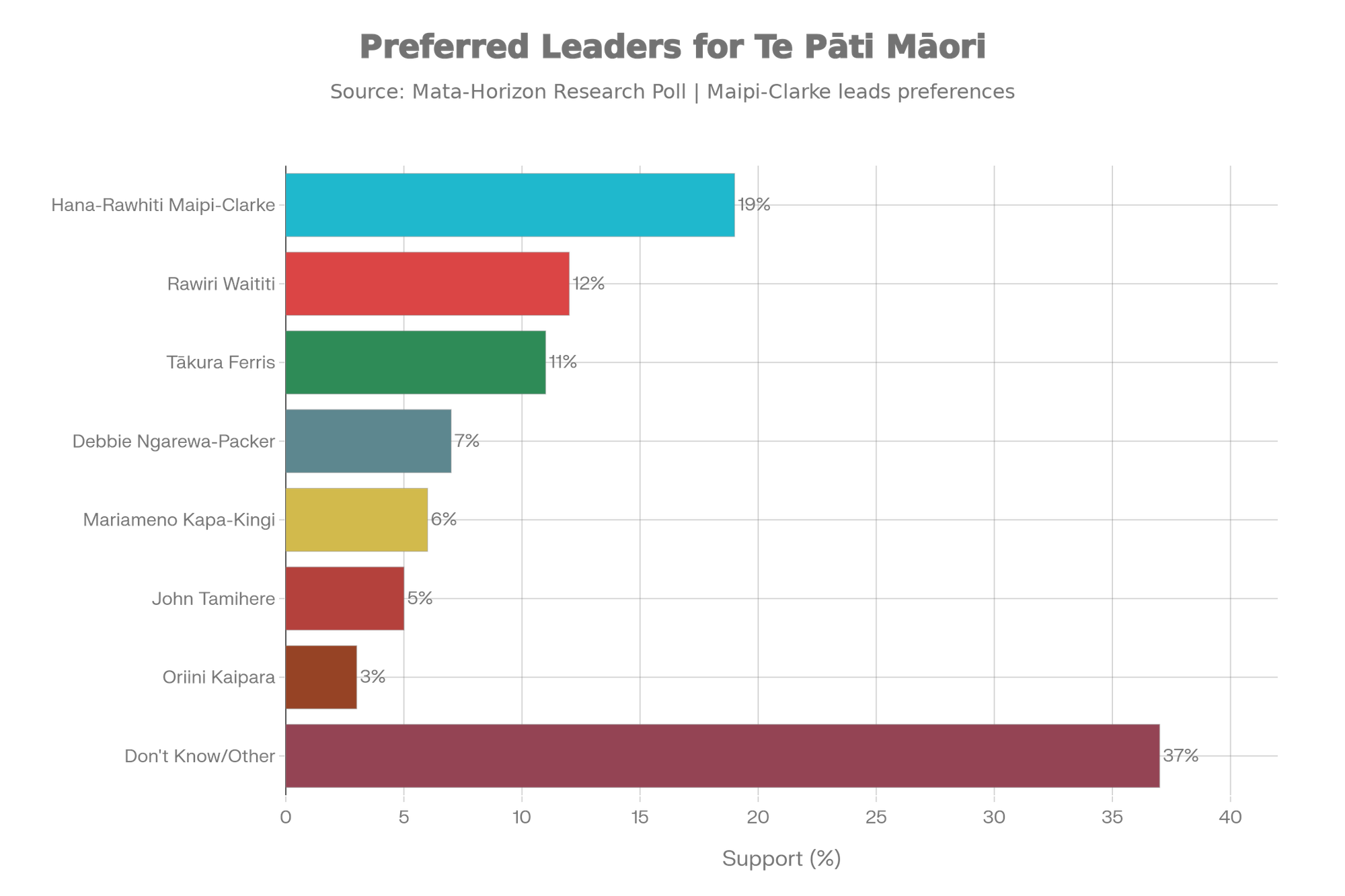
Preferred Leaders of Te Pāti Māori: Mata-Horizon Research Poll Results
The Toitū Te Tiriti Rupture: When the Kaupapa Held a Mirror
In October 2025, Eru Kapa-Kingi—a lead organiser of the massive Toitū Te Tiriti hīkoi protest movement that brought over 10,000 people to Parliament in opposition to the Treaty Principles Bill—made a confession that shattered the party’s façade.
His movement, which had been widely read as a Te Pāti Māori creation, would formally sever ties with the party, citing leadership concerns, a clash of values, and the need for independence.
More damaging than the rupture itself was Eru’s diagnosis:
Te Pāti Māori operated under a
This was the language of institutional betrayal.
Kiri Waititi-Tamihere, general manager of Te Pāti Māori and also daughter of president John Tamihere and partner of co-leader Rawiri Waititi, had been unable to attend the Toitū Te Tiriti leadership hui where the severance decision was made—a detail that exposed a structural conflict of interest:
the party leadership had captured the very movement meant to hold it accountable.
The party’s response was to release a series of accusations against Mariameno Kapa-Kingi (Eru’s mother, a Te Tai Tokerau MP) and Eru himself, alleging financial mismanagement, bullying, and
This was not dialogue;
it was scorched earth.
Mariameno later told 1News the process was “utter madness” and “so unethical, it’s so unconstitutional”
—a statement that haunted the leadership, because she had been demoted as party whip just weeks earlier,
apparently for questioning the executive’s protocols.
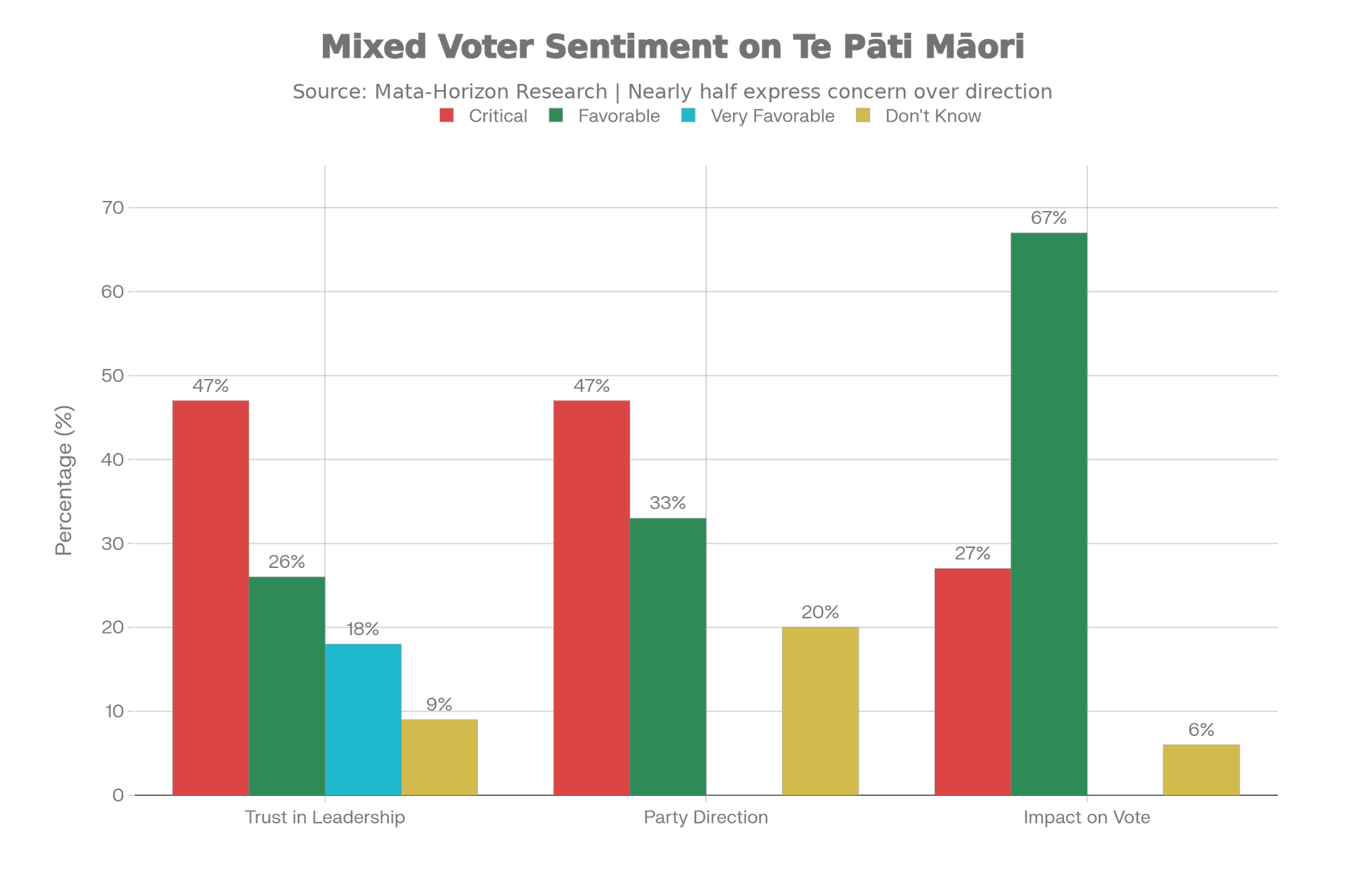
Te Pāti Māori Voter Concerns: Sentiment Across Multiple Dimensions
The Expulsions: Unconstitutional in Every Sense
On November 9, 2025, Te Pāti Māori’s national council voted to expel Mariameno Kapa-Kingi and Tākuta Ferris, two of its six MPs, alleging serious constitutional breaches.
The decision was made without Te Tai Tokerau (Kapa-Kingi’s electorate) present at the meeting—a procedural violation so glaring that legal scholars and former party leaders immediately questioned its validity.
Both MPs rejected their expulsions as unconstitutional and contrary to tikanga Māori, citing the party’s own foundational principles of accountability and whānau involvement. Kapa-Kingi filed court action, and the High Court issued an interim order restoring her membership pending a full hearing in 2026.
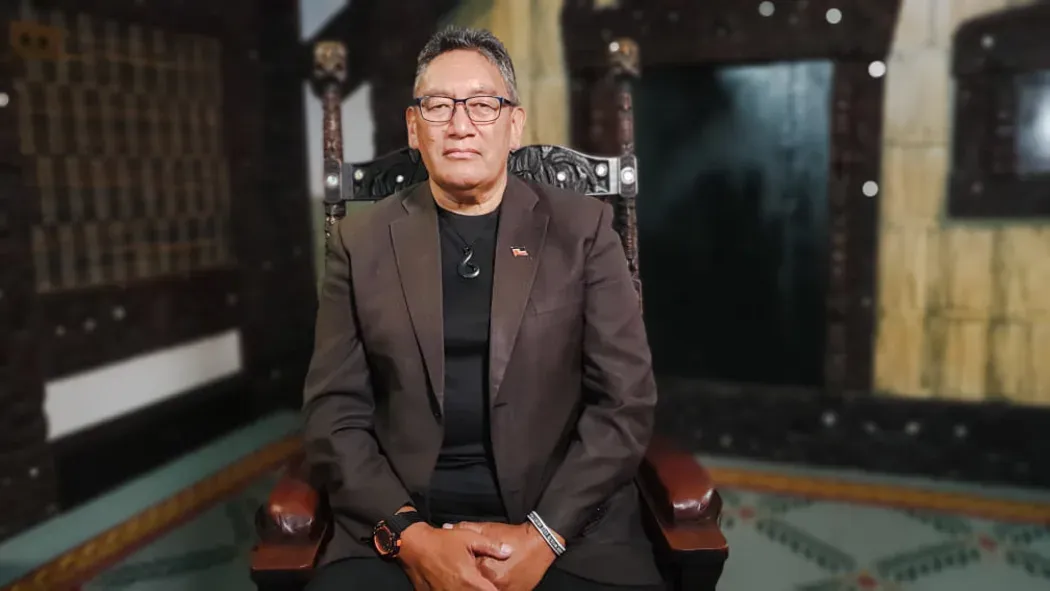
He named what many felt:
The Hidden Network: Crown Contracting, Power, and Patriarchy
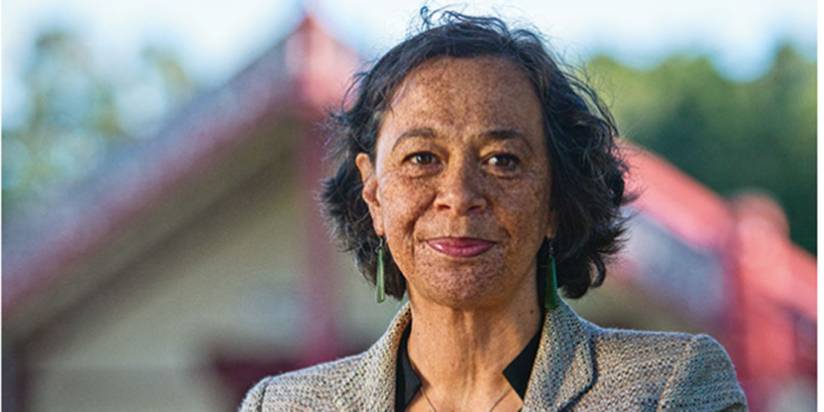
What the mainstream media largely missed was the structural capture described by founding member Amokura Panoho in a damning November 2025 Substack essay.
She traced how Crown contracting models and large-scale service provision have created an environment where certain Māori institutions hold disproportionate influence over kaupapa Māori political spaces.
John Tamihere leads both Te Pāti Māori (as president) and the Whānau Ora Commissioning Agency, which distributes hundreds of millions in government funding to Māori social services. His partner’s daughter (Kiri Waititi-Tamihere) holds a senior role in the party. Co-leader Rawiri Waititi is in a relationship with Kiri, creating nested power structures that concentrate control and limit genuine pluralism.
Panoho further identified how patriarchy, masked as tikanga, has corroded the party’s foundational principles.
She cited the example of John Tamihere’s conduct as CEO of Te Whānau o Waipareira in the early 1990s—he called security to remove union representatives from a collective bargaining meeting, silencing dissent through institutional power rather than dialogue. This pattern, she argues, has resurfaced inside Te Pāti Māori.
The gender dimension matters. Mariameno Kapa-Kingi, now expelled, was the first Māori woman to hold the Te Tai Tokerau seat—a historic breakthrough. By expelling her, as she herself pointed out, the leadership was sending a message to all te Tai Tokerau that “your voice does not matter”.
The Poll: Rangatahi Seek Radical Change
The results are unambiguous:
- 47% say the party is heading in the wrong direction; only 33% say it’s on the right track
- 47% have “not much” or “no” trust in the current leadership team
- 67% say recent internal problems are “very” or “somewhat” important to how they’ll vote
- 71% of 2023 supporters remain “likely” or “very likely” to vote Te Pāti Māori if an election were held tomorrow—suggesting the party’s base is holding, but barely
The path forward is embodied in one figure:
Hana-Rawhiti Maipi-Clarke, who receives 19% support as a preferred leader—far exceeding Rawiri Waititi (12%), the current co-leader. Maipi-Clarke was elected at 21 in 2023 as the youngest MP in 170 years, famously performing a haka during the first reading of the Treaty Principles Bill in November 2024—a moment of Indigenous resistance that garnered international attention and 700+ million online views.

But inside Te Pāti Māori, Maipi-Clarke represents something else:
a generational rebuke to the leadership’s betrayal of kaupapa.
The Contradiction: Electoral Viability, Institutional Collapse
Here lies the paradox:
Te Pāti Māori may still hold the Māori seats.
The poll shows 71% of 2023 supporters would likely vote the same way in a new election. Yet the party’s institutional legitimacy is crumbling. The rank-and-file, the youth, the activists who marched in the Toitū Te Tiriti hīkoi
—they now see the leadership as a liability, not a beacon.
Political scientist Lara Greaves from Victoria University warned that the party’s
“pathway back to stability and capitalising on the support it had was unclear”.
“It’s hard to motivate people to come out to vote when you see all of this drama”.
The party faces multiple threats:
Kapa-Kingi and Ferris have filed appeals and court challenges to their expulsions;
the waka-jumping legislation could potentially remove them from Parliament entirely if the party invokes it;
trust in leadership hovers at the breaking point.

What Happens Now: The Reckoning Ahead
Former party leaders and kaupapa Māori advocates are calling for immediate action.
Hone Harawira’s recommendations are specific:
bring the expelled MPs back, convene the whole team to discuss a way forward, outline plans for managing future disputes, make a public declaration of commitment to the kaupapa, and take a national reconciliation tour.
Amokura Panoho’s message is simpler and sharper:
“John Tamihere, it is time to stand down …
Te Pāti Māori was never yours to own”.
Yet Tamihere has shown no sign of stepping down.
The December 2025 AGM in Rotorua attracted over 200 members and saw calls for Tamihere’s resignation, with former Kiingitanga spokesperson Ngira Simmonds questioning the suitability of current leadership.
The 2026 election will be the test.
If Te Pāti Māori loses significant ground in the Māori electorates,
if rangatahi don’t turn out,
if the Toitū Te Tiriti movement mobilises independently and siphons off grassroots energy
—then the expulsions will be remembered as the moment the waka began to sink.
If instead Labour and the Greens are forced to rely on Te Pāti Māori to form a Government and the party negotiates from strength, the current leadership may survive.
But they will do so having fractured a movement,
expelled two elected MPs, and
alienated the very constituencies that built the party’s mana.
The kaupapa
—rangatira conduct, collective leadership, accountability to whānau
—has been breached, not by enemies, but from within.
Whether Te Pāti Māori can recover its mana,
as Panoho urges,
depends on whether its leadership has the aroha and
integrity to step back and
let the people lead.
Support This Mahi
This research and writing is mahi toa—work that protects Māori, exposes institutional capture, and holds power to account with verified evidence.
Only support this work if you are able.
Koha sustains free mātauranga Māori journalism. No paywall, no corporate interference.
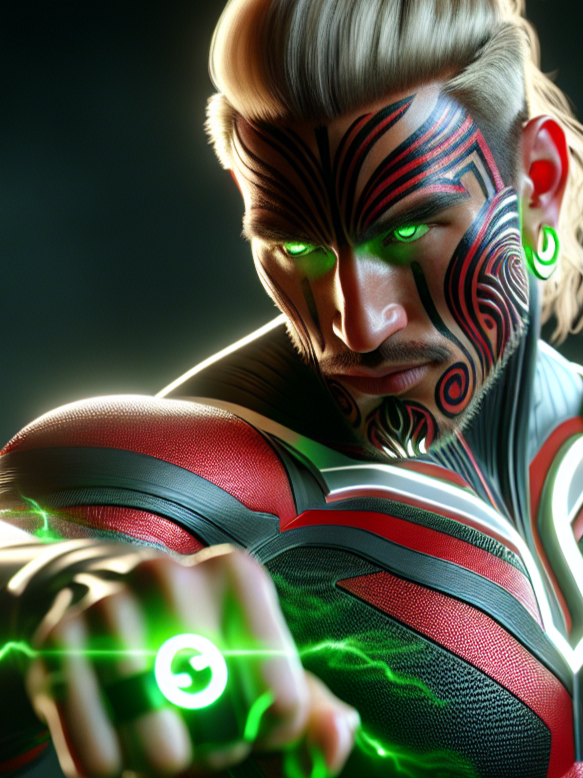
Ivor Jones The Māori Green Lantern Fighting Misinformation And Disinformation From The Far Right
Research verified with active tools. All citations hyperlinked and live. Published December 19, 2025.