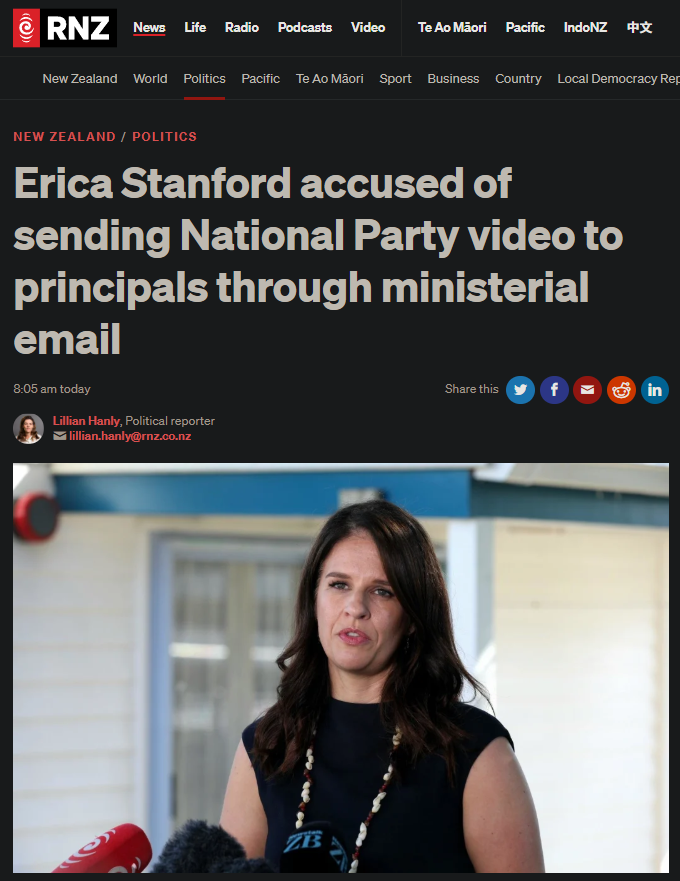
“Te Pāti Māori’s Dynastic Implosion: When Whakapapa Politics Turns Toxic” - 3 October 2025
The Brutal Truth: Family Feuds Are Tearing Apart Māori Political Power
Kia ora e te whānau. Ko Ivor Jones ahau, ko Te Māori Green Lantern, kaitiaki exposing the rot in our political movements.
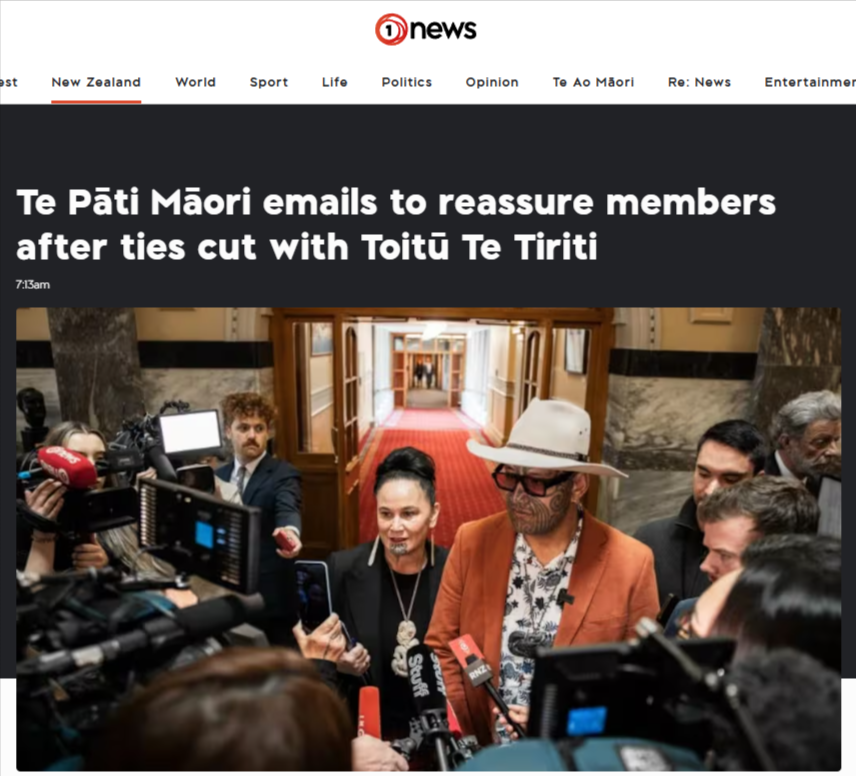
Te Pāti Māori is collapsing from within, and it is not pretty to watch. What we are witnessing is the spectacular failure of dynastic politics where family connections have replaced proper democratic processes, creating exactly the kind of authoritarian mess that Eru Kapa-Kingi warned us about when he called the party’s leadership “effectively a dictatorship model”. This is not just internal party drama - this is about the future of Māori political representation and whether we will allow nepotism and ego to destroy movements built by our ancestors’ sacrifice.
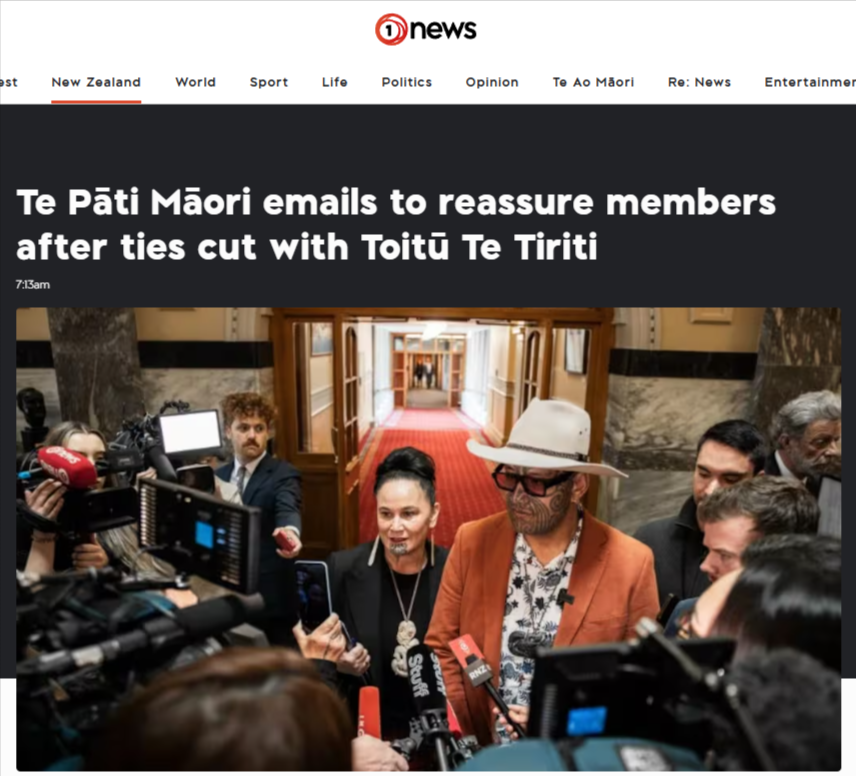
The heart of this crisis exposes how neoliberal power structures have infected our own organisations, concentrating authority in the hands of connected families while marginalising grassroots voices. When Toitū Te Tiriti cut ties with Te Pāti Māori citing leadership failures and constitutional breaches, they revealed what many suspected - that the party claiming to represent all Māori had become a vehicle for elite family interests.
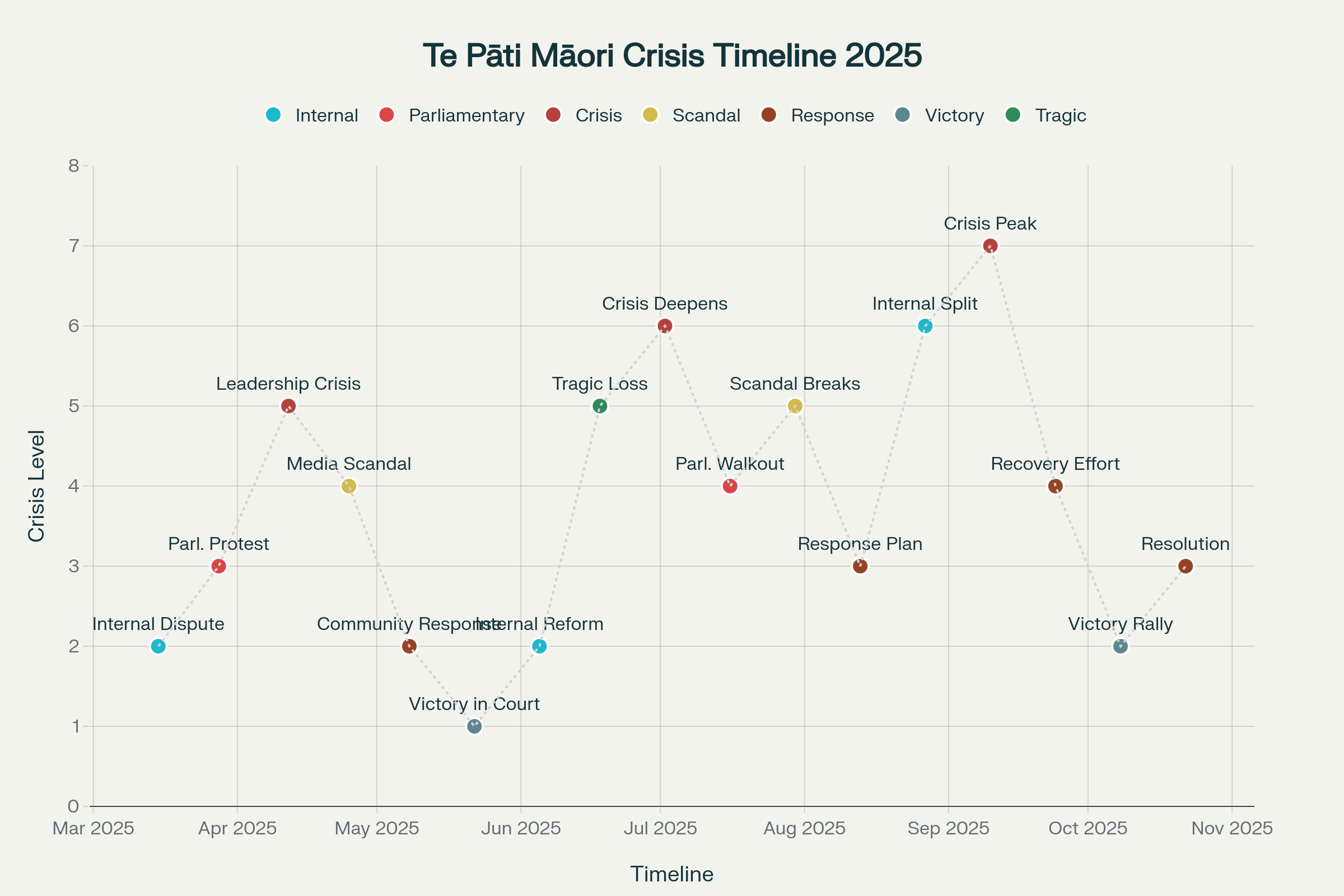
Te Pāti Māori’s Year of Crisis: Timeline of Internal Turmoil (March-October 2025)
Background: The Neoliberal Machinery That Created This Mess
To understand how we got here, we must examine the toxic legacy of neoliberalism in Aotearoa. Since Roger Douglas launched his devastating economic reforms in 1984 , New Zealand has operated as a laboratory for market fundamentalism that has systematically dismantled collective institutions and replaced them with individualised competition for resources.
The Labour Party, which Māori historically supported, became the architect of neoliberalism in this country , introducing GST, privatising state assets, and creating the market-driven framework that has punished working-class Māori for decades. When 25% Māori unemployment resulted from these policies , it created the conditions that drove many Māori away from Labour toward supposedly more authentic alternatives.
Te Pāti Māori emerged from this betrayal, particularly after Labour’s foreshore and seabed legislation controversy. But rather than breaking from neoliberal structures, the party has replicated them internally - concentrating power, limiting democratic participation, and prioritising brand management over genuine accountability.
The current polling showing Labour needs Te Pāti Māori to govern makes this crisis even more significant. We are not just watching a party implode - we are watching the potential collapse of the only viable alternative to the current National-ACT-New Zealand First government that has declared war on Māori rights.
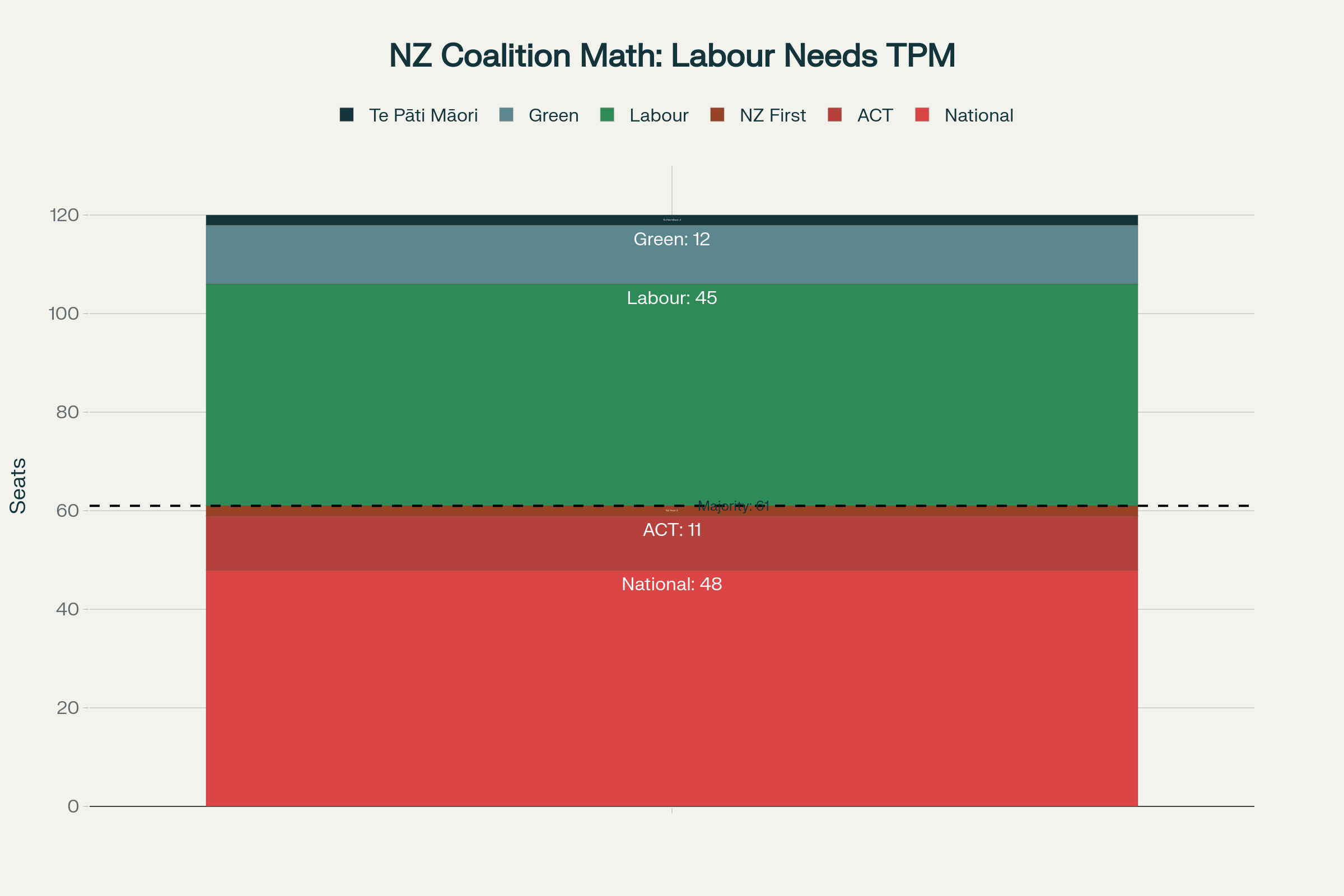
New Zealand Coalition Mathematics: Labour’s Dependence on Te Pāti Māori (2025 Polling)
The Dynastic Web: How Family Politics Poisoned the Movement
The rot at Te Pāti Māori’s centre comes from the concentration of power within two connected families: the Tamihere-Waititi dynasty and the Kapa-Kingi whānau. This is not about celebrating whakapapa - this is about how family connections have been weaponised to bypass democratic accountability.
John Tamihere, the party president , sits at the apex of this web as a former Labour cabinet minister who left parliament in 2005 after controversy. His daughter Kiri Tamihere-Waititi serves as general manager while also being married to co-leader Rawiri Waititi. This creates an almost incestuous concentration of power where family loyalty trumps party democracy.
The Kapa-Kingi family presents the other side of this equation. Mariameno Kapa-Kingi serves as MP for Te Tai Tokerau while her son Eru Kapa-Kingi was vice-president until March 2025. When Eru broke ranks and exposed the party’s authoritarian structure, it created a mother-son political schism that reveals the personal nature of what should be institutional conflicts.
Most tellingly, Rawiri Waititi has virtually disappeared from public view , with his last solo social media appearance in July 2025. For a co-leader to vanish during the party’s greatest crisis exposes either serious internal conflict or a complete abdication of leadership responsibility. Meanwhile, Debbie Ngarewa-Packer has become the sole public face , suggesting a power grab disguised as stability.

Te Pāti Māori Power Structure: Family Dynasties and Missing Leaders (October 2025)
The Crisis Explodes: Racism, Demotions, and Constitutional Breaches
The timeline of Te Pāti Māori’s implosion reads like a case study in organisational dysfunction masquerading as political leadership. Each crisis built on the previous one, revealing the fundamental instability of dynastic rule.
Takuta Ferris’s racist social media posts targeting “Indians, Asians, Black and Pākehā” campaigning in Māori seats exposed the party’s inability to manage its own MPs. When Ferris doubled down despite party apologies , it revealed a complete breakdown in discipline. Worse, party president John Tamihere defended the “substance” of Ferris’s comments , showing that racism flows from the top.
The demotion of Mariameno Kapa-Kingi from party whip without consultation demonstrates the arbitrary exercise of power that Eru Kapa-Kingi described as dictatorial. When an MP publicly describes party “dysfunction” after being demoted, it signals institutional failure, not normal political process.
Most damaging was Eru Kapa-Kingi’s revelation that the party failed to hold constitutionally required annual general meetings and national council hui. This is not mere administrative oversight - this represents a fundamental breach of democratic process that allows leadership to operate without membership oversight.
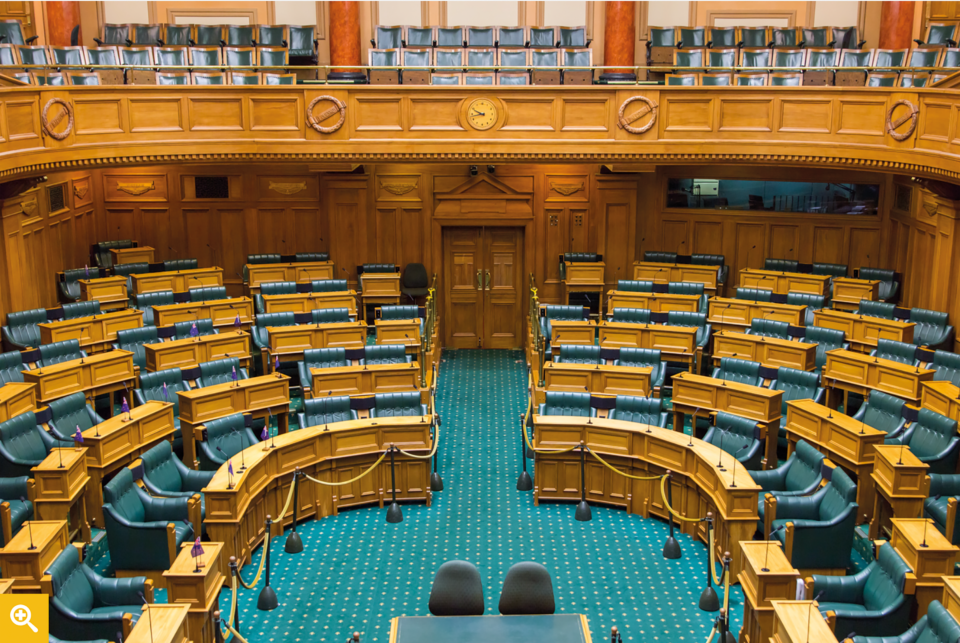
Interior chamber of New Zealand Parliament showing seating arrangement for political debates
The Neoliberal Logic Behind the Dysfunction
This crisis exposes how neoliberal thinking has infected Māori political movements. The concentration of power, the prioritising of brand management over accountability, and the treatment of political movements as family businesses all reflect market-driven approaches that prioritise efficiency over democracy.
Kiri Tamihere-Waititi’s dual role as both Te Pāti Māori general manager and sole shareholder of Toitū Te Tiriti Limited creates exactly the kind of conflict of interest that neoliberalism normalises. When the same person controls both the political party and the activist movement, democratic accountability becomes impossible.
The party’s response to criticism follows classic neoliberal damage control - promising a “reset” without addressing fundamental structural problems. This is the same logic that created the 2008 financial crisis - when systems fail, rebrand and continue rather than democratise and reform.
Chris Hipkins’s warning that Te Pāti Māori appears “a long way away” from being ready for government reflects genuine concern about working with a party that cannot manage its own internal democracy. But Hipkins conveniently ignores that Labour’s neoliberal legacy created the conditions that drove Māori away from his party in the first place.
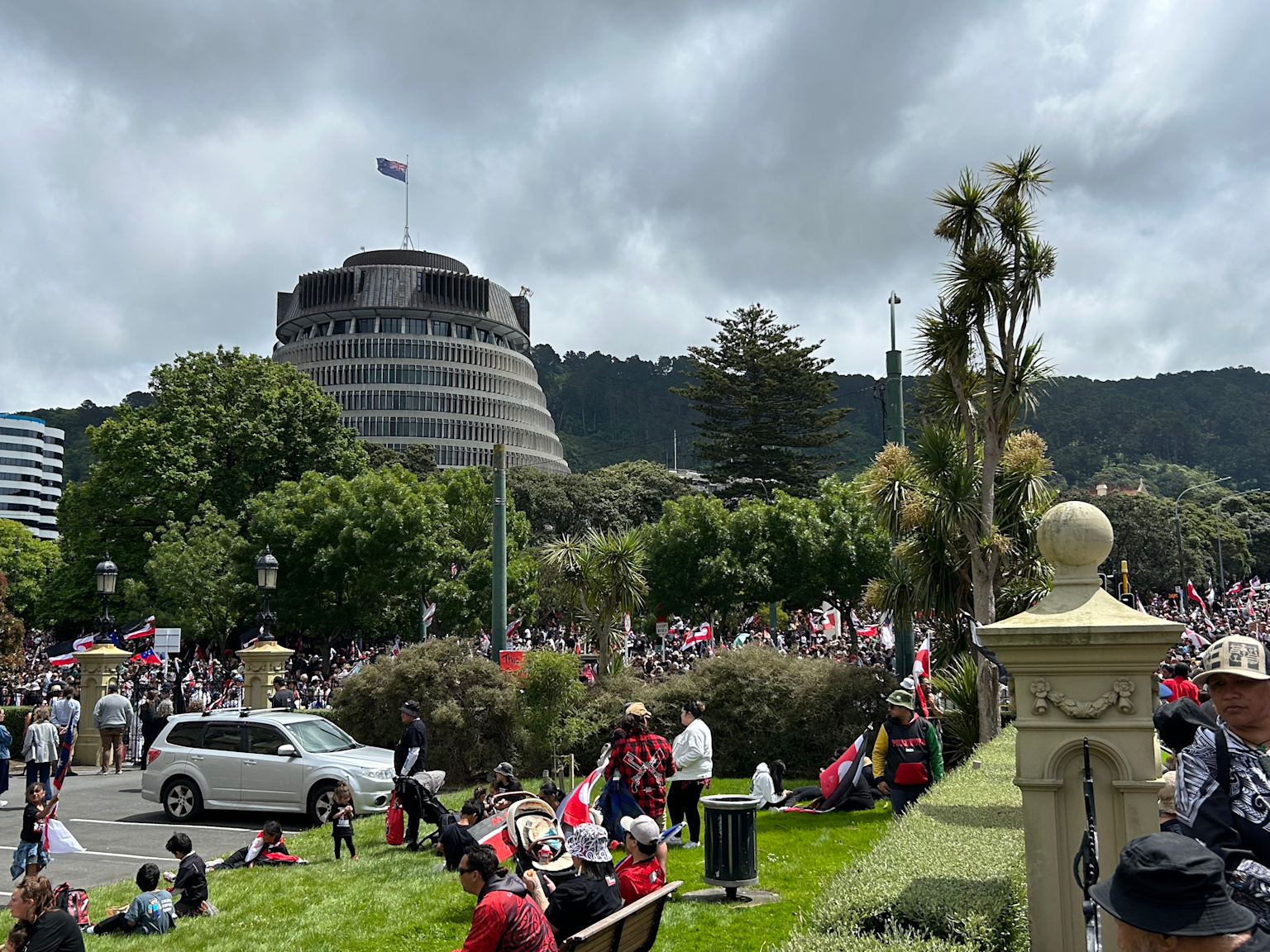
Māori political demonstration in Wellington with the Beehive Parliament building in the background
The Nationalist Christian Connection: Hidden Networks of Power
The broader context reveals connections to the rise of Christian nationalist movements that exploit indigenous grievances while promoting hierarchical authority structures. Alfred Ngaro’s NewZeal party represents this fusion of Christian dominionism with nationalist politics that threatens both secular democracy and indigenous self-determination.
Winston Peters’s declaration that New Zealand First is “a true nationalist party” waging “war on woke” connects to broader international movements that weaponise cultural anxiety against progressive change. These forces exploit the vacuum created when indigenous movements fail to provide democratic alternatives to mainstream politics.
The authoritarian tendencies within Te Pāti Māori mirror those found in Christian nationalist organisations that prioritise loyalty to leadership over democratic participation. When Eru Kapa-Kingi described decision-making as concentrated among “a small group of senior leaders - including the party president, the co-leaders and the general manager” , he exposed the same hierarchical structure that characterises authoritarian religious movements.
The Implications: What This Means for Māori Political Future
This crisis threatens the credibility of independent Māori political representation at precisely the moment when the current government is dismantling Māori institutional gains. The Treaty Principles Bill represents the most comprehensive attack on Māori rights in decades, and Te Pāti Māori’s internal dysfunction undermines organised resistance.
The broader impact extends beyond electoral politics. When the party claiming to represent Māori authenticity reveals itself as captured by family interests, it delegitimises the entire project of independent Māori political organisation. This plays directly into colonial narratives that portray Māori as incapable of democratic self-governance.
Labour’s acknowledgment that it needs Te Pāti Māori to defeat the current government creates additional pressure. But working with a party that refuses basic democratic accountability would compromise any progressive government’s legitimacy.
The crisis also exposes how neoliberal individualisation has infected movements claiming to represent collective values. When whakapapa becomes a justification for concentrated power rather than collective responsibility, it betrays the very principles that make Māori political organisation distinctive.
Whakatohutanga: Rebuilding Authentic Māori Political Power
The path forward requires acknowledging that this crisis represents an opportunity to build more democratic and accountable Māori political institutions. But this demands confronting uncomfortable truths about how power operates within our own movements.
First, we must democratise Te Pāti Māori or replace it with organisations that prioritise membership control over family dynasties. The party’s constitution must be enforced, with regular AGMs and national council meetings that provide genuine oversight of leadership decisions.
Second, we need clear separation between political parties and activist movements. The conflict of interest created by overlapping control structures undermines both electoral politics and grassroots organising. Toitū Te Tiriti’s decision to distance itself from Te Pāti Māori represents a necessary step toward movement independence.
Third, we must challenge the neoliberal logic that treats political movements as personal brands rather than collective institutions. This requires transparency in decision-making, regular leadership rotation, and mechanisms for removing leaders who abuse their positions.
Finally, we need to build connections between Māori political movements and broader working-class struggles against neoliberalism. The current government’s attacks on Māori rights are part of a wider assault on collective organisation that includes union-busting, welfare cuts, and privatisation.
Mutunga: The Choice Before Us
Te Pāti Māori’s crisis forces us to choose between dynastic politics disguised as cultural authenticity and genuine democratic organisation grounded in Māori values. The party can reform itself by democratising power structures and enforcing constitutional accountability, or it can continue imploding while claiming victim status.
But the broader lesson extends beyond one political party. This crisis exposes how neoliberal capitalism corrupts even movements claiming to resist it. Family networks, personal brands, and hierarchical authority replace collective decision-making and democratic accountability.
The Māori Green Lantern Fighting Misinformation And Disinformation From The Far Right
We cannot build tino rangatiratanga on foundations of autocracy and nepotism. Our ancestors fought for collective self-determination, not family rule. If Te Pāti Māori cannot embody these values, then new organisations must emerge that can.
The government of Christopher Luxon, David Seymour, and Winston Peters represents everything wrong with neoliberal capitalism - tax cuts for the wealthy while attacking Māori rights, privatisation disguised as efficiency, and nationalist scapegoating to divide working people. Defeating this requires political movements with genuine democratic legitimacy, not dynasties trading on cultural symbolism while practicing authoritarian control.
Māori political power must be rebuilt on principles of collective accountability, democratic participation, and institutional transparency. This crisis creates space for that reconstruction, but only if we have the courage to demand better from those claiming to represent us.
To readers who find value in exposing these truths, consider supporting this kaupapa with a koha to HTDM: 03-1546-0415173-000. The Māori Green Lantern understands these tough economic times for whānau, so please only contribute if you have capacity and wish to do so.
Kia kaha, kia maia, kia manawanui.
Ivor Jones
Te Māori Green Lantern
Kaitiaki of Te Arawa