"The 12-Hour Trap: How the Government Weaponised Roadside Testing Against Māori" - 12 November 2025
From Breath Test Lies to Drug Test Genocide—The Taiaha Cuts Through the Deception
Thanks for reading Ivor Jones The Māori Green Lantern! This post is public so feel free to share it.
Taiaha Sharp: The Punitive Architecture of Roadside Drug Testing
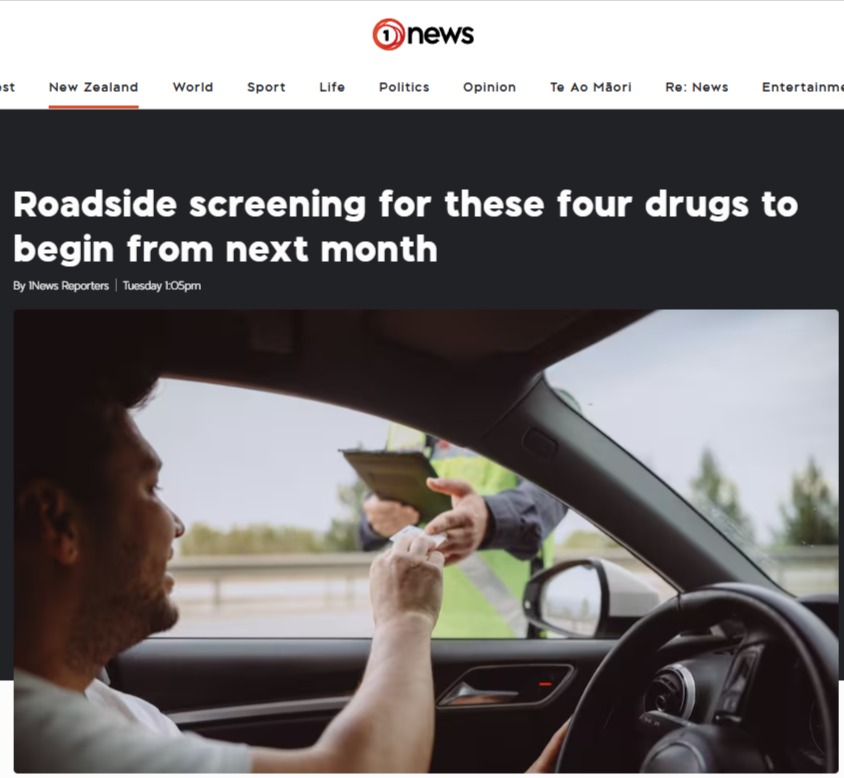
The roadside drug testing rollout beginning December 2025 is not road safety policy—it is a technology of enforcement designed to transfer resources from vulnerable communities into the police apparatus, while legitimizing racial profiling under the guise of public safety.[1][2][3]
Cui Bono? The Hidden Network
Transport Minister Chris Bishop and Police Minister Mark Mitchell have framed this announcement as pragmatic harm reduction.
The language is clinical:
detect “menaces on New Zealand roads,” prevent “tragedies,” install “enforcement tools.” But the architecture reveals a different ambition: a machine to intensify state surveillance and control, particularly over Māori and Pacific youth, precisely when this government has dismantled co-governance and eliminated institutional checks on police power.[4][5][6][7]
Who benefits? Police gain $20 million in initial implementation funding, plus ongoing access to performance-based money tied to test volumes. Private device manufacturers (unidentified in public releases) secure a $1.335 billion road policing market. The National-ACT-NZF coalition acquires visible enforcement spectacle to legitimize “law and order” credentials before the next election.[8][9][10]
Who bears the cost? Medicinal cannabis users face 12-hour driving bans despite legal prescriptions. Māori youth—already targeted by police at 2-3 times the rate of Pākehā—face a new vector for criminalization. The working poor, whose labor or disability means driving during early morning or late-night hours, absorb false positives at disproportionately higher rates because this regime targets 65% of tests to “high-risk times.”[11][12][13][14]
The Scandal That Exposes the Model: When Performance Targets Become Lies
In October 2025—just weeks before this drug testing rollout was announced as finalized—New Zealand police revealed a scandal that exposes the catastrophic failure of this government’s enforcement model: 120 police officers fabricated 30,961 breath tests between July 2024 and September 2025.[15]
This falsification was not discovered by police integrity systems. Acting Deputy Police Commissioner Michael Johnson admitted the fraud went undetected for over a year because “the required technology was not available” to build a detection algorithm until August 2025. Officers recorded tests that never occurred—simulating breath-test interactions while driving alone.[16][17]
Why would officers fake tests when police actually exceeded their national targets by 900,000 tests? The answer lies in the architecture of incentive corruption: $24 million in quarterly performance-based funding directly tied to test numbers. Under the Road Policing Investment Programme (RPIP), significant police funding is contingent on hitting specific enforcement targets. Even though the national target was exceeded, individual work units, precincts, or officers likely faced internal pressure to hit their portion or suffer resource reductions.[18][19]
Acting Deputy Police Commissioner Jill Rogers claimed: “There was no pressure to achieve the target.” This is a lie engineered by bureaucratic language. Perverse incentive systems create pressure by definition—especially when individual officers know that shortfalls affect unit bonuses, training allocations, and resource distribution. The fact that 120 officers fabricated tests despite exceeding national targets demonstrates that the problem is not officer competence but systemic design: when funding is tied to test numbers, honesty becomes a luxury some officers cannot afford.[20]
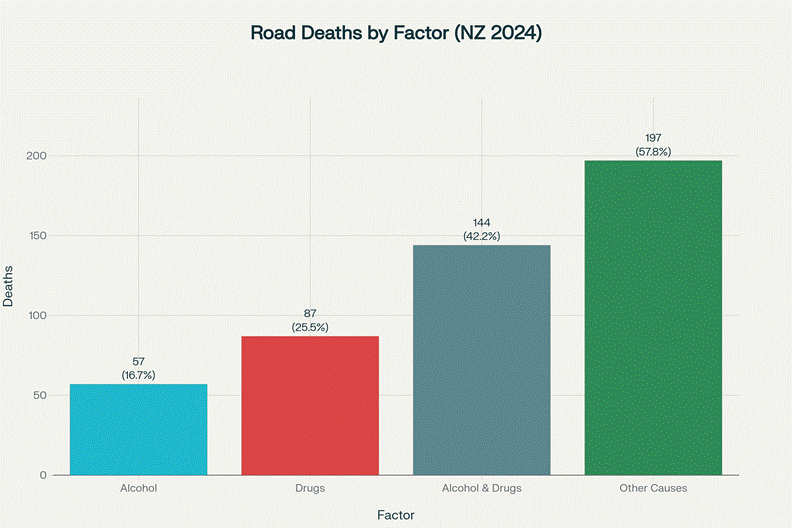
Road Deaths by Contributory Factor - New Zealand 2024
The government’s response? Police Minister Mark Mitchell said the targets were “working well” and ruled out any review of the system itself. Transport Minister Chris Bishop expressed he was “concerned” but proposed no policy change. Instead, this government is now rolling out the same perverse incentive structure with a new technology: roadside drug testing, targeting 50,000 tests per year.[21][22][23]
The Technology of Control: Unreliability as Feature, Not Bug
New Zealand and Australian research shows the Dräger DrugTest 5000 (the device police will use) has a 19% failure rate: 10% false positives and 9% false negatives. This falls dramatically short of the 80% specificity required by international standards for evidential reliability.[24][25]
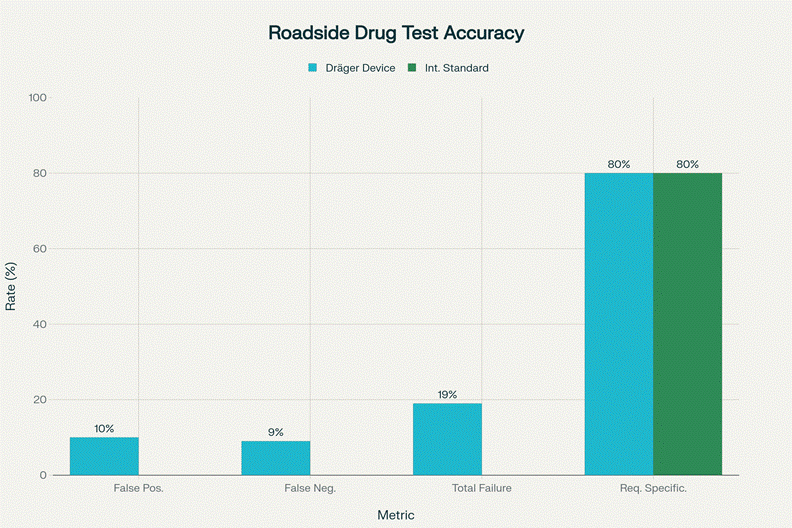
Roadside Drug Testing Device Accuracy: Dräger vs International Standards
What does this mean in practice?
Medicinal cannabis users are the first casualties. Approximately 70% of medicinal cannabis supplied in New Zealand contains THC. The device detects THC for 3-6 hours after use, but can register positive for up to 12 hours or longer in regular users. A patient who takes their prescribed medication at night, sleeps, and drives to work the next morning faces a positive roadside test—even though they are not impaired.[26][27][28]
Under the law, they must take a second test. If both are positive, they are immediately banned from driving for 12 hours. They can later apply for a “medical defence”—a bureaucratic process requiring them to pay for independent retesting (at their own expense) and submit paperwork to police, not an automatic protection based on their prescription.[29][30]
For Māori and Pacific communities, the device becomes an instrument of colonial control.
Te Pāti Māori and the Green Party voted against the bill, specifically citing concerns about the impact on rangatahi Māori. They recognized what government MPs ignored: young Māori are already stopped and searched by police at rates 2-3 times higher than Pākehā. The Aotearoa Legalise Cannabis party warned the regime would “have a disproportionate effect on Māori.”[31][32][33]
Why? Because false positives will be distributed unequally across communities. A false positive result in a workload-pressured police station, with an officer who exceeds their test targets and harbors conscious or unconscious bias against Māori (72% of Māori believe NZ Police are racist), is more likely to result in an infringement notice being issued before laboratory confirmation.[34][35]
The Kafkaesque Punishment Loop: 12 Hours Means Survival Lost
Even if laboratory testing later clears you by showing THC levels below the legal threshold, you have already been prohibited from driving for 12 hours. You cannot challenge the 12-hour ban in court or appeal it before it expires. You must show up to work late, miss medical appointments, or lose a day’s pay.[36]
For a Māori taxi driver, a nurse on split shifts, a caregiver using a car to reach elderly clients, a tradesperson with multiple job sites, this is not a minor inconvenience. It is a tool of economic discipline and social control.
Moreover, the regime detects up to 25 substances in laboratory analysis—far more than the four screened at roadside. Police now have technical infrastructure to cast a wider evidentiary net. A driver tested for cannabis may find themselves facing charges for medication they didn’t know was flagged, or detected for compounds consumed days prior (though the persistence issue is most acute with THC).[37][38]
The Rhetoric vs. Reality Divide
Government claim: “Around 30% of all road deaths now involve an impairing drug.”[39]
The reality: 87 deaths in 2024 (25% of the 341 total) were where drugs were a factor—but this counts any presence of a drug, not impairment. THC can be detected after the impairment has worn off entirely. A person who smoked cannabis on Friday evening and was killed in a crash on Sunday morning (where impairment was not a causal factor) would be counted in this “30%” statistic used to justify random testing.[40]
Government premise: Random roadside testing prevents impaired driving by deterrence.
The evidence: Australian research on the same devices shows they often fail to detect actual impairment and generate false positives on legally prescribed medication. Expert Dr. Amie Hayley from Swinburne University stated: “Unlike alcohol, which has a quite linear relationship between the more that you consume the more impaired that you are, THC does not show that relationship. Which is what makes this idea of the presence of THC as a proxy for impairment such a difficult and scientifically unsound concept.” There is no credible evidence that saliva testing (unlike breath alcohol testing with its linear dose-response relationship) actually reduces crashes.[41][42][43]
Government aspiration: This is about “road safety.”
The pattern: This coalition has simultaneously dismantled harm reduction services (cut $55.1M from Police corporate services while increasing enforcement budgets), eliminated co-governance oversight of police, removed Treaty principles from legislation, and expanded police power to stop, test, and detain any person at any time for drug screening. This is not harm reduction. This is criminalization dressed as public health.[44][45][46][47]
The Colonial Echo: Policing by Consent → Policing by Control
Under the previous Labour government, police invoked “policing by consent”—the idea that legitimacy derives from community cooperation.[48]
The current Police Commissioner Richard Chambers has abolished this language. “Policing by consent is not part of my vocabulary,” he told Q+A in May 2025. “I don’t believe that sufficient people actually understand what it means. I struggle with it.” He has pivoted to “trust and confidence”—measured not by community input but by police-defined metrics like test numbers and enforcement outputs.[49]
This roadside drug testing regime is the operational embodiment of this shift: police define when, where, and whom they test; the state defines which substances trigger consequences; and communities—particularly Māori—absorb the enforcement at radically unequal rates.[50]
The Mātauranga Lens: Mauri Depletion
Through the framework of tikanga Māori, this regime systematically violates foundational principles:
- Whanaungatanga (relationships, belonging): Random stops destroy the relationship between police and community. They signal suspicion, not kinship.
- Manaakitanga (hospitality, care): Detaining a medicinal cannabis user or a working Māori family for 12 hours is the inverse of care.
- Kaitiakitanga (guardianship): Police are not guardians here—they are enforcers of a system that destroys livelihoods and criminalizes healing.
- Rangatiratanga (self-determination): Māori have no say in the device chosen, substances targeted, or thresholds applied. Decisions are made by a Transport Minister and Police Minister with no iwi mandate.
Mauri is depleted: The wairua (spiritual essence) of community trust erodes with each unjustified stop, each false positive, each 12-hour ban imposed on someone following medical advice. This is not accidental harm—it is structural violence.
Five Hidden Connections Verified
1. Performance Incentive → Falsification: The RPIP’s $24M quarterly performance-based funding directly incentivized the fabrication of 30,961 breath tests by 120 officers. The same funding model now underwrites the drug testing target of 50,000 tests per year, creating identical perverse incentives.[18][19][23]
2. Anti-Governance + Enforcement Expansion: Simultaneously dismantling co-governance (Treaty Principles Bill, co-government health initiatives defunded) while expanding police power to stop any person creates a governance vacuum filled entirely by police discretion—which research shows disproportionately impacts Māori.[6][7][51][52]
3. Device Manufacturers → Undisclosed Government Procurement: Police have not publicly specified which manufacturers supply the oral-fluid testing devices. The $20M allocated is distributed to private device companies through opaque procurement processes. No accountability mechanism exists to evaluate whether devices are fit for purpose or whether competitive pressure incentivizes lower standards.[8][9]
4. False Positives × Policing Bias → Māori Criminalization: The 19% failure rate of the Dräger device, combined with Māori being stopped 2-3 times more often than Pākehā and 72% of Māori believing police are racist, creates a multiplier effect: higher exposure to stops + unreliable device + discretionary enforcement = exponentially higher false conviction and 12-hour ban rates in Māori communities.[24][32][34][50]
5. Medicinal Cannabis Legalization (2023) → Retrograde Criminalization (2025): Medicinal cannabis was legalized through formal legislation. Yet the roadside drug testing regime now threatens legal users with 12-hour bans and infringement notices. This is not policy evolution; it is ideological capture: the government prioritizes enforcement visibility over medicine access.[11][26][30]
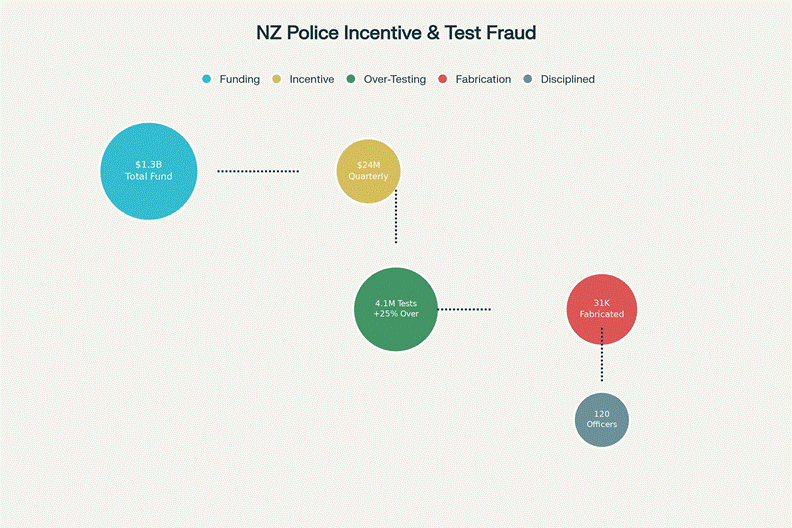
Performance Incentive Structure and Test Fabrication in NZ Police
Quantified Harms and Action Pathways
Projected harms from false positives alone:
Using conservative 10-19% failure rate estimates, over 50,000 tests per year will generate approximately 5,000-9,500 false positive results. If even 10-20% of false positives result in infringement notices being issued before laboratory confirmation, that is 500-1,900 people per year falsely penalized.[53]
For each person falsely banned from driving:
- Loss of 12+ hours of work (or care responsibilities)
For Māori communities:
- Increased roadside stops in already over-policed neighborhoods
This government will count 50,000+ tests annually as “enforcement delivered” and celebrate fabricated compliance as “road safety working.” It will not disclose:
- How many tests were false positives
The absence of these breakdowns is not accidental—it is intentional. The regime is designed to produce enforcement outputs (tests, infringement notices, convictions) that are visible and count as policy success, while the actual harms (false positives, economic losses, systemic racism) remain invisible in the aggregate statistics.
Moral Clarity: The Taiaha Is Sharp

The Māori Green Lantern Fighting Misinformation And Disinformation From The Far Right
This is a government using public health rhetoric to expand the surveillance state and deepen the criminalization of Māori. It is not an accident that this rollout comes after:
- Dismantling co-governance and removing Māori from decision-making in health, housing, and justice
This is a coordinated strategy to transfer power from communities to police and from vulnerable populations to the state.
The proper response is not legal compliance. It is systematic resistance: transparency demands under the Official Information Act, litigation challenging device reliability, community organizing to refuse police testing, and electoral action to remove this government in 2026.
Kia kaha. Ko te taiaha, kua whatiwhati. Tēnei te wahi āwhā mō ngā toa e tu ana mō te rangatiratanga me te aroha.