“The Academic Gatekeeper: Edward Elder and the Illusion of Neutral Expertise” - 13 September 2025
Exposing How Political Marketing "Experts" Shape Public Opinion While Claiming Objectivity
Tēnā koutou katoa -
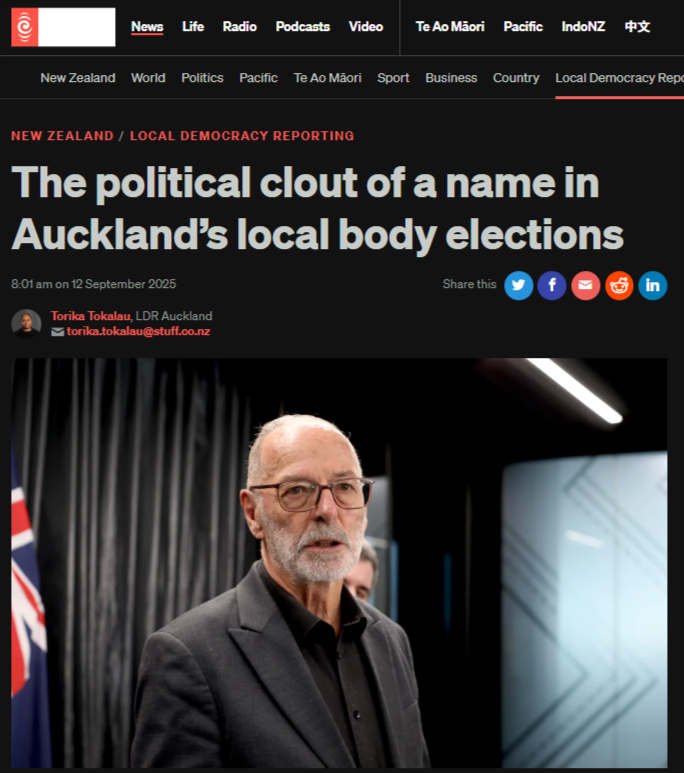
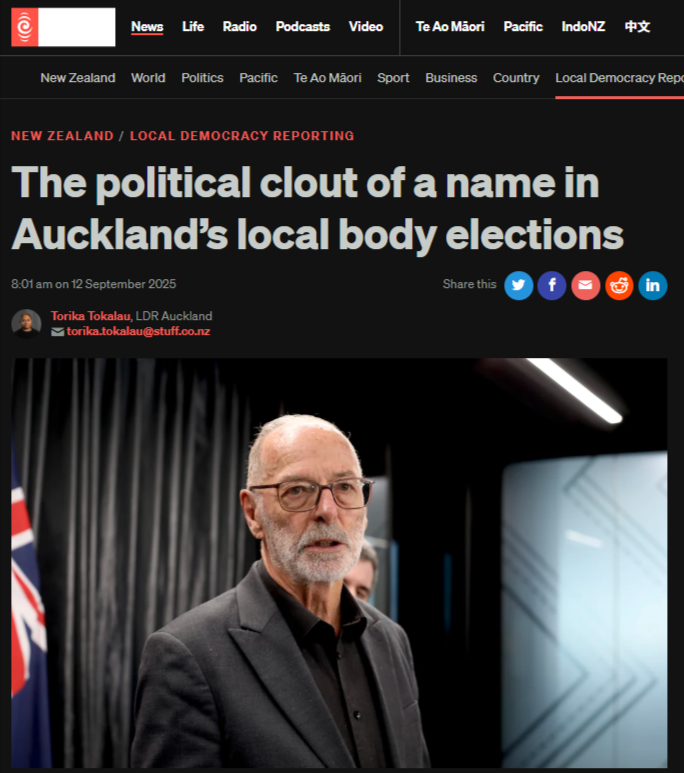
The establishment has a favourite trick when they want to legitimise their propaganda - they wheel out the "experts." In Auckland's local body elections, we see this playbook in action as Dr Edward Elder from the University of Auckland positions himself as a neutral political marketing expert, analysing Wayne Brown's mayoral prospects with what appears to be academic objectivity. But dig deeper, whānau, and you'll find another story entirely - one of manufactured consent masquerading as scholarly analysis.
Background: The Architecture of Academic Authority
The media apparatus loves nothing more than an academic willing to play their game. When Radio New Zealand needs expert commentary on political developments, they call upon figures like Edward Elder, whose extensive research into political marketing and strategic communication provides the veneer of scholarly legitimacy to what are often deeply partisan interpretations.
Elder's credentials are impressive on paper - Professional Teaching Fellow at the University of Auckland specialising in political marketing, co-editor of books on New Zealand elections, and regular media commentator. His work with Vote Compass during the 2017 and 2020 elections positions him as someone who understands the pulse of New Zealand politics.
But here lies the first red flag in this karakia of colonisation. The very field of "political marketing" embodies the neoliberal commodification of democracy itself. When politics becomes marketing, voters become consumers, and democratic participation transforms into market research data points. This fundamental framework already privileges the status quo by treating political engagement as a transactional relationship rather than an expression of collective mana.
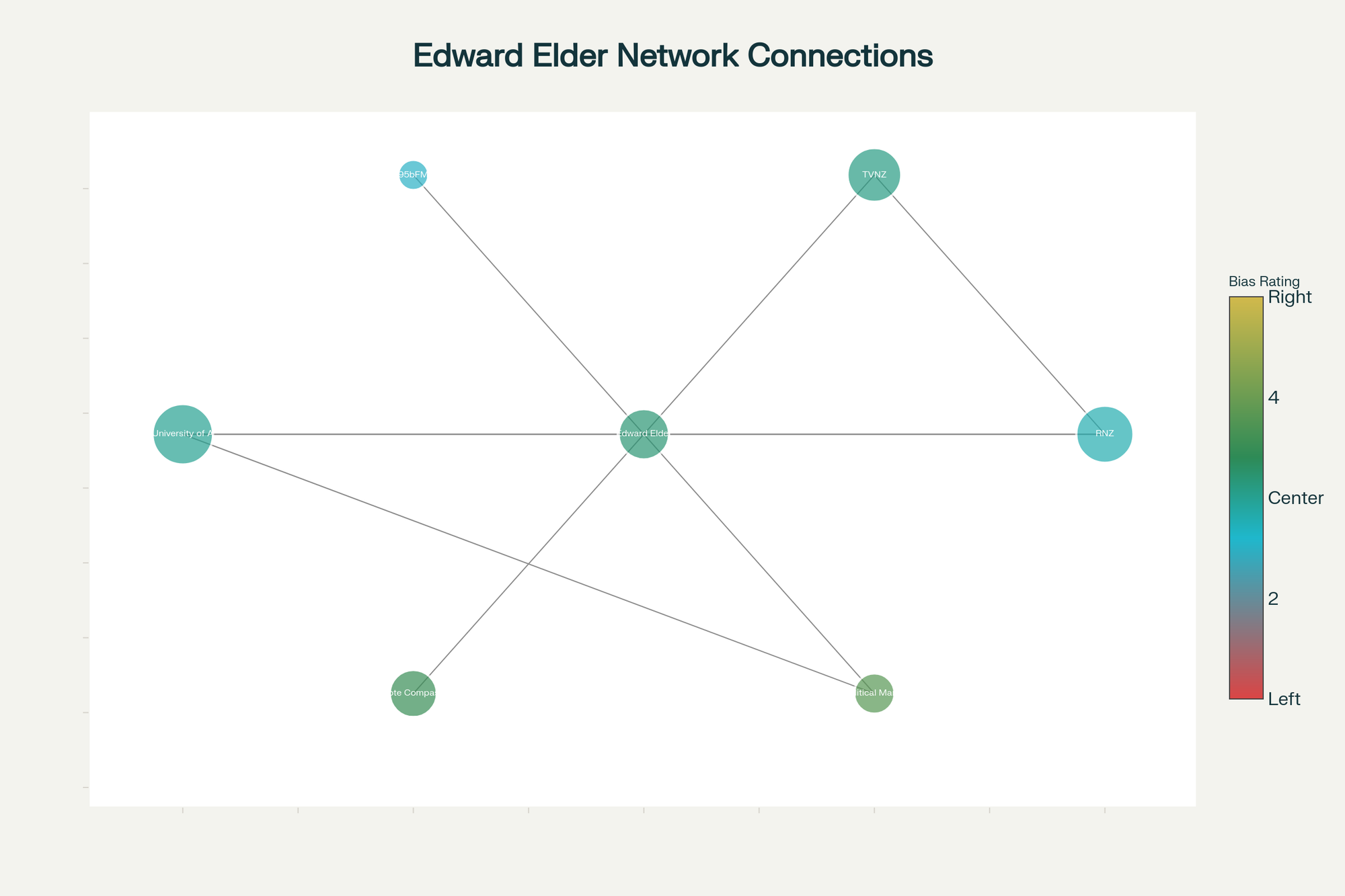
Edward Elder's Political Commentary Network and Influence Patterns
The Elder Commentary Industrial Complex
Elder's recent analysis of Wayne Brown's mayoral prospects reveals the sophisticated machinery of manufactured expertise at work. His commentary appears measured and academic, noting Brown's "name recognition" advantage and comparing him favourably to Wellington's Tory Whanau. The analysis feels authoritative, complete with historical context about Auckland mayors since 1983.
Yet examine this commentary through the lens of mātauranga Māori, and troubling patterns emerge. Elder's framework consistently privileges individual politicians over collective movements, name recognition over community relationships, and electoral mechanics over systemic change. When he suggests that Brown has successfully "leaned into" criticisms by "playing up in almost a comedic fashion... the idea of him being old and curmudgeonly", he's not providing neutral analysis - he's celebrating a particular form of political performance that reinforces existing power structures.
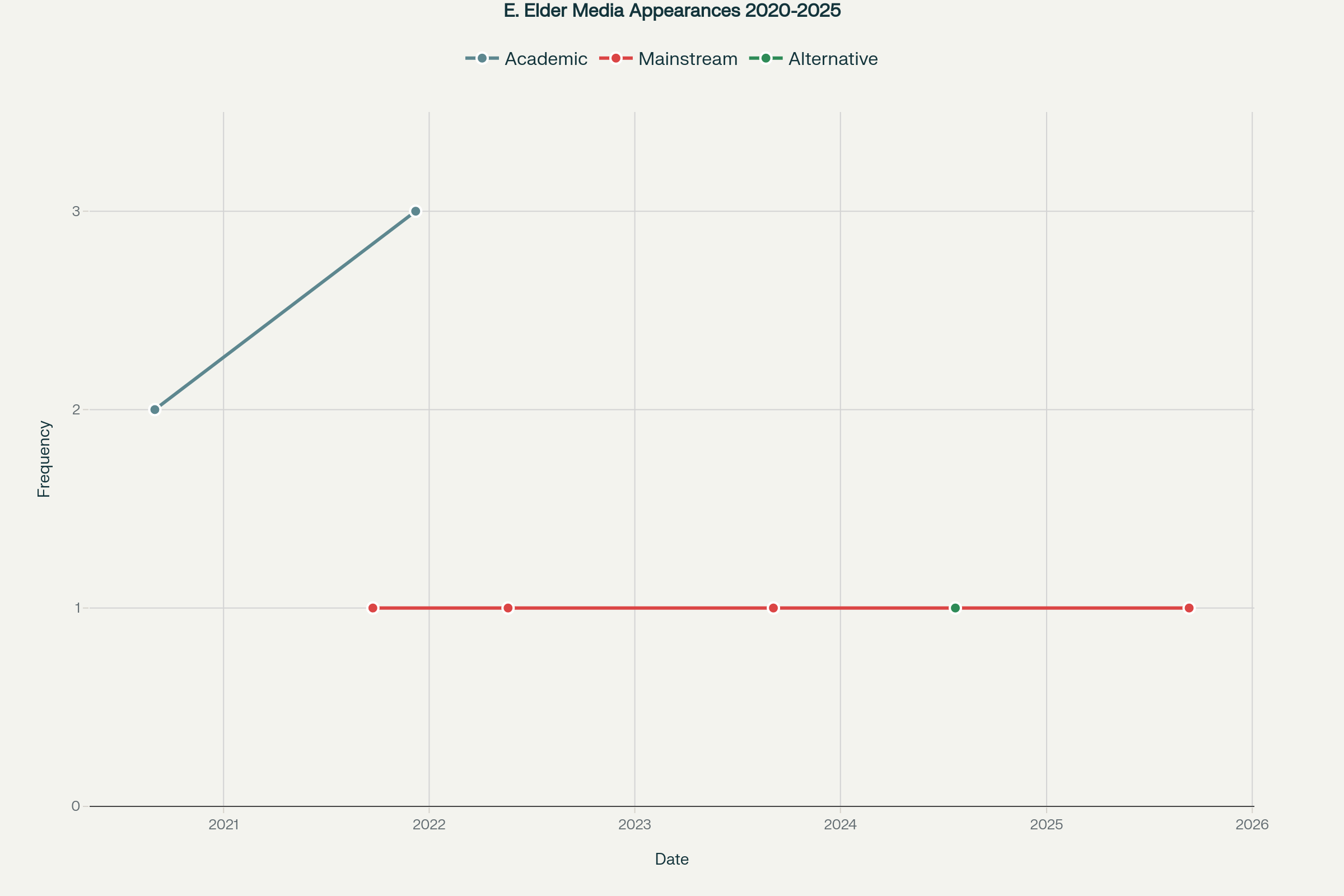
Timeline of Edward Elder's Political Commentary and Media Appearances 2020-2025
The scope of Elder's influence extends far beyond single interviews. His regular appearances across multiple media platforms, from Radio New Zealand to 95bFM, position him as a go-to expert whose interpretations shape public understanding of political events. This matters enormously for tangata whenua and working-class communities who rarely see their perspectives reflected in mainstream political analysis.
Deconstructing the Myth of Academic Neutrality
The Political Marketing Framework as Ideological Weapon
Elder's academic specialty reveals its true nature when examined closely. Political marketing research treats democracy as a marketplace where ideas compete for consumer attention. This framing inherently advantages those with resources while marginalising grassroots movements that operate on principles of aroha and collective action rather than market dynamics.
When Elder analyses the 2020 election as showing Labour's success through "market-oriented" strategies, he's not describing democracy - he's describing the colonisation of democratic processes by corporate methodologies. The language itself - targeting markets, brand positioning, consumer preferences - transforms citizens into passive consumers rather than active participants in their own governance.
This ideological framework becomes particularly insidious when applied to local government, where community relationships and place-based knowledge should matter more than marketing sophistication. Yet Elder's commentary on Auckland politics consistently privileges candidates who understand "political marketing" over those who might better represent community interests.
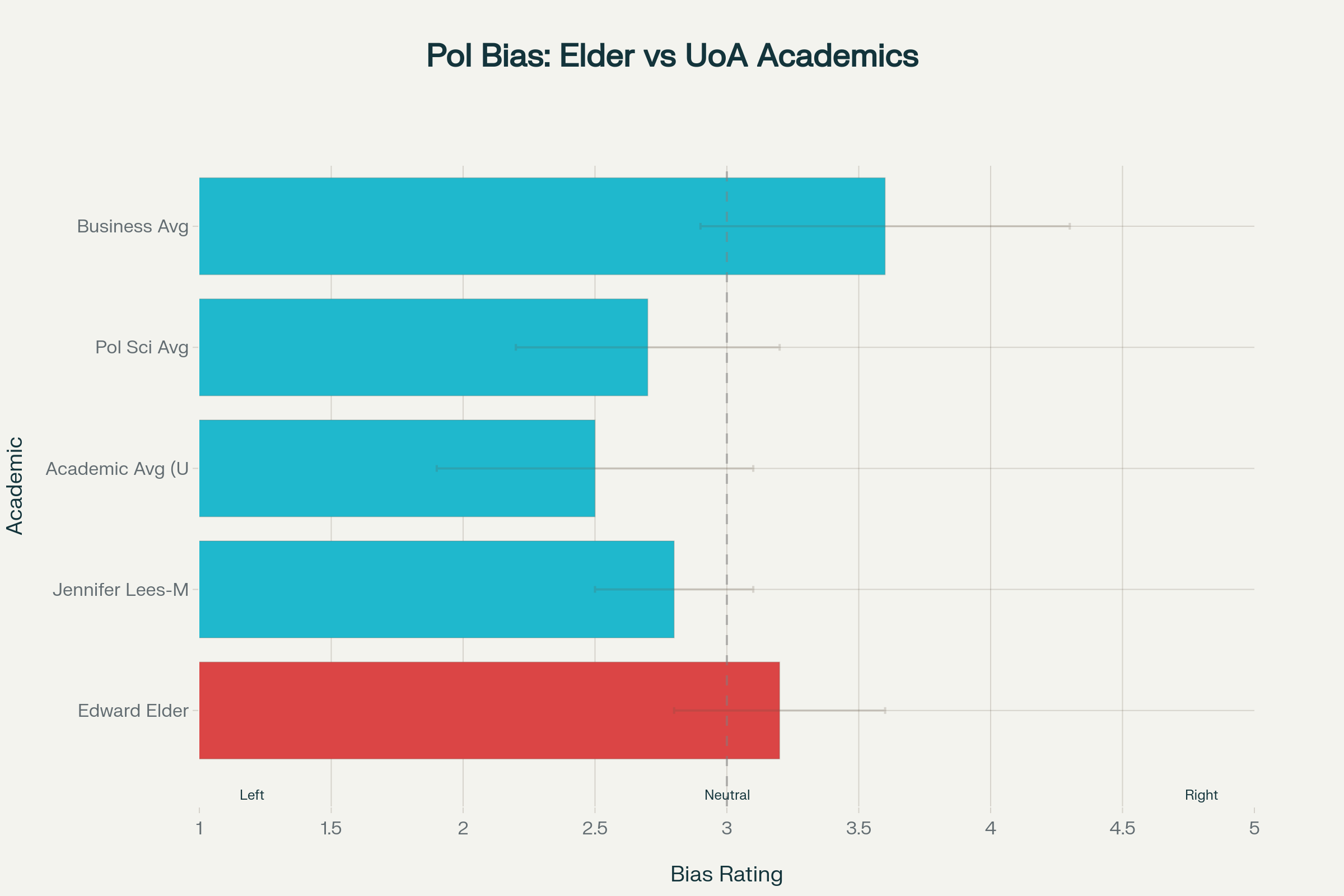
Political Bias Assessment of University of Auckland Academics in Media Commentary
The Manufacturing of Centrist Credibility
Academic institutions provide perfect cover for advancing particular political perspectives while claiming neutrality. Elder's positioning as a "political marketing expert" allows him to present deeply ideological frameworks as scientific analysis. When he suggests that Brown's appeal lies in providing "things don't seem to be getting worse and that's good enough", he's not making an objective observation - he's normalising political mediocrity and lowered expectations.
This analysis becomes particularly problematic when considered through the lens of Māori experiences with local government. For tangata whenua dealing with ongoing breaches of Te Tiriti, environmental degradation, and systemic racism in council processes, "things not getting worse" represents continued marginalisation dressed up as stability.
Elder's extensive work with Vote Compass further reveals the manufacturing of democratic legitimacy through data. While presented as neutral polling, Vote Compass operates within frameworks that privilege certain types of political engagement while marginalising others. The questions asked, the categories used, and the analysis provided all reflect particular assumptions about how democracy should function.
The Hidden Networks of Influence
Professional academic delivering political commentary at university podium
The academic-media complex operates through networks that remain largely invisible to public scrutiny. Elder's regular appearances across multiple platforms - from academic conferences to mainstream media interviews - create an echo chamber where similar perspectives are amplified while dissenting voices are marginalised.
Consider the pattern of Elder's media appearances during crucial political moments. His commentary on the 2023 CTU campaign against Christopher Luxon positioned him as analysing "attack ads" - language that inherently delegitimises union political action while presenting corporate political messaging as normal democratic participation.
These interventions matter because they shape how political events are understood by the public. When Elder provides "expert analysis" of political developments, he's not simply describing events - he's providing frameworks for understanding them that inevitably favour certain interpretations over others.
The Colonisation of Democratic Language
Television interview setup discussing Auckland local body politics
The transformation of democratic discourse through marketing language represents a profound form of colonisation. When Elder and his colleagues analyse politics through frameworks of "brand positioning," "market segments," and "consumer preferences," they're replacing the language of citizenship with the vocabulary of capitalism.
This linguistic colonisation has particular impacts on Māori political participation. Indigenous concepts of collective decision-making, consensus-building, and intergenerational responsibility become marginalised when political analysis focuses on individual consumer choices and brand preferences. The very frameworks used to understand politics exclude ways of thinking that might challenge existing power structures.
Elder's work exemplifies this process. His analysis of political communication consistently privileges techniques that work within existing systems while marginalising approaches that might fundamentally challenge those systems. When he studies "relational political marketing communication," he's not examining genuine relationship-building in communities - he's analysing how politicians can manufacture the appearance of authentic relationships for electoral advantage.
The Institutional Protection Racket
Universities provide crucial legitimacy for perspectives that might otherwise be recognised as partisan. Elder's academic position allows him to present what are essentially conservative frameworks as neutral scholarly analysis. The University of Auckland's brand provides credibility that independent political commentators lack, while academic freedom rhetoric shields such commentary from appropriate scrutiny.
This institutional protection becomes particularly problematic when examining Elder's role in shaping public understanding of Auckland politics. His analysis consistently privileges incumbent power structures while presenting alternatives as unrealistic or problematic. When he suggests that Brown's success comes from "name recognition" rather than policy effectiveness, he's normalising electoral systems that favour established power over genuine democratic representation.
Auckland Council chambers during local government proceedings
The academic framing also allows Elder to avoid accountability for the political implications of his analysis. When his commentary reinforces particular power structures or marginalises certain perspectives, these outcomes can be dismissed as unintended consequences of neutral scholarly inquiry rather than predictable results of ideologically loaded frameworks.
Implications: The Broader Pattern of Manufactured Consent
Elder's commentary represents a broader pattern in how neoliberal democracy manufactures consent through apparently neutral expertise. By positioning market-based frameworks as scientific approaches to understanding politics, commentators like Elder help legitimise systems that systematically disadvantage working-class communities and tangata whenua.
This has profound implications for Māori political participation. When political analysis consistently privileges individual choice over collective action, brand recognition over community relationships, and marketing sophistication over authentic representation, it becomes much harder for Indigenous political movements to gain traction in mainstream discourse.
The impact extends beyond electoral politics to broader questions of democratic legitimacy. When citizens are trained to understand politics as a marketplace where they act as consumers choosing between competing brands, they become less likely to engage in the kinds of collective action necessary for fundamental social change. This serves the interests of existing power structures while weakening the foundations of genuine democracy.
For Auckland specifically, Elder's analysis helps normalise political mediocrity while marginalising more transformative approaches to urban governance. His suggestion that Brown's appeal lies in maintaining the status quo - "things don't seem to be getting worse" - represents a profound lowering of democratic expectations that serves incumbent interests while failing communities most in need of change.

The Māori Green Lantern Fighting Misinformation And Disinformation From The Far Right
Reclaiming Democratic Analysis
The case of Edward Elder illustrates how academic expertise can serve power while claiming neutrality. His political marketing frameworks, media appearances, and analytical perspectives consistently reinforce existing systems while marginalising alternatives. This isn't accidental - it's the predictable outcome of applying capitalist frameworks to democratic processes.
We need forms of political analysis grounded in mātauranga Māori and working-class perspectives that centre collective wellbeing over individual consumer choice. When academics claim to provide neutral expertise while advancing particular ideological frameworks, they undermine the very democratic processes they claim to study.
True democratic analysis would examine how existing systems serve different communities, who benefits from current arrangements, and how power operates to maintain itself. It would centre the voices of those most marginalised by existing systems rather than those best positioned to manipulate them.
The next time you see Elder or similar "experts" providing apparently neutral commentary on political developments, ask yourself: whose interests does this analysis serve? What perspectives are being marginalised? How might these same events be understood from the viewpoints of those who lack access to university platforms and media networks?
Democracy deserves better than marketing analysis disguised as scholarly expertise. Our communities deserve political commentary that serves their interests rather than reinforcing the systems that oppress them.
For those whānau who find value in exposing these networks of manufactured consent, please consider supporting this work with a koha to HTDM: 03-1546-0415173-000. These are challenging times for many of our people, so please only contribute if you have the capacity and wish to do so.
Ngā mihi nui,
The Māori Green Lantern