“The Battle of Te Tarata” - 4 October 2025"
A Brutal Exhibit of Colonial Ambition and Christian Nationalism

Kia ora koutou,
The Battle of Te Tarata was a deliberate display of imperial ferocity rooted in nationalist Christian ideology, used to justify land theft and the subjugation of Te Whakatōhea.[1][2]

A Direct Reckoning with Power
On 4 October 1865, colonial forces—bolstered by local “kupapa” Māori and sanctioned by Governor George Grey’s regime—laid siege to Te Tarata Pā near Ōpōtiki. Under the pretext of punishing the alleged murderers of missionary Carl Sylvius Volkner, they unleashed cavalry charges and artillery bombardments that killed approximately 35 Te Whakatōhea defenders, wounded another 35, and killed three colonial soldiers.[3]
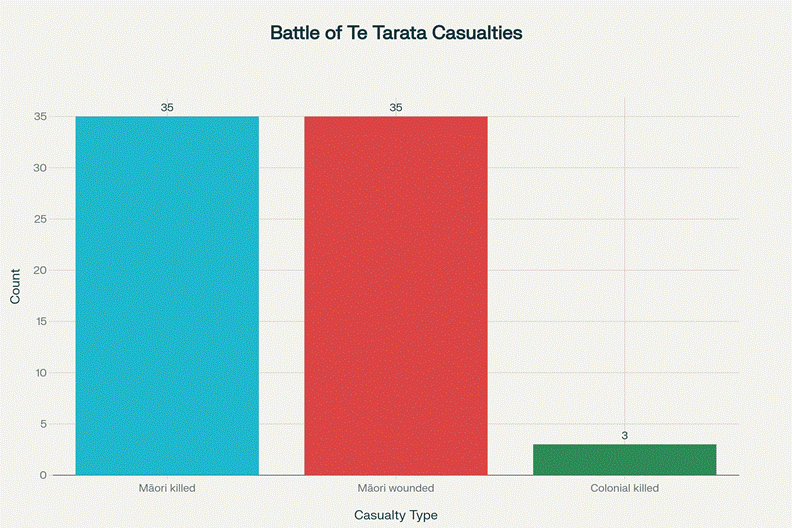
Casualties at the Battle of Te Tarata
Hidden Connections: Religion as a Sword
The hanging of Carl Sylvius Volkner on 2 March 1865 by Pai Mārire adherents was immediately seized upon by the colonial government to whip up moral outrage and justify an escalated military campaign against “fanatical” Māori. Governor Grey, a stalwart of the Anglican establishment, conflated the Pai Mārire faith with rebellion, turning Christianity into a political weapon. This fusion fed into the British doctrine of Manifest Destiny, the belief that Christian empires had a providential right to conquer “savage” lands.[1][2][4]

Māori rangatira rallying his warriors
The government’s East Coast Expedition was explicitly tasked with quashing Pai Mārire, demonising Māori religious autonomy as heresy and savagery. Mission stations were converted into redoubts and churches into fortresses—a chilling literalisation of Christendom’s martial zeal.[1]
The Anatomy of the Assault
The Casualties at the Battle of Te Tarata Chart illustrates the disproportionate human cost inflicted on Te Whakatōhea, underscoring that this was not a chaotic clash but a calculated massacre.

Te Whakatōhea defenders behind wooden palisades
The Timeline of Events Surrounding the Battle of Te Tarata Chart traces the swift escalation from Volkner’s hanging to the present-day commemoration, revealing how each milestone—from land confiscations in the 1860s to the 2023 Deed of Settlement signing—has been manipulated politically under the shadow of that original Christian-nationalist crusade.
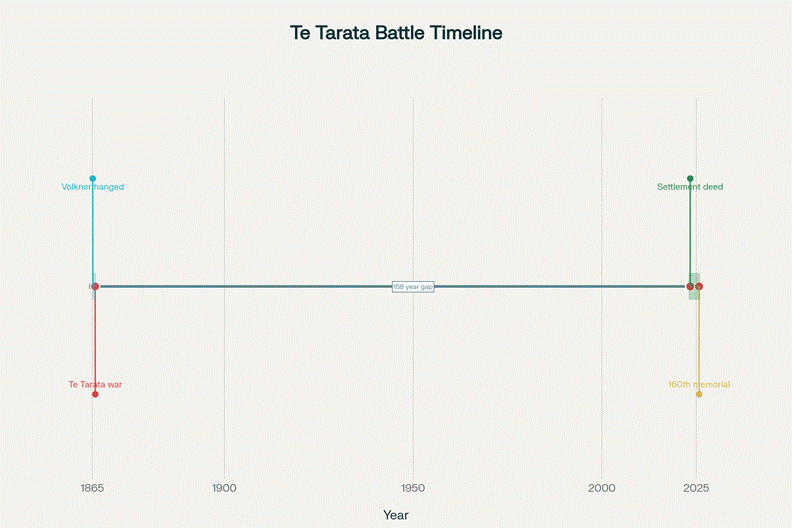
Timeline of Events Surrounding the Battle of Te Tarata
Troop Strength at the Battle of Te Tarata Chart exposes the stark imbalance in troop numbers at Te Tarata: roughly 500 colonial and allied forces versus 60 Te Whakatōhea defenders, an overwhelming show of force to ensure total domination.
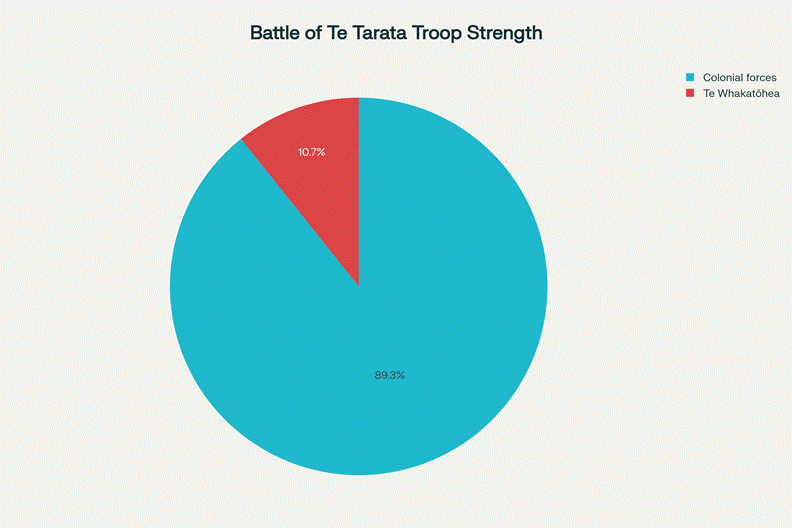
Troop Strength at the Battle of Te Tarata
Exposing the Christian Nationalist Imperative
The rhetoric of civilisation and salvation masked a brutal land grab.
· Governor George Grey invoked God to sanctify military campaigns.[2]
· General Duncan Cameron operated under the unspoken credo that bullets could cleanse souls.[2]
· Colonel Whitmore marched Pākehā militia under a cross-topped flag.[2]
Their sermons on the bunkers of Te Tarata linked Gospel to grape shot, cloaking colonial greed in righteous fervour.
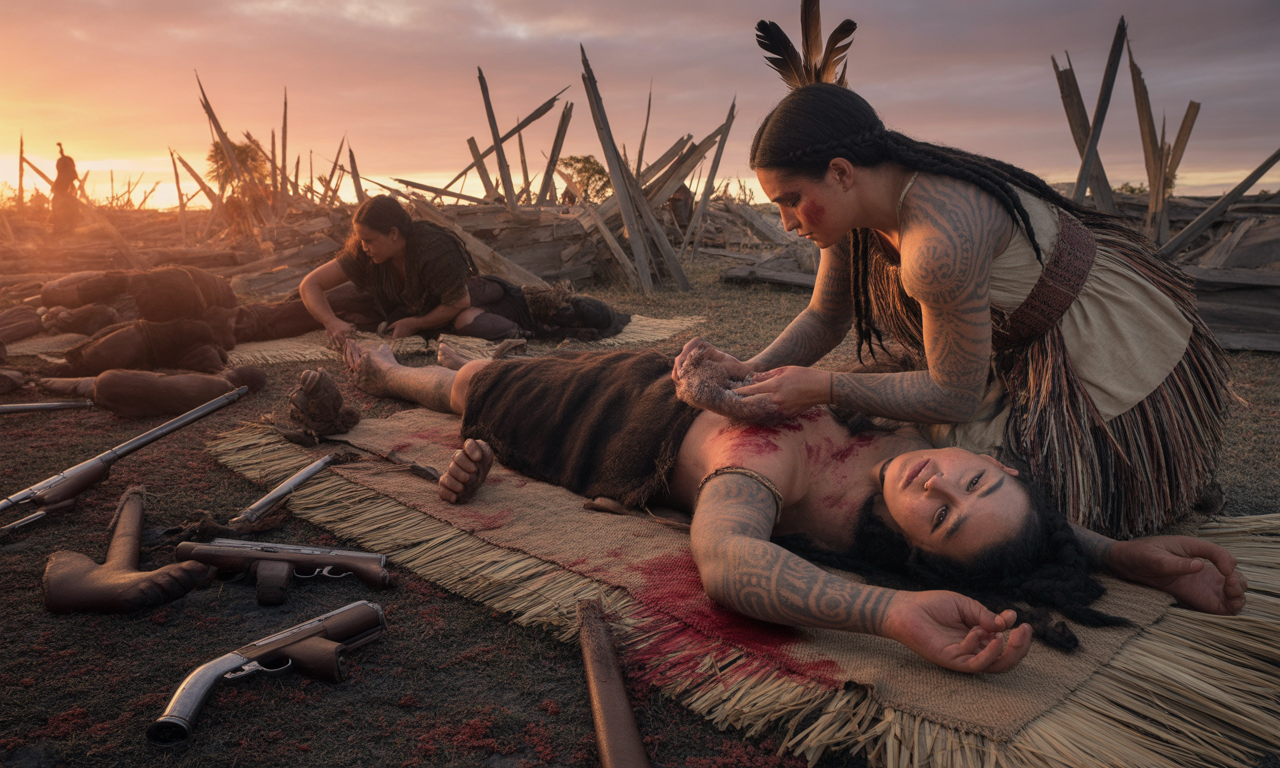
Aftermath at sunset
Continuing the Struggle: Memory and Justice
Today’s 160th commemoration—organised by Te Whakatōhea and attended by Kingi Tūheitia—seeks to reclaim unvarnished history. The ceremony at Kiorekino plains stands as a solemn indictment of colonial impunity and a reminder that restitution cannot erase the scars of religiously justified violence.[5][6]
The raw truth: the Battle of Te Tarata was neither accidental nor isolated but a linchpin in a broader campaign of Christian-nationalist conquest. Its legacies endure in land inequities and cultural trauma. Remembering it with clarity is the first step toward dismantling the illusions that sustained empire.
Ngā mihi,
Ivor Jones The Māori Green Lantern
1. https://en.wikipedia.org/wiki/East_Cape_War
2. https://en.wikipedia.org/wiki/New_Zealand_Wars
3. https://www.rnz.co.nz/news/te-manu-korihi/285939/marking-150-years-since-battle-of-te-tarata
4. https://teara.govt.nz/en/te-whakatohea/print
5. https://waateanews.com/2025/10/03/awhina-turei-te-tarata-160-years-ra-maumahara-spokesperson/
6. https://nzhistory.govt.nz/memorial/opotiki-nz-wars-memorials