"The Blueprint for Dispossession" - 5 November 2025
How Project 2025’s Architects Are Running the Same Playbook from Washington to Wellington
Tēnā koutou katoa,
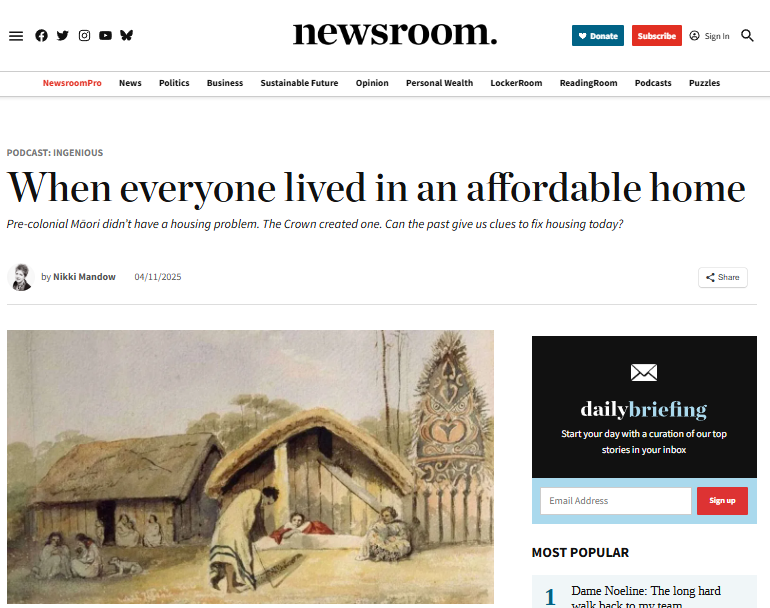
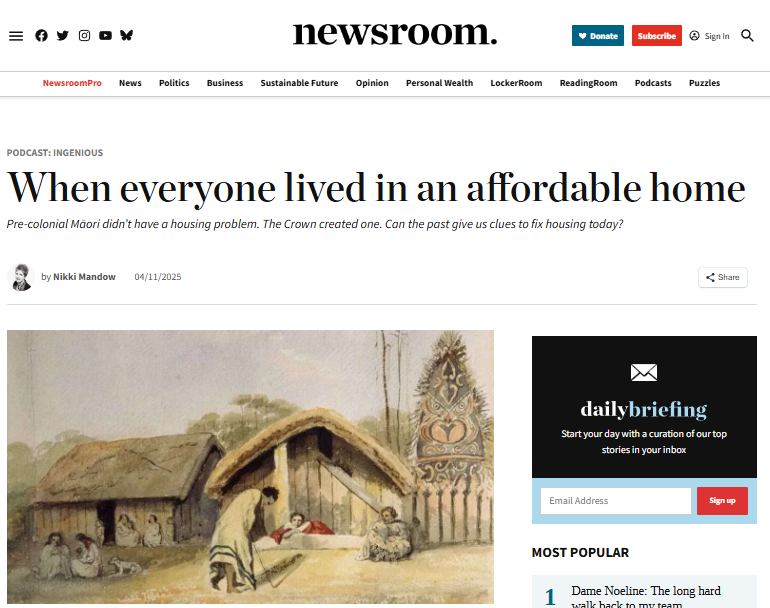
Pre-colonial Māori didn’t have a housing crisis. Every whānau had shelter. Homelessness was unimaginable. Then came the Crown, and with it, a systematic campaign of architectural, economic, and regulatory warfare that transformed 100% Māori housing security into today’s catastrophe: 27.5% home ownership, 61% of all homeless, and over 34,500 whānau in severe housing deprivation.
But here’s the smoking gun most media won’t tell you: the same ideological network demolishing American democracy through Project 2025 has been operating in Aotearoa for decades, and they’re accelerating now. Russell Vought—Project 2025 co-author, Trump’s budget director, and architect of the “unitary executive theory” that concentrates absolute power in one person—is running the identical playbook that David Seymour is implementing through his Regulatory Standards Bill. Elon Musk’s DOGE gutted 260,000 US federal jobs using “efficiency” rhetoric. Seymour is doing the same, just with a Kiwi accent and Atlas Network funding.
This isn’t conspiracy theory. It’s documented, funded, and coordinated through traceable networks. And Māori housing dispossession is both the testing ground and the end goal.
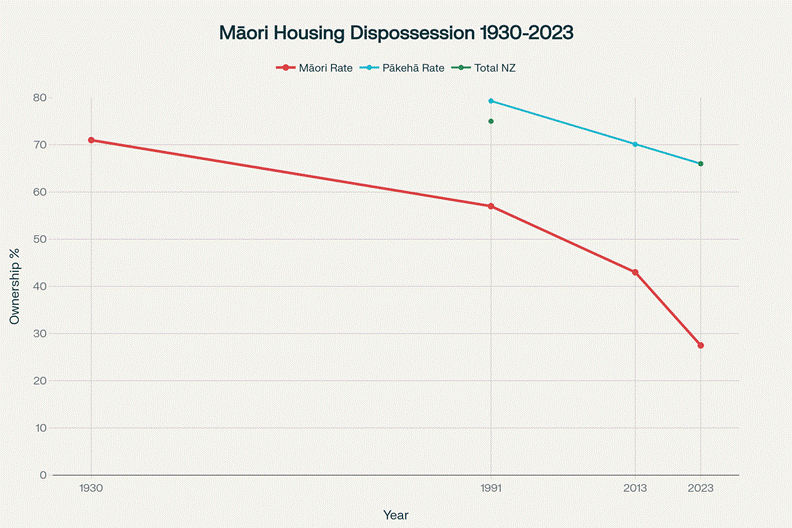
Māori home ownership has plummeted from 71% in the 1930s to just 27.5% in 2023, a devastating 61.3% decline driven by colonial land theft and neoliberal policy.
The Original Sin: When the Crown Criminalized Māori Housing
In 1842, just two years after te Tiriti promised rangatiratanga, Governor William Hobson passed the Raupo Houses Ordinance. Ostensibly about “fire safety,” this was naked economic protectionism and cultural warfare. The £20 annual tax on existing raupō houses—when European settlers could build rough dwellings for under £10—was crippling. But the £100 fine for new construction? That was economic annihilation.
Deidre Brown, Professor of Architecture at Waipapa Taumata Rau, confirms research showed “the government was concerned Māori builders were undercutting the new settler builders”. This wasn’t about safety—European settlers put kitchens inside their raupō homes, while Māori kept cooking separate, yet only Māori construction was targeted.
The pattern was set: use regulation to destroy Māori economic autonomy, force dependency on Crown systems, then blame Māori for the poverty created by dispossession.
As iwi land was confiscated—over 3.2 million acres seized in Waikato, Taranaki, and Bay of Plenty alone—and wetlands drained for Pākehā farms, Māori lost “not only places to build their whare, but also the forests and marshland where they got building materials”. Savannah Brown, Māori architectural designer, notes: “We weren’t allowed to be autonomous anymore in how we were building and designing”.
By the 1930s, despite systematic land theft, 71% of Māori still owned their homes. This resilience—maintaining near-universal home ownership after decades of colonial assault—speaks to the strength of tikanga housing systems. But neoliberalism would finish what muskets and land courts started.
The Neoliberal Finishing Blow: The 1991 “Mother of All Budgets”
May 1991. Finance Minister Ruth Richardson delivered what she proudly called the “Mother of All Budgets”. This wasn’t budget reform. It was class warfare with a smile.
The devastation was immediate and targeted:
Benefit cuts of up to 25%, hitting Māori families hardestMarket rents imposed on all state houses—a 106% increase by 1999 vs. 23% in private rentalsHousing Corporation privatized as a State-Owned Enterprise required to generate profit from social housingFamily Benefit capitalization scheme abolished—the very program that had enabled families to buy homes
The ideology was called “tenure neutrality”—the Orwellian claim that government shouldn’t “distort” choices between renting and owning. In practice, it meant abandoning the state’s role in ensuring housing security while unleashing market forces on the most vulnerable.
The architects—Richardson, Treasury officials, and the New Zealand Business Roundtable (now merged into the New Zealand Initiative)—drew directly from Heritage Foundation economics. Heritage, the same think tank leading Project 2025, has ranked New Zealand’s “economic freedom” highly precisely because of these reforms.
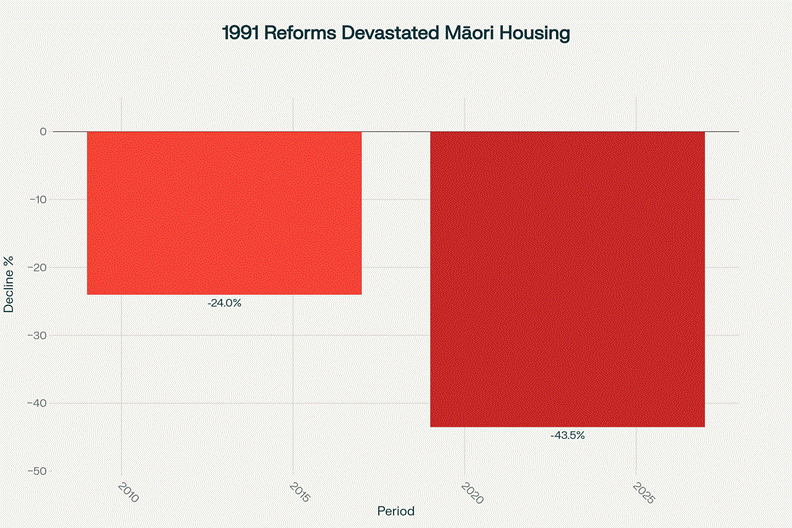
The 1991 neoliberal reforms triggered a catastrophic collapse in Māori home ownership, declining 43.5 percentage points from the 1991 baseline as housing was privatized and market rents imposed.
The results for Māori were catastrophic:
Home ownership crashed from 57% in 1991 to 27.5% in 2023—a 51.8% collapseThat’s a 61.3% decline from the 1930s baseline of 71% ownershipPākehā ownership fell only 13.3 percentage points (79.3% to 66%) in the same period
The 2018 Building Better report confirmed: “Māori home ownership decreased significantly (57% in 1991 down to 43% in 2013), much more than Pākehā ownership”. Researchers concluded: “There is no question that housing security for Māori declined rapidly when housing became more privatised”.
Today’s Crisis: Quantified Dispossession
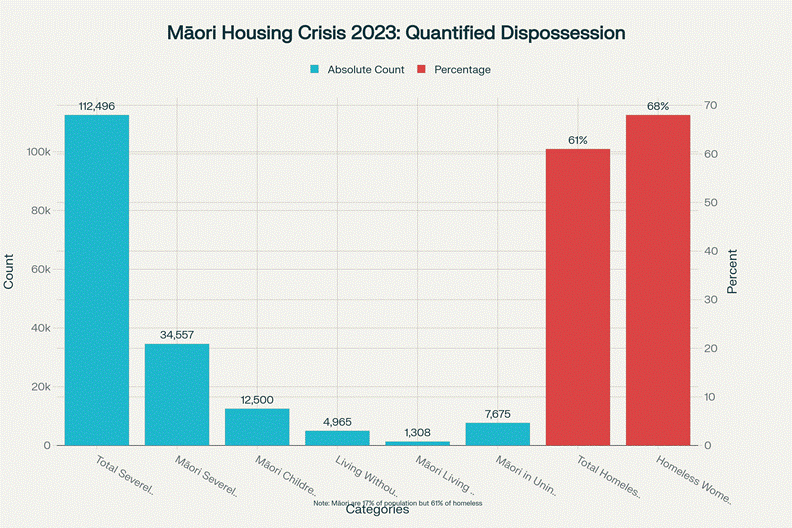
Over 34,500 Māori experience severe housing deprivation in 2023, with 61% of all homeless people being Māori despite representing only 17% of the population.
2023 Census data reveals the full horror:
- 34,557 Māori in severe housing deprivation, including over 12,500 children under 15
- 61% of all homeless people are Māori—despite being only 17% of the population
- 68% of homeless women are Māori
At least 112,496 people total experienced severe housing deprivation in March 2023, including 4,965 living without shelter. Between 2018 and 2023, homelessness without shelter increased 37%.
Meanwhile, this coalition government has slashed emergency housing from over 3,000 households to under 500 by December 2024. Minister Tama Potaka celebrates this as “success,” admitting government doesn’t know where 20% of displaced people went.
The Project 2025 Connection: Same Network, Same Playbook
Here’s what mainstream media buries: Russell Vought, Project 2025 co-author and Trump’s Office of Management and Budget director, is implementing the exact governance model David Seymour is pushing through the Regulatory Standards Bill.
Russell Vought’s Resume:
- OMB Director under Trump (both terms), controlling every penny appropriated by Congress
- Lead author of Project 2025, Heritage Foundation’s 920-page blueprint for authoritarian government
- Founder of Center for Renewing America, a Project 2025 steering organization
- Architect of “unitary executive theory”—the doctrine that president has absolute control over all executive branch agencies
Vought’s power is unprecedented. The New Yorker called him Trump’s “shadow president”. Foreign Policy noted he’s “running roughshod over federal workers, federal spending, and federal regulations... quietly, methodically, and brutally”.
His playbook:
- Consolidate all power in executive
- Fire civil servants, replace with loyalists
- Eliminate independent agencies
- Override congressional appropriations
- Freeze spending on programs supporting vulnerable populations
- Use “efficiency” rhetoric to justify wealth transfer upward
Sound familiar? That’s David Seymour’s Regulatory Standards Bill.
David Seymour: Wellington’s Version of Russell Vought
Seymour’s Regulatory Standards Bill, which passed second reading in November 2024, creates a parallel structure to Vought’s OMB power grab:
The Bill’s Framework:
- Creates a Regulatory Standards Board appointed by Minister for Regulation
- Board reviews all legislation for consistency with Seymour’s “principles”—strongly libertarian, prioritizing property rights over public good
- Forces government to compensate corporations if regulations impair their property, even for pollution controls or public safety
- Excludes Te Tiriti entirely from legislative consideration
- Reviews required every 10 years, estimated to cost $60 million annually
Like Vought’s unitary executive, this concentrates power in one minister to override democratic lawmaking based on ideological “principles” rather than evidence or public interest.
Victoria University law professor Dean Knight warned the bill would have a “chilling effect” on policymaking through “soft power.” Constitutional experts called it a “power grab” that grants Seymour authority to “interfere with government ministers doing their jobs”.
The Connections:
Seymour’s bill draws from a 2000s report by Dr. Bryce Wilkinson, commissioned by the Business Roundtable—now merged into the New Zealand Initiative, an official Atlas Network partner.
The NZ Initiative is one of three Atlas affiliates in Aotearoa. The Initiative’s membership comprises 70 major corporations with combined revenue of 25% of NZ’s economy.
Heritage Foundation itself has praised New Zealand’s “economic freedom” ranking—celebrating our “flexible labour regulations” (union-busting) and deregulated markets. Journalist Nicky Hager noted Heritage has used New Zealand as proof that their policies “work,” despite creating the “fastest growing economic inequality of any OECD country in recent decades”.
The Money Trail:
ACT received $850,000 in a single 2024 donations drive, including $100,000 from billionaire Graeme Hart, New Zealand’s richest person. Hart, like most ACT donors, benefits directly from deregulation and privatization that Seymour delivers.
Meanwhile, Seymour joined Young ACT at university. The party was “founded by the 1984 Labour neoliberal reformers who thought they didn’t go far enough”. Roger Douglas and Ruth Richardson’s heirs, literally continuing the project that dispossessed Māori in the 1990s.
The Musk-Seymour Parallel: DOGE and the Regulatory Standards Bill
When Elon Musk ran Trump’s “Department of Government Efficiency” (DOGE) from January to May 2025, he executed a playbook eerily similar to Seymour’s current reforms:
Musk’s DOGE:
- Dispatched engineers to “every agency” to scrutinize spending
- Fired or forced out 260,000 federal employees—12% of 2.3 million workforce
- Claimed $170 billion saved (later downgraded from $2 trillion promise), with no verified evidence
- Accessed Treasury payment systems illegally until courts blocked it
Courts found DOGE operated with “unchecked legal authority” and posed “huge cybersecurity risks”. Yet Musk still reshaped government permanently.
After Musk left, Russell Vought took over, continuing cuts through OMB. Vought was always the plan—Musk was theatrical cover while the real architect consolidated power.
Seymour’s Parallel Campaign:
Seymour has similarly used his roles to impose ideological reforms:
- Fast-Track Approvals Bill gives three ministers sweeping powers to greenlight projects bypassing normal consents
- Treaty Principles Bill attempts to redefine tikanga and Te Tiriti through legislation, opposed by 112 MPs to 11
- Regulatory Standards Bill positions Seymour as gatekeeper of all legislation
Like Vought’s unitary executive and Musk’s DOGE, these concentrate power to override democratic checks. And like the 1991 budget, Māori will be hit hardest.
Tikanga Violations: The Assault on Whanaungatanga, Manaakitanga, and Rangatiratanga
Every principle of tikanga Māori is violated by this neoliberal housing regime:
- Whanaungatanga (kinship, connection) is shattered when whānau are scattered across precarious rentals. Māori move housing more frequently than Pākehā—8.7% moved 5+ times in five years vs. 5% of Pākehā. Homelessness at 61% Māori destroys the ability to maintain whānau connections.
- Manaakitanga (hospitality, care) becomes impossible when you’re living in a car. As Deidre Brown notes, state houses were “designed for the European ‘mum, dad and three kids’ nuclear family,” with “tiny kitchens [that] couldn’t accommodate all the women cooking together”.
- Kaitiakitanga (guardianship) over whenua and taonga is severed when you’re forcibly urbanized into rentals with no connection to ancestral land.
- Rangatiratanga (self-determination, sovereignty) is the core violation. Te Tiriti guaranteed tino rangatiratanga—chieftainship over all taonga, including lands and dwellings. Instead, Crown regulations from 1842 onwards have systematically destroyed Māori housing autonomy. Seymour’s Treaty Principles Bill explicitly removes rangatiratanga.
The Way Forward: Resistance and Rangatiratanga
The 50,000+ people who marched for Toitū te Tiriti in November 2024 weren’t wrong. The Treaty Principles Bill was rejected 112-11 at second reading, but Seymour promises to “never give up”.
We must be equally relentless.
Immediate Actions:
- Expose the networks: Every time ACT, NZ Initiative, or Taxpayers’ Union speak, name their Atlas/Heritage connections. Show the money trail.
- Demand transparency: Who funds these think tanks? What foreign influence are they exercising?
- Support iwi housing: Direct resources to papakāinga developments. Ngāti Toa’s “supply chain from their own land with their own forests”. Te Mahurehure’s papakāinga “healing, encompassing place”.
- Massive state housing build: 10,000+ homes annually until everyone is housed.
- Restore 1959 model: Allow benefit capitalization for home deposits.
- Scrap Regulatory Standards Bill: This is corporate dictatorship dressed as transparency.
In 1842, the Crown criminalized Māori housing with a £100 fine. In 1991, Ruth Richardson privatized housing and cut benefits, collapsing Māori home ownership by 51.8% over 32 years. In 2024, David Seymour is legislating corporate supremacy while his coalition slashes emergency housing and celebrates not knowing where whānau end up.
Meanwhile, in Washington, Russell Vought—Project 2025 architect—executes the unitary executive plan that concentrates absolute power in one person. Elon Musk tested the model with DOGE, firing 260,000 workers in four months. Now Vought embeds it permanently through OMB control of all federal spending.
This is the same fight.
The Heritage Foundation praised New Zealand as a neoliberal success story precisely because we dispossessed Māori so thoroughly. Now they want to replicate that model globally through Project 2025—and David Seymour is their local franchise, funded by the same Atlas Network that coordinates Heritage.
But here’s what gives me hope: Māori survived 180+ years of this warfare and are building tikanga housing systems that work. Ngāti Toa’s “supply chain from their own land with their own forests”. Te Mahurehure’s papakāinga “healing, encompassing place”. These prove the alternative exists.
We don’t need billionaire-funded think tanks telling us how to live. We need tino rangatiratanga, manaakitanga, and kotahitanga.
The question isn’t whether neoliberalism works—the 61% Māori homelessness rate and 27.5% home ownership prove it doesn’t. The question is whether we’ll let Russell Vought’s Project 2025 playbook finish the dispossession, or whether we’ll build housing systems rooted in aroha and whanaungatanga instead.
I know which side of history I’m on. The side with 50,000 people marching for te Tiriti. The side building papakāinga that honor tupuna wisdom. The side that remembers pre-colonial Māori had 100% housing security, and refuses to accept anything less for our mokopuna.
Toitū te Tiriti. Toitū te Whenua. Toitū te Tangata.
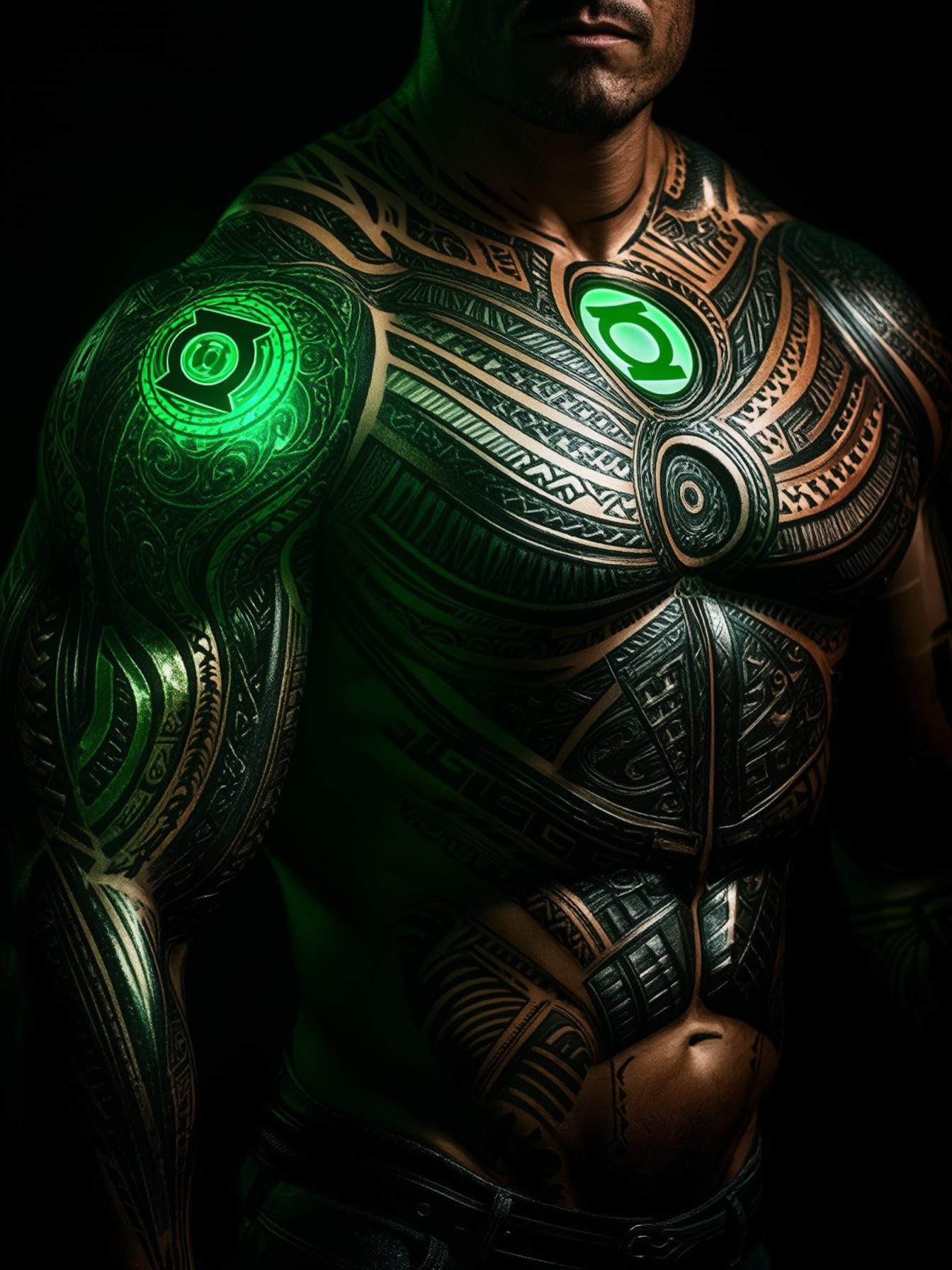
The Māori Green Lantern Fighting Misinformation And Disinformation From The Far Right
If this mahi has served you and your whānau, and you have the capacity and capability, please consider supporting through koha:
HTDM: 03-1546-0415173-000
No one is under any obligation—this work will continue regardless. But for those who can, your tautoko enables deeper investigation and wider reach.
Kia kaha, kia maia, kia manawanui
— Ivor Jones, The Māori Green Lantern