“The Colonisers' House Burns: Benjamin Doyle and the Racist Reality of New Zealand's Parliament” - 18 September 2025
Parliament tried to destroy a Māori MP and their child with racist death threats. Then it pretended to be surprised when they left.
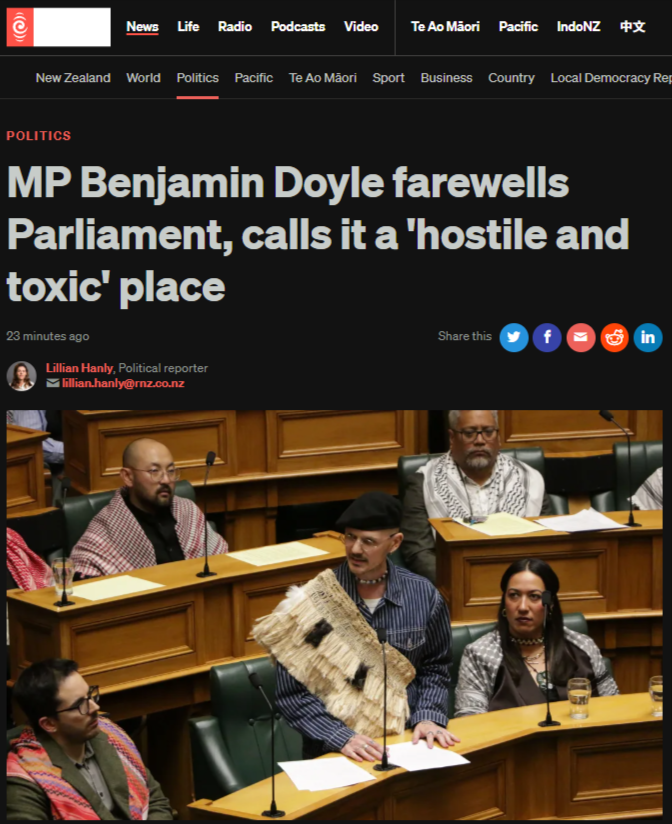
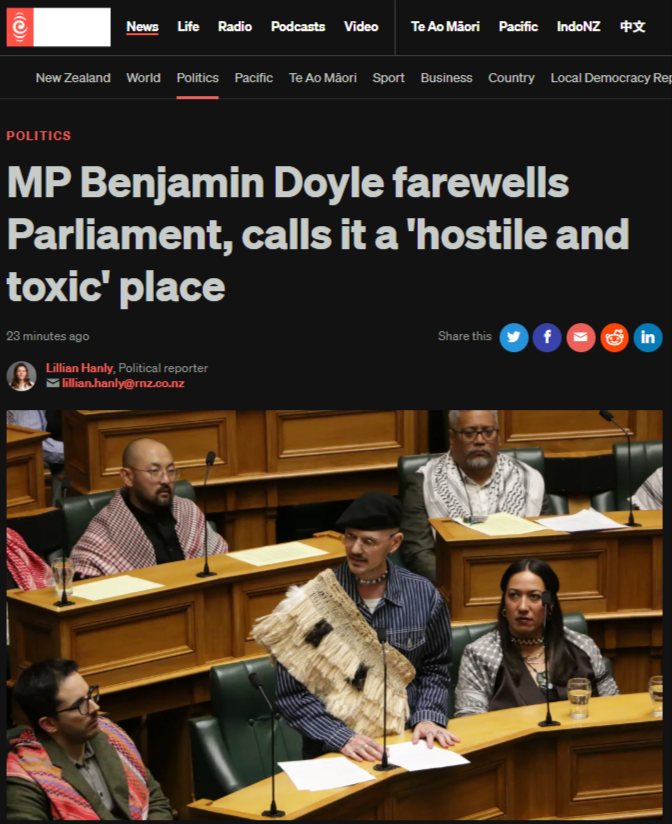
Kia ora koutou katoa, tēnā koutou. Greetings to you all, I acknowledge you.
This is not a story about Benjamin Doyle's personal failures or political missteps. This is the story of how New Zealand's Parliament - that grand colonial monument to white supremacy - systematically terrorised a takatāpuhi Māori MP and their whānau until they were forced to flee for their safety. It is the story of how Deputy Prime Minister Winston Peters weaponised transphobic hate to destroy a political opponent while Prime Minister Christopher Luxon stood by and watched. Most critically, it is the story of how this poisonous colonial institution continues to operate exactly as it was designed: to crush Indigenous voices and protect Pākehā power.
The Heart of the Darkness: Parliament as a Colonial Weapon
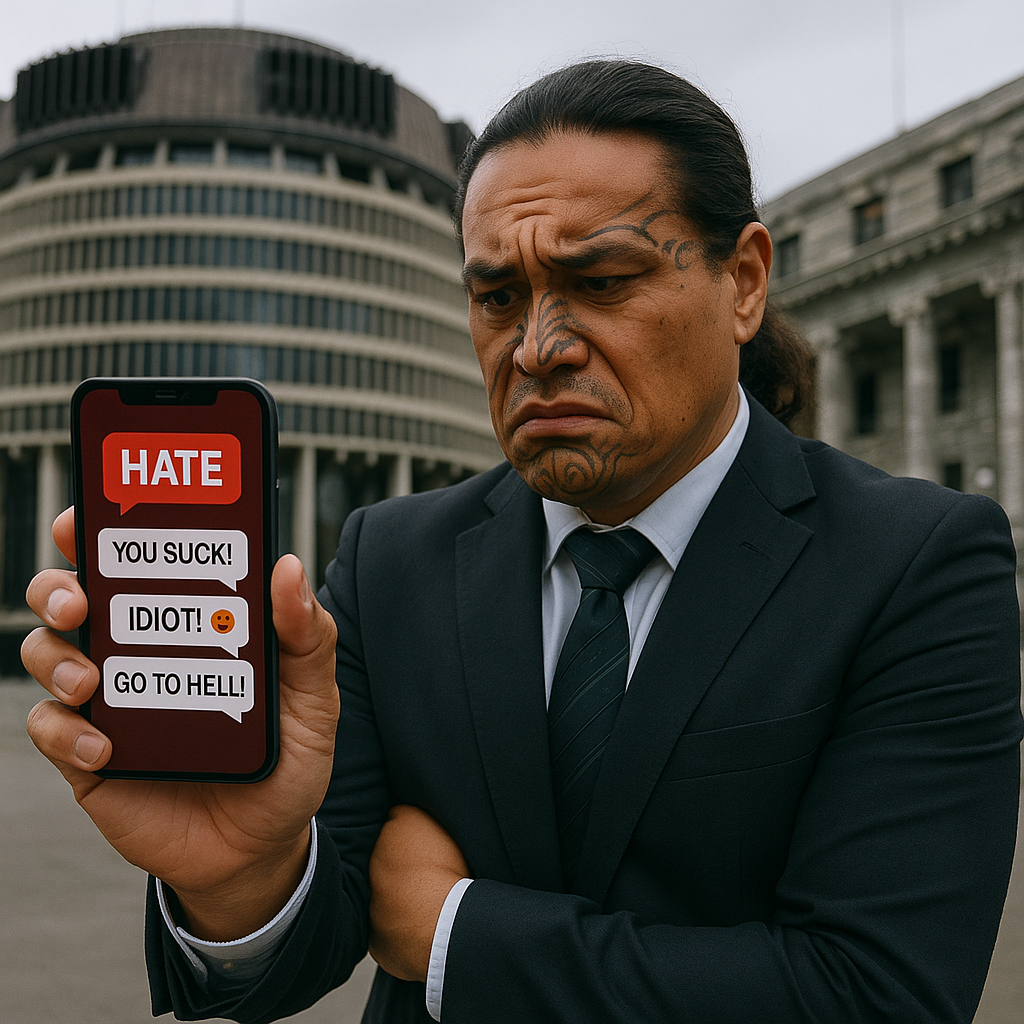
The reality of political harassment targeting Māori MPs
New Zealand's Parliament was never built for people like Benjamin Doyle. It was constructed as a colonial institution designed to legitimise the theft of Māori land, the destruction of Māori sovereignty, and the ongoing suppression of Indigenous rights. When Doyle called it "the colonisers house" in their valedictory speech, they spoke a truth that cuts through centuries of propaganda: this institution exists to serve white supremacy, not democracy.
The statistics reveal Parliament's true nature. Research shows that 98 percent of MPs now face harassment, with women and Māori disproportionately targeted. Female MPs report experiencing misogynistic, racist and sexual online abuse that has caused them to feel fearful, anxious and distressed. For Māori MPs, particularly those who dare to challenge white colonial structures, the harassment becomes a coordinated campaign of racial terror.
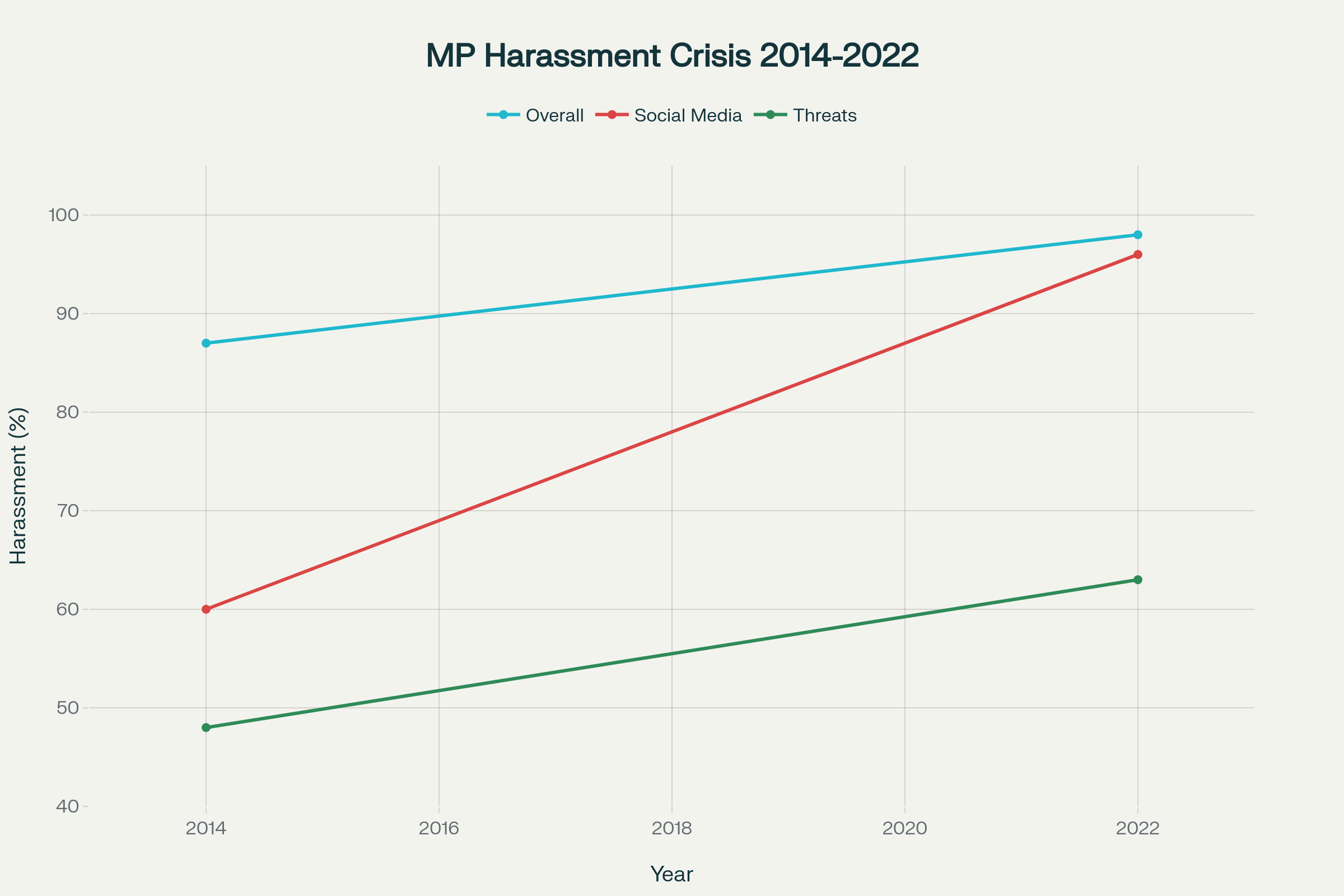
The escalating harassment crisis: How political abuse has exploded since 2014
The Anatomy of Institutional Racism: How Parliament Destroys Indigenous Voices
The systematic destruction of Benjamin Doyle began long before Winston Peters launched his vicious attack. It began the moment they entered Parliament as New Zealand's first openly non-binary MP. The Francis Review of 2019 exposed Parliament as a "toxic workplace with systematic bullying and harassment problem" where MPs are "treated like gods" and staff endure a "master servant relationship."
Parliament's colonial culture operates through multiple mechanisms of oppression. Staff report destructive gossip affecting 56 percent, demeaning language experienced by 47 percent, and aggressive behaviour targeting 41 percent of workers. These are not isolated incidents but systematic patterns designed to maintain white colonial power.
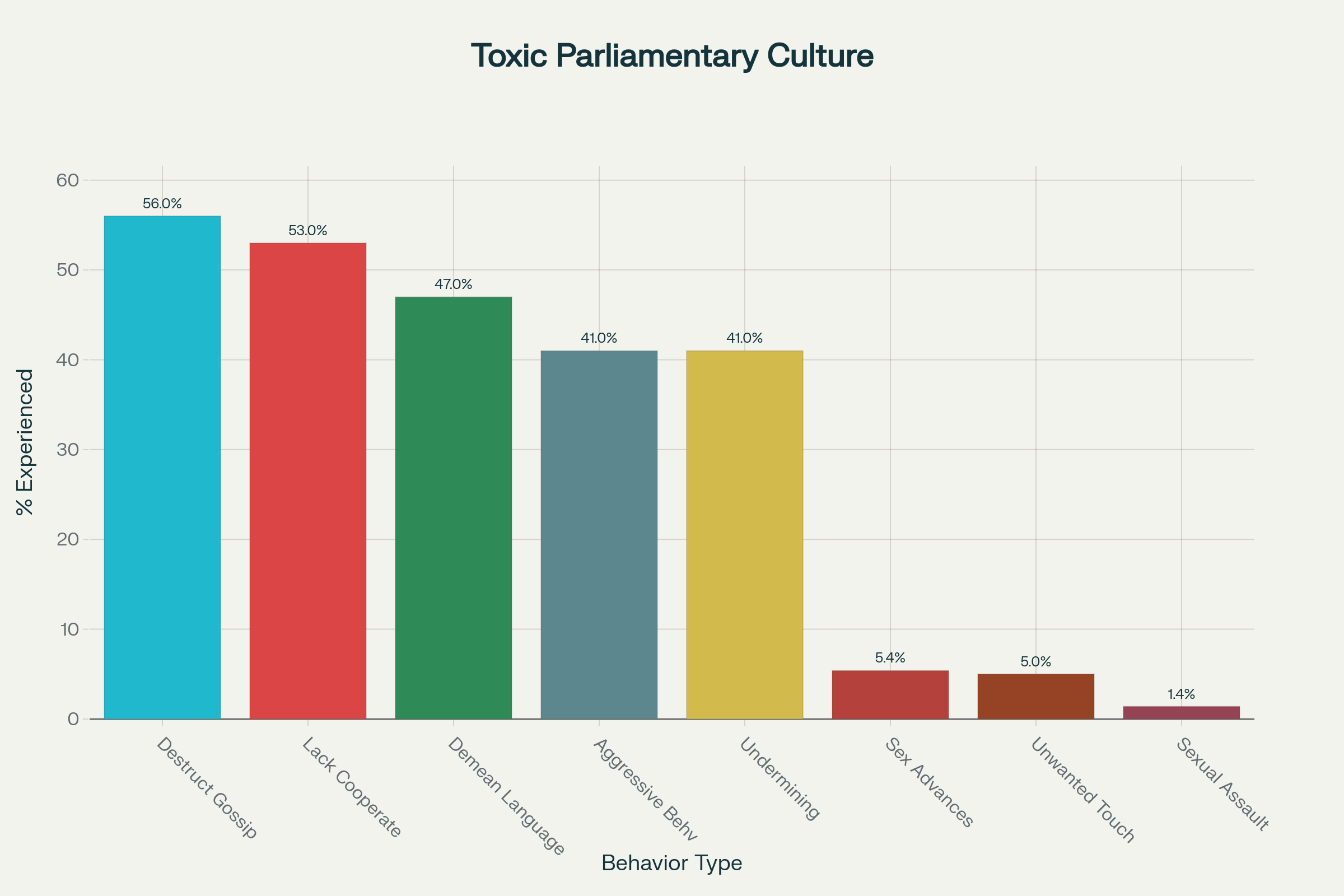
Parliament's toxic culture exposed: The systematic abuse of parliamentary staff
For Māori MPs, the harassment intensifies exponentially. Research reveals that racist, misogynistic rhetoric has proliferated online, with Māori women particularly targeted with "slurs, threats of death, violence, and sexual violence". This is not accidental - it is the deliberate weaponisation of colonial violence against Indigenous representatives.
Winston Peters: The Architect of Transphobic Terror
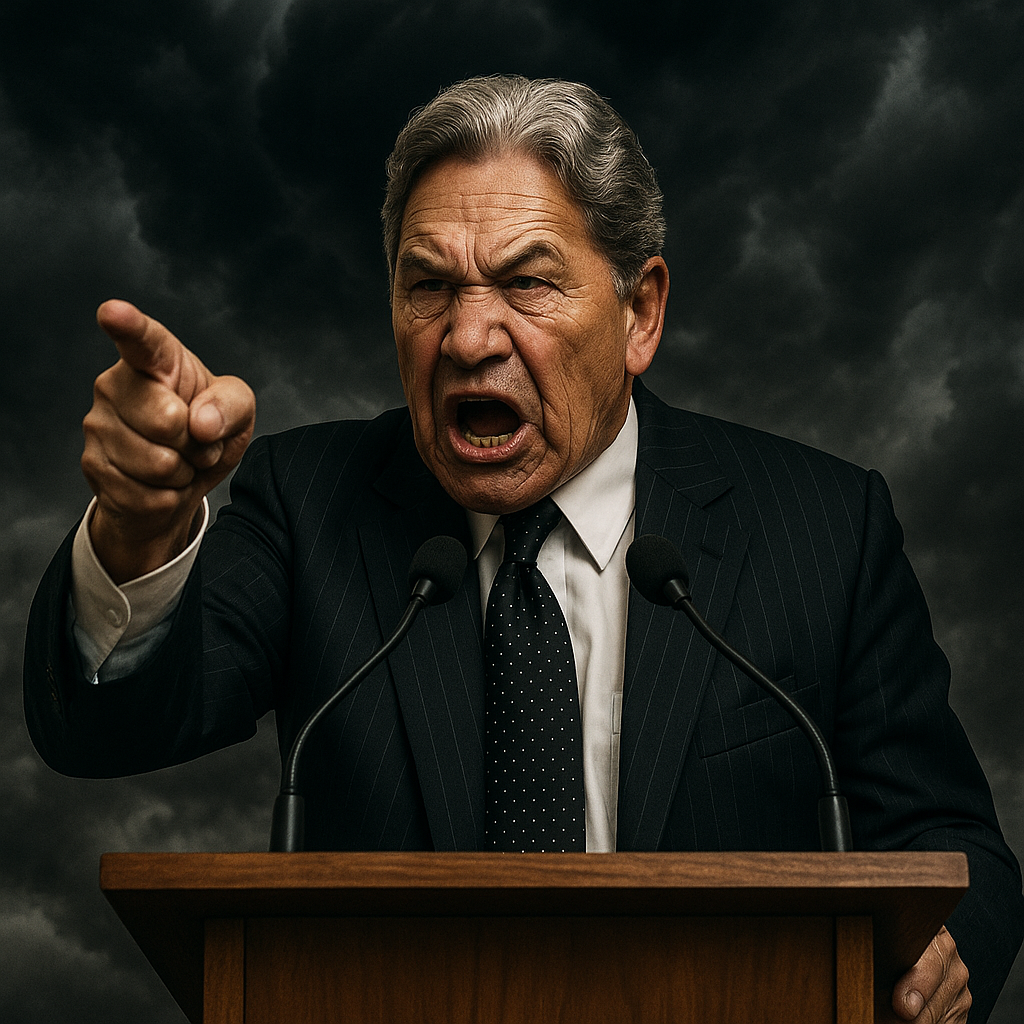
Deputy Prime Minister Winston Peters weaponizing political division
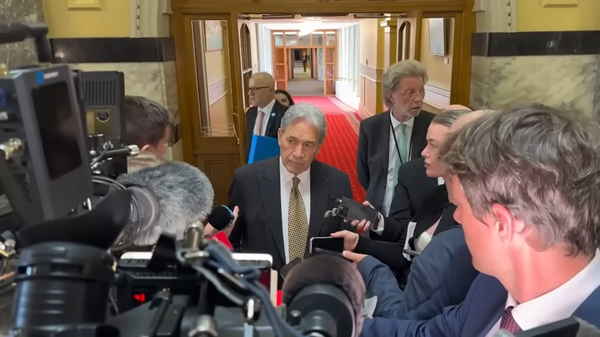
The attack on Benjamin Doyle represents Winston Peters at his most calculating and cruel. On March 30, Peters deliberately targeted Doyle's private Instagram account, drawing attention to the username 'BibleBeltBussy' and questioning the appropriateness of the term "bussy". Peters knew exactly what he was doing - unleashing a torrent of transphobic hatred against a vulnerable MP and their child.
The immediate result was an "immense" wave of death threats and "poisonous transphobic hate" that forced Doyle into hiding. Police confirmed they investigated 10 separate reports of threats, issuing formal warnings to four individuals for breaches of the Harmful Digital Communications Act.
Peters' strategy was textbook far-right manipulation: take private content out of context, weaponise cultural ignorance about LGBTQ+ terminology, and unleash mob violence while maintaining plausible deniability. When confronted about his role in escalating the threats, Peters cynically claimed he bore no responsibility because "the Green Party came to our office well after the threats had been given". This is gaslighting of the highest order - Peters lit the match then blamed others for the fire.
Christopher Luxon: The Complicit Prime Minister
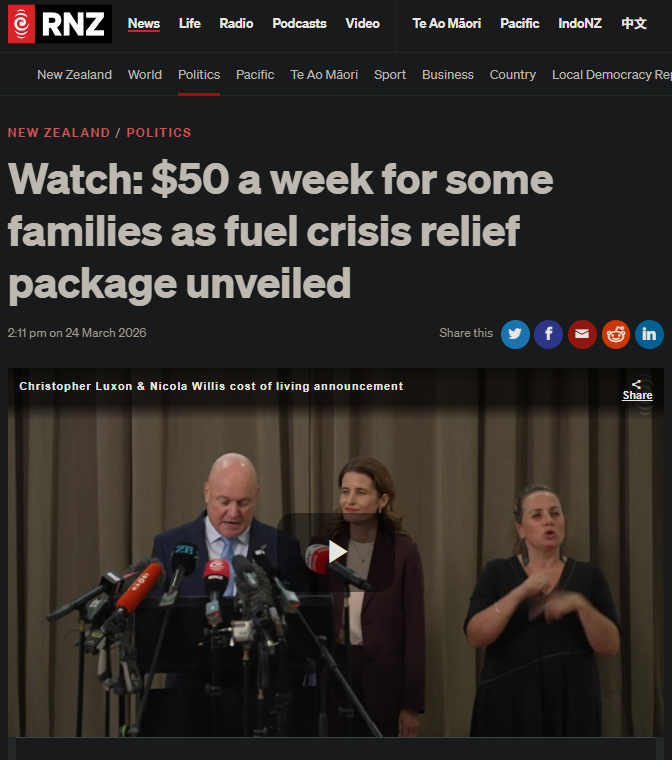
Prime Minister Christopher Luxon's response exposed his moral bankruptcy and political cowardice. Rather than condemning Peters' attack, Luxon declared Doyle's language "really inappropriate" and effectively endorsed the persecution. When asked if he supported Peters' actions, Luxon provided weak cover by stating that "only people who should be accountable for death threats are those that make those death threats".
This is leadership failure of the highest order. Luxon had the power to stop Peters' campaign of hatred but chose coalition politics over human decency. His refusal to defend Doyle sent a clear message: transphobic attacks on Māori MPs are acceptable if they serve political purposes.
The Systemic Failure: When Institutions Become Weapons
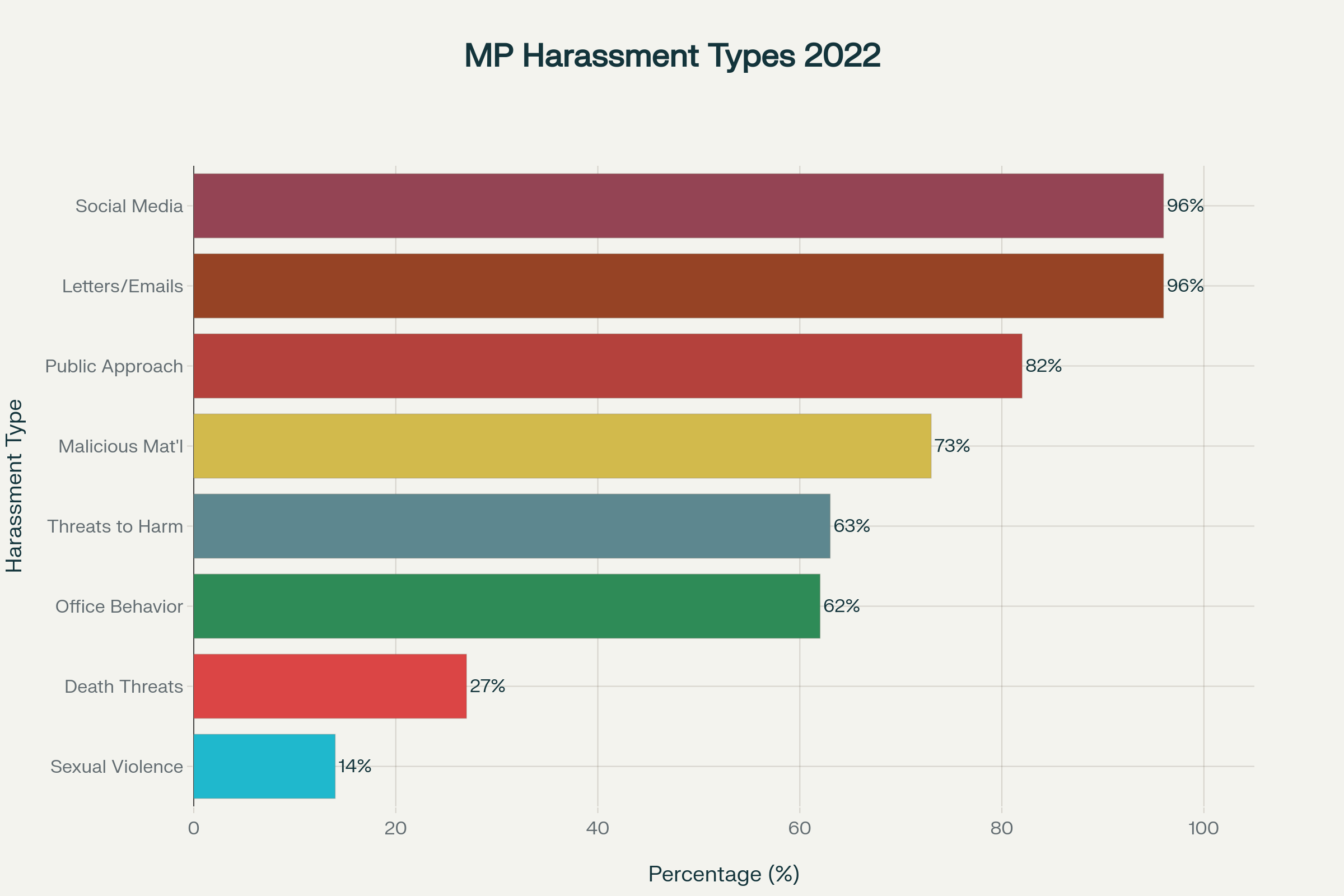
The full spectrum of political harassment: How MPs are being terrorized across every platform
The Doyle case exposes fundamental failures across New Zealand's political and legal systems. The Harmful Digital Communications Act was never designed to handle "volumetric harassment" - coordinated campaigns designed to overwhelm targets through mass abuse. These campaigns typically involve large numbers of participants who collectively flood someone with abusive, threatening or harmful messages, making individual prosecution impractical.
The media's role was equally problematic. Rather than investigating Peters' weaponisation of hate, much coverage focused on the technical meanings of LGBTQ+ terminology, legitimising the attack's premise and amplifying its harm.
The Broader Pattern: Parliament's War on Diversity
The assault on Benjamin Doyle fits within Parliament's systematic exclusion of diverse voices. The 2019 Francis Review found that 78 percent of respondents observed or experienced "unreasonable or aggressive behaviour that intimidates or threatens". Sexual harassment was endemic, with 35 percent experiencing sexually offensive remarks and 14 respondents reporting sexual assault.
This pattern reveals Parliament's function as a colonial filtering mechanism designed to exclude voices that challenge white supremacist power structures. Those who survive the harassment often do so by moderating their advocacy or self-censoring to avoid further attacks.
The Economic Interests Behind Political Violence
Parliament House: A toxic institution failing its democratic purpose
The targeting of Māori MPs like Benjamin Doyle serves deeper economic purposes. New Zealand's economy is built on stolen Māori land and water, underwriting the farming, horticulture, energy, tourism, fisheries and forestry sectors. Full restorative justice would cause catastrophic consequences for this colonial economy, which explains why power protects itself through domestic and international white supremacist networks.
MPs who advocate for Indigenous rights, co-governance, or challenging existing power structures represent existential threats to these economic arrangements. The harassment they face is not random abuse but coordinated political violence designed to protect colonial wealth accumulation.
The Coalition Government's Toxic Agenda
The current coalition government has systematically escalated attacks on Māori rights and representation. ACT has accused Parliament's Speaker of failing to address "racial harassment" while simultaneously opposing Māori representation in committees. The government has reversed legislation giving Māori seats at local council tables and reintroduced boot camps despite evidence they were sites of historical abuse.
This agenda operates through what Chris Hipkins correctly identified as a "racist coalition agreement" that continues to "resist and override both councils and Māori". The Doyle case represents the logical endpoint of this systematic assault on Indigenous representation.
International Connections: The Global Far-Right Network
The attack on Benjamin Doyle cannot be separated from international far-right movements that coordinate attacks on Indigenous and LGBTQ+ communities globally. The tactics used - decontextualising private content, weaponising cultural misunderstanding, and mobilising online harassment campaigns - mirror strategies deployed by white supremacist networks worldwide.
Peters' rhetoric about "woke agendas" and "elite cabals" draws directly from international conspiracy theories designed to delegitimise progressive movements and Indigenous rights. These are not isolated New Zealand phenomena but coordinated efforts to maintain white colonial dominance across the Pacific.
The Human Cost: A Child Asks Their Parent to Leave
The most devastating aspect of this institutional violence is its impact on whānau. Benjamin Doyle revealed that their child asked them to leave Parliament, saying "no person should have to remove their child from school due to threats to their life". This represents the complete failure of democratic institutions to protect their own members and their families.
The targeting of Doyle's child through leaked private photos represents a particular cruelty. Doyle explained that "images of my child from my private Instagram account have been taken without permission, removed from their original context, and shared online in misleading and manipulative ways". This exploitation of a child for political purposes exposes the depths of institutional depravity.
Beyond Individual Failure: Systematic Colonial Violence
Benjamin Doyle's departure from Parliament is not a personal tragedy but a systematic victory for white supremacy. The colonial institution successfully eliminated an Indigenous voice that challenged its fundamental assumptions and power structures. This represents the system working exactly as designed.
Doyle's analysis was penetrating: Parliament "was built to serve a status quo that protects the powerful at the expense of the people, at the cost of community". Their departure proves this analysis correct.
The institution's response to Doyle's valedictory speech - polite applause followed by business as usual - demonstrates its complete inability to engage with fundamental critiques of its colonial nature. Rather than addressing the systematic violence they documented, Parliament simply absorbed the criticism and continued operating unchanged.
The Path Forward: Revolutionary Change or Continued Violence
Benjamin Doyle's final message contained both despair and hope. They argued that the current political system "will never honour Te Tiriti" and "will never recognise the dignity of all life or seek justice for the poor and oppressed". But they also insisted that "the system was built, and could be re-built" and that "the revolution begins in our hearts and minds, but there it must not remain."
This analysis demands radical responses. Incremental reforms will never address institutions designed for colonial domination. The harassment protocols, cultural training programmes, and procedural adjustments suggested by mainstream commentators represent band-aids on cancer.
Real change requires dismantling Parliament's colonial foundations and reconstructing democratic institutions based on Indigenous sovereignty, genuine partnership, and social justice. This means decolonising power structures, not just making them slightly less hostile to diverse participants.

The Māori Green Lantern Fighting Misinformation And Disinformation From The Far Right
The Broader Implications: Democracy Under Attack
The Doyle case reveals that New Zealand's democratic crisis extends far beyond political polarisation or social media toxicity. When 98 percent of MPs face harassment and systematic violence drives Indigenous voices from office, democracy itself becomes a weapon of oppression rather than a tool of liberation.
The international research is clear: this harassment "represents a threat to democracy" with "significant psychosocial costs". When citizens cannot safely represent their communities without facing death threats and family targeting, representative government becomes impossible.
The solution is not better security or improved online monitoring but fundamental reconstruction of political institutions around principles of Indigenous sovereignty, social justice, and genuine equality.
A Revolutionary Conclusion: No Justice, No Peace
Benjamin Doyle's courage in naming Parliament as a site of colonial violence opens space for radical reimagining of democratic possibilities. Their analysis that "no body is free until everybody is free" connects local struggles to global movements for Indigenous liberation, LGBTQ+ rights, and anti-colonial resistance.
The institutions that terrorised Doyle and their whānau will not reform themselves. They must be dismantled and replaced with structures that genuinely serve all people, not just colonial elites. This requires revolutionary change, not evolutionary adjustment.
As Doyle warned, Parliament "risks being left behind as community forges ahead in building its own future, one we can be proud to pass on to our mokopuna." The choice is clear: revolutionary transformation or continued colonial violence.
The time for polite requests and incremental change has passed. The colonisers' house burns. We must build anew.
Readers who find value in my content and wish to support this vital mahi, please consider offering a koha to HTDM: 03-1546-0415173-000. The MGL understands these tough economic times for whānau, so please only contribute if you have capacity and wish to do so. Every contribution helps sustain the fight against white supremacy, racism, and neoliberalism.
Mauri ora, stay strong, and keep fighting the good fight.
Naku noa,
Ivor Jones - The Māori Green Lantern